Feeds:
Posts
Comments

Archive for the ‘Travel for Birding’ Category

In 1912, Jesse Stantz packed up his young family and left Indiana for Saskatchewan, where he would manage a wheat farm 12 miles west of Swift Current.  The family stayed in Canada only five years, but my mother, age three at the time of the move, started school and formed her earliest memories there.  It was enough that I have always felt a connection and, like my grandfather, the Canadian prairie called to me.

Arrival at the Swift Current train station in 1912. The little girl in the green dress is my mother and the boy is her brother.

Arrival at the Swift Current train station in 1912. The little girl in the green dress is my mother and the boy is her brother.

My mother and I first returned to the place of her childhood in 1988 with my dad and husband.  The four of us flew to Winnipeg together, where we rented a car and then spent ten days driving across the plains to Calgary.  We were able to find the house where Mom had lived, thanks to her sharp memory and a little land research at the courthouse in Regina.  The current owner graciously invited us in to see the house.  She said that we missed the one-room school house my mother had attended by only ten years.  Our trip ended at the world’s biggest rodeo, the Calgary Stampede, a life-long dream of my mother’s and a lot more fun than I expected.  We all loved Canada and had a wonderful time on the trip.

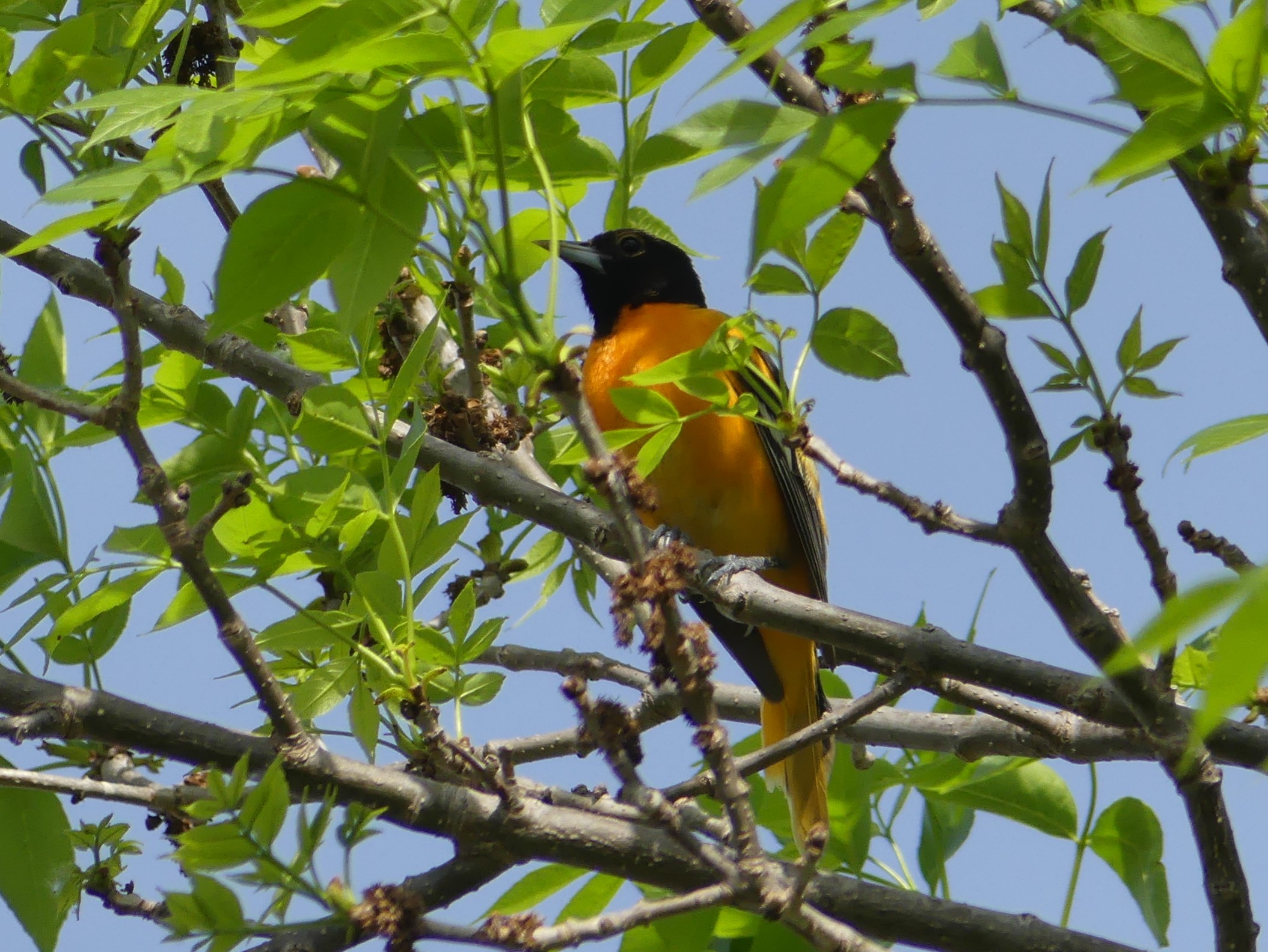
Baltimore Oriole at a Wisconsin rest stop

Baltimore Oriole at a Wisconsin rest stop

Since becoming a birder, I have dreamed of repeating our 1988 trip while stopping to bird along the way.  Five years ago I started making inquiries of birders in Canada and playing with various routes and plans.  This year I got serious and committed to making the trip happen.  As I focused on the life birds that I might find, the route shifted, but the spirit of the trip remained.  I would spend a week in Saskatchewan, a couple of days in Alberta, and loop south through Montana on my way home.

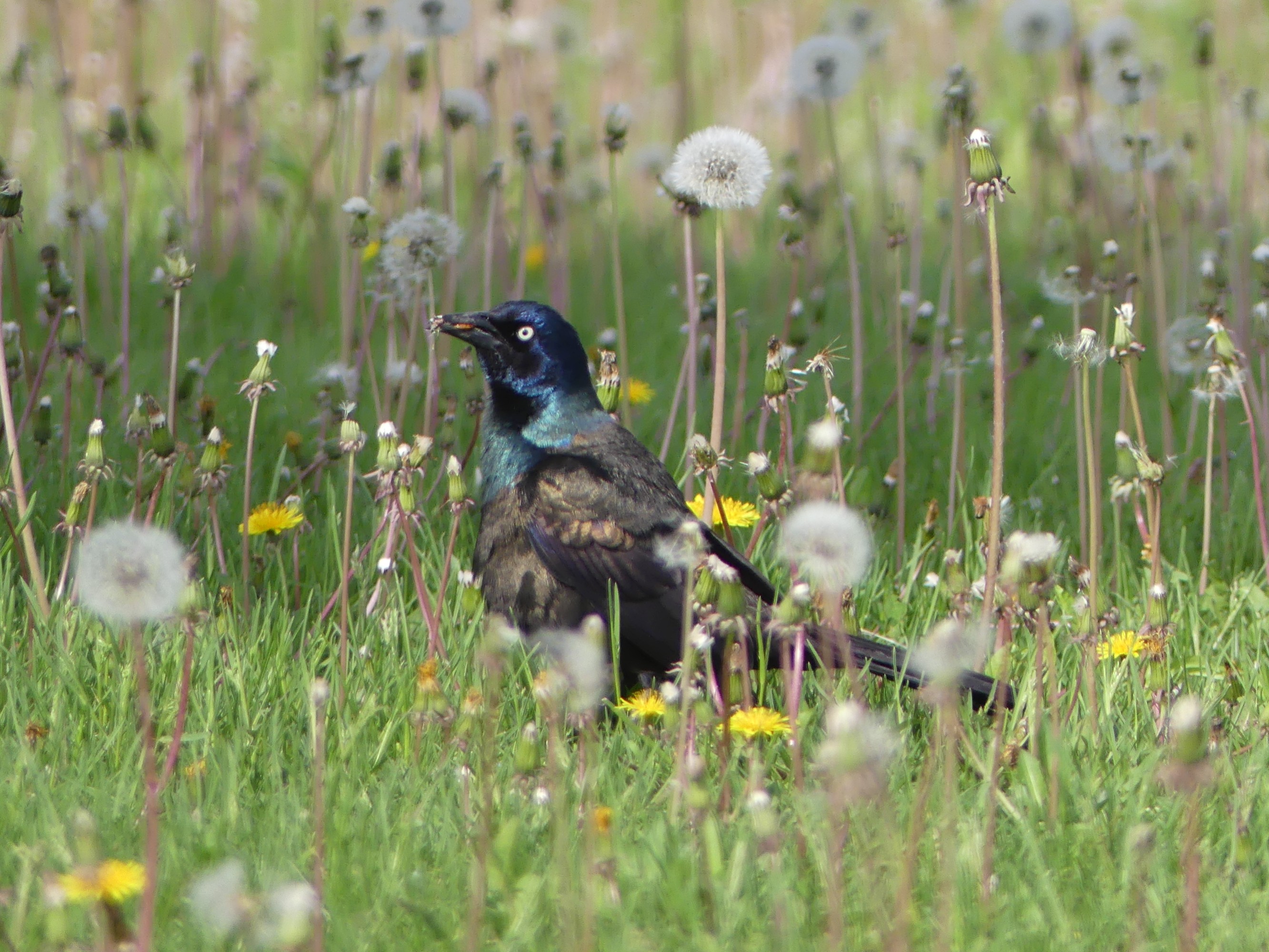
Common Grackle

Common Grackle

I left home yesterday morning, May 16, and after two full days of driving over 1300 miles I am in Grand Rapids, Minnesota tonight.  So far my only birding has been at rest stops and last night’s motel, but I find it interesting to see the changes in common bird species as I drive from state to state.  Red-winged Blackbirds and Common Grackles where numerous in the farm states of Indiana and Illinois.  In Wisconsin, I found Baltimore Orioles at every rest stop.  I also found a cute little chipmunk in Wisconsin.  If anyone can identify it, please leave a comment on this post.

Update: Identified by Cynthia as a Thirteen-lined Ground Squirrel

Update: Identified by Cynthia as a Thirteen-lined Ground Squirrel

Tomorrow will be a little easier as I will drive the two-lane US-2 through Minnesota and North Dakota.  The following day I will get to Montana and begin the search for my first target bird, Mountain Plover.  Will I find the plover and other birds my heart desires?  Stay tuned.

Read Full Post »

Florida always calls to me in winter.  Especially this year, as I really wanted a break from the unusually cold weather we are having in North Carolina.

The only prep I did for this year’s trip was to sign up for the Space Coast Birding Festival, so imagine my surprise when I checked eBird my first night on the road.  THREE Ruffs were currently being seen in Alachua County, Florida.  And, two of them were in the Home Depot retention pond that was not a mile from Liz’s house!  I took this as a sign that the birding gods would favor me on this trip.
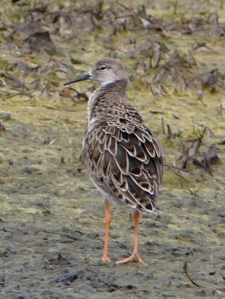
The male Ruff in Gainesville. With the wind blowing his neck feathers up, you get a hint of what he will look like in breeding plumage.

The male Ruff in Gainesville. With the wind blowing his neck feathers up, you get a hint of what he will look like in breeding plumage.

For my non-birding friends, Ruffs are shorebirds.  You might even call them boring when they are not in breeding plumage (and we rarely see them in breeding plumage here in the US), but they are rare and birders love rare birds.  Previously, I had seen only one Ruff in 10 years of birding, which I wrote about in A Smooth Trip for a Ruff.

With the Ruffs waiting for me in Florida, I got on the road early the next morning.  I got to Gainesville around noon and went directly to Home Depot.  It could not have been easier.  I walked over to the pond and immediately found both Ruffs, a male and a female, and shot some photos.  Birding mission accomplished, I then went to visit with my step-daughter, Liz, and my two granddaughters, Quinn and Casey.

Next it was south to Dunedin for a couple of days with my friends, David and Val.  Another rare bird awaited me near their house, 10 of them actually.  For the last two years, Brown Boobies, seabirds of tropical waters, have wintered in the unusual location of upper Tampa Bay.  David and I went in search of the boobies and found 6 of them roosting on towers in the bay shortly before dark.
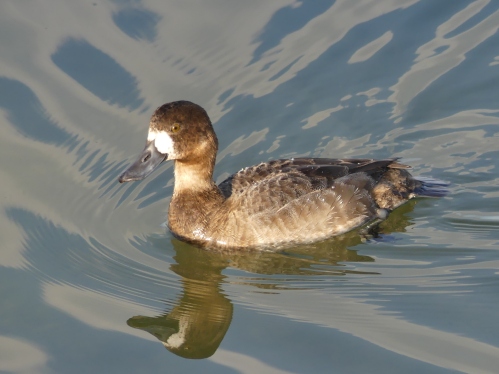
The boobies were too far out for good photos, but a pair of Greater Scaup swam close by the pier at Safety Harbor. This pretty bird is the female.

The boobies were too far out for good photos, but a pair of Greater Scaup swam close by the pier at Safety Harbor. This pretty bird is the female.

The next day we went to Possum Branch, one of our favorite local birding spots.  We heard lots of Yellow-rumped Warbler chips as usual, but suddenly one higher pitched chip stood out.  We stopped and looked hard for the little bird.  David finally found an olive-colored warbler with a grayish head that looked like it had been dipped in a a light wash of yellow.  I was never able to get my eyes on that bird, but the next morning my luck would change.  David headed to work and I left for my drive to the east coast.  But, first I went to Kapok Park, another of our favorite spots.  I heard the chips again and this time I saw several of the plain little birds, which I could now confirm as Orange-crowned Warblers.  I was very happy that I even got a photo.
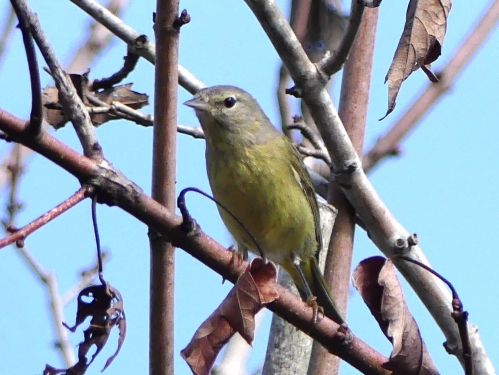
Orange-crowned Warbler at Kapok Park

Orange-crowned Warbler at Kapok Park

My warbler story may sound boring, but I hope not.  For what is more important, not just in birding, but in life, than the little joys of new discoveries, the sweetness of finding unexpected beauty in plainness?  All made sweeter when shared with a friend.  Life birds are great, but these magic moments are what I live for.

My next four days were filled with gulls.  I had signed up for almost all the gull field trips and workshops that the festival offered.  That’s a lot of gulls even for a normal birder, but I wanted to learn all that I could.  On Wednesday, we started with a trip to the Cocoa Landfill.  After a short introduction to the workings of the landfill, we headed out to look for birds.  We saw Laughing, Ring-billed, Herring, Lesser Black-backed, and Bonaparte’s Gulls.
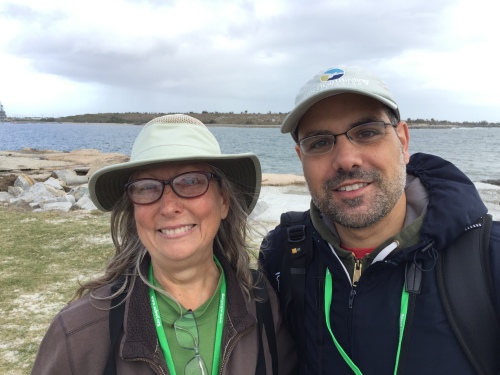
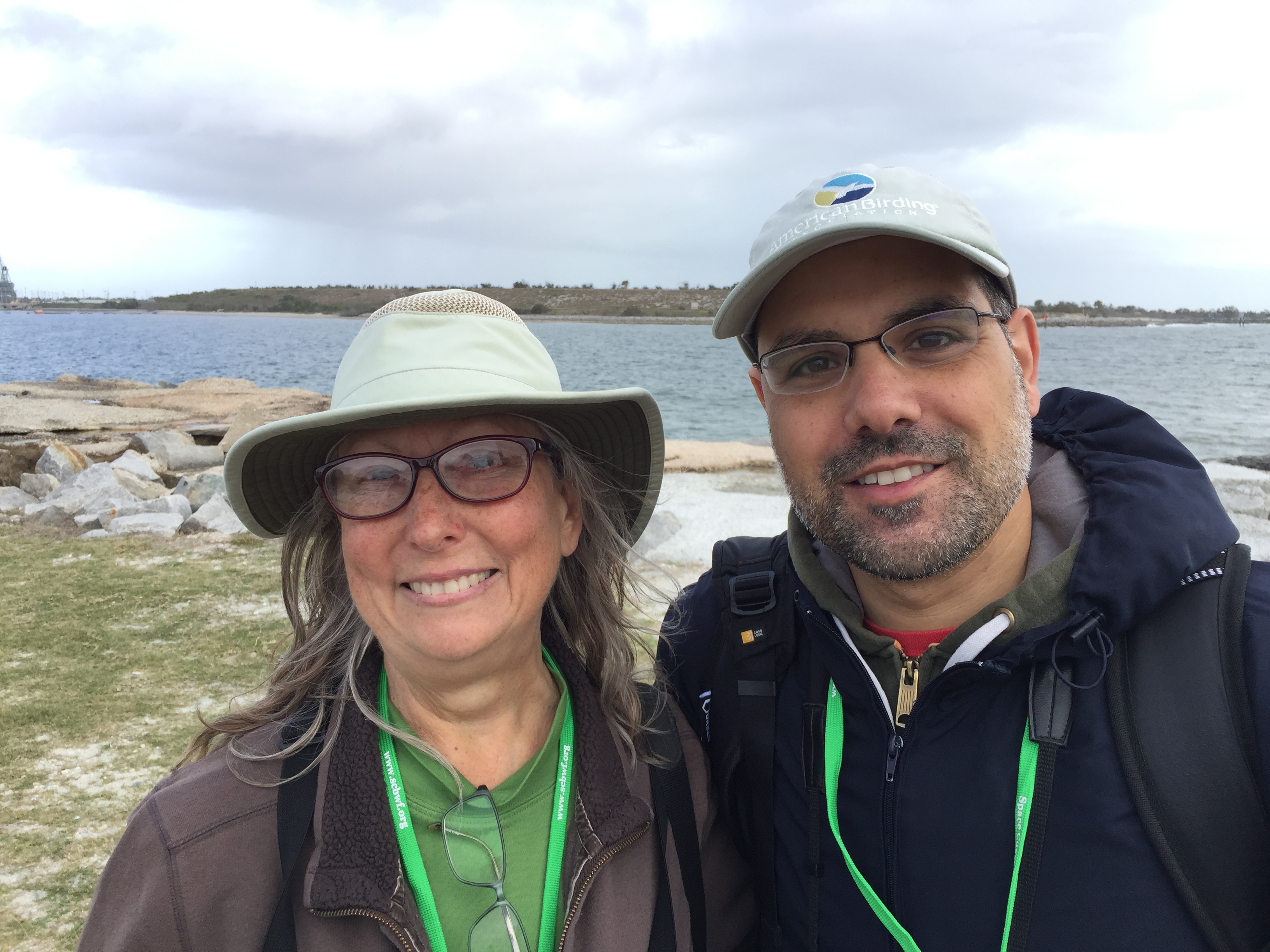
Amar Ayyash and me

Amar Ayyash and me

I was signed up for the “Gull Fly-In” at 3:30 that afternoon, but Amar Ayyash, one of the trip leaders, said that he was going early and that I was welcome to go with him.  We grabbed a quick drive-thru lunch and ate in the car as we headed to Frank Rendon Park at Daytona Beach Shores.  This particular stretch of beach is popular with wintering gulls.  It has been estimated that as many as 50,000 gulls sometimes roost on the beach.  They come in big numbers late in the afternoon for a few hours before heading offshore for the night, but at 1:00 PM, there were enough birds to keep us busy.  Amar quickly found all the expected species – everything we had seen at the landfill plus Great Black-backed Gull – as well as a couple of hybrid candidates.  I tried to soak in all the information that I could, but, as a beginner, I was overwhelmed.  I took as many photos as possible for later study.
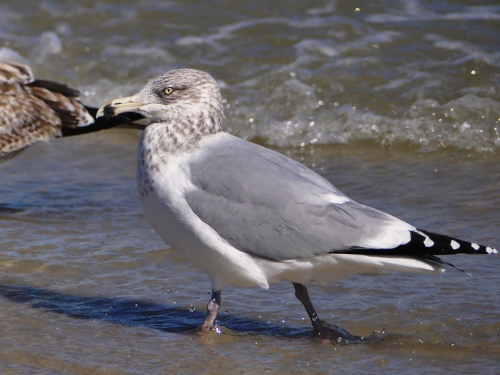
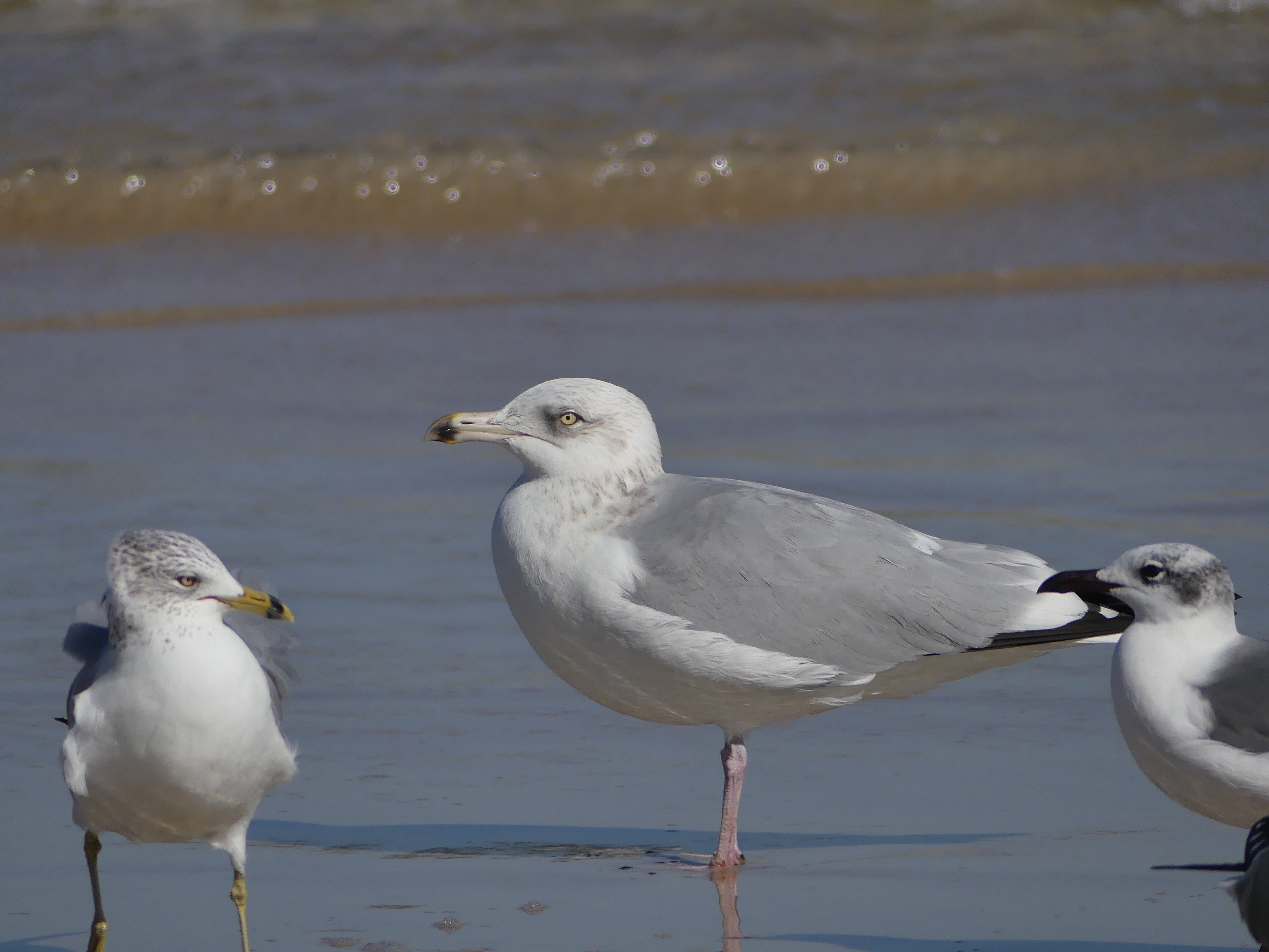
This bird has a ring on its bill, so it's a Ring-billed Gull, right? Nope, it's a Herring Gull. Most of those common field marks only apply to adults. This bird is an "adult type," probably a 4th cycle bird.

This bird has a ring on its bill, so it’s a Ring-billed Gull, right? Nope, it’s a Herring Gull. Most common field marks only apply to adults. This bird is an “adult type,” probably a 4th cycle bird, but not yet fully mature.
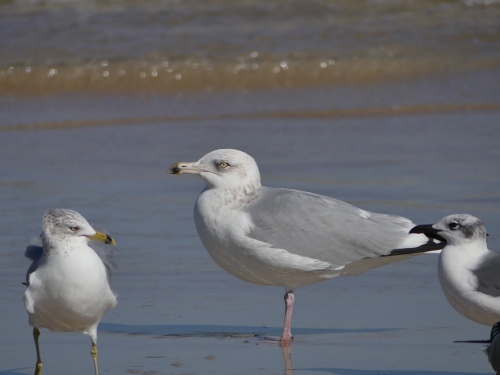
 

Hmm. What's this bird with the dark tip to its bill? Yep, another "adult type" Herring Gull. The smaller bird to the left is an adult Ring-billed Gull.

Hmm. What’s this bird with the dark tip to its bill? Yep, another “adult type” Herring Gull. The smaller bird to the left is an adult Ring-billed Gull.


A 1st cycle Great Black-backed Gull. We saw quite a few of these beautiful birds. I love the clean, crisp pattern.
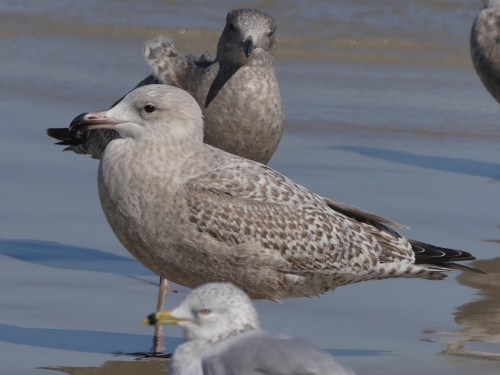
A 1st cycle Great Black-backed Gull. We saw quite a few of these beautiful birds. I love the clean, crisp pattern.


This big, beautiful young gull is probably a Glaucous x Herring Gull hybrid, frequently called "Nelson's Gull."

This big, beautiful young gull is probably a Glaucous x Herring Gull hybrid, frequently called “Nelson’s Gull.”

And, all of this was before the official festival field trip even began!  After we were joined by Michael Brothers, Florida’s leading gull expert, and the 30 to 40 festival participants, we continued walking on the beach, sometimes only about 20 feet from the birds, until 6:00 PM.  We saw literally thousands of Laughing and Ring-billed Gulls and good numbers of the other species, too.  We added Iceland Gull to our list with two individuals.  A few appear in Florida most winters, but they are unusual enough to be considered rare.
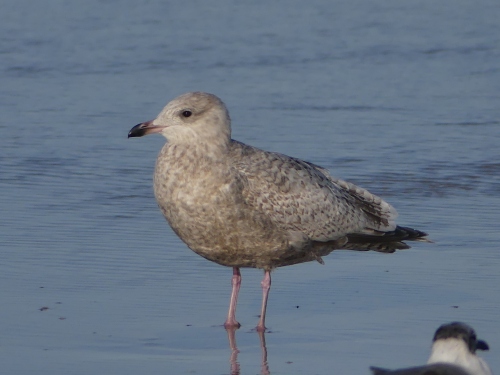
Iceland Gull at Daytona Beach Shores, Florida, January 24, 2018

Iceland Gull at Daytona Beach Shores, Florida, January 24, 2018

The next morning, it was back to the Cocoa Landfill.  I considered skipping a second trip to the same location, but I woke up early and decided that it would be a good chance to study the Lesser Black-backed Gulls that we had seen on the first day.  After the talk about the landfill, we went to the area where everything was covered with a black tarp and water had collected on top.  There was a little shallow pool at one end and the others walked down there to see the Bonaparte’s Gulls.  I had seen them the day before, so I stayed put, fiddling with my camera, when Chris Brown, one of our guides, came to get me.  “Shelley, I think you will want to see this.”  As I hurried to where the others had gathered, the bird with a red bill immediately caught my eye.  “OMG, it’s a Black-headed Gull,” I squealed, delighted to finally see this species in the US.  And, this was a beautiful bird, a healthy-looking adult, giving us a much closer view than I’d ever had in China.
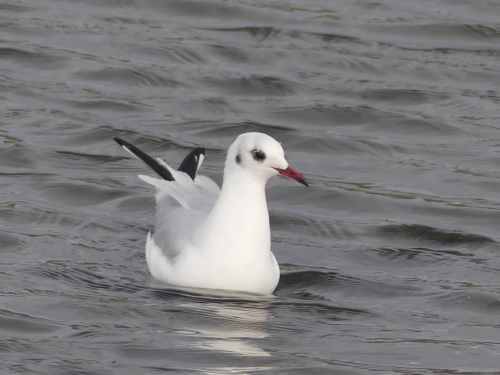
Black-headed Gull, Cocoa Landfill, January 25, 2018

Black-headed Gull, Cocoa Landfill, January 25, 2018

I enjoyed the rest of the festival, especially Amar’s gull identification workshop.  Amar is a living encyclopedia of knowledge about gulls and my goal is to learn enough that I can follow his discussions on the Facebook group, “North American Gulls” and his blog Anything Larus.

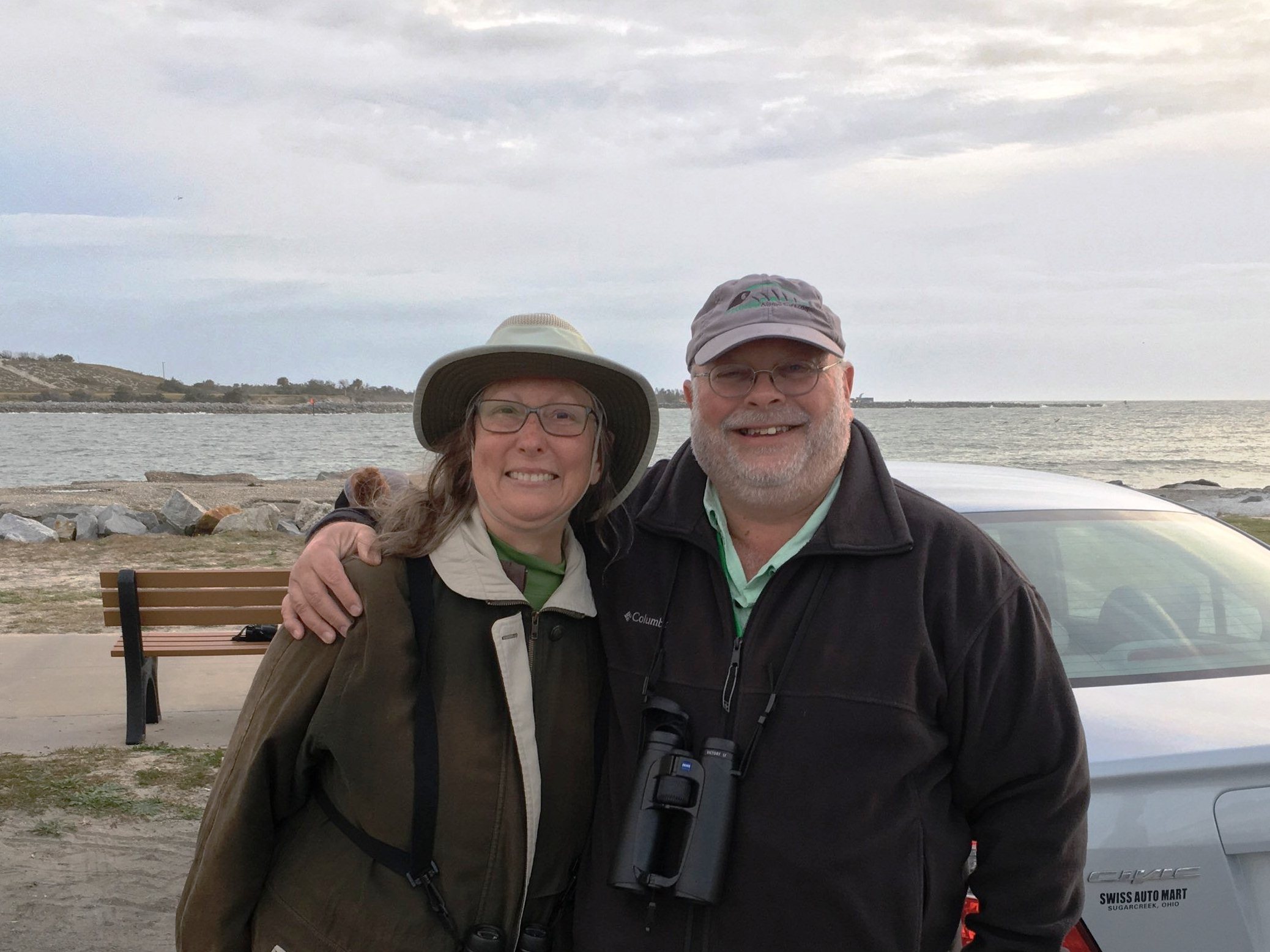
The last field trip that I’d signed up for was to Jetty Park at Cape Canaveral on Saturday morning.  The trip leaders were Amar, Jeff Gordon, and Greg Miller, one of the birders featured in the book and movie “The Big Year.”  While waiting for everyone to arrive, Greg and I quickly discovered that we are distant cousins.  It was fun to meet Greg and I’m looking forward to future discussions about our shared ancestors.
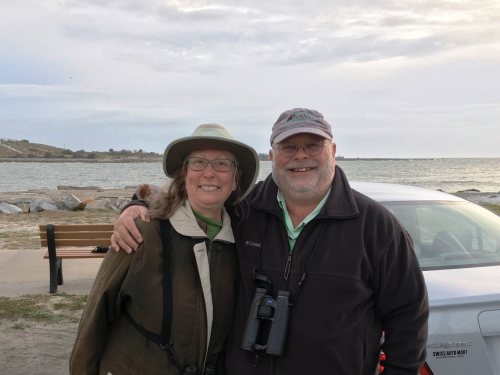
Greg Miller and me at Jetty Park, Cape Canaveral

Greg Miller and me at Jetty Park, Cape Canaveral

Jeff Gordon reminded me that he was a birding guide before he was ABA President when I casually asked if we might see any Northern Gannets and a few minutes later he pulled in a gorgeous adult nice and close.  I had seen thousands of them in NC, but this was a new Florida bird.  I never get tired of watching these beautiful birds plunge headfirst into the water.

Our leaders that morning were alert to anything interesting and found this Portuguese Man o’ War washed up on the beach. They are not really jellyfish, but the closely-related siphonophore, a colony of individuals.
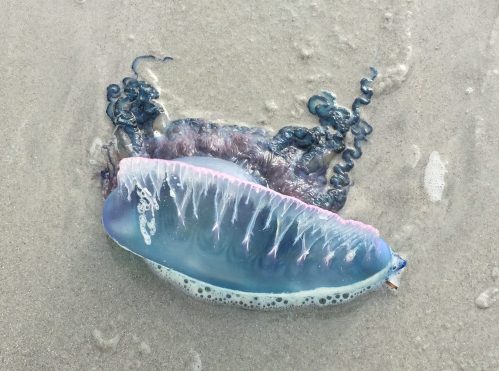
Portuguese Man o' War

Portuguese Man o’ War

Jetty Park was the end of the festival for me.  The time with Amar had significantly improved my gull knowledge and ID skills and I enjoyed seeing old friends and making new ones.  But, my time in Florida was not quite up yet.
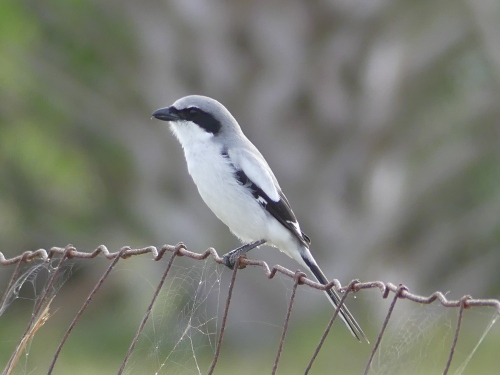
What's a trip to Florida without a Loggerhead Shrike? I observed this bird at Viera Wetlands calling and singing almost continuously.

What’s a trip to Florida without a Loggerhead Shrike? I observed this bird at Viera Wetlands calling and singing almost continuously.

My friend Kerry was in Florida for the winter and we had made arrangements to go birding after the festival.  I had asked Kerry for her target list of birds that she wanted to see and she listed just one – Snail Kite.  I suggested that we go to Three Lakes WMA and then Joe Overstreet Road and the little marina on Lake Kissimmee.  The night before we would meet, I was getting tired and I began to worry.  What if we didn’t see anything at Three Lakes?  What if we missed the Snail Kite?  I thought about changing our plan to include more opportunities to find Snail Kite and I fell asleep worrying.
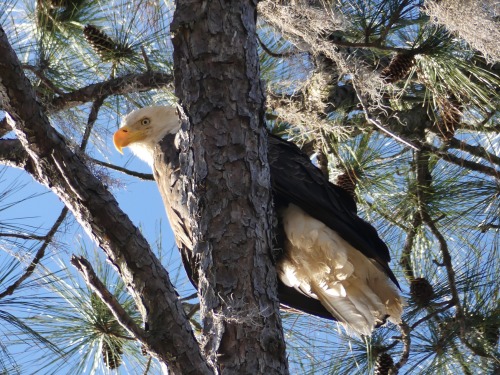
Perhaps I dreamed of eagles. Kerry and I would see five Bald Eagles the next day.

Perhaps I dreamed of eagles. Kerry and I would see five Bald Eagles the next day.

A night’s sleep must have refreshed me.  I awoke feeling much more optimistic and decided to stick with our plan.  It wasn’t long after our arrival at Three Lakes that we started seeing birds.  Shortly after we started down the main road, we both caught a glimpse of something light in a distant clump of trees.  I thought caracara and Kerry thought eagle.  A moment later we saw an eagle fly out.  And, then we saw something in the trees again – there WAS a caracara!  But, Kerry saw another bird, too.  We got out the scope and discovered an eagle perched about 10 feet from the caracara.  What was a young Crested Caracara doing with two adult Bald Eagles?  It was too far for a photo, but I’m sure we will both remember our fascinating raptor sighting.

We kept seeing more birds – Eastern Towhees so close that we could see their white eyes (our North Carolina towhees have dark eyes), oodles of beautiful Pine Warblers, an Orange-crowned Warbler, Purple Gallinules, and many more species.
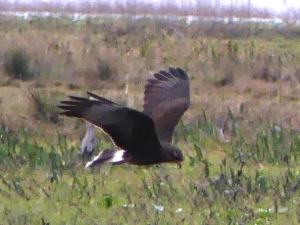
My photo is poor, but our looks at the Snail Kite were great.

My photo is poor, but our looks at the Snail Kite were great.

We had such a great time birding at Three Lakes that it was after noon when we got to Joe Overstreet Road.  We slowly drove the five miles to the marina, parked the car, and walked to the little pier.  Kerry was ahead of me and before I caught up with her, I heard something like, “There’s the Snail Kite.  Oh, there are two of them.”  We enjoyed the show for about an hour, with great looks at the kites as they hunted for snails, occasionally flying just 20 feet in front of us.

I had not needed to worry.  We ended the day with 60 species, a life bird for Kerry, and memories of a beautiful day that neither of us will forget.
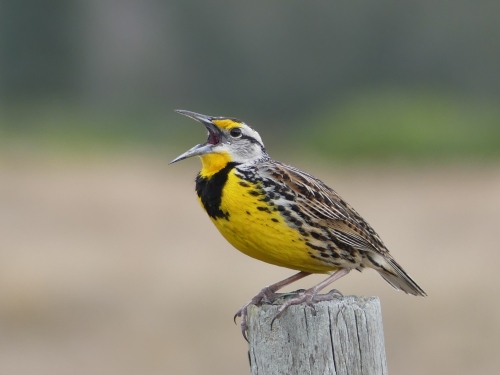
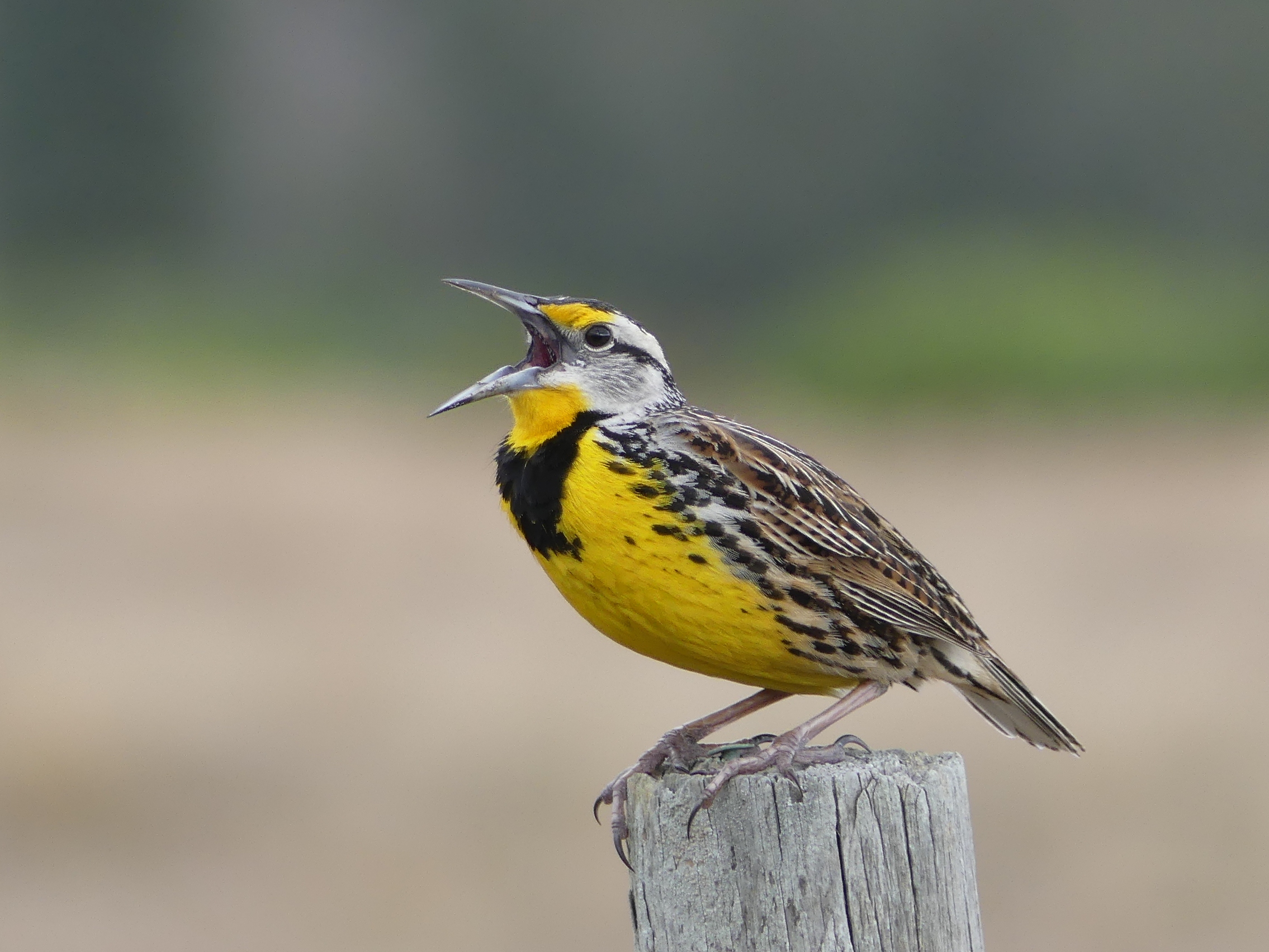
This gorgeous Eastern Meadowlark sat on a fence post outside our car window on Joe Overstreet Road and sang almost non-stop. He was still singing as we finally pulled away and continued down the road.

This gorgeous Eastern Meadowlark sat on a fence post outside our car window on Joe Overstreet Road and sang almost non-stop. He was still singing as we finally pulled away and continued down the road.

It was another great trip to Florida.  More photos will be posted to Flickr soon.  My photos of birds are also on eBird and can be seen here.

Read Full Post »
After our wonderful adventures in Panama, Diane and I wanted to do another birding trip this year. Another international trip was not possible, so we decided that the Rio Grande Valley Birding Festival in November in Texas would be perfect. Diane would be able to see her first Green Jay and other amazing birds of South Texas. I would be sure to get photos of new species and maybe even a few lifers if I were lucky.

I drove to Texas in three days and got into Harlingen a full day before the festival began. I was greeted by thousands of Great-tailed Grackles on the power lines by the hotel. Although very common birds, the spectacle of the grackles and starlings loudly screeching and their intermittent murmurations as they flew and then resettled on the wires was exhilarating.

Gadwall is a common duck that I've seen many times, but never so close as at Estero Llano Grande.

Gadwall is a common duck that I’ve seen many times, but never so close as at Estero Llano Grande.

I started my first full day in South Texas at Estero Llano Grande State Park, which turned out to be one of my favorite locations in the valley. The pond in front of the Visitor Center draws many species of ducks, all very close. But, this park may be best known as an almost guaranteed place to see Common Pauraque. Park rangers share the daytime roosting locations with visitors; otherwise, it would be nearly impossible to find this bird nestled in the leaves.

Common Pauraque are nocturnal birds that roost in leaves and brush piles during the day. Their highly effective camouflage makes them difficult to find.

Common Pauraque are nocturnal birds that roost in leaves and brush piles during the day. Their highly effective camouflage makes them difficult to find.

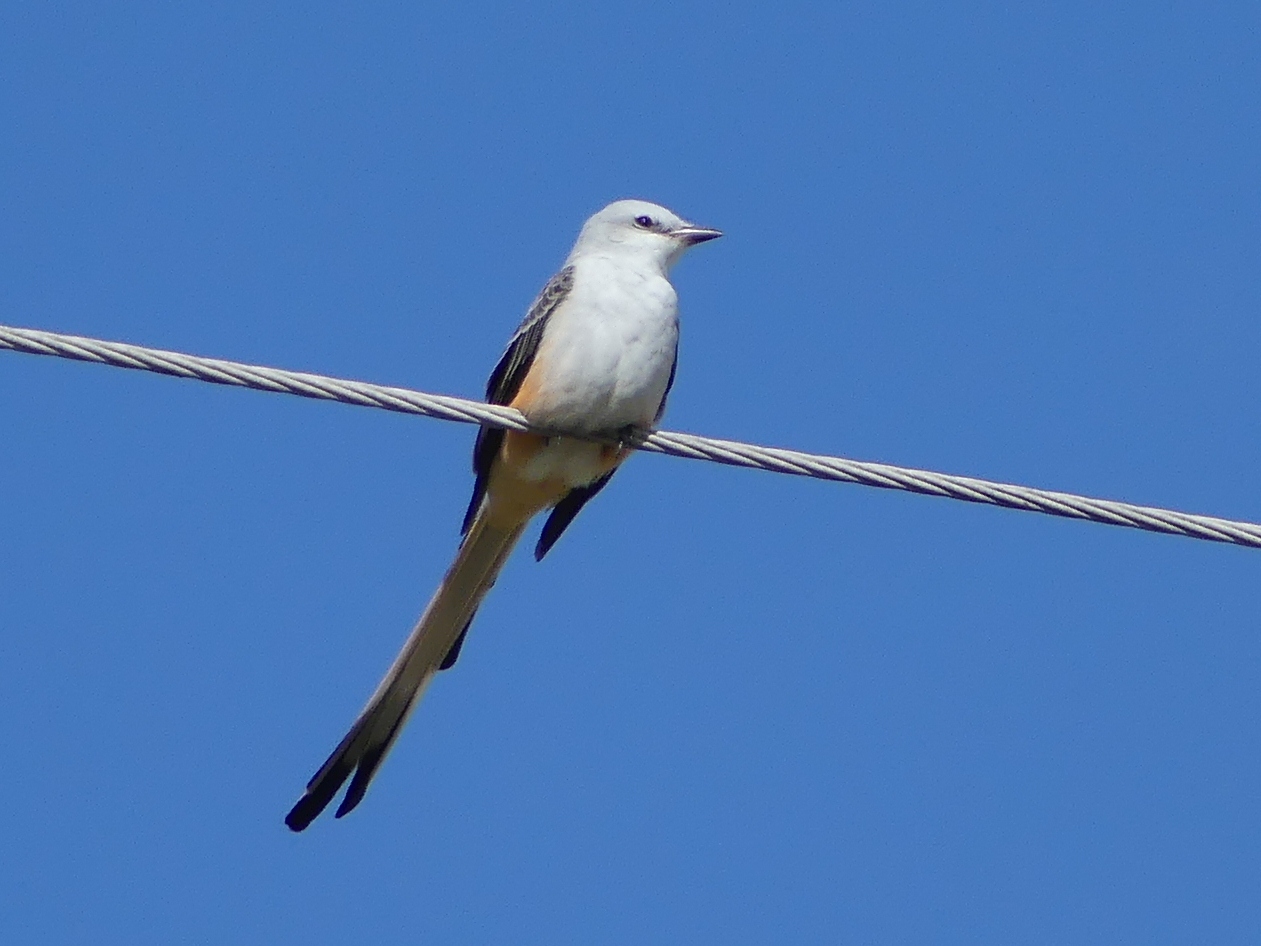
It was a wonderful morning with Green Kingfishers, White-tailed Kites, and many more. But, it was hot! By noon, I was about to drop from the heat. I met another birder who was also interested in looking for Mountain Plovers, seen in the past just north of Harlingen. We joined forces and spent the afternoon in his air-conditioned car searching the fallow farm fields without success, but we did see raptors and other birds including a gorgeous Scissor-tailed Flycatcher.

Scissor-tailed Flycatcher

Scissor-tailed Flycatcher

Diane arrived on Tuesday evening and we went to bed early for our 4:15 AM wake-up on Wednesday.  Our first festival field trip was to Las Estrellas Preserve, a 415-acre Nature Conservancy property that was purchased to protect the federally endangered star cactus, a spineless succulent with yellow flowers which is known to grow only in Starr County, Texas, and a few places in Mexico. Because the cactus is vulnerable to poachers, the property is not open to the public.

Star cactus shrinks to the ground when stressed. It was not in bloom when we visited and it was difficult to find.

Star cactus shrinks to the ground when stressed. It was not in bloom when we visited and it was difficult to find.

Next it was on Rancho Lomitas for lunch and a visit with Benito Trevino, owner of the ranch and the leading ethnobotanist in South Texas. We were all fascinated by Benito’s knowledge of the history and uses of native plants.  Plants were the focus of this locale, but we had hoped to also see Audubon’s Oriole here.  Our guide did catch a glimpse of one, but the rest of us missed it. However, we were very happy with good looks at Scaled Quail, a Greater Roadrunner, many other birds, and Benito’s fascinating stories about plants.

A Greater Roadrunner played hide and seek in the courtyard, mostly hiding in the vegetation. Here he dashes across an open area.

A Greater Roadrunner played hide and seek in the courtyard, mostly hiding in the vegetation. Here he dashes across an open area.


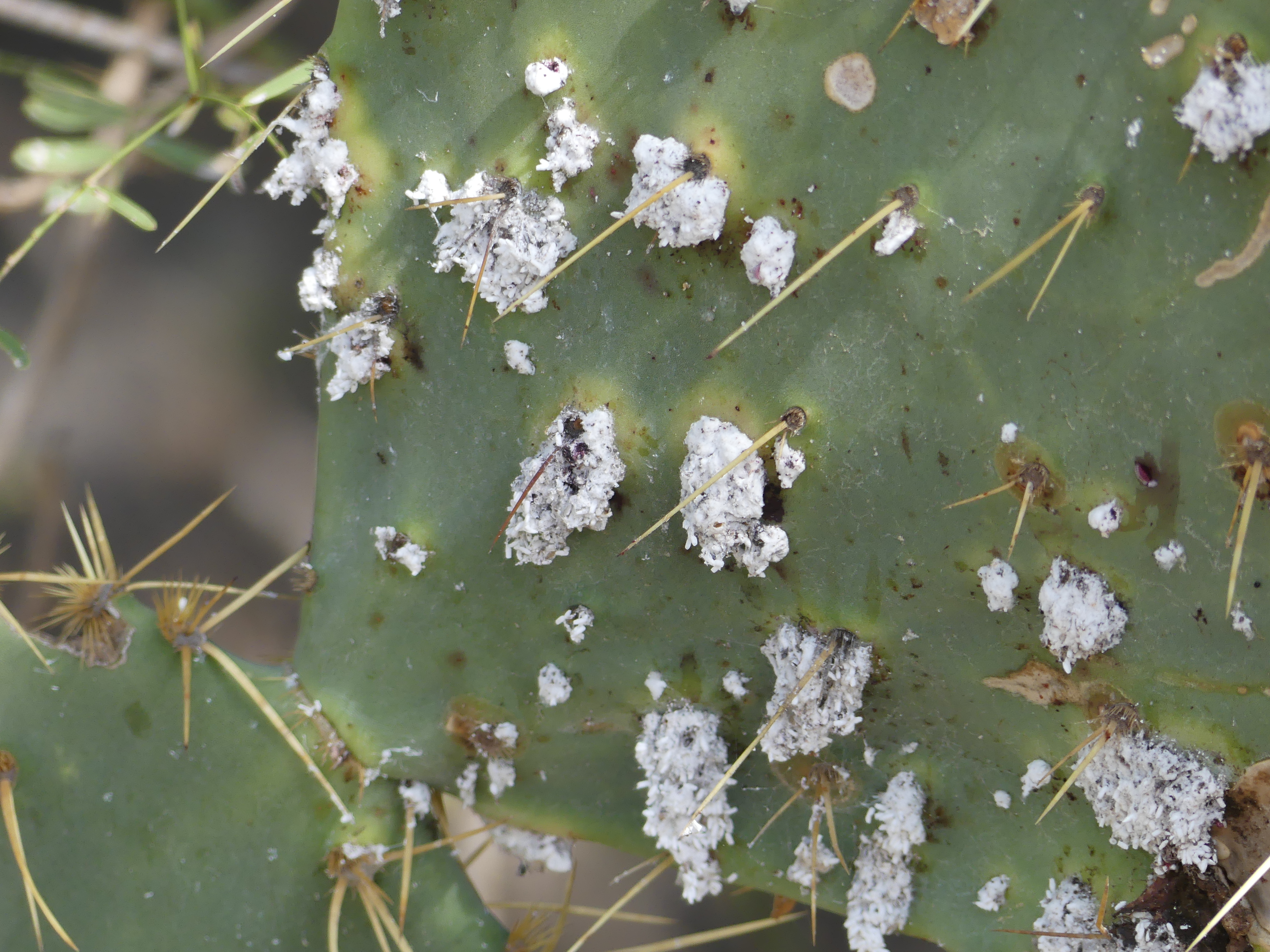
Cochineal, an insect, growing on prickly pear cactus. We learned how the Indians used cochineal to make red dye.

Cochineal, an insect, growing on prickly pear cactus. We learned how the Indians used cochineal to make red dye.

For day two of the festival, Diane and I had chosen the Upper Rio Grande trip with visits to Roma Bluffs, Chapeño, and Salineño. There are famous feeders at Salineño, where we hoped for another chance to see Audubon’s Oriole, but we missed it again.  It was fun to meet Noah Strycker (one of our guides for the day) and we loved sitting at the Salineño feeders watching the Golden-fronted and Ladder-backed Woodpeckers, Plain Chachalacas, Green Jays, Orange-crowned Warblers, and all the other birds that come for suet, seed, and nectar.

A gorgeous male Altamira Oriole at Salineño.

A gorgeous male Altamira Oriole at Salineño.

We got back to Harlingen in time for our late afternoon Parrot Trip. We could have found the parrots by ourselves, but quickly decided that this was $40 well-spent just for the fun of being driven around town madly searching for parrots. We were in one of three vans, all communicating by walkie-talkie. It was an efficient and fun way to quickly find the target birds. First, we saw Green Parakeets, which I had seen on my trip in April 2011. And, then one of the vans found the Red-crowned Parrots.  Finally – my first life bird at the festival.  Nothing is more fun than watching parrots with their loud, affectionate, and comical behavior.

Red-crowned Parrots in Harlingen. We learned that they not only mate for life; pairs are together constantly and can even be distinguished in a flock by their close proximity to each other even in flight.

Red-crowned Parrots in Harlingen. We learned that they not only mate for life; pairs are together constantly and can even be distinguished in a flock by their close proximity to each other even in flight.

The third festival day, Diane and I did different trips. I opted for Southmost Preserve, another Nature Conservancy property not normally open to the public. Both Tropical and Couch’s Kingbird are common in the valley, but they are nearly impossible to differentiate unless heard vocalizing. On this trip, we had several individuals of both species.  And, we heard one Couch’s Kingbird not just calling, but singing his full song. It was also interesting to see the kingbirds catching and eating Monarch butterflies.

Couch's Kingbird with a Monarch butterfly at Southmost Preserve.

Couch’s Kingbird with a Monarch butterfly at Southmost Preserve.

It was a great morning with many species ranging from ever-popular White-tailed Kites to a rather rare Warbling Vireo.

Friday evening was a festival highlight – Noah Strycker’s keynote address about his Global Big Year.  Off-stage, Noah is a very nice person, quiet and unassuming.  On-stage, he morphs into an animated and dynamic speaker.  The audience was totally awed by his fascinating stories.  Noah impressed me, not just with his spirit of adventure, physical fortitude, and calmness in challenging situations, but also with his kindness, humility and obvious love for the birds and people of the entire planet.

We listened to a lot of Great-tailed Grackles with Nathan Pieplow.

We listened to a lot of Great-tailed Grackles with Nathan Pieplow.

On Saturday, Diane and I did different trips again. She choose the Laguna Atascosa National Wildlife Refuge tour which included parts of the refuge not normally open to the public, where they saw a much sought-after Texas bird, Aplomado Falcon. I choose Nathan Pieplow’s “Bird Sounds Decoded” field workshop. We had a small group and it was really fun to get an introduction to Nathan’s method of identifying birds by ear, a method that does not require memorization. I bought Nathan’s book Peterson Field Guide to Bird Sounds and can’t wait to study it and improve my ear birding skills.

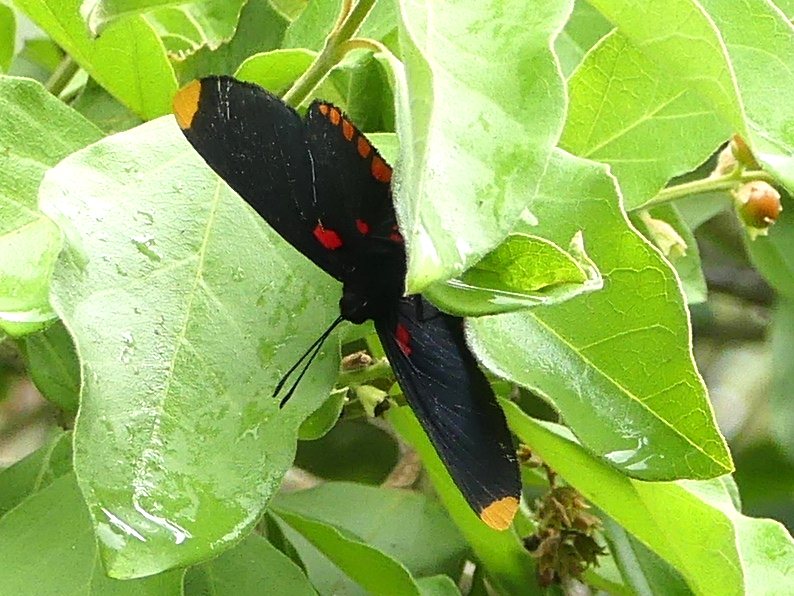
Our leaders were always alert to interesting flora and fauna.  On this morning, Nathan discovered a Red-bordered Pixie, a beautiful butterfly never found north of the Rio Grande Valley.

A Red-bordered Pixie at The Inn at Chachalaca Bend.

A Red-bordered Pixie at The Inn at Chachalaca Bend.

It seems that a rare bird shows up in South Texas during the festival every year. This year, a couple of Tamaulipas Crow were discovered at South Padre Island a day or so before the festival started. These birds were formerly reliably found at the Brownsville Landfill, but none had been seen anywhere in Texas since 2010. A couple of days after the first sighting, the birds were at the Brownsville dump again and birders were flocking there to add Tamaulipas Crow to their life lists. I was no different. I hitched a ride with Nathan after his workshop and we had great looks at the crow. Life bird #2 for the trip!

We observed three Tamaulipas Crows at the Brownsville Landfill.

We observed three Tamaulipas Crows at the Brownsville Landfill.

Sunday, November 12, was the last day of the festival and Diane and I were scheduled for what we expected to be the most exciting field trip of the week – King Ranch. The target bird was Ferruginous Pygmy-Owl, which was almost guaranteed to be seen.  It had never been missed during previous festivals. But, this year was different. The temperature had fallen quickly and dramatically to 20 or more degrees lower than normal. Ferruginous Pygmy-Owl is a tropical owl, just reaching its northern most range in South Texas. It had not been seen all week, presumably due to the cold weather. On Sunday, it had warmed up again, almost to normal, so we were hopeful. But, it was not to be. One of the King Ranch guides heard one in the distance, but none of the festival participants heard or saw the little owl.

We saw many great birds at the King Ranch Norias Division, including Harris's Hawk.

We saw many great birds at the King Ranch Norias Division, including Harris’s Hawk.

We were also told that we would have another chance to see Audubon’s Oriole at King Ranch, but we missed it, too.  Missing the owl and oriole were big disappointments, but there was one consolation. Near the end of the morning, we were looking for Sprague’s Pipits when a guide screamed “Zone-tailed Hawk!” It was not the close look that I wanted, but I did see the bird and even got a poor photo showing the “zone” tail. Life bird #3 of the trip.

Diane and I had scheduled three days to bird on our own after the festival and we knew the first place that we would head on Monday morning – the feeding station at Salineño.

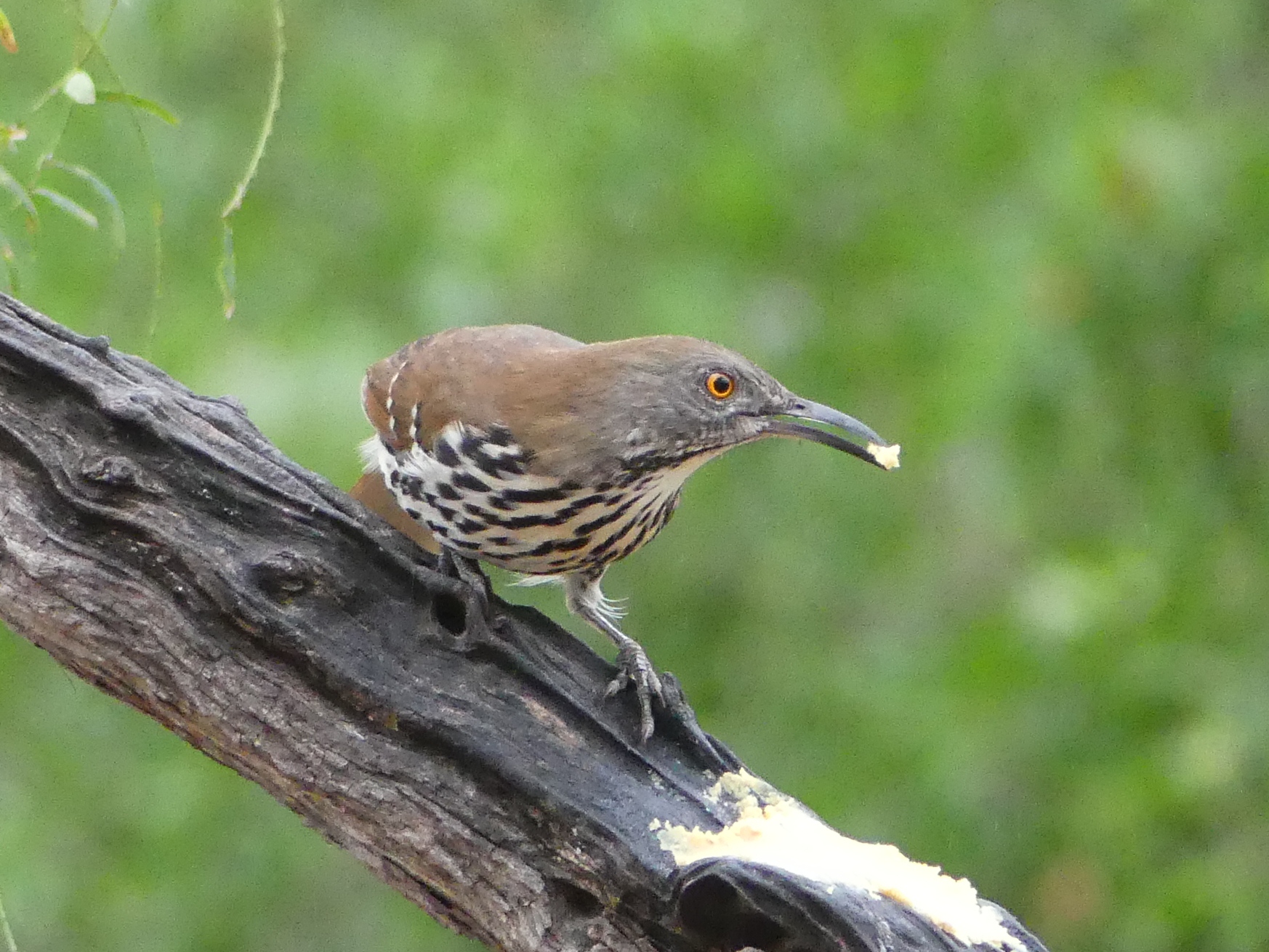
A Long-billed Thrasher enjoying suet at the Salineño feeding area.

A Long-billed Thrasher enjoying suet at the Salineño feeding area.

The Audubon’s Orioles had been seen just before our arrival.  We sat there for three hours waiting for them to return, but we enjoyed the other avian activity at the feeders. Finally, my most-wanted bird showed up – first a male Audubon’s Oriole and then his mate, both close enough to get great looks and photographs. Life bird #4 and I was thrilled.

Male Audubon's Oriole at Salineño.

Male Audubon’s Oriole at Salineño.

We stopped at Estero Llano Grande on our way back to Harlingen. We didn’t have much time, but wanted to get a look at a Common Pauraque for Diane. The park was magical, so much cooler than when I had been there a week earlier and we almost had the park to ourselves. We found the Pauraque right away, and the nearby Eastern Screech-Owl, who seemed to sit looking out of its nest box all day every day.

“McCall’s” Eastern Screech-Owl ranges from south-central Texas to parts of northern Mexico. It may prove to be a separate species, as it is always gray and never gives the “whinny” call.

“McCall’s” Eastern Screech-Owl ranges from south-central Texas to parts of northern Mexico. It may prove to be a separate species, as it is always gray and never gives the “whinny” call.

As we left that area and walked by a pond, Diane heard what she was sure was a kingfisher. She tracked down this beautiful female Green Kingfisher in the ditch across the path from the pond. We had both seen this species before, most recently in Panama, but it was a treat to be so close and see it so clearly.

Female Green Kingfisher at Estero Llano Grande.

Female Green Kingfisher at Estero Llano Grande.

We spent much of our last two days looking for Aplomado Falcon, to no avail. We had both seen it previously, but we were hoping for a better look. We also went to Estero Llano Grande State Park one more time and again enjoyed the wonderful birds there.

White-tailed Kites at Estero Llano Grande.

White-tailed Kites at Estero Llano Grande.

As usual, our time was up too quickly. Diane flew home and I started the drive back to North Carolina, stopping the first night at the home of a new friend we met at the festival. Birders have to be the friendliest people on earth and making new friends is as good as seeing new birds.  It was a wonderful trip and I can’t wait to go back again.

More photos from this trip can be viewed in my Flickr album, RGV Texas – Nov 2017.

Read Full Post »

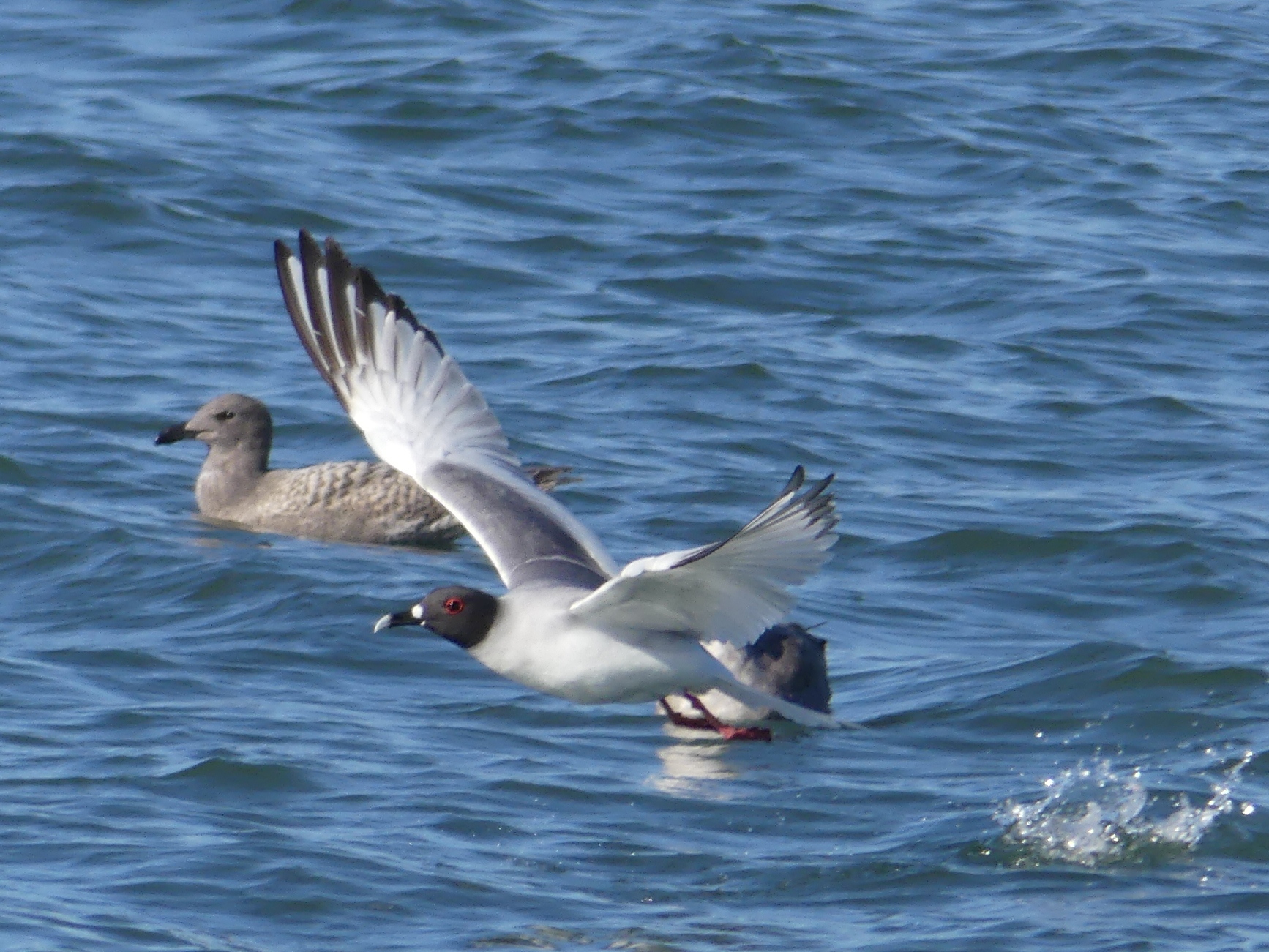
Huge liquid black eyes encircled by thick red rings. Light-tipped black bill with perfect white spots at the base. Black hood, red legs and lovely black-tipped wings. And, the tail – the gorgeous white u-shaped tail. The Swallow-tailed Gull is widely considered to be the most beautiful gull on earth. Never in a million years would I have expected to see this bird on my trip to Washington, but let me start at the beginning.

Those big beautiful eyes facilitate hunting at night. Swallow-tailed Gulls are the only nocturnal gulls in the world.

Those big beautiful eyes facilitate hunting at night. Swallow-tailed Gulls are the only nocturnal gulls in the world.

My friends Phil and Mary Dickinson moved across the country from North Carolina to Washington in December 2015.  I expected very few life birds in Washington, but I wanted to visit my friends and I thought that it would be fun to see the Pacific Northwest and a new state.  Phil suggested that late August/early September would have nice weather, so I flew to Seattle on August 28.

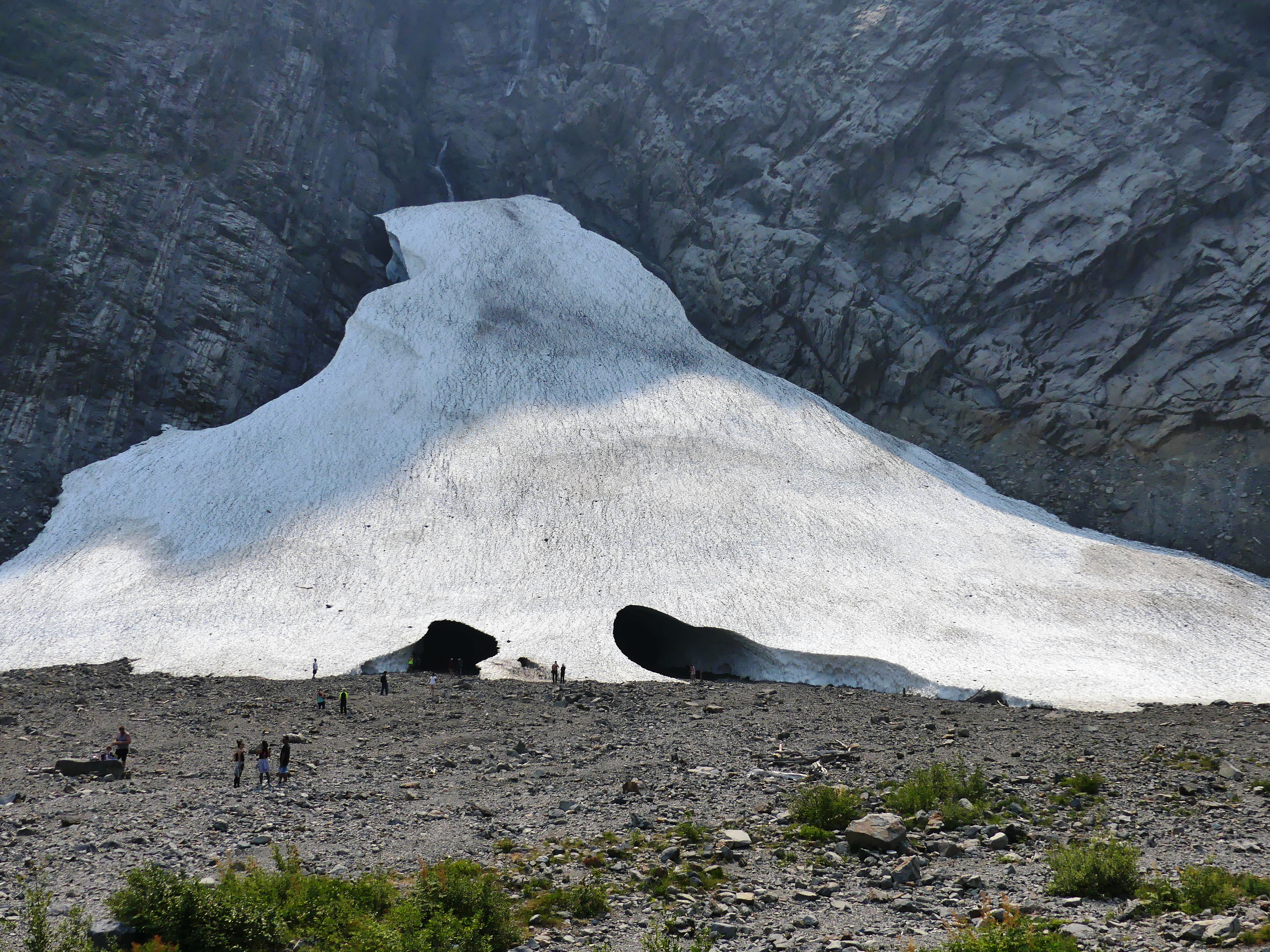
On our first full day, Phil took me to Big Four Ice Caves where I got my first life bird of the trip, Black Swift. I also had an introduction to the beautiful Washington landscape.

The beautiful but dangerous ice caves. Phil and I heeded the warnings to stay on the trail, but many did not. There have been four deaths here since 1998.

The beautiful but dangerous ice caves. Phil and I heeded the warnings to stay on the trail, but many did not. There have been four deaths there since 1998.


Fireweed at Big Four is beautiful even when past its prime.

Fireweed at Big Four is beautiful even when past its prime.

The next day, Phil, Mary, and I drove to Mount Rainier National Park.  We took our time with a stop for a picnic lunch and walk at Federation Forest State Park.  We arrived at Crystal Mountain Resort mid-afternoon and had a nice dinner after acquainting ourselves with the Sunrise area of the park where we would be spending our time.

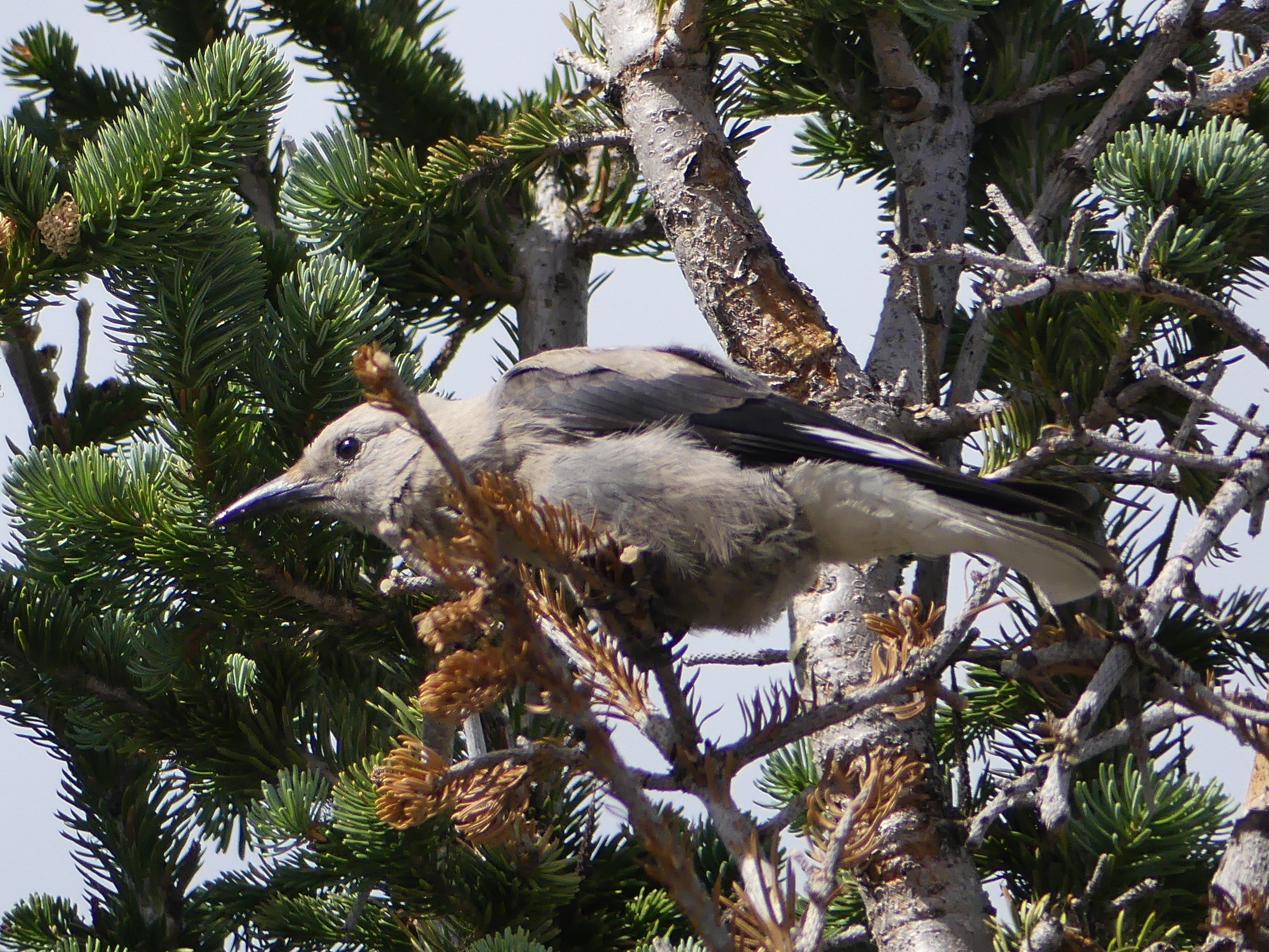
A Clark's Nutcracker greeted us in the Sunrise Visitor's Center parking lot.

A Clark’s Nutcracker greeted us in the Sunrise Visitor’s Center parking lot.

The following morning, Phil met some birders from home in the parking lot just before we started our hike.  They mentioned that a Swallow-tailed Gull had been found early that morning in north Seattle.  I received a text from a friend in North Carolina also notifying us of the gull.  What?  A Swallow-tailed Gull is a pelagic bird of the southern hemisphere that comes to land only to nest, mainly on the Galapagos Islands.  Other times of the year, it cruises the off-shore waters of South America’s Pacific coast from Colombia to Chile.  A Swallow-tailed Gull has been seen in North America only twice before, and in California, not nearly so far north.  This was a mega-rarity!  Some crazed birders would have abandoned plans for Mt. Rainier and sacrificed the advance payments we had made for our rooms that night to chase this bird.  We didn’t consider that option and hoped that the bird would stick around until we got back home.

A Yellow Pine Chipmunk posed near the Sunrise Visitor's Center.

A Yellow Pine Chipmunk posed near the Sunrise Visitor’s Center.

One of our target birds on the Mount Freemont Lookout Trail was Prairie Falcon, which had been seen there the previous day.  The three of us walked the first mile and a half of the trail, which was labeled “moderate,” before Mary turned back.  Phil and I continued on the “strenuous” trail for another 1.3 miles and I soon became scared.  Parts of the trail were just a narrow scree path with an abrupt steep drop-off for hundreds of feet down the side of the mountain.  Phil was kind, patient and encouraging as I slowly conquered my fears and made my way.  Finally, we reached the lookout where we found raptors in the distance, but they turned out to be Red-tailed Hawks.  However, Mountain Goats, a Pika, and a feeling of accomplishment rewarded our efforts.

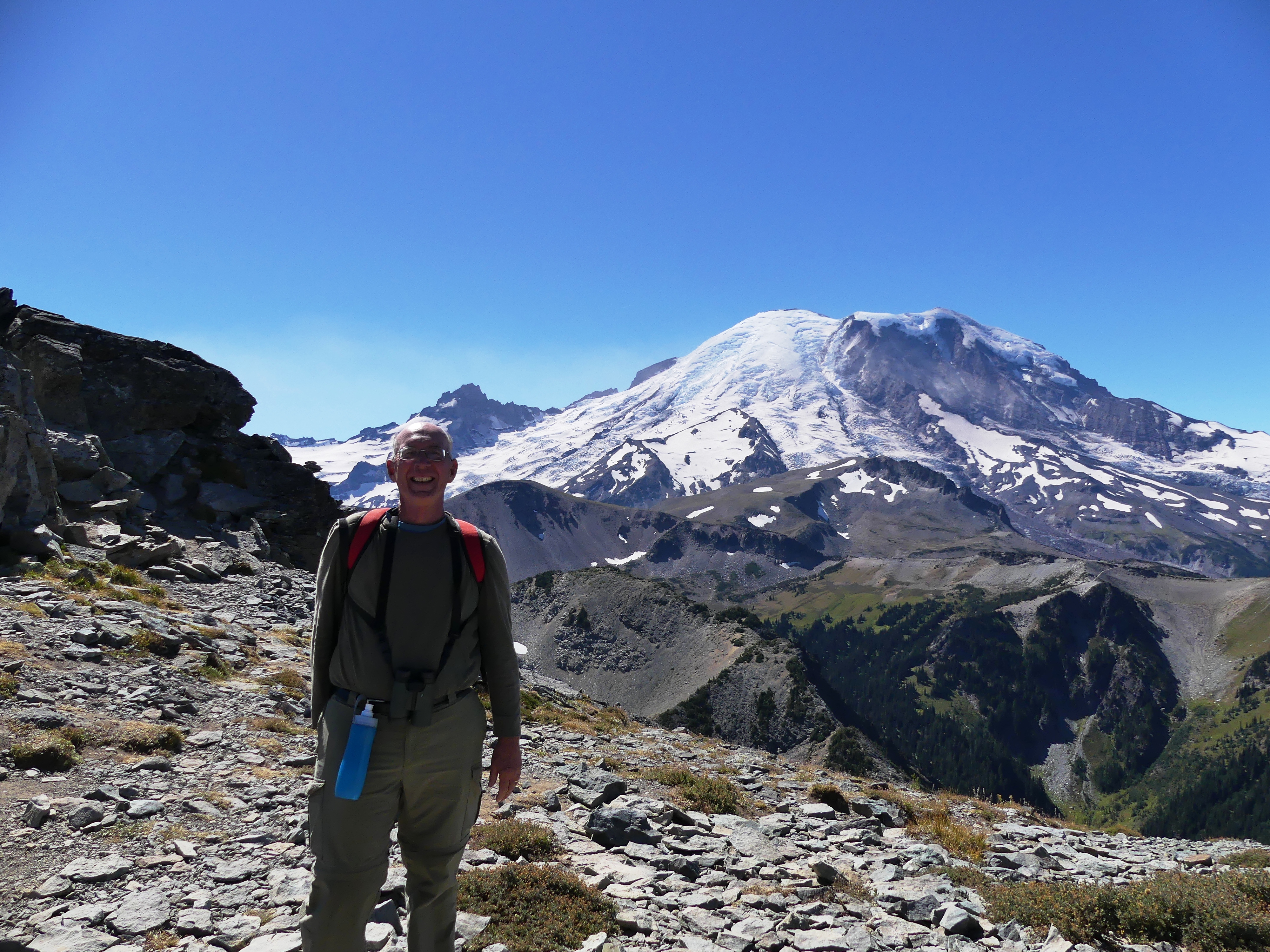
Phil and I conquered Mt. Fremont.

Phil and I conquered Mt. Fremont.

On Friday morning, Phil and I went out to look for birds before breakfast.  We drove to the campground and kept a sharp eye out for grouse on the side of the road, but we did not see any.  We decided to check the trail at Sunrise Point, where we were rewarded with a Red-breasted Nuthatch loudly calling as soon as we opened the car doors.  We started down the trail and had not gone more than a few yards when Phil said, “Shelley, there’s your grouse.”  And, there it was on the side of the trail walking towards us.  A Sooty Grouse – life bird #2 for the trip!  We continued to watch the grouse, an adult male, for 10 minutes as he kept an eye on us, but foraged very close by.  Finally, we decided that it was time to go have breakfast with Mary.

This male Sage Grouse was waiting for us at Sunrise Point.

This male Sage Grouse was waiting for us at Sunrise Point.

But, our wonderful, birdy morning was not quite over yet.  About a mile from Sunrise Point, Phil spied a woodpecker flying across the road and quickly stopped the car.  And, then we saw a second bird and quickly realized that it was a pair of American Three-toed Woodpeckers, a species that each of us had only seen once before.

The yellow crown on this American Three-toed Woodpecker isn't visible in this photo, but you can clearly see that he has only three toes. Except for the Three-toed and Black-backed, all North American woodpeckers have four toes.

The yellow crown on this American Three-toed Woodpecker isn’t visible in this photo, but you can clearly see that he has only three toes. Except for the Three-toed and Black-backed, all North American woodpeckers have four toes.

The three of us had a good breakfast and then started the drive home.  We had been watching the local birding listserv, Tweeters, and the Western Washington Birders Facebook group for updates on the Swallow-tailed Gull, but as of mid-afternoon, it had not been re-sighted.  We started to think that it might be a “one day wonder.”  Finally, in the late afternoon, it was found a few miles north of the original location.  Reports said that this new location was very difficult to access and required a dangerous and possibly illegal trek across active railroad tracks to get a good look.  We hoped that the bird would stay a third day.

Western Sandpipers foraged at the Everett Sewage Lagoons, some in deeper water up to their bellies. Occasionally a bird would submerge its head completely under water.

Western Sandpipers foraged at the Everett Sewage Lagoons, some in deeper water up to their bellies. Occasionally a bird would submerge its head completely under water.

On Saturday morning, Phil and I went birding in his home county.  Again, we watched for news of the gull and were ready for the chase if it was found.  We mostly birded coastal areas with a foray to the sewage treatment plant in the middle of the day.  After a quick drive-thru at Burger King for a very late lunch, we drove to the Everett marina on the Puget Sound, mainly because we didn’t have time to go anywhere else.  I had wanted to get good looks at California Gulls, which are common there.  They were there as expected, but one gull was different.  We both felt absolute disbelief as we realized that we had found the Swallow-tailed Gull.

The gull showed off its swallowtail while preening.

The gull showed off its swallowtail while preening.

Phil got the word out that we had found the gull and 10 minutes later other birders started arriving.  We continued to watch the gull in close waters, happy with our good views, when the impossible happened.  The Swallow-tailed Gull flew right in front of us on the two-foot wide strip of dirt between the parking lot and the water, no more than 20 feet away.  We had incredible looks at the bird at it stretched its wings and picked at pebbles.  After a few minutes, a truck drove by and the gulls flew back into the water.

Courtship includes the male offering the female pebbles for the nest. Hmm. Does this beauty want to make more Swallow-tailed Gulls?

Courtship includes the male offering the female pebbles for the nest. Hmm. Does this beauty want to make more Swallow-tailed Gulls?

I then turned my attention to the small group of birders who had shared this amazing experience with us.  I heard someone say that a guy had flown in from Chicago.  I introduced myself and the man replied that his name was Amar Ayyash.  I don’t know of anyone in North American who knows gulls better or loves them more.  If I could have chosen any person in the world to share this experience with it would have been Amar.  This gull was a super star and it had also drawn Shawneen Finnegan and Dave Irons from Portland, Oregon.  Alex Sundvall had flown in from Minnesota.  I’m sure there were others from out of state, too, but it wasn’t possible to meet the 80 or so birders who were there when we left.  Others had already come and gone and more would arrive after we went home to celebrate with Mary.

A close-up of the amazing Swallow-tailed Gull in breeding plumage. Outside breeding season, the head is white and the eye ring is black.

A close-up of the amazing Swallow-tailed Gull in breeding plumage. Outside breeding season, the head is white and the eye ring is black.

As I write this, the Swallow-tailed Gull is still being seen in Edmonds, about 15 miles south of where Phil and I discovered it.  This is day 10.  Will it stay longer?  Perhaps.  Squid, the gull’s primary food, has been plentiful in the area.

An "Oregon" Dark-eyed Junco cooled off on a hot day in the Dickinson bath while we relaxed on the deck.

An “Oregon” Dark-eyed Junco cooled off on a hot day in the Dickinson bath while we relaxed on the deck.

Phil and I had some pleasant birding for the next two and a half days, but I did not get any additional life birds.  Regardless, it was fun to see some of his local birding locations and enjoy the birds in his backyard.  Spending time with friends, seeing spectacular landscape of the Pacific Northwest, and the thrill of finding a rare bird will keep memories of this trip sharp in my mind for a very long time.

Phil’s story, Beauty and a Surprise Highlight Washington Birding, is on the Forsyth Audubon blog.  For another fun story and amazing photos, see Amar’s post,  Swallow-tailed Gull Twitch, on his blog, Anything Larus.  More of my photos are on Flickr in the Swallow-tailed Gull album and Washington – 2017.

Read Full Post »
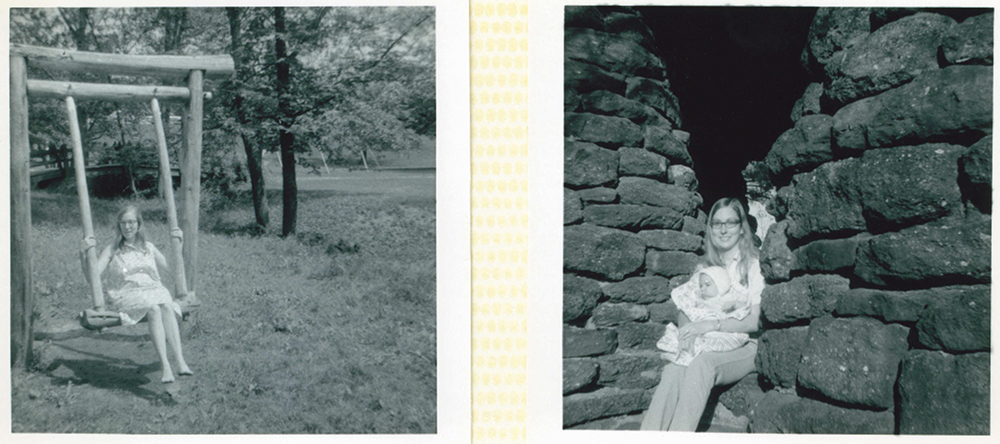
I still remember the first time that I travelled to Austin, Texas.  Running through O’Hare Airport to catch my plane to Florida, where I would spend a couple of weeks with my parents while my husband looked for an apartment.  Being aware, but not afraid, that flights to Florida were being hijacked to Cuba.  The flight to Houston on a jet and then the final leg to Austin on a small prop plane.  It was 1968 and I was 8-months pregnant with my first child.  A month later, my son, David, would be born at Bergstrom Air Force Base in Austin.

Me shortly before and just after the birth of my son David in 1968 I think the photos were taken at Bastrop State Park.

Me shortly before and just after the birth of my son David in 1968. I think the photos were taken at Bastrop State Park.

This trip in March 2017 was much easier.  I just got in my Subaru Outback and drove to Austin.   The purpose of traveling to Texas this time was to visit Trissie, mother of Dave’s daughter, Amber.  Sadly for me, Dave and Trissie are no longer together.  Dave is still in China, but Trissie is now in the US and engaged to Mike.  Trissie is familiar with my birding addiction from our time together in China, so I knew that I could combine birding with a family visit.

My road trip skills are improving, although I still have much to learn about planning and finding birds.  The first day on the road, I drove through heavy storms for much of the way, but it was clear when I got to Nashville.  I didn’t have time to go to the park that I had originally planned, but I found J. Percy Priest Dam just a couple of miles from my hotel.  I’m easily entertained, so I enjoyed the cutest mongrel Mallard that I’d ever seen, studying the feet on the coots, and watching a Common Loon try to choke down a very large fish.

On day two, I drove to Texarkana and stayed the night on the Arkansas side.  My planned stop near Little Rock hadn’t worked out, so I decided to find some Arkansas birds in the morning before driving into Texas.  The next morning was magical – sunny, perfect temperature, no wind – and Alex Smith County Park proved to be one of my favorite stops of the entire trip.  A dirt road passed the official park, a lake, and a wetland on the way to the river.  A couple dozen Gadwall were on the lake.  When they flew from one side to the other with their white speculums gleaming in the sunlight, I thought that I’d never seen anything so beautiful.

Hermit Thrush basking in the sun at Alex Smith County Park in Arkansas.

Hermit Thrush basking in the sun at Alex Smith County Park in Arkansas.

I drove on to Austin, where it was great to see Trissie again and meet Mike.  On Saturday, our first full day together, my hosts indulged me with a trip to Balcones Canyonlands, where two endangered species, Golden-checked Warbler and Black-capped Vireo, breed.  It was a bit too early for either species, but the landscape was beautiful and I hope that Trissie and Mike found a beautiful place for hiking.

Male Ladder-backed Woodpecker, a species that I saw at Commons Ford Park and again later at Pedernales Falls State Park.

Male Ladder-backed Woodpecker, a species that I saw at Commons Ford Park and again later at Pedernales Falls State Park.

Andrew Dickinson, the son of friends, lives in Austin and we had arranged an outing for Sunday morning at Commons Ford Park.  Trissie and Mike were good sports and got up early to go with me.  It was a nice introduction to Travis County birding and exciting that Andrew found an early Northern Parula.  I also saw my first western birds here – Spotted Towhee, Black-crested Titmouse, Woodhouse’s Scrub-Jay, Golden-fronted and Ladder-backed Woodpeckers.

That afternoon, we toured the Texas state capitol because it seemed like something that tourists should do.  We were all a little surprised at how interesting we found the capitol and how much we enjoyed the tour.

Great-tailed Grackles were abundant on the Austin capitol grounds.

Great-tailed Grackles were abundant on the Austin capitol grounds.

Monday was one of my favorite days.  Mike had to go to work, but Trissie took the day off and we went to Lady Bird Johnson Wildflower Center.  A volunteer immediately greeted us and pointed out a Great Horned Owl on a nest right above the entrance to the courtyard.  “Athena,” as she is called by the staff, has nested in the same location for 8 years!  She just sat there watching all the visitors look at her and take photographs, but she must have felt safe from predators.

Look carefully under the sotol to see Athena's eyes just peeking over the edge of the planter.

Look carefully under the sotol to see Athena’s eyes just peeking over the edge of the planter.

I especially enjoyed the butterfly garden where I found a new butterfly, White-striped Longtail.

I especially enjoyed the butterfly garden where I found a new butterfly, White-striped Longtail.

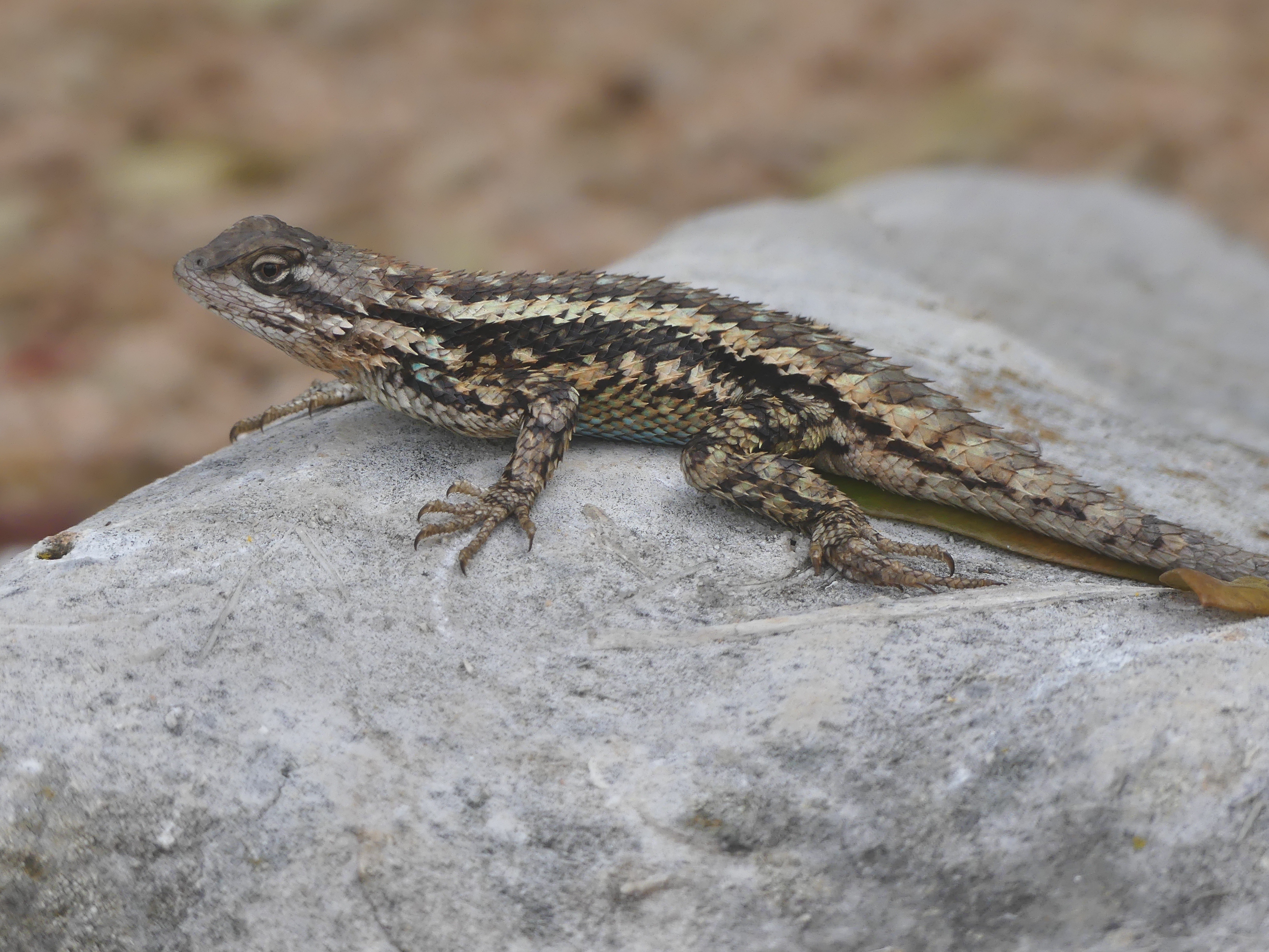
A gorgeous Texas Spiny Lizard.

A gorgeous Texas Spiny Lizard.

Trissie became engrossed in the beautiful books that were available for browsing and we both enjoyed the film about Lady Bird Johnson.  She was an amazing woman who accomplished much good and I now have an increased appreciation for her numerous environmental contributions.

Trissie enjoying the arboretum at the Lady Bird Johnson Wildflower Center.

Trissie enjoying the arboretum at the Lady Bird Johnson Wildflower Center.

Next it was a trip to the Alamo for Trissie and me.  It’s a place that everyone should go once, but once is enough for most, so Mike was happy that Trissie could go with me.  We enjoyed being tourists and walked the river front after touring the Alamo.

I went to Pace Bend Park by myself on Wednesday and could have spent days there.  I foolishly did not read eBird reports before I went, so I missed a lot of birds, but did find the only Canyon Towhee of the trip, more Woodhouse’s Scrub-Jays, and several pretty butterflies.

'Olive' Juniper Hairstreak

‘Olive’ Juniper Hairstreak

That evening Carlos Ross, a new friend made on Facebook, met us at Commons Ford Park to look (well, actually listen) for Common Poorwill.  It was a lovely evening and the four of us were the only people at the park.  We talked about the mysteries of birds and life while we waited.  And, then I heard the soft “Poor will, Poor will” in the distance.  Yay!  This was my only life bird of the trip.

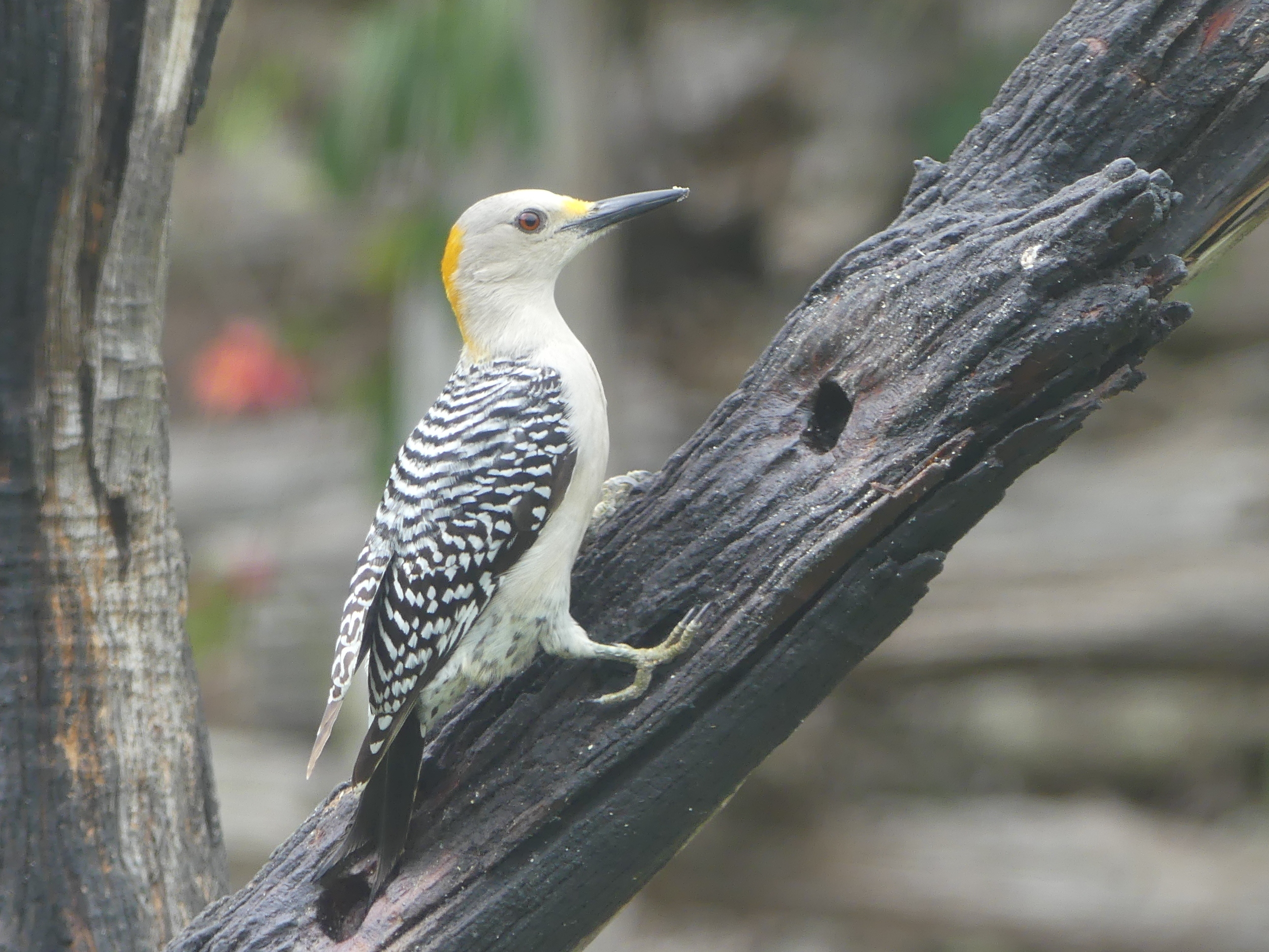
Female Golden-fronted Woodpecker

Female Golden-fronted Woodpecker

I had planned to leave on Thursday, but I couldn’t tear myself away from Texas birds, so Trissie and Mike invited me to stay with them another day.  The volunteer we had met earlier in the week at the LBJ Wildflower Center had shown us some beautiful photos that he took at Pedernales Falls State Park, so we decided to go there on our last day together.  We walked into the bird blind at the park and my jaw dropped.  The bird area contained a large pool/fountain and several tree stumps stuffed with suet – all designed to draw in the birds.  And, did it ever draw them in!  Golden-fronted and Ladder-backed Woodpeckers up close.  A flock of Cedar Waxwings in the pool.  Good looks at Spotted Towhee and Lincoln’s Sparrows.  We saw only 16 species, but some like Bewick’s Wren were birds that I had not seen anywhere else on this trip.

Woodhouse’s Scrub-Jay

Woodhouse’s Scrub-Jay

The next day, Friday, I really had to start heading home, so I reluctantly said goodbye to Trissie.  But I was greedy and drove two hours west to Pedernales Falls before heading east.  The difference from the previous day was astonishing.  It was so quiet that I could hardly believe it was the same place.  But it was still nice to do my last Texas birding at such a wonderful place.

Pine Warbler at an I-30 rest stop in Arkansas.

Pine Warbler at an I-30 rest stop in Arkansas.

The drive home was uneventful.  I have learned to pace myself by not driving too far each day.  I stopped at nearly every rest area and walked around for 20-30 minutes with my binoculars and camera.  I usually didn’t find anything more exciting than robins or chickadees, but sometimes I got lucky as with a lovely male Pine Warbler in Arkansas.  I will definitely be doing more road trips.  One of them is sure to be to Texas again to visit Trissie and Mike and see more Texas birds and butterflies.

Texas Indian Paintbrush

Texas Indian Paintbrush

Read Full Post »

“I learned that hot spots aren’t hot every day, even at the right time of the year.”  I wrote that about visits to Dauphin Island, Alabama, and High Island, Texas, during my big 2012 Texas trip.  It sounds like I learned a valuable lesson, right?  Wrong. I left for Minnesota in late October already counting my life Northern Goshawk that I would see at Duluth’s Hawk Ridge.  How could I miss?  “They fly right over your head” folks said when describing the wondrous spectacle of hawk migration in Duluth.  Well, I did miss the bird.  But, fortunately, I also had other goals for the trip.

I saw this pretty little Song Sparrow before I was out of North Carolina.

I saw this pretty little Song Sparrow before I was out of North Carolina.

Ever since I bought my new wilderness green Subaru Outback two years ago, I have been dreaming of birding road trips.  Until this fall, my longest trips had been to Florida, but now I had an opportunity to test drive a more adventurous trip.  I would also have a chance to indulge my growing obsession with state birding. I have had an interest in seeing the number of states on my birding lists grow for a long time, but the new eBird personal profile pages with maps fueled a need to fill in the blank states.  If I took the western route north and a more eastern route home, I could add five new states.

My first new state was Missouri.  I spent the night just the other side of St. Louis and checked the BirdsEye app on my phone.  Cuivre River State Park was just half an hour away and many birds had been reported there.  Perfect!  I drove to the park on the morning of Wednesday, October 26.  I quickly discovered that the park is huge (6,300 acres) and I didn’t have a clue about where to find the best birding spots.  I did not find many birds that morning, but I enjoyed driving around the park and walking a couple of short trails.  Note for my next trip: you can’t do too much research about birding locations.

A White-throated Sparrow in Iowa

A White-throated Sparrow in Iowa

The next state was Iowa, where I met Tom Dunkerton, an excellent photographer and naturalist who I met in Florida a few years ago.  Due to schedule constraints, we expected to have only one morning together, but Tom surprised me by calling Wednesday afternoon and saying that if I could get to Neal Smith NWR before dark, he would show me around.  That was incentive enough to drive there from Missouri without dawdling along the way with unnecessary stops.  We had about 45 minutes to drive around the immense NWR before dark, a place I will be sure to spend time on my next trip.

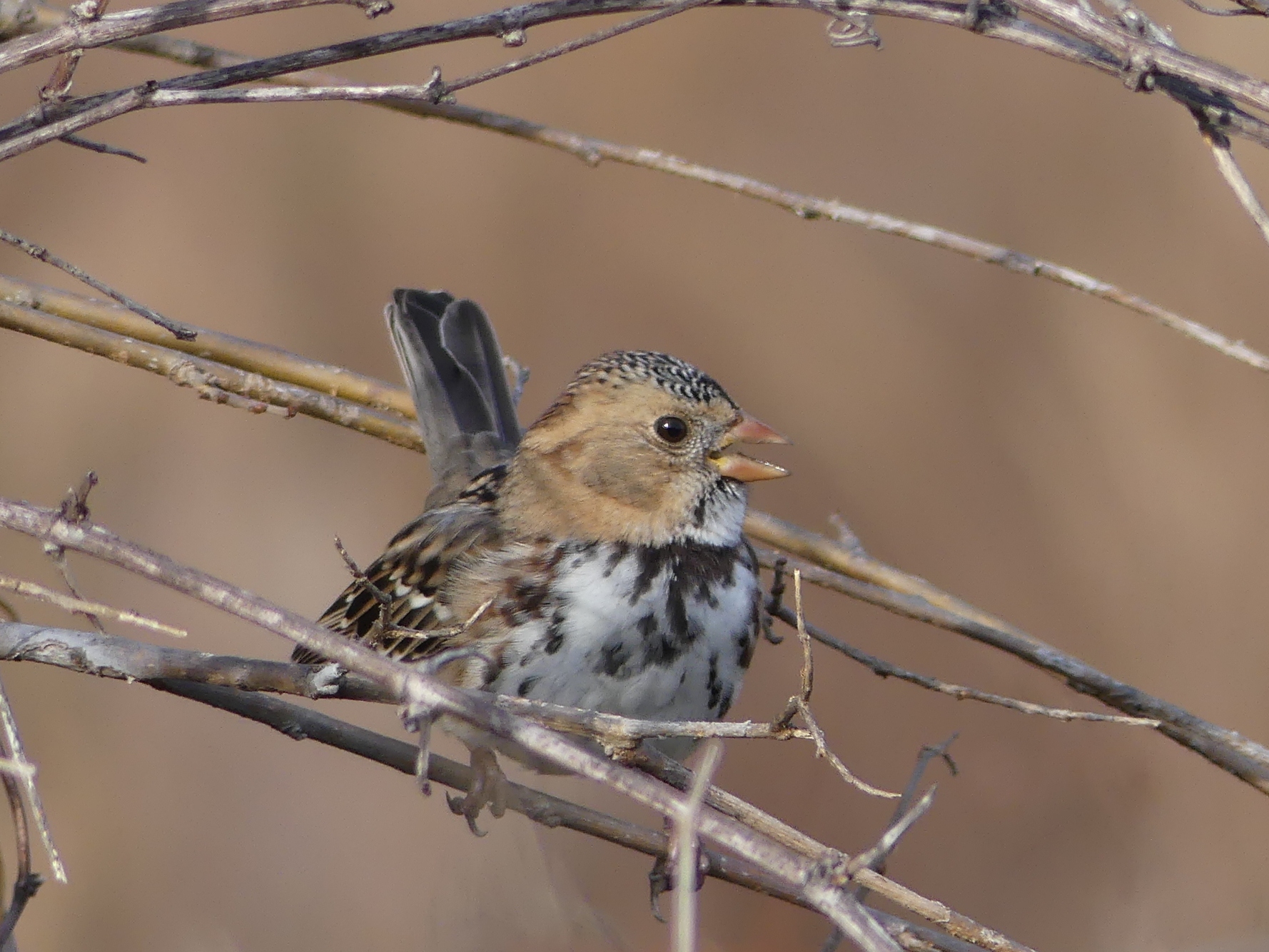
A young Harris's Sparrow sings in Jester Park.

A young Harris’s Sparrow sings in Jester Park.

Tom picked me up on Thursday morning and we headed to one of his favorite sparrow spots – Jester Park.  We saw several species, all up close, feeding on grass and weed seeds.  I could have stood there all day soaking in the beauty of these birds.  Tom captured the magic of the morning with this video of a young Harris’s Sparrow singing.

The best surprise of the trip was that LeConte’s Sparrows were still in the area.  I had assumed that they would all be south by then, but a few lingering birds were still around, so we left Jester Park to look for LeConte’s Sparrows.  I was thrilled to get wonderful close looks and even a few photographs.

Le Conte's Sparrow in Iowa

Le Conte’s Sparrow in Iowa

I wish that morning could have lasted for days, but Tom had to get to work and I needed to drive to Minnesota.

It was great to see Diane, one of my favorite birding buddies, and we enjoyed the chance to catch up during our drive to Duluth the next morning.  On Friday afternoon, we met Angie and the three of us went to Hawk Ridge, location of one of the best-known hawk watches in the country.  I was shocked to discover that they had seen very few raptors that morning.  The weather was awful so the prospects for the afternoon were no better.  The hawk counters advised us to come back in the morning at 7:45 AM.

Sax Zim Bog was less than an hour away, so we headed that way and spent the afternoon enjoying the simple pleasures of the bog.  Our favorite sight was a large field with a carcass that had attracted four Bald Eagles, three magpies, crows, and ravens.

My car at the Sax-Zim Bog Welcome Center.

My car at the Sax-Zim Bog Welcome Center.

The following morning we returned to Hawk Ridge.  I patiently watched the Goshawkless skies for over four hours before giving up.  The few raptors that had come by were too distant to see well, so I didn’t feel like we’d be giving up much if we left.  If I was going to see a Goshawk, I wanted to see it well.  They did have one juvenile Goshawk after we left, but I did not regret the lovely afternoon drive along the Lake Superior shoreline enjoying a gorgeous fall day with friends.

By this time, I had reconciled myself to missing the target bird of the trip, so when Angie told Diane and me that Sparky Stensaas, executive director of Friends of Sax-Zim Bog, was leading a field trip at the bog on Sunday, we immediately decided that we wanted to go.  I was surprised to see about 25 birders show up the next morning.  It would have been worth it just to hear Sparky’s commentary on the bog and its birds.  We learned about Rough-legged Hawks.  The have tiny beaks because they eat small prey, mostly voles.  And, it’s suspected that they can see concentrations of vole urine.  Amazing!  And, we had great views of a Rough-legged Hawk hunting in the bog.

Red-breasted Nuthatches enjoy the feeders at the Sax-Zim bog Welcome Center.

Red-breasted Nuthatches enjoy the feeders at the Sax-Zim Bog Welcome Center.

We also saw two Ruffed Grouse during Sparky’s trip, but I was unable to get a photo.  Sparky gave us directions for a route back to the highway with good chances for more grouse.  We saw one right away, but a passing truck flushed it into the woods.  And, then we saw another.  This was the most cooperative grouse ever, allowing us long indulgent looks and many photographs.  The bird did look at us with a wary eye, but then went back to feeding on the side of the road, and finally walked into the woods.  It was, as Diane called it, a sacred moment, and one we will always cherish.

A Ruffed Grouse in the Bog.

A Ruffed Grouse in the Bog.

Diane and I drove back to her house near Minneapolis that afternoon and I left for the long, slow drive home the next morning, on Halloween day.

The first stop on my way south was in Illinois, to stay the night and visit with my friend David’s mother, Darlene.  We discovered that Rock Cut State Park was just a couple of miles from her house, so I invited Darlene to go to the park with me on Tuesday morning.  We didn’t see many birds, but did find quite a few butterflies and enjoyed our walk on a gorgeous fall morning.

An Orange Sulphur at Rock Cut State Park

An Orange Sulphur at Rock Cut State Park

Our walk was longer than planned because I took the wrong trail.  We were lost, but we ran into a man walking his dog who gave us directions.  We walked a while longer, following his directions, and suddenly the man and dog were walking towards us.  He had come back to check on us and walked the rest of the trail with us.  He waited with us when we stopped to catch our breath and helped Darlene over a rough spot in the trail.

After this heart-warming start to the day, I drove almost to Indianapolis.  On Wednesday, I continued the pattern that was developing for travel days – visit a park in the morning and drive in the afternoon.  This time is was Indianapolis’ Eagle Creek Park, one of the largest city parks in the nation with 1,400 acres of water and 3,900 acres of forest.

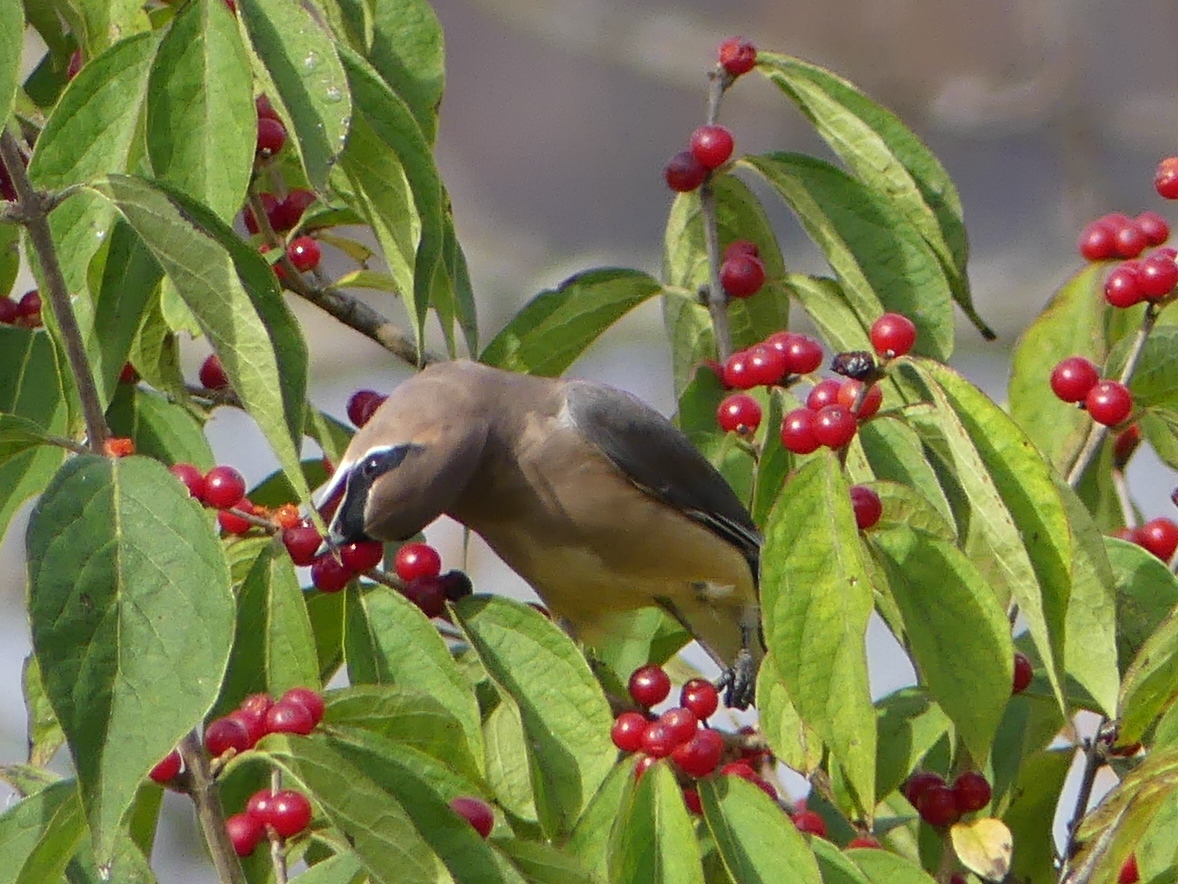
Cedar Waxwing at Eagle Creek Park

Cedar Waxwing at Eagle Creek Park

On Thursday morning, I visited the last park of the trip, Hisle Farm Park, near Lexington, Kentucky.  I picked it because it looked like it wouldn’t be far out of my way, not because I expected much.  No one else was there when I arrived and I didn’t see or hear any birds.  I got out of my car anyway and soon heard meadowlarks singing.  I walked in their direction and soon heard more birds.  I walked about two miles through fields and along the wooded edges.  Song Sparrows were everywhere, Robins and Cedar Waxwings covered the treetops.  In one little spot in the sun, I watched Song, White-throated, and White-crowned Sparrows, Titmice, Chickadees, Goldfinches, a Golden-crowned Kinglet, and other birds all feeding on the ground and in the low berry-covered shrubs.  The temperature was just right; there was the slightest breeze.  It was a perfect end to the birding for my trip.

Another Harris's Sparrow from Iowa. Can't get enough of these beauties!

Another Harris’s Sparrow from Iowa. Can’t get enough of these beauties!

I really did not see a large number of birds on this trip, just 66 species, but I did add birds from five new states.  It could have been my poor vision and hearing, poor planning, or just plain laziness.  However, the Midwest in fall isn’t the birdiest time and place of the year.  There is a reason that birders love “north with the spring” trips.  Now that I’ve driven 3,760 miles and proven to myself that I like road trips, my next big trip just may be “north with the spring.”

Read Full Post »

View from The Bund on the overcast day we were there.

View from The Bund on the overcast day we were there.

“There are some birders,” said my son, Dave, as we walked along The Bund, a famous waterfront area in central Shanghai.  Birding is unusual in China, so I could hardly believe it, but two men and a woman had binoculars and scopes fixed on gulls in the river.  We walked up to them and introduced ourselves.  Surprisingly, I was familiar with Craig Brelsford, an American birder living in Shanghai with his wife, Elaine Du, and their friend and fellow birder, Michael Grunwell, from the Facebook group Birding China.  We all marveled at the coincidence of meeting there and had a great time talking about China, birds, websites (a common interest of Craig and Dave), and travel.  Elaine was surprised that Dave has been to Baoshan, in the western province of Yunnan, and they compared notes on their trips there.

Dave - all dressed up and ready for the awards presentation, the reason that we were in Shanghai.

Dave – all dressed up and ready for the awards presentation, the reason that we were in Shanghai.

I had arrived in China a week earlier, on March 4, for my fourth trip to visit my oldest son who has lived in Shenzhen since January 2008.  We were in Shanghai for one of Dave’s occasional jobs as an awards presenter for an organization similar to Guinness World Records.  The Chinese take these awards very seriously and about 200 people attended the presentation.  Three awards were given that day, including one for the world’s largest enamel floor.

Images of fish and other oceanic creatures were scattered about the beautiful blue and gold enamel floor.

Images of fish and other oceanic creatures were scattered about the beautiful blue and gold enamel floor.

Dave was done with his responsibilities shortly after noon, so we spent the afternoon exploring The Bund.  Craig and Michael showed me a little group of Black-headed Gulls that I hadn’t picked up with my binoculars and we talked about the identity of the big white-headed gulls, which Michael was confident were Mongolian Gulls.

Probable Mongolian Gull on the Huangpu River.

Probable Mongolian Gull on the Huangpu River.

Dave and I had planned to go to Shanghai’s Century Park the next morning and Craig confirmed that our plan was a good one.  He said that I could expect to find Pale Thrush there and I was pleased that I did find one right away.  Life bird number one for this trip!  A short time later Dave pointed out a bird perched on a branch of a nearby tree.  When I started taking photographs, a young Chinese woman walked right over to where my camera was pointed and flushed the bird.  All I’d seen was a crest like a tit or bunting and yellow on the throat.  But that was enough to identify the bird as a Yellow-throated Bunting, another life bird.

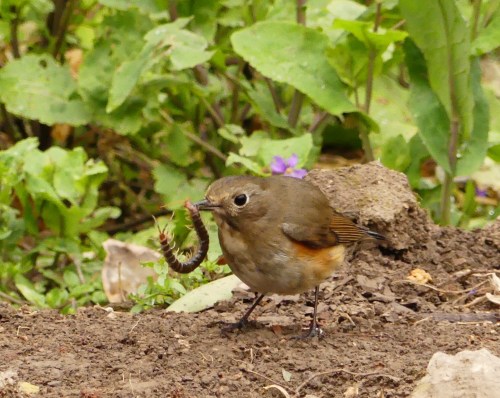
The most interesting bird at Century Park was this Red-flanked Bluetail.  After working with a millipede for quite a while, he finally swallowed it whole.

Red-flanked Bluetail in Shanghai's Century Park.

Red-flanked Bluetail in Shanghai’s Century Park.

Dave and I did a little more sightseeing, had a nice dinner, and flew back to Shenzhen the next morning.

Dim sum for Dave, Amber, and me.

Dim sum for Dave, Amber, and me.

My previous trips included serious birding; this time I focused on spending time with Dave and my three-and-a-half-year-old granddaughter, Amber.  A bonus was meeting Dave’s girlfriend, Rachel, and her family.

I had arrived on a Friday evening, just in time to join Rachel’s family for their traditional Saturday dim sum the next day.  The American equivalent of dim sum would be a family style meal consisting exclusively of shared appetizers. Dim sum originated in Guangzhou (formerly called Canton), just an hour from Shenzhen.  It just may be my favorite type of Chinese food; I love trying so many different dishes.  Food is an important part of Chinese culture and there is an abundance of it at every meal.

Making dumplings with Amber and Rachel's father.  It's harder than I expected.  Mine barely held together when they were cooked.

Making dumplings with Amber and Rachel’s father.  It’s harder than I expected.  Mine barely held together when they were cooked.

Shortly after we got back to Shenzhen, I spent a weekend with Amber and her mom, Trissie.  We went to Evergreen Resort, a place we had visited in 2014, but this time we stayed overnight.  The resort has lots of outside activities for kids, but it was hard to get Amber away from the hanging bridge.  She is absolutely fearless and walked back and forth on the bridge until dark.

Amber and Trissie crossing the hanging bridge at Evergreen Resort.

Amber and Trissie crossing the hanging bridge at Evergreen Resort.

After the weekend, I was back at Dave’s and we quickly settled into a routine similar to my last visit.  I usually went for a walk to nearby Shenzhen Central Park by myself each morning.  Dave, Amber, and I did something together in the afternoon, and then Rachel joined us for dinner.  Dave is the primary caregiver for his daughter and he works from home, so we had a lot of flexibility with our schedule.

Amber loves climbing trees.

Amber loves climbing trees.

The park was usually busy with people as the Chinese walk, talk, sit, dance, and generally enjoy their parks.  Between the people and obsessive cleaning up, I thought that I might not see many birds.  Still, I managed to see 30 species in Shenzhen Central Park.  I can recognize the songs or calls of only a handful of birds, so I couldn’t bird by ear like I do at home and had to actually see the birds.

Sweeping up fallen flowers in Shenzhen City Park. I have observed this "cleaning up" in all of Shenzhen's city parks.

Sweeping up fallen flowers in Shenzhen City Park. I have observed this “cleaning up” in all of Shenzhen’s city parks.

I was thrilled with Masked Laughingthrushes on my first visit to China.  I saw them again on my second visit.  By my third trip, I realized they were one of the most common birds in Guangdong Province.  Regardless, they are one of my favorites.

Masked Laughingthrush, a very common bird in Southern China.

Masked Laughingthrush, a very common bird in Southern China.

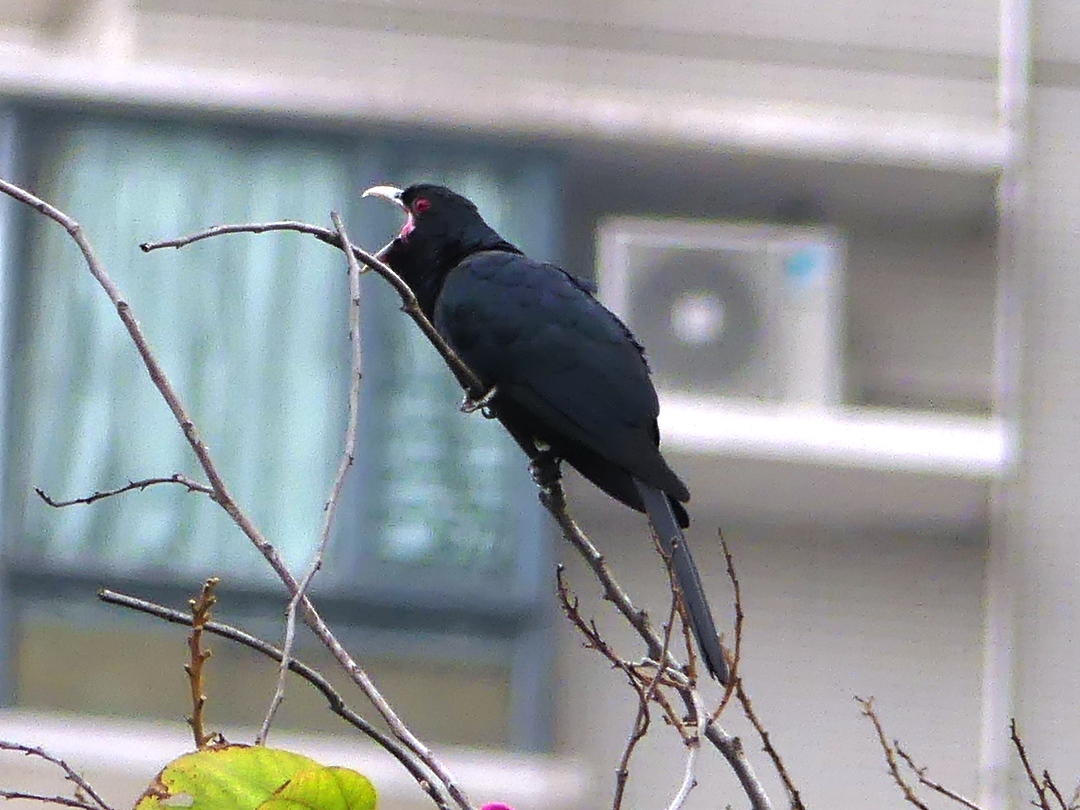
Asian Koels symbolize city birding in China for me.  I loved this proud, bold male singing from a treetop on the edge of the park with apartments in the background.

Asian Koels could be heard calling at nearly every park I visited in Shenzhen.

Asian Koels could be heard calling at nearly every park I visited in Shenzhen.

Unidentified damselfly.

Unidentified damselfly.

Dave and Rachel knew how much I loved going to parks, so they planned fun and interesting outings farther from home on the weekends.  Shenzhen may be the greenest city in China with its many gorgeous parks.  But in spite of much time spent outside, most Chinese seem rather removed from nature.  When we found this little damselfly, Rachel’s first reaction was “get it away from me!”  But, she saw my delight and was soon right there beside me getting as close as possible to get a photo with her iPhone.

Our most exciting nature find was these Clearwing Tiger Moths at Fairy Lake Botanical Garden.  We spent quite a bit of time admiring and photographing these mating moths.  We were on a narrow path and it wasn’t possible to pass us without seeing the objects of our attention.  These gorgeous creatures caught the interest of everyone who came by.

Clearwing Tiger Moths at Fairy Lake Botanical Garden, perhaps the nature highlight of the trip.

Clearwing Tiger Moths at Fairy Lake Botanical Garden, perhaps the nature highlight of the trip.

I was able to plan one day dedicated to birding.  Mike Kilburn, who had guided me for a day on my first trip in 2009, no longer works as a guide, but he generously invited me to join him for some birding in Hong Kong.  Since I had spent very little time in Hong Kong, Dave and I decided to go a day early and do some sightseeing.  We stayed in the area most tourists flock to, Tsim Sha Tsui in the central area of Kowloon.  We enjoyed walking the streets, Kowloon Park, and the Science Museum.

The next day Mike took us to Lantau Island, the largest island in Hong Kong, which is less densely populated than the other Hong Kong islands and primarily consists of mountainous terrain.  First we went to Tai O, a three-centuries-old fishing village which is famous for its waterways, stilt houses, fishing boats and scenery.

Stilt houses at Tai O.

Stilt houses at Tai O.

This was where I got my third and last life bird of the trip, Gray-faced Buzzard, when five birds flew over.

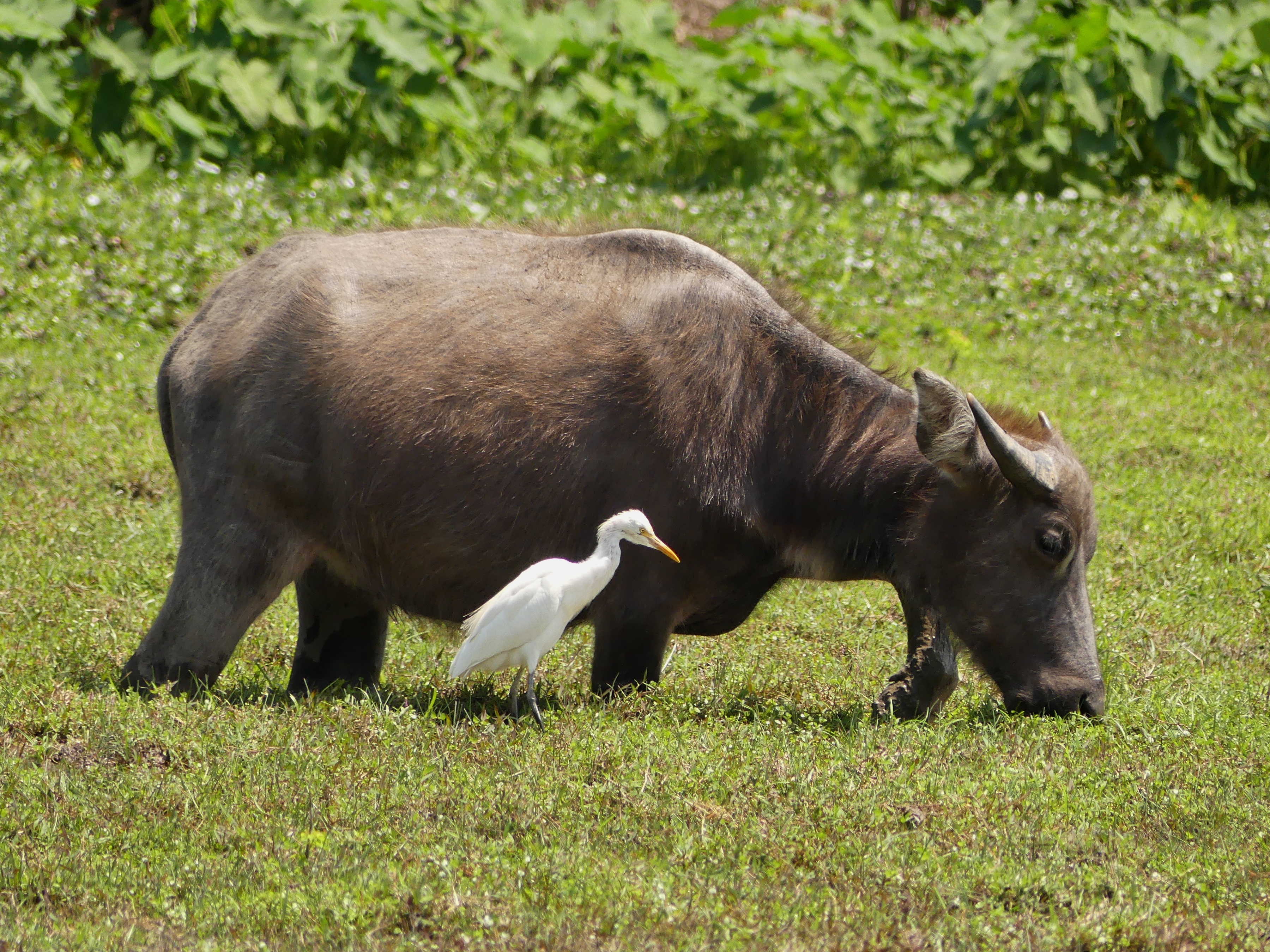
Next, Mike took us to Pui O, a more agricultural area on Lantau Island, which has a resident population of water buffaloes.  Pui O is one of the few remaining areas where they still occur in Hong Kong.

Water Buffalo and Cattle Egret at Pui O.

Water Buffalo and Cattle Egret at Pui O.

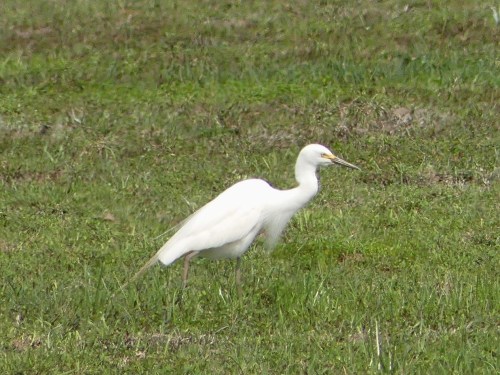
I had my best look ever at Intermediate Egret here, which is just like its name suggests – an egret intermediate in size between Little Egret and Great Egret.

Intermediate Egret at Pui O.

Intermediate Egret at Pui O.

It was great to catch up with Mike and especially to hear about his new job as Senior Manager, Environment, Air Port Authority of Hong Kong.  I was impressed that the airport had such a position and knew that no one could be more effective in that role than Mike.  After an enjoyable day, it was all too soon to thank Mike and head back to Shenzhen.

The last few days were filled with family time and visits to the nearby Shenzhen Central Park.  I was fascinated by three White-shouldered Starlings that arrived at the park just before my trip ended.  I had seen them once before (during the Zoothera bird tour that was part of my 2012 trip), but I found these by myself.  That always makes birds special to me and I had time to really study these birds.

White-shouldered Starling. Many species of birds were attracted to these trees with huge flowers.

White-shouldered Starling. Many species of birds were attracted to these trees with huge flowers.

I was in China for nearly the entire month of March, but it went quickly.  After four trips, it now feels familiar and comfortable.  I miss Dave and Amber and the birds of China, but not the seven flights of stairs to Dave’s apartment.  I expect another trip is in my future, but for now it is good to be home and back to even more familiar and comfortable surroundings.  More photos can be found in my Flickr albums China 2016 – Birds & Butterflies and China 2016 – People  & Places.

Amber the explorer.

Amber the explorer.

Read Full Post »
Most birders don’t head to Florida in the summer.  And, I wouldn’t either if my step-daughters and my best friend didn’t live there.  I lived in Florida, too, for over 30 years, so it still feels like home and I visit every chance I get, even in summer.  Mid-day can be brutally hot and muggy, but nights are usually balmy and lovely.  The fresh gulf air brings memories of childhood summer days spent at St. Pete and Clearwater beaches.  How I wish my mother were here to see how much like her I’ve become.  As a teenager, I wanted to go to the beaches with nothing but pure white sand.  My parents preferred beaches with signs of life – sandpipers, pelicans, fiddler crabs, shells (some still alive).

Snowy Plover

Snowy Plover

I’ve had many rewards for summer birding in Florida.  The first was seeing brand-new just-fledged Snowy Plovers on July 7, 2008, on Caladesi Island.  David and I devoted an entire day to searching for these birds which had risen to the top of my most wanted list.  Their light colors blend into the sand in the hot summer sun, but David quickly found a group of five.

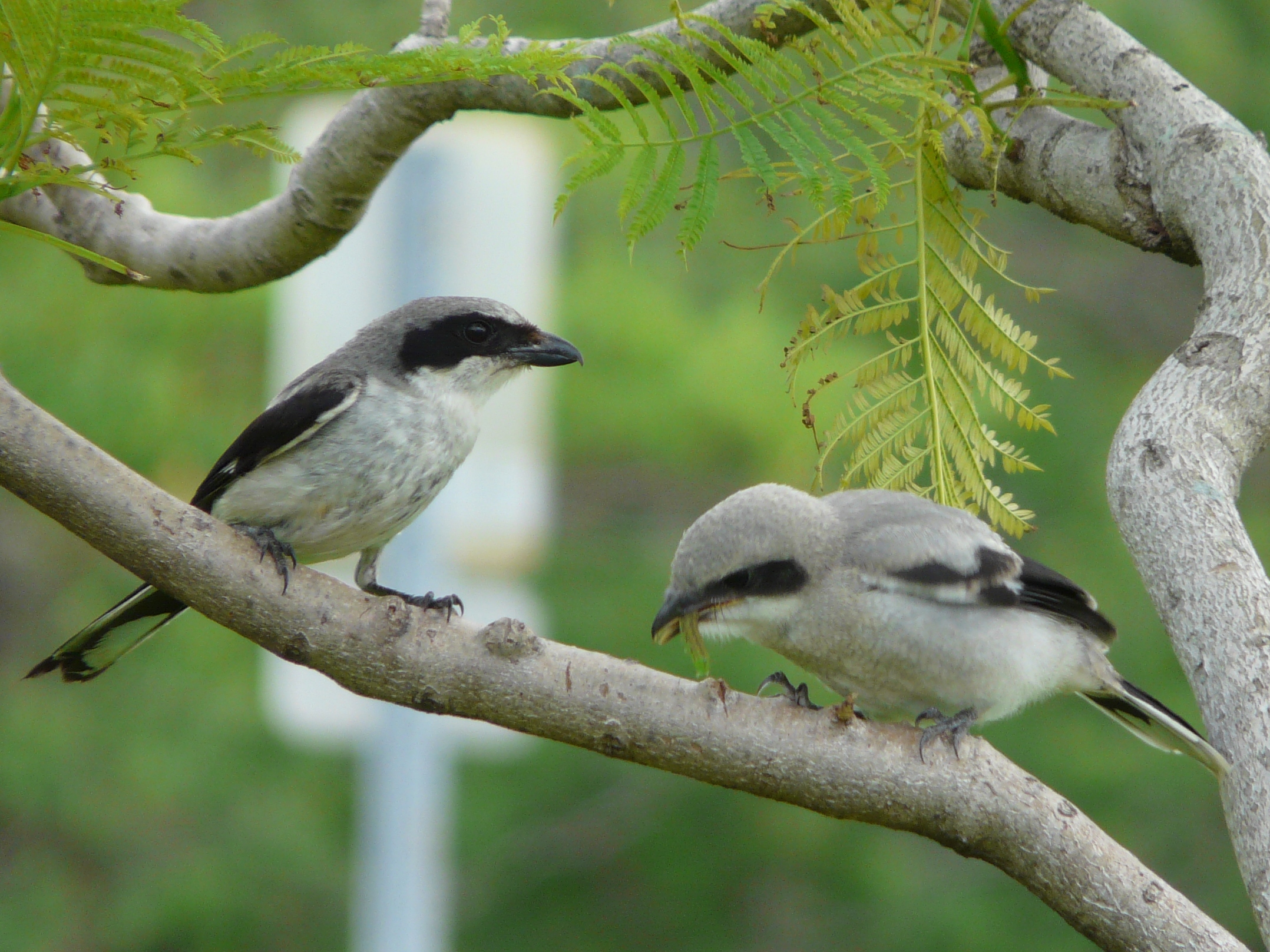
Loggerhead Shrikes are also memorable summer birds.  On June 27, 2009, I was thrilled to watch a Loggerhead Shrike family at St. Pete’s North Shore Park.

A juvenile Loggerhead Shrike enjoys lunch provided by a parent.

A juvenile Loggerhead Shrike enjoys lunch provided by a parent.

On June 22, 2013, we enjoyed a group of 14 Black-necked Stilts, including several juveniles, in a ditch between the road and the county landfill.

Juvenile Black-necked Stilt

Adult Black-necked Stilt


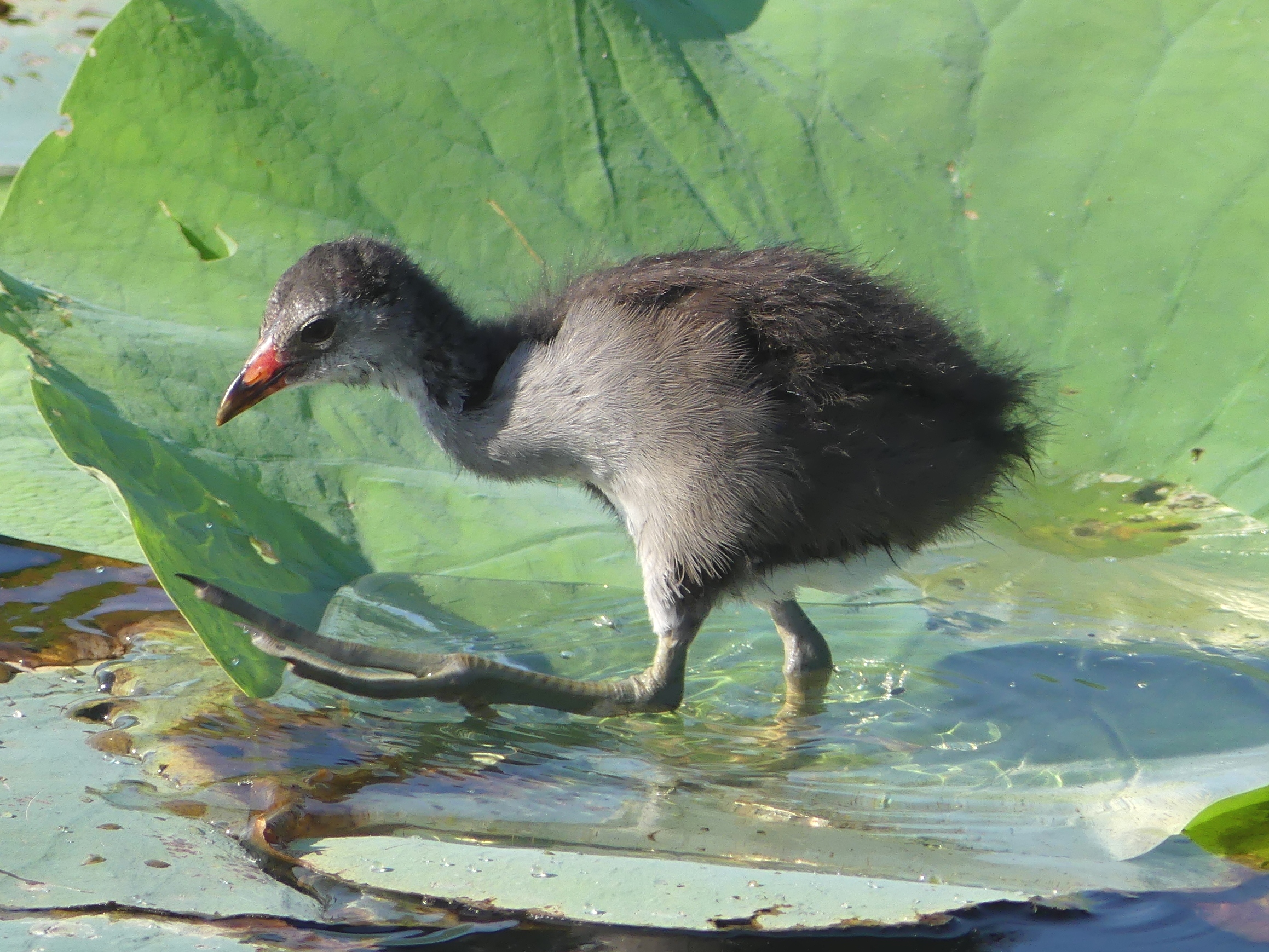
This year I headed south on June 20, the first day of summer and my step-daughter Debbie’s birthday.  My first stop was Savannah National Wildlife Refuge.  It’s birdier in winter, but I enjoyed watching mama Red-winged Blackbird feed two begging fledglings.  Common Gallinules were accompanied by little fuzz balls.   I tallied 20 species and drove to my motel.

Common Gallinule

Juvenile Common Gallinule. Note the feet on that baby!

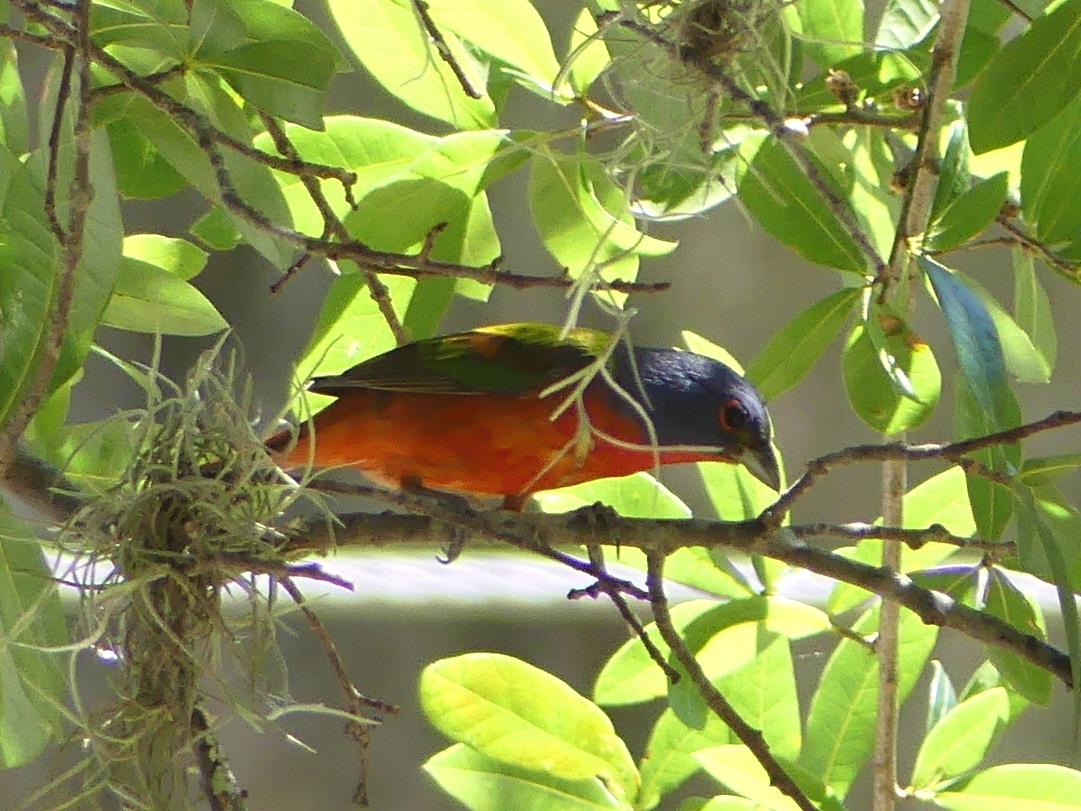
I went back to Savannah NWR the next morning and then drove on to Harris Neck NWR, another of my favorite places to stop on the way to Florida.  Harris Neck’s Woody Pond is one of the south’s biggest rookeries and it overflows with Wood Storks, White Ibises, Great Egrets, and other wading birds in the spring and summer.  Harris Neck also hosts breeding Painted Buntings.  They are a little shy, but I was able to photograph this gorgeous male after he flew from the feeder to a close-by tree.

Painted Bunting

Painted Bunting

Quinn and me

Quinn and me

I made it to Gainesville that evening in time for dinner with my step-daughter Liz and her family.  For the next three days I went to Sweetwater Wetlands Park for a couple hours in the morning and then spent the rest of the day with the girls.  It was fun to catch up with Debbie and her horse and spend time with Liz and her young daughters, Quinn and Casey.  We took Casey to see “Finding Dory,” the first movie that I’ve seen in years.  Quinn seemed immune to the heat and enjoyed our time at the “weekend park.”

Sweetwater Wetlands Park was created to improve water quality in Paynes Prairie.  It filters pollutants from urban runoff and wastewater which were harming the Alachua Sink with an excess of nitrogen.  The wetlands were also designed to also be an environmentally friendly park.  The result is outstandingly successful.  It is beautiful and functional and 217 species of birds have been reported there since work on the wetlands began in 2008.


One species that I especially appreciated was Least Bittern.  I had seen this secretive bird only a few times previously, but at Sweetwater there were lots of them and I even got a photo.

Least Bittern

Least Bittern

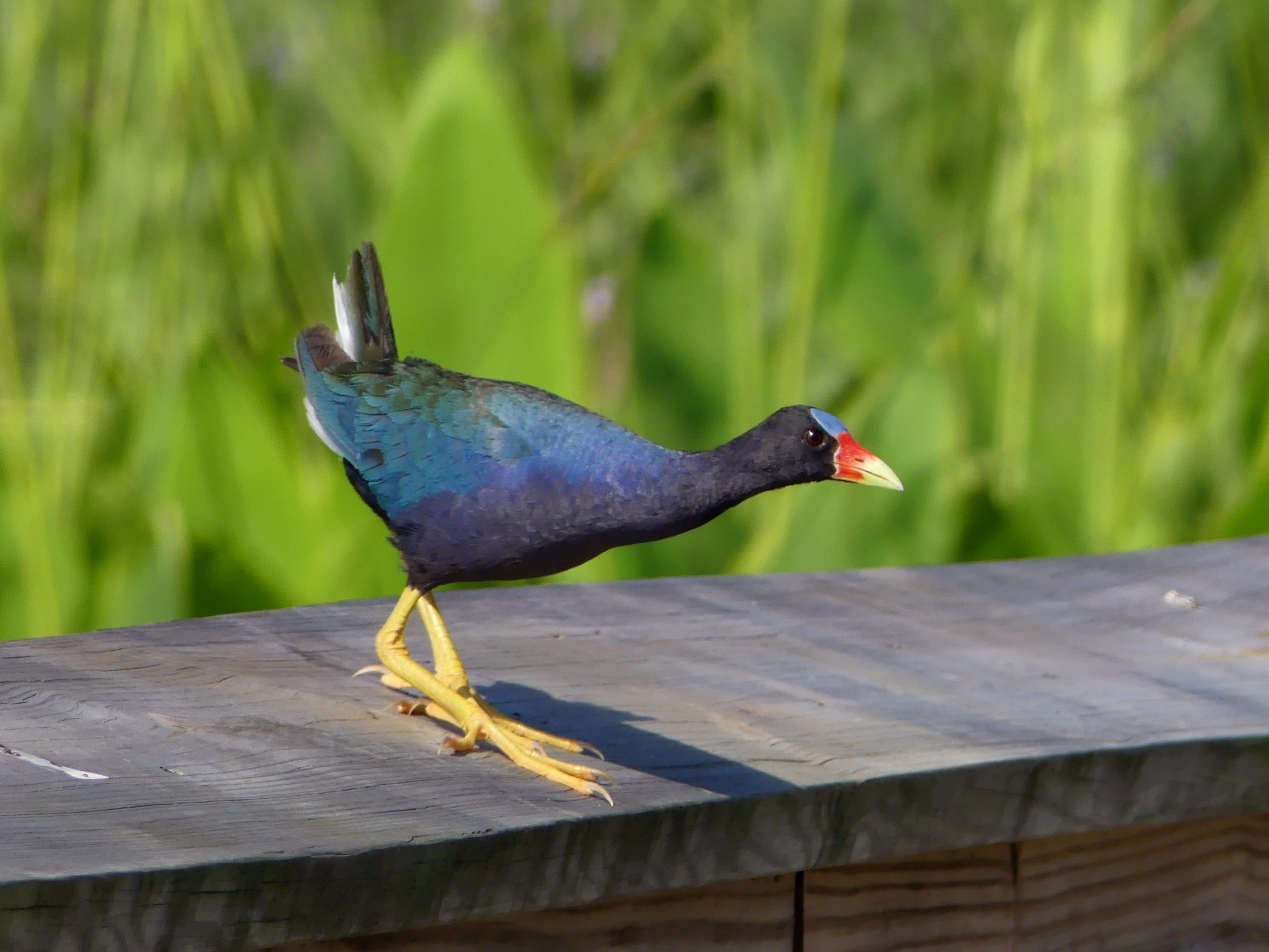
Birds at Sweetwater are accustomed to people; Limpkins and Purple Gallinules perch right on the boardwalk rail.

Purple Gallinule

Purple Gallinule

On Friday I moved farther south to visit David and Val in Dunedin.  We had a rather quiet weekend, but I always enjoy spending time in the county where I grew up.  On my first evening there, Ruddy Turnstones entertained me on the Dunedin Causeway.  My appreciation for this common bird has increased since David and I found a banded one (with color flags) on August 11, 2012.  I reported that bird to Bandedbirds.org and learned that it had been banded along the Delaware Bayshore in the month of May, most likely in Delaware in 2009.  Ruddy Turnstones have a very wide range, but North American birds breed in the far north arctic and winter along the U.S. coast and southwards to the southern tip of South America.  The turnstone that David and I found had already flown thousands of miles in its young life.

Ruddy Turnstone, June 2016, on the Dunedin Causeway

Ruddy Turnstone, June 2016, on the Dunedin Causeway

On Saturday morning, David and I found another banded bird, a Least Tern, and this one had color bands enabling it to be traced to a specific bird.  It had a very interesting history related to us by Dr. Marianne Korosy.  “This bird was banded at the Ulmerton Warehouse complex, a rooftop nesting colony of least terns located just west of intersection of Starkey and Ulmerton Rd. in central Pinellas County in 2011.  It was banded as a chick when it fell off the roof there and survived unharmed. It was banded and then returned to the roof.  The last time this bird was seen was July 20, 2011 on the south end of Clearwater Beach.”  Our report was the first in five years!

Banded Least Tern

Banded Least Tern

Least Terns are also migration champions.  They leave North America entirely in winter, moving to tropical waters as far south as Brazil.

One of the young Least Terns in the flock at Courtney Campbell Beach.

One of the young Least Terns in the flock at Courtney Campbell Beach.

I left for home on Monday morning and decided to try some different birding stops on this trip.  First was Okefenokee NWR in Georgia.  I enjoyed getting to know the place a little.  Several Bobwhites called during my few hours there.  Bachman’s Sparrows were singing all along the wildlife drive.  I made a mental note to go back some time in spring.

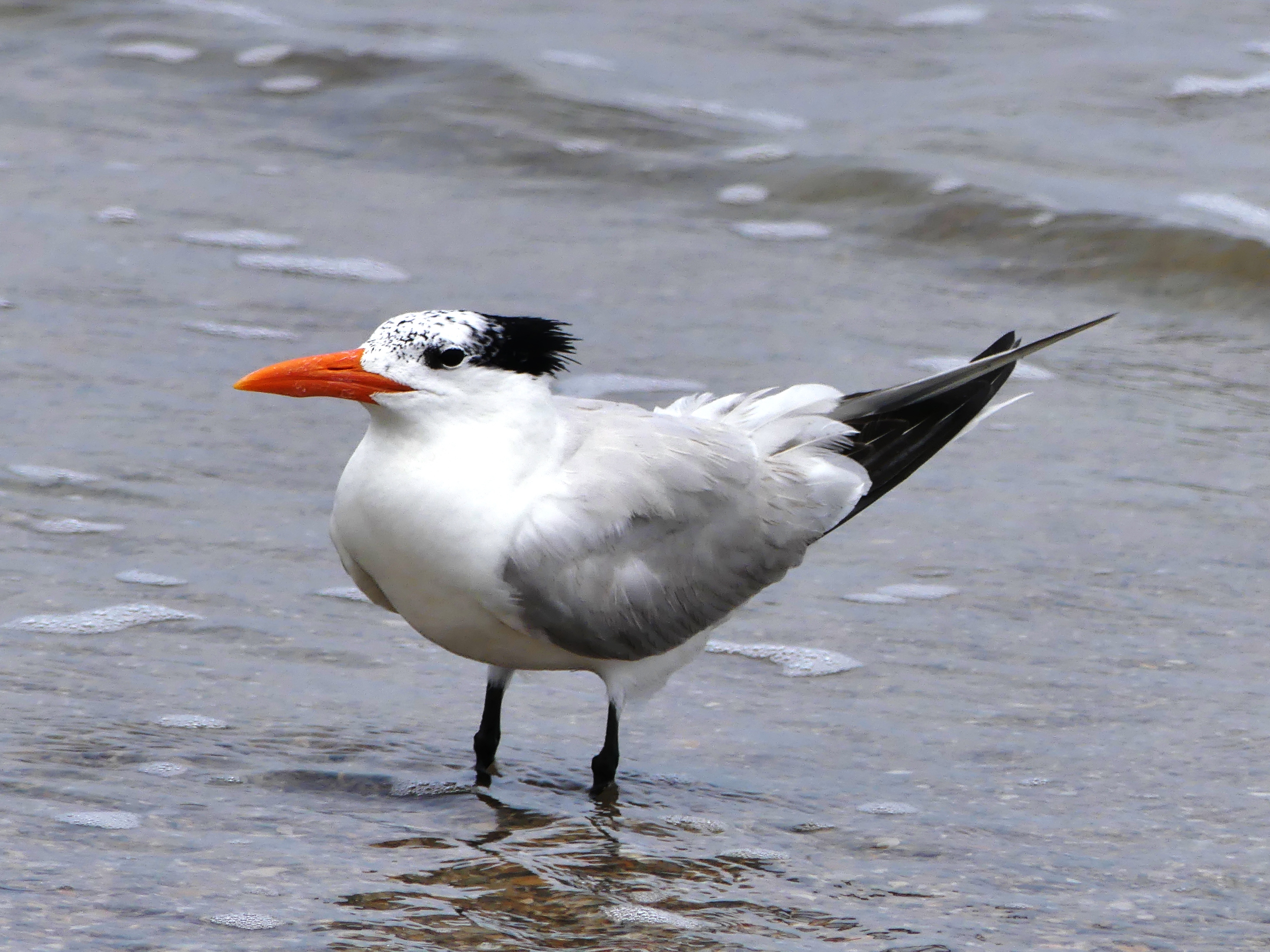
Royal Tern

Royal Tern

Next was a detour to Tybee Island.  A Lesser Black-backed Gull and Common Terns had been reported recently and I thought it would be fun to see them.  After I finally found the north beach and a parking spot, I walked to the water.  I had no idea which way to walk, so I turned right.  No birds were in sight except for a cormorant and a couple of Brown Pelicans that few over the water.  I resigned myself to having wasted several hours for nothing.  And, then I saw the flock!  Literally hundreds of birds were at the water’s edge where the shoreline curved.  I love this kind of birding; the birds calmly stayed put or flew just a short distance before settling down.  There were no trees for them to hide in.  Yes, beach birding is definitely the way to go for those with poor vision.

Lesser Black-backed Gull

Lesser Black-backed Gull

I had no trouble finding the Lesser Black-backed Gull amongst the Laughing Gulls and Royal Terns which made up 98% of the flock.  I also found two Common Terns, a few Ring-billed and Herring Gulls, and two Black Skimmers in the flock.  I love gulls and terns, so this turned out to be a good stop after all.  After taking photos, I hurried back to my car and set the GPS to “go home.”

More photos from this trip are on Flickr in my NC to FL – June 2016 album.

Black Skimmer

Black Skimmer

Read Full Post »

Diane and I headed to Kenai after a couple of wonderful days in Homer.  This area is the heart of salmon fishing country.  At a couple of river crossings, the fishermen were standing shoulder to shoulder in the river in their hip waders.  We took a short detour through Anchor Point SRA on our way to Kenai and we found these gulls on the river beside Slidehole Campground.  In Alaska, Glaucous-winged x Herring Gull hybrids are common and I suspect that at least one of these birds is a hybrid.  Regardless of their identity, the birds were beautiful on their nest on the rock in the middle of the river.

Nesting gulls at Anchor Point SRA

Nesting gulls at Anchor Point SRA

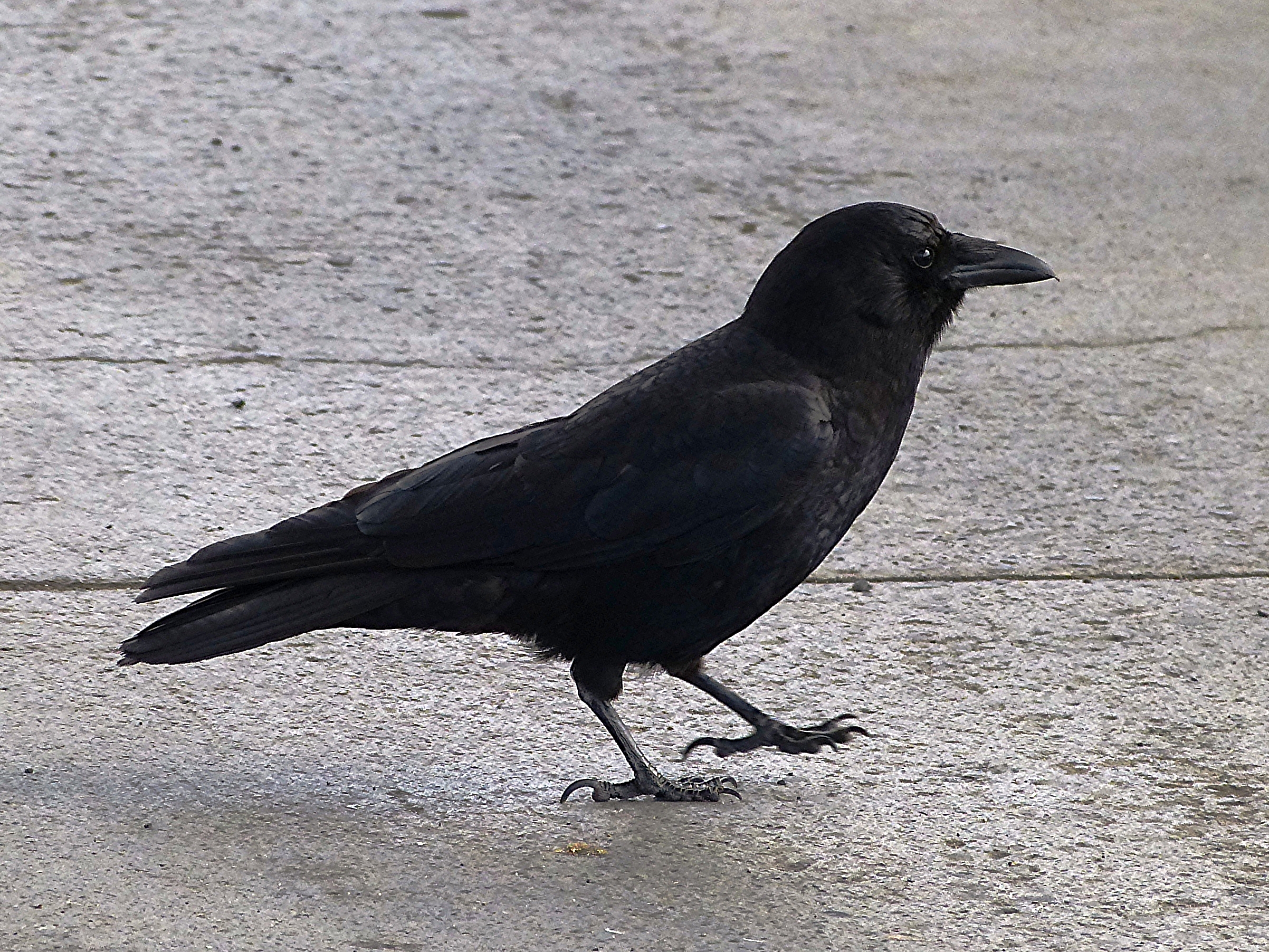
We found this Northwestern Crow when we stopped for gas.  It looks just like an American Crow, but it’s a different species, so it adds to a birder’s life list.

Northwestern Crow

Northwestern Crow

We also had time that afternoon for a stop at Kenai NWR and a walk on the trail behind the headquarters in Soldotna.  This part of the state was quite different from Homer and we found the wooded trail just beautiful.  There was much lush mossy vegetation like that in the photo below.

Along the Kenai NWR headquarters trail

Along the Kenai NWR headquarters trail

Early the next morning, July 1, we met our guide for the day, Ken Tarbox.  Ken and his wife Connie are largely responsible for the Kenai Peninsula Wildlife Viewing Trail Guide.  Ken is also one of the friendliest and most generous people we have met.  He told us that he likes to go out with visiting birders whenever his schedule allows.  Ken took us to all the birding hot spots around Kenai and Soldotna – the river flats, viewing platforms, the landfill, and even his yard and a friend’s yard.  We felt like we’d made a new friend and hope to go birding with Ken again.

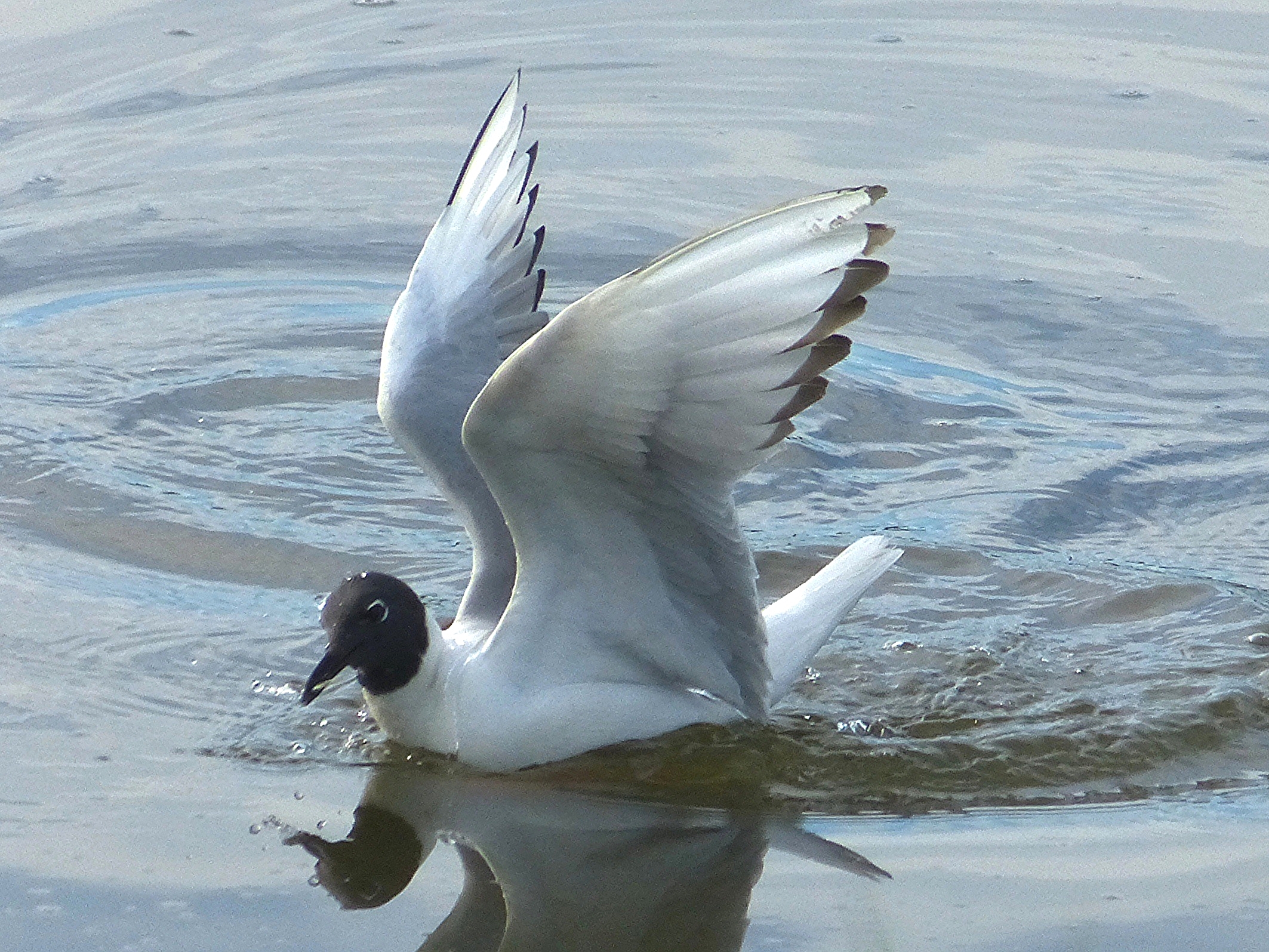
Bonaparte’s Gulls were one of my favorites that day.  We watched this adult swimming and foraging by plunging into a little stream.  Here it is with the little fish that it caught.

Bonaparte's Gull

Bonaparte’s Gull

And, I saw my first juvenile Bonaparte’s Gull.

Juvenile Bonaparte's Gull

Juvenile Bonaparte’s Gull

One of our target birds for this part of the state was Spruce Grouse.  On our way to Seward the next morning, Diane and I drove Skilak Lake Road and enjoyed Pine Grosbeaks on the side of the road and Common Loons and Common Goldeneyes on the lakes, but we failed to find a grouse.  We decided that this was another good reason to go birding again in Alaska.

Ken had given us several tips on where to find American Dipper.  We did not find any at Tern Lake, but we found this cooperative bird at the next location we tried, Ptarmigan Creek Campground.

American Dipper

American Dipper

Diane had found the adorable and comfy Abode Well Cabins for our stay in Seward.  In addition to being clean and cute, birds were literally right outside our door.

Our Abode Well cabin near Seward

Our Abode Well cabin near Seward

Just a couple of blocks away was a yard with juvenile Varied Thrushes.  They were fairly easy to see with our binoculars, but they hid in the grass just well enough to make getting a photo a challenge.

Juvenile Varied Thrush

Juvenile Varied Thrush

There were also beautiful butterflies and wildflowers near our cabin.  This is an Arctic White butterfly on fireweed.

Arctic White butterfly on fireweed

Arctic White butterfly on fireweed

On July 3, after a little birding near our cabin neighborhood, we ventured into town.  Seward’s population of 2,500 swells to about 30,000 for the Independence Day festivities.  Main Street is completely blocked off to traffic and the streets fill with people.  Most come to run in or watch the Mt. Marathon Race, which has quite an interesting history.  According to legend, it began with two old guys arguing about whether it was possible to run up and down the rather steep Mount Marathon in less than an hour.  The first official race was in 1915 and it has since become an important part of the July 4th celebration in Seward.

Seward Harbor

Seward Harbor

We drove Lowell Point Road, which runs along the edge of the harbor, where we enjoyed dozens of gulls, a couple of Harlequin Ducks, and Pigeon Guillemots.  We drove the road a couple of times, hoping to get close enough to the Marbled Murrelet to get a photo.  We had stopped at the end of the road closest to town and were watching the gulls.  And, then things started happening so fast that I’m not entirely certain exactly what happened, but here’s how I think it went.

Bald Eagle

Bald Eagle

A group of about eight young people were standing about 20 feet from where we were, also watching the birds.  Suddenly there were two Bald Eagles right in front of us.  One of the eagles caught a fish, the other tried to steal it, and the fish was dropped.  One eagle flew away.  One of the young men picked up the fish and threw it for the eagle.  The eagle swooped in to within 10-20 feet from all of us, but missed the fish.  This happened several times, the young man throwing the fish and the eagle attempting to catch it.  Excitement and enthusiastic shouts filled the air.  With one throw, the eagle came in especially close and the young man shouted “Hello America!”  And, we couldn’t imagine a more American place in the country than Seward, Alaska, on that gorgeous sunny Independence Day eve.

Shelley and Diane enjoying a seafood dinner

Shelley and Diane enjoying a seafood dinner

After a delicious dinner with a view of Seward Harbor at Ray’s Waterfront Restaurant, we ended the day with a drive on Nash Road to see the family of Trumpeter Swans that are regulars there.

Trumpter Swan family

Trumpter Swan family

The next morning it was time to head to the Anchorage Airport again, this time to fly home.  I will forever be grateful for 28 summer days in Alaska, truly the “trip of a lifetime.”  And, I’m especially grateful for the last week with Diane on the Kenai Peninsula.

Bald Eagle in tree

Bald Eagle

This is the sixth and last post about my trip to Alaska.  The other posts are:

Alaska 2015: There’s no place like Nome
Alaska 2015: The Pit Stop is Cancelled
Alaska 2015: Kenai Fjords and Denali National Park
Alaska 2015: To the Top of the World
Alaska 2015: Bird Nest Habitat

Read Full Post »

The birding trip with Bill Drummond and Dave Hursh was great, but it was rigorous with early starts and no down time.  I found myself looking forward more and more to the relaxing week with Diane on the Kenai Peninsula.  I didn’t expect to get any additional life birds, but it would be wonderful to spend time with a friend and we wouldn’t have to get up at 5:00 AM every morning.  After Diane and I both arrived at the Anchorage airport on June 27, she from Minneapolis and me from Barrow, we spent the afternoon birding close to the hotel.

To Homer and Seward

The next morning we set out for Homer.  It was only a little over four hours, but we had all day.  Our first stop was at Potter’s Marsh just outside of Anchorage, where the highlight was a Greater White-fronted Goose, a life bird for Diane.

Greater White-fronted Goose

Greater White-fronted Goose

We could have stayed there all day, but after a few hours, we got back on the road and continued on to the Kenai Peninsula.

Kenai Peninsula

The drive to Homer was breathtaking and ended with a warm welcome at Paula’s Place, our bed-and-breakfast home for the next two days.  We had the entire beautiful and comfortable lower floor to ourselves.  Paula’s warmth and hospitality made us want to stay forever.

Paula's Place, Homer, Alaska

Paula’s Place, Homer, Alaska

The following morning, June 29, was one of the best of the entire trip.  We spent the morning at Mossy Kilcher’s Seaside Farm.  It’s a real working farm with a hostel and guest cabins.  The place had a hippie atmosphere which made it feel a little like magically stepping back into the 1960’s.  Underlying it all was an incredible respect and love for all the animals who call the farm home.  We were especially touched by a very old horse who was given a large enclosure, food, and loving care even though he was too old to ride.

Seaside Farm

Seaside Farm

Mossy spent some time with us and we enjoyed meeting her as much as seeing her farm and birds.

Mossy and Shelley

Mossy Kilcher and me

She amazed us by knowing every bird and it’s history.  She pointed out one singing Fox Sparrow and told us where his nest was last year as well as this year.  She recognizes each individual bird by subtle differences in his song.  Mossy protects these birds by not allowing free-roaming cats or dogs on her property.

Bird Nest Habitat at Seaside Farm

Seaside Farm

We were delighted by baby birds everywhere.  Mossy told us that many Alaskans think of wild celery as a weed and cut it down, but she lets it grow because it’s good bird habitat.  We caught this pretty fledgling Hermit Thrush flitting around under wild celery.

Hermit Thrush

Hermit Thrush

We were also treated to our best looks ever at Golden-crowned Sparrows.  Below is a cute baby followed by a photo of it with a parent.

Golden-crowned juvie

Juvenile Golden-crowned Sparrow

Golden-crowned Sparrows

Golden-crowned Sparrows

After spending the entire morning at Mossy’s Seaside Farm, we tore ourselves away to check out some other birding spots near Homer.  After lunch, we went to Beluga Slough where we enjoyed a pair of Sandhill Cranes with their young colt.

Sandhill Cranes

Sandhill Cranes

Song Sparrows are common across North America, but the sub-species in Alaska is much darker than those in other parts of the county.

Song Sparrow

Song Sparrow

We finished the day with dinner and a drive down the 4-mile Homer Spit, a world-famous birding hot spot.  The shorebirds for which it’s best known had passed through in May, but in June there were still many birds including thousands of gulls.  The photo below shows a flock of Black-legged Kittiwakes, a species we saw all over Alaska.

Black-legged Kittiwakes

Black-legged Kittiwakes

The Glaucous-winged Gulls in Homer were very accommodating photographic subjects.

Glaucous-winged Gull

Glaucous-winged Gull

Diane and I fell into bed that night tired and happy after an amazing first day in Homer.  We were up early the next morning for our boat trip with Karl Stoltzfus, owner and operator of Bay Excursions.  Karl is a serious birder and the local expert on Kachemak Bay wildlife. His small yellow boat was perfect for getting close to the birds. 

The Surfbird’s golden highlights glowed in the sun.

Surfbird

Surfbird

Sea otters were so cute floating on their backs.

Sea Otter

Sea Otter

It was great to get an up-close look at a pretty Black Guillemot.

Black Guillemot

Black Guillemot

And, while I’d seen many Common Murres in Alaska, we got closest to them on Karl’s boat trip.

Common Murres

Common Murres

The three-hour Kachemak Bay trip was perfect.  Karl stayed close enough to land that the seas were smooth, a blessing for those of us who get seasick.  And, it was long enough to visit Gull Island and other highlights of the bay.  Most exciting for me was getting a good look at Kittlitz’s Murrelet, my last life bird in Alaska.  I had missed this bird on the Northwestern Fjord trip out of Seward, but with his small boat and excellent skills Karl got much closer to the birds.  Karl is very knowledgeable about the local wildlife and he shows respect for them by stopping his engine at a good distance and letting the boat drift towards the birds, and sea otters, so as not to endanger or alarm them.

Diane and Karl

Diane and Karl aboard the Torega.

Our time in Homer had been wonderful, but we had more places on the Kenai Peninsula to visit, so we packed up and headed on towards our next destination after lunch.  On the drive to Kenai, Diane and I both talked about our dreams of visiting Homer again.

Next story about my trip – Alaska 2015: Hello America!

Read Full Post »

« Newer Posts - Older Posts »