Feeds:
Posts
Comments

Archive for the ‘South America’ Category

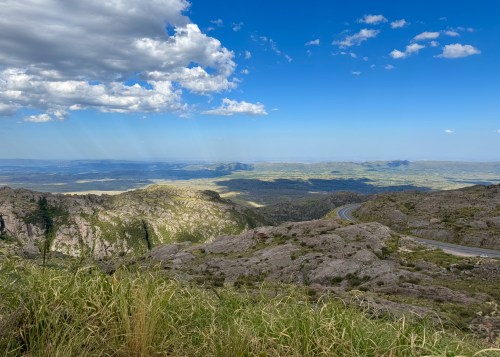
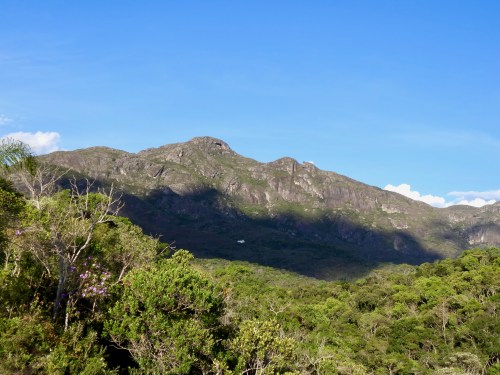
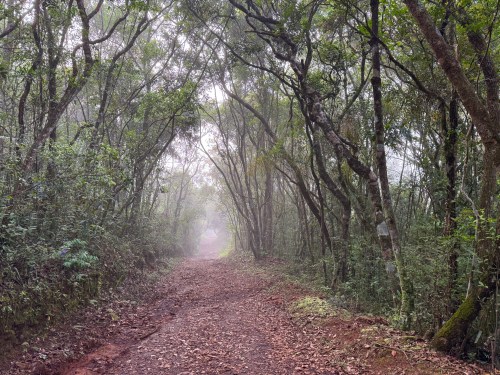
On November 20, we spent most of the day traveling northeast toward Campos do Jordão and the high-elevation Araucaria forests of the Serra da Mantiqueira. At 1,628 meters (5,341 feet) above sea level, Campos do Jordão is the highest city in Brazil. As we approached this region, the landscape changed noticeably.
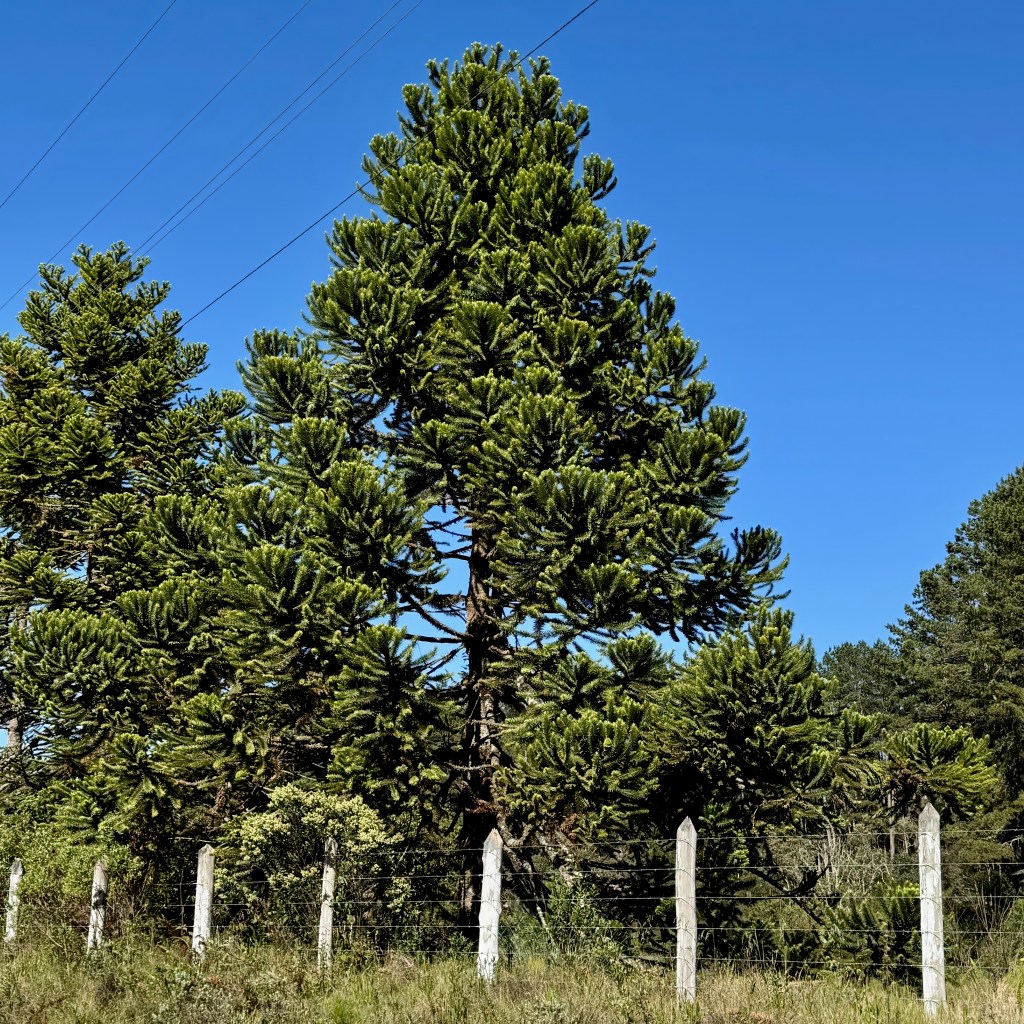
The Araucaria Moist Forest stretches from lower plateaus around 500 meters to mountain slopes above 1,600 meters, supporting a remarkable number of endemic plants and birds, including the Araucaria Tit-Spinetail (which I saw, but unfortunately did not photograph). Towering Araucaria angustifolia, the Brazilian pine, dominates the forest. This critically endangered conifer’s lineage dates back roughly 200 million years to the age of dinosaurs.

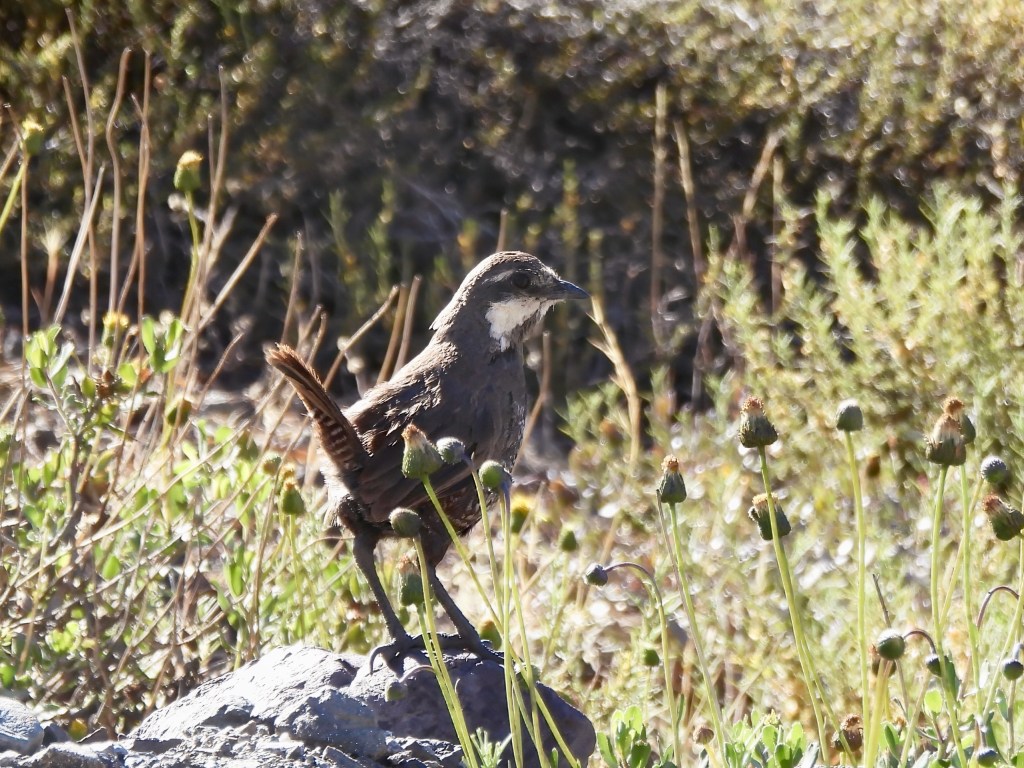
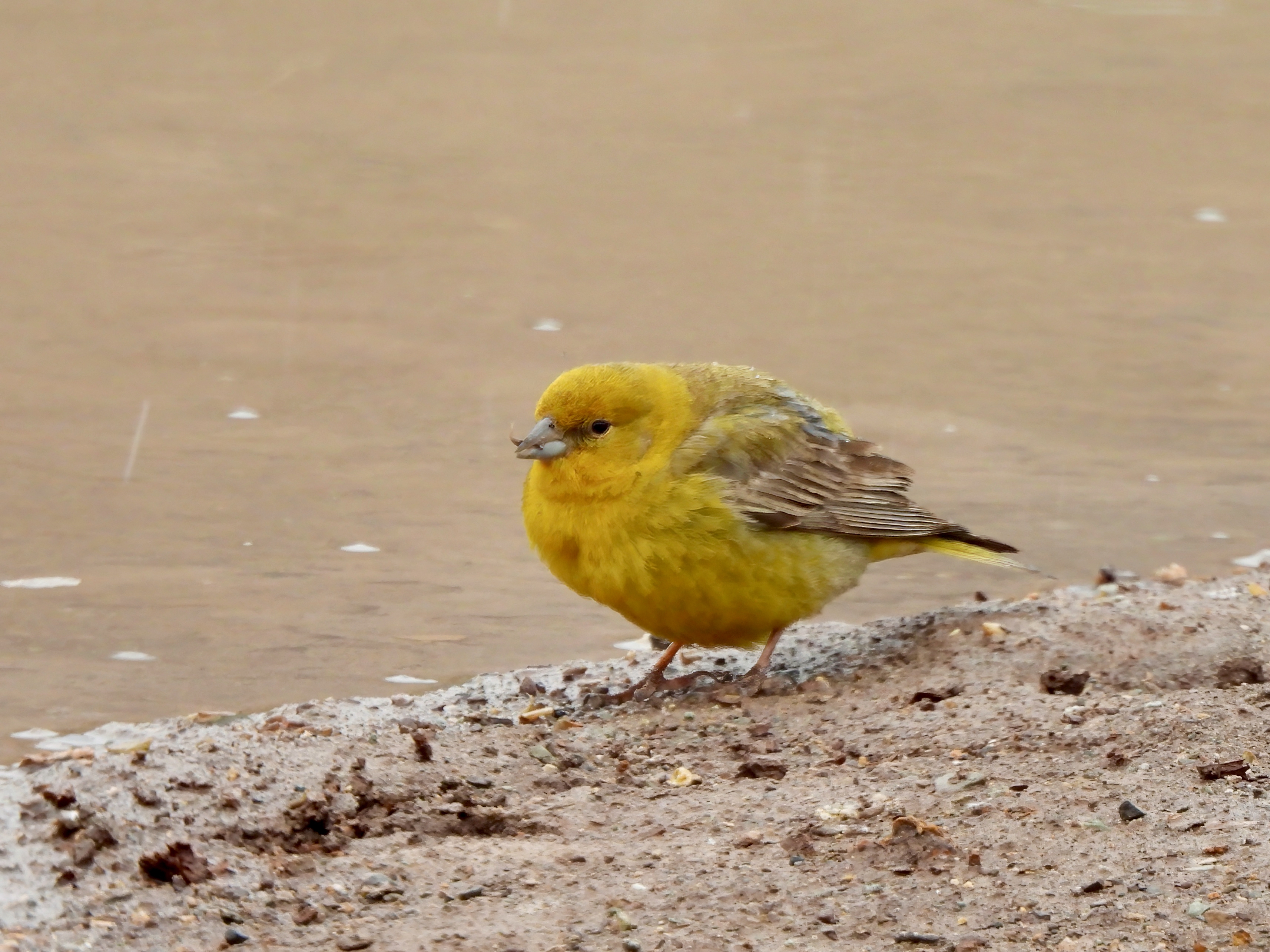
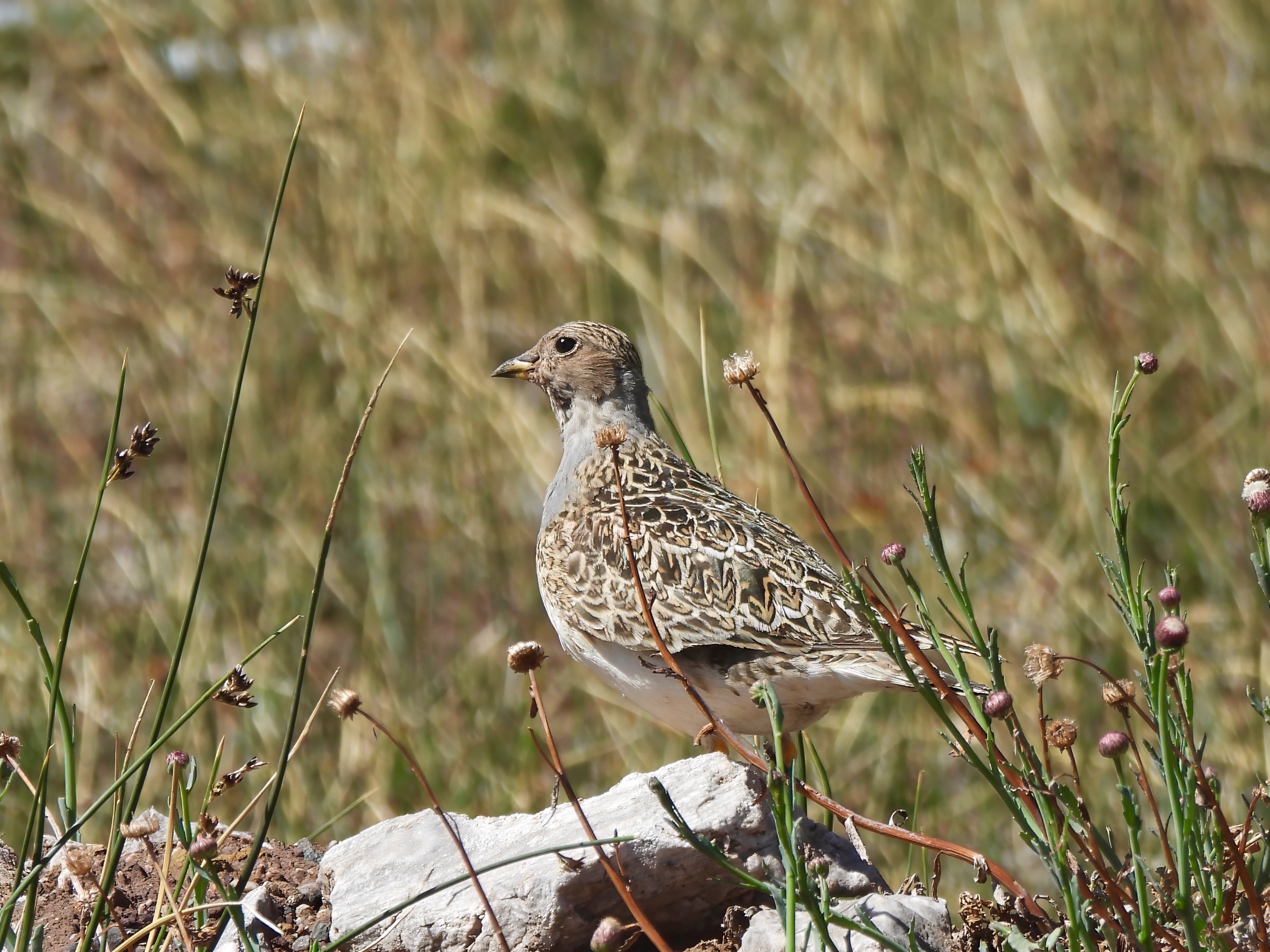
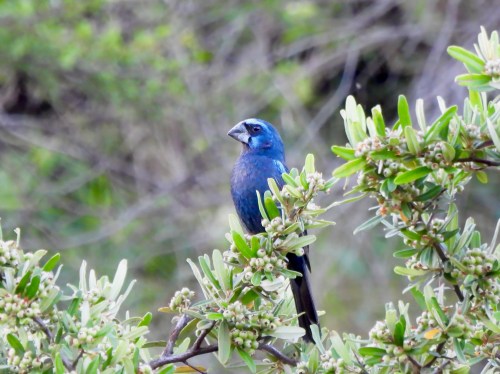
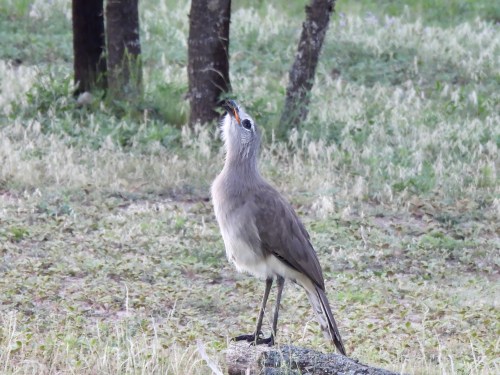
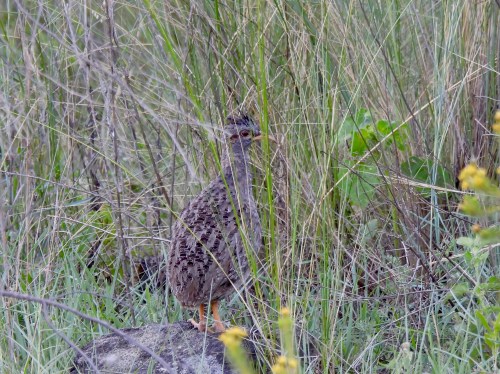
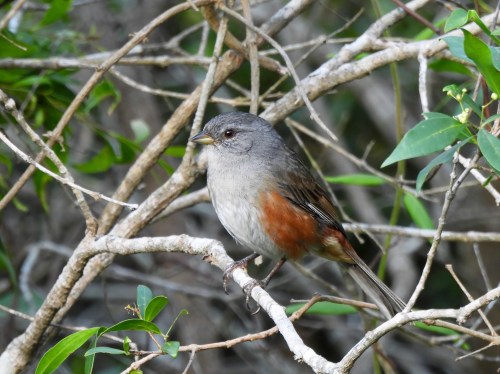
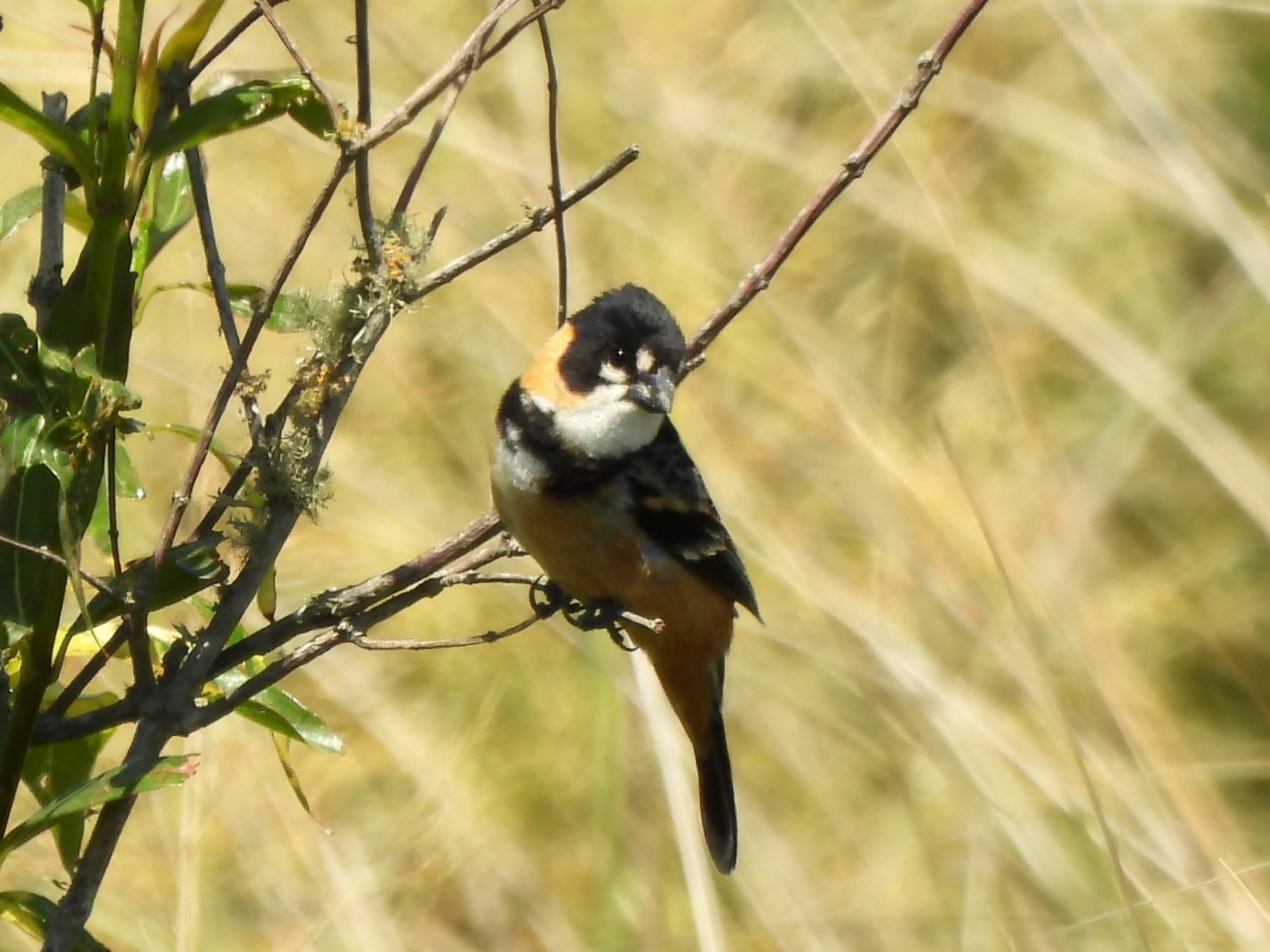
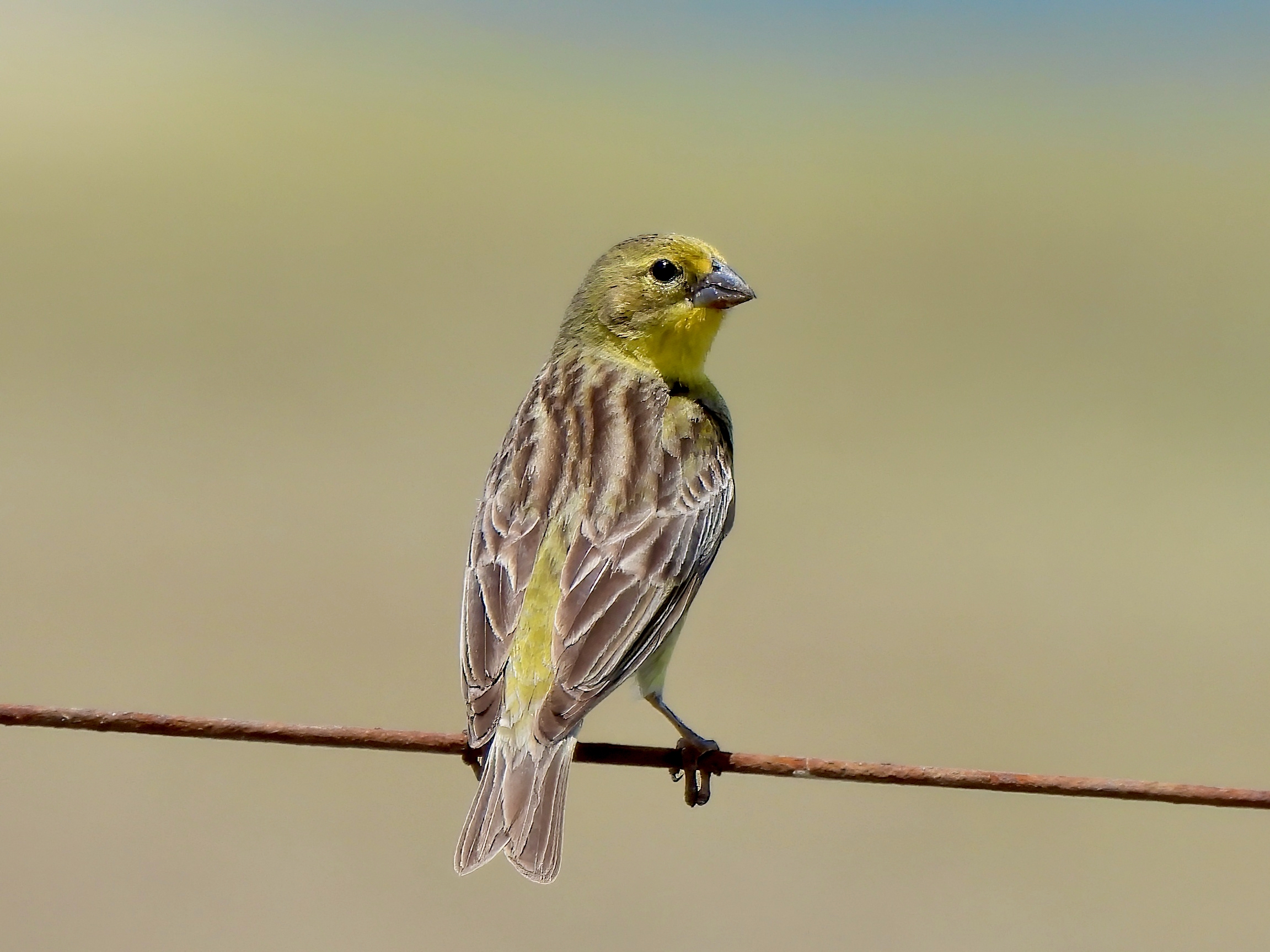
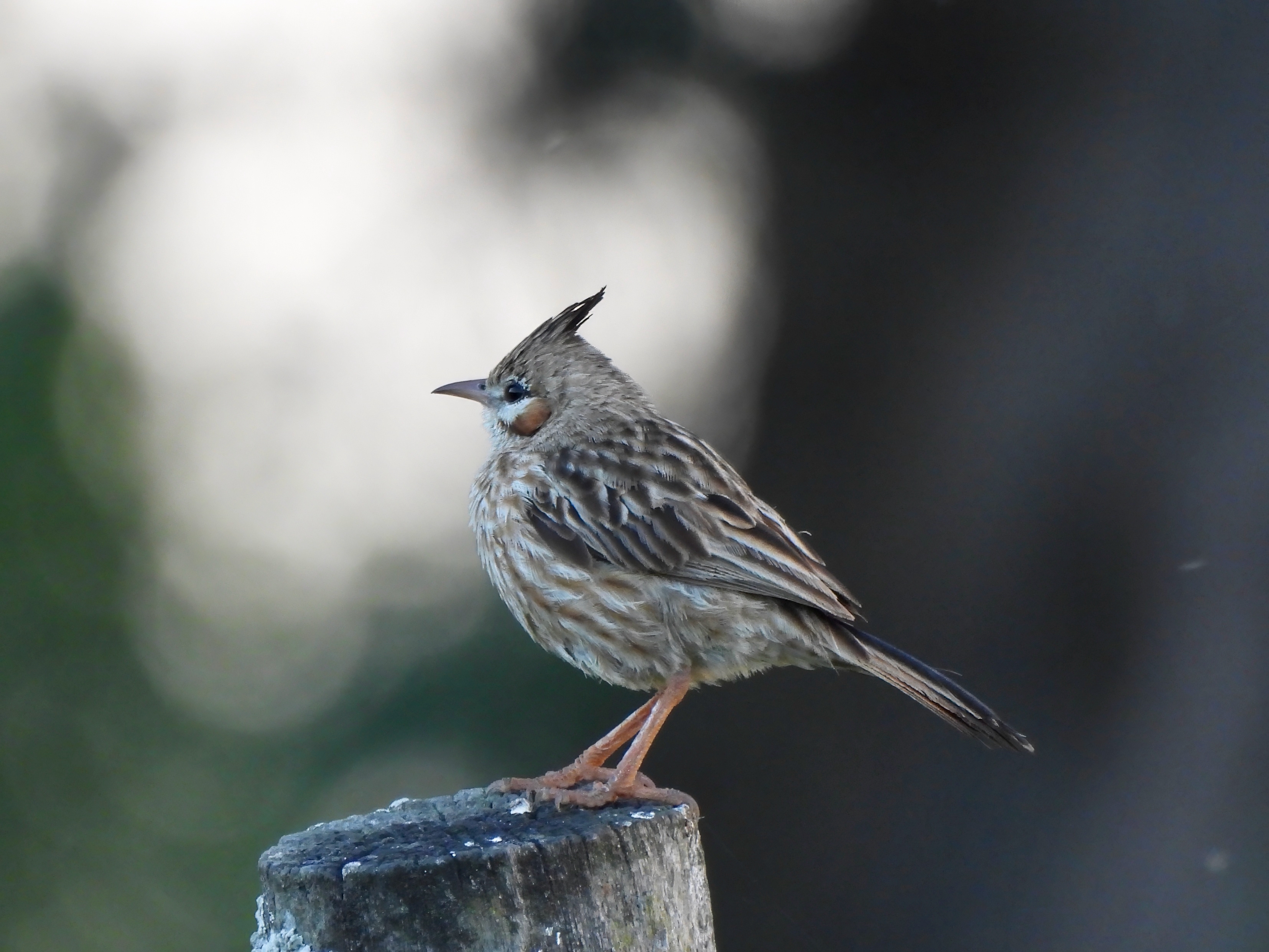
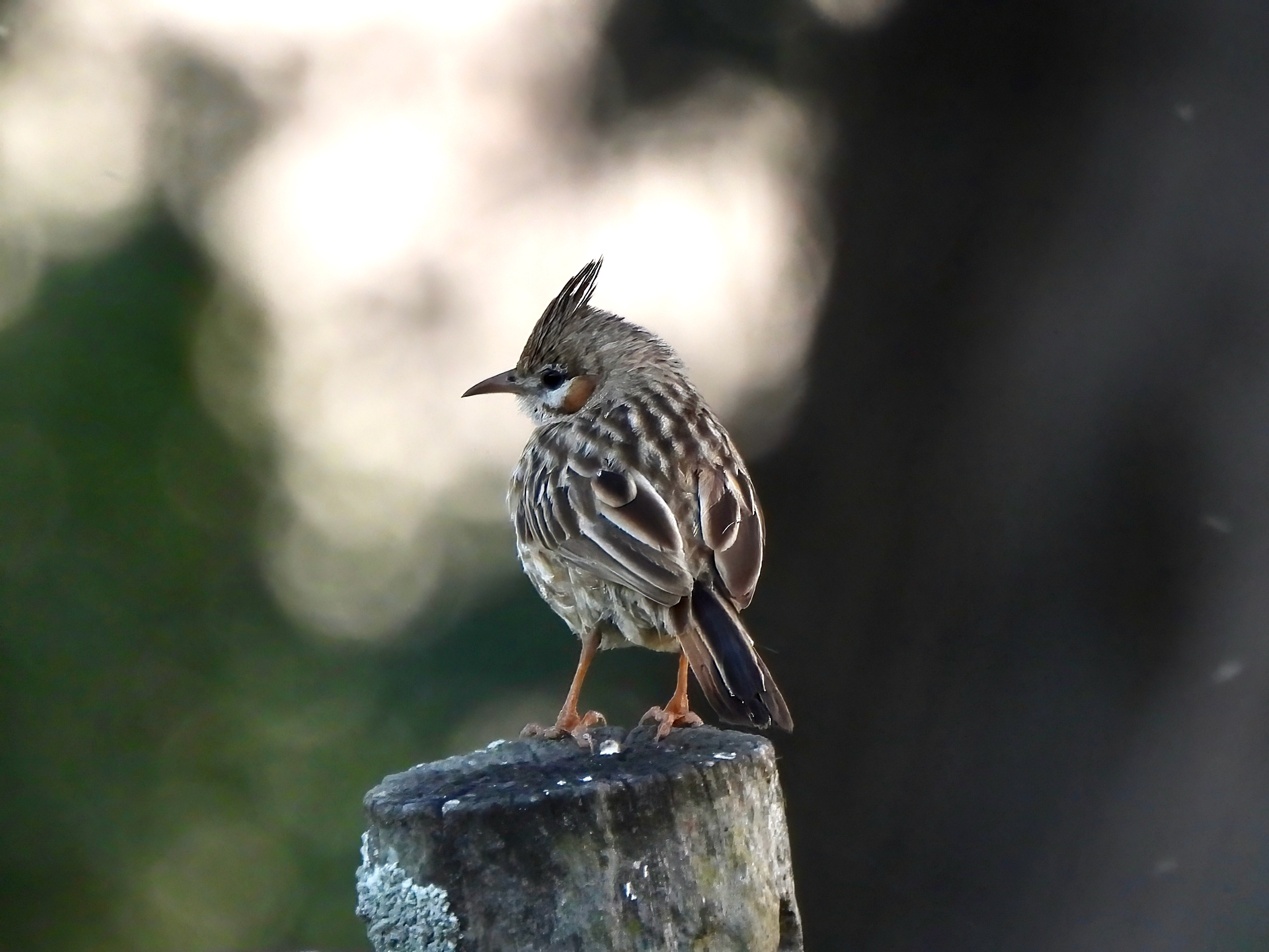
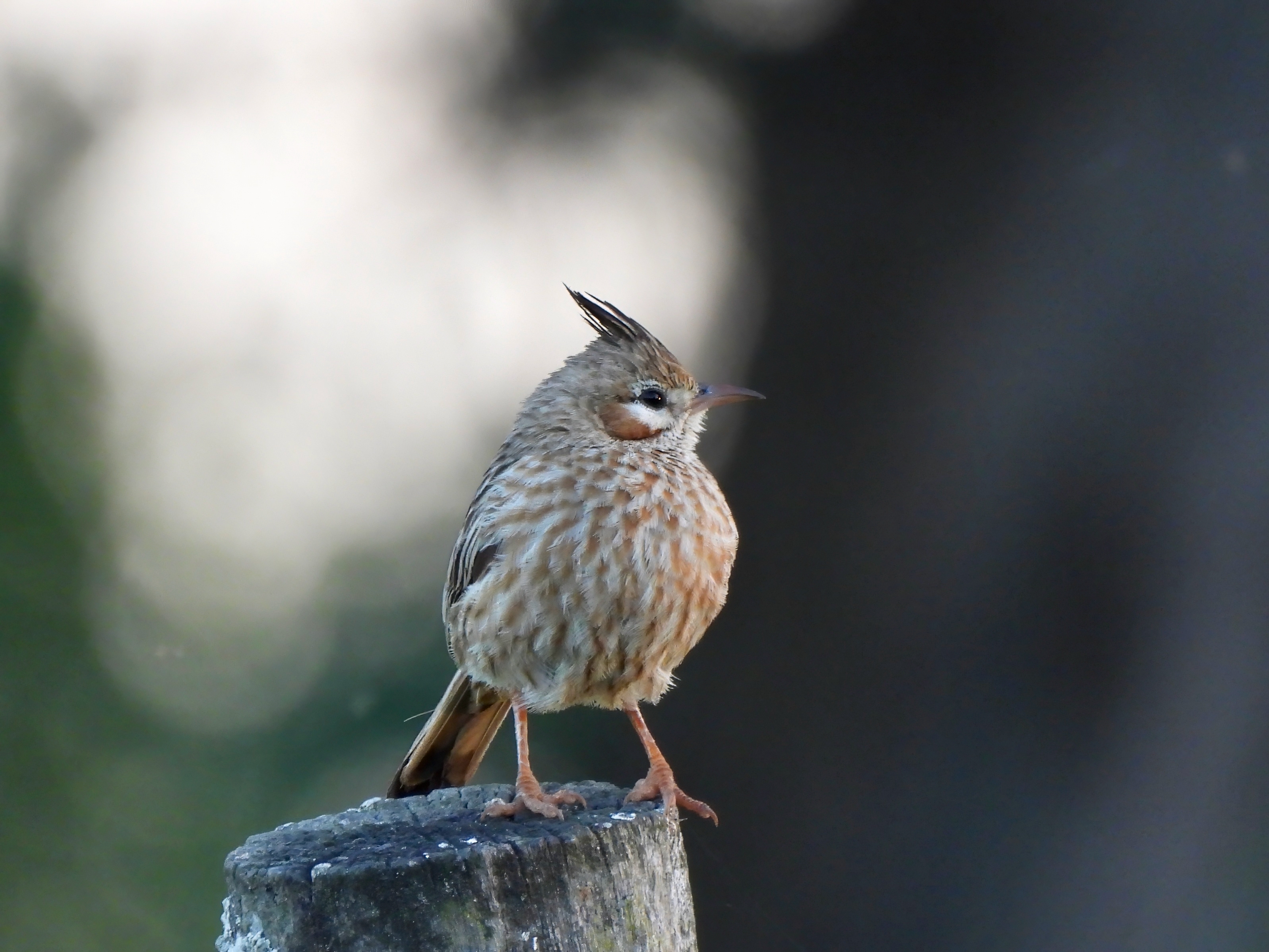
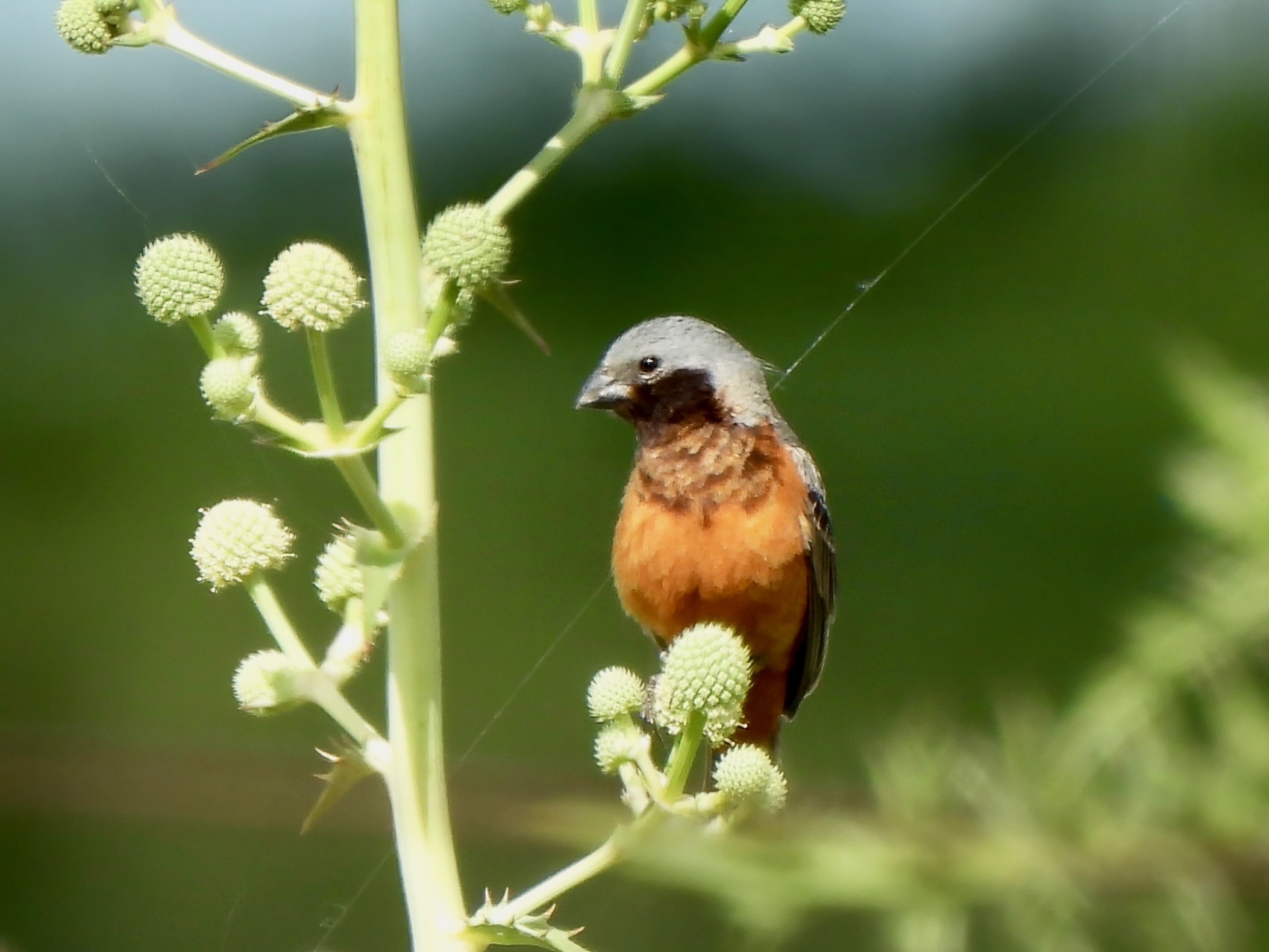
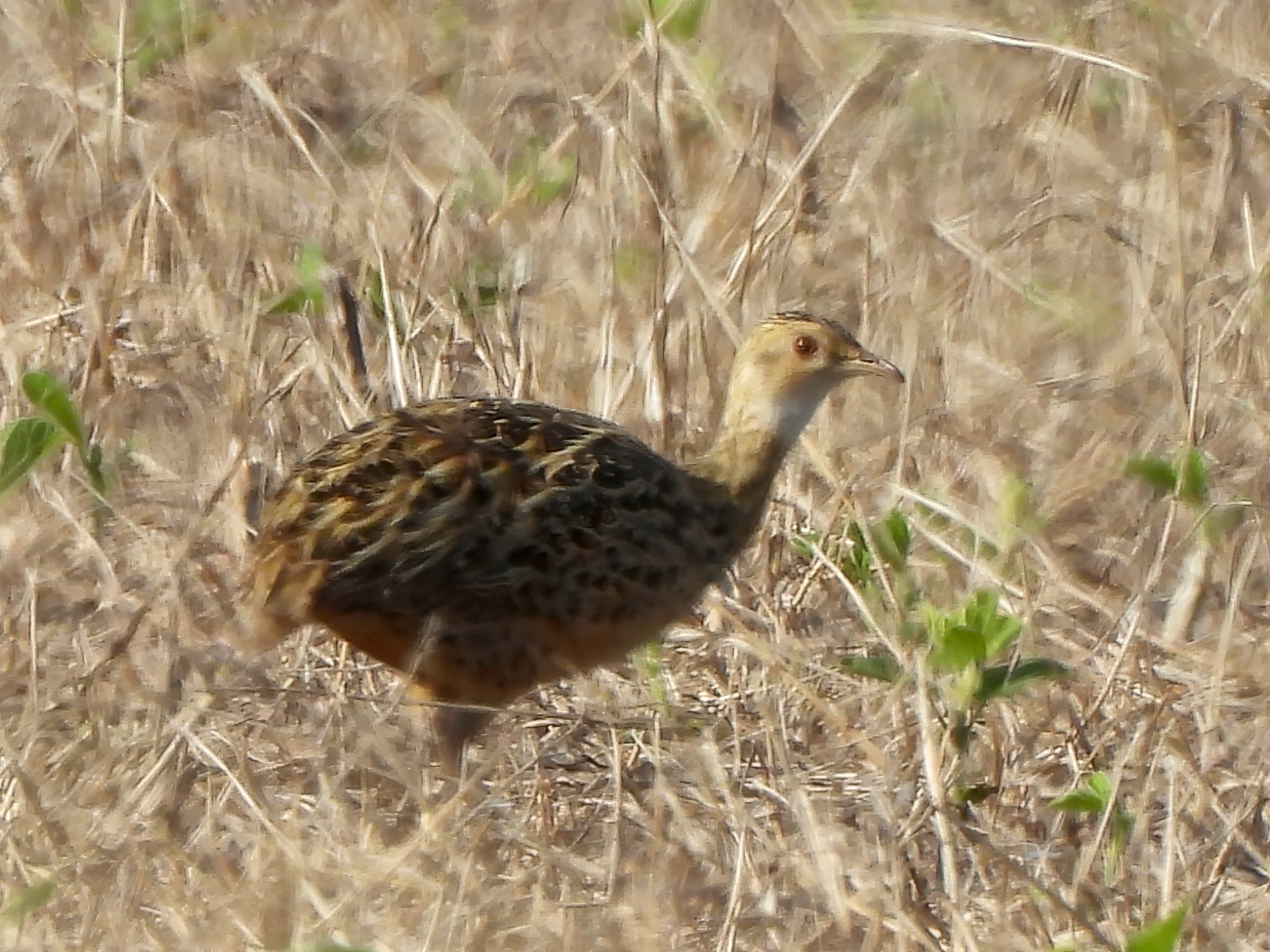
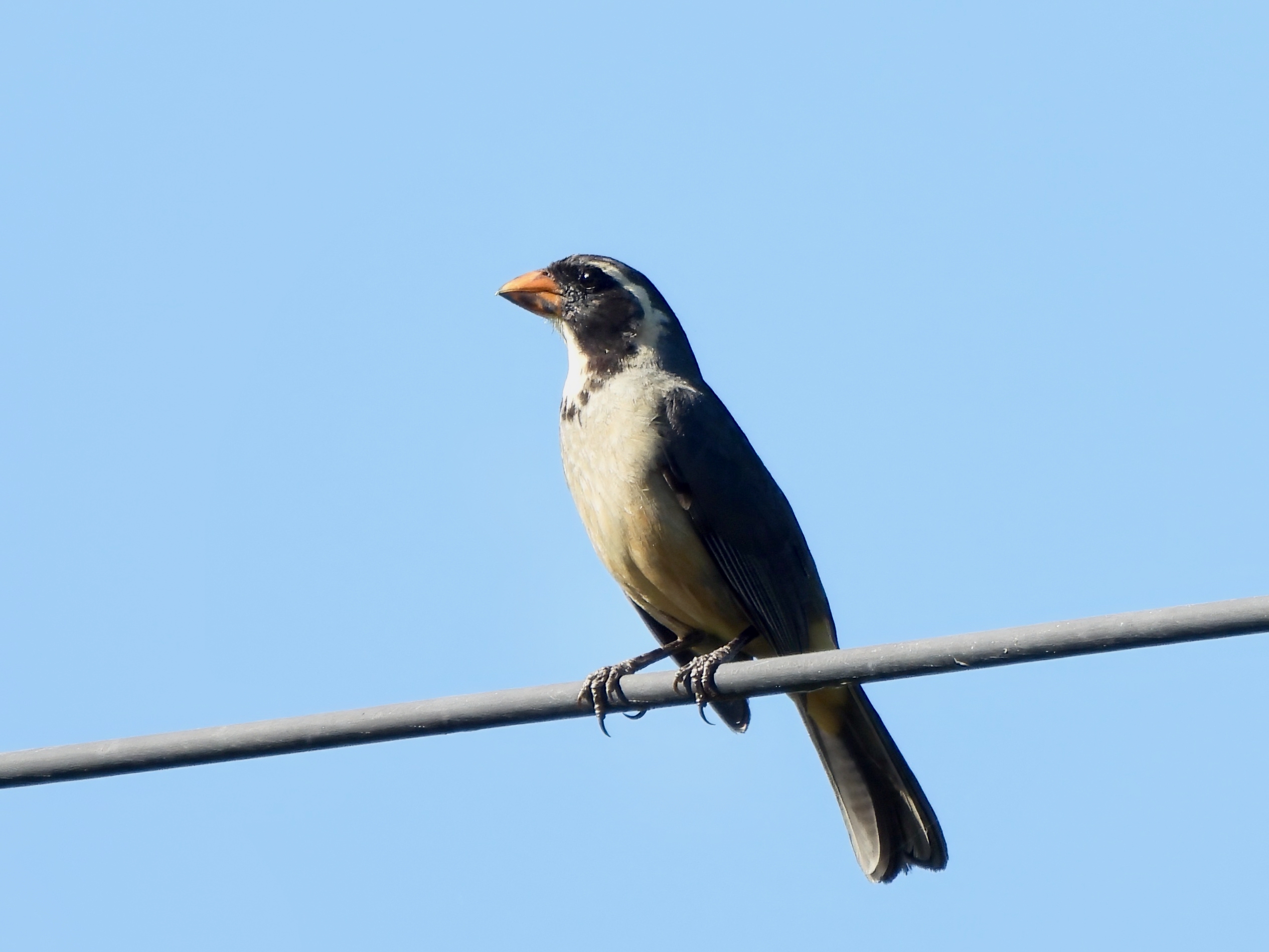
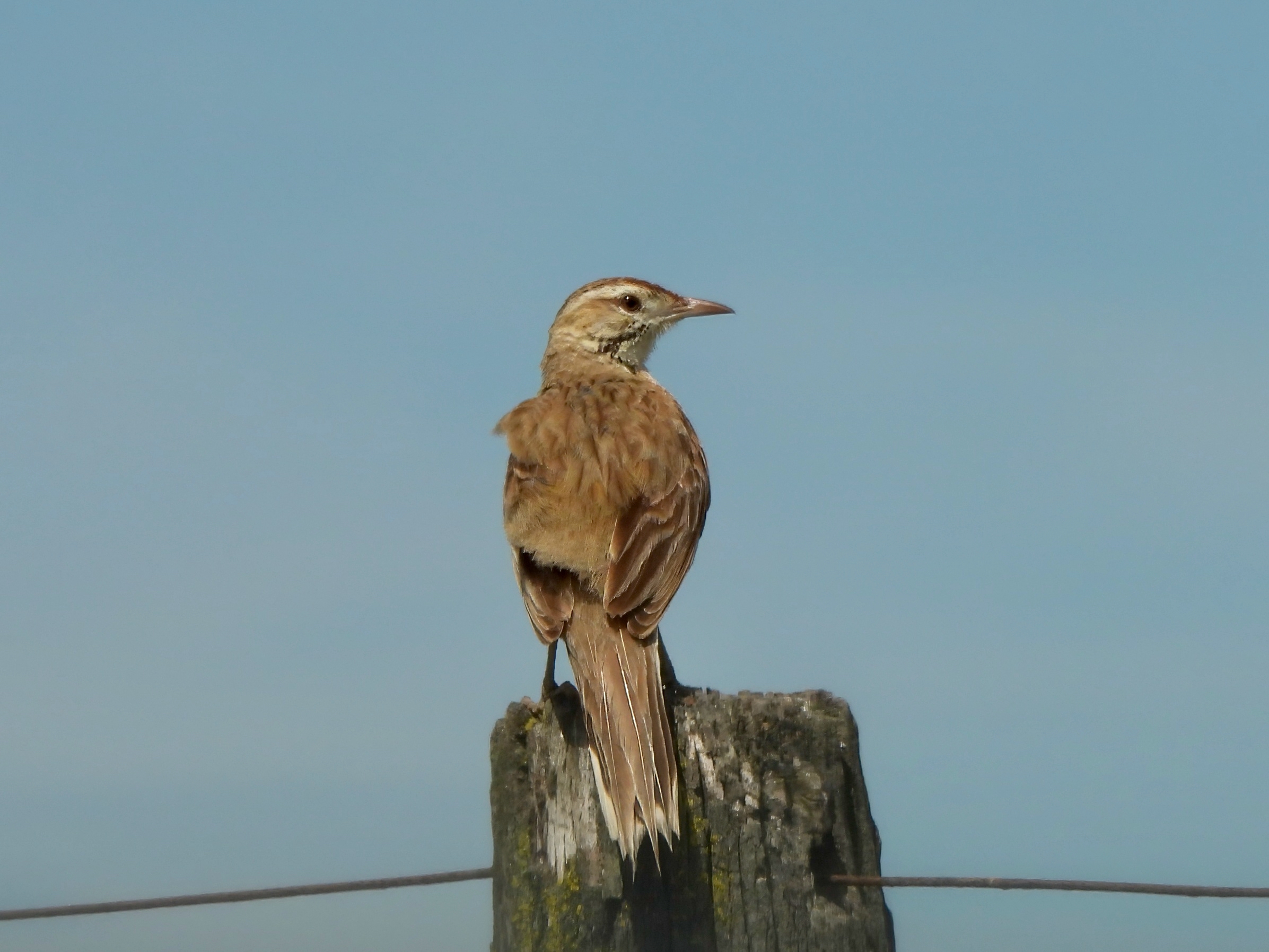
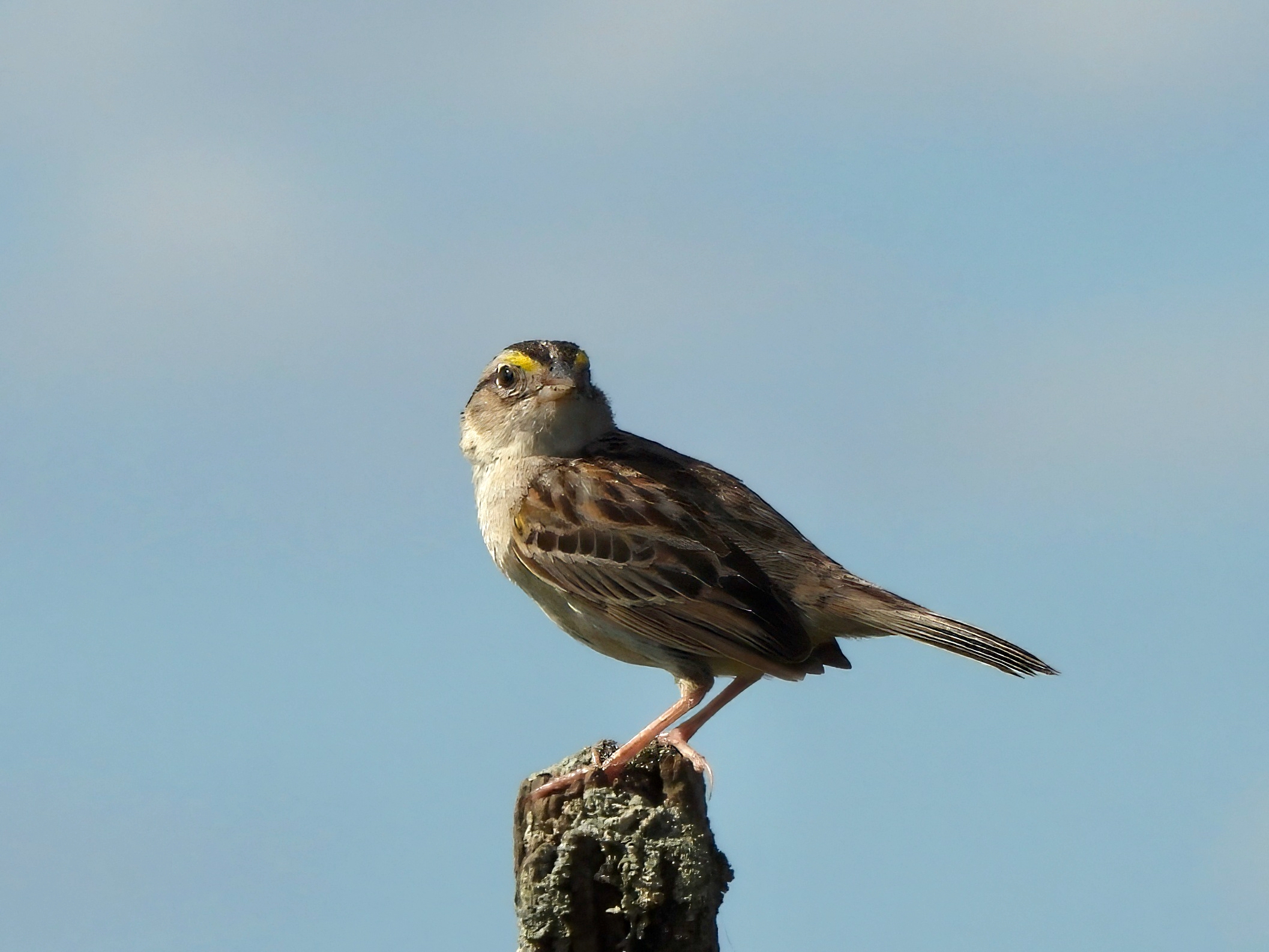
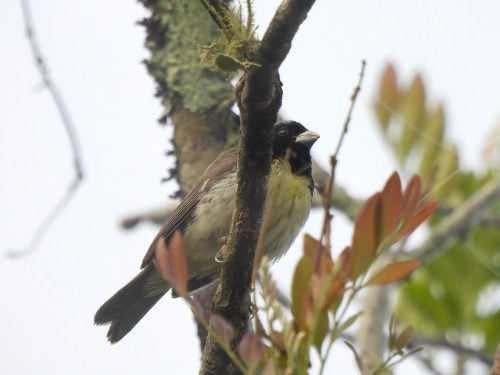
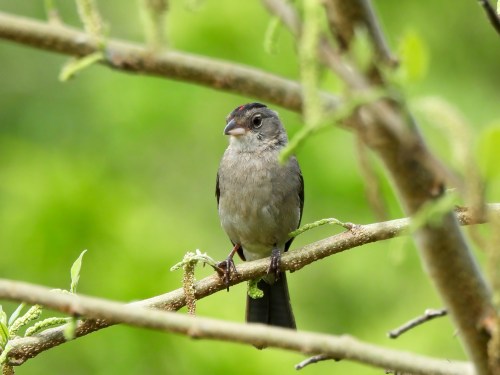
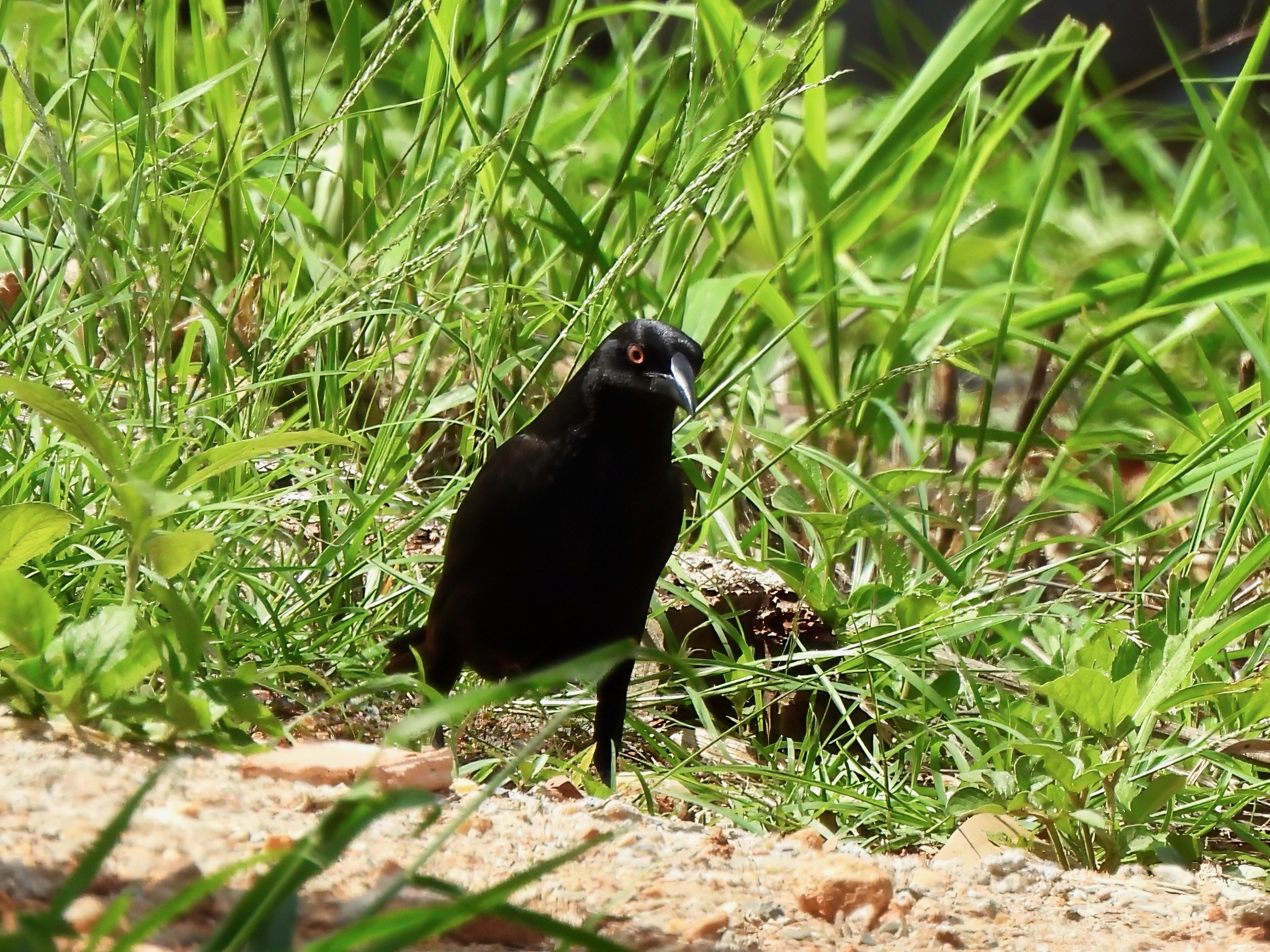
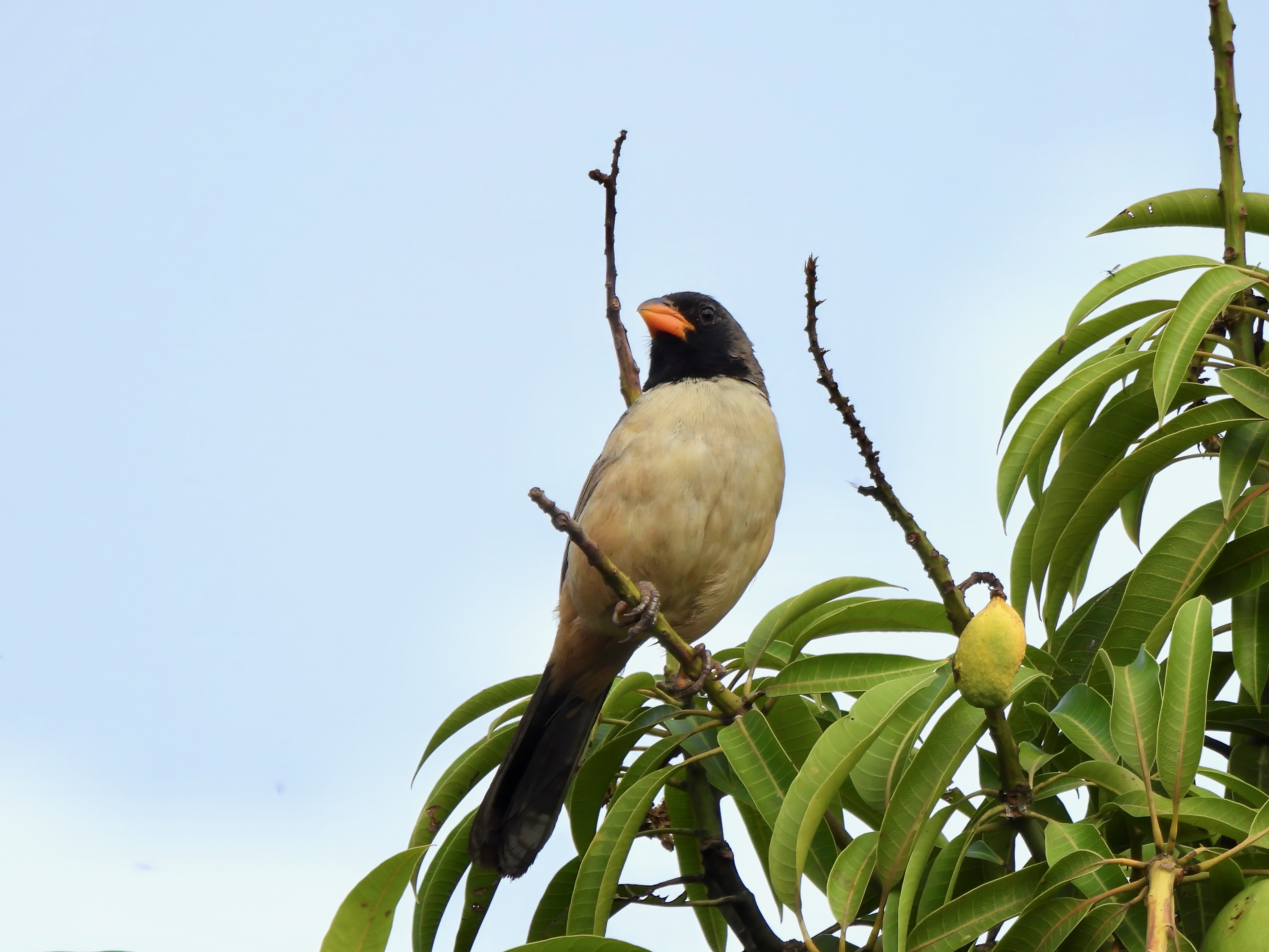
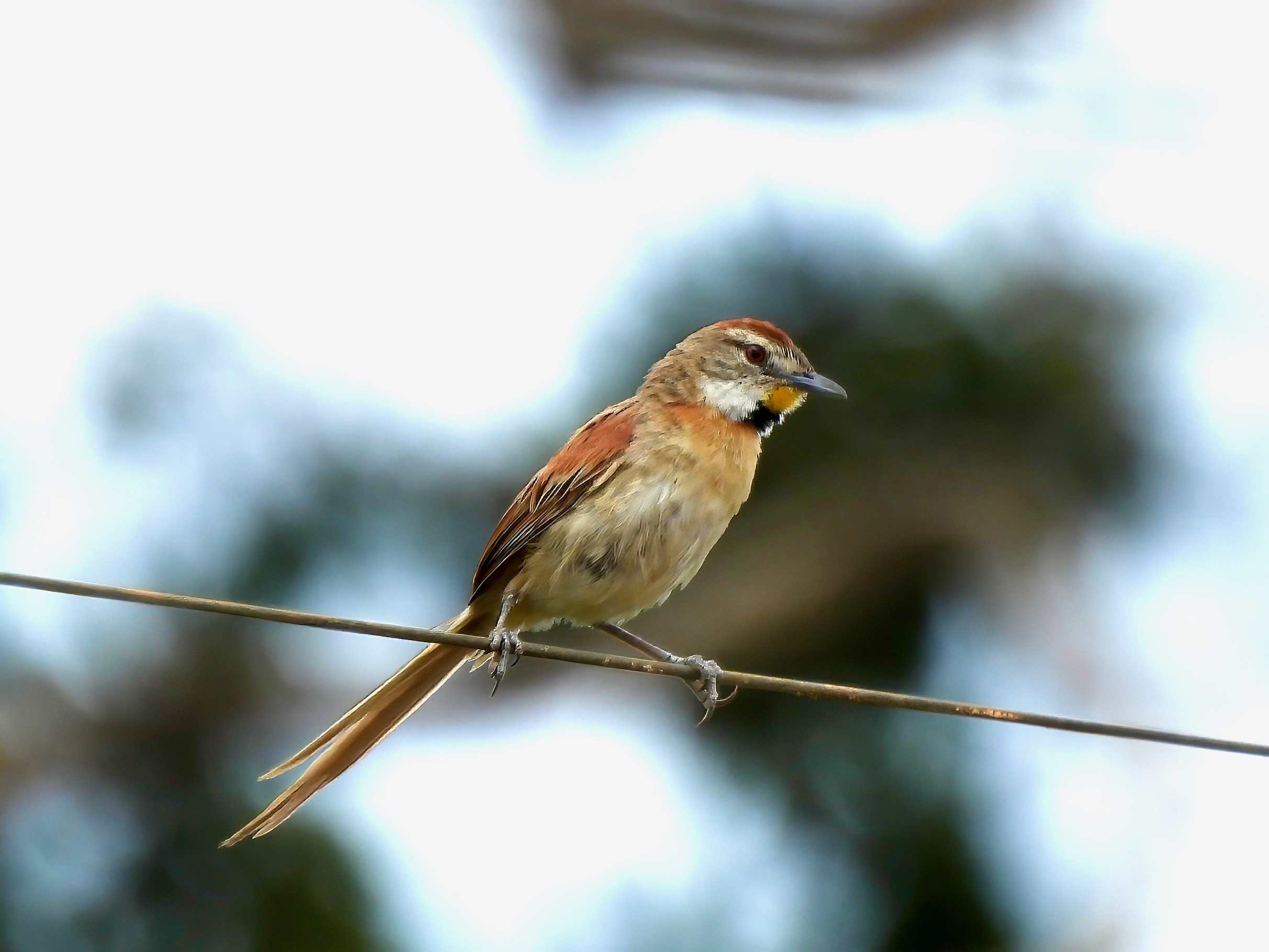
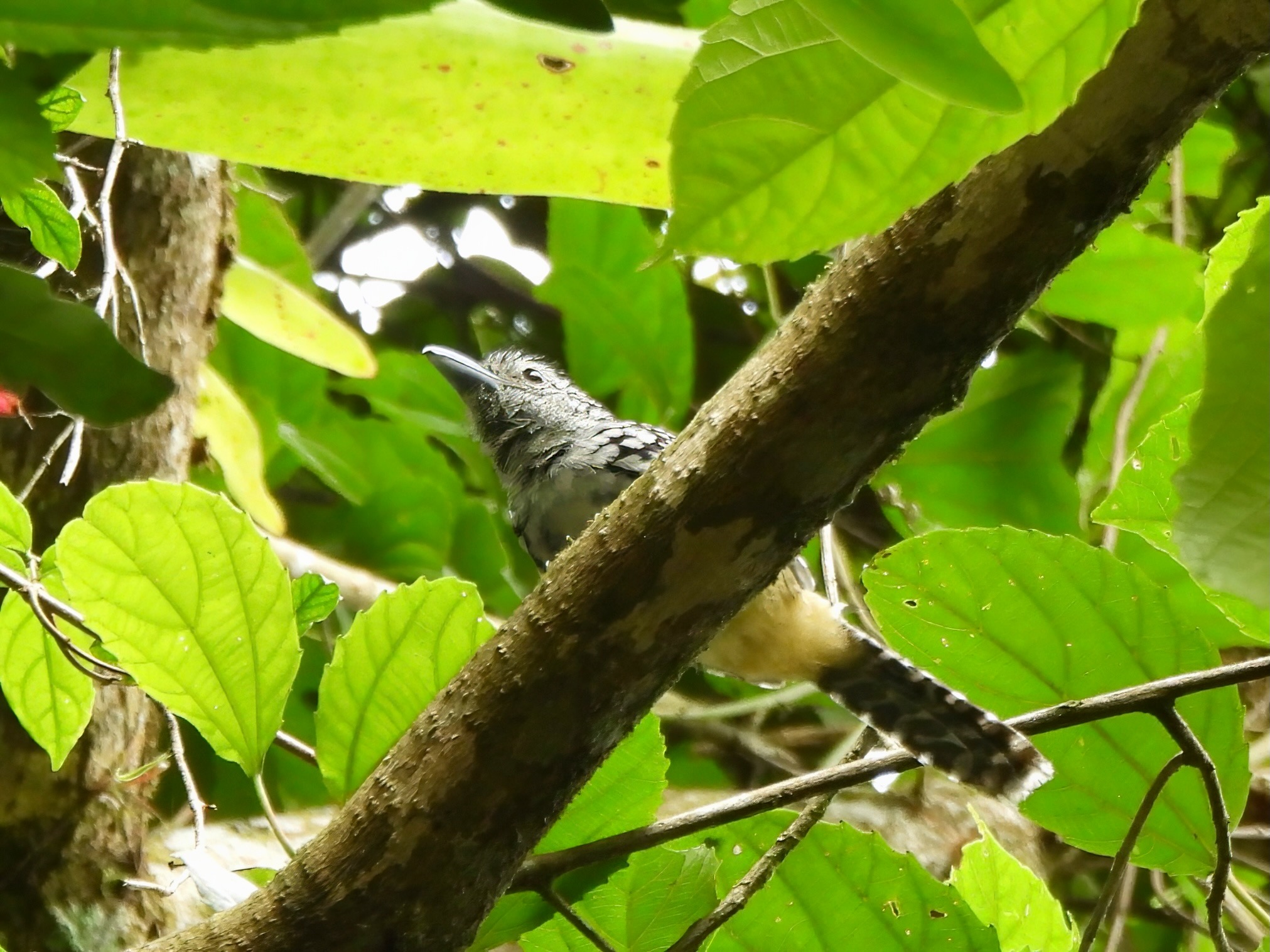
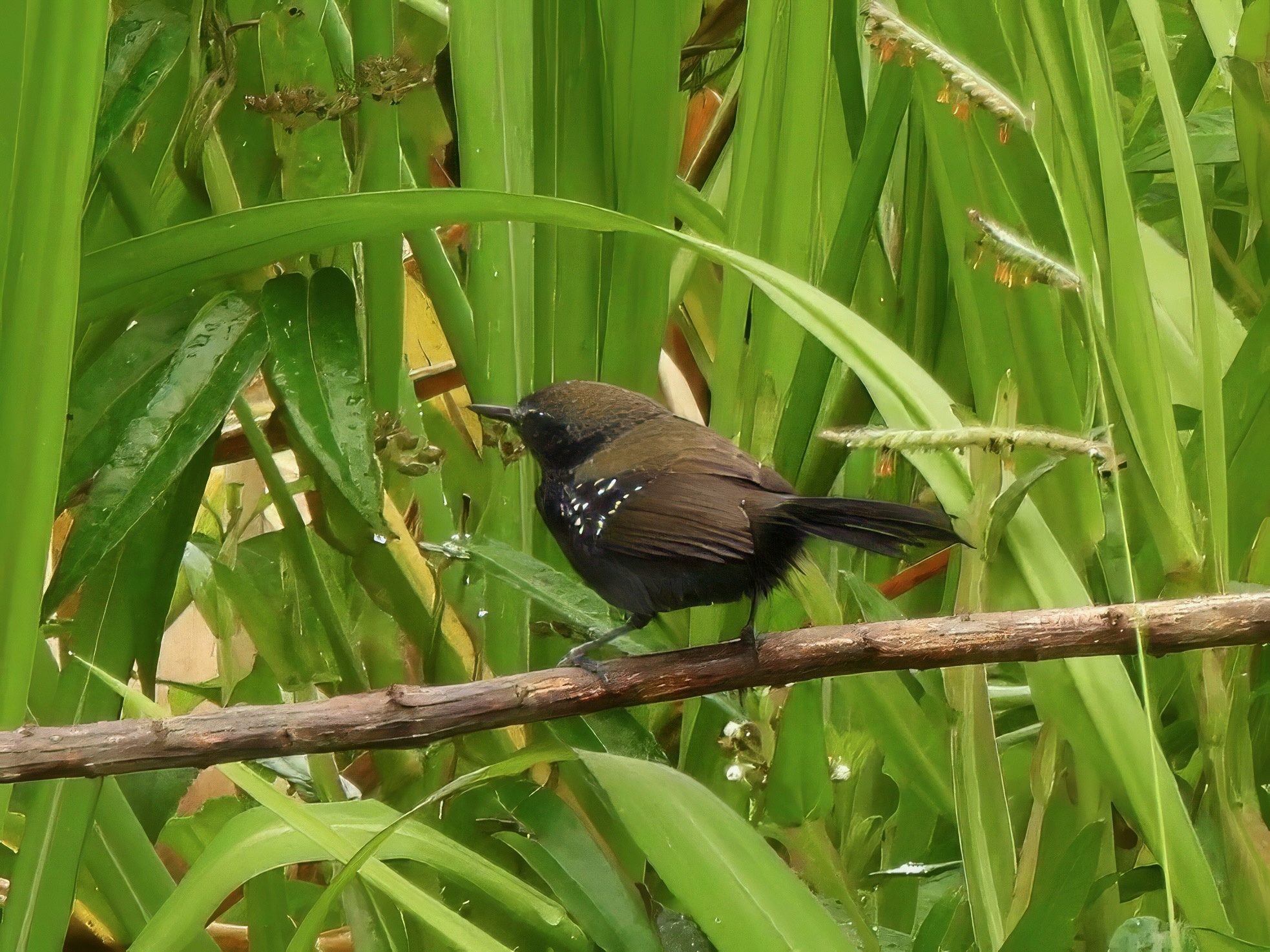
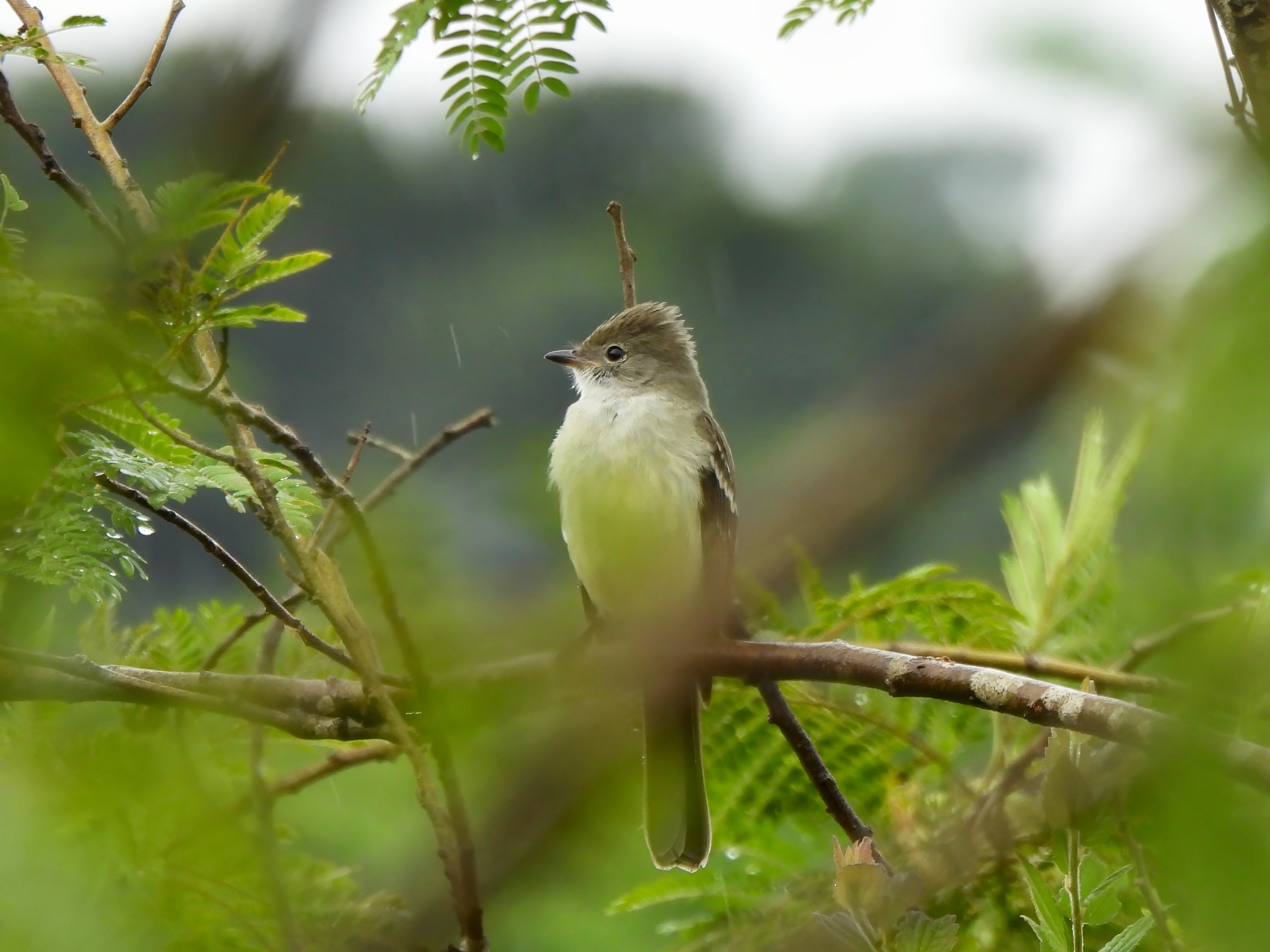
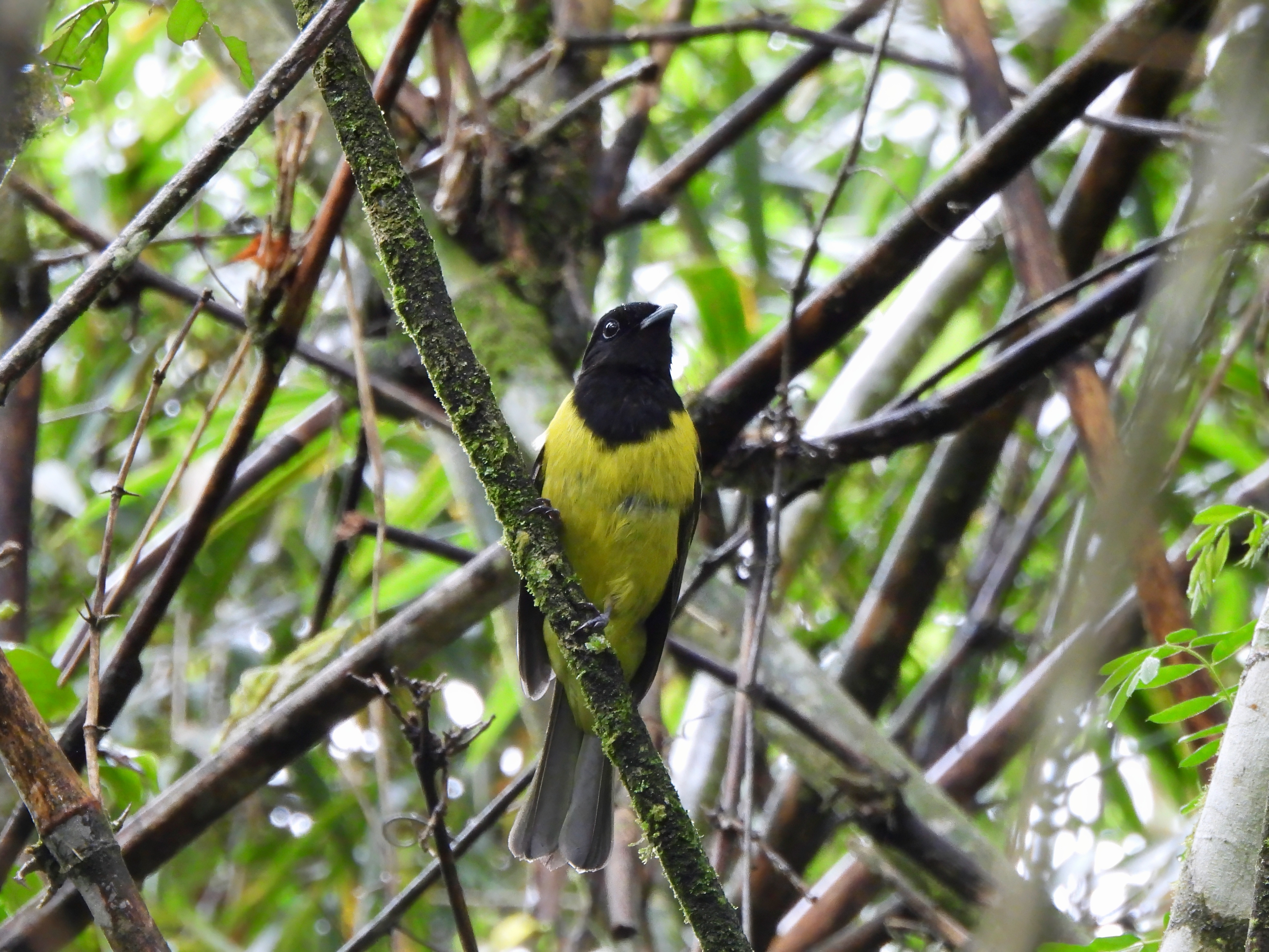
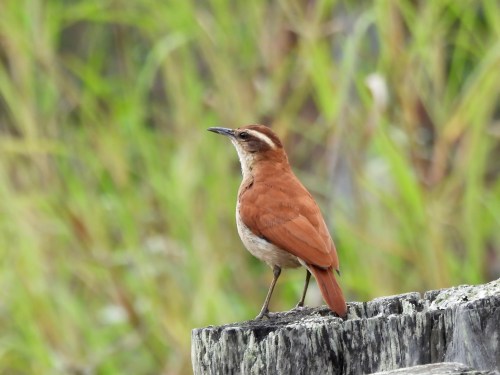
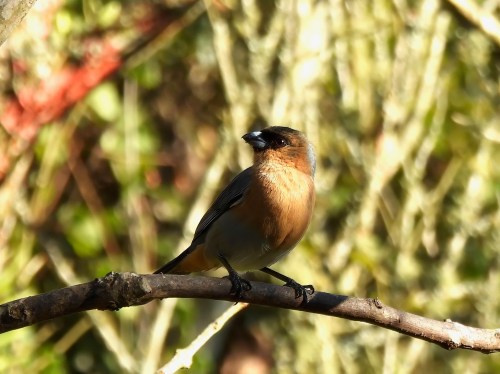
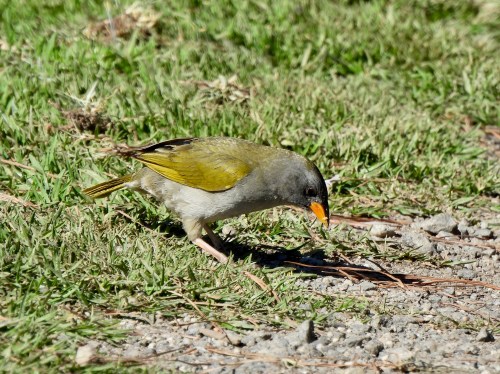
We birded in forest areas outside the city for most of the next day. Bay-chested Warbling Finch, Velvety Black-Tyrant, White-crested Tyrannulet, Black Hawk-Eagle, Rufous-tailed Antbird, Red-legged Seriema, Great Pampa Finch (in photo below), and quite a few other species contributed to a nice morning.
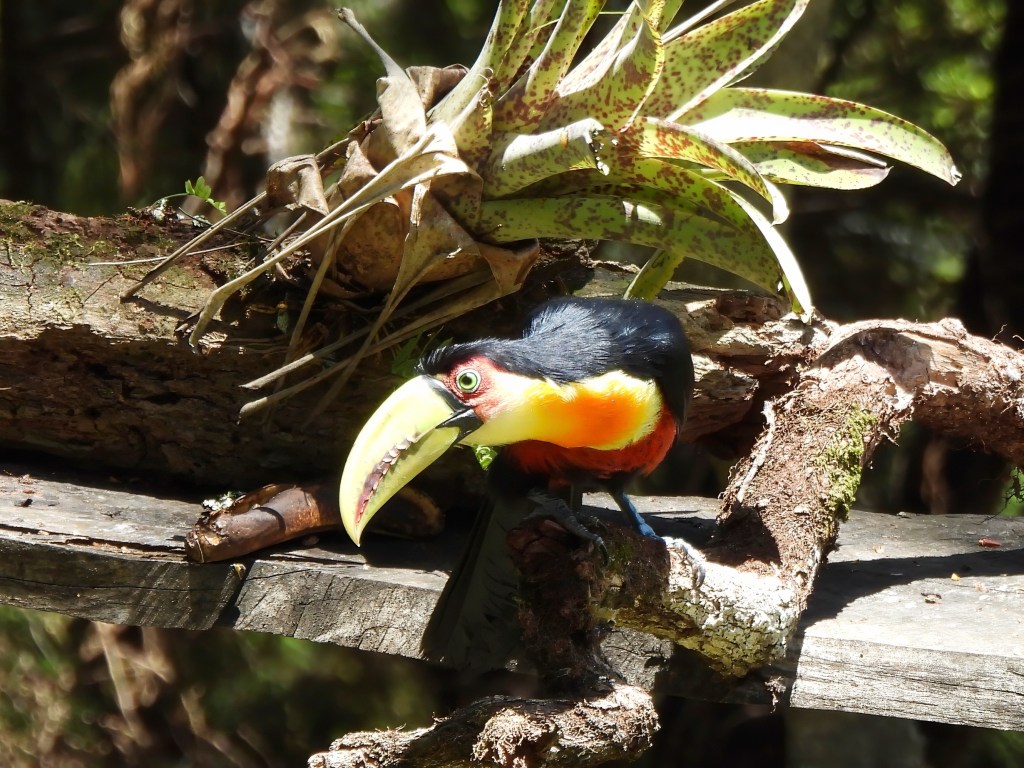
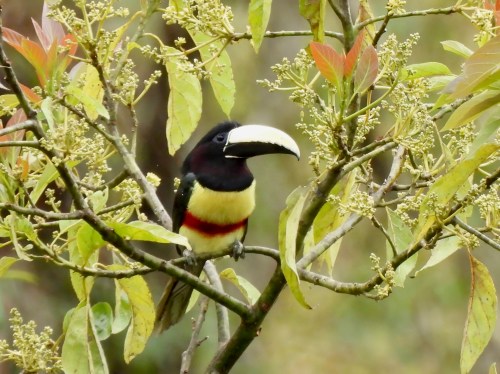
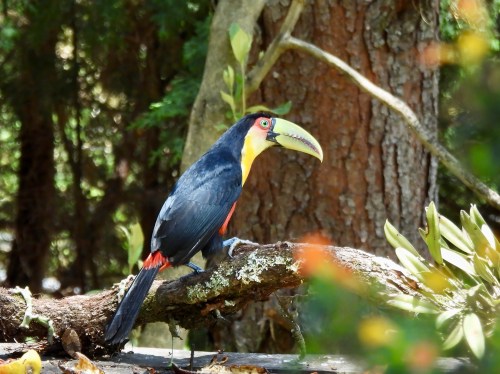
Sandra’s goal is to see half of the world’s 11,131 birds, currently 5,566 species. But seeing 5,000 birds is also a significant accomplishment. We were doing well on this trip, and Sandra had been paying special attention that morning. When we arrived back at the hotel at lunchtime, her life list was at 4,999. As we watched the area with a small feeder, our guide, Douglas, suddenly spotted this Red-breasted Toucan — Sandra’s 5,000th bird!

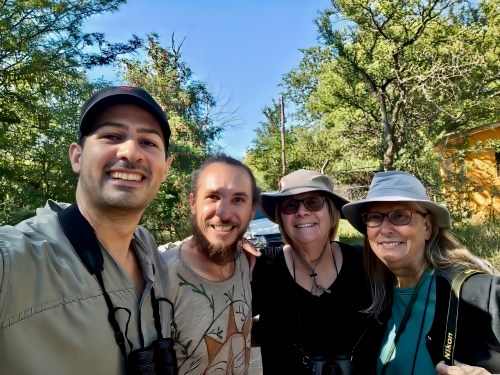
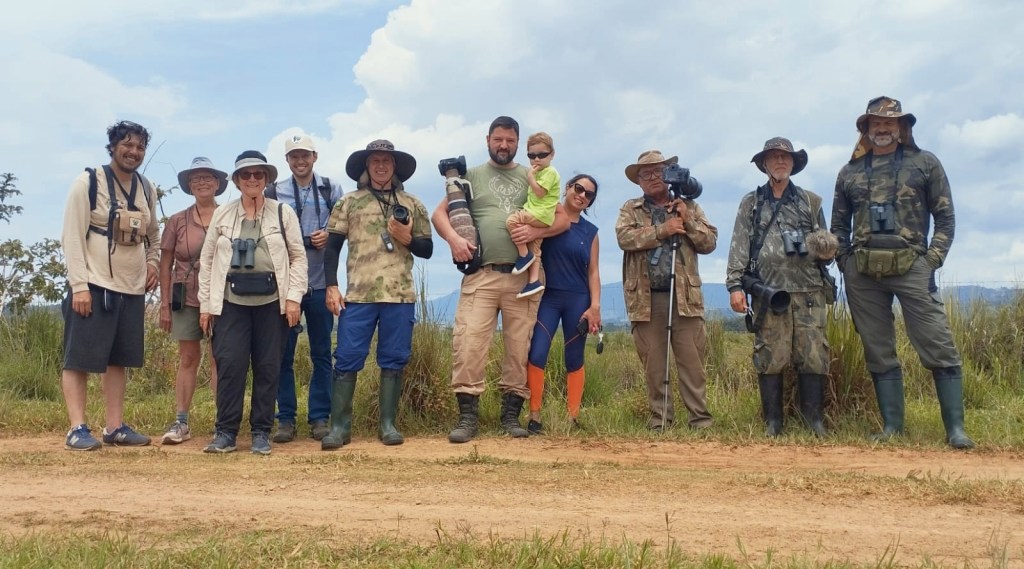
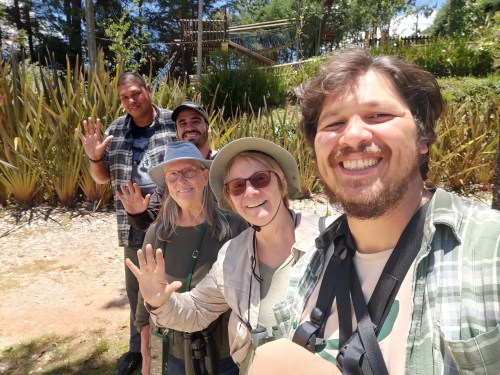
We were all delighted to celebrate this milestone with Sandra. From front to back: Cirilo, Sandra, me, Douglas, and Paulo—smiles all around.

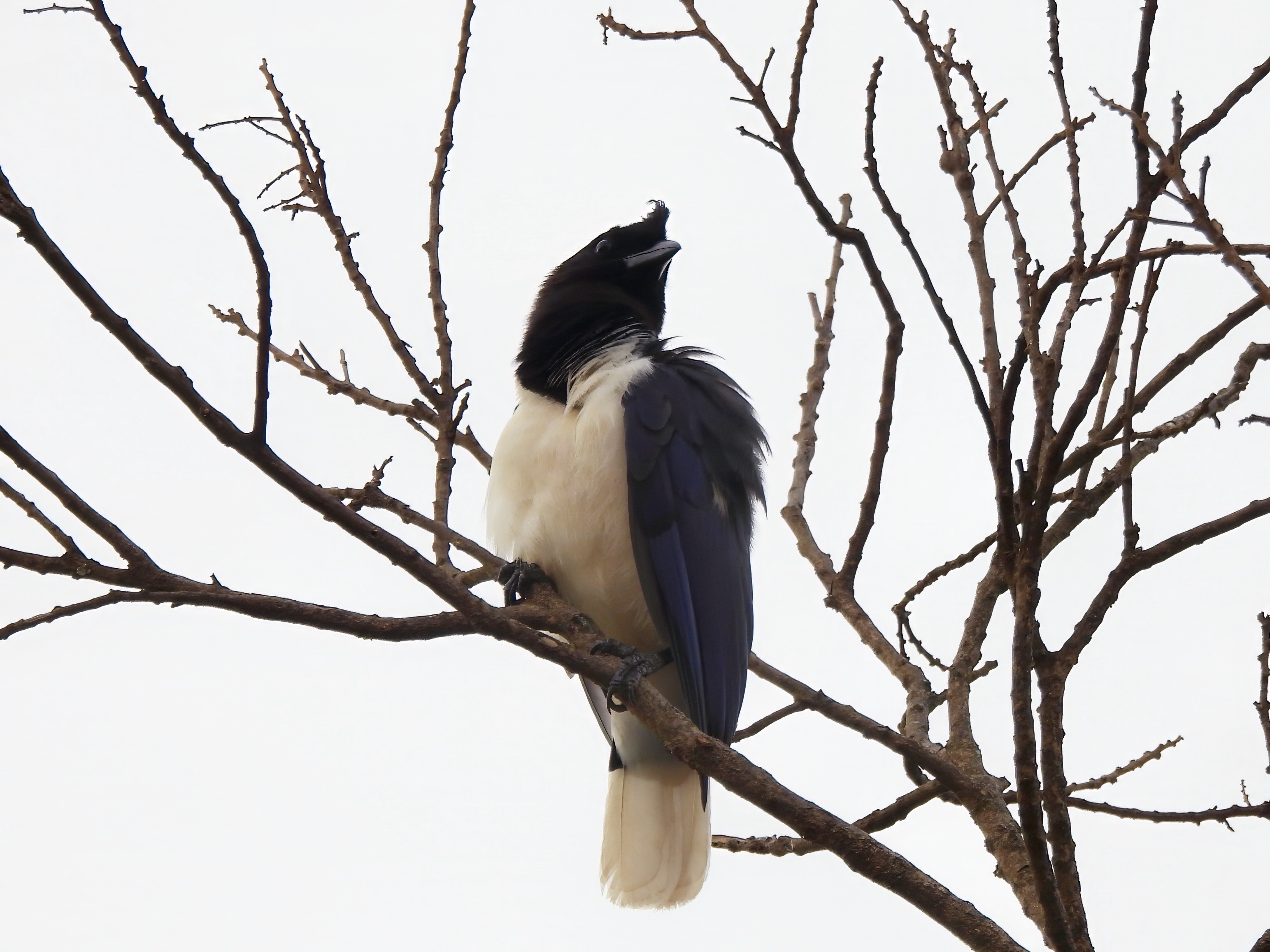
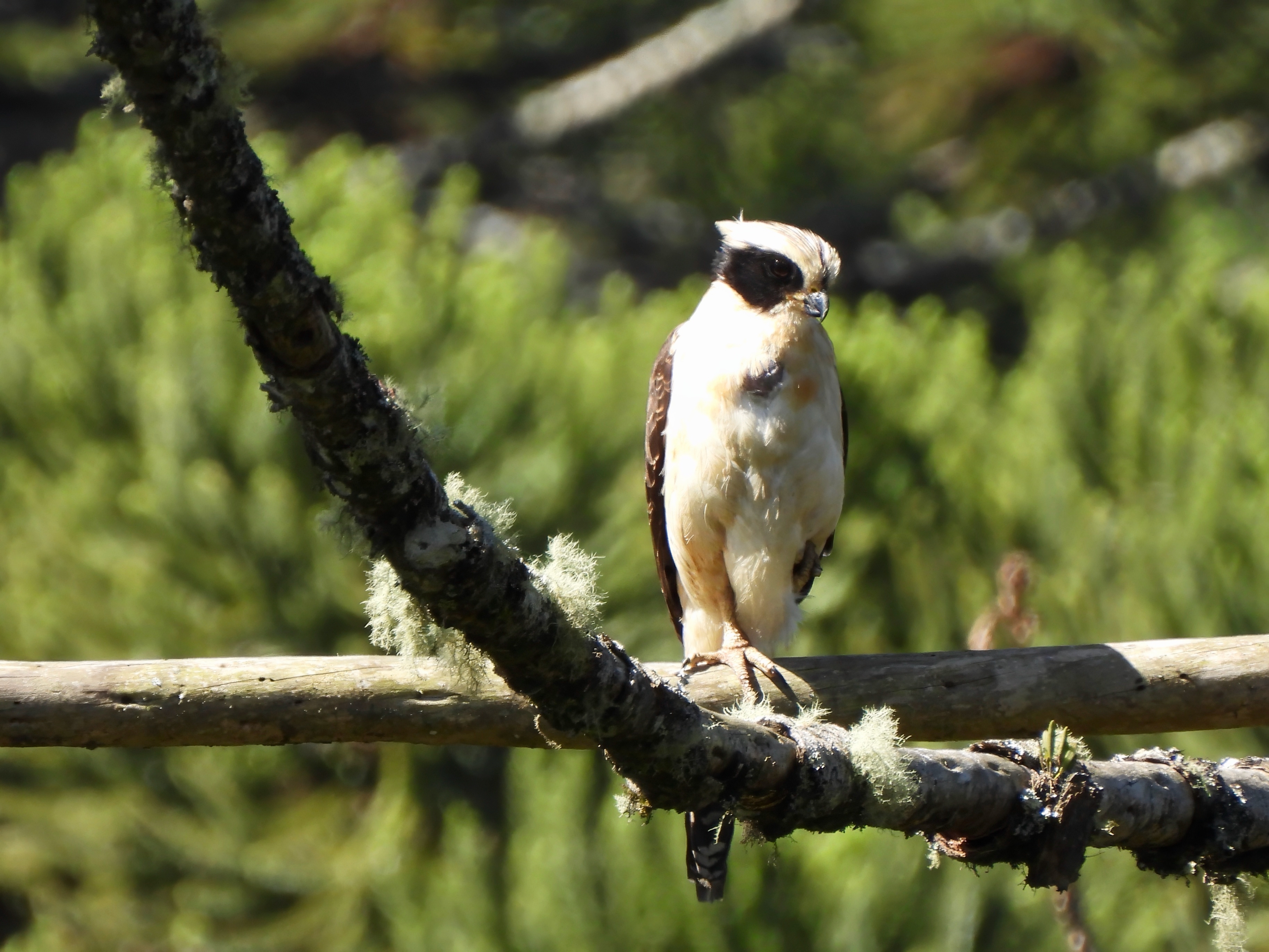
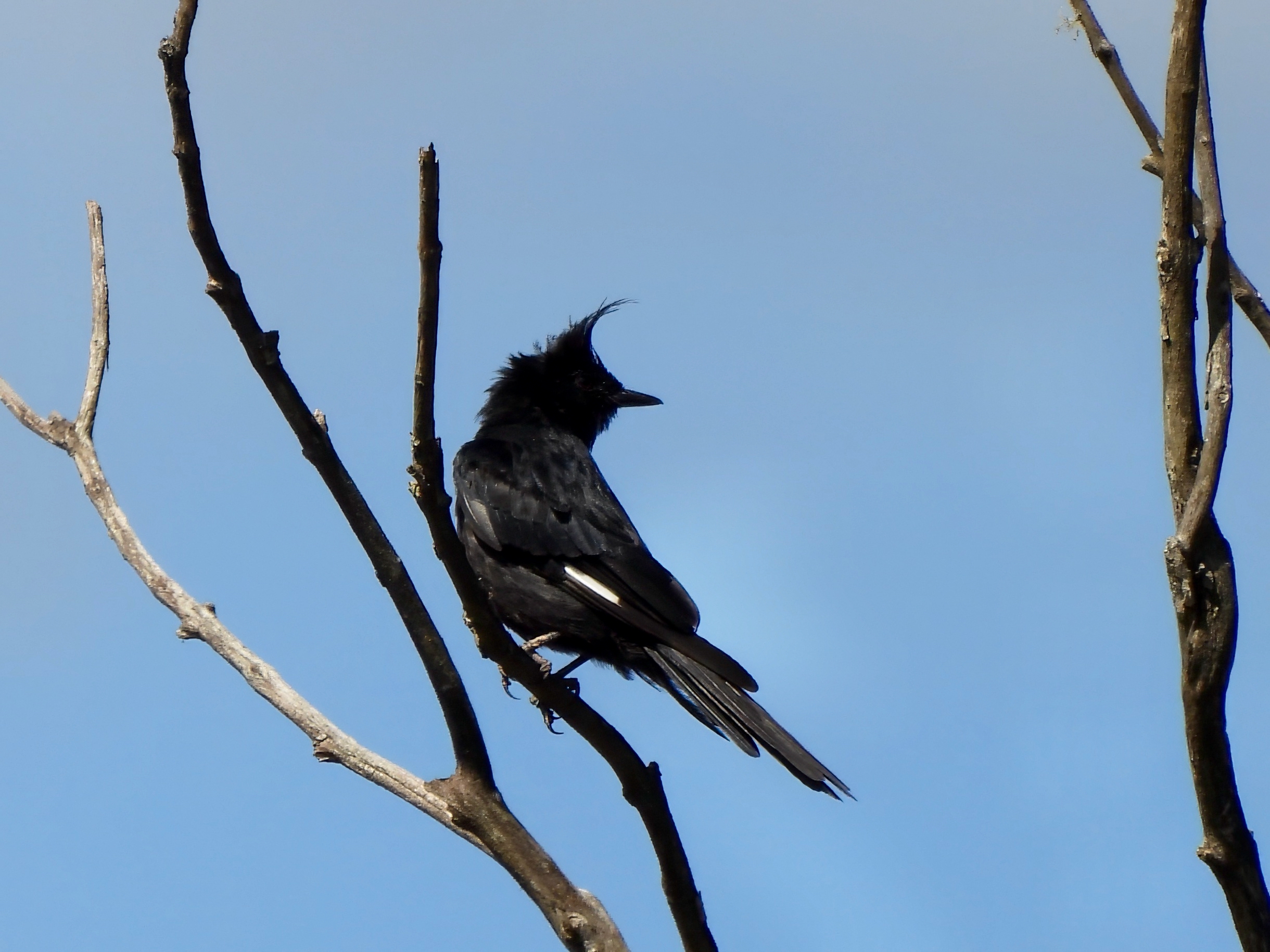
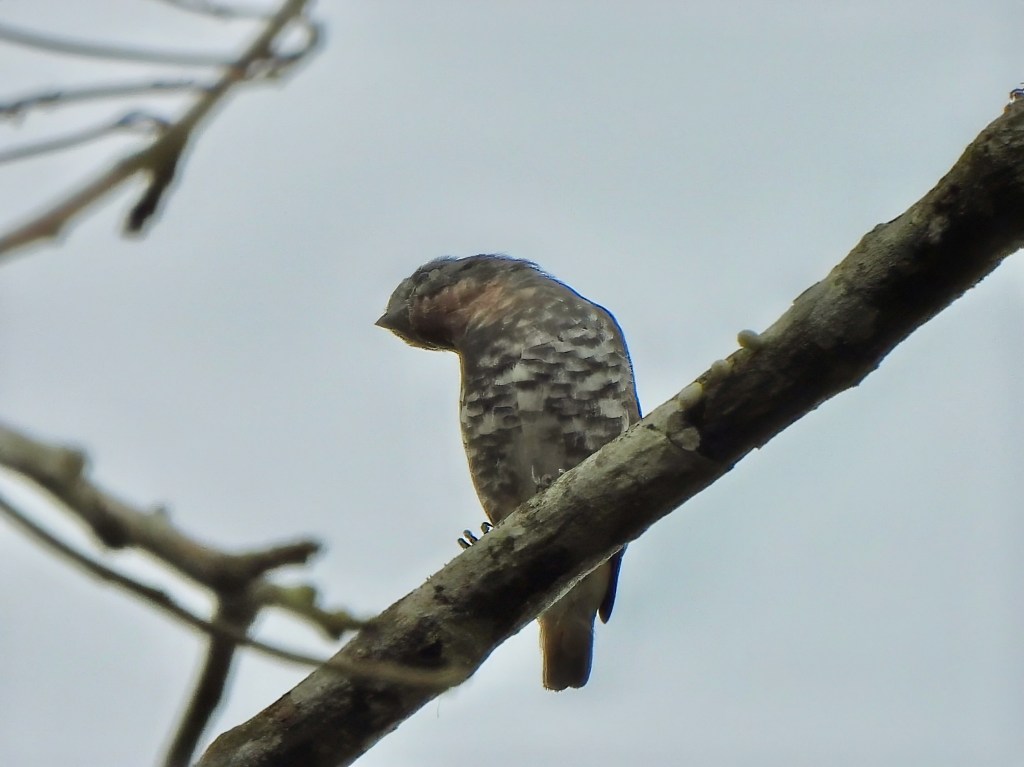
That afternoon, we birded a bit more and spotted a Laughing Falcon and a Crested Black Tyrant, shown in the photos below. Neither was a life bird for us, but can one ever see too many Laughing Falcons? And, the Crested Black Tyrant, always cute, was a fun sighting.

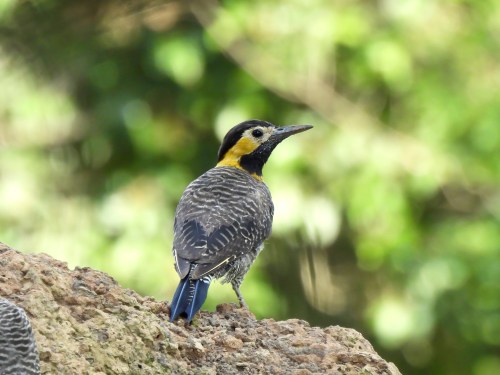
Later that day, we drove to Pouso Alegre where we spent the night. The next morning, after continuing on our way, we stopped to enjoy a small group of Campo Flickers on an ant mound, a species I first saw in the Pantanal on my 2024 trip to Brazil. I was pleased that several birds I associated with the Pantanal, including the flickers, turned up again on this trip.

This turned into an eventful day when our car broke down, and we were stranded on the side of the road. Paulo knew exactly what was wrong. He got a ride to a nearby gas station and returned with the necessary part and a mechanic. Meanwhile, Cirilo got a ride for the rest of us to the famous seedeater spot, our destination for the day, which was conveniently close by. The farmer who gave us a ride knew there would be other birders there, and we could ask for a ride back to the car after birding. 

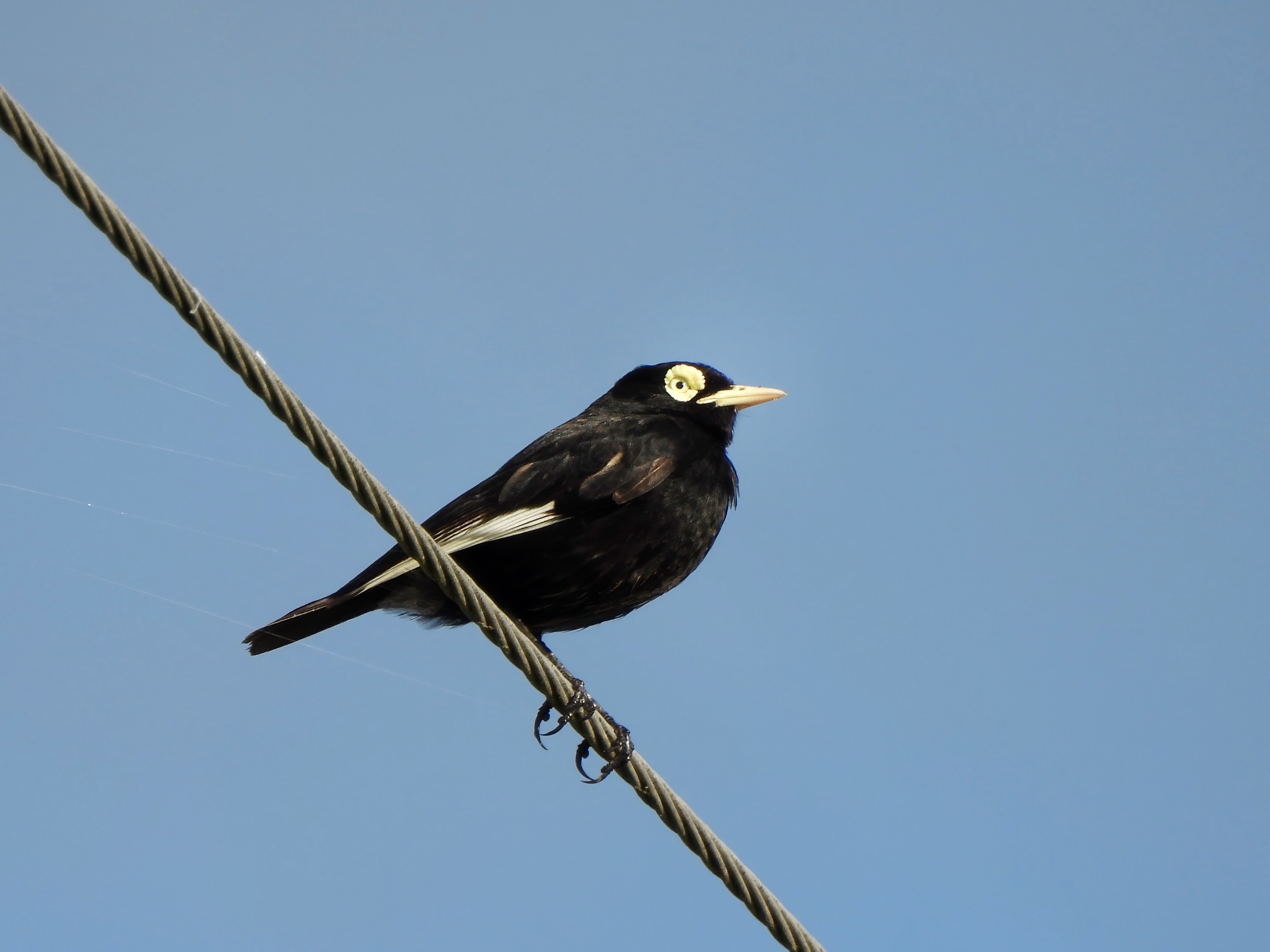
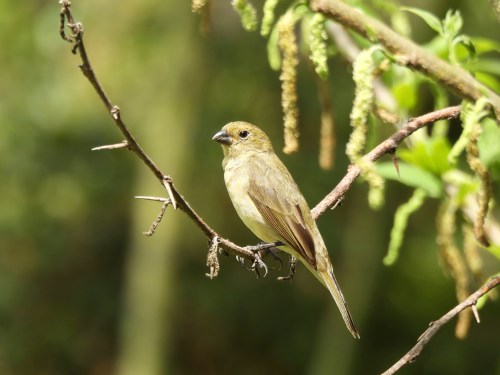
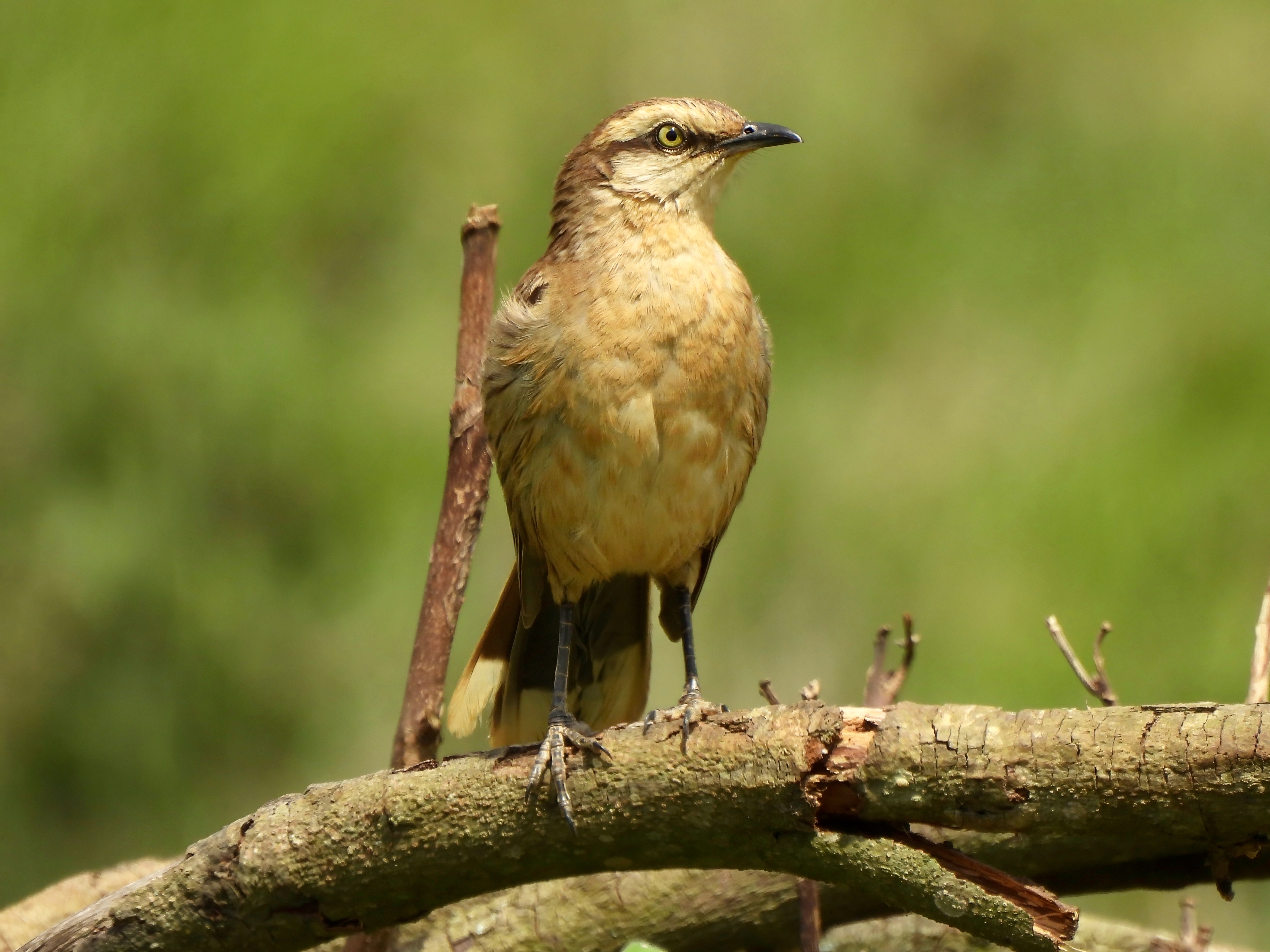
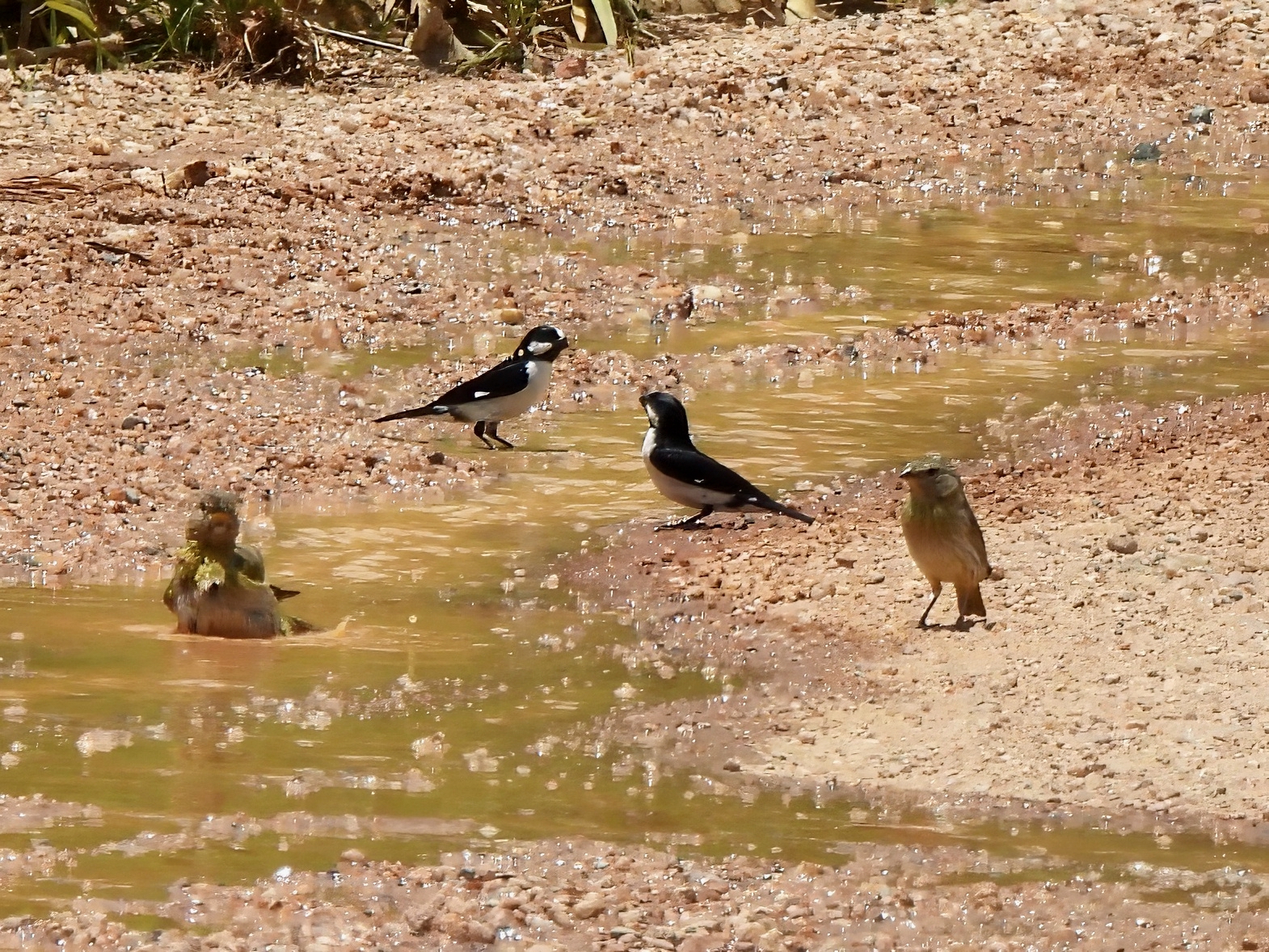
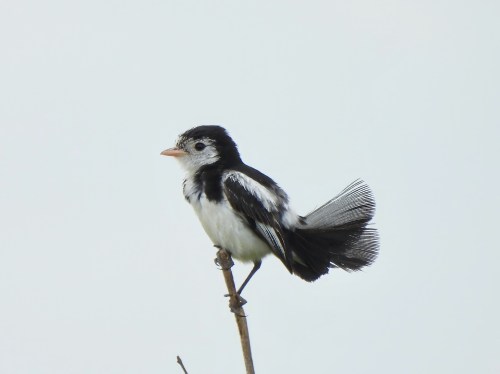
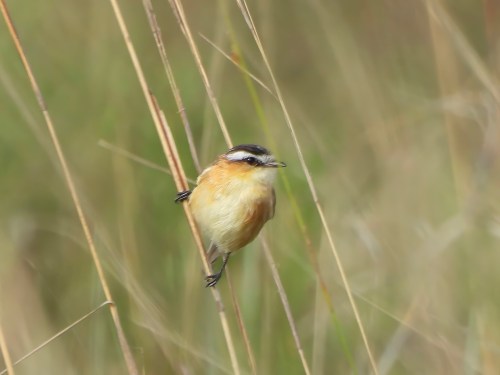
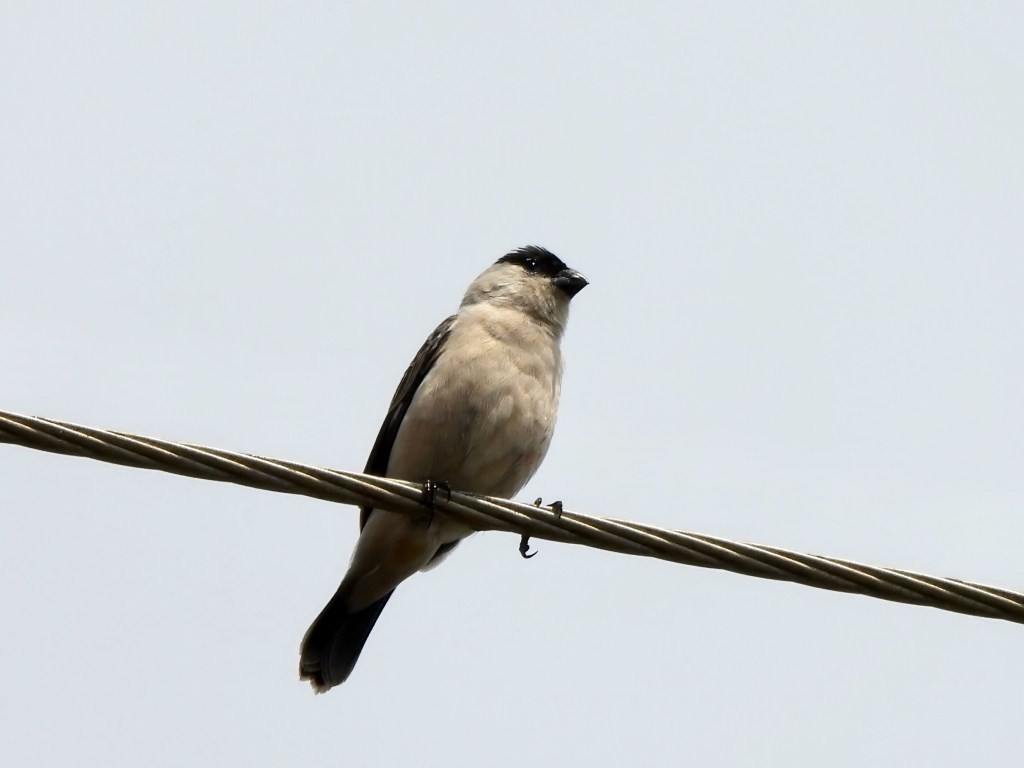
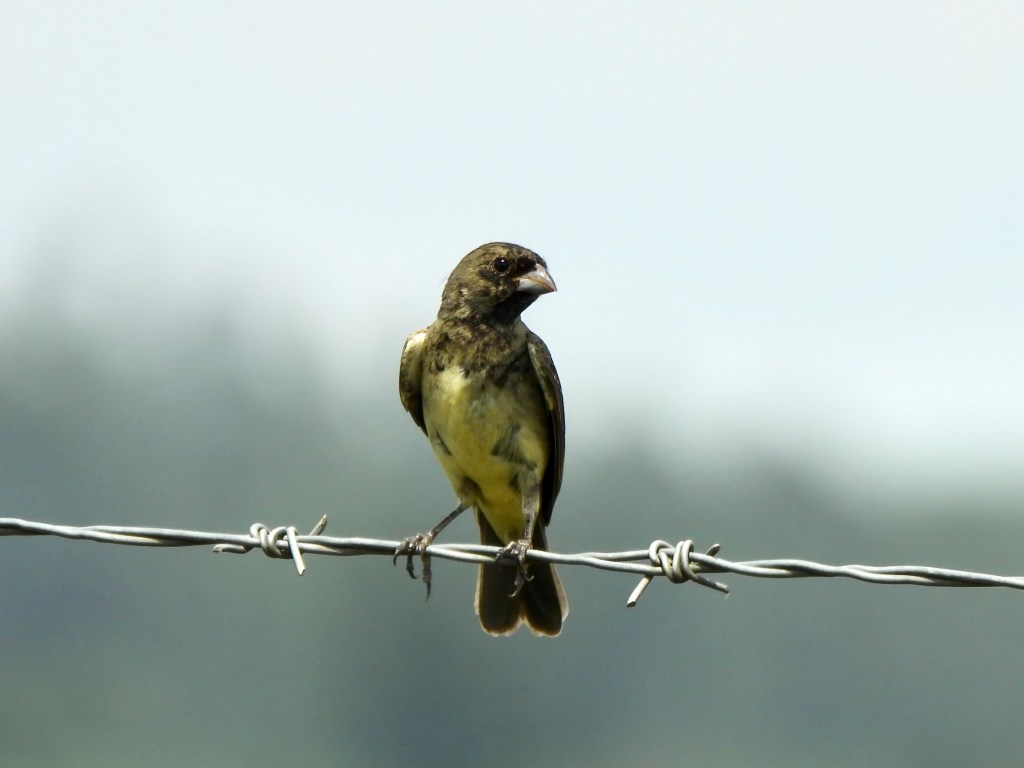
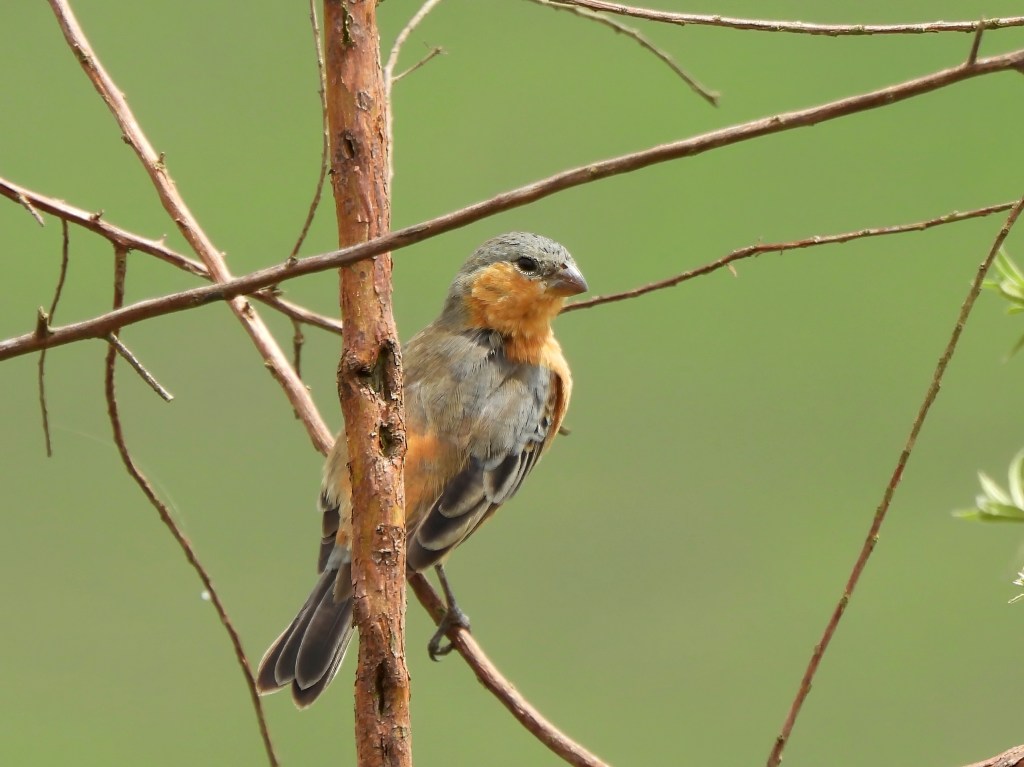
Birding at the seedeater spot was fun and, as promised, we saw seedeaters. In the photos below, Pearly-bellied Seedeater, Yellow-bellied Seedeater, and Tawny-bellied Seedeater. 

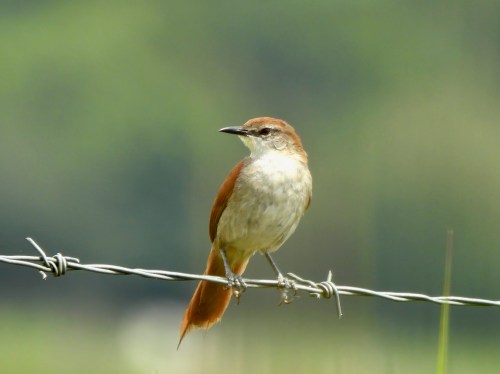
There were more than seedeaters here, and we really enjoyed this spot. This photo is my favorite of a Yellow-chinned Spinetail that I’ve taken. You can see why “spinetail” is in the name.

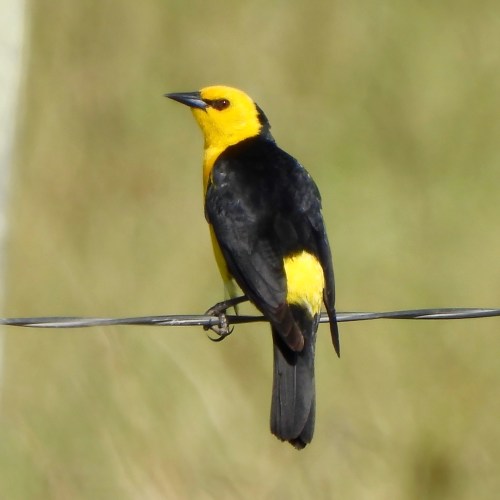
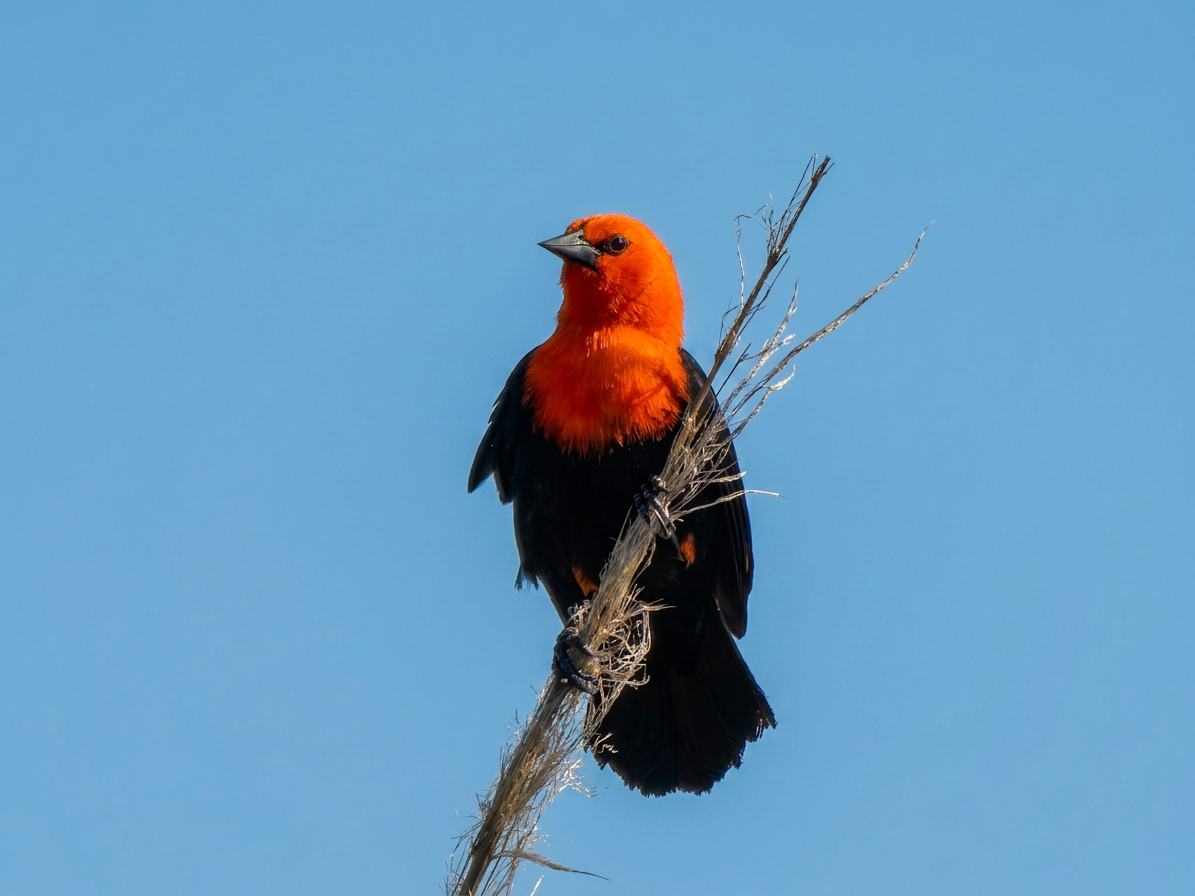
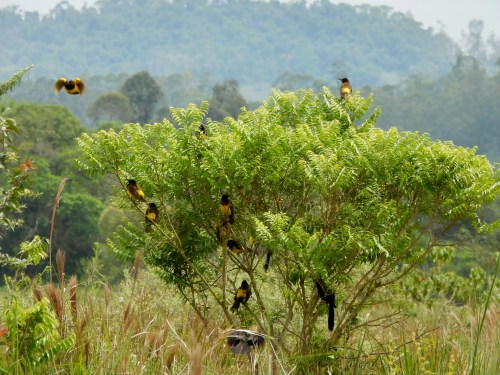
I was also delighted by the flocks of Yellow-rumped Marshbirds.

The highlight here for Cirilo was a very unexpected Bobolink, a life bird for him. They winter in South America, but typically much farther west. 

We shared all these birds with this very friendly group of birders. Francisco, one of the guys we met that day, even tracked me down via eBird and sent me an email with the following photo. As promised, we got a ride back to our car, which had been repaired and was ready to go. I couldn’t help but think that if the breakdown had happened at home in the US, there would have been a much longer and more expensive delay—and it wouldn’t have included life birds and new friends! We continued on our journey and arrived in Pompéu that night as planned. 

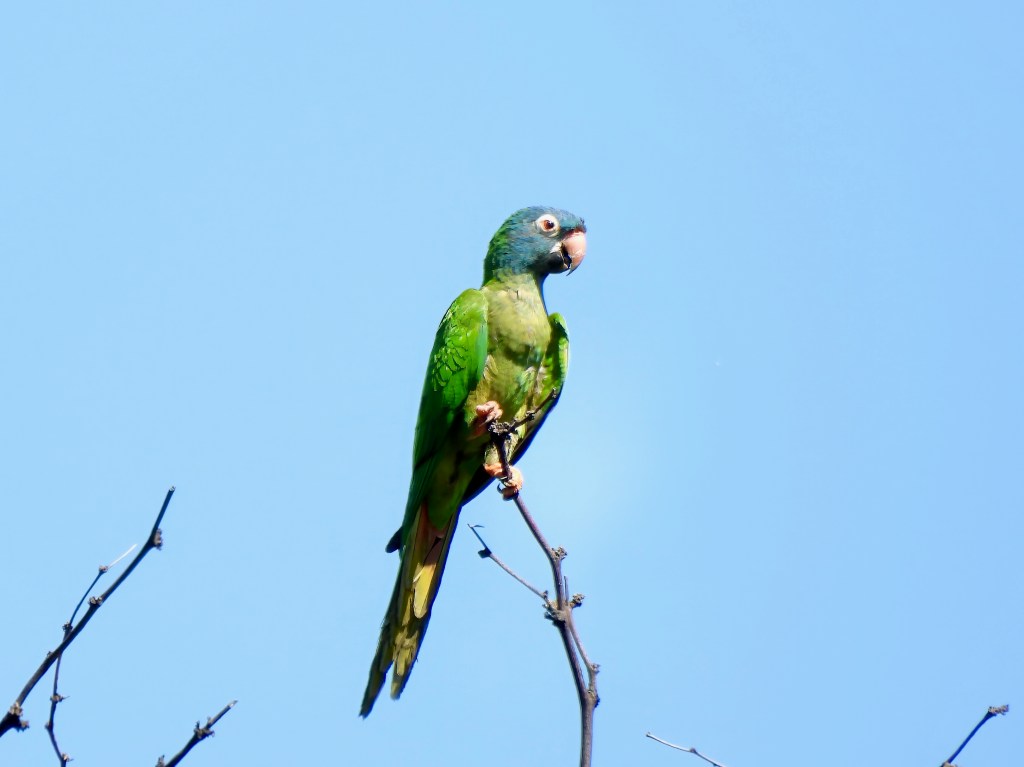
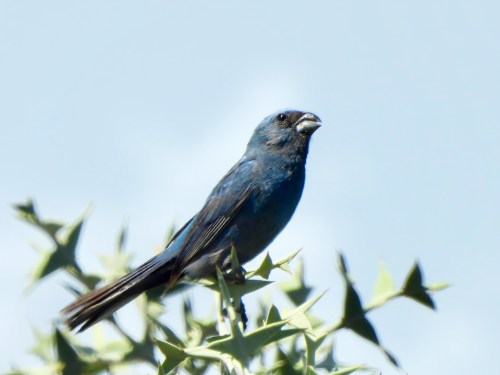
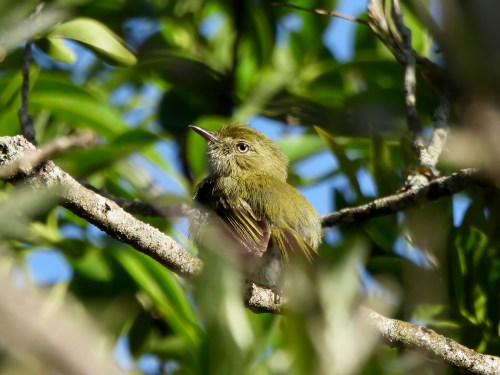
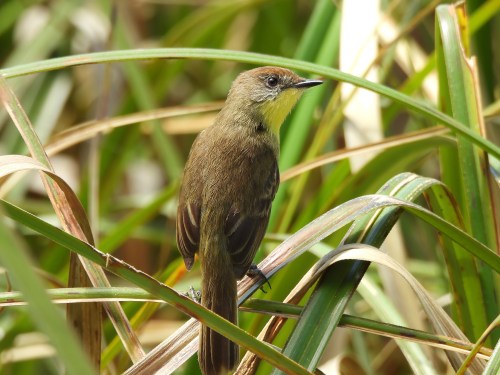
We had a wonderful day on November 23 in Pompéu with our guide Afonso. Our first bird was a snazzy Blue Finch, which we saw well, but it was too quick for a good photo. I also liked the simple sweetness of a Chapada Flycatcher.

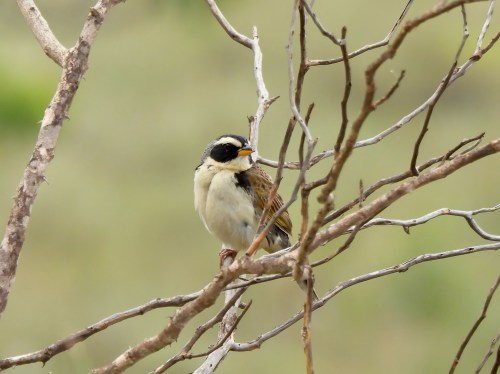
Another “good” bird that morning was a Black-masked Finch.

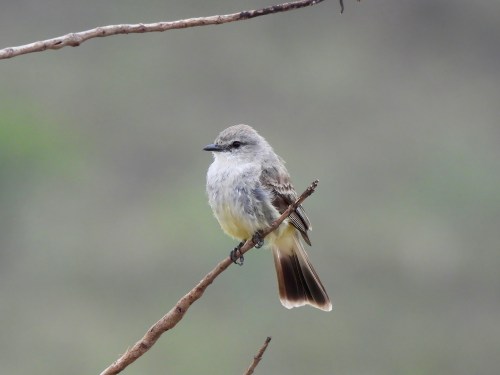
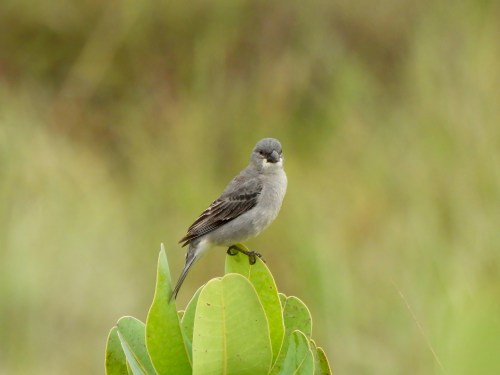
Maybe I should call this the “Seedeater Trip.” Yes, another new one—Plumbeous Seedeater.

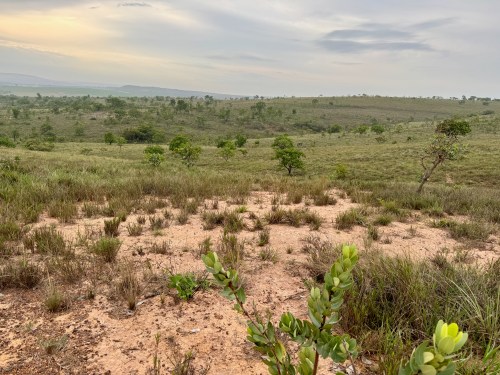
I loved the landscape of scattered trees, shrubs, and open grasslands. We were now in the Cerrado, a vast tropical savanna in central Brazil known for its exceptional biodiversity and ranked among the world’s biologically richest savannas. The cerrado was the habitat I had most looked forward to birding in during our time in Brazil.

It’s easier to see birds here than in dense forest, and there are little surprises everywhere if you look closely. This photo was taken at our first stop of the morning, where we saw the above birds as well as Coal-crested Finch, Black-throated Saltator, Wedge-tailed Grass-Finch, and others. 
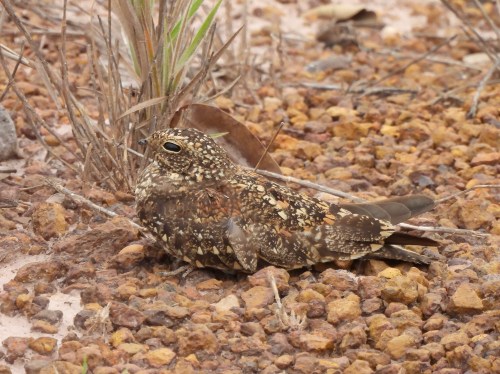
A little later that morning, we watched a Southern Scrub-Flycatcher on her nest feeding young. Another highlight came at mid-day when Afonso found not one, but two, Least Nighthawks roosting on the ground. These gorgeous birds are so well camouflaged that I’m amazed he was able to find them.

We had also tried to find and see the notoriously secretive Ocellated Crake at a couple of spots, but our quest was unsuccessful that day. Afonso and his brother Luiz are famous among birders for their ability to track and “tame” these elusive birds, but even with their skills, birds are never guaranteed.
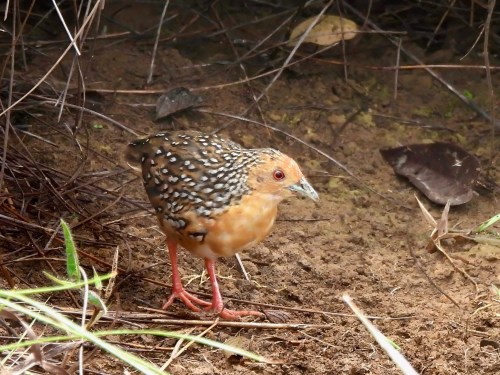
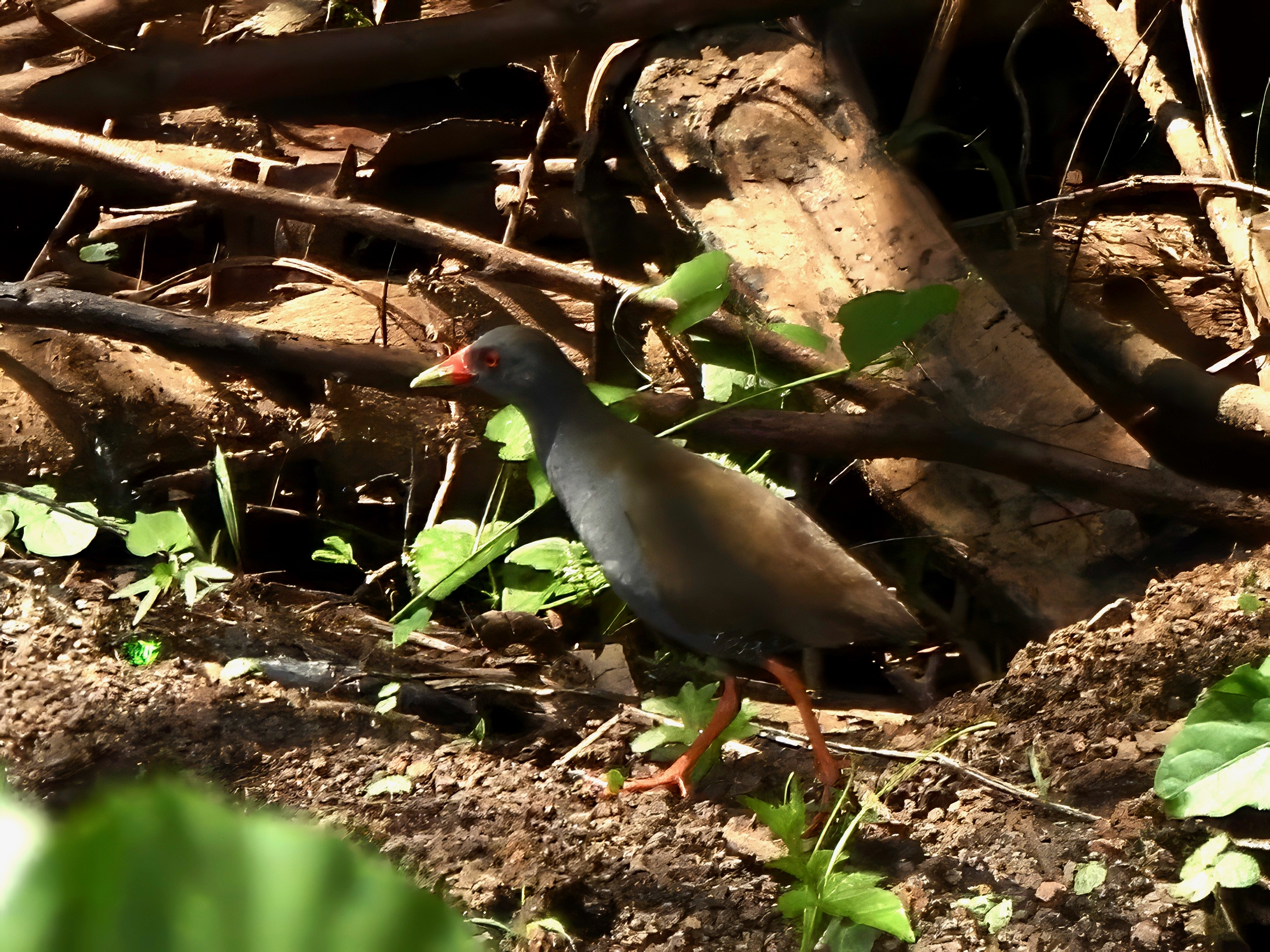
Fortunately, we had more time in Pompéu the following day and Afonso found the crake at our first stop. In the photo below, a beautiful Ocellated Crake, a highlight of the trip for me.

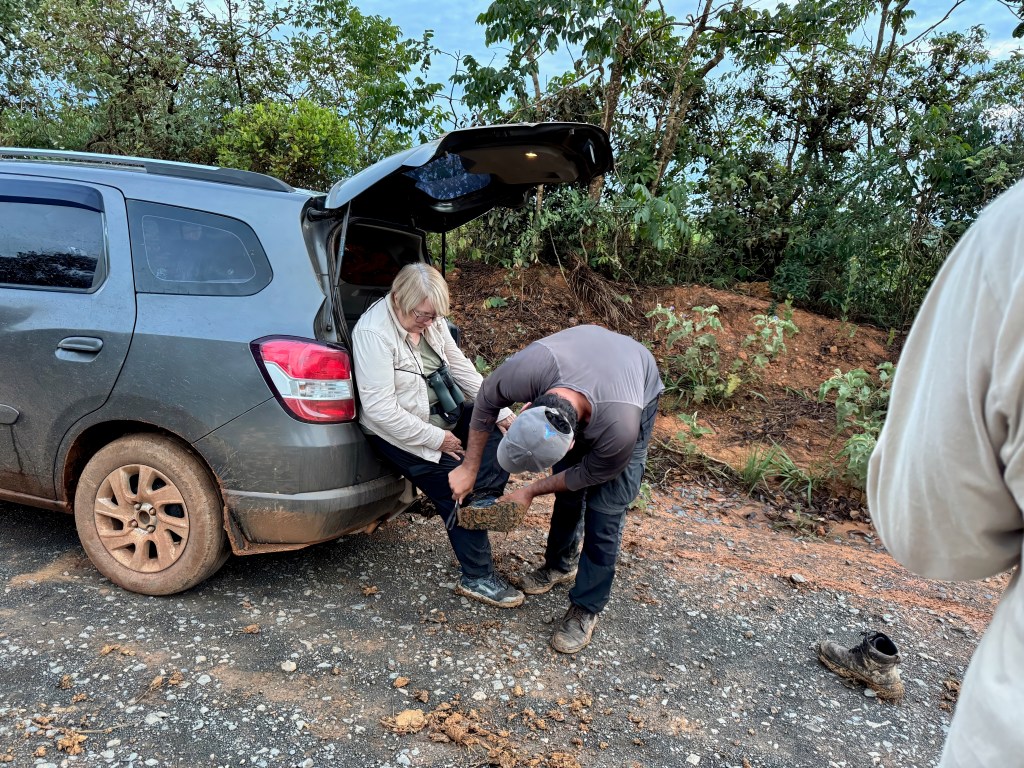
In addition to being a master crake finder, Afonso was one of the nicest people I’ve ever met, and I enjoyed our time with him. I will always remember his patience as he helped me navigate tall reeds and uneven ground while we made our way to a couple of spots where we looked for the crake. And when we saw special birds, he shared our happiness and seemed just as excited as we were. Here, Afonso is cleaning Sandra’s shoes after birding at a spot that was super muddy, leaving over an inch of extremely sticky stuff stuck to our shoes. This willingness to work so hard, the shared joy, and the kindness are what make birding so special.

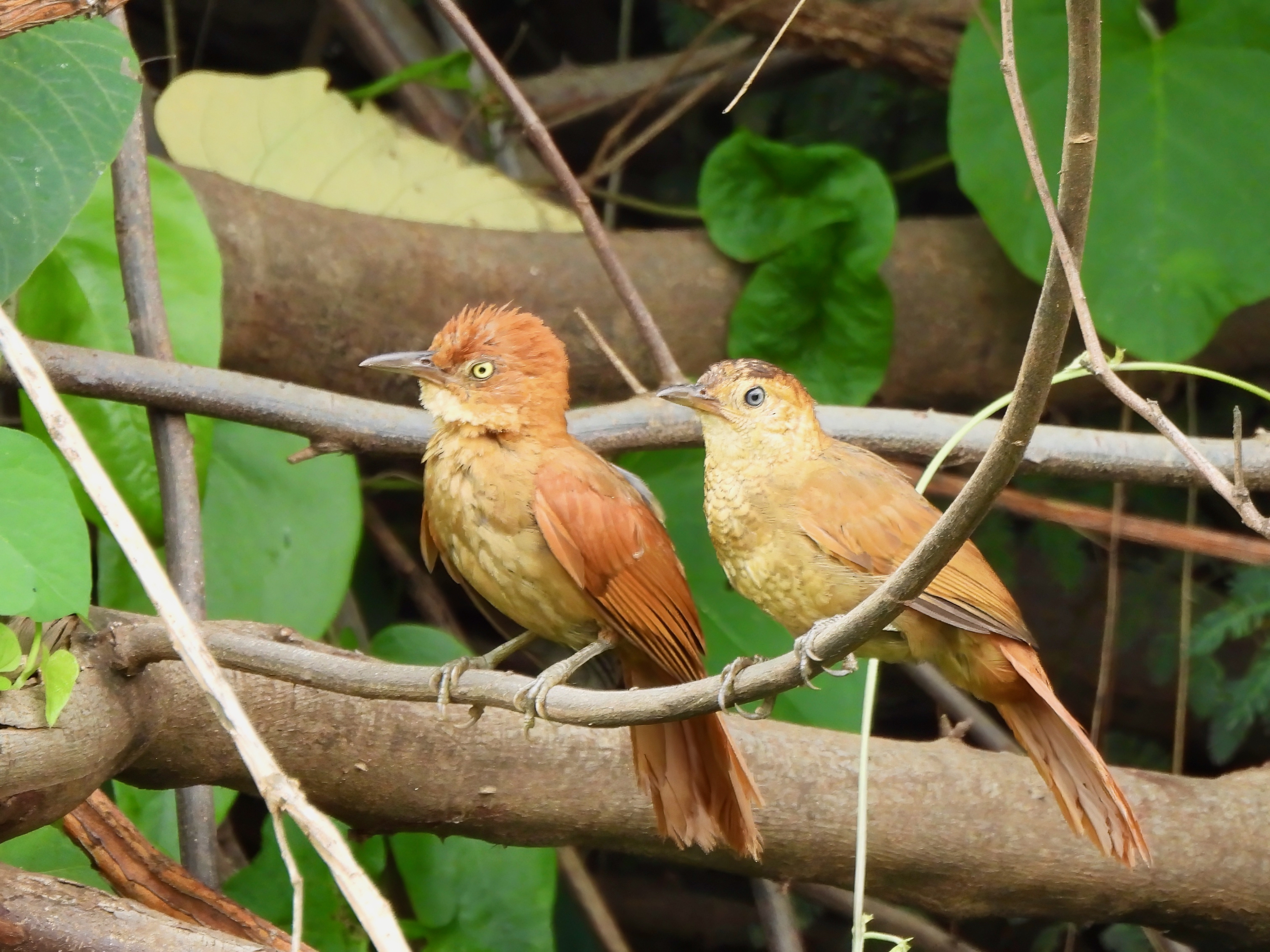
Our morning was not yet over. At spots near the edge of town, we saw at least five Chestnut-capped Foliage-gleaners, including the adult and immature in the photo below. Other special birds seen that morning were Paint-billed Crake and Chotoy Spinetail, also displayed in the following gallery.

Our hearts full after an amazing morning of birding, we left for the long drive to Santuário do Caraça.

Read Full Post »

Scope creep and FOMO were responsible for my month-long trip to South America in late 2025. It started with Brazil. My friend Sandra and I had both visited before, and we both wanted to return. After carefully planning a trip for the second half of November, Sandra discovered a pelagic trip in Chile that she really wanted to do. There was just one problem: it didn’t depart until December 13, leaving a sizable gap to fill. Argentina was added to the itinerary and, once I realized how close Buenos Aires was to Montevideo, I wanted to include Uruguay, too. I’m a full partner in the scope creep, although Sandra owns the Fear Of Missing Out. Fortunately, I usually benefit from it as well.

Below, a beautiful Red-breasted Toucan awaited us in Brazil. You’ll have to wait until Part 2 to learn the significance of this particular bird.

Cirilo Vieira had previously guided both of us — separately — at Ecolodge Itororó, so choosing him to lead us again was easy. Andy Foster of Serra dos Tucanos Birding Tours handled the logistics, including arranging local guides at several key locations.

We planned to arrive a day early to rest and recover, but like many travel plans, things did not go as expected. My trip south turned into a nightmare of delays that included an unplanned overnight stay in Miami. After roughly two hours of sleep, we met Cirilo and Paulo, our driver, in Rio de Janeiro on November 14 to begin our drive south along the coast. I was functioning mostly on caffeine and adrenaline.

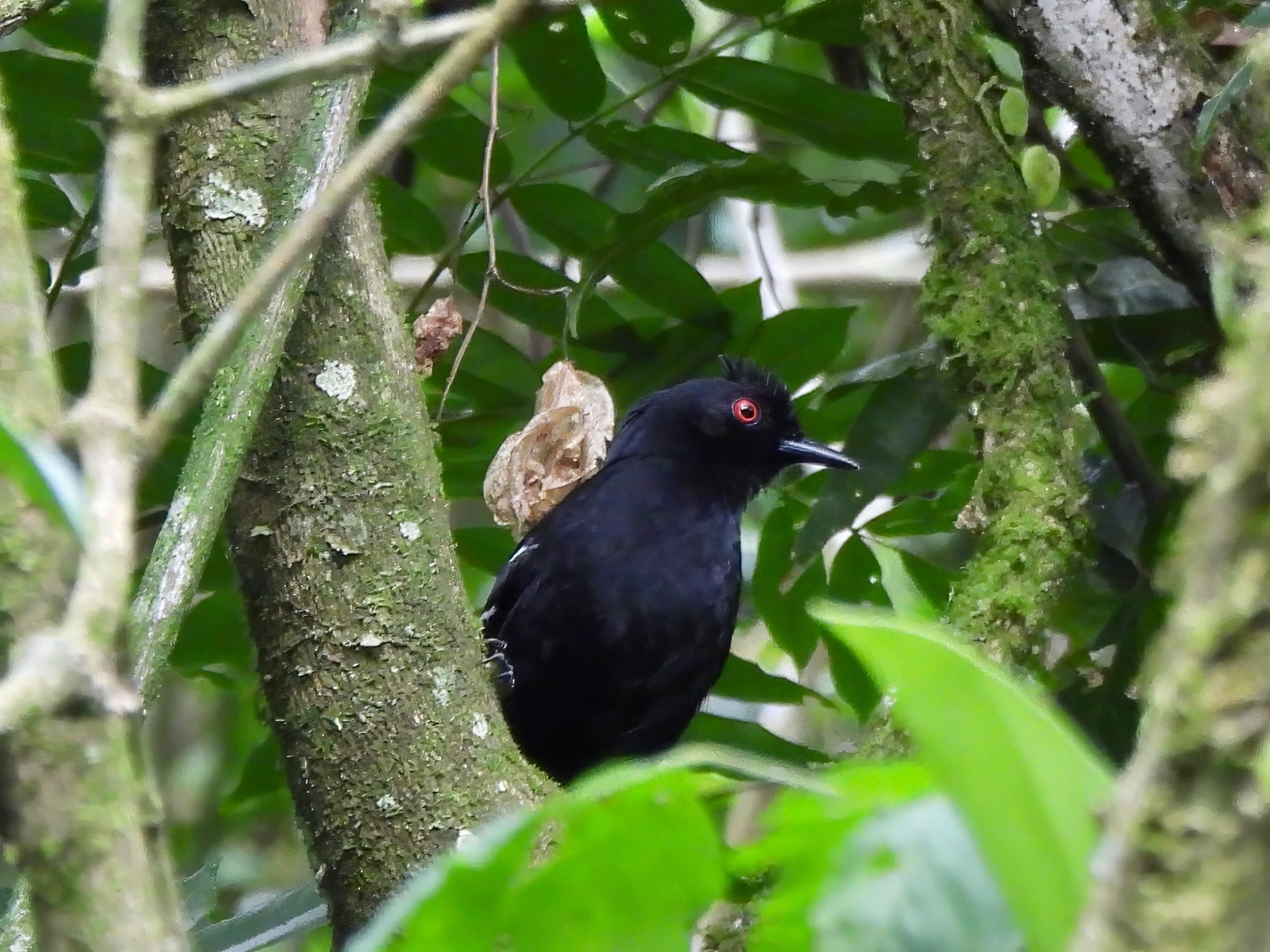
Our first target was Black-hooded Antwren, an extremely localized species found only along a narrow stretch of coastline between Rio de Janeiro and São Paulo. Cirilo quickly found this prize and I even managed a photo.

We ended the day in Ubatuba and had time for a little birding before settling into our hotel. Even though I’d birded this area on my 2024 trip, Cirilo expertly found two special birds that evening — White-shouldered Fire-eye, a lifer for me, and Spot-backed Antshrike, a life bird for both of us.

Buff-throated Purpletuft is a rare little bird, less than four inches long, endemic to Brazil, and highly localized. It is widely considered difficult to see. On the morning of November 15, we arrived at the same spot we had birded the previous afternoon and the purpletuft was almost the first bird we saw. Sandra and I were thrilled to see this little jewel so well and to add it to our life lists.

After birding the rest of the morning at this productive spot, we made a quick stop at Sitio Folha Seca for hummingbirds. Then it was on to Sítio Macuquinho, which had been one of my favorite places on my earlier trip to Brazil. That visit had been just a few hours, but this time we would stay two nights.

Our full day at Sítio Macuquinho was magical. The very talented guide and owner, Elvis, found many wonderful birds for us. I was especially happy to see the São Paulo Marsh Antwren, a bird that the others had seen on my 2024 trip, but I just couldn’t get my binoculars on that quick little bird then. Click on the photos in the gallery below to see species names.

The most magical experience of the entire month-long trip occurred that evening. Sandra described it well: “a dusk show of several Long-trained Nightjars coursing back and forth over us while fireflies popped around us, all in the near-quiet of gentle insects chorusing nearby.” It was one of those rare moments of complete immersion; we stood there awestruck, spellbound by the spectacle unfolding around us.

After a couple of hours birding at Sítio Macuquinho again the next morning, we reluctantly said goodbye to our hosts and spent most of the day on November 17 driving to Intervales State Park. The park protects more than 40,000 hectares as part of the largest remaining mosaic of Atlantic Forest conservation areas, preserving one of the world’s most biodiverse and threatened ecosystems. In addition to its many trails and birding areas, Intervales also offers lodging and a restaurant within the park boundary.

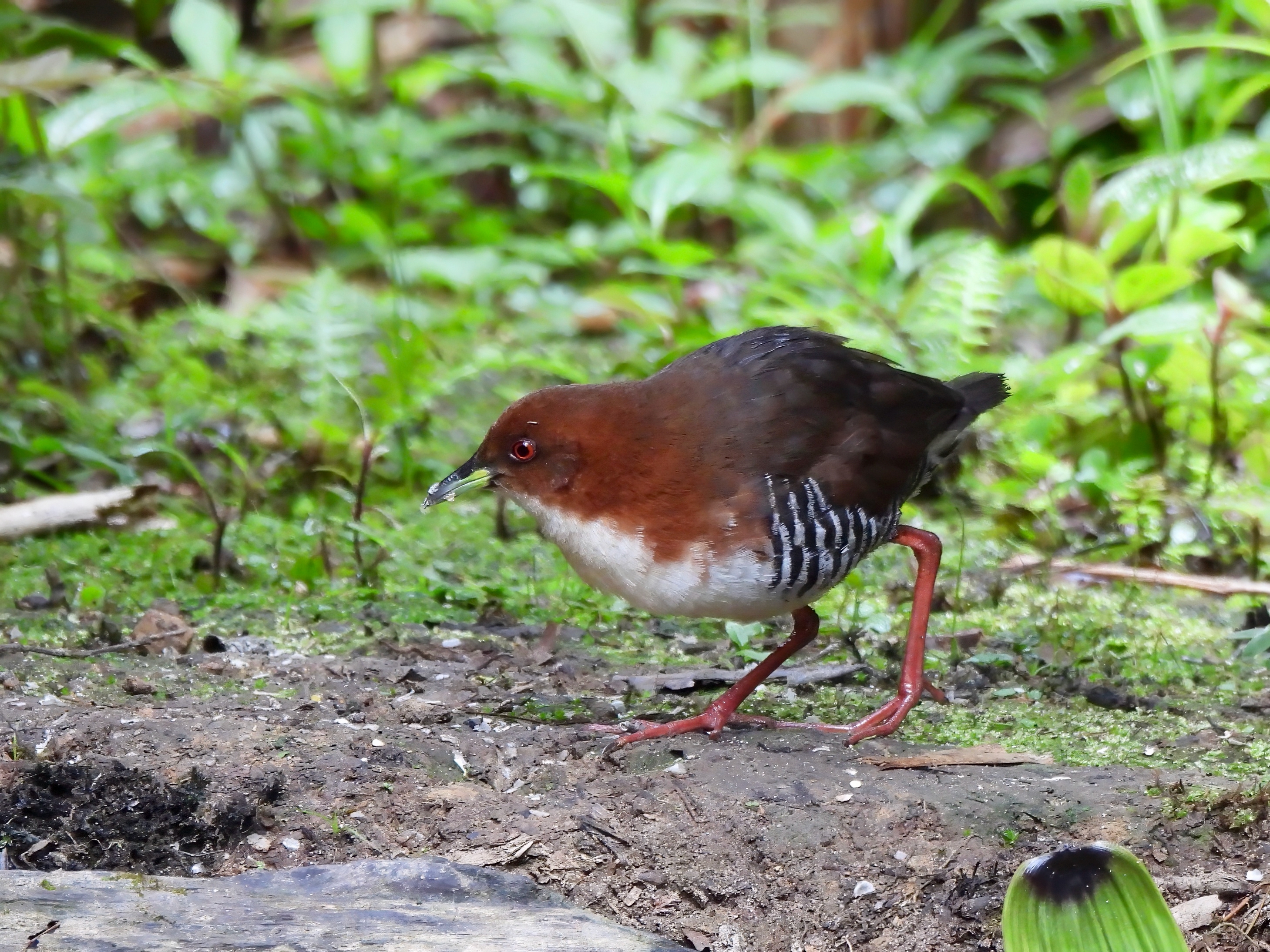
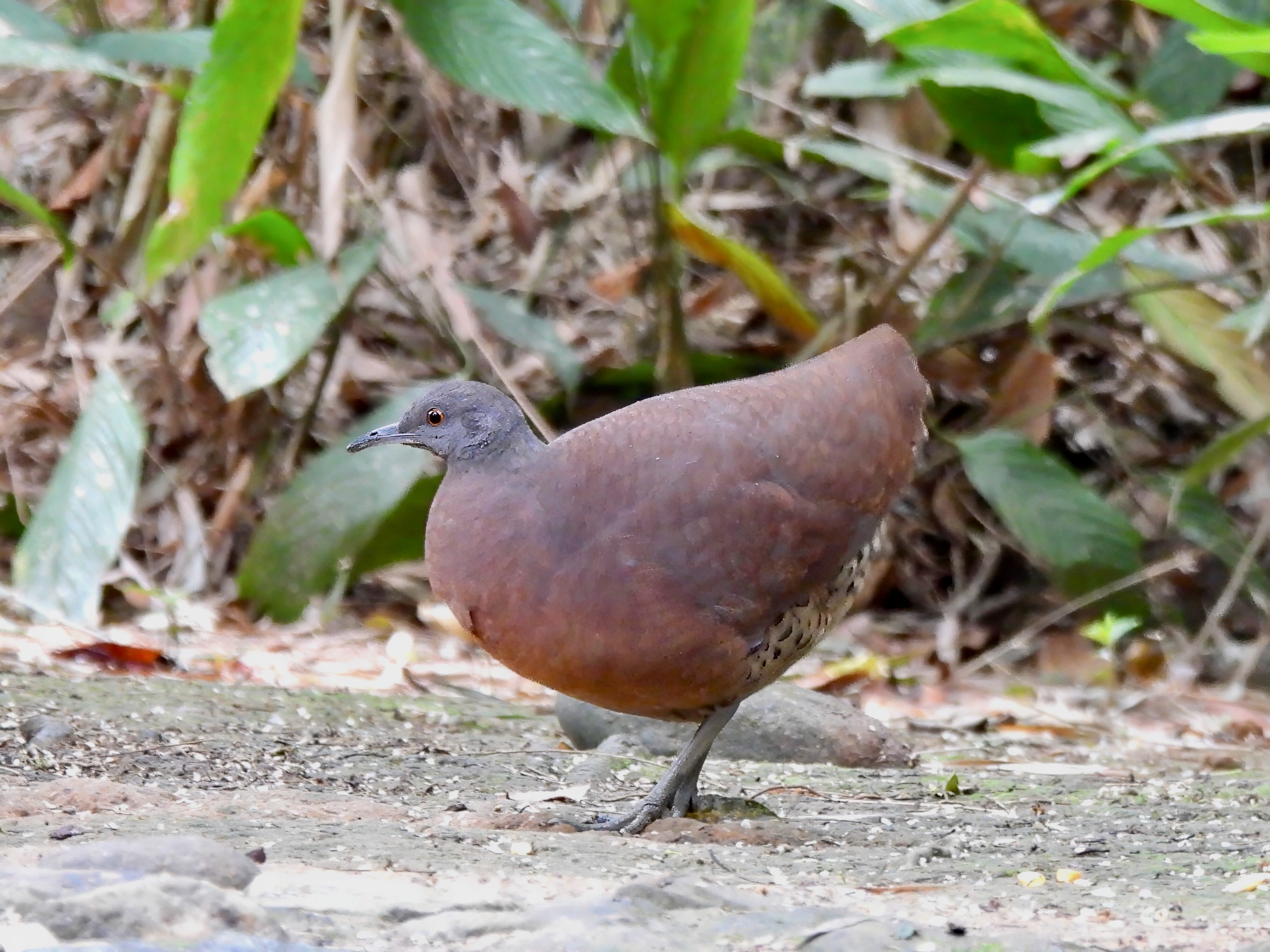
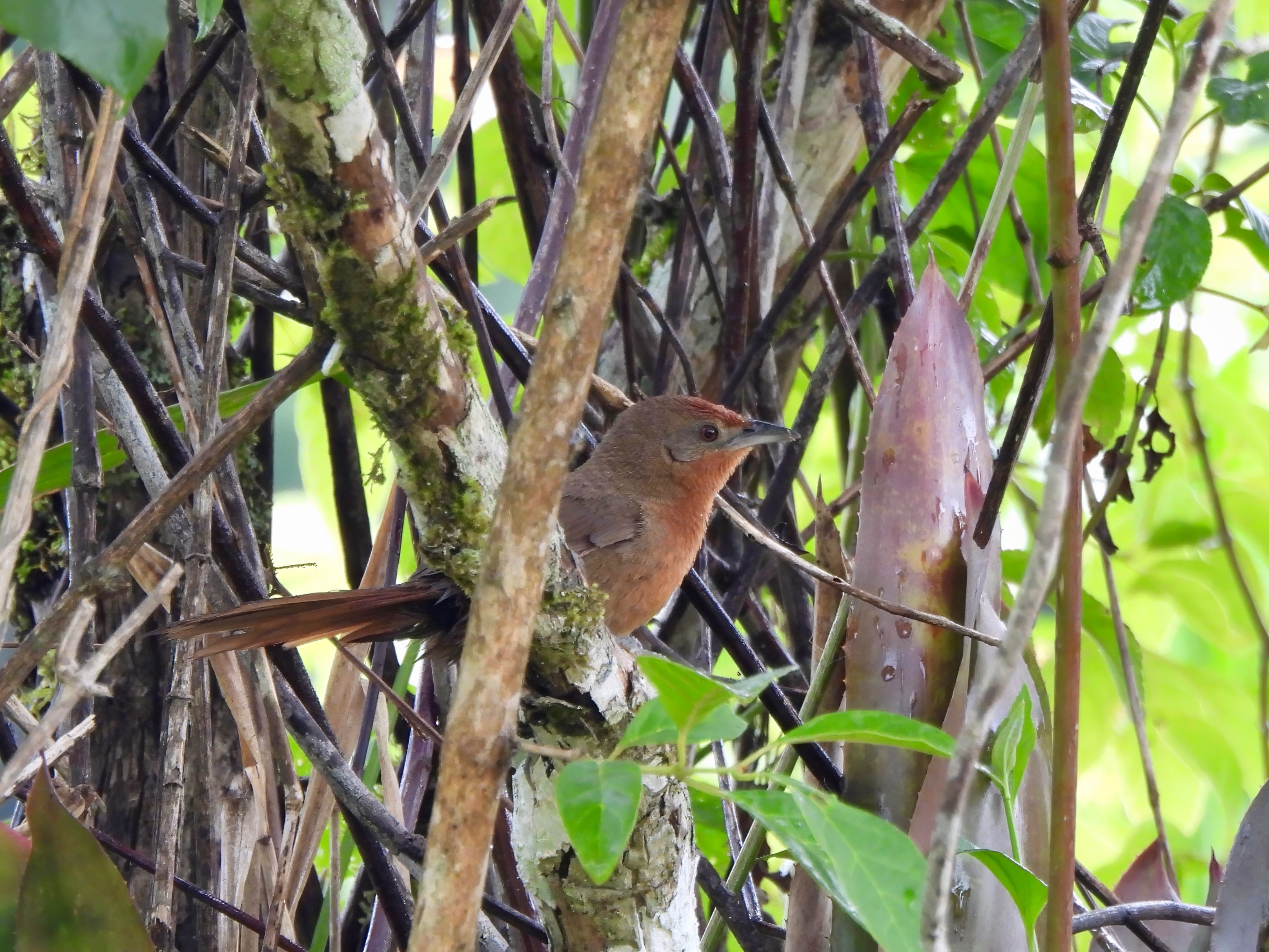
We were aided by Gerson, our local guide at Intervales. His extensive knowledge of the park enabled him to show us some amazing birds; I added 24 species to my life list in just over two days there. A few of my favorites are shown in the gallery below.

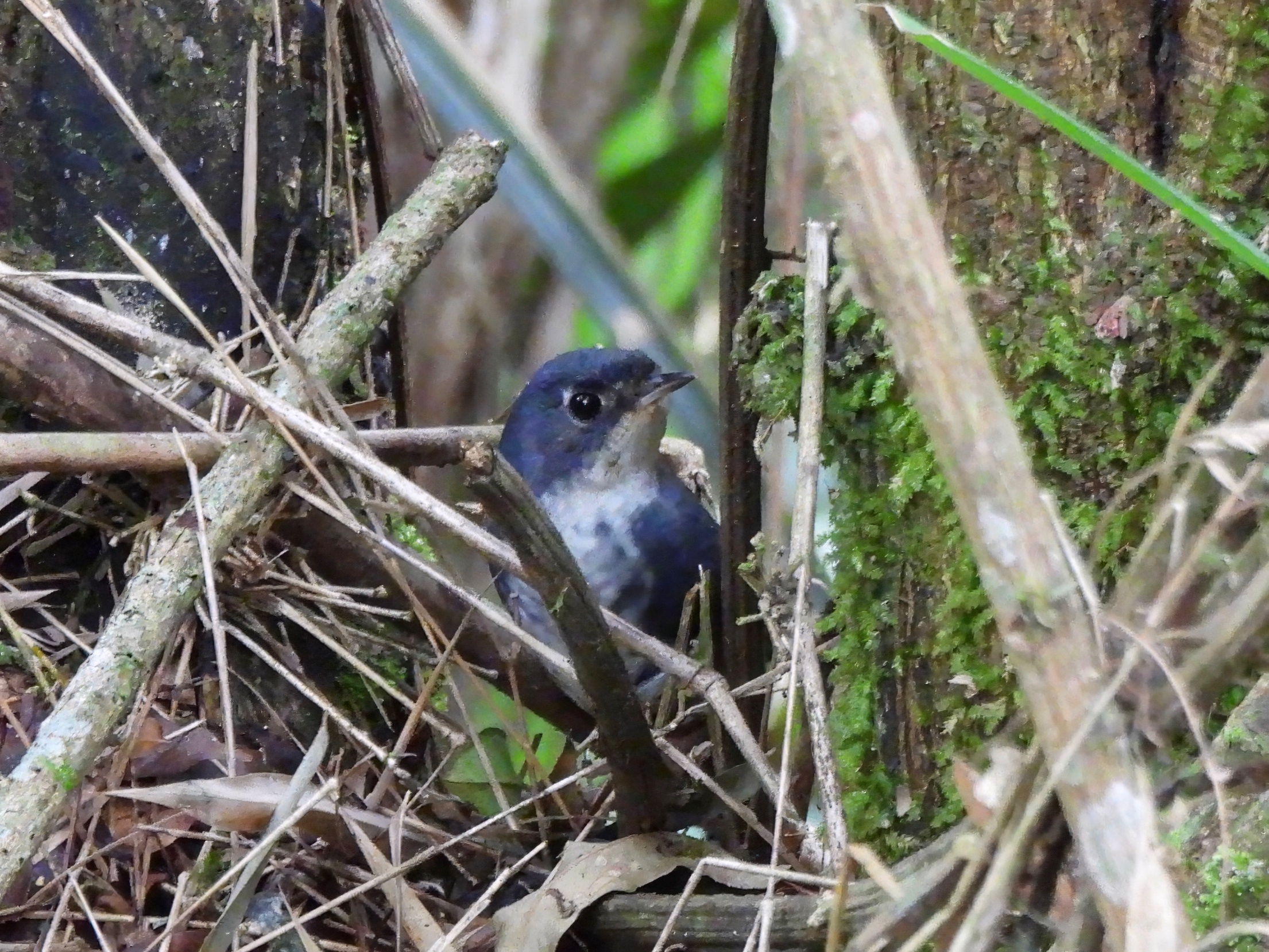
Intervales gave us many happy moments. I was thrilled to feed my lifer Solitary Tinamou. My beloved Red-and-white Crakes scurried around in shallow water just a few feet from us. A Green-backed Trogon was so close to the lodge where we took refuge from the rain that I got a photo with my cell phone. We saw the highly sought-after, nomadic Pileated Parrot. I even got a look — and a blurry photo — of a Rufous-breasted Leaftosser as it stealthily dug in the leaf litter, a species that is notoriously secretive and often difficult to see.

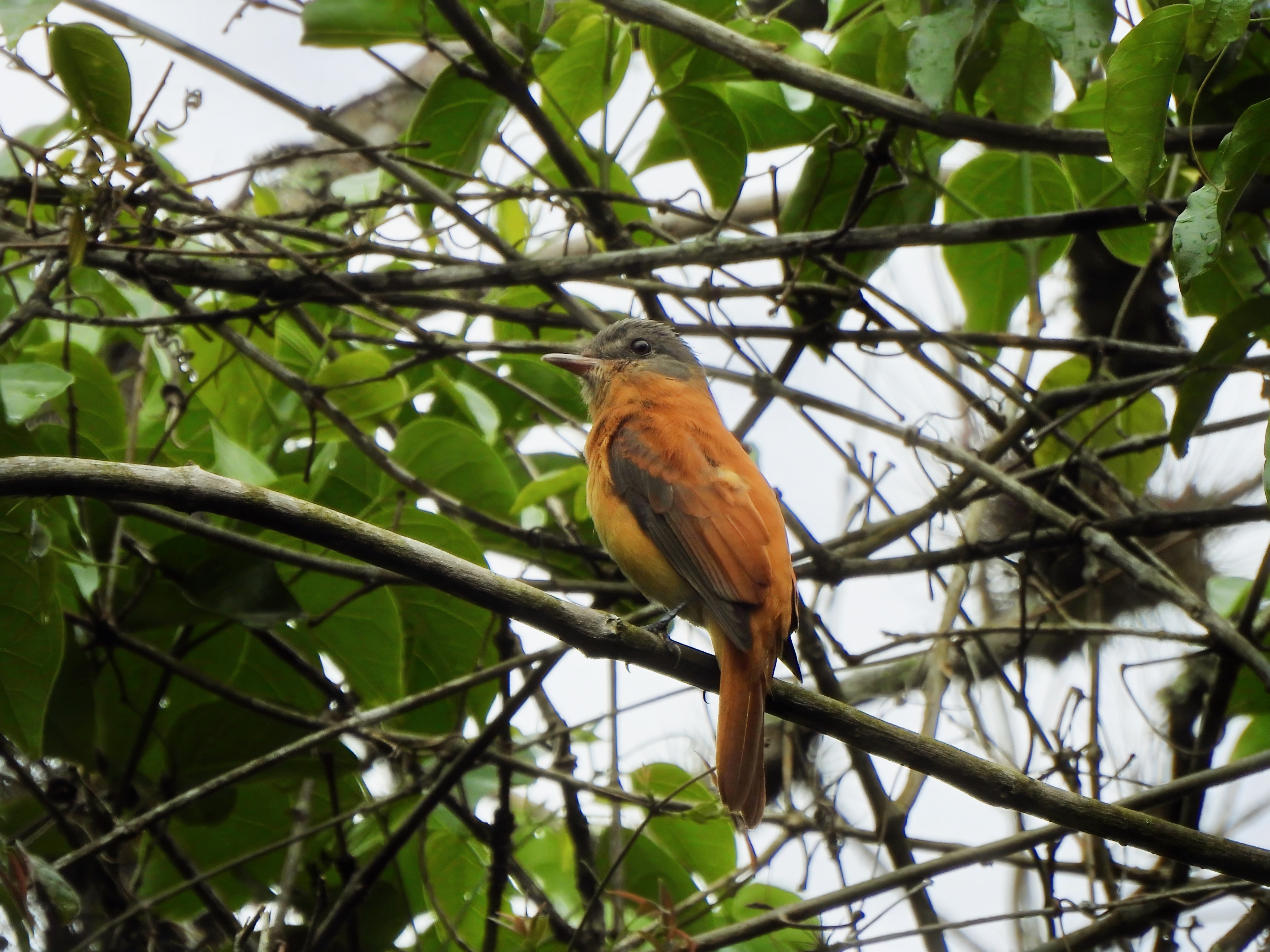
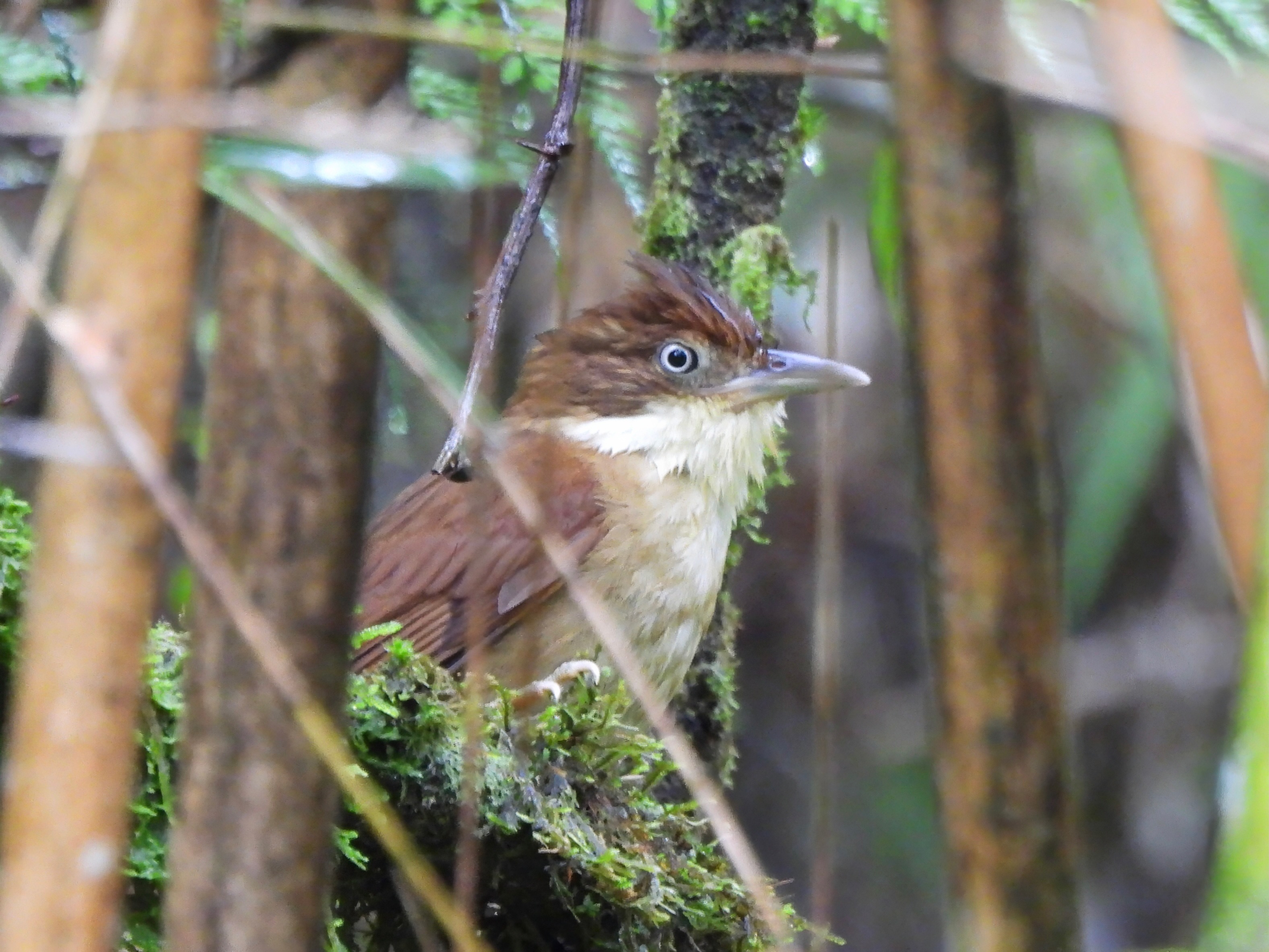
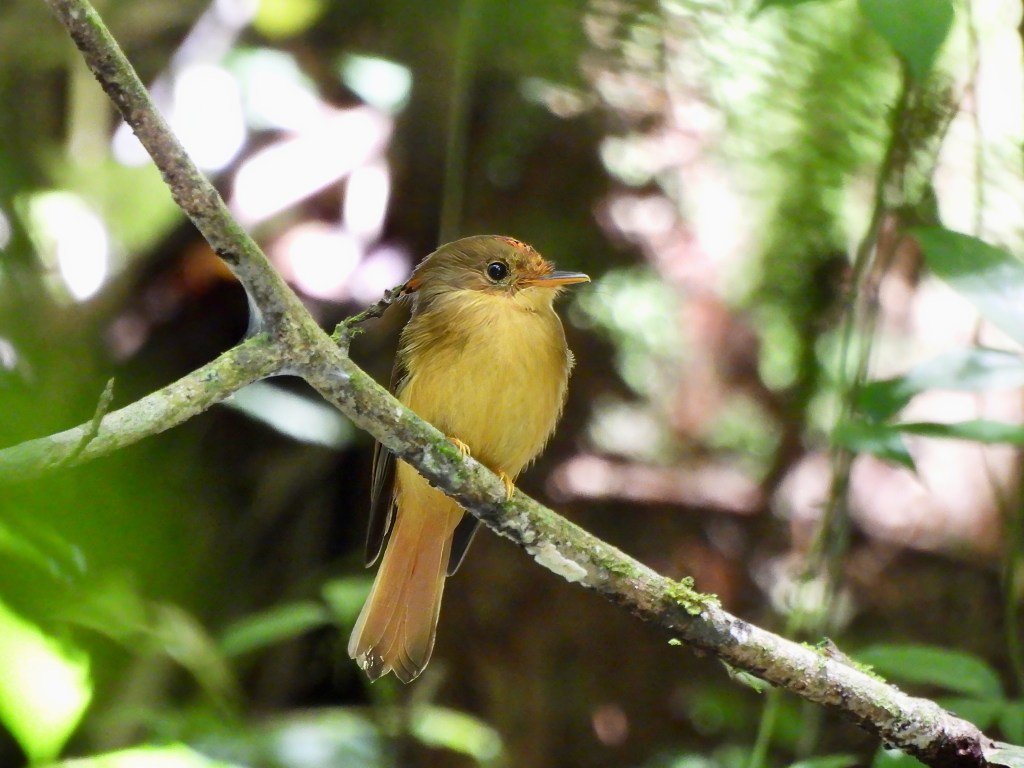
Sandra’s favorite bird was this spectacular little Atlantic Royal Flycatcher, an endemic to southeastern Brazil, and a species that had been among her most-wanted birds for many years.

Watching this pretty bird in the sun-dappled branches over a narrow river was another perfect experience. Our little group was alone in the quiet forest and it felt as if the flycatcher had allowed us to enter his world.

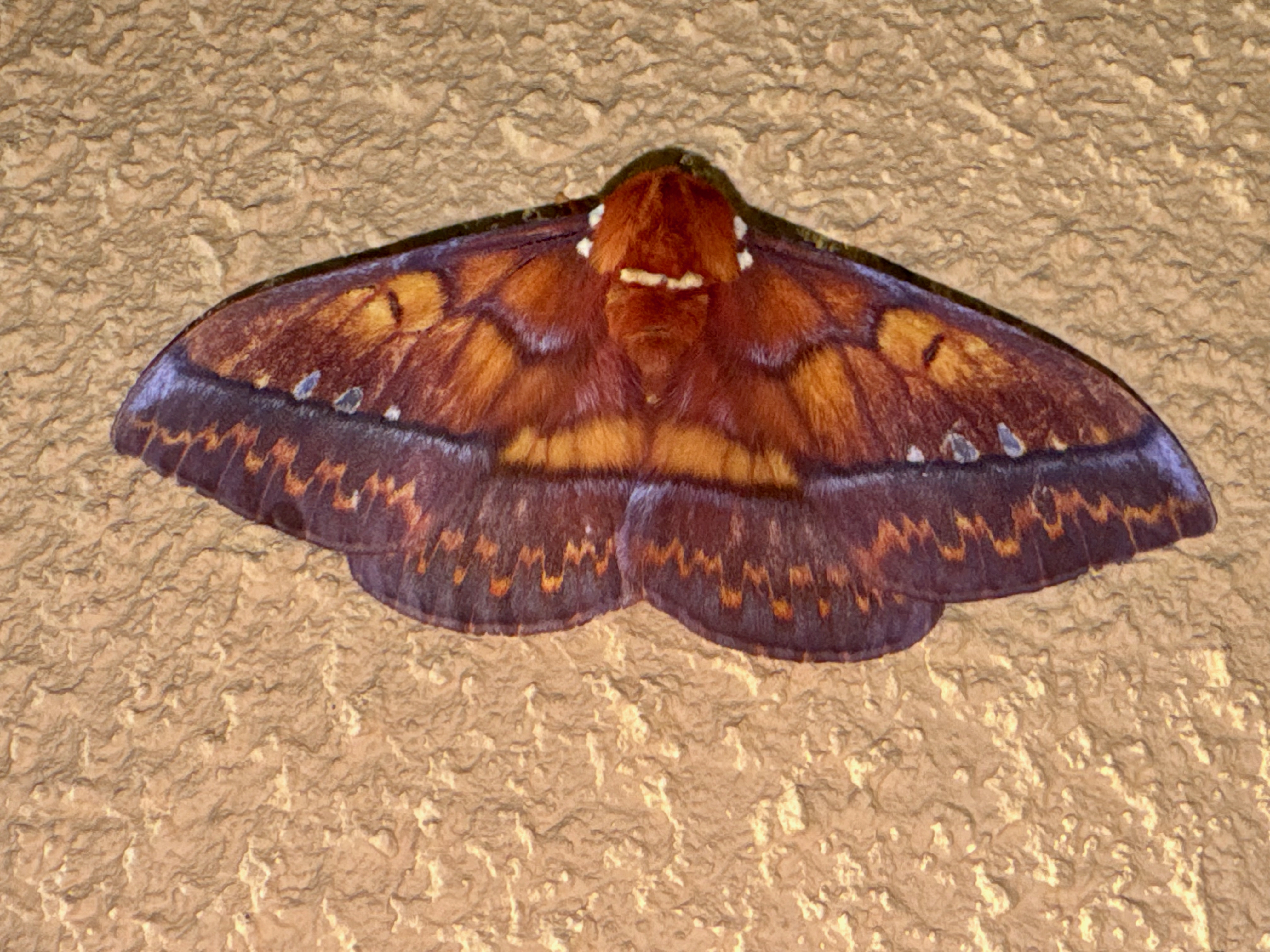
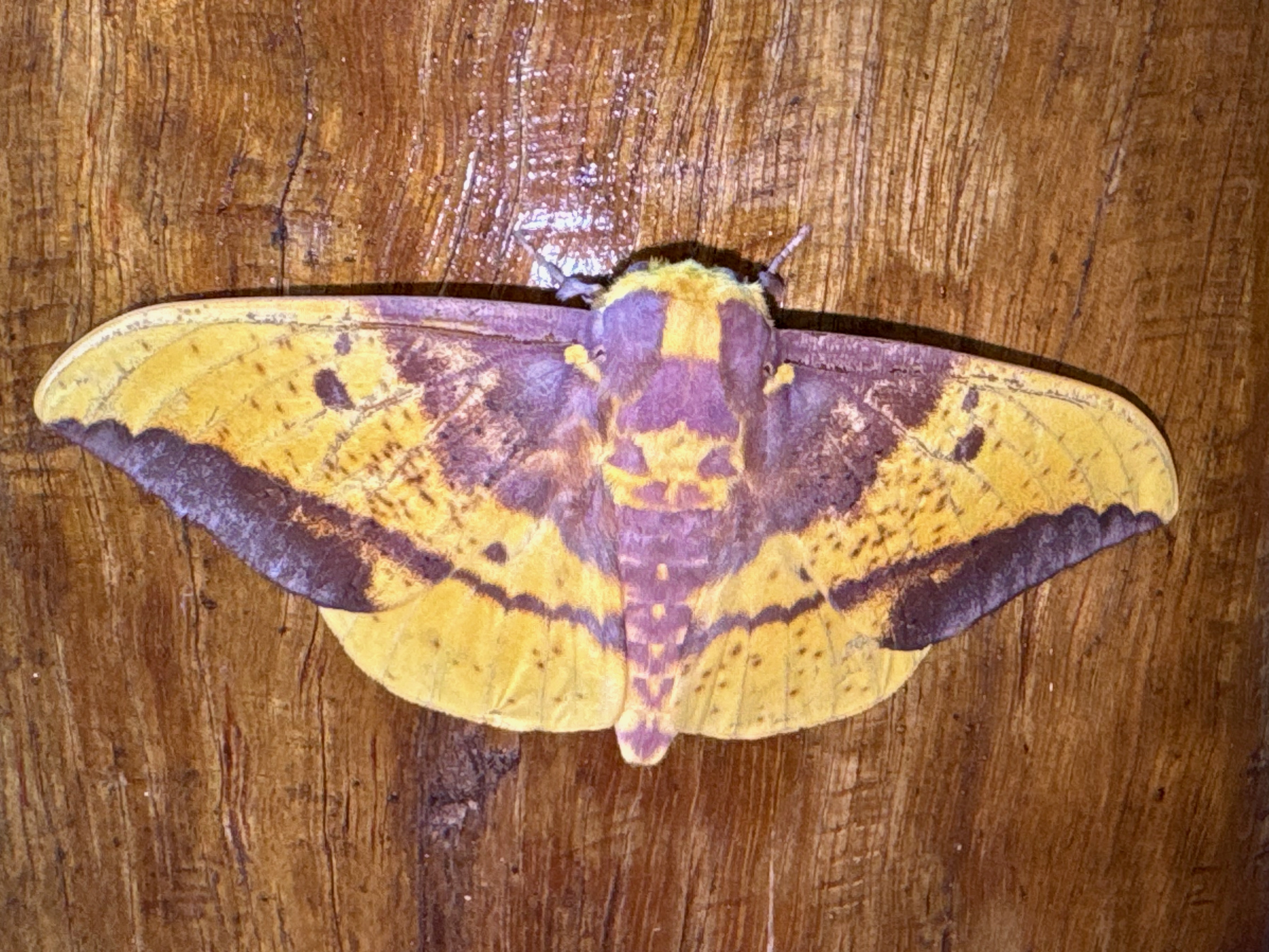
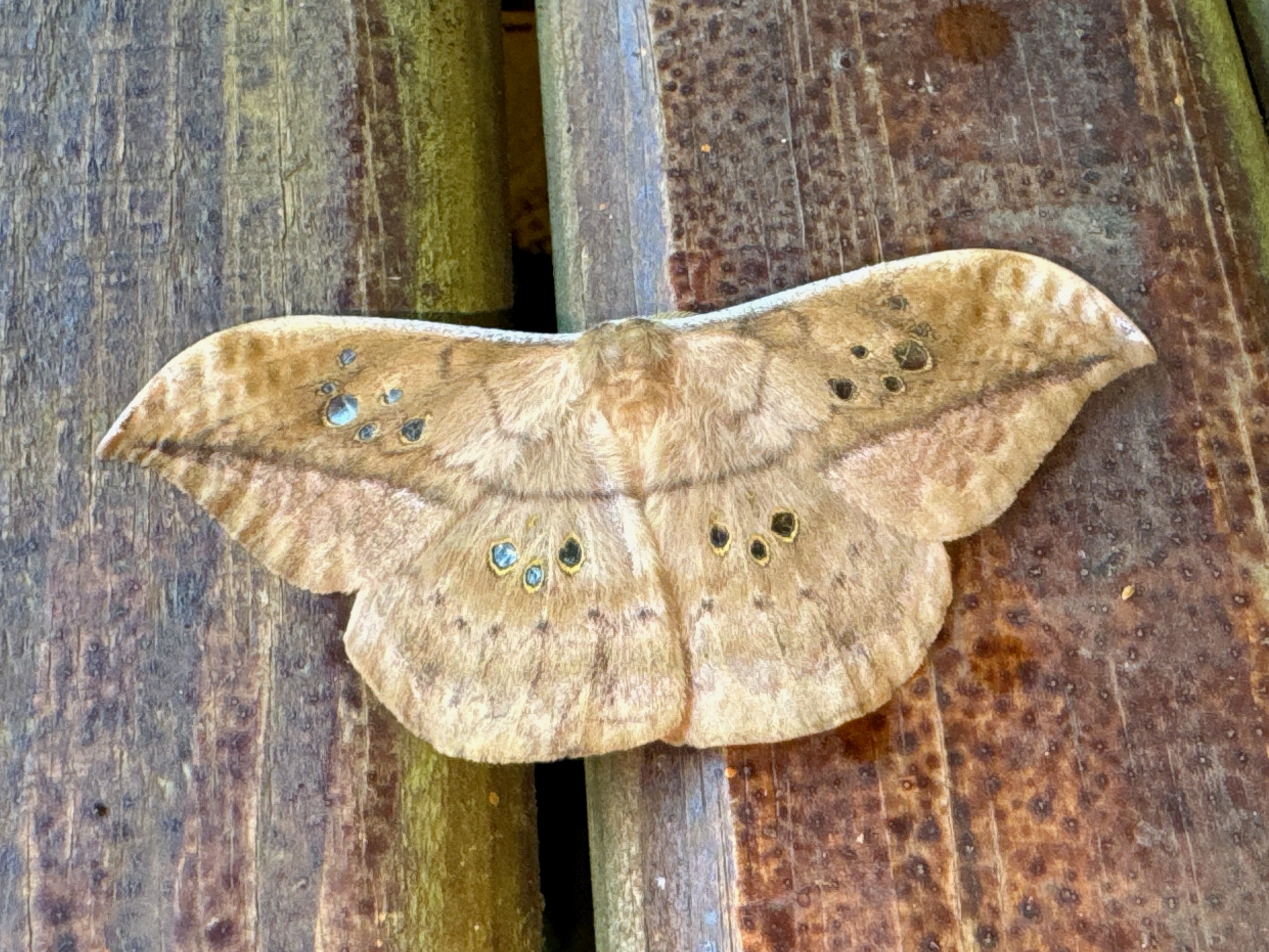
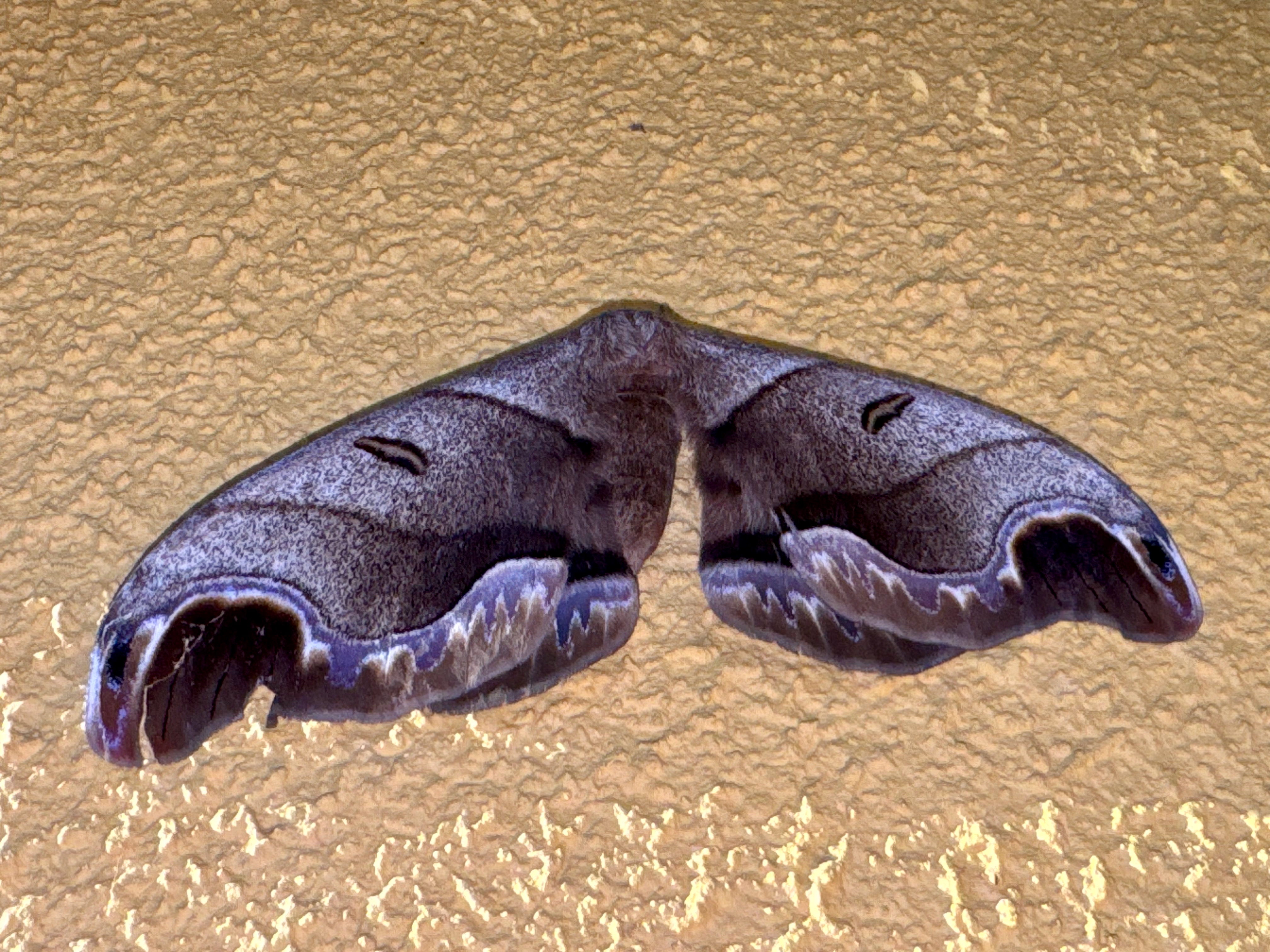
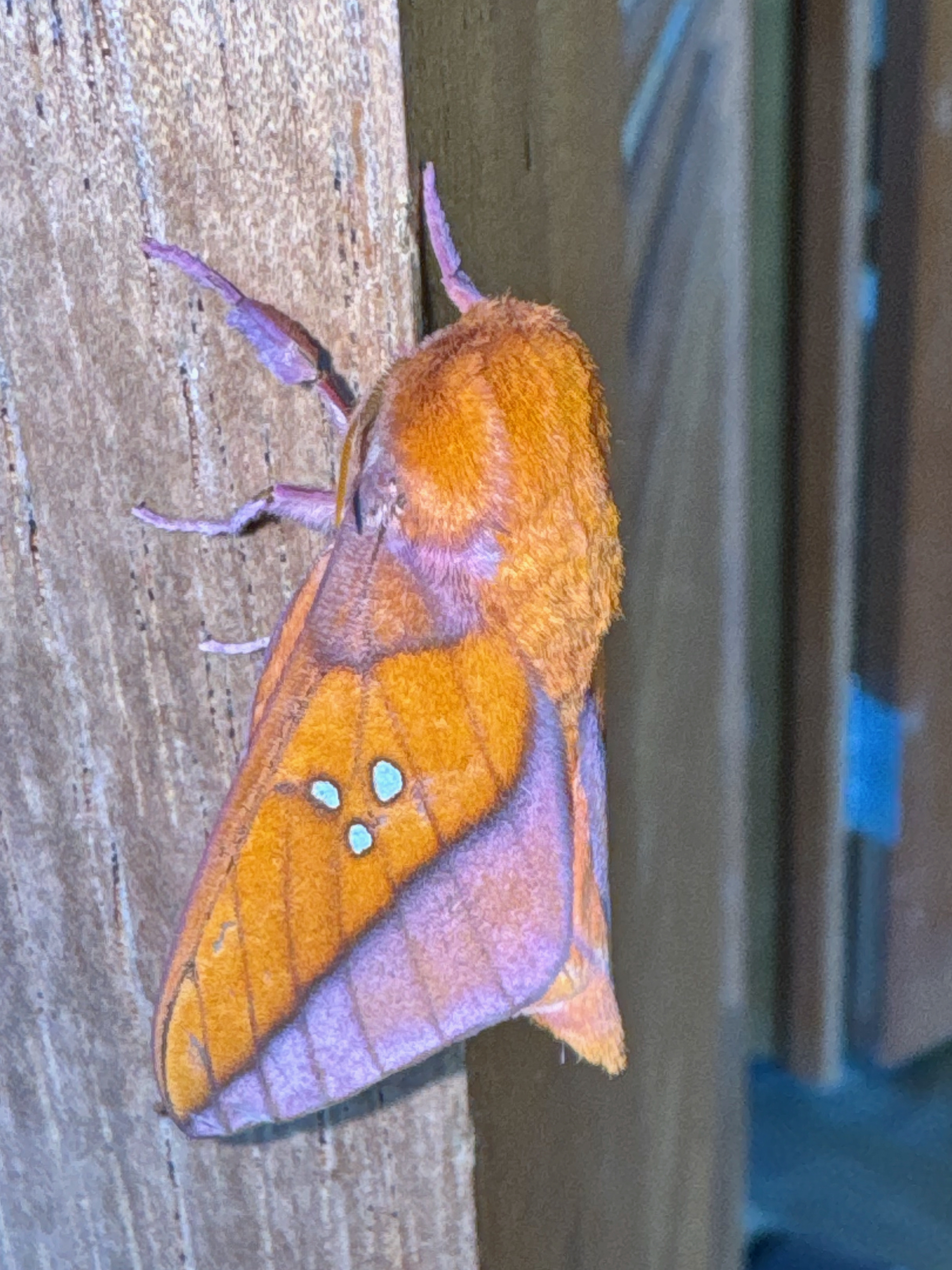
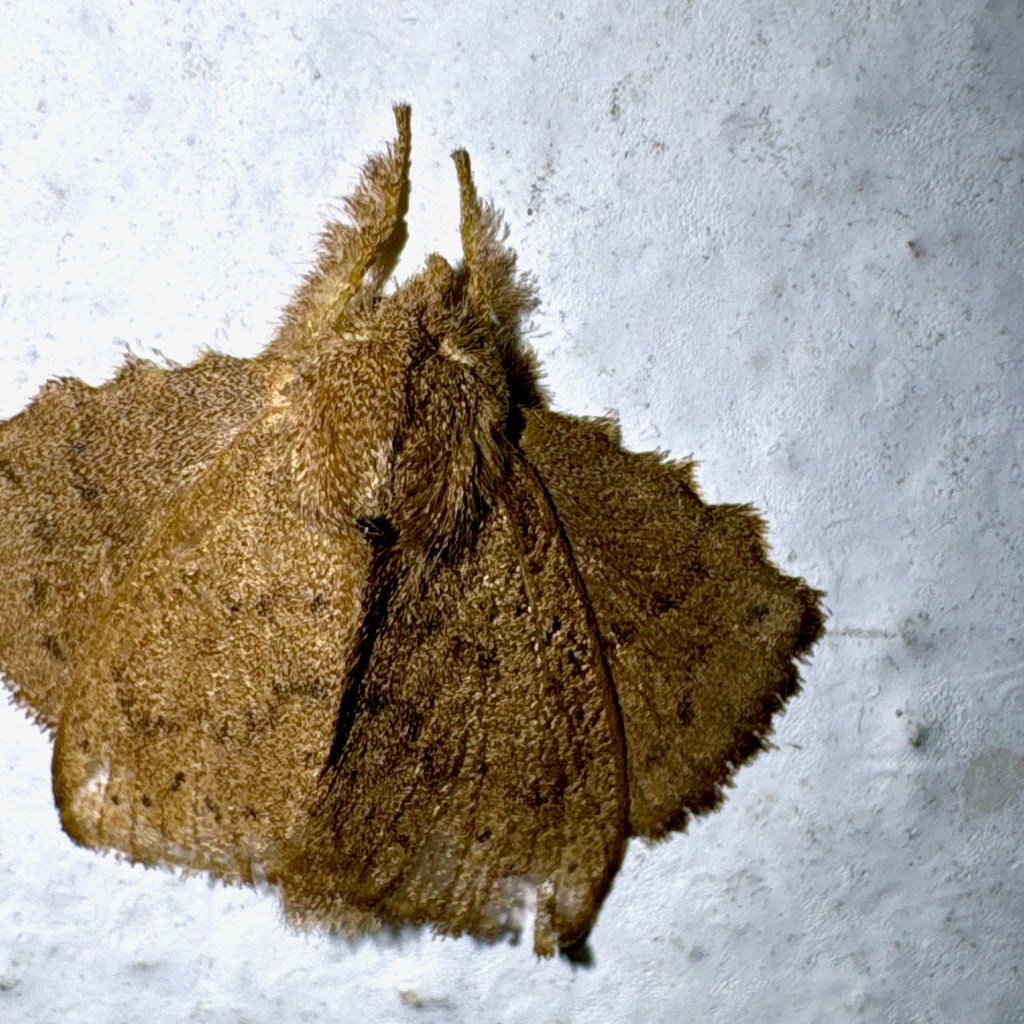
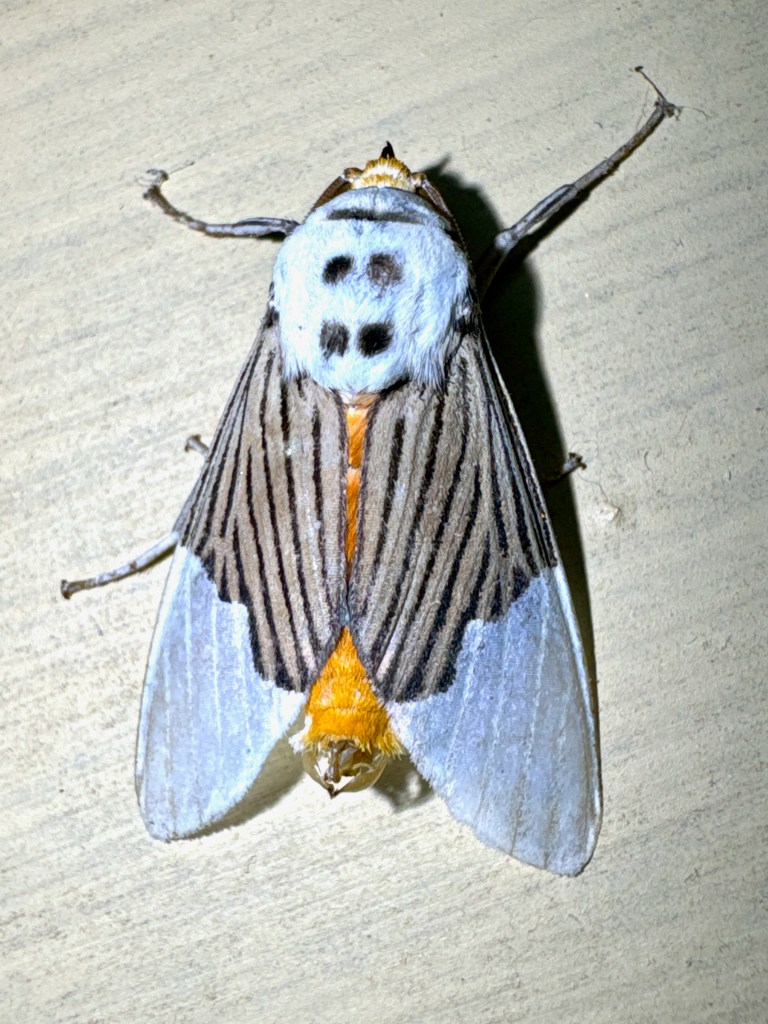
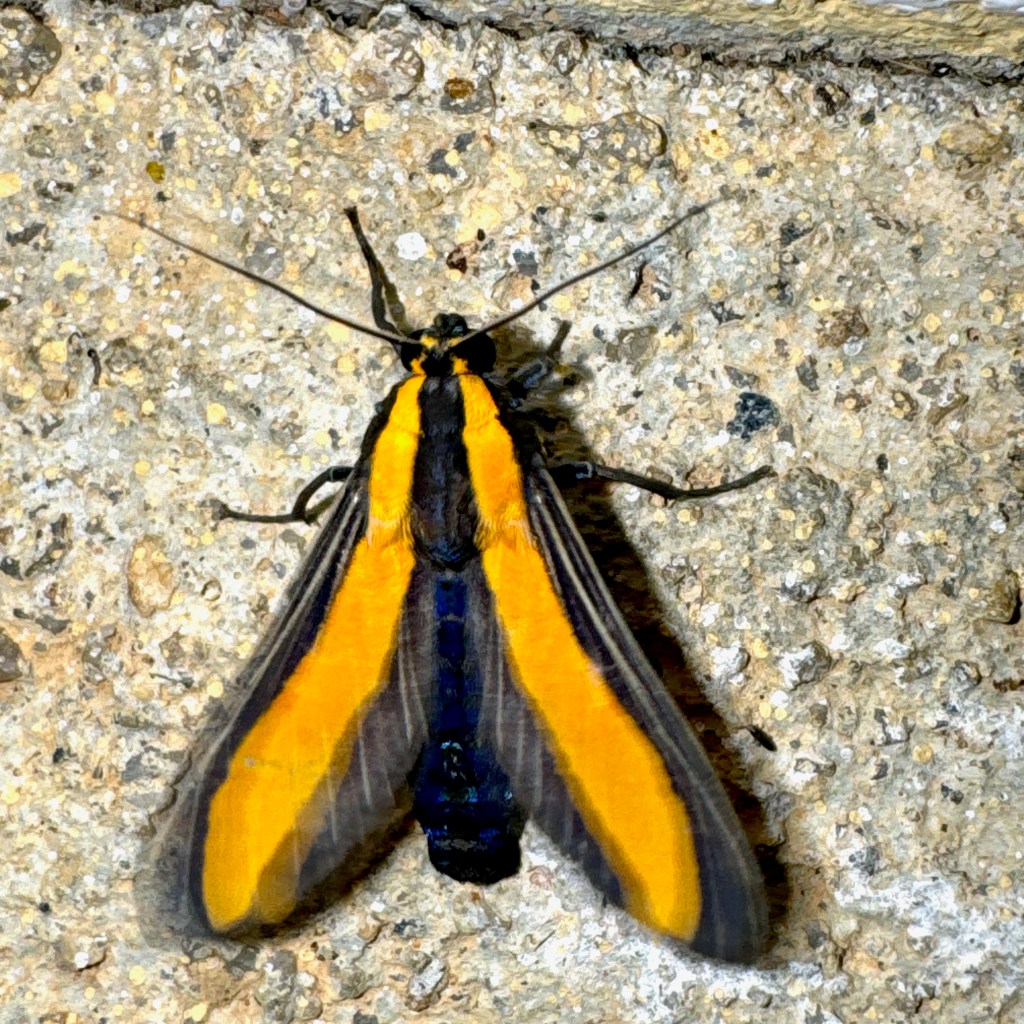
Paulo discovered moths outside our rooms at the lodge and I enjoyed that bonus. Look at these beauties!

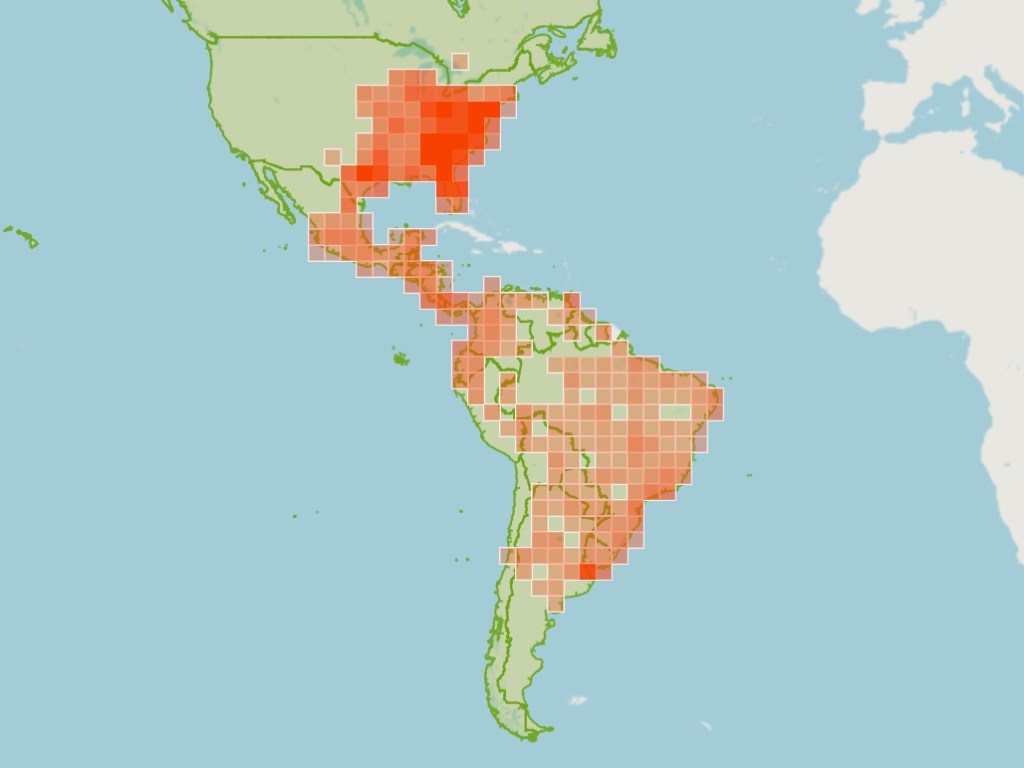
Some of you probably recognize the Imperial Moth. Yes, it’s the same species we have at home in the US. Here’s a range map from iNaturalist showing its wide distribution. Nature is amazing and I find that I learn something new on every trip.

As always, it was difficult to leave a place as wonderful as Intervales State Park. But on the morning of November 20, we left for our next destination, where more adventures awaited us.

Read Full Post »

We arrived at Eco Lodge Itororó late in the afternoon of August 26 with just enough time for Derek to get five life birds before dinner with a Brazilian Ruby hummingbird as #1,200. It was much colder and foggier here than it had been at REGUA due to the higher elevation. This part of Brazil is south of the equator so it was the middle of winter. We piled wool blankets on our beds and tucked in the hot water bottles provided by the lodge for extra warmth. Below, the main lodge building where we had our meals.

Cirilo, our guide for the next few days, joined us for breakfast and then we set off on the wonderful Three-toed Jacamar excursion. Our first stop was a little spot on the side of the road by a wetland. Cirilo had promised us Blackish Rail and he delivered. A dependable rail? I was amazed!

This stop also gave us a few other birds – Toco Toucan, Swallow-tailed Hummingbird, and Wing-banded Hornero being the highlights. I thought this hornero was sharper looking than the others I’d seen in Brazil.

More wonderful birds awaited us at our next stop, including this Black-necked Aracari.

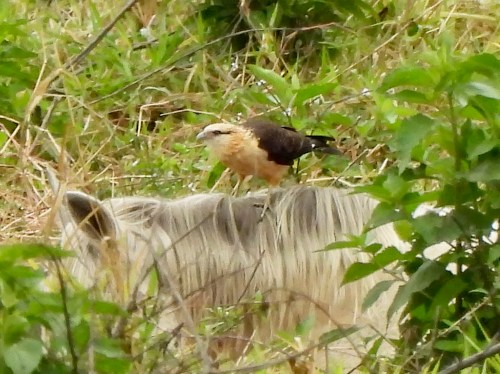
At our third stop, we watched a Yellow-headed Caracara standing on a horse picking off ticks. The caracara also “picks flesh from open wounds on backs of cattle, which often seem oddly indifferent to the process” according to Birds of the World. But, that is “cheating” according to the cleaning symbiosis contract. Yes, “cheating” is the word that I found in scientific publications. Black Vultures occasionally clean capybaras, but several species of caracaras are the only raptors that clean large mammals.

We saw spectacular Stramer-tailed Tyrants in another horse field.

Down the road a bit farther, Derek got his much-wanted lifer Red-legged Seriema. And, we both got our lifer Crested Black-Tyrant. First, we had a distant look, but good enough to count the bird. It came closer for a better look. And, finally, the bird was right in front of us!

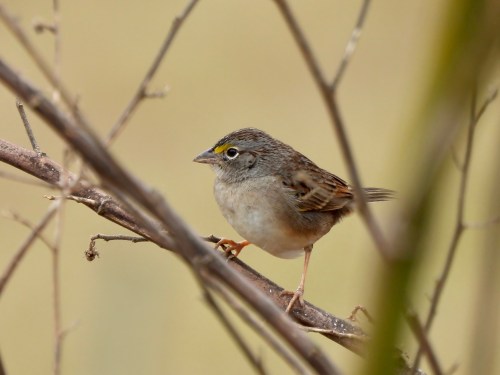
Cirilo could not have made it more fun if he’d had the magic ability to choreograph the bird’s movements. At the same stop, I was very happy to get a good look at a Grassland Sparrow. I’d missed the bird earlier in the trip with Sherry’s group, so it was especially satisfying to see it well.

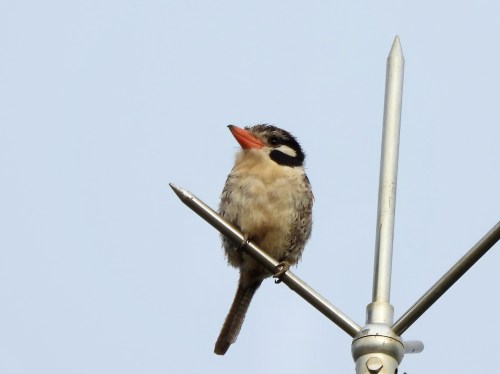
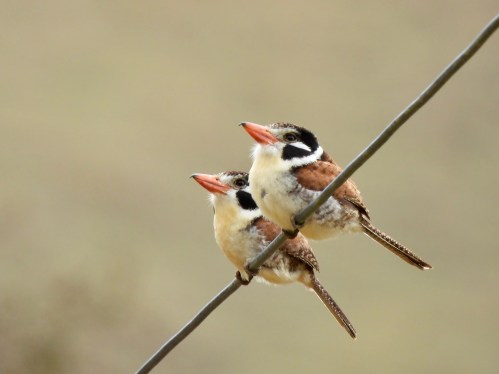
White-eared Puffbirds were the highlight for me at our next stop. What could be more adorable?

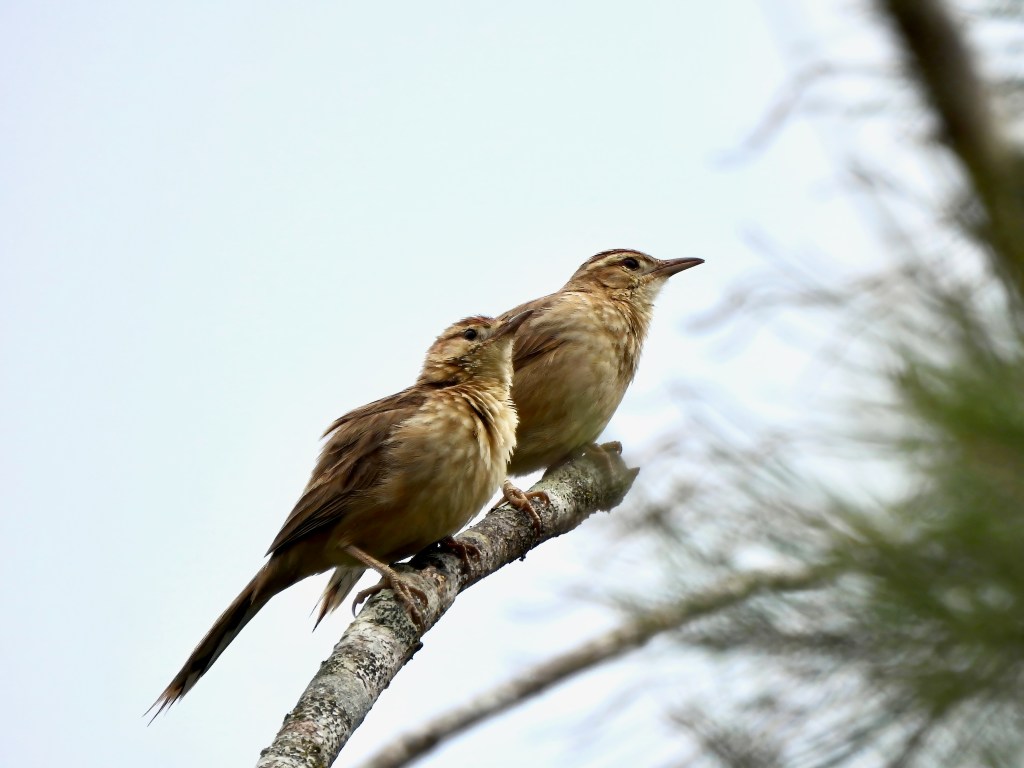
It was a great stop with several life birds for both of us. One of the most interesting was Firewood-gatherer. First, what a cool name. And, see why with these photos of the birds and their nest.

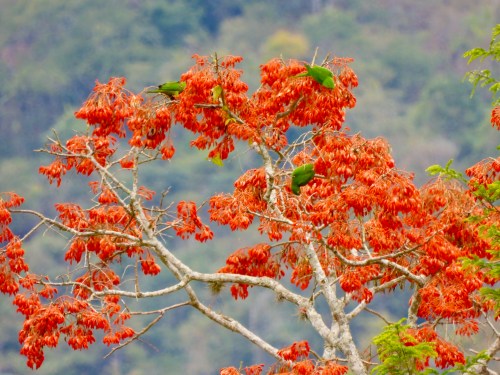
This was one of my favorite days of birding ever. In addition to the wonderful birds, the landscape was very appealing. I loved this coral tree topped with White-eyed Parakeets.

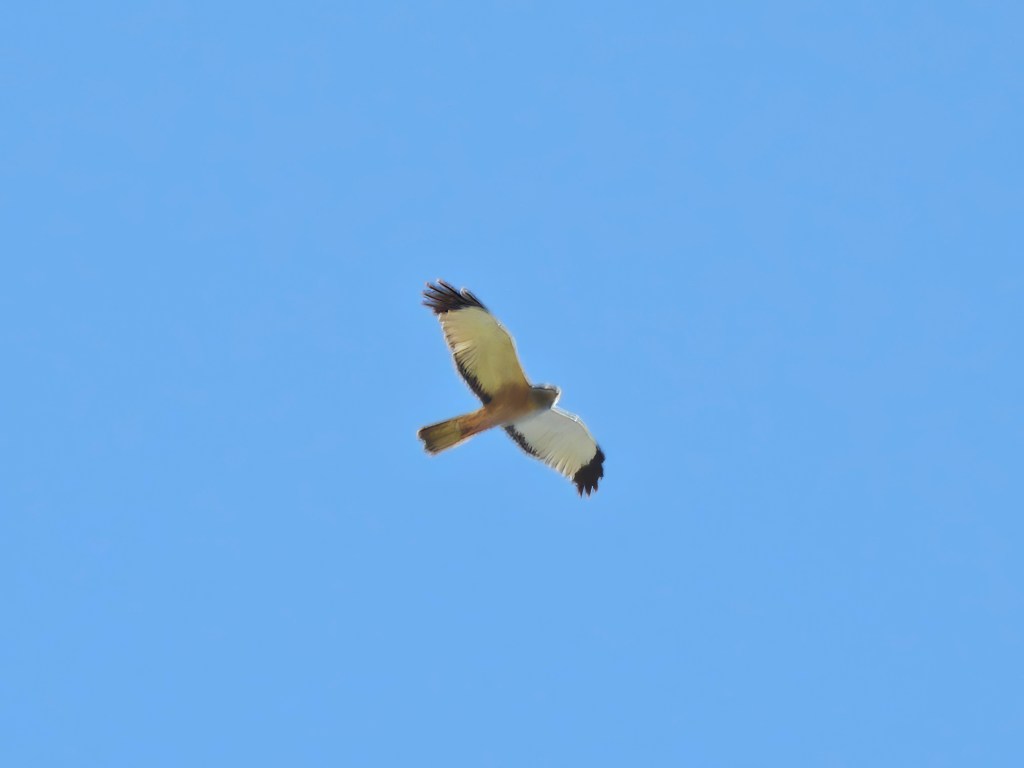
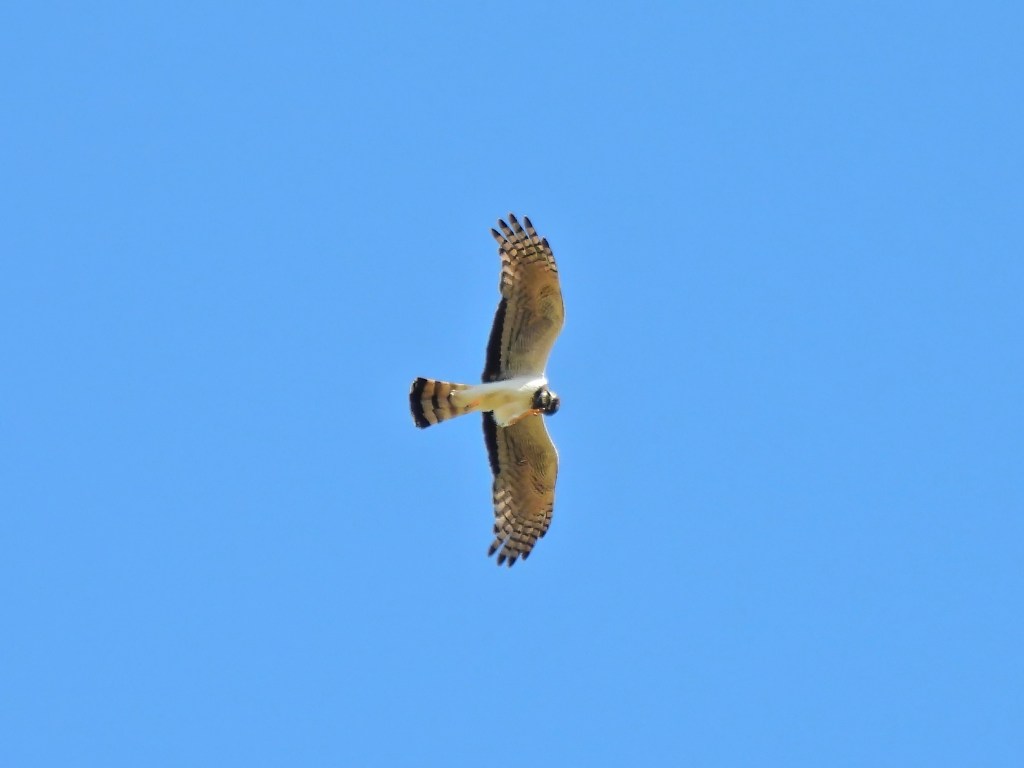
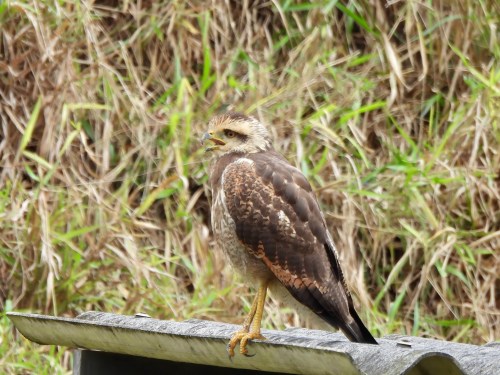
At another horse pen, we had an intriguing bird that we couldn’t immediately identify, this beautiful immature Savanna Hawk.

We finally stopped for lunch and ate our sandwiches while we continued to look at birds, including Derek’s lifer Black-capped Donacobius. Soon we were back on the road headed towards the last birding stop of the day and the signature species on this route, Three-toed Jacamar, a Brazilian endemic that only occurs in a limited area north of Rio de Janeiro. We saw the jacamar, but the light was bad, so my photos are not very good. This White-bearded Manakin chose a spot on the other side of the road with better lighting for his photo.

Cirilo guided us on the trails around the lodge on the morning of our second full day at Eco Lodge Itororó. He found 47 species of birds for us, although I found it much harder to see birds in the dense Atlantic Forest than the open countryside of the previous day. I missed quite a few birds, but it was an enjoyable morning and only having Cirilo for half a day resulted in incredibly good luck. When we returned to the lodge for lunch, we found the photography group happily clicking away at a gorgeous Saffron Toucanet right at the feeders. This is the species that everyone wants to see and this was its only appearance during our five days there.

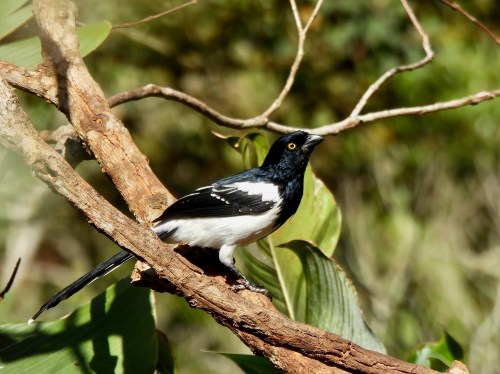
We spent the afternoon mostly watching the feeders, one of my favorite activities. The Magpie Tanagers were huge compared to the little Brassy-breasted Tanagers and I loved them. The Magpie Tanagers favored the feeder offering avocados.

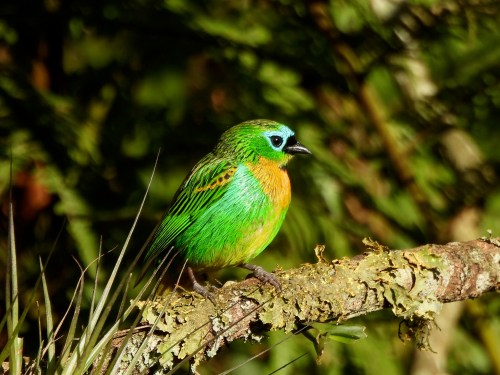
Below, a cute little Brassy-breasted Tanager.

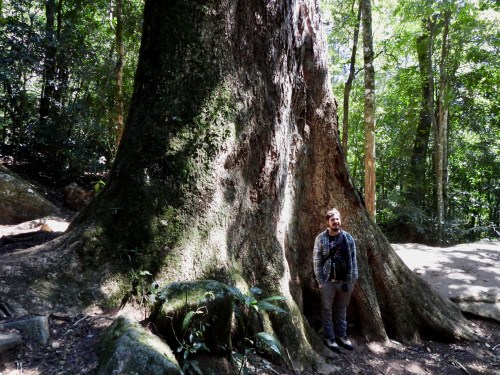
On August 29, we birded in Tres Picos State Park. Our walks included a short trek to see a locally famous Jequitibá tree. Scenes in the 2024 version of the Brazilian telenovela, Renascer, were filmed here as the tree plays a central role in the story. It replaces the 3,000 year old tree used in the 1993 version of the TV show which was struck by lightenng and died. As you can see from this photo of Cirilo in front of the tree, it is huge.

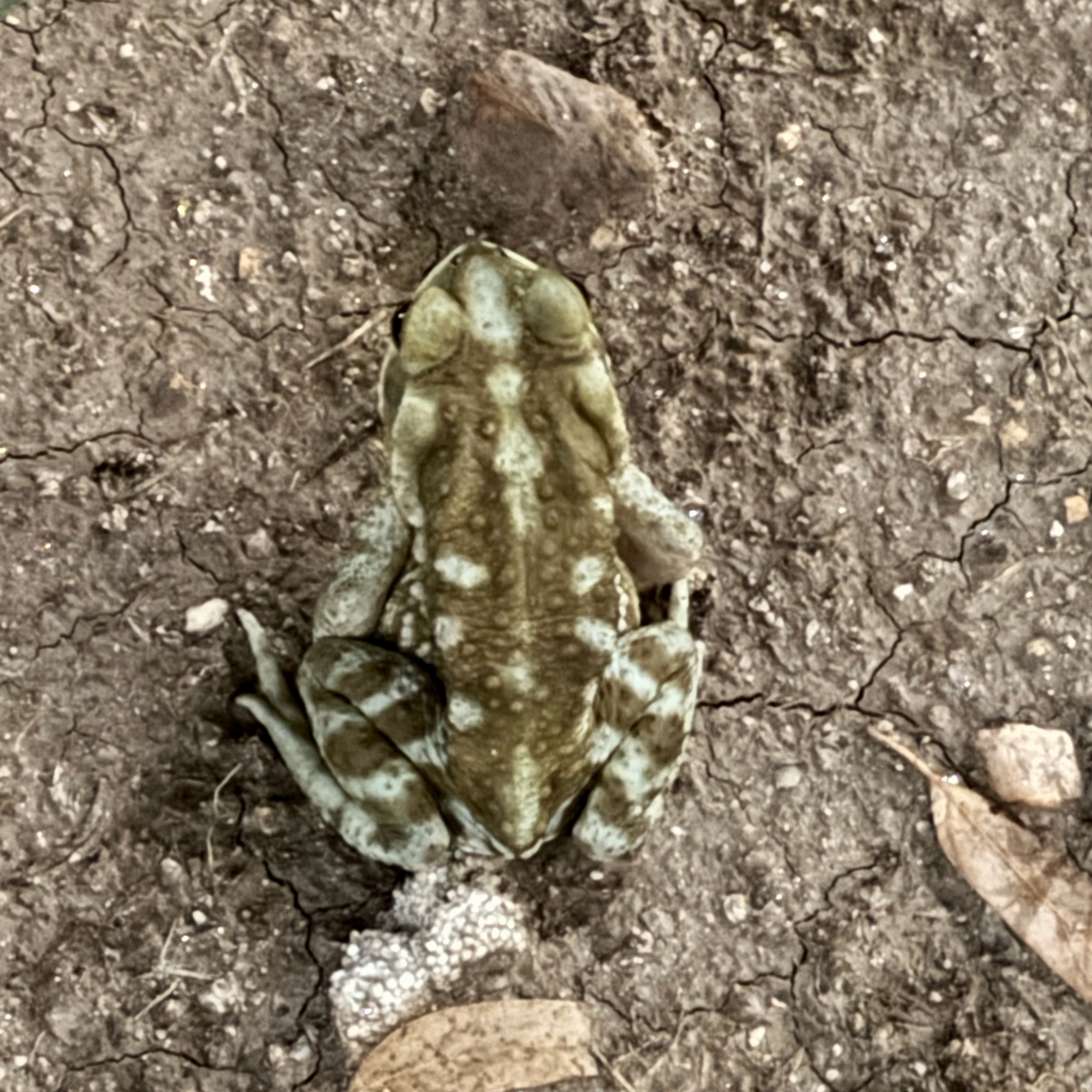
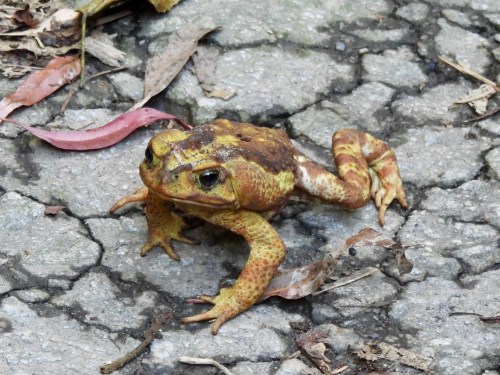
We also found this cute little toad on one of our paths through the forest, a Yellow Cururu Toad.

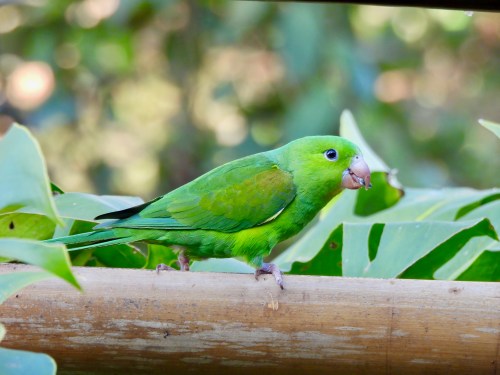
We stopped at the banana stand on our way back to the lodge. They feed leftover bananas to the birds making it a great place for a coffee and chlorophonias, tanagers, euphonias, parakeets, and other birds. Here’s a poorly named Plain Parakeet we watched there.

Derek and I had originally planned to bird on our own on the following day, but finding birds in the forest was more challenging than we had expected. Fortunately, Cirilo was available to guide us for one more day. But, where to go? We had already done all the easy trails. At dinner, Cirilo had an idea. Birders usually walk up a steep hill for the high-elevation excursion to Pico da Caledônia. Since there were only two of us, however, he was able to arrange a 4-wheel drive vehicle that could drive us almost to the top and we could walk down. Perfect!

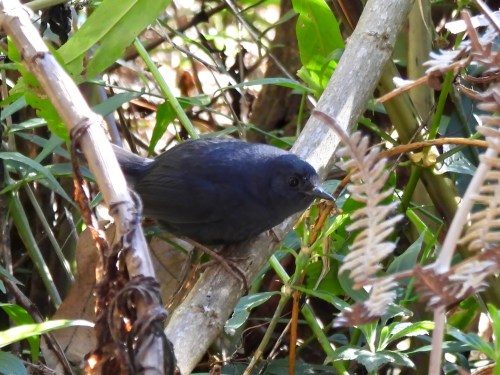
The day got off to a wonderful start when Cirilo heard a Mouse-colored Tapaculo on the side of the road. We stopped the car and he pointed to a log in a little opening in the vegetation where he expected it to cross. I pointed my camera at the log and quickly clicked as the little bird stopped for a fraction of a second.

Again, most of the forest birding was challenging, but the only important bird that we missed was the very localized Gray-winged Cotinga which occurs only in a small area northeast of Rio de Janeiro. With only 374 observations in eBird (some of which are certainly heard-only birds), many others must also miss the cotinga.

We walked about halfway up the 650-step staircase to the summit of Pico da Caledônia.

Later that afternoon, we saw the most unexpected bird of the day, a Zone-tailed Hawk. Cirilo was excited because this was a new state bird for him. Most American birders know this bird from the Southwest US, but the southern edge of its range extends to Paragray and this part of Brazil, although it is uncommon there in winter.

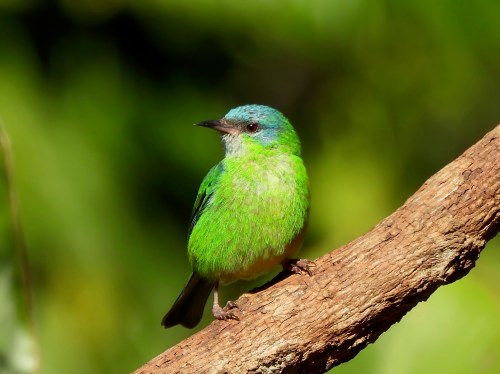
My “bonus week” with Derek in the Atlantic forest went quickly. All that remained was one more morning with a few hours to leisurely watch the feeders. Blue Dacnis is common throughout much of Central and South America. The male is blue, but the beautiful female is a lovely shade of green.

Cinnamon Tanager was a species that I saw only at Eco Lodge Itororó. When I was going through my photos, I realized that I did not know how to differentiate the males and females, so I looked it up in Birds of the World where I found this fascinating information. “The sexes are similar in appearance. The species is dichromatic, however, …. Thus, these tanagers visually can distinguish between males and females, but humans are unable to see these differences.”

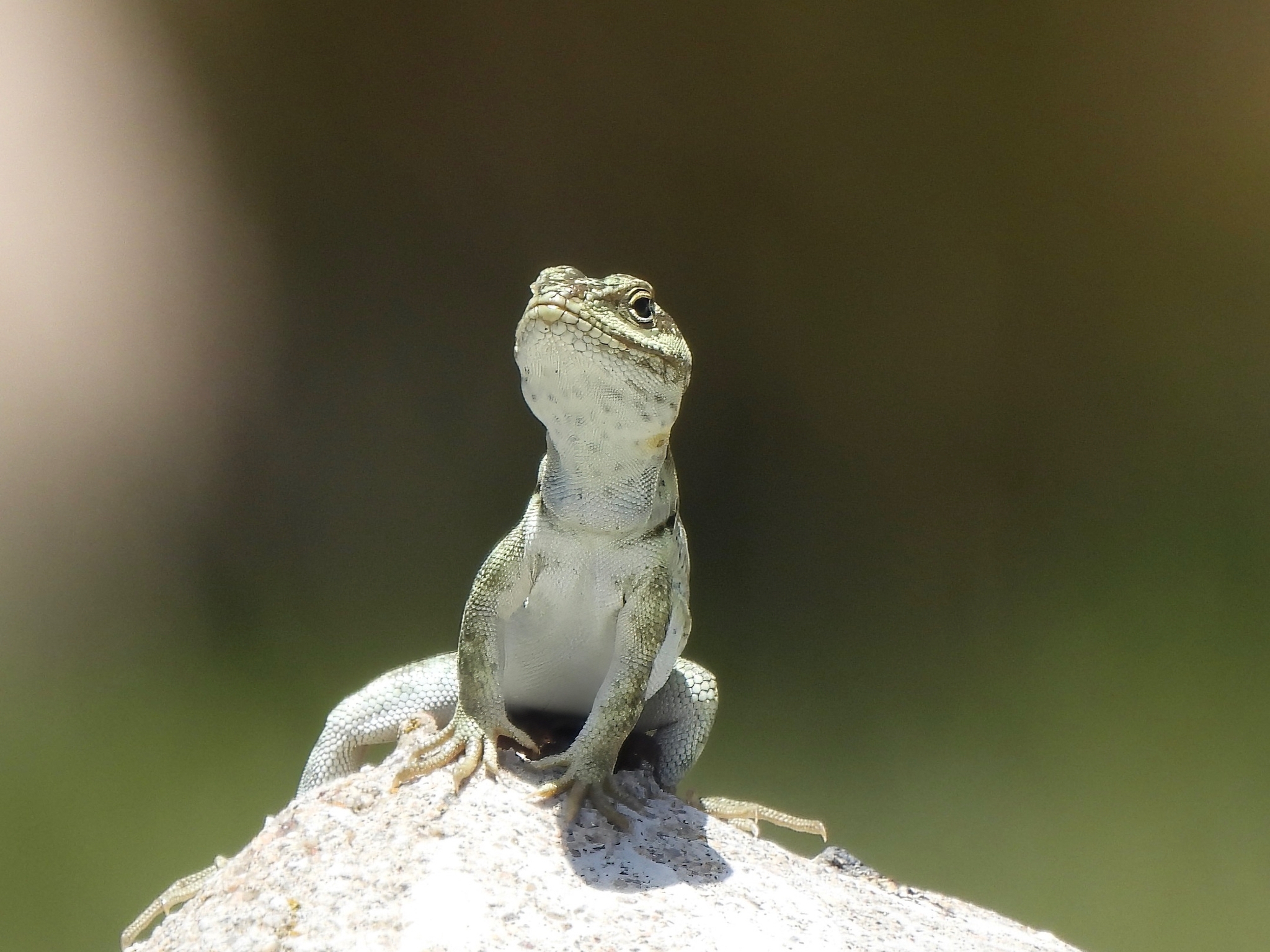
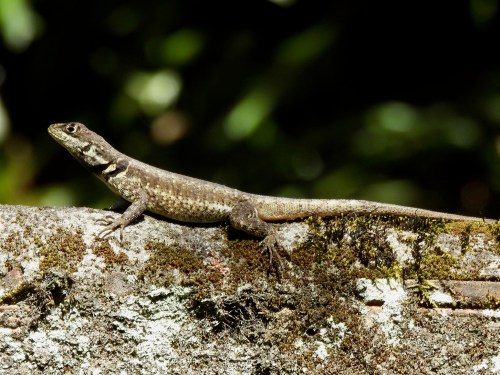
We enjoyed seeing the Amazon Lava Lizards that were often around the lodge.

And, what bird feeder would be complete without a squirrel? Although they were much more shy and less of a nuisance than our gray squirrels at home. This one is an appropriately named Brazilian Squirrel.

Below, Derek enjoying the feeders during our last hours at Itororó.

Andy Foster of Serra dos Tucanos Birding Tours did a wonderful job making all the arrangements for the week including transportation and our stays at REGUA and Eco Lodge Itororó. We could not have asked for a better guide than Cirilo. Bettina fed us well and treated us like family at Itororó. I would love to go back any time!

Our eBird trip report Brazil – Atlantic Rain Forest (REGUA & Ecolodge Itororo) August 2024 has all of our checklists and photos. Also see Shelley’s iNaturalist observations for the trip and Derek’s iNat observations.

Read Full Post »

Derek and I met at Rio de Janeiro–Galeão International Airport on the afternoon of August 23 and two hours later our driver delivered us to Reserva Ecológica de Guapiaçu, commonly known as REGUA. After the manager had shown us to our rooms, we were warmly greeted by a woman who didn’t tell us her position. We quickly learned that she was another guest. The lodge looks like it could have been an old house with a lot of bedrooms and a large kitchen, dining room, and family room. The atmosphere at REGUA is more like a gathering of friends and family than a typical tourist lodge. Current guests welcome newcomers into the fold. During our short stay, guests included a couple who were “just” birders, a well-known ecologist and an award-winning science journalist. When away from the lodge, we were frequently asked by locals if we were scientists.

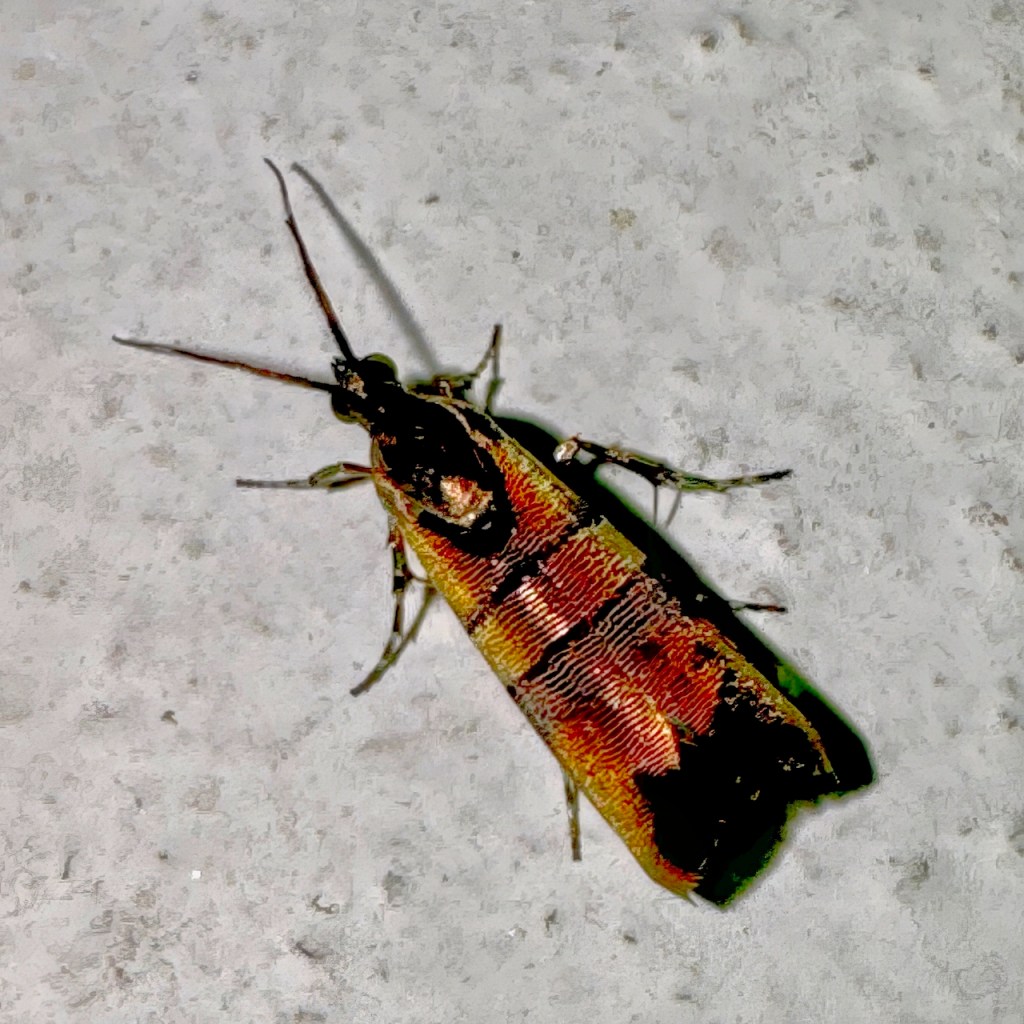
It was dark after we finished dinner, so instead of birding, we spent the evening at the moth wall, simply a 8-foot high and 6-8 foot wide wall in the yard, painted white with lights to attract moths. Even though it was winter, we saw amazing moths. A sample is below; click on any image in the gallery for a larger view.

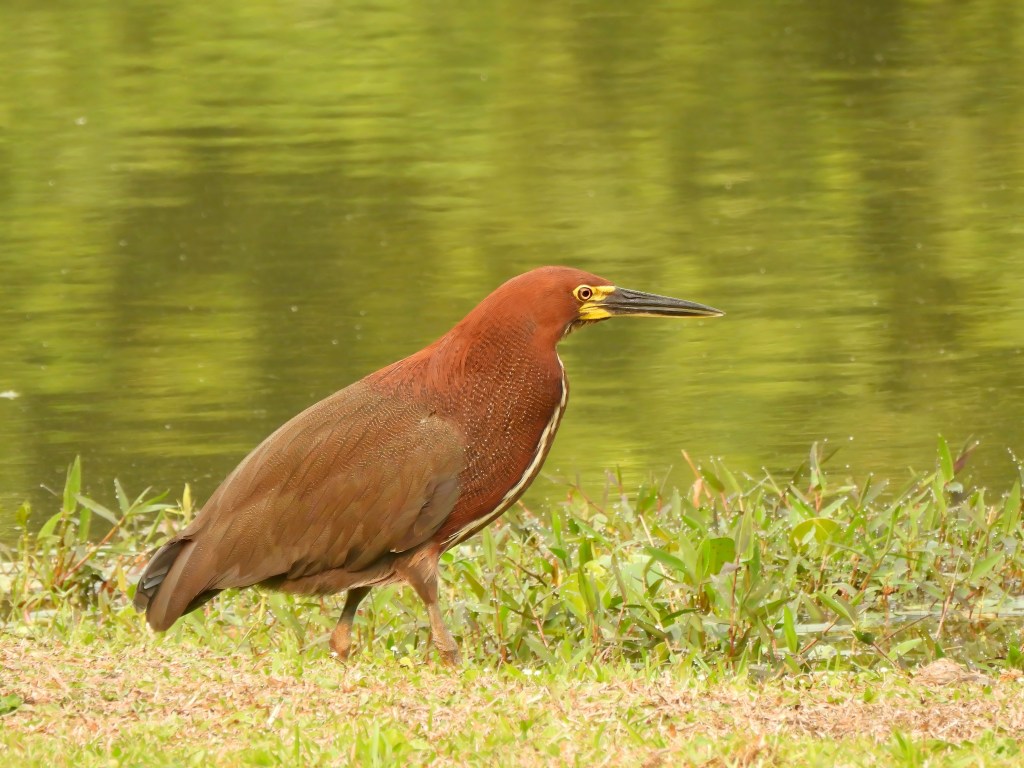
The next morning, Derek took advantage of birding with the local guide. I was lazy and opted to walk around the wetland with some of the others who were staying at REGUA. Derek saw more birds than I did, but I enjoyed the introduction to the lake and wetland which are the heart of REGUA. This beautiful Rufescent Tiger-Heron was an easy-to-see bird and a highlight of the morning.

I went back to the lodge and spent some time watching the hummingbird feeders where I was rewarded with my first life bird on this part of the trip, a Black Jacobin.

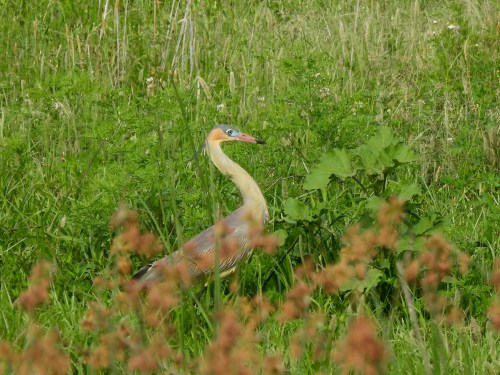
Derek returned in time for a late afternoon walk around the wetland. Many of the birds were familiar to us, but we also saw a Whistling Heron, a life bird for both of us. I also enjoyed this cute little Gray-headed Tody-Flycatcher.

The day went quickly and soon we were back at the moth wall. More fascinating moths included those below.

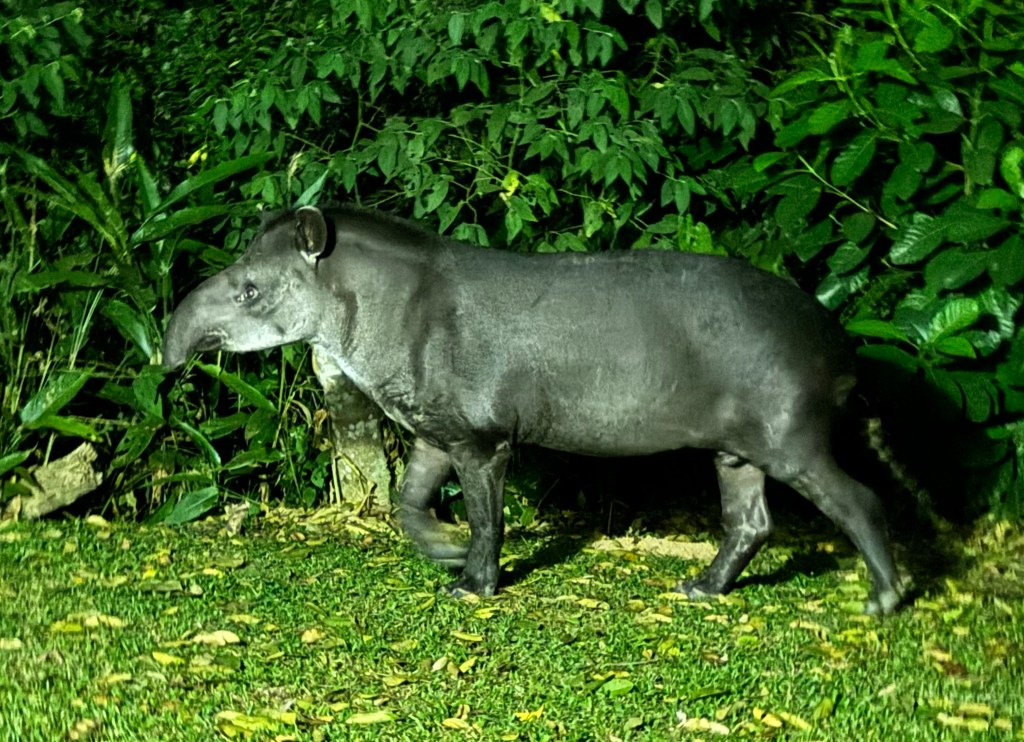
Our most surprising experience at REGUA occurred that evening. I was alone at the moth wall while Derek was in his room reviewing photos. Suddenly, I heard a noise behind me, turned, and saw a tapir about six feet away! I jumped in surprise and he ambled into the woods. I rushed inside to get Derek, not really expecting a return visit from the tapir, but I had to get Derek out there. We were standing by the wall quietly talking when Derek said, “Shelley, look over your shoulder.” And, there he was!

Reserva Ecológica de Guapiaçu is a non-profit organization with a mission of conserving and protecting the local Atlantic Forest. REGUA’s species reintroduction project works to rebalance and restore a healthy ecosystem. One of the species in that program is the Brazilian or lowland tapir, Tapirus terrestris, a large mammal that weighs an average of 500 pounds. The following day, we learned that our tapir’s name is Valente and that he was one of the animals reintroduced into the area. Valente has adapted quite well and he has fathered most of the next generation of tapirs in the area. 

On our last full day at REGUA, I thought that we should go to the wetlands as early as possible, but it turned out that wasn’t such a great idea. The local birding guide showed up an hour after we left and went with the other birders to the wetlands. They saw twice as many species as we did even though Derek is a good birder with sharp eyes. Experienced local guides who know bird songs and calls are invaluable in environments with skulky birds in thick vegetation.

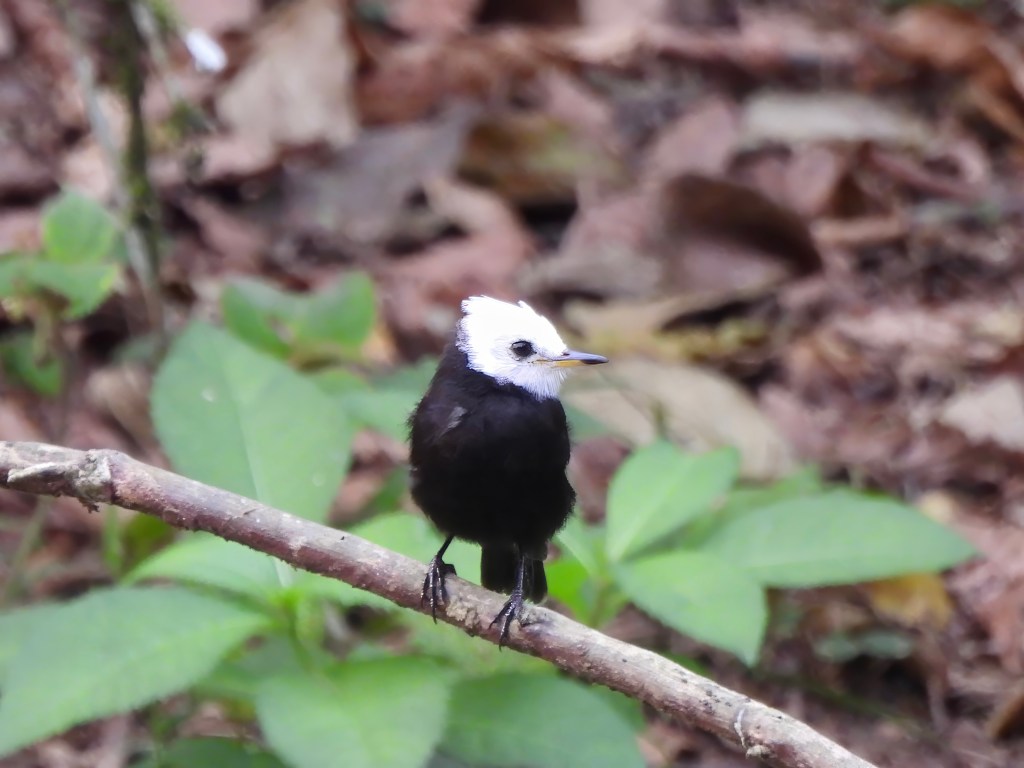
Regardless, we enjoyed our walk and the birds that we saw. Two of our favorites were White-headed Marsh Tyrant and Masked Water-Tyrant.

Butterflies were not nearly as common as moths, but we did see a few on our walks around the wetlands. Below, a Pythonides jovianus, sometimes called Variable Blue-Skipper.

Back at the lodge, we continued to appreciate beauties like this Swallow-tailed Hummingbird.

On our third and last night at the moth wall, we continued to see new species. During our nights there we also saw a few other insects. One of the most interesting was this large leaf katydid, Pycnopalpa bicordata.

We had one more morning at REGUA, but it rained so we spent most of our time on the lovely open porch just outside the dining room. The rain didn’t deter the birds and other animals, so we just sat and enjoyed the show.

We appreciated good looks at a Blond-crested Woodpecker, one of my life birds at REGUA.

The banana feeders were popular, even in light rain. The Maroon-bellied Parakeets were always fun to watch.

Common Marmosets enjoyed the bananas as much as the birds.

I’ll end with my favorite bird from REGUA, the elegant little Blue-naped Chlorophonia. I could look at these beautiful birds all day and never tire of them.

Just after lunch, our driver would pick us up and take us to Eco Lodge Itororó. Most birders who stay at Itororó do a day trip to REGUA, but I’m very grateful for our three days there. Without an overnight visit, we would have missed the moths and tapir encounter as well as the camaraderie with other guests, the delicious home-cooked meals, and the wonderful warm atmosphere.

Read Full Post »

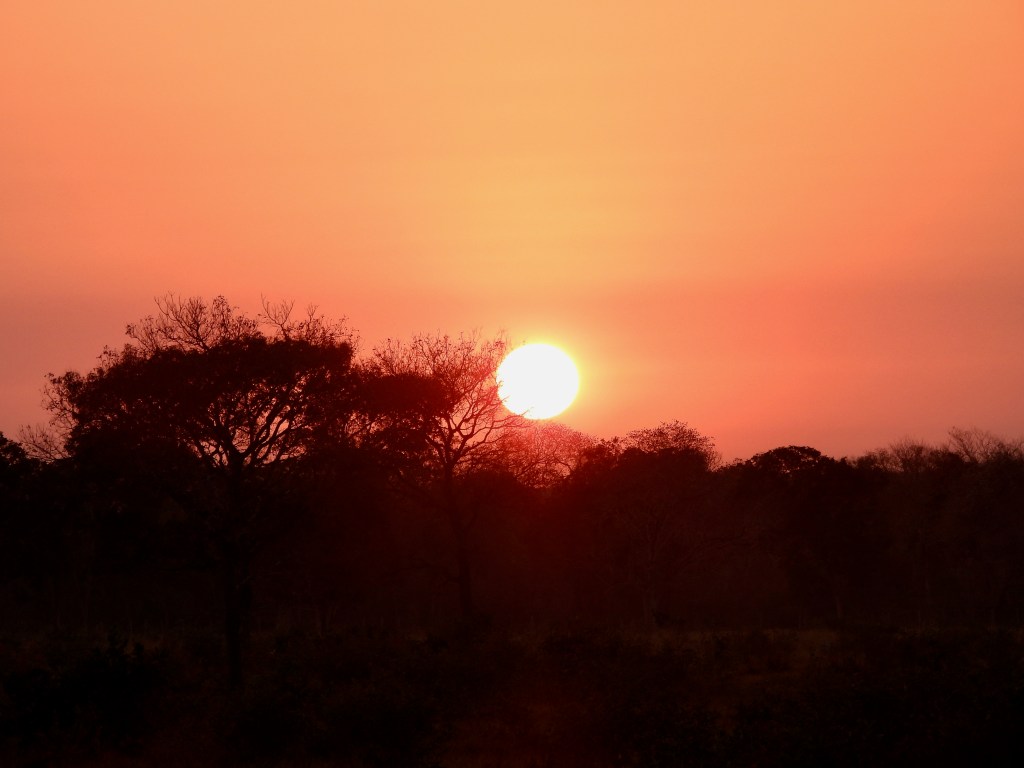
August 18 would be a big day, so we were up early for one last spin around the wonderful Pousada Piuval property. The sunrise promised a great day ahead.

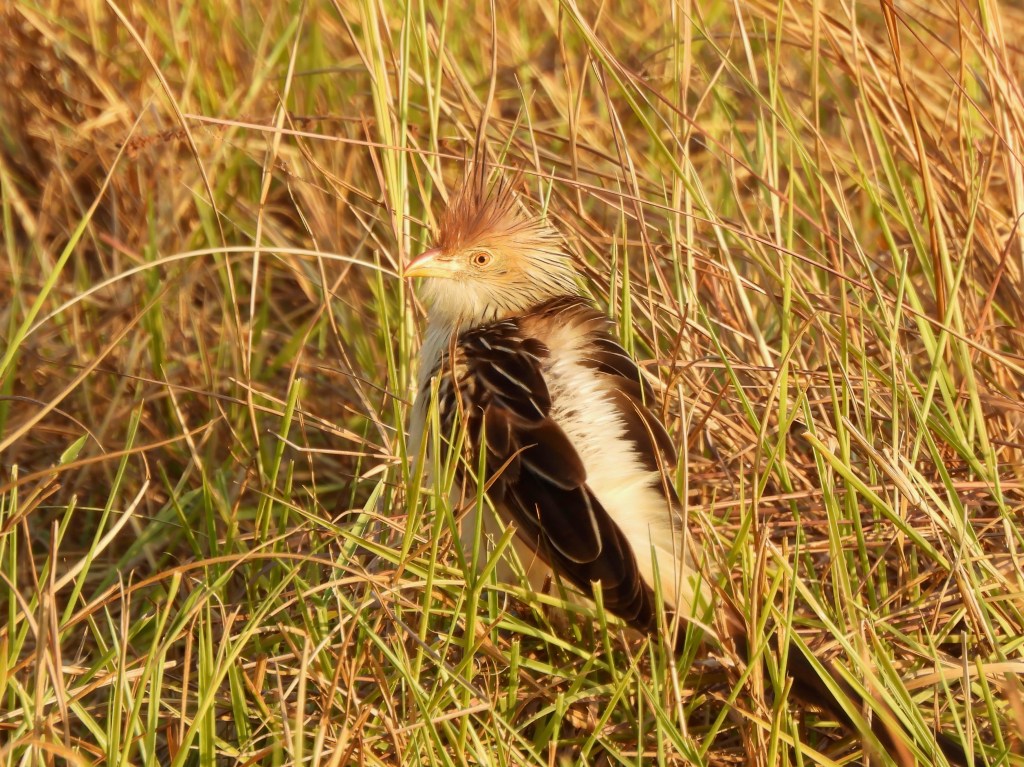
I had missed Guira Cuckoo when others in our group had seen them on the previous two days, so I was thrilled that we had wonderful looks at these bizarre-looking birds before we left Pousada Piuval. Guira Cuckoos are not only odd-looking birds, their nesting behavior is also unusual with multiple females in a social group all laying eggs in the same nest. They feed mainly on insects including flying termites and perch atop termite mounds to survey their surroundings when hunting.

Termite mounds are a conspicuous feature of the Pantanal savanna. They perform ecologically important functions such as improving soil health and providing food and nesting habitat for wildlife. One study reported that termites are a food source for 179 bird species and the mounds were mentioned as nest sites for 45 species of birds in Brazil. We saw termite mounds in many of the dry open areas like that below.

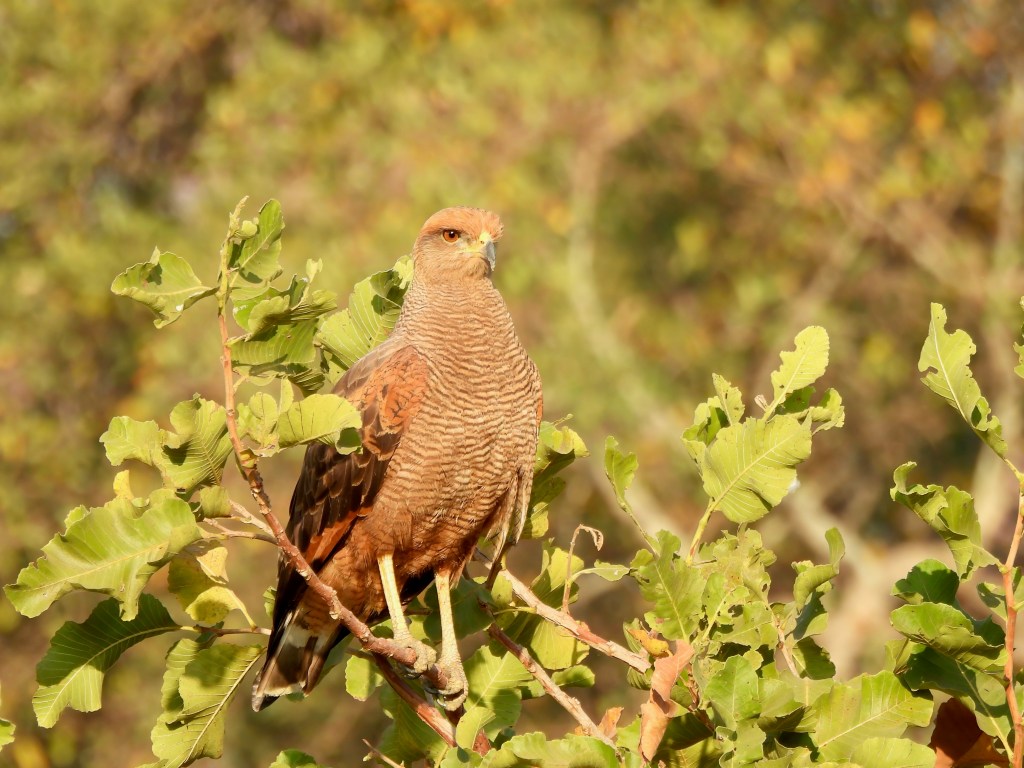
Savannah Hawks were frequently seen on this trip. It was a much-wanted bird that did not disappoint.

Turquoise-fronted Amazon (photo below) was one of the fourteen species of parrots and parakeets that we saw.

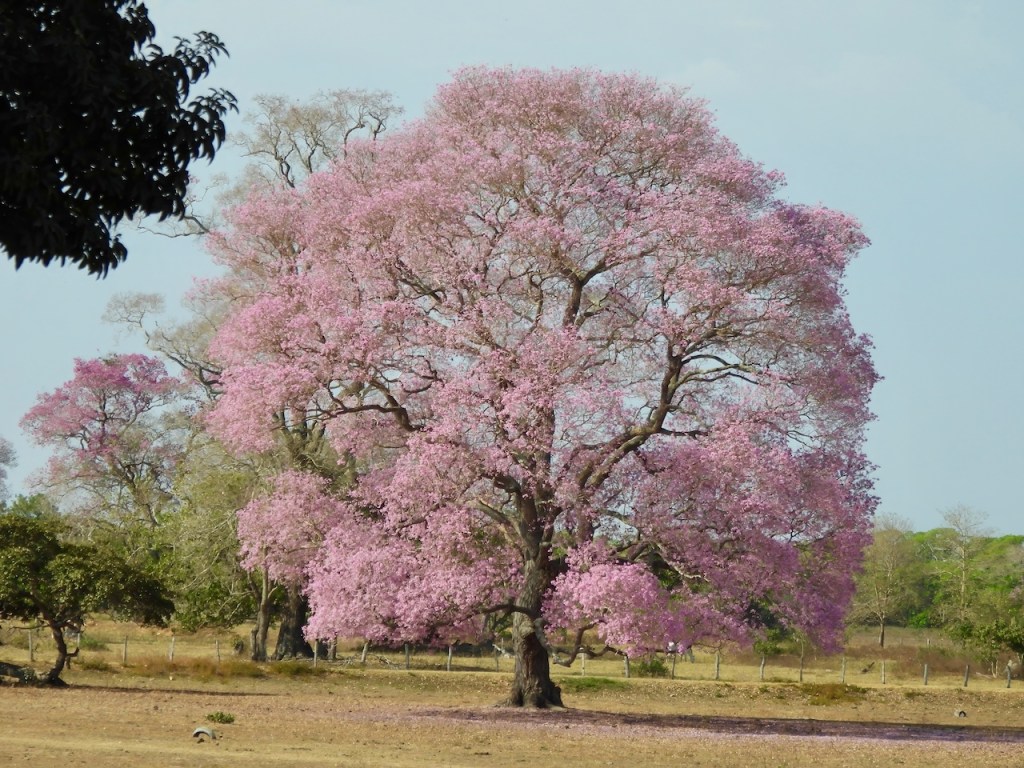
Pink trumpet trees were scattered over the open landscape. My photos are not good enough to identify the trees to species, but I believe that they are either Handroanthus heptaphyllus or Handroanthus impetiginosus. I do know that they were gorgeous! I hated to leave this beautiful place, but we had important things to see in other places.

We drove the entire Transpantaneira highway south to Porto Jofre with several stops for birding along the way. We arrived mid-afternoon at the houseboat that would be home for the next three nights and headed out right away in a small boat to look for jaguars.

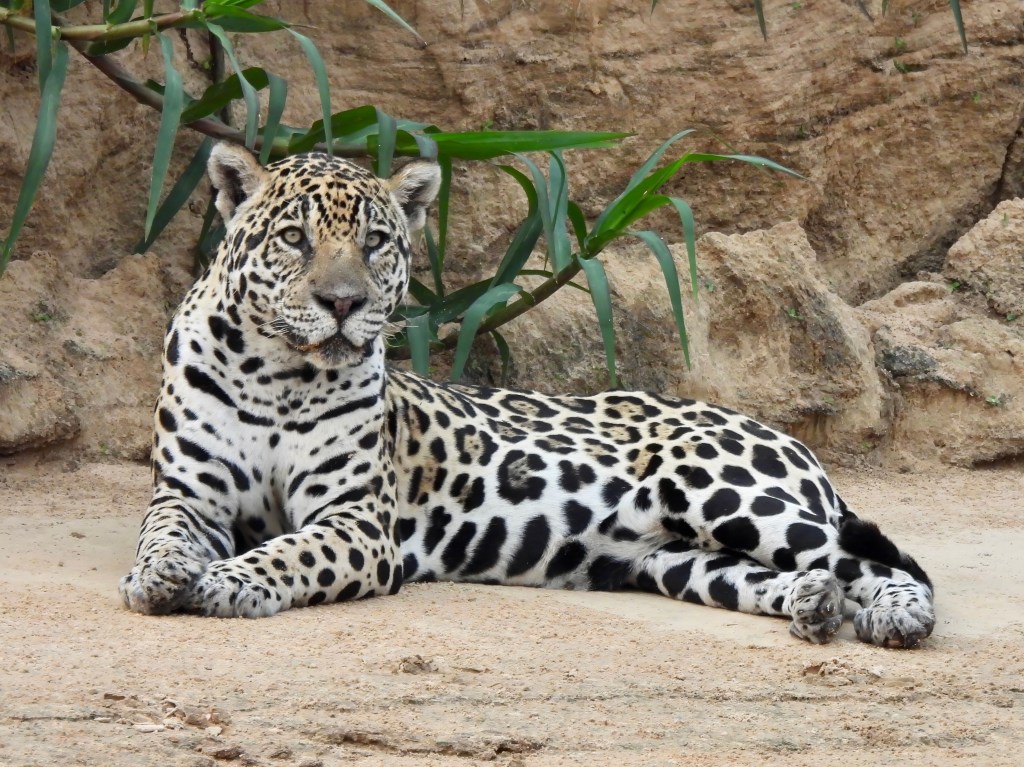
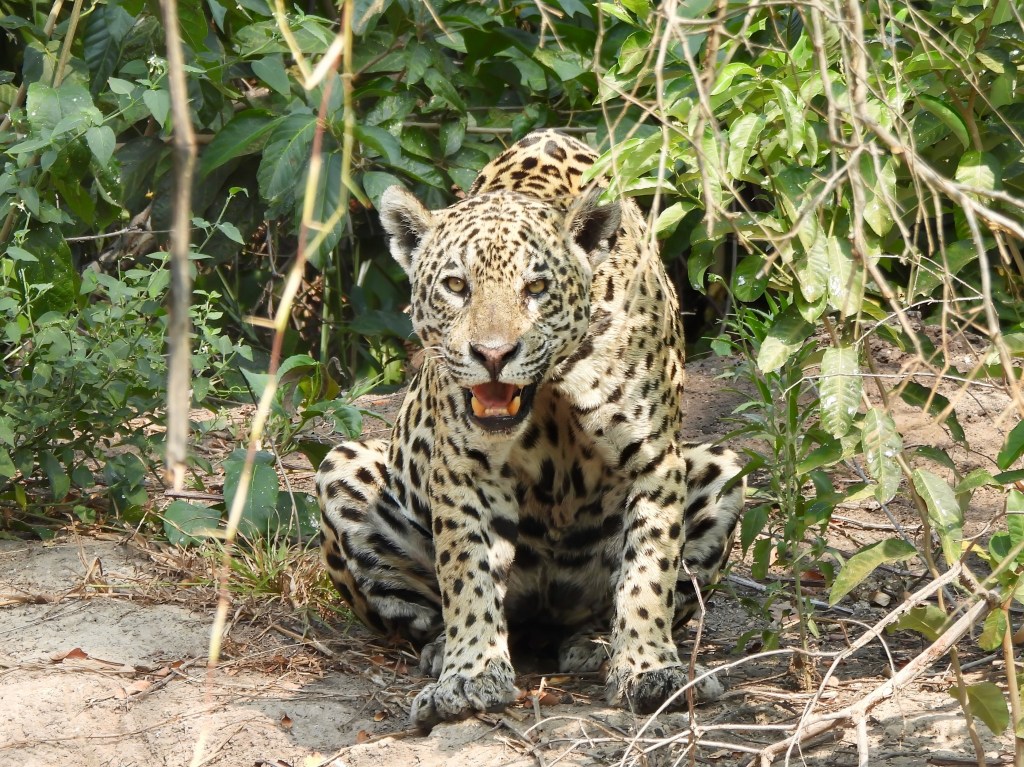
Before long, we found the beautiful Ti, a 9-year-old female, resting on the riverbank. Jaguars in the Porto Jofre area have been studied extensively and Alyson recognized all of them. The Jaguar Field Guide has a profile for each of the individuals observed most often. Jaguar spot patterns are unique like human fingerprints.

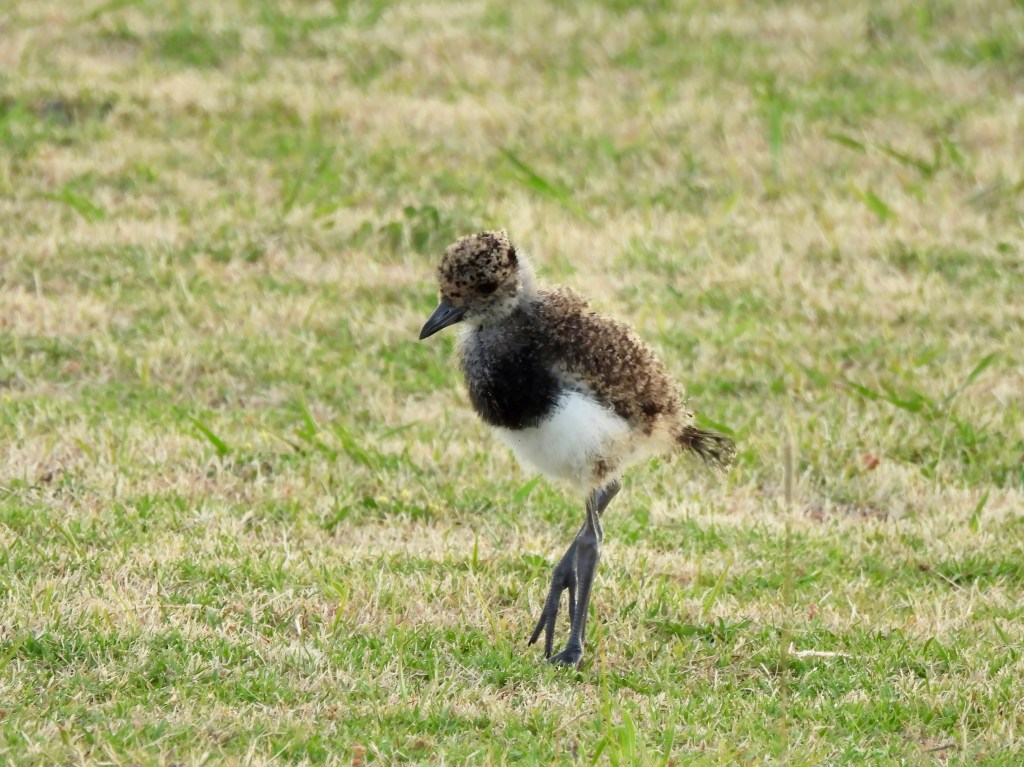
We also saw birds on the river. I loved the adorable little Pied Plovers.

Days on the river ended with spectacular sunsets.

The air on the river was a little smoky from the distant fires and the drive down the Transpantaneira had been dusty. As a result, I was coughing and feeling tired, so I decided to take the next day off and stay on the houseboat. I had not been expecting the fires. My vision of the Pantanal had been shaped mostly by John Grisham’s “The Testament” in which there was water everywhere. In hindsight, I suppose that a 25-year-old novel isn’t the best source of information. But, the Pantanal was wetter 25 years ago. Severe droughts in recent years along with deforestation and climate change have had a huge impact on the area. A few days later, The NY Times published a major article about the deadly toll on the wildlife of Brazil’s Pantanal from the fires, the worst on record since 1998. In 2024 alone, over 7,000 square miles of the Pantanal have burned.

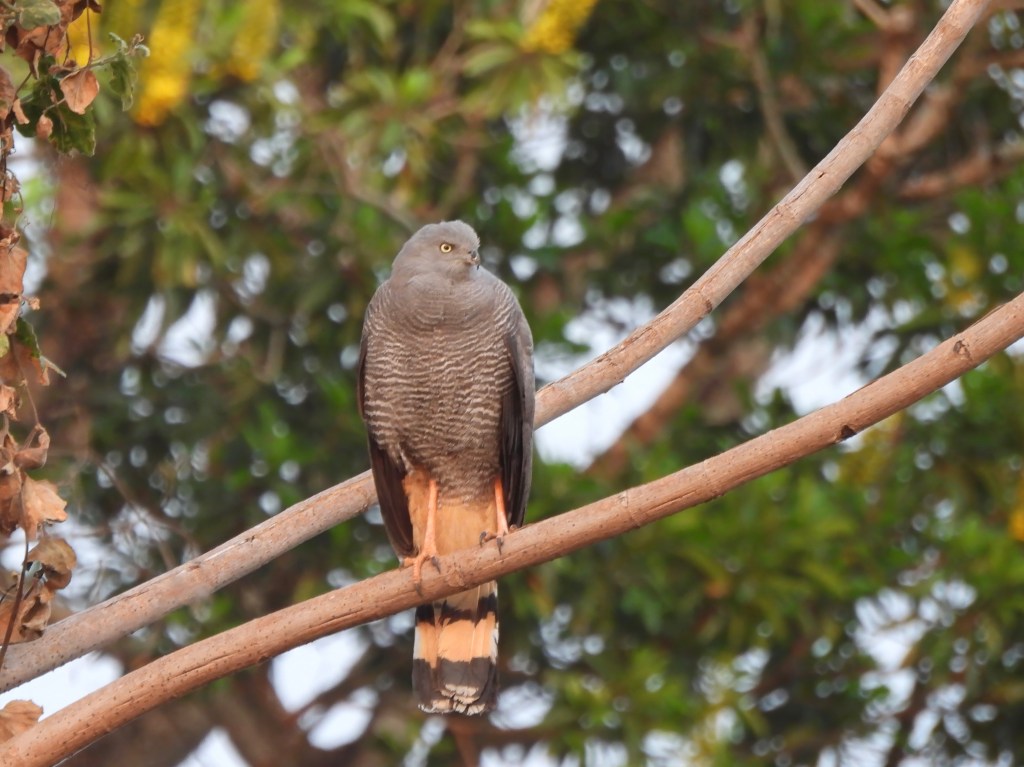
I joined the group again on August 20 to cruise the river in our small boat. It was a great way to see birds like this Crane Hawk, a species that had been high on my wish list.

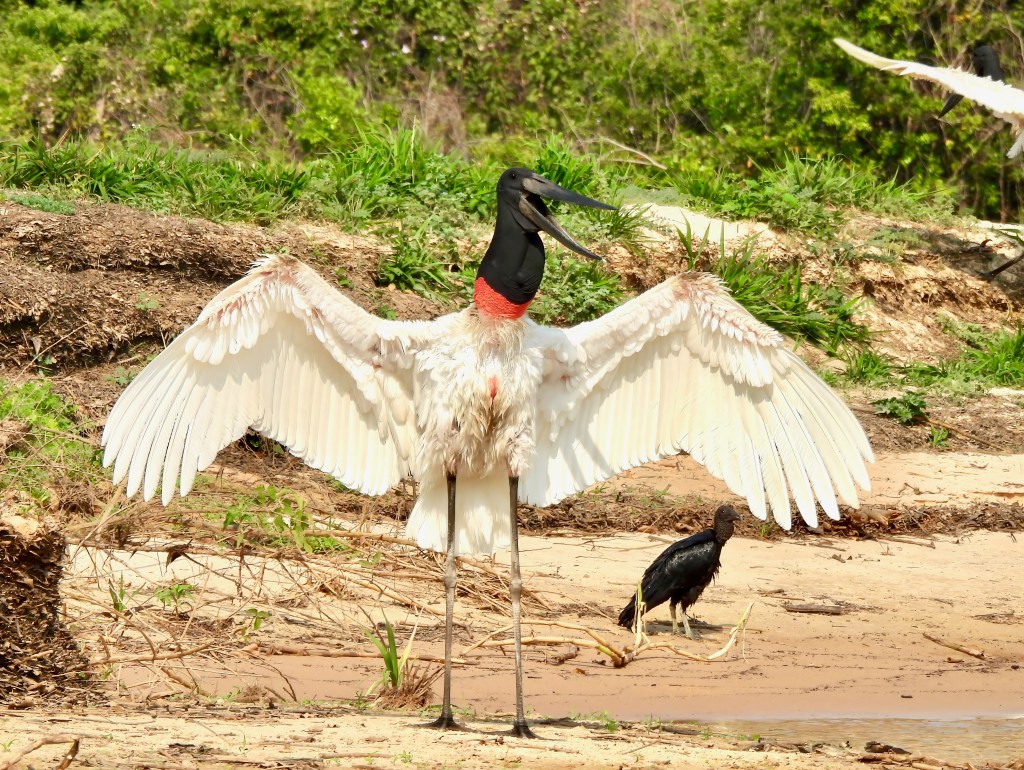
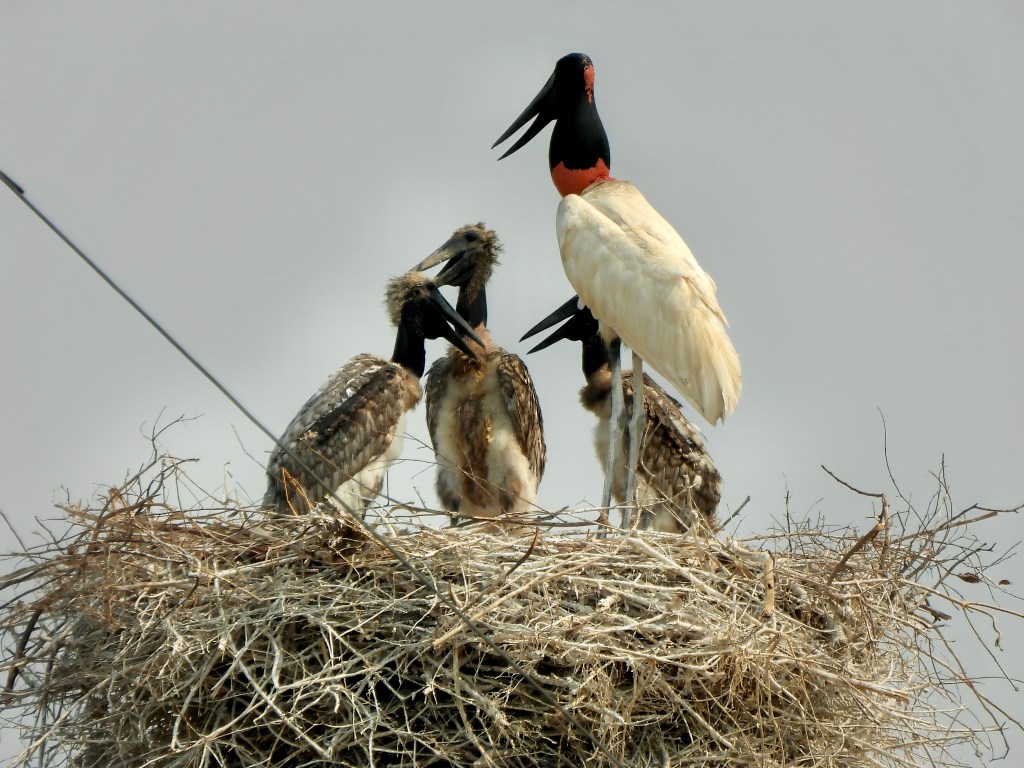
We also saw quite a few Jabirus along the riverbanks. In the photo below, note that the “small” black bird is a Black Vulture. These prehistoric-looking birds are nearly five feet tall and have an eight-foot wingspan.

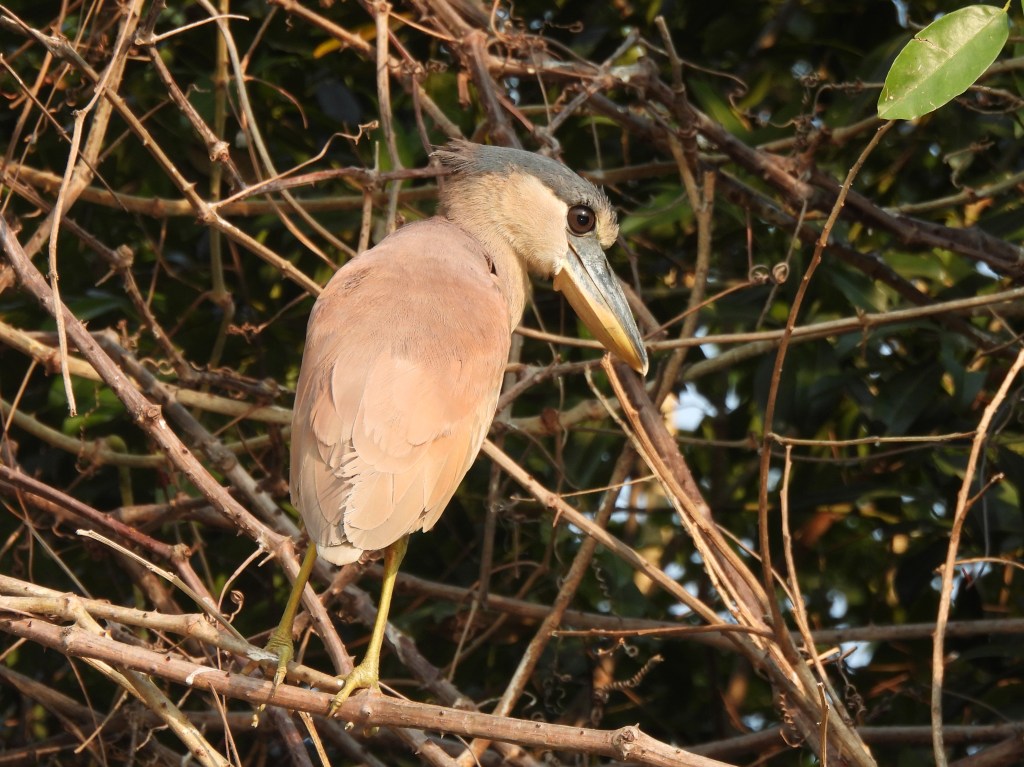
Another bizarre bird of the Pantanal is the unique Boat-billed Heron.

Giant Otters are an endangered species with a current population of only 1,000 to 5,000 individuals in the wild. I was fascinated when we watched an otter aggressively chase off a caiman who tried to steal the fish that the otters were eating. The Giant Otter Project has interesting info on the otters.

We also saw several jaguars again that day including a very unhappy Patricia. That evening we heard her story. A large male jaguar tried to steal a caiman that Patricia had just caught. She successfully defended her much-needed food, but during the fight, her young cub disappeared. Speculation was that the male had killed the cub. We were all distraught and tears were shed that night for Patricia and her cub. The next day, we heard an update to the story. A tourist had taken a photo of Patricia with her cub that morning! Amazingly, the little cub had swum across the big river by himself to flee from the fight between his mother and the big male jaguar. Somehow Patricia had managed to find her baby. Is there anything more tenacious than a fierce mama jaguar?

Our three days on the river had been all we hoped for. After one last breakfast on the houseboat, we drove back north on the Transpantaneira highway towards South Wild Pantanal Lodge, where we would spend the last two days of our trip.

Many of the birds were the same species that we had seen earlier at Pousada Piuval, but some were new. In addition to the birds, I loved the other wildlife in the Pantanal including some of the smaller creatures. I was especially excited to see a Black Witch moth in the dining room at South Wild.

This little frog was in our bathroom. A sign explained that these are “toilet frogs” and they live there. It suggested calling a staff member to move a frog if you didn’t want to share your bathroom, but please don’t hurt them.

Jabirus were quite common; according to our eBird trip report, we saw 38 different individuals. This family built a nest atop a high tree right by the lodge.

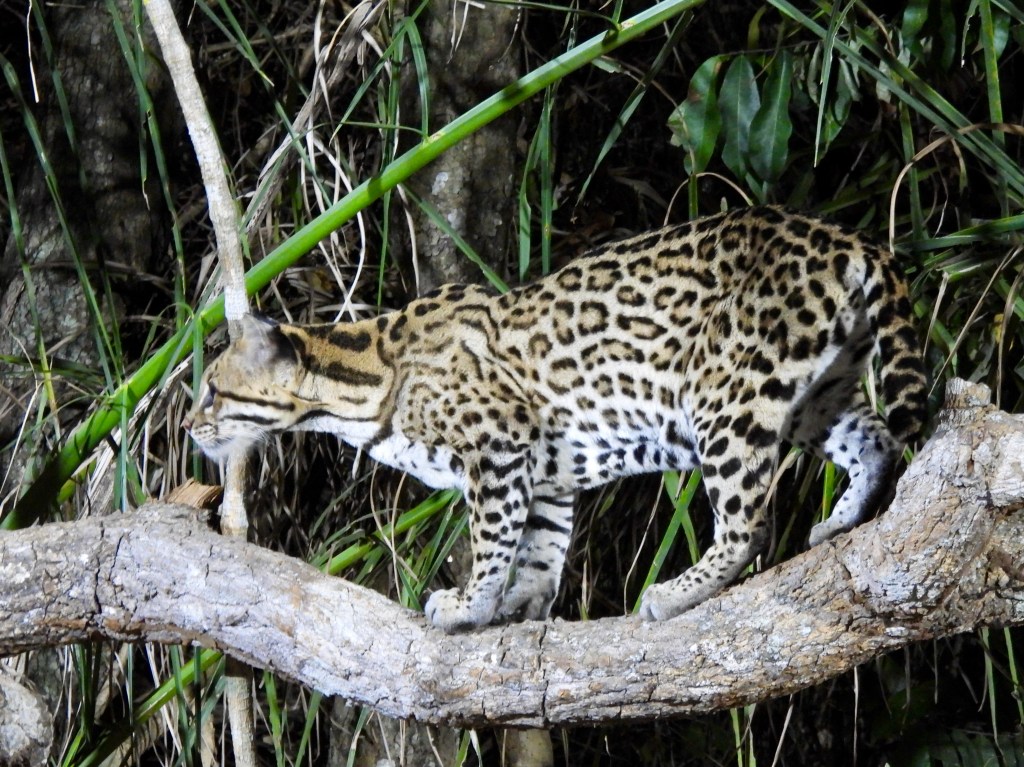
The star of South Wild Pantanal is another big cat, an Ocelot, which is seen so reliably that South Wild “guarantees” a sighting. As you might expect, this is the result of feeding the Ocelot. However, no other lodge has been able to accomplish this feat. It was magical to watch this gorgeous creature leisurely come for food, go to the edge of the woods to patiently wait for more, and then come back to eat again, repeated three times.

Our Lifebird Tours trip ended the following morning. We got up early to drive north on the Transpantaneira and then to Cuiabá where we went in separate directions. Sherry flew to the Amazon for a week there, the others flew back to Sao Paulo for flights home, and I flew to Rio de Janeiro where my friend, Derek, would meet me for another week in the Atlantic Rain Forest. Sherry organized a great trip and Alyson Melo brilliantly guided us on this wonderful adventure.

For a complete list of all bird species observed and photographed, see the eBird trip report. For photos of other wildlife that I photographed on this part of my trip to Brazil, see my iNaturalist observations.

Read Full Post »

I can’t remember when the Pantanal of Brazil first came to my attention, but I’ve wanted to visit since I first heard about it. I think it sounded a bit romantic with jaguars and exotic birds. The reality was that and more with fascinating wildlife in a beautiful remote landscape.

Sherry’s Lifebird Tours group landed in Cuiabá mid-morning on August 16. We drove straight to our first lodge, Pousada Piuval, near the little town of Poconé at the northern end of the Pantanal. We started birding right away and the group saw 34 species of birds before we even ate lunch. A Cattle Tyrant foraged right at our feet as we entered the lodge and Yellow-billed Cardinals were abundant on the lodge grounds.

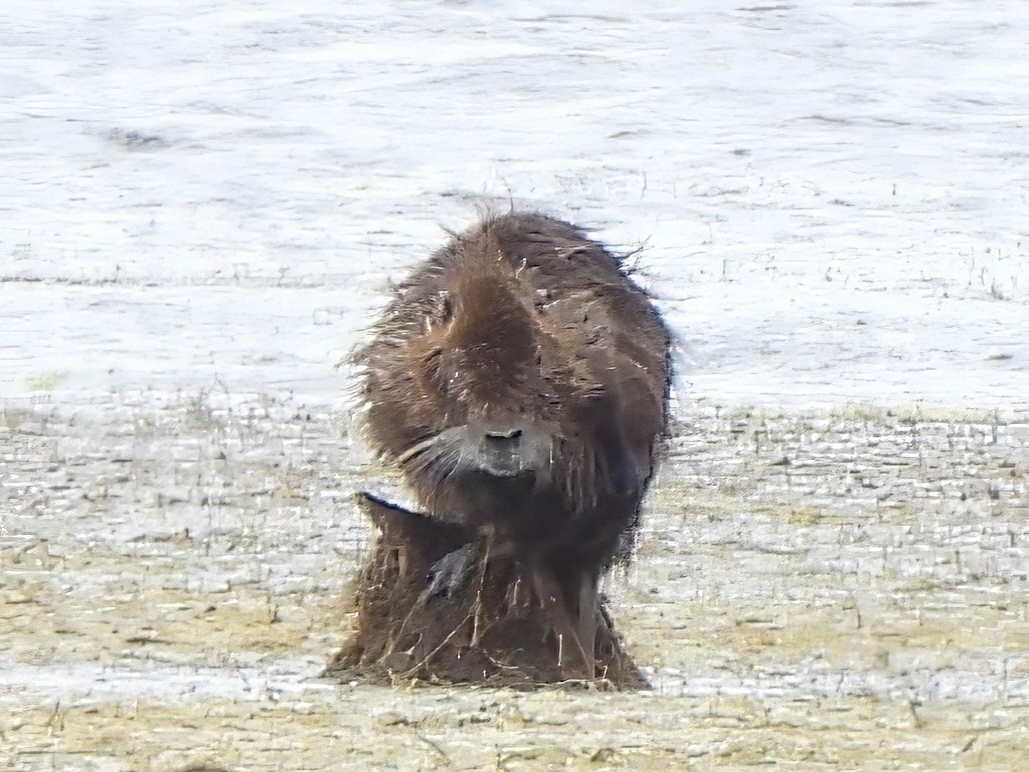
A little pond attracted capybaras, herons and egrets.

We explored the lodge property on our first outing later that afternoon. I had been looking forward to seeing Greater Rhea, the largest bird in South America (up to 65 pounds and 5 feet tall). These odd flightless birds employ an unusual breeding strategy. The male alone builds a nest and mates with several females who all lay their eggs in his nest. The male does all the incubation and then cares for the chicks for four to six months.

Another of my new favorite birds was Gray Monjita, a large attractive flycatcher.

Piping-Guans were big, odd-looking birds. We saw two species, White-throated Piping-Guan and Red-throated Piping-Guan. These birds confused me a bit. White-throated Piping-Guans can have either white or light blue skin on their necks. According to eBird, some individuals in the Pantanal have both blue and red and are most likely hybrids with Red-throated. However, I can’t find any photos in eBird of individuals identified as hybrids and I can find photos of both species with red and blue on their necks. After spending way too much time puzzling over this, I give up and I’m just going to enjoy the diversity of nature.

Our guide, Alyson Melo, is an expert on the Pantanal and he knows how to find birds and other wildlife. Just before 4:00 PM, he took us to a little pond where we spent about 20 minutes watching as birds came in for a drink. First was a Sunbittern followed by the beautiful Black-collared Hawk in the photo below. Other birds included a few Undulated Tinamous and Choco Chachalacas. An Azara’s Agouti came for a drink.

We drove around and saw a Black-fronted Nunbird and a Spot-backed Puffbird. Around 5:00 PM, we returned to the little pond for about half an hour. Rufescent Tiger-Heron, Gray-cowled Wood-Rail, Bare-faced Curassow, and a Black-tailed Marmoset showed this time.

I thought that the female curassows were prettier than the males. In the photo below, the black male is in front of two females with their barred black-and-white uppersides and buffy bellies.

It was an incredible start to our time in the Pantanal. We had not even been there a full day and we had seen many fascinating birds and other animals.

On Saturday morning, August 17, we headed down the famous Transpantaneira, a 91-mile dirt road, which runs from Poconé to Porto Jofre. The mosaic of dry areas, marshes, and shallow pools alongside the road contribute to unparalleled wildlife viewing. In the hour and 20 minutes before we turned back for breakfast, we saw 48 species of birds.

A group favorite was this lovely Capped Heron.

After breakfast, we spent the rest of the day birding the vast property of Pousada Piuval. Its diverse habitats include patches of forest, open dry areas, and watering holes where over 500 species of birds have been observed.

A delightful surprise was this Red-legged Seriema that hopped right up onto our vehicle. Note the second bird on the ground and listen as they call to each other.

The Pantanal has many interesting creatures in addition to birds. We saw quite a few other animals including several Argentine Black-and-white Tegus. These huge lizards can grow to be over four feet long. They don’t look very friendly to me, so I was surprised to learn they are sometimes kept as pets. According to Wikipedia, “They are notable for their unusually high intelligence and can also be housebroken.” These lizards have escaped or been released into the wild in the Southeast US where they are considered to be an invasive species and threaten native wildlife.

We saw many birds that day and had another magical experience late in the afternoon as we sat watching a little watering hole for an hour. Alyson told us that other birders usually quickly check the pond and leave. He knew it was worth staying for a while and our patience was rewarded.

Who doesn’t love toucans? This big Toco Toucan was not only colorful, it seemed to have personality.

Next was the star of Pousada Piuval, Hyacinth Macaw, the world’s largest flying parrot. Its status was endangered for several years; in 2014 it was downlisted to vulnerable. That is still not a lot of birds; population estimates range from 3,000 to 7,000 individuals. The population decline in recent decades is mainly due to habitat loss and trapping for the pet trade. The sale of these spectacular parrots is no longer legal but previously fetched $10-15,000 for a single bird in the US.

Yellow-rumped Cacique was another sharp-looking bird at the little pond.

A little before 5:00 PM, we got really excited and quietly held our breath as a tapir came out of the woods. It took him a while to go for his first drink at the watering hole, but he stayed in our view for quite some time. We were thrilled with close views as several times he walked towards the woods and then came back for another drink.

We were still not done with birds at the little pond. An Orange-backed Troupial was another of my favorites. I love the bright orange color.

After leaving the magic pond, we had just enough light to see a few more birds. Another group favorite was these Campo Flickers.

It had been an amazing day! Appropriately, it ended with this beautiful Black-banded Owl.

There is just the beginning. Watch for more Pantanal adventures on this trip.

Read Full Post »

Our group arrived at Hotel do Ypê on a rainy afternoon, August 10, 2024. We did not leave the hotel area that day, yet most of the birds were new to me and I got 24 “lifers.” I had been to South America before, Colombia and Ecuador, but southeast Brazil is far from where I’d been on those trips and on the opposite coast. Brazil has over 1,800 species of birds including nearly 250 that are endemic to the country. It was a great start to Sherry Lane’s Lifebird Tours trip and one that I had been looking forward to for over a year.

Green-headed Tanagers were small, colorful, and abundant around the hotel. This one was puffed up to stay warm in the cool afternoon.

Below, Mr. and Mrs. Ruby-crowned Tanager, another common species in this area. The male’s ruby crown is not always visible, but this guy shows it nicely.

Our first parrot of the trip was this lovely Blue-winged Macaw right on the hotel grounds.

Hotel do Ypê is snuggled inside Parque Nacional de Itatiaia, Brazil’s oldest national park, which is 3-4 hours northeast of São Paulo. This large park is in the Mantiqueira mountain range where elevations range from under 2,000 feet to nearly 10,000 feet. The lower part of the park, where the hotel is located, protects an important area of Atlantic rainforest. Five hundred years ago, the Atlantic Forest of Brazil comprised an area twice the size of Texas. Today, it is estimated that only 7 to 15 percent of the original forest remains. These remnants of the Atlantic Forest are extremely valuable; they host hundreds of species of plants and animals that occur nowhere else on Earth. Below, a view from Hotel do Ypê.

The next day we explored the lower part of the park where we saw beauties like this Surucua Trogon.

And, this Red-breasted Toucan.

In addition to the spectacular big birds like those above, we also saw many small birds. I even managed a photo of this tiny bird of forest undergrowth, a cute little White-throated Spadebill.

On our last day in the park, the group went to the upper part of the park to seek birds that only occur in the rocky high-altitude grasslands. It would be cold at the higher elevation and I had not brought enough cold weather gear. I was also worried about the cold triggering my asthma, so I stayed around the hotel and enjoyed my time there. Here are some of the birds I enjoyed photographing. Click any photo in the gallery for an enlarged view.

Early on Tuesday morning, August 13, we said goodbye to beautiful Itatiaia National Park and turned south towards Ubatuba on the coast. We arrived at our first stop later than planned and I struggled birding the dark forest along the road, but our next and last stop of the day at Sítio Folha Seca made up for it.

Some of the birds there were common like this Green Honeycreeper, but I don’t think that I’ll ever tire of seeing these gorgeous birds.

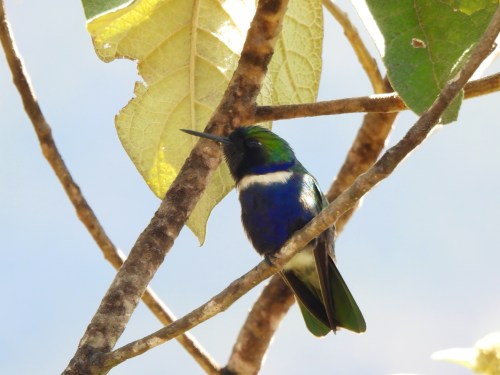
The real stars of Sítio Folha Seca are the hummingbirds. It is one of the best places in Ubatuba for these little winged jewels and our group saw ten species; six of those were life birds for me. All of the photos below were taken that afternoon.

Sítio Folha Seca has much more than hummingbirds, though. Three of the tanagers that we saw there were also life birds for me. One was this Brazilian Tanager, a group favorite.

I also saw my first Red-necked Tanager, another stunner, at Sítio Folha Seca.

Ubatuba is very popular with birders and nearly all birding tours to southeast Brazil include time in the area.

On the 14th, we continued to bird around Ubatuba and I got 12 more life birds ranging from Swallow-tailed Hummingbird to Green-backed Trogon, Channel-billed Toucan, and Yellow-fronted Woodpecker.

That day I also got my life Blue-naped Chlorophonia, a bird that is a member of one of my favorite genera. I promise to share a photo in a later post about my trip to Brazil.

Left, our group birding in Ubatuba.

As expected in the forest, we also saw small, skulky birds. I was pleased that I actually got photos of a Scaled Antbird.

We spent the afternoon of August 14 at Ninho Da Cambacica, another wonderful little ecolodge with bird feeders and trails on the property. Below, our group with the owners of Ninho Da Cambacica. This was our last birding with Atlantic Forest bird guide, Lucas (kneeling in center below). Lucas had found some great birds for us and it had been fun to spend time with him. We would miss his smile and enthusiasm. Alyson Melo (on the left), our lead guide, would continue on the trip with us.

On August 15, our last day before heading to the Pantanal, we visited Sítio Macuquinho, my favorite place on this part of the trip. The feeders attracted several species of hummingbirds and tanagers, but my favorite birds may have been the Red-and-white Crakes we viewed from one of the trails on the property.

But, that wasn’t all. We had close-up views of a White-breasted Tapaculo eating worms on a log by the side of the road. These normally shy and difficult-to-see birds were found for us by the amazing Elvis Japão, bird guide and owner of Sítio Macuquinho. He also found two Marsh Antwrens for the group, but I just couldn’t find them in the thick marsh vegetation. I didn’t feel quite too bad about missing them after noting “usually very hard to see” in the description in eBird. Another wonderful bird that Elvis found for us was a singing Bare-throated Bellbird, a bird that our entire group was thrilled to see and hear.

All too soon, it was time to head to Sao Paulo for the night and our flight to Cuiabá the next morning. Amazing birds and exciting adventures awaited us in the Pantanal of Brazil.

Read Full Post »

Diane and I had signed up for birding packages at Canopy Tower and Canopy Lodge.  That meant that we birded in groups, but they changed daily as people came and left the lodges.  You can sign up to start any day of the week and for any length of time.  The constantly changing groups (and guides) made it interesting.  We enjoyed meeting other nature enthusiasts and getting to know several of the guides.  On what was scheduled to be our last day of birding, we were very pleased that Tino would guide us again.  Only one other birder joined our group, so it was great to have just four of us.  It’s much easier to see the skulky little birds on the forest floor with a small group.

We had a great day of birding and I saw 10 new birds for Panama.  My favorite that day may have been the Orange-billed Nightengale-Thrush.  First, how can you not love a bird with a name like that?  And, second, it was a lovely bird.

Orange-billed Nightengale-Thrush

Orange-billed Nightengale-Thrush

Other life birds that day were Spotted Woodcreeper, Chestnut-backed Antbird, and a couple of hummingbirds.  We also saw two wonderful butterflies, a Regal Anteros and a Black-bellied Anteros.  Tino was really excited when he found them, so I assume that they may not be common.  My photo isn’t as clear as I’d like because the butterfly was perched just a little out of reach, but we had great scope views.  Note the fuzzy little legs.  Isn’t it adorable?

Black-bellied Anteros

Black-bellied Anteros

We had so much fun that day, the last in our birding package, that we decided to pay extra to go birding with Tino again the next morning.  Guests at the Canopy lodges can always select trips “a la carte.”

The next morning, the skies were threatening, but we went out anyway.  In Panama, it rains daily in the summer, so they learn to work with the weather.  Tino decided to take us back to a place that Diane and I had birded earlier in the week, Sendero Las Minas, a little dirt road with an agricultural field and a chicken farm on one side and forest on the other side.  It was especially rewarding to see the Wedge-tailed Grass-Finch perched atop a fence post singing.  On our first trip down this road, he hid in the tall grasses and we could barely see him.

Wedge-tailed Grass-Finch

Wedge-tailed Grass-Finch

It wasn’t long until it started raining, but we were able to take cover under the eaves of a little abandoned cabin.  It felt magical to stand there with our little group of four, protected from the rain, but feeling it all around us.  And, of course, Tino continued to find birds while we waited there.  Soon, the rain had stopped and we were birding on the road again.  We saw wonderful birds – Tawny-crested Tanager, Scarlet-thighed Dacnis, Tawny-capped Euphonia, and many more including some familiar birds like Eastern Meadowlark.

Thick-billed Seed-Finch, also seen along Sendero Las Minas

Thick-billed Seed-Finch, also seen along Sendero Las Minas

There were also beautiful flowers along this road.  One of our favorites was Psychotria elata, a tropical tree commonly known as Hot Lips or Hooker’s Lips, for the red bracts that resemble luscious lips for a short time before bursting open to reveal the plant’s small white flowers.

Hot Lips, Psychotria elata. Photo by Carole McIvor.

Hot Lips, Psychotria elata. Photo by Carole McIvor.

Near the turn-around point at the top of the road, we ran into a small herd of about eight cows, led by a big bull, coming down the road. Tino was familiar with their behavior and didn’t say anything to frighten us, but got Carole and me off the road to allow the cows to pass. Diane was not close enough to hear Tino’s command to make way for the cows and continued slowly walking down the middle of the road with the cows following behind her. Tino was very relieved when we were all together again and then he told us that the cows could have been dangerous.

Coming down the road behind us. Photo by Carole McIvor.

Coming down the road behind us. Photo by Carole McIvor.

The excitement of the morning was not over yet, though.  Tino had hoped to find a Blue-throated Toucanet for us.  They are listed on the Canopy checklist as “common,”  but we had not seen one yet.  And, we did not see one that morning, but just before we got back to our vehicle, Tino found something even better, the rare Yellow-eared Toucanet.  We struggled for a view of the bird as it hid in a tree, but it was exciting to see something so special.

Tino's heavily-cropped digiscope is blurry due to the cloudy weather, but the Yellow-eared Toucanet is clearly identifiable.

Tino’s heavily-cropped digiscope is blurry due to the cloudy weather, but the Yellow-eared Toucanet is clearly identifiable.

That afternoon, April 30, was our last at Canopy Lodge.  We enjoyed more free time watching the feeders and sitting on the little balcony outside our room.  We finally got quick, but good, looks at the fast little Rufous-crested Coquette as he dashed in for a sip of nectar at the purple porterweed flowers.

The stream by the lodge was a continual source of delight.  In the photo below, a Common Basilisk basks in the sun on a rock.

Common Basilisk in the stream by Canopy Lodge

Common Basilisk in the stream by Canopy Lodge

The following day, we had our last looks at the lovely Canopy Lodge birds as we enjoyed a leisurely morning getting ready to leave for Panama City.  The Crimson-backed and Flame-rumped Tanagers put on a good show, as always.  The female Crimson-backed Tanager was one of my favorites.  I thought that she was as beautiful as the male.

Female Scarlet-backed Tanager

Female Crimson-backed Tanager

We never got tired of the common, but gorgeous, Flame-rumped Tanagers.

Male Flame-rumped Tanager

Male Flame-rumped Tanager

Perhaps the most common feeder bird of all was Thick-billed Euphonia.  We enjoyed watching males and females of all ages.

Thick-billed Euphonia (adult male)

Thick-billed Euphonia (adult male)

Late that morning, our driver picked us up and took us back to the lovely Country Inn & Suites where we had spent our first night in Panama City.  We walked the Amador Causeway where we found our last life bird in Panama, a Northern Scrub-Flycatcher.  Near the end of the causeway, we estimated over a hundred each of Brown Pelicans and Magnificent Frigatebirds, a wonderful goodbye from Panama.

We had a nice dinner outdoors by the canal and left before dawn the next morning for our flights home.  Memories of this amazing trip will stay with us forever.

Magnificent Frigatebird

Magnificent Frigatebird

More photos can be found in the following Flickr albums:

Panama 2017 -Birds
Panama 2017 – Insects (mostly moths & butterflies)
Panama 2017 – Mammals & Herps
Panama 2017 – People & Places

Read Full Post »

Danilo Jr. greeted us warmly when we arrived at Canopy Lodge just in time for lunch on April 25.  He had been one of our favorite guides at the Tower and we were happy to see him again.  After lunch, we had a little time for birding on our own and exploring the grounds of the lodge.  A beautiful creek provided the perfect place for for Mrs. Flame-rumped Tanager to have a nice bath.

Female Flame-rumped Tanager

Female Flame-rumped Tanager

I also had just enough time to find a life bird for myself before Danilo took us out on our first birding trip from the lodge.  I really liked the Dusky-faced Tanagers, who looked quite different from the other tanagers to me.  A few weeks after I got home, I learned that the latest taxonomic changes moved this bird to a new family, confirming that it really is different from the other tanagers like the Flame-rumped Tanager above.

Dusky-faced Tanager

Dusky-faced Tanager

While I was photographing the tanagers, Diane relaxed on our room’s lovely balcony and found herself a life bird, too, a Bay-headed Tanager in the tree tops, which was particularly exciting because it’s a species that does not come to feeders.  I would eventually see one a few days later.

Our first guided trip was a walk from Canopy Lodge to Canopy Adventure, where more adventurous (and younger) folks can climb to the top of the ridge and then soar through the treetops on a zip-line.  We took a different path, easier, but still steep and slippery, to look for Mottled Owls, which we did not find.  When I teased Danilo that I wanted something for our efforts, he found a nice Orange-billed Sparrow.  We also enjoyed seeing the gorgeous stream and waterfall.  And, we got two wonderful life birds on the walk there, Lance-tailed Manakin and the very shy Bay Wren.  Sorry, I wasn’t able to get photos of either.

Diane in front of the beautiful waterfall at Canopy Adventure.

Diane in front of the beautiful waterfall at Canopy Adventure.

Danilo also introduced us to the compost pile, a big heap of rotting fruit just a short distance along a little path by the creek at the lodge.  We had seen our first Black-faced Antthrush on Pipeline Road just the day before, but here we really got to know the bird.  He was shy like so many of the birds in the rainforest, but not so skulky that we could not see him at all.  With just a little patience, nearly every trip to the compost pile was rewarded with views of this adorable little bird strutting through the open area by the rotting fruit, holding his tail erect and singing his “happy” song.  I thought that he would be a great character for an animated movie.  Of all the birds that we saw in Panama, this was the one who stole our hearts.

Black-faced Antthrush. A poor photo, but you can't hide that "personality."

Black-faced Antthrush. A poor photo, but you can’t hide that “personality.”

We had a larger group the next morning with Danilo Sr. guiding us for our first full day of birding at the lodge.  We were only a couple of hours from Canopy Tower, but the habitat was sufficiently different that we saw many new species.  I got 13 life birds that day, my favorite being this gorgeous male Silver-throated Tanager.

Silver-throated Tanager

Silver-throated Tanager

The following morning was much like the previous with our group of 7 and several more life birds.  One that cooperated for a photo was this White-bellied Antbird.

White-bellied Antbird

White-bellied Antbird

We also had nice looks at a Brown-throated Three-toed Sloth.

Brown-throated Three-toed Sloth

Brown-throated Three-toed Sloth

That afternoon we had a special treat.  Diane and I needed to see the Spectacled Owls that were nesting nearby.  The others had already seen them, so Tino, a bird and butterfly guide and the manager of Canopy Lodge, took Diane and me on a private tour.  We had incredible looks at both an adult Spectacled Owl and a recently fledged juvenile.

Spectacled Owl (adult)

Spectacled Owl (adult)

Spectacled Owl was on my most-wanted list and I was thrilled to see these birds.

Spectacled Owl (juvenile)

Spectacled Owl (juvenile)

Other wonderful sightings that afternoon included a Tody Motmot and a Yellow-green Vireo on her nest.

Yellow-green Vireo on her nest

Yellow-green Vireo on her nest

The following day, Diane and I explored the lodge grounds by ourselves.  We had scheduled a couple of extra days so that we could relax and do whatever we wanted part of the time.  I attempted to photograph a blue morpho butterfly, which turned out to be impossible, even with plenty of time to work on it.  I was able to get a fairly clear photo of the butterfly with its wings closed, but as soon as it opened them, the butterfly immediately became a blue blur.  “Blue Morpho” refers to a group of butterflies, not a single species.  The one I photographed is a Common Morpho, Morpho helenor.

The Social Flycatcher by the natural pond with the treehouse was more cooperative.  One of the guides told us that a pair was nesting in that area.

Social Flycatcher

Social Flycatcher

A Southern Beardless-Tyrannulet also posed for a photo.

Southern Beardless-Tyrannulet

Southern Beardless-Tyrannulet

And, just as at home, no bird feeder is complete without a squirrel.  Red Squirrels did not monopolize the feeders, but we saw them frequently.

Red Squirrel

Red Squirrel

Canopy Lodge was a great place to explore a little and rejuvenate ourselves.  We thoroughly enjoyed the free time and we were looking forward to more guided trips the next day as our Panama adventure continued.

Read Full Post »

Sunday morning, April 23, was one of the luckiest of the trip.  We started right outside Canopy Tower on Semaphore Hill Road.  Our guide, Domi, soon heard a bird on everyone’s target list – a Pheasant Cuckoo.  They are very secretive birds and difficult to find when they are not calling.  But, the bird was off the road and back in the forest.  Domi and the two other birders scrambled up the hill on the side of the road and through the thick vegetation to find the bird.  Diane and I hesitated.  I didn’t know if I could make it up the hill without help and certainly they were just going to push the bird deeper into the forest anyway.  Well, they came back smiling and excited; they had had wonderful looks at the bird.  And, then, instead of saying we made a bad choice, too bad, they all encouraged Diane and me to go see the bird.  So, Domi helped us up the little hill and we scrambled into the jungle.  Amazingly, the cuckoo was in the same place the others had seen it.  There are no words to describe how thrilled I was to see this bird and to even get a photo.

Pheasant Cuckoo

Pheasant Cuckoo

The day continued to be charmed.  That afternoon we had great looks at another skulky bird, a gorgeous Rosy Thrush-Tanager.  Domi led us off the trail and under the tree where the bird was perched.  We saw little pieces of the bird as we moved one way and then another to peer through thick branches.  I must have taken 200 photos and luckily the one below shows most of the beautiful bird.

Rosy Thrush-Tanager

Rosy Thrush-Tanager

There were seven of us that afternoon, but the larger group didn’t stop this beautiful Golden-collared Manakin from sitting in the open for over five minutes right in front of us, unusually bold behavior for this species.  While we got incredible close looks at the manakin, we were not privileged to see a courtship display, one of the most amazing sights in the avian world.  This very interesting article from Audubon, Do a Little Dance, Make a Little Love: Golden-collared Manakins Get Their Groove On to Woo the Ladies includes a short video of the courtship display.  The picky females judge the performances of the males and mate with the one that they perceive to be the most attractive and the best dancer.

A Golden-collared Manakin looks at us with more curiosity than fear

A Golden-collared Manakin looks at us with more curiosity than fear

Another fun experience that afternoon was watching a pair of Yellow-throated Toucans right above our heads.  That’s a tree frog that it is chowing down for lunch – yum!

Yellow-throated Toucan

Yellow-throated Toucan

April 24 was our last full day at Canopy Tower.  Our group had missed White-throated Crake on our first trip to the Ammo Dump Ponds, so Domi took us there again early in the morning before we went to Pipeline Road.  Crakes are in the rail family and most are very shy birds.  But, this time we were successful and got good looks at several birds.

White-throated Crake

White-throated Crake

A potoo was the highlight of Pipeline Road again, but on this section of the road it was a Common Potoo.  An adult potoo with a baby had been reported at this location for several days, but we were the first to see the baby without one of its parents.  This young one will still be fed by mom or dad for a while longer, though.  The bright pink gape (inside of the mouth) functions as a highly visible guide to show the parents where to deposit food.

A Common Potoo on its first day without a parent.

A Common Potoo on its first day without a parent.

We also saw this beautiful snake, a South American Forest Racer.  It moved fast, so I was happy to get any photo at all.

South American Forest Racer on Pipeline Road

South American Forest Racer on Pipeline Road

Panama has fabulous butterflies, but I didn’t have enough time and attention to focus on both butterflies and birds in the same trip as much as I would have liked.  I tried to sneak in a photo of a butterfly when I could, though.  I especially liked this Many-banded Daggerwing that we found on Pipeline Road.

Many-banded Daggerwing

Many-banded Daggerwing

That afternoon, it was back to Gamboa, where one of my favorites was this Gray-headed Tanager.  This photo is unique as it’s the first time that I ever used my camera before my binoculars.  I usually look first and then shoot.  But, I was trying to photograph something else when I heard “Gray-headed Tanager” behind me, so I just turned around with my camera still poised and clicked.  I was lucky; although he was close, he did not stay long and I would have missed the photo if I had indulged in a binocular look first.

Gray-headed Tanager

Gray-headed Tanager

We were soon back at the Tower, happy with all of the wonderful birds we had seen in the last five days, but also sad that our birding trips there were done.  We had a little time on our own before our departure the next morning.  Sometimes I used my free time to check out the moths that had come in to the lights the night before.  Here is just one of the beauties I saw there, tentatively identified as Synchlora gerularia.

Moth at Canopy Tower tentatively identified as Synchlora gerularia.

Moth at Canopy Tower tentatively identified as Synchlora gerularia.

In between birding trips, I also tried to get photos of the several species of hummingbirds that can be seen at the Tower.  White-necked Jacobins were common; here is a female below.

Female White-necked Jacobin

Female White-necked Jacobin

Blue-chested Hummingbirds were also plentiful at Canopy Tower.

Blue-chested Hummingbird

Blue-chested Hummingbird

And, then, all too quickly as usual, it was time to spend one more morning on the observation deck and say goodbye to Canopy Tower.  But, our Panama adventure was only half over.  We were going to Canopy Lodge next.

Diane and me in front of Canopy Tower

Diane and me in front of Canopy Tower

Read Full Post »

Older Posts »