On November 20, we spent most of the day traveling northeast toward Campos do Jordão and the high-elevation Araucaria forests of the Serra da Mantiqueira. At 1,628 meters (5,341 feet) above sea level, Campos do Jordão is the highest city in Brazil. As we approached this region, the landscape changed noticeably.
The Araucaria Moist Forest stretches from lower plateaus around 500 meters to mountain slopes above 1,600 meters, supporting a remarkable number of endemic plants and birds, including the Araucaria Tit-Spinetail (which I saw, but unfortunately did not photograph). Towering Araucaria angustifolia, the Brazilian pine, dominates the forest. This critically endangered conifer’s lineage dates back roughly 200 million years to the age of dinosaurs.
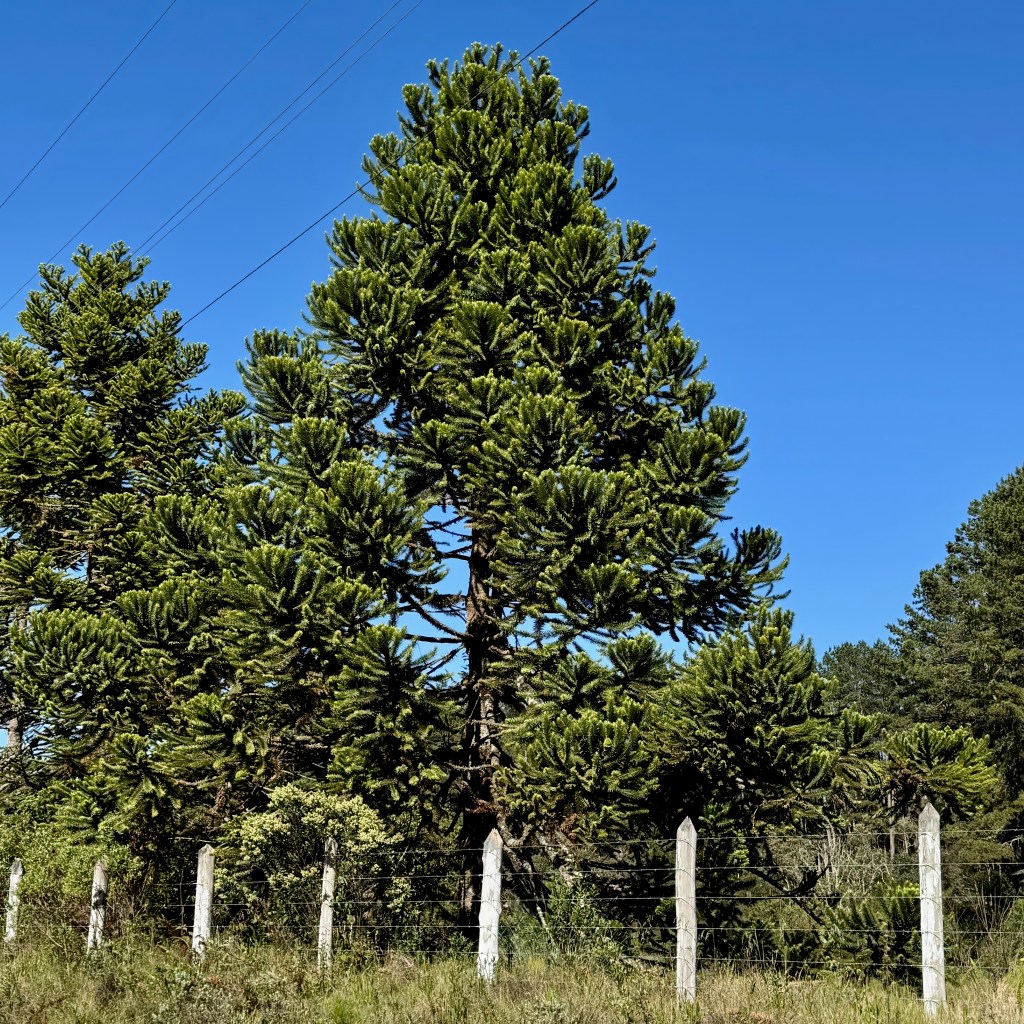
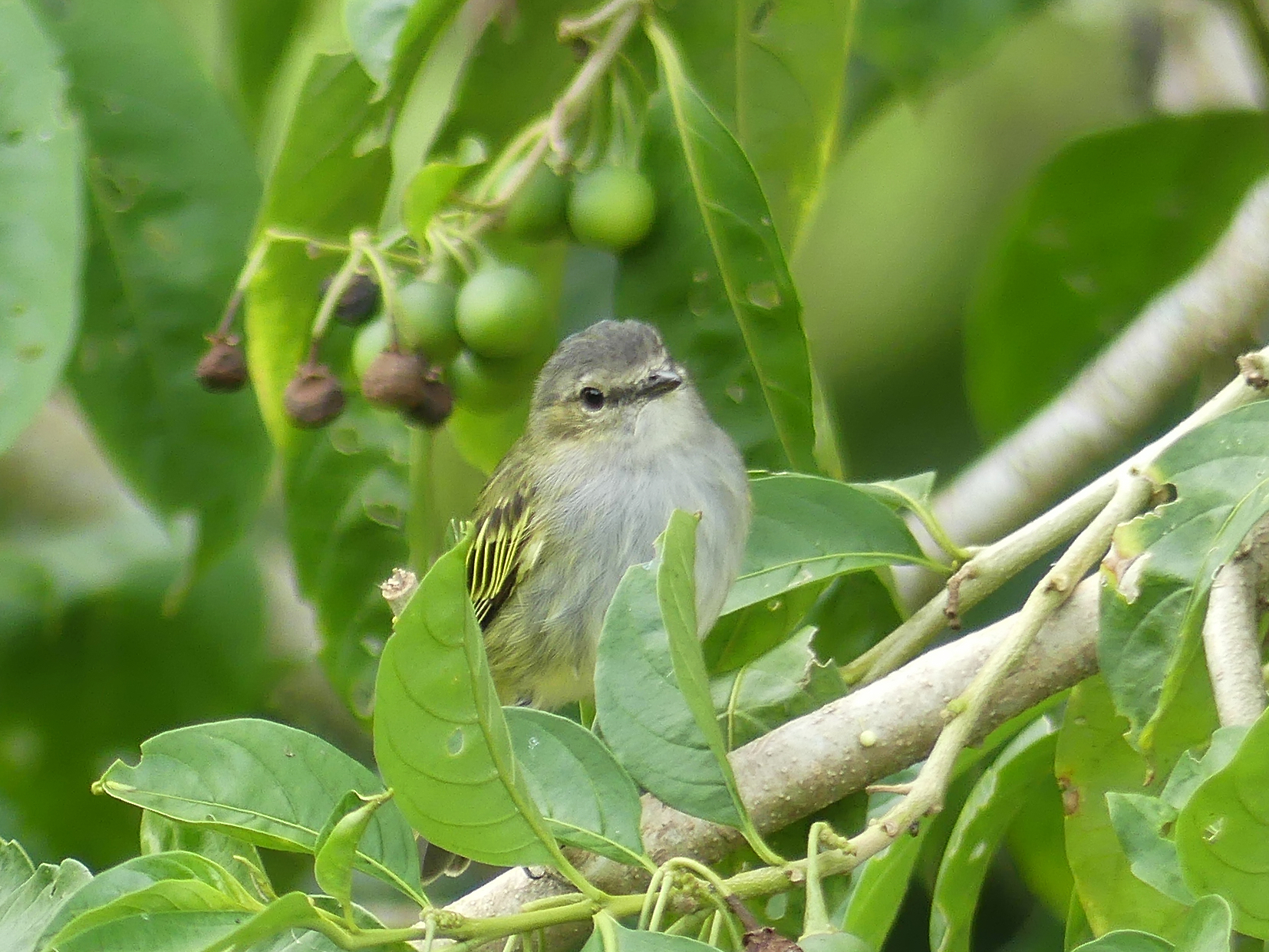
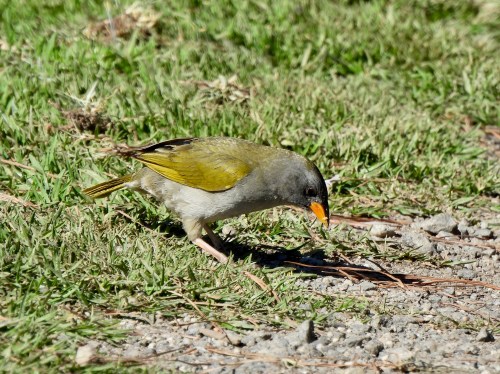
We birded in forest areas outside the city for most of the next day. Bay-chested Warbling Finch, Velvety Black-Tyrant, White-crested Tyrannulet, Black Hawk-Eagle, Rufous-tailed Antbird, Red-legged Seriema, Great Pampa Finch (in photo below), and quite a few other species contributed to a nice morning.
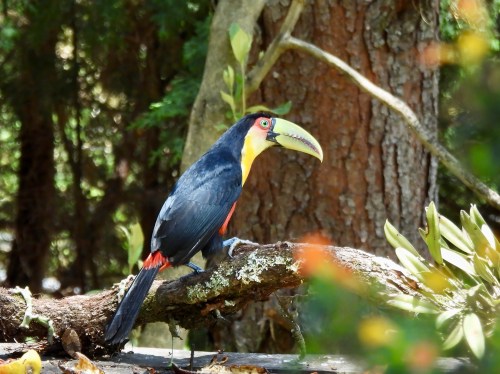
Sandra’s goal is to see half of the world’s 11,131 birds, currently 5,566 species. But seeing 5,000 birds is also a significant accomplishment. We were doing well on this trip, and Sandra had been paying special attention that morning. When we arrived back at the hotel at lunchtime, her life list was at 4,999. As we watched the area with a small feeder, our guide, Douglas, suddenly spotted this Red-breasted Toucan — Sandra’s 5,000th bird!
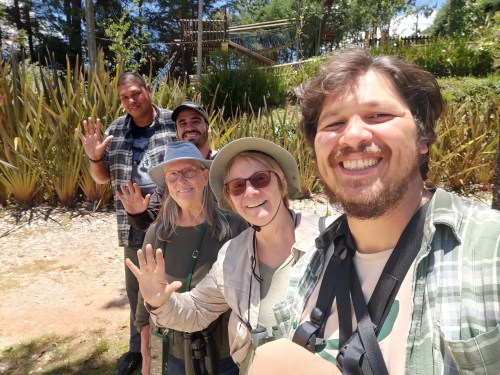
We were all delighted to celebrate this milestone with Sandra. From front to back: Cirilo, Sandra, me, Douglas, and Paulo—smiles all around.
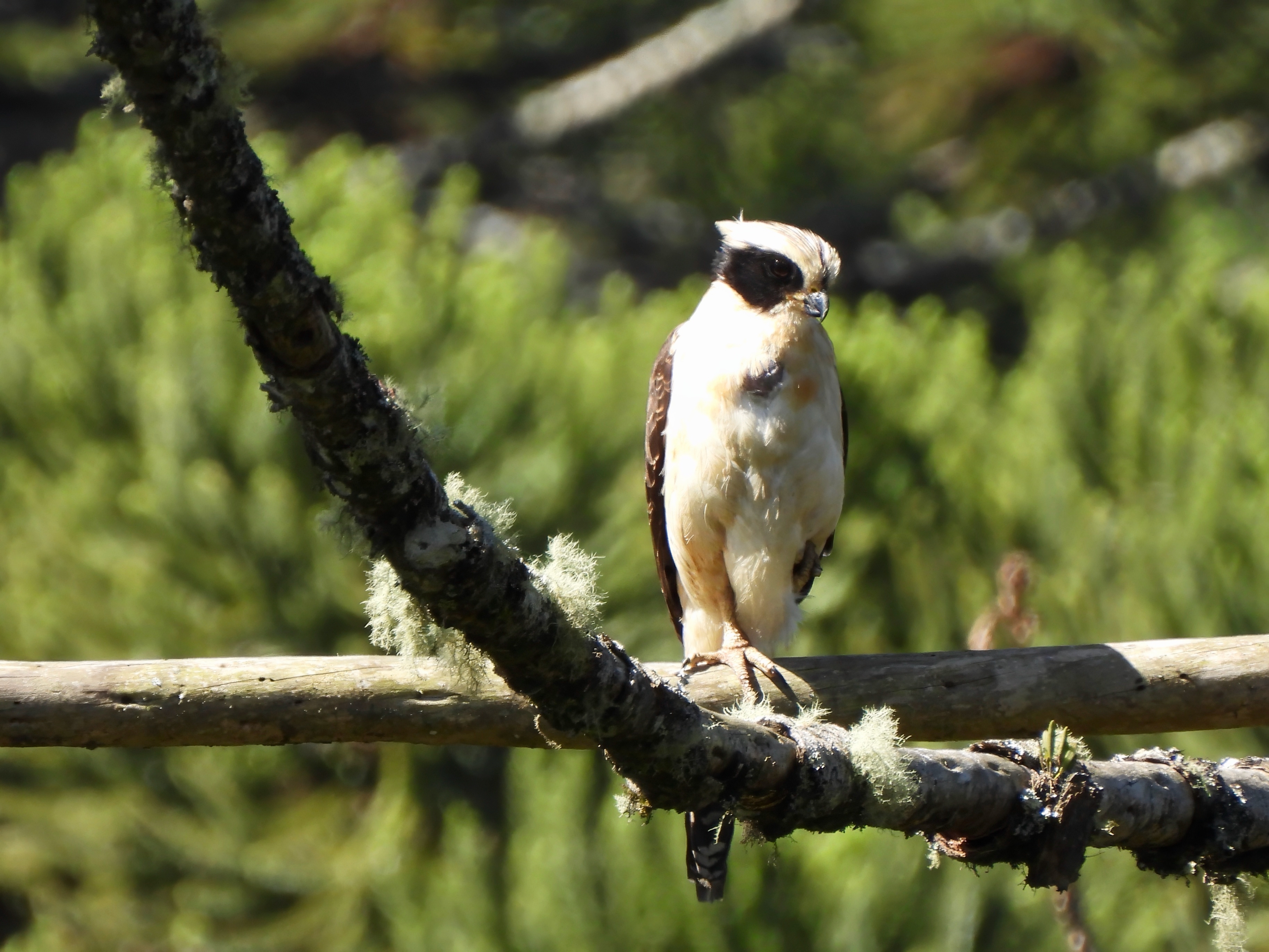
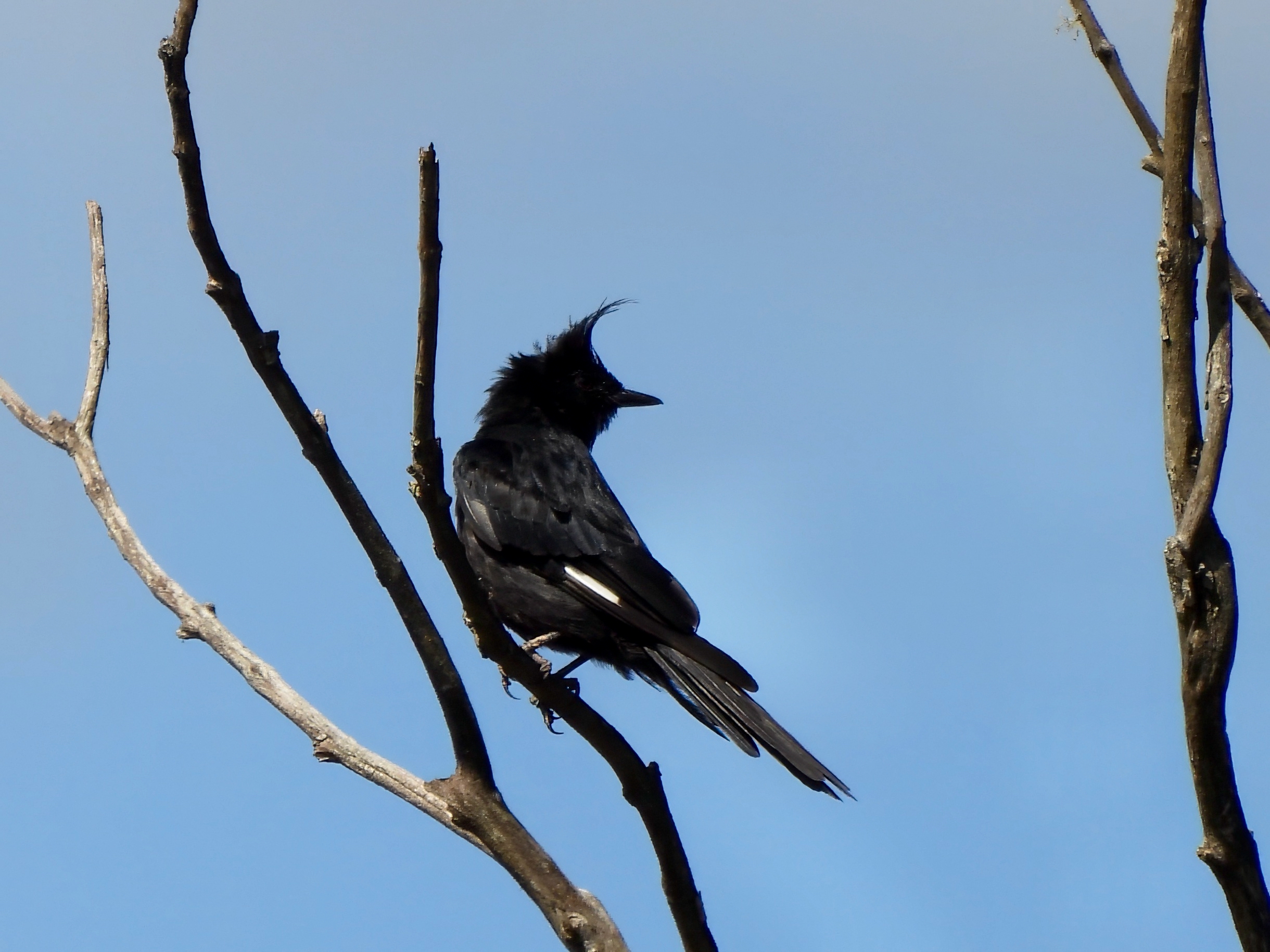
That afternoon, we birded a bit more and spotted a Laughing Falcon and a Crested Black Tyrant, shown in the photos below. Neither was a life bird for us, but can one ever see too many Laughing Falcons? And, the Crested Black Tyrant, always cute, was a fun sighting.
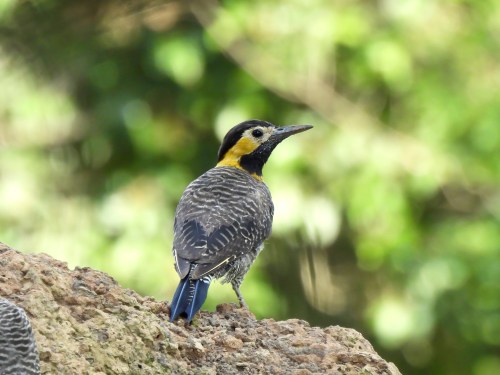
Later that day, we drove to Pouso Alegre where we spent the night. The next morning, after continuing on our way, we stopped to enjoy a small group of Campo Flickers on an ant mound, a species I first saw in the Pantanal on my 2024 trip to Brazil. I was pleased that several birds I associated with the Pantanal, including the flickers, turned up again on this trip.
This turned into an eventful day when our car broke down, and we were stranded on the side of the road. Paulo knew exactly what was wrong. He got a ride to a nearby gas station and returned with the necessary part and a mechanic. Meanwhile, Cirilo got a ride for the rest of us to the famous seedeater spot, our destination for the day, which was conveniently close by. The farmer who gave us a ride knew there would be other birders there, and we could ask for a ride back to the car after birding.
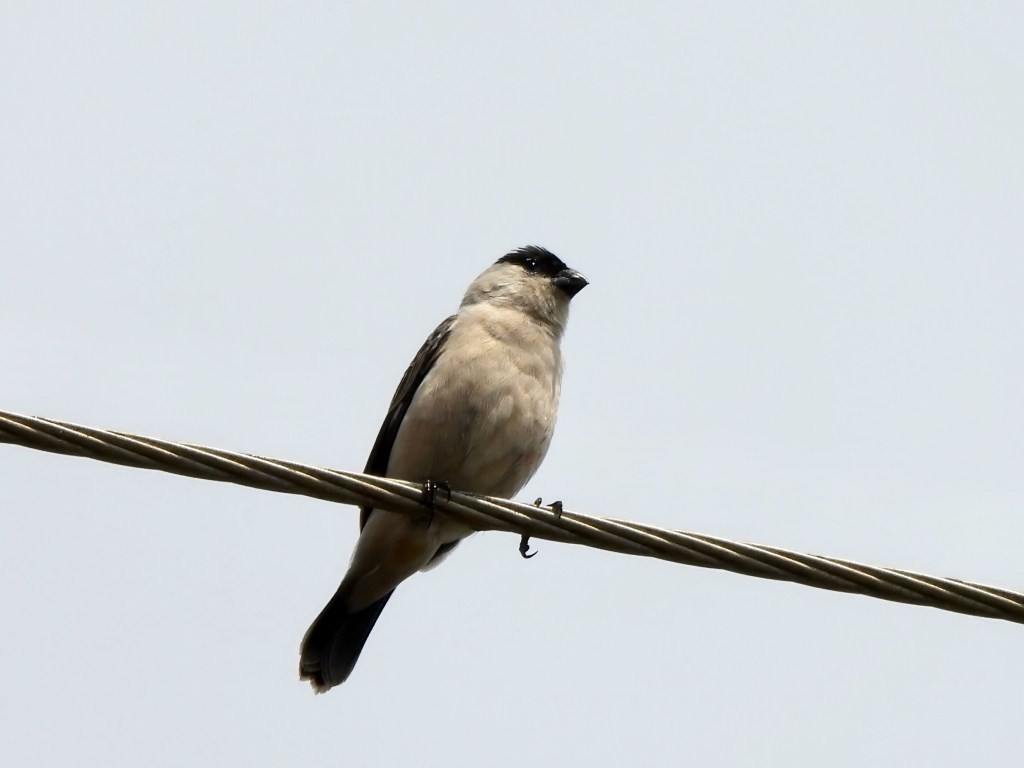
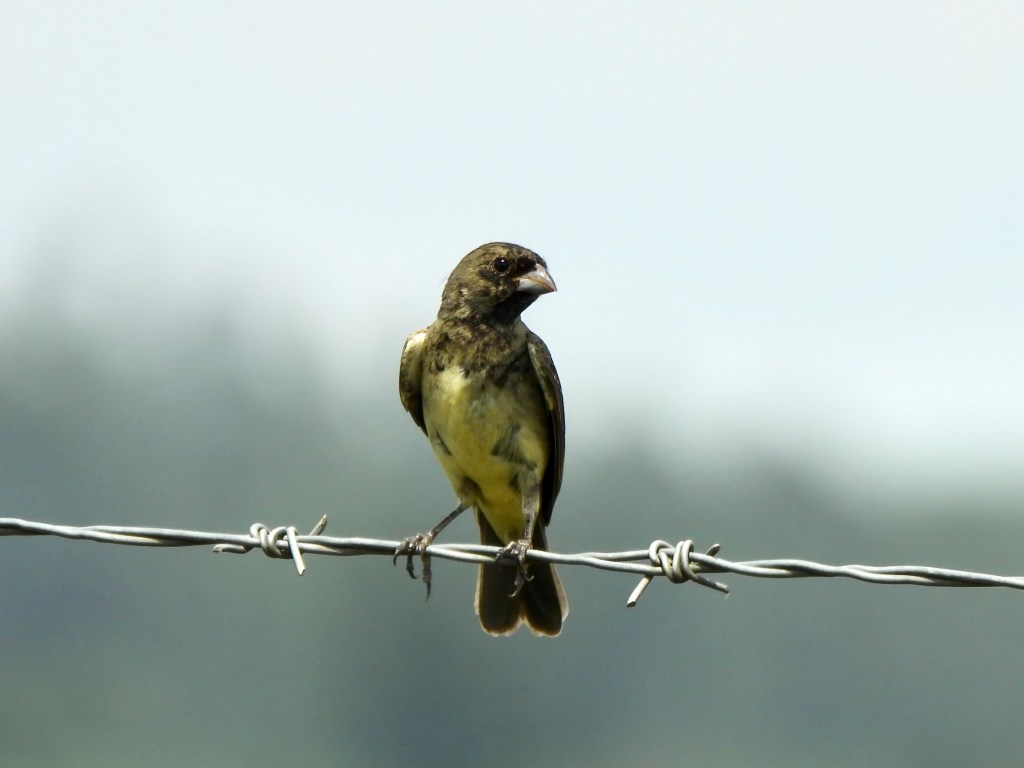
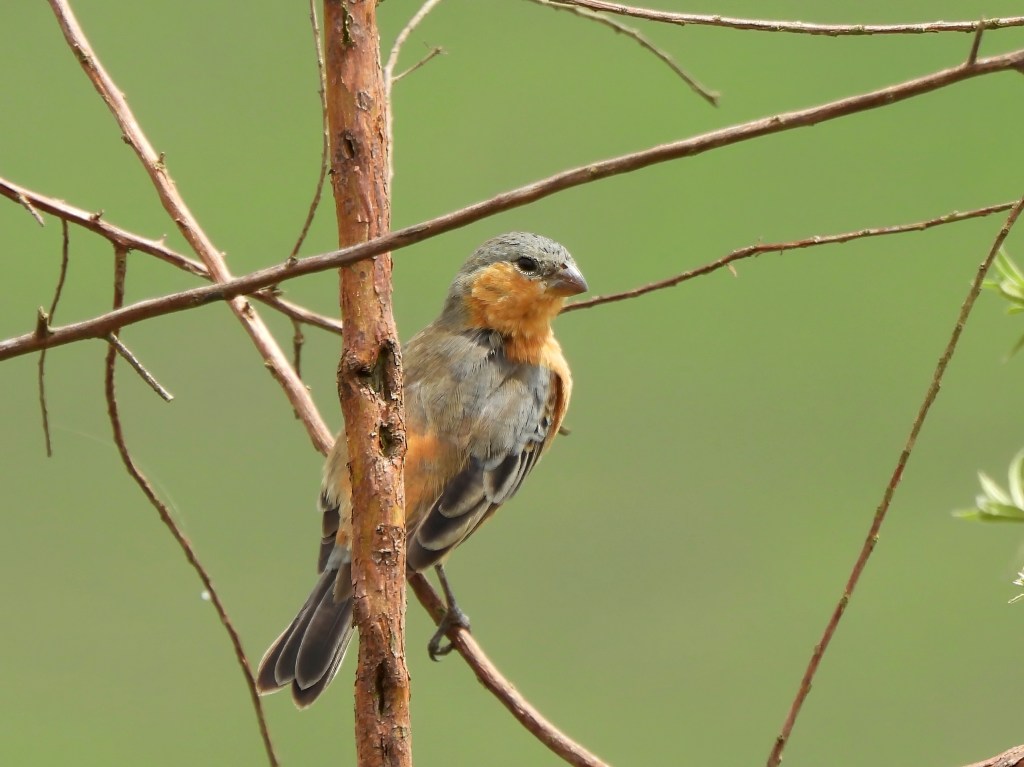
Birding at the seedeater spot was fun and, as promised, we saw seedeaters. In the photos below, Pearly-bellied Seedeater, Yellow-bellied Seedeater, and Tawny-bellied Seedeater.
There were more than seedeaters here, and we really enjoyed this spot. This photo is my favorite of a Yellow-chinned Spinetail that I’ve taken. You can see why “spinetail” is in the name.
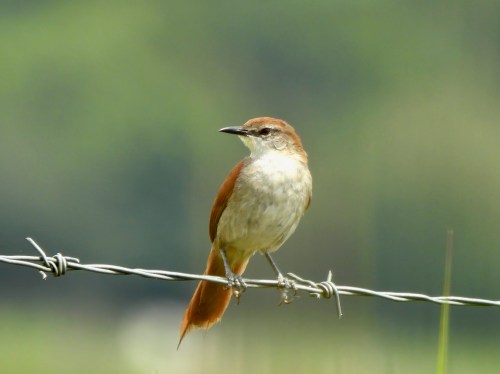
I was also delighted by the flocks of Yellow-rumped Marshbirds.
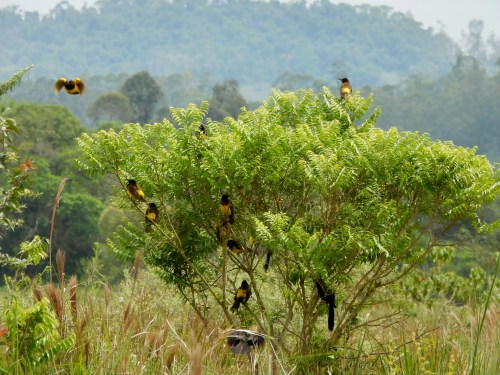
The highlight here for Cirilo was a very unexpected Bobolink, a life bird for him. They winter in South America, but typically much farther west.
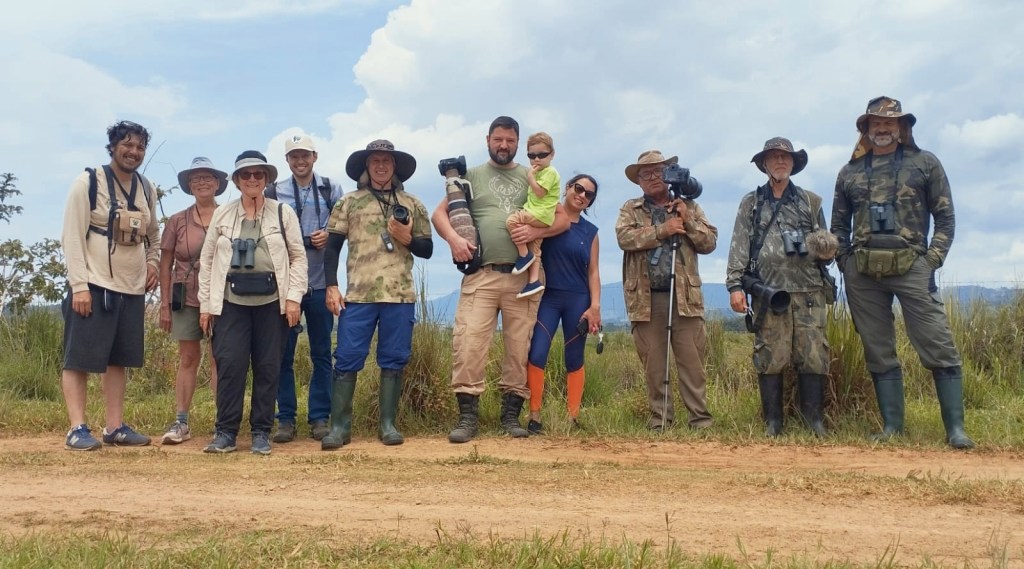
We shared all these birds with this very friendly group of birders. Francisco, one of the guys we met that day, even tracked me down via eBird and sent me an email with the following photo. As promised, we got a ride back to our car, which had been repaired and was ready to go. I couldn’t help but think that if the breakdown had happened at home in the US, there would have been a much longer and more expensive delay—and it wouldn’t have included life birds and new friends! We continued on our journey and arrived in Pompéu that night as planned.
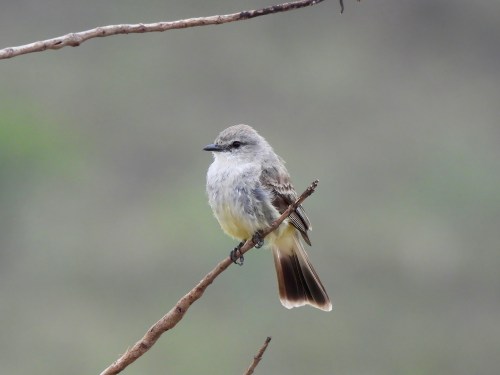
We had a wonderful day on November 23 in Pompéu with our guide Afonso. Our first bird was a snazzy Blue Finch, which we saw well, but it was too quick for a good photo. I also liked the simple sweetness of a Chapada Flycatcher.
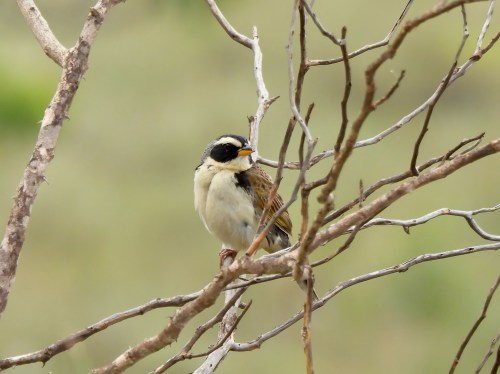
Another “good” bird that morning was a Black-masked Finch.
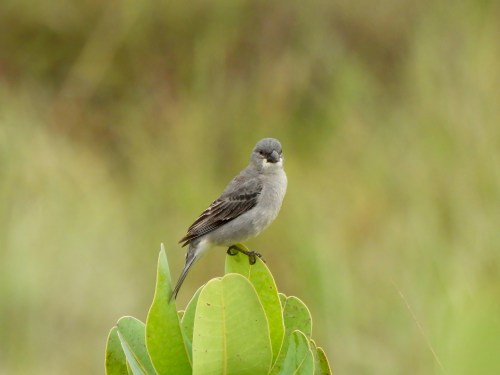
Maybe I should call this the “Seedeater Trip.” Yes, another new one—Plumbeous Seedeater.
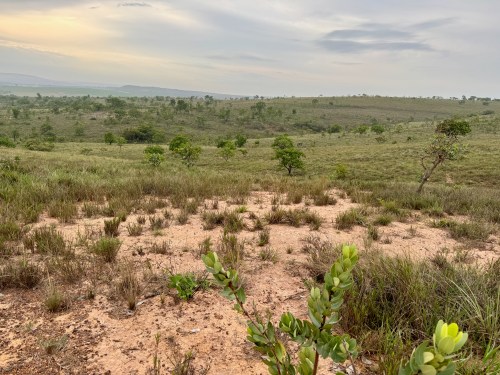
I loved the landscape of scattered trees, shrubs, and open grasslands. We were now in the Cerrado, a vast tropical savanna in central Brazil known for its exceptional biodiversity and ranked among the world’s biologically richest savannas. The cerrado was the habitat I had most looked forward to birding in during our time in Brazil.
It’s easier to see birds here than in dense forest, and there are little surprises everywhere if you look closely. This photo was taken at our first stop of the morning, where we saw the above birds as well as Coal-crested Finch, Black-throated Saltator, Wedge-tailed Grass-Finch, and others.
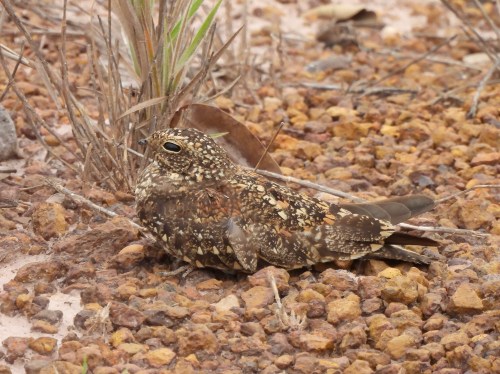
A little later that morning, we watched a Southern Scrub-Flycatcher on her nest feeding young. Another highlight came at mid-day when Afonso found not one, but two, Least Nighthawks roosting on the ground. These gorgeous birds are so well camouflaged that I’m amazed he was able to find them.
We had also tried to find and see the notoriously secretive Ocellated Crake at a couple of spots, but our quest was unsuccessful that day. Afonso and his brother Luiz are famous among birders for their ability to track and “tame” these elusive birds, but even with their skills, birds are never guaranteed.
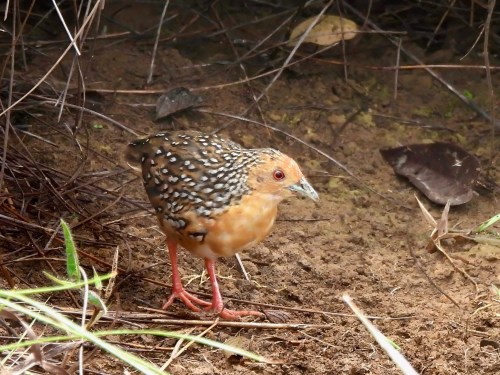
Fortunately, we had more time in Pompéu the following day and Afonso found the crake at our first stop. In the photo below, a beautiful Ocellated Crake, a highlight of the trip for me.
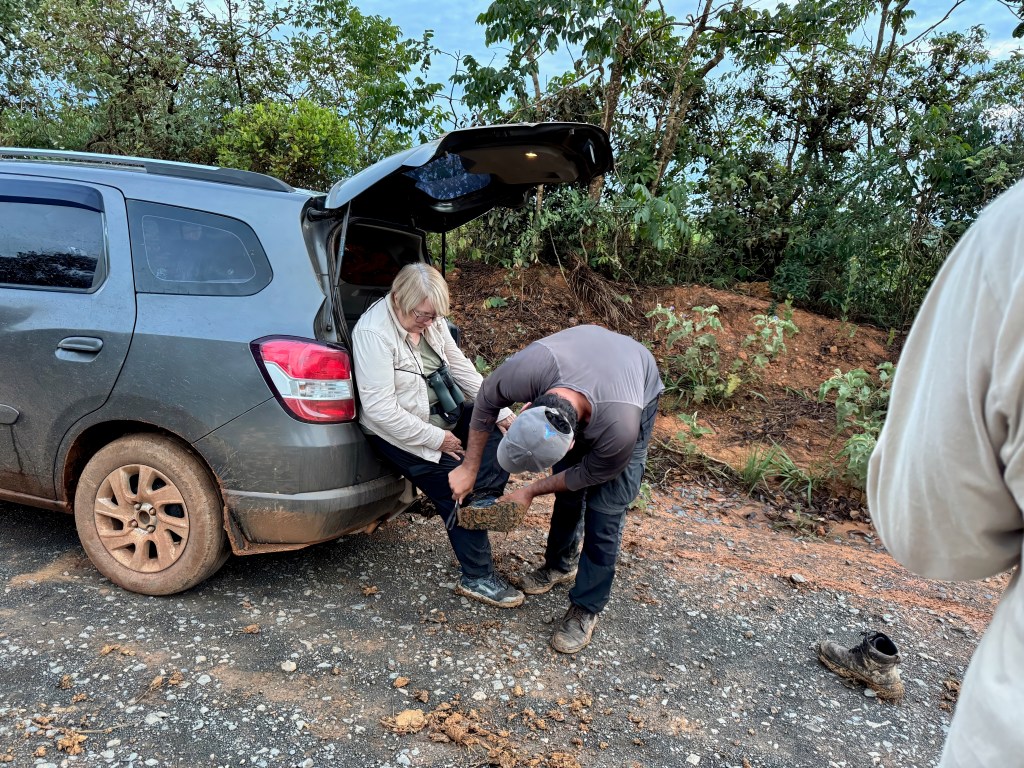
In addition to being a master crake finder, Afonso was one of the nicest people I’ve ever met, and I enjoyed our time with him. I will always remember his patience as he helped me navigate tall reeds and uneven ground while we made our way to a couple of spots where we looked for the crake. And when we saw special birds, he shared our happiness and seemed just as excited as we were. Here, Afonso is cleaning Sandra’s shoes after birding at a spot that was super muddy, leaving over an inch of extremely sticky stuff stuck to our shoes. This willingness to work so hard, the shared joy, and the kindness are what make birding so special.
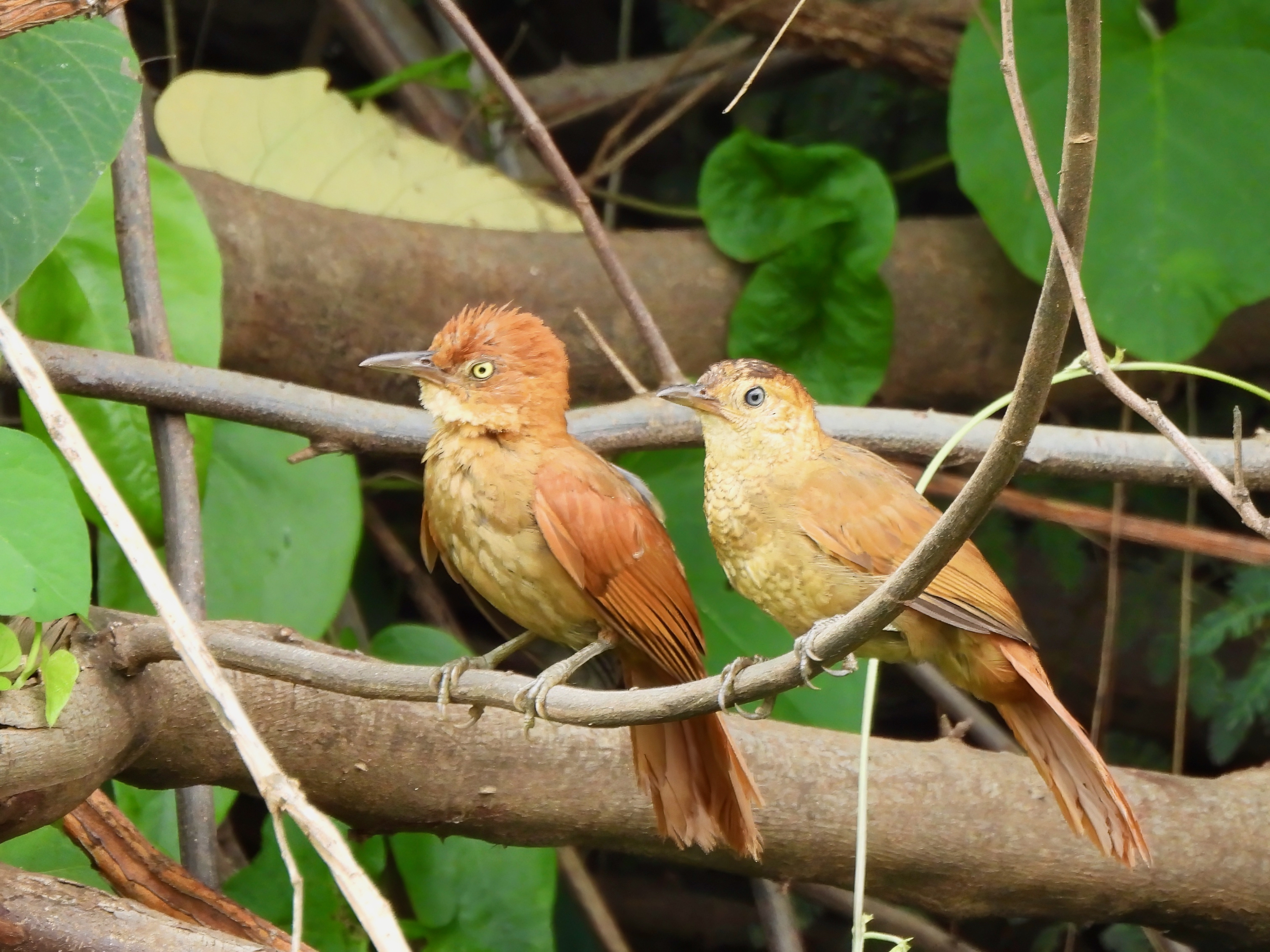
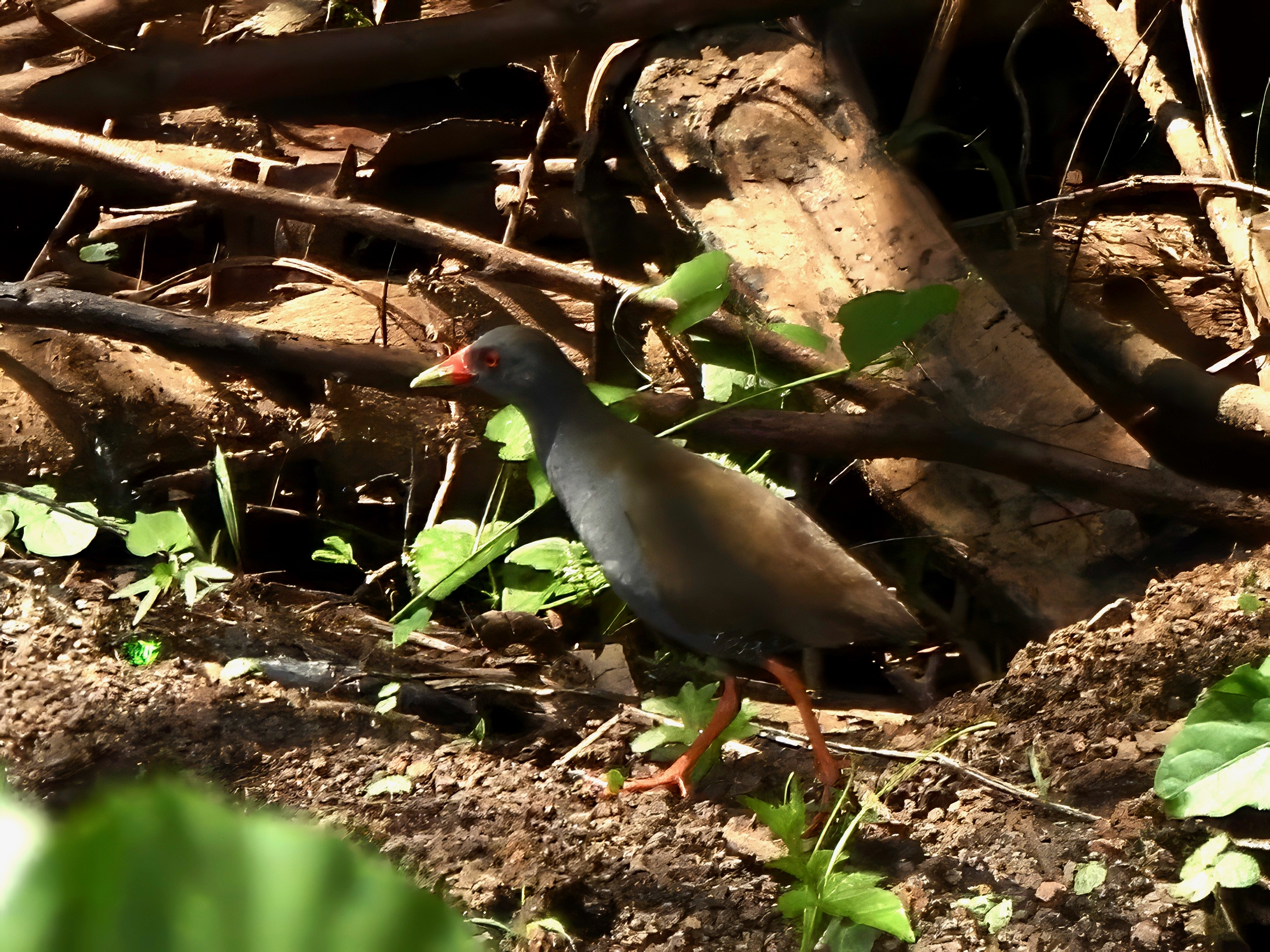
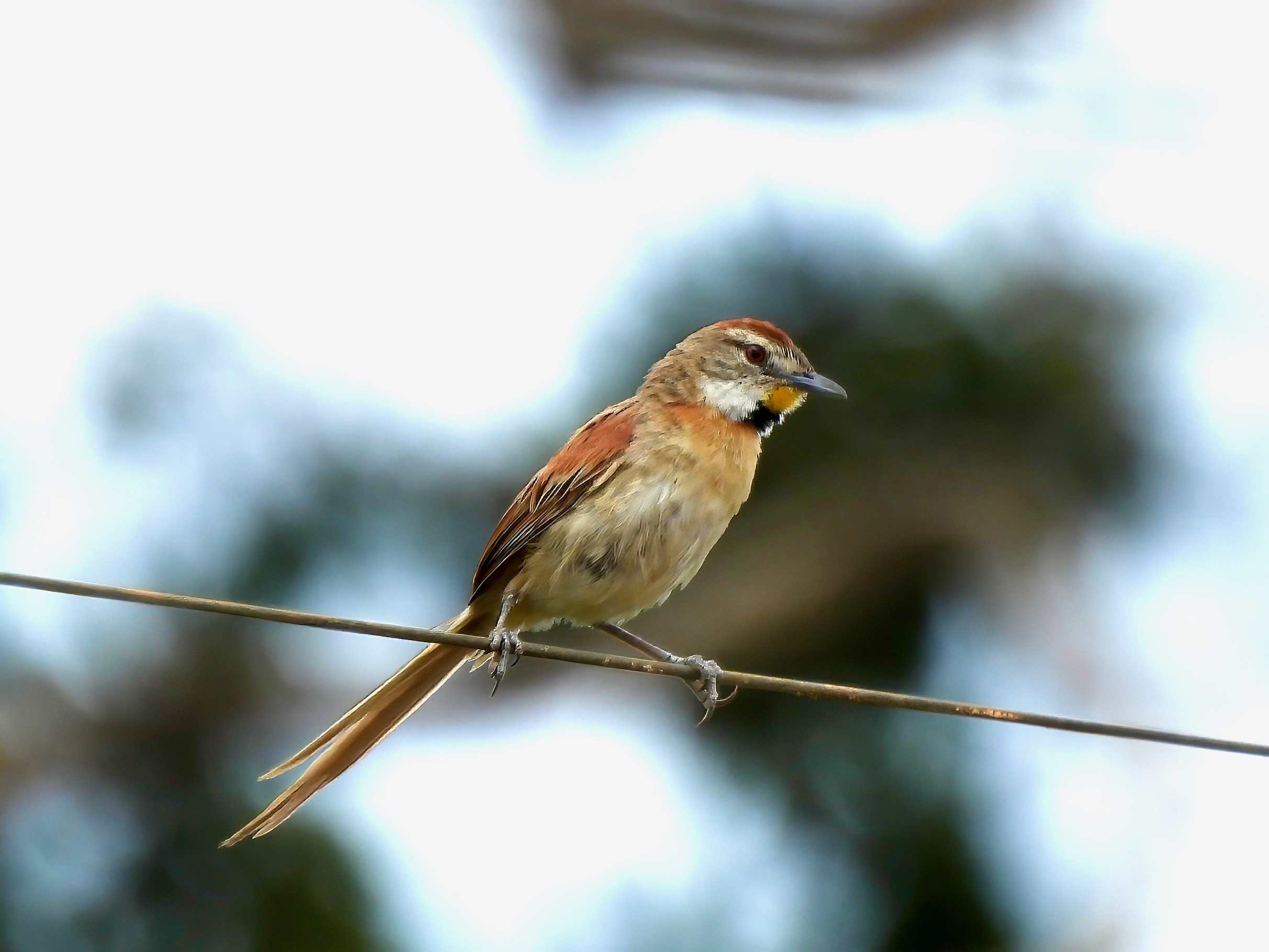
Our morning was not yet over. At spots near the edge of town, we saw at least five Chestnut-capped Foliage-gleaners, including the adult and immature in the photo below. Other special birds seen that morning were Paint-billed Crake and Chotoy Spinetail, also displayed in the following gallery.
Our hearts full after an amazing morning of birding, we left for the long drive to Santuário do Caraça.