Feeds:
Posts
Comments

Posts Tagged ‘Red-breasted Toucan’

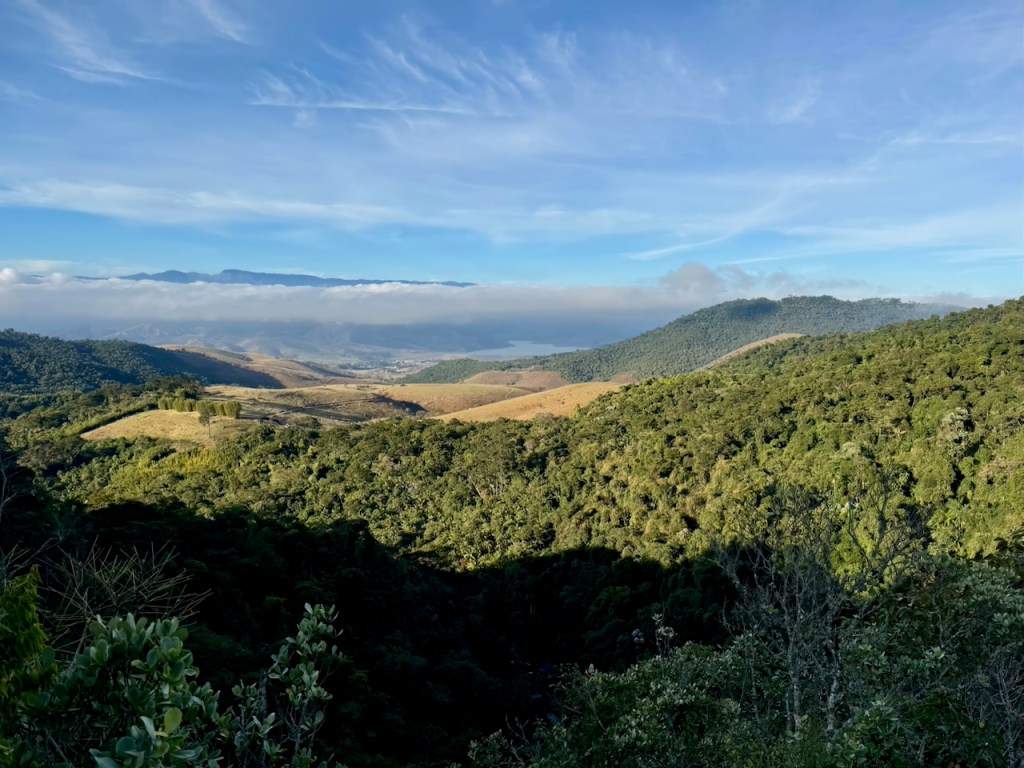
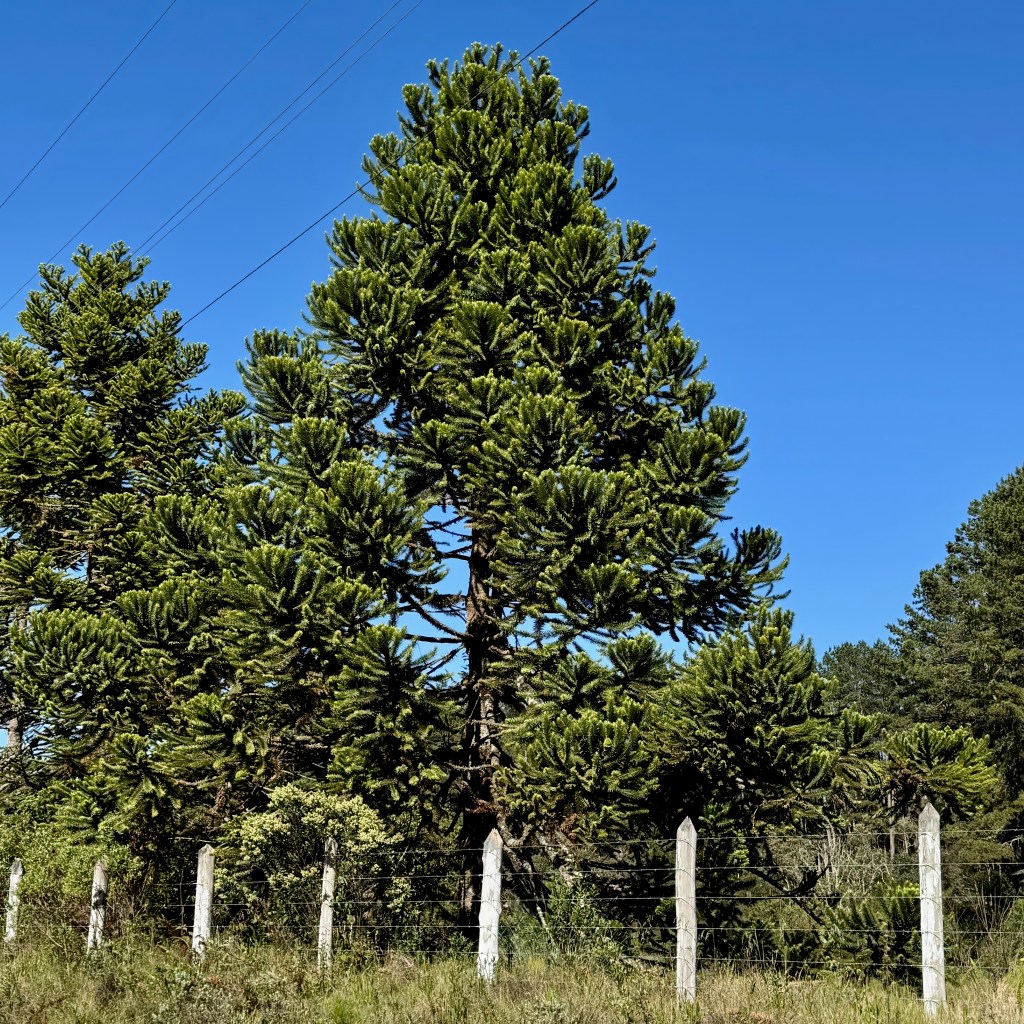
On November 20, we spent most of the day traveling northeast toward Campos do Jordão and the high-elevation Araucaria forests of the Serra da Mantiqueira. At 1,628 meters (5,341 feet) above sea level, Campos do Jordão is the highest city in Brazil. As we approached this region, the landscape changed noticeably.

The Araucaria Moist Forest stretches from lower plateaus around 500 meters to mountain slopes above 1,600 meters, supporting a remarkable number of endemic plants and birds, including the Araucaria Tit-Spinetail (which I saw, but unfortunately did not photograph). Towering Araucaria angustifolia, the Brazilian pine, dominates the forest. This critically endangered conifer’s lineage dates back roughly 200 million years to the age of dinosaurs.
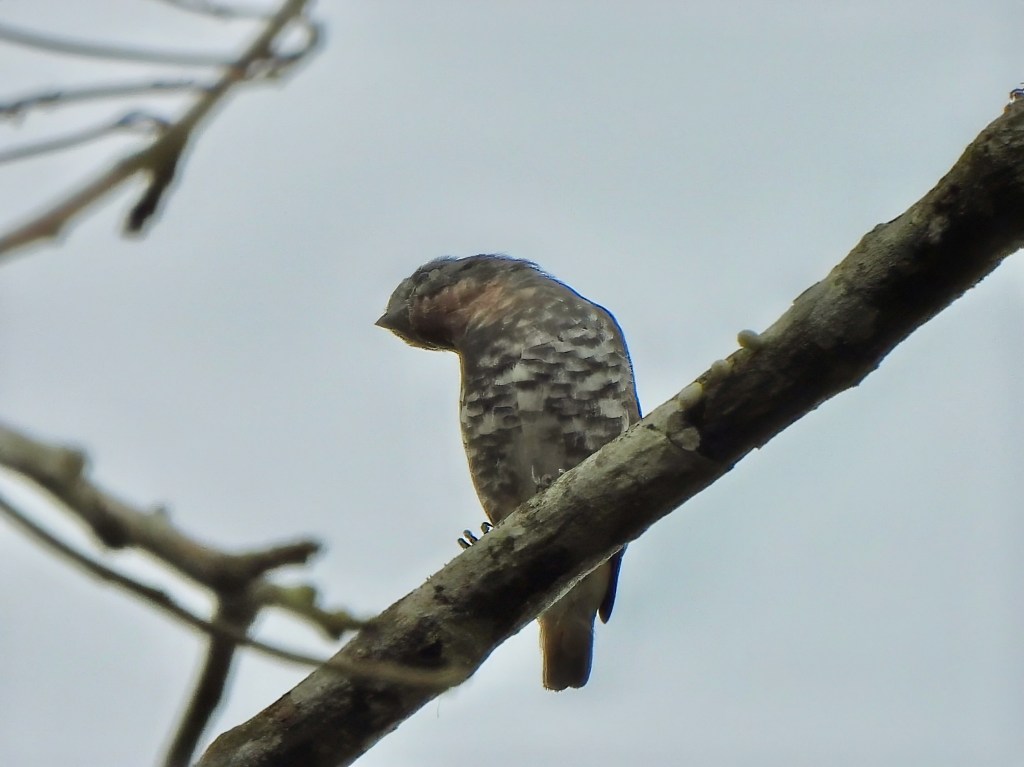
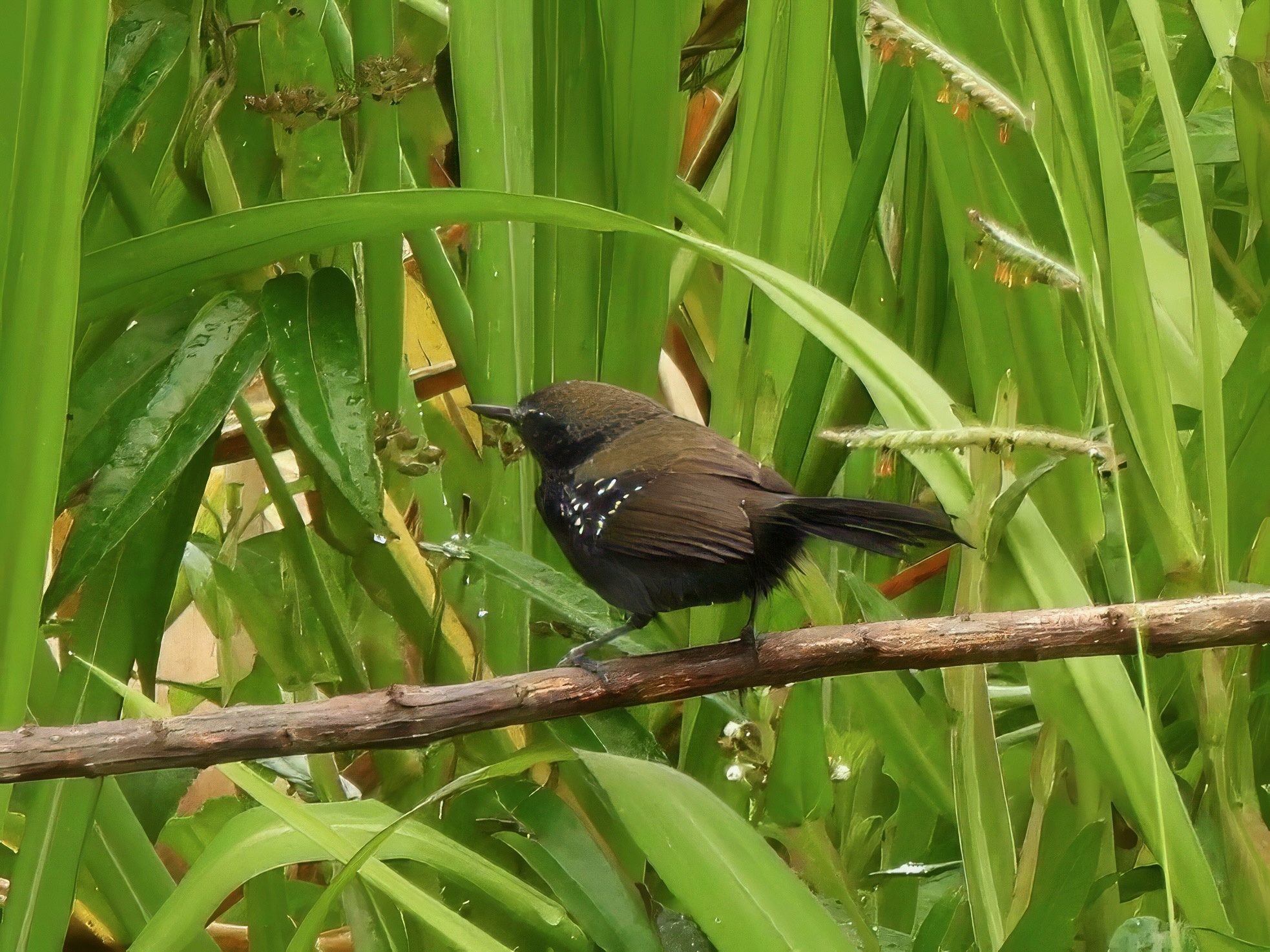
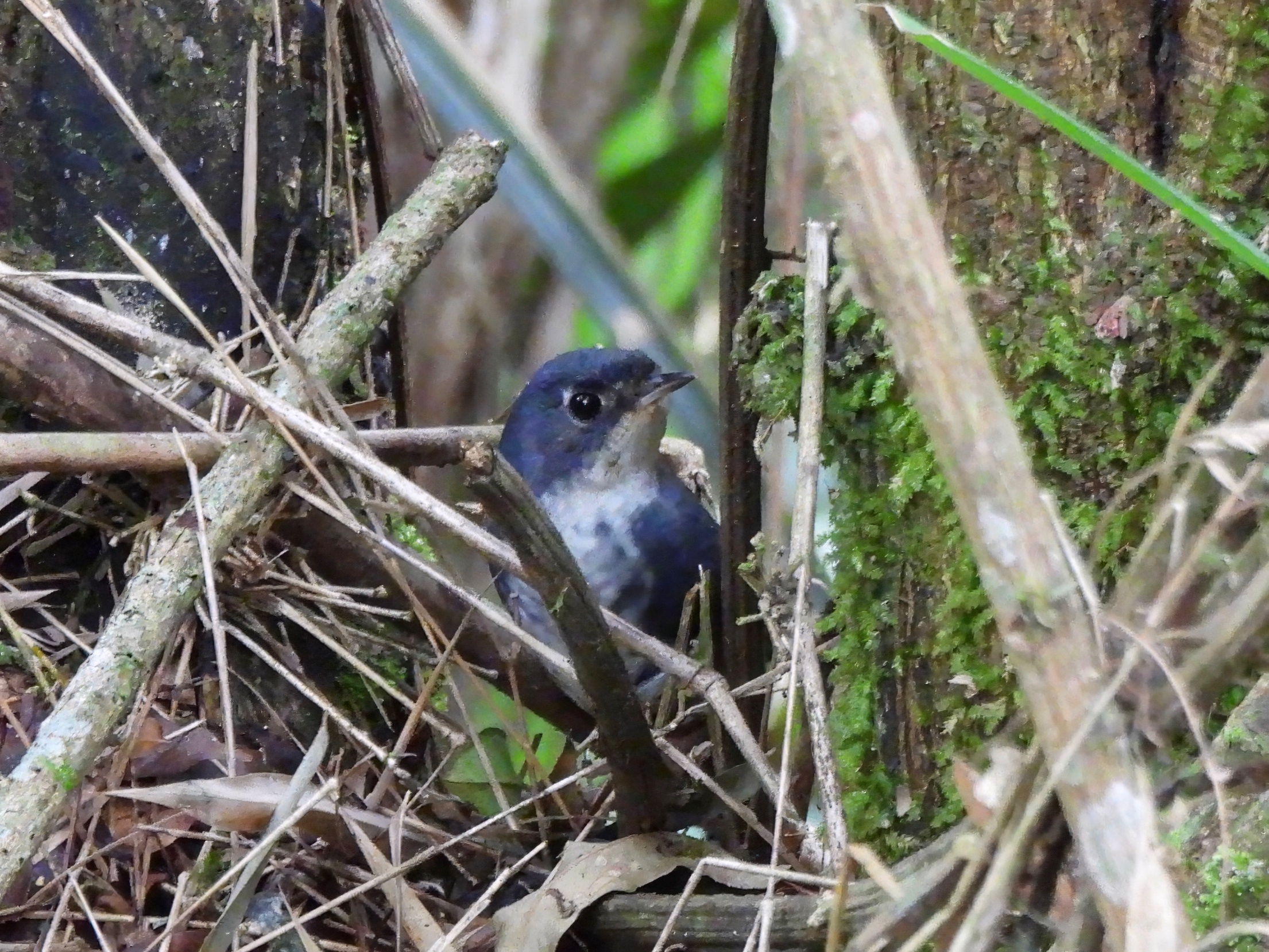
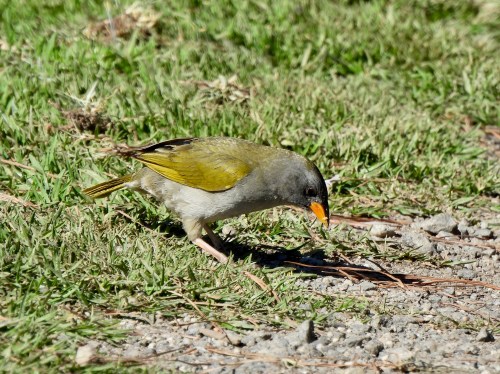
We birded in forest areas outside the city for most of the next day. Bay-chested Warbling Finch, Velvety Black-Tyrant, White-crested Tyrannulet, Black Hawk-Eagle, Rufous-tailed Antbird, Red-legged Seriema, Great Pampa Finch (in photo below), and quite a few other species contributed to a nice morning.
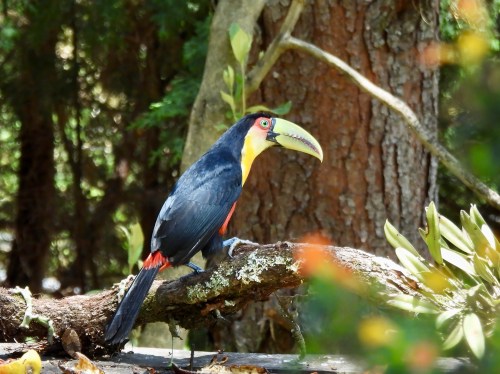
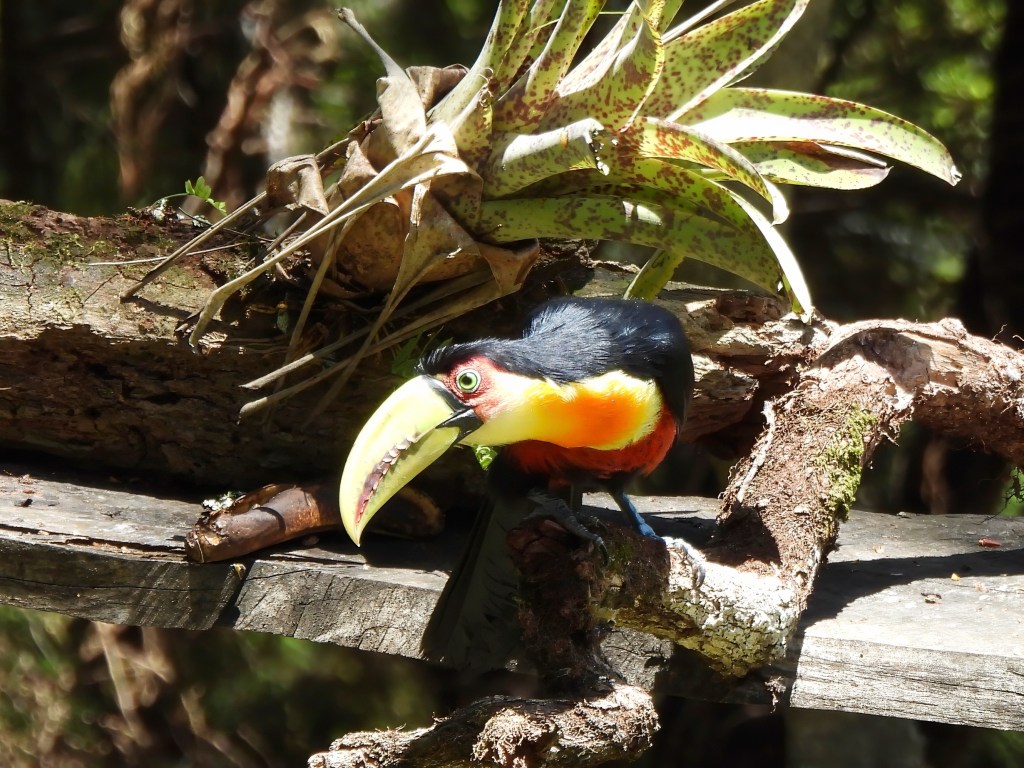
Sandra’s goal is to see half of the world’s 11,131 birds, currently 5,566 species. But seeing 5,000 birds is also a significant accomplishment. We were doing well on this trip, and Sandra had been paying special attention that morning. When we arrived back at the hotel at lunchtime, her life list was at 4,999. As we watched the area with a small feeder, our guide, Douglas, suddenly spotted this Red-breasted Toucan — Sandra’s 5,000th bird!
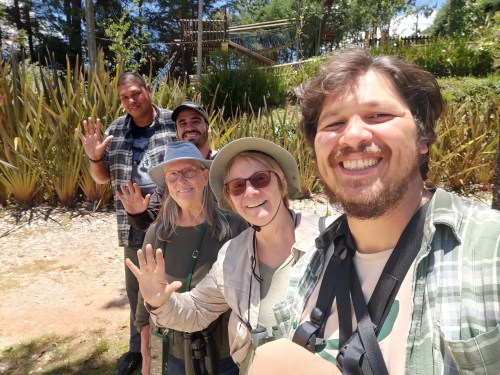
We were all delighted to celebrate this milestone with Sandra. From front to back: Cirilo, Sandra, me, Douglas, and Paulo—smiles all around.
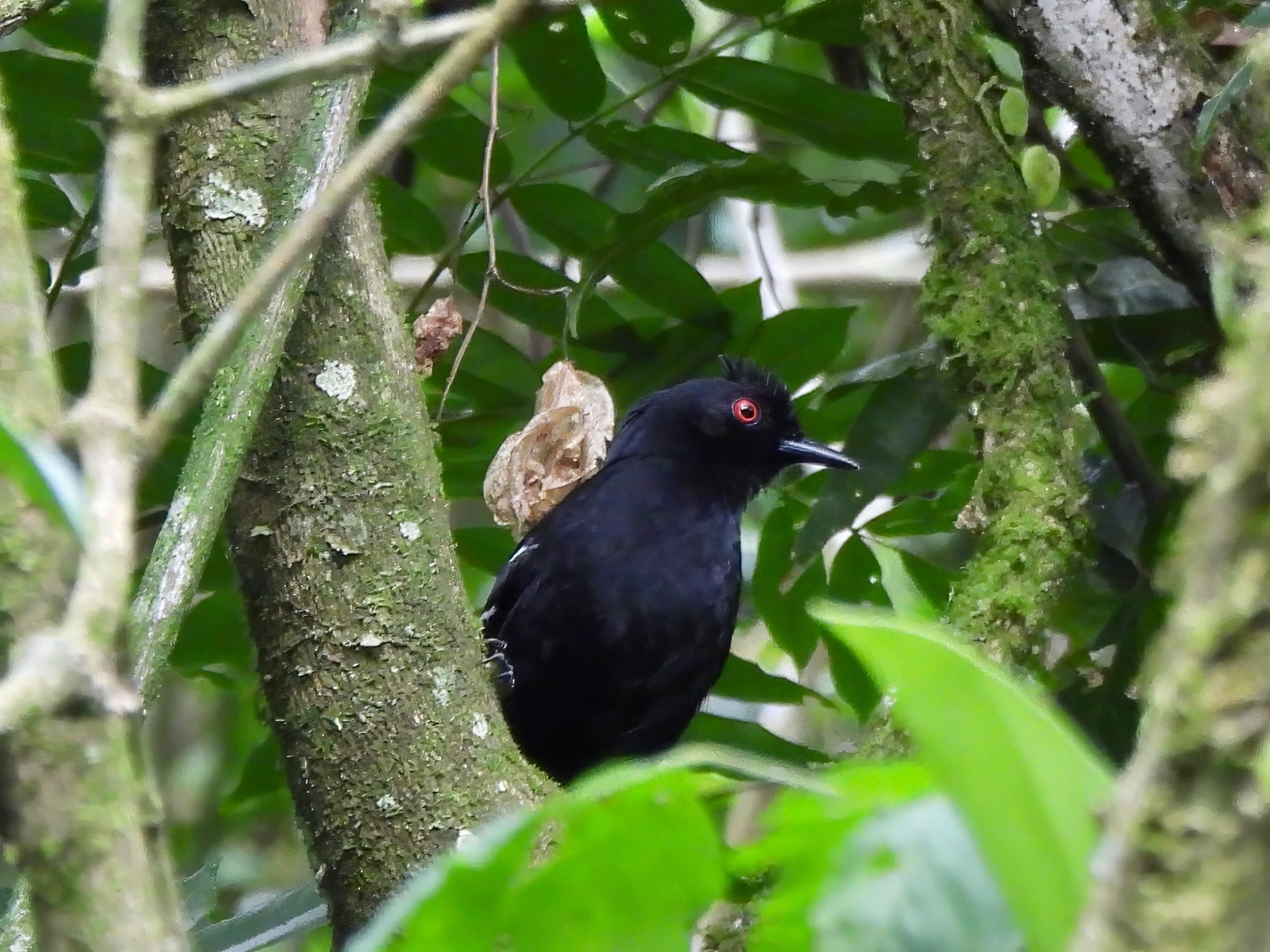
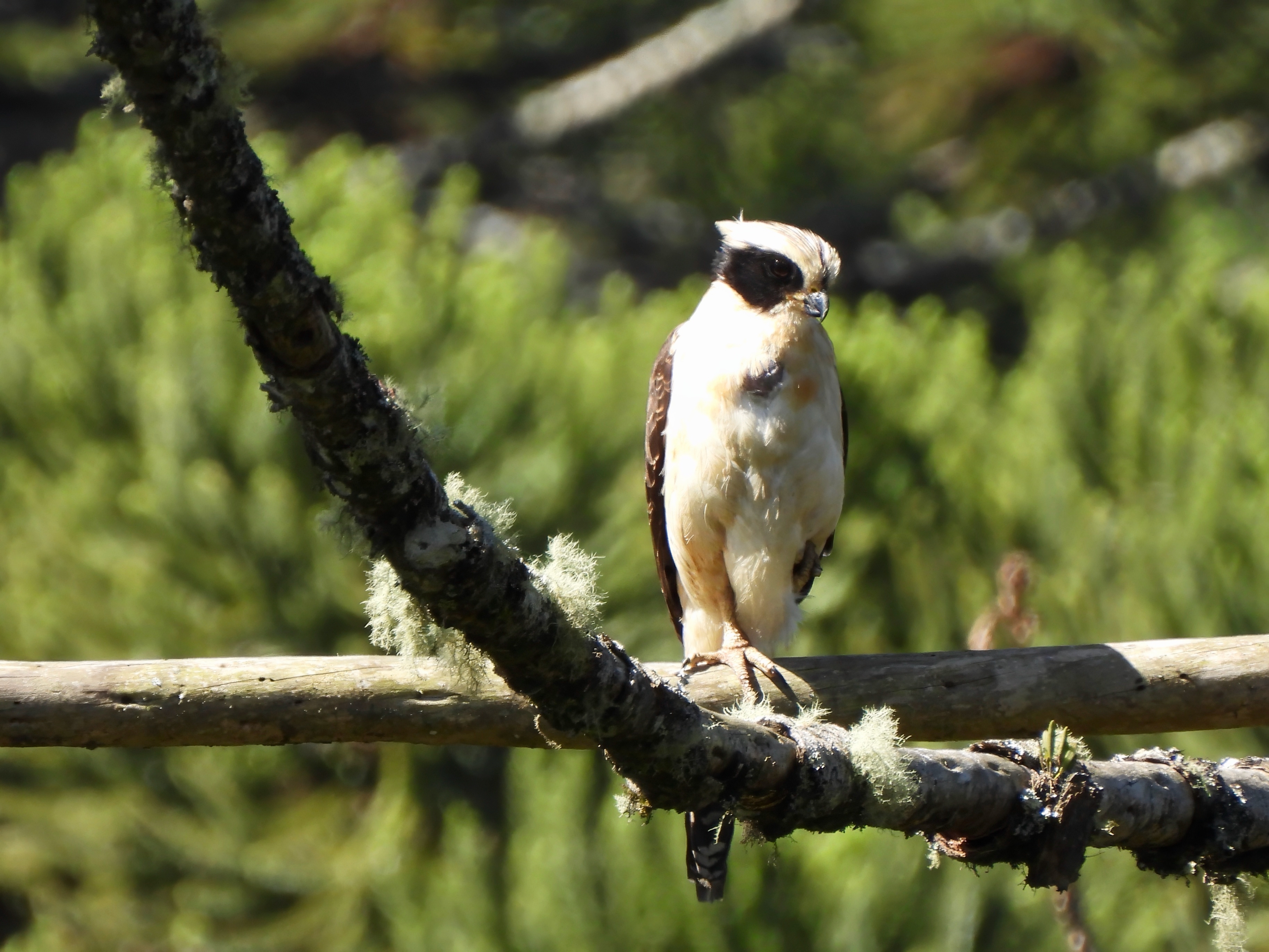
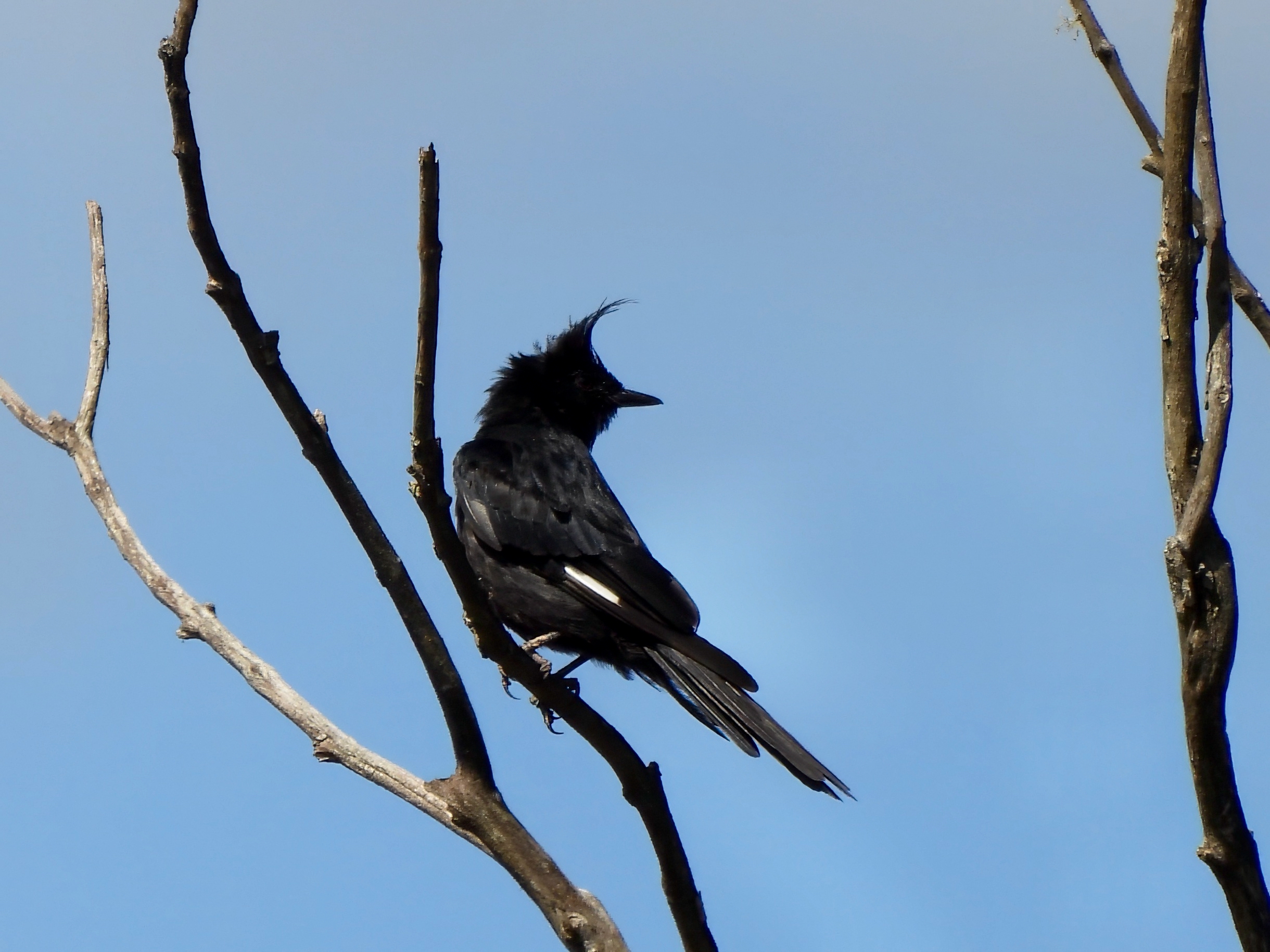
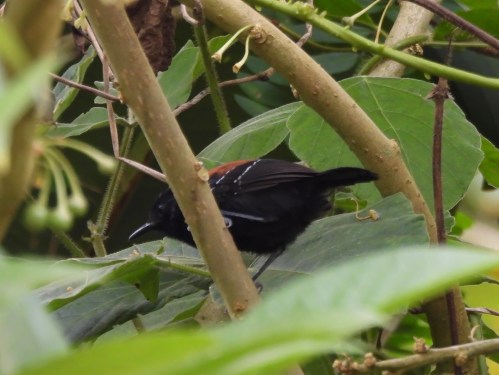
That afternoon, we birded a bit more and spotted a Laughing Falcon and a Crested Black Tyrant, shown in the photos below. Neither was a life bird for us, but can one ever see too many Laughing Falcons? And, the Crested Black Tyrant, always cute, was a fun sighting.
Later that day, we drove to Pouso Alegre where we spent the night. The next morning, after continuing on our way, we stopped to enjoy a small group of Campo Flickers on an ant mound, a species I first saw in the Pantanal on my 2024 trip to Brazil. I was pleased that several birds I associated with the Pantanal, including the flickers, turned up again on this trip.
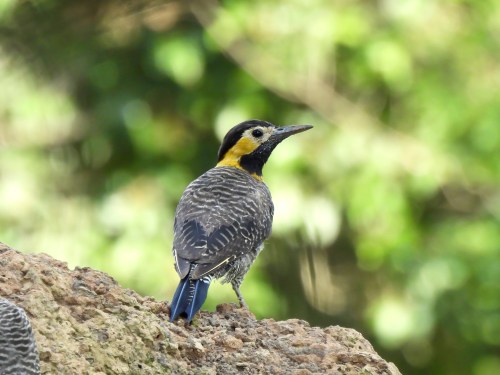
This turned into an eventful day when our car broke down, and we were stranded on the side of the road. Paulo knew exactly what was wrong. He got a ride to a nearby gas station and returned with the necessary part and a mechanic. Meanwhile, Cirilo got a ride for the rest of us to the famous seedeater spot, our destination for the day, which was conveniently close by. The farmer who gave us a ride knew there would be other birders there, and we could ask for a ride back to the car after birding. 

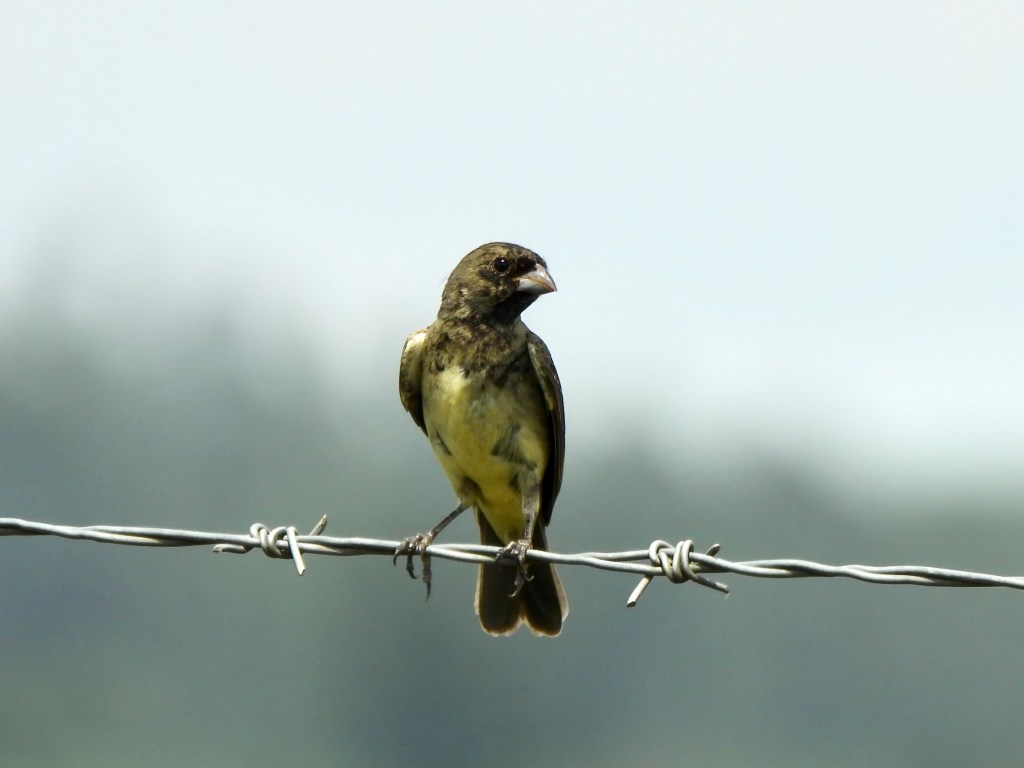
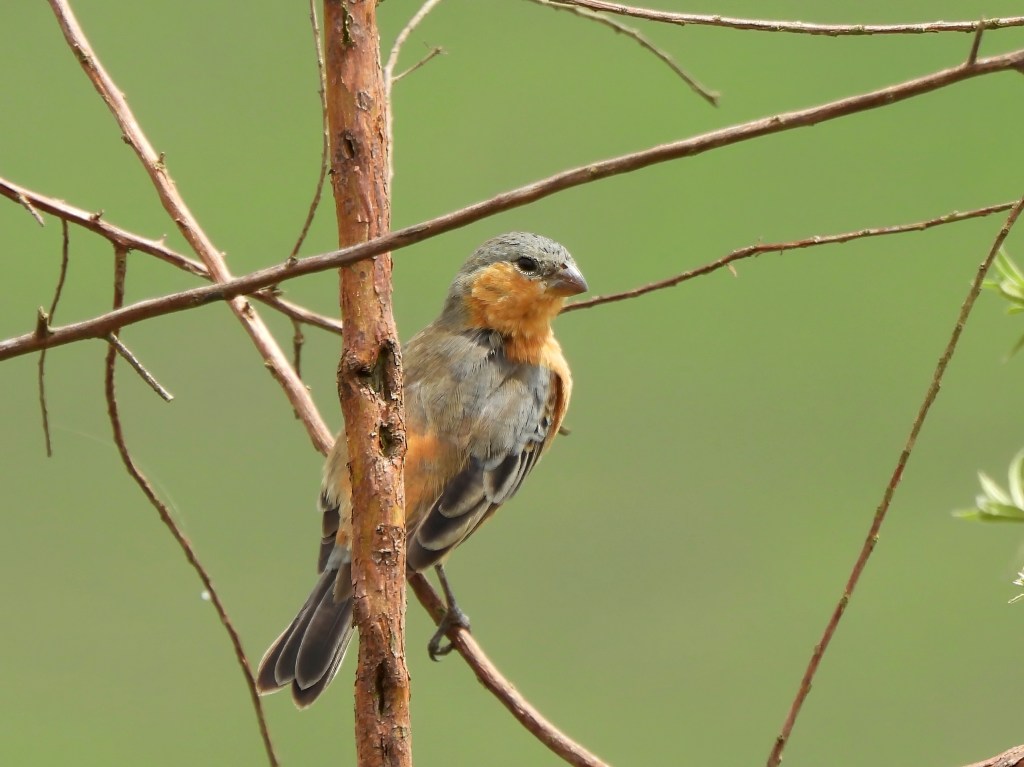
Birding at the seedeater spot was fun and, as promised, we saw seedeaters. In the photos below, Pearly-bellied Seedeater, Yellow-bellied Seedeater, and Tawny-bellied Seedeater. 
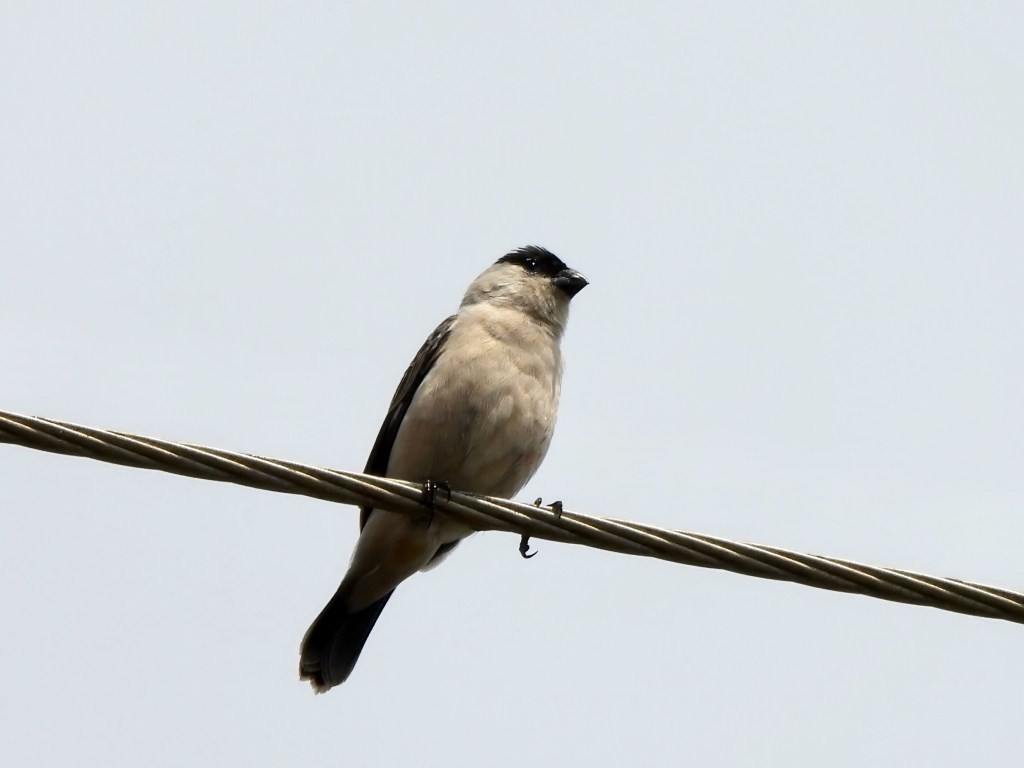
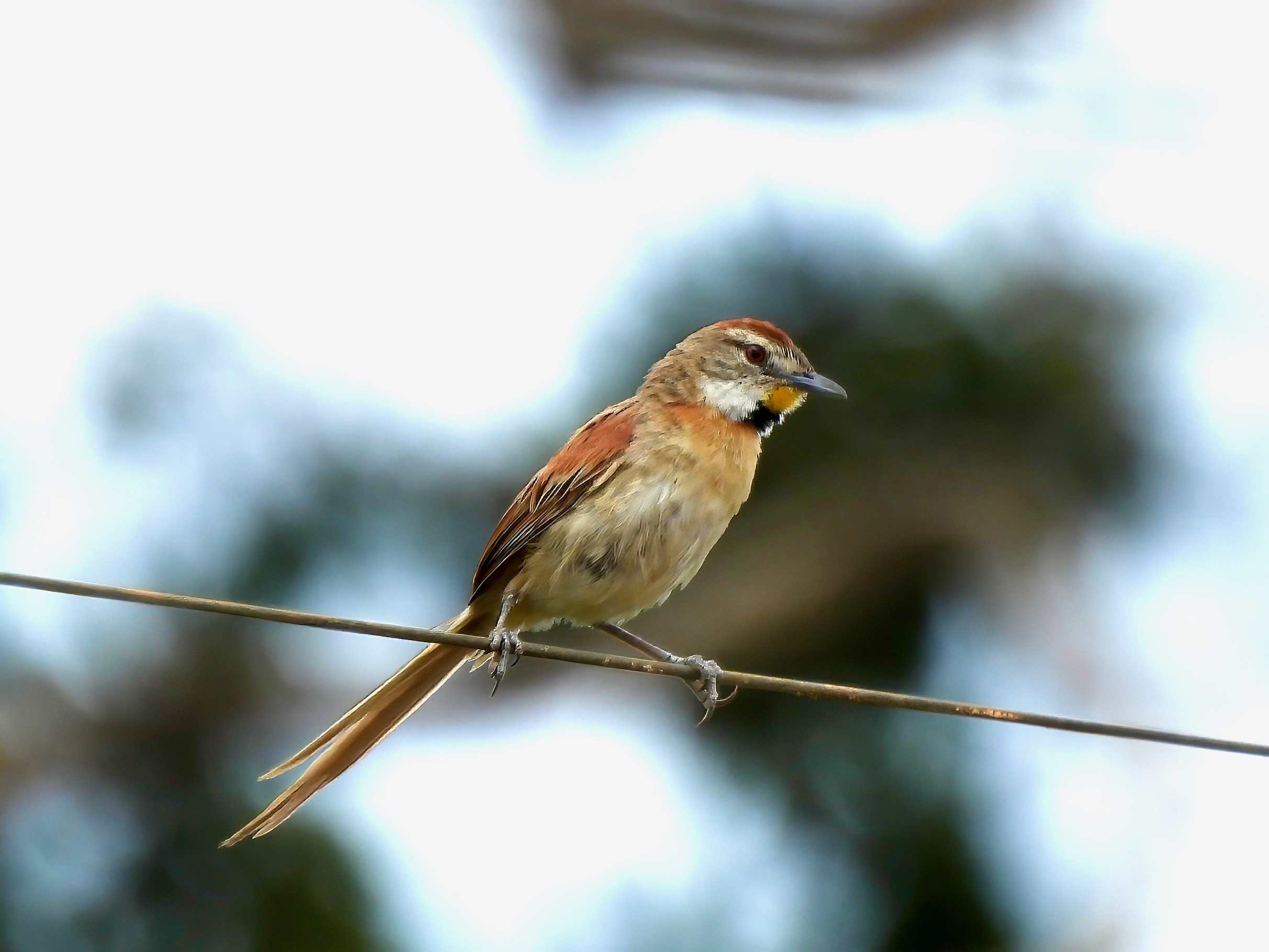
There were more than seedeaters here, and we really enjoyed this spot. This photo is my favorite of a Yellow-chinned Spinetail that I’ve taken. You can see why “spinetail” is in the name.
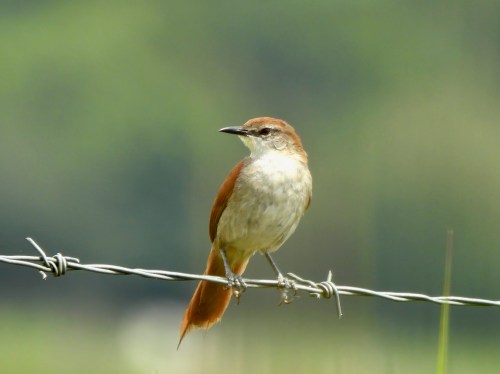
I was also delighted by the flocks of Yellow-rumped Marshbirds.
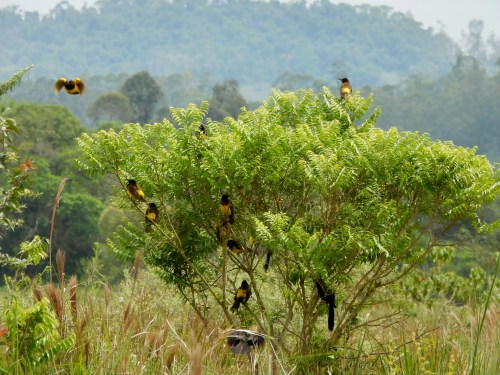
The highlight here for Cirilo was a very unexpected Bobolink, a life bird for him. They winter in South America, but typically much farther west. 

We shared all these birds with this very friendly group of birders. Francisco, one of the guys we met that day, even tracked me down via eBird and sent me an email with the following photo. As promised, we got a ride back to our car, which had been repaired and was ready to go. I couldn’t help but think that if the breakdown had happened at home in the US, there would have been a much longer and more expensive delay—and it wouldn’t have included life birds and new friends! We continued on our journey and arrived in Pompéu that night as planned. 
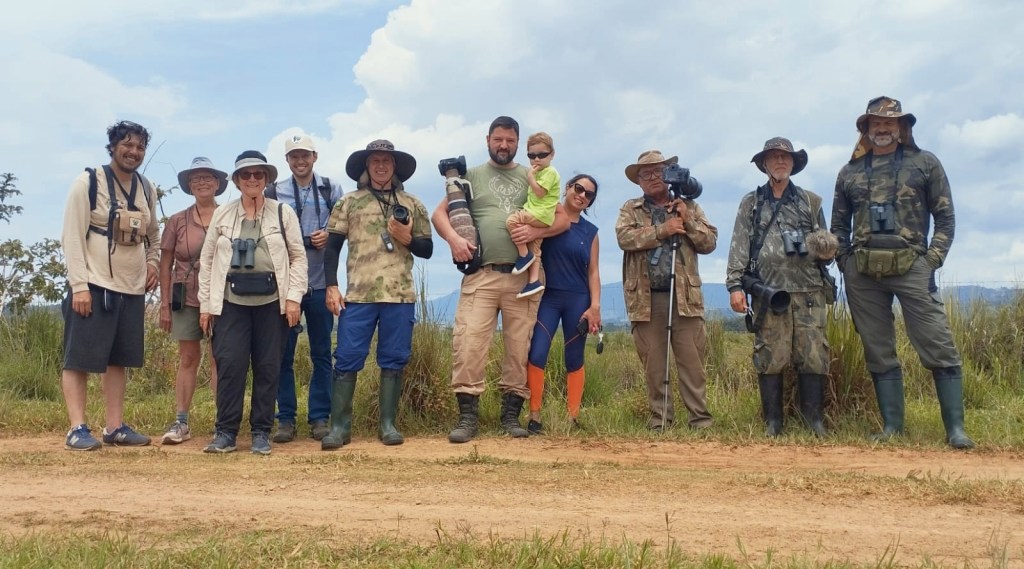
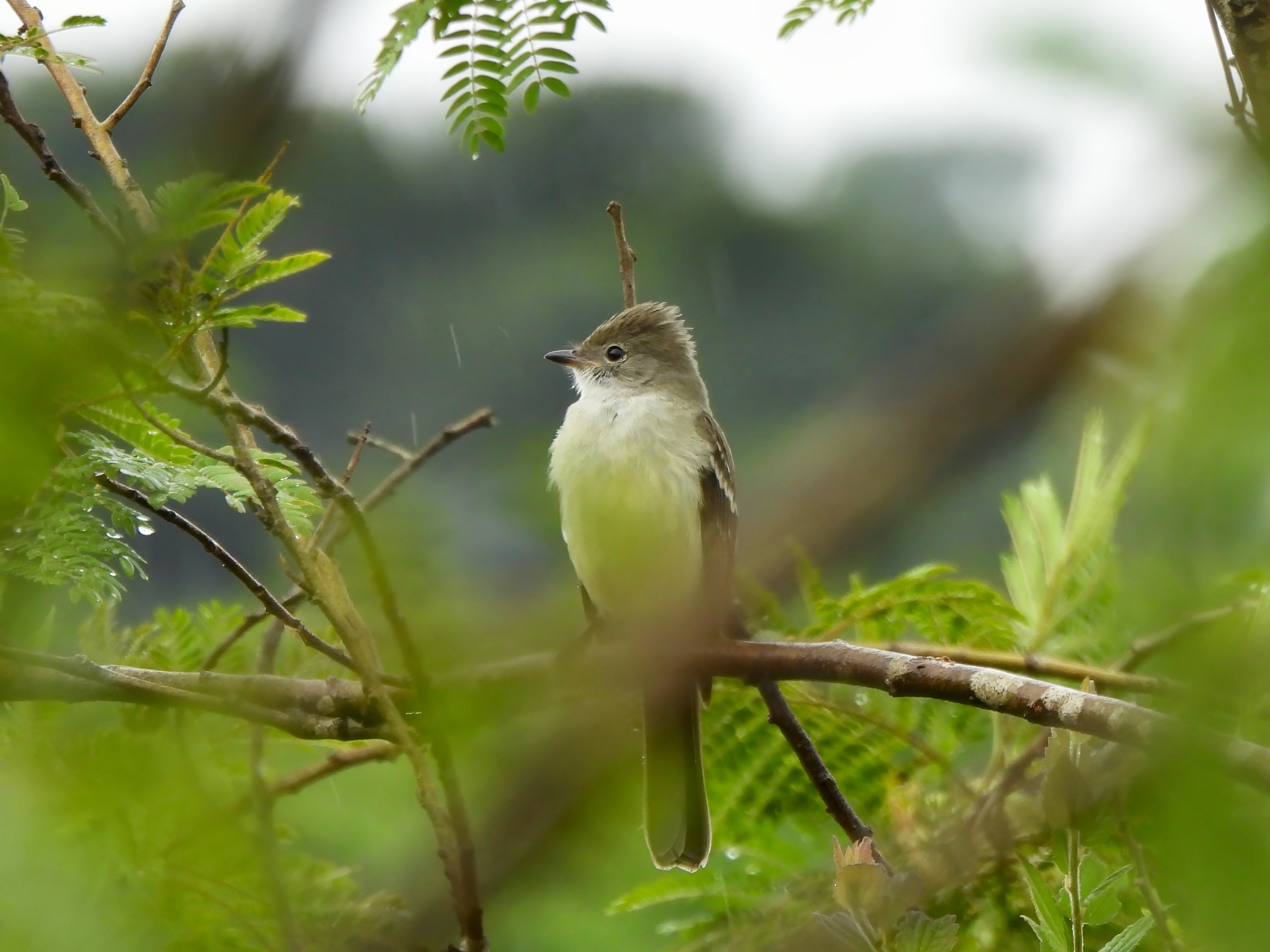
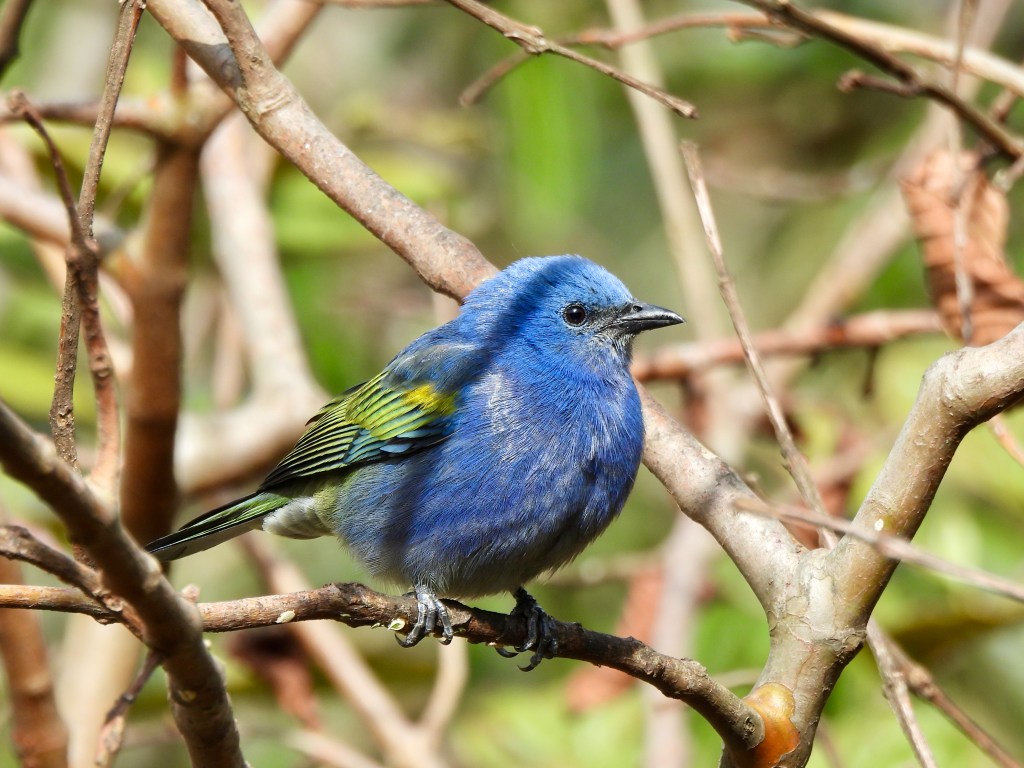
We had a wonderful day on November 23 in Pompéu with our guide Afonso. Our first bird was a snazzy Blue Finch, which we saw well, but it was too quick for a good photo. I also liked the simple sweetness of a Chapada Flycatcher.
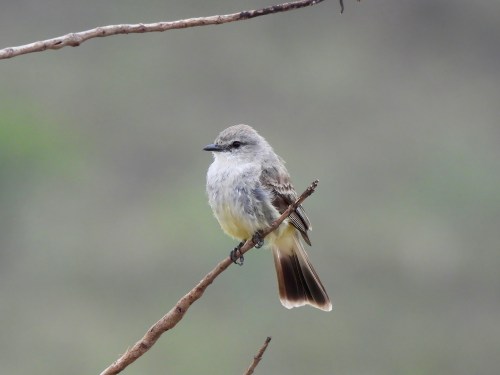
Another “good” bird that morning was a Black-masked Finch.
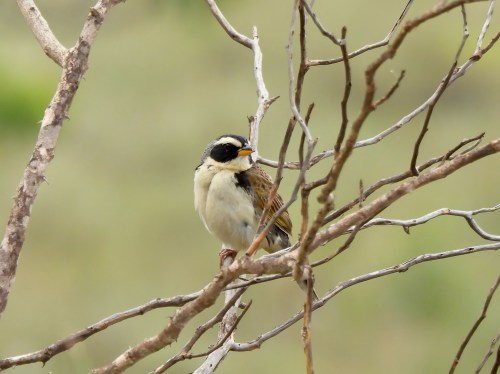
Maybe I should call this the “Seedeater Trip.” Yes, another new one—Plumbeous Seedeater.
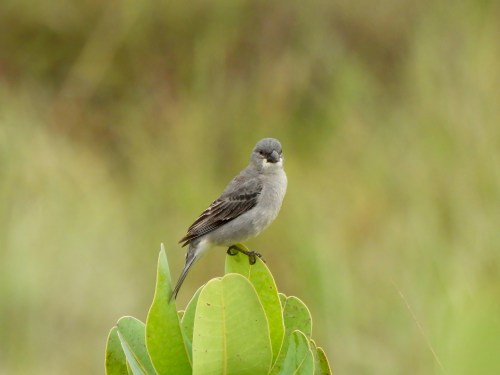
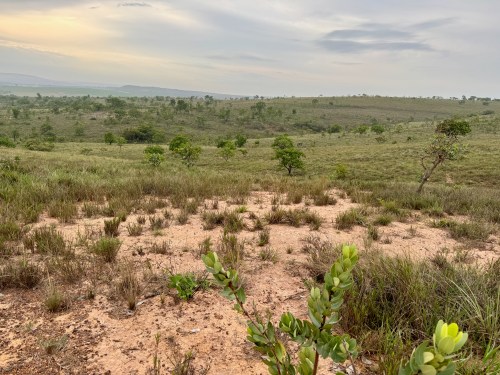
I loved the landscape of scattered trees, shrubs, and open grasslands. We were now in the Cerrado, a vast tropical savanna in central Brazil known for its exceptional biodiversity and ranked among the world’s biologically richest savannas. The cerrado was the habitat I had most looked forward to birding in during our time in Brazil.

It’s easier to see birds here than in dense forest, and there are little surprises everywhere if you look closely. This photo was taken at our first stop of the morning, where we saw the above birds as well as Coal-crested Finch, Black-throated Saltator, Wedge-tailed Grass-Finch, and others. 
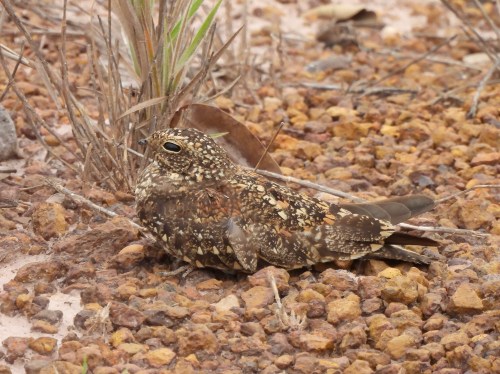
A little later that morning, we watched a Southern Scrub-Flycatcher on her nest feeding young. Another highlight came at mid-day when Afonso found not one, but two, Least Nighthawks roosting on the ground. These gorgeous birds are so well camouflaged that I’m amazed he was able to find them.
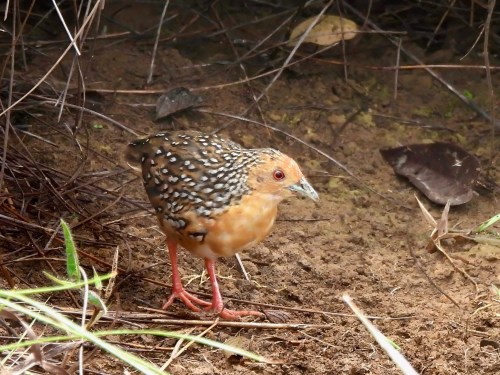
We had also tried to find and see the notoriously secretive Ocellated Crake at a couple of spots, but our quest was unsuccessful that day. Afonso and his brother Luiz are famous among birders for their ability to track and “tame” these elusive birds, but even with their skills, birds are never guaranteed.

Fortunately, we had more time in Pompéu the following day and Afonso found the crake at our first stop. In the photo below, a beautiful Ocellated Crake, a highlight of the trip for me.
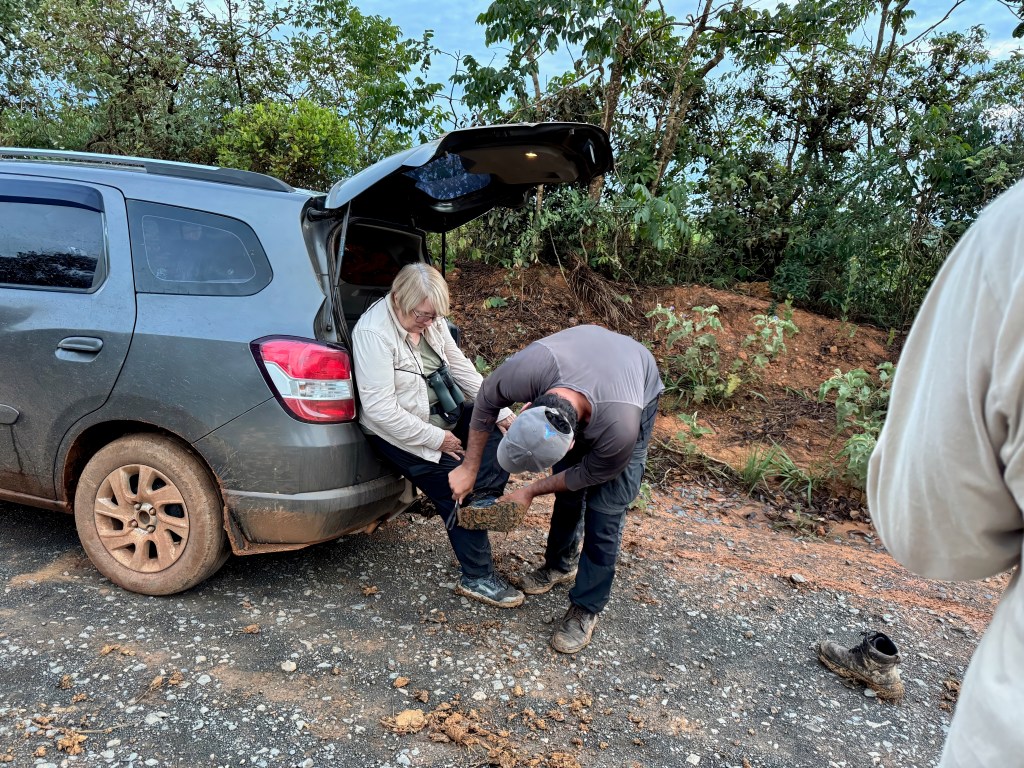
In addition to being a master crake finder, Afonso was one of the nicest people I’ve ever met, and I enjoyed our time with him. I will always remember his patience as he helped me navigate tall reeds and uneven ground while we made our way to a couple of spots where we looked for the crake. And when we saw special birds, he shared our happiness and seemed just as excited as we were. Here, Afonso is cleaning Sandra’s shoes after birding at a spot that was super muddy, leaving over an inch of extremely sticky stuff stuck to our shoes. This willingness to work so hard, the shared joy, and the kindness are what make birding so special.
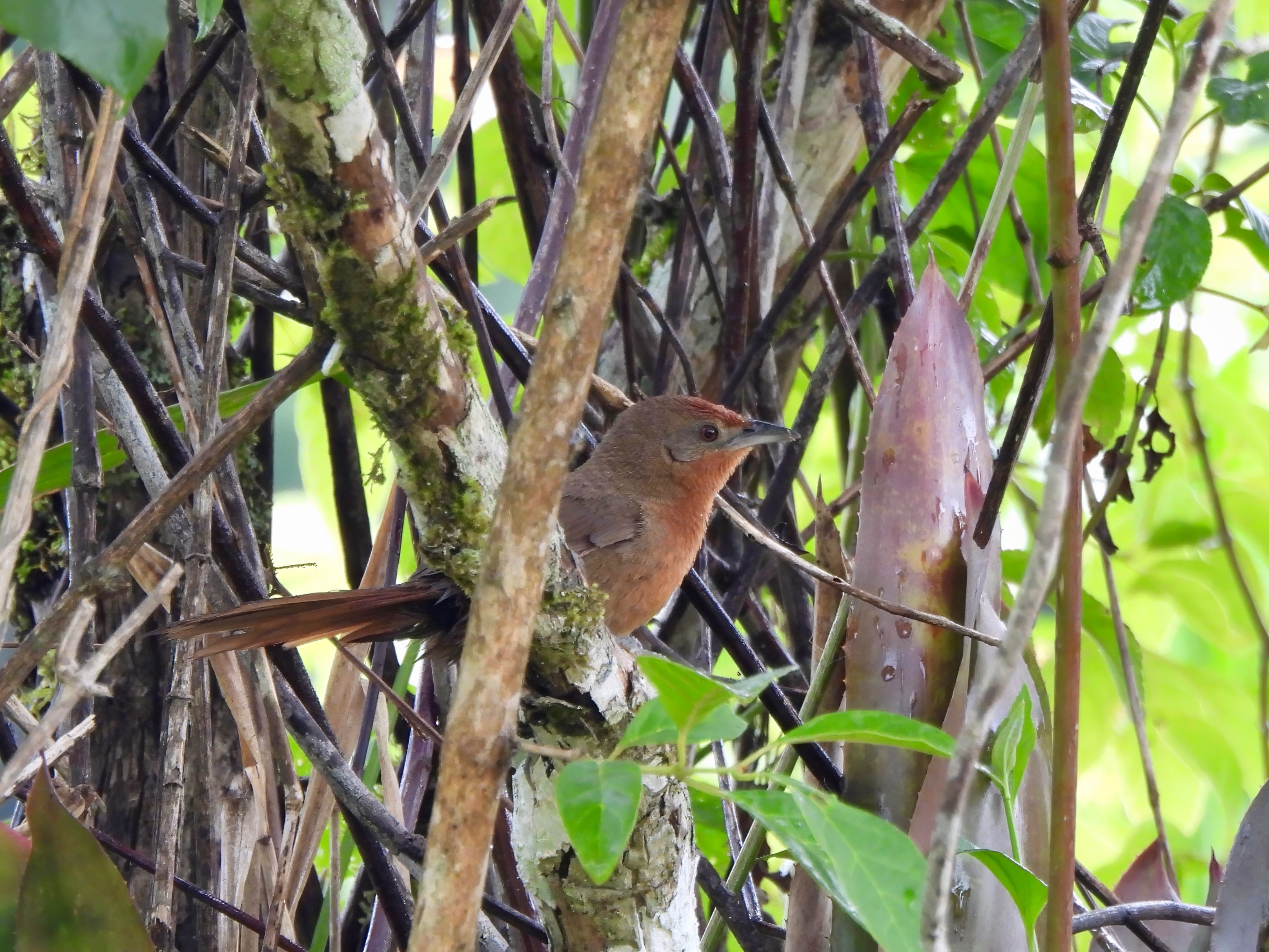
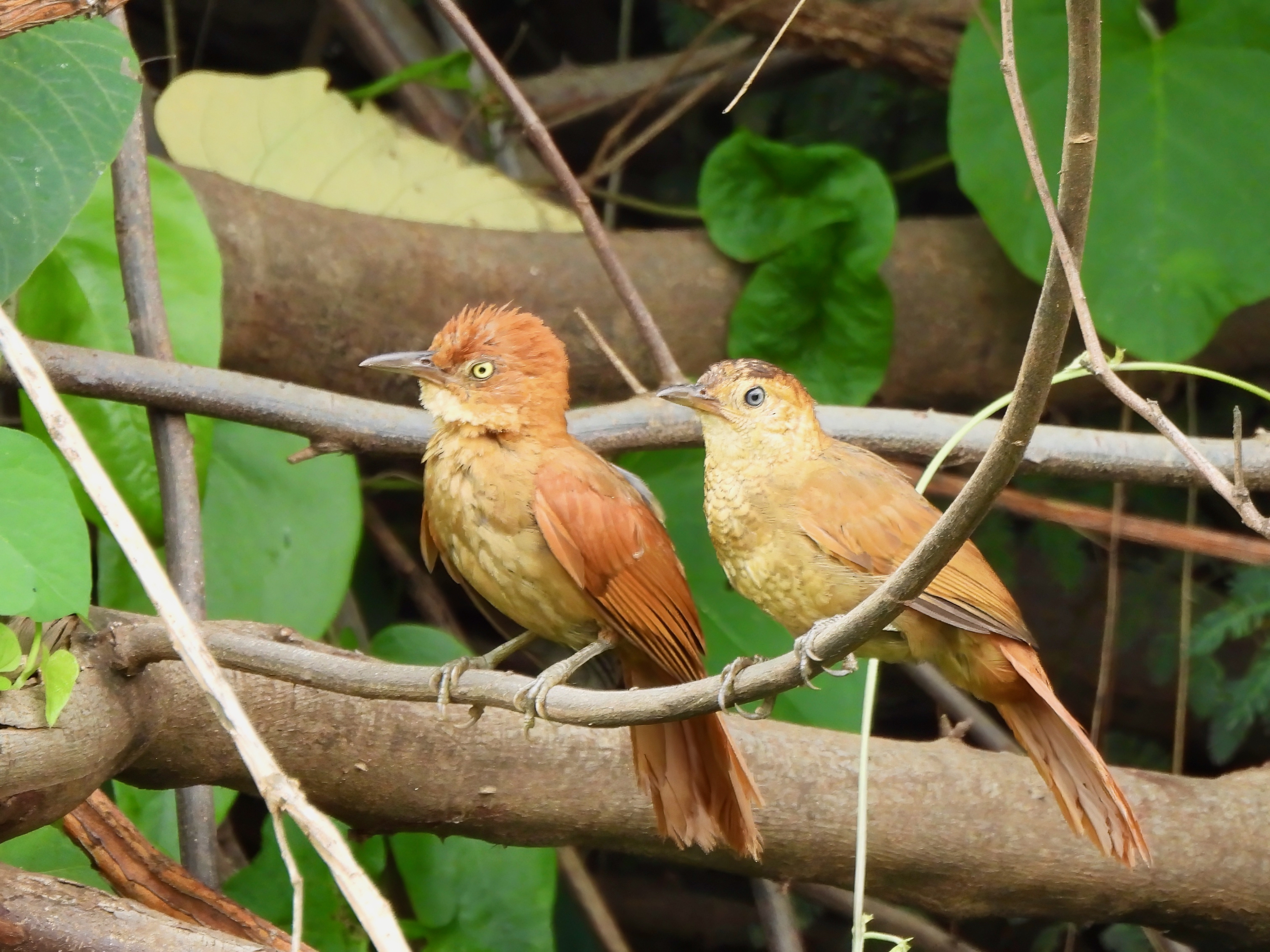
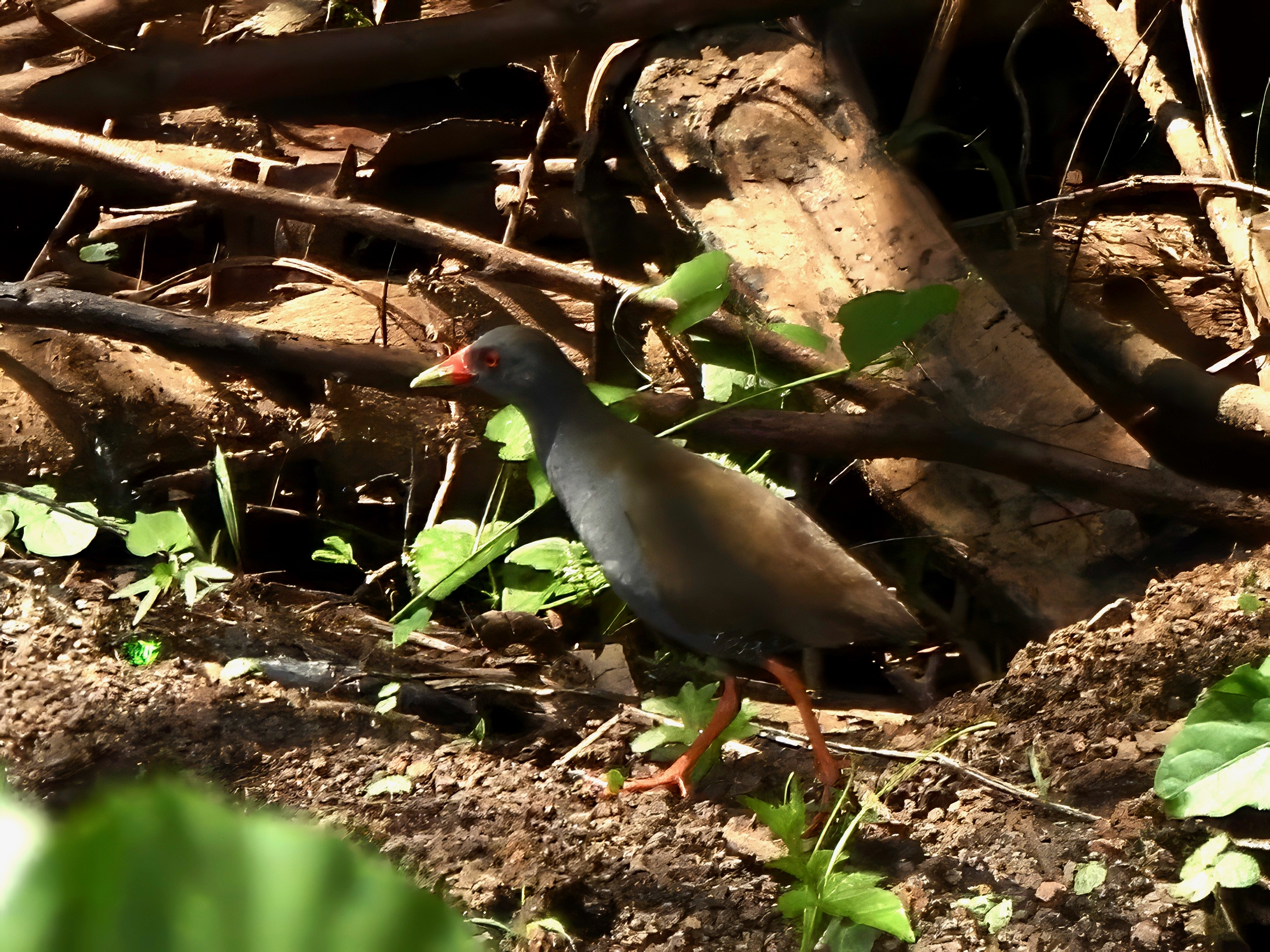
Our morning was not yet over. At spots near the edge of town, we saw at least five Chestnut-capped Foliage-gleaners, including the adult and immature in the photo below. Other special birds seen that morning were Paint-billed Crake and Chotoy Spinetail, also displayed in the following gallery.
Our hearts full after an amazing morning of birding, we left for the long drive to Santuário do Caraça.
Read Full Post »

Scope creep and FOMO were responsible for my month-long trip to South America in late 2025. It started with Brazil. My friend Sandra and I had both visited before, and we both wanted to return. After carefully planning a trip for the second half of November, Sandra discovered a pelagic trip in Chile that she really wanted to do. There was just one problem: it didn’t depart until December 13, leaving a sizable gap to fill. Argentina was added to the itinerary and, once I realized how close Buenos Aires was to Montevideo, I wanted to include Uruguay, too. I’m a full partner in the scope creep, although Sandra owns the Fear Of Missing Out. Fortunately, I usually benefit from it as well.

Below, a beautiful Red-breasted Toucan awaited us in Brazil. You’ll have to wait until Part 2 to learn the significance of this particular bird.

Cirilo Vieira had previously guided both of us — separately — at Ecolodge Itororó, so choosing him to lead us again was easy. Andy Foster of Serra dos Tucanos Birding Tours handled the logistics, including arranging local guides at several key locations.

We planned to arrive a day early to rest and recover, but like many travel plans, things did not go as expected. My trip south turned into a nightmare of delays that included an unplanned overnight stay in Miami. After roughly two hours of sleep, we met Cirilo and Paulo, our driver, in Rio de Janeiro on November 14 to begin our drive south along the coast. I was functioning mostly on caffeine and adrenaline.

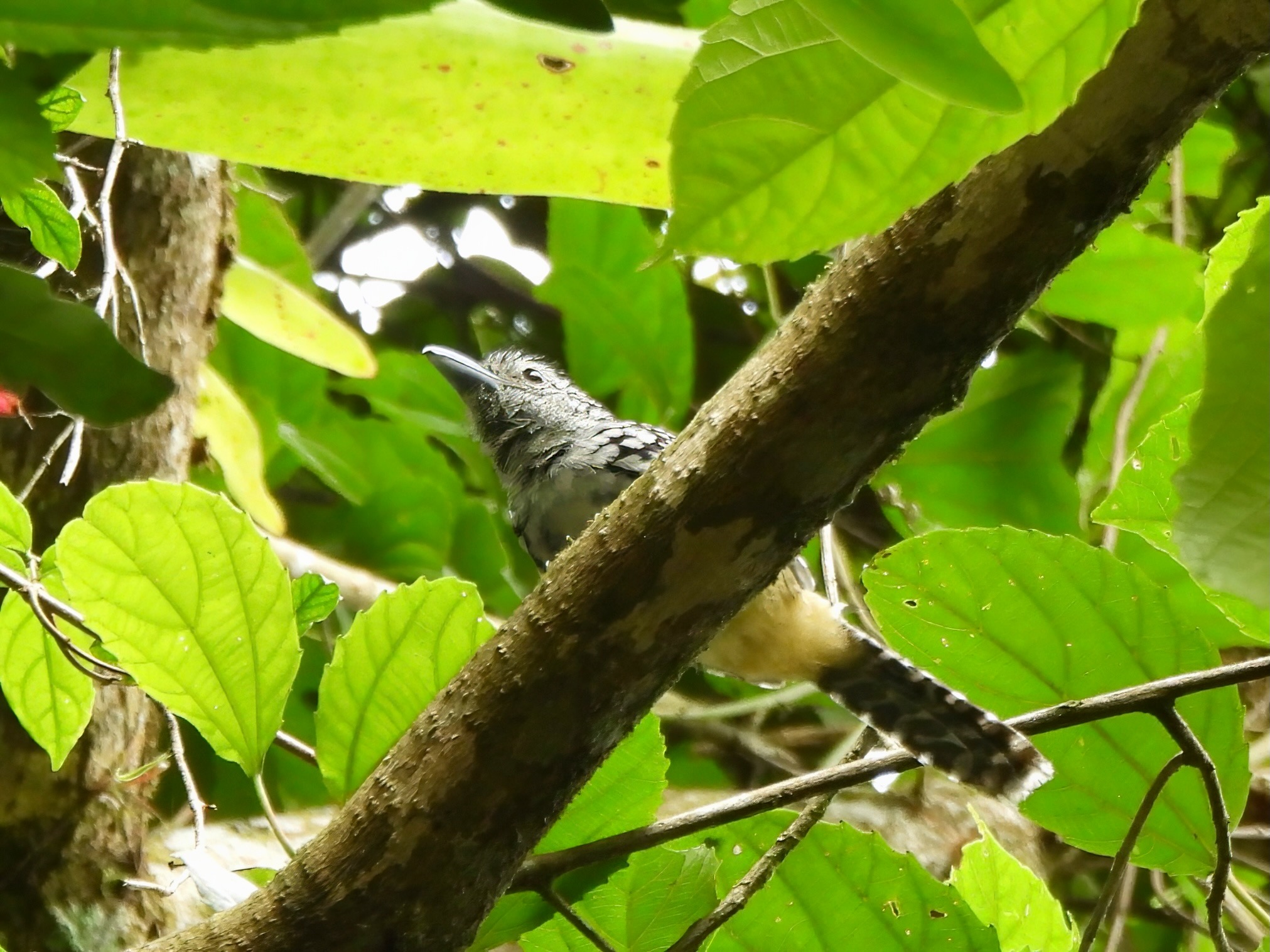
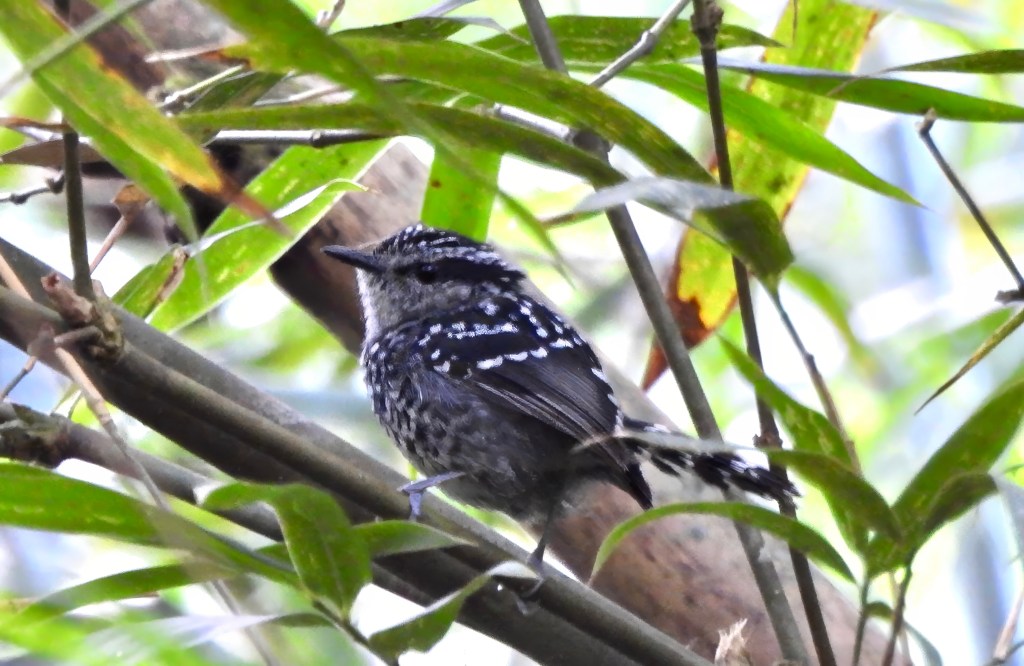
Our first target was Black-hooded Antwren, an extremely localized species found only along a narrow stretch of coastline between Rio de Janeiro and São Paulo. Cirilo quickly found this prize and I even managed a photo.

We ended the day in Ubatuba and had time for a little birding before settling into our hotel. Even though I’d birded this area on my 2024 trip, Cirilo expertly found two special birds that evening — White-shouldered Fire-eye, a lifer for me, and Spot-backed Antshrike, a life bird for both of us.

Buff-throated Purpletuft is a rare little bird, less than four inches long, endemic to Brazil, and highly localized. It is widely considered difficult to see. On the morning of November 15, we arrived at the same spot we had birded the previous afternoon and the purpletuft was almost the first bird we saw. Sandra and I were thrilled to see this little jewel so well and to add it to our life lists.

After birding the rest of the morning at this productive spot, we made a quick stop at Sitio Folha Seca for hummingbirds. Then it was on to Sítio Macuquinho, which had been one of my favorite places on my earlier trip to Brazil. That visit had been just a few hours, but this time we would stay two nights.

Our full day at Sítio Macuquinho was magical. The very talented guide and owner, Elvis, found many wonderful birds for us. I was especially happy to see the São Paulo Marsh Antwren, a bird that the others had seen on my 2024 trip, but I just couldn’t get my binoculars on that quick little bird then. Click on the photos in the gallery below to see species names.

The most magical experience of the entire month-long trip occurred that evening. Sandra described it well: “a dusk show of several Long-trained Nightjars coursing back and forth over us while fireflies popped around us, all in the near-quiet of gentle insects chorusing nearby.” It was one of those rare moments of complete immersion; we stood there awestruck, spellbound by the spectacle unfolding around us.

After a couple of hours birding at Sítio Macuquinho again the next morning, we reluctantly said goodbye to our hosts and spent most of the day on November 17 driving to Intervales State Park. The park protects more than 40,000 hectares as part of the largest remaining mosaic of Atlantic Forest conservation areas, preserving one of the world’s most biodiverse and threatened ecosystems. In addition to its many trails and birding areas, Intervales also offers lodging and a restaurant within the park boundary.

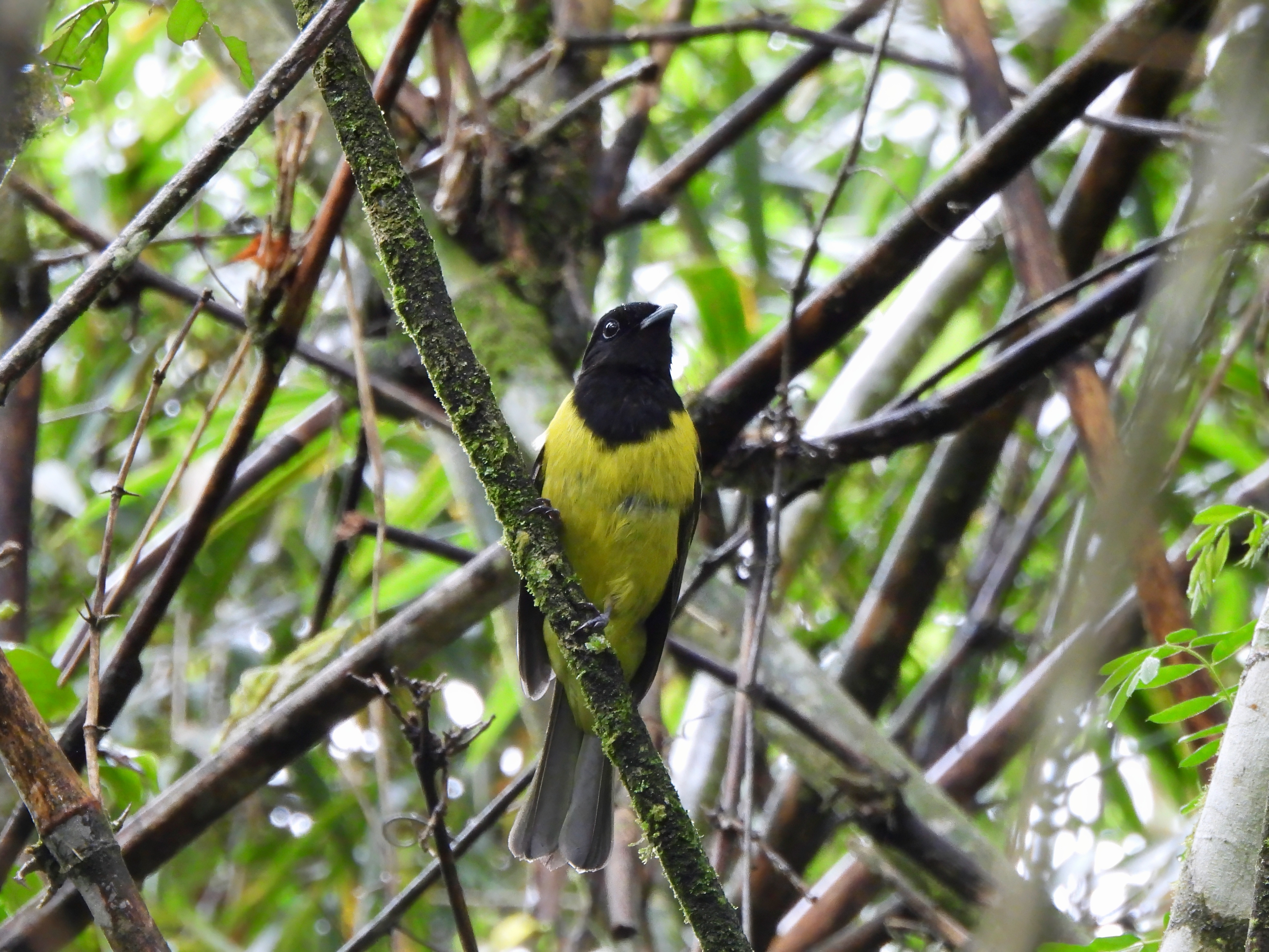
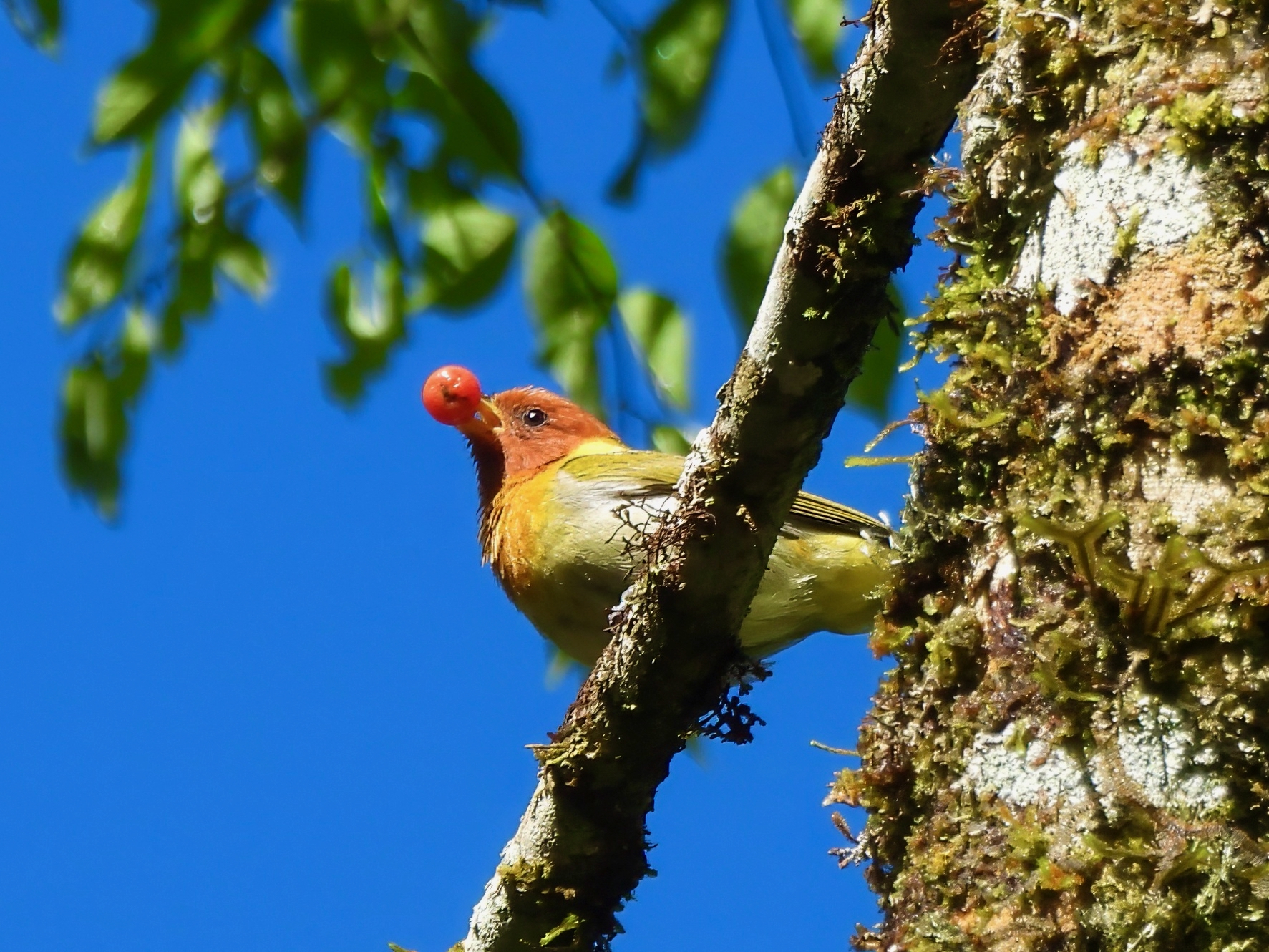
We were aided by Gerson, our local guide at Intervales. His extensive knowledge of the park enabled him to show us some amazing birds; I added 24 species to my life list in just over two days there. A few of my favorites are shown in the gallery below.

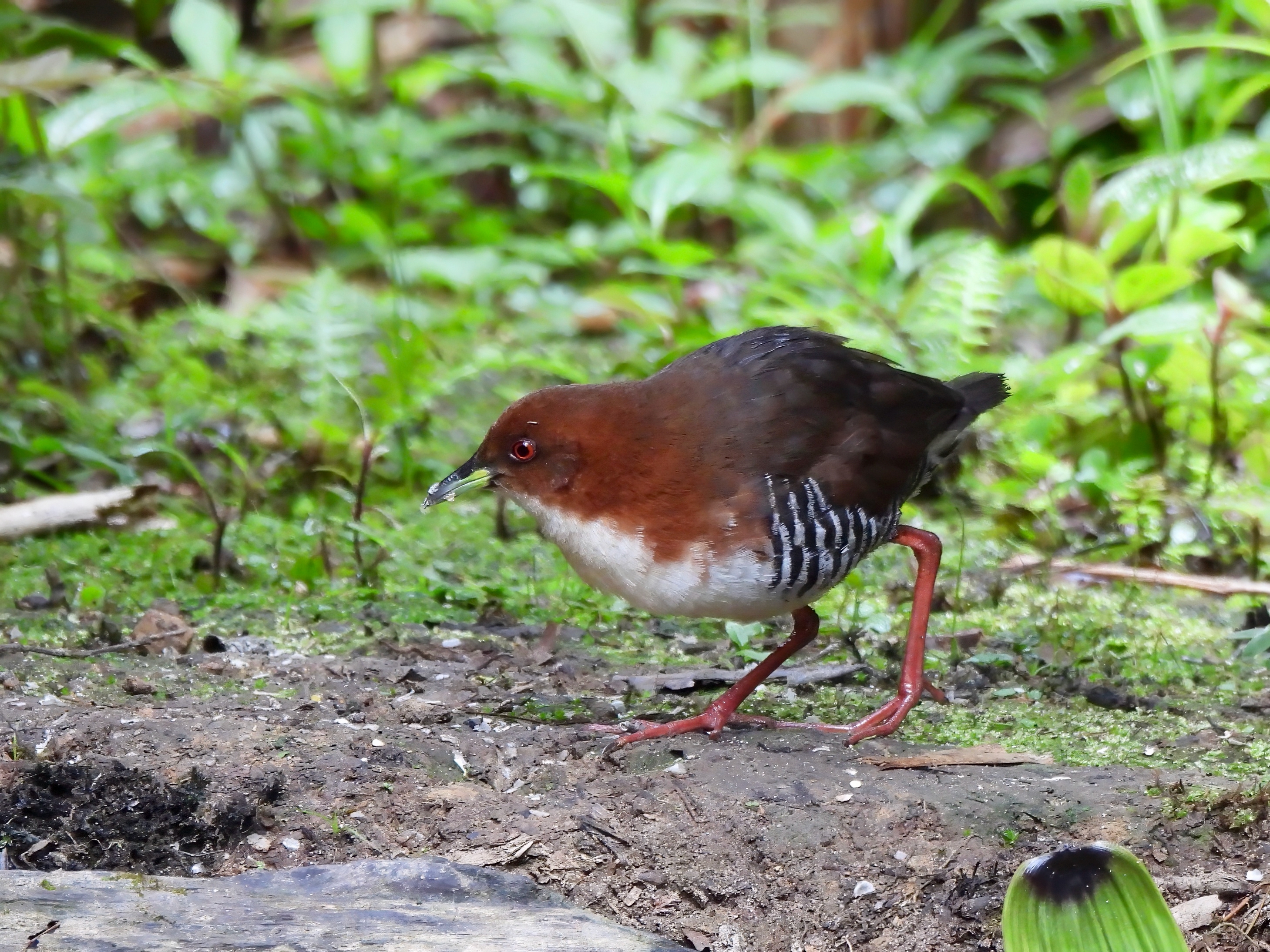
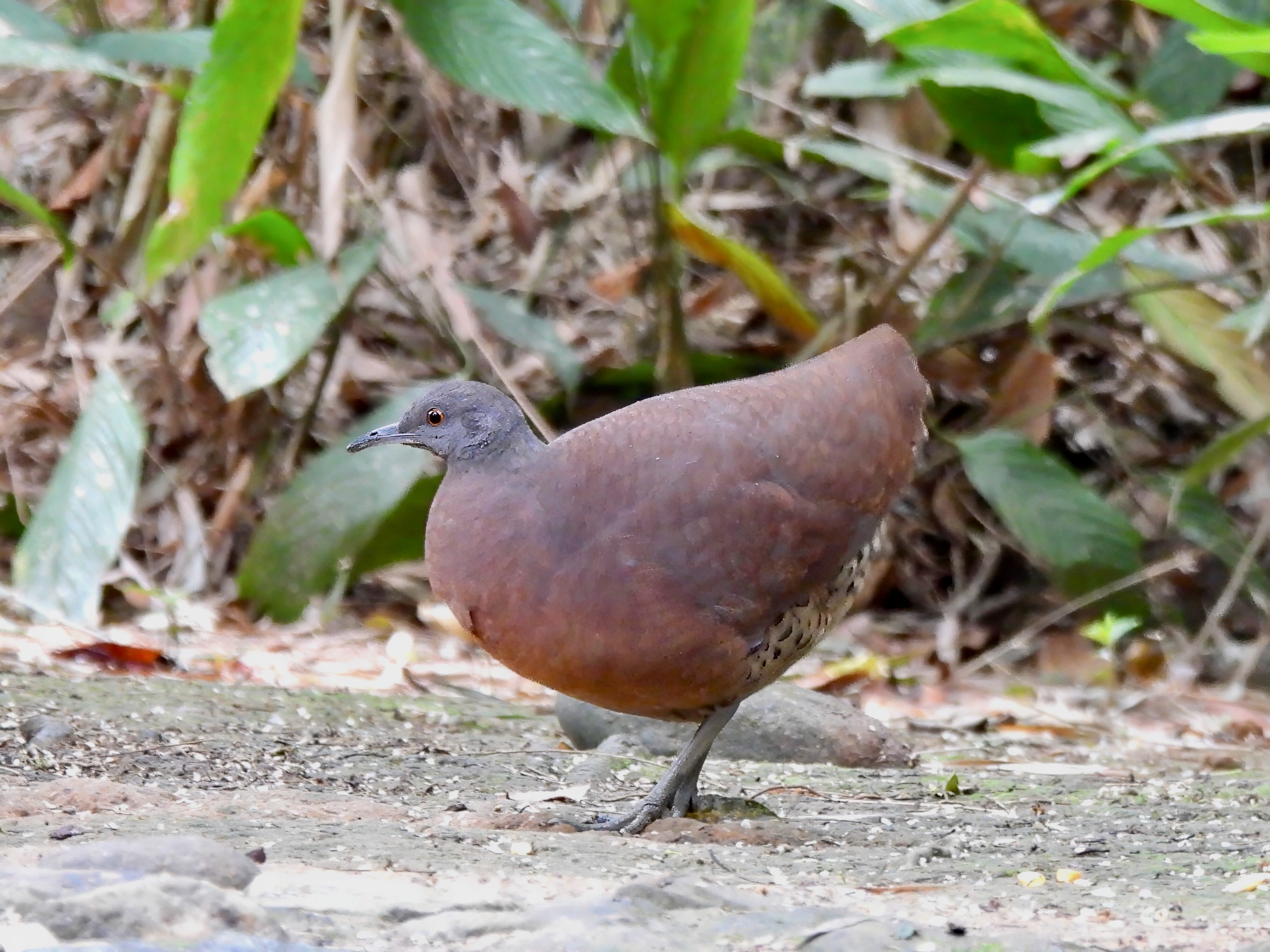
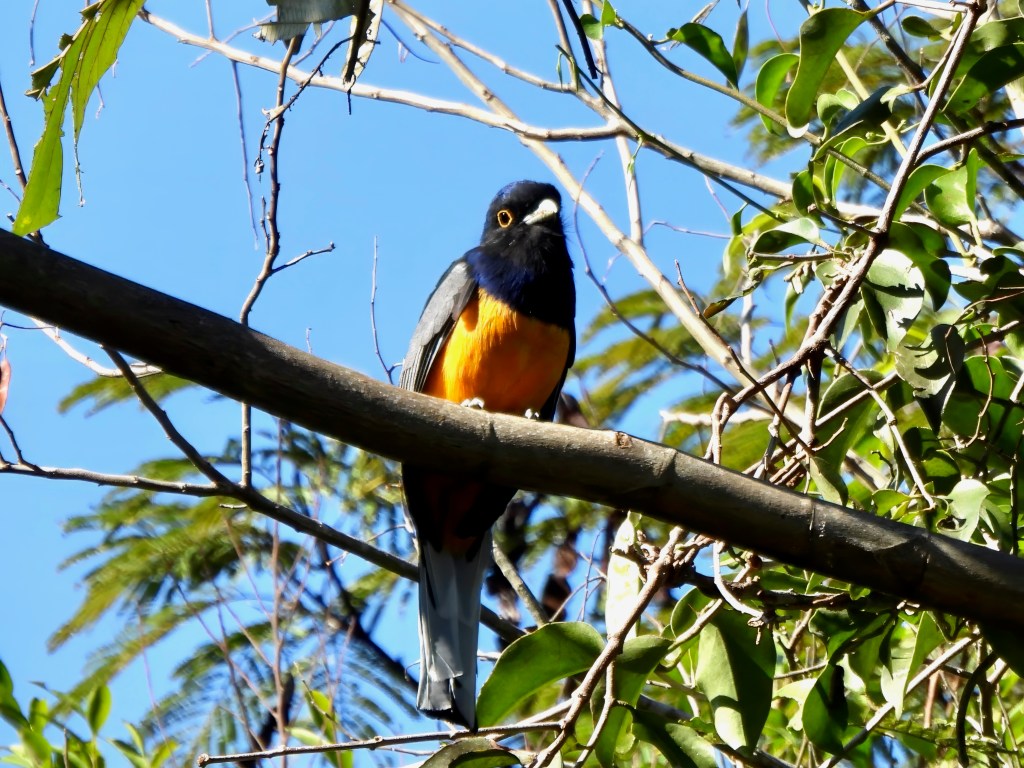
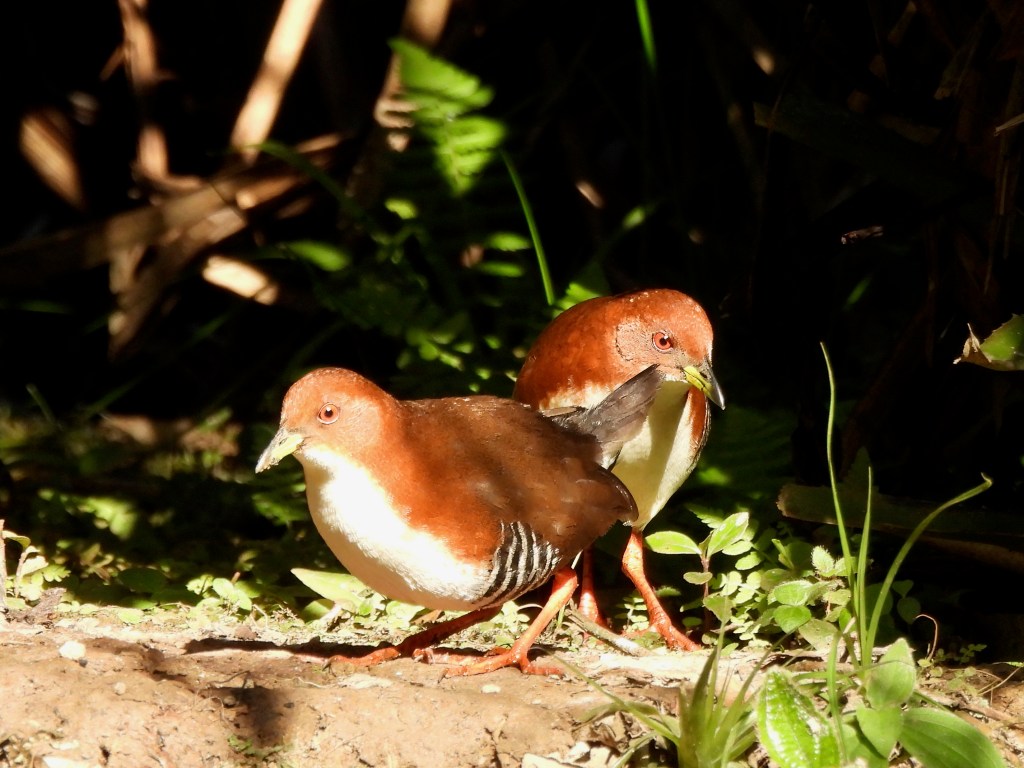
Intervales gave us many happy moments. I was thrilled to feed my lifer Solitary Tinamou. My beloved Red-and-white Crakes scurried around in shallow water just a few feet from us. A Green-backed Trogon was so close to the lodge where we took refuge from the rain that I got a photo with my cell phone. We saw the highly sought-after, nomadic Pileated Parrot. I even got a look — and a blurry photo — of a Rufous-breasted Leaftosser as it stealthily dug in the leaf litter, a species that is notoriously secretive and often difficult to see.

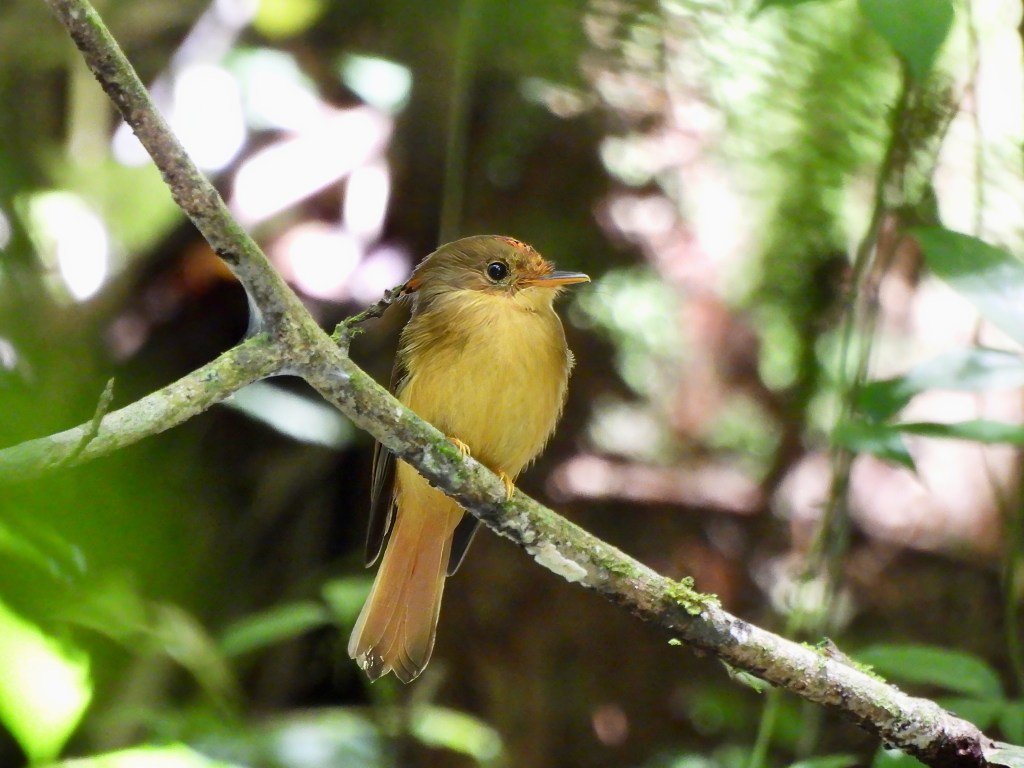
Sandra’s favorite bird was this spectacular little Atlantic Royal Flycatcher, an endemic to southeastern Brazil, and a species that had been among her most-wanted birds for many years.

Watching this pretty bird in the sun-dappled branches over a narrow river was another perfect experience. Our little group was alone in the quiet forest and it felt as if the flycatcher had allowed us to enter his world.

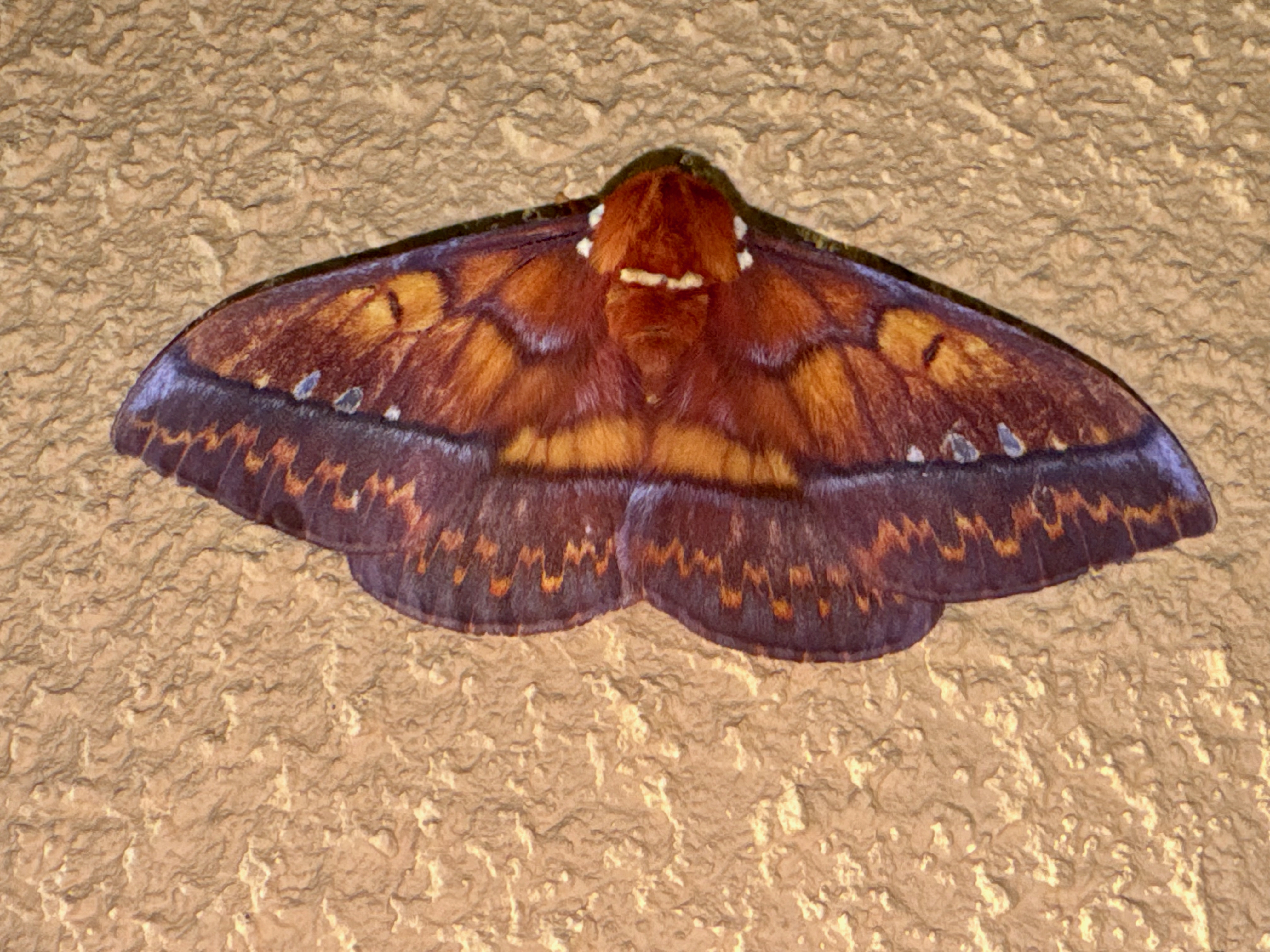
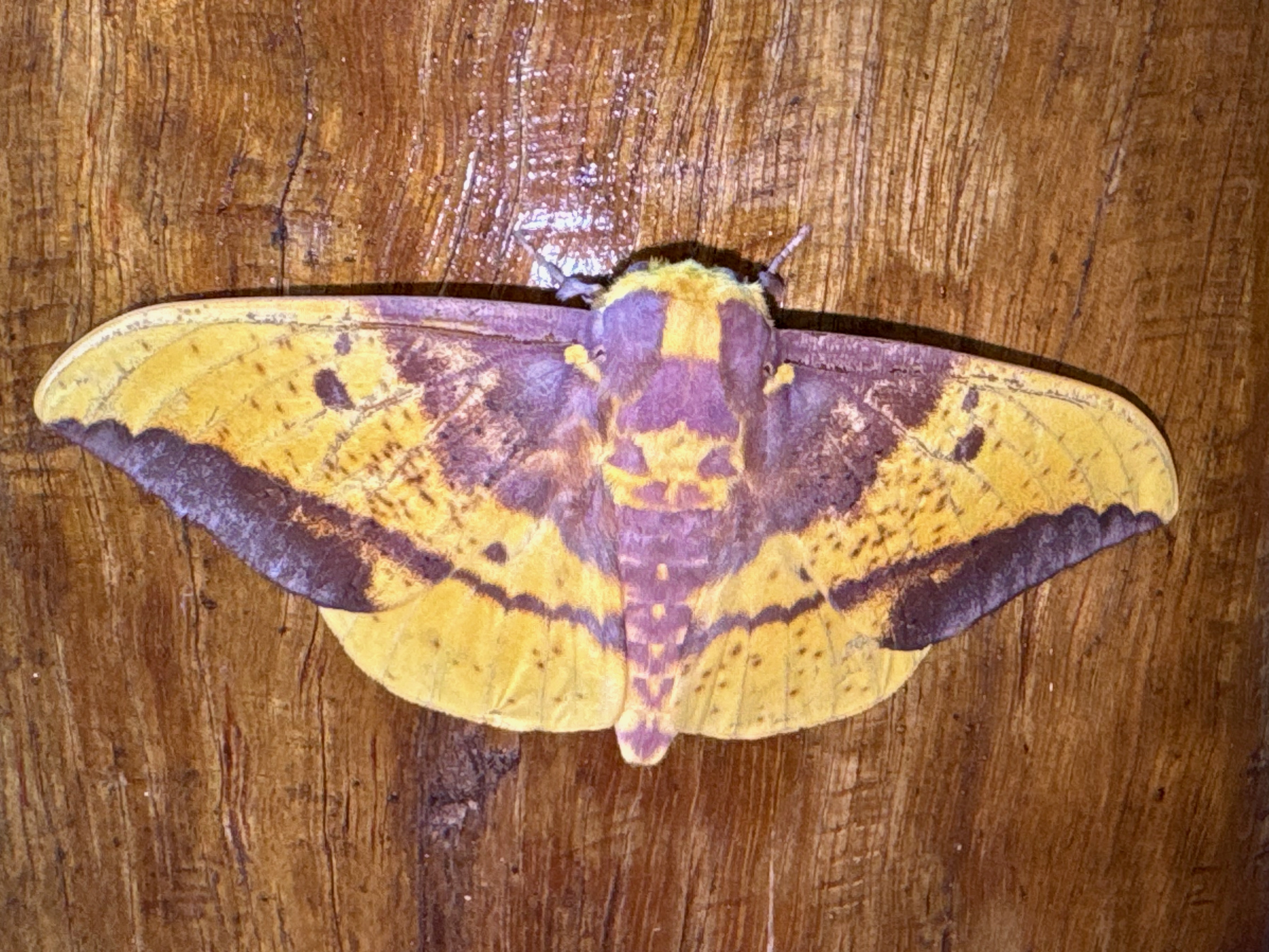
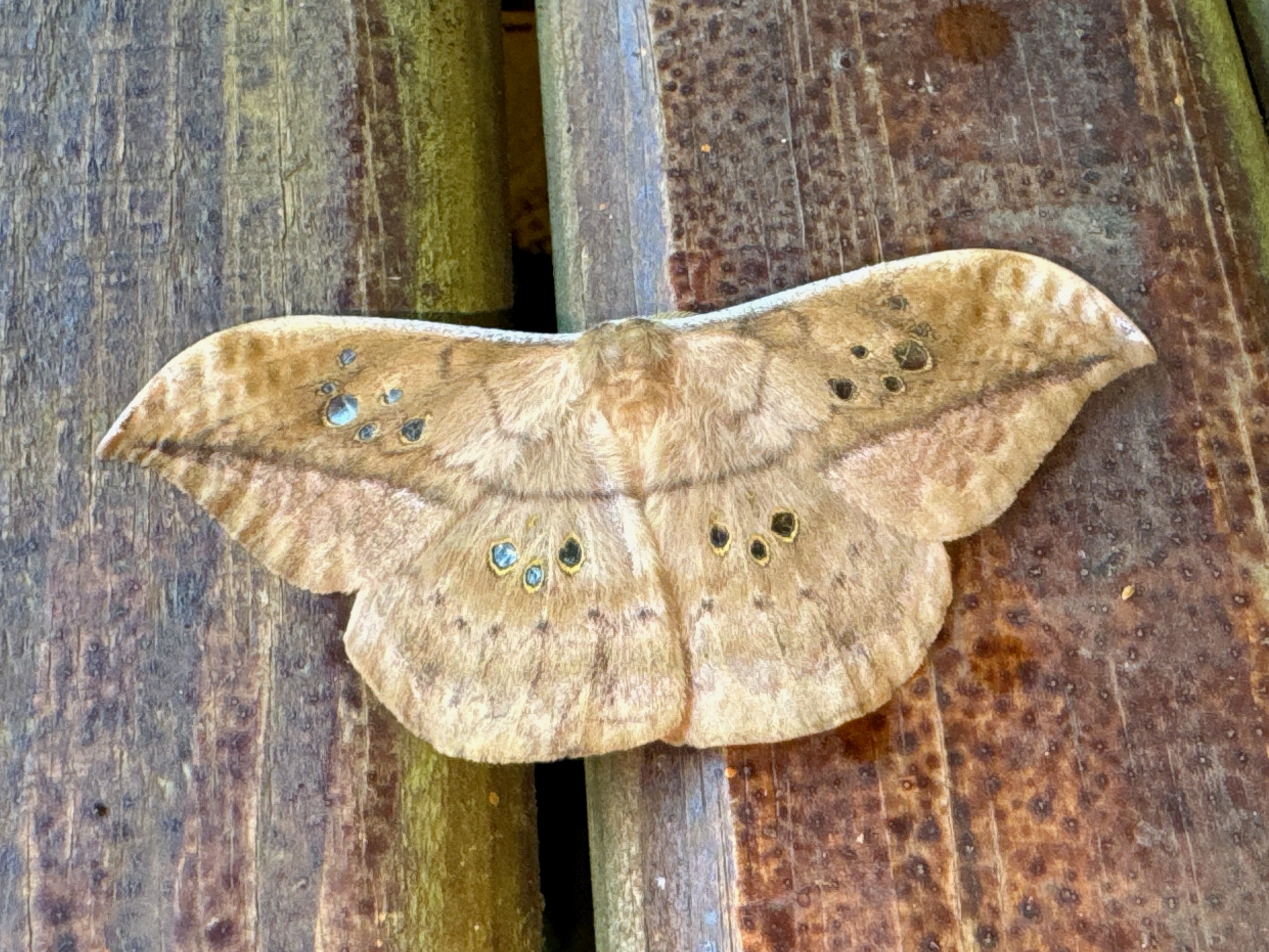
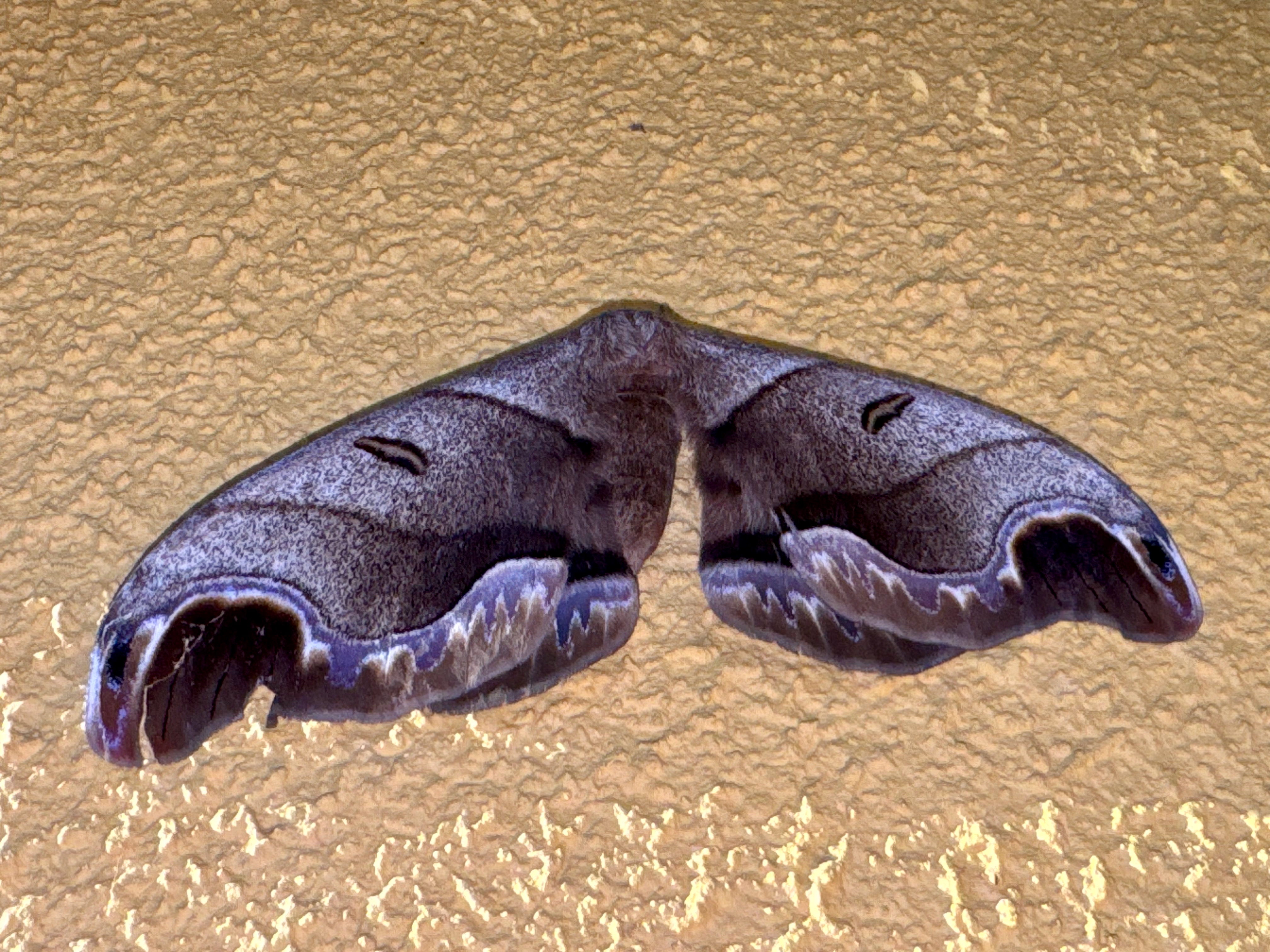
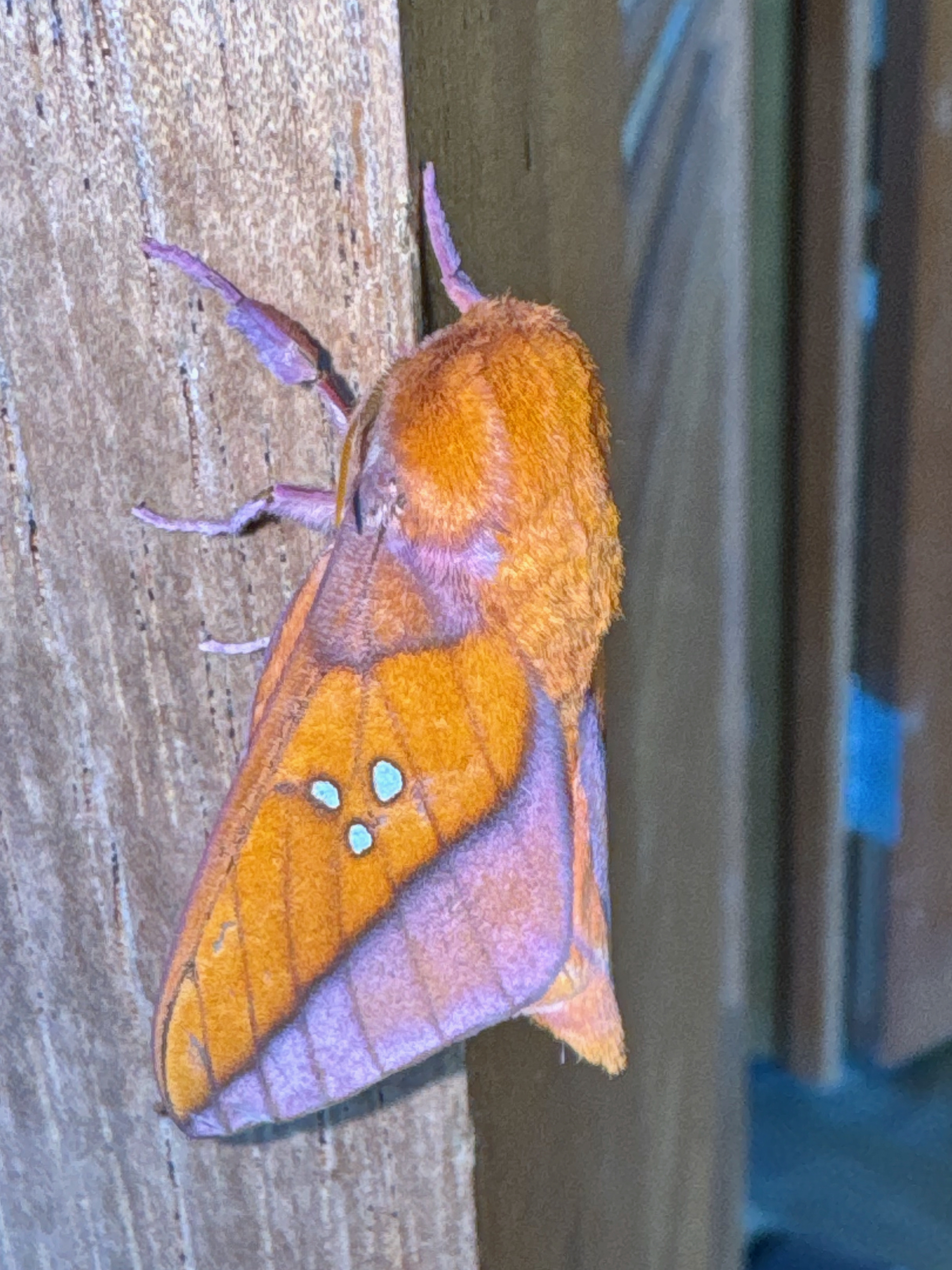
Paulo discovered moths outside our rooms at the lodge and I enjoyed that bonus. Look at these beauties!

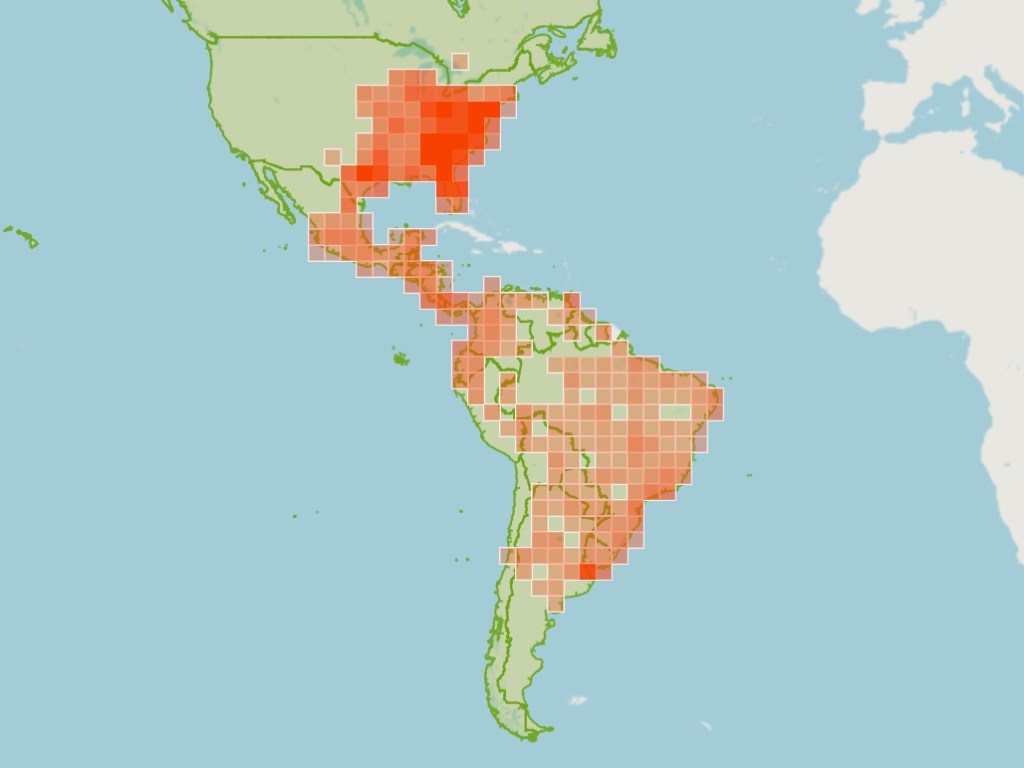
Some of you probably recognize the Imperial Moth. Yes, it’s the same species we have at home in the US. Here’s a range map from iNaturalist showing its wide distribution. Nature is amazing and I find that I learn something new on every trip.

As always, it was difficult to leave a place as wonderful as Intervales State Park. But on the morning of November 20, we left for our next destination, where more adventures awaited us.

Read Full Post »

Our group arrived at Hotel do Ypê on a rainy afternoon, August 10, 2024. We did not leave the hotel area that day, yet most of the birds were new to me and I got 24 “lifers.” I had been to South America before, Colombia and Ecuador, but southeast Brazil is far from where I’d been on those trips and on the opposite coast. Brazil has over 1,800 species of birds including nearly 250 that are endemic to the country. It was a great start to Sherry Lane’s Lifebird Tours trip and one that I had been looking forward to for over a year.

Green-headed Tanagers were small, colorful, and abundant around the hotel. This one was puffed up to stay warm in the cool afternoon.

Below, Mr. and Mrs. Ruby-crowned Tanager, another common species in this area. The male’s ruby crown is not always visible, but this guy shows it nicely.
Our first parrot of the trip was this lovely Blue-winged Macaw right on the hotel grounds.

Hotel do Ypê is snuggled inside Parque Nacional de Itatiaia, Brazil’s oldest national park, which is 3-4 hours northeast of São Paulo. This large park is in the Mantiqueira mountain range where elevations range from under 2,000 feet to nearly 10,000 feet. The lower part of the park, where the hotel is located, protects an important area of Atlantic rainforest. Five hundred years ago, the Atlantic Forest of Brazil comprised an area twice the size of Texas. Today, it is estimated that only 7 to 15 percent of the original forest remains. These remnants of the Atlantic Forest are extremely valuable; they host hundreds of species of plants and animals that occur nowhere else on Earth. Below, a view from Hotel do Ypê.

The next day we explored the lower part of the park where we saw beauties like this Surucua Trogon.

And, this Red-breasted Toucan.

In addition to the spectacular big birds like those above, we also saw many small birds. I even managed a photo of this tiny bird of forest undergrowth, a cute little White-throated Spadebill.

On our last day in the park, the group went to the upper part of the park to seek birds that only occur in the rocky high-altitude grasslands. It would be cold at the higher elevation and I had not brought enough cold weather gear. I was also worried about the cold triggering my asthma, so I stayed around the hotel and enjoyed my time there. Here are some of the birds I enjoyed photographing. Click any photo in the gallery for an enlarged view.

Early on Tuesday morning, August 13, we said goodbye to beautiful Itatiaia National Park and turned south towards Ubatuba on the coast. We arrived at our first stop later than planned and I struggled birding the dark forest along the road, but our next and last stop of the day at Sítio Folha Seca made up for it.

Some of the birds there were common like this Green Honeycreeper, but I don’t think that I’ll ever tire of seeing these gorgeous birds.

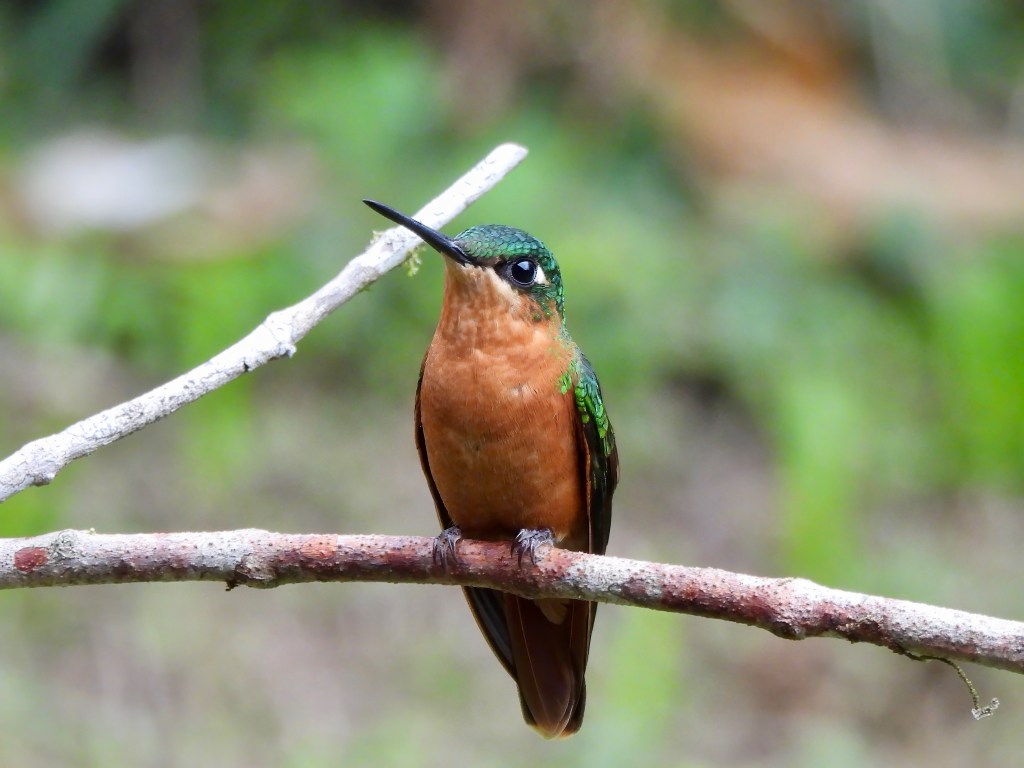
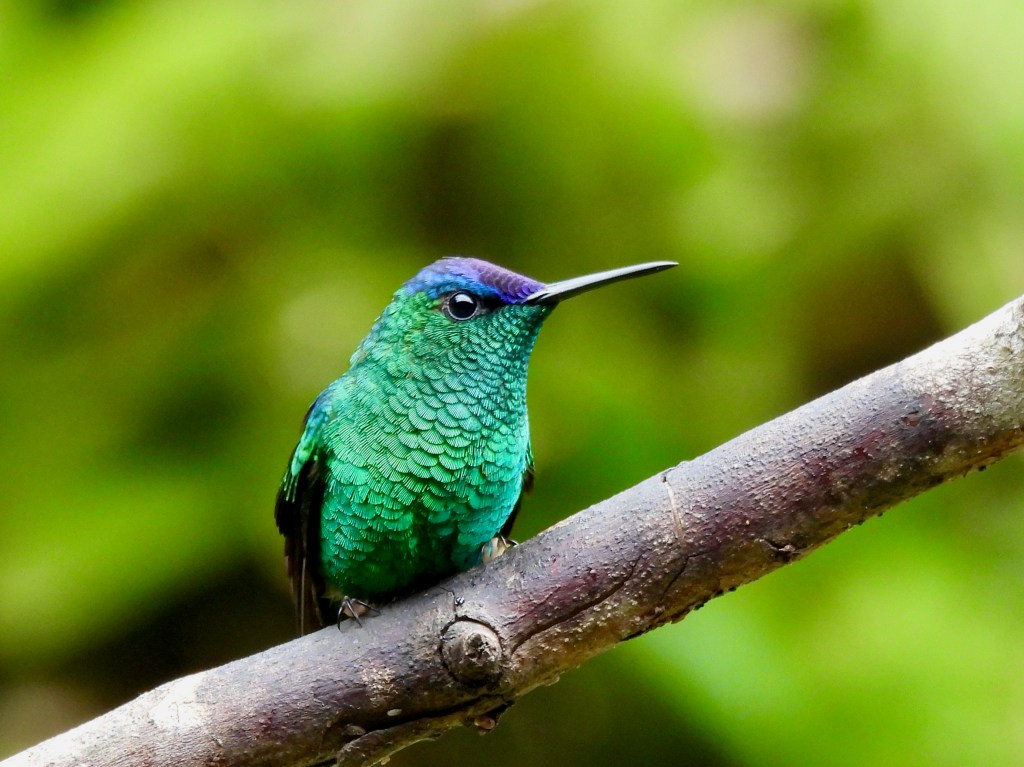
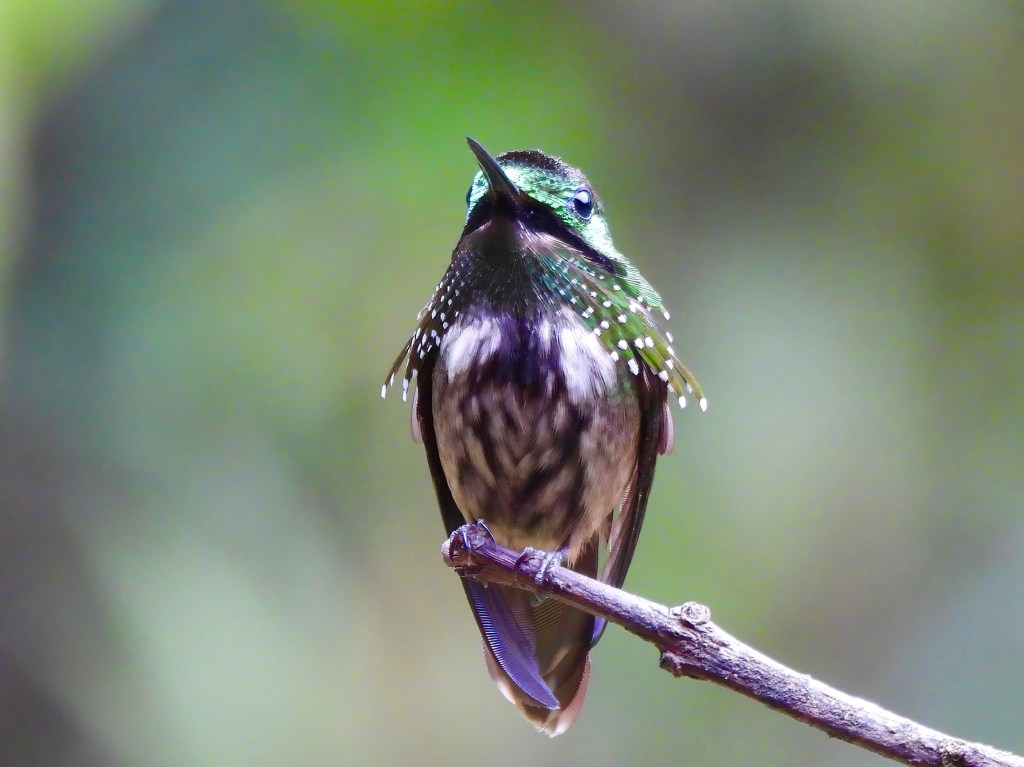
The real stars of Sítio Folha Seca are the hummingbirds. It is one of the best places in Ubatuba for these little winged jewels and our group saw ten species; six of those were life birds for me. All of the photos below were taken that afternoon.

Sítio Folha Seca has much more than hummingbirds, though. Three of the tanagers that we saw there were also life birds for me. One was this Brazilian Tanager, a group favorite.

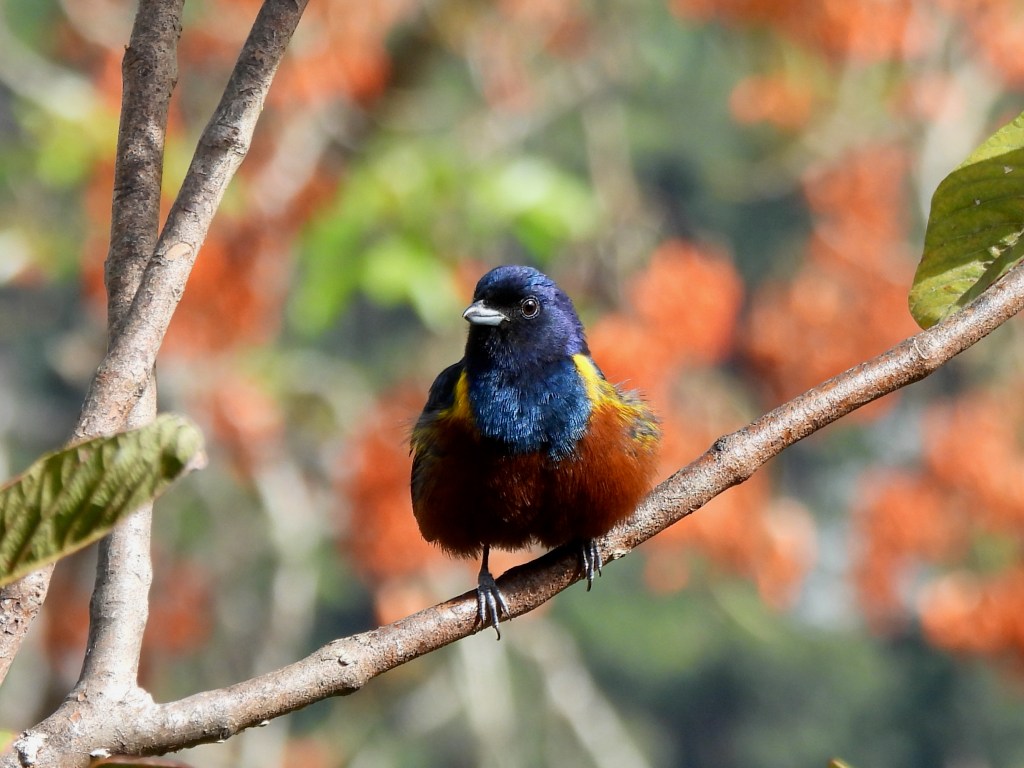
I also saw my first Red-necked Tanager, another stunner, at Sítio Folha Seca.

Ubatuba is very popular with birders and nearly all birding tours to southeast Brazil include time in the area.

On the 14th, we continued to bird around Ubatuba and I got 12 more life birds ranging from Swallow-tailed Hummingbird to Green-backed Trogon, Channel-billed Toucan, and Yellow-fronted Woodpecker.

That day I also got my life Blue-naped Chlorophonia, a bird that is a member of one of my favorite genera. I promise to share a photo in a later post about my trip to Brazil.

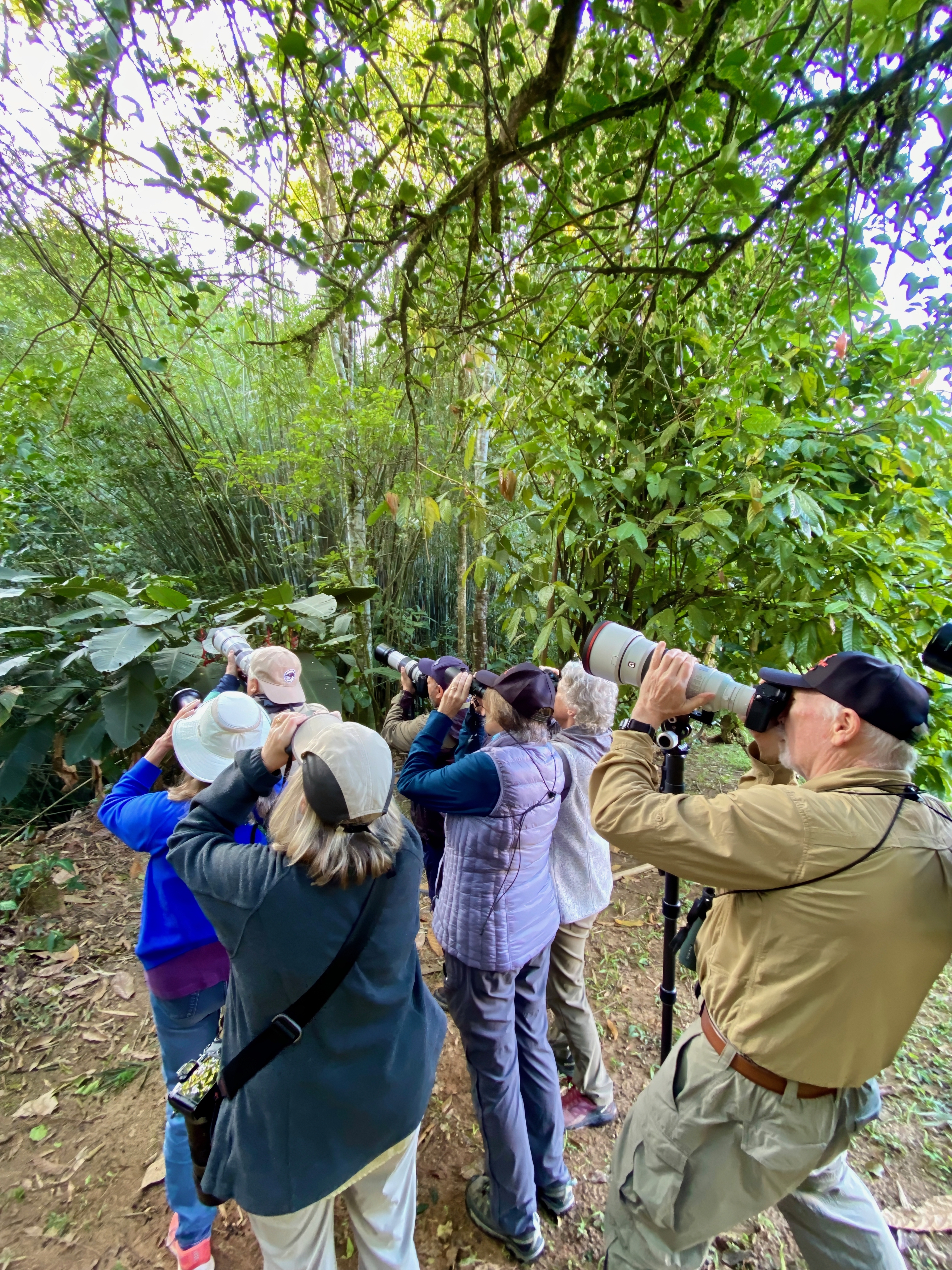
Left, our group birding in Ubatuba.

As expected in the forest, we also saw small, skulky birds. I was pleased that I actually got photos of a Scaled Antbird.

We spent the afternoon of August 14 at Ninho Da Cambacica, another wonderful little ecolodge with bird feeders and trails on the property. Below, our group with the owners of Ninho Da Cambacica. This was our last birding with Atlantic Forest bird guide, Lucas (kneeling in center below). Lucas had found some great birds for us and it had been fun to spend time with him. We would miss his smile and enthusiasm. Alyson Melo (on the left), our lead guide, would continue on the trip with us.

On August 15, our last day before heading to the Pantanal, we visited Sítio Macuquinho, my favorite place on this part of the trip. The feeders attracted several species of hummingbirds and tanagers, but my favorite birds may have been the Red-and-white Crakes we viewed from one of the trails on the property.

But, that wasn’t all. We had close-up views of a White-breasted Tapaculo eating worms on a log by the side of the road. These normally shy and difficult-to-see birds were found for us by the amazing Elvis Japão, bird guide and owner of Sítio Macuquinho. He also found two Marsh Antwrens for the group, but I just couldn’t find them in the thick marsh vegetation. I didn’t feel quite too bad about missing them after noting “usually very hard to see” in the description in eBird. Another wonderful bird that Elvis found for us was a singing Bare-throated Bellbird, a bird that our entire group was thrilled to see and hear.

All too soon, it was time to head to Sao Paulo for the night and our flight to Cuiabá the next morning. Amazing birds and exciting adventures awaited us in the Pantanal of Brazil.

Read Full Post »