eBird lists 288 species of birds for South Andaman, the island that Linda and I birded with Shakti Vel, one of the top birding guides on the islands. That includes resident birds, migrants, and rare vagrants. Twenty species are endemic to Andaman Island (fifteen only on Andaman and another five on both Andaman and Nicobar). Some of the same geographic factors that contribute to this high level of endemism also make many of these birds vulnerable to extinction. Four Andaman endemic birds are globally vulnerable and another three species are near-threatened. This page on Threatened Endemic Birds of Andaman & Nicobar provides a short and interesting discussion of island biodiversity.
Below, the Andaman Scops-Owl that we would see later in the week.

On our first birding adventure with Shakti, we visited Chidyatapu Biological Park, a beautiful park that quickly became my favorite spot on the island. I got five life birds that afternoon including the showy Andaman Shama below.

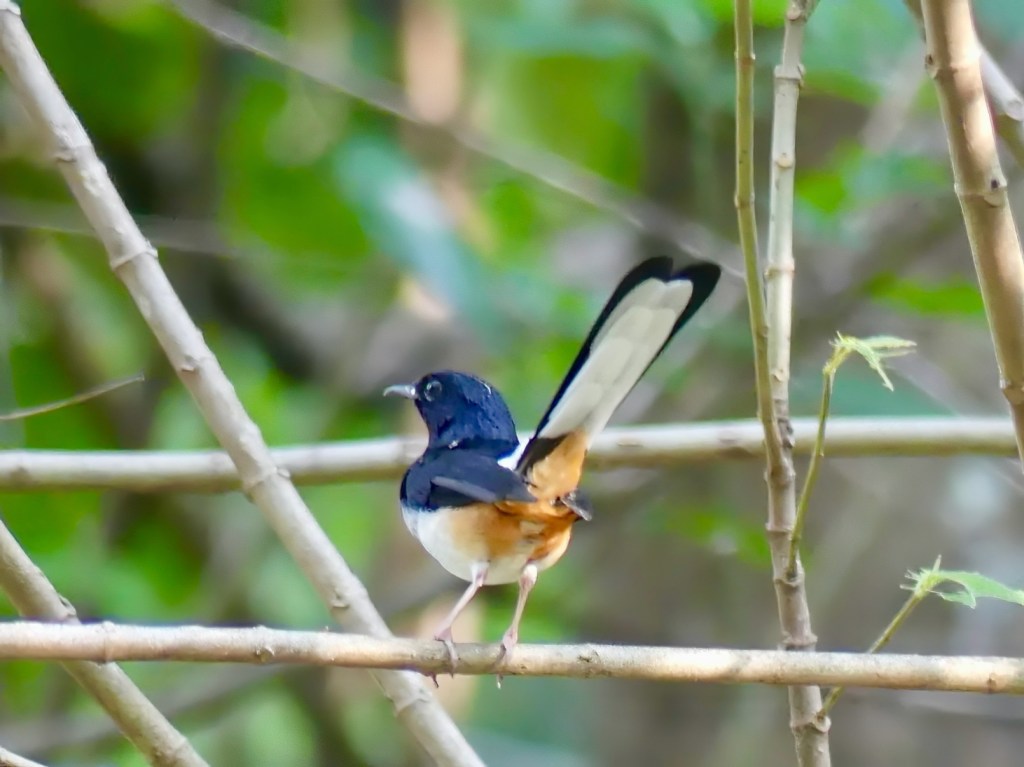
We went owling that evening and I got three more life birds. Six of my eight life birds the first day were Andaman endemic species.
The next morning, we went to a spot near the little village of Chidiya Tapu, which appropriately means “bird island” in Hindi. More life birds were quickly added to our lists. One of my favorites was not an endemic, but this beautiful female Violet Cuckoo.
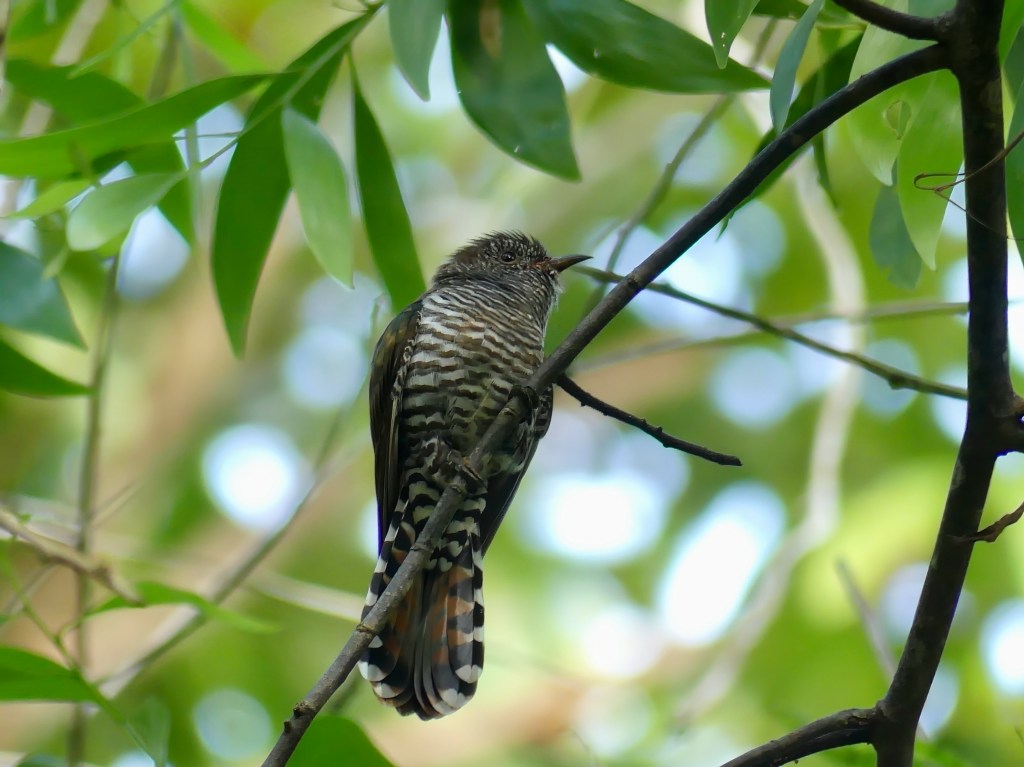
The Andaman Treepie, however, was another endemic species.

This cute little Andaman Flowerpecker was also an endemic.

Next it was off to Ograbraj Wetland to look for Andaman Teal. I was sorely disappointed when we arrived as I had expected (OK, wanted) to be closer. But we carefully made our way along the edge of the water and ended up getting fairly good looks at the teal.
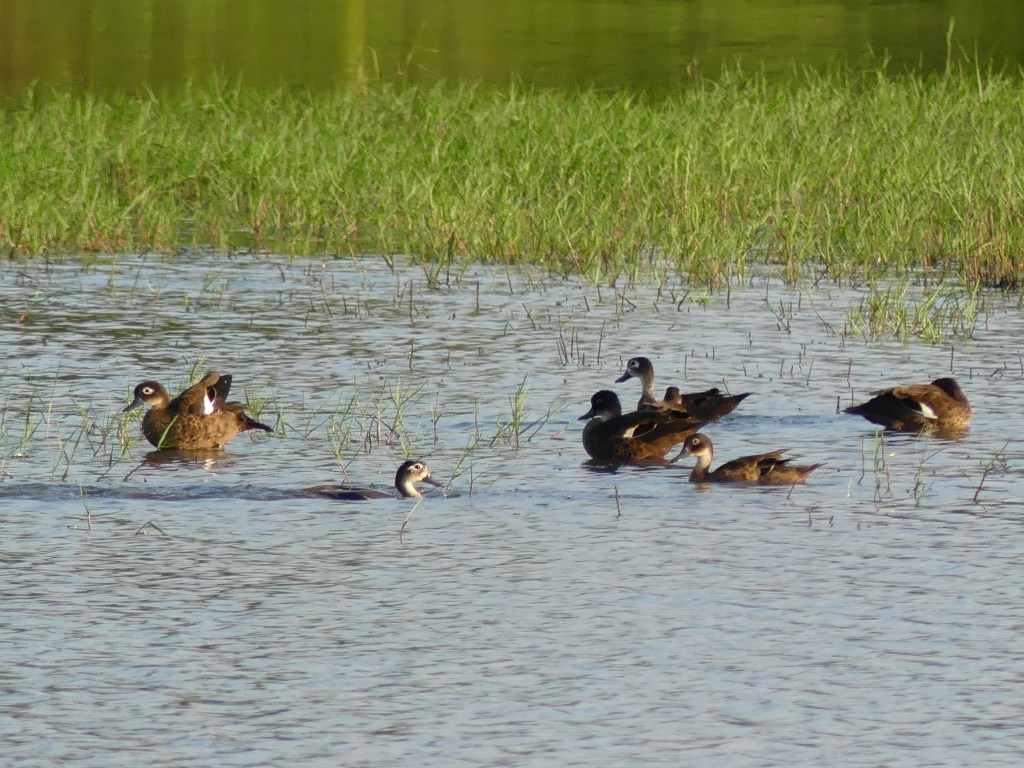
We ended our second day with night birding again and a lifer Andaman Nightjar.
On day three, December 17, we started birding at Kalatang. We spent a long time quietly sitting in the car (using it as a blind) waiting for Andaman Crake, a shy, skulky bird that I very much wanted to see.
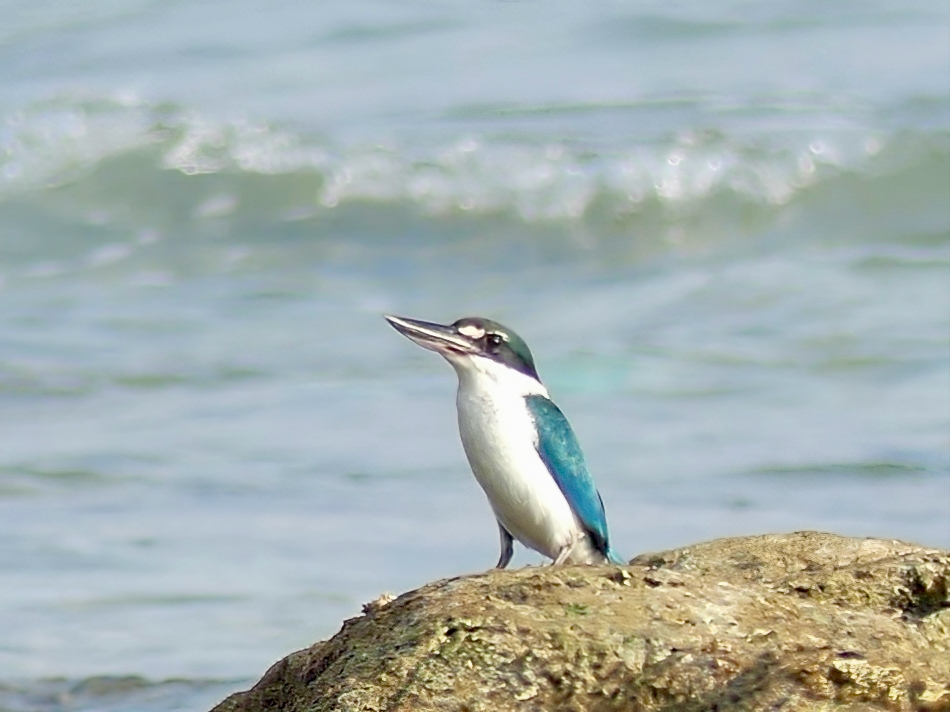
It was quite a long wait and although I tried to stay focused, this White-throated Kingfisher that frequently perched close by distracted me just a bit.

Our patience was finally rewarded when this gorgeous Andaman Crake walked just a few feet from the car!

We spent the afternoon at Chidyatapu Biological Park where we had good looks at an Andaman Serpent-Eagle.
The park is near Chidiya Tapu Beach, a lovely spot that we stopped at several times during the week to watch the sunset in between afternoon and night birding. Linda took the beautiful photos below.


On Monday morning, we went back to Kalatang where the Andaman Cuckooshrike continued to evade us. However, we saw many other nice birds including a Ruddy Kingfisher. Later, at Garacharma Wetlands, we saw a distant Blue-eared Kingfisher as well as lots of shorebirds, a Japanese Sparrowhawk, and a Yellow Bittern. The day ended with a great view of an Andaman Masked-Owl.

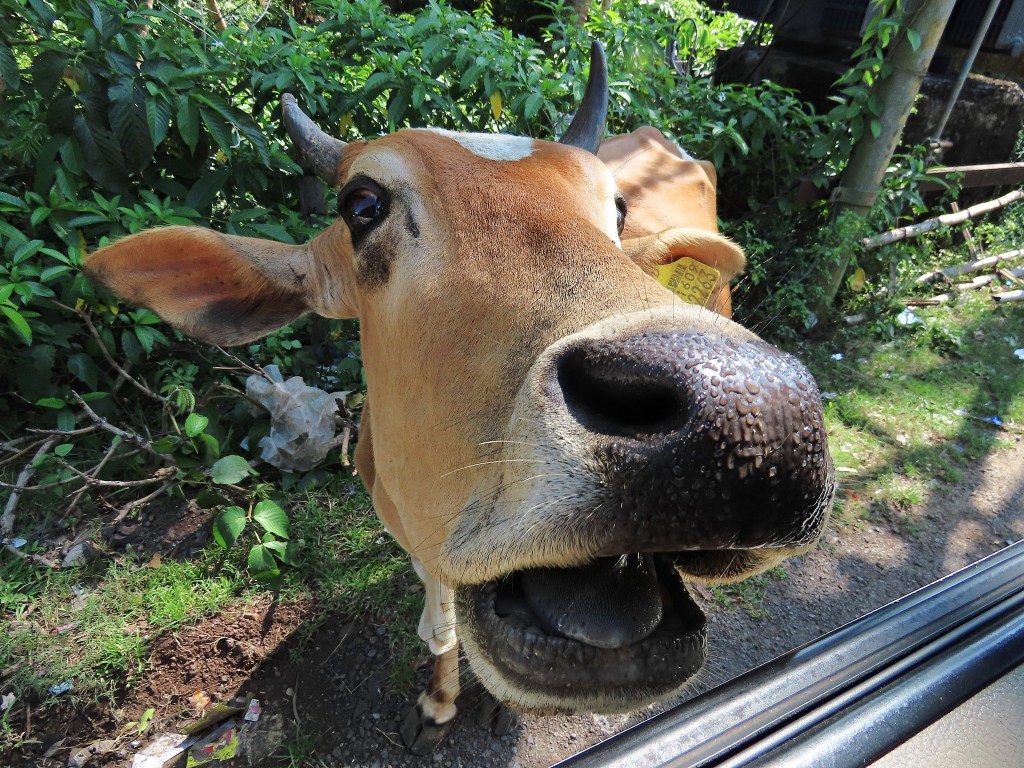
Each day, we drove along the coast to and from the Rainforest Resort where we stayed. These cows were on the beach several times. We had fun trying to guess what they were thinking. “Oh, it’s just nice to have an afternoon stroll on the beach”?

Soon it was our last day with Shakti. It was not a big day for life birds as we already had most of what was possible. Regardless, it was a very interesting and fun day. We went to a different area in the morning, Bichdera, where we saw quite a few birds including about a dozen Red-breasted Parakeets. These are very common birds in the Andamans and we saw them almost every day, but here we saw a pair mating! Linda’s photo below.

In the afternoon, we birded near Chidiya Tapu again. Freckle-breasted Woodpecker had been a life bird on 16th and we saw one again the next day. Finally, with the third sighting, I got photos.
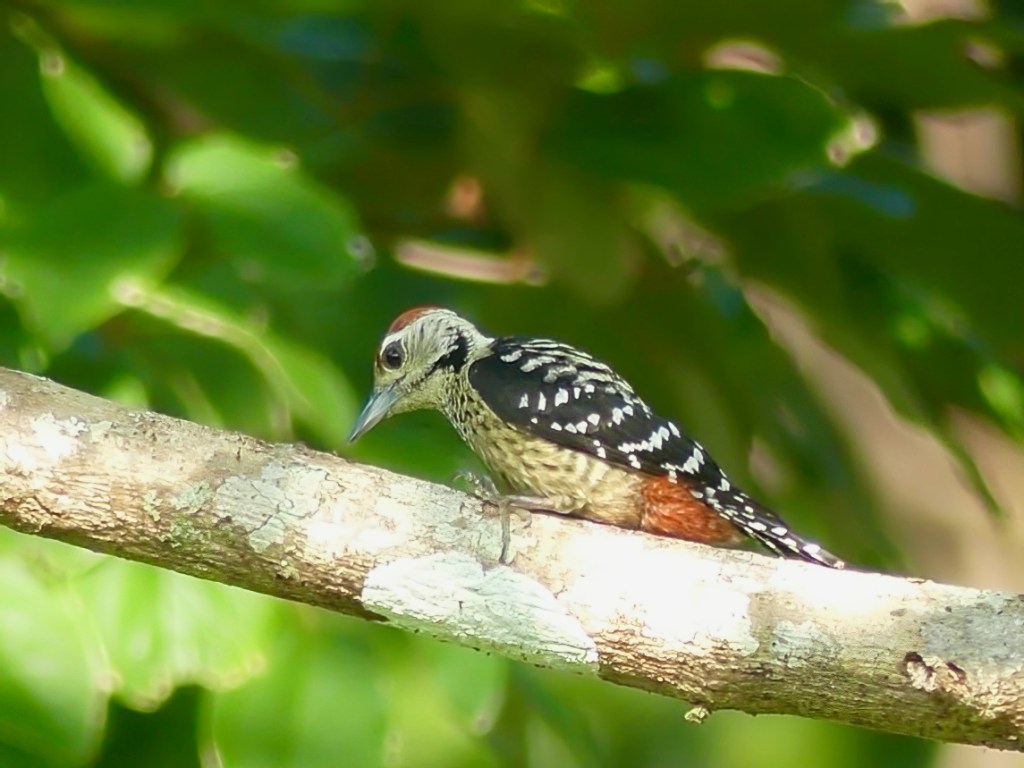
We said goodbye to Shakti and Pradeep, our wonderful driver. Shakti found 18 of the 20 endemics for us, missing only Andaman Wood-Pigeon and Andaman Cuckooshrike. We definitely recommend Shakti Vel for guiding on the Andaman Islands. For more information and to contact Shakti, see his website, Tribesmen.

I can’t sum up the last few days better than Linda did in her Facebook post quoted below.
“Time to be MOOOving on…Our birding trip here in the Andaman Islands finished today. Tomorrow we return to Bangalore. I have no idea exactly how many birds I saw, but it was a LOT! For now, here’s a friendly cow to whom I gave some stale gluten-free bread today, she was quite happy with it! Shelley gave some of her leftovers to some hungry pups.”
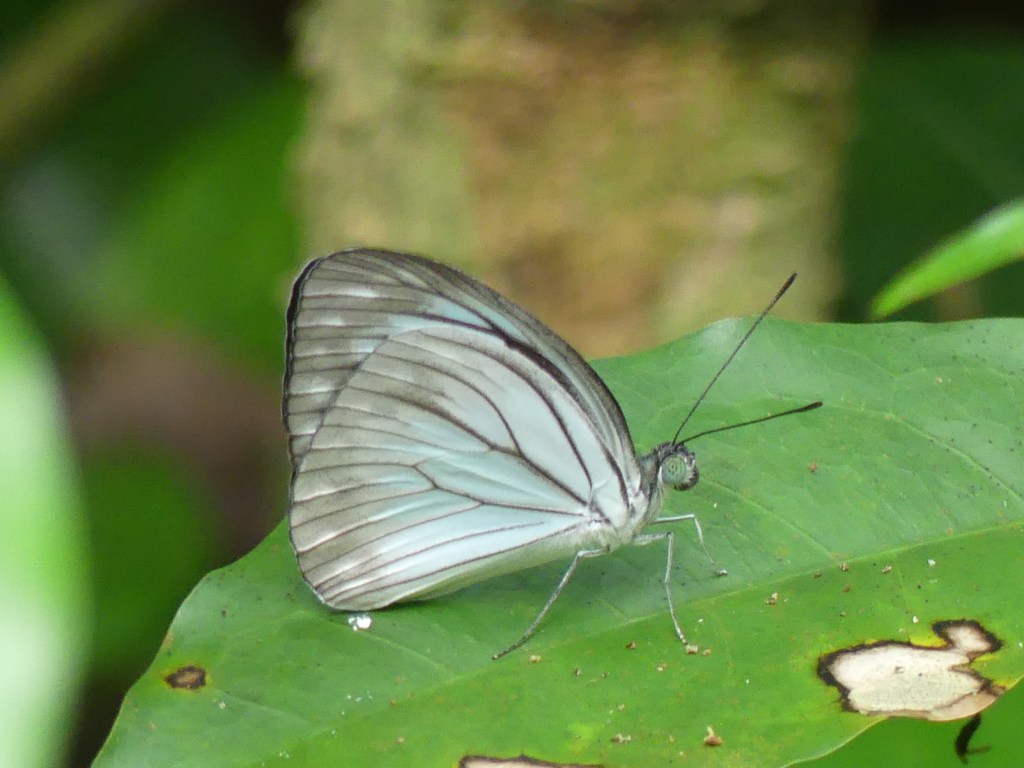
We were not quite done with the Andaman Islands yet, though, as we had a few hours the following morning before our flight. The Rainforest Resort was close to the sea, so we leisurely walked down to see what we could find. Fiddler crabs! Linda had especially wanted to find them, so we were pleased. Friendly goats and butterflies also contributed to the fun morning.

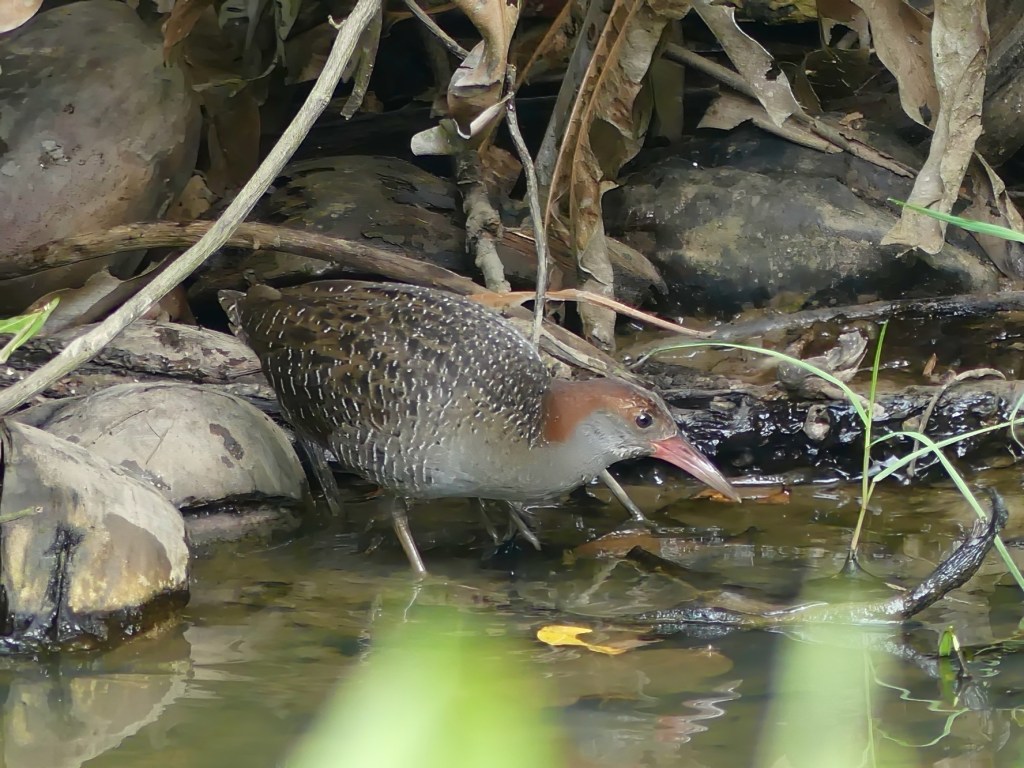
On the way back to the lodge, we passed a little area with water and mangroves. I looked carefully and saw a Striated Heron. It quickly disappeared and as I was trying to find it again, I spied this bird, a Slaty-breasted Rail. I was thrilled as nothing is more satisfying for me than finding my own life bird. Even though it’s not an Andaman endemic, it was the perfect end to our time in the Andaman Islands.
I had a few more days with Linda in Bangalore before my trip was over and I want to write about that, but I’m out of time for now. I’m heading off to Turkey and Mongolia later this week. Watch for a wrap-up of my month in India in a few weeks.
For a list of all the avian species that we saw in the Andaman Islands, see our eBird trip report. For our iNaturalist observations, see Shelley’s here and Linda’s observations here.






 Birding for Life