Feeds:
Posts
Comments

Posts Tagged ‘Andean Emerald’

The day started with the seven Chestnut Wood-Quail coming for breakfast as usual. These birds are so trusting of Javier, La Florida’s owner, that they come right up to him. They even allowed me to stand beside him so close that I could have reached out and touched one.

I had a lovely breakfast at the outdoor table and then moved to the feeder area for a couple of hours where I watched beautiful birds like this Saffron-crowned Tanager.

Lisa arrived at 10:00 AM and I think that by lunchtime she saw all the birds that I had seen in the previous day and a half and more.

One of our favorites was this adorable female White-sided Flowerpiercer who bathed nearby while we ate lunch.

We watched the birds around the lodge a bit more and soon it was time for feeding the Little Tinamous. Tinamous are very shy forest dwellers who can sometimes be trained to come for worms as they do at La Florida.

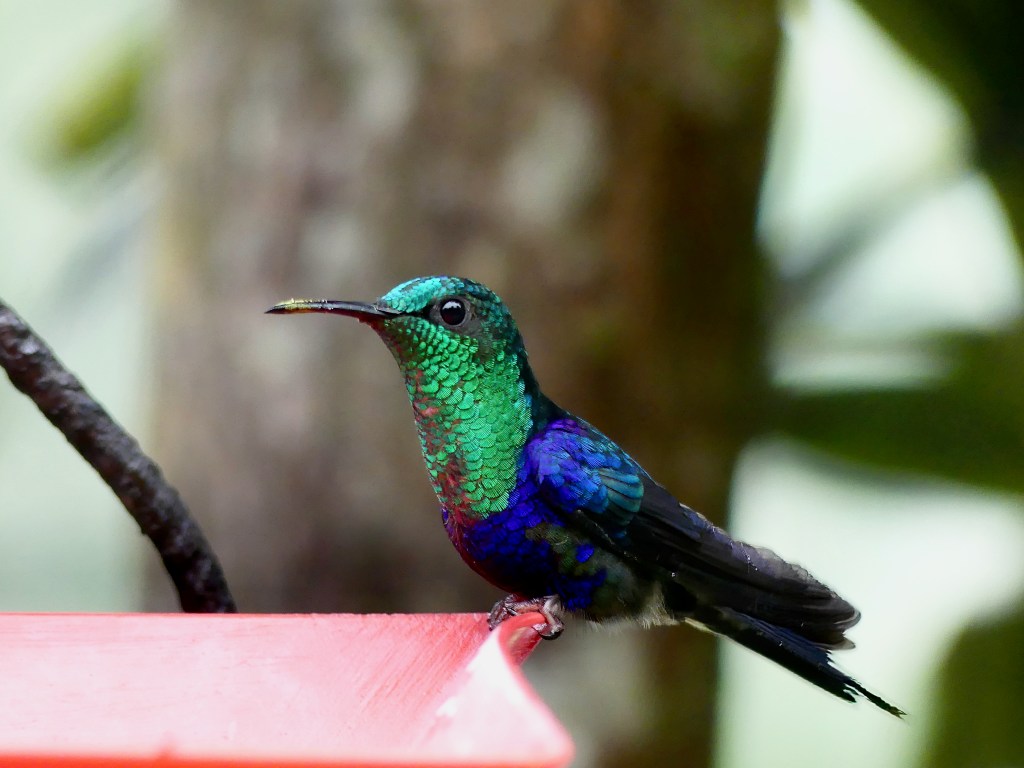
Next, we went to Finca Alejandría to watch dizzying displays of dozens of hummingbirds. Even though I had been there the previous day, I was very happy to go back again with Lisa. Below, a pretty Andean Emerald.

Another jewel was a Crowned Woodnymph.
Just as the day before, a Golden-headed Quetzal showed up just before we left. We returned to La Florida for dinner and listened to a Mottled Owl calling before falling into bed.

On Lisa’s second day in Colombia, we headed out for San Cipriano with our guide, Anderson Muñoz.

San Cipriano is a small village in the middle of the Pacific rainforest half an hour from the port city of Buenaventura. About 600 people live in the village but many more visit, some for birding and some for tubing on the river.

Most birders love San Cipriano, and with good reason; it has amazing birds. But, it was a hard day for me. We got up early for a 5:30 AM start from La Florida and it was uncomfortably hot and humid for most of the day. More significantly, though, it was the hardest type of birding for me with my vision challenges. It’s a lot of dark, dense forest with skulky birds that really don’t want to be seen. Nevertheless, it was an amazing experience and I wouldn’t have wanted to miss it.

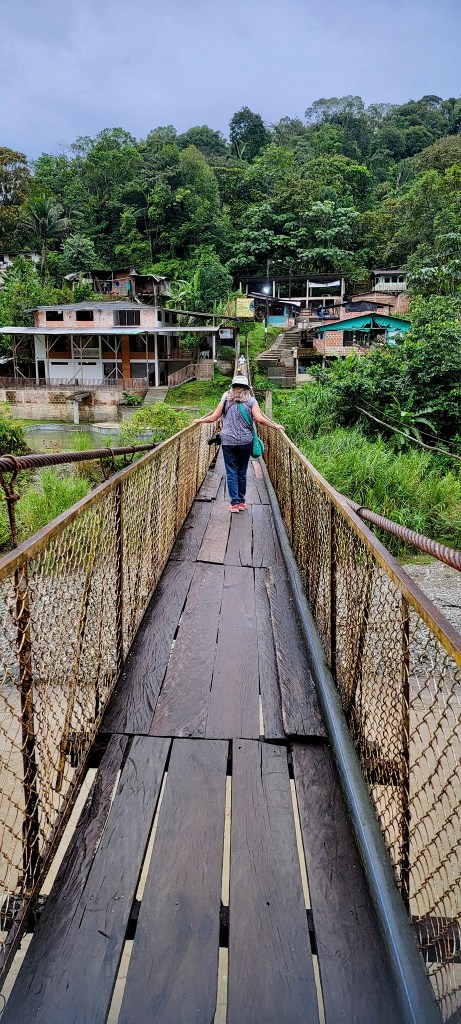
There are no roads to San Cipriano, so you drive to Córdoba and park there (that was a 1-3/4 hour drive for us). Then, you must cross the Rio Danubio on a shaky old suspension bridge.
The final step in traveling to San Cipriano is on a brujita, a motorcycle-powered cart that runs on railroad tracks. It’s the only way to get there. The photo below shows a bruita getting a little repair. Each one is slightly different, but they are all similar. The entire wooden platform goes on the tracks and passengers sit on the benches.

Anderson and I found it a fine mode of transportation. Thanks to Lisa for the photo.

It’s usually a smooth ride, but we had a little excitement and Lisa caught it all on video. It was a surprise to us, but not to the drivers. They just picked up the other brujita and took it off the tracks for us to pass. Then, they put their brujita back on the tracks and we were all on our way again.

A few minutes after 8:00 AM, we finally arrived in the little village of San Cipriano and met our local guide, the unparalleled Never Murillo. He was amazing at finding birds, and Never was also fun, friendly, and kind.

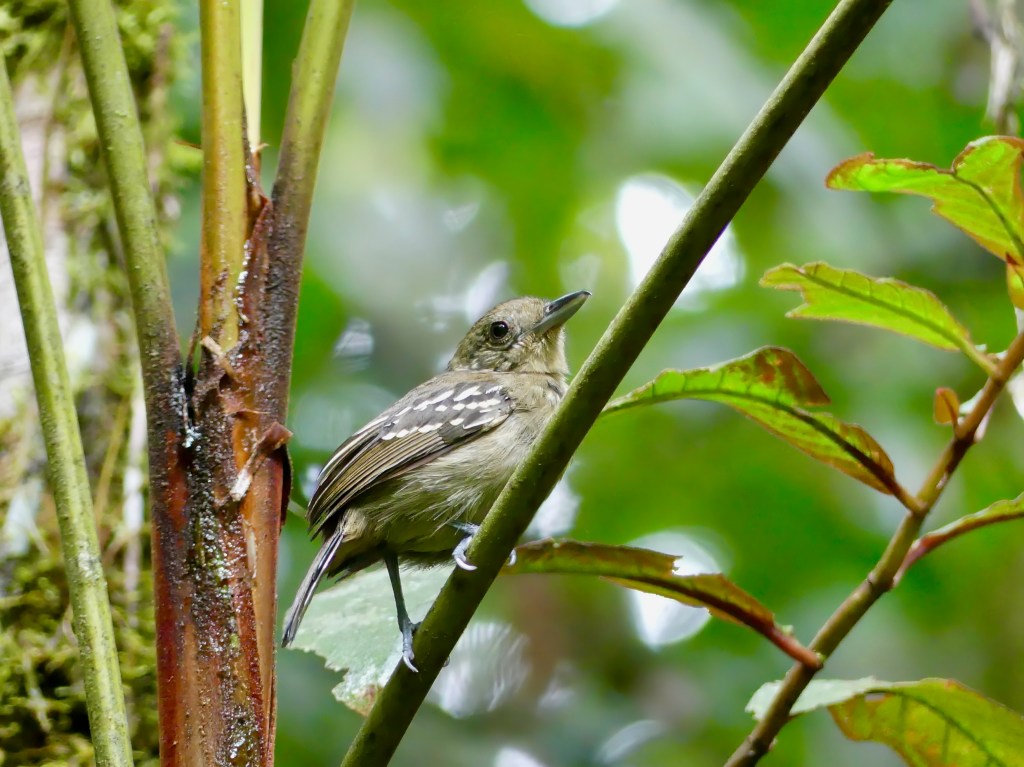
Lisa had a wonderful day and got 26 life birds. I got 10 lifers and didn’t get good photos of any of them. The female Black-crowned Antshrike below was a bit more cooperative.
I thought that this Tawny-crested Tanager was a life bird, but when I checked eBird, I saw that I had seen it three times previously, in Panama and Costa Rica. It makes me understand people who don’t count a bird as a lifer until they get a photo. I present my photo lifer Tawny-crested Tanager at San Cipriano.

One of my favorites in the deep rainforest was another photo lifer, this beautiful Chestnut-backed Antbird.

I was trying very hard to get my eyes on the little forest birds and Anderson and Never did all they could to help me. One of the most spectacular birds in the rainforest is Ocellated Antbird and I really wanted to see it. Finally, after working for a long time as it flitted from one tree to another in the dark forest, I saw it. I’ve felt emotional before when seeing a desired bird, but this time my reaction was more intense. My entire body felt flushed with heat, I was shaking and a little dizzy, and I don’t think I was able to speak clearly for a couple of minutes. Of course, being greedy, I wanted a photo of this bird, but I could not get it, so Anderson took my camera and went off the trail and deeper into the forest. He apologized for only getting a shot of its face, but I was thrilled to have this photo to remember the experience.

San Cipriano is is known for its wide biodiversity of flora and fauna, not just birds. But, I learned that frogs and insects are not easy either and require special effort and searching in different places than where we were looking for birds. Never did find this wonderful frog for us, though. I have not been able to confirm its identification, but I think it is an Atrato Glass Frog.

We were all smiles at mid-afternoon when we left for the return trip “home.” Below: Anderson, Lisa, and Never. Our guides did an outstanding job of showing us birds and making the day fun.

We got back to La Florida in time for dinner and to hear the Mottled Owl call again this night before we fell asleep, tired and happy.

Read Full Post »

Going to Ecuador was an impulsive decision, but that’s how most of my trips start. For a year, I knew that I wouldn’t travel until I was vaccinated for Covid-19 and I didn’t make any plans. But, then after I was fully vaccinated, the travel bug suddenly hit me hard. The next thing I knew I was planning a private trip with Xavier Munoz of Neblina Forest Birding Tours. After exchanging a few email messages, we had an itinerary and I bought plane tickets.

My flights went smoothly and after a very long day, I arrived in Quito at 9:30 pm on April 19. Xavier and his son, Francisco, who would be our driver for the trip, met me at the airport and whisked me off to Puembo Birding Garden (PBG), a lovely little hotel surrounded by a natural garden, where I would stay on my first night. After a few hours sleep, I had coffee and breakfast and got ready to leave. I was relieved that Xavier was a bit late so that I had time for some birding. I started the day with two life birds, Saffron Finch and Scrub Tanager (pictured below), in the lovely PBG garden. Later I learned that Xavier wasn’t late at all; my phone had not adjusted to the local time as I’d expected and it was an hour ahead.

Life bird #3 appeared immediately after we left PBG, three Croaking Ground Doves near the road. We stopped the car to get out for a good look and I even heard one croaking!  

Xavier had known that I would be tired and planned the perfect first day with stops at multiple locations with feeders as we worked our way northwest towards Sachatamia Lodge. The day was filled with hummingbirds and tanagers. I had seen most of these species on my trip to Ecuador in 2013, but I didn’t have many photos from that trip, so a lot of birds felt like lifers. I frequently joke that when you have a bad memory, every time is like the first time. I found that I just didn’t remember the birds that I had not photographed on my earlier trip like this gorgeous Blue-necked Tanager; it felt like a life bird.

I especially enjoyed our visit to Mindoloma Bird Lodge where we were so close to a Crimson-rumped Toucanet that I got good photos and a video with my cell phone.

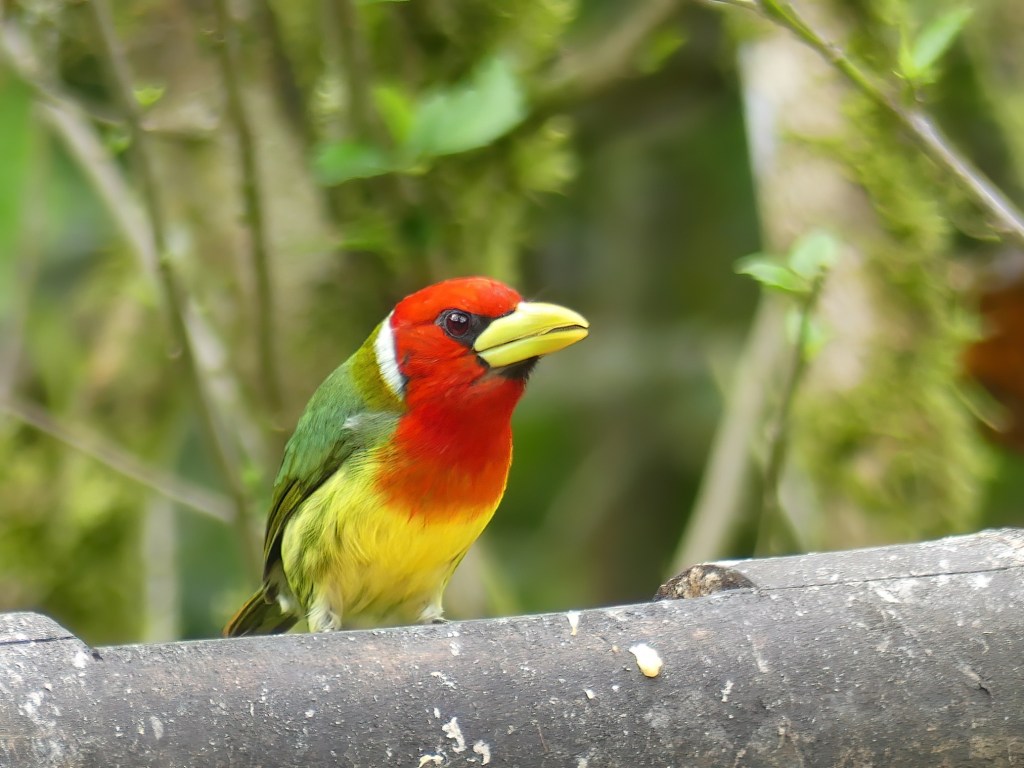
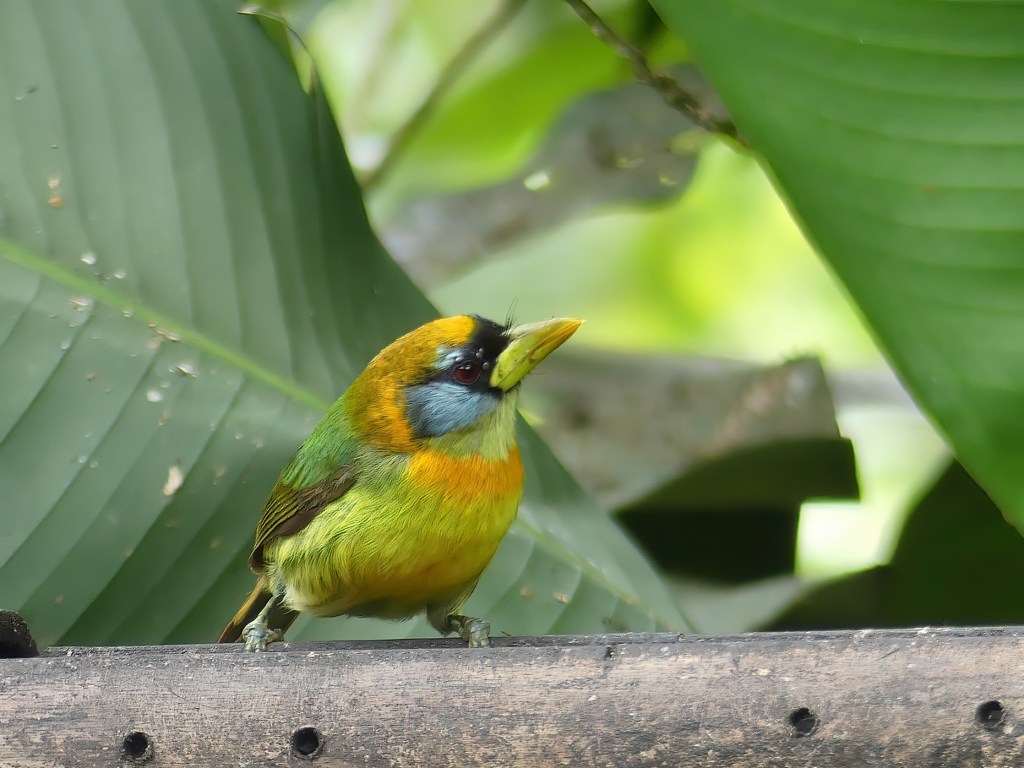
The male and female Red-headed Barbets at Alambi Cloud Forest Lodge were also nice to see.

A hummingbird that we saw frequently in the area west of the Andes was the pretty Andean Emerald.

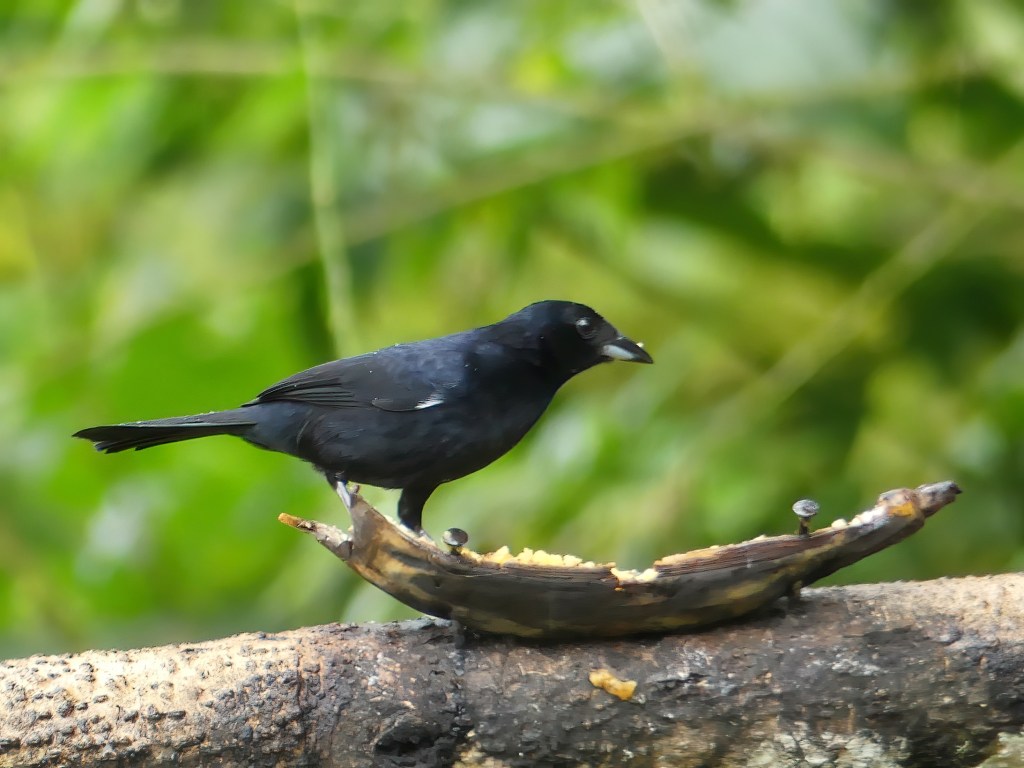
We arrived at Sachatamia Lodge in time for some late afternoon birding. I loved Sachatamia because they had hummingbird feeders AND banana feeders. In Panama and Costa Rica they feed various fruits, but in Ecuador I saw only bananas and only on the west side of the Andes. A few of the birds enjoying bananas that afternoon at Sachatamia were the Flame-faced, White-lined, and Flame-rumped Tanagers and Blue-winged Mountain-Tanager below.

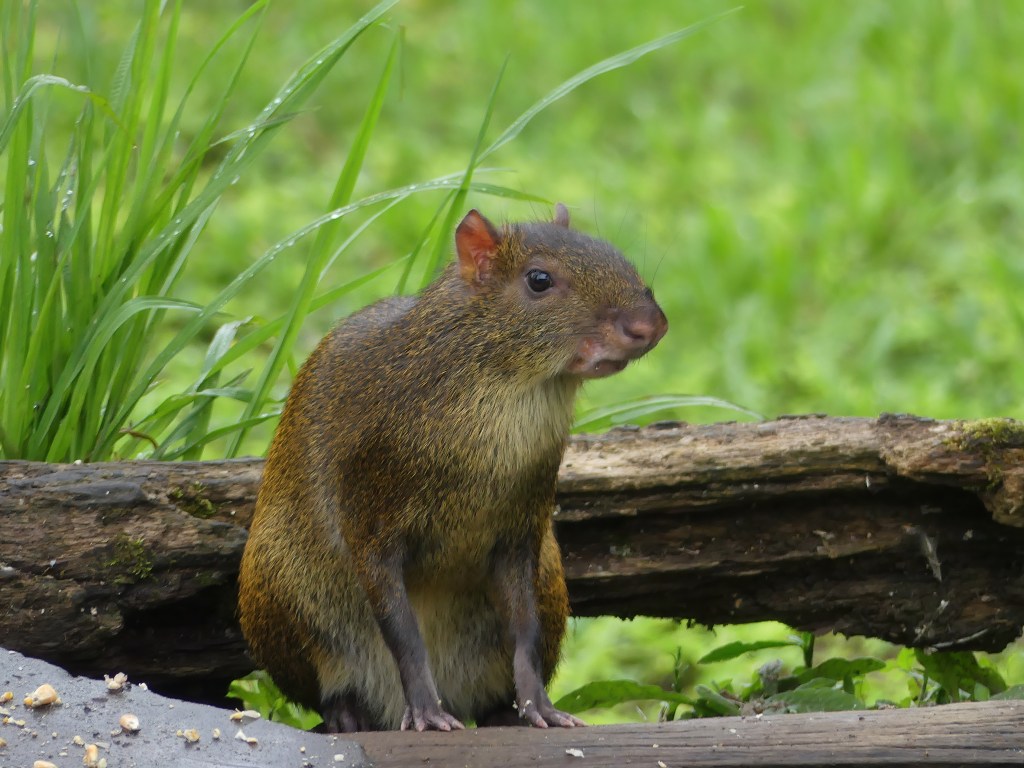
A couple of Agoutis also came to forage under the feeders. I have always enjoyed all wildlife, but since I created an iNaturalist account last year (username shelleydee), I’m learning more. Agoutis are common in middle America and I thought they was a species of rodent, but nope. The name agouti refers to about a dozen species of rodents of the genus Dasyprocta, separated mainly by geographic range. All of those that I have seen are Central American Agouti, which ranges from southern Mexico to northwest Ecuador.

At dinner the first night, we realized that although I had been to Refugio Paz de las Aves on my 2013 trip, Angel currently had several cooperative antpittas that I had not seen. Xavier quickly arranged a visit for the next morning and we arrived a little after 7:00 AM.

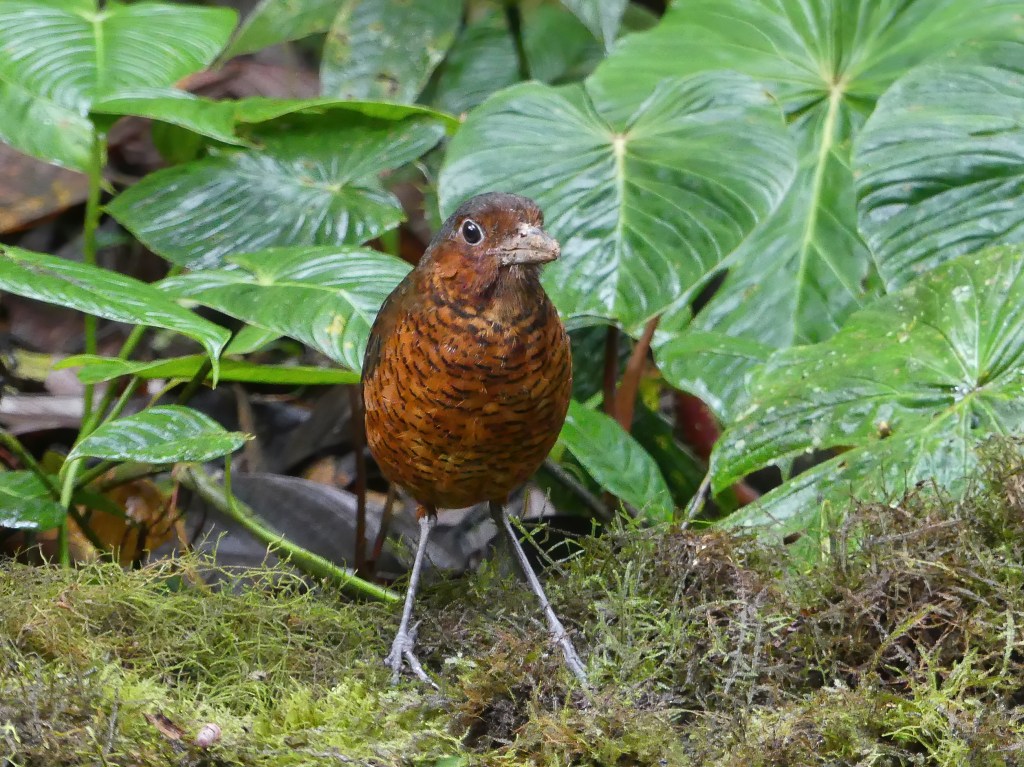
Antpitta #1 was the famous Maria (probably the 6th generation since the original Maria), the Giant Antpitta that started Angel Paz on the way to worldwide fame among birders. Prior to 2005, Angel was logging the cloud forest on family property and hunting birds on the land for food. A Cock-of-the-Rock lek was discovered on the property and Angel began charging birders to see the birds. One day a normally secretive and elusive Giant Antpitta was spied eating worms on the path before it quickly disappeared into the forest. A friend suggested that birders would pay even more to see the antpitta. With tremendous patience, Angel was finally able to get the bird to take worms from him and even come when called. Since then, thousands of birders have been delighted to hear Angel call out “Maria! Maria! Venga venga venga!” It’s a major ecotourism success story with wins for everyone. Angel and his family have enough income for a decent life, the birds and their habitat are protected, and birders are thrilled to see these special birds. Noah Strycker visited Angel Paz during his world big year in 2015 and tells the story in more detail here Day 72: Birding With a Local Legend.

The previous day’s vacation from physical exertion was over. We climbed moderately strenuous trails into the rainforest to see the antpittas. The second one of the morning, a Yellow-breasted Antpitta, was even more shy than Maria. I was told that she had babies to feed since she was gathering worms rather than gobbling them up on the spot.

We had a little break at the banana feeders where I got another life bird, Toucan Barbet, one of over 50 endemic bird species of the Chocó bioregion of western Colombia and Ecuador. The Chocó bioregion is one of the most species rich areas on earth, supporting a total of over 900 species of birds.

Next we went in search of Ochre-breasted Antpitta, the only one of the day’s antpittas that I had seen in 2013. Angel names all of the birds that he feeds and he calls this one Shakira because it does a little dance, which was quite adorable.

The last antpitta of the morning was Moustached Antpitta. This one did not come when called. Finally, Angel’s brother found the female on the nest and set up a scope a respectful distance away. The half dozen birders took turns quietly walking up the hill to the scope, which was 30 feet or so off the path in the forest, to take a quick peek at the bird. I was last and just before it was my turn, Xavier saw another Moustached Antpitta on the other side of the trail giving us all a much better view.

These fantastic birds were enough to make this a wonderful morning, but they were not all it included. Snacks were served after viewing the antpittas, including the most delicious empanadas I’ve ever eaten. We had snacks at many of the places we visited; those at Refugio Paz de las Aves were the best.

There were a few butterflies in the garden and I was surprised to see a Monarch. Once again, submitting a sighting to iNaturalist sent me on a quest to learn more. Virtually everyone in eastern North America is familiar with “our” Monarch, a migratory butterfly that winters in Mexico. But, I had no idea that these migration super powers have led to the spread of the same Monarch species, Danaus plexippus, to Europe, Africa, Asia, and Australia. Five non-migratory subspecies occur in the neotropical region with the nigrippus subspecies occurring on both sides of the Andes. No wonder the Monarch is the best-known and well-loved butterfly in the world! Xavier Munoz took the photograph below at Refugio Paz de las Aves on the day we visited.

Stay tuned, friends, for much more to come. This covers only the first two days of 14 full days of birding.

Read Full Post »