The Western Ghats is a vast mountain range that stretches nearly 1,000 miles along the western coast of the Indian peninsula, spanning six states. These ancient mountains, older than the Himalayas, are a globally significant biodiversity hotspot. They are home to over 9,000 species of plants, more than 500 species of birds, and numerous mammals and other animals. Sixteen bird species are endemic to the Western Ghats, and an equal number of species are most easily found there.
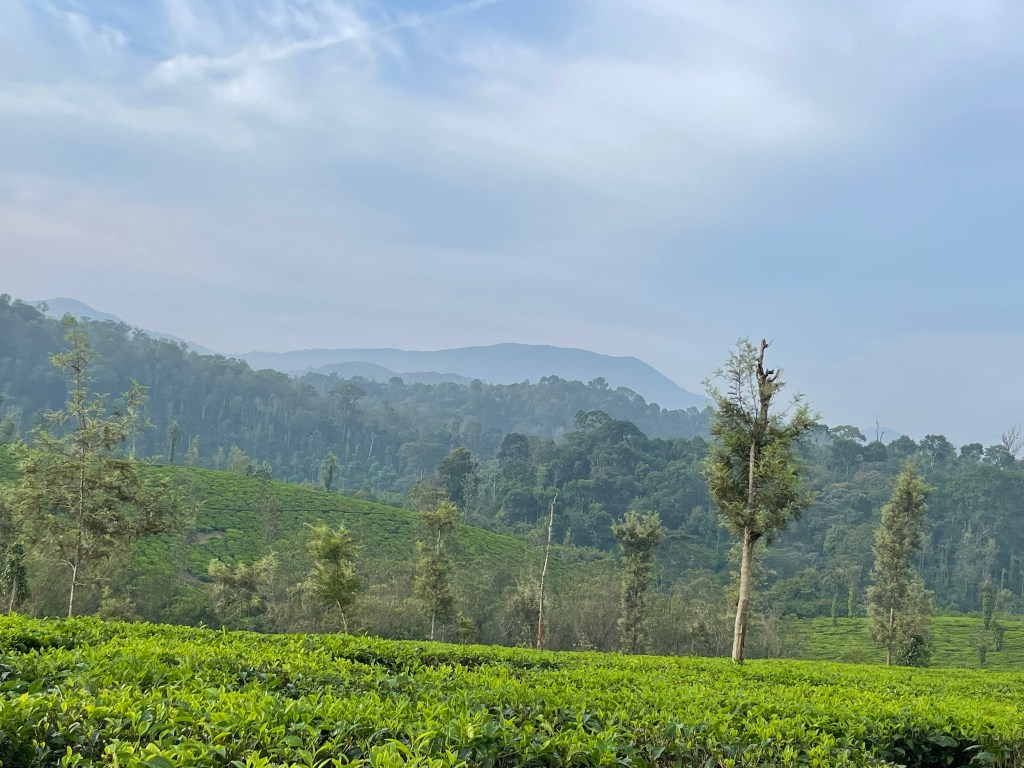
When Linda and I were planning my visit, we knew that we wanted to spend time in the Western Ghats. After exploring several options, we decided to hire Bopanna Pattada, one of the area’s top guides, for a week of birding in Coorg, where all of the endemic birds of the Western Ghats occur. Coorg, also known as Kodagu which means “dense hilly country,” is located on the eastern slopes of the Western Ghats. It is one of the nicest and coolest places that is easily accessible from Bangalore.
On November 29, we traveled to Mysore, where we enjoyed a pleasant and quiet afternoon at a nice little resort on the Kaveri River. It was the first day since my arrival in India that I did not get a life bird, but we enjoyed watching crows, cormorants, egrets, and a proud male peacock atop a big rock by the river.

Bopanna picked us up early the next morning and we started birding right away as we slowly made our way west. Linda photographed the Asian Openbill below at our first birding stop.

At our next stop, we were happy to see the beautiful Blue-tailed Bee-eater below. Linda and I both love the colorful and fascinating bee-eaters. They really do eat bees and other flying insects, catching them mid-flight and then smacking them on a branch to stun the insect and remove the stinger and toxins. Bee-eaters breed in large colonies and most species have nest “helpers” (offspring or other close relatives) who assist the parents with feeding and other duties. The San Diego Zoo provides fascinating facts about their life histories here.

I had seen a Blue-tailed Bee-eater in 2014, but I got ten other “lifers” that day including the Orange Minivet below.

We also saw several wild elephants as we drove the main road through Nagarhole National Park.

The latest elephant census in Coorg estimated 1,103 wild individuals. I was excited to see the elephants, but I quickly learned that Kodagu’s people live in constant fear of elephant encounters, and several people are killed in these encounters each year. Efforts to improve the dangerous situation for both the local people and the elephants are on-going. Bopanna was constantly alert, listening for the presence of elephants nearby, and several times told us to get to the car as quickly as possible.

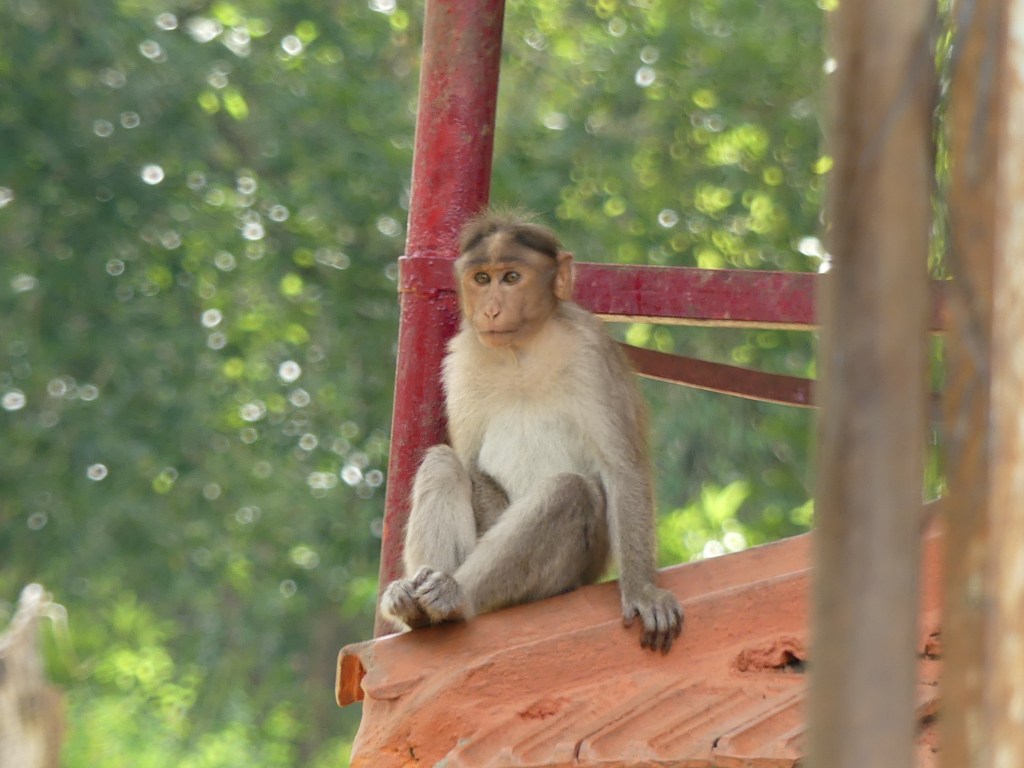
We also saw Bonnet Macaques while driving through the park. The one below was part of a group enjoying the offerings left at a small Hindu Temple.
That evening we settled in at our home for the week, the entire upstairs floor of a nice little house. We each had our own bedroom as well as two full baths, a living room, dining room, and kitchen. The best part was a lovely balcony where we spent several happy hours during the week watching birds in the trees right in the yard and across the street.
The next morning, December 1, we visited a coffee plantation. Coorg produces 40% of the country’s coffee crop, which is mostly grown under a native canopy. The coffee plantations were beautiful and full of birds. I really enjoyed the delicious coffee during our trip and I bought a pound of it to bring home.


Many of the endemics of the Western Ghats have Malabar in their names. Below, my life Malabar Flameback, distinguished from the similar Black-rumped Flameback mostly by a slightly different pattern on the face.

The day ended with one of the most amazing experiences of trip, the three of us sitting hidden in the woods by a little pond at dusk. Bopanna spotted an Indian Pitta in the trees, and then other birds slowly appeared at the water’s edge. Orange-headed Thrush, Indian Blue Robin, Malabar Whistling Thrush, Puff-throated Babbler, Blue-throated Flycatcher, and a few others came for a bedtime drink and bath. It was a “magic moment,” one of those almost spiritual experiences when it feels like the birds allow you to be a part of their world for a short time.


Saturday, December 2, started at Bandipur Wildlife Sanctuary with a Crested Serpent-Eagle.

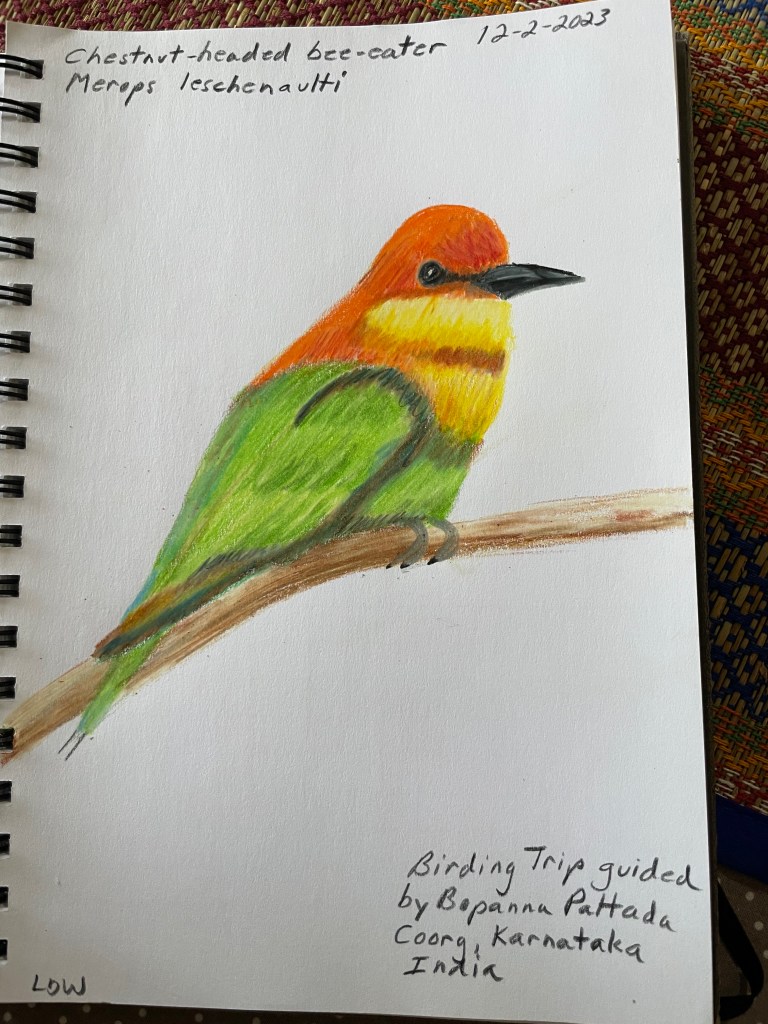
Next at the sanctuary, Linda and I both saw our lifer Chestnut-headed Bee-eater. We did some birding at another location and then went back to our home for the week for a mid-day break where Linda made the gorgeous entry below in her nature journal.
We still have three more days of birding with Bopanna in Coorg. Part 2b coming soon.


 Birding for Life