Feeds:
Posts
Comments

Posts Tagged ‘Bighorn Sheep’

Diane and I left our hotel in Luverne, Minnesota, on Tuesday, May 30, and headed west across South Dakota. We met in SD in 2010 and both of us have birded quite a bit in the state, so we didn’t plan any stops other than at rest areas until we reached Badlands National Park.
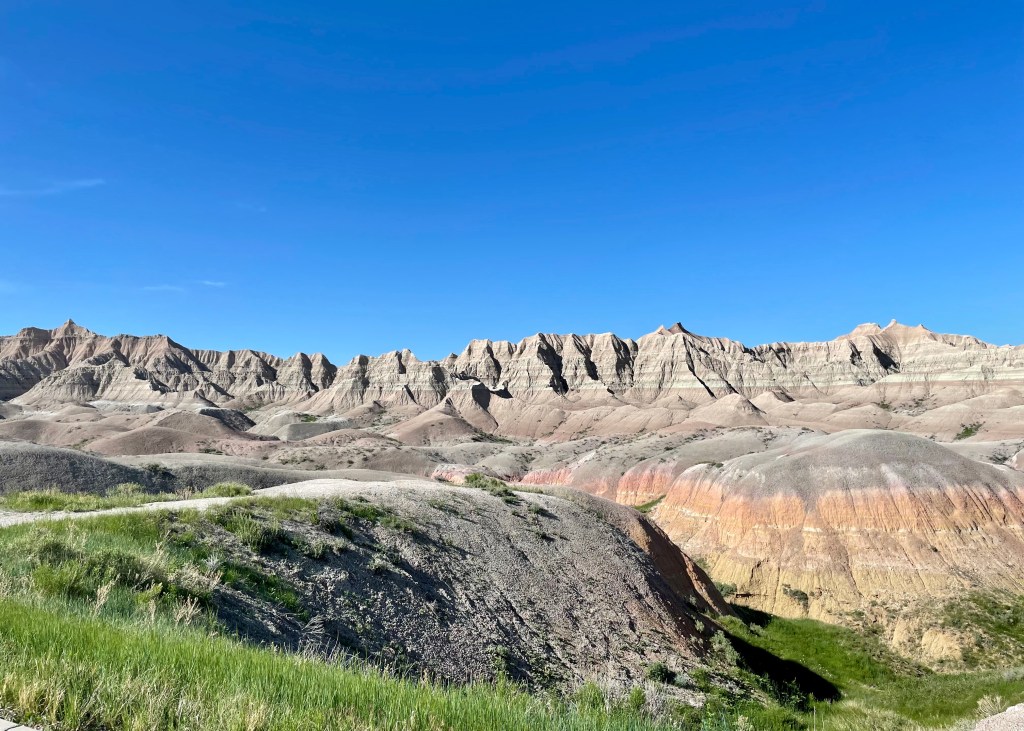
I had reviewed bird lists for the park to prepare for the trip, but I had not looked at any photos of the landscape. Thus, I was absolutely awestruck upon our arrival that afternoon. I was instantly, madly in love with this place. The only words that I can find – beautiful, dramatic, rugged – seem inadequate and my amateur photos do not do it justice. If you have been to South Dakota’s badlands, you know what I mean. If you have not been there, go! Put it on your bucket list.

The stark contrast between vast mixed-grass prairies where the buffalo still roam and extensive rock formations was very appealing to me. The section of the park depicted below reminded me of Canyonlands National Park in Utah.

Badlands National Park covers 244,000 acres. Its geologic foundation began 75 million years ago as deposits of rock built up in layers over the next 47 million years. About 500,000 years ago, erosion began as the Cheyenne and White Rivers carved their way through the landscape forming the dramatic peaks and canyons that we see today. In the photo below, the layers are especially noticeable.

Diane and I felt our attention constantly pulled between pull-overs on the side of the road to savor and photograph the landscape and the search for birds and other wildlife. We quickly learned that the secret was to get out at 5:30 or 6:00 AM and focus on wildlife first.

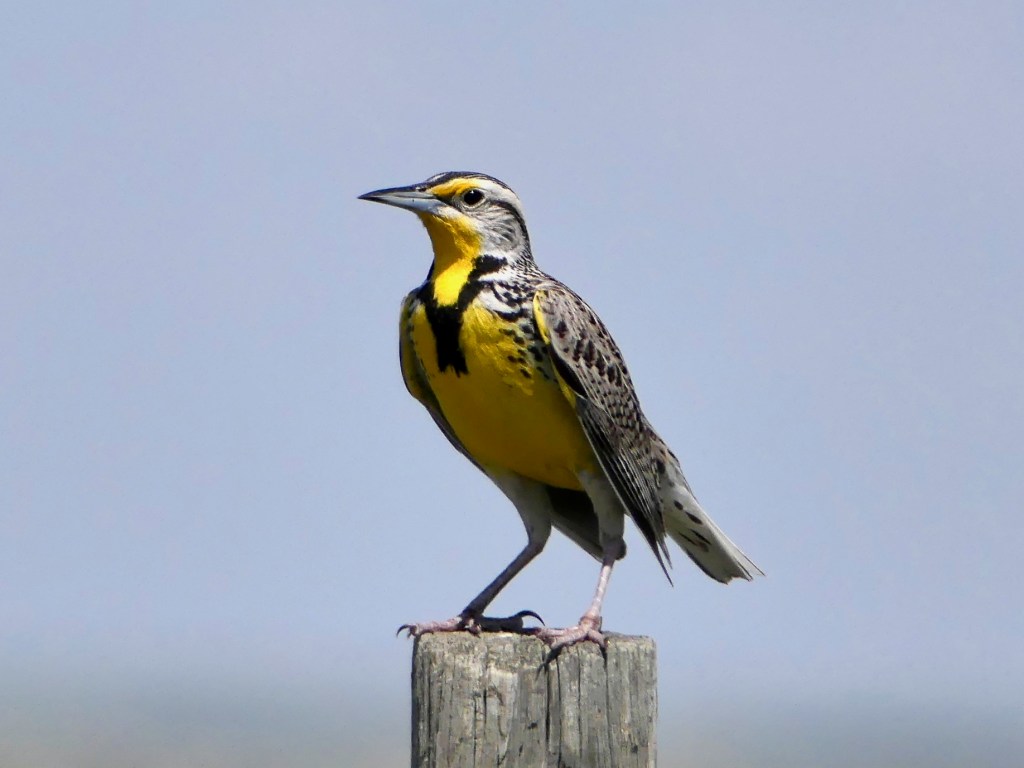
We saw many iconic species of the west with the most numerous being Western Meadowlark. Our host at the Badlands Inn called its song “the soundtrack of the badlands.” Somehow, I failed to get a photo of a meadowlark in the badlands, so here is one from an earlier trip west.
Another gorgeous western bird that we saw here (and I would see many more times during this trip) was the dapper Lark Bunting.

Birders and non-birders alike watch for other wildlife with the expected species being bison, pronghorn, bighorn sheep, mule deer, and black-tailed prairie dog.

Badlands National Park is in the heart of historic bison range. Before European settlers arrived, about 30 million bison inhabited North America, but by the late 1800’s they were nearly gone. A project to reintroduce bison to the badlands was started in the 1960’s. A major conservation achievement resulted with a healthy herd of nearly 1,200 individuals. Read more about this project and learn how bison improve the prairie ecosystem for all its inhabitants in Bringing Bison Back to the Badlands.

Like most Americans, we wanted to see our national mammal. We saw more than 100 bison with many in the distance and some right by the road.

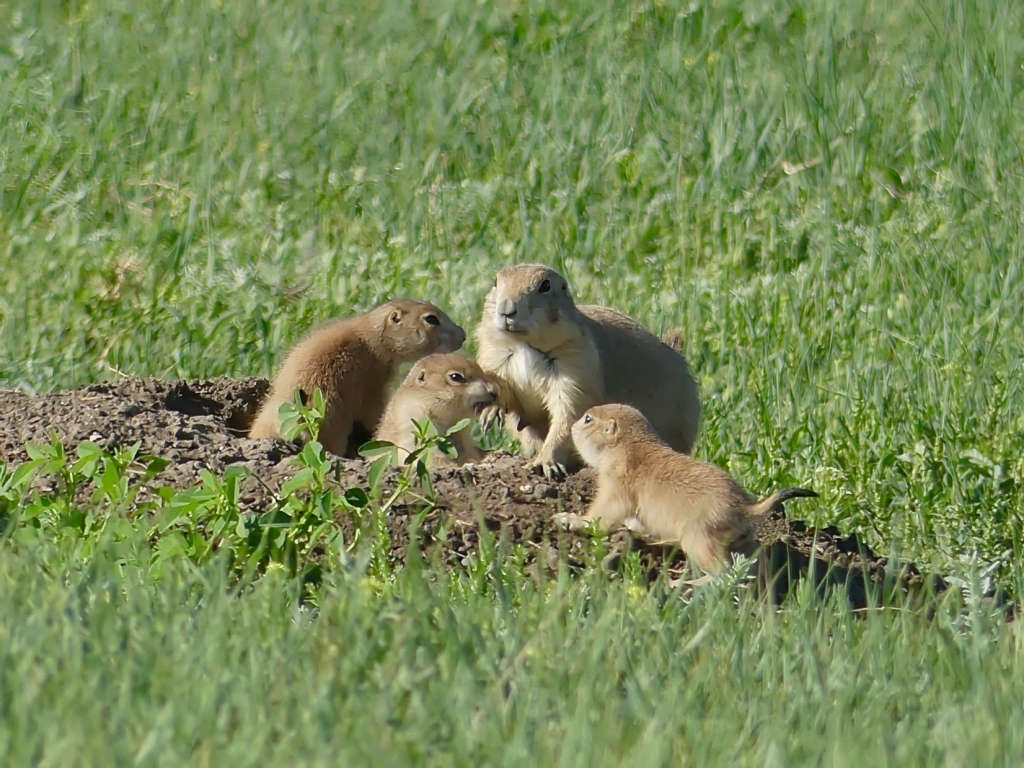
We also saw hundreds of prairie dogs. We especially enjoyed watching the families, some with as many as five babies. We called these adorable little creatures “puppies” and later learned that we weren’t far from the correct term “pups.”
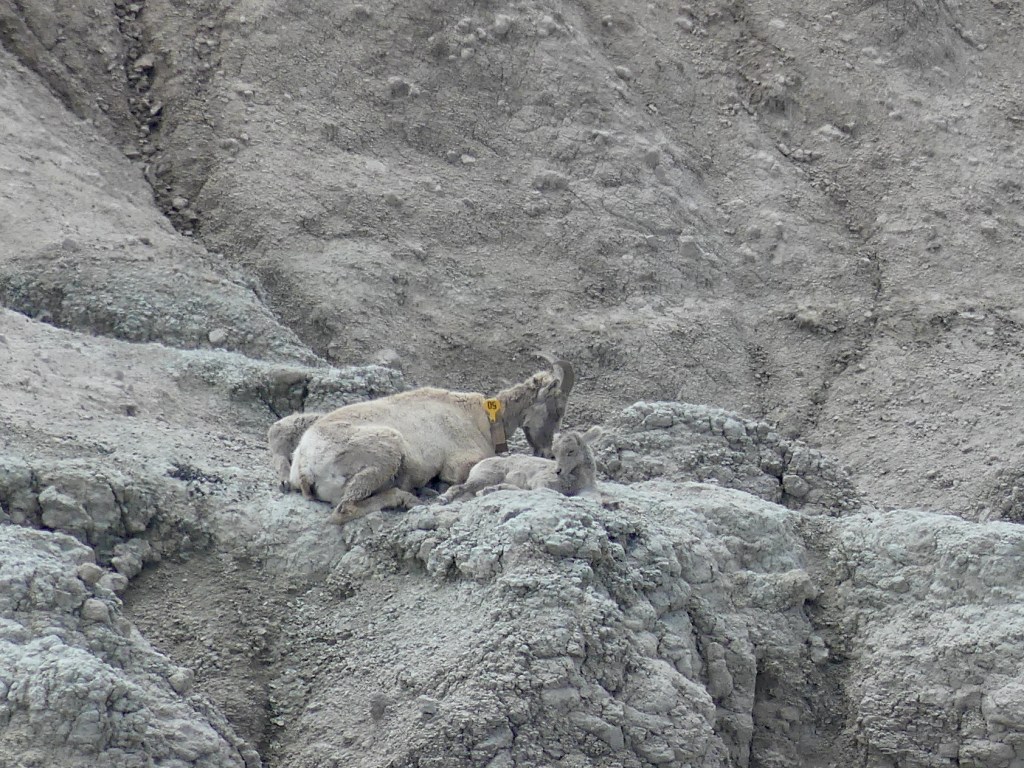
Bighorn sheep were not as numerous, but we found several at the Hay Butte Overlook.

A week and a half later I would return with David and we would see sheep again at the same overlook, but high up in the rock cliffs. That group appeared to be all females with their babies.
My biggest surprise (and disappointment) with wildlife was not seeing a single snake or lizard, despite signs everywhere warning of rattlesnakes. My only consolation was this cute Woodhouse’s Toad right outside our motel room.

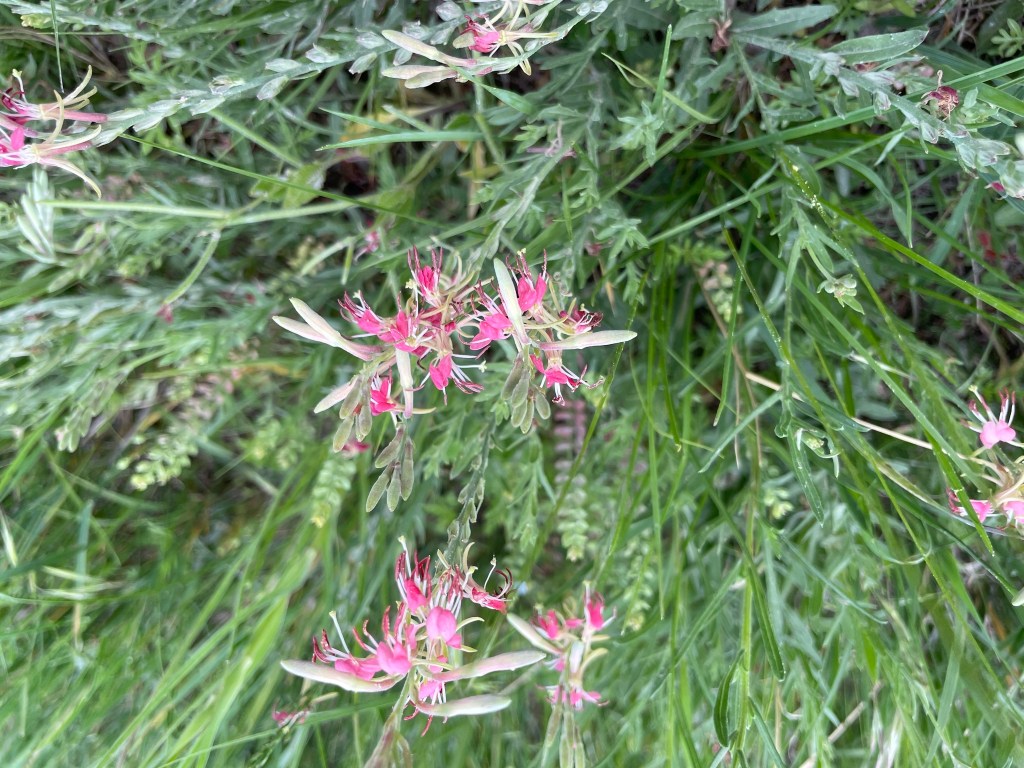
As in Minnesota, wildflower season was just beginning and we found some pretty flowers.

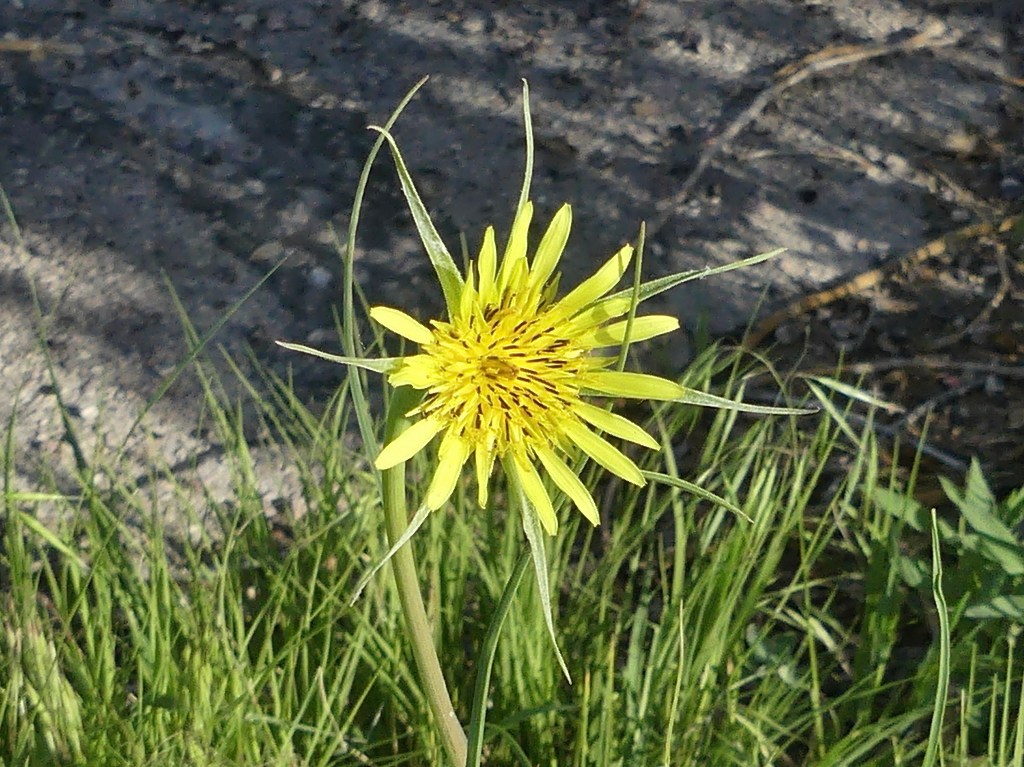
Some of the flowers above were photographed at Conata Picnic Area, one of the spots that Diane and I especially liked. David and I visited the same area twelve days later and I was sad to discover that all the wildflowers on the sides of the entrance road and picnic area had been mowed down.

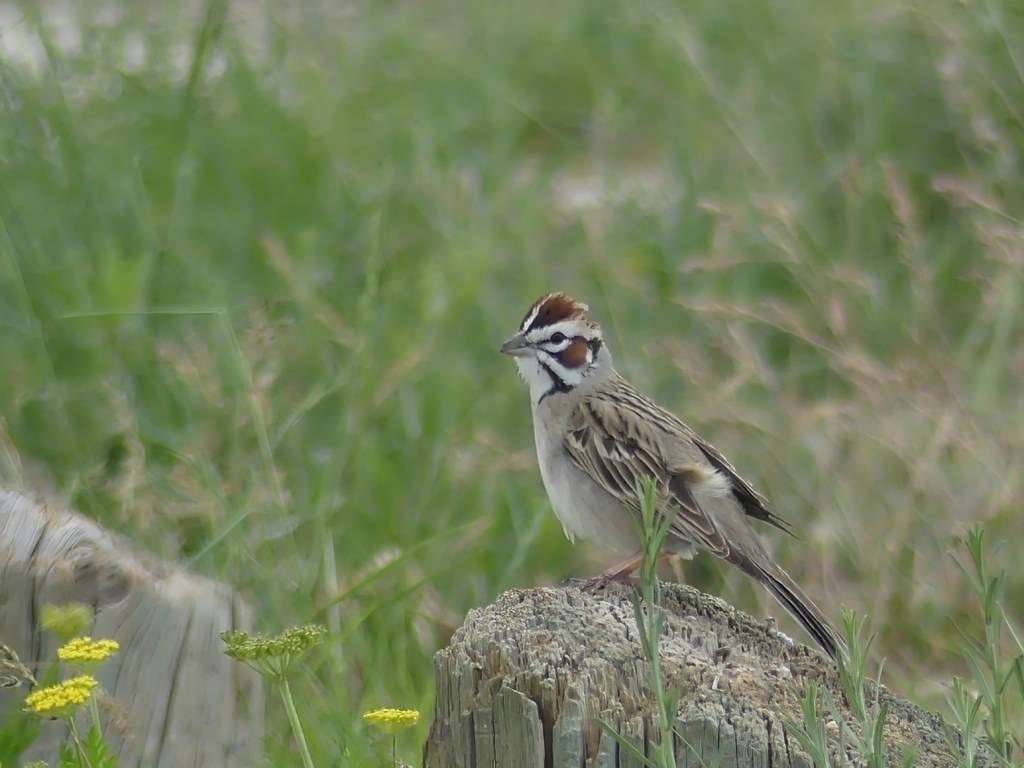
We saw birds there, too, like this pretty Lark Sparrow, a common species in the west.
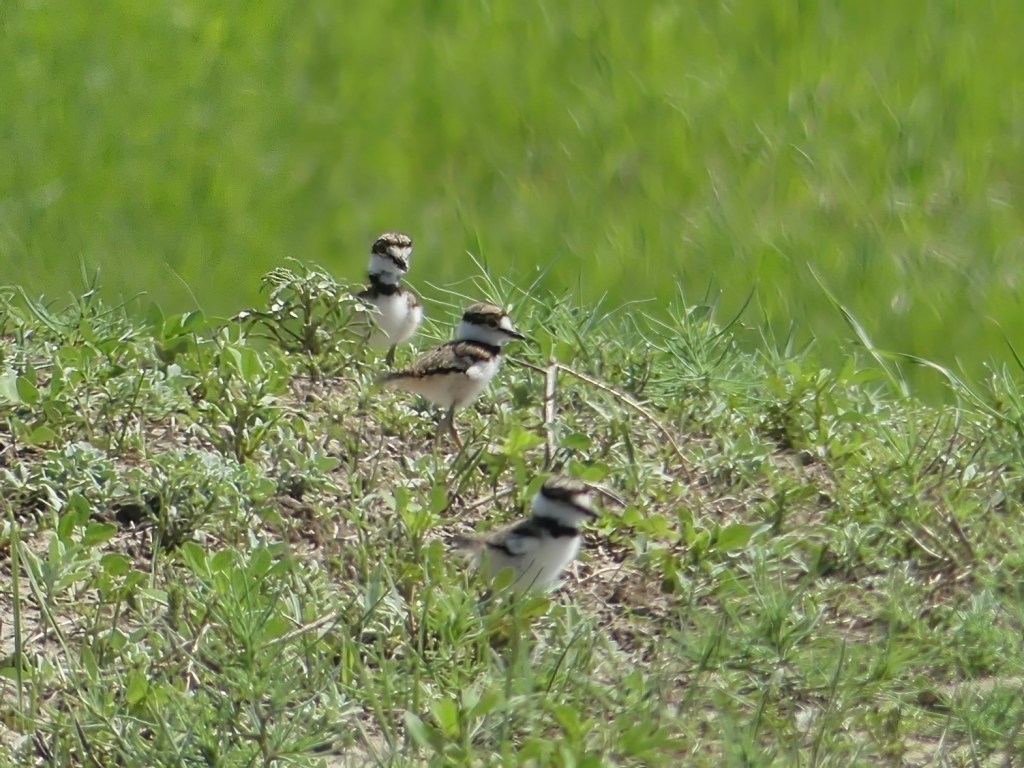
Perhaps this spot endeared itself to us because this is where we saw a Killdeer family with three chicks. Killdeer are common across the country, but we don’t see the babies often. And, babies of all species were a delightful recurring theme on this trip.
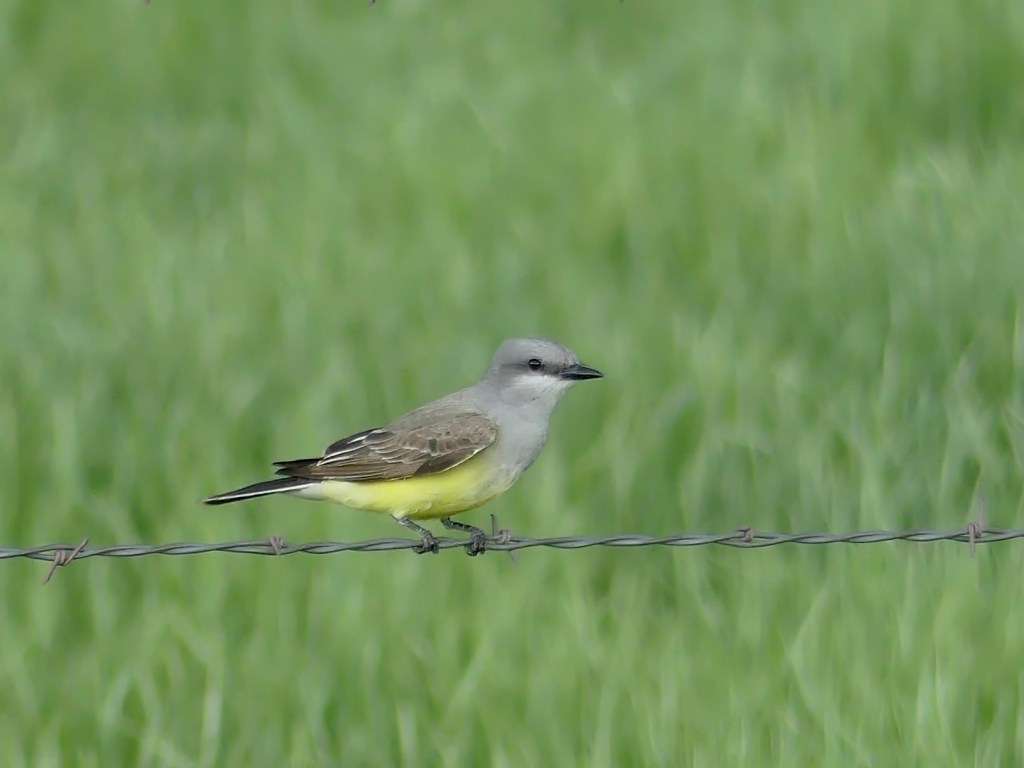
This Western Kingbird was also nearby. Birds that are common in the west are not common to us and we loved what felt like a visit to old friends that we do not see often enough.
We saw birds that are common in the east, too, including many Red-winged Blackbirds, Common Grackles, and Brown-headed Cowbirds. I tried to ignore the cowbirds, but how could I when one posed so nicely?

We never tired of stopping to photograph the ever-changing landscape. Sights like Yellow Mounds, a favorite spot of many park visitors, constantly awed us. Yellow Mounds (photo below) gets its mustardy color from the mineral goethite. The Yellow Mounds are ancient fossilized soils that geologists call paleosols.

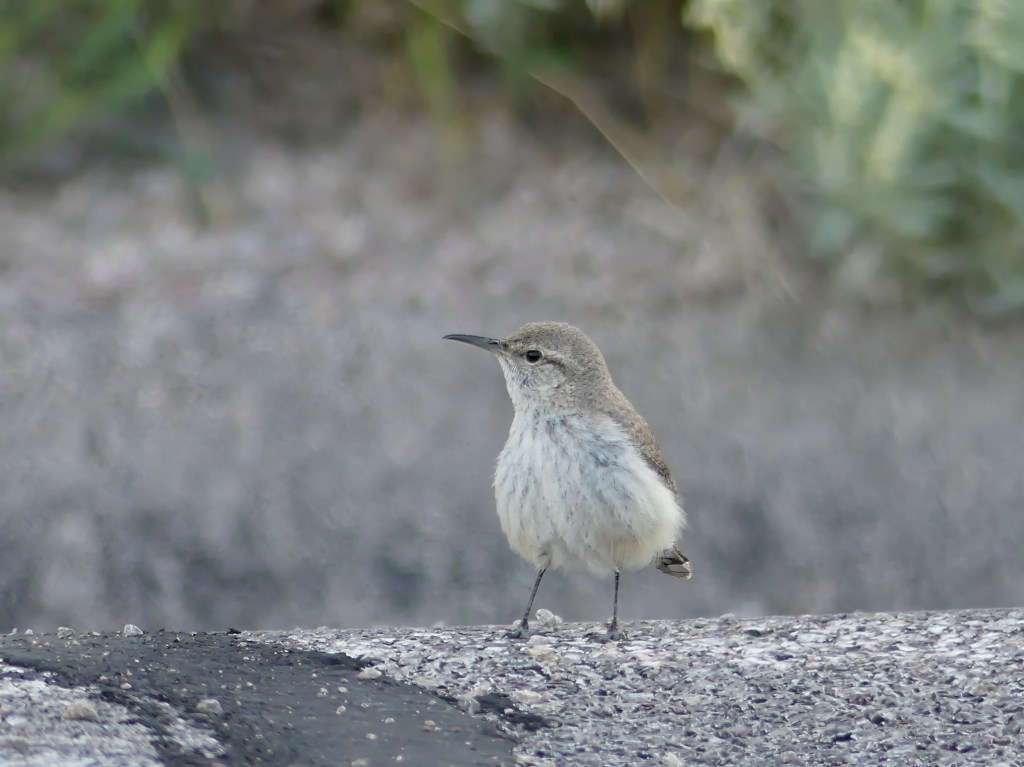
On our last morning, Diane and I got out really early and it paid off with our best views ever of a Rock Wren. It was fun to watch it move quickly along the rocky edge by the side of the road picking at insects.
Much too soon, our time in the park was gone and we had to leave for the Rapid City airport. Diane and I spent two full days in the park. Later I would return with David for one day. One day is sufficient to drive all the roads and see most of the iconic wildlife in the park. Two days is enough to also see some birds. However, I could easily spend three or four days in the badlands and not be bored.

There are two main areas to stay, Wall and Interior. David and I stayed in Wall, which has nicer (and more expensive) lodging, but I preferred Interior, where Diane and I spent two nights. Our motel was “basic,” but we were just a couple of minutes from the park loop road.

I would love to visit Badlands National Park again, but for this trip it was time for Diane to fly home and David to arrive. I would spend the next week exploring the Black Hills while David rode in RASDak, a 350-mile cycling event.

Continue to part 3, Road Trip 2023: Days 8-18 – Bikes and Birds (Part 3 of 4)
Read Full Post »

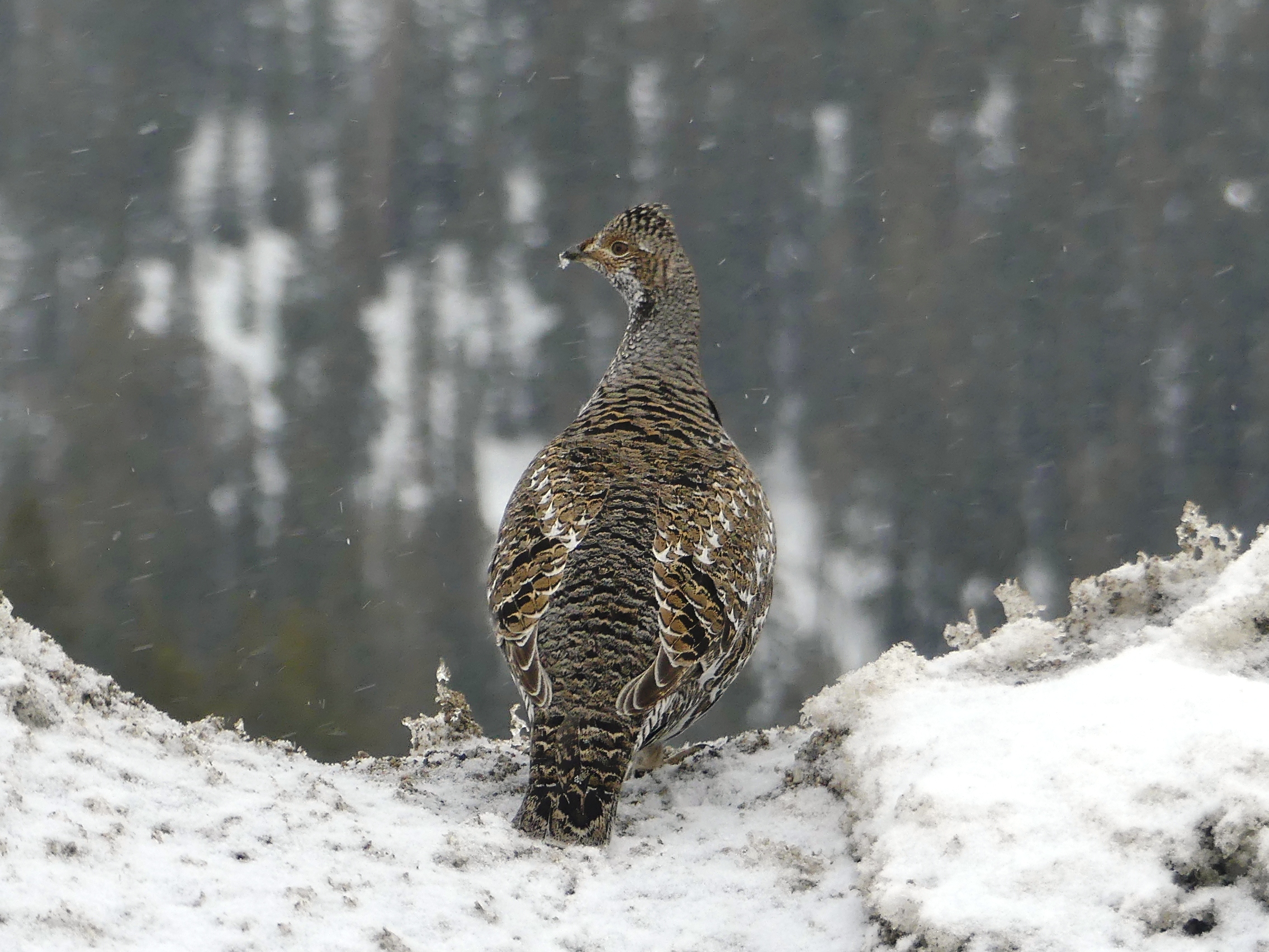
After wonderful experiences viewing both Greater and Lesser Prairie-Chickens on their leks, we turned our attention to finding Colorado’s other grouse species.  On our drive west from Wheat Ridge on April 17, we witnessed dramatic shifts in the landscape as our elevation increased from 5,400 feet to 12,000 and we climbed above the tree line.  We hoped to find the elusive White-tailed Ptarmigan, the smallest grouse in North America.  But first we had a totally unexpected surprise just before Loveland Pass. “What’s he doing here?” one of our guides exclaimed as we saw a Dusky Grouse on the side of the road.

Dusky Grouse on the side of the road as we approached the Continental Divide.

Dusky Grouse on the side of the road as we approached the Continental Divide.

The Dusky Grouse was my first life bird of the trip and I was thrilled.  Our good fortune that day continued.  In late April, it can be impossible to find birds at Loveland Pass due to high winds or blinding snow, but we were very lucky with clear weather.  We parked the vans in the little area at the pass and walked a short distance along the icy trail.  Snow covered the ground and I couldn’t imagine how we would ever find a small white bird.  After 45 minutes of rigorous searching, our guides using their scopes, Doug pulled two distant birds out of the snow-covered mountainside.  But I couldn’t make out the bird in the scope; all I saw was snow.  I was ready to give up, but Cory would not let me quit.  Finally, I saw the black dots of eyes and beak.  I would have liked the bird closer, but I was happy to see this difficult bird at all.

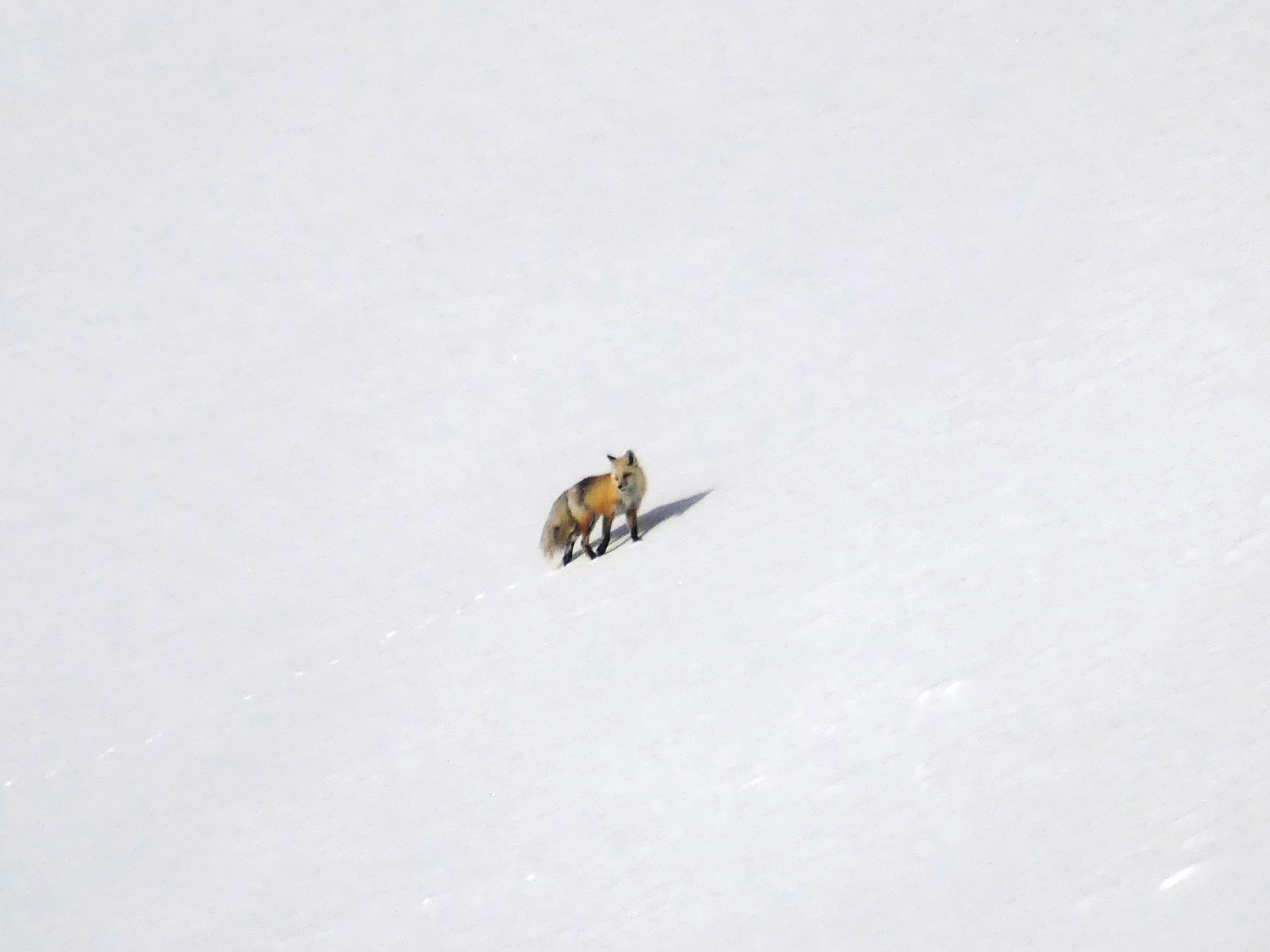
Another unexpected sight at the pass was this red fox that appeared to be playing in the snow. 

Another unexpected sight at the pass was this red fox that appeared to be playing in the snow.

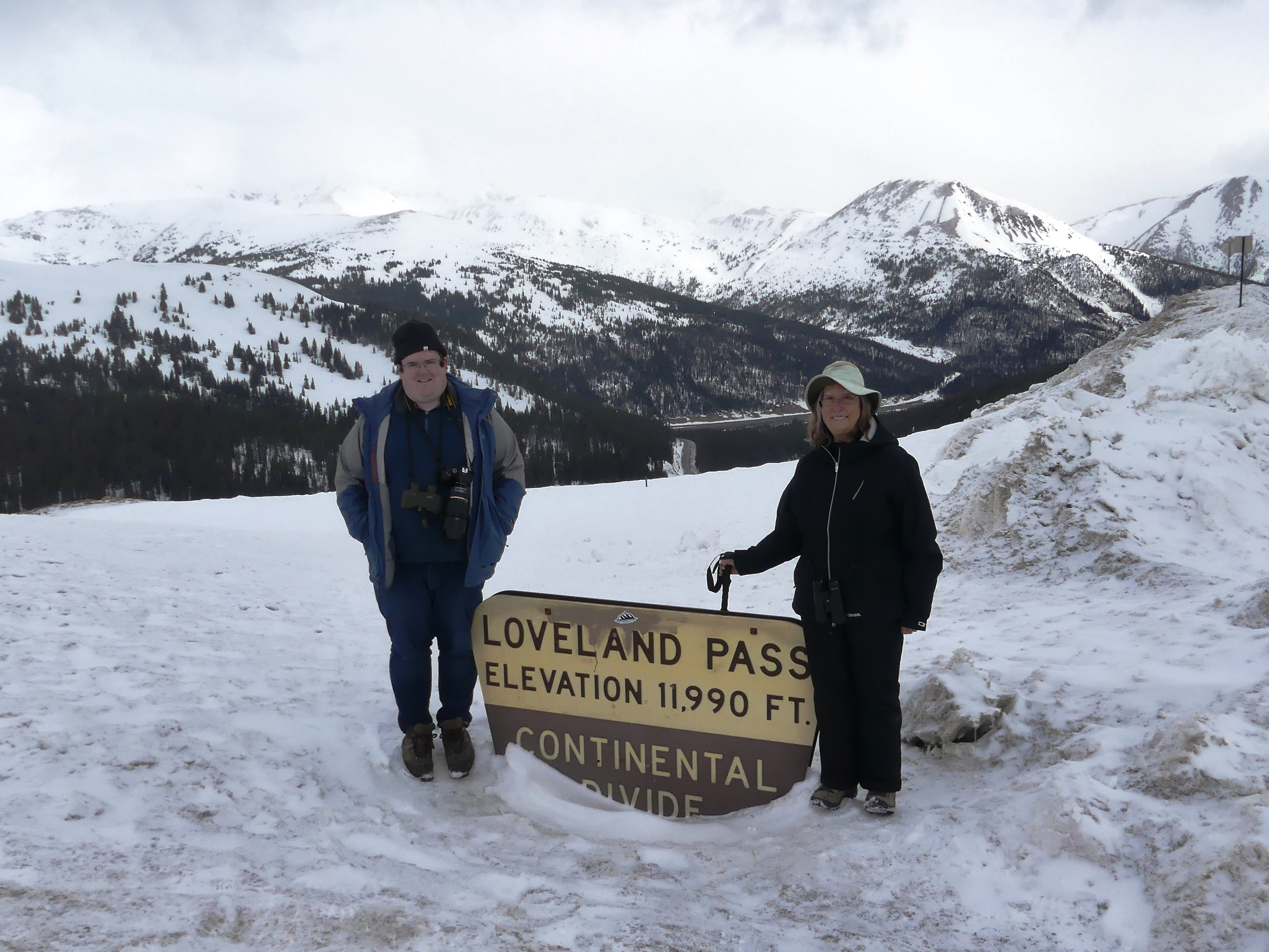
I didn't get a photo of the White-tailed Ptarmigan, so Derek and I posed to mark the occasion.

I didn’t get a photo of the White-tailed Ptarmigan, so Derek and I posed to mark the occasion.

That afternoon we enjoyed more mountain birding as we drove south.  It wasn’t long until Derek and I had more life birds, Black and Brown-capped Rosy-Finches.  I have no photos from that sighting, but we would see them incredibly close the following day.

The ever-changing landscape turned to the utterly different dry forest of San Isabel National Forest just a few hours after we left Loveland Pass.  Pinyon Jays were the stars here with good looks at these nomadic birds that can be very challenging to find.

Lunch was at the delightful Eddyline Restaurant in Buena Vista.  As an appetizer, we shared a couple of Wild Game Sausage Samplers which included Jackelope (rabbit and antelope) sausage, one of our most distinct culinary ventures.

After lunch, we climbed back to higher elevations and heavy snow which led to my favorite “weather” photo of the trip, a Clark’s Nutcracker at Monarch Pass.

Clark's Nutcracker

Clark’s Nutcracker

This American Three-toed Woodpecker, also seen at Monarch Pass, was a life bird for some in our group and pleased us all by being exceptionally cooperative.

American Three-toed Woodpecker

American Three-toed Woodpecker

And, I was happy to get my first really good looks at Mountain Chickadee.

Mountain Chickadee

Mountain Chickadee

We continued our westward journey to look for Gunnison Sage-Grouse.  Scientists first noticed differences in the sage-grouse inhabiting the Gunnison Basin in southwest Colorado and eastern Utah in the late 1970’s.  One of the first clues was that the northern sage-grouse consistently pop their air sacs twice in each of the many brief strut displays they perform, but the Gunnison birds pop their air sacs nine times.  The Gunnison birds are smaller and have shorter tails with more distinct white barring.  The males have longer and thicker filoplumes on the neck and perform a different sort of strut.  In 1999, even more definitive evidence piled up when detailed studies of the two groups’ DNA showed that they were far too distantly related to be considered the same species.

Gunnison Sage-Grouse. Photo by Bob Gress.

Gunnison Sage-Grouse. Photo by Bob Gress.

Gunnison Sage-Grouse was officially recognized as a full species in 2000 and it was already in trouble.  Its population and range have never been large, but it is now reduced to about ten percent of its historical range: seven populations in southwest Colorado and southeast Utah with a total number of birds under 5,000, the majority in Colorado’s Gunnison Basin.  In November 2014, the Gunnison Sage-Grouse was listed as Threatened under the U.S. Endangered Species Act.  While there are efforts to save the species, there are also the usual political battles while the birds face threats from habitat loss, degradation, and fragmentation as well as the roads and power lines associated with development, improper grazing management, global warming, low levels of genetic diversity, and more.

We saw Gunnison Sage-Grouse well enough to distinguish them from the similar, but somewhat larger Greater Sage-Grouse, but the birds were distant.  We focused on movement and behavior rather than plumage and field marks.  When the males filled their air sacs and forcefully threw their bodies forward, some of us thought it looked like they were trying to hock a loogie.  Here is a video from the Cornell Laboratory of Ornithology.

Eric Hynes, a Field Guides trip leader who lives in Telluride, spent the afternoon with us, a great bonus and an experience that would have been impossible if we had been birding on our own.  Eric said that he would take us to his house where he promised Rosy-Finches “right at your feet.”  On our way to Eric’s house, we spotted these Bighorn Sheep on the red rocks by the side of the road.

Bighorn Sheep

Bighorn Sheep

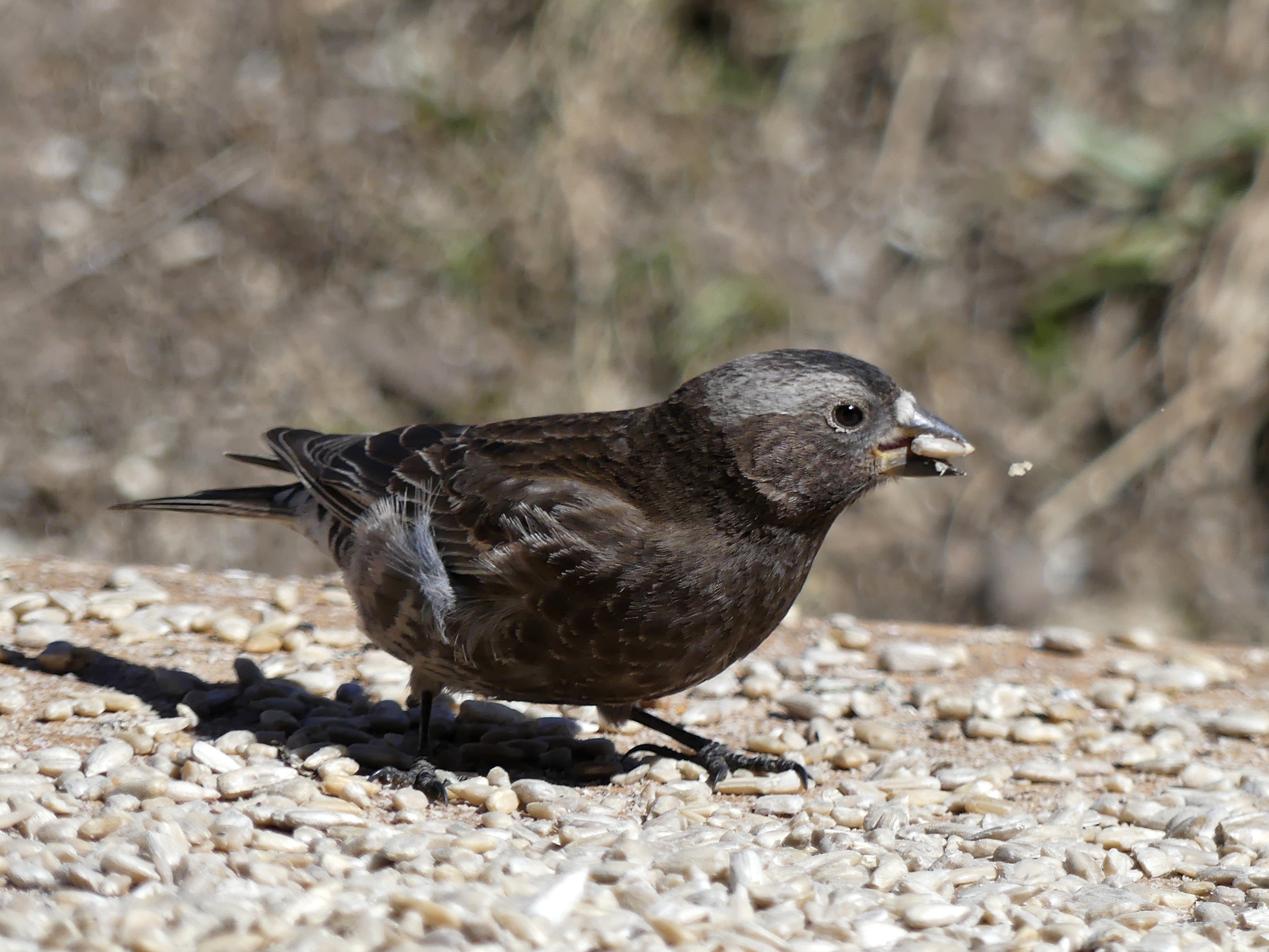
The Rosy-Finches in Eric’s backyard did not disappoint us; they were so close we could almost touch them.

Black-Rosy-Finch, a life bird for Derek and me. I missed this species on my big trip West last summer, so it was especially sweet to have such incredible close views.

Black Rosy-Finch, a life bird for Derek and me. I missed this species on my big trip West last summer, so it was especially sweet to have such incredible close views.

Brown-capped Rosy-Finch, another life bird for me.

Brown-capped Rosy-Finch, another life bird for me and nearly endemic to Colorado.

Some of the Rosy-Finches were not easy to identify. This one is probably a Gray-crowned, but I wouldn't bet my life on it.

Some of the Rosy-Finches were not easy to identify. This one is probably a Gray-crowned, but I wouldn’t bet my life on it.

This gorgeous male Evening Grosbeak was another guest at the Casa Hynes feeding table.

This gorgeous male Evening Grosbeak was another guest at the Casa Hynes feeding table.

I could have stayed here all day and the guides did not rush us, but after nearly an hour in Eric’s backyard, it was time to look for other birds.  We walked along the lovely creek that runs through downtown Telluride.  Our target was American Dipper, which we watched perched on the rocks and repeatedly diving under the water to forage.

An American Dipper with a little fish in its bill. This was one of Derek's most wanted birds.

An American Dipper with a little fish in its bill. This was one of Derek’s most wanted birds.

We also saw a Savannah Sparrow by the stream (surprise!), both Mountain and Black-capped Chickadees, and Cinnamon Teal and an unexpected White-faced Ibis at a nearby pond.  We had another great lunch (I could write an entire post just about the fabulous food on this trip) and said goodbye to Eric.

It had been an outstanding day that Derek summed up like this: “This was one of my favorite days of birding ever.  I had two lifers in Gunnison Sage-Grouse and American Dipper, one of which is extremely difficult and endangered while the other represents a new, distinct family, coming within touching distance of rosy-finches plus the Evening Grosbeak, just the length of the Dipper sighting as it foraged, mating Peregrines, being one of two to spot a last-second Golden Eagle, stunning scenery, and two charismatic mammal lifers in the Bighorn Sheep and Yellow-bellied Marmot, plus maybe a lifer chipmunk.”

The next morning, April 19, we started with a visit to the spectacular Black Canyon of the Gunnison National Park.  The key feature of this park is the deep narrow canyon with walls that plunge an awe-inspiring 2,700 feet to the Gunnison River below.  Black Canyon gets its name because some parts of the gorge receive only 33 total minutes of sunlight per day.  This gem is one of the least visited national parks and worth a visit for its incredible scenery.

The Painted Wall, a popular feature of the NWR. Photo by Derek Hudgins.

The Painted Wall, a popular feature in the National Park. Photo by Derek Hudgins.

Our first target was Dusky Grouse, usually found in the campground area.  Dusky Grouse are not known to utilize leks for courtship displays.  Rather, a male will display to any female that he finds and probably mates with more than one female each season.  After mating, the female leaves the male’s territory to build a nest and raise a clutch of chicks by herself.  We saw a couple of birds near the campsites, and then when driving out of the area, we found a distant displaying male.

As we traveled through Colorado, we were delighted to see mammals of all sizes in addition to birds and the fantastic landscapes.  Here’s a cute little ground-squirrel who posed nicely for our cameras.

Golden-mantled Ground-Squirrel

Golden-mantled Ground-Squirrel

After leaving the National Park, we drove to the Utah state line in the afternoon to look for Sagebrush Sparrow.  I loved the solitude of the gravel BLM roads without much other traffic.  Doug and Cory listened for birds and stopped when they heard singing.  We were actually on a road that marked the state line, so we got to count birds on both sides of the road and I got a bonus of another new state.  We had excellent views of Sagebrush Sparrow, another life bird that I had missed last summer.

Sagebrush Sparrow, a much-desired life bird

Sagebrush Sparrow, a much-desired life bird

Other birds here were Sage Thrasher (which politely flew across the state line for the listers in our group), Common Raven, Brewer’s Sparrow, Golden Eagle, and even a distant Ferruginous Hawk spotted by one of the trip participants.  Shortly after we started heading to our hotel for the night, another sighting was a first for all of us – a Great Blue Heron rookery on a cell tower!

Goodbye Utah. Photo by Derek Hudgins.

Goodbye Utah. Photo by Derek Hudgins.

Stay tuned for more Colorado grouse adventures.


Read Full Post »