Feeds:
Posts
Comments

Posts Tagged ‘Birding’

Indian Peafowl (male)

Indian Peafowl (male)

My birding guide for the day, Lokesh Kumar, met me at 10:00 AM after my arrival at the New Delhi hotel just four and a half hours earlier. I had arrived a day early for the birding tour organized by Partnership for International Birding which would start on October 30 and this was my day to “rest.”

That first day we birded at Sultanpur National Park and the surrounding area, where I was introduced to the Red-wattled Lapwing, a bird we would see everywhere during the next two weeks.

Red-wattled Lapwing

Red-wattled Lapwing

We also saw the first of many owls of the trip, adorable Spotted Owlets.

Spotted Owlet

Spotted Owlet

And, I couldn’t let the cute Five-striped Palm Squirrels get away without a photo for my granddaughter, Melody, who loves rodents.

Five-stripped Palm Squirrel

Five-stripped Palm Squirrel

The day ended with this lovely Orange-headed Thrush, one of my favorites and the only species seen that day that we did not observe again on the main trip.
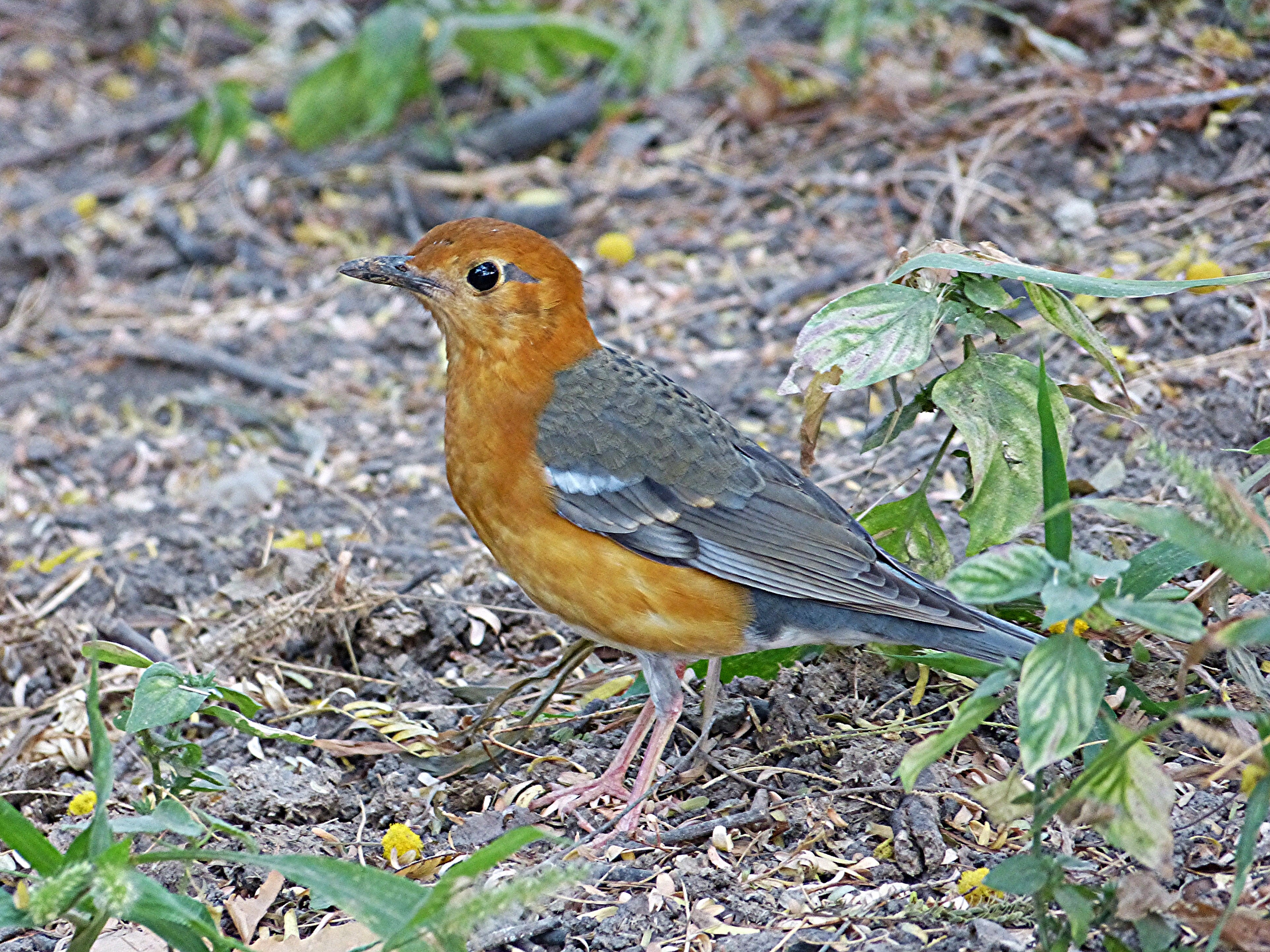
Orange-headed Thrush

Orange-headed Thrush

The next morning brought the start of the birding tour led by Leio De Souza, owner of India Nature Tours. Our group of seven birders would be lucky to have both Leio and Lokesh as our guides for the next two weeks.

We headed towards Agra and the Taj Mahal. The palace was breathtakingly beautiful, but the experience of seeing it was quite unpleasant. Our tour coincided with major Indian holidays resulting in crowds everywhere. The Taj Mahal was packed so tightly that day that our group had no chance of staying together as other visitors pushed in between us.  The palace guards constantly said “Keep moving.” Regardless, I wouldn’t have wanted to miss seeing this incredible wonder of the world.

Taj Mahal

Taj Mahal

We continued our drive to Jarar Village and Chambal Safari Lodge, where we spent the night after a little late afternoon birding near the lodge.

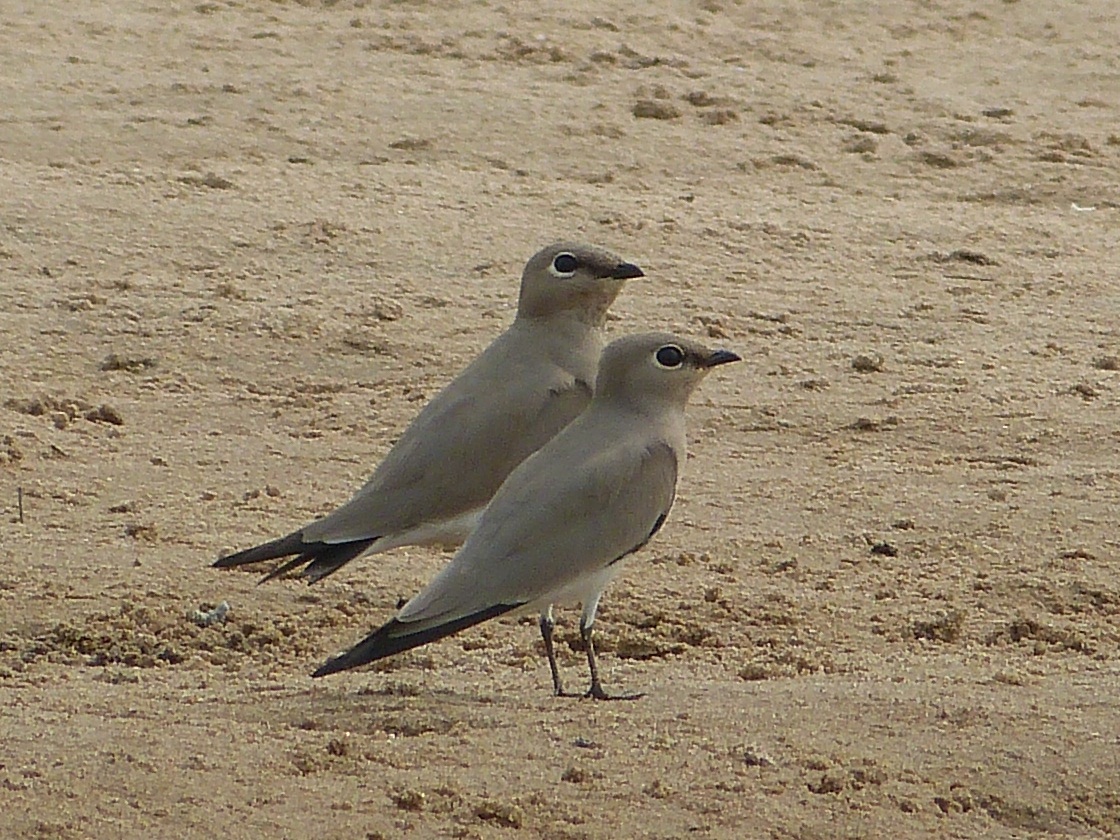
The focus of our second day was the Chambal River, where we hoped to find Indian Skimmer. Sadly, we missed the skimmers, one of the few big misses of the trip. However, we had great looks at two of India’s crocodilian species, the widespread Mugger and the rarest Indian crocodile, Gharial. We also saw wonderful birds including River Lapwing and Small Pratincole.

River Lapwing
River Lapwing

Small Pratincole

Small Pratincole

A drive to Keoladeo National Park, formerly known as the Bharatpur Bird Sanctuary, completed our day. We spent the night near the park entrance at Hotel Sunbird. The entire next day was spent in the park where we had a wonderful time exploring on foot and in the park’s unique cycle-rickshaws. Here we saw one of the most beautiful raptors of the trip, Oriental Honey-buzzard.

Oriental Honey-Buzzard

Oriental Honey-Buzzard

Our mammal list continued to grow with Sambar Deer, Spotted Deer, Rhesus Macaque, Golden Jackal, Wild Boar, and Nilgai.

Sambar Deer

Sambar Deer

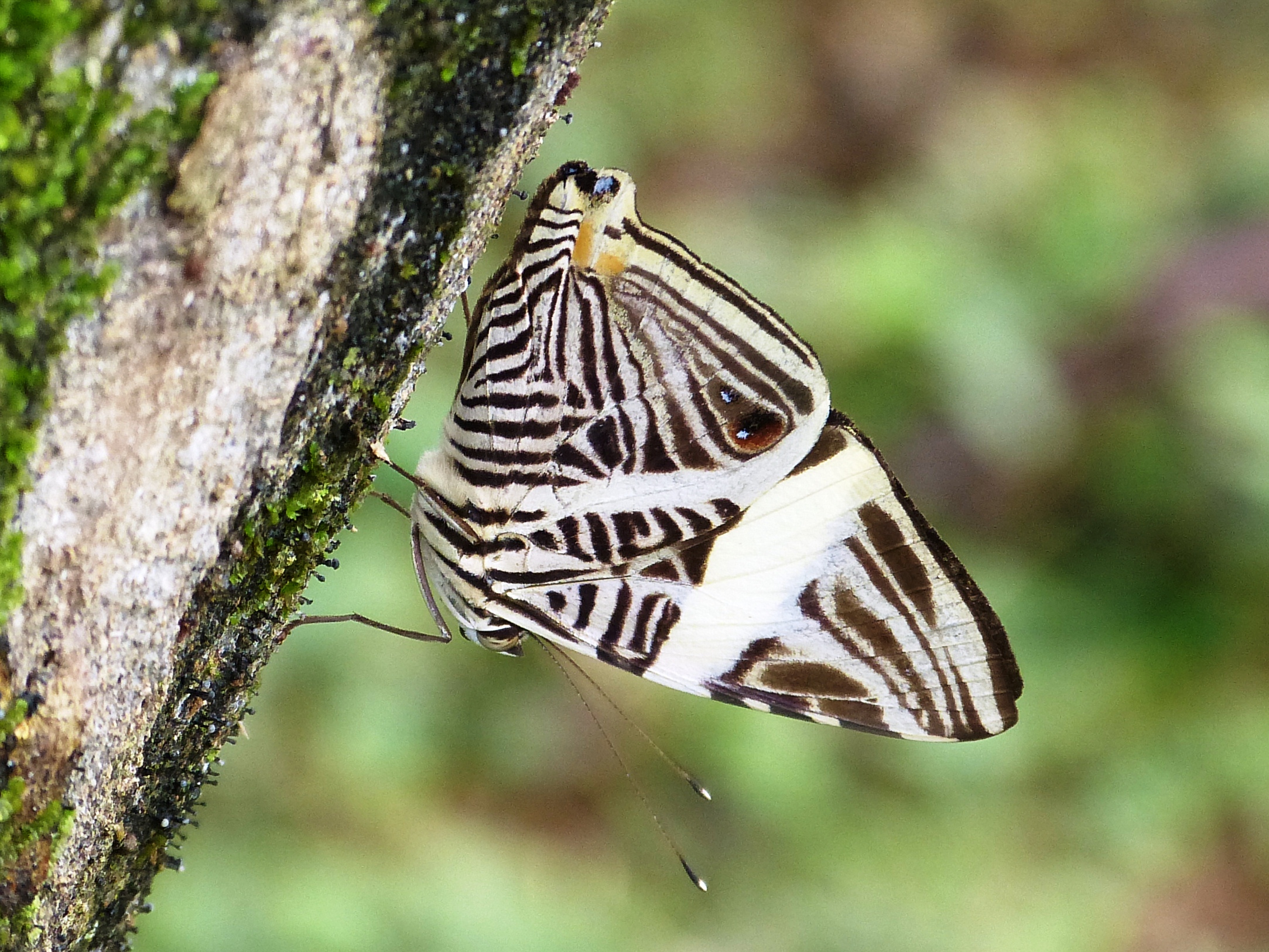
Butterflies at Bharatpur included the gorgeous Common Rose.

Common Rose

Common Rose

After a little birding near the hotel the next morning, we drove to Ranthambhore. We made a stop along the way to look for Greater Painted-snipe, a species that fascinated me when I saw them in Hong Kong in 2009. The typical sexual roles are reversed in this species with the larger and more brightly colored females courting the males.  After mating and laying her eggs, the female leaves the male to incubate the eggs and raise the young.  She then repeats this process, sometimes mating with as many as four males in a season.  In India, I had even better looks than I’d had previously and was able to get a photo of this good-looking female.

Greater Painted-Snipe

Greater Painted-Snipe

Diwali or “Festival of Lights,” the most important Hindu holiday of the year, had been celebrated shortly before the start of our tour. Celebrations during the five-day festival include gift giving, prayer offerings to Lakshmi, the goddess of wealth, and fireworks displays. Homes are cleaned, painted, and decorated and even livestock and farm equipment are decorated. We enjoyed seeing cows still sporting garlands and bells from the holiday and tractors all jazzed up like this one.

Tractor decorated for Diwali.  Photo by Tom Walker.

Tractor decorated for Diwali. Photo by Tom Walker.

We went to Ranthambhore National Park to look for birds, but it’s also the easiest location in India to observe Bengal Tigers. We started the morning looking at birds, but as soon as the park guides detected tigers close by, we were off on a wild chase in our open lorry-bus over the very bumpy roads. There were no walkie-talkies, but the guides seemed to have a sixth sense of where the tigers were and they communicated directions to the other groups in the same zone of the park.

Mama tiger and three cubs were first observed playing in a shallow lake, but they were out of the water by the time I saw them. I didn’t need to worry about getting a good view, though, as they slowly same closer to our vehicle and walked 30-40 feet from us as they crossed the road. There was nothing preventing the tigers from jumping into our open vehicle and having a couple of birders for breakfast except the generous supply of spotted deer and other easier prey in the park. I felt no fear, only awe at being so close to these magnificent animals. These tigers really were wild animals, but it was obvious that they were habituated to humans.

One of the three 7-month-old tiger cubs seen with their mother.

One of the three 7-month-old tiger cubs seen with their mother.

Back home, I learned that tigers really are “king of the jungle” with no natural predators. The human activities of poaching and habitat destruction are the major factors that have pushed them to an endangered conservation status. According to Wikipedia, “Over the past 100 years, they have lost 93% of their historic range, and have been extirpated from southwest and central Asia, from the islands of Java and Bali, and from large areas of Southeast and Eastern Asia.” In an attempt to halt the slide to extinction, the Indian government created Project Tiger in 1973 to preserve its national animal. Due to these efforts, tiger numbers have increased in recent years with a total of 1706 individuals in India estimated for 2010. India’s wild tigers represent over half of the global population, estimated at 3200, down from 100,000 a century ago. Our park guide told us that there were sixty tigers in Ranthambhore.

Male tiger observed on second day in Ranthambhore.

Male tiger observed on second day in Ranthambhore.

As promised, we saw wonderful birds in the park, too. White-throated Kingfishers were common throughout the trip, and we were surprised to see them in many areas that were not near water. They do not require fish, but also eat a wide range of food items such as grasshoppers, lizards, and insects. For the story of a nesting cycle of one pair with phenomenal photographs, see “White-throated Kingfishers nesting behavior.”

White-throated Kingfisher

White-throated Kingfisher

This gorgeous Indian Scops Owl was one of several owl species seen on the trip.

Indian Scops Owl

Indian Scops Owl

A less spectacular, but interesting, sighting was this Spotted Dove. I have seen this species many times in China, as well as in California. This bird in India surprised me by having numerous distinct spots on the wings; the others I’ve seen were much plainer. A little research revealed that there are three main subspecies groups of Spotted Dove and considerable plumage variations across populations within its wide range. The Spotted Doves that we saw in India were a different subspecies, suratensis, than the nominate subspecies, chinensis, that I had seen in China. The photos below show the differences in plumage of these two subspecies.

Spotted Dove (India)

Spotted Dove (India) Streptopelia chinensis suratensis

Spotted Dove (China)

Spotted Dove (China) Streptopelia chinensis chinensis


My favorite bird at Ranthambhore might have been Rufous Treepie. On our first day there, a treepie sat on the edge of our vehicle and Lokesh told me that I would see the bird eat from his hand. The next day a treepie did eat from his hand as promised and from mine as well.

Rufous Treepie on my hand.

Rufous Treepie on my hand.

During our two days at Ranthambhore, we saw quite a few mammals in addition to tigers, including many lovely Spotted Deer.
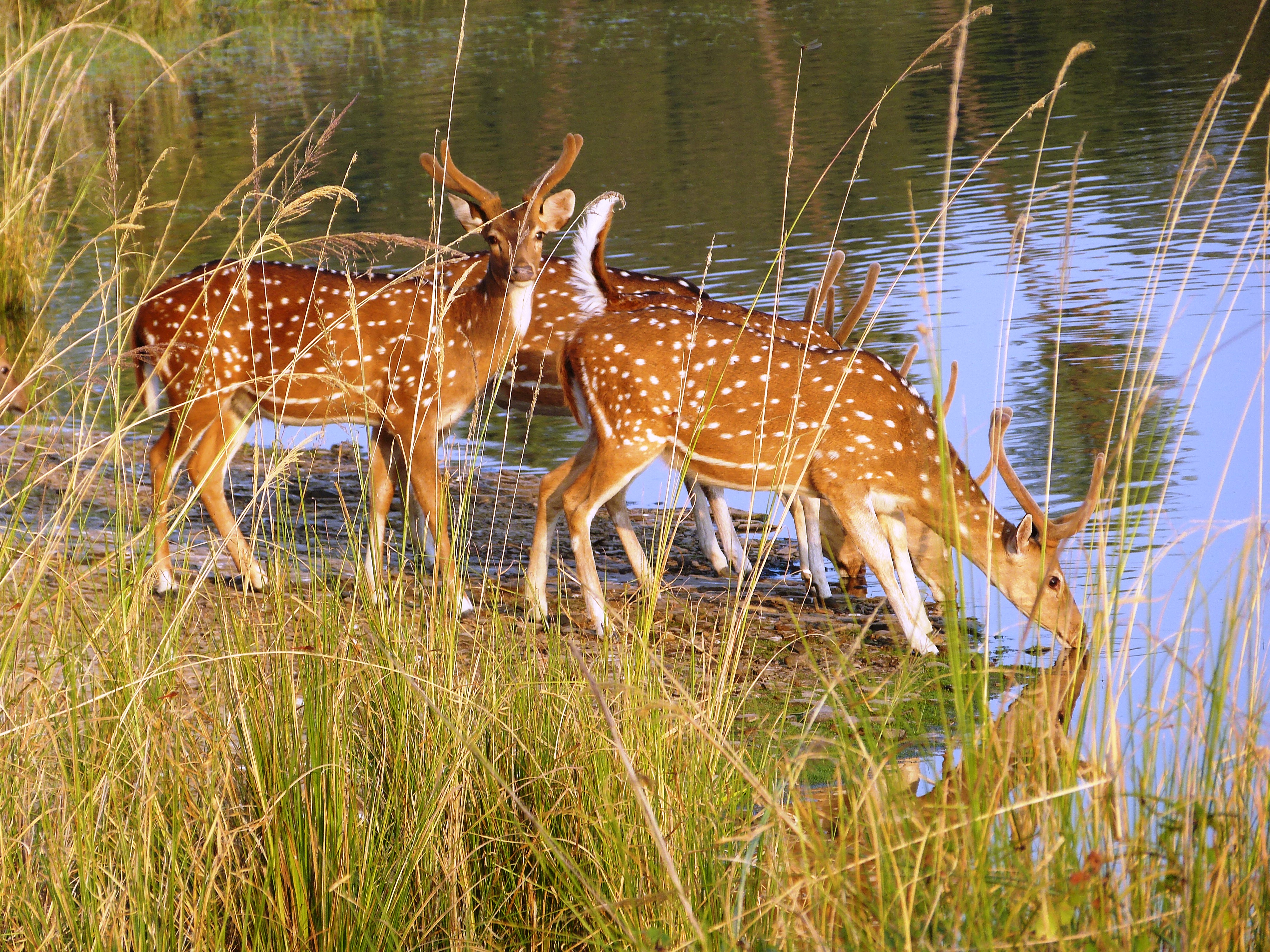
Spotted Deer

Spotted Deer

Our first week in India went by quickly and it was now time to take the train back to Delhi where we would spend the night before driving north towards the Himalayan foothills for the second part of our trip.  Stay tuned for more!
Read Full Post »

The Kentucky Warbler was about 20 feet from us, eye level, in perfect light.  He had to have known that we were watching him, but he appeared unconcerned about our presence and sat there singing.  Birding does not get any better than this.  It was one of those magic moments that Diane and I both treasure.  We were alone on a forest service road in Ohio’s Shawnee State Forest and it was quiet except for the birds.  This spot was perfect breeding habitat for Kentucky Warblers – low ground with lots of brushy cover by a little creek.

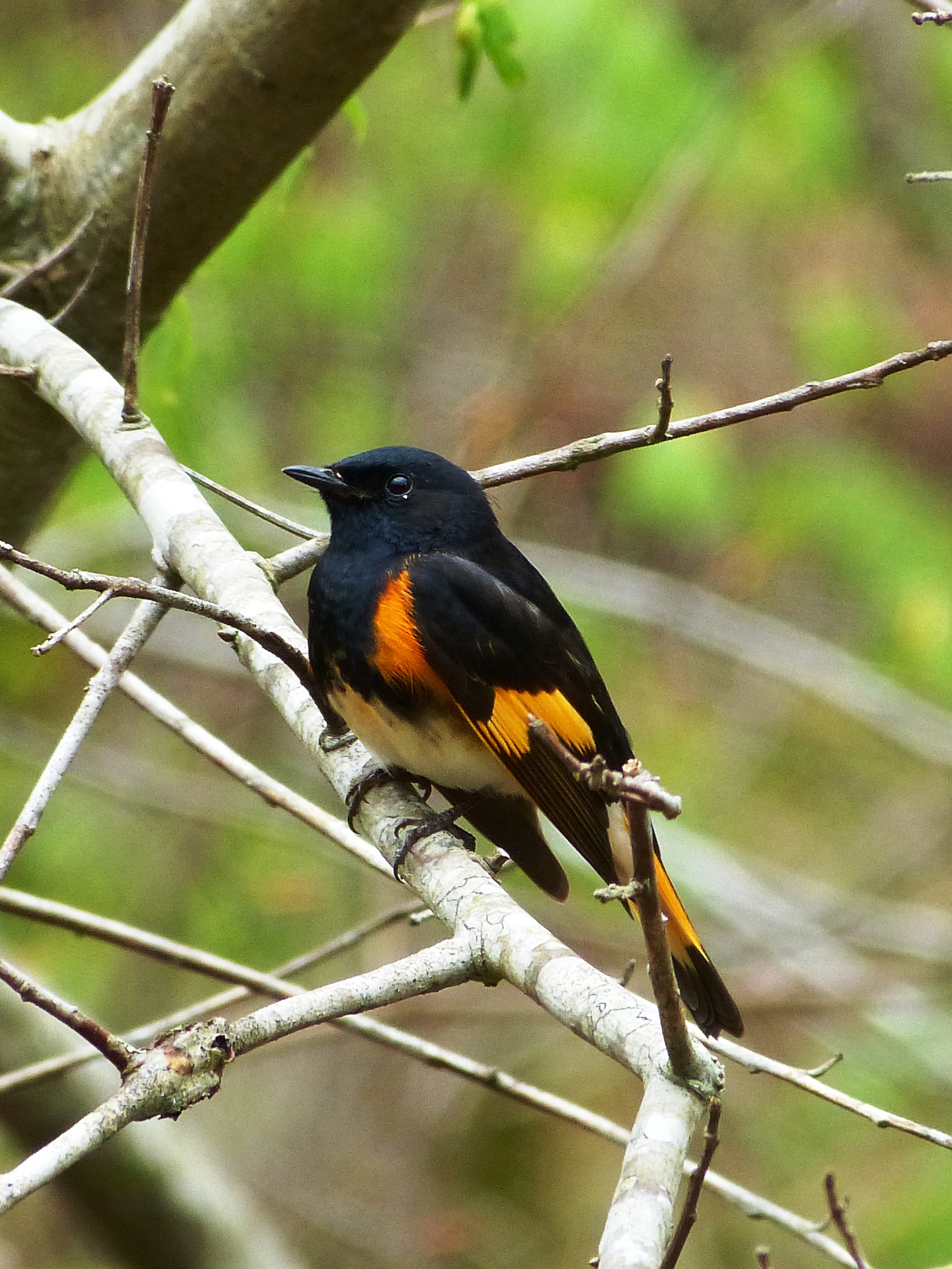
I was too lost in the moment watching the Kentucky Warbler to even try for a photo, but I was able to get this shot of an American Redstart the previous day.

American Redstart (male)

American Redstart (male)

Diane and her husband planned to visit their daughter in Indianapolis and Diane wanted to meet for a few days of birding.  We decided on Shawnee State Forest and I was pleased that Diane liked it as much as I had on my first trip.  We arrived on Monday afternoon, April 28, and were able to bird for a couple of hours in relatively dry weather before dinner.  Unfortunately, we had awful weather for the rest of the trip.  The next day it rained until noon and was uncomfortably hot all afternoon after the sun came out.  The following day it rained non-stop.  And, then it was time to leave.  But, still, we found quite a few birds including Hooded, Prairie, Black-and-white and Blue-winged Warblers, Yellow-breasted Chats, Scarlet Tanagers, and unusually cooperative vireos, all allowing us quality views.

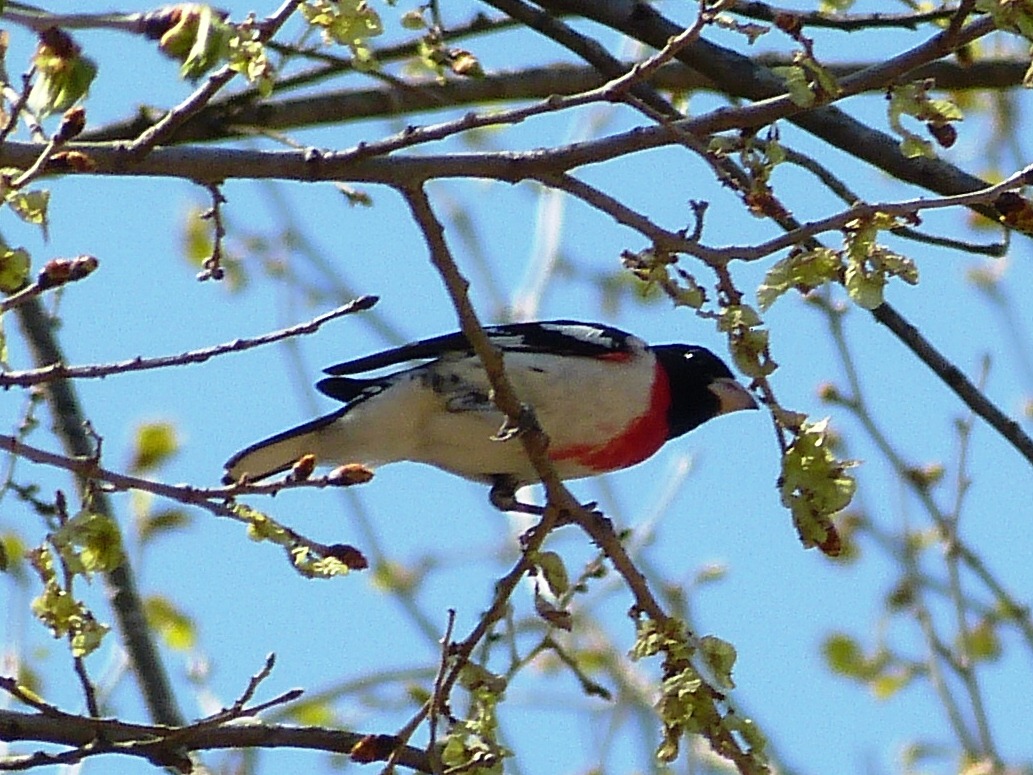
Rose-breasted Grosbeak (male)

Rose-breasted Grosbeak (male)

We found this gorgeous male Rose-breasted Grosbeak one afternoon and he was still working the same tree when we came back a few hours later.

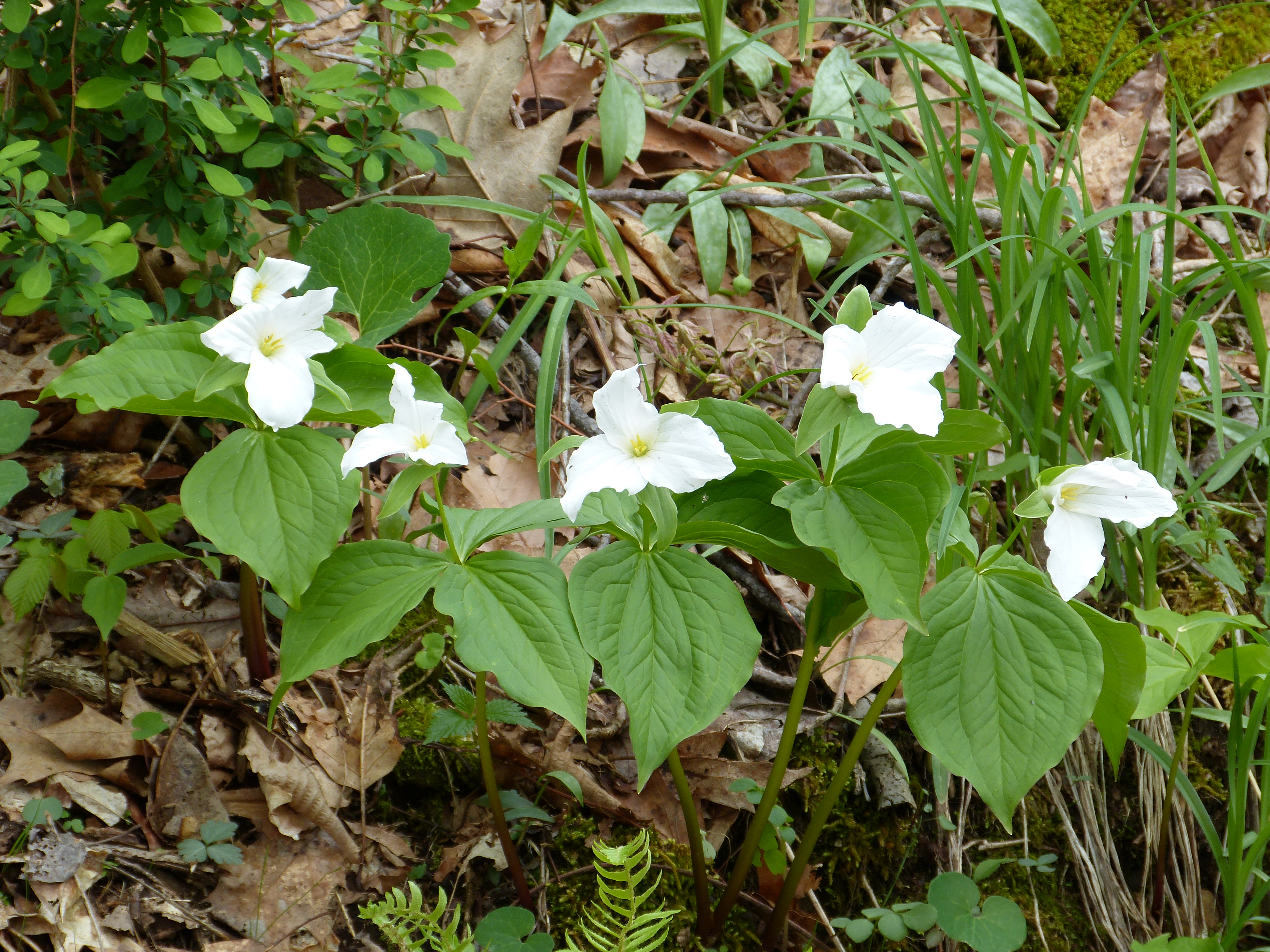
Trillium grandiflorum

Trillium grandiflorum

There were fewer wildflowers than last year when I was two weeks later.  But, the forest was still lovely with Trillium grandflorum dominating the roadsides.  Little patches of bluets were everywhere.  Wild geraniums were beginning to pop up here and there.  There were a few irises.  Ferns were just starting to unfurl.

On our one hot afternoon, the birds were quiet, but there was an abundance of butterflies.  My favorites were the Zebra Swallowtails, a life butterfly for me.

Zebra Swallowtails

Zebra Swallowtails

Our pet-friendly cabin in the state park was a perfect base for our stay.  The state park is inside the state forest.  The screened porch in the back was great for watching birds when we were tired of driving in the rain.  Jack and Diane’s two dogs found the cabin as comfortable as we did.

A cabin in the woods also let me find a few spring moths.  I was too tired to stay up late, but saw these pretty little moths just before bedtime.

Shawnee moth 1P

Shawnee moth 3


Other birders reported Cerulean Warblers in the cabin area. We did not see them, although we thought that we heard them a few times.  It was our only real miss, not too bad considering the weather.  We enjoyed the forest and the birds so much that we talked of going back next year.  I hope that we are able to return to my new favorite spring birding location, Ohio’s Shawnee State Forest.

Our cabin in Shawnee State Park

Our cabin in Shawnee State Park

Read Full Post »

Dave and Amber

Dave & Amber

After my birding trip to Poyang Lake and Wuyuan, I spent two weeks with my son Dave, his girlfriend Trissie, and their eighteen-month-old daughter.

Amber making friends

Amber making friends

Amber is a beautiful little girl and she attracted compliments everywhere we went. She likes Mommy or Daddy in sight, but is otherwise quite bold and unafraid. She makes friends easily, both human and canine. She loves climbing and enjoys playgrounds, trees, and stairs. She liked the slide at Evergreen Resort, too, and could have played on it all day. She is adventurous with food and will eat anything, even peppers that were too hot for me. Amber is like her Daddy in many ways. I remembered Dave as a baby when I tried to get Amber to sit still for a story. I had no more luck reading to her than I’d had with Dave 45 years ago.

Amber and Trissie playing with bubbles while waiting for the rain to stop.

Amber and Trissie playing with bubbles while waiting for the rain to stop.

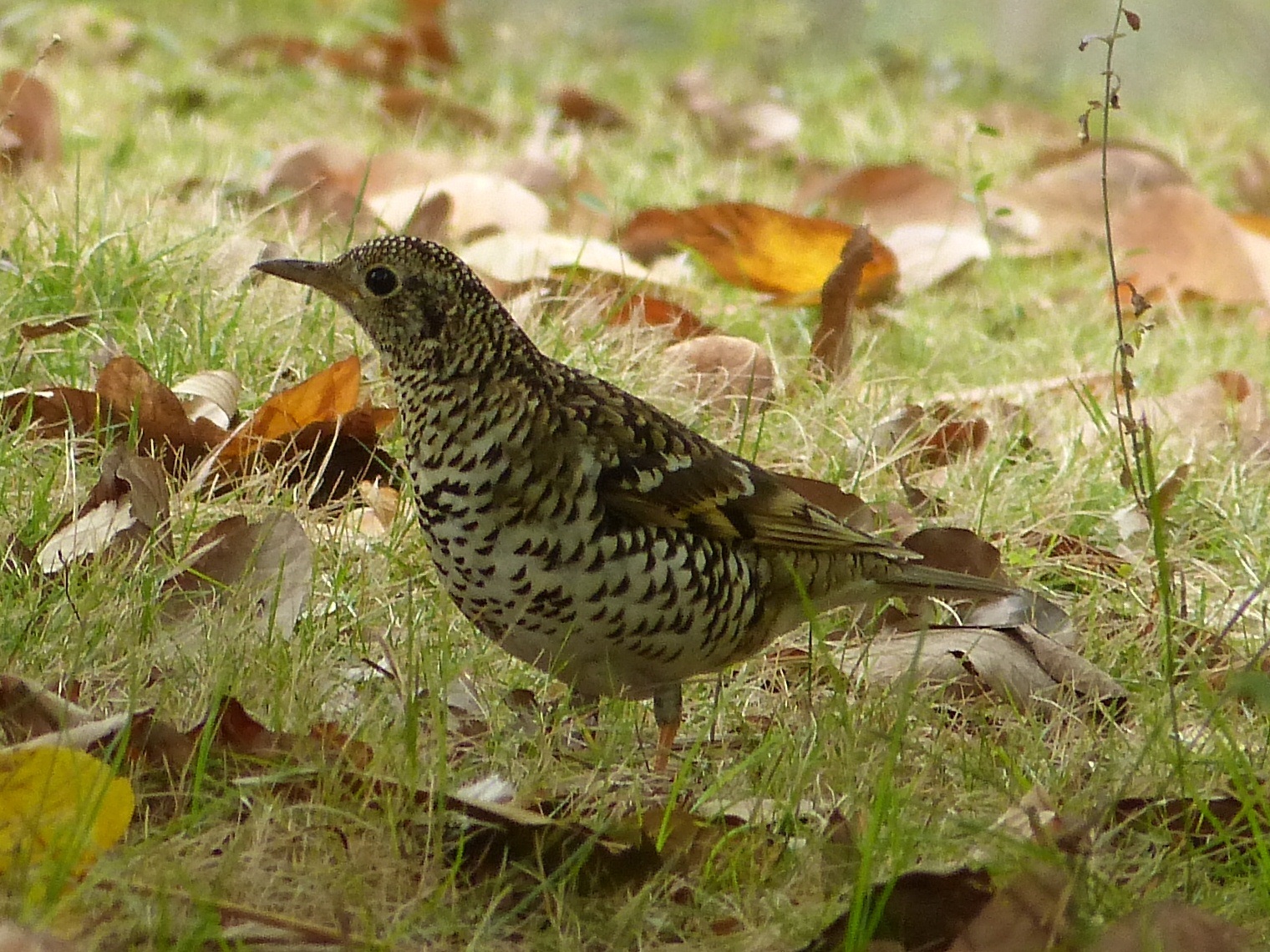
We quickly settled into a routine in which I went birding alone on weekday mornings. I feel totally safe in China and had ventured out a little on my own on previous trips. I knew that the biggest challenge would be communication. Very few Chinese speak English (including taxi drivers), so Trissie wrote the names of the parks that I wanted to visit in Mandarin as well as directions for getting home. The first day that I got a taxi by myself things went smoothly and I was thrilled to find a life bird, Scaly Thrush, at Da Sha He Park.

Scaly Thrush.  A life bird that I found by myself.

Scaly Thrush. A life bird that I found by myself in Shenzhen.

HomeOne day, I decided to take a taxi to a park close to the apartment and then walk home. I naively got in a taxi and the driver started down the road. I showed him my directions and could see that something was wrong. I called Trissie and she talked to the driver. And, then I talked to Trissie. She said “He doesn’t know where the park is. Get out.” I needed her help to even get the driver to stop. Soon I was standing on a very busy street, not knowing where I was, or how to get to the park or back home. I quickly learned to never get in a taxi without first showing the little piece of paper with my destination to the driver and getting a nod “yes”. The next two taxis that stopped that morning both shook their heads “no.” Finally, a bike taxi stopped. I showed him the piece of paper with the park address, he shook his head “yes” and motioned for me to get on the bike. After yet another call to Trissie, I cautiously got on the bike, which was just like a regular bicycle, but with a bigger seat on the back for passengers. The park turned out to be very close and the bike taxi got me there quickly and safely.

At the park, I got a little confused about which path to take when I got to the top of the mountain. A very friendly woman called me over and I said “Nǐ hǎo,” the Chinese greeting for “Hello.” That started a long one-sided conversation in Mandarin. I am certain that the man who was with her told the woman that “Nǐ hǎo” was the only Chinese phrase I could understand, but the woman kept talking. She tried to give me a glossy flyer with photos of apartments and prices and her name and phone number. All I wanted was help getting off the mountain! After calling Trissie for help once again, the woman took me by the arm and led me down the mountain path. I could not make her understand that I wanted to go slowly and look for birds on the way. Finally, she let me go when we neared the park entrance and I sneaked back to search for birds.

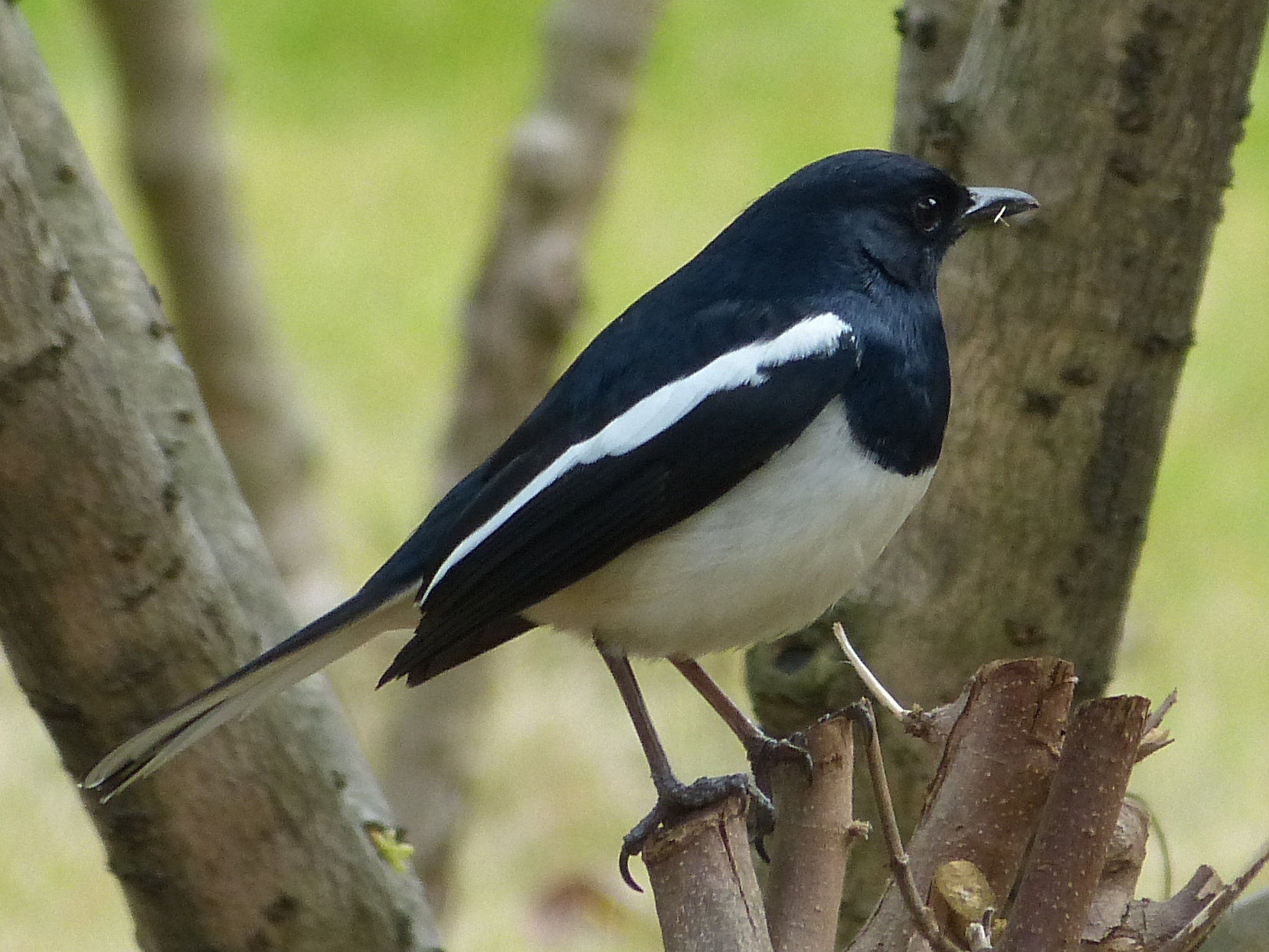
Oriental Magpie-Robin

Oriental Magpie-Robin. A common bird in South China.

My taxi experiences were inconsistent, but it was usually easier to get to a park than to get back home. Getting home from the park farthest away was easy one day and took four taxis the next day before a driver shook his head “yes” when I showed him my directions.

The phone calls to Trissie were made using a phone that she and Dave had loaned to me. I did not check into using my own phone as I assumed that it would be prohibitively expensive and/or just plain not work. So, I could communicate within China, but not with friends at home. I could receive email, but could not send messages. Facebook is banned in China, so that was not an option either. Finally, I figured out that instant message programs that work over Wi-Fi were easy and reliable, but I had not planned for their use in advance. Next time I’ll be better prepared.

Asian Koel (female)

Asian Koel (female)

All the challenges of getting around by myself were worth it, though. I enjoyed the morning birding and found one more life bird on my own, Asian Koel. It’s a rather common bird and I found two males and two females before the trip was over. Many birds I had seen only once before, like this Common Tailorbird.  I had to work hard to identify them, but even poor photos helped.  I couldn’t get both ends of the Tailorbird in the same photo, but these two together nailed the ID.

Common Tailorbird tail

Common Tailorbird tail

Common Tailorbird

Common Tailorbird front end

I also had to work very hard to get a photo of this Little Ringed Plover. I never could see the bird in the viewfinder, but had to just point the camera in the right direction and snap a photo.

Little Ringed Plover

Little Ringed Plover

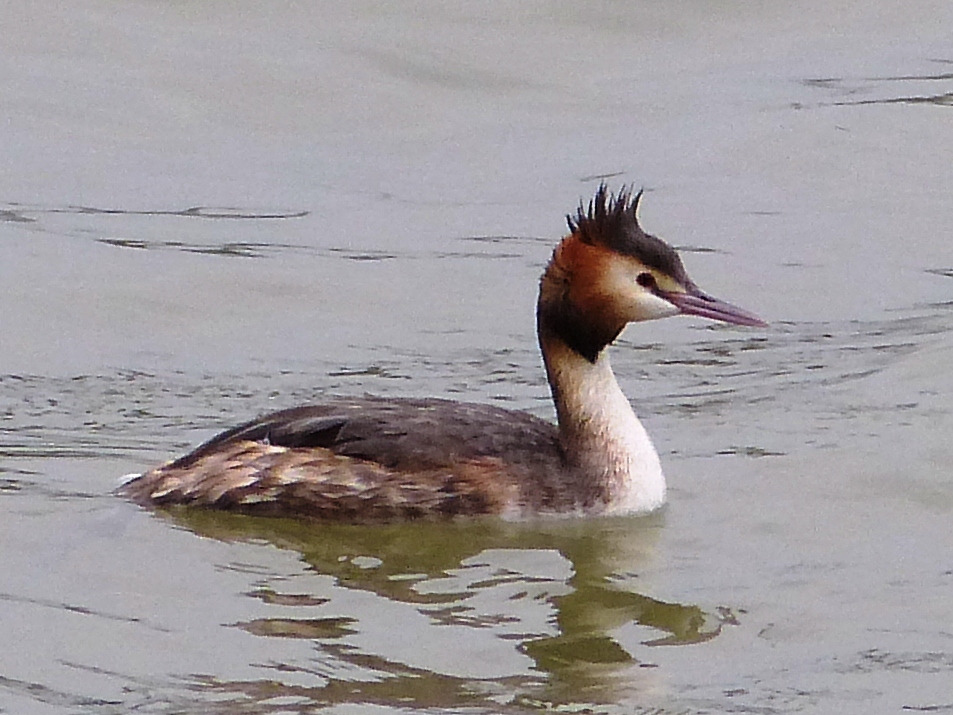
The water birds at Shenzhen Mangrove Coastal Ecological Park were easier to identify and photograph. I saw dozens of my ABA nemesis bird, Eurasian Wigeon, along with Northern Shoveler, Great Crested Grebe, Little Egret, Tufted Duck, and many others.

Great Crested Grebe

Great Crested Grebe

Little Egret

Little Egret

The last bird that I saw in Shenzhen was this lovely female Red-flanked Bluetail. I was disappointed in the park I visited that day, but when I saw this bird as I was leaving, she made the morning worthwhile!

Red-flanked Bluetail at Zhongshan Park in Shenzhen

Red-flanked Bluetail at Zhongshan Park in Shenzhen

Birding alone in a foreign country is a great way to learn birds. I was able to identify 51 species in two weeks. I noticed details (and will remember them) much better than when I had a guide. I would not want to do all of my birding alone, but it’s a great complement to a few days with a guide and I look forward to doing it again.

Red-whiskered Bulbul - a common bird, but one of my favorites.

Red-whiskered Bulbul – a common bird, but one of my favorites.


I enjoyed the experience of living in China for nearly three weeks rather than visiting as a tourist. I thank Dave and Trissie for doing so much to make it easy and comfortable for me. The dates for this part of the trip were February 24 to March 10, 2014. More photos of Amber can be seen in my Flickr set Amber – Feb/March 2014. Photos of the birds that I saw in China (including the first part of the trip) are in my Flickr set China – Feb/March 2014 (Birds).

Read Full Post »

Oriental Storks in flight

Oriental Storks at Poyang Lake

Dave and Trissie were expecting Amber when I visited China in 2012, so I was long over-due to see my youngest grandchild.  I wanted to visit in winter when I could also see wintering birds at Poyang Lake.  So, my targets for this trip were Siberian, Hooded, and White-naped Cranes; Oriental Storks; and 18-month old Amber.  Well, I wanted to see Scaly-sided Mergansers, too, but I couldn’t figure out how to fit that into the title of this post.

My original plans were to leave home on February 14, spend a few days with my family and rest, and then fly to Nanchang for four days of birding.  However, winter storms delayed my departure and I was not able to leave until February 17.  I arrived in Hong Kong at 10:30 PM on the 18th and left the next morning for Nanchang.  The Nanchang flight was delayed, too, due to weather, but we didn’t know that until we arrived at the Shenzhen airport.  I sent Dave home and sat there alone waiting for my flight.  The airport was so cold that I was shivering even with a thick Sherpa fleece, I was exhausted, I had a headache, and my shoulder and tummy hurt.

Crested Myna

Crested Mynas were common everywhere in China

Menxiu Tong of China Wild Tour had been our local guide for the 2012 Zoothera trip and I was looking forward to birding with him again.  Menxiu met me in Nanchang as planned and we had dinner and a good night’s rest.  The next morning, Thursday, February 20, we headed to Poyang Lake.  Our birding got off to a slow start due to cold and fog, but we found quite a few birds as the day warmed up, including two of our targets – Oriental Stork and Hooded Crane.  We did not get as close to the birds as I had hoped, but we had satisfying scope views.

Hooded Crane family 2

Hooded Crane family

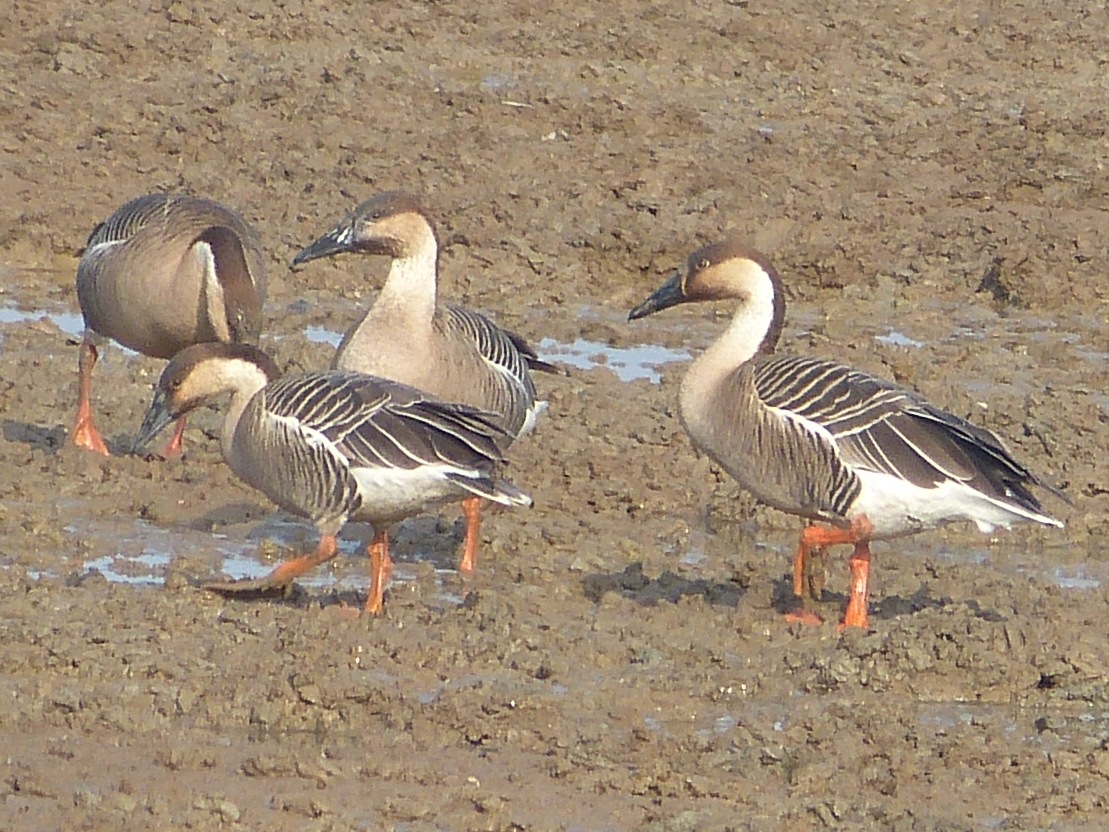
On Friday, we found the other three crane species that regularly winter at Poyang Lake – Siberian, Common, and White-naped.  The White-naped Cranes were quite far out, but unmistakable.  Another species that I particularly enjoyed was Swan Goose.  We had long, close looks at a flock near the road.

Swan Geese

Swan Geese

After lunch on Friday, we headed to Wuyuan, where our target was Scaly-sided Merganser.  Wuyuan had been one of my favorite locations in 2012 and we returned to some of the same birding spots on Saturday.  First was the jungle path with rice paddies on one side and the river on the other.  We had hoped to find the mergansers on the river there, but we did not see them, so we enjoyed the birds that we did find.  It was especially nice to have great looks at a Collared Owlet.

Collared Owlet

Collared Owlet

Pied Falconet

Pied Falconet

On Saturday afternoon, we visited the little island where the Courtois’s Laughingthrushes breed, which was lovely in winter, too, and the only location in my entire three plus weeks in China where I saw woodpeckers.  We saw one of Wuyuan’s avian stars, Pied Falconet, and watched it go after (unsuccessfully) an Orange-bellied Leafbird that was larger than the Falconet.  A lovely female Plumbeous Redstart entertained me for quite a while as she sallied up for insects and then repeatedly landed on the same rock in the river.  Eurasian Jays were as gorgeous as I remembered from my first visit.

Plumbeous Redstart female

Female Plumbeous Redstart

We completed Saturday’s birding with a drive along the river, again hoping for Scaly-sided Mergansers, but not finding them.  At dinner that night, we talked about our options.  Menxiu’s plan was to return to the same spot we had birded in the morning and walk the nearly impenetrable jungle path by the river.  This “path” through thick bamboo was the only birding that I had opted out of on our 2012 trip.  I had simply said that I could not do it and waited under a lovely tree by the river while the others continued pushing through the jungle.  This time I whined and complained, but Menxiu was confident that we would see the mergansers in the river along that trail, so I agreed to his plan.

Eurasian Jay

Eurasian Jay

That Saturday night dinner was our third or fourth meal at the same restaurant in Wuyuan.  Menxiu liked it because it was on a side street where the locals ate.  What I remember is the toilet.  In China, they do not have “restrooms” or “bathrooms,” but simply “toilets.”  This one featured the usual squat toilet, but it had a bonus – a tub of water right next to the toilet with four fish swimming in it.  While it seemed odd to me, later Trissie told me that Chinese would never buy dead fish as we do.  They want their fish fresh so will only buy them live.  At that restaurant, you could visit the toilet and pick out the fish for your meal at the same time!  I have to say, though, that I generally enjoy the food in China and have never been sick there with anything other than a cold.

Another Wuyuan specialty is green dumplings.  I had fallen in love with them in 2012 and enjoyed having these wonderful dumplings for breakfast both mornings in Wuyuan.  I scrutinized them a little closer this time and it appeared that the filling was tofu and vegetables.  They are perfectly seasoned and great with hot sauce.

Black Eagle

Black Eagle

Menxiu surprised me on Sunday morning with a drive to the river in our van rather than a return to the dreaded jungle path.  We found a pair of Scaly-sided Mergansers right away and got good looks at them.  We enjoyed the rest of the morning walking a road alongside the river.  While I had missed a lot of birds earlier in the trip due to my poor vision, I saw nearly everything that morning.  And, what wonderful birds we saw!  A flock of Gray-headed Parrotbills were right over our heads in a little rice paddy.  Several Gray-sided Scimitar-Babblers allowed us quality views, including one bird just a few feet away foraging on the ground and oblivious to our presence.  Other sightings that morning included Mandarin and Spot-billed Duck, Black Eagle, Brown Crake, a male Fork-tailed Sunbird glistening in the sun, and my life Red-flanked Bluetail.  It was a magical morning that I will always remember.

Gray-headed Parrotbill

Gray-headed Parrotbill

After lunch, we returned one more time to the Laughingthrush island, and then headed to Nanchang and the airport.  We had found all of our target birds and enjoyed some wonderful winter birding.  Thanks to Menxiu Tong of China Wild Tour for leading this private trip for me.  Menxiu’s photos of the trip can be found on Facebook in his album Poyang Lake and Wuyuan Birding Tour, February 2014.

Read Full Post »

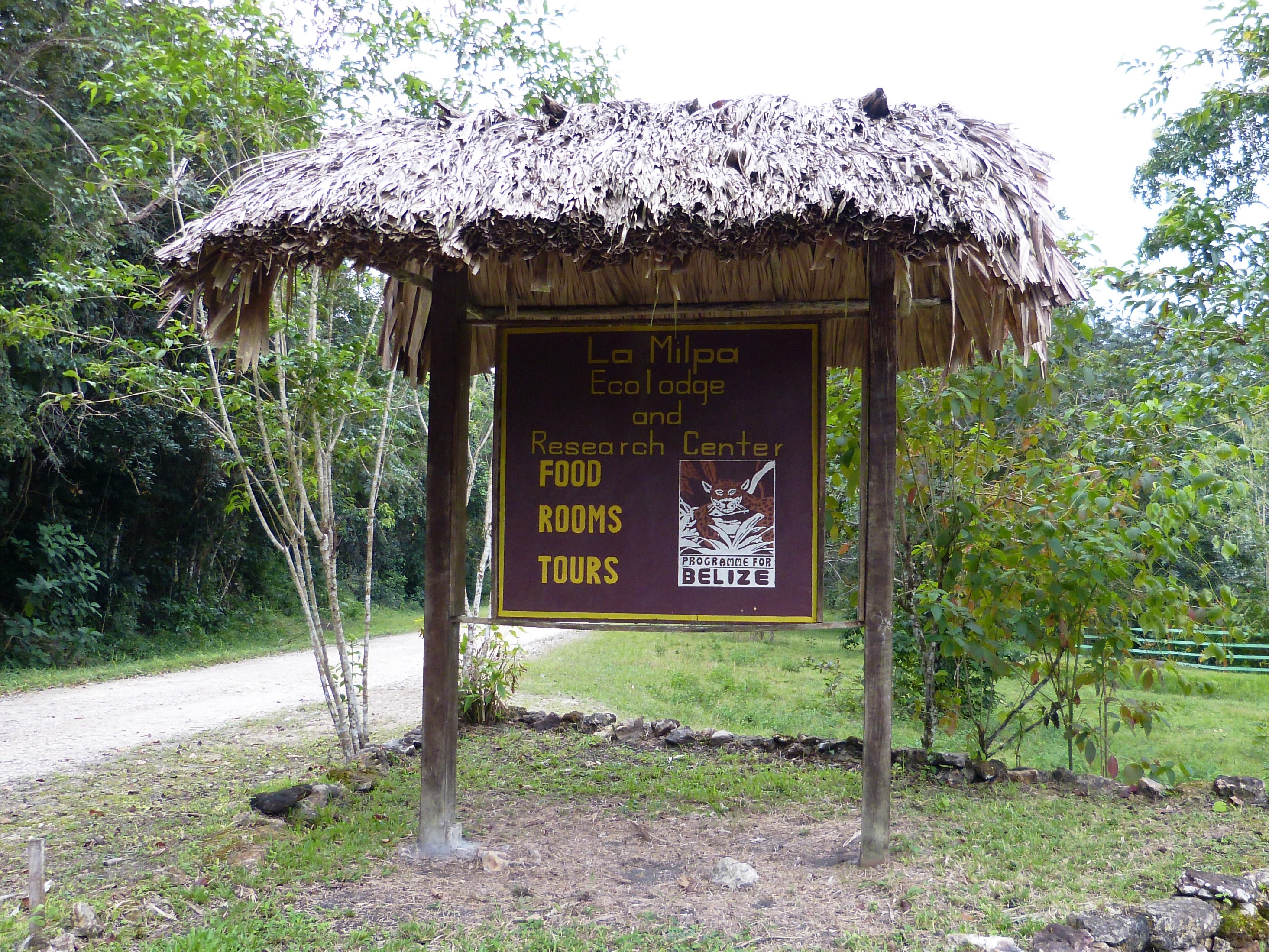
La Milpa entrance

La Milpa Ecolodge and Research Center entrance

La Milpa Ecolodge and Research Center is about 70 miles north of duPlooy’s Jungle Lodge.  Maps show a road going directly between the two locations.  However, locals warned us to not even think about it as the road was impossible to drive, especially after all the recent rain.  So, we headed east and slightly north on the Western Highway, north a short distance on the Burrell Boom cut-off, north-northwest on the Northern Highway to Orange Walk town, and finally southwest to La Milpa.  Yes, we pretty much drove in a circle to get just a little north of where we started out.  Thus, the 70-miles distance became much more and took most of a day to travel.  However, Jeremy and I enjoyed the drive and found some interesting birds on the way.

Tricolored Munia

Tricolored Munia

The first life bird on the day’s journey was mine, a Northern Jacana.  Next, it was Jeremy’s turn with a very cooperative female Snail Kite.  The kite flew around a little pond, actively foraging for snails.  What a treat to see a bird demonstrating the trait for which it is named.  The next new bird was a real puzzler.  We both knew that we had never seen it before and neither of us had any idea what it was.  And, it just was not in our book, Birds of Belize.  There was a flock of about a dozen of them in the tall weeds on the edge of a ditch by a rice field.  Jeremy and I both got photos and later someone was able to identify the birds as Tricolored Munia.  Have you guessed the rest of the story?  It is a non-native introduced species, probably established from escaped caged birds, and it is spreading rapidly in Central America and Mexico.  Like many exotic species, it is feared that they may become troublesome, especially as agricultural pests.

Oscellated Turkey

Oscellated Turkey

We arrived at La Milpa at 3:30 PM and immediately liked the research station which is operated by the Programme for Belize, a non-profit organization focused on conservation.  This was different from any other place we had stayed in Belize.  Security had been obvious at all the resorts.  At Jungle Jeanie, they even had dogs to accompany the security guards on their rounds.  Everyone had said that Belize is very safe and they just want to keep it that way.  However, at La Milpa there were no guards and not even keys to the rooms!  One guest who had apparently stayed there many times said, “I’ve never seen a key here.”  The atmosphere was very casual and academic.  A group of botany professors and students from the Royal Botanic Garden, Edinburgh, Scotland, filled most of the rooms.  Meals added to the feeling of being back in school with buffet style serving, shared tables, and returning our own dishes to the kitchen.  If you wanted a beer or soda, you just helped yourself by taking one from the refrigerator and writing your name in a log book.

La Milpa Maya site

La Milpa Maya site

The guide who had been recommended to us was not available, so Jeremy and I were really on our own with birding at La Milpa, but I still added nine birds to my life list.   The first afternoon I was thrilled to see two Great Currasows at the edge of the woods and an Ocellated Turkey up close (both lifers) as well as a Keel-billed Toucan and both Red-capped and White-collared Manakins.  On Wednesday, we explored the nearby La Milpa Maya site, the third largest in Belize.  La Milpa has not been uncovered or reconstructed and I found it difficult to imagine what it was like 1200 years ago.  The most interesting description of the site that I have found is by a young man who was a volunteer in 2010 with the Field School program administered by the University of Texas, Field Notes From a Maya Ruin.  It was not as birdy as we had expected, but we enjoyed walking the jungle trails and seeing a gorgeous Black-throated Shrike-Tanager, a life bird for both Jeremy and me.

Red-capped Manakin

Red-capped Manakin

Owl Butterfly

Owl Butterfly

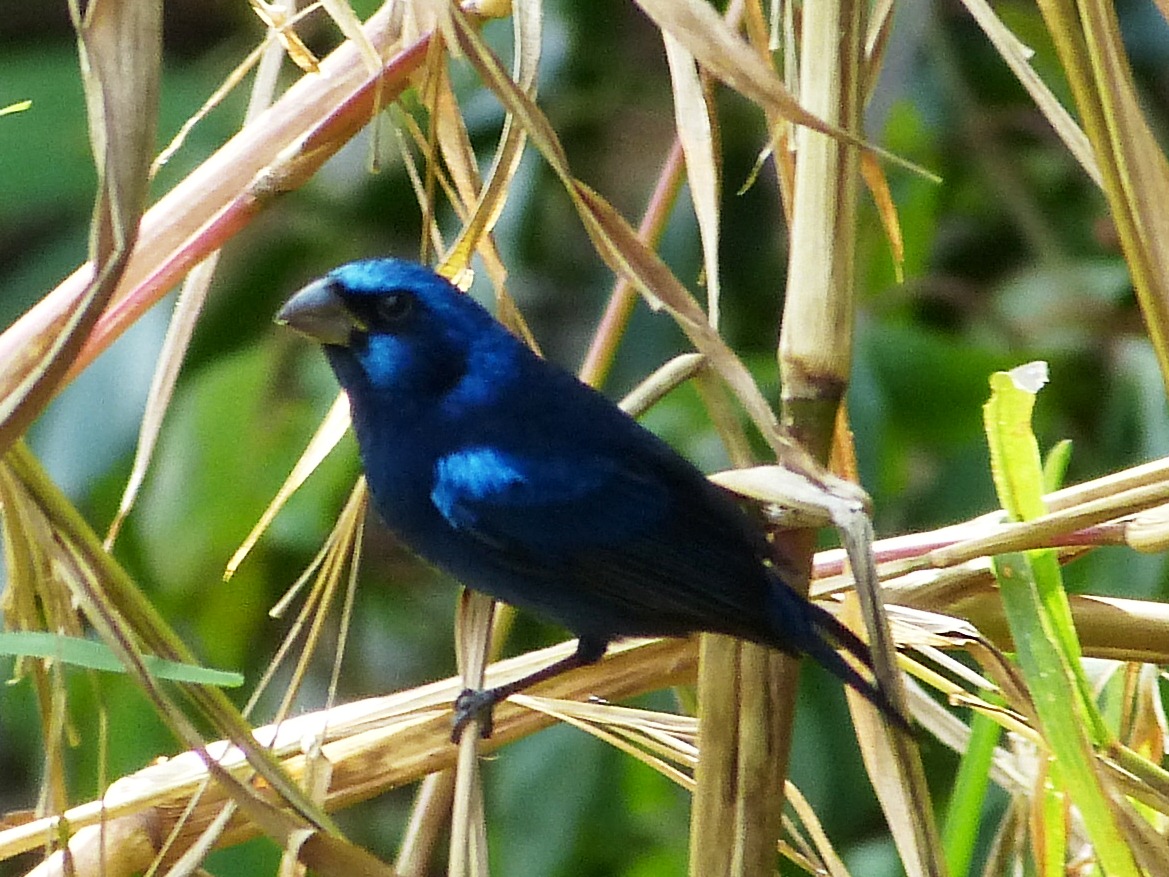
Back at the field station, jungle life right on the grounds delighted us. Red-capped Manakins seemed to be everywhere, a huge owl butterfly flew into a building and was later rescued, Red Foxes cried on the walkways. And, there was the “magic tree,” perhaps a type of fig. You could watch this small tree for hours and keep seeing new birds as they came to feast on the small fruits. The weedy areas around the edges attracted birds, too, including one of our new favorites, the brilliant Blue Bunting. There were very few artificial feeders at La Milpa, but careful planting of native fruit-bearing trees and shrubs brought the birds in close to the buildings and walkways.

Blue Bunting

Blue Bunting

All too soon, it was our last morning in Belize.  We had breakfast at La Milpa, birded for an hour, and then started towards the airport.  We saw one more trip bird and a lifer for Jeremy, a Bronzed Cowbird, on our leisurely drive to Belize City.  The entire 12-day trip (January 11-23, 2014) was wonderful and I look forward to my next visit to Belize.

White-collared Mankin - female

Female White-collared Mankin

Read Full Post »

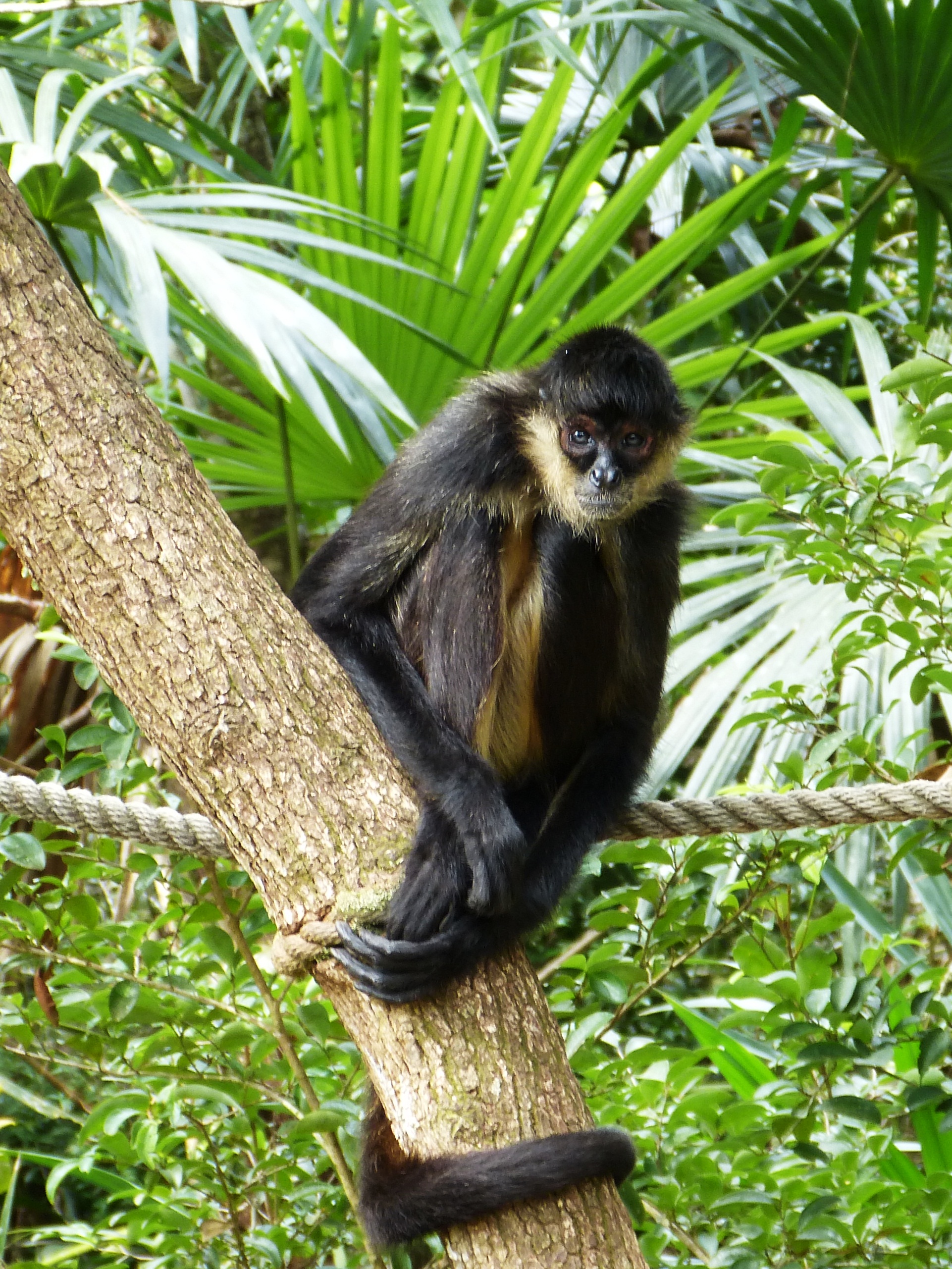
Spider Monkey at zoo

Spider Monkey at The Belize Zoo

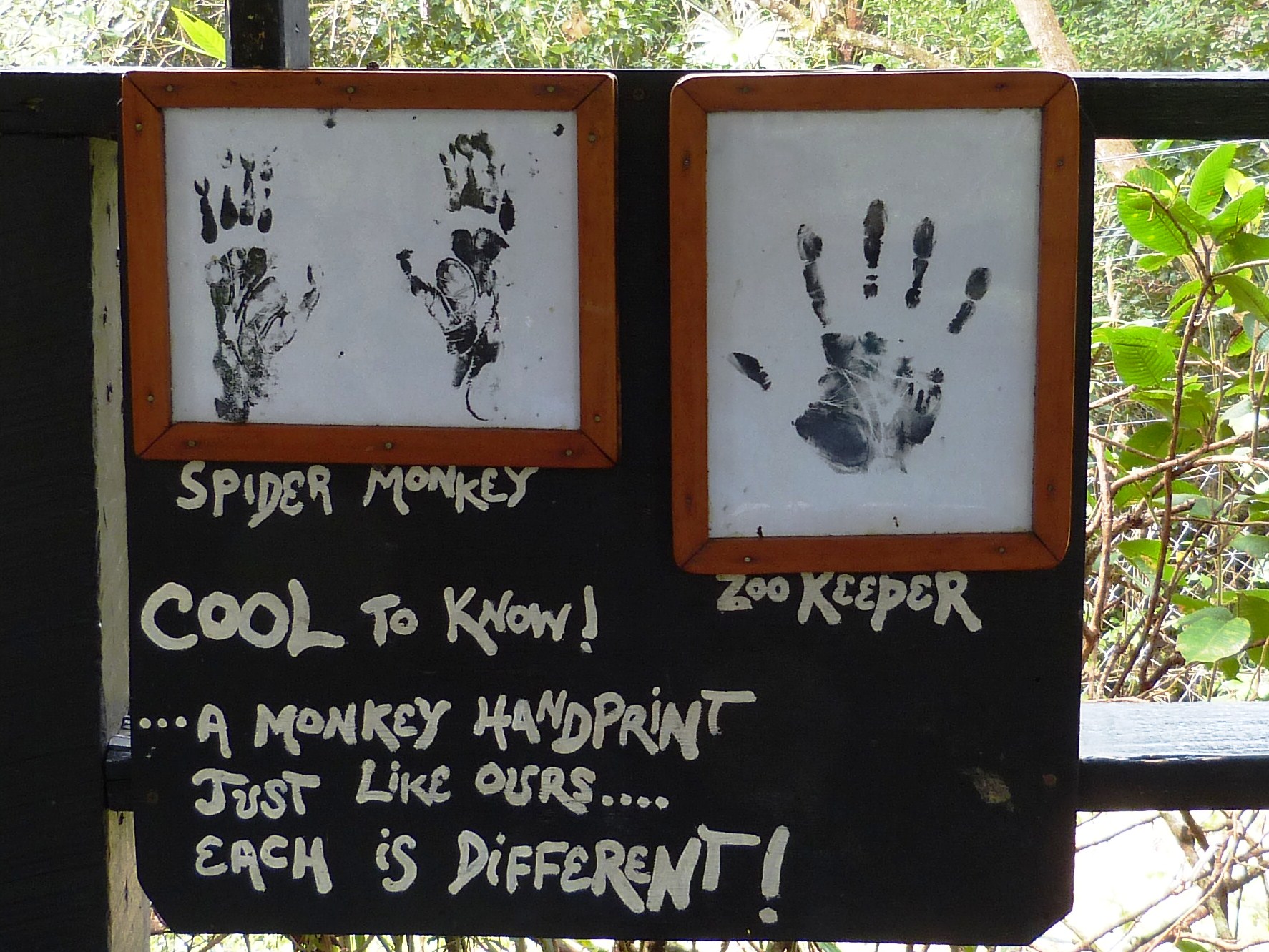
Monkey sign at zoo

The zoo had wonderful signs like this everywhere!

Jeremy and I said goodbye to Phil, Katherine, and Kitty at the Belize airport, and then headed straight to the zoo. We had just finished a wonderful week of birding and working with Belize Audubon on the official Forsyth Audubon trip.  Phil and I wrote a series of posts about the trip on the Forsyth Audubon blog.  I wanted to stay longer than eight days, so I was very happy that Forsyth Audubon President and fellow Belize traveler, Jeremy Reiskind, also wanted a few more days in Belize.  The Belize Zoo calls itself “The best little zoo in the world” and we agree.  It was clean, interesting, and the animals appeared to be cared for very well.

An added bonus was the many wild birds seen at the zoo.  Many enjoy sharing fruit served to the zoo animals.  One of our favorite birds was a Common Tody-Flycatcher who flitted about just a few feet from the platform by the Howler Monkeys.  We appreciated the Rufous-browed Peppershrike, too, a life bird for both of us.  We could have stayed all day, but we wanted to reach duPlooy’s before dark.

Common Tody-flycatcher

Common Tody-flycatcher

DuPlooy’s Jungle Lodge is located on the Macal River in the Cayo District near San Ignacio, close to the Guatemala border.  DuPlooy’s had the best accommodations of the entire trip, the food was excellent, and birds were easy to see at the fruit feeders on the deck by the bar/restaurant and in the adjacent Belize Botanic Gardens.  On our first day, we just relaxed and enjoyed exploring the lodge area.  New life birds that we found for ourselves included Gartered Trogon and Black-crowned Tityra.  I was also thrilled to finally see Belize’s national bird, Keel-billed Toucan, a life bird for me, but one that Jeremy had seen previously in Nicaragua.

Collared Aracari

Collared Aracari

Yellow-winged Tanager

Yellow-winged Tanager

The second day, we opted for a little help and spent the morning with local guide, Philip Mai.  The roads were difficult due to the unusual amount of recent rain, so Philip made up a new route.

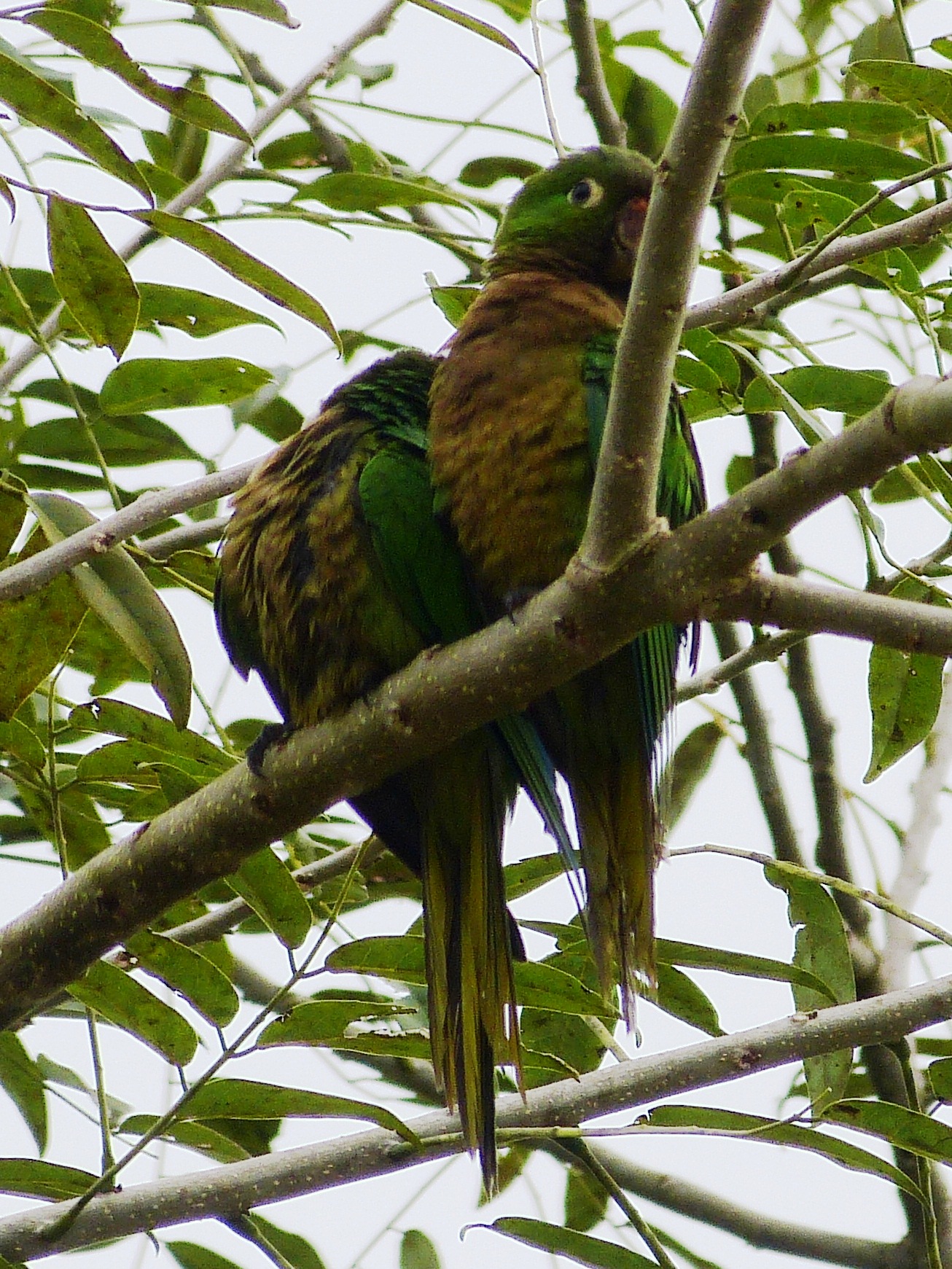
Olive-throated Parakeets

Olive-throated Parakeets

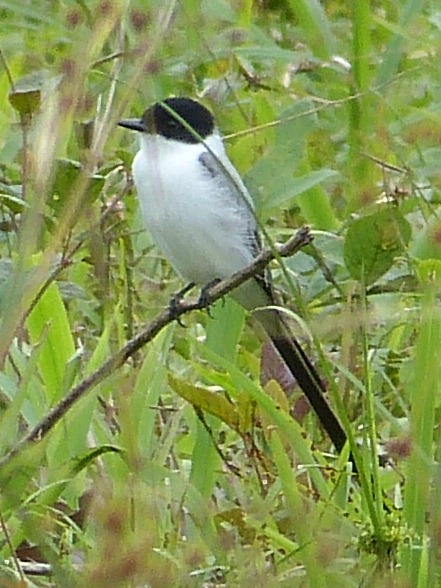
Jeremy and I enjoyed the teamwork with Philip.  And, Philip was so pleased with our results that he might add our route to his regular itinerary.  Special birds that morning included flyover wild Muscovy Ducks that we all saw well.  Olive-throated Parakeets made several appearances, including a pair right over our heads preening each other.  We found both Yellow-backed and Yellow-tailed Orioles.  For me, the highlight was a field with at least a dozen Fork-tailed Flycatchers, the bird that I’d most wanted to see.  It was magical watching them float over the field foraging and then perching on sturdy weeds.  That morning I added seven birds to my life list.

Fork-tailed Flycatcher

Fork-tailed Flycatcher

Fork-tailed Flycatcher

Fork-tailed Flycatcher

I knew that duPlooy’s caters to birders, but I didn’t expect the extent of help that we received.  One afternoon on my way from my room to the bar/deck, a woman with a laundry basket on her hip ran after me calling, “Ma’am, ma’am, would you like to see a Squirrel Cuckoo?”  Of course I did and the woman showed me exactly where the bird was.

Squirrel Cuckoo

Squirrel Cuckoo

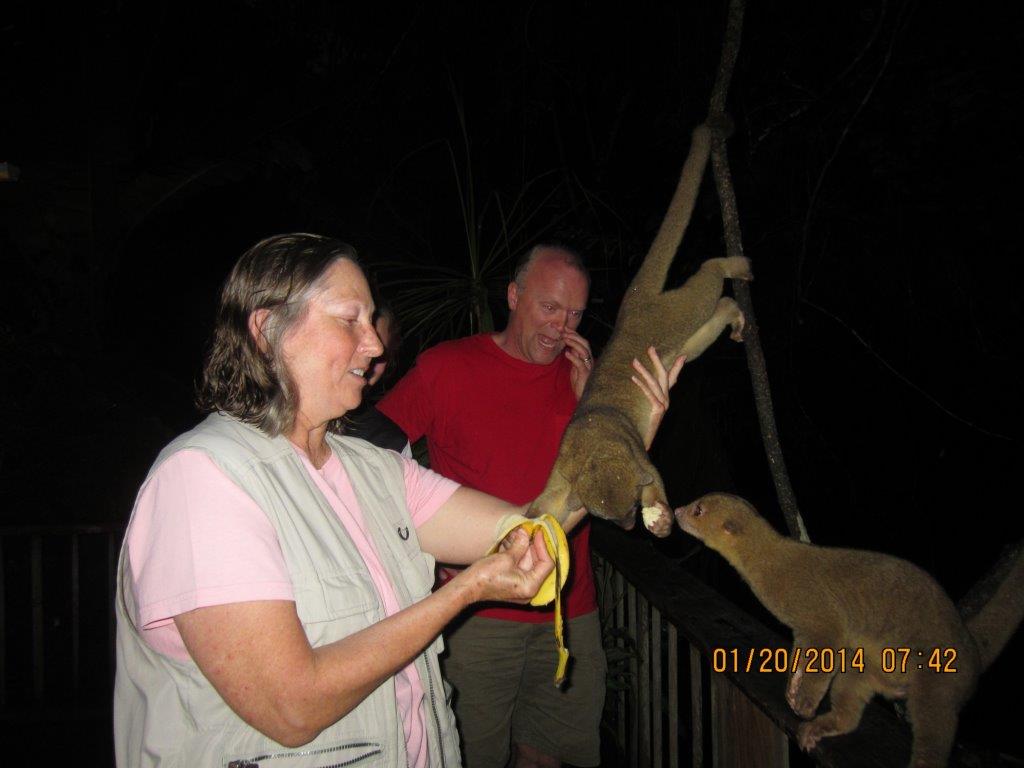
A fun part of the daily routine at duPlooy’s is feeding the Kinkajous.  I just happened to be on the deck at 5:30 one afternoon when an employee handed out bananas.  After all the kids got one, one banana was left, which was handed to me.  Two Kinkajous came in for the treats and I stood back and watched the kids feed them.  After the kids had given away all of their bananas, I stepped up and began feeding the Kinkajous.  Then, all of a sudden, a third Kinkajou seemed to realize that he was late to dinner and came tearing down the tree and onto the deck.  He grabbed the small piece of banana from my left hand and then crawled onto my arm to get to the banana in my right hand!

Feeding the Kinkajous at duPlooy's

Feeding the Kinkajous at duPlooy’s. Photo by Cecelia VanHof.

Our three days at duPlooy’s went too fast and I was sad to leave. But I was also excited to head north towards La Milpa Ecolodge and Research Center for the last leg of our trip where more birds and adventures awaited.

Variable Cracker - Hamadryas feronia

Variable Cracker – Hamadryas feronia

Dirce Beauty - Colobura dirce

Dirce Beauty – Colobura dirce

Read Full Post »

Snowy Owl on the beach at Cape Hatteras

Snowy Owl on the beach at Cape Hatteras

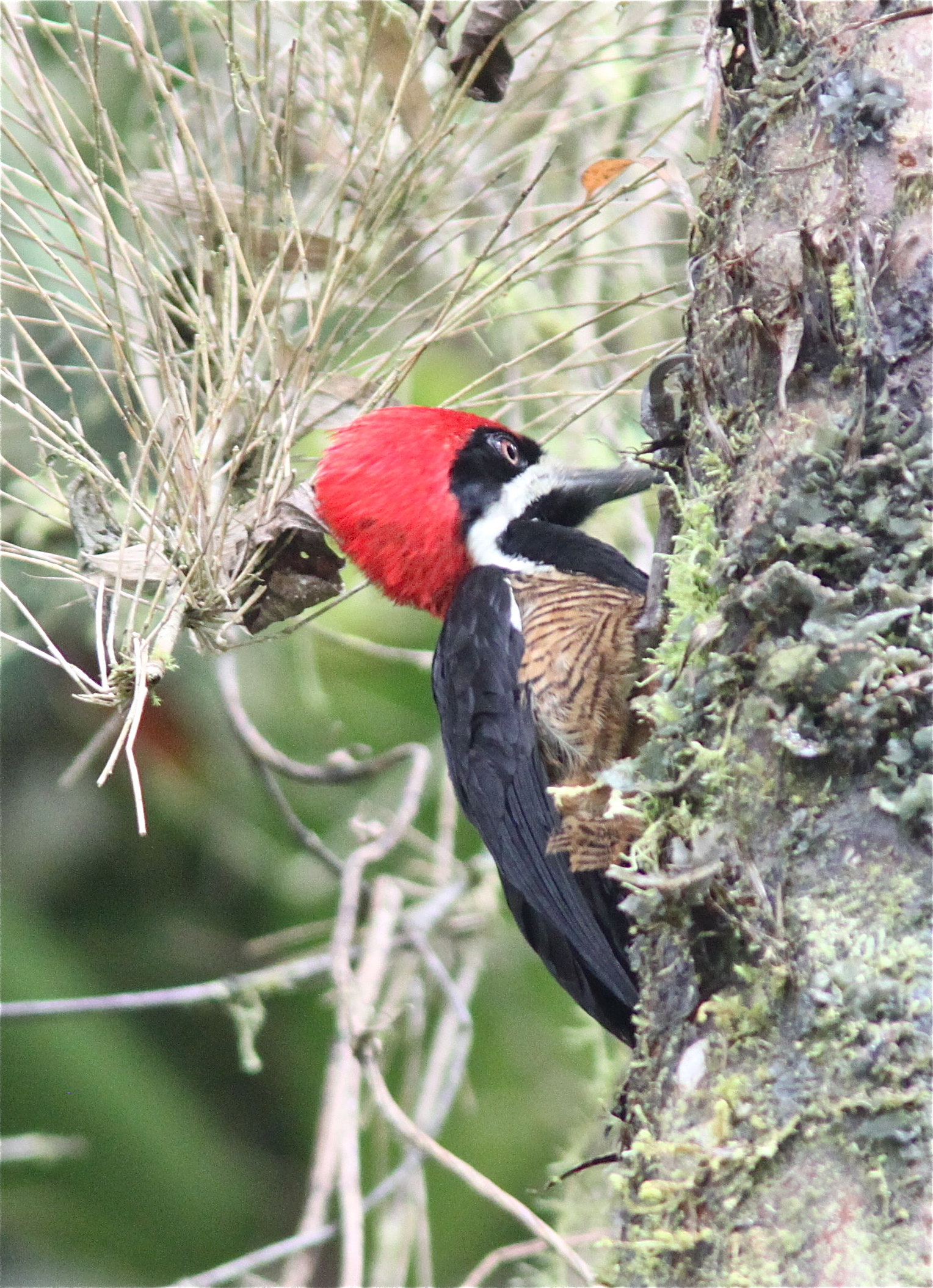
Seeing the Snowy Owl could not have been easier.  We parked at the Cape Hatteras campground, walked the quarter-mile trail over the dunes to the beach, and saw the beautiful owl perched on a piece of driftwood.  The hard part had been convincing everyone to go for it.  It was the first day of the Thanksgiving OBX trip for our group of eight from the Piedmont Bird Club.  When we had first talked about the owl, everyone was agreeable to what everyone else wanted to do, but no one expressed a desire to change our plans to see the owl.  So, we had intended to stick with our itinerary and go to Lake Mattamuskeet NWR on Thanksgiving, the only day that weekend that it was closed to hunting.  But after a friend called me at 7:30 on Thanksgiving morning and said, “We just saw the owl, you don’t even have to walk down the beach,” everyone was willing to change our plans.  The Snowy Owl was a life bird for five of our group and a state bird for me.  And, it was gorgeous!  After admiring the owl, we started back towards our cars and had a wonderful surprise – an American Bittern right out in the open in the middle of the path.
American Bittern

American Bittern at Cape Hatteras

We birders had a lot to be thankful for on Thanksgiving Day. And, it was still early so we continued on to Lake Mattamuskeet.

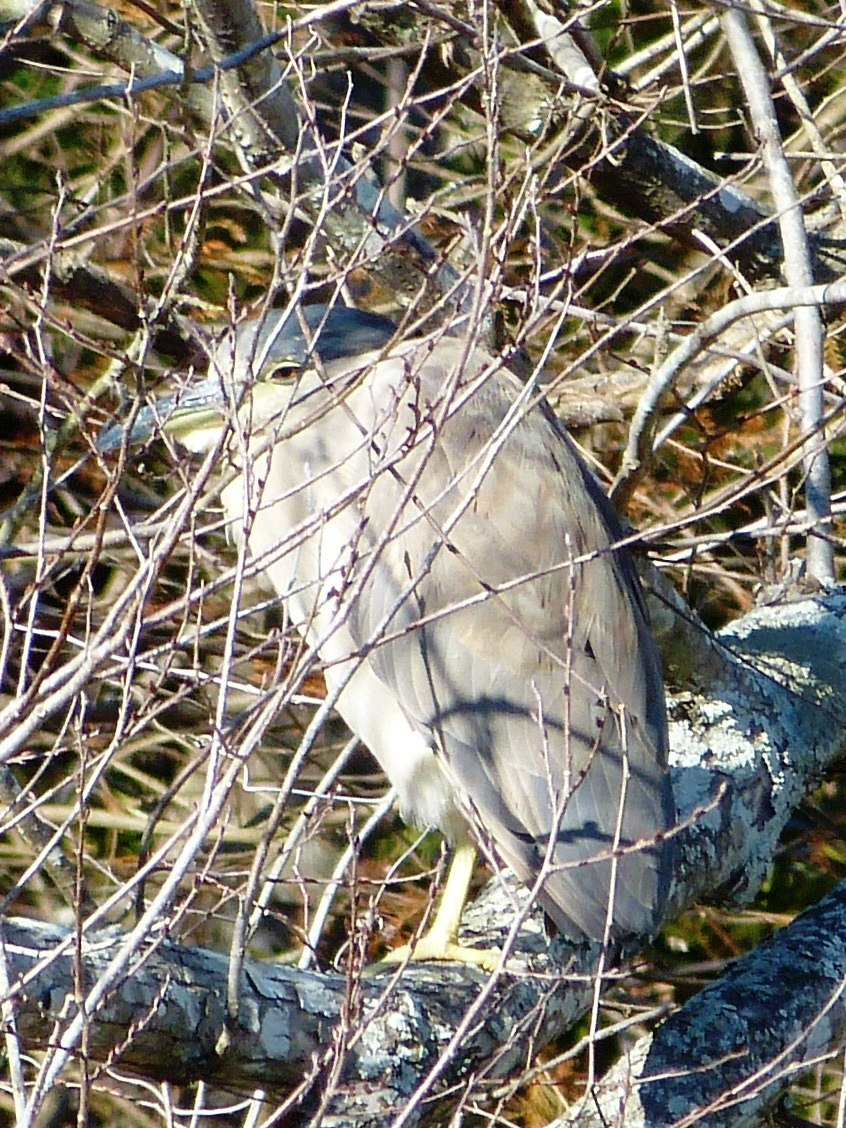
Black-crowned Night-Heron

Second year Black-crowned Night-Heron at Lake Mattamuskeet NWR

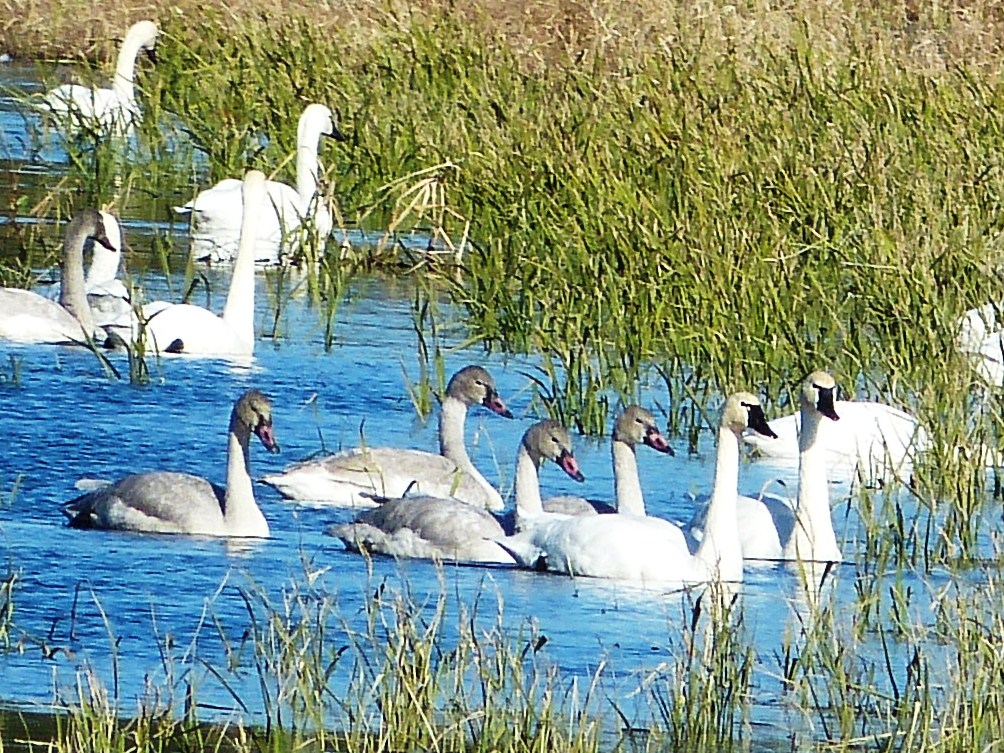
It was full of birds as expected, especially ducks and Tundra Swans, the real stars of wintertime coastal North Carolina along with thousands of Snow Geese.  Other highlights were Marsh Wrens and seven Black-crowned Night-Herons.  The group of Night-Herons included individuals of various ages.  It was the first time that I can recall seeing a second-year bird – no longer spotted like a juvenile, but rather dull and dusky with the bill still partially yellow.  I had seen both Tundra Swans and Snow Geese before, but enjoyed the opportunity to really study them and note details like the pink bills of the juvenile swans.

Tundra Swan family

Tundra Swans at Alligator River NWR

Snow Geese in flight

Snow Geese at Pea Island NWR

Friday brought more good birds at Pea Island, Bodie Island, and Alligator River NWR.  The highlight for that day may not have been a bird at all, but the Black Bear that we found shortly before dark in a field at Alligator River.  Although this was a large wild animal, there was something very cute and appealing about him as he moved about in the field munching on vegetation.

Phyllis me Bear

Shelley, “Bear,” and Phyllis

We had another “bear” for the weekend when a friend of Emily’s cousin showed up unexpectedly with his large dog to spend the night at the condo where most of our group was staying.  I was glad that I was sharing a room with Phyllis as otherwise it might have been a little crowded on the sofa at the condo.  Phyllis quickly became Bear’s new best friend when she took him for a walk, but I shared my lunch with him, so I think that he liked me, too.

Red-winged Blackbird

Female Red-winged Blackbird at Alligator River NWR

On Saturday, our last full day of the trip, we went to Alligator River NWR again.  And, the bird that I most remember?  A Red-winged Blackbird!  I should be embarrassed to tell this story, but I’m blessed with the ability to laugh at myself, so here it is.  As we were driving out, a bird the size of a large sparrow flew in front of our car and then perched in a shrub on the side of the road.  We stopped, admired the bird, puzzled over its identity, and I took dozens of photos.  We saw only the back of the bird and the face.  The pattern on the back and wings was intricate and beautiful; the orange on the face was gorgeous!  We thought that it must be a rare sparrow that we just couldn’t identify.  After puzzling over the photos for a while, we realized what it was.  A very common bird that I thought I’d learned years ago – a female Red-winged Blackbird.  I love the never-ending lessons of birding.  I don’t need new life birds when I can’t remember the birds that I’ve already seen!

After a stop at Jennette’s Pier in Nags Head and another at Bodie Island Lighthouse & Pond, the trip was over all too soon.  Our final birds of the trip were a few gulls and at least 75 Northern Gannets that Phyllis and I saw from our sixth floor ocean-front balcony the next morning.  It was peaceful yet thrilling to watch the large group of gannets soaring, gliding, swooping, and diving.  I felt totally happy and content, lost in the moment, while watching those gorgeous birds.

Emily Tyler did an excellent job organizing and leading the trip and it was great fun sharing the experience with new friends.  I’m looking forward to the next Piedmont Bird Club trip.

Pintail pair

Northern Pintail pair at Bodie Lighthouse pond

Read Full Post »

Bill Drummond’s Southern California trip was a wonderful adventure that included great looks at some difficult to find birds and gorgeous scenery.  Sixteen birders in four cars covered several coastal areas near Santa Barbara and most of Kern County with its varied habitat from forest to desert.

Island Scrub Jay

Island Scrub Jay. Photo by Eric Labato.

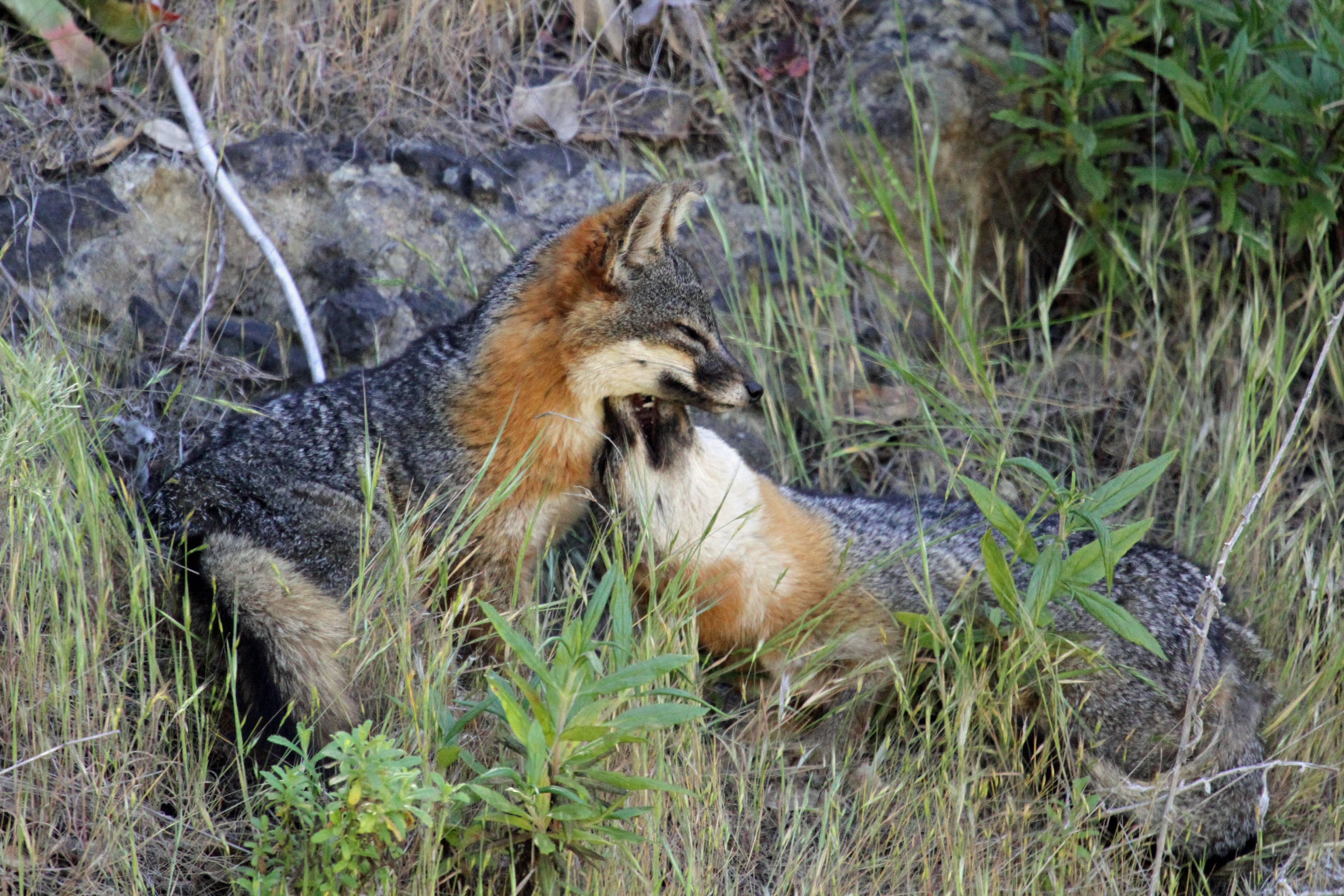
We got off to a great start on our first day by exploring Santa Cruz Island.  Close-up views of our target bird, Island Scrub Jay, which is a brighter more intense blue than the Western Scrub Jay, delighted us all.  We certainly enjoyed these gorgeous cooperative birds, but the highlight of the day may have been the Island foxes.  Historically, foxes were the top predator on the island, but introduced feral pigs and the Golden Eagles they attracted pushed the fox population to near extinction.  Santa Cruz Island fox was listed as an endangered species in 2004.  Things turned around with a science-based recovery program established by The Nature Conservancy and its California government agency partners.  The fox population rebounded and the recovery is described as one of the ”fastest and most successful endangered species recovery programs in U.S. history.”

Island foxes

Santa Cruz Island foxes.  Photo by Eric Labato.

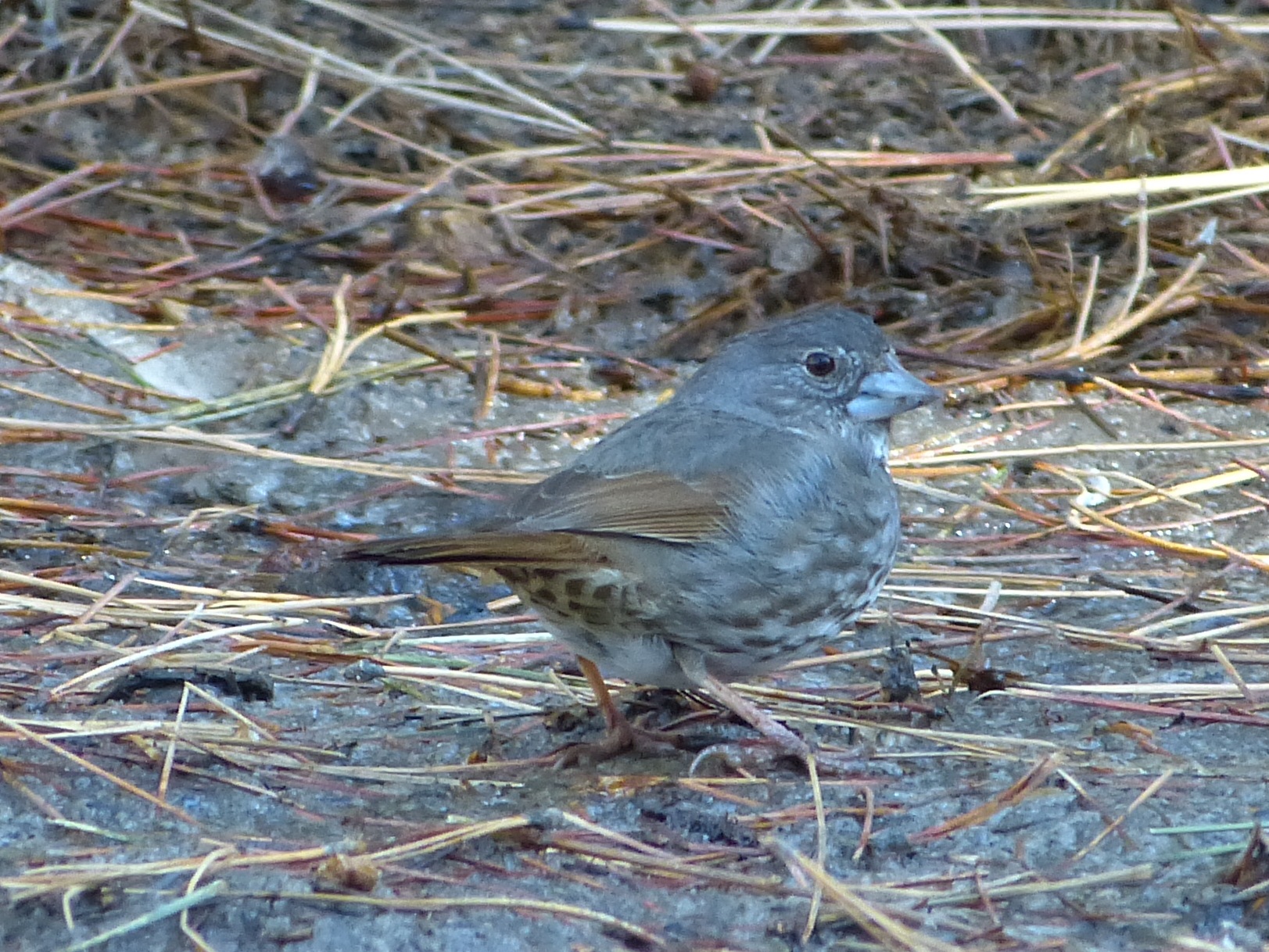
Dave Pereksta joined us the following day to help with our search for Mountain Quail.  We headed north towards Lake Casitas and then we continued north into Los Padres National Forest.  On Lockwood Valley Road, we had our first Sage Sparrow (the dark coastal California subspecies belli), now Bell’s Sparrow with the recent split.  At Iris Meadow, we had several extremely cooperative Thick-billed Fox Sparrows.  While they were not a life bird, I enjoyed the opportunity to leisurely observe every detail of the birds up close.  Other highlights were Lewis’ and White-headed Woodpeckers.  After a full day of birding, we headed to Bakersfield for the night.

Thick-billed Fox Sparrow

Thick-billed Fox Sparrow at Iris Meadow

The next morning, Dave Pereksta joined us again to continue our search for Mountain Quail in the Los Padres National Forest. Dave found a pair on Mount Pinos Road, but he was the only one to get a good look. A few others got glimpses of the birds, but no one saw them well.

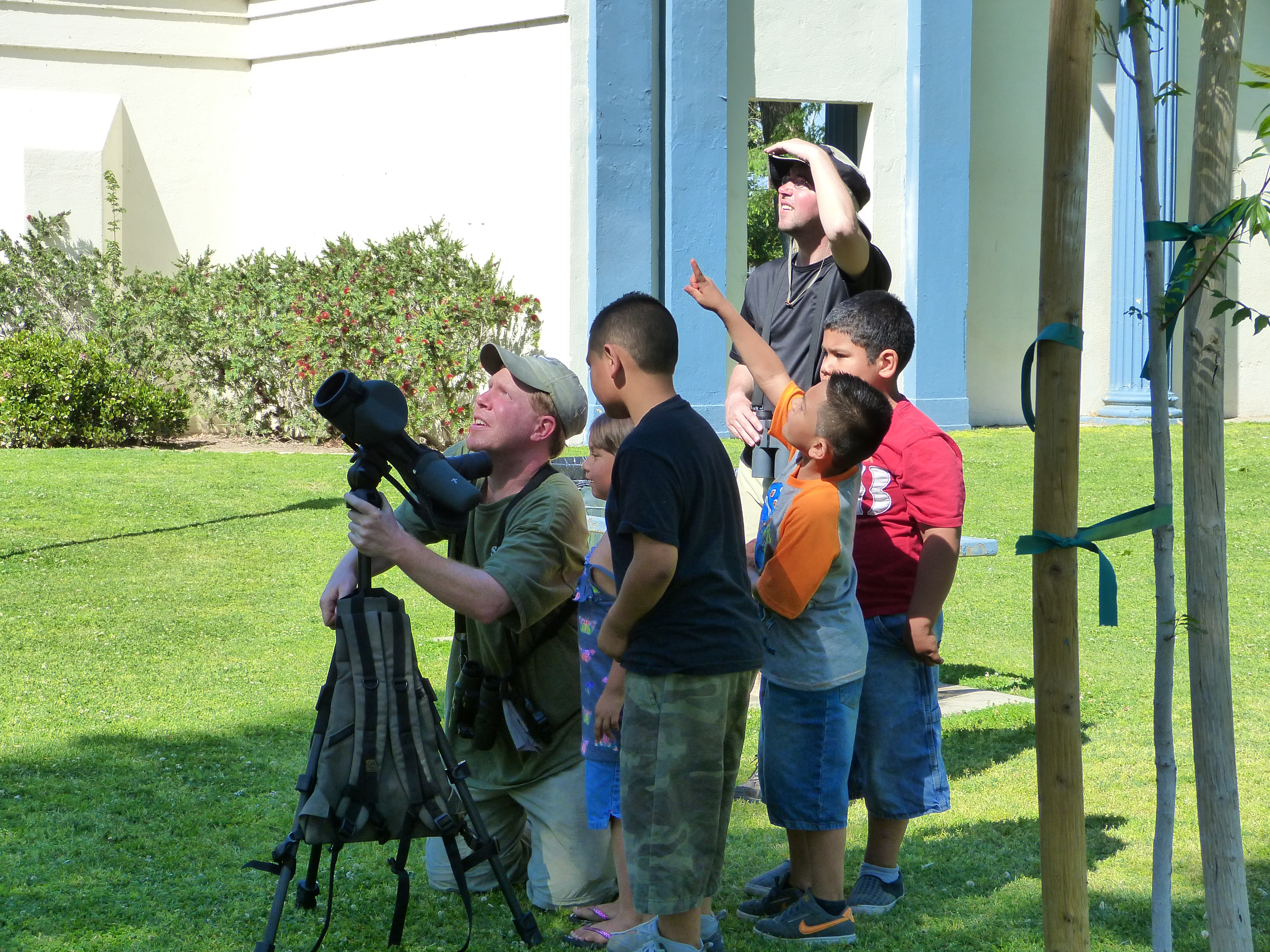
Bitter Creek NWR signWe were more successful at Bitter Creek NWR where the California Condors appeared at exactly the time Dave predicted (just after 9:30 AM).  Everyone was thrilled with our wonderful views of these majestic birds.  We said goodbye to Dave and headed back to Bakersfield and Beale Park, where we met Ali Sheehey and found our target – beautiful Rose-ringed Parakeets.

Dave Hursh, assisted by Zach Weber, gets great views of the parakeets for the kids in the park.

Dave Hursh and Zach Weber showing Rose-ringed Parakeets to kids in the park.

Ali is the expert on Rose-ringed Parakeets, but she is also full of energy and enthusiasm for just about every living thing in Kern County and we enjoyed our time with her.  Thanks to Ali’s knowledge of the area, we got a bonus bird at Beale Park – Spotted Dove.

Wood Ducks

Hart Park, near Bakersfield, CA. World’s tamest Wood Ducks?

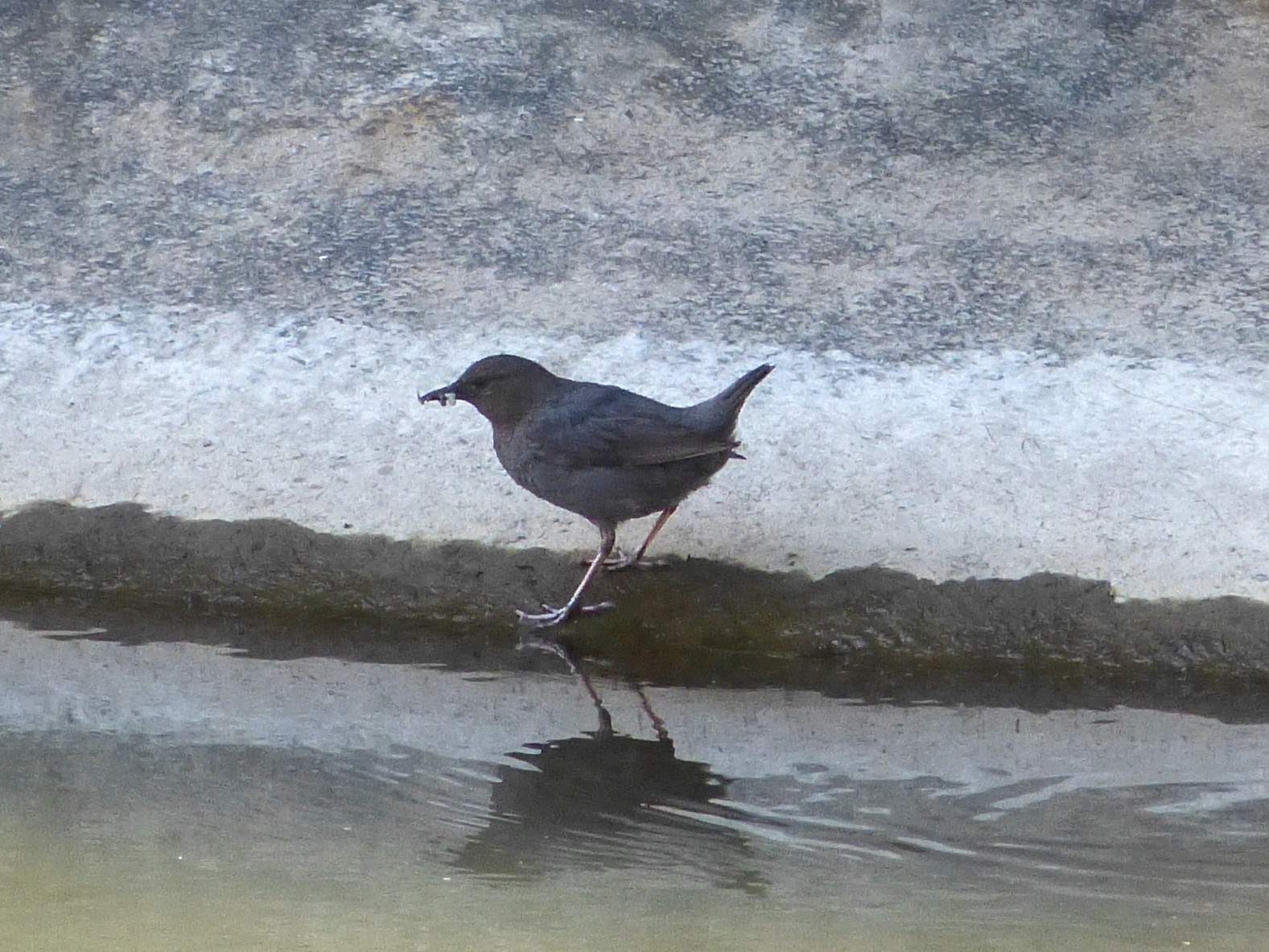
American Dipper

American Dipper immediately before delivering the fish in its bill to the nest.

On the 22nd, we headed towards Kern River Preserve. The drive along Kern Canyon Road was spectacular. We made several stops along the way and found Lawrence’s Goldfinch at the Democrat Fire Station. At the boat ramp in Keyesville, we watched one of my favorite birds of the trip, an American Dipper fishing and attending a nest.

Kern River Preserve was delightfully birdy and I especially enjoyed great looks at Tricolored Blackbirds.

Tricolored Blackbird

Tricolored Blackbird. Kern River Preserve, California

After leaving Kern River Preserve, we found a California King Snake and this Horned Lizard on the road.

Horned Lizard

Horned Lizard

Mountain Quail

Mountain Quail.  Photo by Eric Labato.

The following day we drove to the famous birding hot spot, Butterbredt Springs, a small oasis in the Mojave Desert.  We hoped to find Mountain Quail there and I have to admit that I was skeptical since with stops along the way, we arrived in the middle of the day.  We were incredibly lucky, though, and nearly everyone in our group had spectacular views of a pair in the open for over five minutes.  This was a life bird for many of us and we were all thrilled.

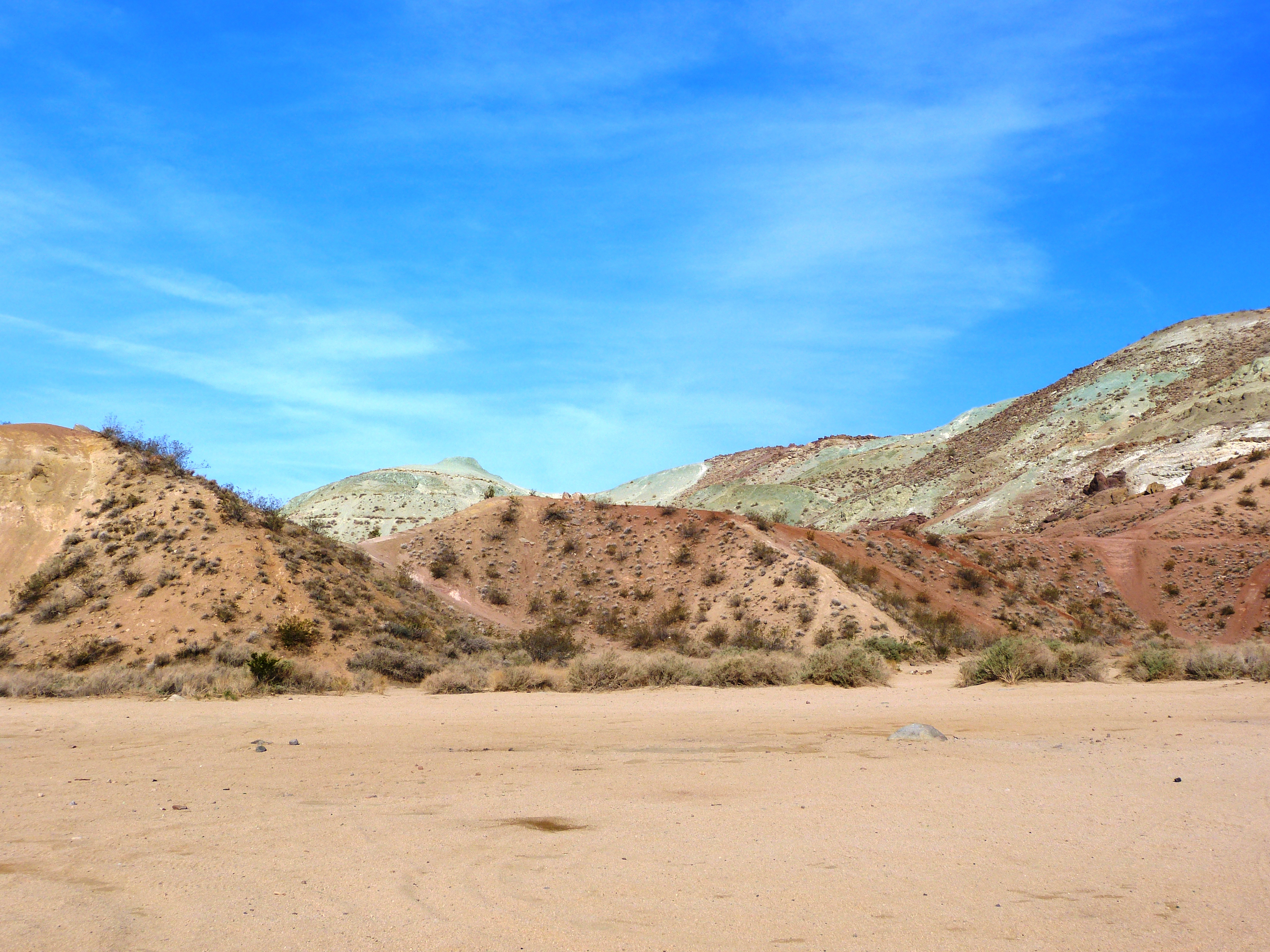
California desert from Jawbone Canyon Road

California desert from Jawbone Canyon Road

On April 24th, we drove Jawbone Canyon Road again.  It was sad to see how badly the fragile desert habitat has been damaged by illegal off-road vehicle use.  How could anything survive in such conditions!  But, again, we were lucky and found our targets, Le Conte’s Thrasher and Chukar, as well as the canescens (interior) subspecies of Sage Sparrow. So, now we had two subspecies of Sage Sparrow on the trip, but both are Bell’s Sparrow after the recent split.  We visited Butterbredt Springs again and then we found another oasis in the Mojave Desert, Silver Saddle Ranch and Club.  The private resort 20 miles north of California City generously allows birders on the property.  Local birders consider it one of the best hot spots for migrants.  The day ended with a stop at the Tehachapi Loop overlook on Highway 58.  The Tehachapi Loop is a 0.73-mile ‘spiral’ on the Union Pacific Railroad line through Tehachapi Pass.

Tehachapi Loop overlook

Tehachapi Loop overlook

Desert Tortoise

Desert Tortoise

April 25 we started at Silver Saddle and then stopped at the Desert Tortoise Natural Area before lunch in California City.  The naturalist called us over as we arrived, saying to hurry because they had a tortoise.  The guy in the photo at the left is #589, a 15-20 year old male, just reaching breeding age.  Individuals may live 60 to 100 years.  The desert tortoise (Gopherus agazzizi), listed as “threatened” under the Endangered Species Act, is the official California State reptile.  We got good looks and photos before #589 wandered off into the desert.

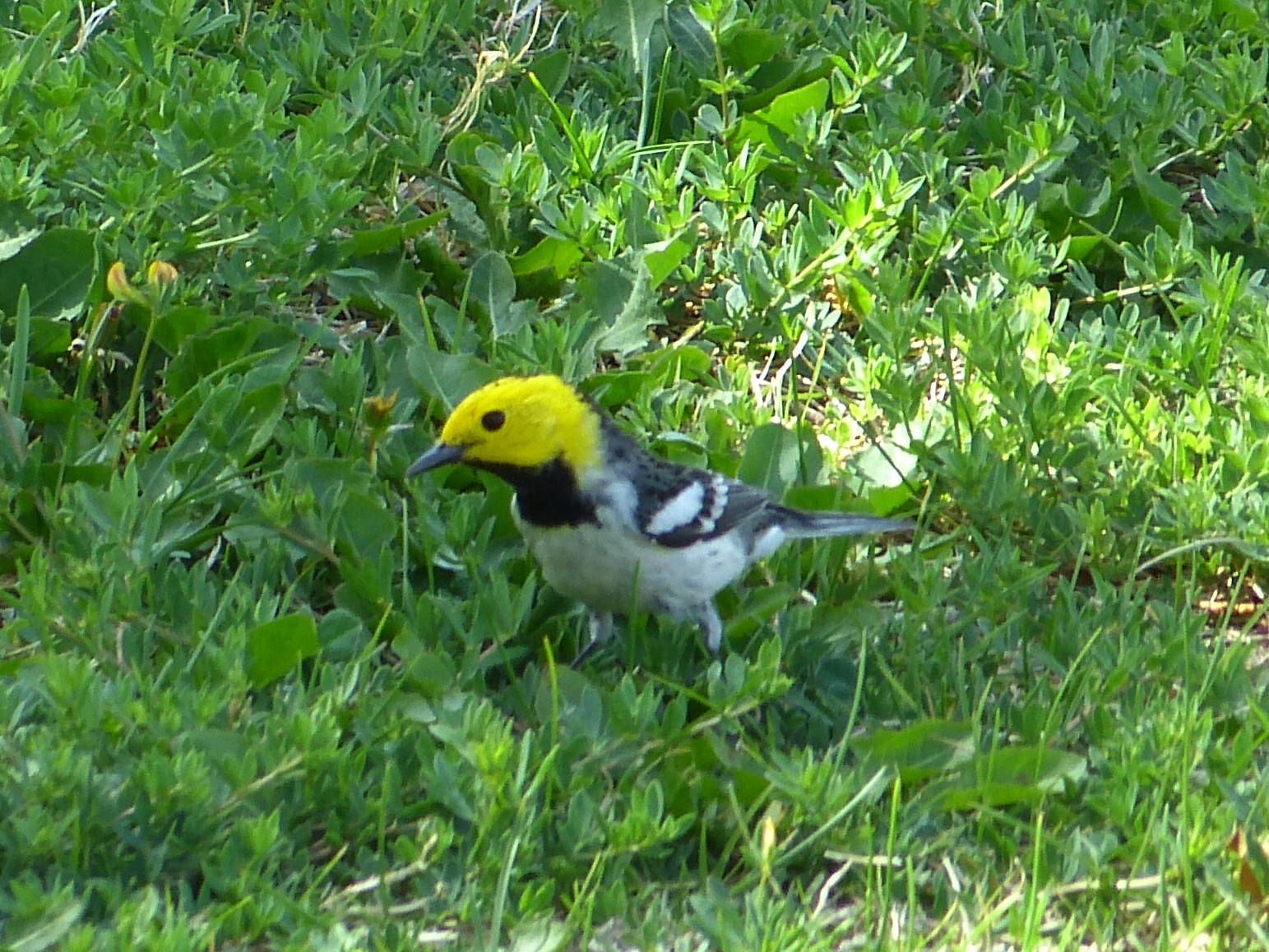
After lunch, we birded nearby Central Park.  Mary, a trip participant with over 700 ABA area birds, still needed Hermit Warbler.  She got her bird that day at Central Park and amazingly, I found the bird.  Because of my poor vision, I usually have difficulty getting on birds that others find.  So, being the one to actually see the warbler first and help Mary get it was absolutely thrilling.  Next, we went back to Silver Saddle where we found more Hermit Warblers and many other migrants including my life warbler for the trip, MacGillivray’s.

Hermit Warbler

Hermit Warbler

The 26th brought the drive back to Santa Barbara.  We stopped in the charming Danish village of Solvang for lunch and saw Yellow-billed Magpies on our way out of town.  Back in Santa Barbara, we had hoped to see Elegant Terns, but it was one of the few misses of the trip.

Our last day of birding was a pelagic trip out of Ventura.  The cocktail of seasickness drugs that worked for me last summer in Florida were no match for the rougher waters of the Pacific.  I was sick for most of the trip.  After I finally stopped throwing up, I just wanted to sit inside with my head on a table.  Even when I heard “Laysan Albatross!”, I could not muster the energy to get up and look for it.  Memories of pain fade with time, though, so I suppose that one day I’ll try a pelagic trip again.

My totals for the trip included 15 countable ABA area birds, California Condor and Rose-ringed Parakeet.  This was a wonderful trip with a nice group of birders and great leadership by Bill Drummond and Dave Hursh.  More of my photos are in my California – April 2013 set on Flickr.  For additional (and better) photos, see Eric Labato’s California 2013 Flicker set.  The trip took place between April 19 and 27, 2013.

Read Full Post »

Blue-winged Mountain-Tanager

Blue-winged Mountain-Tanager

Tanagers and hummingbirds – those are the birds that everyone talked about when I announced that I would be going to Ecuador for my first trip to Central or South America. These birds were gorgeous and colorful as promised, but we saw many other wonderful birds, too, with some of the best in simple black and white. The Partnership for International Birding (PIB) trip to northwest Ecuador was February 22nd through 28th, 2013. Six adventurous birders, our PIB guide and experienced Ecuador birder, John Drummond, and top Ecuadorian guide, Lelis Navarrete, completed our group. The birds that we saw ranged from the awe-inspiring Andean Condor with its ten-foot wingspan to the Booted Racket-tail which immediately went on my personal list of the world’s cutest birds.

The first day we birded the Calacali area and the Tandayapa lower valley in the morning before lunch at Sachatamia Lodge in Mindo. In addition to a wonderful lunch, we enjoyed our first close-up views of tanagers at feeders.

Flame-faced Tanager.

Flame-faced Tanager. Photo by Jeannie Mitchell.

We also saw our first warbler of the trip, this Black-crested Warbler.

Black-crested Warbler

Black-crested Warbler. Photo by Jeannie Mitchell.

After lunch, it was on to San Jorge de Milpe where we would spend the night. This lodge hosted many gorgeous hummingbirds as well as three very cooperative Rufous-fronted Wood-Quail which came in to a feeding station near the outdoor dining room.

Ocellated Tapaculo

My poor but recognizable photo of Tomas, the Ocellated Tapaculo

Our second day of the trip started at 4:30 AM to allow time for the 20-minute walk from the lodge to the bus, the drive to Refugio Paz de las Aves, and then the walk down a steep, slippery path in the dark. We needed to be in place before dawn to watch Andean Cock-of-the-Rock display on the lek. Angel Paz opened his property to visitors and saved it from logging after discovering the Cock-of-the-Rock lek. While creating trails, he discovered antpittas coming to eat the earthworms that were uncovered by the work. Angel learned that birders would pay to see them, too. Amazingly, he was able to “train” antpittas to come to his call by rewarding them with earthworms. Today Angel and his brother, Rodrigo, provide birders on their refuge with close views of some of the most difficult skulking birds in Ecuador. The best known of these is the Giant Antpitta, Maria, who did not show for us (perhaps on the nest). However, we were thrilled to see an Ochre-breasted Antpitta from a few feet away as well as two Dark-backed Wood-quail. My favorite bird was Tomas, a gorgeous Ocellated Tapaculo, who also appeared when Angel called him. In between these amazingly cooperative birds, we watched a Crimson-rumped Toucanet, hummingbirds, tanagers, and other forest birds.

Crimson-rumped Toucanet

Crimson-rumped Toucanet. Photo by Jeannie Mitchell

At San Jorge de Milpe in the afternoon, we saw more amazing tropical birds including a Pale-mandibled Aracari.

Pale-mandibled Aracari

Pale-mandibled Aracari. Photo by Jeannie Mitchell.

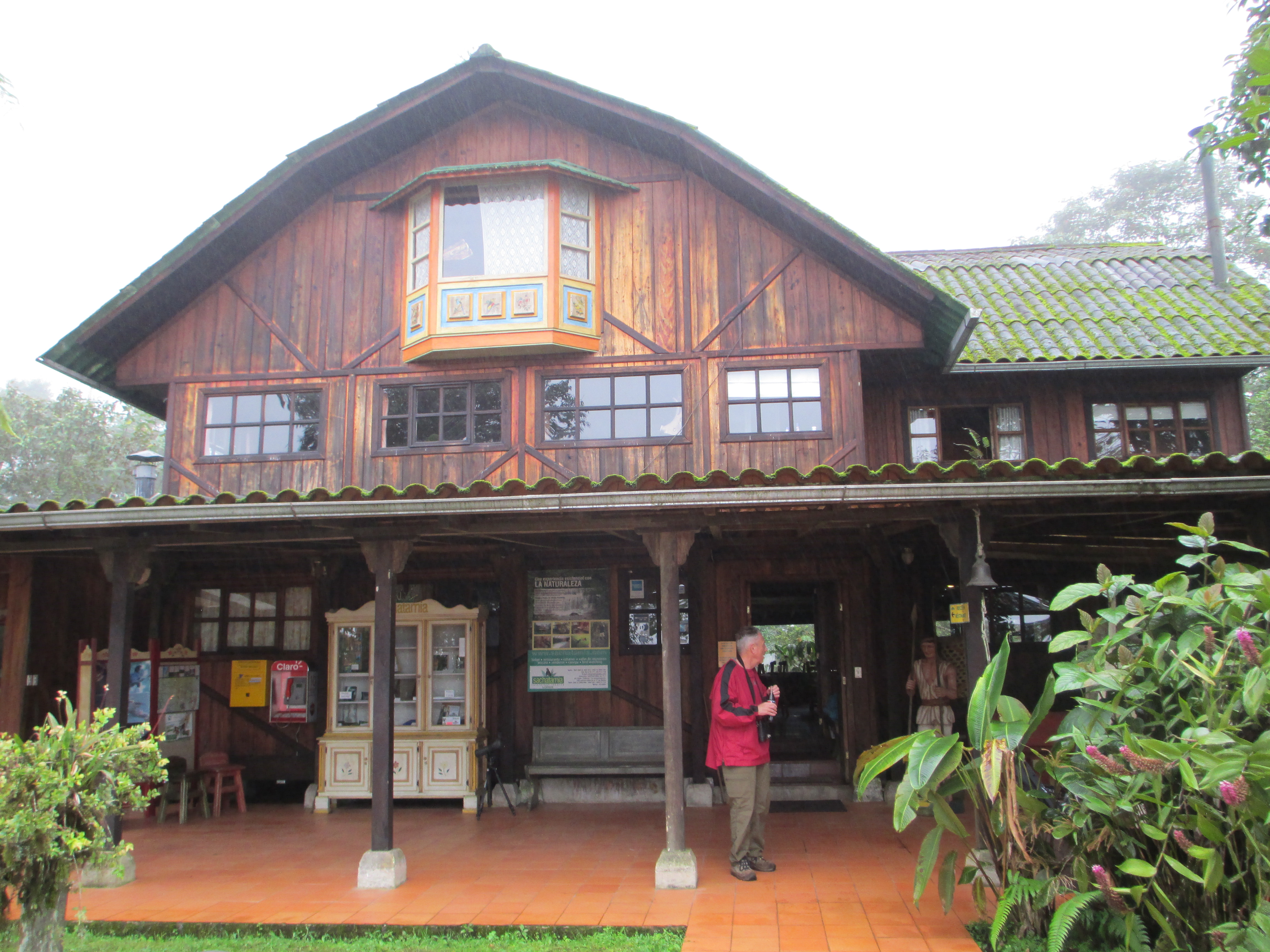
After a wonderful day of birding, we headed to Sachatamia Lodge for the night.

Sachatamia Lodge

Sachatamia Lodge in Mindo. Photo by Jeannie Mitchell.

We birded most of our third day in Rio Silanche Bird Sanctuary. Some of the stars on this day were black and white birds like this Dot-winged Antwren below.

Dot-winged Antwren

Dot-winged Antwren. Photo by Jeannie Mitchell.

The tower at Rio Silanche

The tower at Rio Silanche. Photo by Jeannie Mitchell.

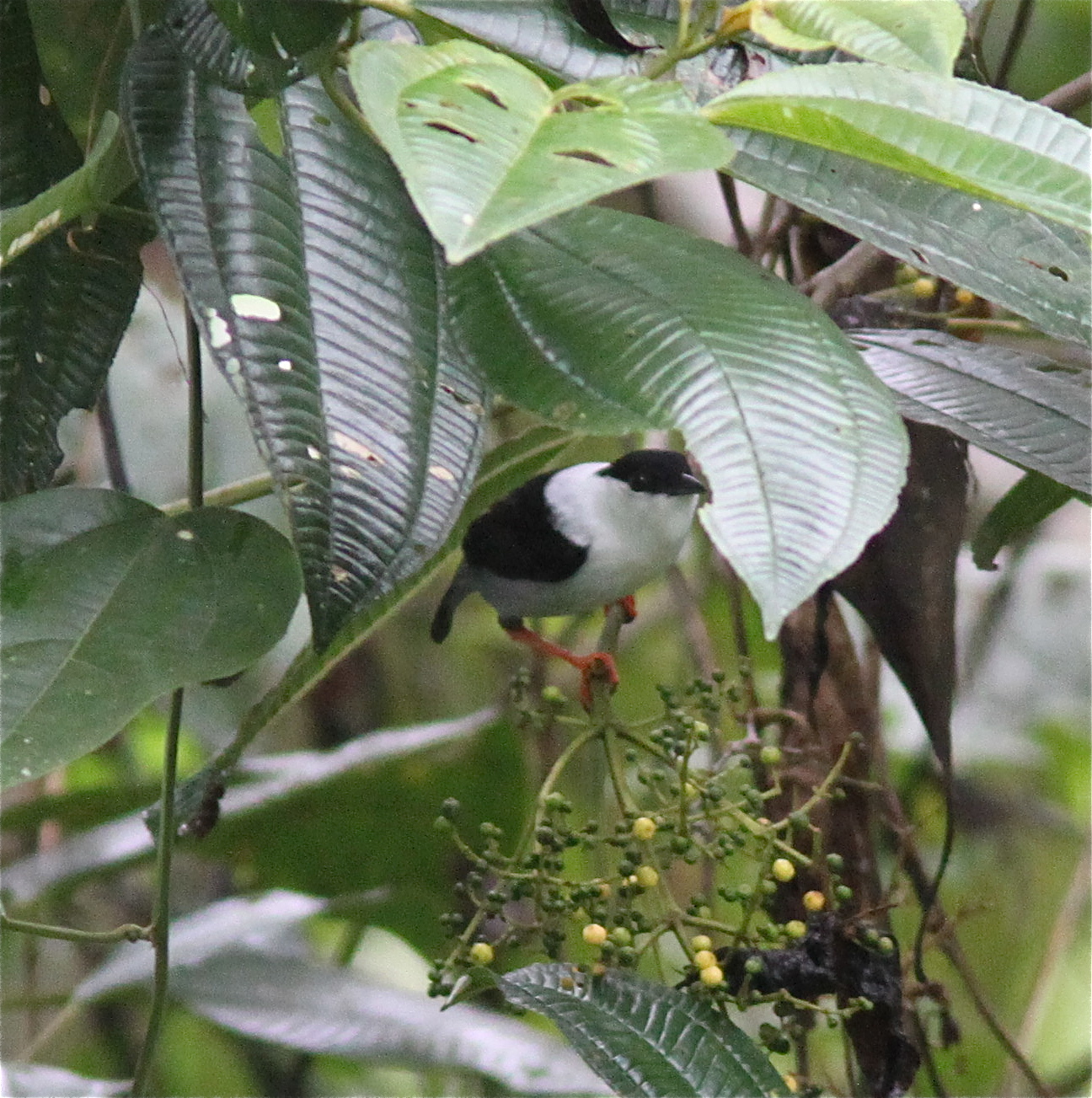
Another favorite was the White-bearded Manakin. Males begin courtship by jumping between small saplings in the lek at the forest edge. Each time it jumps, the tiny 4-inch bird snaps its wings, which makes a loud popping sound. There was a flurry of activity with the little Manakins constantly jumping as we tried to get a good look. Then we heard Ron quietly say “I’ve got one over here” and he pointed to a spot near the ground on the other side of the path. A charming little Manakin quietly sat there in the vegetation and allowed all us to get great looks.

White-bearded Manakin

White-bearded Manakin. Photo by Jeannie Mitchell.

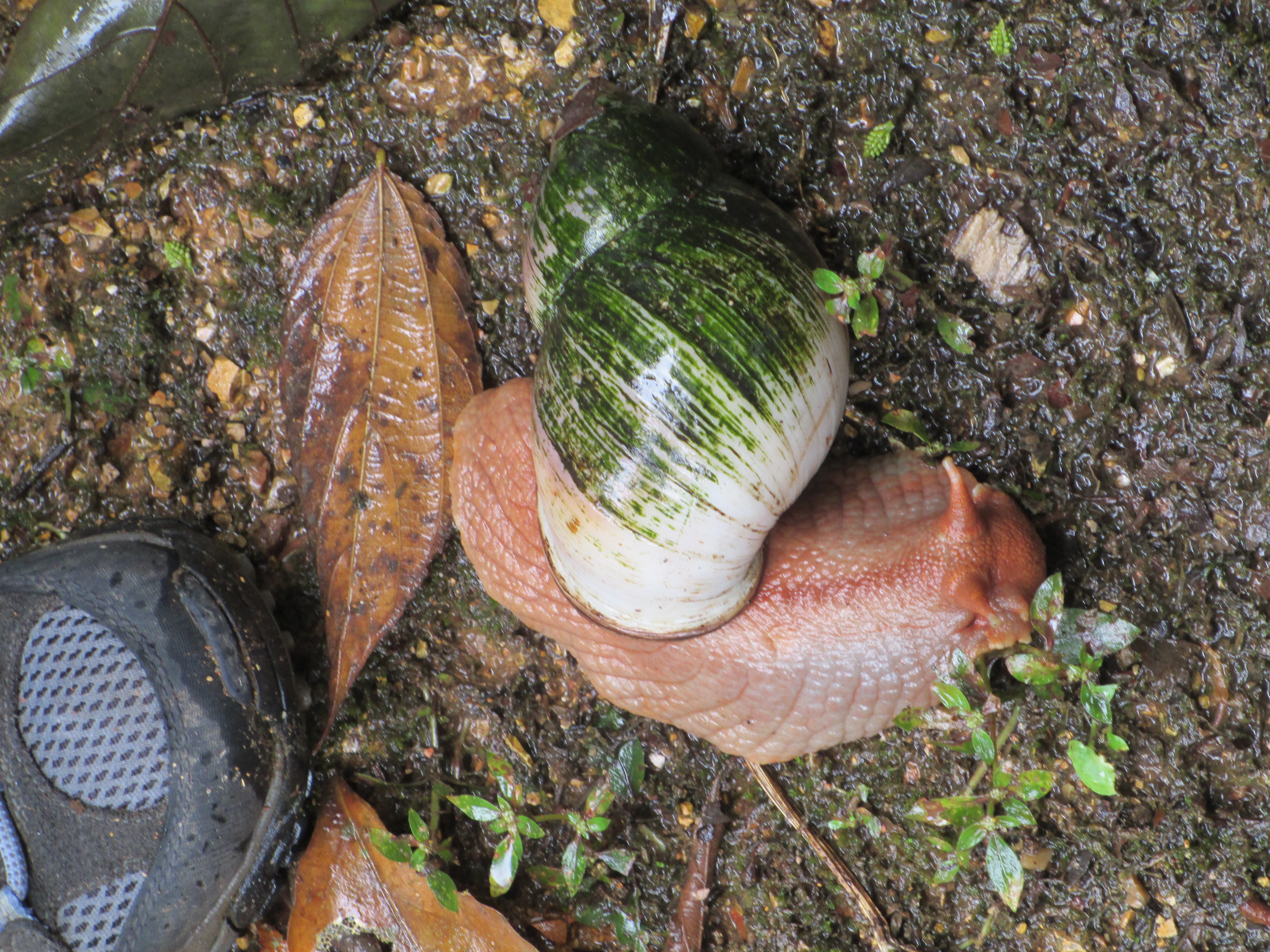
We saw very few animals of any kind other than birds, so the giant snail was a fun surprise. Note the tip of my shoe for a size comparison.

Giant snail at Rio Silanche Bird Sanctuary.

Giant snail at Rio Silanche Bird Sanctuary. Photo by Jeannie Mitchell.

After another great day of birding, we headed back to Sachatamia Lodge again for dinner and the night.

Read Full Post »

I really liked Sachatamia Lodge, but I think that dinner the second night made me sick. They tried to accommodate my request for low-carb meals by serving me asparagus in a rich cream sauce instead of the spaghetti main course. I had diarrhea that night which forced me to stay at the lodge the next morning while the others went to see the Long-wattled Umbrellabird.

Sachatamia Lodge

The bird feeding area at Sachatamia Lodge. Photo by Jeannie Mitchell.

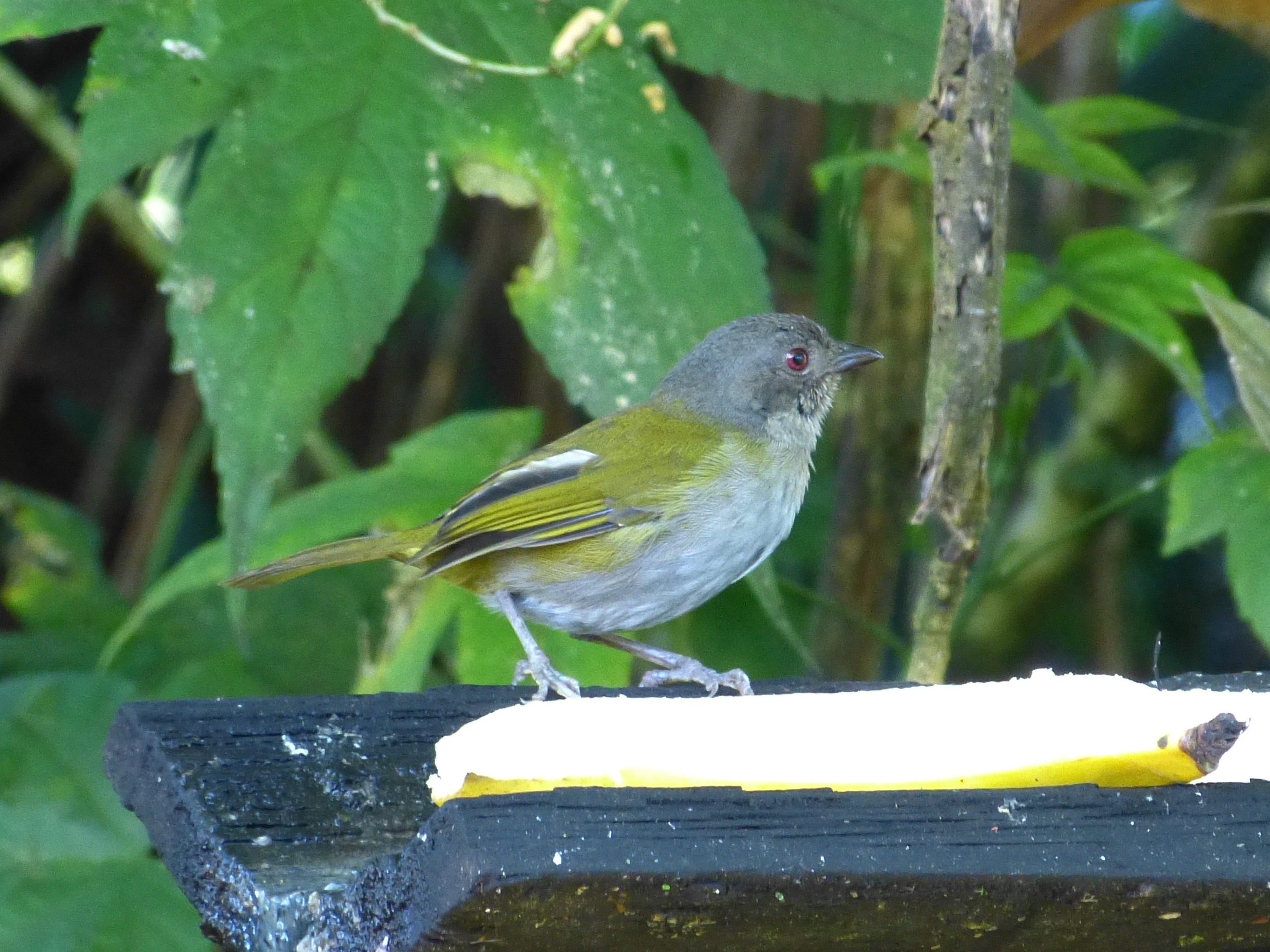
I had tea and crackers, got some extra sleep, and spent a couple of hours alone at the feeders. I loved the luxury of indulging in long lingering looks at the gorgeous tanagers. I also saw a just-fledged Buff-throated Saltator right in front of the entrance to the lodge.

Buff-throated Saltator

Buff-throated Saltator fledgling

Buff-throated Saltator and

Buff-throated Saltator and Blue-gray Tanager

Blue-gray Tanager

Blue-gray Tanager

Golden Tanager

Golden Tanager

Dusky Bush-Tanager

Dusky Bush-Tanager

Strong-billed Woodcreeper

Strong-billed Woodcreeper

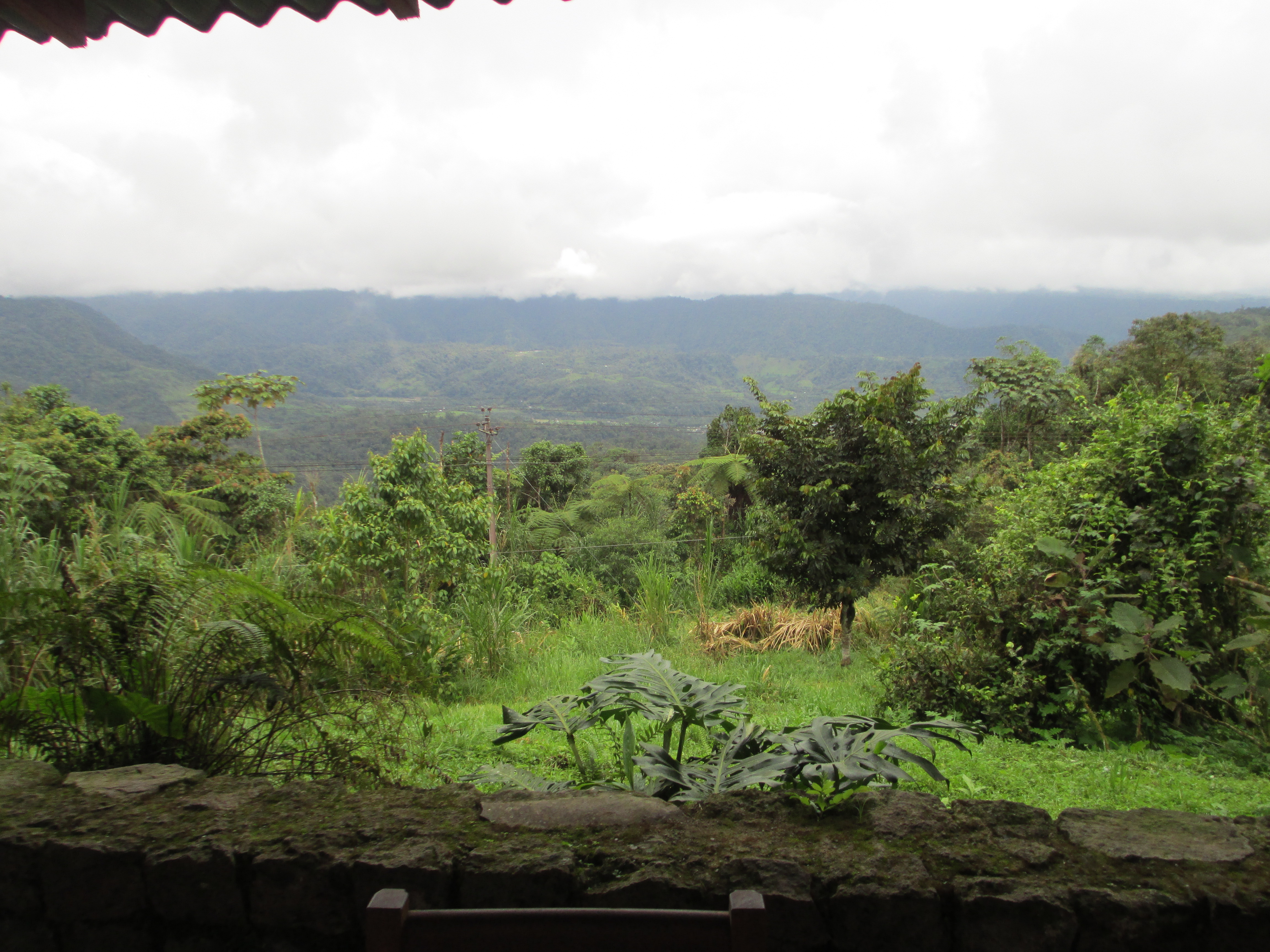
The rest of the group returned for lunch and Jeannie took this photo of the view from the lodge.

View from Sachatamia Lodge

The view from Sachatamia Lodge

Jeannie got photos of Golden-naped Tanagers and hummingbirds, too.

Golden-naped Tanagers

Golden-naped Tanagers. Photo by Jeannie Mitchell.

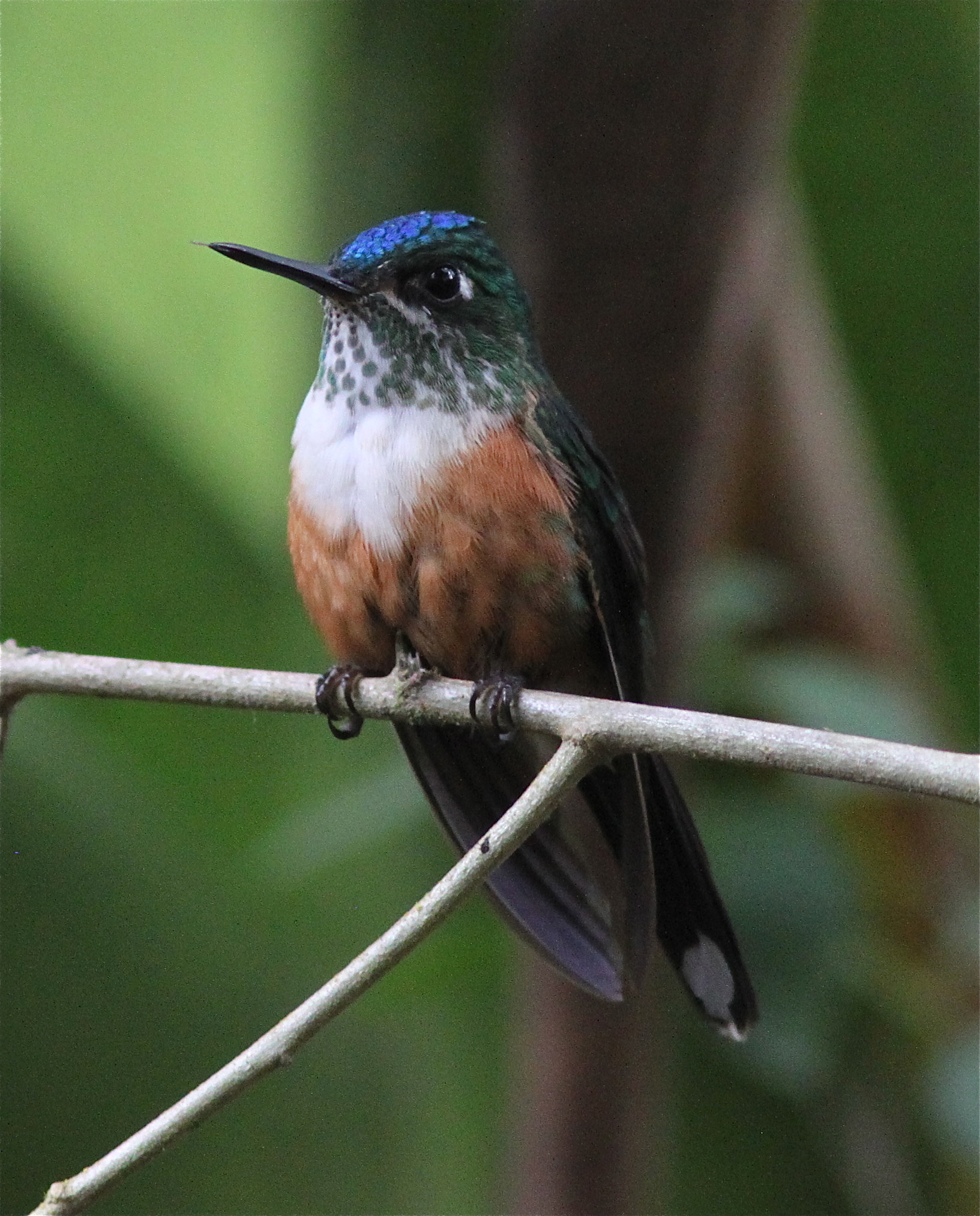
Violet-tailed Sylph (female)

Violet-tailed Sylph (female). Photo by Jeannie Mitchell.

Booted Racket-tail

Booted Racket-tail. My favorite hummer of the trip! Photo by Jeannie Mitchell.

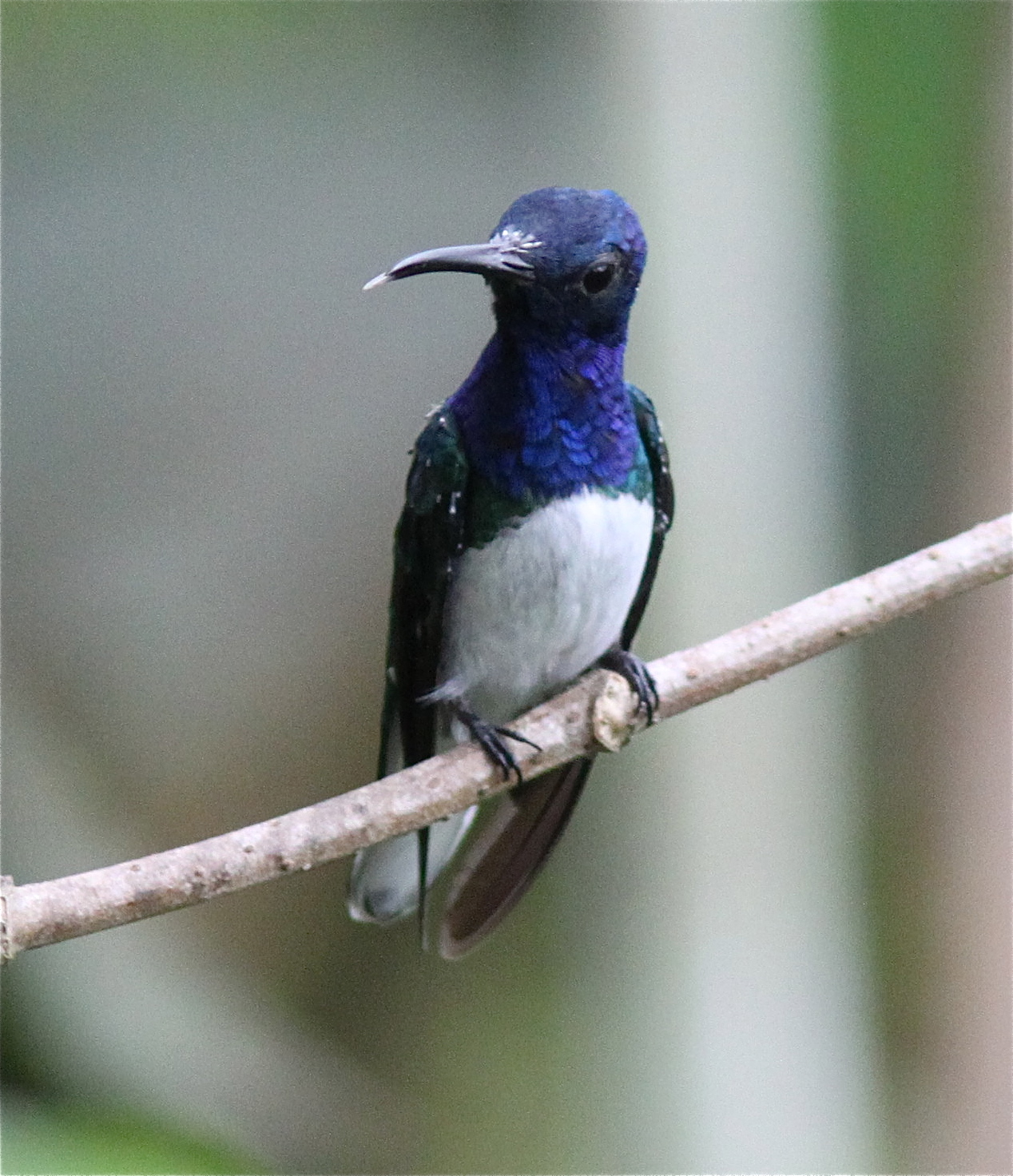
White-necked Jacobin

White-necked Jacobin. Photo by Jeannie Mitchell.

That afternoon we headed to San Jorge de Tandayapa Lodge where we spent the night after birding the area.

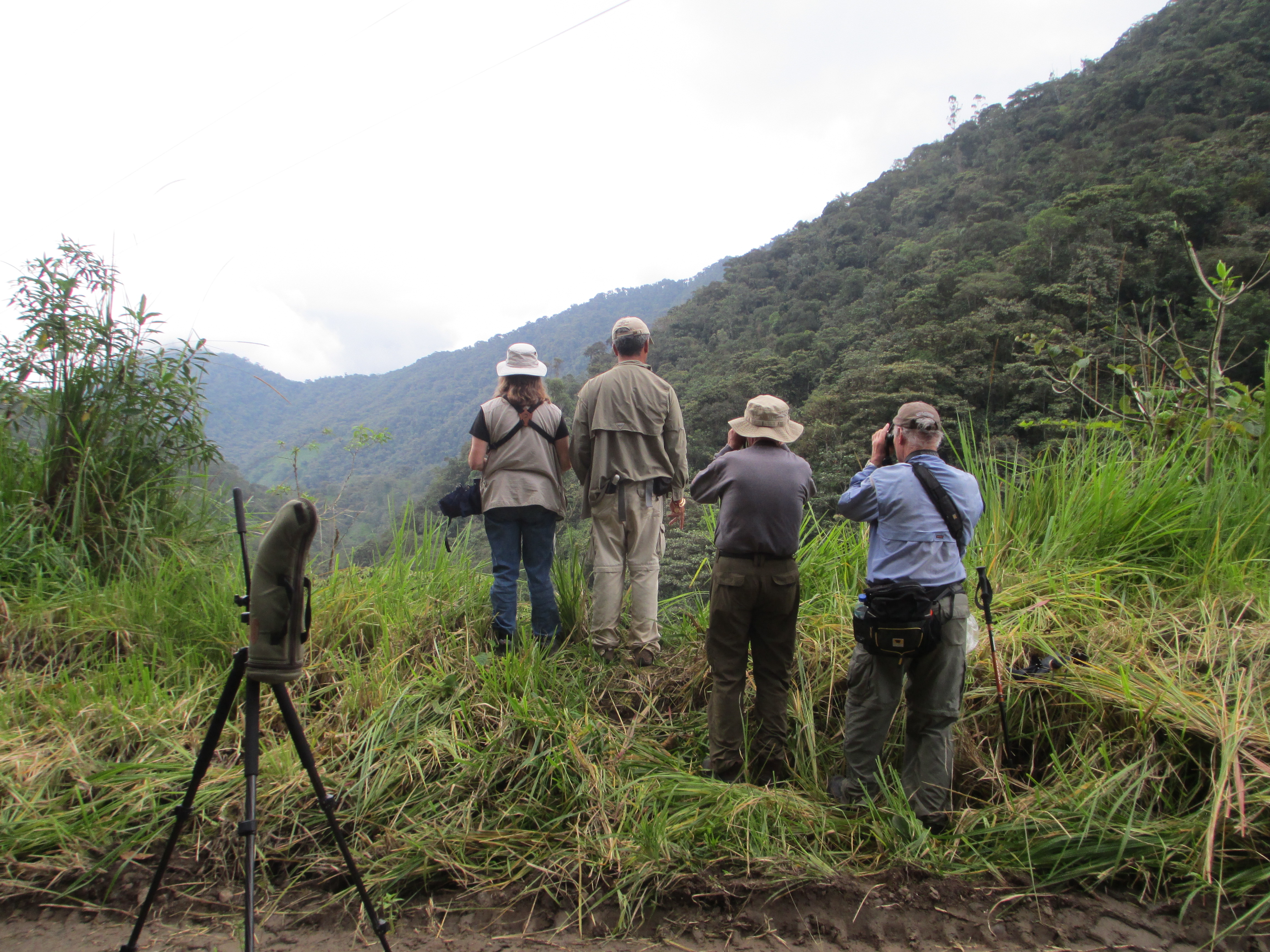
Birding in the Tandayapa Valley

Birding in the Tandayapa Valley. Photo by Jeannie Mitchell.

Dinner at San Jorge de Tandayapa Lodge

Dinner at San Jorge de Tandayapa Lodge. Photo by Jeannie Mitchell.

Day five brought more wonderful birds in the Tandayapa upper valley, including this Powerful Woodpecker and the hummingbirds below.

Powerful Woodpecker

Powerful Woodpecker. Photo by Jeannie Mitchell.

Collared Inca

Collared Inca. Photo by Jeannie Mitchell.

Gorgeted Sunangel

Gorgeted Sunangel. Photo by Jeannie Mitchell.

We did not see many butterflies during any part of the trip, but there were a few like this beauty.

Butterfly

Photo by Jeannie Mitchell

IMG_7125

Photo by Jeannie Mitchell

IMG_7126

Photo by Jeannie Mitchell

The drive back to Quito for the night was quite interesting. While searching for a Giant Hummingbird, we met these two girls in a small village. The oldest girl appeared to offer us (or just show?) a bird nest with an egg in it. Ted, fluent in Spanish, taught Jeannie how to say “no más nidos” (no more nests) which she sweetly said to the girls. Jeannie then gave them a small toy that she had just bought and the girls appeared to put the nest back where they found it.

Read Full Post »

« Newer Posts - Older Posts »