Feeds:
Posts
Comments

Posts Tagged ‘Birds’

The Pribilof Islands host more than 2.5 million nesting seabirds each year, mostly on St. George, which has the largest seabird colony in the Northern Hemisphere. But fog makes travel to St. George unpredictable with frequent delays and cancelled flights. So, after our return from Nome, we flew to St. Paul Island on June 14th.  The island has a human population of about 500 and an avian population of nearly 200,000 in late spring. The regular breeding seabirds of St. Paul include about a dozen species of murres, auklets, kittiwakes, puffins, Red-faced Cormorant, and Northern Fulmar. Close-up views of these birds are enough to delight any birder. In addition, Siberian vagrants predictably show up on St. Paul. Predictable does not mean that you have any idea which rare birds will show up; just that it is very likely that something unusual will appear on the island during any week in spring.

Anchorage to St Paul

The birding routine on St. Paul is the same for everyone. You fly from Anchorage on Pen Air, the only airline that serves St. Paul and St. George Islands. You stay at the King Eider Hotel, the only hotel on the island, and eat at the Trident Seafoods cafeteria, where the folks from The Deadliest Catch also eat. The hotel is basic, but comfortable. Each room has a double bed or two twin beds and the bathrooms are down the hall. The food at the cafeteria is very good. The Alaska Native corporation, TDX, owns over 95% of St. Paul Island, including St. Paul Island Tours, which employs the birding guides. The three birding guides rotate the job of shuttling birders around the island in a bus to the cliffs, lakes, and various birding areas.  In the photo below is Ridge Wall – one of the best places to view nesting seabirds.

Come in a little closer and you can see that all those white dots on the edges of the cliff are birds.  Those below are mostly Thick-billed Murres.

On our second full day, Scott Schuette had taken us to several birding spots around the island. Mid-afternoon, we were on our way back to the hotel for a bathroom break when Scott announced “The pit stop is cancelled. Alison just found a Hawfinch.” Hawfinch is a rare Asian visitor to the Pribilofs and it would be a life bird for most of us including Bill. We drove as fast as the dirt roads would allow to the Tim’s Pond area in hopes of seeing this rarity. Scott stopped on the road closest to the area where Alison had seen the bird and we starting trekking over the tundra. Most of the birders in our group saw the Hawfinch as it flew overhead several times. I did not; I just couldn’t get on it in flight. But, we were lucky and finally got it in the scope when it landed on the ground. It wasn’t a great look, but one that I could count. Alison tells a very interesting story about this day in her blog post, A Lifer for Bill.

I was not able to get a photo of the Hawfinch, but I did get photos of some nesting seabirds.  What could be cuter than this pair of Tufted Puffins?

Tufted Puffins

Tufted Puffins

Least Auklets are pretty cute, too.
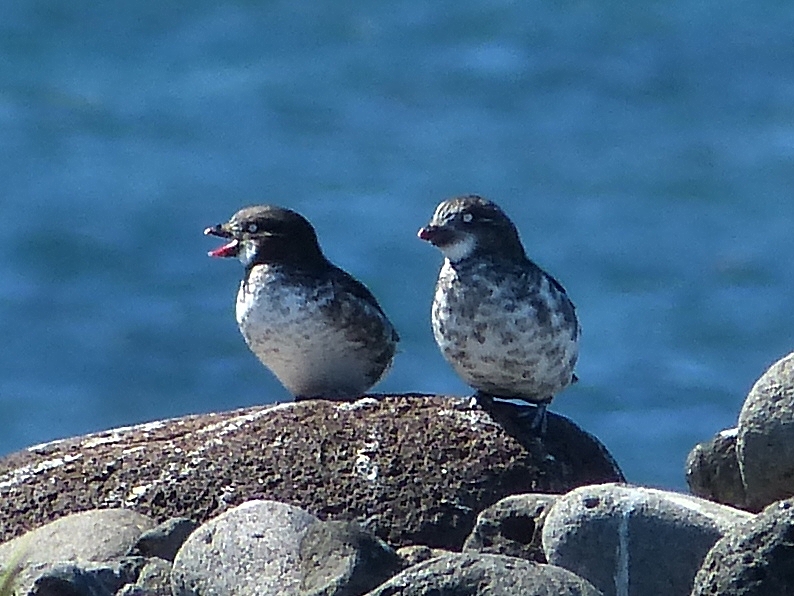
Least Auklets

Two other species of auklets nest on the island, the Parakeet Auklets shown in the photo below and Crested Auklets.  We saw all three species.

Parakeet Auklets

Parakeet Auklets

And, here are those Thick-billed Murres again, really close-up.  This is the most common nesting seabird on St. Paul Island.

Thick-billed Murres

Thick-billed Murres

St. Paul is the largest of the Pribilof Islands with a total area of 43 square miles. The typical temperature in June is in the low 40s and the high wind and humidity give the summer air a raw chilliness.
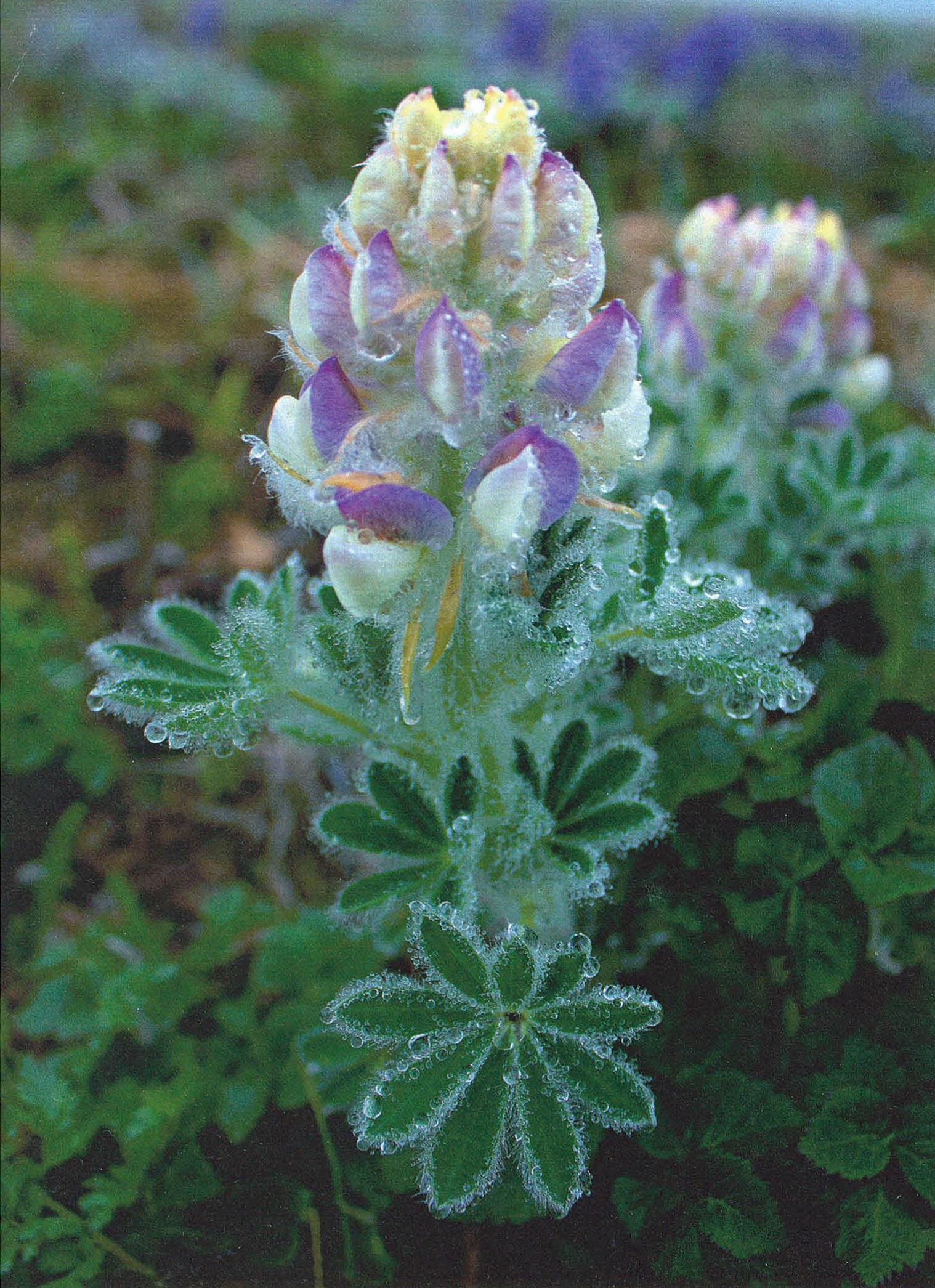
Arctic LupineAmazingly, three small songbirds are year-round residents in this harsh climate of St. Paul Island – Winter Wren, Gray-crowned Rosy-Finch, and Snow Bunting. One additional songbird joins them for the breeding season – Lapland Longspur. The other avian life on the island consists of mostly seabirds, ducks, and shorebirds.

The landscape is marine tundra; there are no trees. Arctic Lupine and Wild Celery grow all over the island. Despite its name, the Wild Celery in Alaska bears no resemblance to the edible vegetable celery, although it is a valuable food for wildlife. The image to the left is a postcard that depicts the lupine exactly like it looked most mornings on St. Paul.

The Rosy-Finches were one of my favorite species of the entire trip.

Gray-crowned Rosy-Finch

Gray-crowned Rosy-Finch

And, how their looks change with just a little puffing up and a different perspectve!

Gray-crowned Rosy-Finch

Gray-crowned Rosy-Finch

The Rock Sandpipers were another of my favorite St. Paul Island breeding birds.

Rock Sandpiper

Rock Sandpiper

One afternoon, I enjoyed some time with Red-necked Phalaropes at a little pond while the others trekked further out over the tundra.  Phalaropes are fascinating birds.  They are known for spinning in circles to flush small aquatic prey to the water’s surface where they can easily pluck it with their bills.  Also, phalaropes exhibit what scientists call “reverse sexual dimorphism” which simply means that the girls are prettier than the boys.  The typical courtship and parental roles are also reversed in phalaropes.  Females fight ferociously over males.  After they are paired up, the male builds a simple nest in which the female lays four eggs.  And, then she flies away leaving the male to incubate the eggs and tend to the chicks after they hatch.

Red-necked Phalarope (female)

Red-necked Phalarope (female)

Several other birds bounced around the edges of the little pond with the phalaropes, including Semipalmated Plovers.  This species is familiar to most birders due to its wide wintering range, including the southern part the U.S. mainland coasts, but it breeds in Alaska and northern Canada.
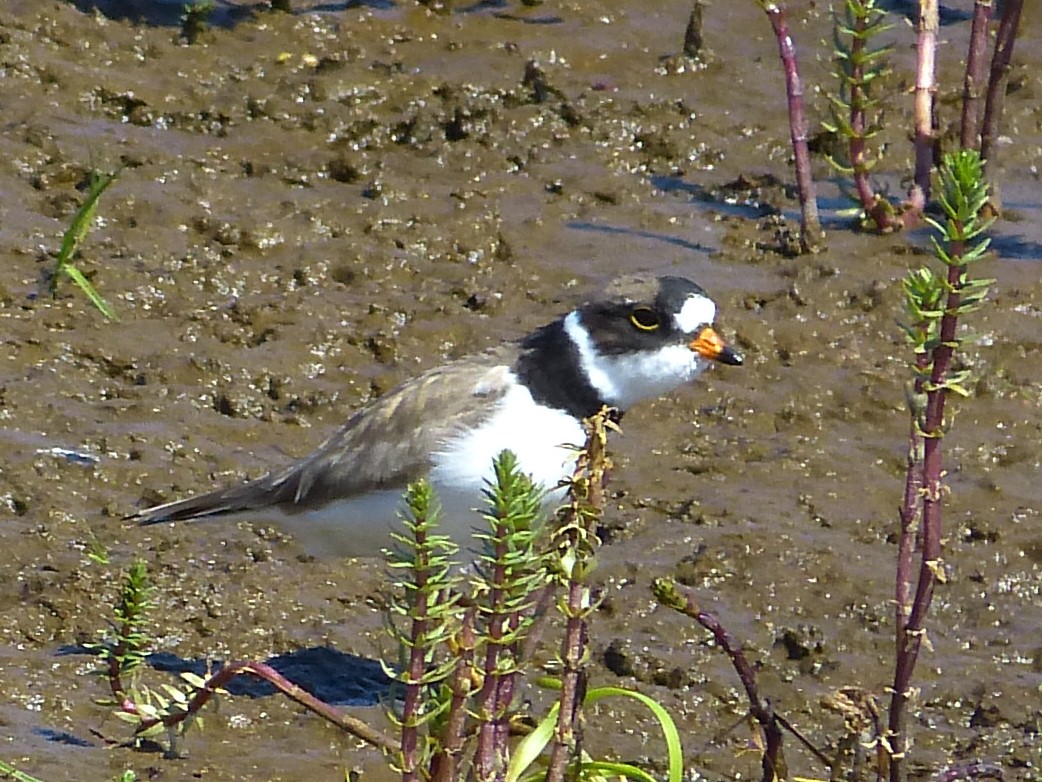
Semipalmated Plover

Semipalmated Plover

Our four day/three night stay on St. Paul Island was over all too quickly.  All three of our birding guides, Scott Schuette, Cory Gregory, and Alison Vilag, were excellent birders and took great efforts to ensure that we saw all the birds on the island and had good looks at everything.  We couldn’t have asked for more, except maybe to go back again!
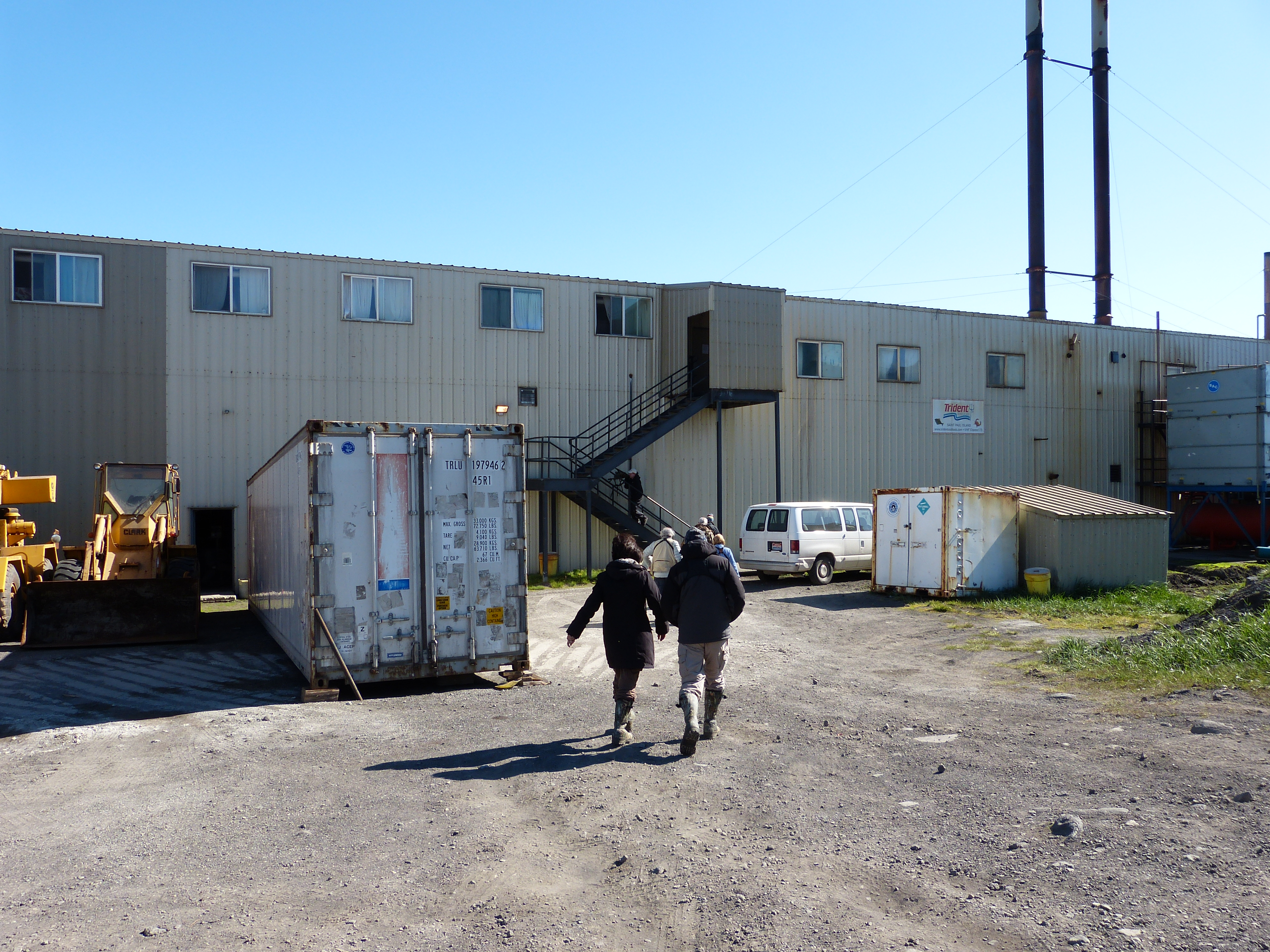
Heading to lunch at the Trident cafeteria

Heading to lunch at the Trident Seafoods cafeteria

Next in my adventure – Alaska 2015: Kenai Fjords and Denali National Park

Read Full Post »

I don’t remember a time that I didn’t want to visit Alaska. It’s a big expensive trip, though, so it had not risen to top of my travel plans until Bill Drummond wrote last year inviting me to go on his 23rd and last trip to Alaska. I wanted to go with Bill because of his extensive experience in Alaska, so I signed up for the 3-week birding trip. And, I would have a bonus. My friend, Diane, wanted to go on the trip, but could not get the time off from work, so we decided that I would stay another week after Bill’s trip and she would fly out to meet me. The two of us would spend a week on the Kenai Peninsula. Nearly a year after committing to the trip, I flew to Anchorage on June 7. The next morning I flew to Nome to meet Bill, co-leader Dave Hursh, and the rest of our group. Nome was much smaller than I’d expected with a population under 4,000. It seemed that all the visitors to the town were birders, some with organized groups and some on their own. There are three main roads leading out from Nome, each about 75 miles long, but no roads or railways connect Nome to other major Alaskan cities. Birding in Nome consists of driving these three roads. Birds are spread out in breeding season, with large groups only along the coast of the Bering Sea. The appeal to birders isn’t numbers, though, but birds that are found nowhere else.

Male Willow Ptarmigan on the Kougarok Road

Male Willow Ptarmigan on the Kougarok Road

The avian star of Nome is the Bristle-thighed Curlew (click link for fantastic photo and info), a shorebird that looks a lot like a Whimbrel.  This rare bird with a population well under 10,000 is known to breed only on inland tundra in the steep hills of western Alaska.  Nests are frequently placed directly beneath dwarf willow shrubs. Two sites near Nome are the only places where birders can see the curlew on its breeding grounds. On our first full day in Nome, June 9, our goal was to see this bird, Bill’s favorite. We choose the easier site, at mile 72 on Kougarok Road, as most birders do, but it still took several hours to climb the hill on the spongy and uneven tundra. There were interesting sights on our way up the hill, though – tiny tundra flowers, nesting Long-tailed Jaegers, Willow Ptarmigan. I did not get the close look at the curlews that I’d hoped for, but just as exciting was a bird that flew directly overhead uttering its distinctive call.

A female Willow Ptarmigan, part way up the hill to the curlews.

A female Willow Ptarmigan, part way up the hill to the curlews.

On June 10, we spent the day closer to Nome where we found Musk Oxen not far from town. As rough looking as they are, underneath that tangled mess is an undercoat of fine wool that is eight times warmer than sheep wool and softer than cashmere. Musk Ox are not sheared; the fine wool is collected by hand combing or picking from bushes the animals rub against during molt. As you can guess, it is highly prized and very expensive.

Musk Oxen

Musk Oxen

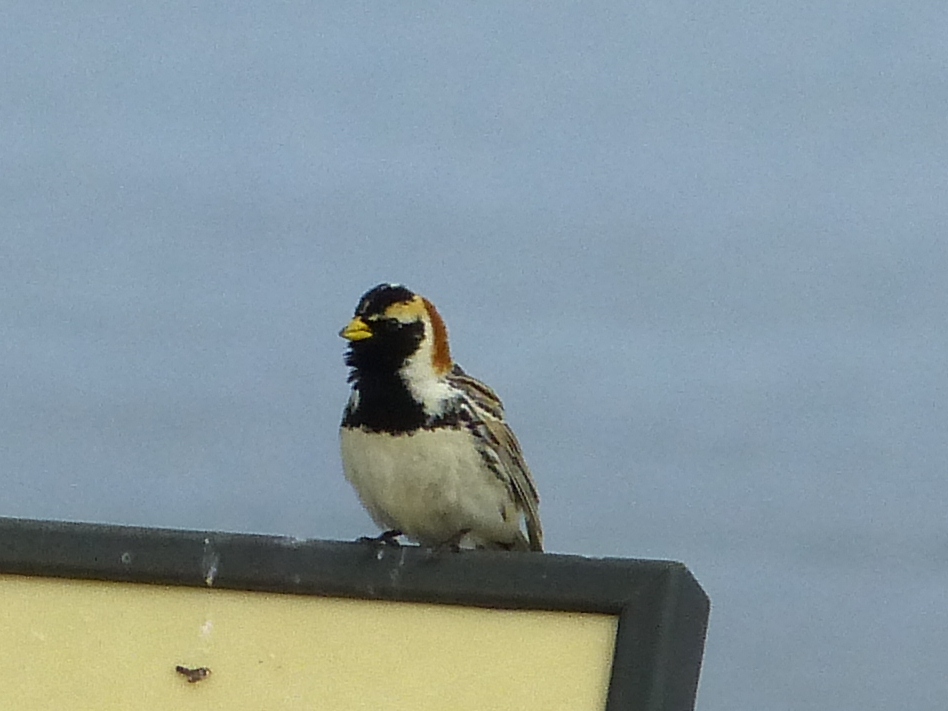
Lapland Longspurs are common breeding birds in Alaska. We saw them everywhere except around Anchorage and on the Kenai Peninsula.

Lapland Longspur

Lapland Longspur

We drove to Teller on June 11. One of our target birds was Arctic Warbler, a regular breeder near Nome. Our caravan of cars carrying our 22 birders stayed in close contact via 2-way radios. This day, I was riding in the same car with Bill.  When we reached an area with willows where we expected to find the warblers, the others started down a side road. Bill said, “We usually see them right here,” so our car stopped and we got out. Immediately, I heard Pete say “I’m on it” and my binoculars were soon on it, too.  Everyone else came to where we were and all had good views.

Arctic Warbler

Arctic Warbler

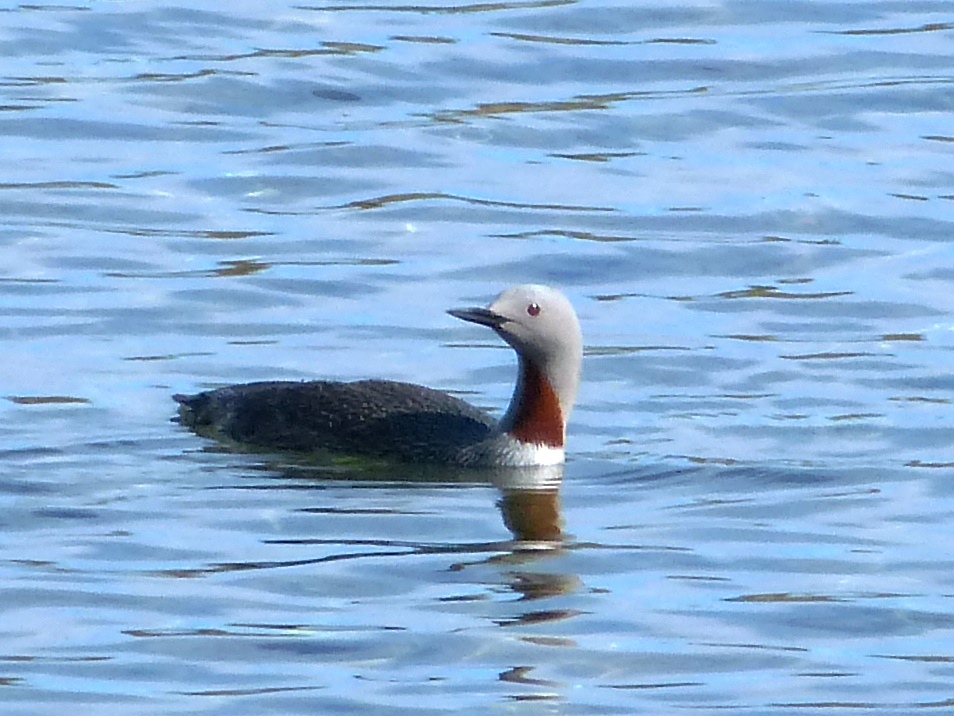
Another pleasant stop that day was at the bridge over the Sinuk River. It was a gorgeous day and some beautiful birds cooperated for photographs. I had seen Red-throated Loons before – in winter.  Seeing their glowing red throats in breeding plumage was almost like getting a life bird.

Red-throated Loon

Red-throated Loon

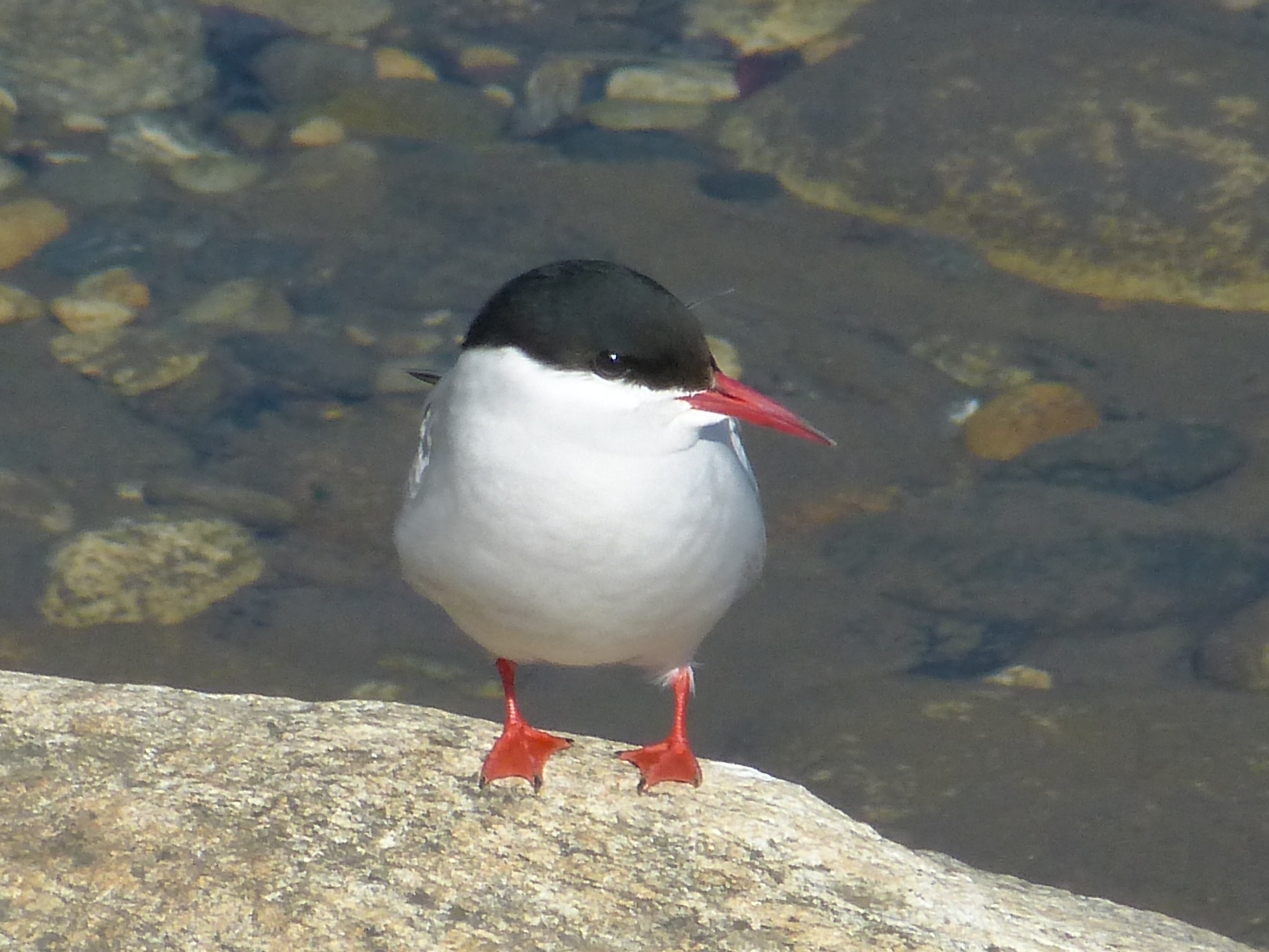
The lovely and amazing Arctic Terns really were life birds. They have the longest annual migration of any animal on earth. Recent studies that placed geolocators on Arctic Terns discovered that their zigzag flights between their tundra breeding grounds and their wintering grounds off of Antarctica average 44,000 miles annually!

Arctic Tern

Arctic Tern

We spent most of June 12th birding the first 20 miles of the Council Road between Nome and Safety Sound. We were lucky to see another of our targets, Arctic Loon.  We found two birds close to shore and I was able to get a photo before we watched them swim farther out into the sea.

Arctic Loons

Arctic Loons

As expected, we saw lots of gulls along the coast. Glaucous Gulls were common in Nome.

Glaucous Gull

Glaucous Gull (first summer/2nd cycle?)

Another fun sighting was not a bird, but a female Moose who had just given birth on the opposite side of the river along the road. The first group to arrive saw the baby stand on wobbly legs and nurse. By the time that I got there, the baby had lain down close to mom. Moose with calf The next day we flew back to Anchorage, but not before a little more birding along the coast. We had good looks at a first summer Slaty-backed Gull feeding with other gulls on the washed-up carcass of a walrus.

Slaty-backed Gull

Slaty-backed Gull (2nd cycle)

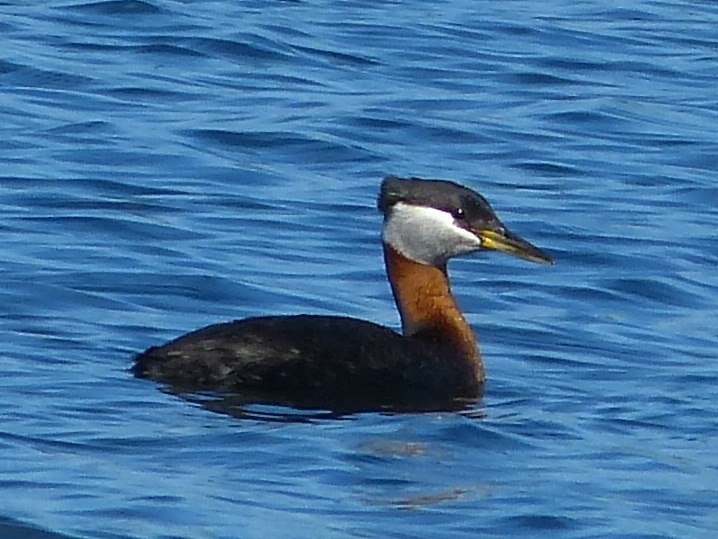
Back in Anchorage that afternoon, we had time to check out Lake Hood right behind the Coast International Hotel where we were staying. Lake Hood is the busiest seaplane base in the world, so I was surprised to see birds there at all. But, apparently they love this lake, so much so that they have been a continuous problem there.  In an effort to reduce Lake Hood’s bird population in the early 1990s, officials released three female pigs named Larry, Curly, and Moe on the island that separates the takeoff and taxi lanes. The plan was for the pigs to rototill nest spots and eat eggs that the birds managed to lay. The pigs were effective for a while, but the effort ultimately failed. There are no longer pigs at Lake Hood, but birds remain, including beautiful Red-necked Grebes.

Red-necked Grebe

Red-necked Grebe on Lake Hood

This is just part one of my month-long Alaska adventure. Stay tuned for more!

Next story in this series of six – Alaska 2015: The Pit Stop is Cancelled

Read Full Post »

After five days of birding in southeast Florida, it was time to pick up Kitty in Naples on Friday, April 17. Several weeks before the trip, I learned about the American Flamingos that had been discovered several years ago in Stormwater Treatment Area 2 (STA 2) in Palm Beach County. This year, for the first time, birders were being allowed access to the area through the Audubon Society of the Everglades. Wild flamingos are difficult birds to see. Even if one is willing to brave the heat and mosquitoes, Snake Bight in no longer a reliable option. When the birds sporadically show up in the Everglades, a boat is usually required to get to them. So, the STA 2 birds represented a unique opportunity. The only problem was that space on the scheduled trips was limited and many more people wanted to see the birds than there were spaces available. We were on the waiting list for Saturday, April 18. We had been told that if we made the cut, we would be notified two days prior to the trip, but in my mind I had set the cut-off time as noon on Friday. Everything went smoothly on Friday morning. I picked Kitty up at noon and after a quick stop at Eagles Lakes Park, we headed north.

Eagles Lake Park, Naples, on my first visit in 2007.

Eagles Lake Park, Naples, on my first visit in 2007.

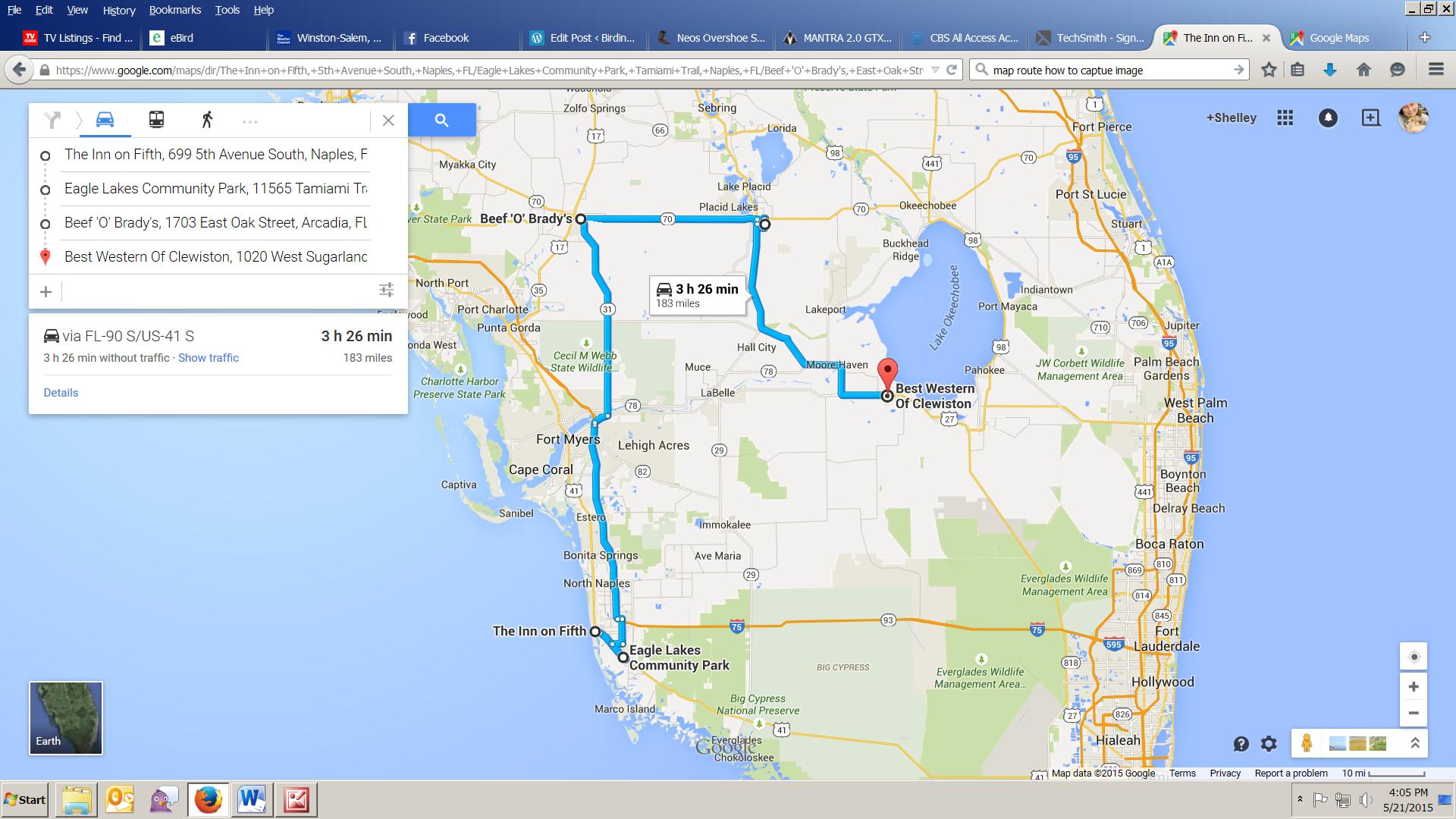
We planned to drive through central Florida and spend the night in Winter Haven. Kitty had a fabulous Everglades trip and I enjoyed hearing about it as we slowly made our way north. We stopped for a late lunch/early dinner at Beef O’Brady’s in Arcadia at about 4:00 PM. While waiting for our food to arrive, I checked my email and there it was – a message that we were in for the Flamingo trip! I was caught by surprise and disoriented about where we were and where the flamingos were. The exact location had been kept secret from us, but I knew that it was about 40 minutes from Clewiston. Kitty calmly looked as a map and simply said, “We can do it.” So, we quickly replied “Yes” we will be there, cancelled our motel reservations, made new reservations for the night, and headed east.

Our route on Friday

Our route on Friday

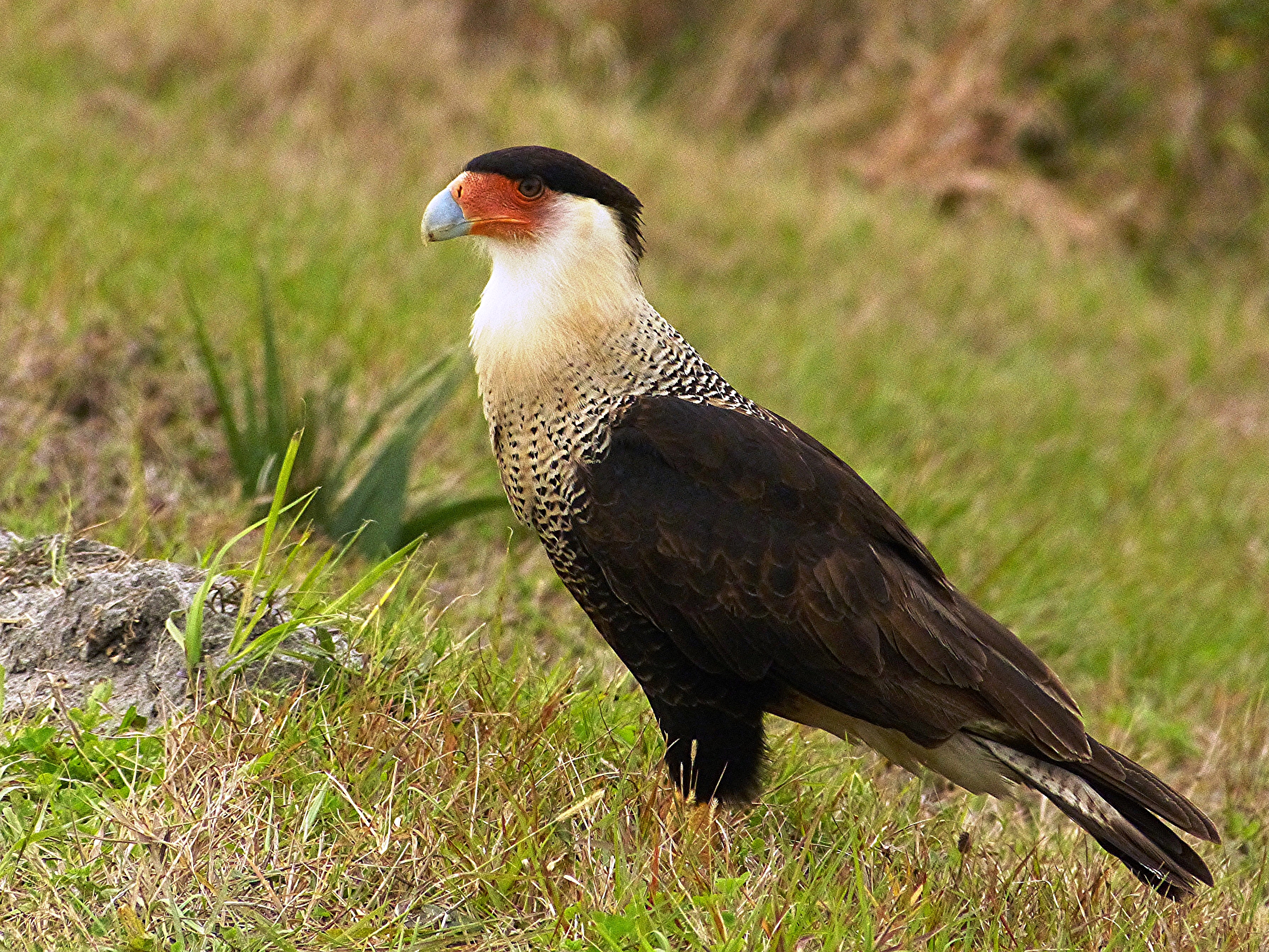
State Road 70 seemed familiar to me. I was pretty sure that this was where David and I had found our lifer Crested Caracaras back in 2008, so I suggested to Kitty that she look up Crested Caracara in the Peterson field guide. A short time later, Kitty found her own Caracara and then two more.

Crested Caracara from my January trip to Florida

Crested Caracara from my January trip to Florida

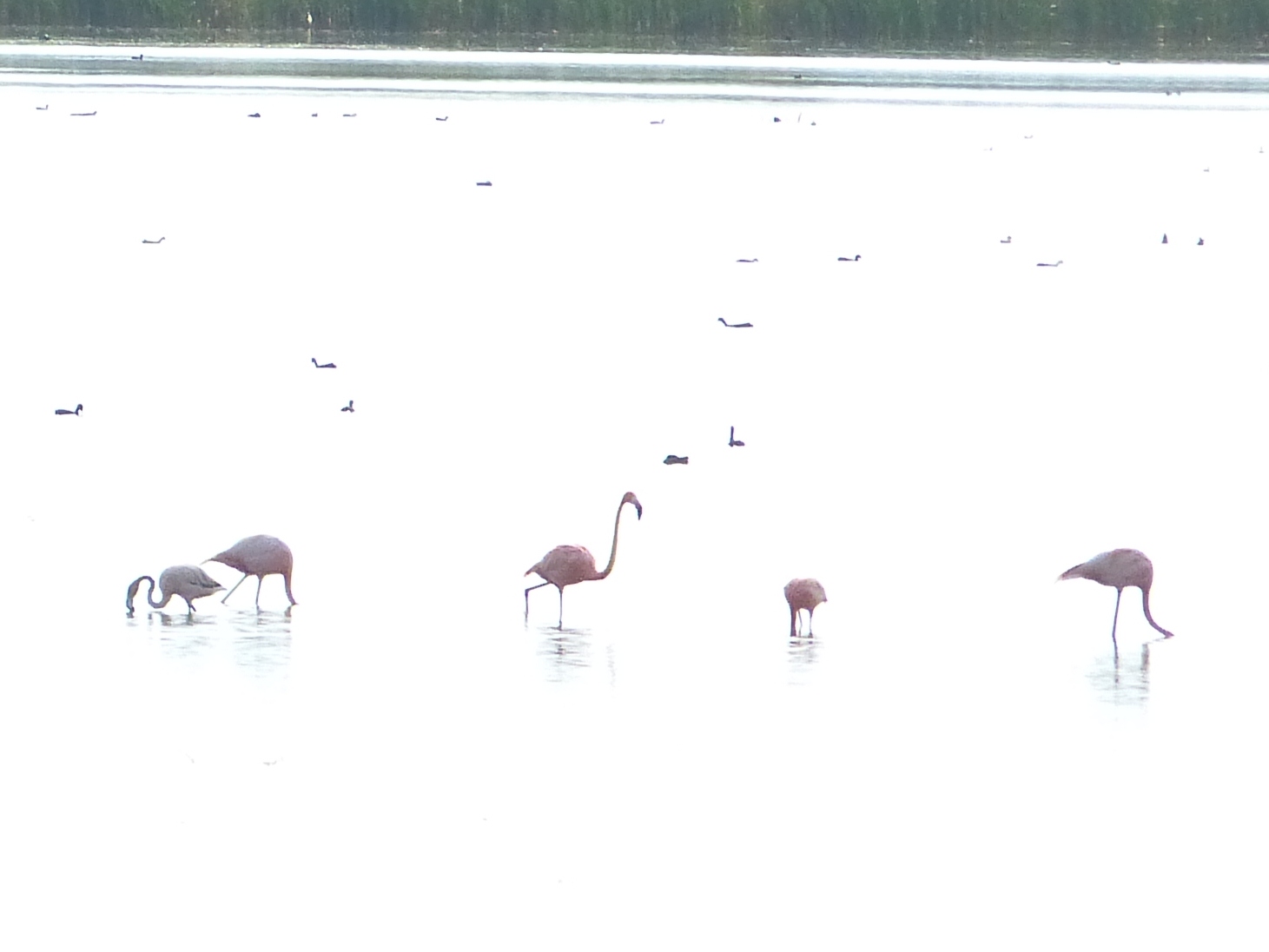
The next morning I went to breakfast at the Best Western in Clewiston and saw two people who looked like birders. So, I took a chance, walked over and said “Good morning. Are you birders?” Yes, they were. Bill and Lena from Corvallis, Oregon and I chatted a few minutes and then I hurried to get ready for the drive to STA 2. We arrived half an hour early, but were still car #7. Car-pooling is strictly enforced for these trips and we were happy to have two rather new birders ride with us. The leaders didn’t waste any time after approximately 60 people were checked in. We drove the 7 miles to the area where the flamingos were usually seen as fast at the dirt roads allowed. Before we even stopped, the leader announced on his walkie-talkie that he saw the birds. Next I heard “They’re flying.” But before my heart sank, “They are coming closer!” Five American Flamingos were then feeding so close that we could see them without binoculars. With a scope, the view was wonderful. Yet they were far enough that we didn’t disturb their feeding.  We enjoyed watching as they stood on one leg and stomped with the other foot to stir up food from the bottom of the shallow water. They completely submerged their heads under the water to feed. Fascinating details about Flamingo diet and feeding behavior can be found here, here, and here.  The group consisted of serious birders, casual nature lovers, and everyone in between. There was mutual acknowledgement that this was special and we all shared the joy of the experience.

American Flamingos at STA 2, Palm Beach County

American Flamingos at STA 2, Palm Beach County

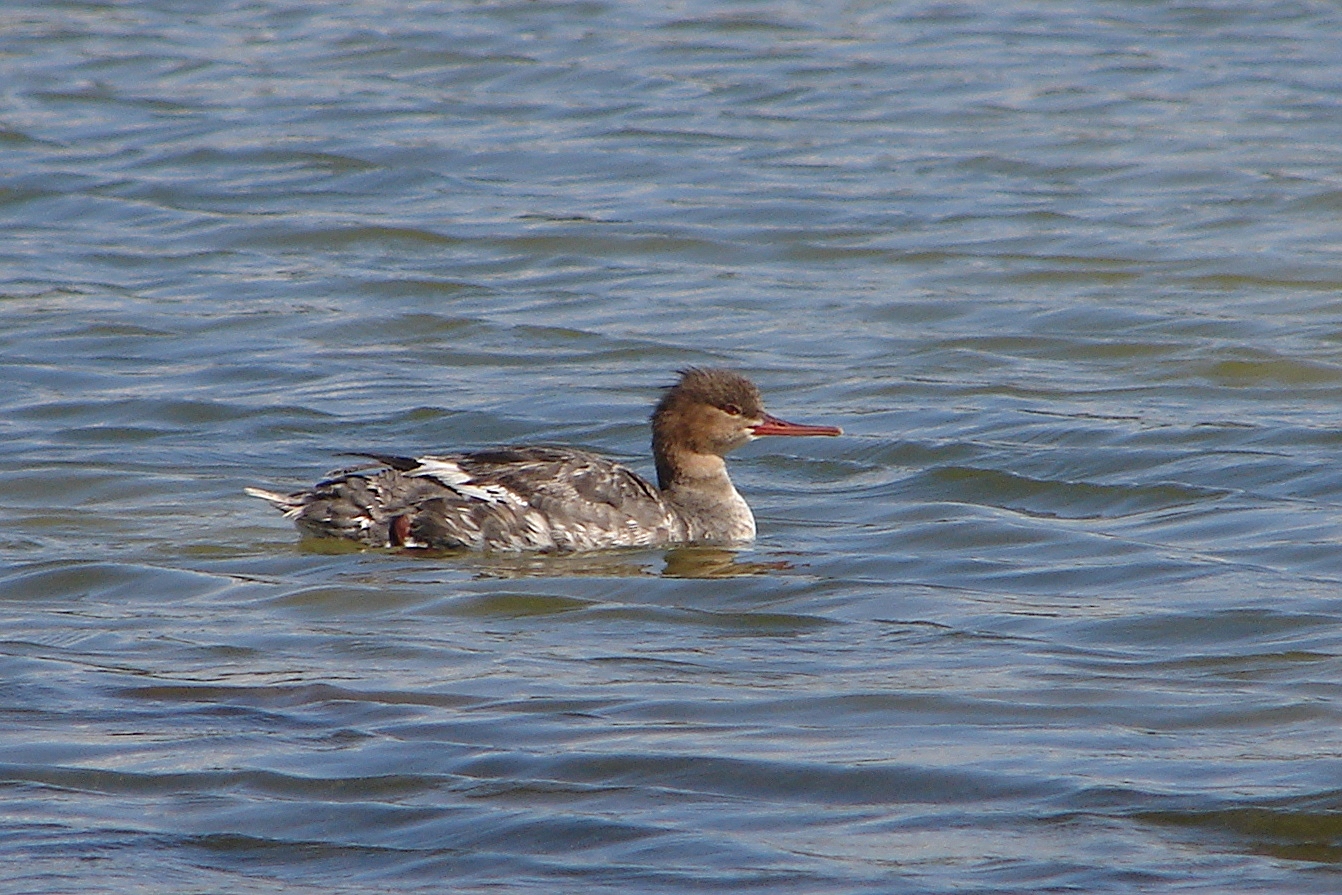
The STA 2 trip lasted from 9:00 AM until 1:00 PM. We drove 20 miles on the dirt berms and enjoyed many other birds in addition to the flamingos – Black Skimmers, White Pelicans, Black-necked Stilts, and more. Seeing the flamingos would have been a wonderful end to the trip, but we were not quite ready to head for home. Merritt Island National Wildlife Refuge was our next destination and the Quality Inn in Titusville was the logical place to spend the night.  Early the next morning, I went to breakfast and who did I see? Yes, Bill and Lena from Oregon again! The four of us enjoyed breakfast together and then Kitty and I headed to Merritt Island. It was MUCH quieter than when I’d been there in January, but Kitty and I are both easily amused and never fail to find something interesting. That morning it was the Red-breasted Mergansers cruising with backs raised and heads under water so that they looked more like mammals than birds. Kitty speculated that the water was too shallow for diving and back home that theory was confirmed.

My life Red-breasted Merganser from Honeymoon Island in 2007.

My life Red-breasted Merganser from Honeymoon Island in 2007.

Our last stop of the trip was the Audubon Center for Birds of Prey in Maitland. It’s a very nice facility with all the native raptors of Florida. We especially enjoyed close-up looks at the Kestrel and Merlin. It was hot and our energy was running a little low on this day 11 of our travels. So, happy and tired, we headed for home.

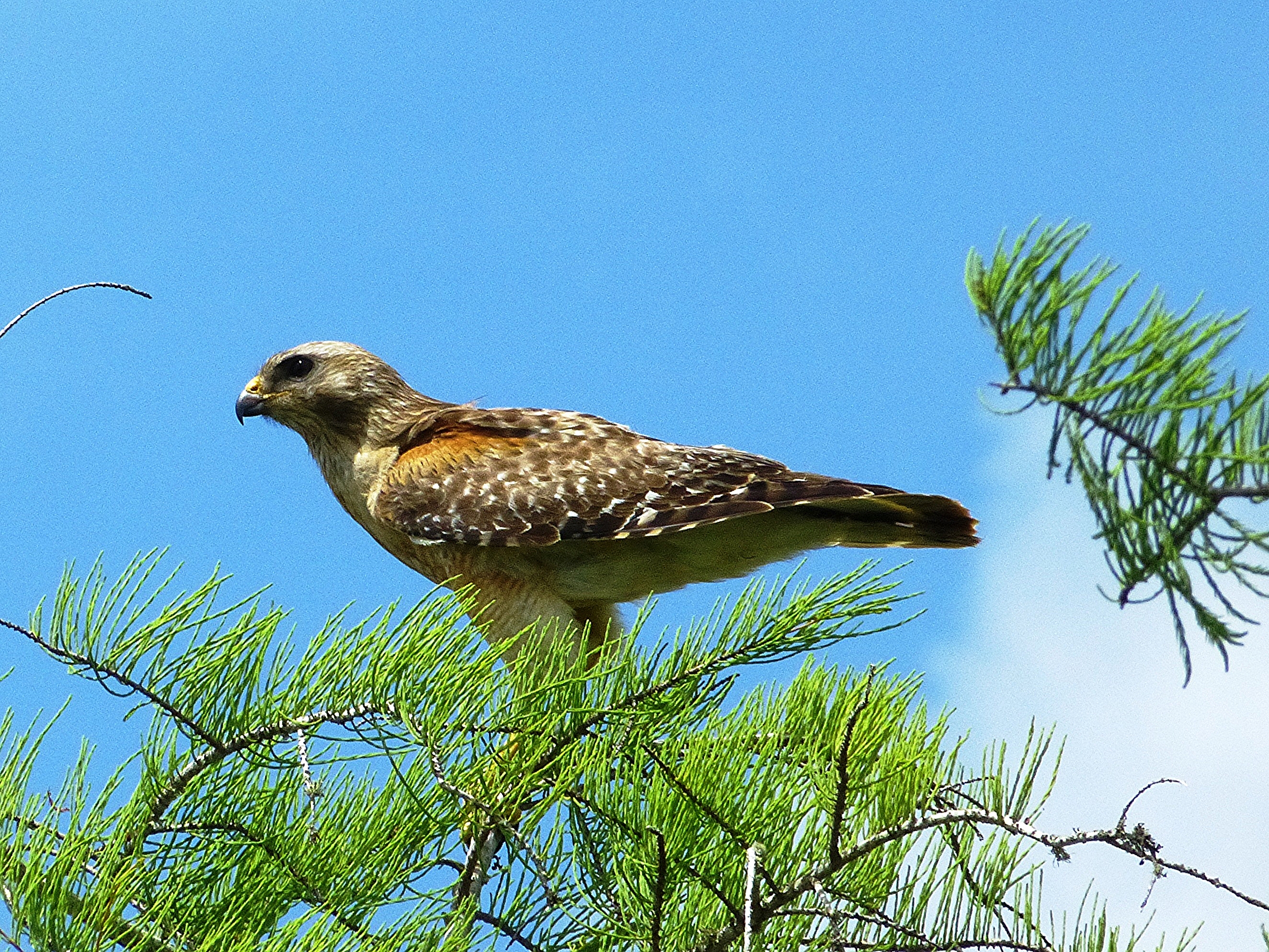
Red-shouldered Hawk, a common Florida raptor observed earlier in the trip in Everglades National Park.

Red-shouldered Hawk, a common Florida raptor observed earlier in the trip in Everglades National Park.

While nothing was as exotic as Asia or South America, this was one of my favorite trips ever. Sharing much of it with friends made it even better. Part of me will always be a Florida girl and I am excited to think about the adventures that still await me there.

Read Full Post »

On Tuesday morning, April 14, I headed off to Dagny Johnson Key Largo Hammock Botanical State Park to look for a Mangrove Cuckoo. I dipped on the cuckoo, but found a gazillion White-eyed Vireos. Well, maybe that count is exaggerated a bit, but not much. The only other bird as numerous at Dagny is Northern Cardinal. After searching fruitlessly for a couple of hours, I decided to head to Long Key State Park. My late husband, Burt, and I frequently camped at Long Key in the early 1980’s, so it holds many fond memories. Plus, I could get lucky and find a Key West Quail-Dove. Could get lucky, but I didn’t. I found only two birds – a Prairie Warbler and a Red-bellied Woodpecker. It was the wrong time of day, but at least I had tried. I went back to Dagny Johnson for another attempt at finding the cuckoo. I dipped again, went to my motel, and sent Angel and Mariel a note about my failure to find the cuckoo. Angel and Mariel Abreu operate “Nature Is Awesome,” a birding and wildlife tour company, and I would be going out with them on Thursday. I quickly received a reply with specific directions to where the cuckoos are usually found at Dagny.

White-eyed Vireo

White-eyed Vireo.  Photo by Andy Reago.

I really wanted to find the Mangrove Cuckoo on my own rather than have someone show it to me. Even though I had only looked for it once before, it had been one of my most wanted birds for years. And, now I had one day to find it for myself or Angel and Mariel would find it for me the following day. I went to the spot at Dagny that they described and got nothing. So, I walked around for an hour and then went back to the same spot. I played the call. And, the bird answered! First I heard it to the right and then to the left. And, then it perched right over me and I got a great look. I was just numb with disbelief. I watched until the bird moved and then I stepped out into the open circle where the paths converge. And, now the cuckoo was out in the open! This was one of the happiest birding moments of my life.  I didn’t get a photo, but here is a shot of a Mangrove Cuckoo that Mariel Abreu got earlier in the year.

Mangrove Cuckoo

Mangrove Cuckoo

I slowly walked back to the car and met Ottawa birder Paul Lagasi as I was about to leave the park. Paul also has a blog, BIRDQUEST2004, which is a showcase for his gorgeous photos. His accounting of this part of the trip is here. Paul wanted the cuckoo as badly as I had. This was his seventh attempt to find it. So, of course, we went back and attempted to relocate the bird. Unfortunately, the bird was done with birders for the day. Paul and I walked the big 2-mile loop in the mid-day head with hopes of finding either the cuckoo or a Black-whiskered Vireo. We had no luck with either bird, so I invited Paul to join me with Angel and Mariel the following morning.

Seaside Dragonlet

Seaside Dragonlet, a “lifer” dragonfly on the 2-mile walk at Dagny Johnson.

Have you guessed what happened? Yep, we missed seeing the cuckoo the next day. We went to the location where it had been reliably seen for months.  The cuckoo called, but refused to come out and show itself. Now I really understood how incredibly lucky I had been the previous day. Paul headed off to pick up his wife at the Ft. Lauderdale airport and Angel, Mariel, and I headed to El Mago de las Fritas for the best fritas in town. Mariel and I had ours with an egg on top of the meat patty. Yum!

White-winged Parakeets in front of Ocean Bank

White-winged Parakeets in front of Ocean Bank

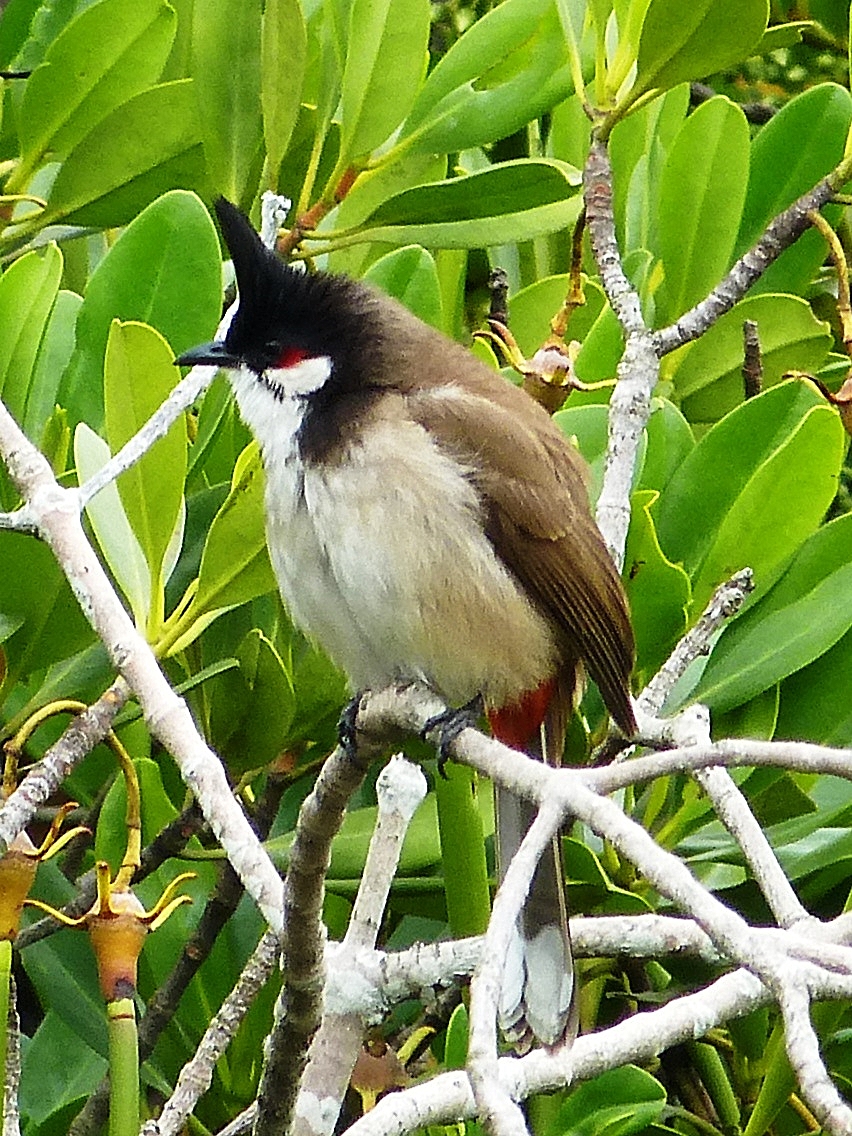
Red-whiskered Bulbul that I photographed in China.

Red-whiskered Bulbul that I photographed in China.

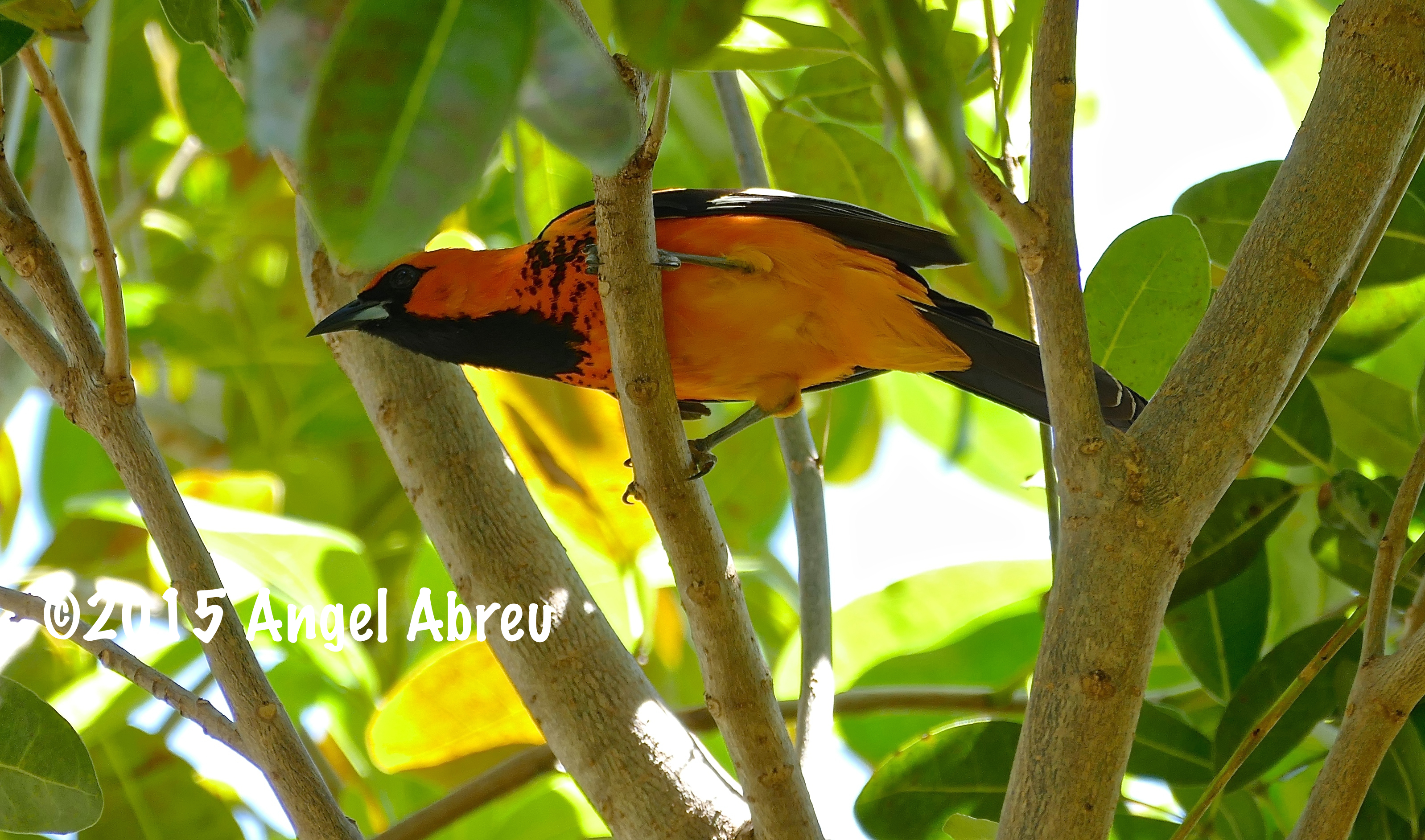
That afternoon, Angel and Mariel took me on a tour of Miami searching for established exotic avian species. Many of these birds are now ABA countable and they found every single one that I needed. That afternoon I added FIVE birds to my ABA list – Spot-breasted Oriole, Red-whiskered Bulbul, White-winged Parakeet, Muscovy Duck, and Egyptian Goose. I had seen the Red-whiskered Bulbul many times in China and India, but I still learned something new from Angel. The red patch on the face really is whiskers, just as the bird’s name suggests. If you look closely, you can see the whiskers stand out from the face.

Spot-breasted Oriole.  Photo by Angel Abreu.

Spot-breasted Oriole. Photo by Angel Abreu.

Non-native species frequently create serious environmental problems, including pushing out native species. As far as I know, though, the exotic bird species in Miami have not created any problems. The parakeets, for example, seem to have found a unique niche not utilized by other birds, so there is no competition.

17311493701_f8fe271d5c_o

17124413710_2bb672f4e6_o

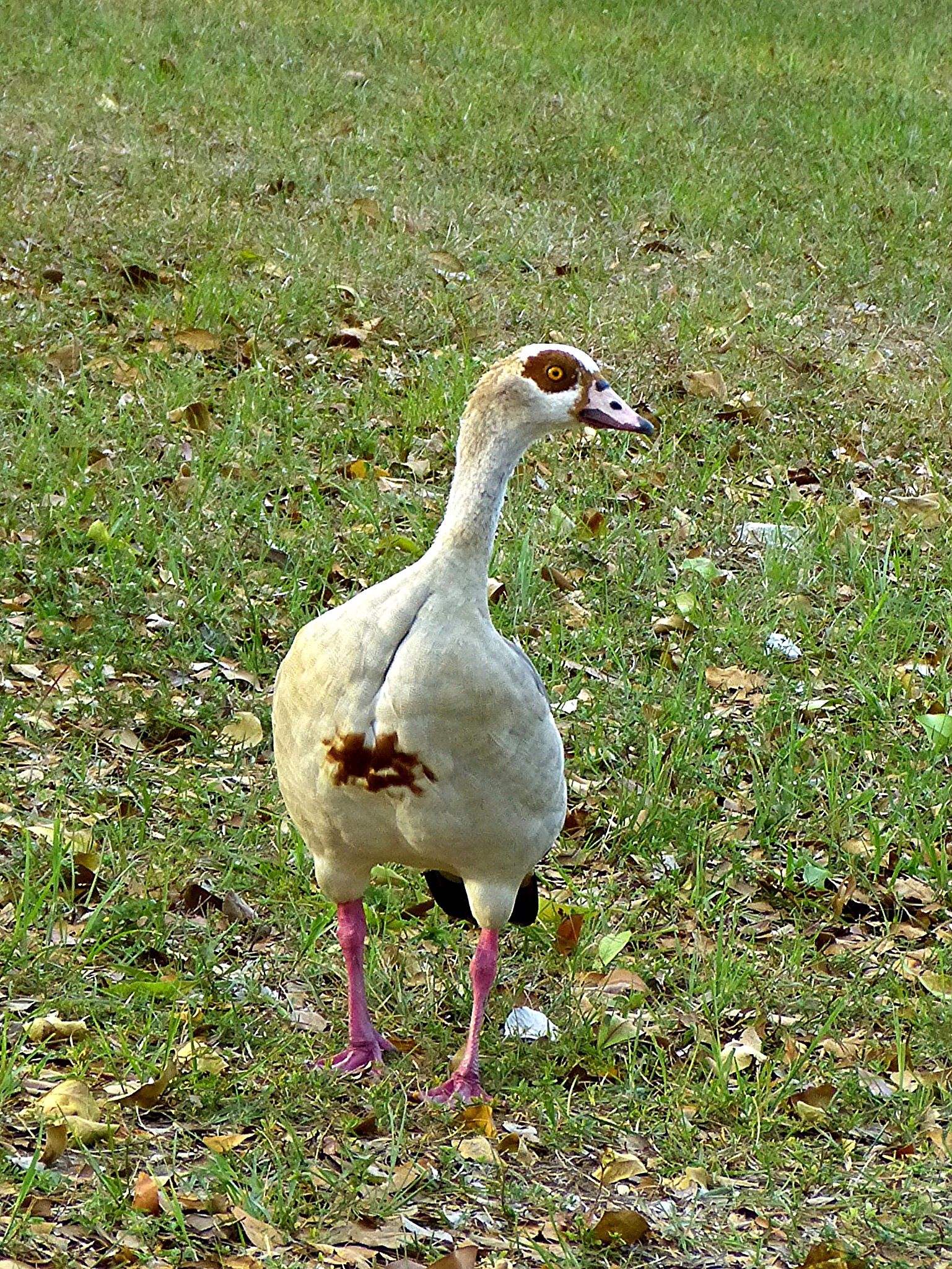
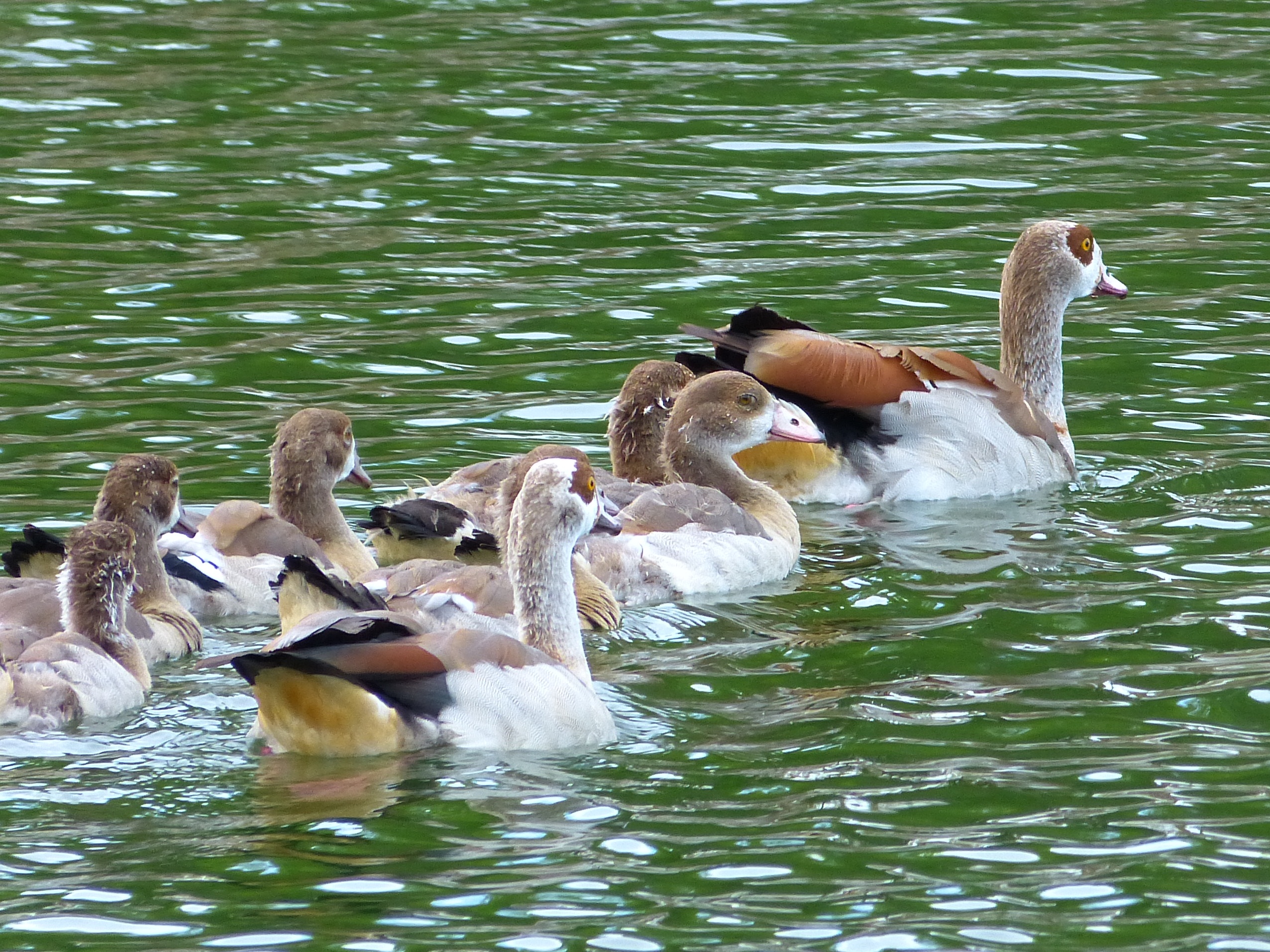
Mr. & Mrs. Egyptian Goose in the photos above.  The male with the darker neck and breast spot is on the left.  Below, they take their goslings for a swim.

17125740089_6875ccb9b5_o

In addition to the exotic birds that we found, I also enjoyed my best ever looks at a native species, White-crowned Pigeon, which reaches the northernmost limit of its range in Miami.

White-crowned Pigeon

White-crowned Pigeon

We finished the day near dusk with more exotic species, the not yet countable Orange-winded Parakeet and Common Hill Myna, and our first-of-the-season Common Nighthawk. It was a lovely end to a wonderful day. Angel and Mariel not only know where to find the birds, they are incredibly nice people and it was fun to spend a day with them. If you need a birding guide in South Florida, I highly recommend Nature is Awesome. I’d had some wonderful birding, but the trip was not yet over.  Watch for Part 3.

Read Full Post »

It was crazy to do this trip. I am going to Alaska in June and I had promised Myrna that I would visit her in California. I really didn’t need to cram in another spring trip. It all started when Kitty Jensen was telling me about her Everglades trip with the National Park Conservation Association. “I’ll just fly Allegiant to Punta Gorda,” she began. I interrupted with “No, you won’t. Allegiant no longer flies there from Greensboro. It would be easier for me to just drive you down.” As usual, I blurted this out without first engaging my brain. But, it would give me a chance to look for Mangrove Cuckoo and other South Florida specialties while Kitty was doing her Everglades trip. The cuckoo was a bird that I really wanted. I had been waiting for a chance to go to Florida in April since Jeff and I missed the cuckoo in 2011. So, when Myrna asked me to visit the first week in April, everything fell into place.

Wood Storks, Harris Neck National Wildlife Refuge

Wood Storks, Harris Neck National Wildlife Refuge

Kitty and I decided to slowly drive down and back, with lots of stops along the way. We left late on the morning of April 9 and got to South Carolina in time for a quick spin through Savannah National Wildlife Refuge’s Laurel Hill Wildlife Drive before dark. The next morning we enjoyed the wildlife drive at Harris Neck NWR and then drove through the Osceola National Forest on our way to Gainesville, Florida, where we spent the night.

American Kestrel

American Kestrel

On Saturday morning, we went to one of my favorite birding spots in Florida, Lake Panasoffkee Wildlife Management Area. On our way there, I listed all the birds that we could see – Loggerhead Shrike, American Kestrel, Eastern Meadowlark, Red-headed Woodpecker. For the first time that I visited the site, other birders were there. As we left, the group was assembled under the Kestrel nest box where a Florida Fish & Wildlife officer was speaking. We were sure that he was talking about the Southeastern subspecies of American Kestrel, which is threatened in Florida. Just before we exited onto the main road, we saw a Kestrel perched in a tree on the other side of an open field. We had seen every single species that I’d mentioned, plus a Northern Bobwhite for a bonus!

We finished the day by driving to Naples, where I dropped Kitty off for her Everglades trip.

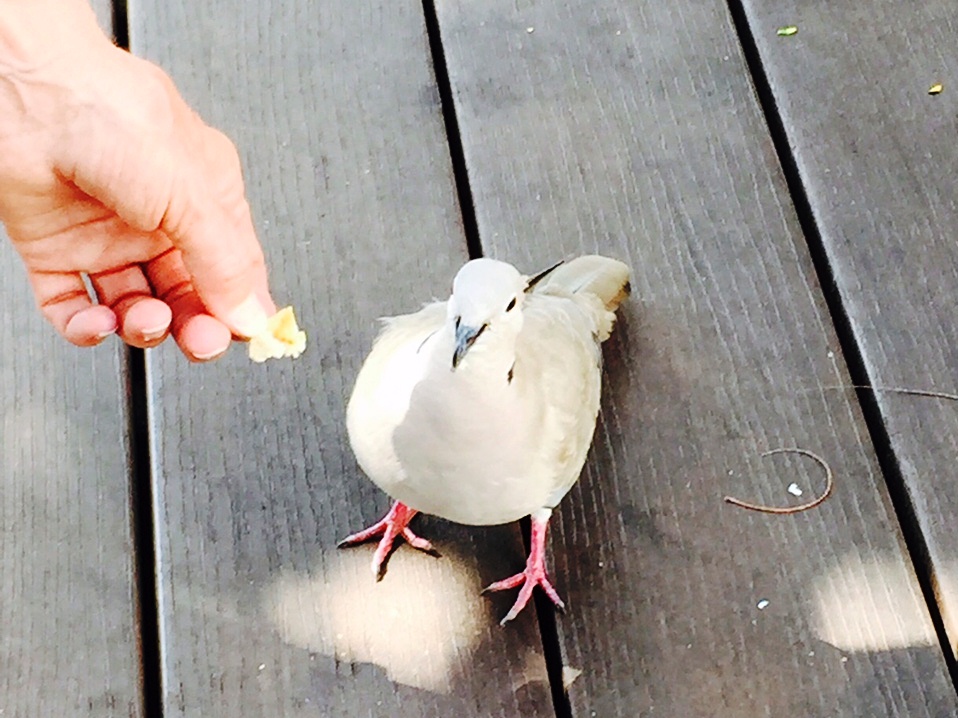
Eurasian Collared-Dove

I continued on to Florida City, where I met a friend who lives in Florida. We had a great day on Sunday driving through the Florida Keys. We didn’t have time for normal birding, so we enjoyed this very tame Eurasian Collared-Dove who pecked at bread crumbs right at our feet while we had lunch in Key West.

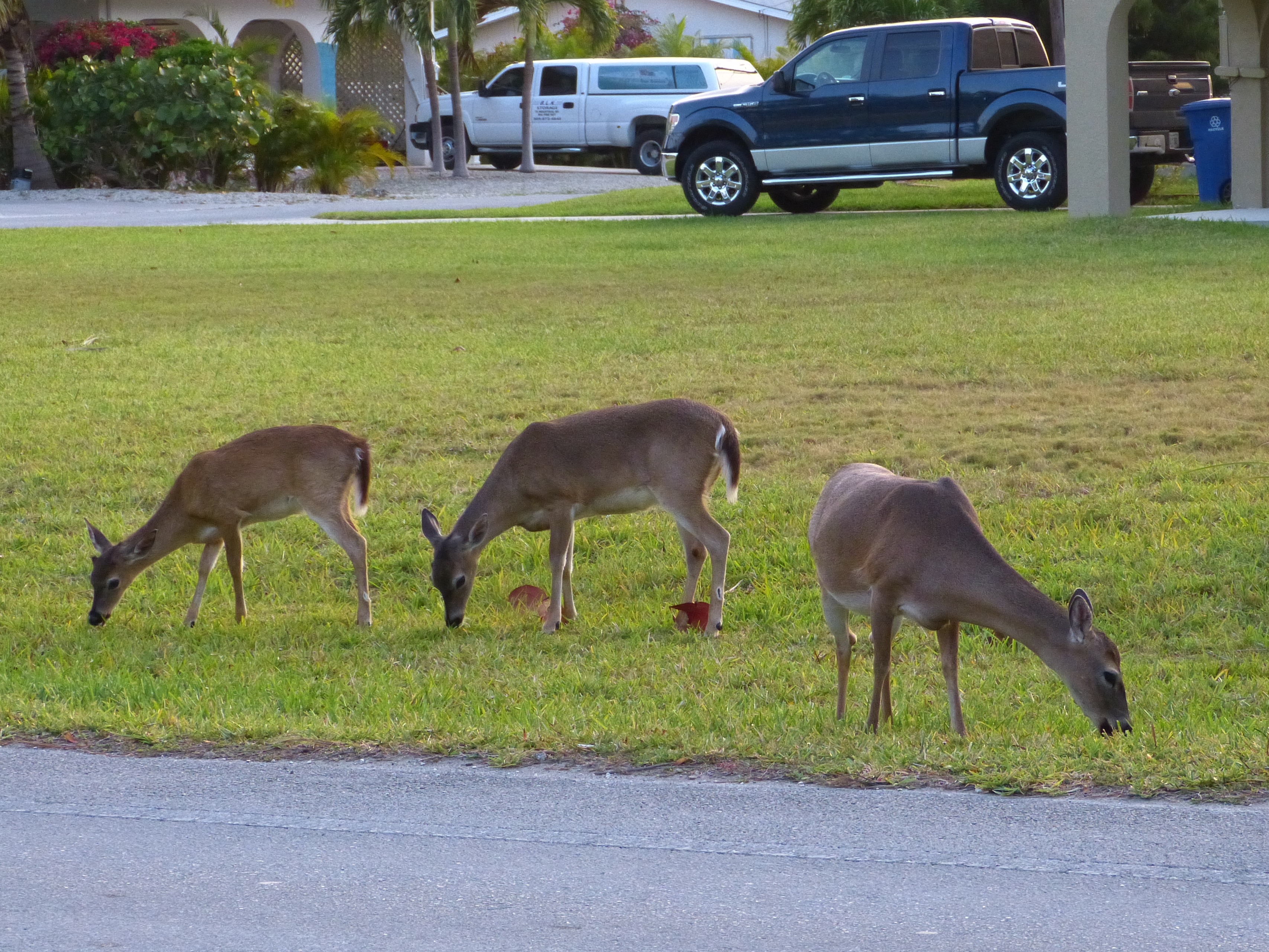
We made time to look for Key Deer on our way back.  Feeding the deer is legally prohibited, but people must do it anyway as the deer are very tame.

Key Deer on No Name Key

Key Deer on No Name Key

We spent the next day in the Everglades, slowly driving from Florida City to Flamingo. We started just outside the park entrance and found five Scissor-tailed Flycatchers. I think of the flycatcher as a Texas bird, but they frequently winter in Florida.

Scissor-tailed Flycatcher

Scissor-tailed Flycatcher

We always enjoy watching common birds and that day the Black Vultures held our attention. At Paurotis Pond, we watched this “couple” preen each other, or do what would have been preening if there had been any feather on their heads. They allowed us very close, but we backed off to give them some privacy. Before anything really exciting could happen with the vultures, a couple from Sweden pulled in. It was their first trip to Florida and they were looking for Roseate Spoonbills. We pointed out where the birds were and enjoyed chatting with them for a while. I’m sure that they would have found the birds without us, but they were very grateful for our help. Before they left, the man said, “I’ve got to give you something” and ran over to his car. He came back with a pen from the company that he works for and gave it to me.

Black Vultures, Everglades National Park
Black Vultures, Everglades National Park
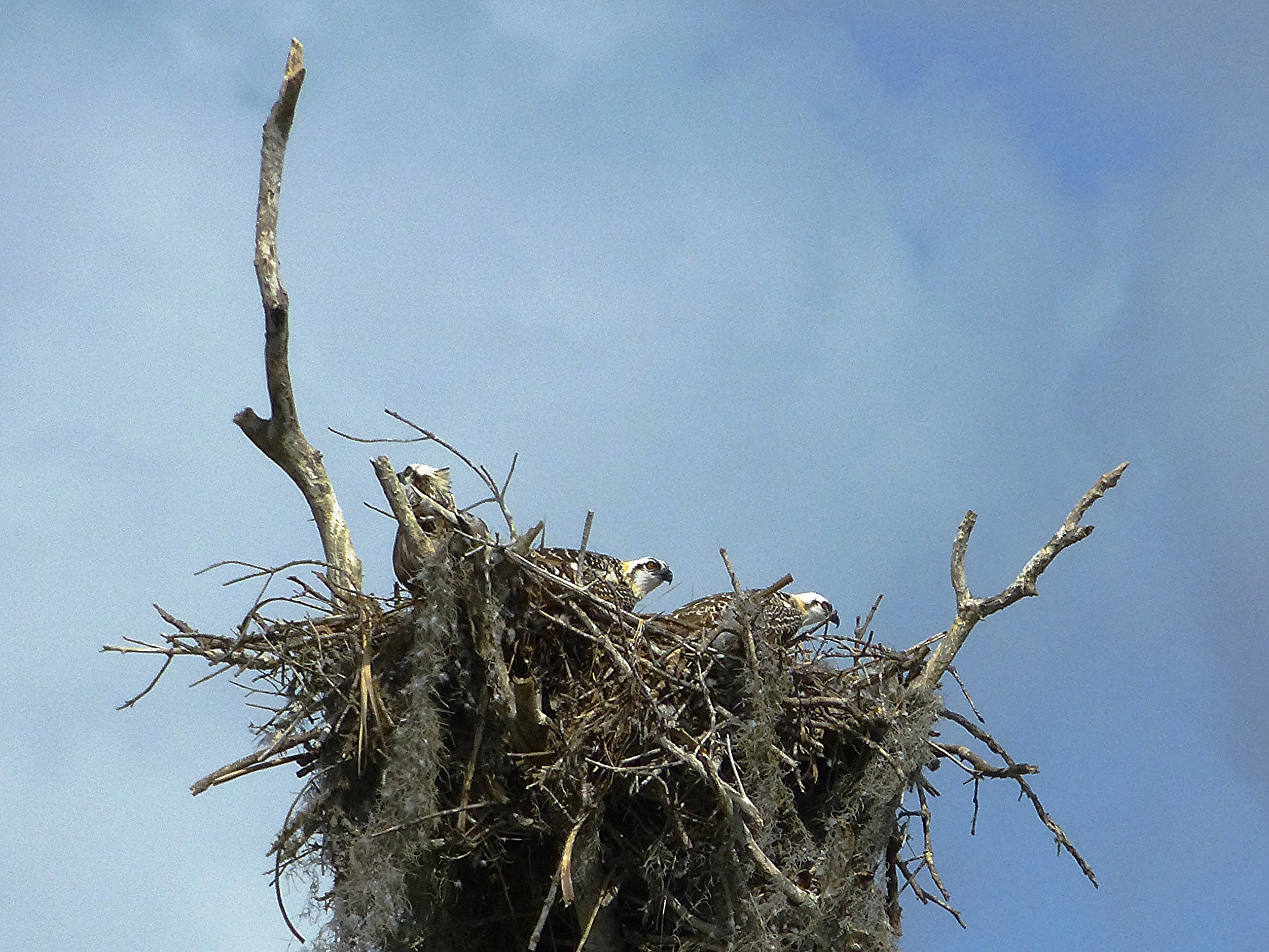
We continued our drive towards Flamingo enjoying the typical Everglades sights – Red-shouldered Hawks, Swallow-tailed Kites, Woodstorks. At Eco Pond, we found a flock of 26 Black-necked Stilts. Near the amphitheater at the Flamingo Visitor Center, we found an Osprey nest with three large juveniles who looked like they were ready to fledge at any moment.

Osprey, Everglades National Park

Osprey, Everglades National Park

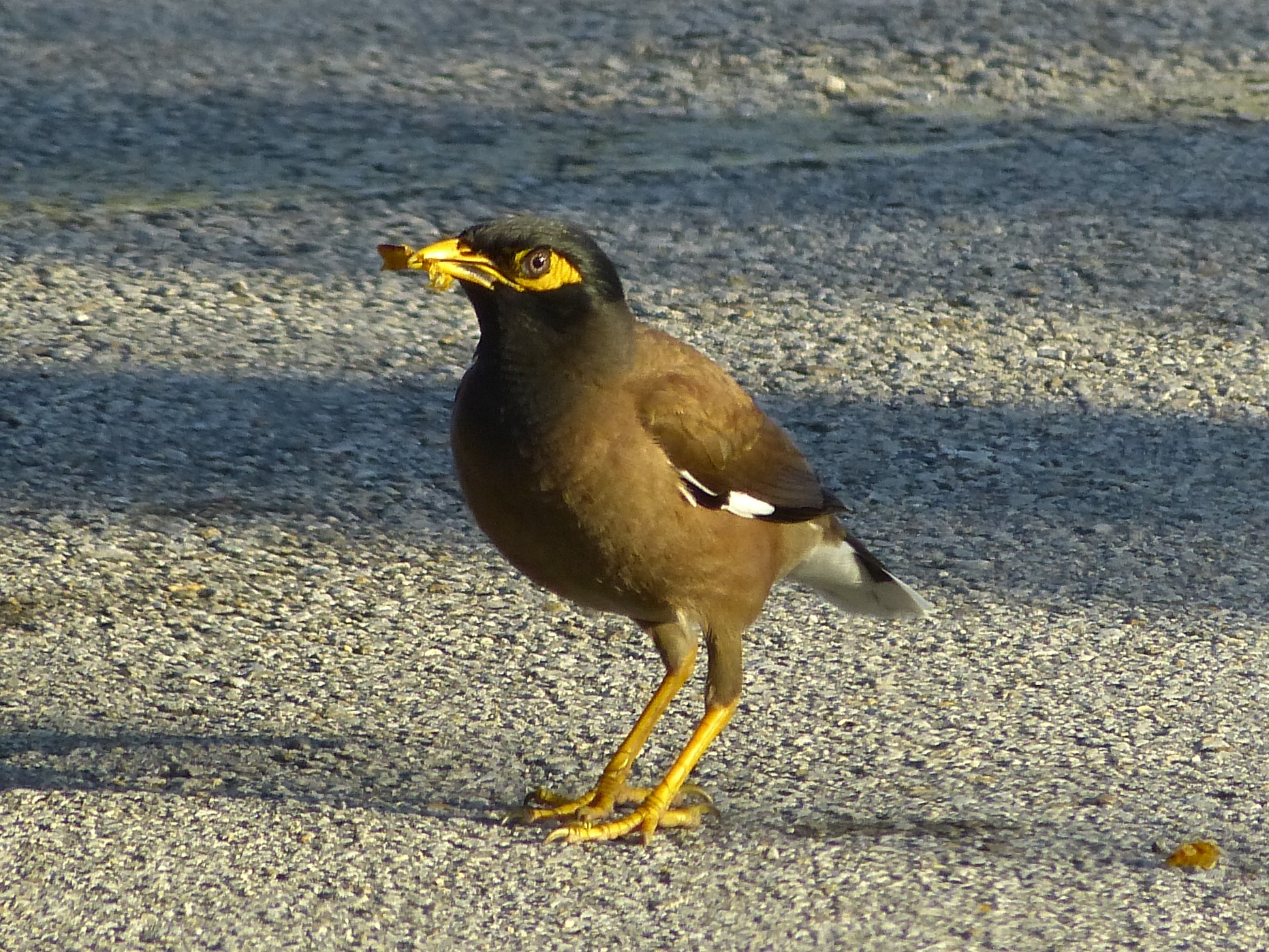
We returned to Florida City just before dark and easily found a Common Myna in its natural Florida City habitat – the drive-thru at Long John Silver’s!

Common Myna

Common Myna

Stay tuned for Part 2!

Read Full Post »

California Patch

California Patch

When my friend Myrna asked me to visit her in her new California home, of course I said “yes”. I had birded Southern California in April a couple of years ago, so I didn’t expect many new birds. It would be fun just to see Myrna and explore her new part of the country together. I flew to Palm Springs on March 31 and we checked out her Sun City Palm Desert neighborhood that afternoon. The lakes were still covered with ducks and coots. The ducks included American Wigeon, Ring-necked and Ruddy Ducks, Mallard, and a single male Red-breasted Merganser. Evidently, the merganser was a bit unusual for this location as it required quite a few emails messages with the eBird reviewer to convince him of our sighting.

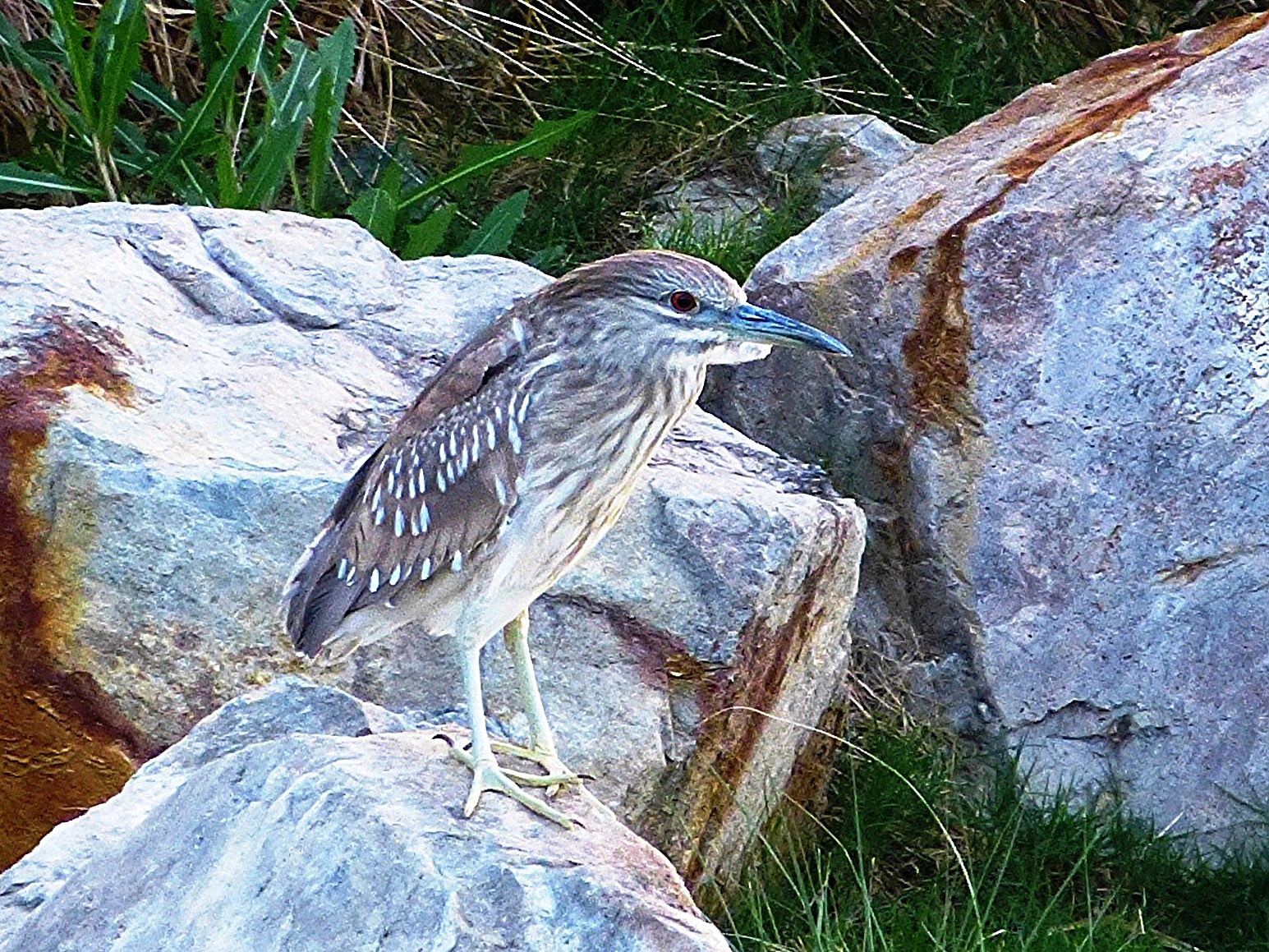
Myrna and I found the Black-crowned Night-Herons more interesting. First, we found this cooperative juvenile.

Black-crowned Night-Heron (juvenile)

Black-crowned Night-Heron (juvenile)

A couple of days later, we found the first summer bird and the adult in the photos below. It’s a very common bird, but it was fun to compare the three different plumages.

Black-crowned Night-Heron (first summer)

Black-crowned Night-Heron (first summer)

Black-crowned Night-Heron (adult plumage)

Black-crowned Night-Heron (adult plumage)


On our first full day, we went to Anza-Borrego Desert State Park . Myrna had been there two weeks before my visit and witnessed the spectacle of wildflowers, White-lined Sphinx Moth caterpillars, and hundreds of migrating Swainson’s Hawks feeding on the caterpillars. But, in the California desert, all life depends upon the unpredictable seasonal rains. Alas, there had not been recent rain when I arrived, so we saw no caterpillars nor Swainson’s Hawks and few wildflowers. Regardless, we had a wonderful day exploring the gorgeous desert.

Anza-Borrego Desert State Park

White-lined Sphinx Moth caterpillar

Our favorite birds that day were Rock Wrens. We’re pretty sure that they were building a nest in the crevice in these rocks. I had a very difficult time taking photographs in the bright desert sun, but if you look closely, you can see a wren on top of the left rock. In the same very dry desert area with the wrens, we also found a Black-throated Gray Warbler, Brewer’s Sparrows, and the ever-present White-crowned Sparrows.

Rock Wren nest

We walked the trail to Pena Spring, also dry desert, and found a Phainopepla, Cactus Wren, more Brewer’s Sparrows, and the most orange House Finch that either of us had ever seen.

Myrna at the Pena Spring trailhead

Myrna at the Pena Spring trailhead

The Anza-Borrego Visitor Center is a little oasis where we were pleased to get great looks at Nashville, Orange-crowned, and Yellow-rumped Warblers.

We took it easy the next day and stayed close to Myrna’s home. On Friday, we had another big day at San Jacinto Wildlife Area, a 19,000 acre site with 9,000 acres of restored wetlands. As expected, the water brings in the birds and this was the birdiest place that we visited. Most were common western birds, with Eared Grebe in breeding plumage a highlight.

Eared Grebe

Eared Grebe

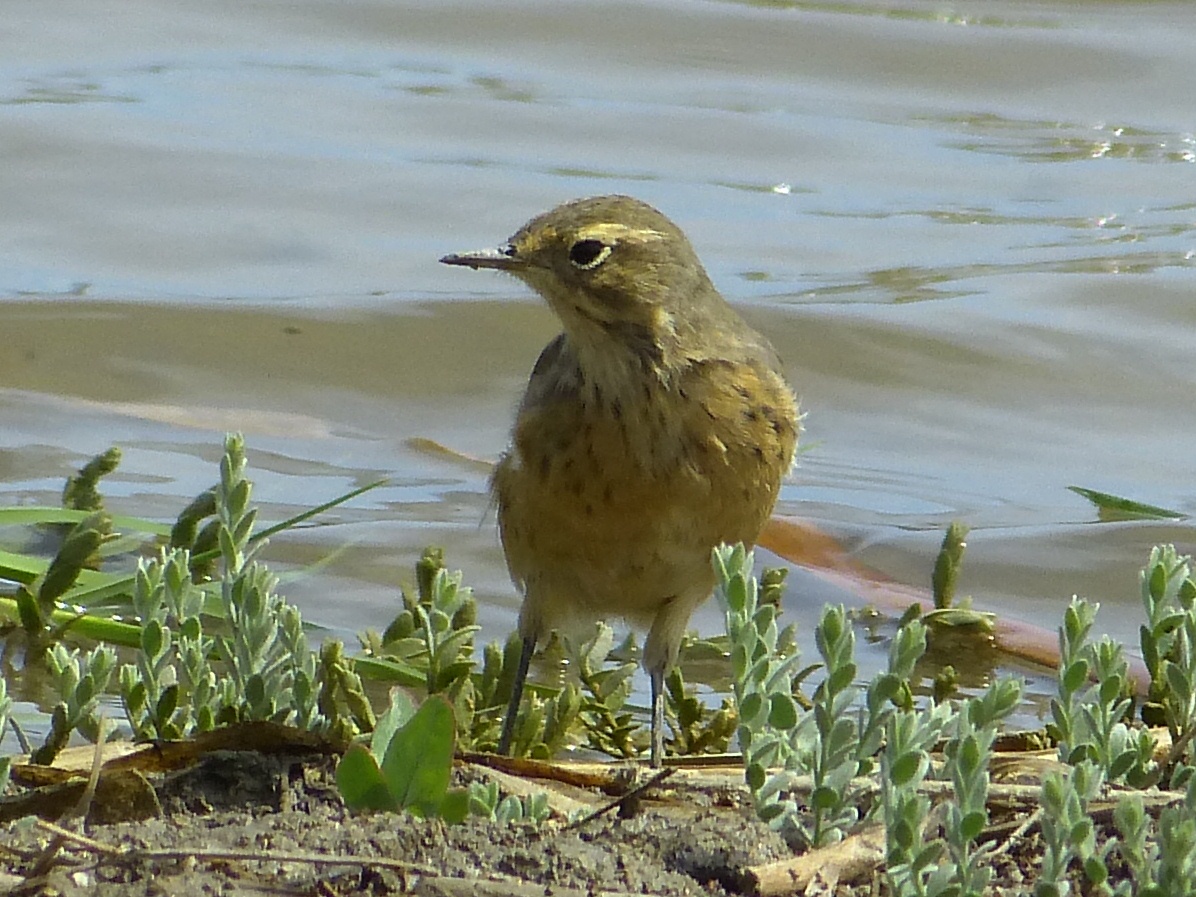
We also enjoyed close looks at a very cooperative American Pipit.

American Pipit

American Pipit

Myrna saved the best for last and on Saturday we visited Big Morongo Canyon Preserve and Covington Park. These parks consist of both desert and woods, but most of the birds that we saw were in the wooded areas. A pair of Vermillion Flycatchers thrilled all the birders in the park that day. We were just as happy to see a pair of Phainopeplas cavorting in the trees. Lesser and Lawrence’s Goldfinches presented themselves for comparison as well as Hooded and Bullock’s Orioles. Three species of hummingbirds charmed us – Costa’s, Anna’s, and Black-chinned. These parks are also home to both Ladder-backed and Nuttall’s Woodpeckers and we were told that many of the birds there were hybrids. And, here, we finally got our Swainson’s Hawk.

Phainopepla pair.  Photo by Larry Noelker.

Phainopepla pair. Photo by Larry Noelker.

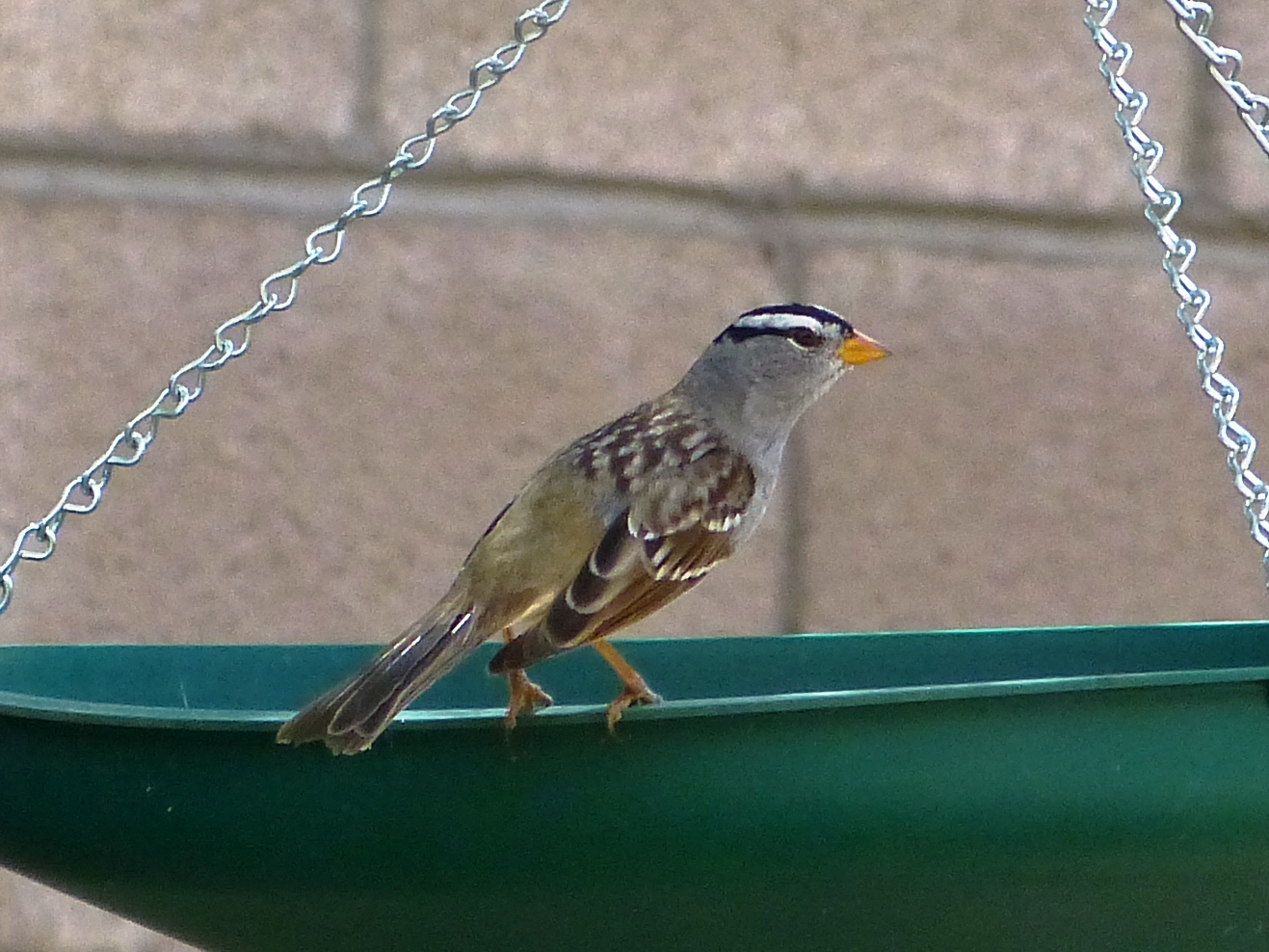
Back at Myrna’s, most of the ducks and coots had left, but the Verdins and White-crowned Sparrows in Myrna’s yard were a constant delight. These White-crowned Sparrows are the Gambel’s subspecies, different from the birds that we normally see in the east. Note the pale lores on Myrna’s bird.

White-crowned Sparrow (Gambell's subspecies) on Myrna's feeder

White-crowned Sparrow (Gambell’s) on Myrna’s feeder

In four and a half days, we had seen 85 species of birds and Southern California habitat ranging from desert to oasis to mountain forest to wetlands. Myrna and I had a wonderful visit and fun exploring this beautiful part of the country that she now calls home.

Desert Cottontail in Myrna's neighborhood

Desert Cottontail in Myrna’s neighborhood


Read Full Post »

Indian Peafowl (male)

Indian Peafowl (male)

My birding guide for the day, Lokesh Kumar, met me at 10:00 AM after my arrival at the New Delhi hotel just four and a half hours earlier. I had arrived a day early for the birding tour organized by Partnership for International Birding which would start on October 30 and this was my day to “rest.”

That first day we birded at Sultanpur National Park and the surrounding area, where I was introduced to the Red-wattled Lapwing, a bird we would see everywhere during the next two weeks.
Red-wattled Lapwing

Red-wattled Lapwing

We also saw the first of many owls of the trip, adorable Spotted Owlets.

Spotted Owlet

Spotted Owlet

And, I couldn’t let the cute Five-striped Palm Squirrels get away without a photo for my granddaughter, Melody, who loves rodents.

Five-stripped Palm Squirrel

Five-stripped Palm Squirrel

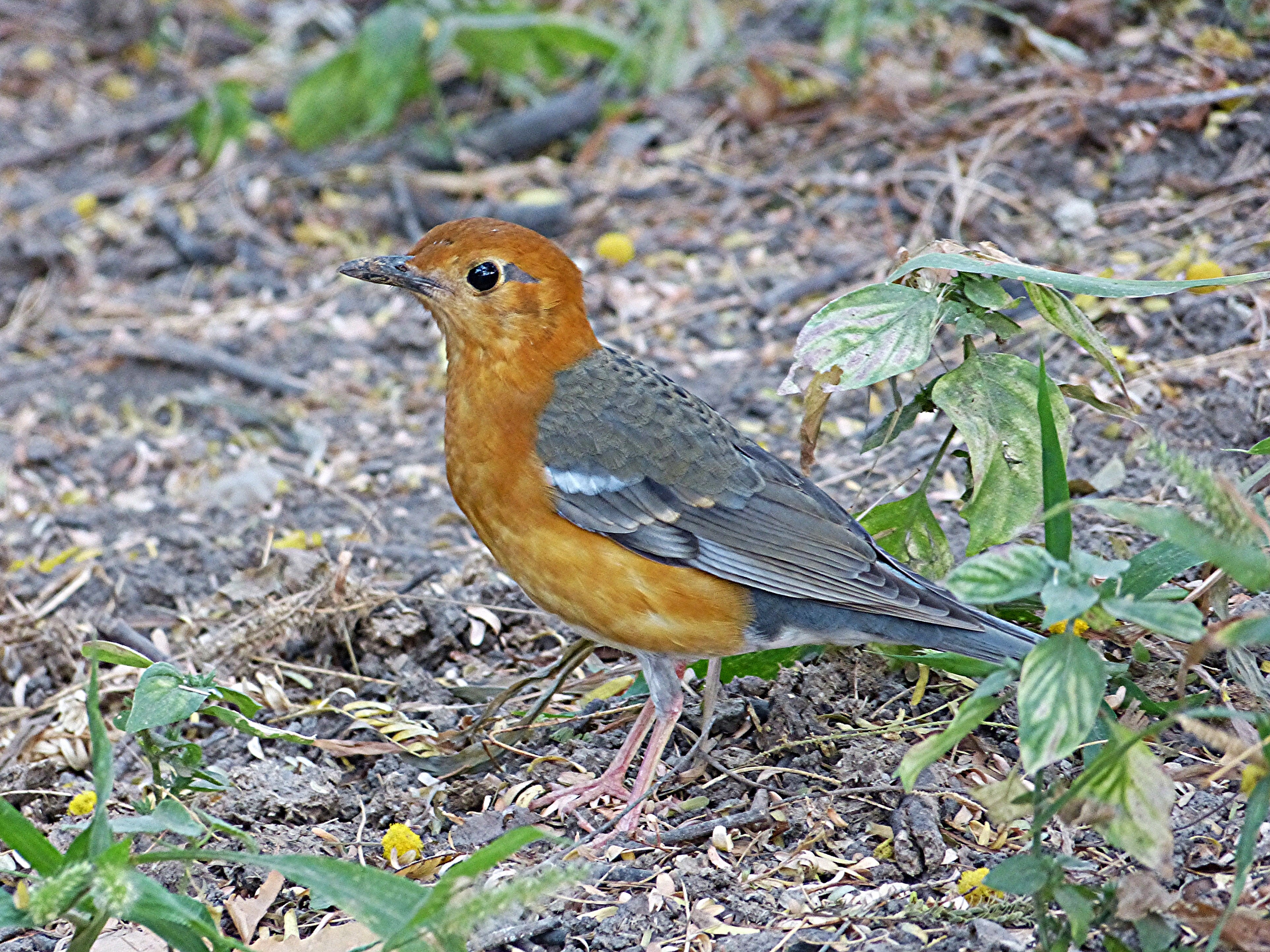
The day ended with this lovely Orange-headed Thrush, one of my favorites and the only species seen that day that we did not observe again on the main trip.

Orange-headed Thrush

Orange-headed Thrush

The next morning brought the start of the birding tour led by Leio De Souza, owner of India Nature Tours. Our group of seven birders would be lucky to have both Leio and Lokesh as our guides for the next two weeks.

We headed towards Agra and the Taj Mahal. The palace was breathtakingly beautiful, but the experience of seeing it was quite unpleasant. Our tour coincided with major Indian holidays resulting in crowds everywhere. The Taj Mahal was packed so tightly that day that our group had no chance of staying together as other visitors pushed in between us.  The palace guards constantly said “Keep moving.” Regardless, I wouldn’t have wanted to miss seeing this incredible wonder of the world.

Taj Mahal

Taj Mahal

We continued our drive to Jarar Village and Chambal Safari Lodge, where we spent the night after a little late afternoon birding near the lodge.

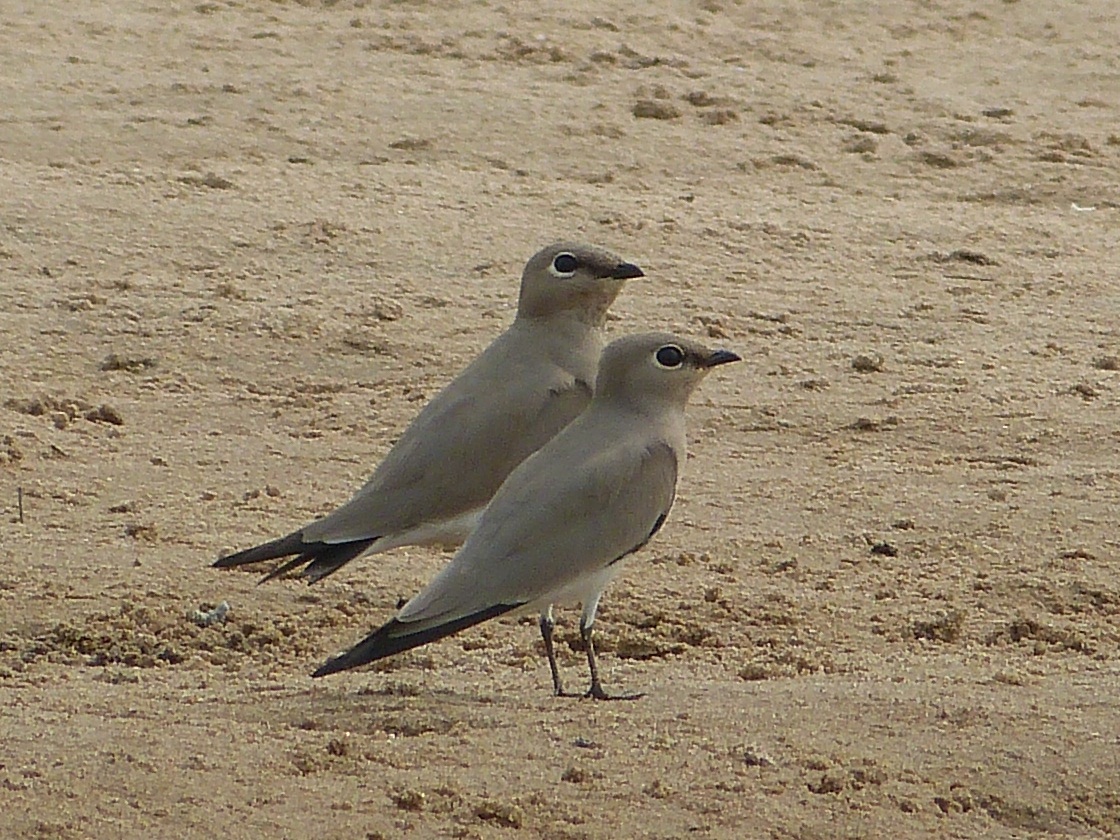
The focus of our second day was the Chambal River, where we hoped to find Indian Skimmer. Sadly, we missed the skimmers, one of the few big misses of the trip. However, we had great looks at two of India’s crocodilian species, the widespread Mugger and the rarest Indian crocodile, Gharial. We also saw wonderful birds including River Lapwing and Small Pratincole.

River Lapwing

River Lapwing

Small Pratincole

Small Pratincole

A drive to Keoladeo National Park, formerly known as the Bharatpur Bird Sanctuary, completed our day. We spent the night near the park entrance at Hotel Sunbird. The entire next day was spent in the park where we had a wonderful time exploring on foot and in the park’s unique cycle-rickshaws. Here we saw one of the most beautiful raptors of the trip, Oriental Honey-buzzard.

Oriental Honey-Buzzard

Oriental Honey-Buzzard

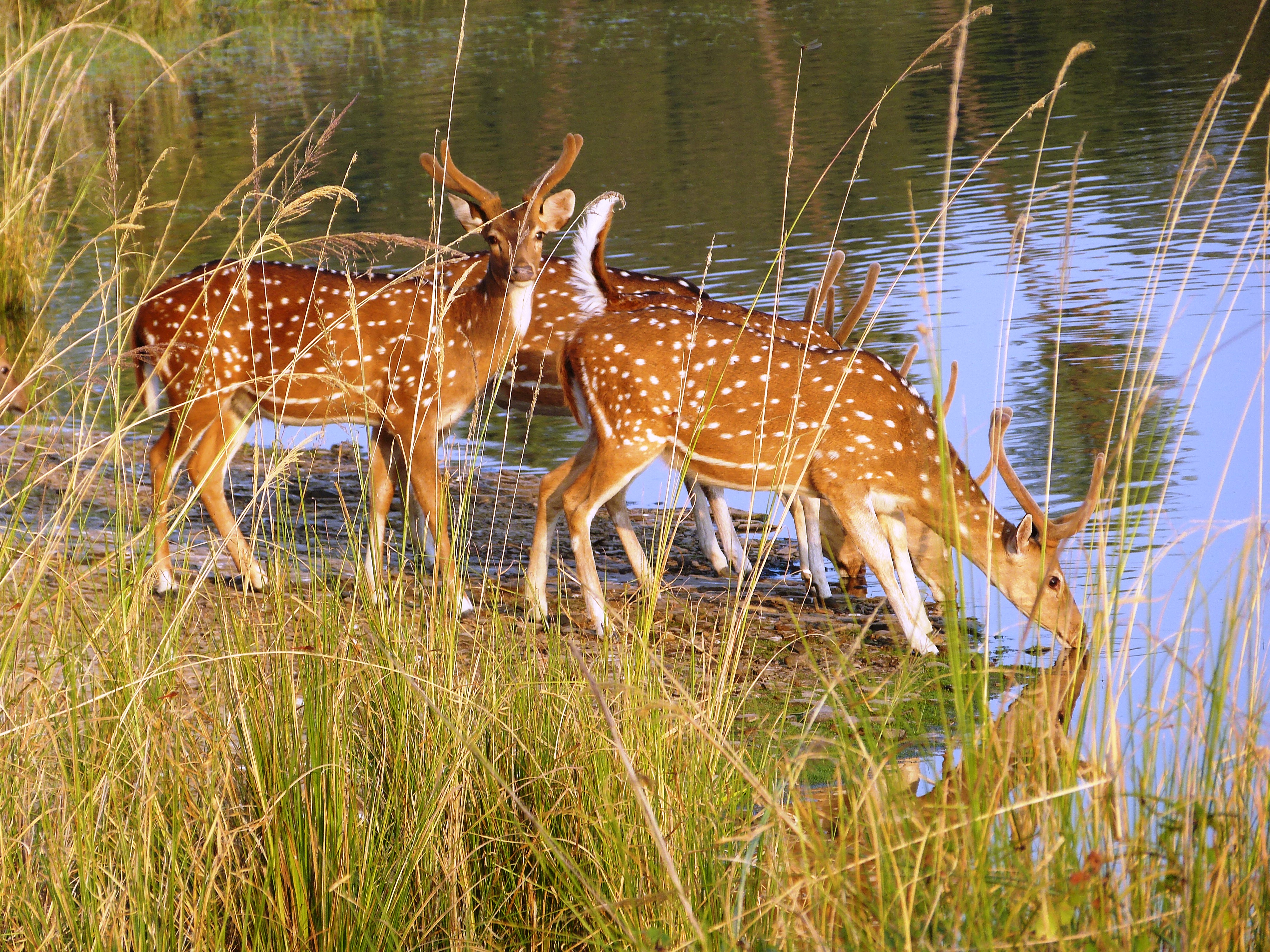
Our mammal list continued to grow with Sambar Deer, Spotted Deer, Rhesus Macaque, Golden Jackal, Wild Boar, and Nilgai.

Sambar Deer

Sambar Deer

Butterflies at Bharatpur included the gorgeous Common Rose.

Common Rose

Common Rose

After a little birding near the hotel the next morning, we drove to Ranthambhore. We made a stop along the way to look for Greater Painted-snipe, a species that fascinated me when I saw them in Hong Kong in 2009. The typical sexual roles are reversed in this species with the larger and more brightly colored females courting the males.  After mating and laying her eggs, the female leaves the male to incubate the eggs and raise the young.  She then repeats this process, sometimes mating with as many as four males in a season.  In India, I had even better looks than I’d had previously and was able to get a photo of this good-looking female.

Greater Painted-Snipe

Greater Painted-Snipe

Diwali or “Festival of Lights,” the most important Hindu holiday of the year, had been celebrated shortly before the start of our tour. Celebrations during the five-day festival include gift giving, prayer offerings to Lakshmi, the goddess of wealth, and fireworks displays. Homes are cleaned, painted, and decorated and even livestock and farm equipment are decorated. We enjoyed seeing cows still sporting garlands and bells from the holiday and tractors all jazzed up like this one.

Tractor decorated for Diwali.  Photo by Tom Walker.

Tractor decorated for Diwali. Photo by Tom Walker.

We went to Ranthambhore National Park to look for birds, but it’s also the easiest location in India to observe Bengal Tigers. We started the morning looking at birds, but as soon as the park guides detected tigers close by, we were off on a wild chase in our open lorry-bus over the very bumpy roads. There were no walkie-talkies, but the guides seemed to have a sixth sense of where the tigers were and they communicated directions to the other groups in the same zone of the park.
Mama tiger and three cubs were first observed playing in a shallow lake, but they were out of the water by the time I saw them. I didn’t need to worry about getting a good view, though, as they slowly same closer to our vehicle and walked 30-40 feet from us as they crossed the road. There was nothing preventing the tigers from jumping into our open vehicle and having a couple of birders for breakfast except the generous supply of spotted deer and other easier prey in the park. I felt no fear, only awe at being so close to these magnificent animals. These tigers really were wild animals, but it was obvious that they were habituated to humans.

One of the three 7-month-old tiger cubs seen with their mother.

One of the three 7-month-old tiger cubs seen with their mother.

Back home, I learned that tigers really are “king of the jungle” with no natural predators. The human activities of poaching and habitat destruction are the major factors that have pushed them to an endangered conservation status. According to Wikipedia, “Over the past 100 years, they have lost 93% of their historic range, and have been extirpated from southwest and central Asia, from the islands of Java and Bali, and from large areas of Southeast and Eastern Asia.” In an attempt to halt the slide to extinction, the Indian government created Project Tiger in 1973 to preserve its national animal. Due to these efforts, tiger numbers have increased in recent years with a total of 1706 individuals in India estimated for 2010. India’s wild tigers represent over half of the global population, estimated at 3200, down from 100,000 a century ago. Our park guide told us that there were sixty tigers in Ranthambhore.

Male tiger observed on second day in Ranthambhore.

Male tiger observed on second day in Ranthambhore.

As promised, we saw wonderful birds in the park, too. White-throated Kingfishers were common throughout the trip, and we were surprised to see them in many areas that were not near water. They do not require fish, but also eat a wide range of food items such as grasshoppers, lizards, and insects. For the story of a nesting cycle of one pair with phenomenal photographs, see “White-throated Kingfishers nesting behavior.”

White-throated Kingfisher

White-throated Kingfisher

This gorgeous Indian Scops Owl was one of several owl species seen on the trip.

Indian Scops Owl

Indian Scops Owl

A less spectacular, but interesting, sighting was this Spotted Dove. I have seen this species many times in China, as well as in California. This bird in India surprised me by having numerous distinct spots on the wings; the others I’ve seen were much plainer. A little research revealed that there are three main subspecies groups of Spotted Dove and considerable plumage variations across populations within its wide range. The Spotted Doves that we saw in India were a different subspecies, suratensis, than the nominate subspecies, chinensis, that I had seen in China. The photos below show the differences in plumage of these two subspecies.

Spotted Dove (India)

Spotted Dove (India) Streptopelia chinensis suratensis

Spotted Dove (China)

Spotted Dove (China) Streptopelia chinensis chinensis


My favorite bird at Ranthambhore might have been Rufous Treepie. On our first day there, a treepie sat on the edge of our vehicle and Lokesh told me that I would see the bird eat from his hand. The next day a treepie did eat from his hand as promised and from mine as well.

Rufous Treepie on my hand.

Rufous Treepie on my hand.

During our two days at Ranthambhore, we saw quite a few mammals in addition to tigers, including many lovely Spotted Deer.

Spotted Deer

Spotted Deer

Our first week in India went by quickly and it was now time to take the train back to Delhi where we would spend the night before driving north towards the Himalayan foothills for the second part of our trip.  Stay tuned for more!

Read Full Post »

Cynthia Donaldson and I spent a day with Golden-winged Warblers near Boone, North Carolina, in May.  Here is Cynthia’s story.

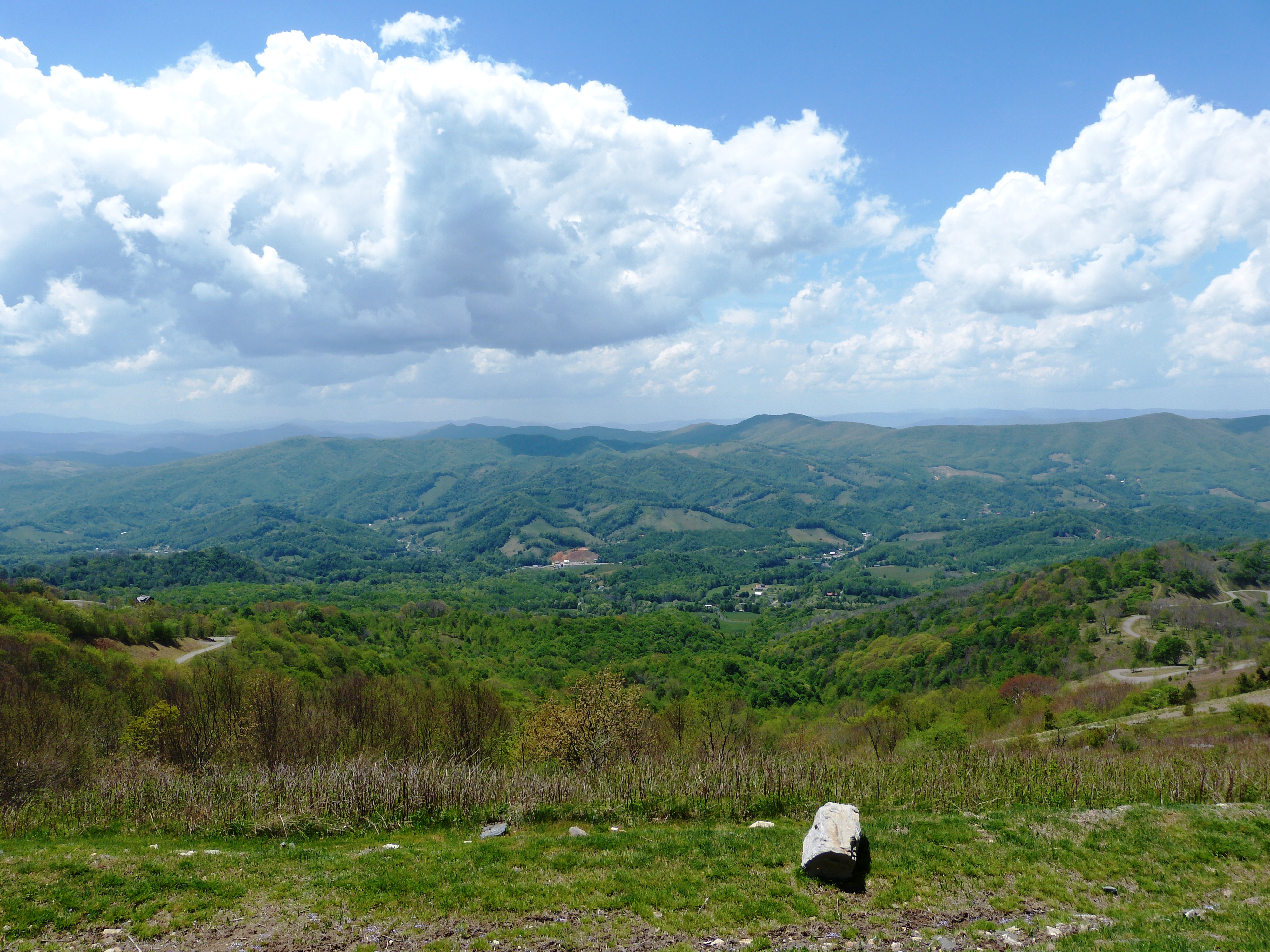
The vista from the Audubon NC research site at 4000’ is breathtaking!  The air is clear and clean.  Pale purple hills below roll to the horizon a hundred miles away.  The cool, crisp breeze carries the spring songs of the resident birds as well as the newly arrived migrants.  Shelley and I had the privilege of visiting this beautiful place and observing the intrepid researchers who give their time and talents to a steadily declining jewel of the eastern forest: the Golden-winged Warbler.

View from the Sunalei Preserve clubhouse

View from the Sunalei Preserve clubhouse

Our day began very early on May 13, 2014.  We met in the New Market parking lot in Boone NC at 5:30 AM. Four young people in their early 20’s greeted us with sleepy cheerfulness: Anna Tisdale (Audubon NC’s Graduate Research Assistant at Appalachian State University and field crew leader), Alex Dawson (returning for his second year of working with the warblers), Lee Williams (coordinator of the Forsyth Audubon Brown-headed Nuthatch nest box project and new addition to the NC Audubon team) and Jennifer Tucker (on day two of her internship).

Our first stop was a country market for coffee.  The second stop was at a NC game land. Anna played the Golden-winged Warbler tape at a possible habitat, but no one answered. She did not get a response at a second site either, but as soon as we got out of the car at Sunalei Preserve, near the summit of Snake Mountain, we could hear the Golden-winged Warbler bee-buzz-buzz-buzz coming from three different directions!

The vision of Sunalei Preserve is to develop a community of homes, each on several acres, within a nature preserve.  It’s 1,000 acres straddle the North Carolina and Tennessee border near Boone, NC.  Because of the recession, most of the land is undeveloped and prime Golden-winged Warbler habitat.  The owners of the preserve have graciously given Audubon access to this area for research.

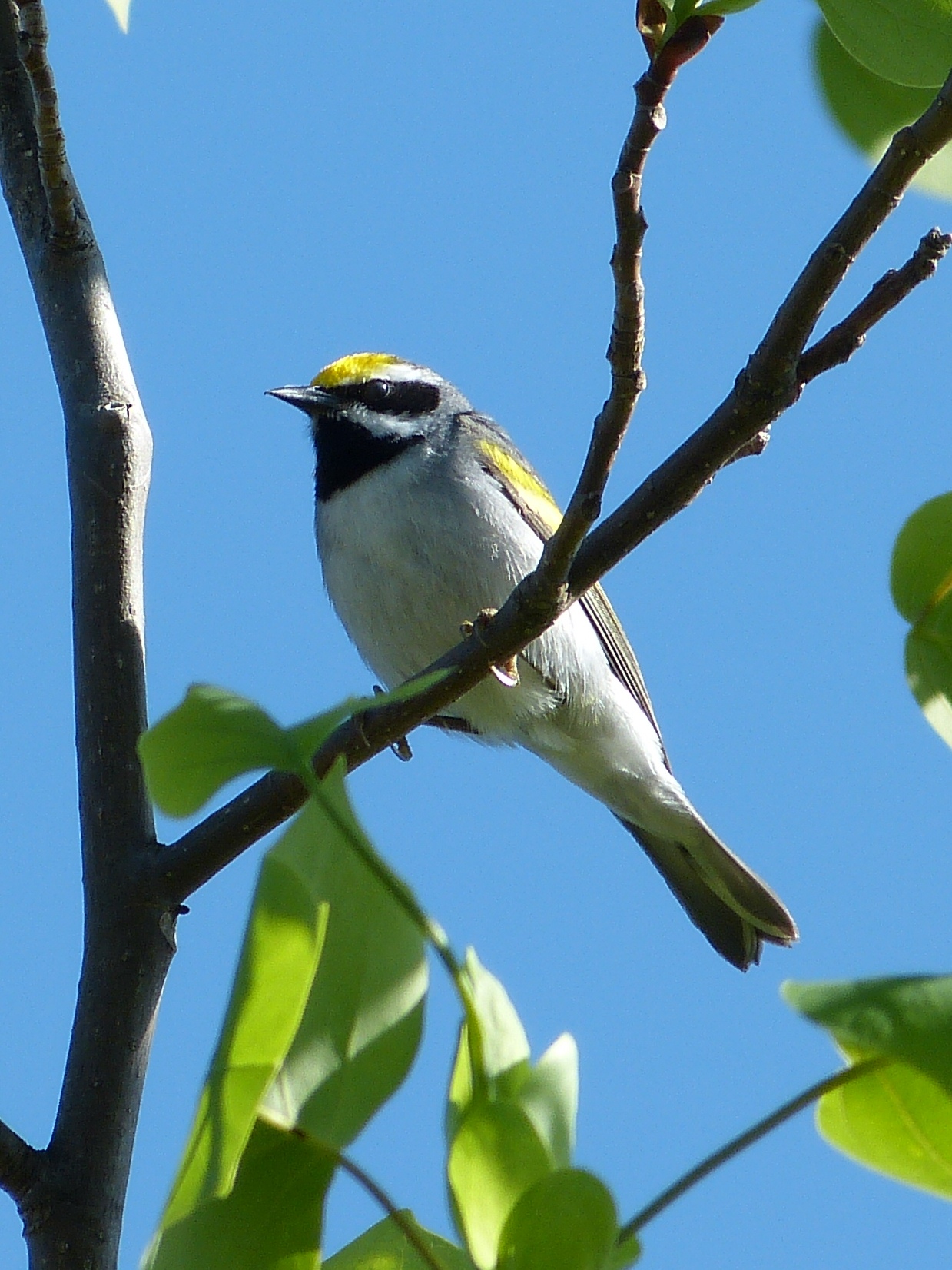
"Andy," a male second-year Golden-winged Warbler

“Andy,” a male second-year Golden-winged Warbler

On this beautiful May morning, Anna told us about the three Sunalei males who were busy defending their newly defined territories.  Anna is a graduate of Virginia Commonwealth University and is currently a graduate student at Appalachian State University.  The important data that she is gathering will be used for her own master’s project as well as North Carolina’s Golden-winged Warbler work in a regional study with other members of the Golden-winged Warbler Working Group.  The work involves gathering data about the demographics, genetics, behavior, productivity, and wintering distribution of the species.  Curtis Smalling, Director of Land Bird Conservation for Audubon North Carolina, directs North Carolina’s Golden-winged Warbler work.  Beginning her second year on this site, Anna is an expert on anything golden-winged.  Her passion for her work was apparent as she explained each step of the sometimes tedious, usually grueling, but always rewarding job.

Shelley and I wanted a taste of field work, so Anna gave us some assignments and then led us to the field of Golden-winged Warbler #2.  Pink tape and Sharpie in hand, we followed her to the territory of this second-year male.  He was new to Sunalei meaning he had never been banded.  Our job was to spot map his territory (define the boundary) with a goal of making 10 marks or points.  Our intrepid leader then left Shelley and me to our assignment.  Shelley recorded perch time data from the upper slope near one of the Golden-winged Warblers’s favorite tulip poplar perches.  I followed him around, recording song type and perch time info on the pink tape, and then tying the tape to each tree that he visited.  The hill was covered with horrendous briars, so I stuck to deer trails as much as I could!  When I first met Anna, I wondered why her arms were completely covered with scratches…..

Recording the song type was easy because he sang his typical song for the hour or so that we studied him.  Anna returned around 9:00 AM from her census of the other territories to check our work.  Content with our points, she began setting up the mist net.  She shared her future hopes and plans for the project as she pounded the poles into the ground (with a rock) and then stretched the net.  The net was carefully assembled on a flat area in the shade of the favored tulip polar.  Hopefully, the grays of the shadow would disguise the folds of the net gently rippling in the breeze.

"Andy" sporting his silver US Geologic Survey band and the light blue color band selected by Cynthia. Hot pink and purple bands adorn his other leg.

“Andy” sporting his silver US Geologic Survey band and the light blue color band selected by Cynthia. Hot pink and purple bands adorn his other leg.

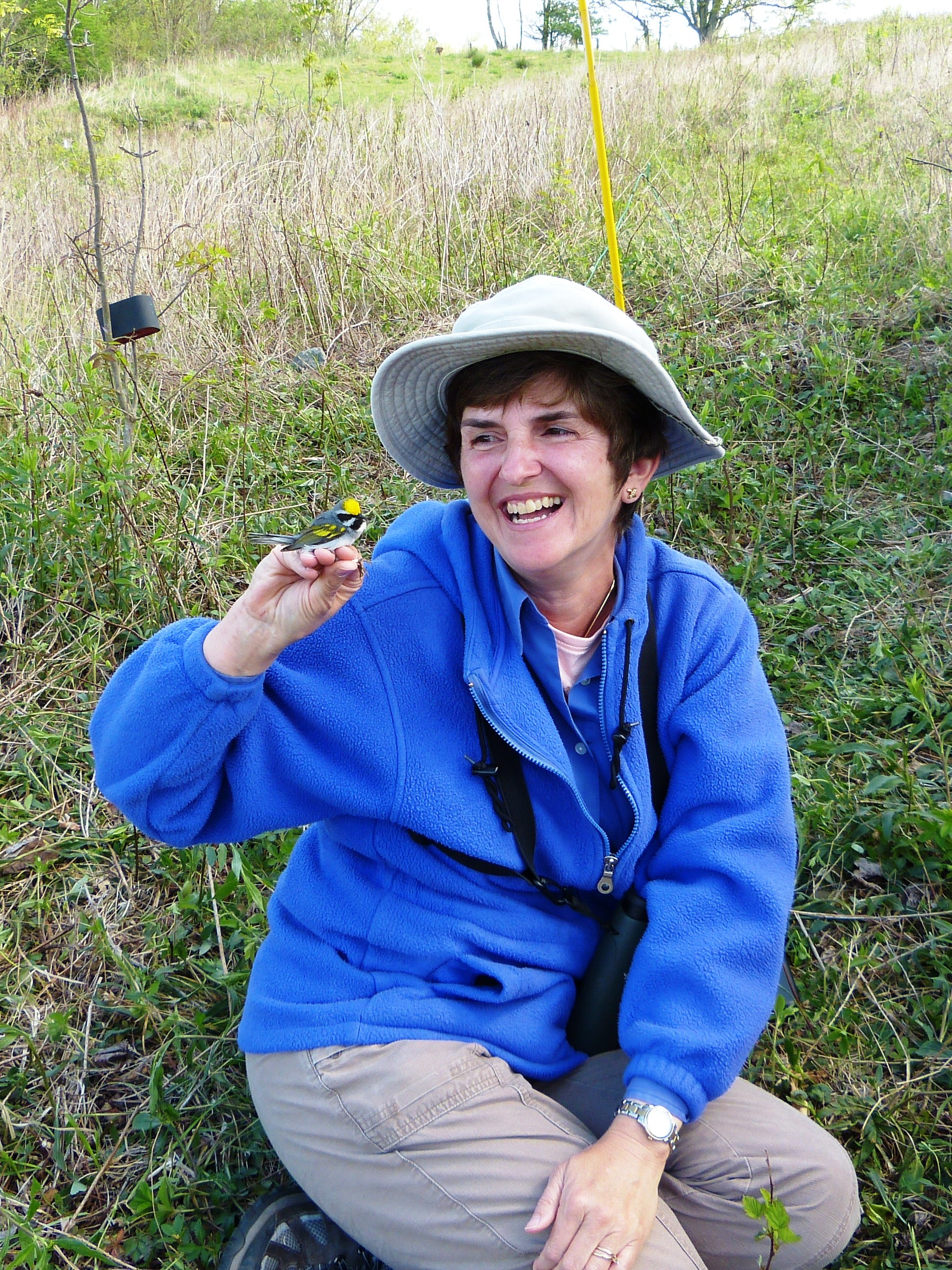
Her plan worked beautifully.  In less than a minute of playing the recording of a Golden-winged Warbler song, our male flew right in.  Anna was quick to untangle him and put him in a drawstring bag for a little rest.  After laying out all of her banding equipment, she took him out of the bag and we got our first up-close look at this tiny creation!  This .28 ounce male tried to wiggle free every chance he could, but he did not have a chance in Anna’s trained hands.  She expertly measured his beak, wings, and tail.  His silver band bears a 10 digit number that I wish I had written down.  Shelley and I got to choose colors for two of his marker bands:  Shelley chose purple and I chose light blue.  All of Anna’s birds have a hot pink band.  The combination of colors on the legs will identify this male for the rest of his life.  The retrieving of a few feathers and some blood for scientific analysis was (I like to think) more painful for Shelley and me than for him!  When the process was over, I got to hold him and put him in the plastic cylinder for weighing.

Cynthia and "Andy," a second-year male Golden-winged Warbler

Cynthia and “Andy,” a second-year male Golden-winged Warbler

As soon as Anna tipped the cylinder, he flew out, landed for a millisecond and then dove into a thicket.  We tried to find him to assess how he had fared in his ordeal, but he was nowhere to be found.  Lightly concerned, we had no choice but to pack up and return to our cars.  By then, the sun was high on this unusually warm day and we were ready for some refreshment.

After lunch, I went with Anna to a site on the opposite side of the hill to see if we could find a Golden-winged Warbler nest.  The project goal is to find 50 nests!  The male of this territory had a mate, so it was possible that they could have a nest.  Through binoculars, we could see the band color pattern that identified him.  We observed the pair for about an hour as they foraged on the Cherry trees.  Anna marked each tree as we followed them around their territory.  A “new” male flew in for a look-around.  Anna went after him into a lower field and returned excited that this un-banded male might be a new “neighbor.”  She considered catching him, but decided to save him for another day.  Since we did not observe any nesting behavior, like nest material gathering, Anna called it a day.

Shelley and I were allowed to give our bird a name.  As we followed Anna in our car to our next destination, which was the gorgeous club house for the property, Shelley and I came up with the name Andy.  “An” was for Anna and for me, Cynthia “Anne,” and “dy” was for Shelley “Dee.”  Perfect.

Just then, Anna jumped out of her car, doing a dance of joy!  We stopped our car and hurried to find out what she was so happy about.  We were passing the north edge of Andy’s territory, and he was singing!  Just to be sure it was him, Anna played the Golden-winged Warbler song.  He flew in for a moment, singing his warning song, and then flew back down the hill to one of his favorite perches.  As he flew, we had a great look at his pink, purple and light-blue bands!  He was going to be fine.

Perched atop a tulip poplar near the summit of Snake Mountain, Andy, “our” Golden-winged Warbler, scans his briar-covered slope and the smoky-hazed North Carolina and Tennessee mountains below.  Hopefully he will find a female, raise a brood and then leave to fly to warm South America in the fall.  Will he return next spring?  Time will tell.  Anna promised to let us know.  For now, this golden-winged wonder will spend the summer here, in the idyllic setting of Sunalei Preserve.

"Andy," a male second-year Golden-winged Warbler

“Andy,” a male second-year Golden-winged Warbler

Many thanks to Cynthia for writing the above story and allowing me to publish it. Golden-winged Warblers populations have declined sharply (estimated at over 75%) since the 1960’s and it has been petitioned for placement on the Endangered Species List.  The Golden-winged Warbler Working Group is the umbrella organization for conservation efforts.  Cornell provides some interesting facts about this bird.  And, read about the Audubon NC work that Curtis Smalling is heading up here and here.


Read Full Post »

The Kentucky Warbler was about 20 feet from us, eye level, in perfect light.  He had to have known that we were watching him, but he appeared unconcerned about our presence and sat there singing.  Birding does not get any better than this.  It was one of those magic moments that Diane and I both treasure.  We were alone on a forest service road in Ohio’s Shawnee State Forest and it was quiet except for the birds.  This spot was perfect breeding habitat for Kentucky Warblers – low ground with lots of brushy cover by a little creek.

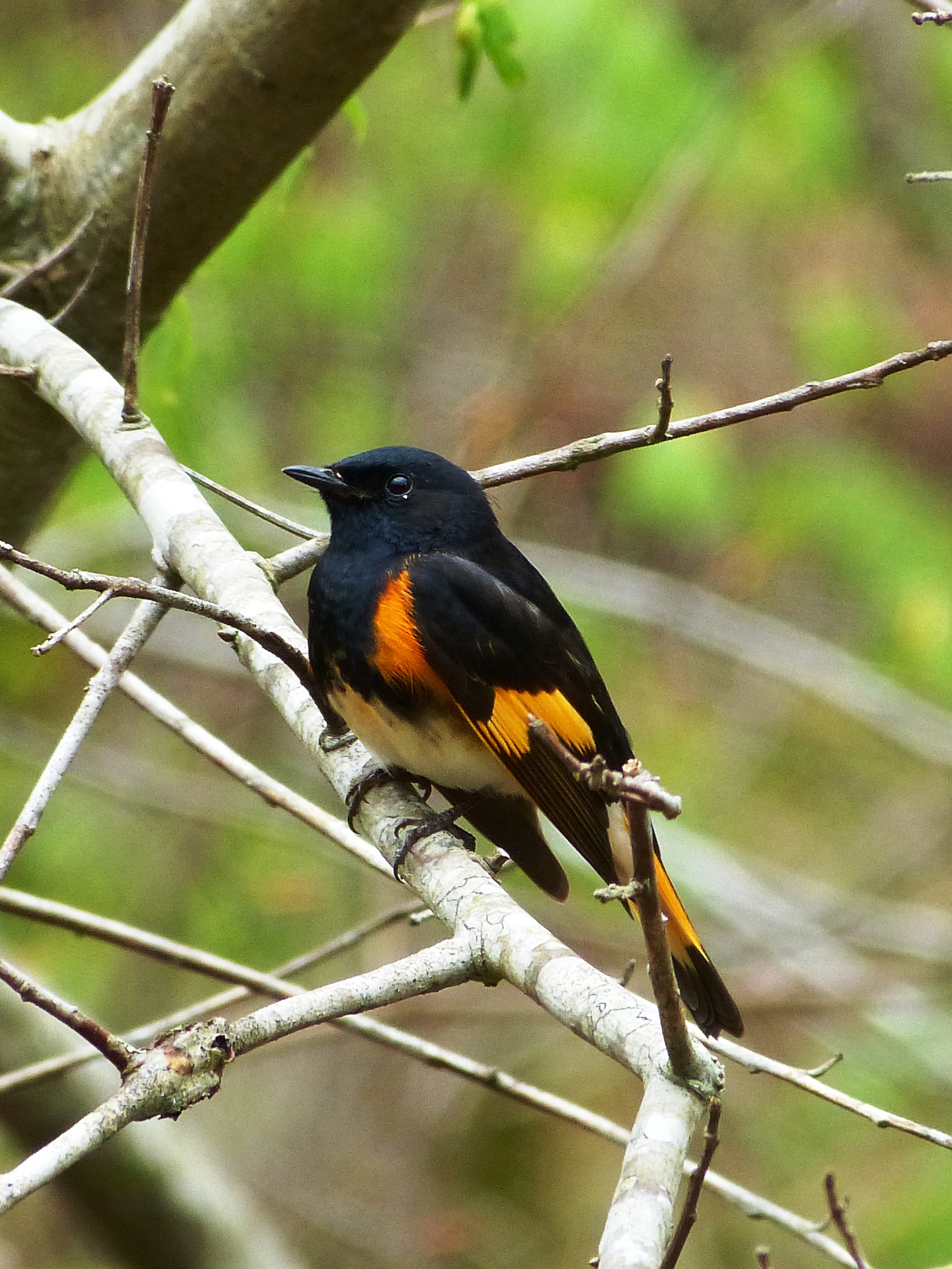
I was too lost in the moment watching the Kentucky Warbler to even try for a photo, but I was able to get this shot of an American Redstart the previous day.

American Redstart (male)

American Redstart (male)

Diane and her husband planned to visit their daughter in Indianapolis and Diane wanted to meet for a few days of birding.  We decided on Shawnee State Forest and I was pleased that Diane liked it as much as I had on my first trip.  We arrived on Monday afternoon, April 28, and were able to bird for a couple of hours in relatively dry weather before dinner.  Unfortunately, we had awful weather for the rest of the trip.  The next day it rained until noon and was uncomfortably hot all afternoon after the sun came out.  The following day it rained non-stop.  And, then it was time to leave.  But, still, we found quite a few birds including Hooded, Prairie, Black-and-white and Blue-winged Warblers, Yellow-breasted Chats, Scarlet Tanagers, and unusually cooperative vireos, all allowing us quality views.

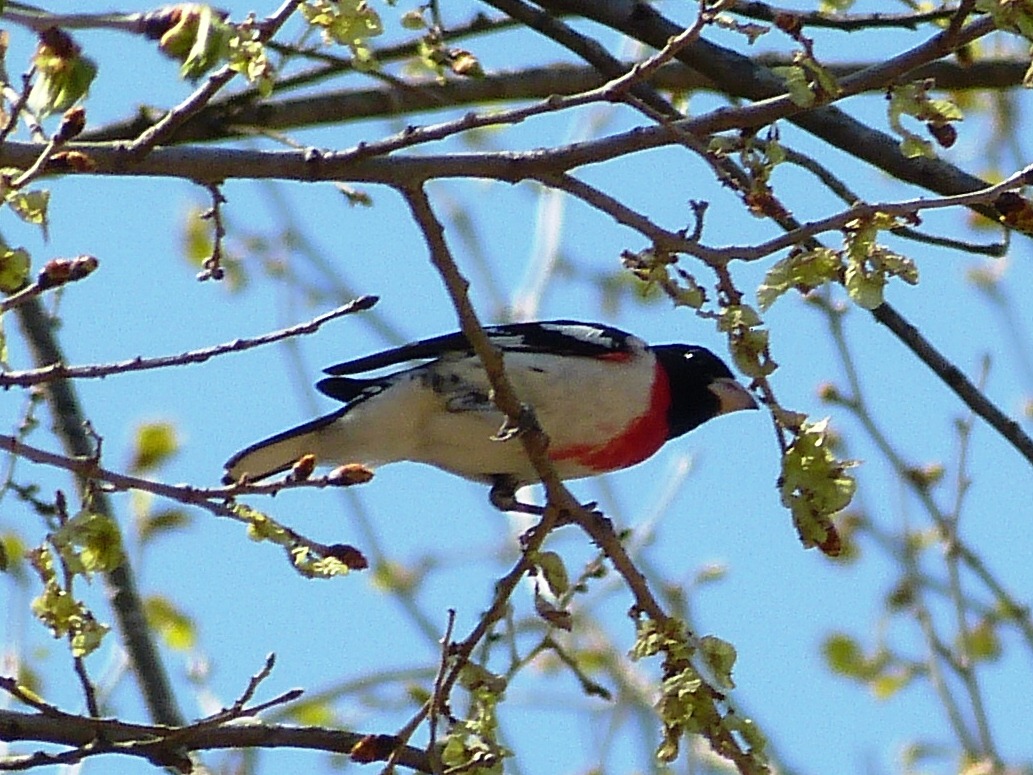
Rose-breasted Grosbeak (male)

Rose-breasted Grosbeak (male)

We found this gorgeous male Rose-breasted Grosbeak one afternoon and he was still working the same tree when we came back a few hours later.

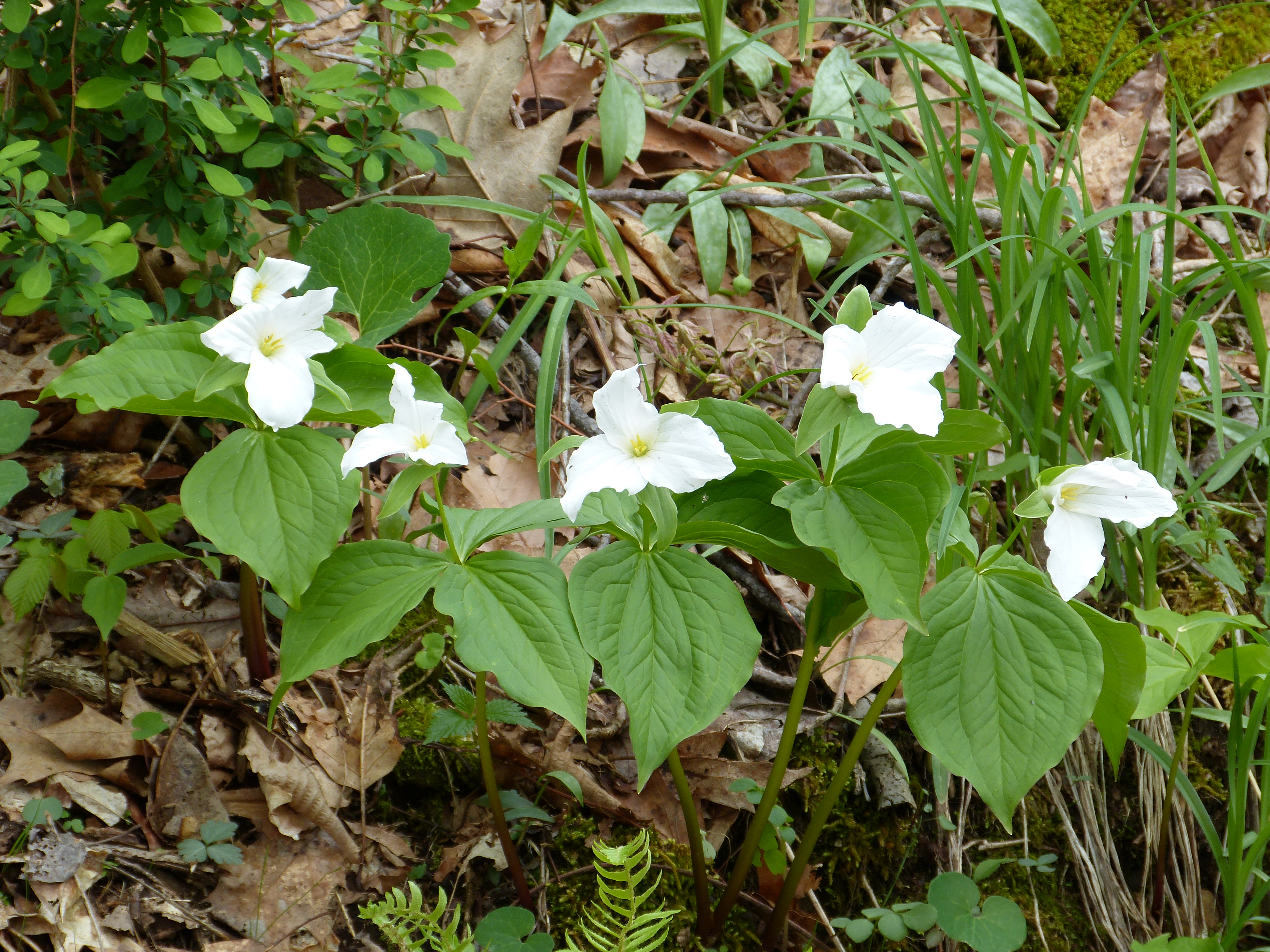
Trillium grandiflorum

Trillium grandiflorum

There were fewer wildflowers than last year when I was two weeks later.  But, the forest was still lovely with Trillium grandflorum dominating the roadsides.  Little patches of bluets were everywhere.  Wild geraniums were beginning to pop up here and there.  There were a few irises.  Ferns were just starting to unfurl.

On our one hot afternoon, the birds were quiet, but there was an abundance of butterflies.  My favorites were the Zebra Swallowtails, a life butterfly for me.

Zebra Swallowtails

Zebra Swallowtails

Our pet-friendly cabin in the state park was a perfect base for our stay.  The state park is inside the state forest.  The screened porch in the back was great for watching birds when we were tired of driving in the rain.  Jack and Diane’s two dogs found the cabin as comfortable as we did.

A cabin in the woods also let me find a few spring moths.  I was too tired to stay up late, but saw these pretty little moths just before bedtime.

Shawnee moth 1P

Shawnee moth 3


Other birders reported Cerulean Warblers in the cabin area. We did not see them, although we thought that we heard them a few times.  It was our only real miss, not too bad considering the weather.  We enjoyed the forest and the birds so much that we talked of going back next year.  I hope that we are able to return to my new favorite spring birding location, Ohio’s Shawnee State Forest.

Our cabin in Shawnee State Park

Our cabin in Shawnee State Park

Read Full Post »

Dave and Amber

Dave & Amber

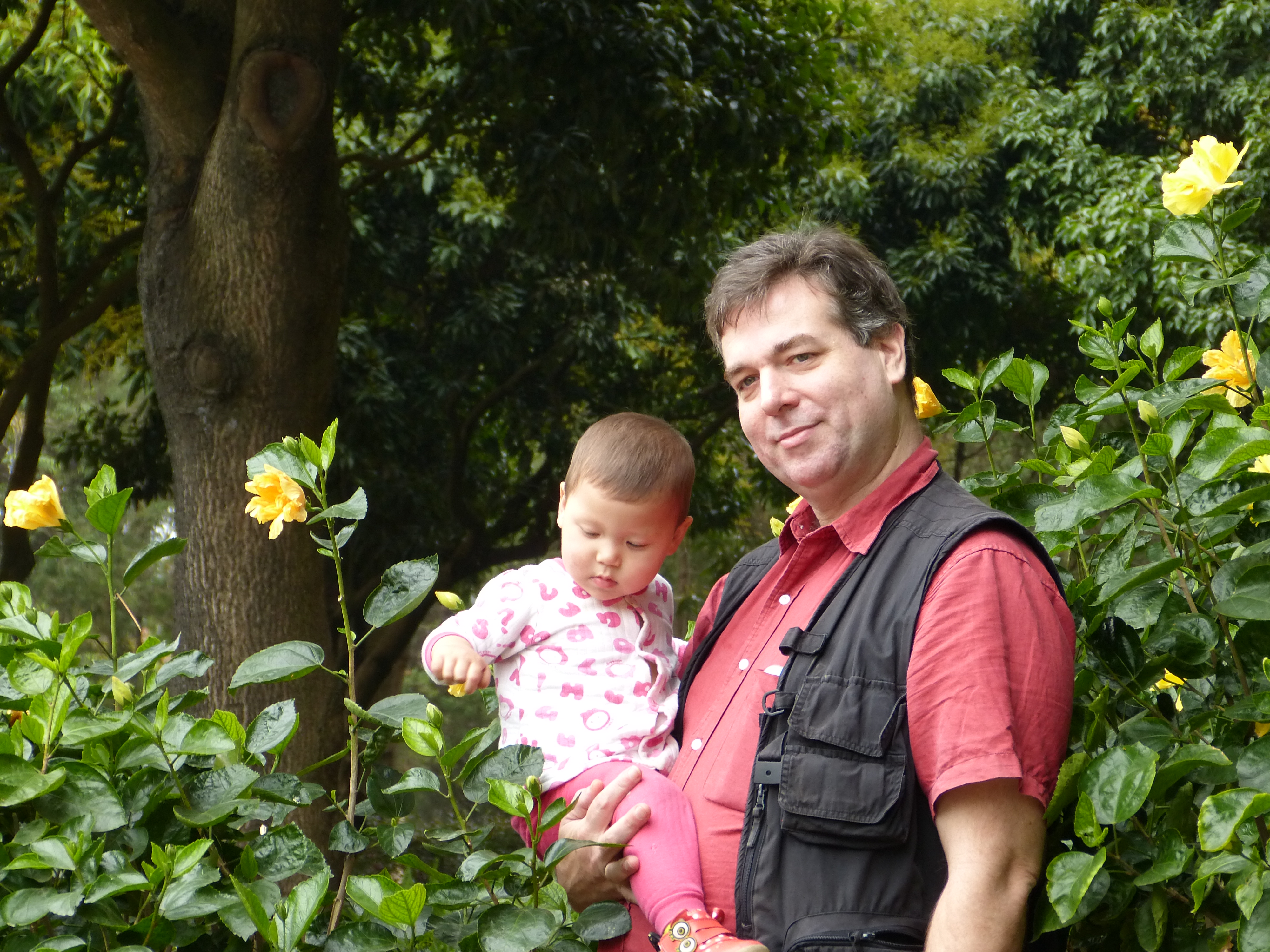
After my birding trip to Poyang Lake and Wuyuan, I spent two weeks with my son Dave, his girlfriend Trissie, and their eighteen-month-old daughter.

Amber making friends

Amber making friends

Amber is a beautiful little girl and she attracted compliments everywhere we went. She likes Mommy or Daddy in sight, but is otherwise quite bold and unafraid. She makes friends easily, both human and canine. She loves climbing and enjoys playgrounds, trees, and stairs. She liked the slide at Evergreen Resort, too, and could have played on it all day. She is adventurous with food and will eat anything, even peppers that were too hot for me. Amber is like her Daddy in many ways. I remembered Dave as a baby when I tried to get Amber to sit still for a story. I had no more luck reading to her than I’d had with Dave 45 years ago.

Amber and Trissie playing with bubbles while waiting for the rain to stop.

Amber and Trissie playing with bubbles while waiting for the rain to stop.

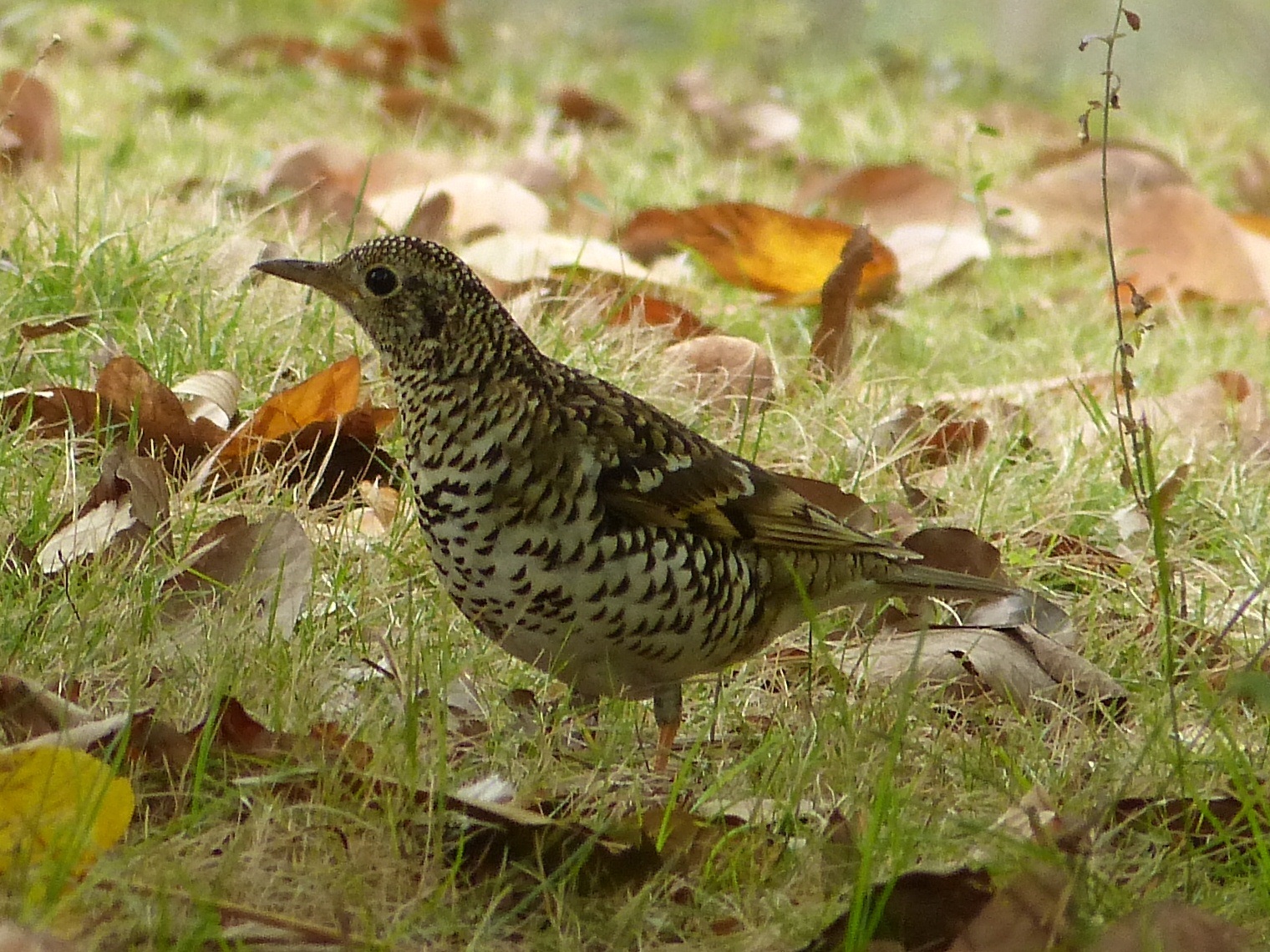
We quickly settled into a routine in which I went birding alone on weekday mornings. I feel totally safe in China and had ventured out a little on my own on previous trips. I knew that the biggest challenge would be communication. Very few Chinese speak English (including taxi drivers), so Trissie wrote the names of the parks that I wanted to visit in Mandarin as well as directions for getting home. The first day that I got a taxi by myself things went smoothly and I was thrilled to find a life bird, Scaly Thrush, at Da Sha He Park.

Scaly Thrush.  A life bird that I found by myself.

Scaly Thrush. A life bird that I found by myself in Shenzhen.

HomeOne day, I decided to take a taxi to a park close to the apartment and then walk home. I naively got in a taxi and the driver started down the road. I showed him my directions and could see that something was wrong. I called Trissie and she talked to the driver. And, then I talked to Trissie. She said “He doesn’t know where the park is. Get out.” I needed her help to even get the driver to stop. Soon I was standing on a very busy street, not knowing where I was, or how to get to the park or back home. I quickly learned to never get in a taxi without first showing the little piece of paper with my destination to the driver and getting a nod “yes”. The next two taxis that stopped that morning both shook their heads “no.” Finally, a bike taxi stopped. I showed him the piece of paper with the park address, he shook his head “yes” and motioned for me to get on the bike. After yet another call to Trissie, I cautiously got on the bike, which was just like a regular bicycle, but with a bigger seat on the back for passengers. The park turned out to be very close and the bike taxi got me there quickly and safely.

At the park, I got a little confused about which path to take when I got to the top of the mountain. A very friendly woman called me over and I said “Nǐ hǎo,” the Chinese greeting for “Hello.” That started a long one-sided conversation in Mandarin. I am certain that the man who was with her told the woman that “Nǐ hǎo” was the only Chinese phrase I could understand, but the woman kept talking. She tried to give me a glossy flyer with photos of apartments and prices and her name and phone number. All I wanted was help getting off the mountain! After calling Trissie for help once again, the woman took me by the arm and led me down the mountain path. I could not make her understand that I wanted to go slowly and look for birds on the way. Finally, she let me go when we neared the park entrance and I sneaked back to search for birds.

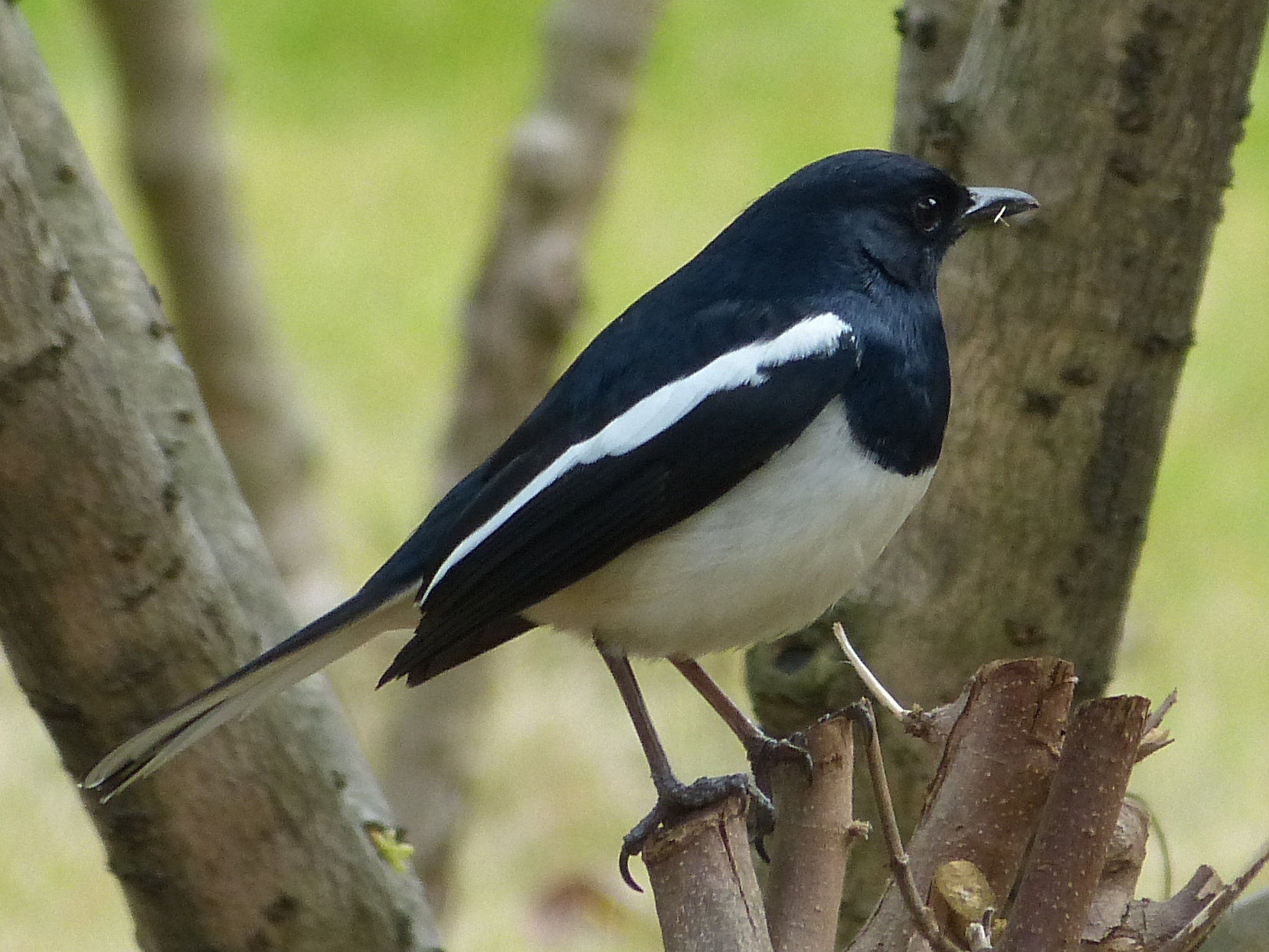
Oriental Magpie-Robin

Oriental Magpie-Robin. A common bird in South China.

My taxi experiences were inconsistent, but it was usually easier to get to a park than to get back home. Getting home from the park farthest away was easy one day and took four taxis the next day before a driver shook his head “yes” when I showed him my directions.

The phone calls to Trissie were made using a phone that she and Dave had loaned to me. I did not check into using my own phone as I assumed that it would be prohibitively expensive and/or just plain not work. So, I could communicate within China, but not with friends at home. I could receive email, but could not send messages. Facebook is banned in China, so that was not an option either. Finally, I figured out that instant message programs that work over Wi-Fi were easy and reliable, but I had not planned for their use in advance. Next time I’ll be better prepared.

Asian Koel (female)

Asian Koel (female)

All the challenges of getting around by myself were worth it, though. I enjoyed the morning birding and found one more life bird on my own, Asian Koel. It’s a rather common bird and I found two males and two females before the trip was over. Many birds I had seen only once before, like this Common Tailorbird.  I had to work hard to identify them, but even poor photos helped.  I couldn’t get both ends of the Tailorbird in the same photo, but these two together nailed the ID.

Common Tailorbird tail

Common Tailorbird tail

Common Tailorbird

Common Tailorbird front end

I also had to work very hard to get a photo of this Little Ringed Plover. I never could see the bird in the viewfinder, but had to just point the camera in the right direction and snap a photo.

Little Ringed Plover

Little Ringed Plover

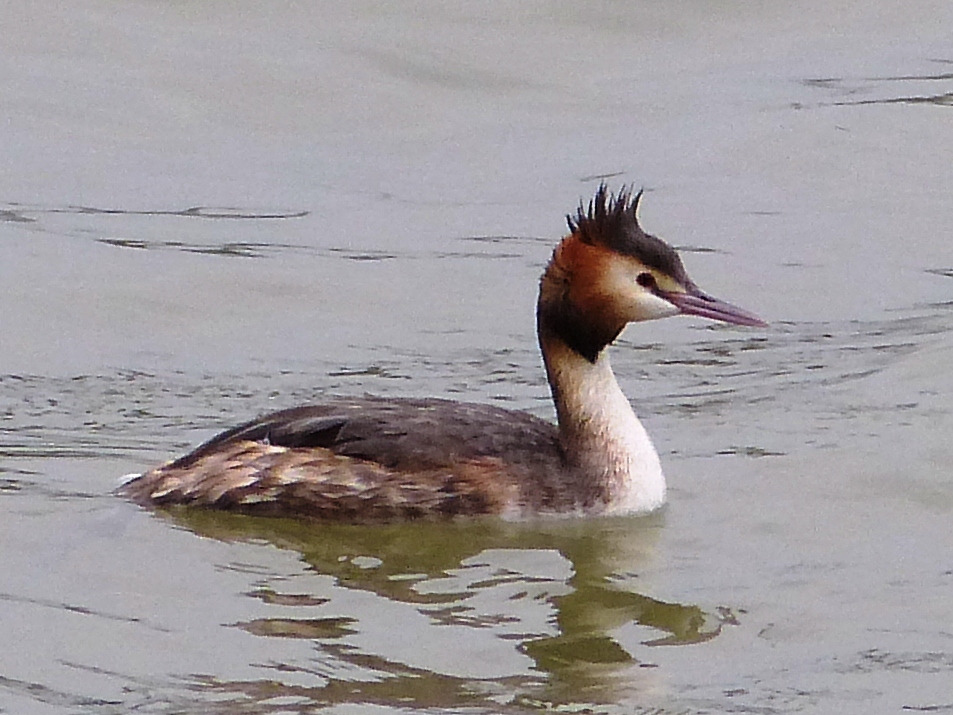
The water birds at Shenzhen Mangrove Coastal Ecological Park were easier to identify and photograph. I saw dozens of my ABA nemesis bird, Eurasian Wigeon, along with Northern Shoveler, Great Crested Grebe, Little Egret, Tufted Duck, and many others.
Great Crested Grebe

Great Crested Grebe

Little Egret

Little Egret

The last bird that I saw in Shenzhen was this lovely female Red-flanked Bluetail. I was disappointed in the park I visited that day, but when I saw this bird as I was leaving, she made the morning worthwhile!

Red-flanked Bluetail at Zhongshan Park in Shenzhen

Red-flanked Bluetail at Zhongshan Park in Shenzhen
Birding alone in a foreign country is a great way to learn birds. I was able to identify 51 species in two weeks. I noticed details (and will remember them) much better than when I had a guide. I would not want to do all of my birding alone, but it’s a great complement to a few days with a guide and I look forward to doing it again.
Red-whiskered Bulbul - a common bird, but one of my favorites.

Red-whiskered Bulbul – a common bird, but one of my favorites.


I enjoyed the experience of living in China for nearly three weeks rather than visiting as a tourist. I thank Dave and Trissie for doing so much to make it easy and comfortable for me. The dates for this part of the trip were February 24 to March 10, 2014. More photos of Amber can be seen in my Flickr set Amber – Feb/March 2014. Photos of the birds that I saw in China (including the first part of the trip) are in my Flickr set China – Feb/March 2014 (Birds).

Read Full Post »

« Newer Posts - Older Posts »