Feeds:
Posts
Comments

Posts Tagged ‘Blue-gray Tanager’

My trip to Panama last month started on a whim, as so many of my trips have. A couple of years ago, I made a birding trip bucket list; this trip wasn’t on it. I think that I’ll blame – or maybe credit – my friend, Sandra, for this one. She is a much better birder than I am and also more motivated, and some of that ambition may be rubbing off on me. Her goal is to see half of the world’s birds, now somewhere over 5,500. My more modest goal is 2,500. Sandra and I have a big trip to South America starting in November, and I really want to celebrate reaching my goal on that trip. Fearing that I wouldn’t make it, I looked for a quick and easy trip to pad my list a bit. Panama’s Canopy Camp fit the bill perfectly. I had been to the other two Canopy lodges in 2017 and had a great time. The guides are excellent, and there wouldn’t be any planning required. When I told Sandra about my plan, she decided to come with me.
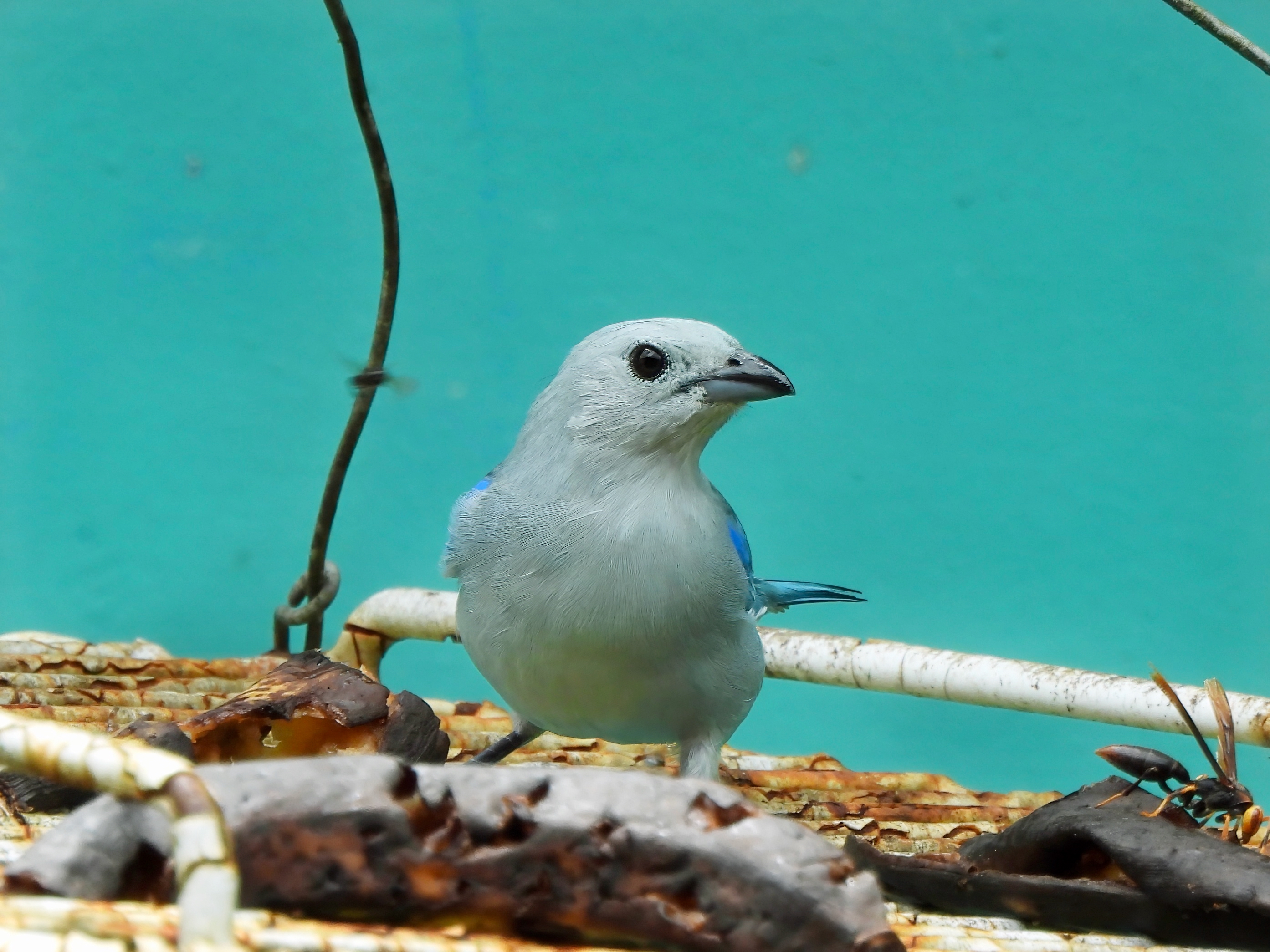
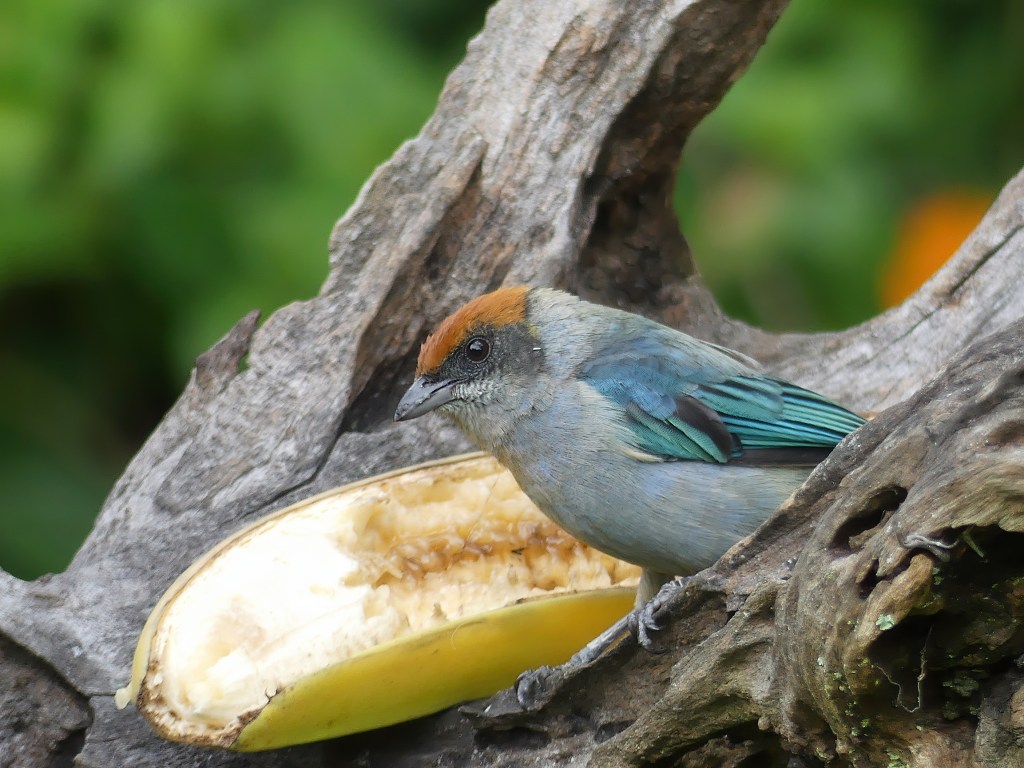
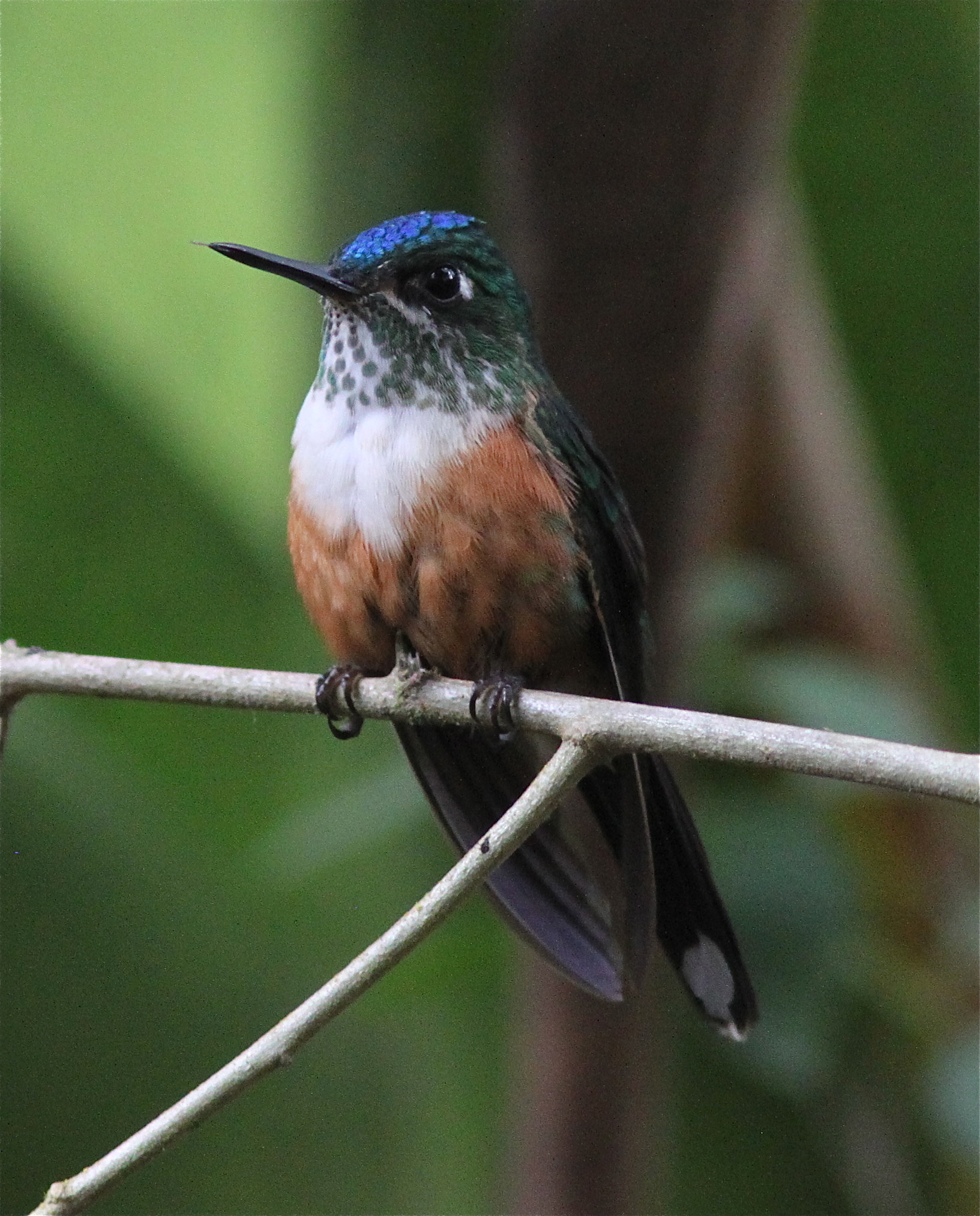
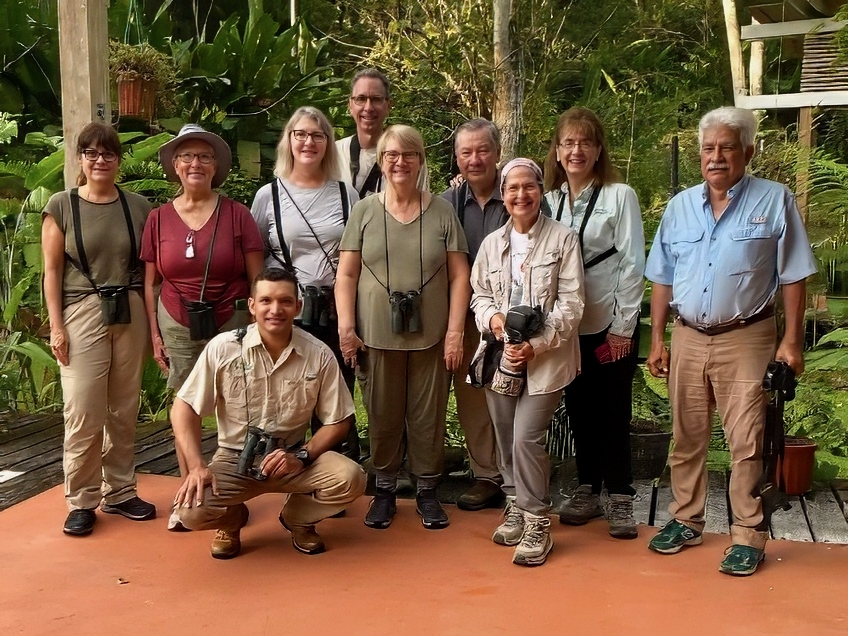
We flew to Panama City on September 15 and met our guide, Oscar Fría, and the seven other participants the following morning. We all marveled at the migrating Mississippi Kites right over our heads in the hotel parking lot—an estimated 200 birds! And then we started the three-hour drive south toward the Darién Province. The day went quickly, with a couple of stops for birding and a nice outdoor lunch where we could watch birds while we ate. Below are the Snowy-bellied and Rufous-tailed Hummingbirds, a Blue-gray Tanager, and my favorite plumaged Blue Dacnis, an immature male, that entertained us during our meal.

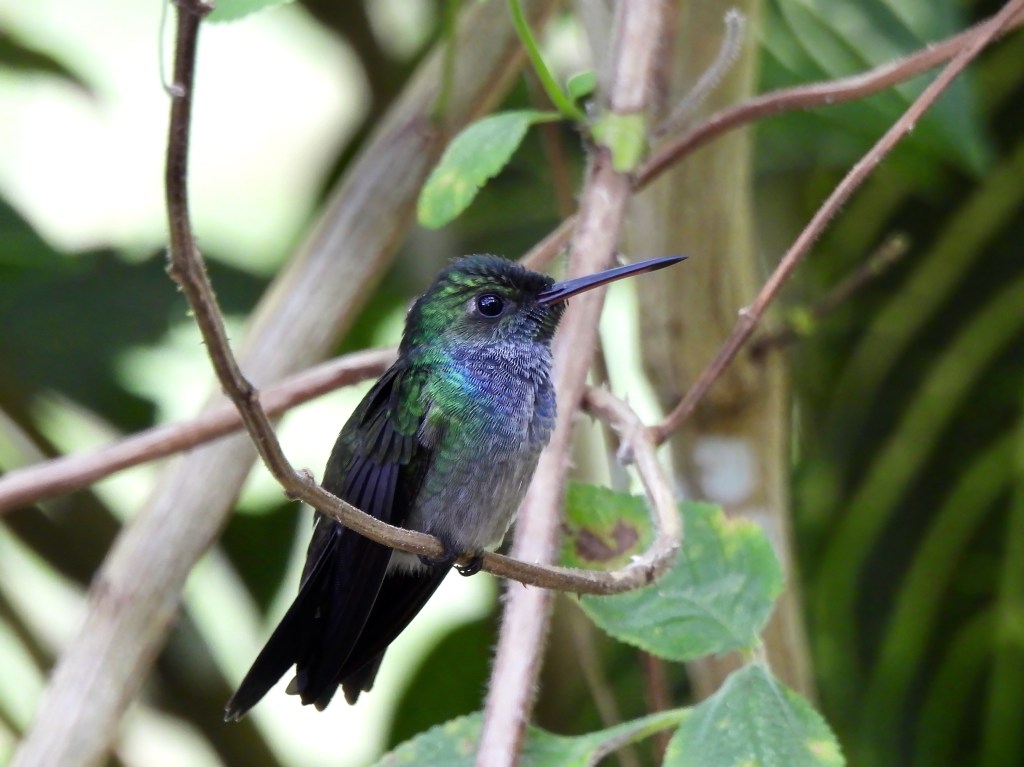
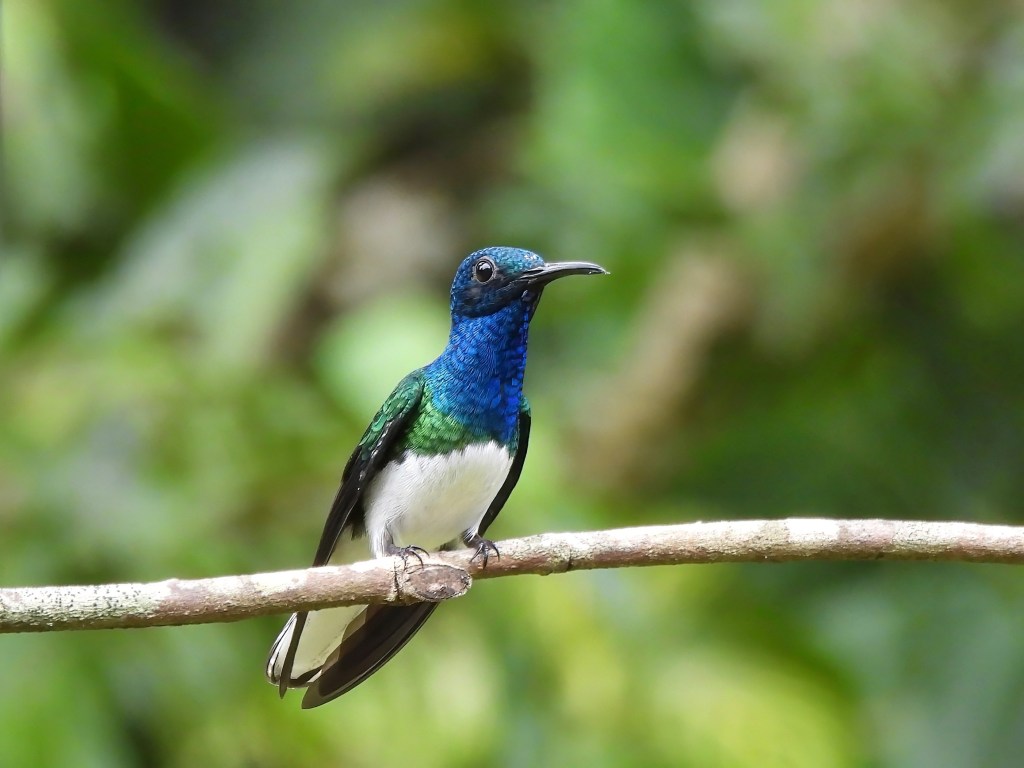
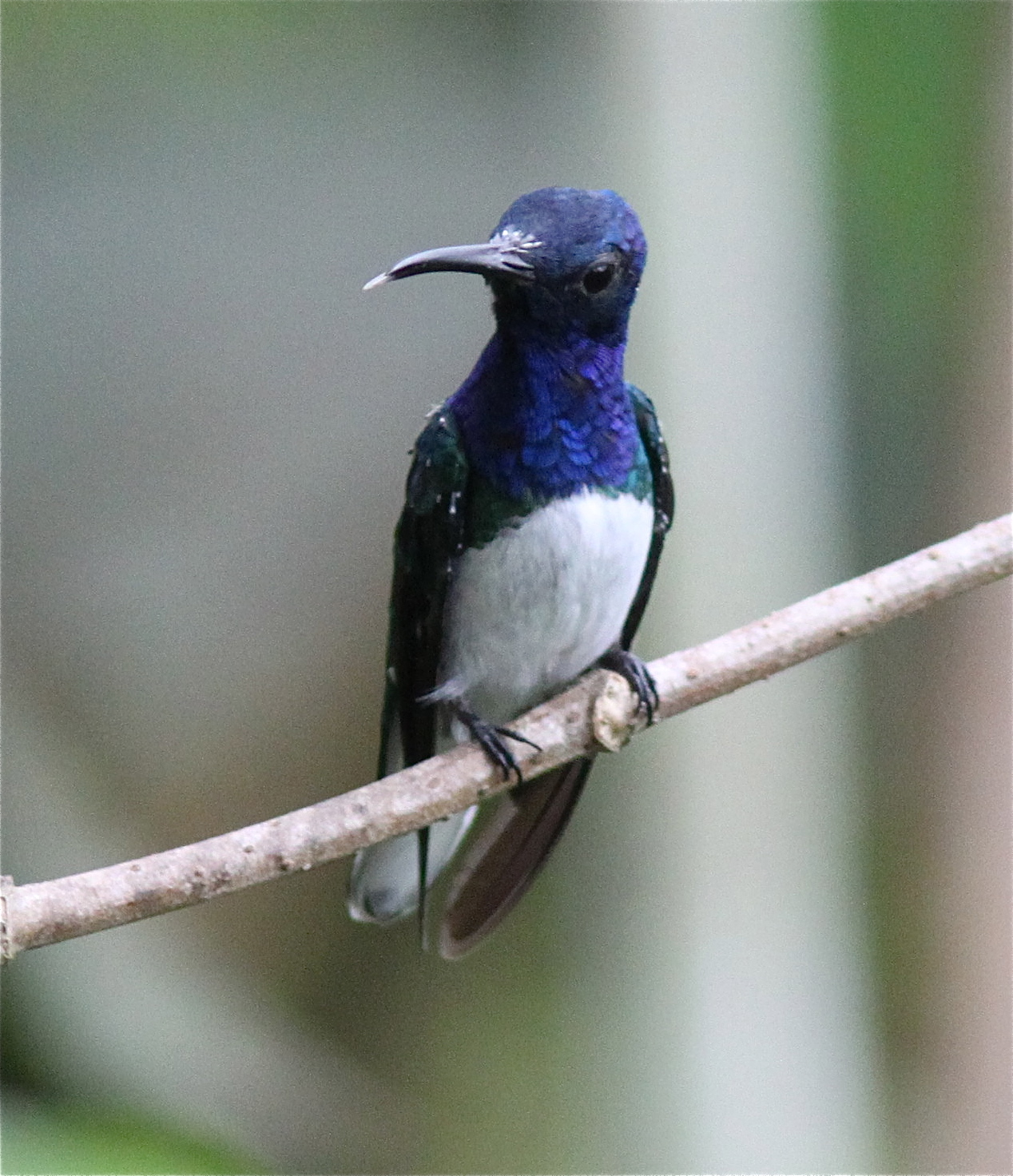
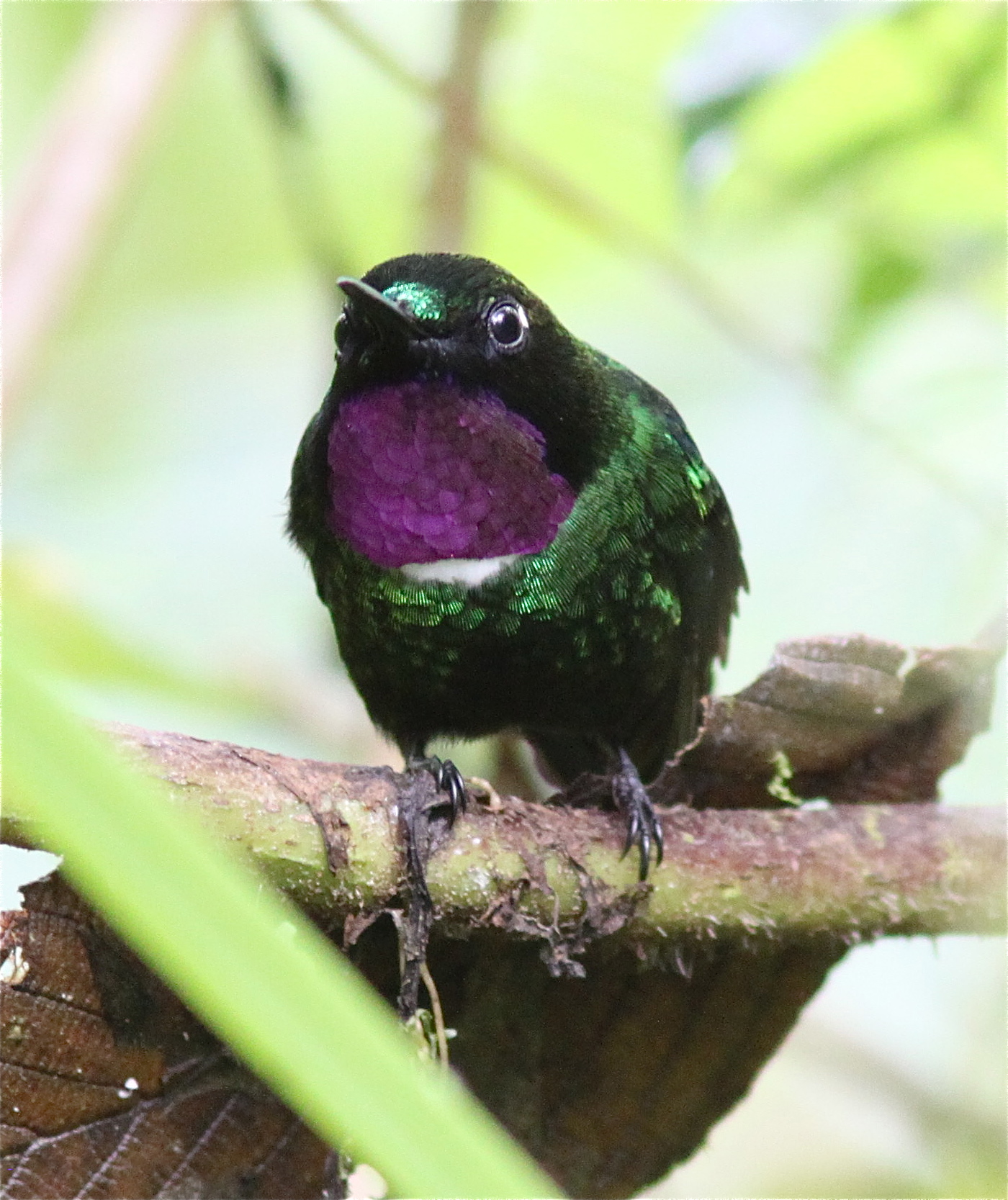
We arrived at the camp mid-afternoon, giving us just the right amount of time to get settled in our comfortable safari-style tents and explore a little. I was happy to get two life birds that first day, a Sapphire-throated Hummingbird and a Pale-bellied Hermit. In the gallery below are those birds (top row), along with a Blue-chested Hummingbird and a White-necked Jacobin that frequented the area near the deck where we ate our meals.

It was exciting to be in the Darién, described by Raúl Arias, owner of the Canopy Family lodges, as the largest and least inhabited province of Panama, the one with the biggest tracts of primary forests, the longest and widest rivers, the tallest trees, the least accessible province, the least known. Here, in this hotbed of biological diversity, the camp itself sits atop a small plateau in lowland rainforest.

We birded around camp the next morning, and I got several more life birds. One of my favorites was the lovely Gray-cheeked Nunlet that Oscar digiscoped for me.

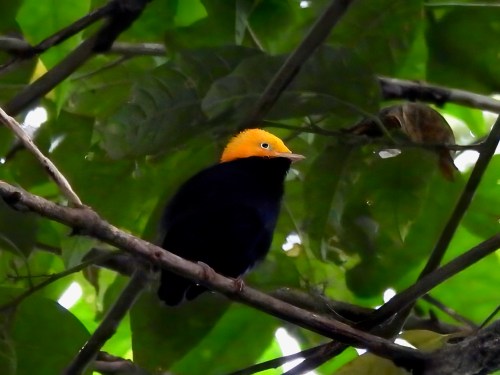
Another highlight was this Golden-headed Manakin. I missed it the first time the group saw it because I had gone back to our tent for something. Later, Sandra spotted it right from our deck!
Chestnut-headed Oropendolas were a constant presence around the camp.

I also loved this gorgeous female Black-crowned Tityra, a photo lifer.

On the 18th, we birded an area not far from the camp where more life birds awaited. I really like woodpeckers, so I was delighted to add this Golden-green Woodpecker to my life list.

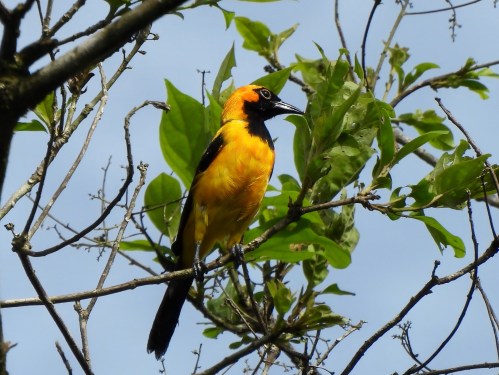
This Orange-crowned Oriole was another wonderful bird and also a “lifer.”
A female Blue Cotinga was not a life bird, but what a beauty! I couldn’t have been happier if she had been a lifer. It was my best view ever of this species and my first look at a female.

Friday was a big day–the quest for Harpy Eagle. I saw my life Harpy in Ecuador a few years ago. Read about that experience and learn more about the eagle in Ecuador 2021: Limoncocha (Part 4 of 6). But I don’t think that any birder would pass up an opportunity to see this special bird, so I was happy to have another experience with it.

While assembled at the edge of the field before we started our trek, these Black Oropendolas bounced around a bare treetop on the opposite side of the field. The oropendolas were life birds, and I was very happy to have even a distant view.

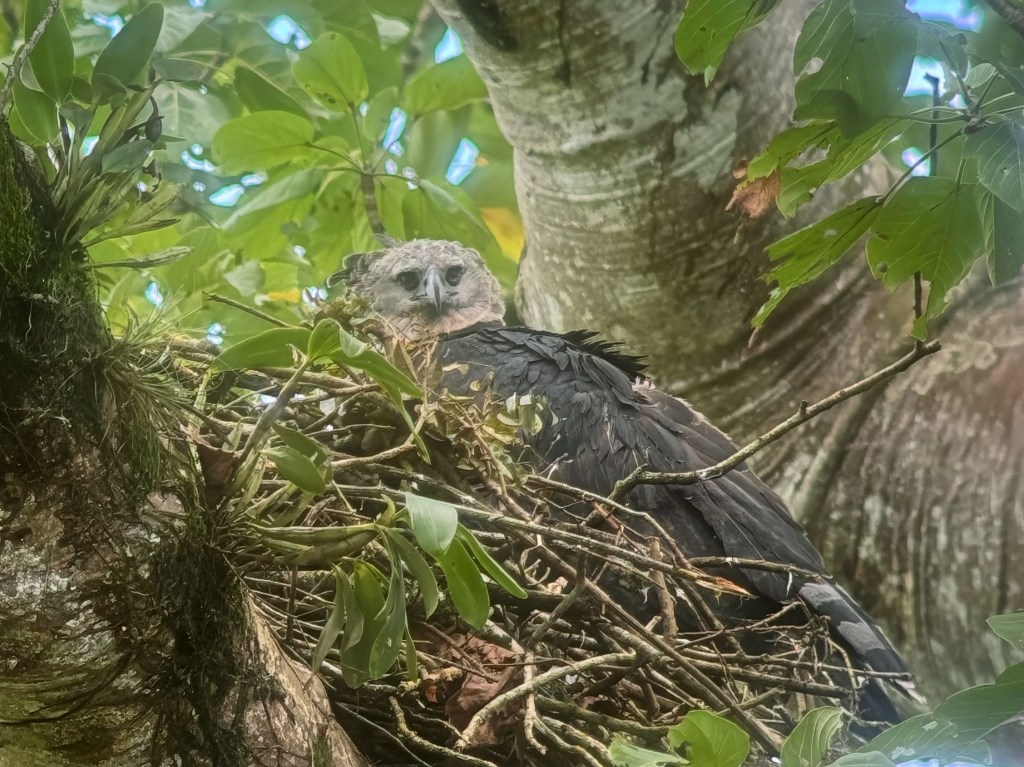
We were lucky to have a relatively easy trek to the Harpy Eagle nest, about two-thirds of a mile each way on a shaded trail through the forest. In contrast, many birders have walked for hours in the sun or ridden horses to get to a Harpy Eagle nest. The trail was not exactly easy, though, with lots of mud and exposed tree roots. I couldn’t help thinking that these birds must intentionally choose nest sites in inaccessible areas. Here is the majestic female Harpy Eagle on her nest!
Our good luck continued the next day with an outing to Yaviza Forest and nearby areas. During the trip, no one talked of our proximity to the Darién Gap, but a little research at home revealed Yaviza as the terminus of the Pan-American Highway. There were smaller roads going south, and our eBird trip report map shows that we ventured south of Yaviza for a few birding stops, including our Harpy Eagle outing. The economy of Darién seems complicated, but we were told that cattle ranching is important, and there was evidence of it everywhere. The pretty pastoral scene below with the mountains in the distance is typical of many areas we visited.

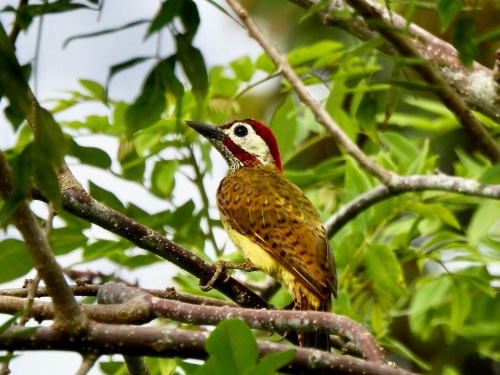
We saw some special birds this day, with the Spot-breasted Woodpecker an instant favorite. Oscar told us that it is his favorite woodpecker, and it’s easy to see why.
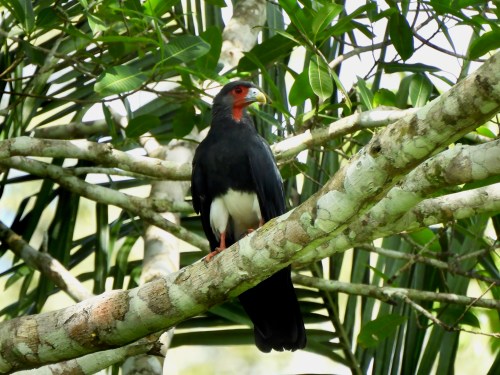
This Red-throated Caracara was another standout species that day.
One more great bird was White-headed Wren. Not only does it look quite unlike most other wrens, it’s also much larger.

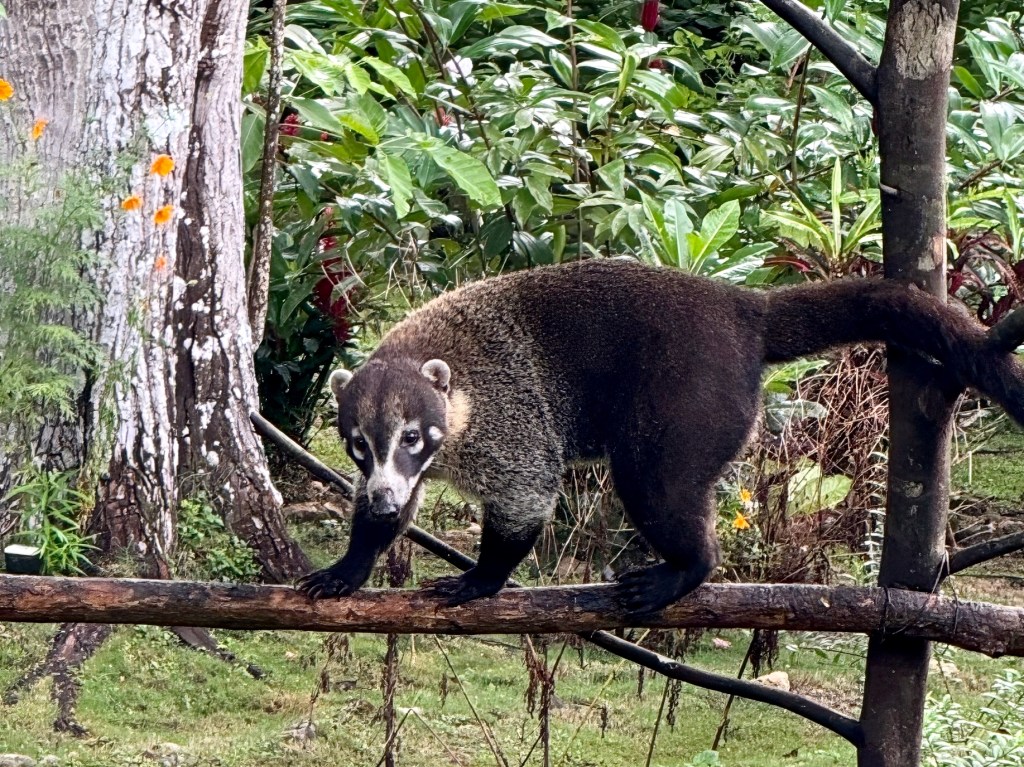
We saw a few mammals at the camp, but not many species. Oscar told us that they are scarce due to hunting for food by the local people. However, we did see White-nosed Coatis and Geoffroy’s Tamarins nearly every day.
There’s still a lot of the trip remaining. Watch for part 2. It was a fun group with some of the nicest people that I’ve ever met on a birding trip; every single person was kind and helpful. Sandra, John & April, Rob & Lynn, Gloria, Pablo, Amarilys, it was a delight sharing this adventure with you. Oscar was a great guide, and the Canopy staff was outstanding. Birding trips are about more than just birds, and these wonderful people made this one of my favorite trips.
Read Full Post »

I got one more day of birding in Ecuador than we had originally planned because it didn’t take an entire day in Quito for a Covid test. Xavier had been able to find a doctor near San Isidro who was willing to do the test for us. We met him on the side of the road, I spit in a cup and gave him $65.00, and the next day I had my admission ticket for the plane home – an email with my negative Covid test.

We left San Isidro early on Monday, May 3. Xavier headed back to Quito to prepare for his next tour. Francisco and I also headed towards Quito, but we stopped at Antisana Ecological Reserve, about 60 miles from Quito, for my last day of birding. Antisana volcano is the fourth highest in Ecuador at 18,875 feet. It is surrounded by the ecological reserve which was created in 1993 to protect the unique and fragile flora and fauna. The habitats of the reserve range from mountain forests to grasslands. Below is a photo of Antisana that I took a couple of days earlier from San Isidro.

Officially, Francisco was our driver for the trip, but he was actually so much more. He had done countless things to make the trip easier for me from providing tech support for all my camera questions and problems to helping me get my rubber boots on and off. Francisco was warm, kind, smart, and a good birder, so I was happy to spend the day with him.

We got our first target, Red-crested Cotinga, right away (photo above). Next we went to Restaurante Tambo Condor for a cup of hot tea and hummingbirds. We would return a bit later for a delicious lunch. This is a wonderful place to see the hummingbird with the best name ever, Shining Sunbeam.

We continued on to higher elevations and found more new birds starting with a Black-chested Buzzard-Eagle, a life bird for me.

A couple of pretty Black-winged Ground Doves gave me another bird for my life list.

There were quite a few small birds in some areas. Sometimes I got confused, but I just tried to take as many photos as possible. Weeks later, I had a delightful surprise when I was processing my photos and discovered the Brown-backed Chat-Tyrant below. It was not on my eBird checklist for that day’s birding, but, obviously I had seen the bird, so it was fair to add it to my life list.

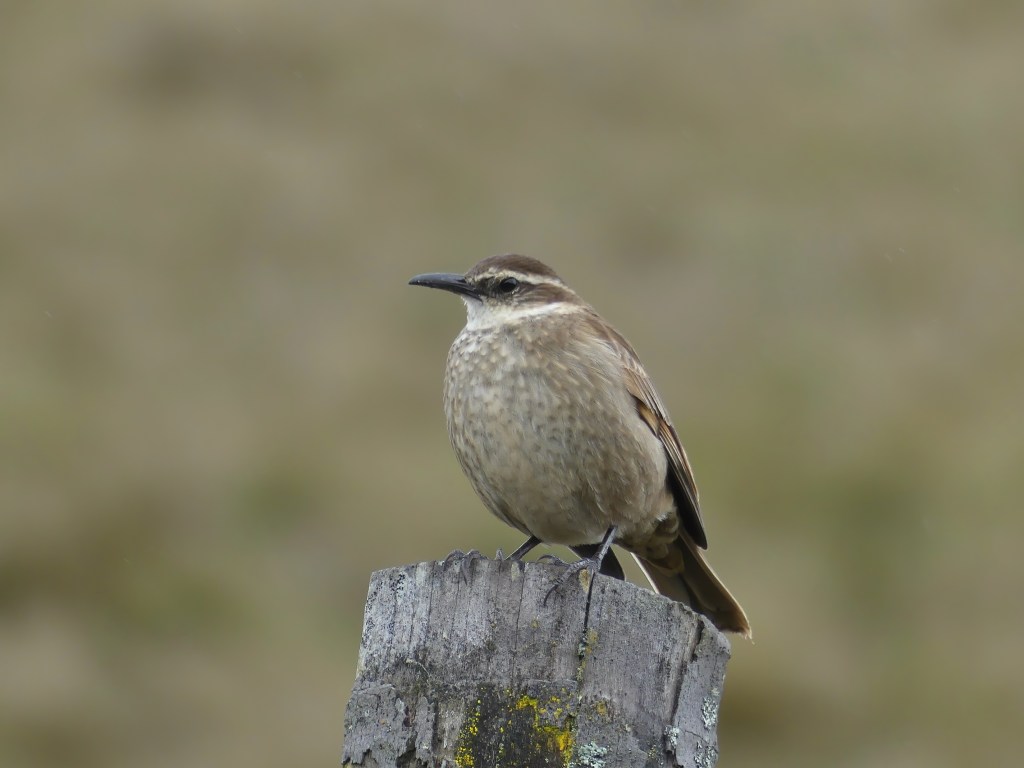
Stout-billed Cinclodes (below) was a common bird at Antisana. My lifer had been on my earlier trip in 2013 at Papallacta Pass which has some similar habitat.

This is the bird that surprised me the most by how beautiful it is – Carunculated Caracara. We saw several individuals walking around in the grass close to the road. This raptor of the high Andes occurs only in Ecuador and southern Colombia. The individual in my photo below is an immature bird.

Our last bird of the day was Andean Gull. I really like gulls so I was happy to see several of these beautiful birds in the road ahead. They were shy, though, and we were not able to get very close. The photo below is highly cropped. We had wanted to continue on to the lagoon where several more potential life birds awaited, but the road was closed a few miles before the lagoon.

On our way back down the mountains, we saw this White-tailed Deer. Yep, Odocoileus virginianus, the same species that we have here in North Carolina. Its native range is throughout much of North America, through Central America, and south to Bolivia.

We arrived at Puembo Birding Garden (PBG) mid-afternoon just in time for me to watch a few more birds in Mercedes’ lovely garden and rest a bit for my trip home the following day.

During my 15 days in Ecuador, I saw a total of 246 species. I thought that was good considering that this was an easy trip with no hiking on strenuous mountain trails. This number includes 150 species that were new for Ecuador bringing my Ecuador total to 356. And, most importantly, I got 108 life birds.

Below is one of the last birds that I saw in Ecuador, a Scrub Tanager, which I did not see anywhere other than the PBG garden.

My trip was amazing and I can’t wait to go back. I’ve already told Xavier that I intend to return next year. I can’t think of anything that Xavier or Francisco could have done to make this experience more fun. I highly recommend Neblina Forest for Ecuador and other South American nature trips. You won’t be disappointed. Below, a pretty Blue-gray Tanager, a bird that I guarantee you will see in Ecuador.

Read Full Post »

I really liked Sachatamia Lodge, but I think that dinner the second night made me sick. They tried to accommodate my request for low-carb meals by serving me asparagus in a rich cream sauce instead of the spaghetti main course. I had diarrhea that night which forced me to stay at the lodge the next morning while the others went to see the Long-wattled Umbrellabird.

Sachatamia Lodge

The bird feeding area at Sachatamia Lodge. Photo by Jeannie Mitchell.

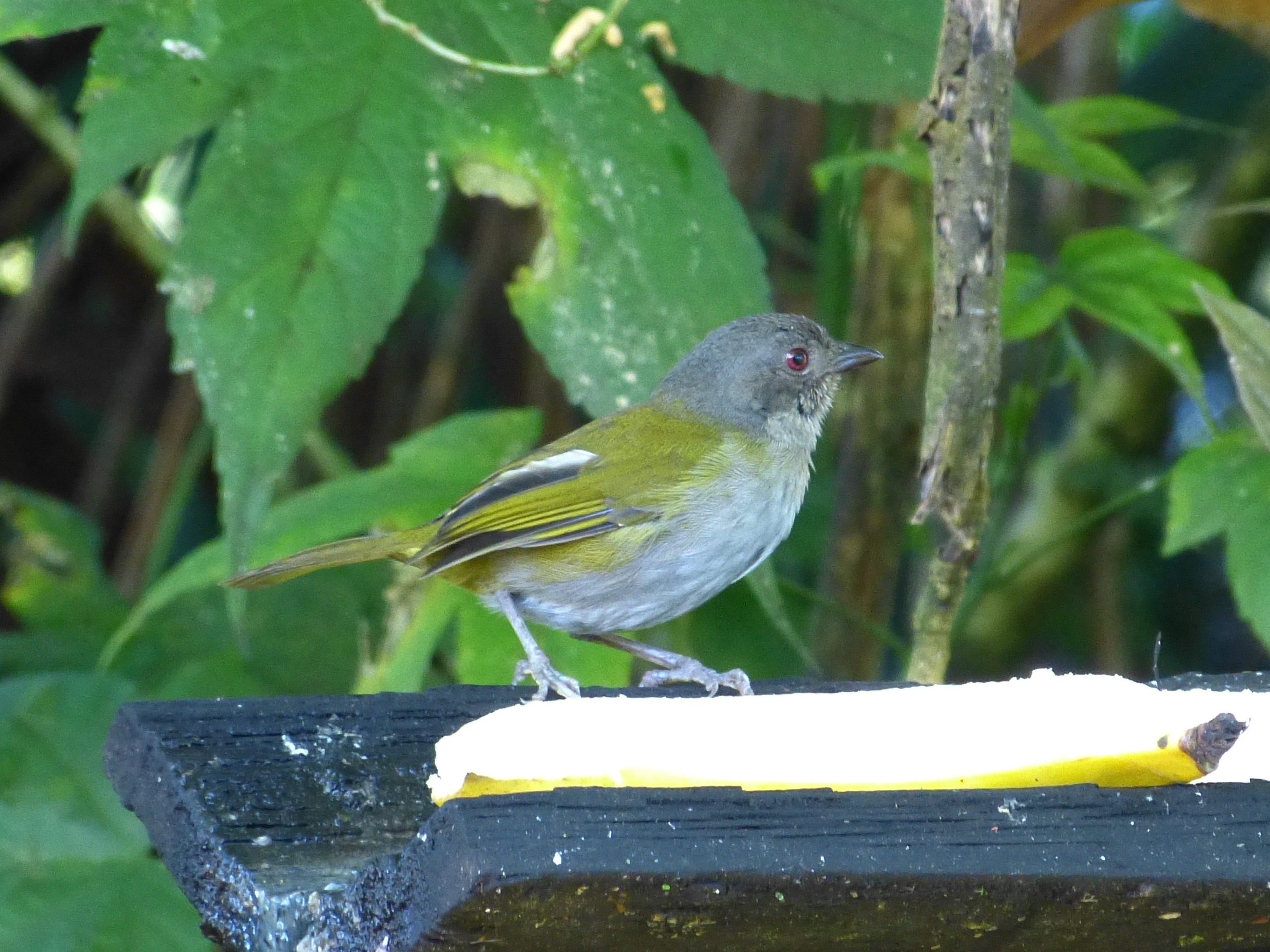
I had tea and crackers, got some extra sleep, and spent a couple of hours alone at the feeders. I loved the luxury of indulging in long lingering looks at the gorgeous tanagers. I also saw a just-fledged Buff-throated Saltator right in front of the entrance to the lodge.

Buff-throated Saltator

Buff-throated Saltator fledgling

Buff-throated Saltator and

Buff-throated Saltator and Blue-gray Tanager

Blue-gray Tanager

Blue-gray Tanager

Golden Tanager

Golden Tanager

Dusky Bush-Tanager

Dusky Bush-Tanager

Strong-billed Woodcreeper

Strong-billed Woodcreeper

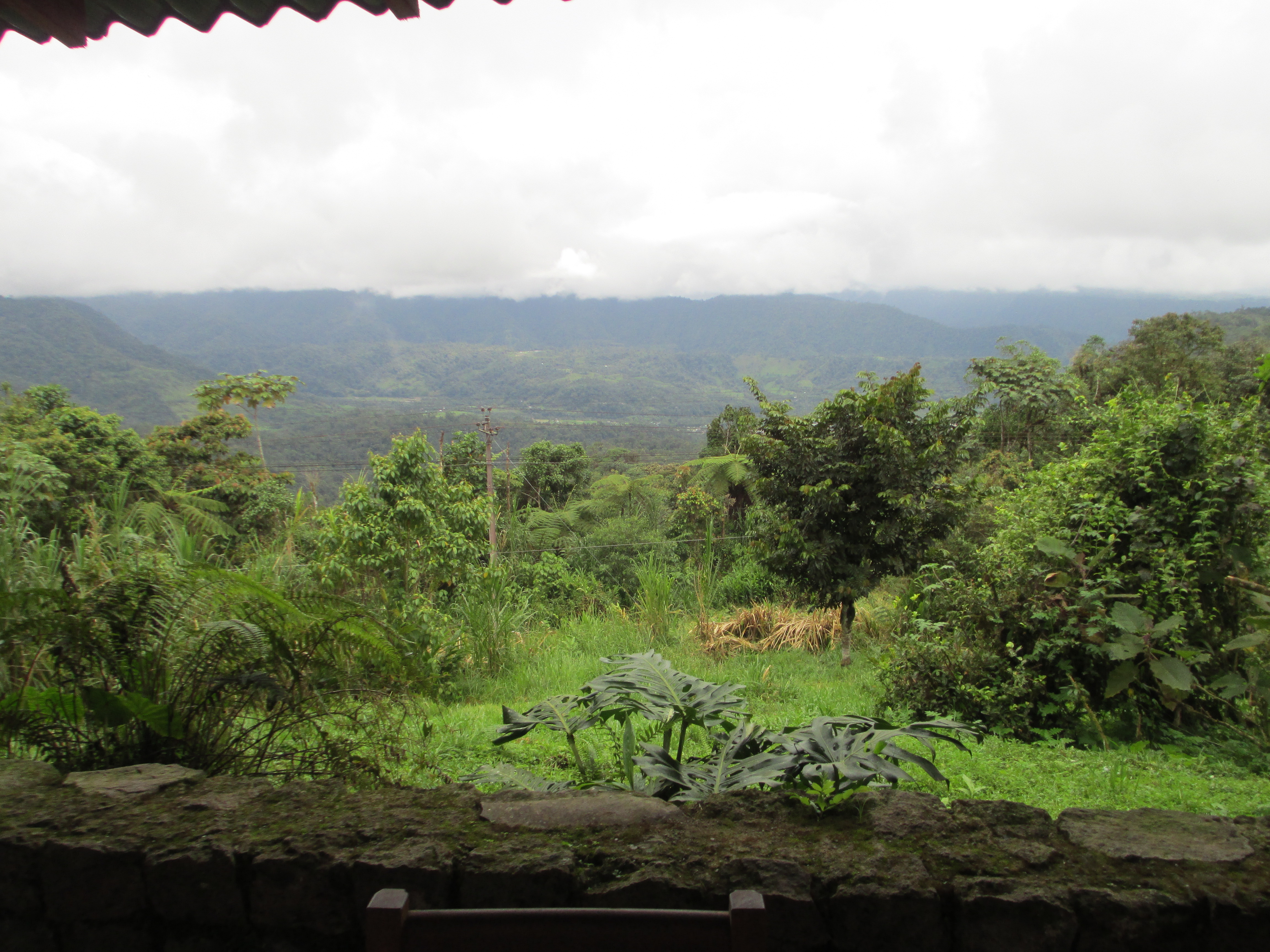
The rest of the group returned for lunch and Jeannie took this photo of the view from the lodge.

View from Sachatamia Lodge

The view from Sachatamia Lodge

Jeannie got photos of Golden-naped Tanagers and hummingbirds, too.

Golden-naped Tanagers

Golden-naped Tanagers. Photo by Jeannie Mitchell.

Violet-tailed Sylph (female)

Violet-tailed Sylph (female). Photo by Jeannie Mitchell.

Booted Racket-tail

Booted Racket-tail. My favorite hummer of the trip! Photo by Jeannie Mitchell.

White-necked Jacobin

White-necked Jacobin. Photo by Jeannie Mitchell.

That afternoon we headed to San Jorge de Tandayapa Lodge where we spent the night after birding the area.

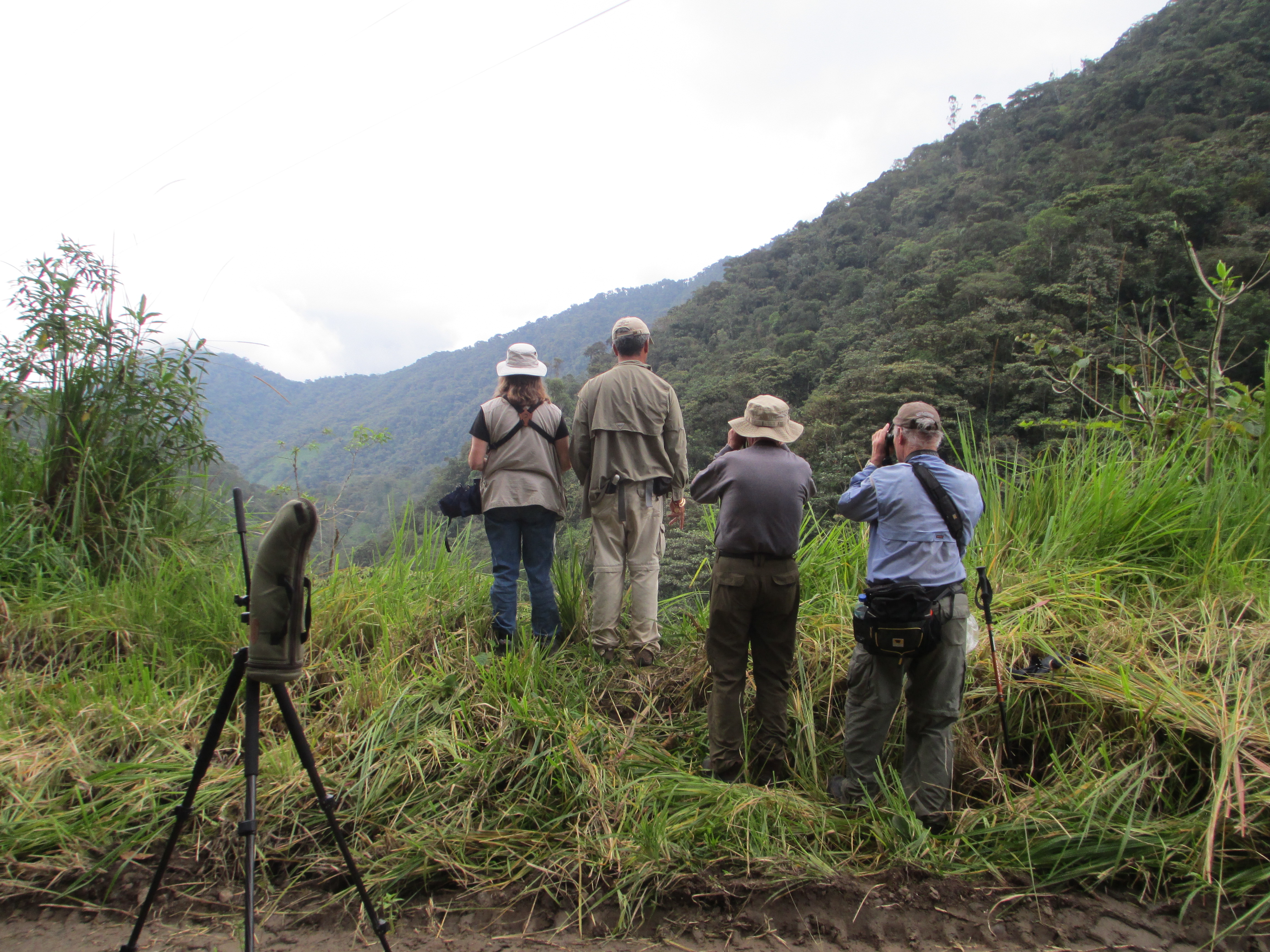
Birding in the Tandayapa Valley

Birding in the Tandayapa Valley. Photo by Jeannie Mitchell.

Dinner at San Jorge de Tandayapa Lodge

Dinner at San Jorge de Tandayapa Lodge. Photo by Jeannie Mitchell.

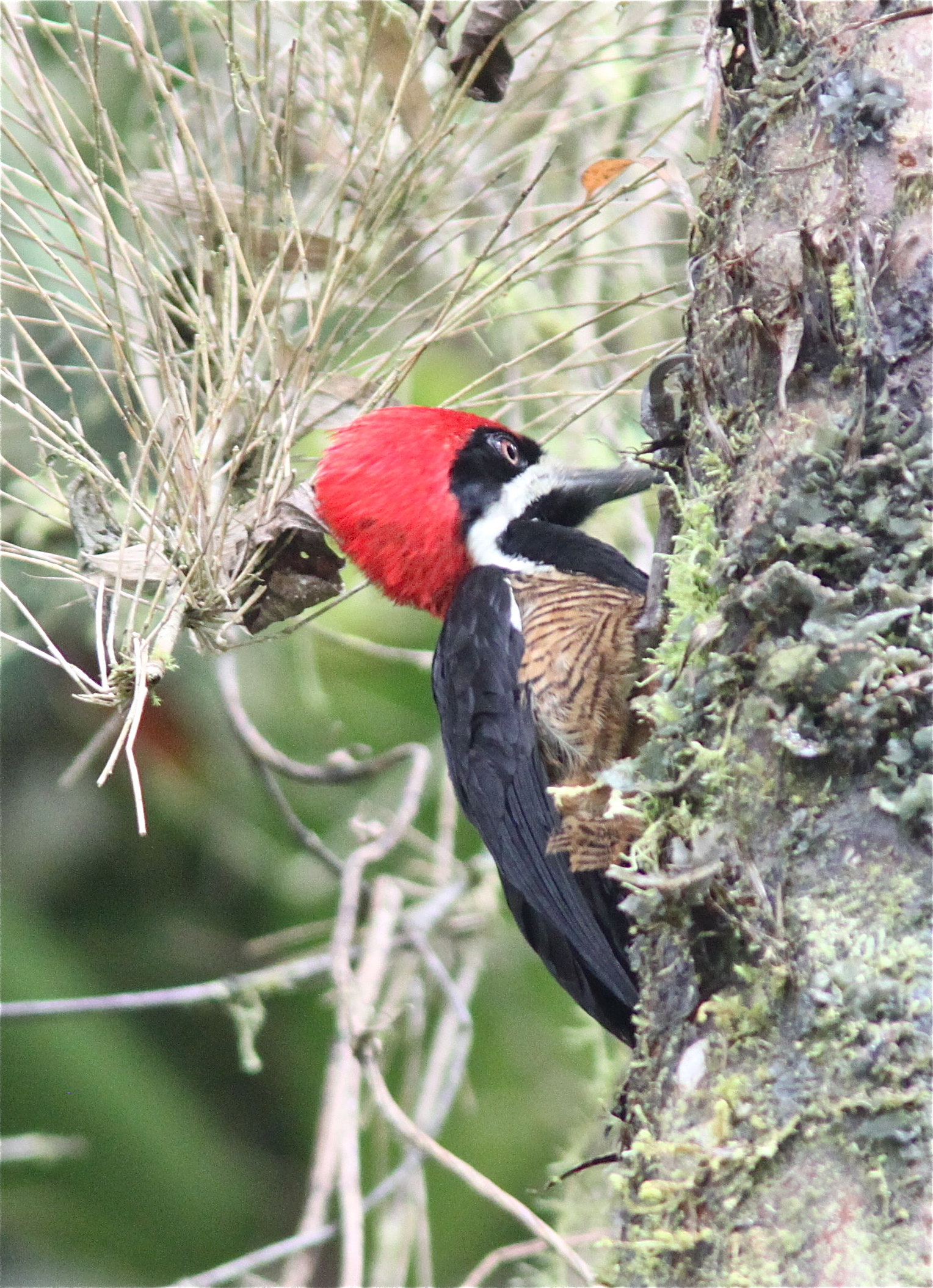
Day five brought more wonderful birds in the Tandayapa upper valley, including this Powerful Woodpecker and the hummingbirds below.

Powerful Woodpecker

Powerful Woodpecker. Photo by Jeannie Mitchell.

Collared Inca

Collared Inca. Photo by Jeannie Mitchell.

Gorgeted Sunangel

Gorgeted Sunangel. Photo by Jeannie Mitchell.

We did not see many butterflies during any part of the trip, but there were a few like this beauty.

Butterfly

Photo by Jeannie Mitchell

IMG_7125

Photo by Jeannie Mitchell

IMG_7126

Photo by Jeannie Mitchell

The drive back to Quito for the night was quite interesting. While searching for a Giant Hummingbird, we met these two girls in a small village. The oldest girl appeared to offer us (or just show?) a bird nest with an egg in it. Ted, fluent in Spanish, taught Jeannie how to say “no más nidos” (no more nests) which she sweetly said to the girls. Jeannie then gave them a small toy that she had just bought and the girls appeared to put the nest back where they found it.

Read Full Post »