December 3 was a long and wonderful day that included a safari and some of my favorite birds of the trip. We spent the morning birding near Nagarahole National Park and I got my life Flame-throated Bulbul, a beautiful bird that Bopanna had promised me when we were planning the trip.

I also got my life White-bellied Treepie that morning. I have loved treepies ever since a Rufous Treepie ate from my hand. For that story, see Northern India 2014 (Part 1 of 2). The photo is near the end of the post. White-bellied Treepies are much more shy than Rufous Treepies and I was was not able to get a photo of my lifer. I took the photo below two days later when we were lucky to see this captivating species again.

Crimson-backed Sunbirds were the most cooperative species of the day and I was very happy to watch about half a dozen of these colorful birds as they fed in the vegetation near me. Their irridescence reminds me of our hummingbirds of the Western Hemisphere as they appear to change color in response to the light.

Later that morning, we spent a little time at a shallow river with large rocks that allowed us to walk out into the river. We decided that it was the perfect place for our trip group photo. I will always remember that serene and beautiful spot.

We had lunch at Devi villa, a lovely homestay near Nagarahole National Park. We enjoyed watching birds in the yard from the dining area. An adorable Vernal Hanging Parrot conveniently perched atop a closeby tree. Why is it called a hanging parrot? Because it has the unique ability to sleep upside down. There are 13 species of these tiny 5-1/2 inch green birds, all found in southeast Asia.

We were also treated to good views of a pretty Golden-fronted Leafbird in the lush yard.

A young English woman traveling alone was another guest at the homestay, so we invited her to sit with us for lunch. We enjoyed interesting conversation about everything from her desire to see wild tigers to Mongolia (she has been, I have a trip scheduled). After lunch, Bopanna picked some lychee fruits for our new friend that she wanted very much.

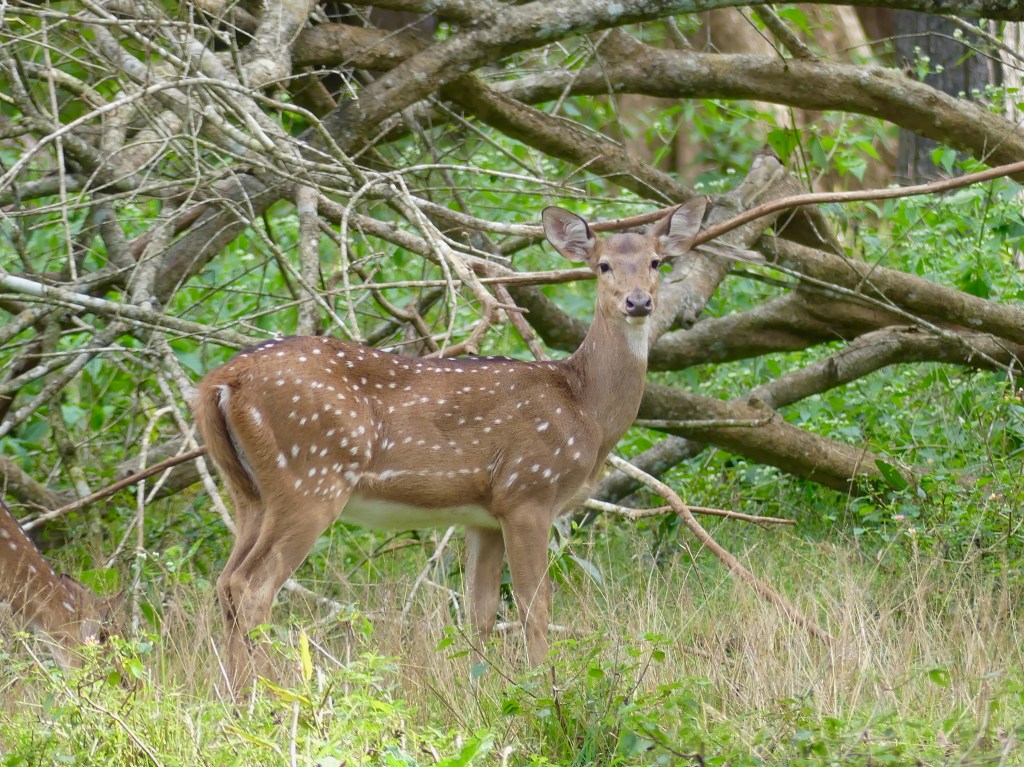
Our afternoon safari at Nagarahole National Park was a lot of fun. The mad dashes in an open jeep on dirt roads did not result in the tiger sighting that everyone wanted, but a safari wouldn’t be the same if the drivers didn’t try. We saw other animals including one of my favorites, Indian Spotted Deer (Chital), and Sri Lankan Sambar Deer.

We saw many elephants of all sizes and ages on the safari. Here’s a big guy with some nice tusks.

We saw birds, too. The Crested subspecies of Changeable Hawk-Eagle was especially nice to see. I had seen the “Changeable” subspecies in 2014, so this was not a life bird, but a new subspecies.

The sunset was beautiful as we left the park, a fitting end to a wonderful day.

I got six more life birds on December 4 and we continued to enjoy birding from our little balcony. The Malabar Gray Hornbill below was just across the street.

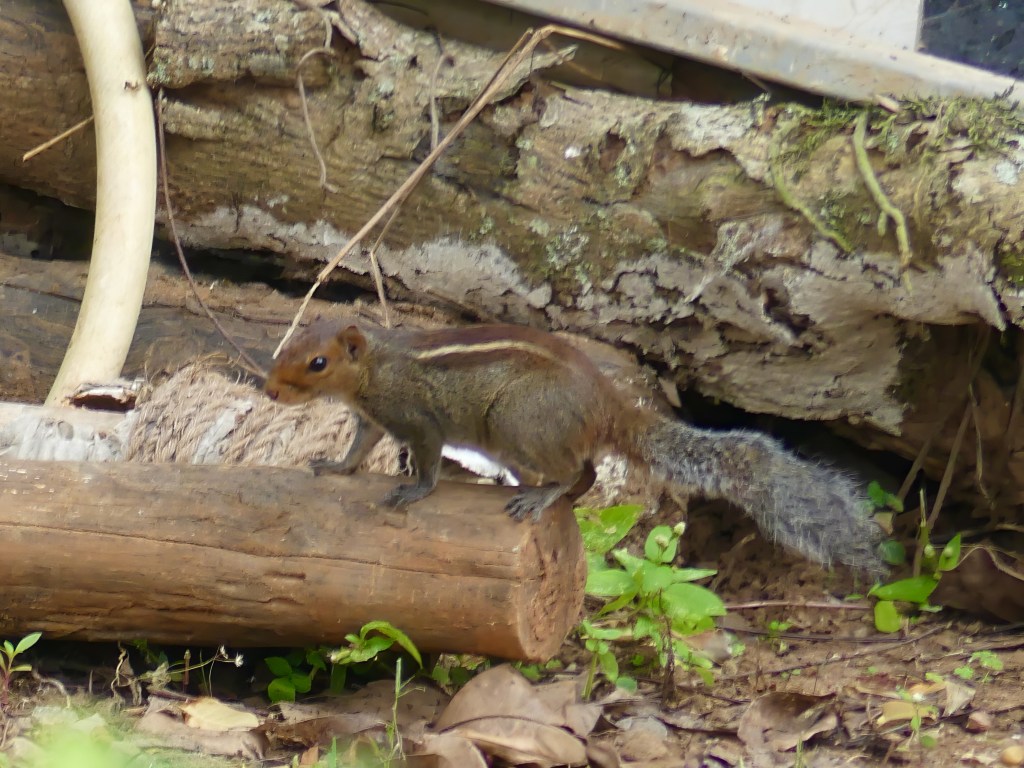
The Jungle Palm Squirrel in the yard below our balcony had entertained us all week and it finally held still long enough for me to get a photo.
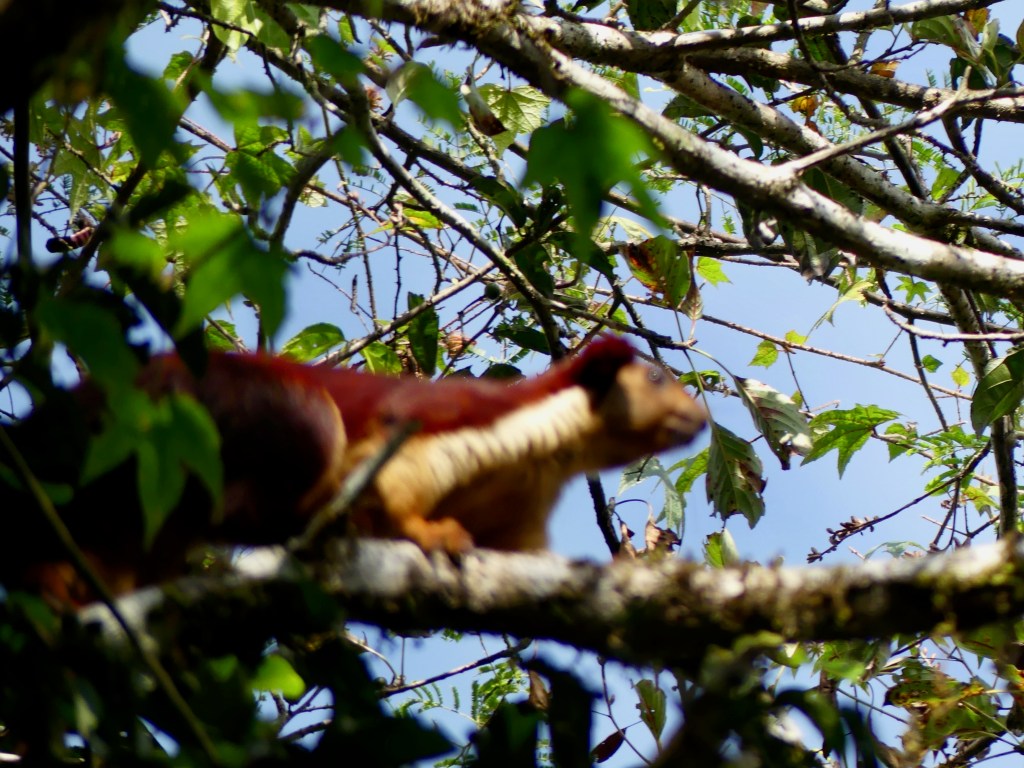
Our last day of birding with Bopanna on December 5 arrived much too quickly. In addition to four more life birds, a highlight that day was another Indian Giant Squirrel. We had seen one on the safari at Nagarahole NP a few days earlier, but this one was slightly more cooperative. I became fascinated with giant squirrels when I first saw a Black Giant Squirrel in China a few years ago, but it was so shy and quick that I didn’t get any photo at all. With this Indian Giant Squirrel, you can actually get an idea of what it looks like if you put my two photos together.

My last life bird in Coorg was Dark-fronted Babbler, a very skulky bird that took significant time and effort for me to see. This brought my total number of life birds for the week to 52, an impressive number I thought because this was not my first trip to India. Also, Linda and I had found 16 life birds for me on our own the week before near her home south of Bangalore. Bopanna was able to help me see so many birds because of his intimate knowledge of the area and its birdlife. Every day, he had me generate a new eBird target list which he used to decide which birds to look for and where to search for them.
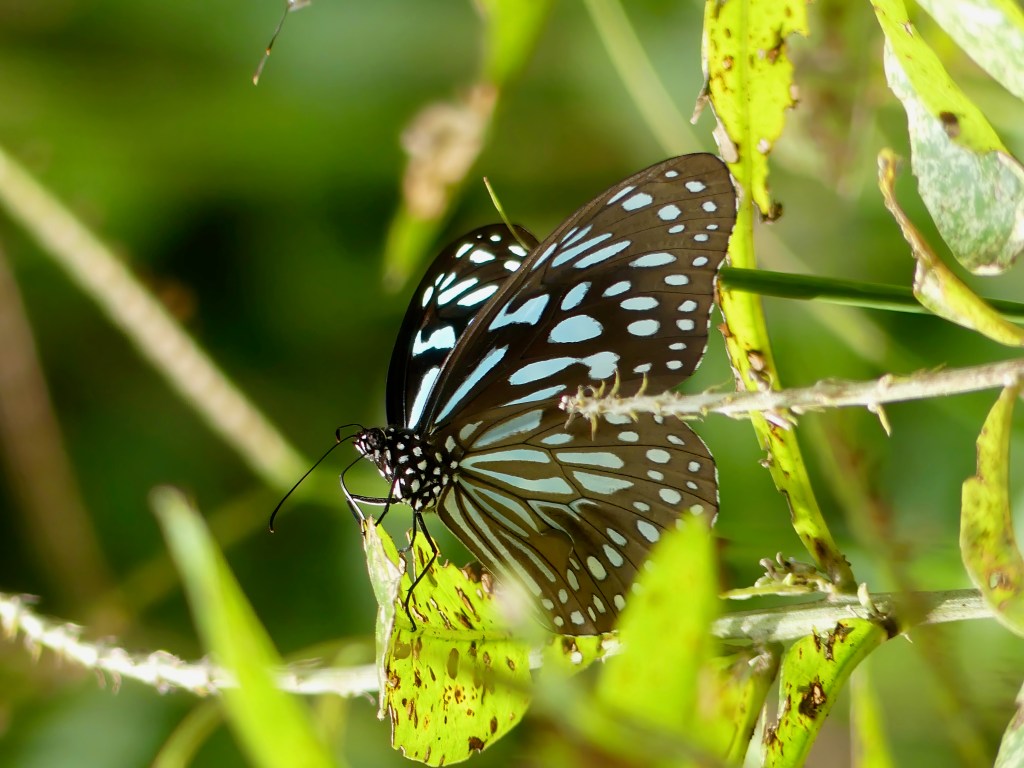
On our last afternoon, there were no more reasonable target birds, so Bopanna gave us some time to enjoy and photograph butterflies. Millions of butterflies of several species migrate to the Western Ghats every winter. It was spell-binding to see plants covered in these beautiful winged creatures.

The most numerous species was also my favorite – Dark Blue Tiger Butterfly. Below is a close-up view.
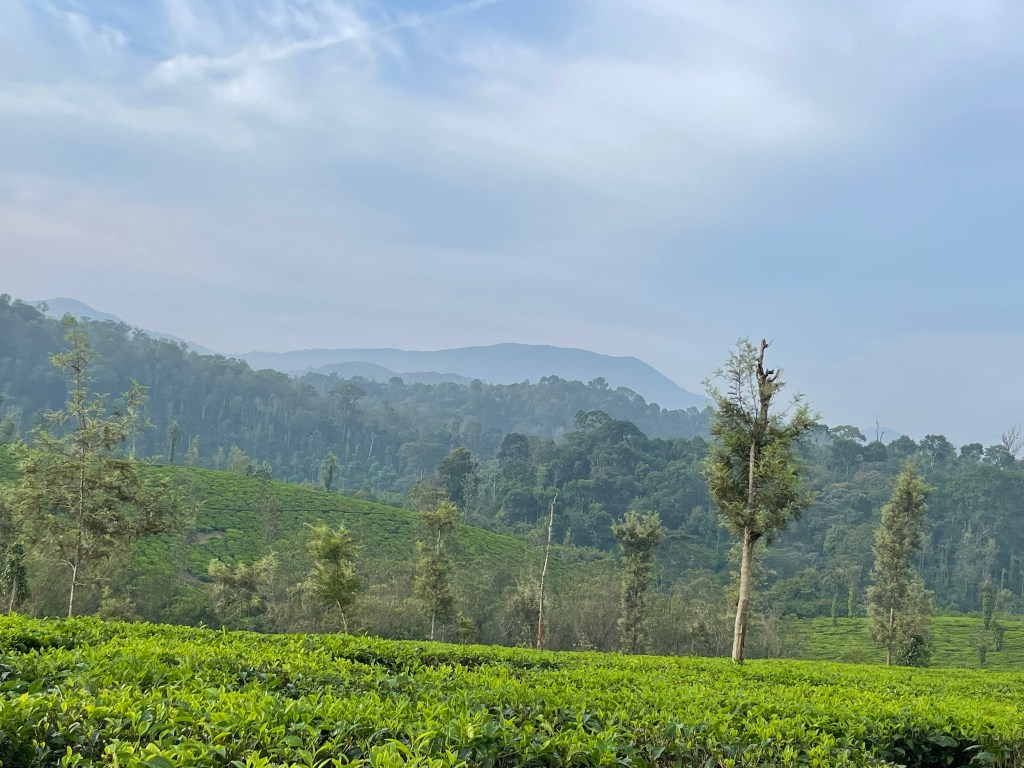
The Coorg district of the Western Ghats is a wonderful location for birding and nature watching amidst coffee plantations and sacred forests with wonderful landscape every direction you look. I highly recommend a trip to the area with guiding by Bopanna Pattada. See his website, Bangalore Birding, for more information.
Our eBird Trip Report provides a listing of all species seen and all photographs by Linda and me.






 Birding for Life