Feeds:
Posts
Comments

Posts Tagged ‘Brown-headed Cowbird’

Diane and I left our hotel in Luverne, Minnesota, on Tuesday, May 30, and headed west across South Dakota. We met in SD in 2010 and both of us have birded quite a bit in the state, so we didn’t plan any stops other than at rest areas until we reached Badlands National Park.
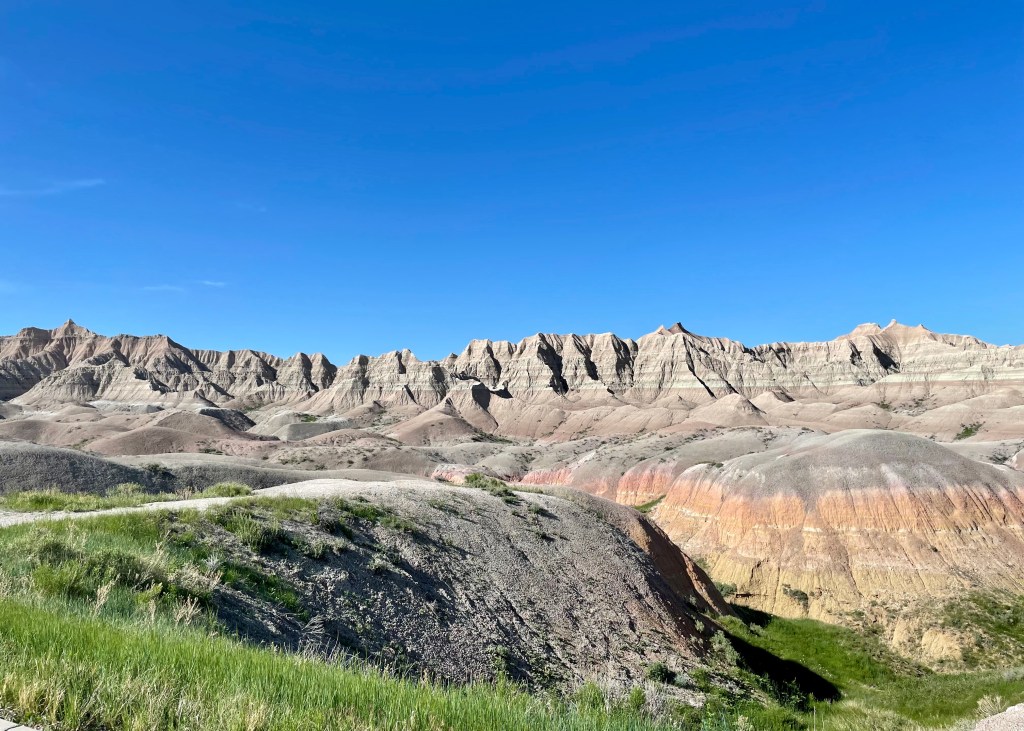
I had reviewed bird lists for the park to prepare for the trip, but I had not looked at any photos of the landscape. Thus, I was absolutely awestruck upon our arrival that afternoon. I was instantly, madly in love with this place. The only words that I can find – beautiful, dramatic, rugged – seem inadequate and my amateur photos do not do it justice. If you have been to South Dakota’s badlands, you know what I mean. If you have not been there, go! Put it on your bucket list.

The stark contrast between vast mixed-grass prairies where the buffalo still roam and extensive rock formations was very appealing to me. The section of the park depicted below reminded me of Canyonlands National Park in Utah.

Badlands National Park covers 244,000 acres. Its geologic foundation began 75 million years ago as deposits of rock built up in layers over the next 47 million years. About 500,000 years ago, erosion began as the Cheyenne and White Rivers carved their way through the landscape forming the dramatic peaks and canyons that we see today. In the photo below, the layers are especially noticeable.

Diane and I felt our attention constantly pulled between pull-overs on the side of the road to savor and photograph the landscape and the search for birds and other wildlife. We quickly learned that the secret was to get out at 5:30 or 6:00 AM and focus on wildlife first.

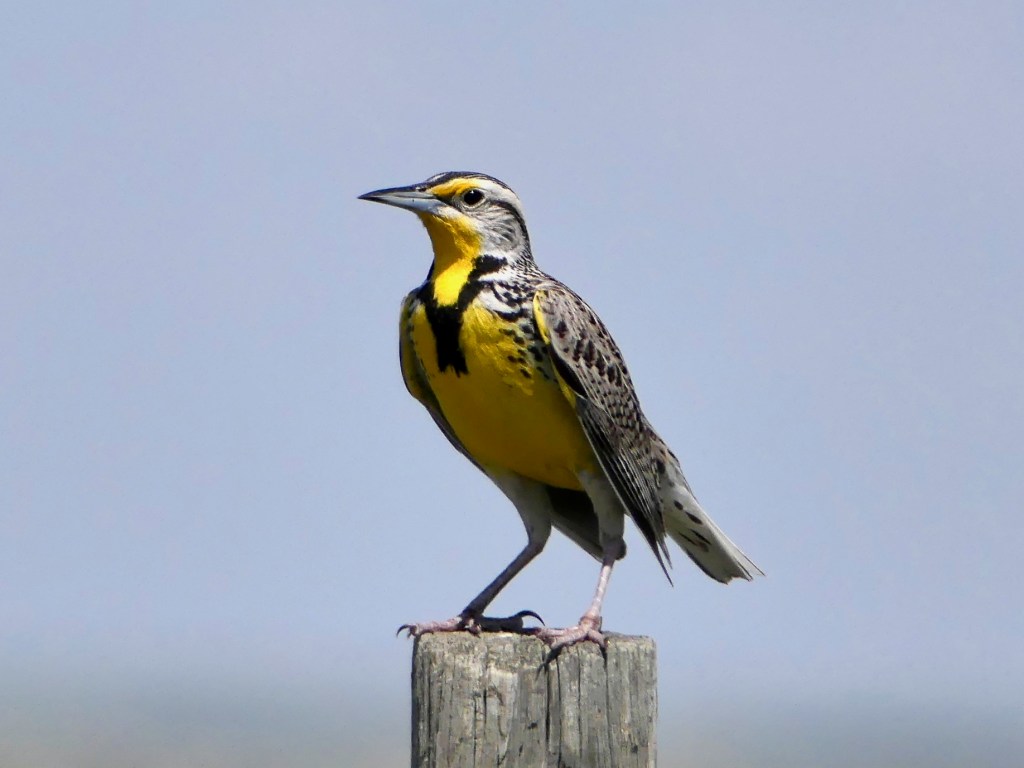
We saw many iconic species of the west with the most numerous being Western Meadowlark. Our host at the Badlands Inn called its song “the soundtrack of the badlands.” Somehow, I failed to get a photo of a meadowlark in the badlands, so here is one from an earlier trip west.
Another gorgeous western bird that we saw here (and I would see many more times during this trip) was the dapper Lark Bunting.

Birders and non-birders alike watch for other wildlife with the expected species being bison, pronghorn, bighorn sheep, mule deer, and black-tailed prairie dog.

Badlands National Park is in the heart of historic bison range. Before European settlers arrived, about 30 million bison inhabited North America, but by the late 1800’s they were nearly gone. A project to reintroduce bison to the badlands was started in the 1960’s. A major conservation achievement resulted with a healthy herd of nearly 1,200 individuals. Read more about this project and learn how bison improve the prairie ecosystem for all its inhabitants in Bringing Bison Back to the Badlands.

Like most Americans, we wanted to see our national mammal. We saw more than 100 bison with many in the distance and some right by the road.

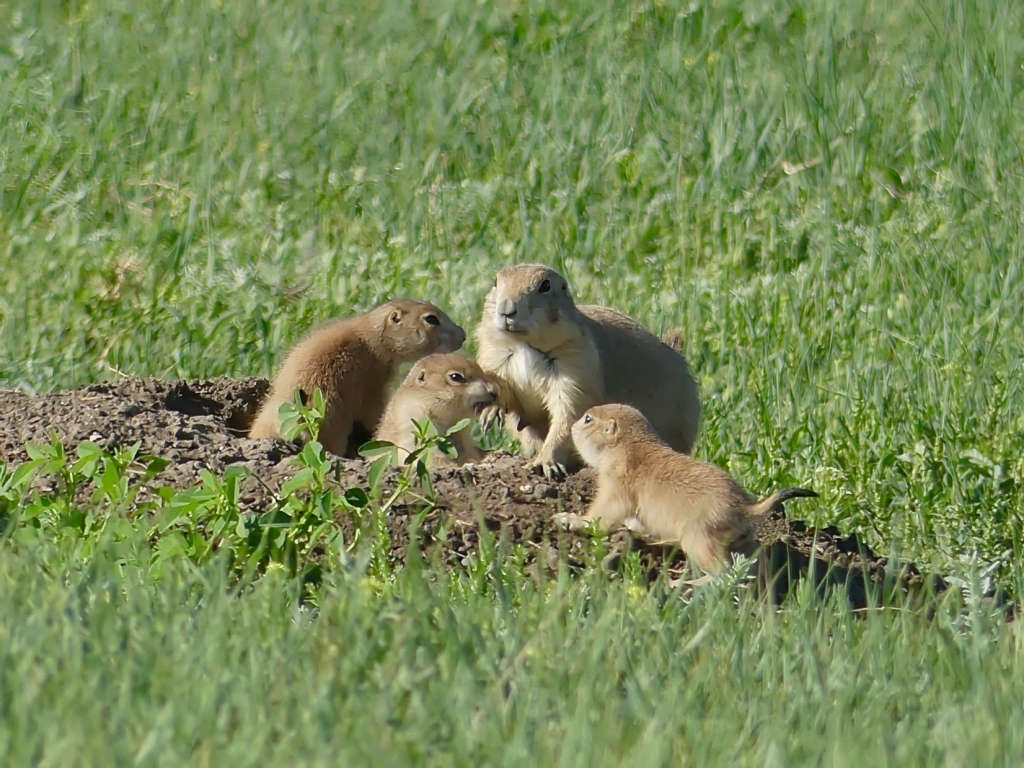
We also saw hundreds of prairie dogs. We especially enjoyed watching the families, some with as many as five babies. We called these adorable little creatures “puppies” and later learned that we weren’t far from the correct term “pups.”
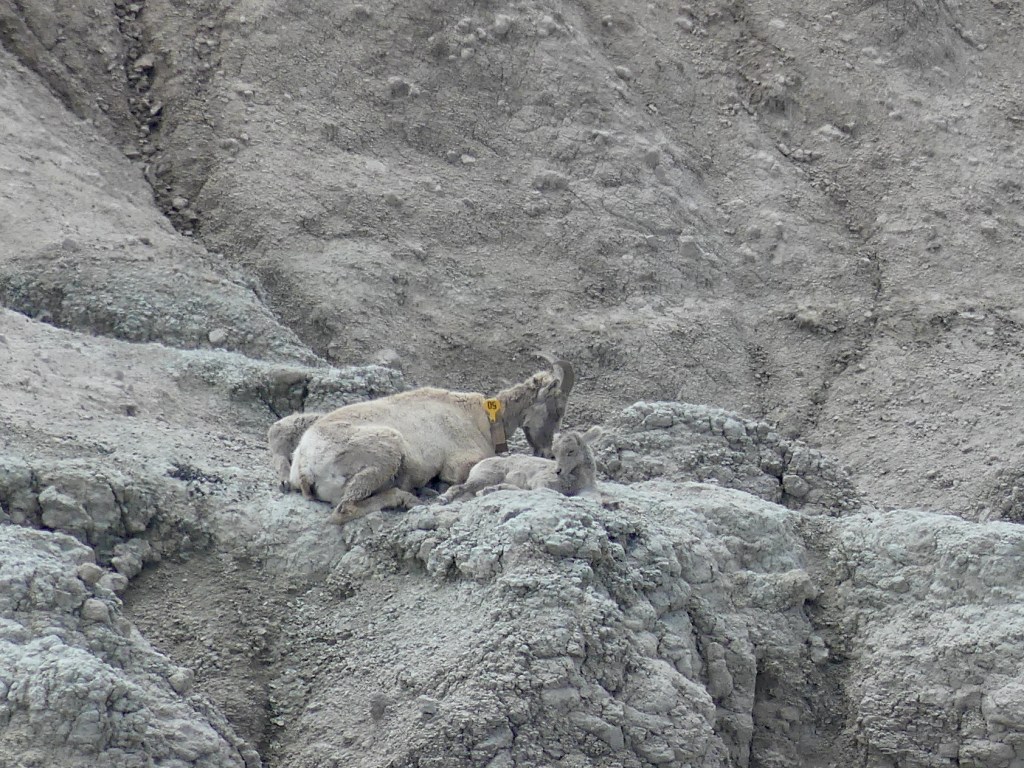
Bighorn sheep were not as numerous, but we found several at the Hay Butte Overlook.

A week and a half later I would return with David and we would see sheep again at the same overlook, but high up in the rock cliffs. That group appeared to be all females with their babies.
My biggest surprise (and disappointment) with wildlife was not seeing a single snake or lizard, despite signs everywhere warning of rattlesnakes. My only consolation was this cute Woodhouse’s Toad right outside our motel room.

As in Minnesota, wildflower season was just beginning and we found some pretty flowers.

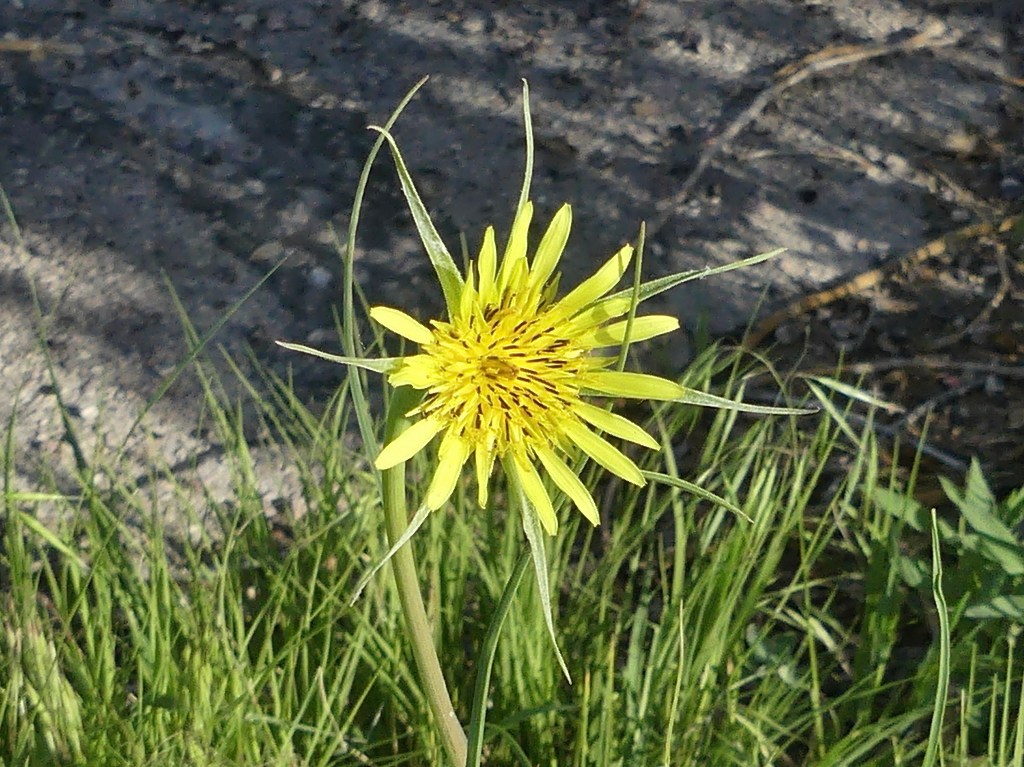
Some of the flowers above were photographed at Conata Picnic Area, one of the spots that Diane and I especially liked. David and I visited the same area twelve days later and I was sad to discover that all the wildflowers on the sides of the entrance road and picnic area had been mowed down.

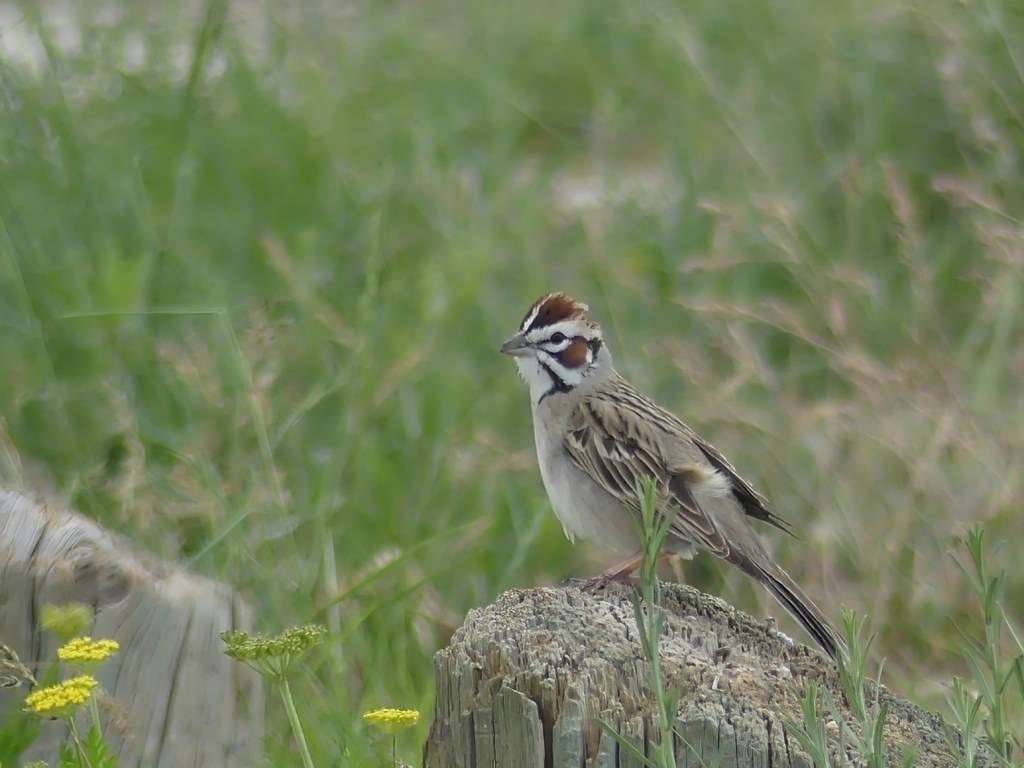
We saw birds there, too, like this pretty Lark Sparrow, a common species in the west.
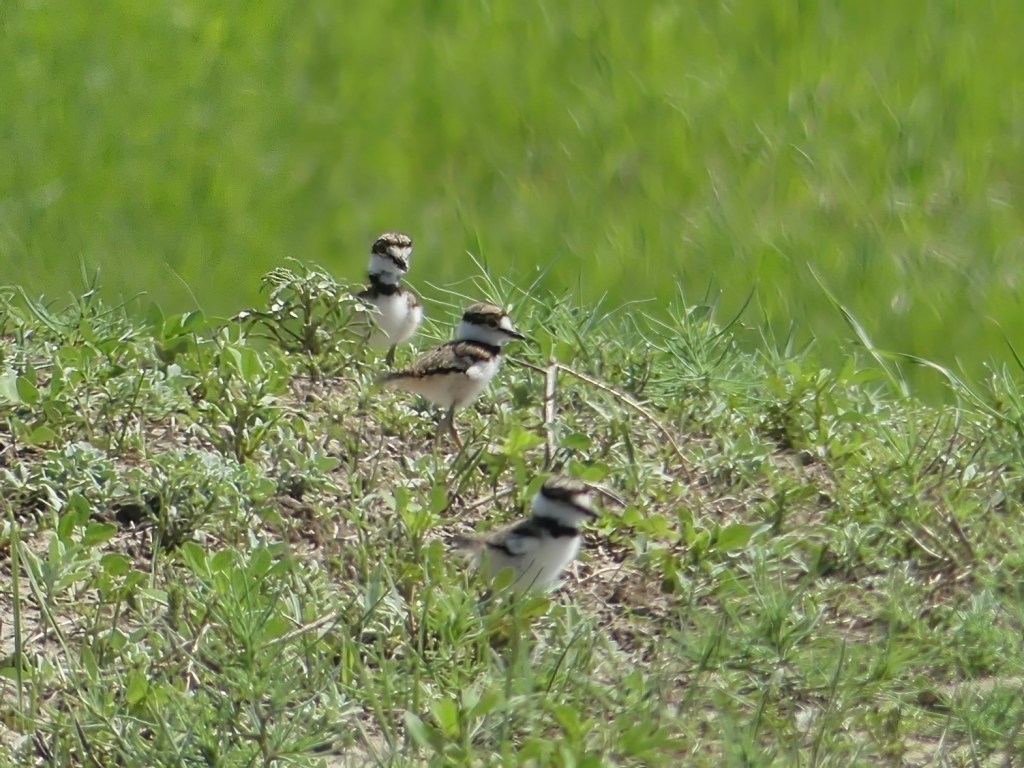
Perhaps this spot endeared itself to us because this is where we saw a Killdeer family with three chicks. Killdeer are common across the country, but we don’t see the babies often. And, babies of all species were a delightful recurring theme on this trip.
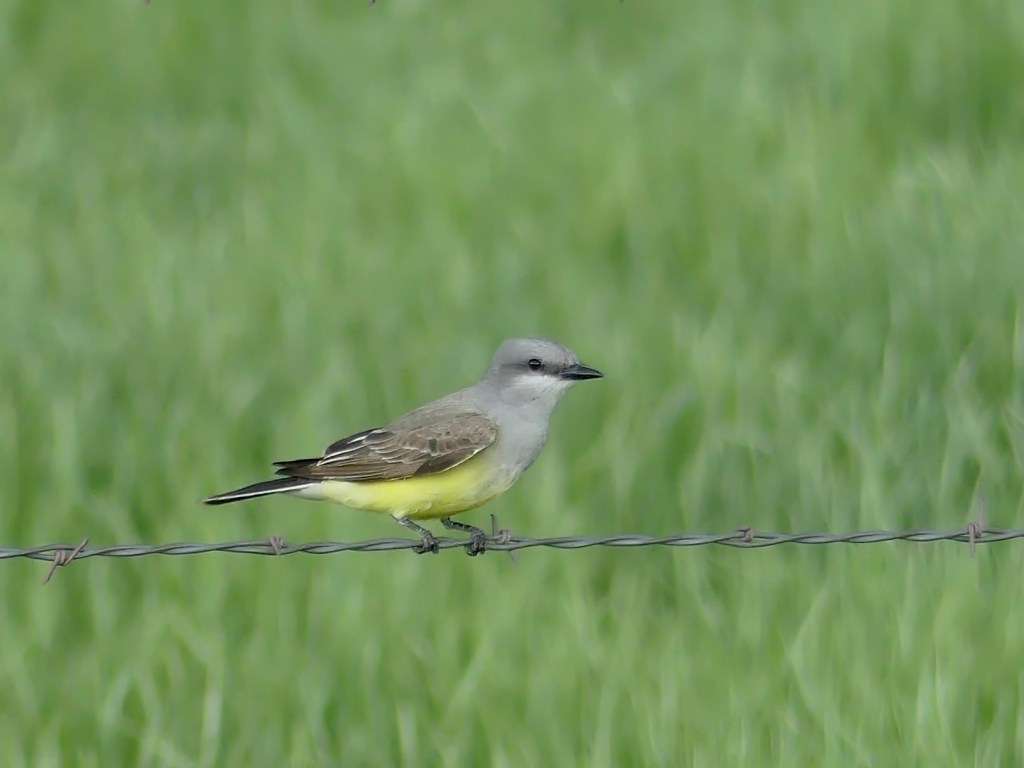
This Western Kingbird was also nearby. Birds that are common in the west are not common to us and we loved what felt like a visit to old friends that we do not see often enough.
We saw birds that are common in the east, too, including many Red-winged Blackbirds, Common Grackles, and Brown-headed Cowbirds. I tried to ignore the cowbirds, but how could I when one posed so nicely?

We never tired of stopping to photograph the ever-changing landscape. Sights like Yellow Mounds, a favorite spot of many park visitors, constantly awed us. Yellow Mounds (photo below) gets its mustardy color from the mineral goethite. The Yellow Mounds are ancient fossilized soils that geologists call paleosols.

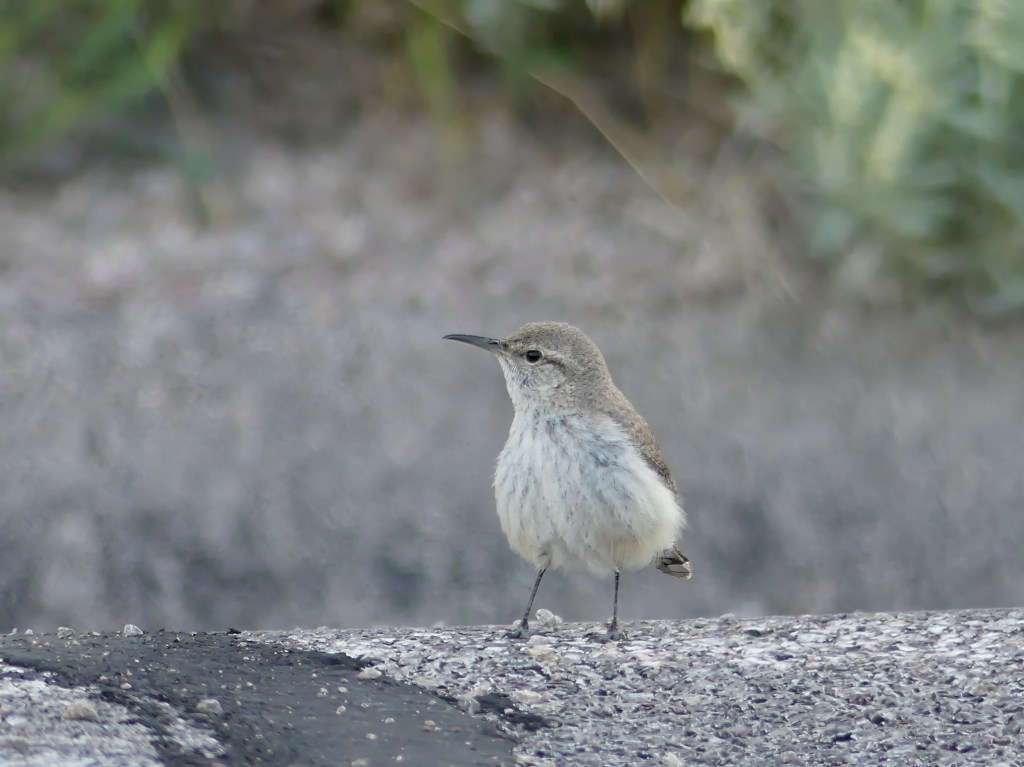
On our last morning, Diane and I got out really early and it paid off with our best views ever of a Rock Wren. It was fun to watch it move quickly along the rocky edge by the side of the road picking at insects.
Much too soon, our time in the park was gone and we had to leave for the Rapid City airport. Diane and I spent two full days in the park. Later I would return with David for one day. One day is sufficient to drive all the roads and see most of the iconic wildlife in the park. Two days is enough to also see some birds. However, I could easily spend three or four days in the badlands and not be bored.

There are two main areas to stay, Wall and Interior. David and I stayed in Wall, which has nicer (and more expensive) lodging, but I preferred Interior, where Diane and I spent two nights. Our motel was “basic,” but we were just a couple of minutes from the park loop road.

I would love to visit Badlands National Park again, but for this trip it was time for Diane to fly home and David to arrive. I would spend the next week exploring the Black Hills while David rode in RASDak, a 350-mile cycling event.

Continue to part 3, Road Trip 2023: Days 8-18 – Bikes and Birds (Part 3 of 4)
Read Full Post »

On August 5, 2018, I went birding at Lake Waccamaw State Park.  The birds were more scarce than I’d expected, but I finally found Blue Jays and a few other common birds near the Visitor Center.  Why is this even worthy of mention?  Because the park is in Columbus County, the last of North Carolina’s 100 counties in which I have observed birds.  Yep, I’ve now seen birds in every county in my home state.  If you are not a birder, you may still think that this is not worthy of mention and you should stop reading now.

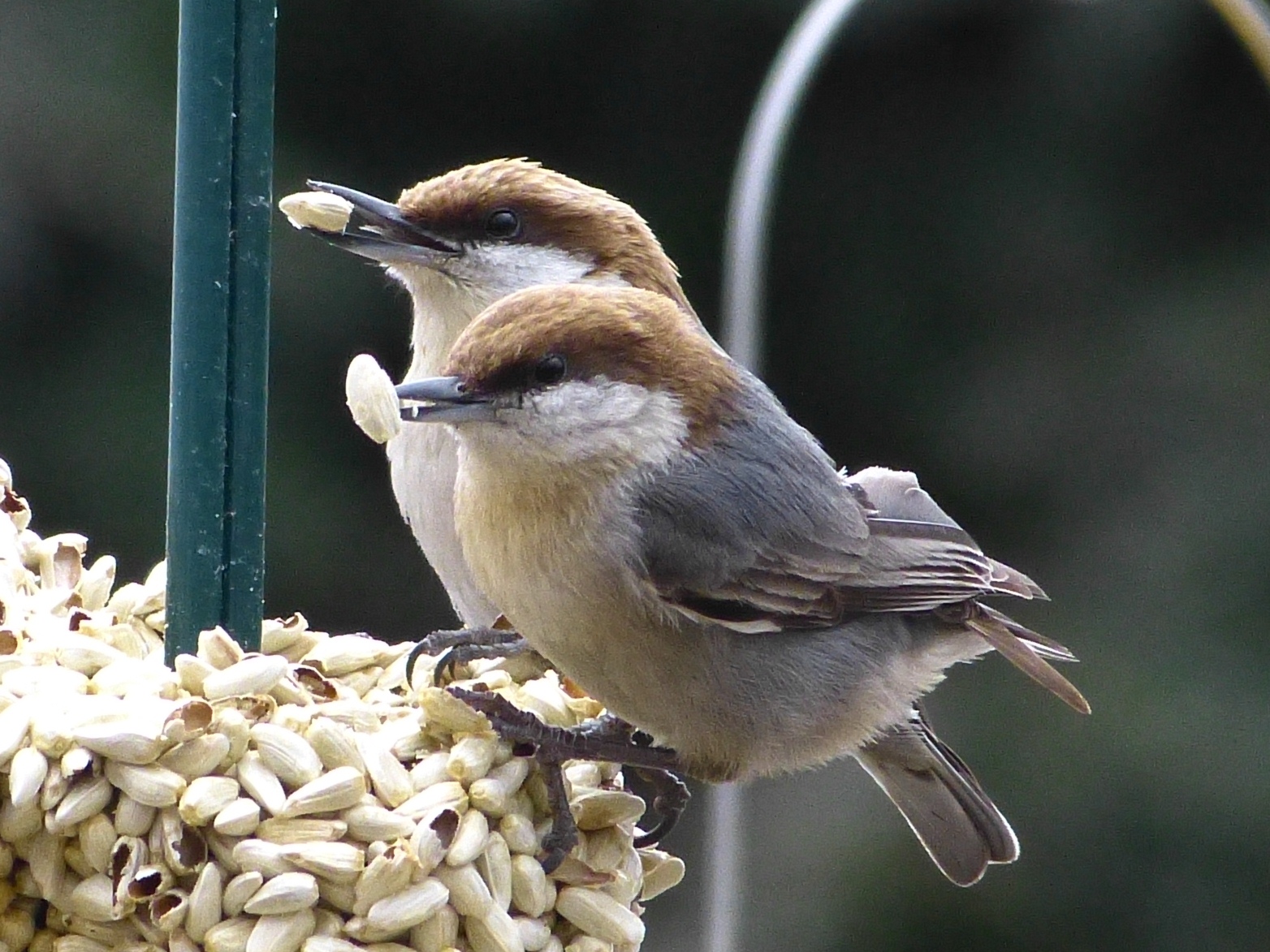
No, these particular birds were not my life Forsyth County Brown-headed Nuthatches, but you weren't going to keep reading without some cute photos, were you?

No, these particular birds were not my life Forsyth County Brown-headed Nuthatches, but you weren’t going to keep reading without some cute photos, were you?

County birding is my favorite of games birders play, but it took a while before I got serious.  In December 2009, eBird introduced county birding to “inspire people to go birding in places that don’t typically get much coverage.”  I am a huge fan of eBird, so I wanted to help with this effort.  I started birding the counties adjacent to Forsyth that didn’t have many checklists.  Sometimes I went alone, but frequently I enlisted friends Carol or Brent to go with me.  We had great fun on our outings and it wasn’t long until Carol and I found a county record Horned Grebe for Stokes County.  It was the first time that anyone had reported the species in that county.

In the County Birding "game," an American Robin counts just as much as a rare bird.

In the County Birding “game,” an American Robin counts just as much as a rare bird.

At some point I became aware that county birding was more than an eBird effort; it was almost a competitive sport.  I discovered that birders in Texas, Florida, California, and a few other states were obsessed with focused on county birding.  And then I met Derek, right here in Forsyth County, who had seen birds in all of North Carolina’s counties.  I started joining him occasionally for a day of birding as he upped his county ticks.  County ticks are simply the sum of one’s life lists for each county in an area (usually a state).  So, if I had seen 200 birds in Forsyth County and 100 birds in Guilford County, I would have 300 county ticks for NC.  It didn’t take many days of birding with Derek until I decided that I, too, wanted to see birds in all of North Carolina’s counties.

Cynthia and I spent a day with this Golden-winged Warbler in Watauga County

Cynthia and I spent a day with this Golden-winged Warbler in Watauga County

I also birded with other friends whenever I had a chance.  One of my favorite county birds was the gorgeous Golden-winged Warbler in the photo above.  My good friend, Cynthia, wrote a guest post on this blog, Golden-winged Wonders, about our experiences with “Andy.”

I am especially grateful for my friend, David, and my son-in-law, Jeff.  David is not a birder, but he understood my craziness and helped me in the western part of the state.  It can be hard to find birds in those small mountainous counties and I was happy to have the company and the help.  Jeff is only a casual birder, but he spent several days with me in the northeast corner of the state searching for birds.

A pretty Hermit Thrush that Jeff and I found in Chowan County.

A pretty Hermit Thrush that Jeff and I found in Chowan County.

I wish that I’d kept notes on every outing, every new milestone, but I did not.  Instead, I have only delightful random memories, like a stream of consciousness.  Please indulge me as I share a few of those memories.

Derek is an excellent birder with the energy that comes from being young.  And, he was willing to go birding with me – a woman with bad eyesight and old enough to be his grandmother.  The love of birds and birding that transcends all other differences is one of the things that I love about the birding community.  But, I digress.

A lovely Cedar Waxwing found on the Bakersville Creek Walk in Mitchell County

A lovely Cedar Waxwing found on the Bakersville Creek Walk in Mitchell County

A typical day of birding with Derek started with meeting around 7:00 AM and driving two to three hours to get to the counties we needed.  Derek is a great planner and he continued to watch bird alerts while I drove.  We birded until dark and then Derek drove on the way home.  Sometimes it was 11:00 PM when I pulled into my driveway.  But, we always had fun and we always got new county birds.

In January 2017, Derek introduced me to the idea of combining county birding and state birding, seeking birds not just new to a particular county, but new for the state.  A rare (for North Carolina) Anna’s Hummingbird had turned up on the coast, inspiring us to make a two-day trip to see this beauty.  We added several new birds for Dare County, including a surprise Brown Thrasher while waiting in line at the Nags Head KFC drive-thru.

The Anna's Hummingbird that Derek and I drove to the NC coast to see

The Anna’s Hummingbird that Derek and I drove to the NC coast to see

Later that year in May, we couldn’t miss an opportunity to see this cooperative Mourning Warbler in Avery County, another state bird for both Derek and me.  This led to stops in Wilkes County, an Alder Flycatcher at a blink-and-you-would-have-missed-it bog on the Blue Ridge Parkway in Burke, and then multiple stops at under-birded hotspots in Mitchell, Yancey, and McDowell counties.  Our favorite location that we discovered that day was the lovely Bakersville Creek Walk in Mitchell County, which I made into an eBird hotspot.

Our lovely Mourning Warbler on the Blue Ridge Parkway in Avery County

Our lovely Mourning Warbler on the Blue Ridge Parkway in Avery County

In addition to finding notable birds, I enjoyed the quirkiness and little surprises of county birding.  Derek and I called it the “wavy road.”  It was as much in the middle of nowhere as any place in NC.  I think we were on a mission to find a Clay-colored Sparrow.  The road was completely level on the middle line, but the edges rose and fell like waves.  Driving the road felt like a ride at an amusement park.  We marveled at the oddity of the road and were happy that it didn’t last too long.  And, yes, we got our bird.

On a day of birding with Hop in Cleveland County, he pished up this Golden-crowned Kinglet.

On a day of birding with Hop in Cleveland County, he pished up this Golden-crowned Kinglet.

Plenty of mistakes were made in my search for new birds, mostly when I was birding alone.  I currently have only one bird for Halifax County even though I spent the night there.  I got confused about the county line and did not even realize where I was!  A more serious mistake occurred when I was birding alone in the Croatan National Forest and became totally lost.  Fortunately, I was able to use the eBird track on my phone to navigate back to my car.  Once on a trip with Derek to the Sandhills area in the middle of summer, I failed to take water on our walk.  When we were almost back to the car, I began to feel sick – very hot and nauseous – so I just laid down on the sand and sent Derek back to the ranger station.  I knew the ranger would come for me in his truck, which he did, and I learned a very valuable lesson.

This young Brown-headed Cowbird appeared to be hot, too, on that sweltering day in Cumberland County.

This young Brown-headed Cowbird appeared to be hot, too, on that sweltering day in Cumberland County.

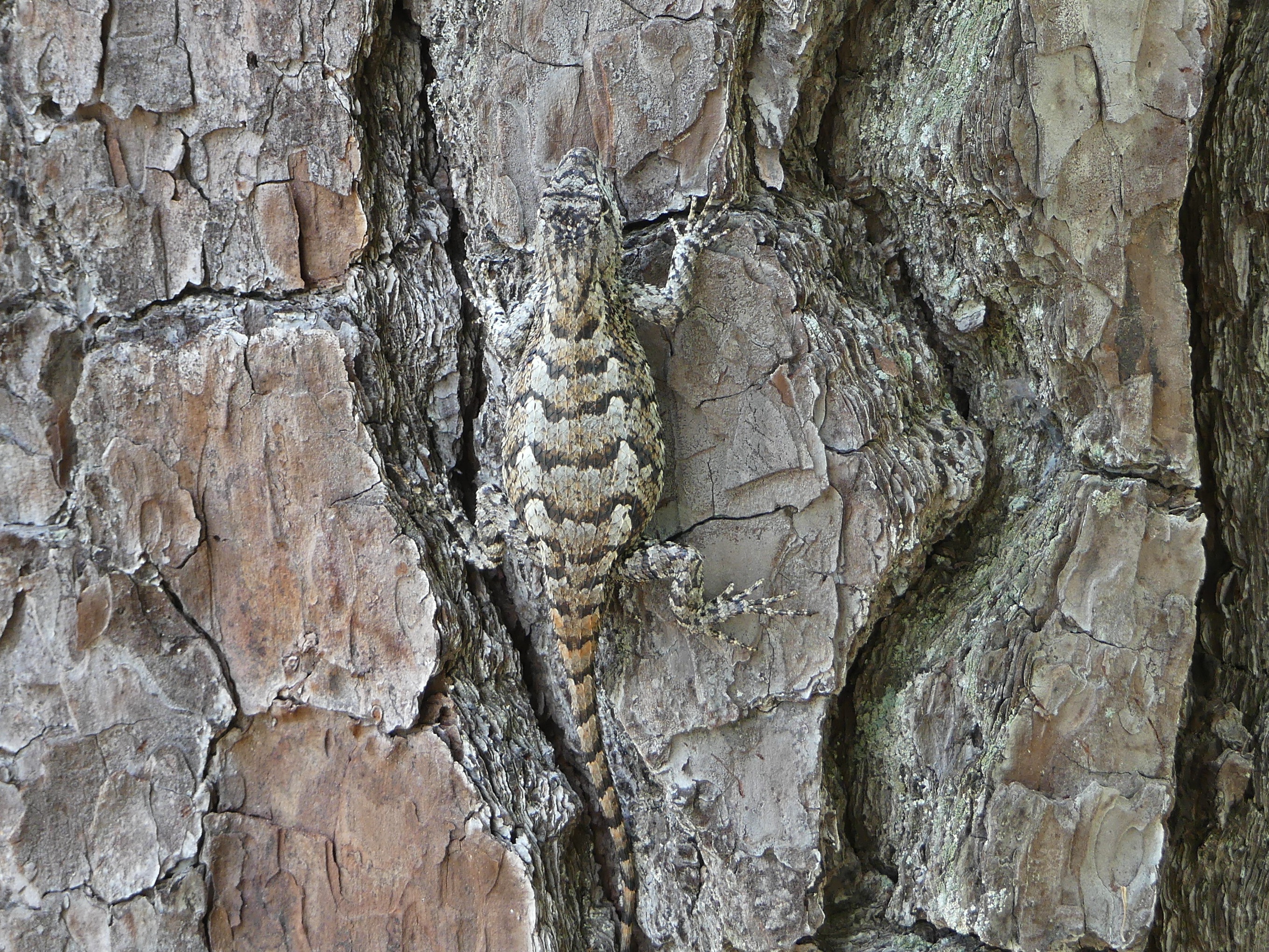
But, the heat might have been responsible for the wonderful lizards we also found on that hot July day.  Derek and I considered all wildlife sightings a big bonus of county birding.

Eastern Fence Lizard at Carvers Creek State Park, a lifer lizard for me!

Eastern Fence Lizard at Carvers Creek State Park, a lifer lizard for me!

I made even more mistakes finding birds, again usually when I went out on my own.  Many these errors were my poor decisions about which birding hotspots to visit.  A State Recreation Area on a large lake was “Closed for the Season” when I got there in the middle of winter.  Some hotspots no longer had access and some were just about impossible to find.  One location with many great eBird reports appeared to be a road that no one would walk except hunters or crazy young male birders.  I’m pretty brave, but I was not going to park my car on the side of the road and walk alone into the wilderness in a remote, isolated part of the state.

A Great Spangled Fritillary that Derek and I found near Boone in June 2016. We frequently encountered beautiful butterflies while searching for birds.

A Great Spangled Fritillary that Derek and I found near Boone in June 2016. We frequently encountered beautiful butterflies while searching for birds.

As I have written this, more memories keep flooding back.  Looking for Swallow-tailed Kites with Nathan and Sarah.  The Person County Northern Lapwing with David S.  The Brown Booby with Jay.  The Allen’s Hummingbird with Phil and Carol C.  Transylvania County.  Forsyth Audubon and Piedmont Bird Club trips.  I can’t name them all, but I treasure every one of my birding adventures and I am grateful to have shared so many with friends.

My most recently photographed county tick is this Tricolored Heron, right here in Forsyth County, only the second of this species to be observed in our county.  But, I now have an even newer county bird, a Royal Tern that David Disher found at Salem Lake during Hurricane Florence.

My Forsyth County Tricolored Heron

My Forsyth County Tricolored Heron

My eBird map for NC is below.  As you can see, I don’t have many birds in most counties, so I’ll be able to continue the county birding game for quite a while as I add new birds.  I hope to keep birding in North Carolina for a very long time.

Read Full Post »