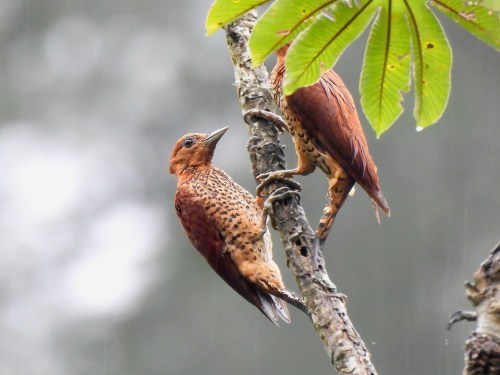
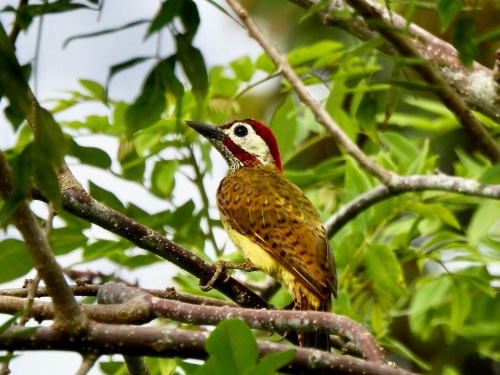
I was sick on our last full day at Canopy Camp, but I’ve traveled enough to know that these things happen, so I try to make the best of it. For the first couple of hours, I sat on our deck and watched birds in the nearby trees between trips to the bathroom. My reward was seeing a beautiful Cinnamon Woodpecker being fed by a parent. Immediately after I took this photo, the parent (top bird) reached down and deposited food into the open mouth of the baby.
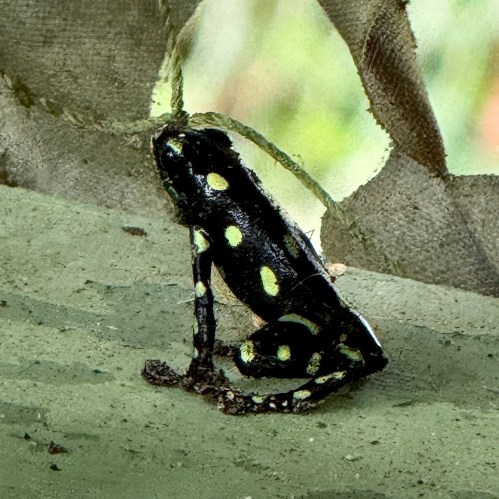
If I hadn’t seen another bird all morning, I’d have been happy, but my day was just starting. I soon felt well enough to leave our deck, so I decided to check the vulture feeding area. Oscar had taken us to this spot on our first day at the camp. I didn’t realize until later that the others had seen an immature King Vulture in the trees that day, but it had not come down to feed. I took my time on my walk and enjoyed a little flock of Blue Dacnis (in the “wild” rather than at a feeder) as well as several new butterflies. At the feeding area, I didn’t see anything except this cute little Green-and-black Poison Dart Frog.
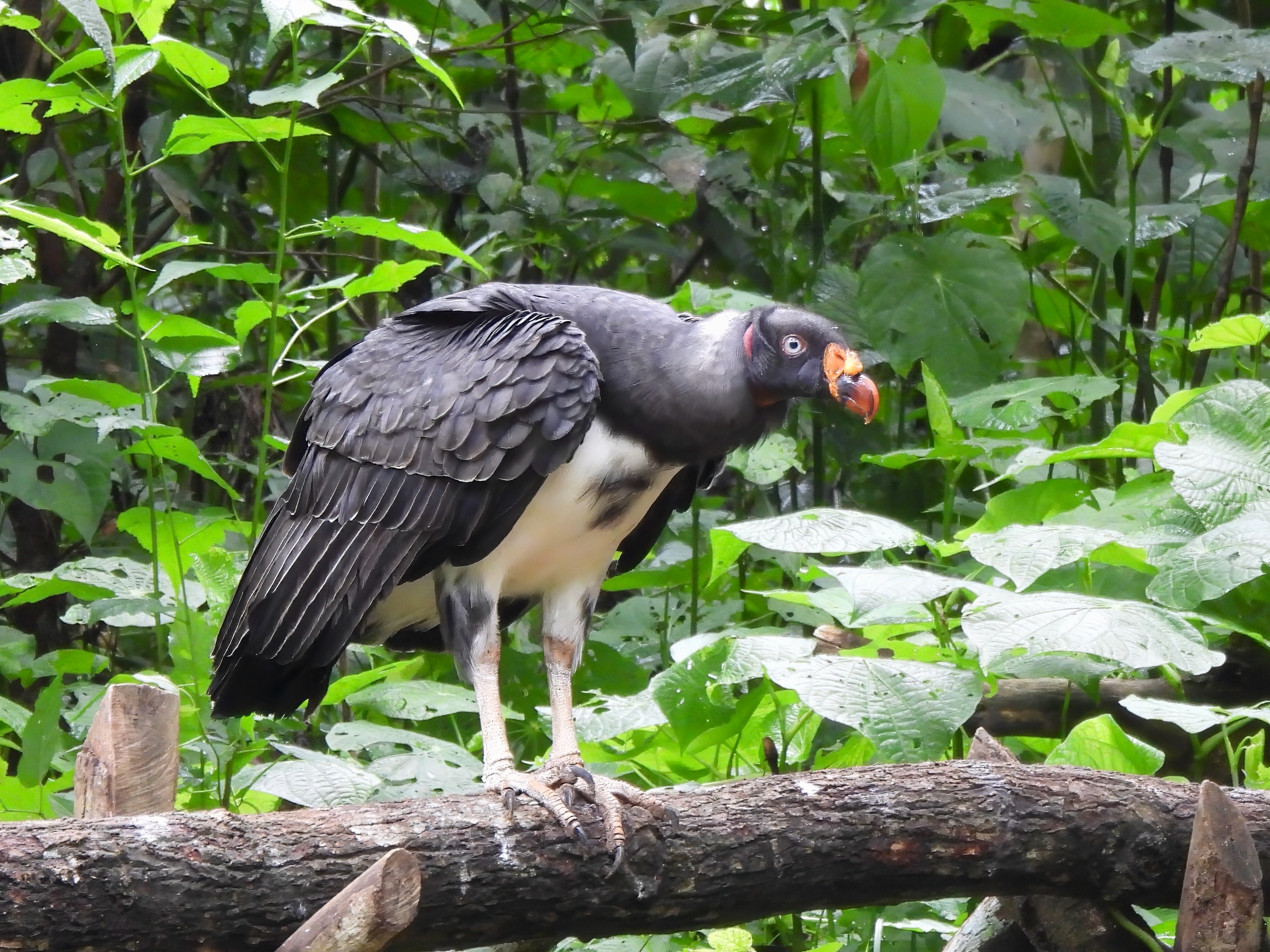
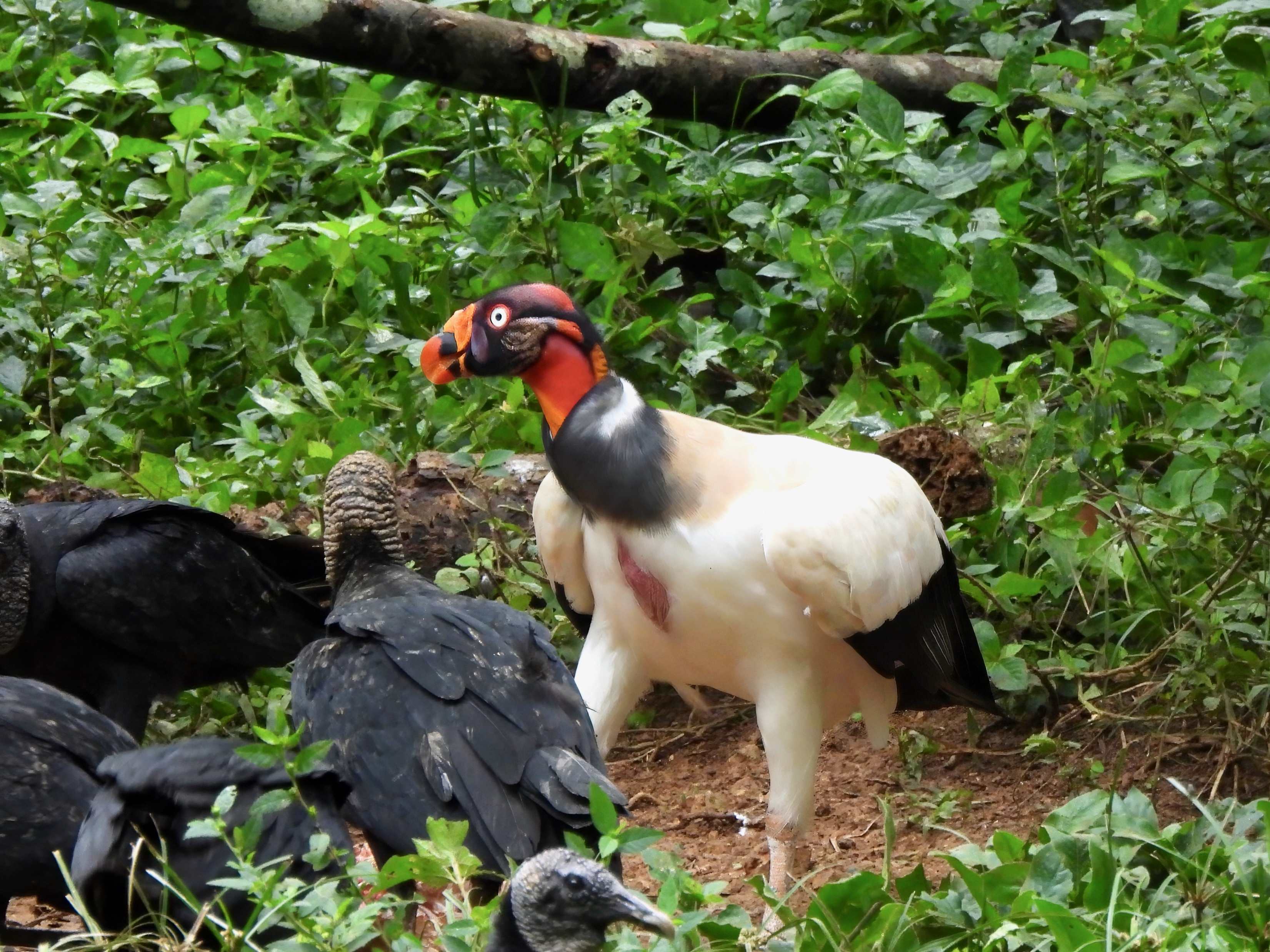
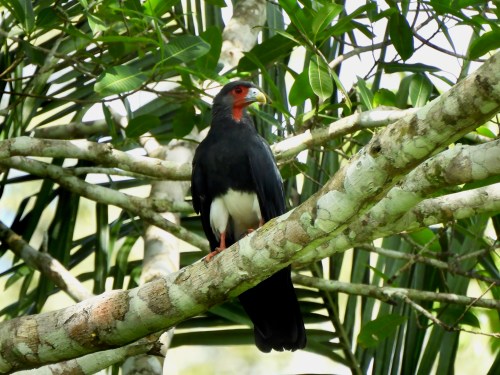
Again, I felt like my day was full and I was happy. While walking back to our tent, I saw a man pushing a wheelbarrow toward the vulture feeding area. Four Black Vultures also appeared to notice him and flew down in the same direction. I waited a while and then decided to go back and see what was happening. The man was standing off to the side. He had obviously delivered something as about 50 Black Vultures were excitedly feeding. After a long wait, he motioned to me and indicated that a King Vulture was in the trees. After another wait, it came down to feed. Finally, an immature King Vulture joined the frenzy. It was one of those “magic moments” in birding when I was completely captivated by these impressive, almost prehistoric-looking birds. The adult is the bird with the white back; the immature bird has a dark back and chest.


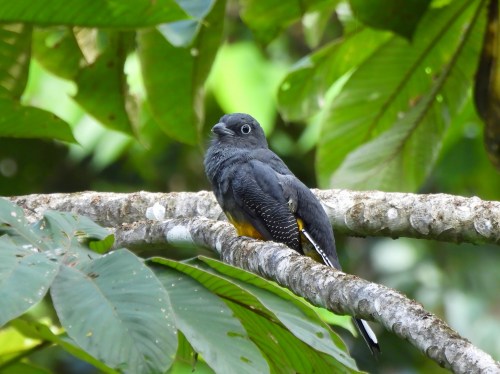
Later, after the others returned mid-afternoon, Sandra and I sat on our deck and enjoyed watching this pretty female White-tailed Trogon in the trees right outside our tent.
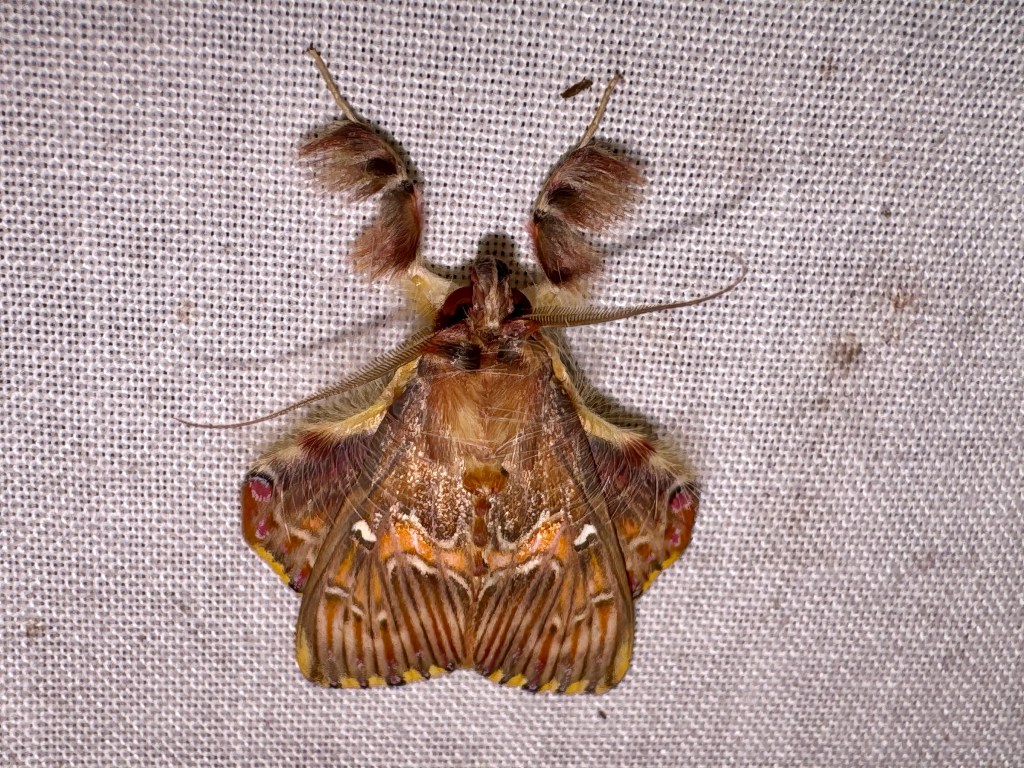
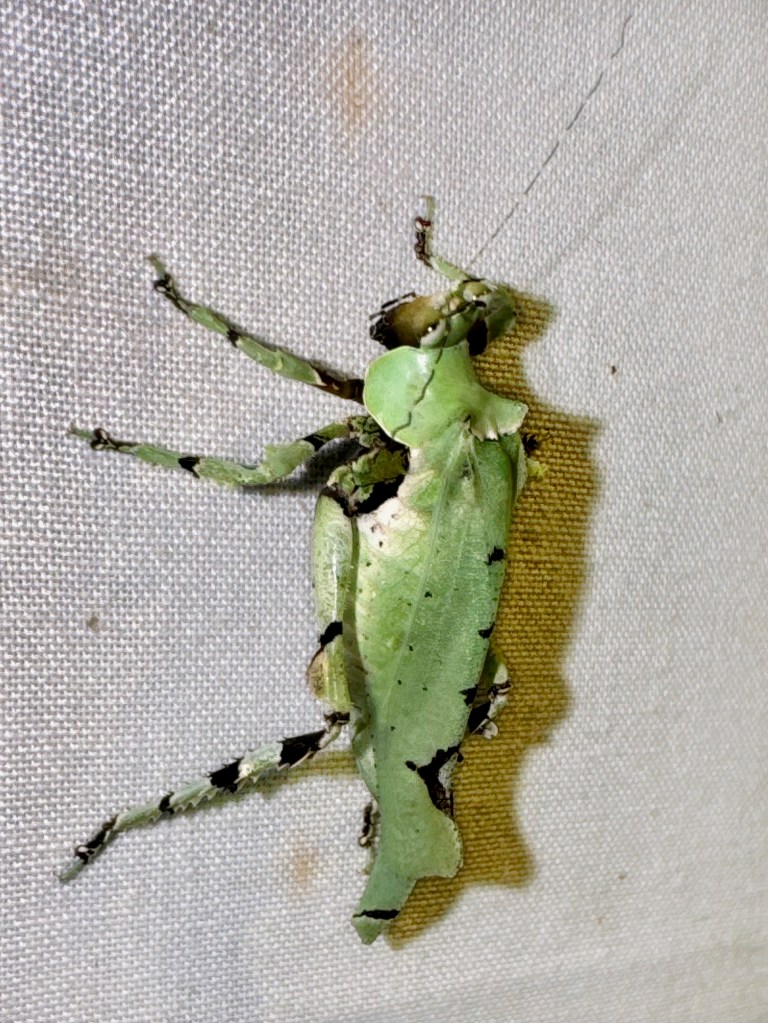
The week had gone quickly and we had been busy, but I had found time to check the moth sheet for a few minutes most early mornings and evenings.

Here is a small sample of interesting moths and other insects that I observed. If you like these, I have many more on iNaturalist (shelleydee – Panama September 2025)


The next morning, we said goodbye to Canopy Camp and started back north toward Panama City. Below, Sandra and me with Oscar, who was amazing and is now one of my favorite Canopy guides.

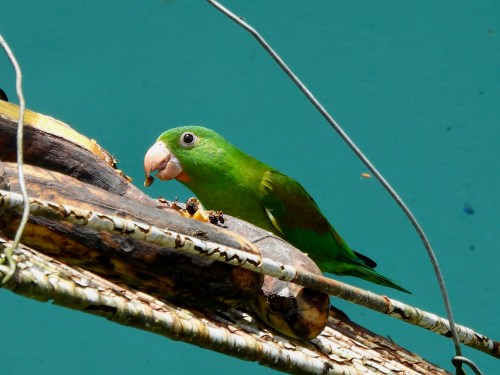
We stopped at Reserva San Francisco for one last birding venture. Lunch was at the same little restaurant we’d visited on our way to the camp. This time, a couple of Orange-chinned Parakeets entertained us. Who says you can’t see the orange chin?
We were soon back in the same hotel where we had started a week earlier, but our Panama adventure was not over yet. When Sandra had reviewed her potential life birds for our Panama itinerary, she was especially excited by the prospect of seeing Sapayoa, a bird in a monotypic family. That made Nusagandi—one of the few places where it’s found—a top priority.
We had made arrangements for a full day of birding with Michael Castro of Whitehawk Birding. Michael picked us up promptly at 5:00 AM, and we started the 2-hour drive to Nusagandi. We arrived at the province border just before 7:00 AM. A few minutes earlier, we had picked up a local farmer and birder who would help us for a few hours.
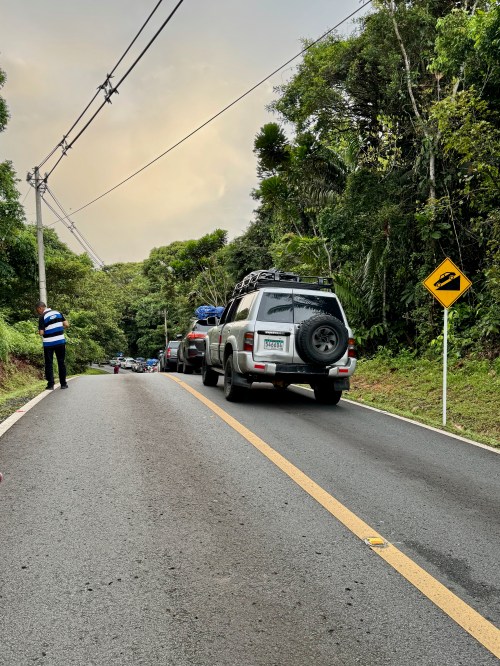
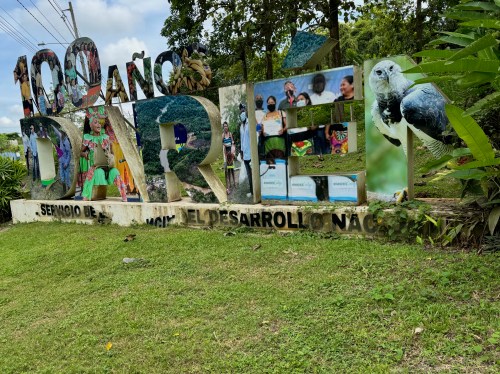
We would spend the entire day in the Guna Yala province, a thin strip of land that stretches along the Caribbean coast on the northeast side of Panama. Guna Yala is an autonomous Indigenous territory (comarca) in Panama, governed by the Guna people through their own traditional system. 95% of the inhabitants of the province are indigenous Gunas. The differences in this province are obvious as you approach the checkpoint on the only road into the area from Panama City. The road in does not open until 7:00 AM, and a fee is required to enter the province via car. Michael paid $30 USD per person for himself, Sandra, and me to enter. On the right, the line waiting to enter Guna Yala.
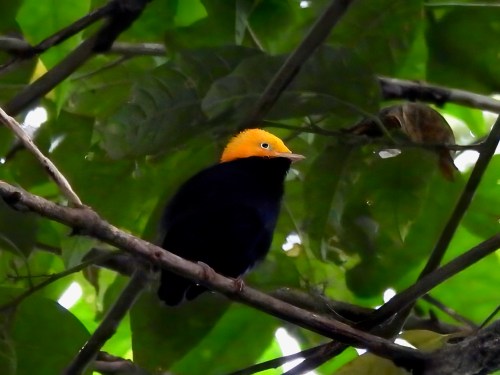
We stopped few minutes later, and I got my first life birds of the day—White-ruffed Manakin (pictured below) and Sulphur-rumped Tanager.

Our next stop at 8:00 AM was even more exciting. The area didn’t look all that promising to me; it was just a scrubby field with a few large trees. Michael is enthusiastic about all birds, and he got excited when he heard Crested Guans squawking. He followed the sounds to determine what was causing the racket, and then he got even more excited. I wish I could remember his exact words, but it was something like “A raptor is trying to kill one of the guans!” The raptor turned out to be an immature Ornate Hawk-Eagle, and it was amazing to watch this activity. Sadly for the hungry raptor, both guans survived the attacks. To help you fully appreciate this encounter, Crested Guans are not small birds—they weigh 4-1/2 pounds or more. An Ornate Hawk-Eagle weighs just over 2-1/2 pounds, so it seems to me that this ambitious young raptor had a lot of spunk.

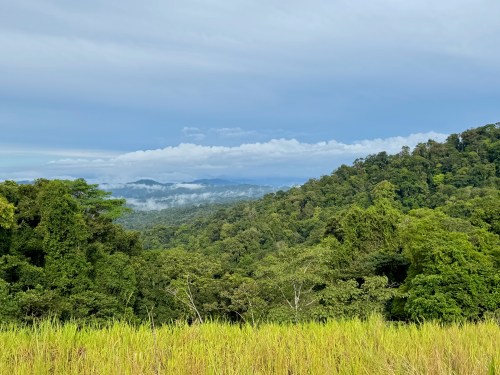
Below, some of the beautiful landscape of the Guna Yala province.
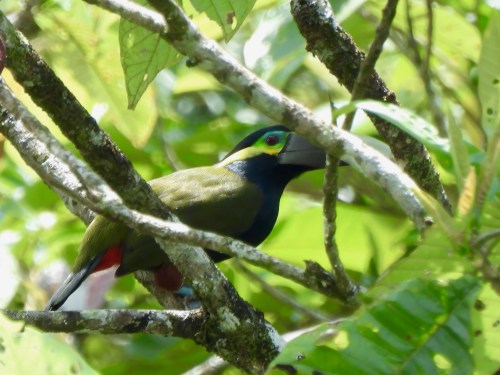
The next excitement was finding a pair of Yellow-eared Toucanets on the side of the road. While many members of the toucan family are bold and easy to see, Yellow-eared Toucanets are shy and elusive. It was a real treat to watch these beautiful birds.
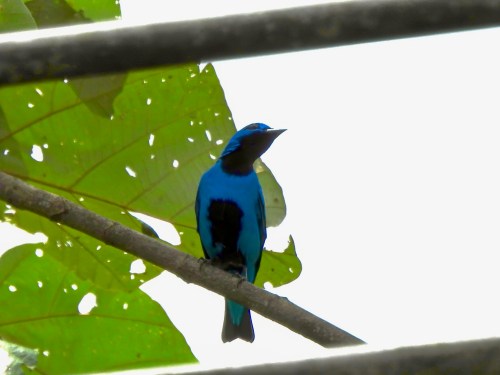
And, what did we see next? A male Blue Cotinga! This is another shy species, often perching high in the forest canopy. It’s thrilling when you spot a gorgeous male cotinga with his intense blue plumage.
It had been a great morning, but the main attraction still awaited us. We drove to our local farmer’s property near Nusagandi, parked on the side of the road, and ducked into the forest in a spot where I didn’t even see a path. We had started our quest for Sapayoa.
Sapayoa is an amazing bird, not for its looks, but for its unusual evolutionary history. From Google’s AI overview: “Sapayoa is the sole species in the monotypic family Sapayoidae, making it an evolutionary “enigma”. This Old World broadbill outlier, found in Panama and northwestern South America, is unique in the New World and is characterized by its broad bill, olive-yellow plumage, and preference for ravines and streams. Recent molecular evidence confirms its position as the last surviving member of a lineage that once inhabited the Old World tropics.”

We made our way through the forest alongside a little stream. The description of Sapayoa’s preferred habitat fit perfectly with the location where we found it—a quarter of a mile through thick forest by the stream. Our amazing guides helped Sandra and me slog through slippery mud as we carefully made our way down to the stream, all the while hearing thunder. Amazingly, we saw the Sapayoa and made it back to the car without getting drenched.
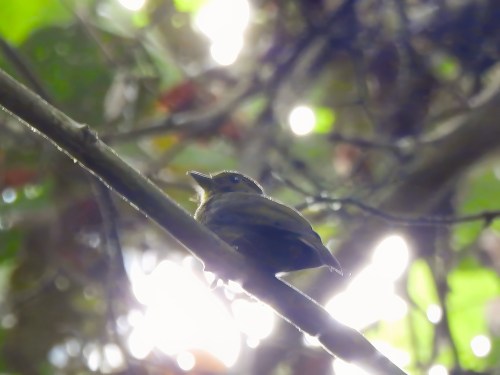
It’s not a good photo, but I am thrilled to have any photo of this bird.
Our mission accomplished, Michael, Sandra, and I headed back to Panama City. It had been a wonderful day, and we couldn’t have been happier. Sandra got a much-wanted life bird, and I was thrilled to share in the adventure. Michael had been a wonderful guide who found our target birds and made the entire day fun.
In eight days of birding, I added 32 species to my life list. I’m always greedy and had hoped for more, but that still greatly increases my chances of reaching 2,500 in South America this fall. Regardless of numbers, though, I love birding and can’t wait for the next adventure!














 Birding for Life