Feeds:
Posts
Comments

Posts Tagged ‘Harpy Eagle’

My trip to Panama last month started on a whim, as so many of my trips have. A couple of years ago, I made a birding trip bucket list; this trip wasn’t on it. I think that I’ll blame – or maybe credit – my friend, Sandra, for this one. She is a much better birder than I am and also more motivated, and some of that ambition may be rubbing off on me. Her goal is to see half of the world’s birds, now somewhere over 5,500. My more modest goal is 2,500. Sandra and I have a big trip to South America starting in November, and I really want to celebrate reaching my goal on that trip. Fearing that I wouldn’t make it, I looked for a quick and easy trip to pad my list a bit. Panama’s Canopy Camp fit the bill perfectly. I had been to the other two Canopy lodges in 2017 and had a great time. The guides are excellent, and there wouldn’t be any planning required. When I told Sandra about my plan, she decided to come with me.
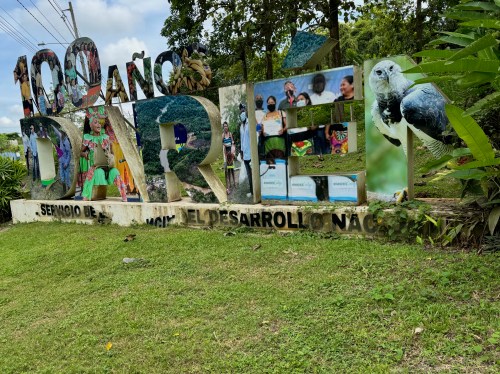
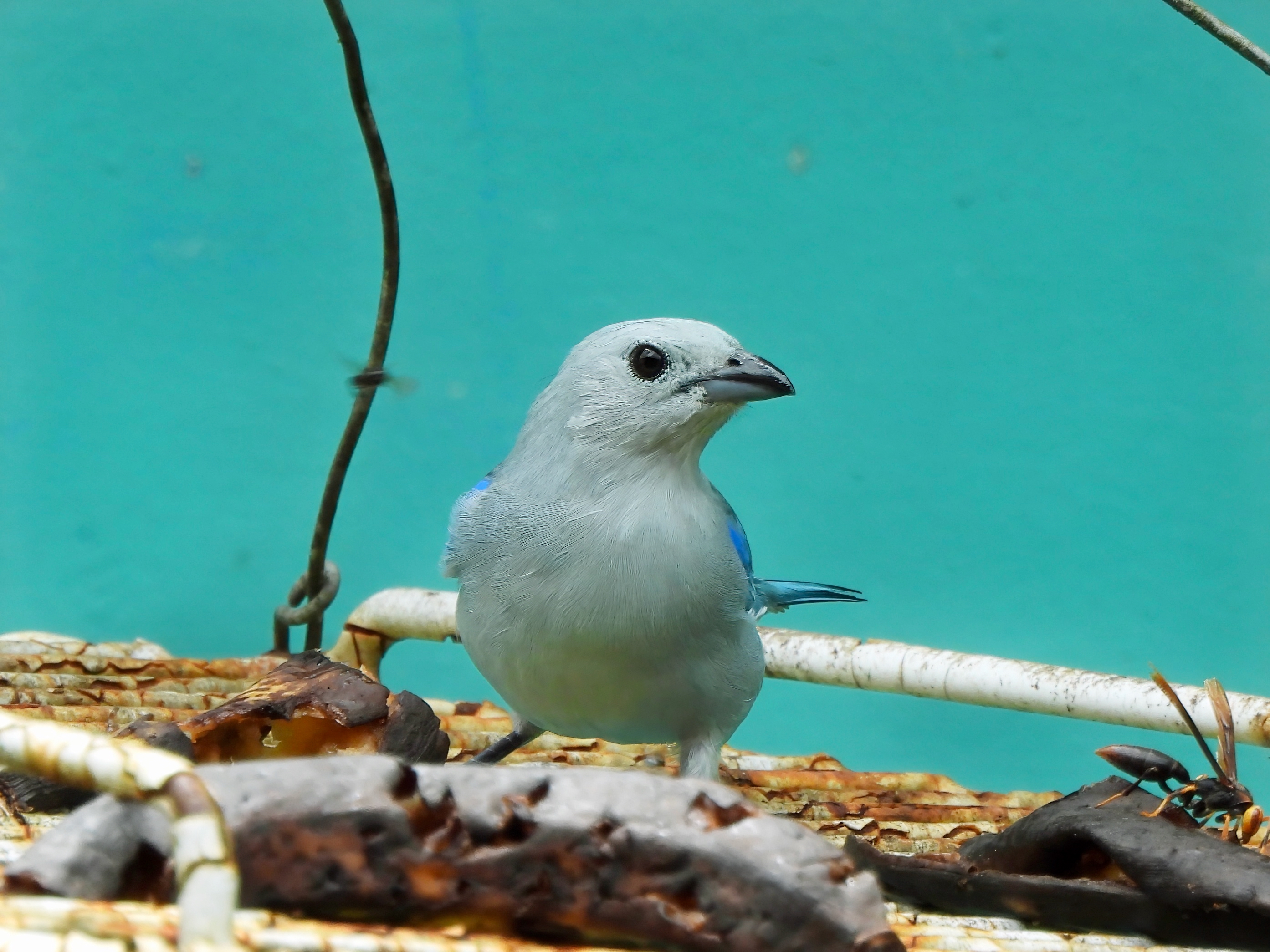
We flew to Panama City on September 15 and met our guide, Oscar Fría, and the seven other participants the following morning. We all marveled at the migrating Mississippi Kites right over our heads in the hotel parking lot—an estimated 200 birds! And then we started the three-hour drive south toward the Darién Province. The day went quickly, with a couple of stops for birding and a nice outdoor lunch where we could watch birds while we ate. Below are the Snowy-bellied and Rufous-tailed Hummingbirds, a Blue-gray Tanager, and my favorite plumaged Blue Dacnis, an immature male, that entertained us during our meal.

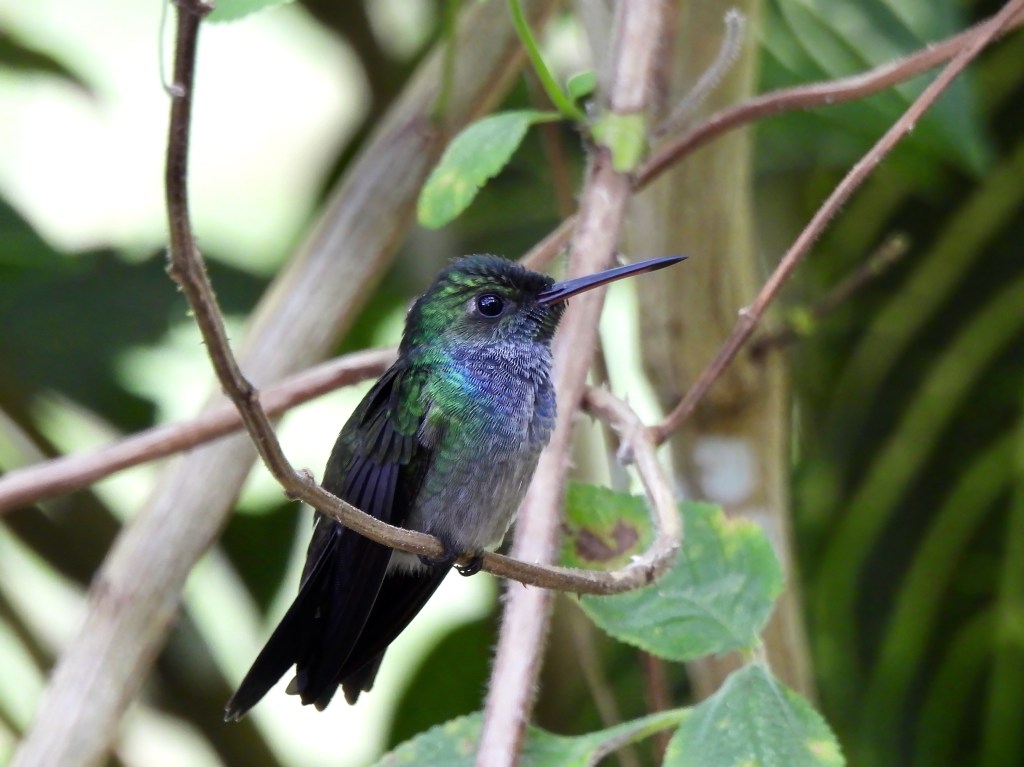
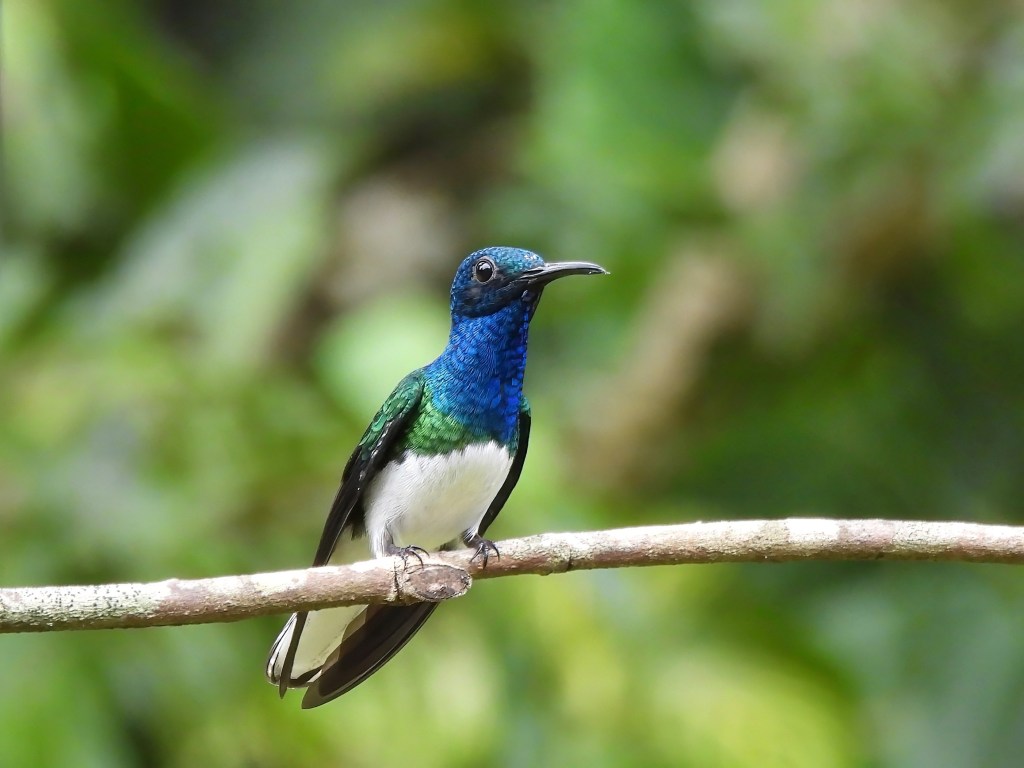
We arrived at the camp mid-afternoon, giving us just the right amount of time to get settled in our comfortable safari-style tents and explore a little. I was happy to get two life birds that first day, a Sapphire-throated Hummingbird and a Pale-bellied Hermit. In the gallery below are those birds (top row), along with a Blue-chested Hummingbird and a White-necked Jacobin that frequented the area near the deck where we ate our meals.

It was exciting to be in the Darién, described by Raúl Arias, owner of the Canopy Family lodges, as the largest and least inhabited province of Panama, the one with the biggest tracts of primary forests, the longest and widest rivers, the tallest trees, the least accessible province, the least known. Here, in this hotbed of biological diversity, the camp itself sits atop a small plateau in lowland rainforest.

We birded around camp the next morning, and I got several more life birds. One of my favorites was the lovely Gray-cheeked Nunlet that Oscar digiscoped for me.

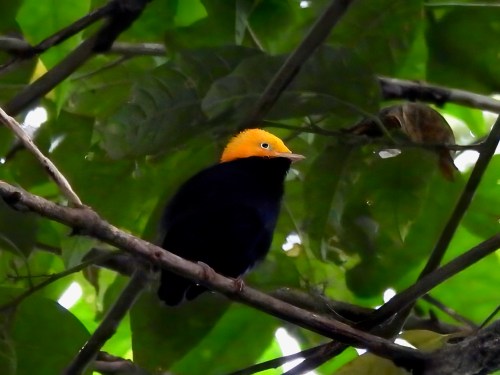
Another highlight was this Golden-headed Manakin. I missed it the first time the group saw it because I had gone back to our tent for something. Later, Sandra spotted it right from our deck!
Chestnut-headed Oropendolas were a constant presence around the camp.

I also loved this gorgeous female Black-crowned Tityra, a photo lifer.

On the 18th, we birded an area not far from the camp where more life birds awaited. I really like woodpeckers, so I was delighted to add this Golden-green Woodpecker to my life list.

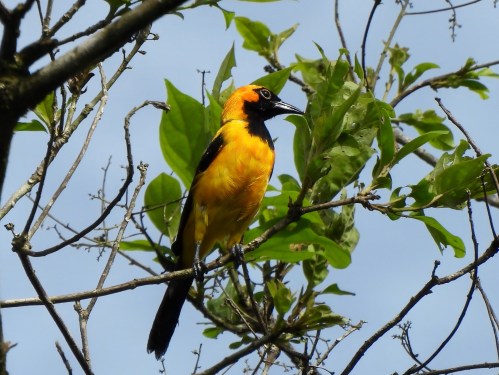
This Orange-crowned Oriole was another wonderful bird and also a “lifer.”
A female Blue Cotinga was not a life bird, but what a beauty! I couldn’t have been happier if she had been a lifer. It was my best view ever of this species and my first look at a female.

Friday was a big day–the quest for Harpy Eagle. I saw my life Harpy in Ecuador a few years ago. Read about that experience and learn more about the eagle in Ecuador 2021: Limoncocha (Part 4 of 6). But I don’t think that any birder would pass up an opportunity to see this special bird, so I was happy to have another experience with it.

While assembled at the edge of the field before we started our trek, these Black Oropendolas bounced around a bare treetop on the opposite side of the field. The oropendolas were life birds, and I was very happy to have even a distant view.

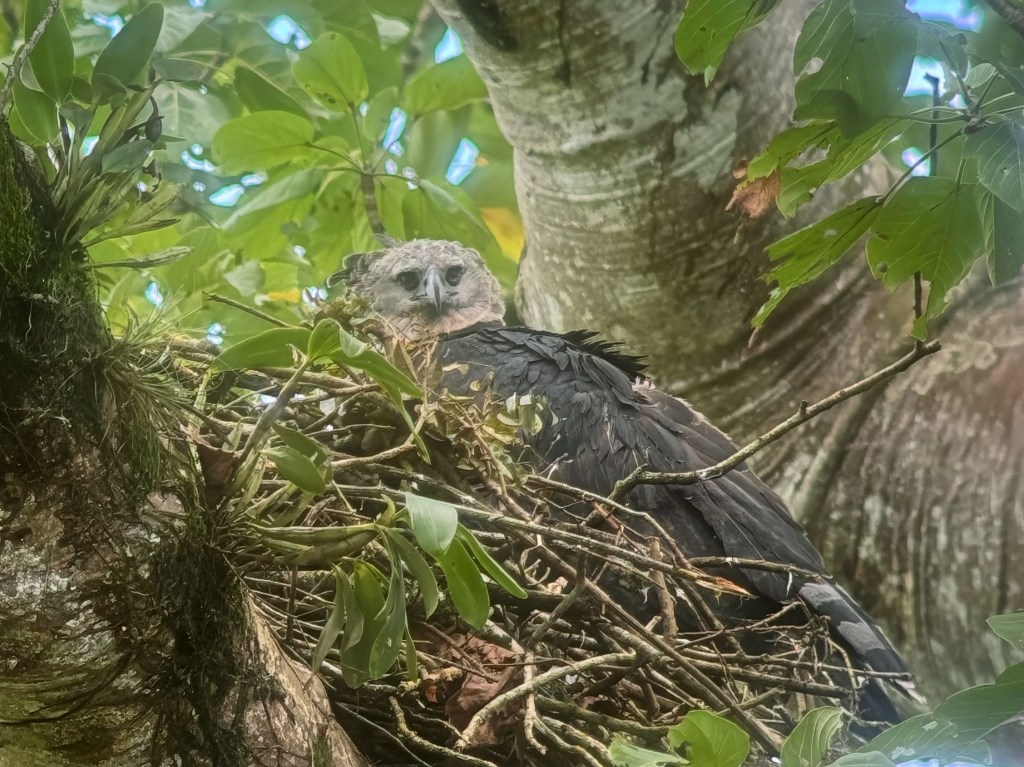
We were lucky to have a relatively easy trek to the Harpy Eagle nest, about two-thirds of a mile each way on a shaded trail through the forest. In contrast, many birders have walked for hours in the sun or ridden horses to get to a Harpy Eagle nest. The trail was not exactly easy, though, with lots of mud and exposed tree roots. I couldn’t help thinking that these birds must intentionally choose nest sites in inaccessible areas. Here is the majestic female Harpy Eagle on her nest!
Our good luck continued the next day with an outing to Yaviza Forest and nearby areas. During the trip, no one talked of our proximity to the Darién Gap, but a little research at home revealed Yaviza as the terminus of the Pan-American Highway. There were smaller roads going south, and our eBird trip report map shows that we ventured south of Yaviza for a few birding stops, including our Harpy Eagle outing. The economy of Darién seems complicated, but we were told that cattle ranching is important, and there was evidence of it everywhere. The pretty pastoral scene below with the mountains in the distance is typical of many areas we visited.

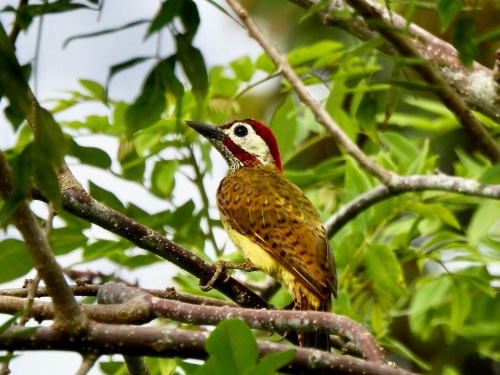
We saw some special birds this day, with the Spot-breasted Woodpecker an instant favorite. Oscar told us that it is his favorite woodpecker, and it’s easy to see why.
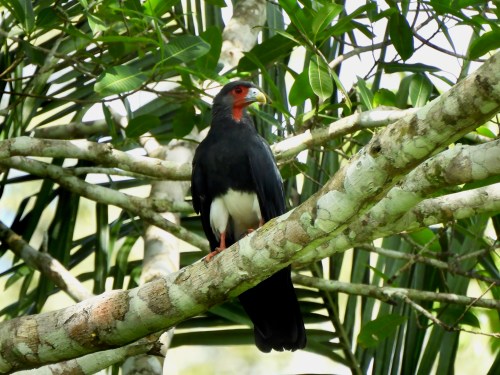
This Red-throated Caracara was another standout species that day.
One more great bird was White-headed Wren. Not only does it look quite unlike most other wrens, it’s also much larger.

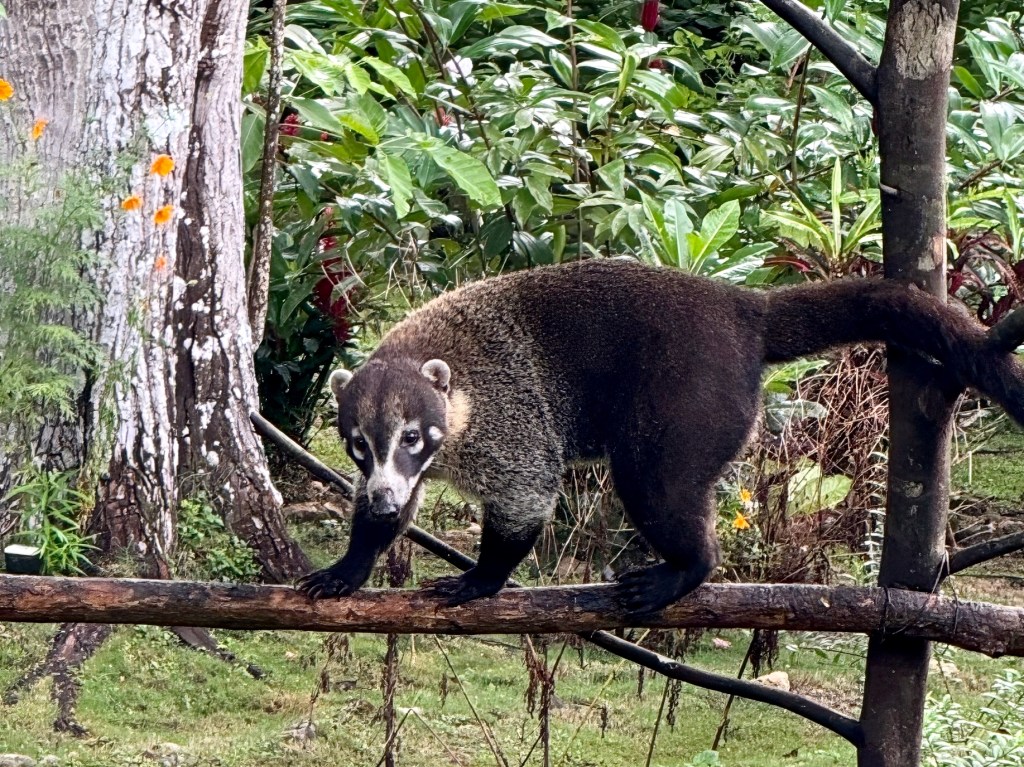
We saw a few mammals at the camp, but not many species. Oscar told us that they are scarce due to hunting for food by the local people. However, we did see White-nosed Coatis and Geoffroy’s Tamarins nearly every day.
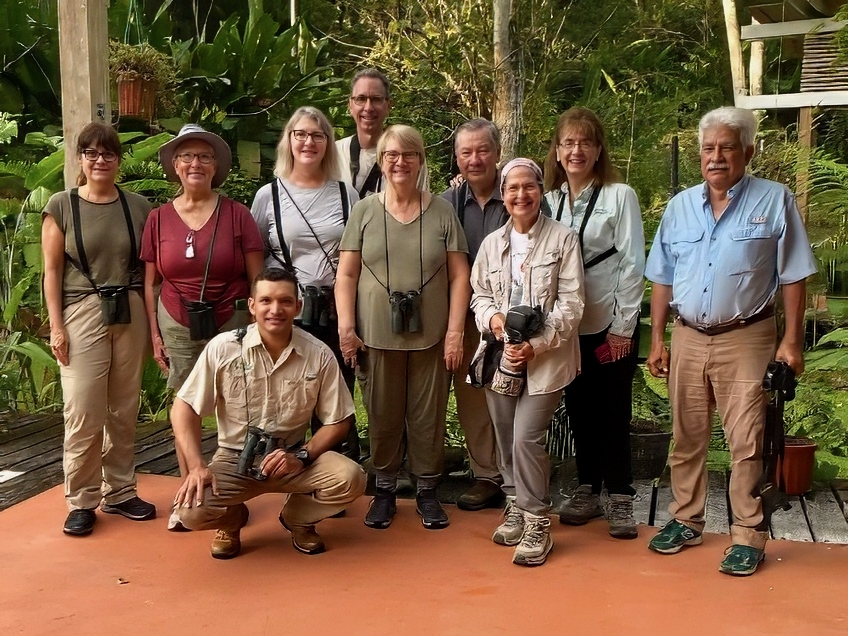
There’s still a lot of the trip remaining. Watch for part 2. It was a fun group with some of the nicest people that I’ve ever met on a birding trip; every single person was kind and helpful. Sandra, John & April, Rob & Lynn, Gloria, Pablo, Amarilys, it was a delight sharing this adventure with you. Oscar was a great guide, and the Canopy staff was outstanding. Birding trips are about more than just birds, and these wonderful people made this one of my favorite trips.
Read Full Post »

Limoncocha was different; really different. Many of the birds were strange and bizarre. It was quiet and peaceful, wonderful, almost magical. I had never heard of Limoncocha before the trip, but Xavier suggested it because of a Harpy Eagle nest. And who would say no to that? There would be much more than the eagle, though. eBirders have reported 520 species in the Limoncocha Biological Reserve.

The reserve is on the Napo River, about 230 miles east of Quito, near the little town of Limoncocha. It is one of the most bio-diverse areas on the planet, but its flora and fauna have been continually threatened by nearby oil activity since 1975.

After the drive from WildSumaco, we arrived at the headquarters of the Limoncocha Biological Reserve in the early afternoon. We left our car there and were transported to our lodge on the edge of the Limoncocha lagoon, inside the protected area of the reserve, via a motorized canoe.

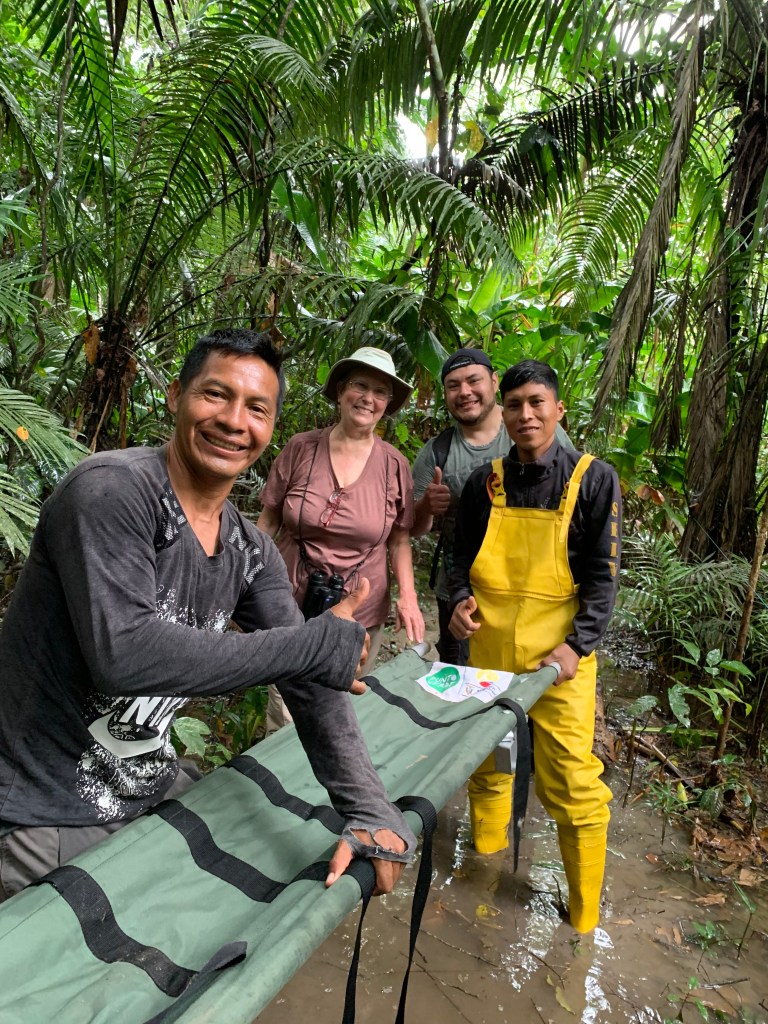
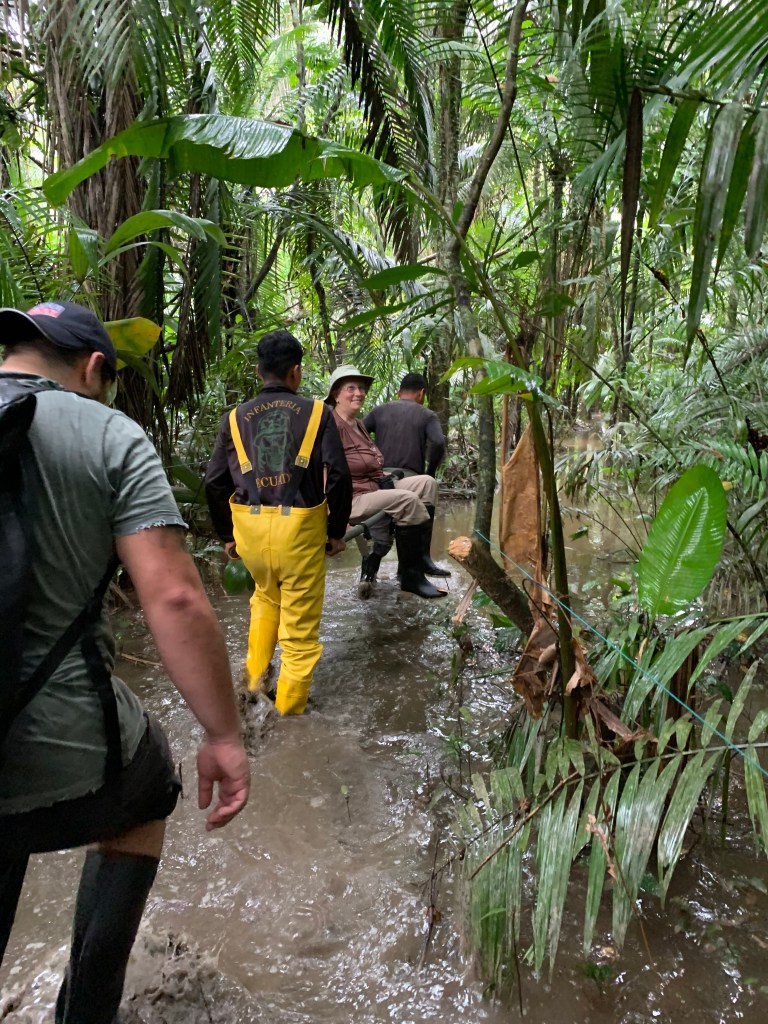
After putting our things in our cabins, we immediately left to see the eagle nest. It was a 20-minute boat ride back to the reserve headquarters and then a short drive. Next was what was described as a “20 minute boat ride followed by an easy 20-minute walk along a flat trail.” Apparently, that was true when the trail was dry, but there had been rain the previous few days and the trail was flooded. Our local guide, Wymper, told Xavier that I would not be able to walk the trail and that they were going to carry me! I protested that I didn’t need to be treated like a princess, but Wymper insisted. Obviously, they had done this before as they were prepared with a stretcher that I sat upon while they carried me the last third of the trail. There were tree roots and other unseen obstacles under the water making it very difficult to walk, especially while carrying me.

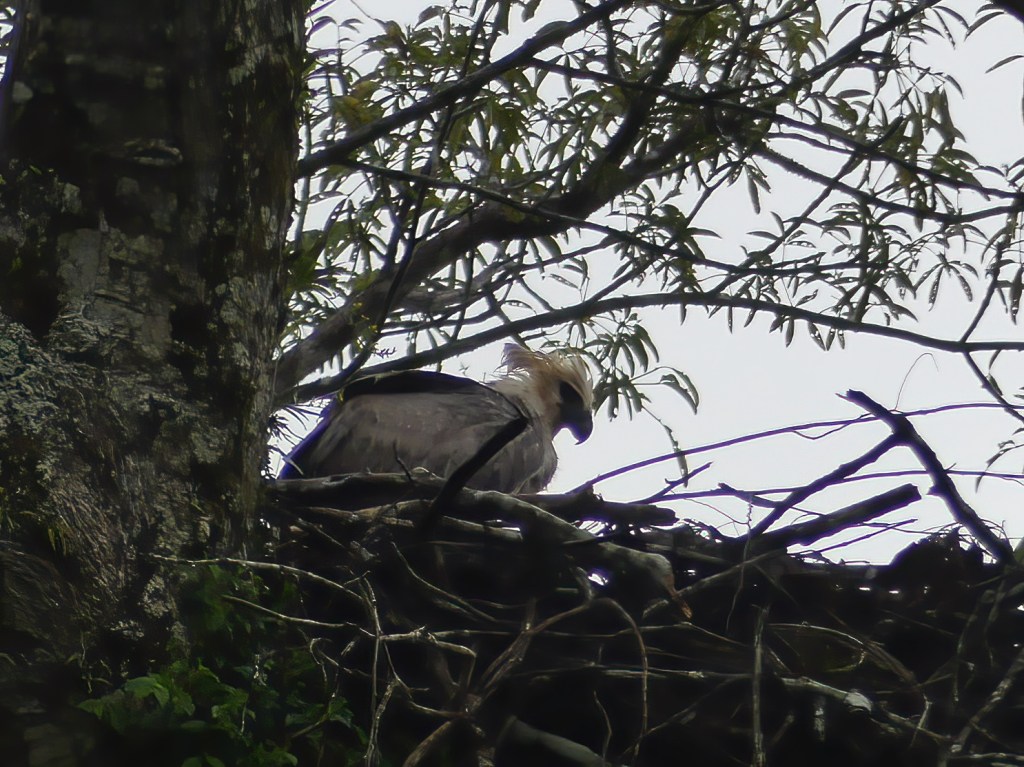
I was impressed by the efforts of these men getting us to the eagle nest and by the wonderful covered platform they had built there, a respectful distance from the nest tree. And, Xavier had walked the flooded trail carrying a scope so that we would have good views. We did not see either adult as one of them had made a food drop a few hours earlier, but at only 4-1/2 months old, this baby already looks like a Harpy Eagle.

The massive Harpy Eagle is a “holy grail” bird for serious birders. Adults have a six to seven foot wingspan, talons the size of grizzly bear claws, and they weigh 9 to 20 pounds (females are larger than males). Compare that to a Bald Eagle, not a small bird, that tops out at 14 pounds. These apex predators hunt mainly in the canopy and consume a variety of prey, but they have a propensity for small monkeys and sloths. Their large range extends from Central America throughout most of South America, but they are rare everywhere. Sadly, the population is believed to be declining due to habitat loss and direct persecution. Harpy Eagle is classified by BirdLife International as Near Threatened.

After we spent an hour or so watching the eaglet, we retraced our route back to the lodge in time for a simple but tasty dinner. Limoncocha Ecolodge never had hot water and had electricity for only a couple of hours each day, but it was clean, safe, and comfortable.

We started the next day, April 28, on the lagoon at 5:39 am. Hoatzin could be the poster bird for Limoncocha. There were many of them around the lagoon, including a female on a nest right by the dock for the lodge.

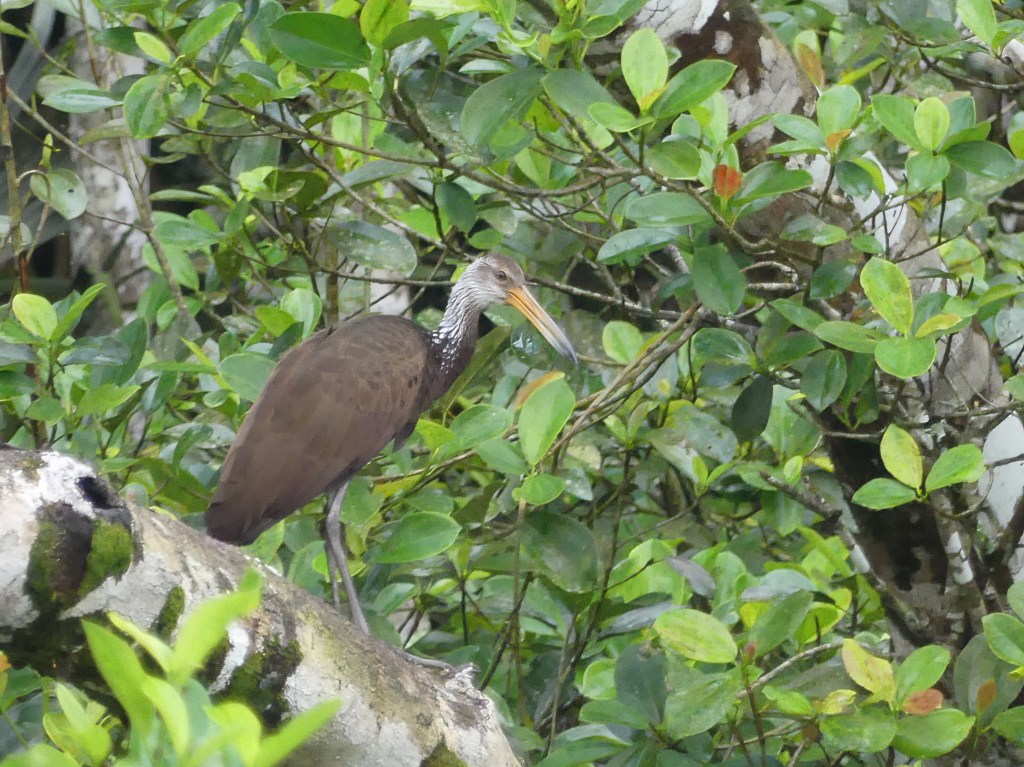
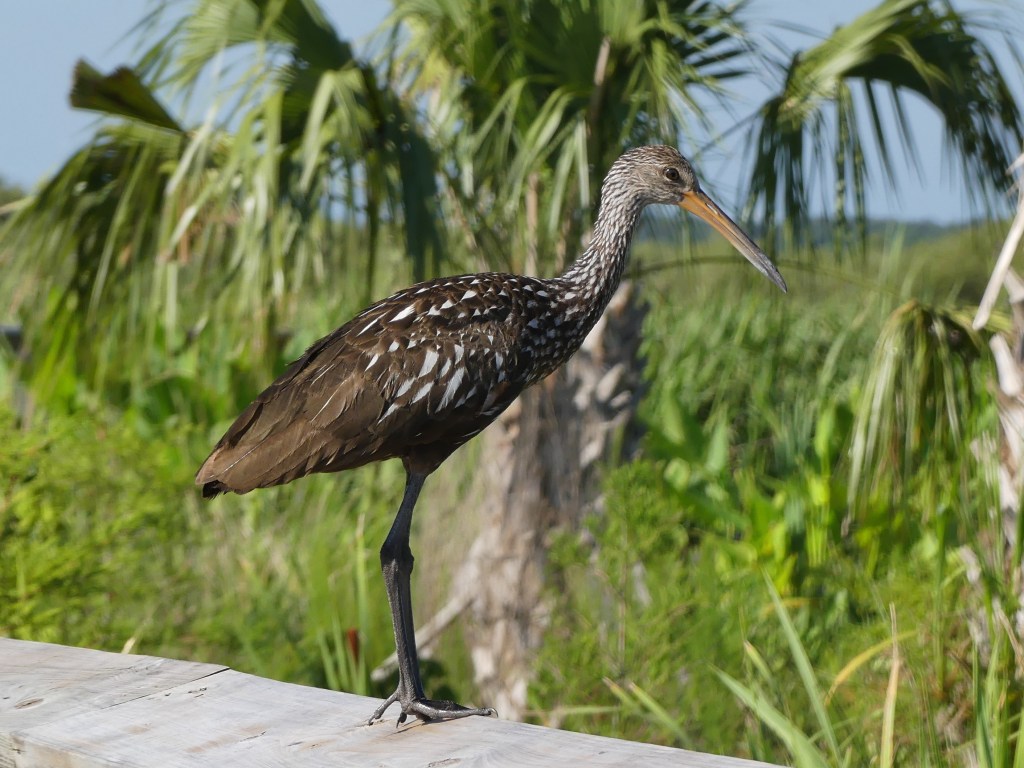
We saw a Limpkin, a very familiar bird from all my trips to Florida, but it looked quite different from the Limpkins I knew. Later, I learned that there are several subspecies and the Limpkins in South America are “brown-backed.” Below, the Limpkin at Limoncocha on the left and a Limpkin from Florida on the right.

We also saw an Azure Gallinule that morning. My photos are not as good as I’d like, but most were taken from a boat and we were never as close to the birds as we’d been when feeder watching.

We returned to the lodge shortly after 8:00 am for breakfast and then we drove to the town of Limoncocha for a little birding there. That’s after a boat ride to get back to the car. The lodge is accessible only by boat. We didn’t see as much as we’d hoped for, but I enjoyed watching a small colony of Russet-backed Oropendolas building their nests.

On the boat trip through the lagoon, as we headed back to the lodge, we saw a beautiful Cocoi Heron.

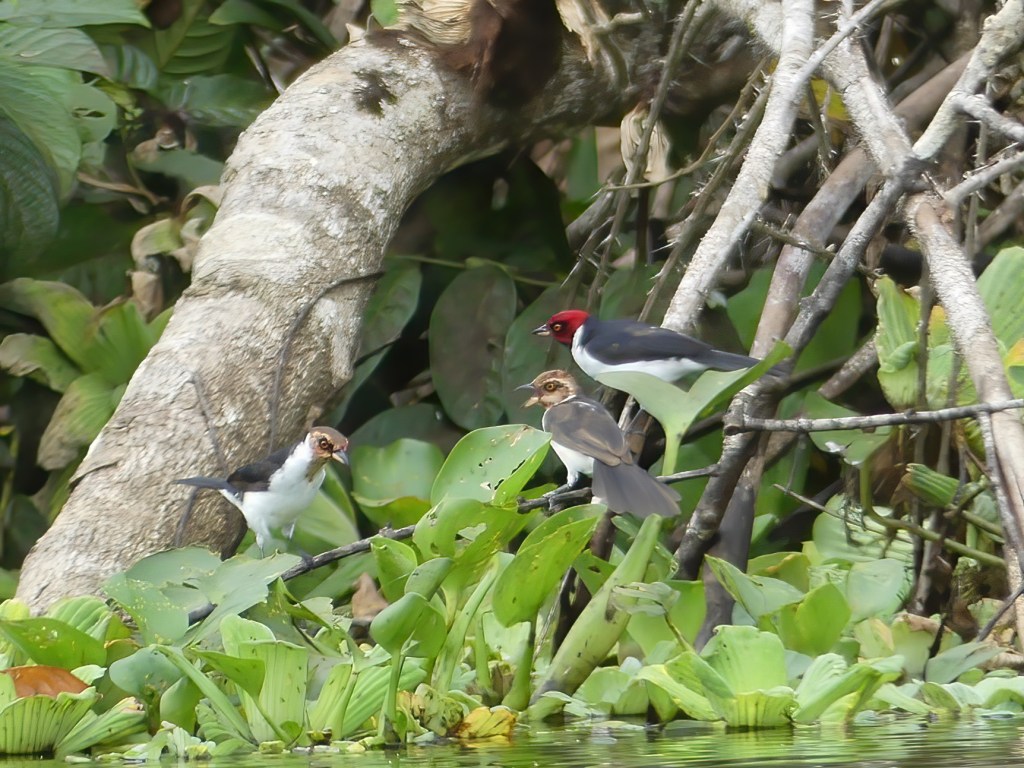
And, a family of Red-capped Cardinals.

After lunch and a little rest, we spent more time on the lagoon. It was nice seeing many Snail Kites, one of the few familiar birds there. This immature bird was especially cooperative.

One of my biggest surprises was a Ferruginous Pygmy Owl that we first heard, and then saw, in the top of a tree on the far side of the lagoon. This was the bird that I missed in Texas a few years ago, so it was especially sweet to get it on my life list.

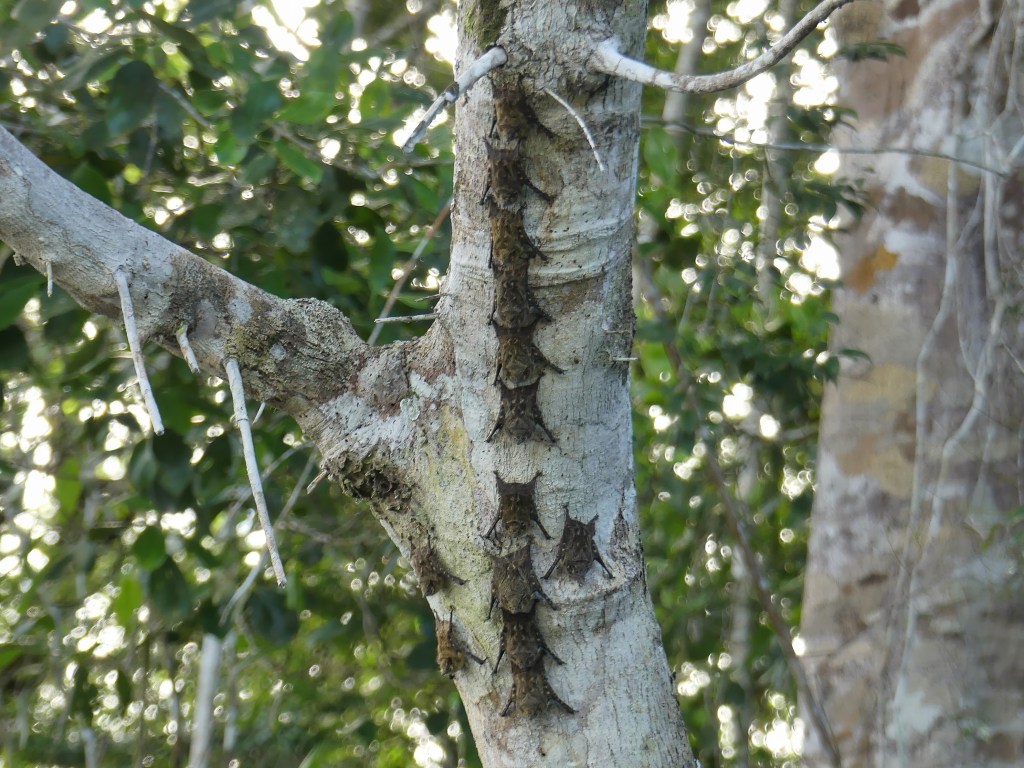
Limoncocha lagoon teems with all kinds of wildlife. We saw mostly birds, but I was thrilled to also see these Proboscis Bats roosting on a tree.

Black-capped Donacobius had caught my eye when I was preparing for the trip by reviewing photos of birds seen in the Amazon basin. We saw them earlier, but Xavier and Wymper worked that afternoon to find these shy birds again so that I could have a better look and get photos.

Just before dark, Wymper found our last target, perhaps the most bizarre bird of all the Amazon, a Horned Screamer. This delightful blog post, Screaming Unicorns, includes a video link. This National Geographic article describes the sharpened bone spurs on the wings of these unusual birds. Even a Harpy Eagle wouldn’t mess with these huge birds!

In a day and a half, I had 18 life birds. But, wait, there’s more! After our final boat trip back to the reserve headquarters on our last morning, we had one more bird to see. Antpitta #6 of the trip was White-lored Antpitta, trained to come for worms by a local birder.

When I think back on these two days and nights at Limoncocha, it truly feels magical – the lemon-green lagoon, fantastic birds, fishing bats, glow worms. Striated Herons so thick they jumped out of the way by the dozen when we powered the boat through shallow areas. Common pauraque calling in the wee hours of morning.

Limoncocha is more accessible and much more affordable than the fancier lodges two hours farther down the Napo River. If you are interested in a trip like this, I recommend Xavier Munoz of Neblina Forest.

Read Full Post »