A Bat Falcon perched atop a pole eating a bat symbolized an auspicious start to the day. We were on our way to Avistamiento de aves doña Dora, which The Birders Show calls “the best backyard birding on earth.” Lisa and I agreed after our visit later that day, but our guide, Gilberto Collazos Bolaños, had other plans for our morning.
First was a stop at an amazing spot along the roadside. One of my favorites here was a cooperative Bay Wren. I have heard this bird and had quick glimpses of it on other trips, but I never managed to get a good look at it. This one hopped around in the grass showing off its pretty bay-colored back and striking face and underside. I was thrilled.
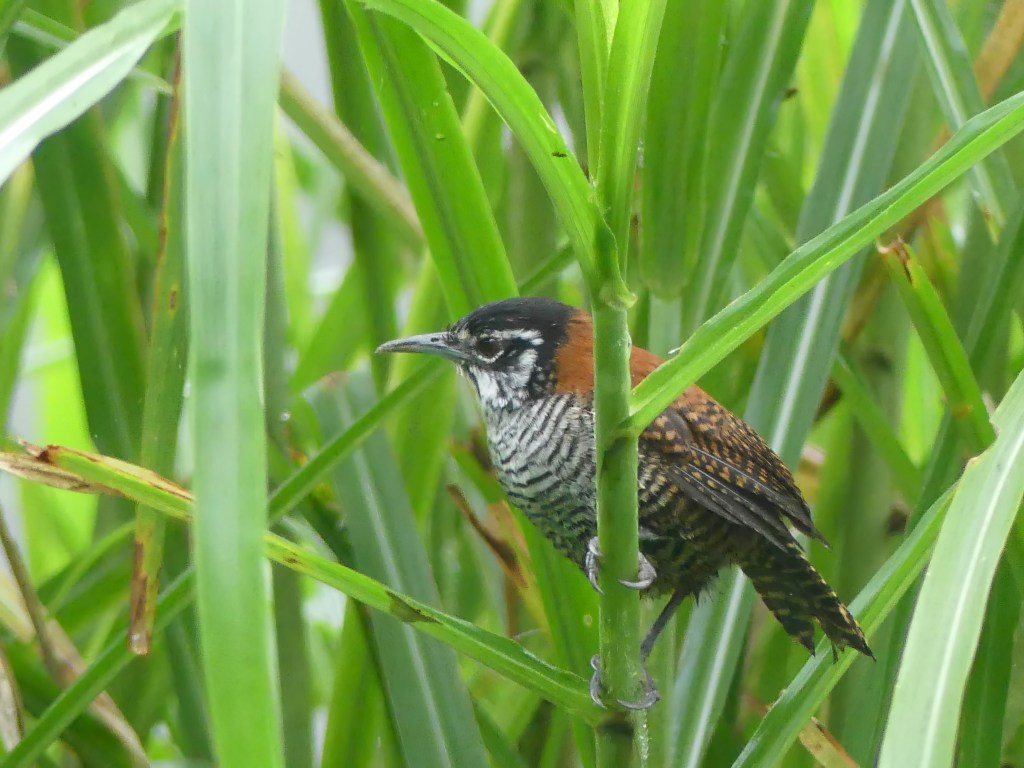
Our main target here was Crested Ant-Tanager and we had good looks at two of these birds that occur only in western Colombia. Do you think it looks a lot like our Northern Cardinal? Taxonomists originally placed this species in the tanager family, but later moved it to Cardinalidae, so you are right.

One of the cutest birds at this location was this Ornate Flycatcher.

It was hard to leave, but after our little group tallied about 30 species, we moved on for a quick stop to see the Lyre-tailed Nightjar on her nest by the roadside.
We arrived at Doña Dora just after 10:30 AM. There were so many birds that it’s hard to know where to start. As promised, it was amazing.
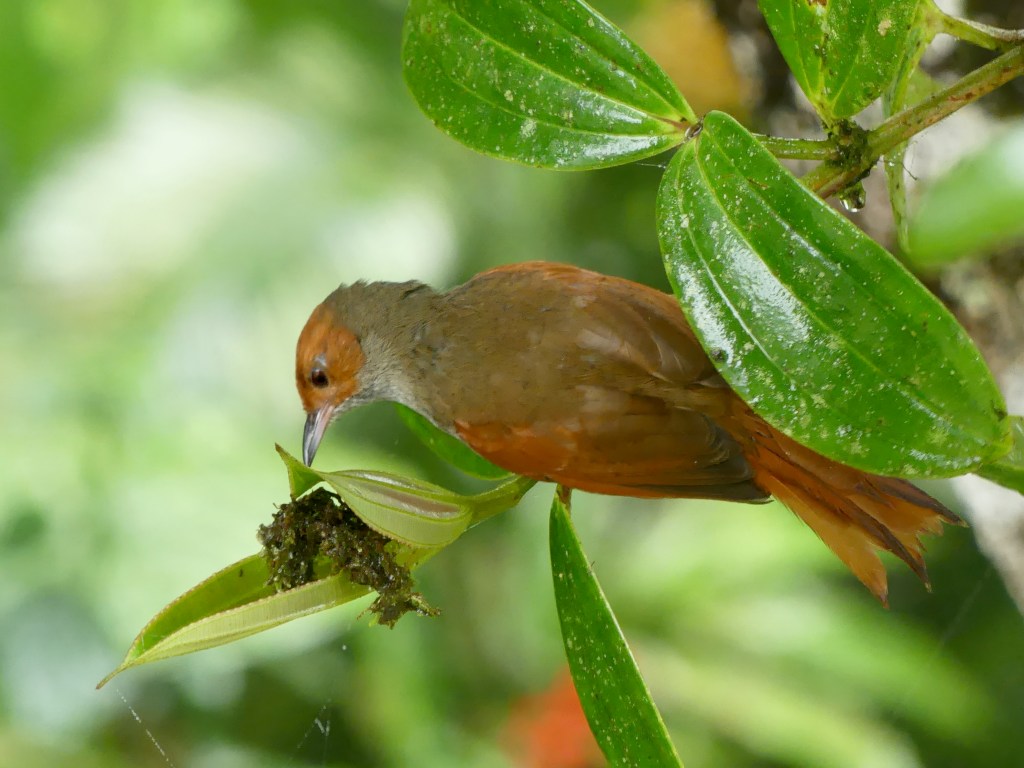
In addition to watching birds from the backyard at Doña Dora, you can go up on the roof for tree-top views. Several species were easier to see here including this Red-faced Spinetail. Spinetails have been skulky and challenging for me, so I was pleased that this bird was easy enough that I got both good looks and a photo.
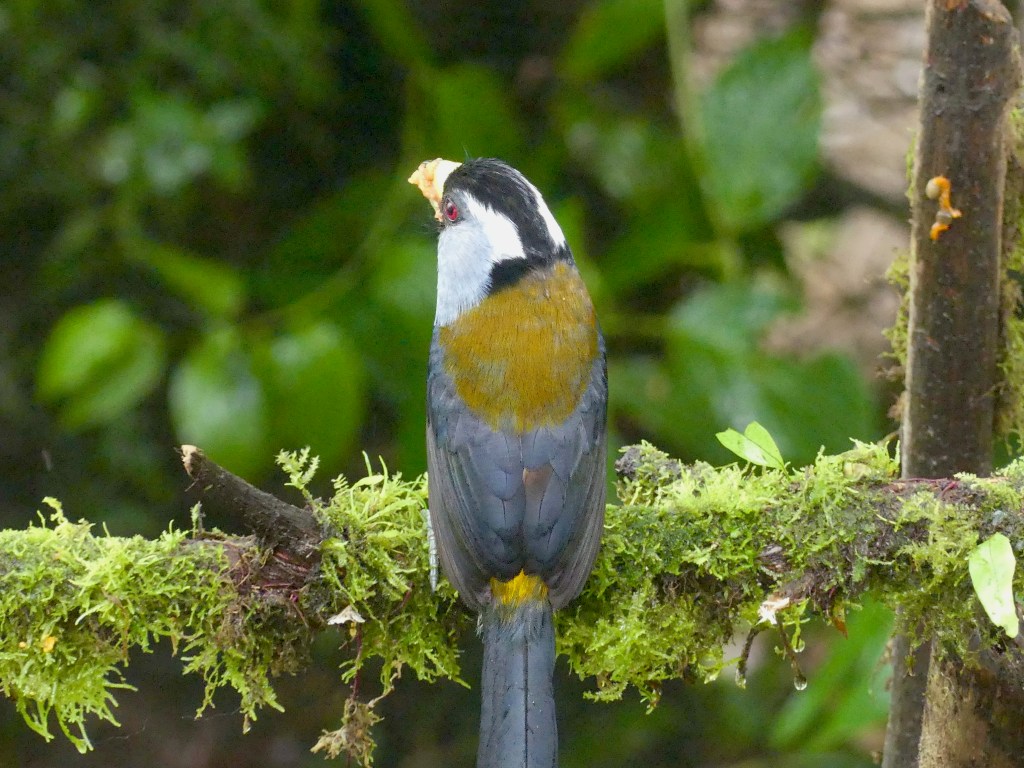
Doña Dora is located in the Chocó bioregion, an area between the Pacific Ocean and the Andes Mountains that runs from southern Panama through Colombia to northwest Ecuador. This is one of the most biodiverse areas on earth and it hosts over 50 endemic bird species, birds that occur nowhere else on the planet. One of these birds, the Toucan Barbet, is the star of Dona Dora. I was fortunate to see this beautiful bird in Ecuador on my 2021 trip with Xavier Muñoz of Neblina Forest. I wrote about this interesting species in Ecuador 2021: Sachatamia (Part 2 of 6). This time I was armed with more information and I was determined to distinguish the male from the female and get photos. The male, on the left, clearly has black tufts on the nape of his neck; the female (on right) does not have tufts.

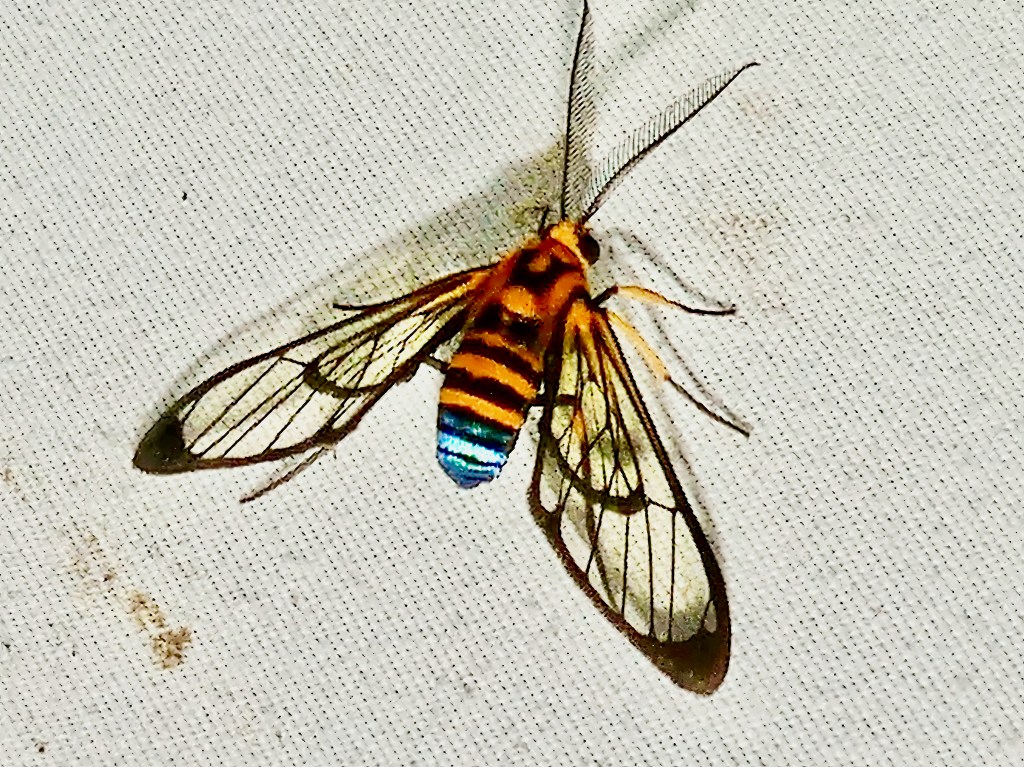
Monday, November 13, was our last full day in Colombia and we spent most of our time at La Florida or nearby. I loved having time to do things around the lodge like checking the moth sheet early in the morning. I believe it is set up to attract birds, which come to feast on the moths for breakfast. I enjoyed seeing birds there, but I also liked the moths for themselves and not just as bird food.

Below are some of the beautiful moths that I photographed on the sheet.



Lisa works for Manomet, a non-profit organization dedicated to bird conservation in the Western Hemisphere. Manomet accomplishes much of its work with local staff throughout the Americas. Lisa works with Jeisson and Vi who are located in Cali, but she had not met them in person. Happily for all of us, they came up to spend the morning birding with us.

We walked the road by the lodge and the others saw many birds. I had a bit of difficulty as usual, but when Jeisson and Vi learned that I was obsessed with all living things, they pointed out many interesting little critters on the roadsides. Below, my favorite grasshopper of the trip and one of the four tarantulas that we saw that day.


Lisa and I met Luis, the owner of Bosque de Niebla, when he brought clients to look for birds at La Florida. He offered to take us owling and we decided that would be a great way to spend our last evening. First we went to see Julio, the Black-and-White Owl that I had seen on my first night before Lisa arrived. Next we drove the roads that Luis knows so very well and he found a Tropical Screech-Owl for us. I had put this species on my life list when I heard it in Ecuador in 2021, but it was great to move it to the seen list.
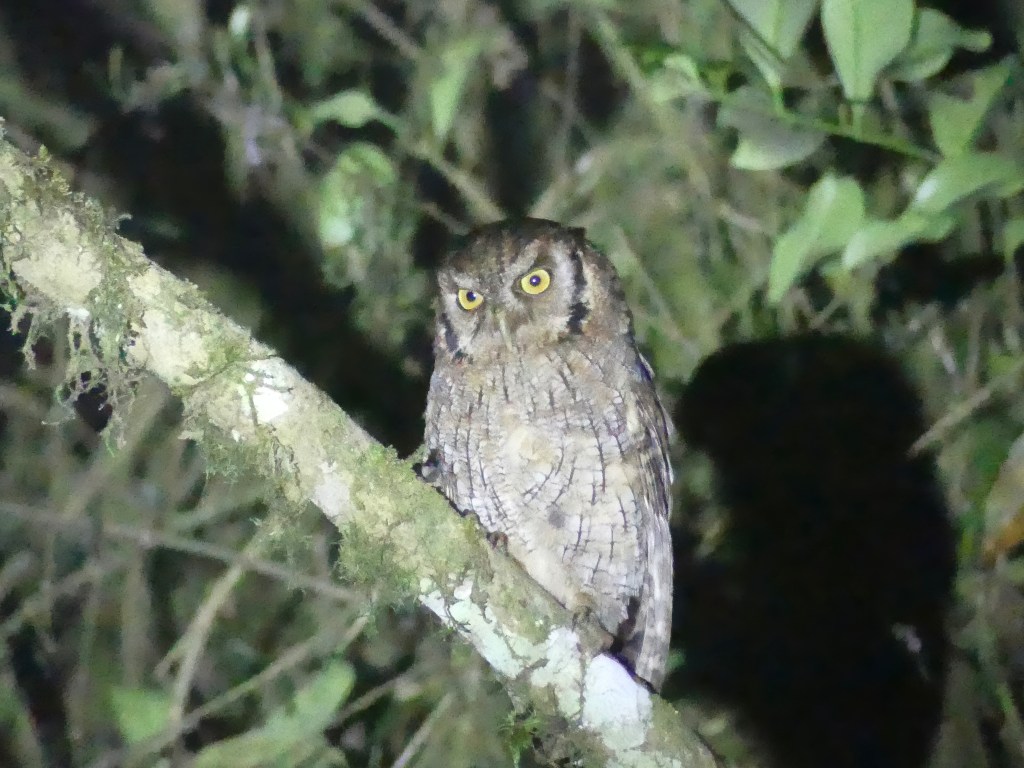
Our last owl for the evening was appropriately, Mottled Owl. We had been hearing one of these owls call every evening and it was wonderful to finally see one.

Lisa left for the airport early Tuesday morning. We both could have happily stayed in Colombia much longer, but we had packed a lot into a few days. My flight was a bit later, so I spent a pleasant, lazy morning soaking in the beauty of La Florida El Bosque de las Aves.

Javier spent some time with me and showed me around the lodge and the neighboring area. By now, he felt like an old friend and I was sad to leave his beautiful lodge, but finally I had to say goodbye.

Lisa has made me a fan of short trips when longer trips are not possible. For a complete list of the birds that we saw and heard, see our eBird trip report, Colombia – November 2023. My iNaturalist observations can be found here.





 Birding for Life