Feeds:
Posts
Comments

Posts Tagged ‘Lark Bunting’

David flew home on Monday morning, June 12. I was tired after all the adventures of last few weeks, so I took it easy the rest of the day and revisited Custer State Park. This time I stopped and walked around beautiful Sylvan Lake.

I enjoyed the walk even though I did not see a lot of wildlife other than a few families of Canada Geese on the lake with their adorable goslings.

Next, I drove the 18-mile wildlife loop road again. eBird lists 167 species for this hotspot, but I reported only 15 species that day. I believe that I would have seen more if I had started earlier in the day and been more familiar with all the trails and side roads. Regardless, I was happy to have another visit to Custer State Park. I saw a few birds, Common Ringlet butterflies, and some interesting plants, mostly on the Prairie Trail.

Do you remember Scott Rager from my last post? I had met Scott at the LAK Reservoir near Newcastle on the day that I drove from Deadwood to Edgemont. I find most birders to be friendly and generous, but Scott was exceptional. He offered to spend an entire day with me, so we met on Tuesday morning. We started at Ruby Canyon, where I had unsuccessfully searched for Virginia’s Warbler in 2018. Scott had seen Virginia’s there recently and he got a quick look again with me, but I wasn’t fast enough to see the bird. We spent a long time at the watering trough, but the much-wanted warbler did not show up. The Chipping Sparrows loved the water, though, as did a pair of Black-headed Grosbeaks.

Roby Canyon was the only location during the trip where I saw the gorgeous Weidemeyer’s Admiral, a new butterfly for me.

After a delicious lunch at a local Mexican restaurant, we birded a few areas near Newcastle. We added several common Western species to my list and a “rare” (flagged as such by eBird) Eastern Phoebe, normally a more Eastern species, that Scott had found earlier in the breeding season. I had started the day with 45 Wyoming birds and had 60 by the time we headed to Scott’s place as dusk approached. As we sat watching the feeders and chatting, it seemed that we were too late to see a Lewis’s Woodpecker. Then, just before dark, this stunning bird came in for a late dinner. Scott sometimes has half a dozen of these gorgeous birds in his yard, but I was thrilled with just this one. I’ve never had better looks and it was a wonderful end to a great day.

The next morning I got a little later start than I’d wanted and I had to go to the grocery store. The hotel I would be staying at that night had suggested that I bring food as there was none available there. Later in the day I would regret the delay, but by day 19 of a trip I am not my most efficient. So, I headed south and after a quick spin through Lusk Cemetery (Orchard Oriole, Wyoming #63), I was in Nebraska.

The drive to Henry Road was a bit longer than I had expected and I arrived at 11:12 AM. Henry Road is a dirt road on open range and I did not see another person the entire time I was there. I did not see a lot of birds either, but this location is popular among birders for the prized species that do occur. I saw Horned Larks on the fence wires and in the road, a common bird in the West and not my target.

The avian stars of Henry Road are the longspurs – Chestnut-collared and Thick-billed.

I did not get great photos of either longspur as I’d hoped, but these are special birds, and it’s always a treat to see them. Sadly, their range is quickly shrinking. Just a few years ago, they were regularly found in Thunder Basin National Grasslands, where I had been a few days earlier, but none were reported in Weston County (Wyoming) this year.

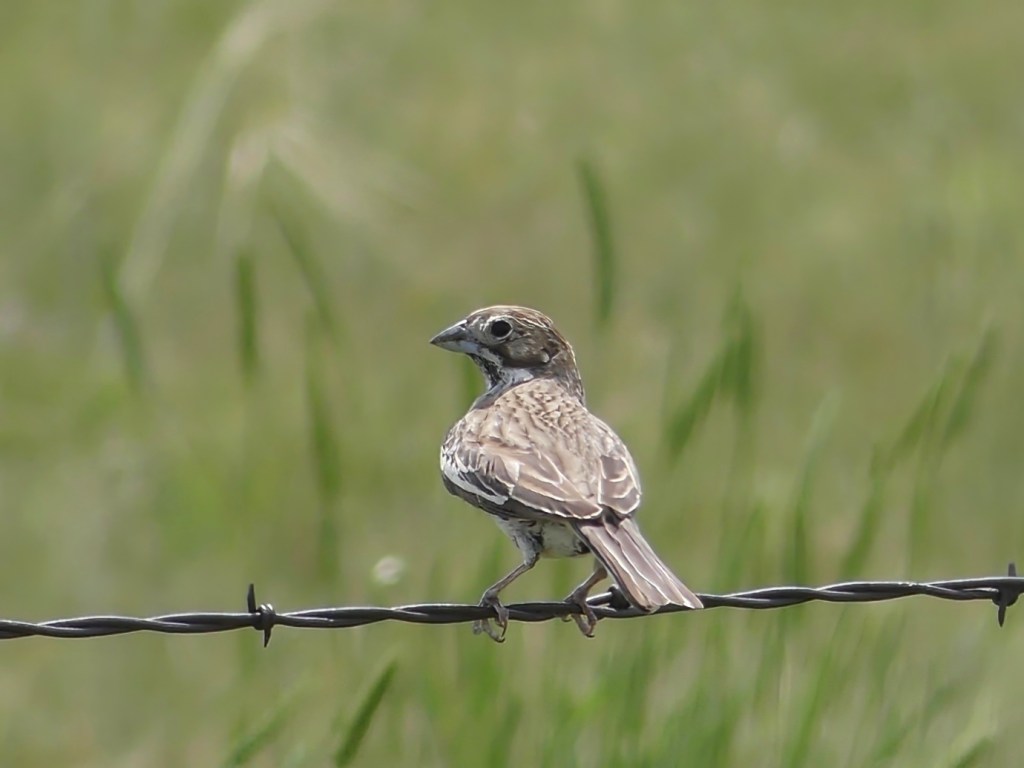
I also saw quite a few Lark Buntings. Below, a female or immature bird, which looks so different from the adult male.
Another treat was a singing Brewer’s Sparrow.

I spent over 3 hours on Henry Road, much longer than I had intended, and my exit was delayed even more by these cows. There was a cattle guard between my car and the cows and fences on both the right and left sides of the road. The only way out was where those cows were standing. They were oblivious to my horn and just did not want to budge. Once again, I’m sure my friends worry about all the wrong things on my solo road trips. Who would have guessed that a herd of cows would hold me hostage? After much slow and tedious effort, I was able to get through an inch at a time. Literally, those cows would back up only one small step when I slowly crept forward.

Finally, I was back on the highway and drove towards the little town of Lakeside. From there, I turned south towards Crescent Lake NWR for 28 miles on a once-paved road now just crumbling asphalt, dirt, and rocks. I didn’t mind the road at all; my only regret was getting there so late that I could not spend hours and stop as often as I wanted to soak in the beauty. It was amazing and my words are inadequate to convey the awe I felt as Long-billed Curlews and Willets flew overhead calling.

American Avocets, the color of dreamsicles as a friend once described them, Wilson’s Phalaropes, and multiple species of ducks foraged in the little ponds.

I saw several Upland Sandpipers. I am pretty sure that this one and another that was with it are “teenagers.”

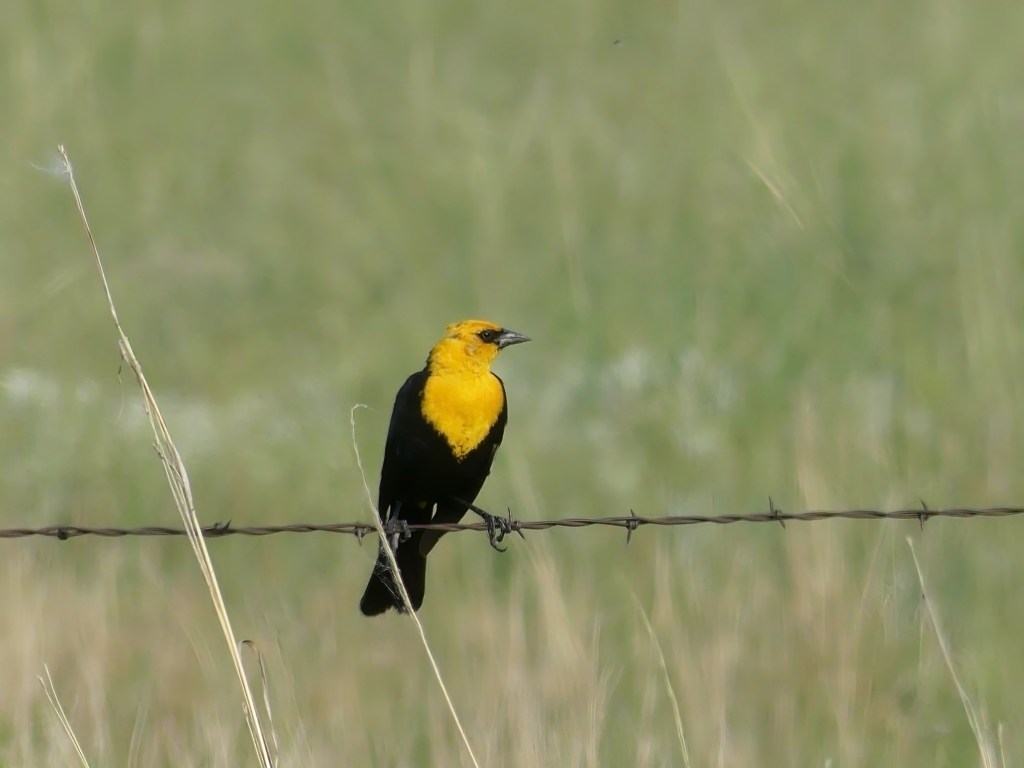
Yellow-headed Blackbirds are one of my favorites.
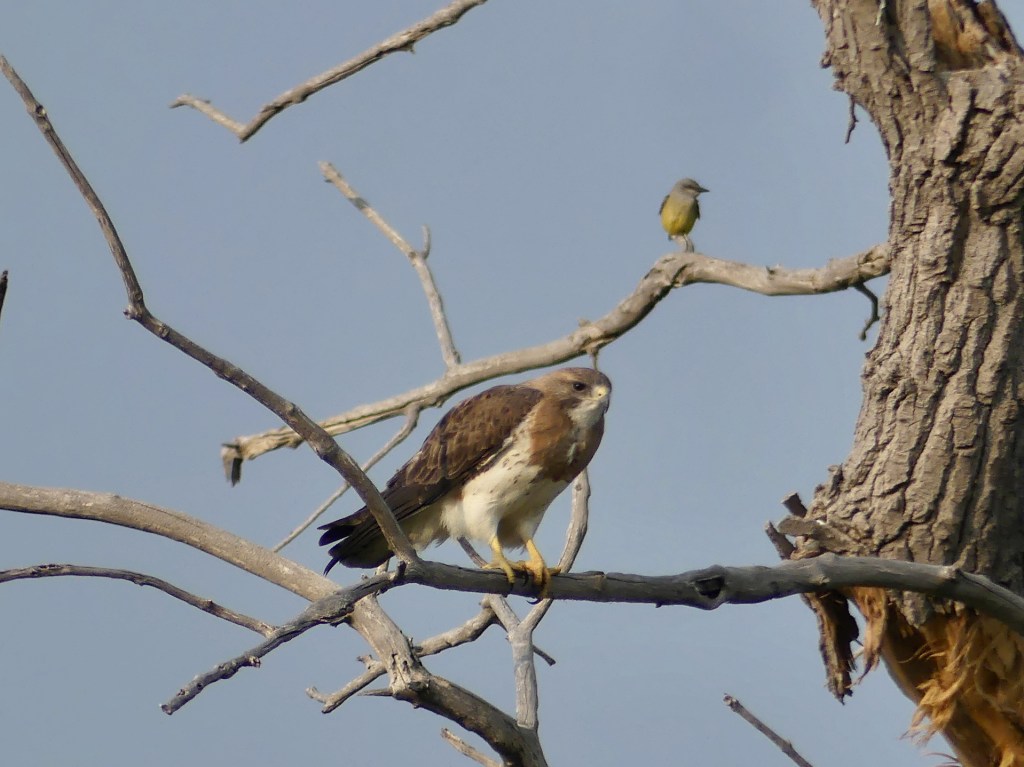
I can’t leave out a Swainson’s Hawk on any story about a trip west. This one came with a bonus Western Kingbird.
This pretty Ornate Box Turtle was also on the road to Crescent Lake NWR.

Because of my poor time management earlier in the day, I had only 2-1/2 hours on this incredible road. This is my favorite kind of birding and I’m now inspired to do a “dirt and gravel road” trip out west.

All that was left after this wonderful day was the long, tedious drive home. I didn’t have quite as much ambition for county birding and iNat as I had on the long drive at the start of the trip. I put in some effort, though, and was rewarded with a Giant Walkingstick at a McDonald’s drive-thru window in Oklahoma.

I accidentally reset my trip meter, but I’m pretty sure that I drove about 6,250 miles on this trip. It was a lot of time behind the wheel, but the rewards were worth it.
Read Full Post »

Diane and I left our hotel in Luverne, Minnesota, on Tuesday, May 30, and headed west across South Dakota. We met in SD in 2010 and both of us have birded quite a bit in the state, so we didn’t plan any stops other than at rest areas until we reached Badlands National Park.

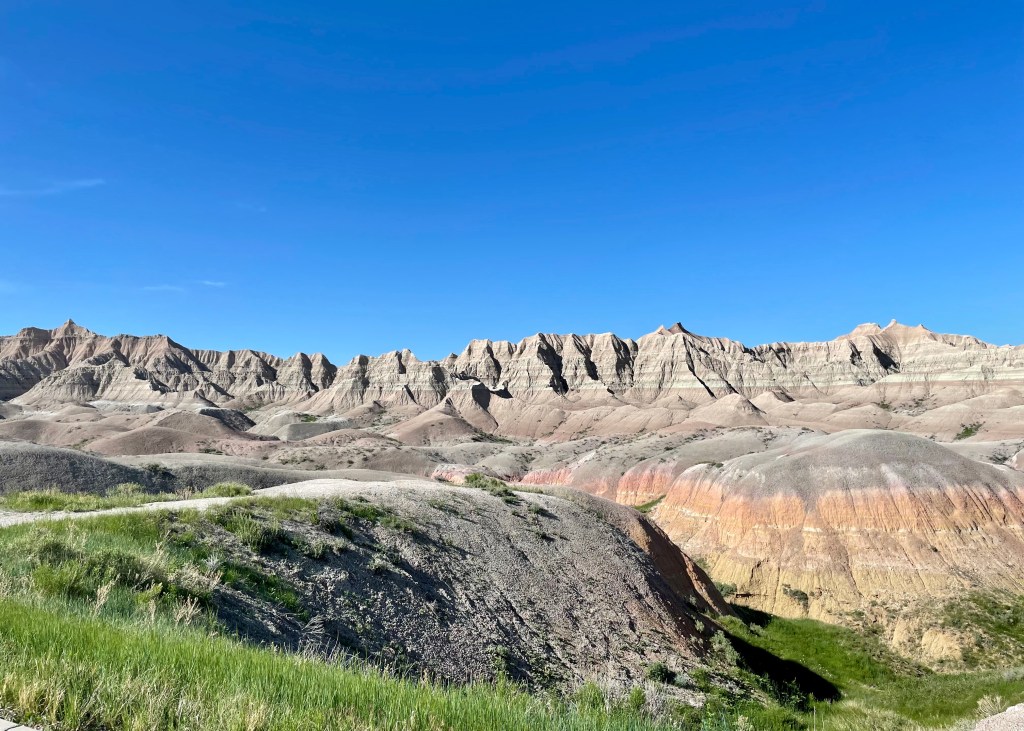
I had reviewed bird lists for the park to prepare for the trip, but I had not looked at any photos of the landscape. Thus, I was absolutely awestruck upon our arrival that afternoon. I was instantly, madly in love with this place. The only words that I can find – beautiful, dramatic, rugged – seem inadequate and my amateur photos do not do it justice. If you have been to South Dakota’s badlands, you know what I mean. If you have not been there, go! Put it on your bucket list.

The stark contrast between vast mixed-grass prairies where the buffalo still roam and extensive rock formations was very appealing to me. The section of the park depicted below reminded me of Canyonlands National Park in Utah.

Badlands National Park covers 244,000 acres. Its geologic foundation began 75 million years ago as deposits of rock built up in layers over the next 47 million years. About 500,000 years ago, erosion began as the Cheyenne and White Rivers carved their way through the landscape forming the dramatic peaks and canyons that we see today. In the photo below, the layers are especially noticeable.

Diane and I felt our attention constantly pulled between pull-overs on the side of the road to savor and photograph the landscape and the search for birds and other wildlife. We quickly learned that the secret was to get out at 5:30 or 6:00 AM and focus on wildlife first.

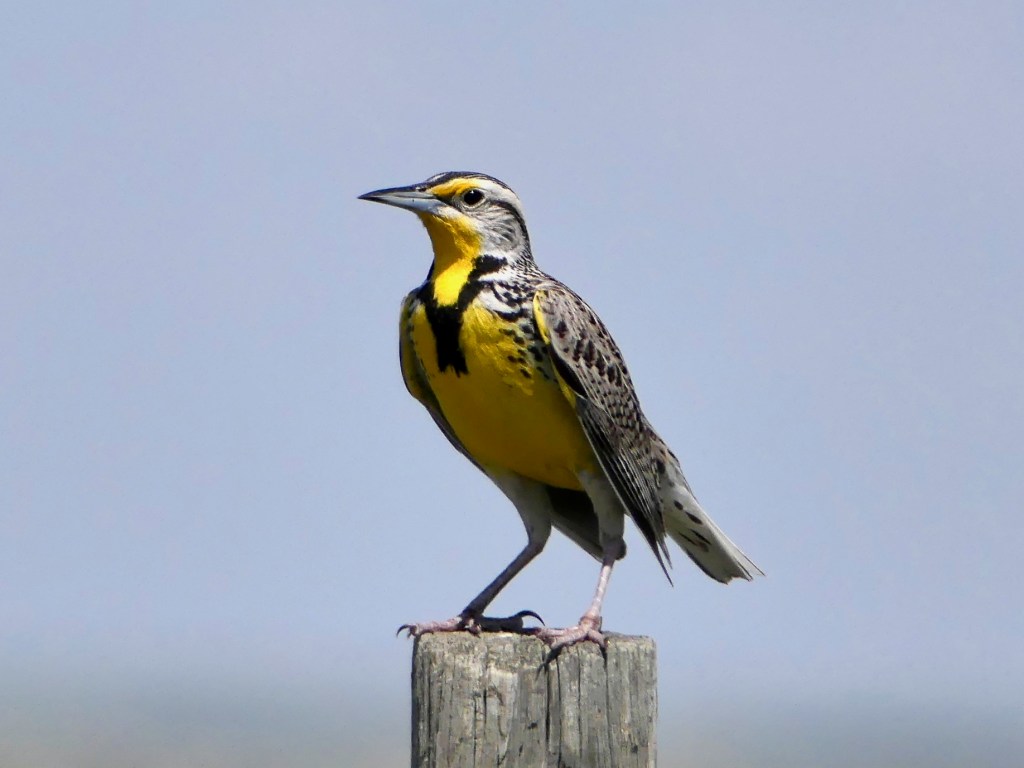
We saw many iconic species of the west with the most numerous being Western Meadowlark. Our host at the Badlands Inn called its song “the soundtrack of the badlands.” Somehow, I failed to get a photo of a meadowlark in the badlands, so here is one from an earlier trip west.

Another gorgeous western bird that we saw here (and I would see many more times during this trip) was the dapper Lark Bunting.

Birders and non-birders alike watch for other wildlife with the expected species being bison, pronghorn, bighorn sheep, mule deer, and black-tailed prairie dog.

Badlands National Park is in the heart of historic bison range. Before European settlers arrived, about 30 million bison inhabited North America, but by the late 1800’s they were nearly gone. A project to reintroduce bison to the badlands was started in the 1960’s. A major conservation achievement resulted with a healthy herd of nearly 1,200 individuals. Read more about this project and learn how bison improve the prairie ecosystem for all its inhabitants in Bringing Bison Back to the Badlands.

Like most Americans, we wanted to see our national mammal. We saw more than 100 bison with many in the distance and some right by the road.

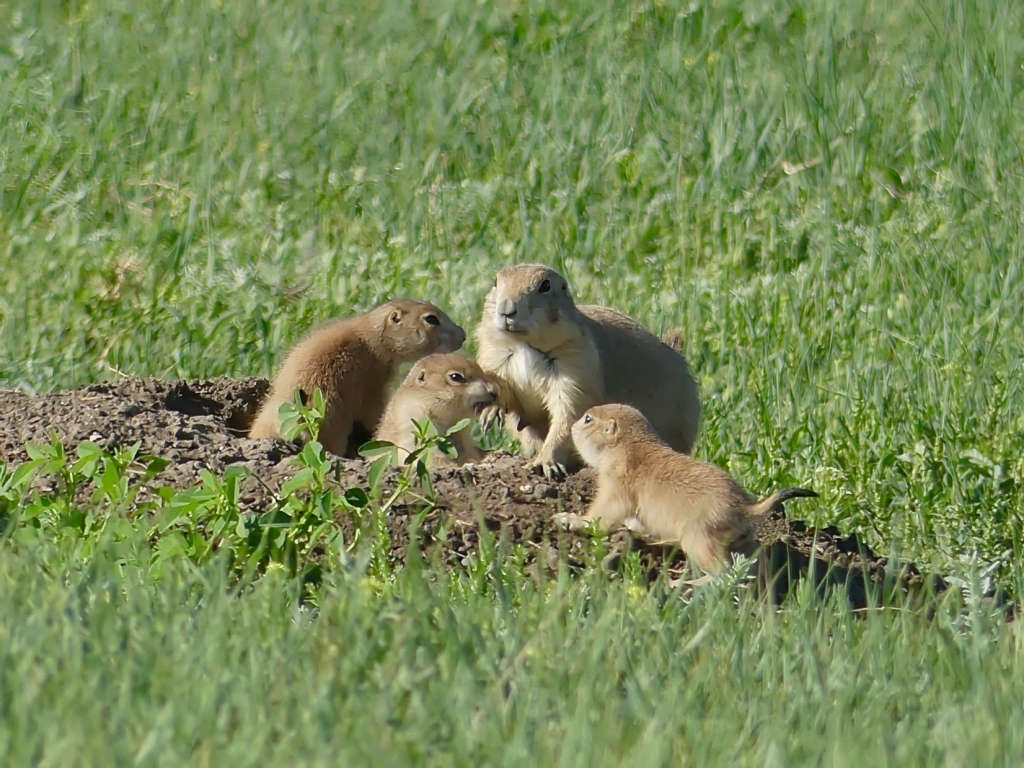
We also saw hundreds of prairie dogs. We especially enjoyed watching the families, some with as many as five babies. We called these adorable little creatures “puppies” and later learned that we weren’t far from the correct term “pups.”

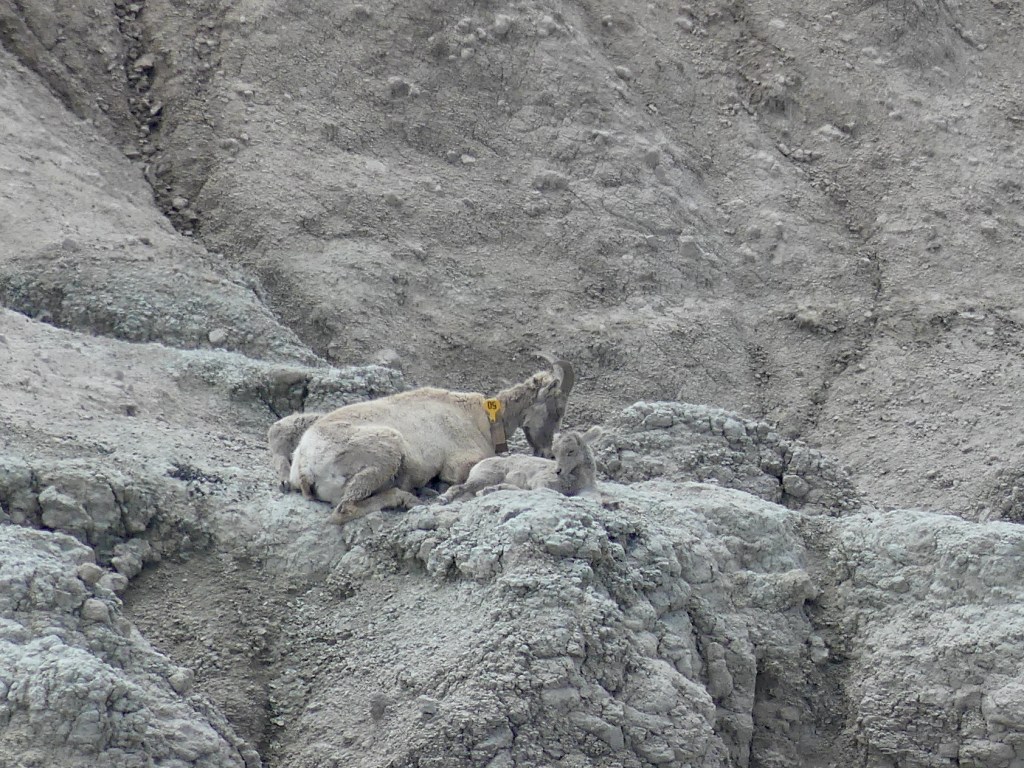
Bighorn sheep were not as numerous, but we found several at the Hay Butte Overlook.

A week and a half later I would return with David and we would see sheep again at the same overlook, but high up in the rock cliffs. That group appeared to be all females with their babies.

My biggest surprise (and disappointment) with wildlife was not seeing a single snake or lizard, despite signs everywhere warning of rattlesnakes. My only consolation was this cute Woodhouse’s Toad right outside our motel room.

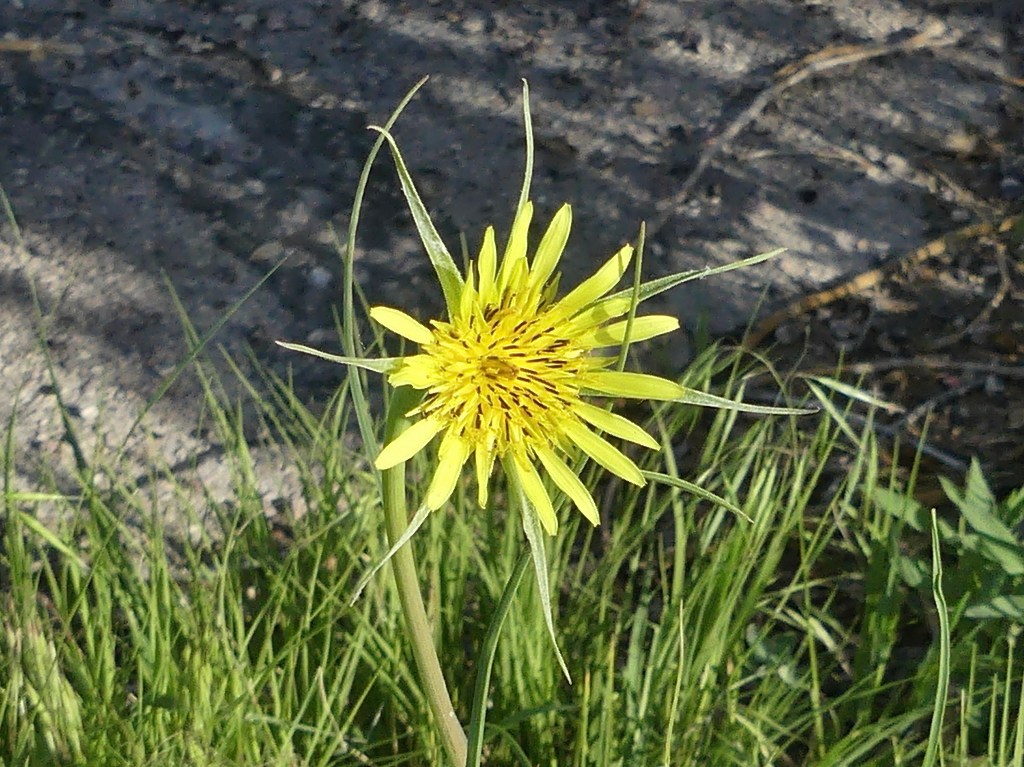
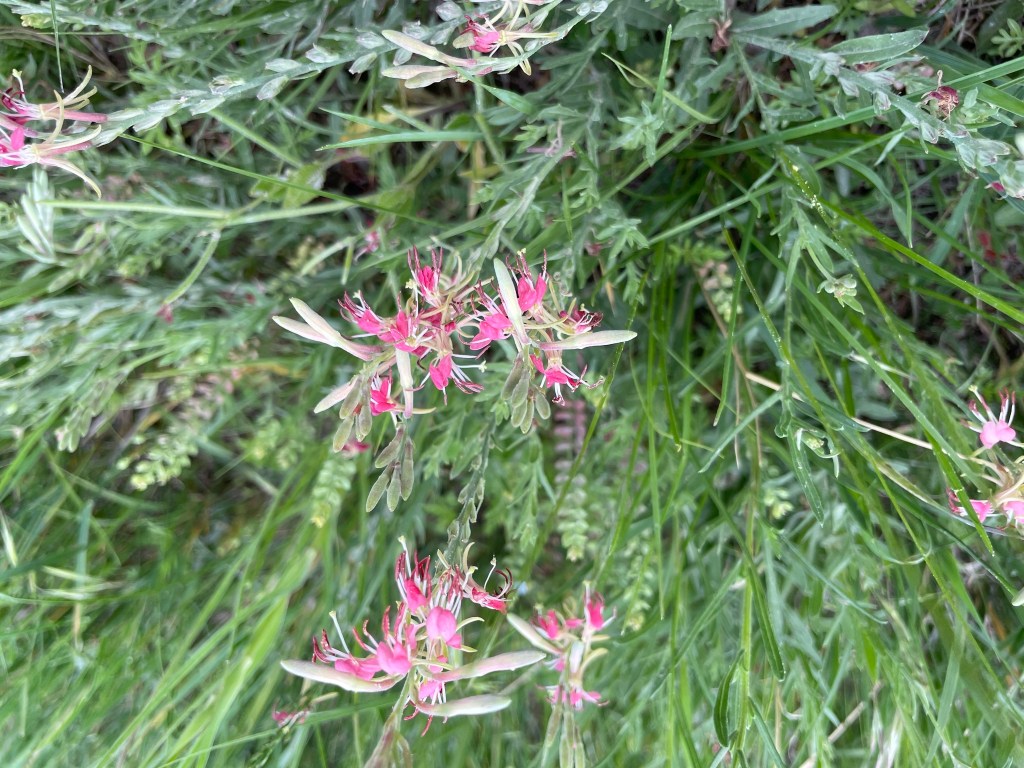
As in Minnesota, wildflower season was just beginning and we found some pretty flowers.

Some of the flowers above were photographed at Conata Picnic Area, one of the spots that Diane and I especially liked. David and I visited the same area twelve days later and I was sad to discover that all the wildflowers on the sides of the entrance road and picnic area had been mowed down.

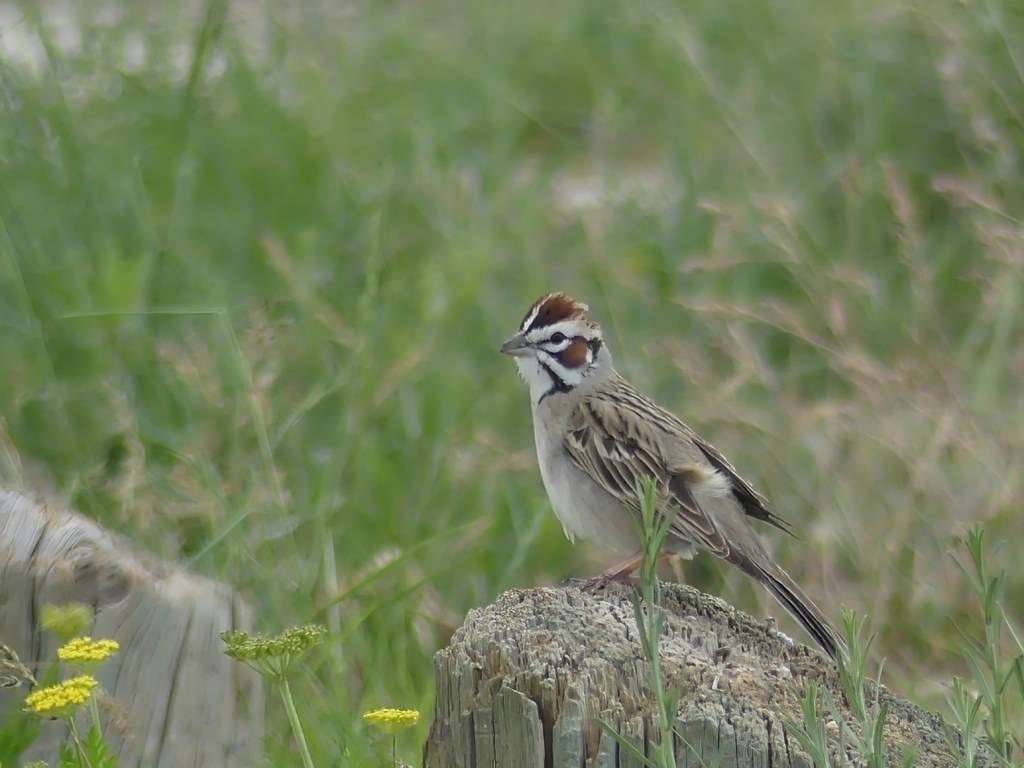
We saw birds there, too, like this pretty Lark Sparrow, a common species in the west.

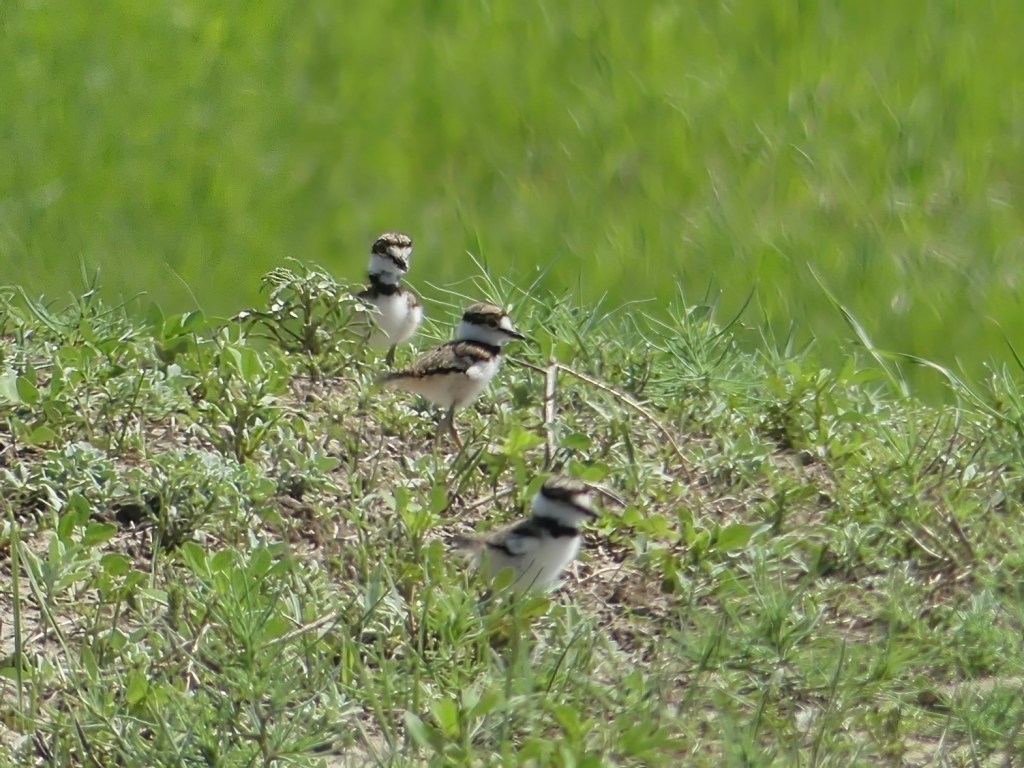
Perhaps this spot endeared itself to us because this is where we saw a Killdeer family with three chicks. Killdeer are common across the country, but we don’t see the babies often. And, babies of all species were a delightful recurring theme on this trip.

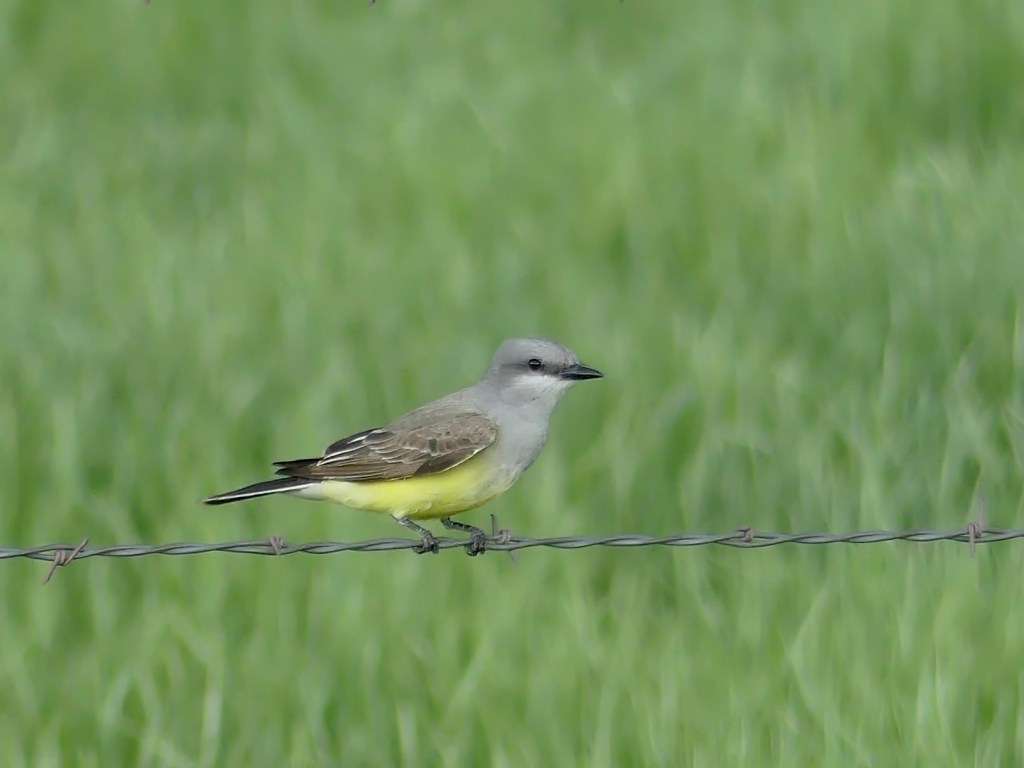
This Western Kingbird was also nearby. Birds that are common in the west are not common to us and we loved what felt like a visit to old friends that we do not see often enough.

We saw birds that are common in the east, too, including many Red-winged Blackbirds, Common Grackles, and Brown-headed Cowbirds. I tried to ignore the cowbirds, but how could I when one posed so nicely?

We never tired of stopping to photograph the ever-changing landscape. Sights like Yellow Mounds, a favorite spot of many park visitors, constantly awed us. Yellow Mounds (photo below) gets its mustardy color from the mineral goethite. The Yellow Mounds are ancient fossilized soils that geologists call paleosols.

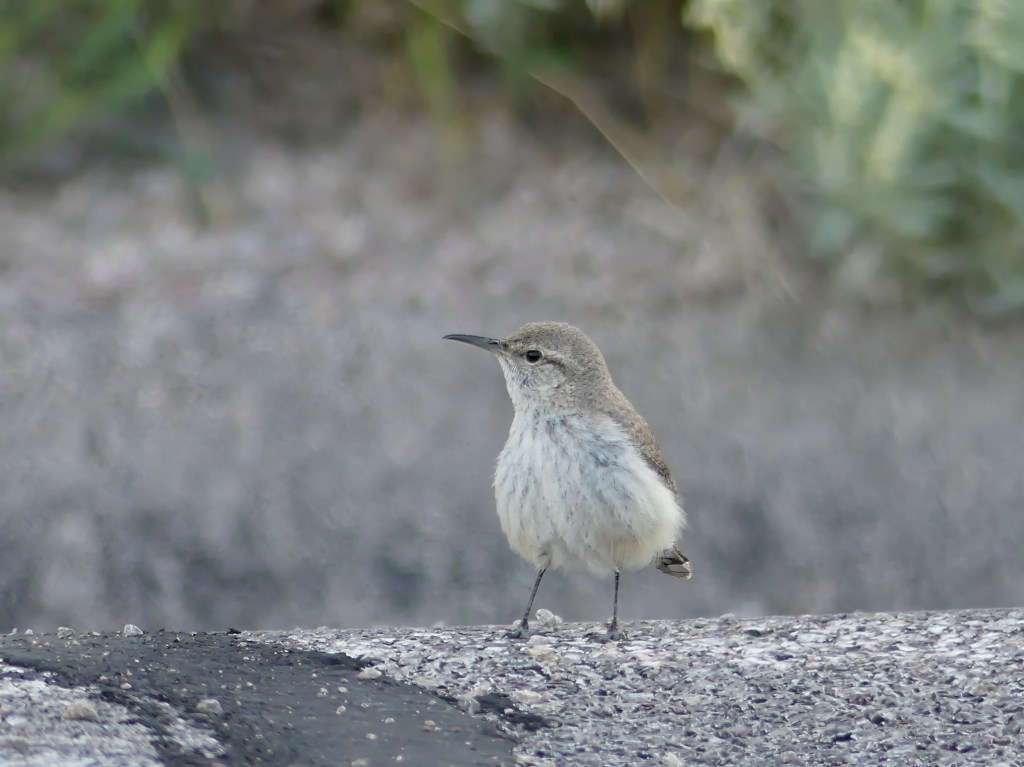
On our last morning, Diane and I got out really early and it paid off with our best views ever of a Rock Wren. It was fun to watch it move quickly along the rocky edge by the side of the road picking at insects.

Much too soon, our time in the park was gone and we had to leave for the Rapid City airport. Diane and I spent two full days in the park. Later I would return with David for one day. One day is sufficient to drive all the roads and see most of the iconic wildlife in the park. Two days is enough to also see some birds. However, I could easily spend three or four days in the badlands and not be bored.

There are two main areas to stay, Wall and Interior. David and I stayed in Wall, which has nicer (and more expensive) lodging, but I preferred Interior, where Diane and I spent two nights. Our motel was “basic,” but we were just a couple of minutes from the park loop road.

I would love to visit Badlands National Park again, but for this trip it was time for Diane to fly home and David to arrive. I would spend the next week exploring the Black Hills while David rode in RASDak, a 350-mile cycling event.

Continue to part 3, Road Trip 2023: Days 8-18 – Bikes and Birds (Part 3 of 4)

Read Full Post »