Diane and I left our hotel in Luverne, Minnesota, on Tuesday, May 30, and headed west across South Dakota. We met in SD in 2010 and both of us have birded quite a bit in the state, so we didn’t plan any stops other than at rest areas until we reached Badlands National Park.
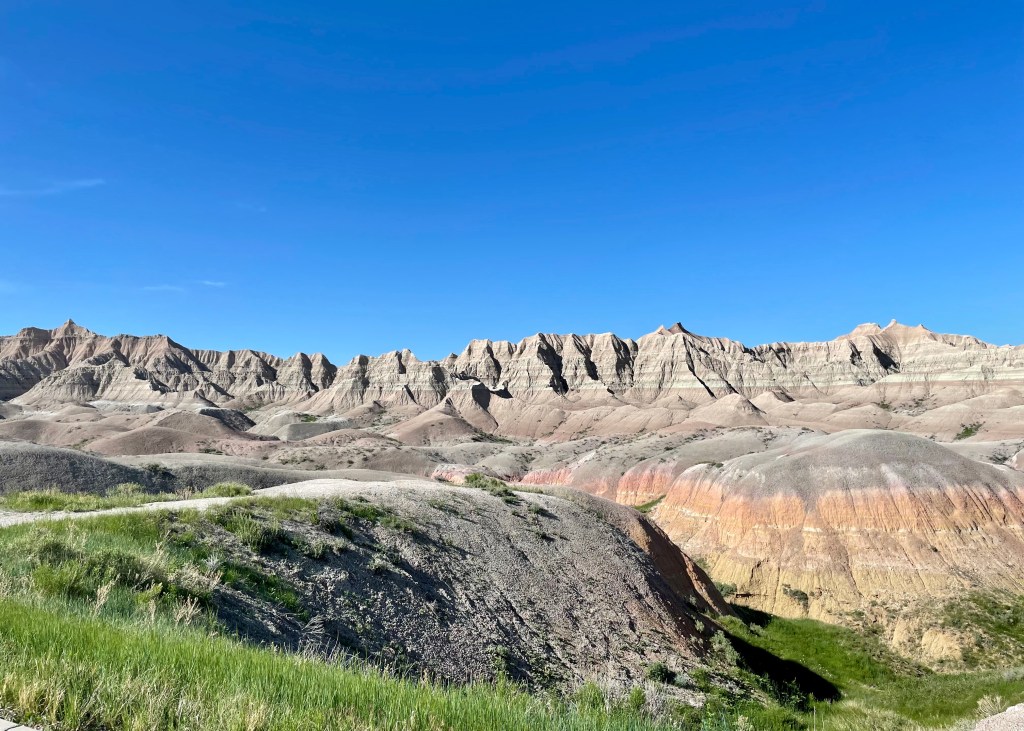
I had reviewed bird lists for the park to prepare for the trip, but I had not looked at any photos of the landscape. Thus, I was absolutely awestruck upon our arrival that afternoon. I was instantly, madly in love with this place. The only words that I can find – beautiful, dramatic, rugged – seem inadequate and my amateur photos do not do it justice. If you have been to South Dakota’s badlands, you know what I mean. If you have not been there, go! Put it on your bucket list.

The stark contrast between vast mixed-grass prairies where the buffalo still roam and extensive rock formations was very appealing to me. The section of the park depicted below reminded me of Canyonlands National Park in Utah.

Badlands National Park covers 244,000 acres. Its geologic foundation began 75 million years ago as deposits of rock built up in layers over the next 47 million years. About 500,000 years ago, erosion began as the Cheyenne and White Rivers carved their way through the landscape forming the dramatic peaks and canyons that we see today. In the photo below, the layers are especially noticeable.

Diane and I felt our attention constantly pulled between pull-overs on the side of the road to savor and photograph the landscape and the search for birds and other wildlife. We quickly learned that the secret was to get out at 5:30 or 6:00 AM and focus on wildlife first.
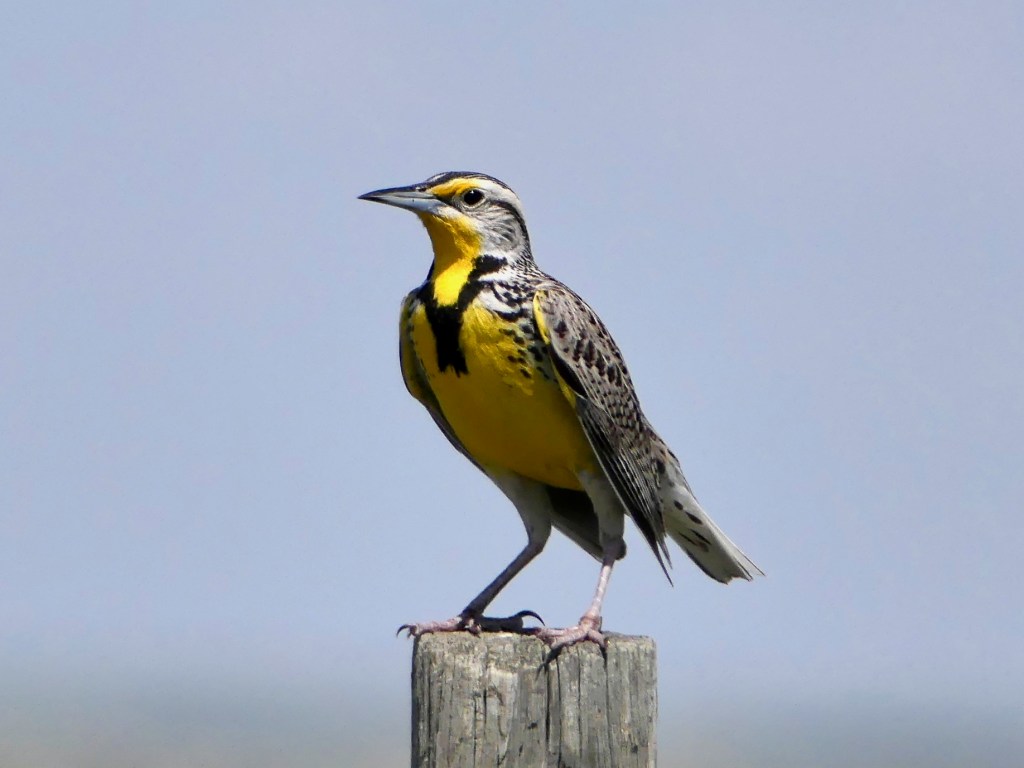
We saw many iconic species of the west with the most numerous being Western Meadowlark. Our host at the Badlands Inn called its song “the soundtrack of the badlands.” Somehow, I failed to get a photo of a meadowlark in the badlands, so here is one from an earlier trip west.
Another gorgeous western bird that we saw here (and I would see many more times during this trip) was the dapper Lark Bunting.

Birders and non-birders alike watch for other wildlife with the expected species being bison, pronghorn, bighorn sheep, mule deer, and black-tailed prairie dog.
Badlands National Park is in the heart of historic bison range. Before European settlers arrived, about 30 million bison inhabited North America, but by the late 1800’s they were nearly gone. A project to reintroduce bison to the badlands was started in the 1960’s. A major conservation achievement resulted with a healthy herd of nearly 1,200 individuals. Read more about this project and learn how bison improve the prairie ecosystem for all its inhabitants in Bringing Bison Back to the Badlands.
Like most Americans, we wanted to see our national mammal. We saw more than 100 bison with many in the distance and some right by the road.

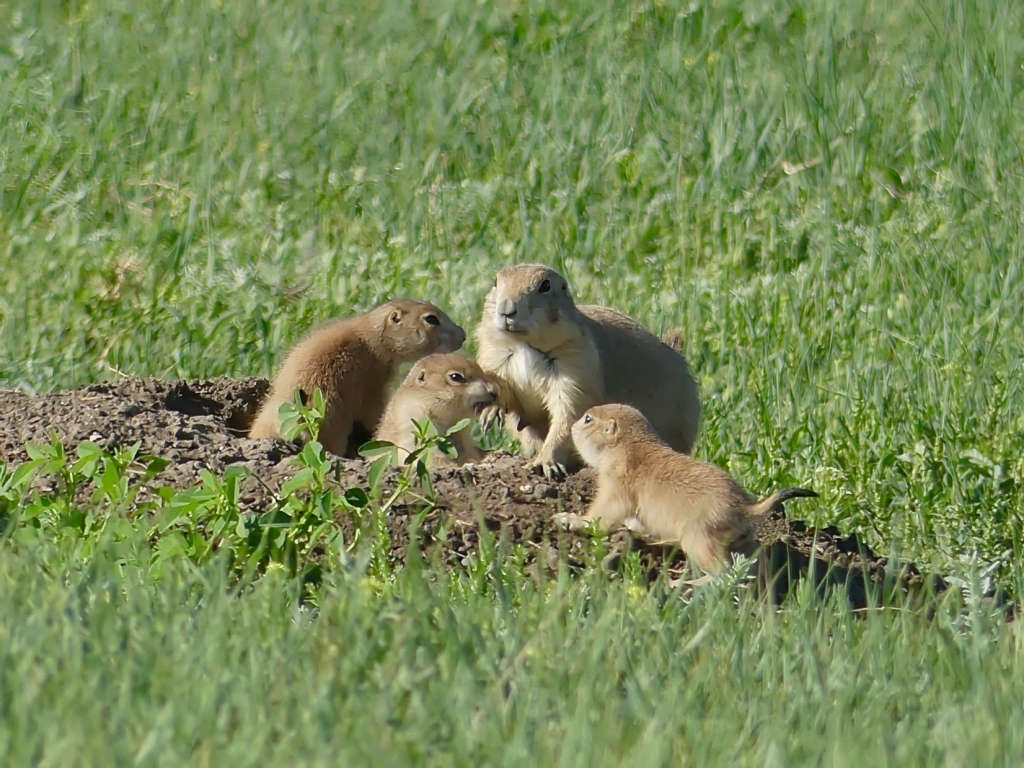
We also saw hundreds of prairie dogs. We especially enjoyed watching the families, some with as many as five babies. We called these adorable little creatures “puppies” and later learned that we weren’t far from the correct term “pups.”
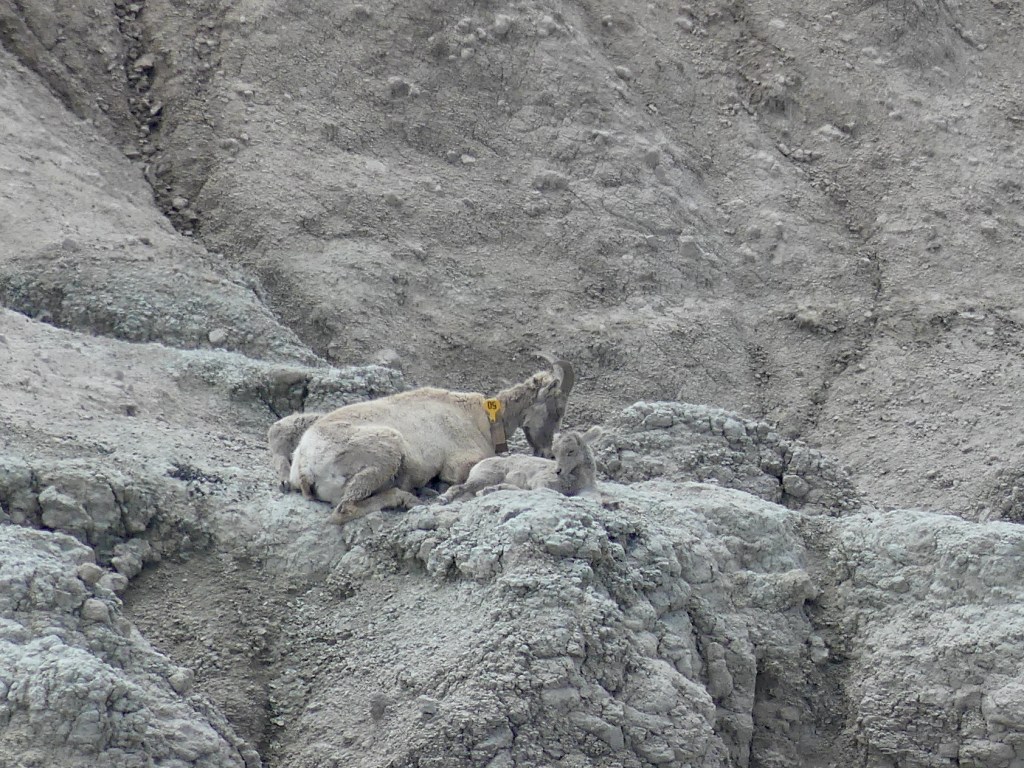
Bighorn sheep were not as numerous, but we found several at the Hay Butte Overlook.

A week and a half later I would return with David and we would see sheep again at the same overlook, but high up in the rock cliffs. That group appeared to be all females with their babies.
My biggest surprise (and disappointment) with wildlife was not seeing a single snake or lizard, despite signs everywhere warning of rattlesnakes. My only consolation was this cute Woodhouse’s Toad right outside our motel room.

As in Minnesota, wildflower season was just beginning and we found some pretty flowers.

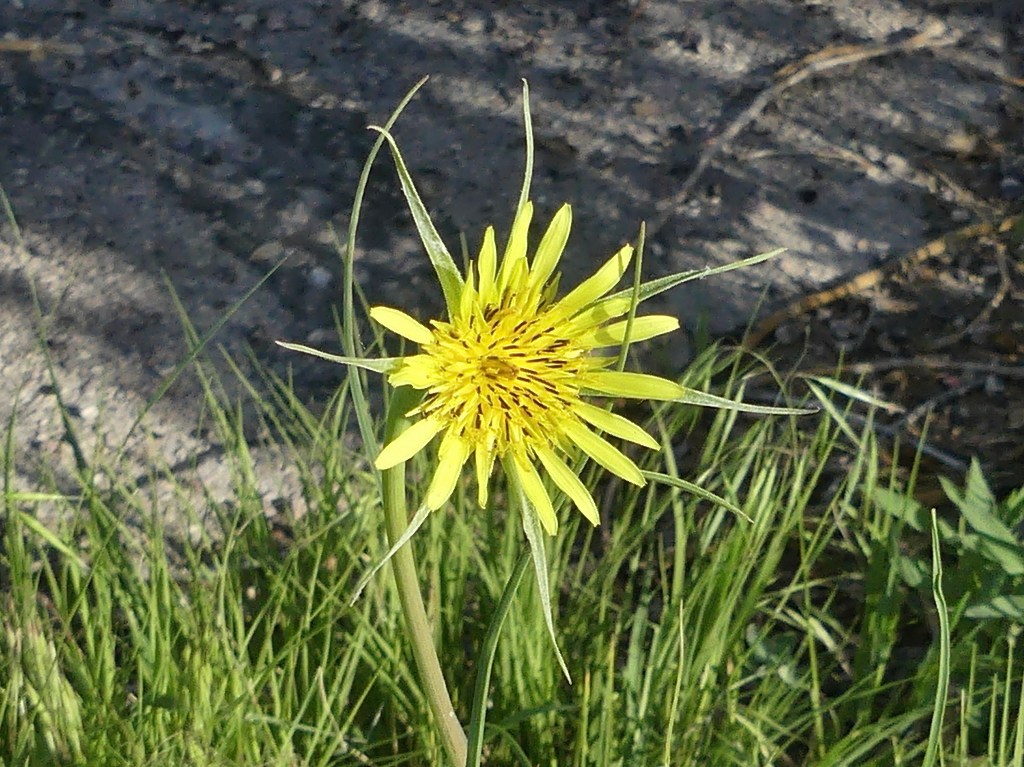
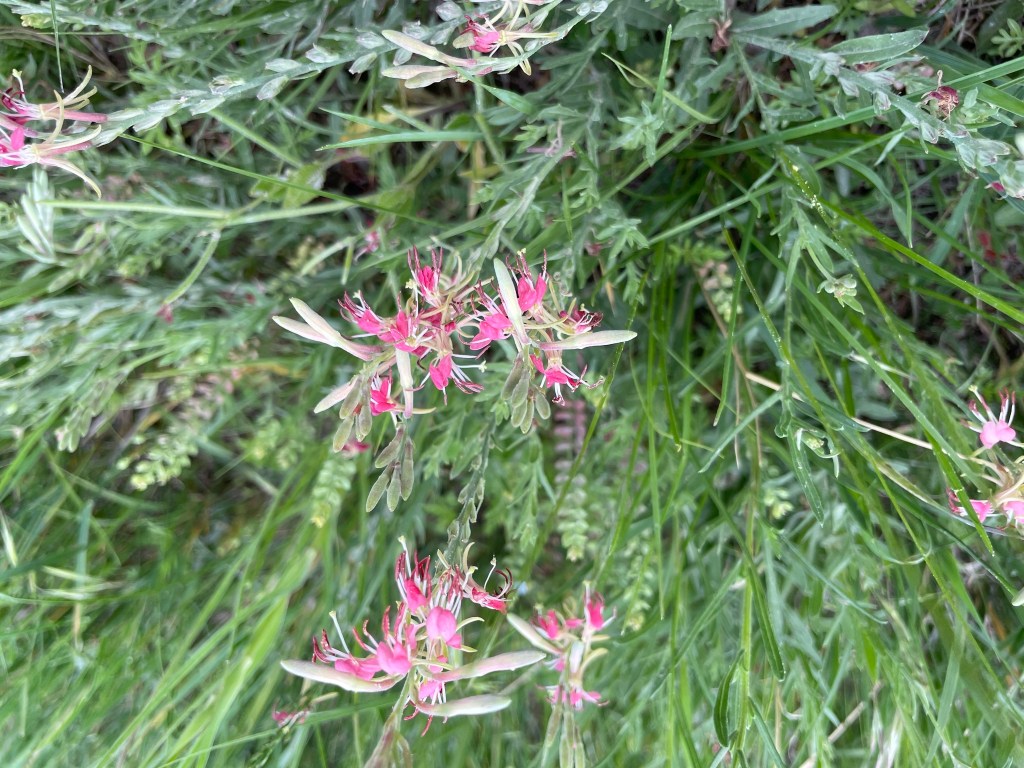

Some of the flowers above were photographed at Conata Picnic Area, one of the spots that Diane and I especially liked. David and I visited the same area twelve days later and I was sad to discover that all the wildflowers on the sides of the entrance road and picnic area had been mowed down.
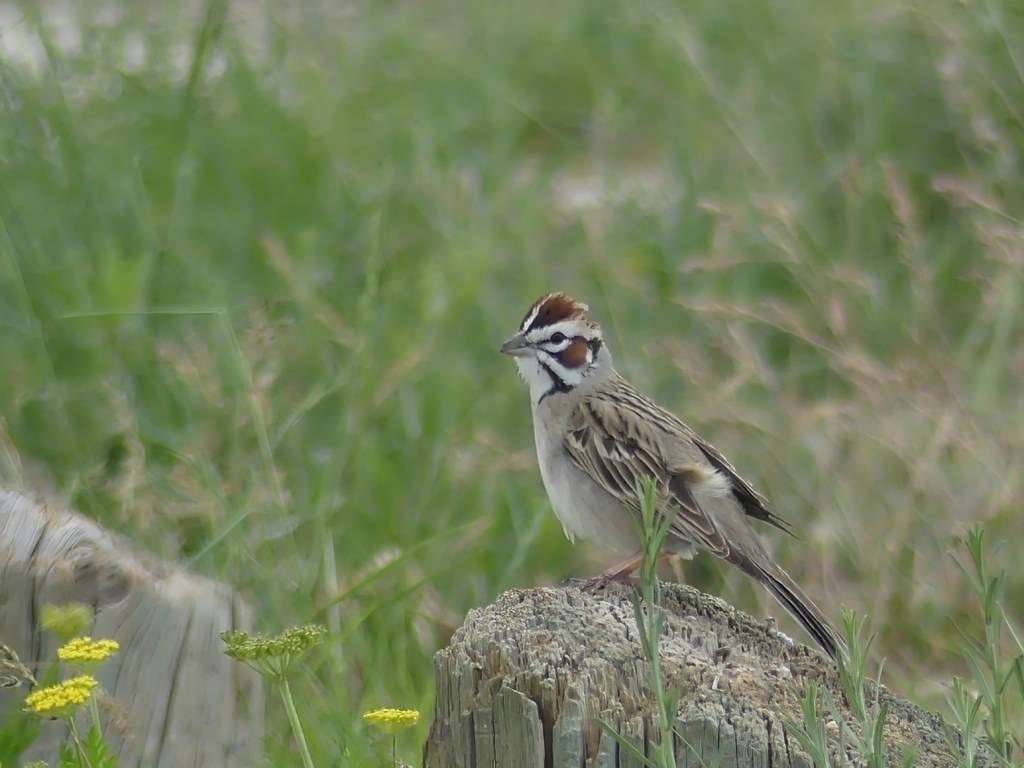
We saw birds there, too, like this pretty Lark Sparrow, a common species in the west.
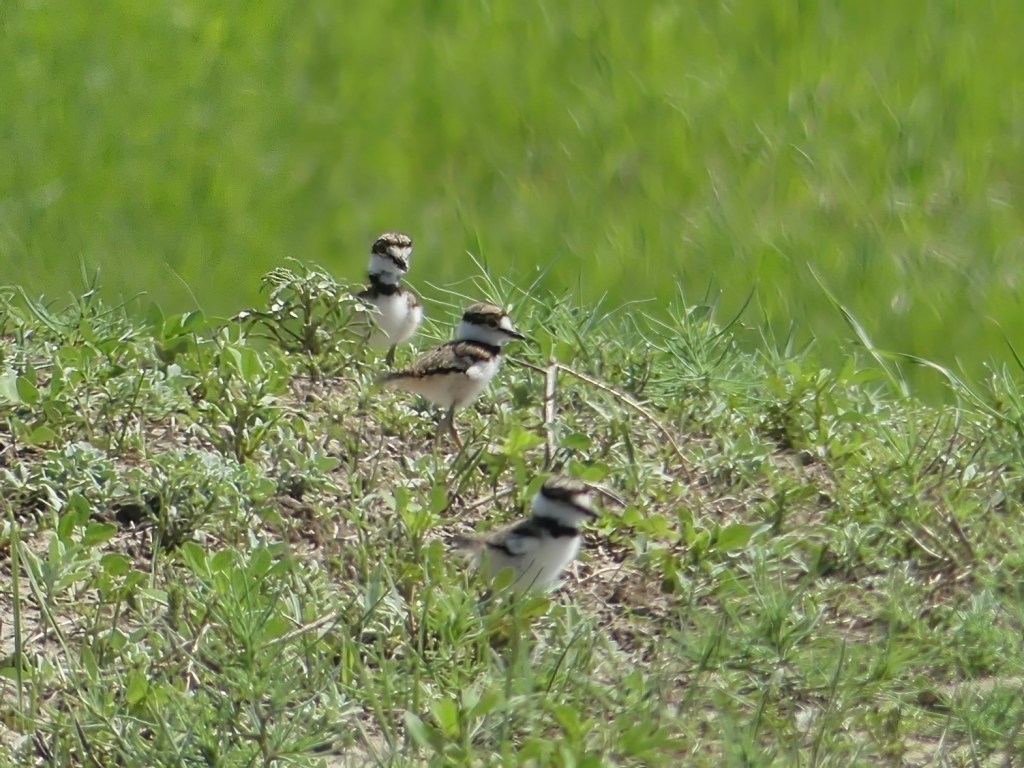
Perhaps this spot endeared itself to us because this is where we saw a Killdeer family with three chicks. Killdeer are common across the country, but we don’t see the babies often. And, babies of all species were a delightful recurring theme on this trip.
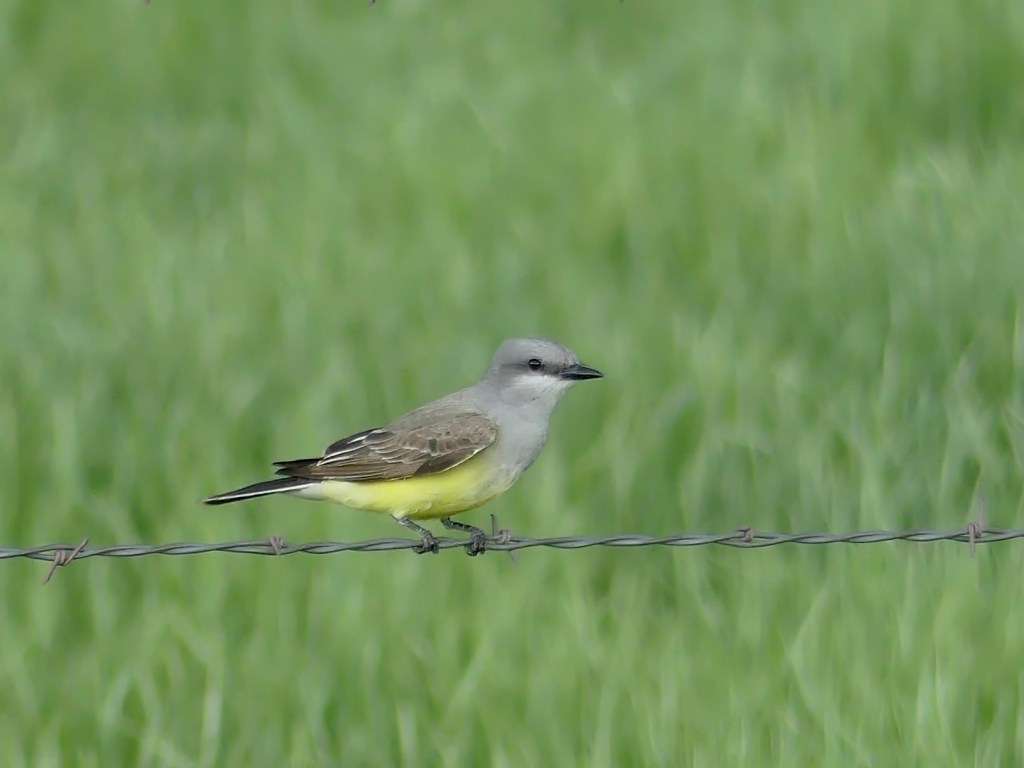
This Western Kingbird was also nearby. Birds that are common in the west are not common to us and we loved what felt like a visit to old friends that we do not see often enough.
We saw birds that are common in the east, too, including many Red-winged Blackbirds, Common Grackles, and Brown-headed Cowbirds. I tried to ignore the cowbirds, but how could I when one posed so nicely?

We never tired of stopping to photograph the ever-changing landscape. Sights like Yellow Mounds, a favorite spot of many park visitors, constantly awed us. Yellow Mounds (photo below) gets its mustardy color from the mineral goethite. The Yellow Mounds are ancient fossilized soils that geologists call paleosols.

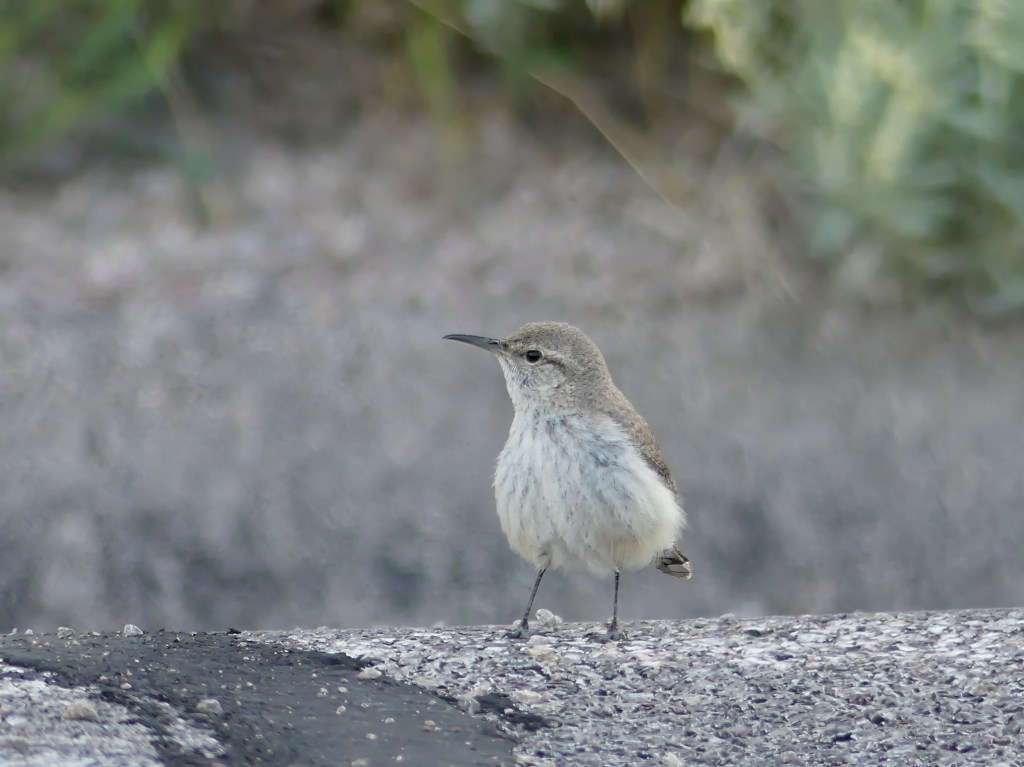
On our last morning, Diane and I got out really early and it paid off with our best views ever of a Rock Wren. It was fun to watch it move quickly along the rocky edge by the side of the road picking at insects.
Much too soon, our time in the park was gone and we had to leave for the Rapid City airport. Diane and I spent two full days in the park. Later I would return with David for one day. One day is sufficient to drive all the roads and see most of the iconic wildlife in the park. Two days is enough to also see some birds. However, I could easily spend three or four days in the badlands and not be bored.

There are two main areas to stay, Wall and Interior. David and I stayed in Wall, which has nicer (and more expensive) lodging, but I preferred Interior, where Diane and I spent two nights. Our motel was “basic,” but we were just a couple of minutes from the park loop road.
I would love to visit Badlands National Park again, but for this trip it was time for Diane to fly home and David to arrive. I would spend the next week exploring the Black Hills while David rode in RASDak, a 350-mile cycling event.
Continue to part 3, Road Trip 2023: Days 8-18 – Bikes and Birds (Part 3 of 4)


 Birding for Life