Feeds:
Posts
Comments

Posts Tagged ‘Mongolia’

White-throated Bushchat breeds only in Mongolia—a fact I did not know on the cold morning of May 30, as we tracked down several of these gorgeous birds at the base of the Khangai mountains, not far from our campsite near Khukh Lake. All I knew in that moment was that it was a beautiful bird and I was thrilled to get such good looks.
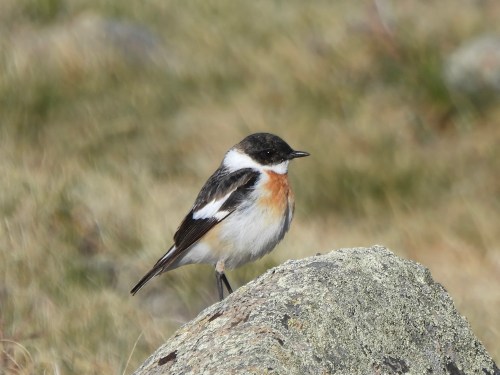
eBird’s description of the species’ breeding habitat fits many of the areas that we birded in Mongolia: “high altitudes in open areas with rocky outcrops and clusters of vegetation.” Below, members of our group scanning for the bushchat. We were just under 3,000 meters (9,800 feet), and for me, the greatest challenge wasn’t the altitude, but the trek uphill on the spongy, almost tundra-like, uneven terrain with ruts, rocks, and clumps of grass.

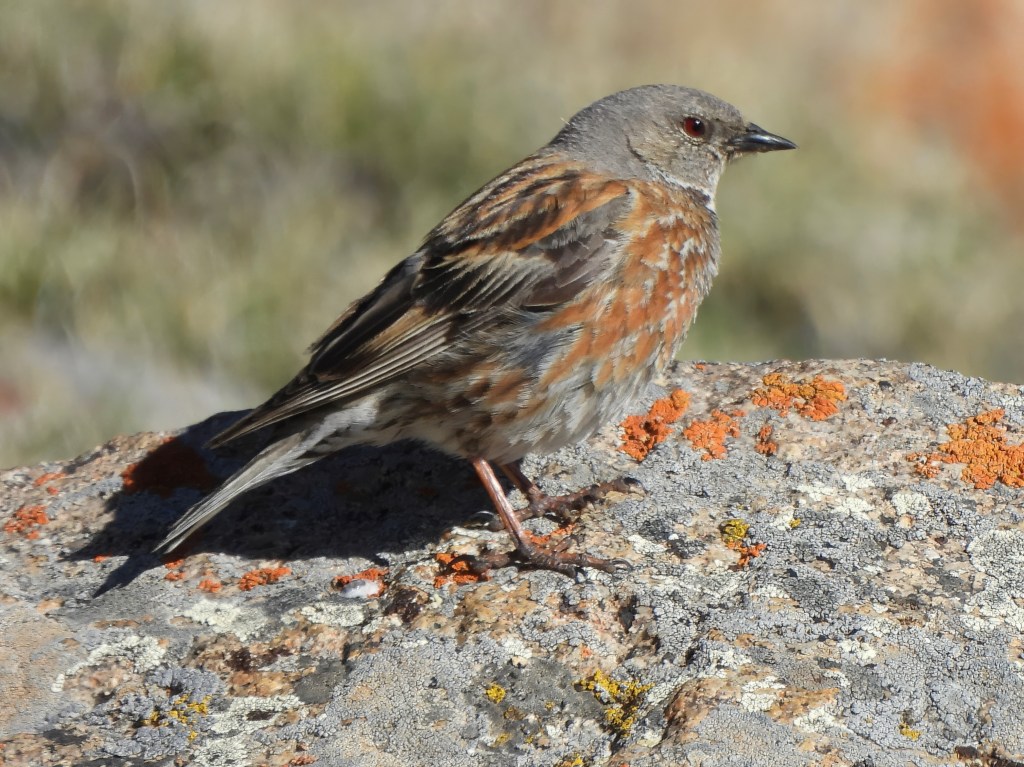
Our efforts were rewarded with the bushchat and an Altai Accentor. The accentor was not a life bird for me as I had seen one ten years earlier in India, but I don’t remember that first sighting, so this felt like a life bird.
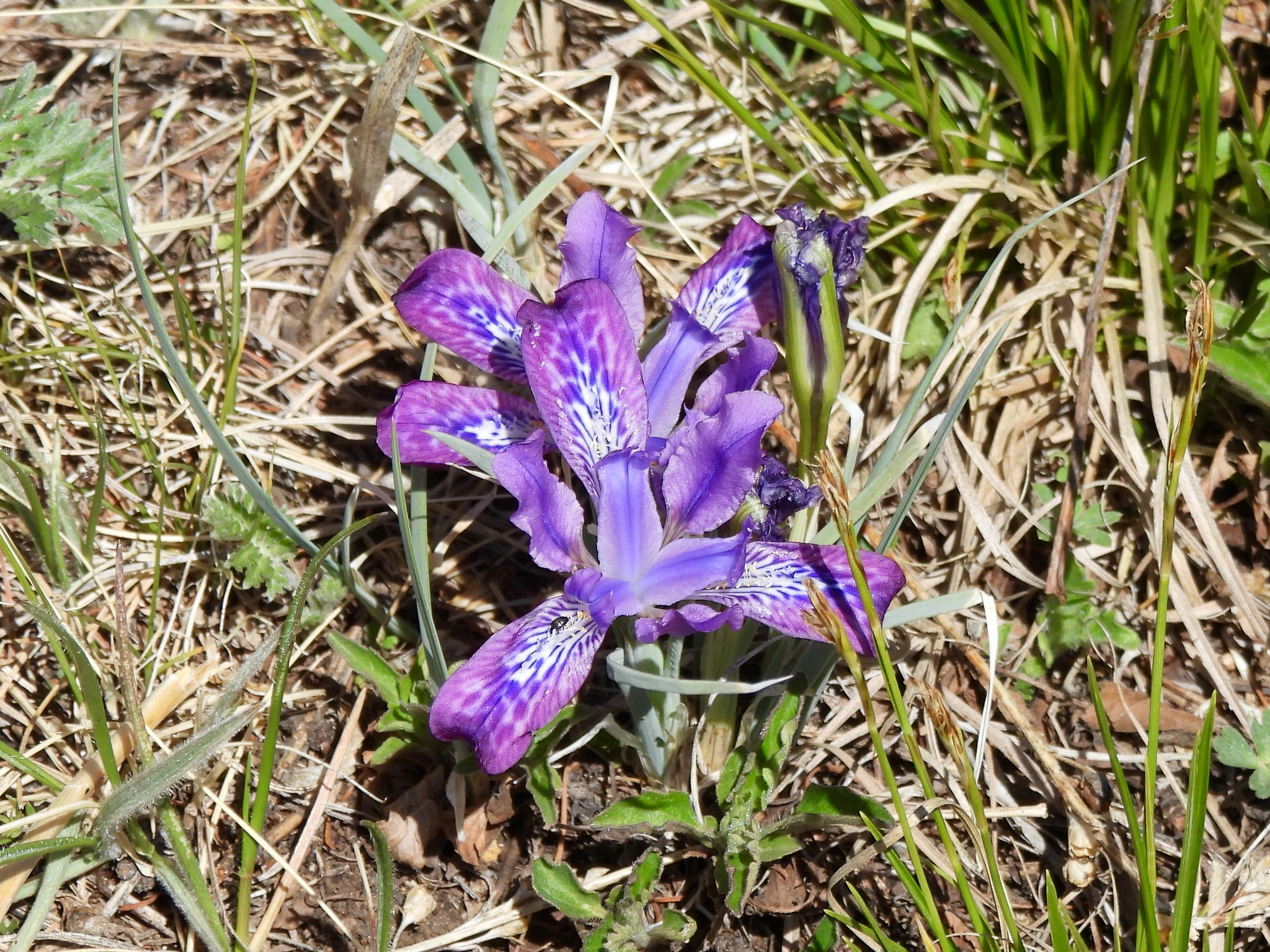
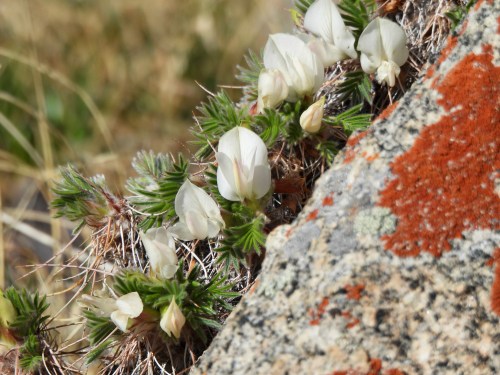
As in so many places across Mongolia, there was beauty everywhere. On the mountain, I found pretty flowers tucked into crevices in the rocks.
We headed to warmer lowlands to camp for the night, with a stop on the way at a random little lake. It held nothing new for the trip list, but it was nice to watch a few shorebirds and a group of Pied Avocets while we ate our lunches.

The next day was mostly a long travel day, with a detour to see Oriental Plovers again in a different spot than earlier in the trip. Even the most serious world birders don’t say, “I’ve already seen that bird. I don’t need to see it again.” This time, we saw a lovely female in addition to two males.

Nick reports that we stayed at “a really great, modern hotel for the night at Arvaikheer.” I don’t remember that hotel at all, absolutely nothing about it, but our nights camping are still vivid in my memory. My advice for anyone going to Mongolia: Don’t look for a fancy trip that promises minimal camping. You want to camp. It’s the best way to experience the beauty of dark night skies and awake to the sound of birds singing, to feel the calm and peace that only exists in remote areas far from civilization.

June 1 was another travel day as we made our way toward Hustai National Park. I don’t remember much about that day other than beautiful landscapes like that below.

But I do remember camping by Bayan Lake that night. My journal entry from that evening reads: “Campsite tonight is full of mosquitoes. They tried to find a better site or hotel, but nothing was available. It’s miserably hot and we had soup (mutton, I think) for dinner. They are burning cow dung in the dining tent to keep away mosquitoes.”

Nick’s trip report notes that we relocated from the first campsite to a site farther from the lake, but it made no difference with the mosquitoes. A few of us were desperate to sleep anywhere else. Nick compared the mood to something out of Mutiny on the Bounty. Yet, we all survived, and miraculously, once zipped into our little tents, we were relatively mosquito free.

Just earlier, I said that the camping was magical, didn’t I? Well, not every night and I preferred camping at higher elevations. Still, it’s a worthwhile experience and one that I would not have wanted to miss.

The next day, we arrived at Hustai National Park before lunch. I had been looking forward to this park and it lived up to my expectations. Somehow, Puje got us into a part of the park that is usually off-limits to tourists. After extensive scanning with the scope, he found a pair of Daurian Partridges, another range-restricted species, limited mostly to Mongolia, northern China, and Kyrgyzstan.

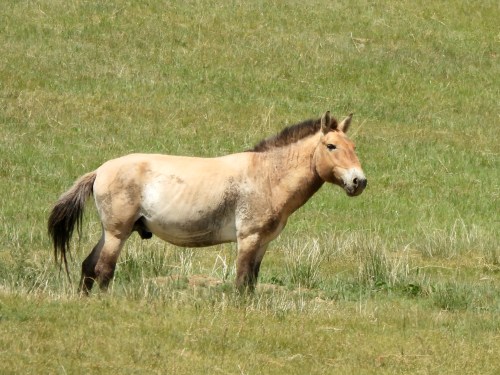
We also saw quite a few other birds in the park, but I was most excited to see a couple of Przewalski’s Horses. I had thought that they were the only wild horses in the world, but have since learned that they were once extinct in the wild and have been reintroduced at Hustai NP. Their evolutionary history and taxonomy are complicated and there is no scientific consensus. If you enjoy a good biological mystery, Wikipedia has an interesting write-up on Przewalski’s Horse.
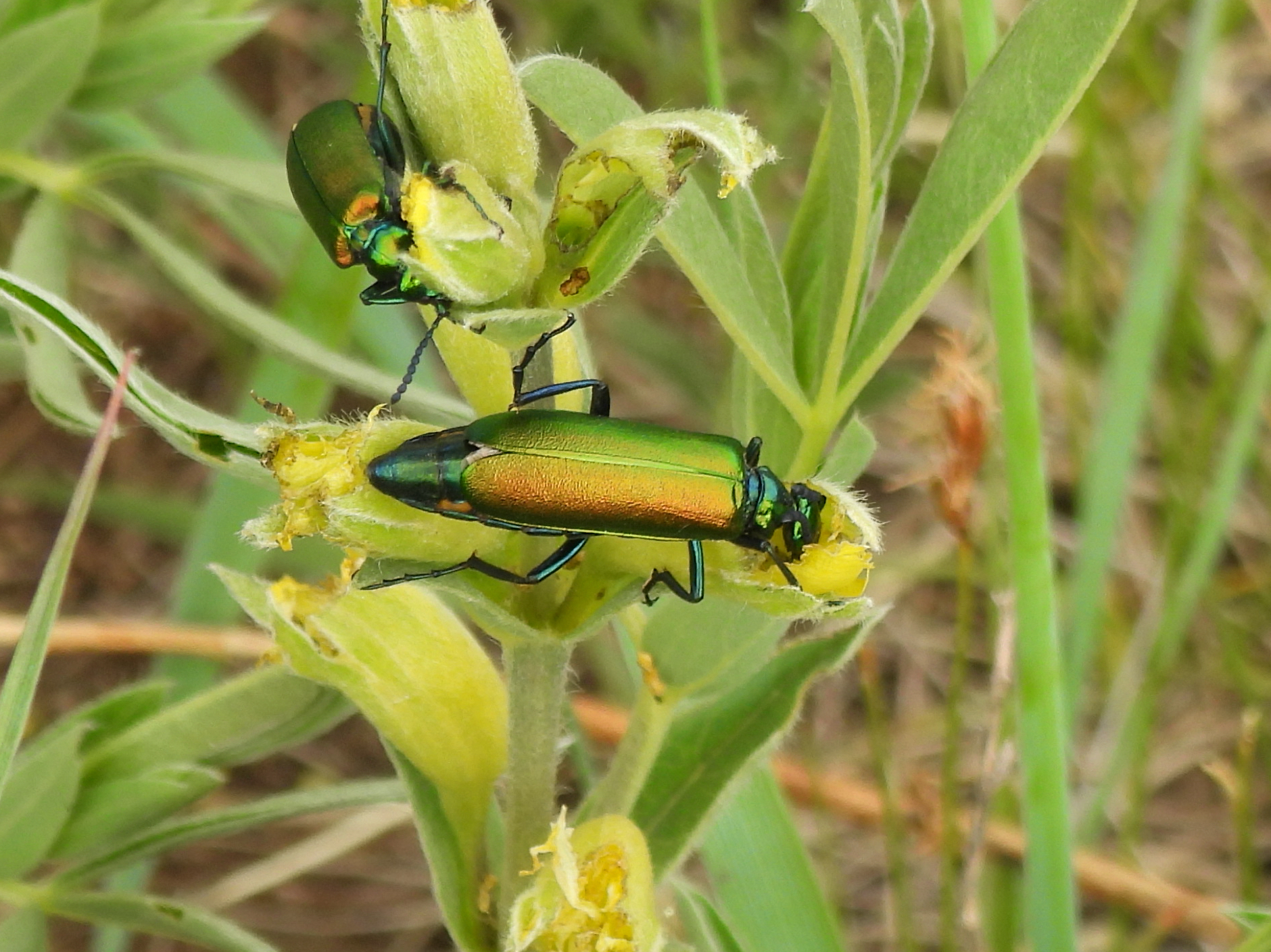
Beyond the birds and horses, I also found many wildflowers, bugs, and an adorable family of Tarbagan Marmots at Hustai NP to amuse myself.
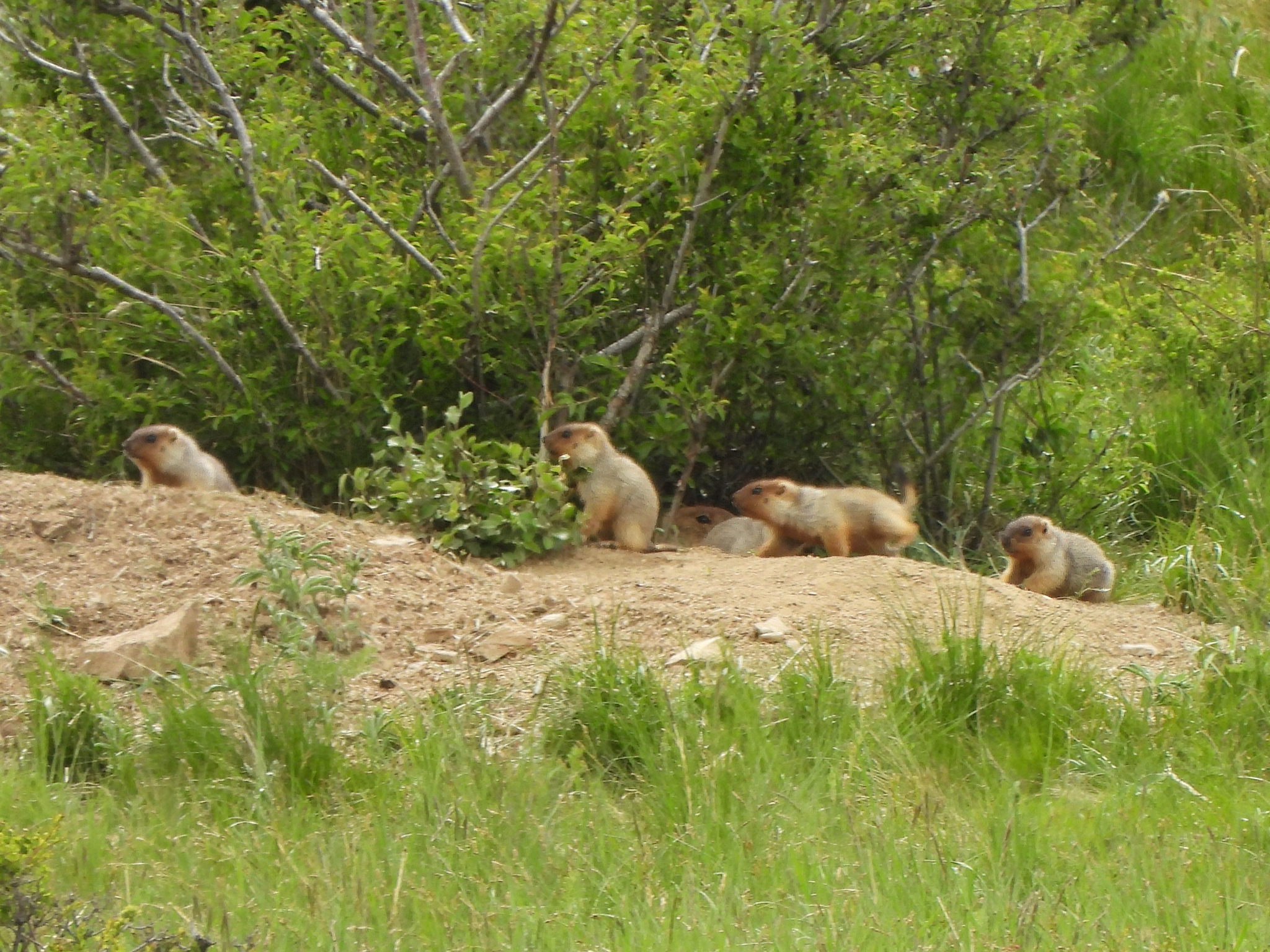
We stayed at the ger camp right outside the entrance to the national park that night. As much as I loved camping most of the time, I’m sure that we all appreciated the hot showers that evening.

The next morning, we began the drive to Terelj National Park, returning to a different part of the forest we had started in two weeks earlier. We stopped in Ulaanbataar at a spot by the Tuul River, where we quickly found a White-crowned Penduline Tit, and then continued on to Terelj NP.

It was a wonderful afternoon. The trek up the steep mountainside was slow going for me, but it was worth every step. We found our target: Gray-headed Chickadee, and everyone had incredibly close views of a pair that practically sat on Nick’s speaker.

Another highlight of the day occurred after we were all settled in our tents for the night. Nick’s shout of “Ural Owl” had us scrambling back outside. The owl flew overhead and then perched on top of a tree at the edge of our camp in clear view. Yet another reason for camping! 

June 4 was the last official day of the trip. We had a few more hours to bird at Terelj NP that morning. I was happy to see another singing Siberian Rubythroat, a gorgeous species that I had only seen once before this trip. Higher up in the dense forest, Nick found an Oriental Cuckoo. Luckily, I was able to get a good view of the bird through the thick trees.

In the photo below: our birding group of six with the five incredible people who supported us (our local guide, Puje, and his hardworking ground crew). Can you believe that they managed to fit eleven people, all our gear, and camping supplies into just three Toyota Land Cruisers? It felt like a magic trick. These folks took excellent care of us and made this adventure possible.

We returned to Ulaanbataaar through some of the worst traffic imaginable and ended the day with a lovely dinner at the Mongolica Hotel.

The trip was officially over, but most of us stayed one extra day. I am so happy that I opted for this bonus day, which gave me a second chance for two special birds that I had missed earlier.

We had a lot of rain, heavy at times, but we managed a couple of short outings. I was absolutely thrilled to see this Azure Tit. I can’t describe it better than eBird does, “Frosty, pale bundle of joy.”

My final life bird of the trip was another beauty, a Long-tailed Rosefinch. It was fitting to end this amazing trip with these two special birds. I couldn’t have been happier.

After a lazy afternoon resting and one more night at the Mongolica, we headed to the airport early on June 6 for our flights home. Our eBird trip report lists every species, and location, and displays all of our photos. Nick’s trip report is packed with details and entertaining descriptions of the birds, locations, and birding moments. I did my best to document Mongolia’s flora and fauna without missing birds. All of my iNaturalist observations in Mongolia can be seen here.

This was truly a trip of a lifetime and I’m deeply grateful to Nick Bray and Zoothera Birding for making it all possible.

Read Full Post »

On the morning of May 25, we got our two main targets, Asian Desert Warbler and Saxaul Sparrow, before breakfast. Afterward, we left the second ger camp of the trip and headed towards Baga Bogd and six continuous nights of camping in tents or “basic” cabins without showers or other amenities. At one stop, we had a great look at this pretty Gray-necked Bunting, one of my favorite new birds.

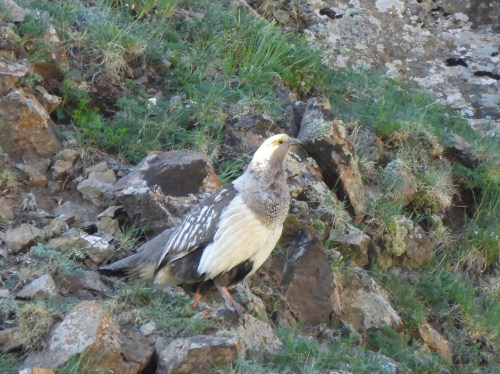
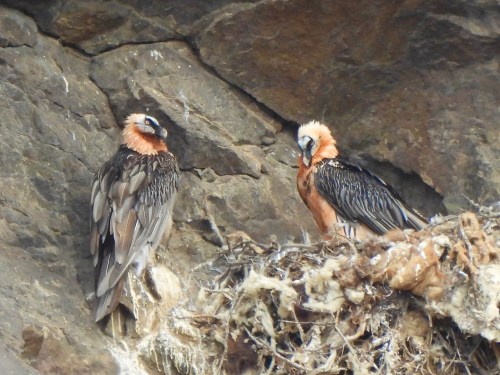
At the same stop, we were amazed to see a pair of Bearded Vultures, also known as Lammergeier, on their nest. Watching those magnificent birds was another wow moment of the trip.

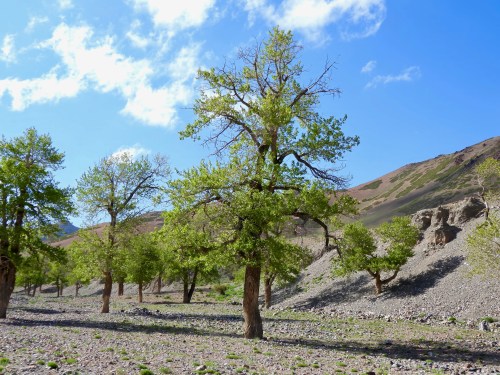
Later that afternoon, we stopped at the site below as we headed into the valley. The road in this area was extremely rocky and the bird life here was a bit different. We saw our only Long-eared Owl of the trip and had our first of only two sightings of Eurasian Wryneck.

We reached Baga Bogd and set up camp in the valley. I liked this spot. Like so many others, it looks stark in my photos, but a little exploring easily revealed interesting plants, little mammals, and other critters—in addition to birds, of course.

The nice thing about camping is that it’s easy to be birding at 5:00 AM. Our day started with an amazing experience with Altai Snowcock, a definite highlight of the trip. Several males called from the surrounding mountains, and one flew so low over our heads that we felt as if we could have reached up and touched it. After the disappointing view of Caspian Snowcock earlier on our Türkiye trip, this was especially sweet.

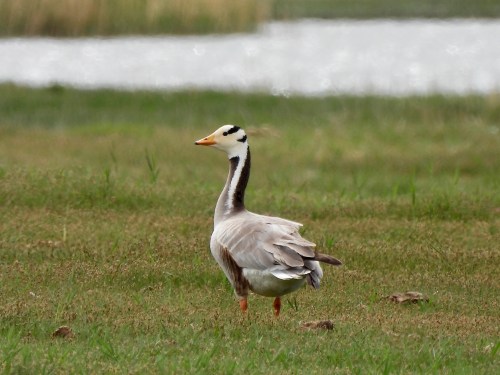
After breakfast and more birding, we set off for our next campsite at Kholboolj Lake, arriving later that afternoon. I got three life birds there: White-headed Duck, Palla’s Gull, and Yellow-breasted Bunting. I was also happy to get great looks at an old favorite, Bar-headed Goose. I fell in love with this species on my first trip to China in 2009 and it remains my favorite goose.

Our camp was on the shore of Kholboolj Lake.

We birded again at Kholboolj Lake in the morning. The British birders loved the lakes, but I’m spoiled by birding at home in Florida, where I can see shorebirds as close as ten feet. In Mongolia, nearly all the shorebirds and ducks were far out on the vast expanse of water or distant shore. I also noted “lots of invisible biting bugs” in my journal. A few birds were closer, though, and I was pleased to have a nice view of this sharp Kentish Plover on the grassy lake edge.

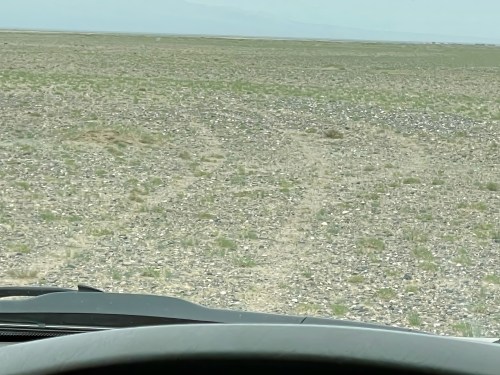
I took the photo below later that day on our drive from Kholboolj Lake to Böön Tsagaan Nuur, but it could have been taken on nearly any day of the trip. This is why you don’t go to Mongolia on your own and try to do a self-guided trip. We spent very little time on actual paved roads; we spent many miles almost every day on “roads” like this. I couldn’t recall any road signs, but someone said they had seen two signs in the past week.

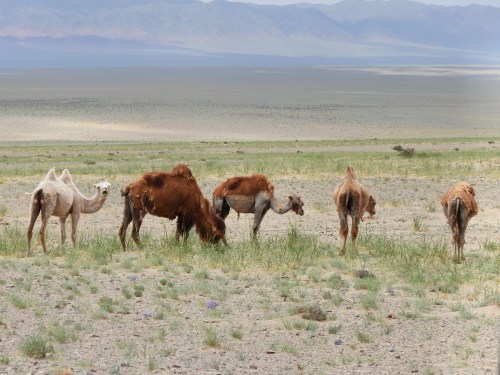
We passed small groups of Bactrian camels several times during the trip. There are no fences in Mongolia, yet somehow the owners manage to keep track of their free-roaming animals. These were domesticated camels—also known as two-humped camels or simply Mongolian camels—although a small number of wild Bactrian camels still survive in remote areas.

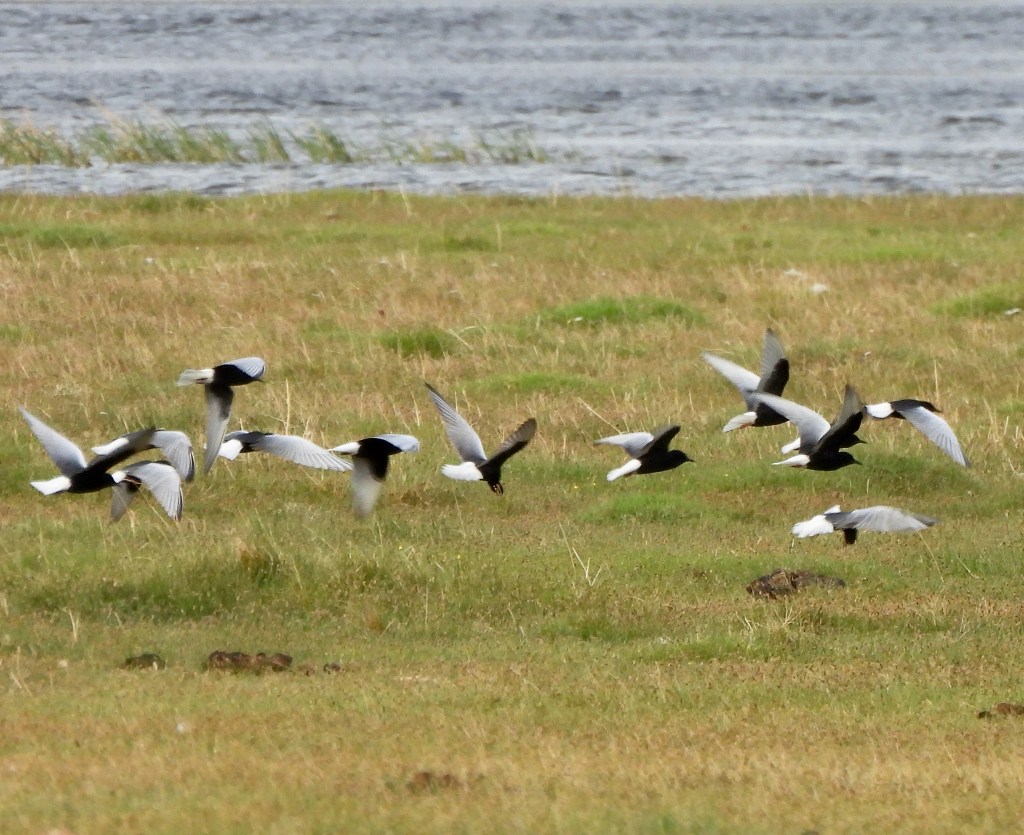
We arrived at Böön Tsagaan Nuur, a vast Ramsar wetland, late in the afternoon and had about two hours for birding. In that short time, we saw over 50 species—mostly ducks, shorebirds, gulls, and hundreds of White-winged Terns. I was mesmerized by the lovely, graceful terns. The photo below shows just a small part of the flock as they flew together over the marshy edges of the lake.

We stayed in a “basic” camp that night (and the next) due to expected wind and rain. We slept in little log cabins with hard wooden beds and our sleeping bags on top of the beds. Other than cabins replacing tents, it was essentially camping: our own toilet tent, no electricity, and minimal comfort. I did not sleep well on the hard bed; early in the night, I thought that I felt something furry run across my arm, and then I heard noises until morning.

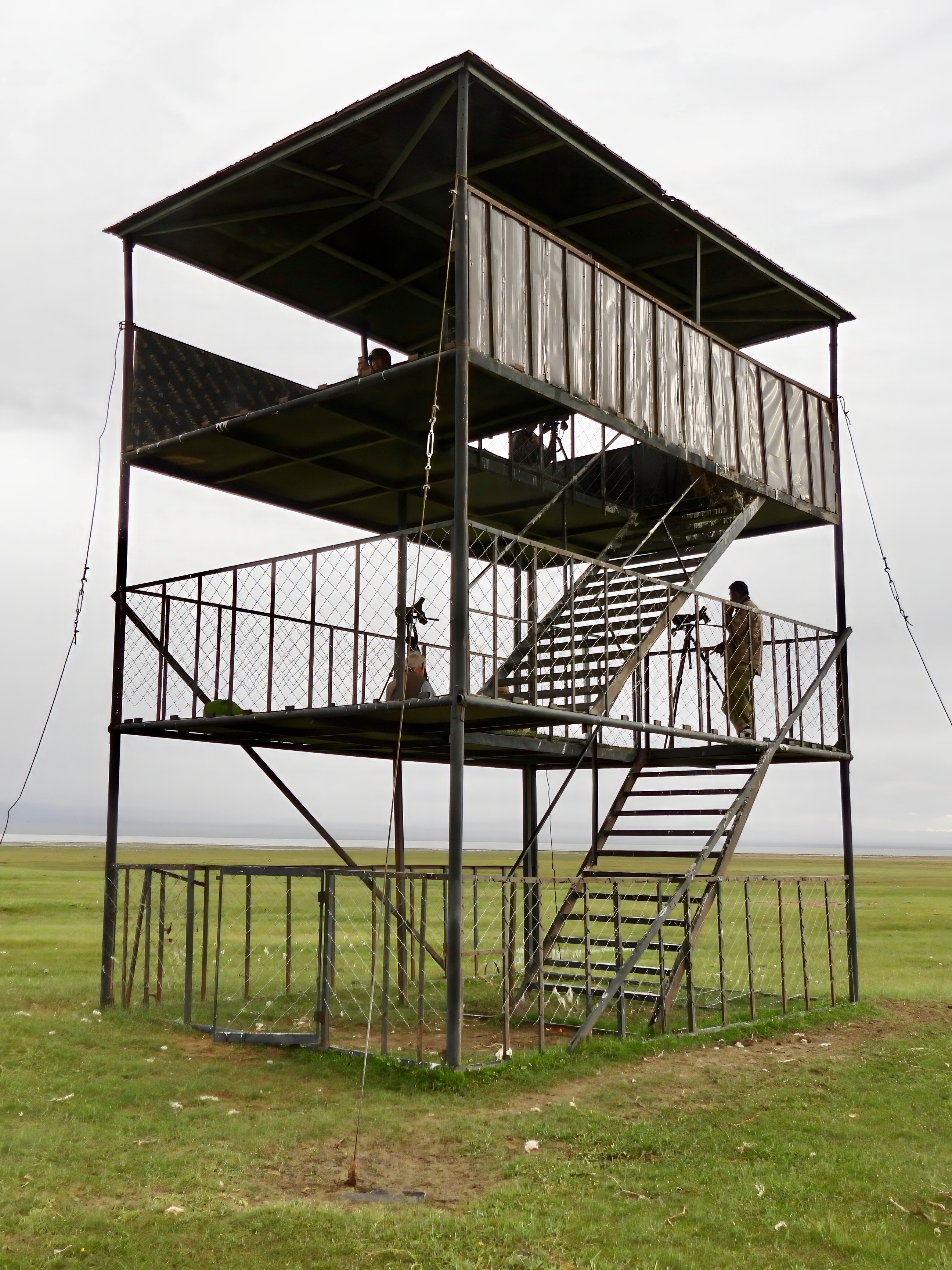
We spent all day at Böön Tsagaan Nuur, seeing many of the same species as the previous afternoon. The best find was a rare drake Baer’s Pochard, but it was sooo far out on the lake. While the lakes host large numbers of birds, they are not ideal for photography. Below, the viewing platform and a couple of the birds that we saw up closer, a Swan Goose and a Pacific Golden-Plover.

Our time at the lake ended with this spectacular sunset.

We stayed another night at the same “basic” camp, making this the fourth consecutive night without showers. Amazingly, I hadn’t noticed any offensive body odor when we were together in the vehicles. I used copious amounts of hand wipes to clean up and assumed that others did the same. Nick, however, claimed to have stripped down and poured a bucket of water over his head behind his cabin. I did not witness said event, so I can’t vouch for it.

May 29 was mostly a travel day with a long drive to Khangai Mountain. We enjoyed more beautiful scenery and blue skies. Mongolia has earned its nickname, “Land of Eternal Blue Sky,” with over 250 sunny days a year like this.

Camping that evening at Khangai Mountain would be the coldest night of the trip, but I was glad to leave behind the invisible (and some not-so-invisible) biting insects from the lakes. What will we find the following day? Watch for part 3 to find out!

Read Full Post »

Mongolia was the first country I put on my newly created Birding Bucket List in June 2023. Not long after, Nick Bray of Zoothera Birding announced that he was leading a trip to Mongolia in May 2024—I signed up right away.

As one of the least densely populated countries in the world, Mongolia offers a rare kind of solitude. At times, we went days without hearing any sounds of other people or signs of civilization. The result was an incredible sense of peace and a deep connection to nature, set against Mongolia’s stunningly diverse landscapes.

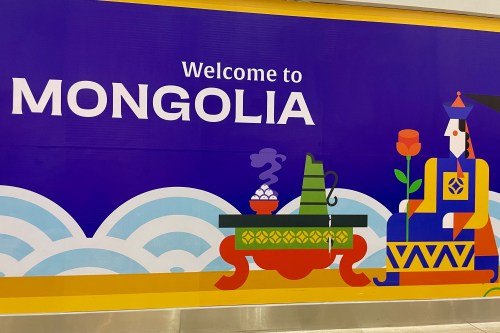
The friendly mural above greeted us at the Chinggis Khaan International Airport in the capital city of Ulaanbaatar when we arrived at 2:30 AM on May 20. Puje, our local guide, met us there. After coffee and snacks at the airport, we headed to Terelj National Park, a few hours outside the city.

On the way, we made a quick stop at the massive statue of Genghis Khan. He’s a fascinating figure—remembered for his ruthless quest for world domination that claimed millions of lives. As a child, he even killed his older half-brother. Yet, he’s also described as charismatic and generous to his followers. Wikipedia notes, “He was posthumously deified in Mongolia; modern Mongolians recognize him as the founding father of their nation.”

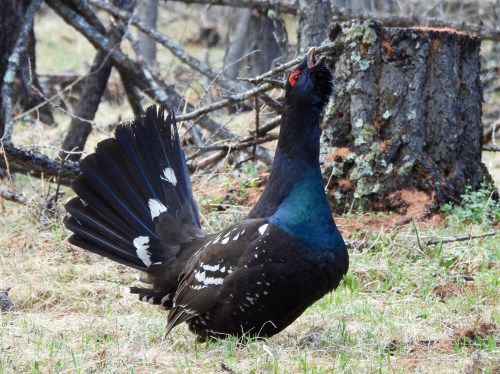
Before long, we were watching several Black-billed Capercaillie perform their incredible courtship displays among the Siberian larch trees in Terelj NP. Capercaillie was our top target, and seeing these magnificent birds was an experience I’ll never forget.

Here is a closer view of the beautiful larch forest.

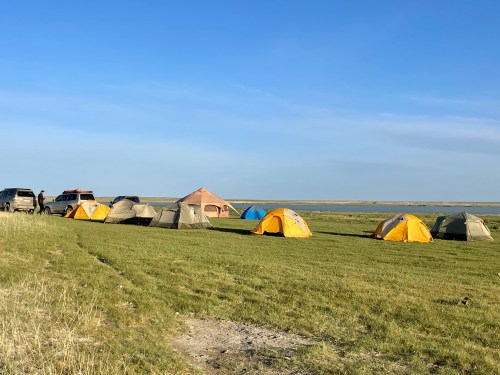
Our camp was set up at the edge of the national park. In Mongolia, all that is required for camping is a bit of level ground. With our ground crew of five, we were completely self-sufficient. Each of us in the birding group had our own little tent, not high enough to stand up inside, but with sufficient space for a sleeping bag and our gear. Food was prepared and eaten in the larger tent. A hand-washing station was near the food tent and a toilet tent was set up just a little farther away.

Yes, I’m going to describe the toilet tent because you are curious, aren’t you? First, they dig a trench about 18 inches deep and pile the dirt nearby. A toilet seat on legs is placed over the hole and then a small tent with a zippered door goes over the whole setup. When you’re done using the facility, you toss a shovel of dirt in the hole to cover your tracks if necessary. You have privacy and an actual toilet seat. It seemed environmentally friendly and didn’t smell too bad either. When we broke camp, they simply filled in the hole with the remaining dirt. I thought it was a brilliant system!

The view from our camp on the forest’s edge was just spectacular.

This lovely spot had many beautiful wildflowers around the forest edges.

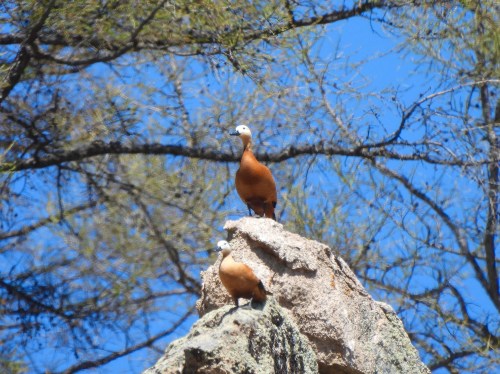
We spent the rest of the day exploring the area near our campsite and another nearby part of the park. A highlight for me was a nice Pine Bunting, but it was also fun to see some “old friends” like this proud Ruddy Shelduck and his mate sitting atop a large rock.

After a good night’s sleep in our snug little tents, we ventured into the forest and watched about half a dozen displaying male Capercaillies for two hours. Reportedly, males engage in fierce battles on leks during courtship season, but we didn’t witness any “fights.” Each male seemed to simply patrol his own loosely defined lek territory strutting around with neck stretched upwards and tail fanned while making an odd clicking call. Black-billed Capercaillie are massive birds with the males weighing up to ten pounds. Watching this ancient ritual was one of those times that I’ve lost myself among the birds; humbled and awed that I was allowed the privilege of being part of their world for a short time.

Next, we drove to Gun Galuut Nature Reserve, a series of lakes that were teeming with birds, especially ducks of numerous species. I was thrilled to add another crane to my list: the graceful Demoiselle Crane.

Our day ended with a little modern comfort at the Mongolia Hotel in Ulaanbataar.

Day three was a travel day with stops for birding along the way. The afternoon gifted us with a much-wanted trophy bird of Central Asia, Oriental Plover.

Our lodging that evening was the Khanbogd Tourist Camp near Dalanzadgad. The key word is “tourist,” which means upscale by Mongolian standards. I should have taken photos of the women’s restroom/shower building. It had Western-style toilets, hot showers, and a nice big vanity to set your stuff while brushing your teeth. Our gers were comfortable and had electricity.

We were able to sleep late for a 7:00 AM breakfast and then headed to the must-visit hotspot, Yolyn Am. This deep and narrow gorge is one of the most iconic and scenic locations in the Gobi Desert. I got several life birds this day including Mongolian Accentor and the more boldly plumaged Brown Accentor, Two-barred Warbler, and Twite (a little brown finch named for its distinctive call, a nasal, rising ‘twi-eet’).

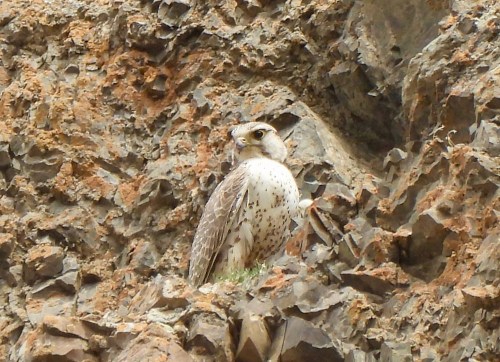
The highlight of the day for me occurred late that afternoon when we spotted a Saker Falcon on her nest!

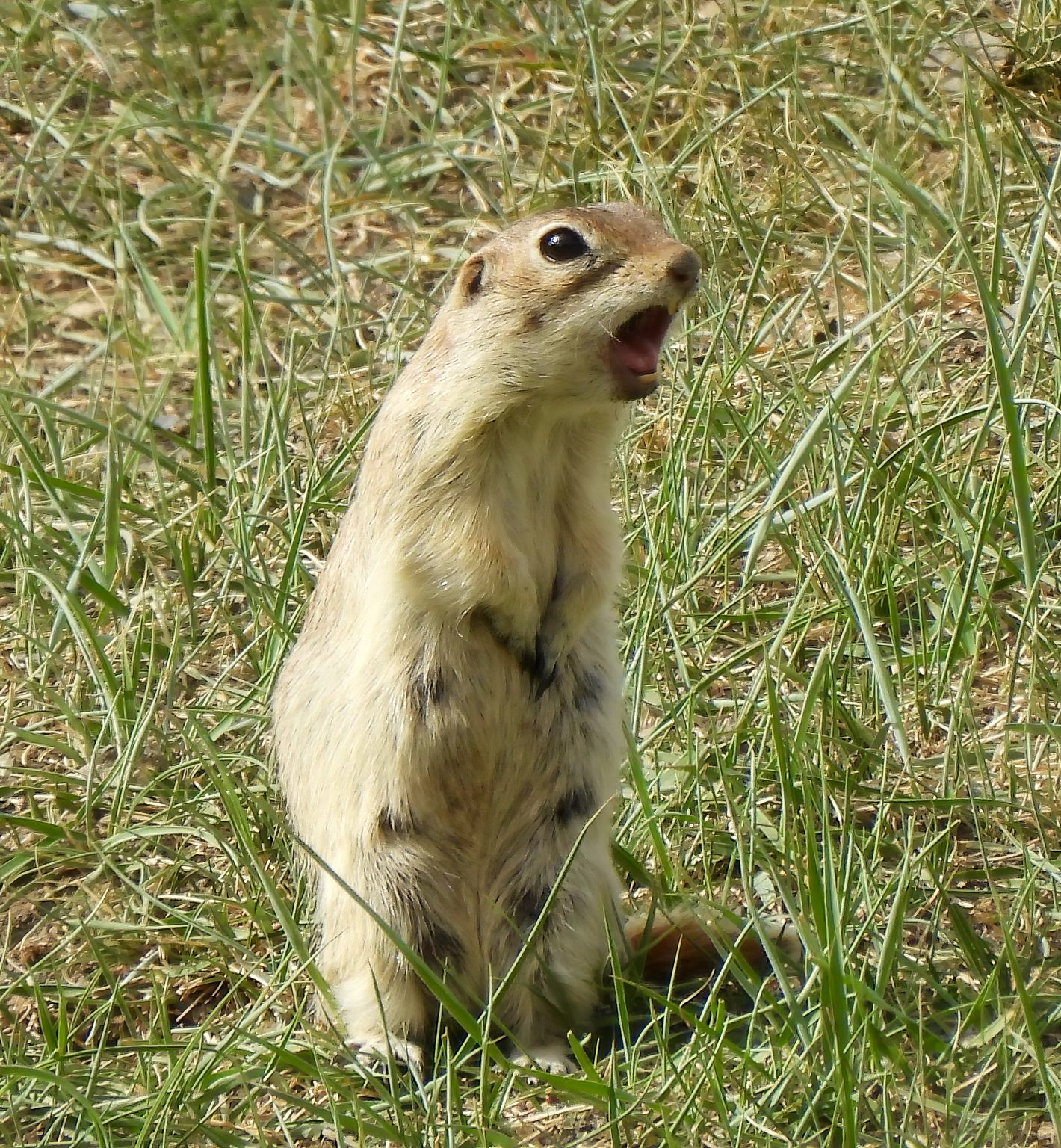
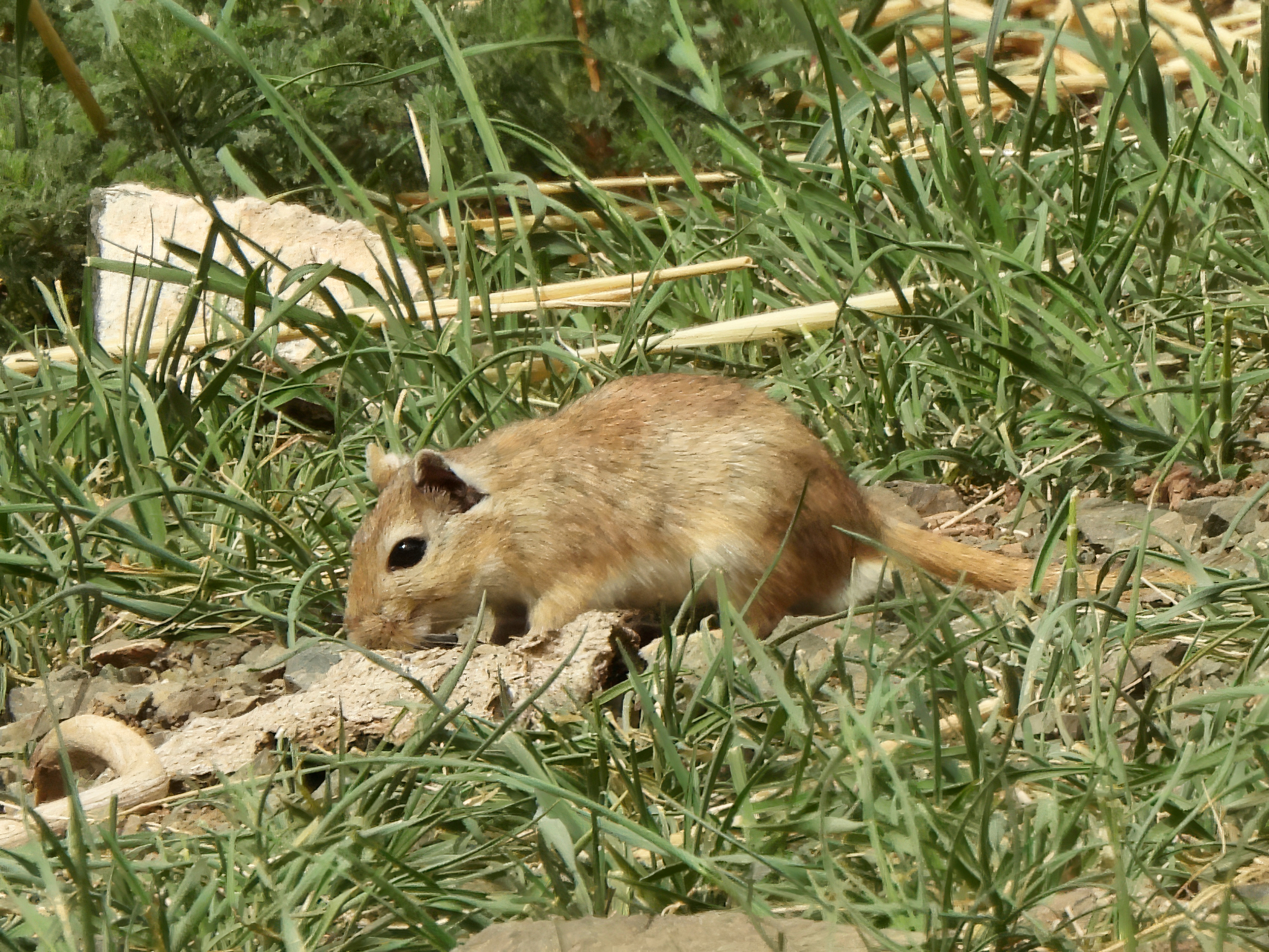
We also saw several small mammals that day including the Alashan Ground Squirrel, Palla’s Pika, and Mongolian Jird in the photos below.

After another night at the Khanbogd Tourist Camp, we set out for Khongor Els. Late that morning we found another range-restricted species, Mongolian Ground-Jay, which is found only in Mongolia and northwest China.

Our mid-day stop was by a little pool and stream where we found a few more birds while our ground crew prepared lunch. There were nearly always animals in the background—sheep with a few goats frequently in the mix, cows, horses, and occasionally camels.

That afternoon, we skirted the edge of the Gobi desert. One of the few things I would have liked to change about the trip was to venture into the desert and see it up close.

Our ger camp that night wasn’t traditional; we had private bathrooms inside our gers! The five men in our group shared gers with two or three in each one. Since I was the only woman birder, I always had a ger all to myself. The wind howled all that night, so it was nice to not have to step outside to get to the bathroom.

Our trip was just beginning and there are many more unforgettable moments to come. Stay tuned for part 2.

Read Full Post »