Feeds:
Posts
Comments

Posts Tagged ‘Moths’

Derek and I met at Rio de Janeiro–Galeão International Airport on the afternoon of August 23 and two hours later our driver delivered us to Reserva Ecológica de Guapiaçu, commonly known as REGUA. After the manager had shown us to our rooms, we were warmly greeted by a woman who didn’t tell us her position. We quickly learned that she was another guest. The lodge looks like it could have been an old house with a lot of bedrooms and a large kitchen, dining room, and family room. The atmosphere at REGUA is more like a gathering of friends and family than a typical tourist lodge. Current guests welcome newcomers into the fold. During our short stay, guests included a couple who were “just” birders, a well-known ecologist and an award-winning science journalist. When away from the lodge, we were frequently asked by locals if we were scientists.

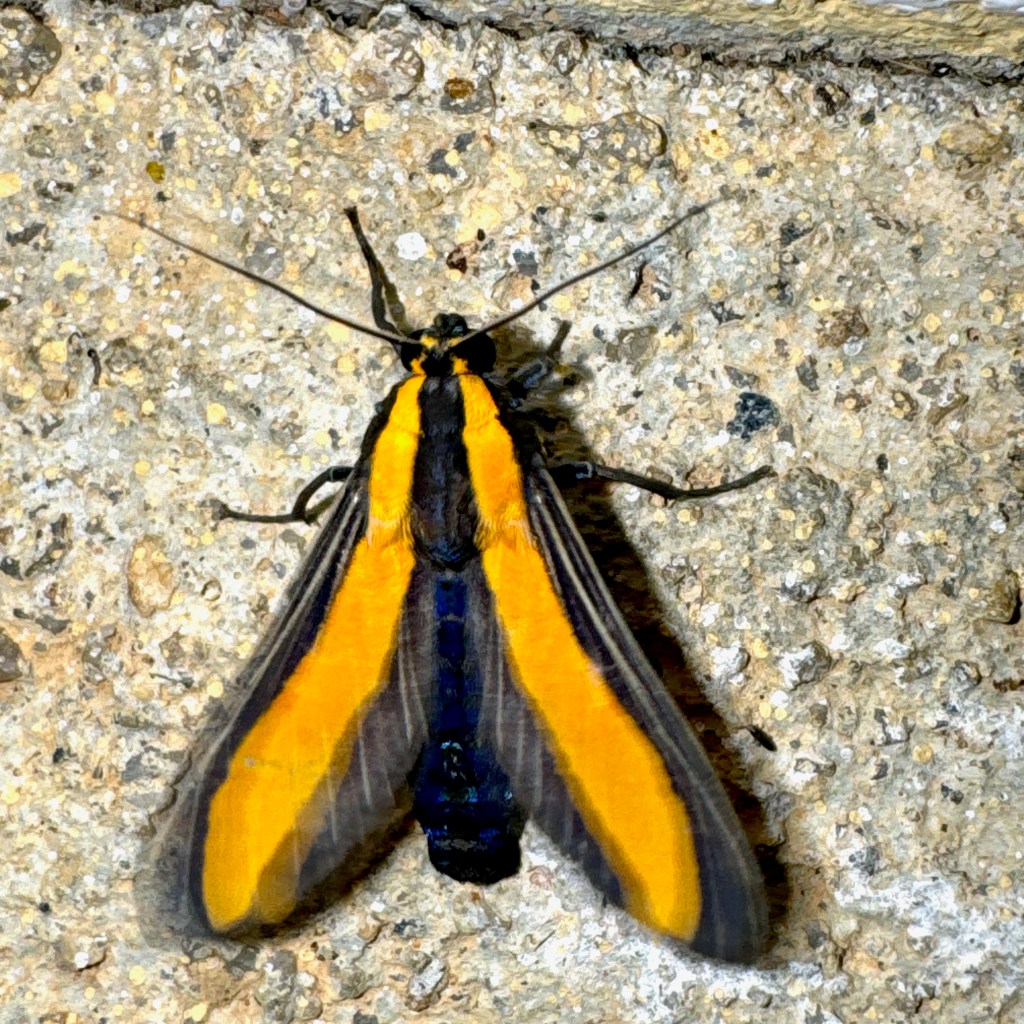
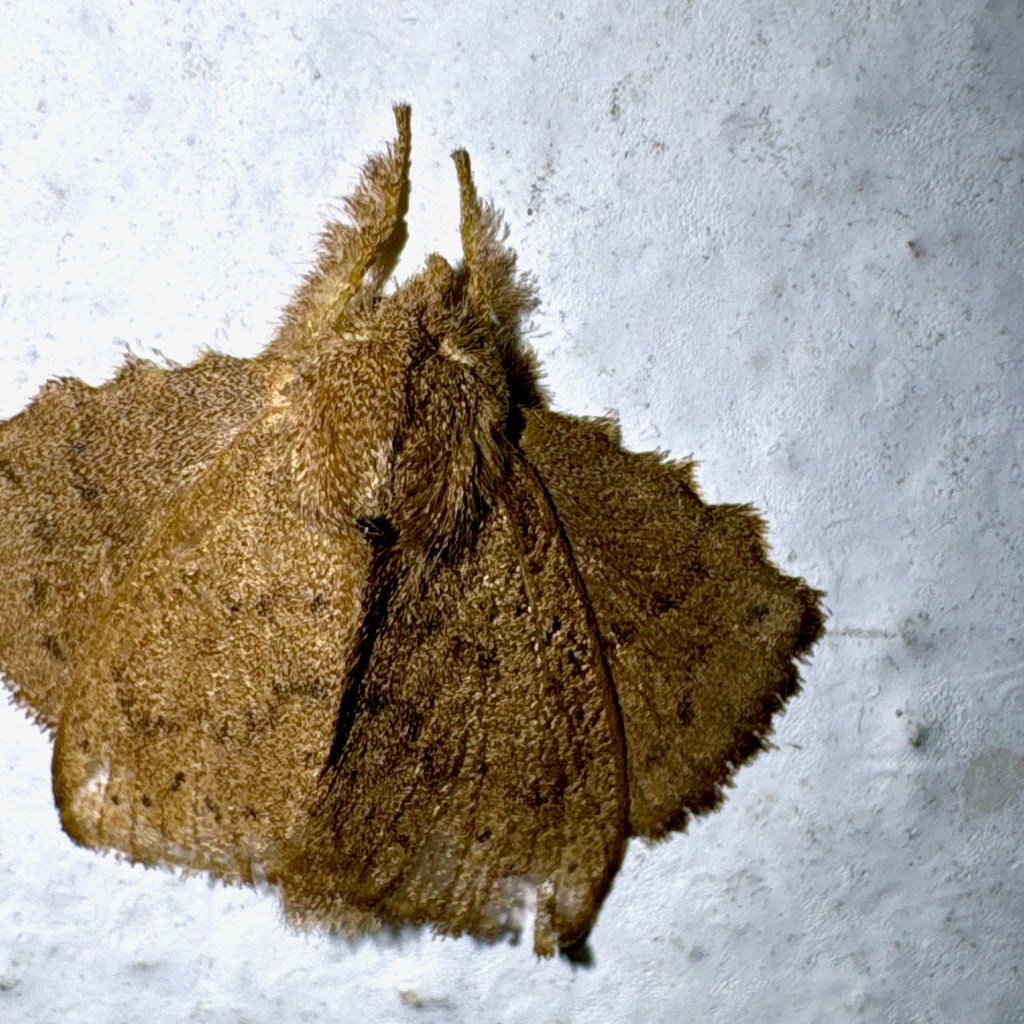
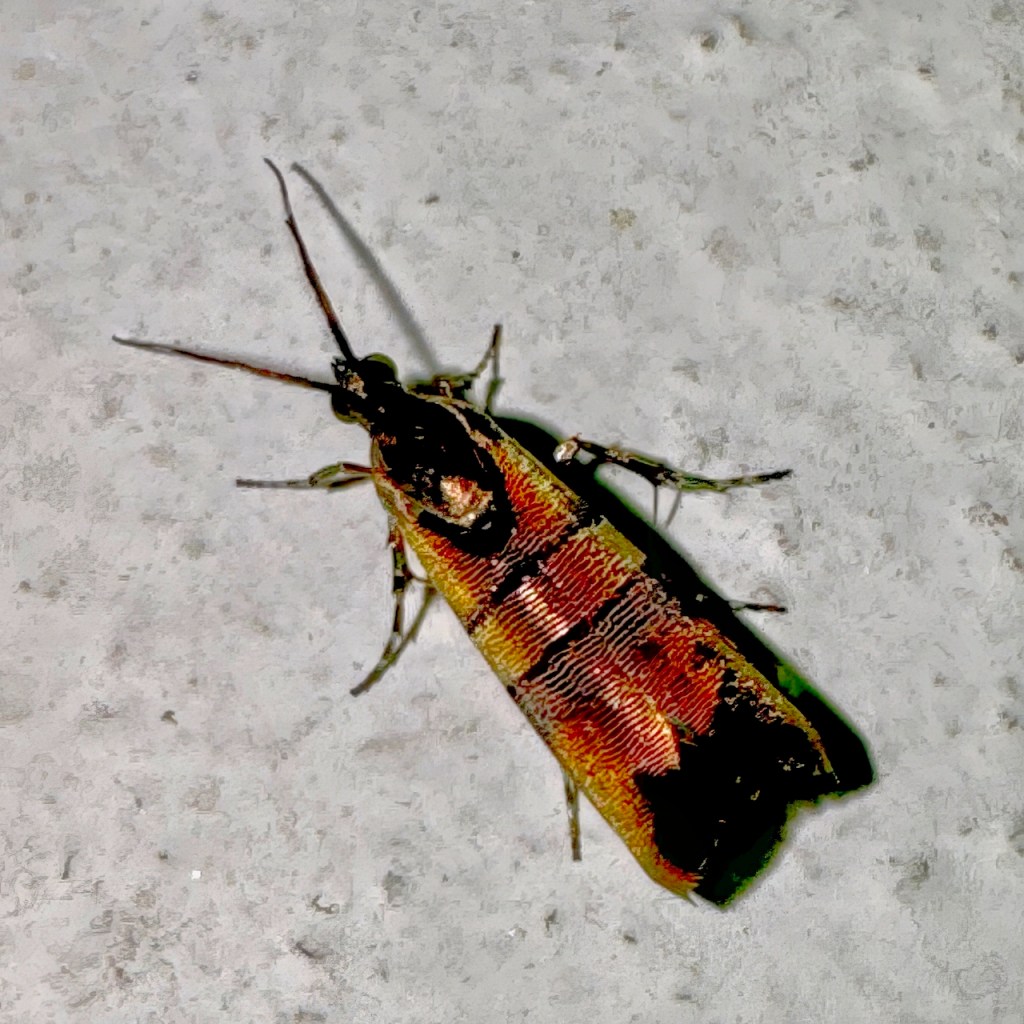
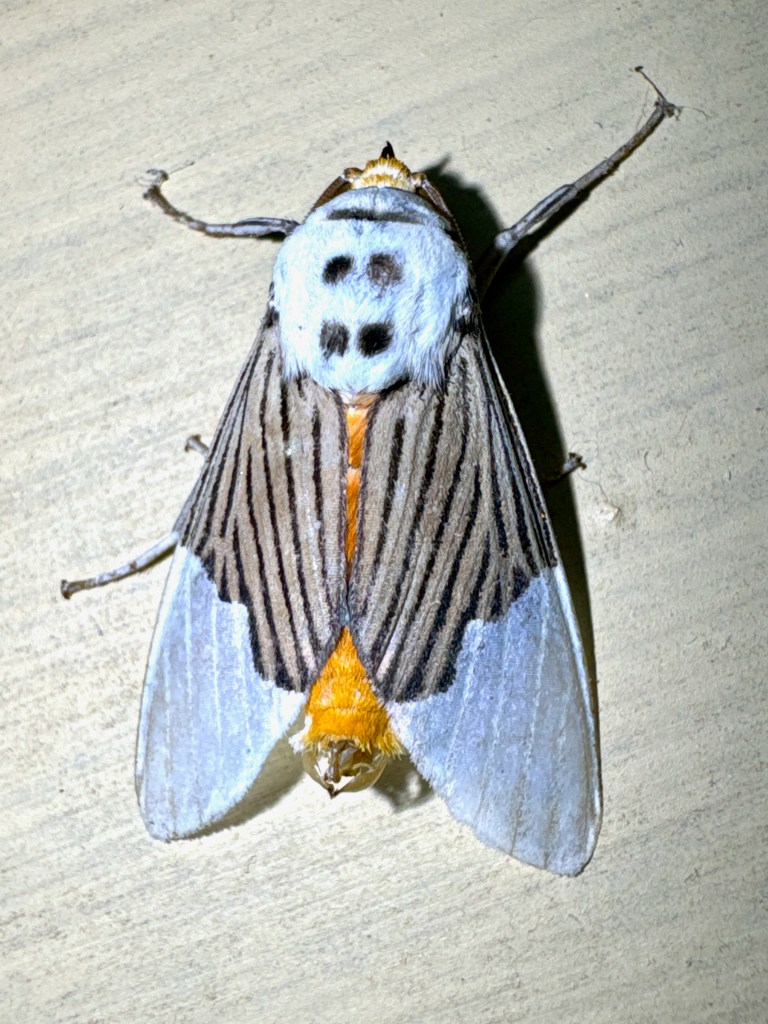
It was dark after we finished dinner, so instead of birding, we spent the evening at the moth wall, simply a 8-foot high and 6-8 foot wide wall in the yard, painted white with lights to attract moths. Even though it was winter, we saw amazing moths. A sample is below; click on any image in the gallery for a larger view.
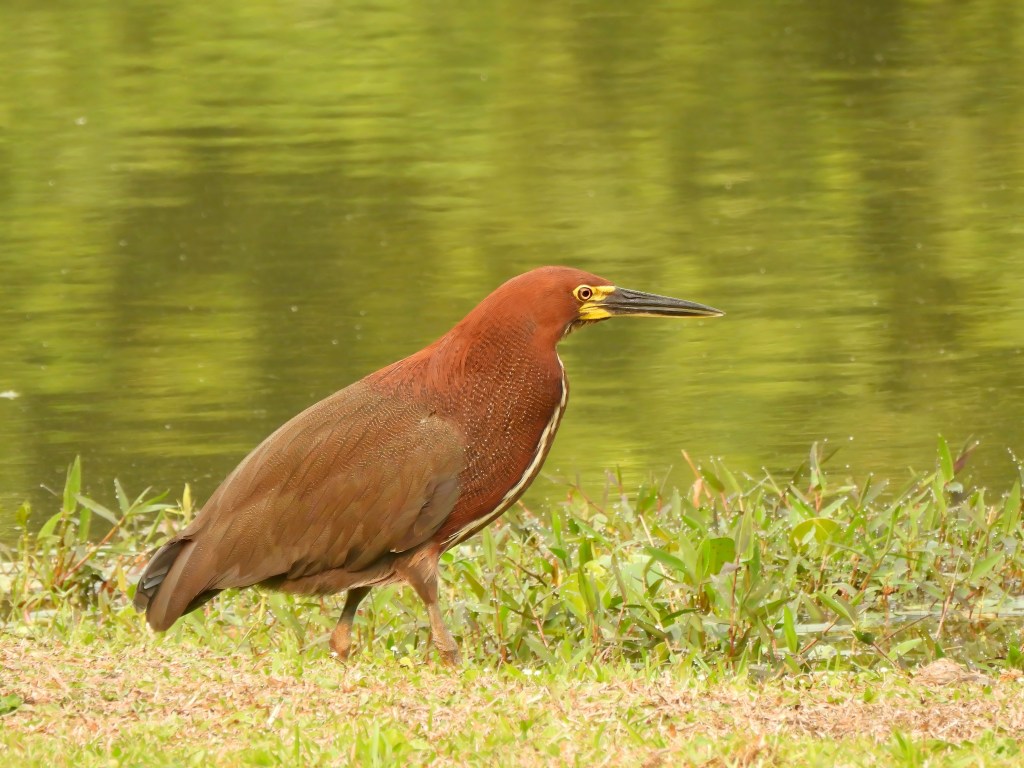
The next morning, Derek took advantage of birding with the local guide. I was lazy and opted to walk around the wetland with some of the others who were staying at REGUA. Derek saw more birds than I did, but I enjoyed the introduction to the lake and wetland which are the heart of REGUA. This beautiful Rufescent Tiger-Heron was an easy-to-see bird and a highlight of the morning.
I went back to the lodge and spent some time watching the hummingbird feeders where I was rewarded with my first life bird on this part of the trip, a Black Jacobin.

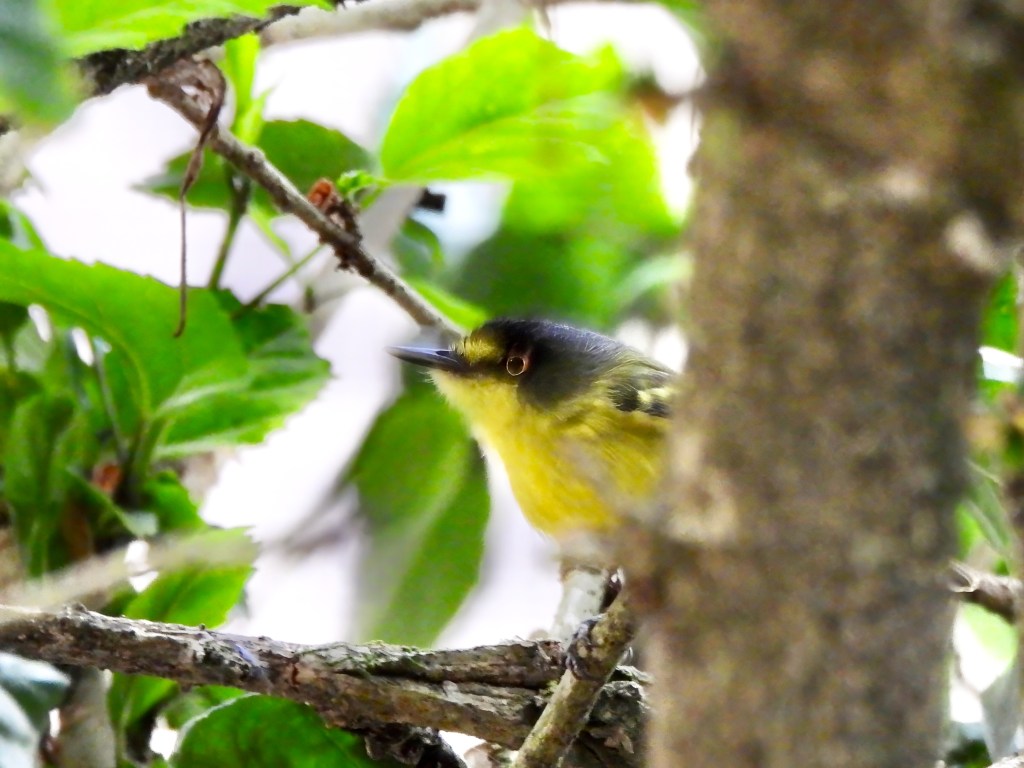
Derek returned in time for a late afternoon walk around the wetland. Many of the birds were familiar to us, but we also saw a Whistling Heron, a life bird for both of us. I also enjoyed this cute little Gray-headed Tody-Flycatcher.
The day went quickly and soon we were back at the moth wall. More fascinating moths included those below.
Our most surprising experience at REGUA occurred that evening. I was alone at the moth wall while Derek was in his room reviewing photos. Suddenly, I heard a noise behind me, turned, and saw a tapir about six feet away! I jumped in surprise and he ambled into the woods. I rushed inside to get Derek, not really expecting a return visit from the tapir, but I had to get Derek out there. We were standing by the wall quietly talking when Derek said, “Shelley, look over your shoulder.” And, there he was!
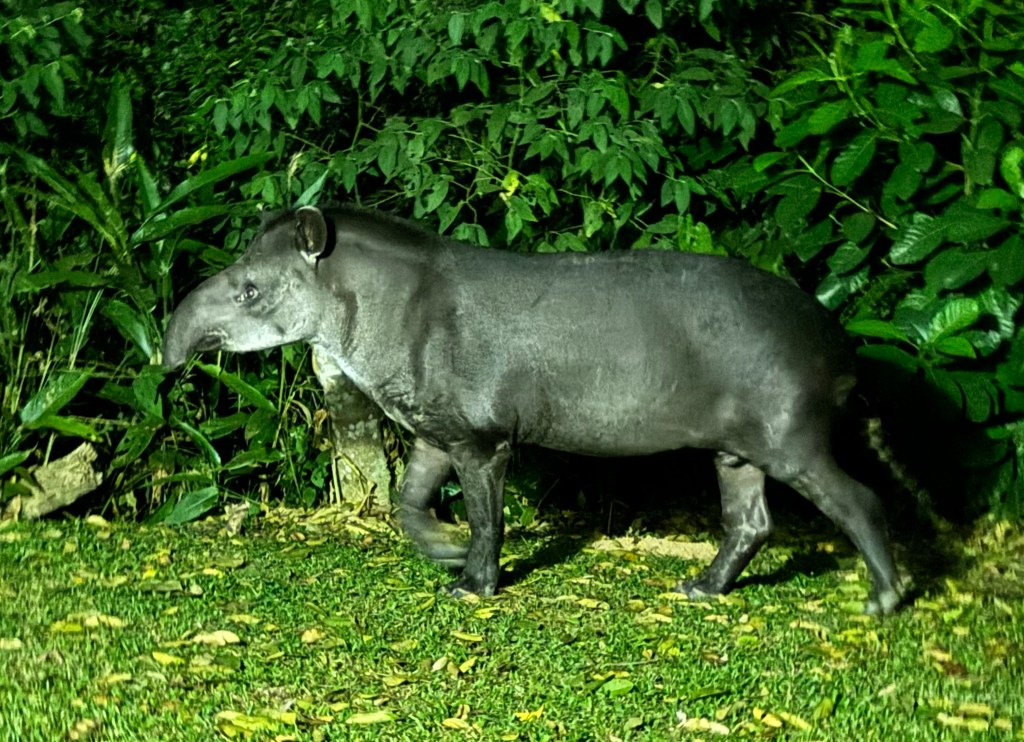
Reserva Ecológica de Guapiaçu is a non-profit organization with a mission of conserving and protecting the local Atlantic Forest. REGUA’s species reintroduction project works to rebalance and restore a healthy ecosystem. One of the species in that program is the Brazilian or lowland tapir, Tapirus terrestris, a large mammal that weighs an average of 500 pounds. The following day, we learned that our tapir’s name is Valente and that he was one of the animals reintroduced into the area. Valente has adapted quite well and he has fathered most of the next generation of tapirs in the area. 

On our last full day at REGUA, I thought that we should go to the wetlands as early as possible, but it turned out that wasn’t such a great idea. The local birding guide showed up an hour after we left and went with the other birders to the wetlands. They saw twice as many species as we did even though Derek is a good birder with sharp eyes. Experienced local guides who know bird songs and calls are invaluable in environments with skulky birds in thick vegetation.

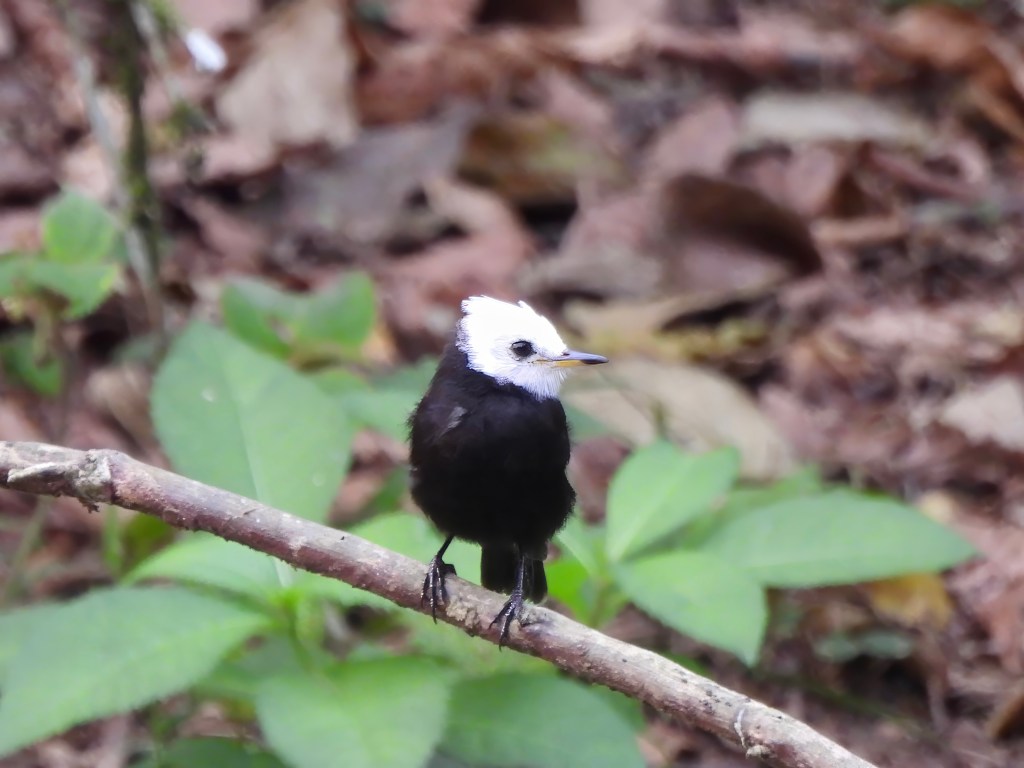
Regardless, we enjoyed our walk and the birds that we saw. Two of our favorites were White-headed Marsh Tyrant and Masked Water-Tyrant.
Butterflies were not nearly as common as moths, but we did see a few on our walks around the wetlands. Below, a Pythonides jovianus, sometimes called Variable Blue-Skipper.

Back at the lodge, we continued to appreciate beauties like this Swallow-tailed Hummingbird.

On our third and last night at the moth wall, we continued to see new species. During our nights there we also saw a few other insects. One of the most interesting was this large leaf katydid, Pycnopalpa bicordata.

We had one more morning at REGUA, but it rained so we spent most of our time on the lovely open porch just outside the dining room. The rain didn’t deter the birds and other animals, so we just sat and enjoyed the show.

We appreciated good looks at a Blond-crested Woodpecker, one of my life birds at REGUA.

The banana feeders were popular, even in light rain. The Maroon-bellied Parakeets were always fun to watch.

Common Marmosets enjoyed the bananas as much as the birds.

I’ll end with my favorite bird from REGUA, the elegant little Blue-naped Chlorophonia. I could look at these beautiful birds all day and never tire of them.

Just after lunch, our driver would pick us up and take us to Eco Lodge Itororó. Most birders who stay at Itororó do a day trip to REGUA, but I’m very grateful for our three days there. Without an overnight visit, we would have missed the moths and tapir encounter as well as the camaraderie with other guests, the delicious home-cooked meals, and the wonderful warm atmosphere.

Read Full Post »

We arrived at Cabañas San Isidro on the evening of April 29 in time for a wonderful dinner, our first of the fantastic meals served there. Our rooms were large and beautiful; mine had floor-to-ceiling glass walls on one side providing a view of the surrounding forest. The restaurant and deck area was lovely, too, with birds nearly always in the nearby trees.

We spent all day April 30 birding around the lodge and on the entrance road. Above is an Inca Jay or Inca subspecies of Green Jay, depending upon which taxonomic authority you follow. If you have seen Green Jays in South Texas, you will think that this bird looks quite different. And, if you enjoy taxonomic discussions, check out Why is the Inca Jay not a Green Jay?

A few of the other birds that I saw right from the deck are shown below. A lovely little Pale-edged Flycatcher was a regular in the trees by the deck.

Earlier, when we observed Russet-backed Oropendolas nest building at Limoncocha, Xavier promised me that I would get good close looks later in the trip. As promised, I saw them every day while we were at San Isidro.

Another regular in the deck area was Scarlet-rumped Cacique. Every morning, I found one in the exact same spot on the deck rail above the moth sheet.

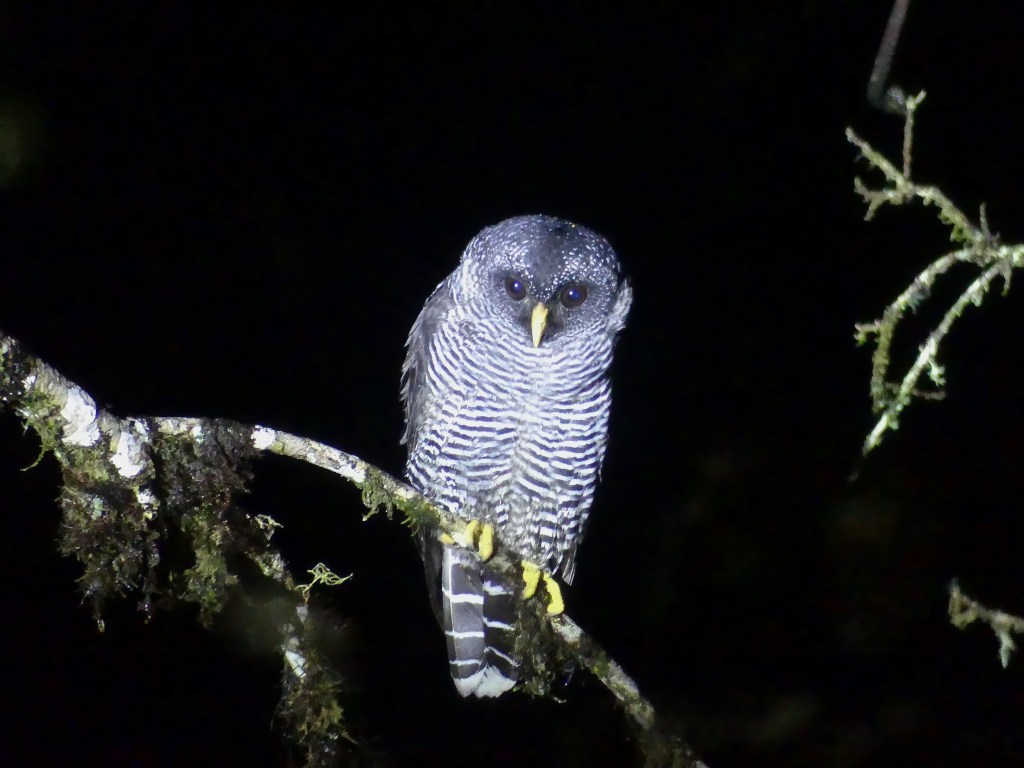
The most intriguing bird at the lodge is the mystery owl. It is in the genus Ciccaba, but otherwise no one can determine what it is! It looks similar to the other Ciccaba species found in Ecuador, Black-and-white Owl and Black-banded Owl, but neither of those are found at an elevation this high. This owl has been found only in a small area near the San Isidro lodge. There are also some minor plumage differences between this owl and the other Ciccaba species. People like to categorize birds, but more importantly birders need to report them. So, eBird created a taxon just for this owl, the “San Isidro Owl (undescribed form).” This beautiful creature was heard calling during our dinner every night.

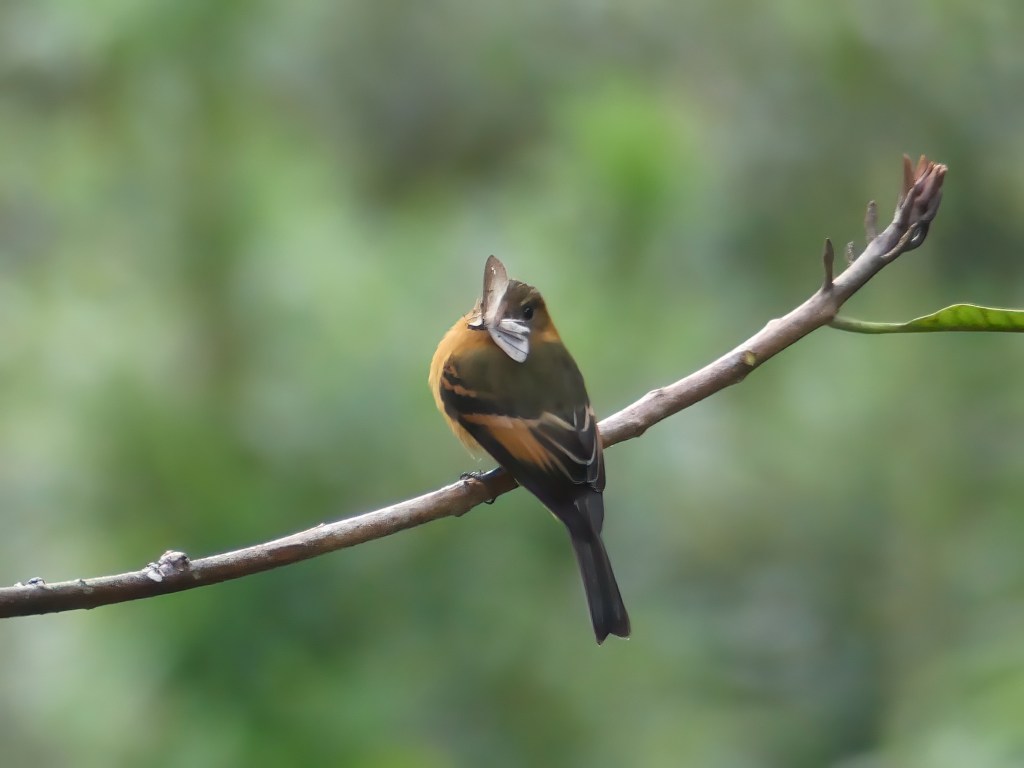
We started May 1, our second day at San Isidro, by birding around the lodge again. A nice feature of the lodge is the moth sheet below the deck. The area around the sheet is like a typical yard, much more open than the moth blind at WildSumaco. The birds that come to feast on the moths are not particularly skulky otherwise, but it’s nice to get such good looks at them. Below, a pretty Cinnamon Flycatcher enjoys a moth for breakfast.

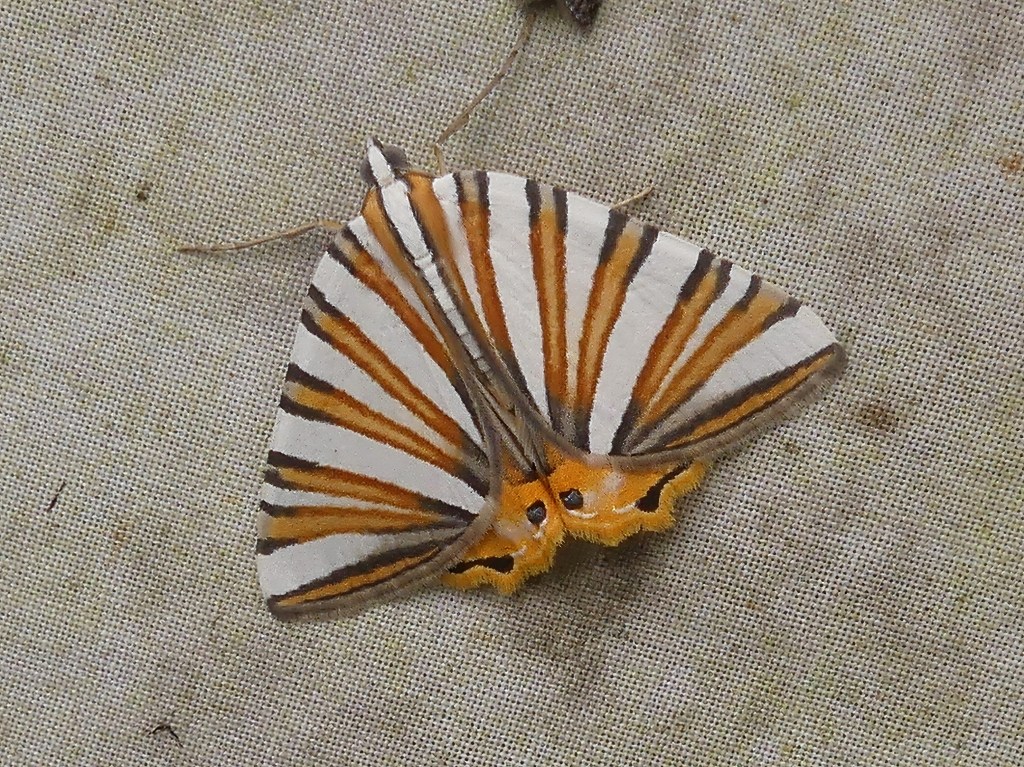
I liked the moth sheet for more than the bird food it provided. Because the sheet was in the open, I could walk right up to it and view the amazing moths. I photographed several dozen species and I am still trying to identify them, a harder task than I expected. Below is a small sample of the moth bounty. Look closely, especially at the second one, and note that all of the following moths are head up.

After watching hummingbirds, other birds, and moths for a short time, we made our second attempt to see an antpitta, which had not cooperated the first day. It was slower to come for worms than any that we had seen previously, but it was worth the wait. I think that this White-bellied Antpitta was the prettiest of the seven that we saw during the trip.

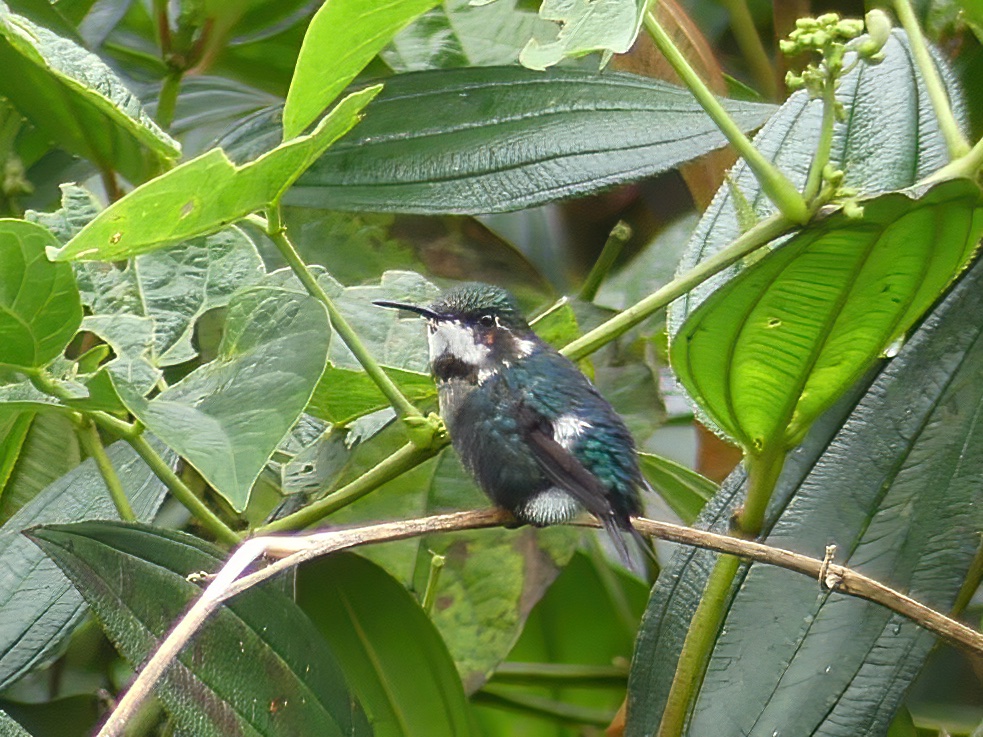
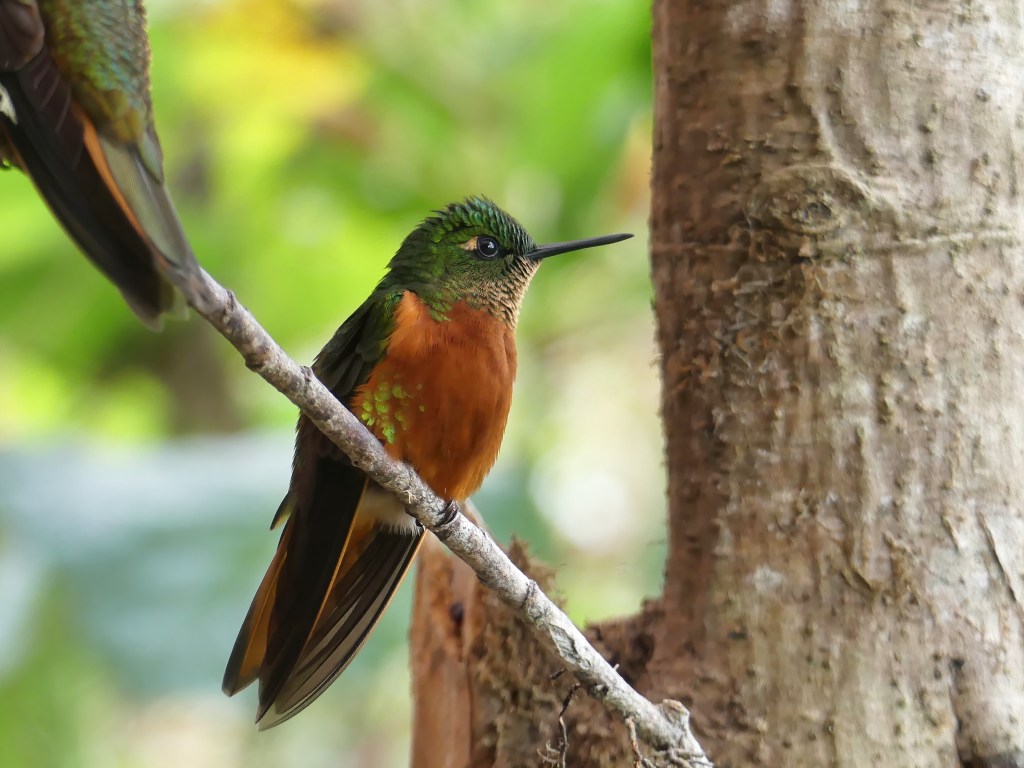
In the afternoon we went to La Brisa hummingbird feeders where Gorgeted Woodstar (top left photo below) was a life bird. The Collared Inca (top right) was one of my favorites at the lodge at San Isidro. The Chestnut-breasted Coronet (bottom left) did not like it as much as I did, though, as they were very possessive of the feeders. They seemed to particularly dislike the Collared Inca and spent an inordinate amount of time chasing it away. We saw Chestnut-breasted Coronets and Fawn-breasted Brilliants (bottom right) at both La Brisa and our lodge.

One of the most beautiful hummingbirds on the east side of the Andes is Long-tailed Sylph. Watch for it in the slow-motion video below that I took at Cabañas San Isidro.

On May 2, we started the day by heading out to the nearby countryside. It was a beautiful morning as you can see in the photo below. I enjoyed the scenery almost as much as the birds.

On Borja Road, we found a small group of Red-breasted Meadowlarks. It was very exciting to see these beautiful birds.

Our attention switched back to the landscape when we saw gas, steam, and ash plumes rising from Reventador, one of Ecuador’s most active volcanoes. Xavier had only seen this once before, so I felt privileged to share this beautiful and impressive sight.

Next we headed to Concierto de Aves to see some special birds. After watching hummingbirds around Victor and Nilda’s home, we walked down a country road that paralleled a little creek. The Fasciated Tiger-Heron in the creek was a very welcome surprise.

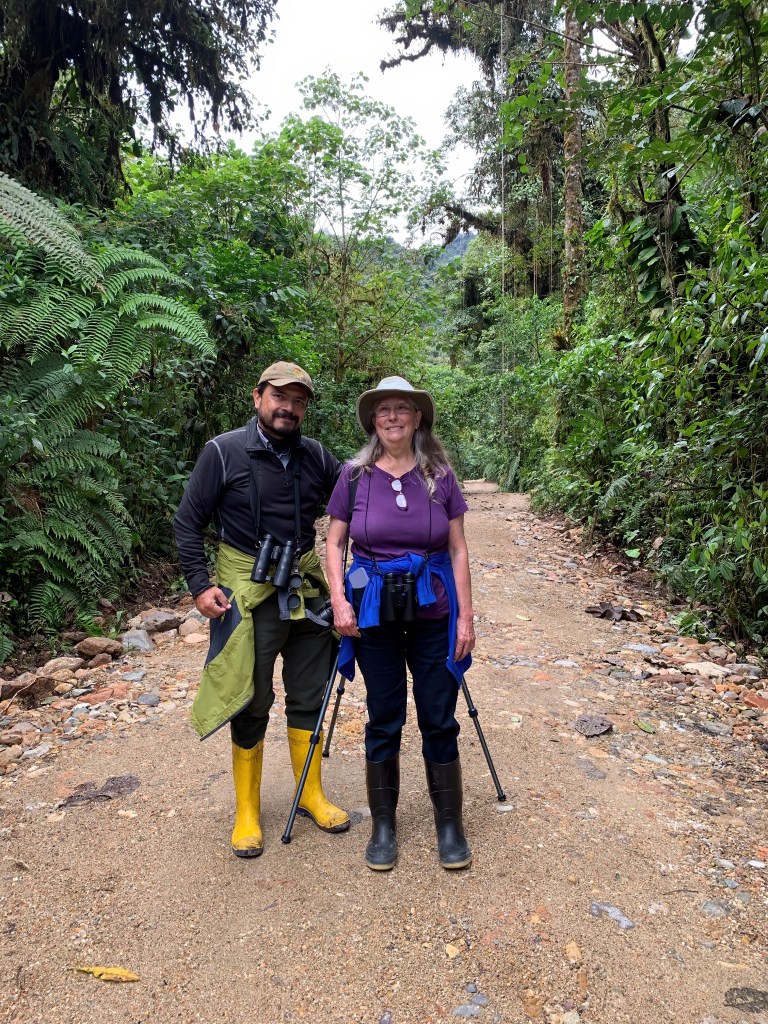
Below, Xavier and me on the road which led to the larger stream. We left the road to walk a trail through the forest that weaved in and out of the stream. Victor and Nilda helped me on the steep parts of the path and through the water. I could not have done it without them!

Our reward at the end of the trail – a female Andean Cock-of-the-rock on her nest. You might be wondering why she is orange instead of red. That’s because we are on the east side of the Andes and this is a different subspecies than the one in northwest Ecuador. There are actually four subspecies; two are red and two are orange.

We were able to see this gorgeous bird so well because once again Xavier had carried a scope on the trail through the forest and creek. Her nest is actually quite well hidden on the side of the mountain by the waterfall. The walk to see the Cock-of-the-rock was one of the most beautiful and amazing adventures of the entire trip.

Nilda and I walked back along the road together and although she does not speak English and I don’t speak Spanish (a deficit that I really need to remedy), we managed to communicate. Nilda saw me photograph a flower, so she took me to see these beauties.

And, all too soon our time at San Isidro was over. This fabulous day was my last with Xavier, but I would have one more day of birding on the way back to Quito with Francisco. Stay tuned for my last post on this wonderful trip to Ecuador with Neblina Forest.

Read Full Post »