Feeds:
Posts
Comments

Posts Tagged ‘Mountain Bluebird’

David and I spent June 2 in Spearfish Canyon. His flight to Rapid City had been on time and his bicycle survived the flight without needing any repairs, so we had two full days to explore the Black Hills area before he started the RASDak (Ride Across South Dakota) cycling event.

This is a beautiful area and our 14-mile drive on US Highway 14A (Spearfish Canyon Scenic Byway) to the Spearfish Canyon Natural Area was lovely. Above, Bridal Veil Falls, about the mid-point of the drive. We enjoyed our hike from the Visitor Center to Roughlock Falls (top photo in the first post in this series). David found both an American Robin on her nest and an American Redstart visiting its nest in a small bush by the side of the creek. Black-headed Grosbeaks also nest here, but I never got a great look. David, however, saw an adult male so close that he could even see the yellow on its lower belly while I was in the restroom. My best looks were of a pair eating trash in the picnic area.

My main birding goal here was American Dipper, a life bird for David. He got a quick look at one on our hike back to the car, but a little later we had better looks at two dippers a bit farther up the road under a bridge with a nest box. We also saw Least Chipmunks at both the Roughlock Falls picnic area and the area by the bridge.

On Saturday morning, David was very excited to head to Devils Tower. I had been there on my big road trip in 2018, but it was David’s first visit. I can’t say it better than I did then – it’s just a hunk of rock jutting up from the earth, but so very beautiful and inspiring. We walked the 1.5 mile trail closest to the tower and took time to talk with other visitors and take plenty of photos.

Even with our slow pace, we were done early enough to go to Thunder Basin National Grassland. We turned off the highway onto a gravel road and almost immediately four Long-billed Curlews flew across the road right in front of us. Two more stayed behind in the field and we got pretty good looks at them. For someone who refuses to call himself a birder, David was getting some very nice life birds!
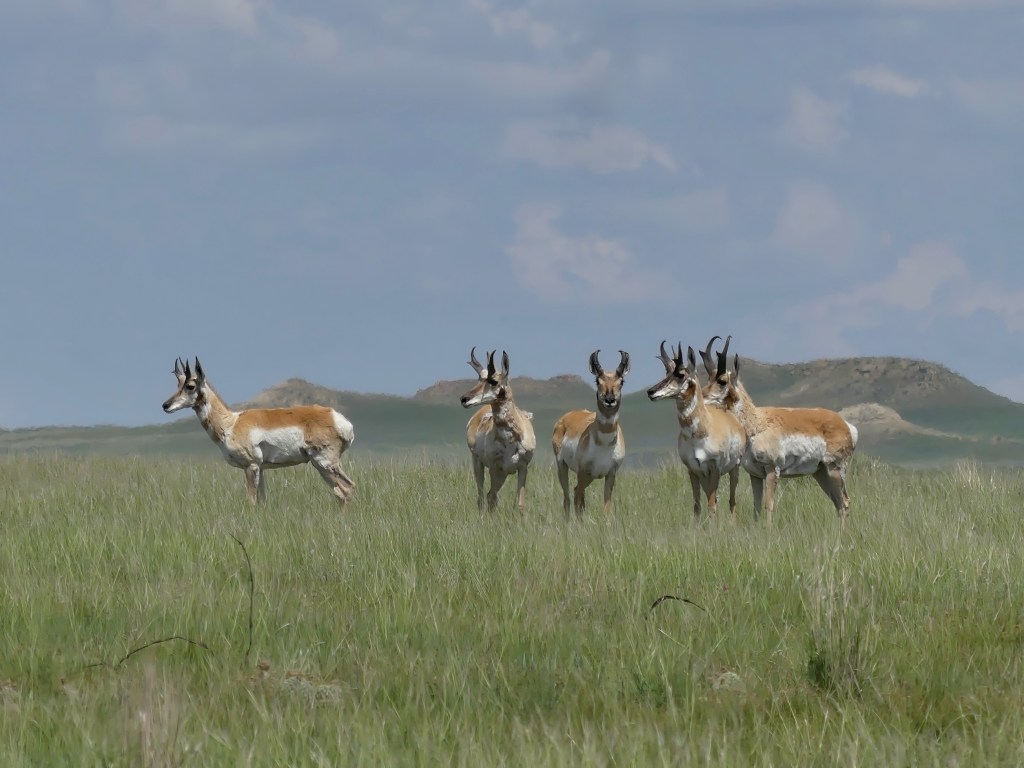
Pronghorn are the fastest land mammal in the Western Hemisphere and we saw many of these beautiful animals at Thunder Basin. They are often called antelope, but they are in a different family and have no close relatives. The San Diego Zoo website has a page on pronghorn with some fascinating facts.

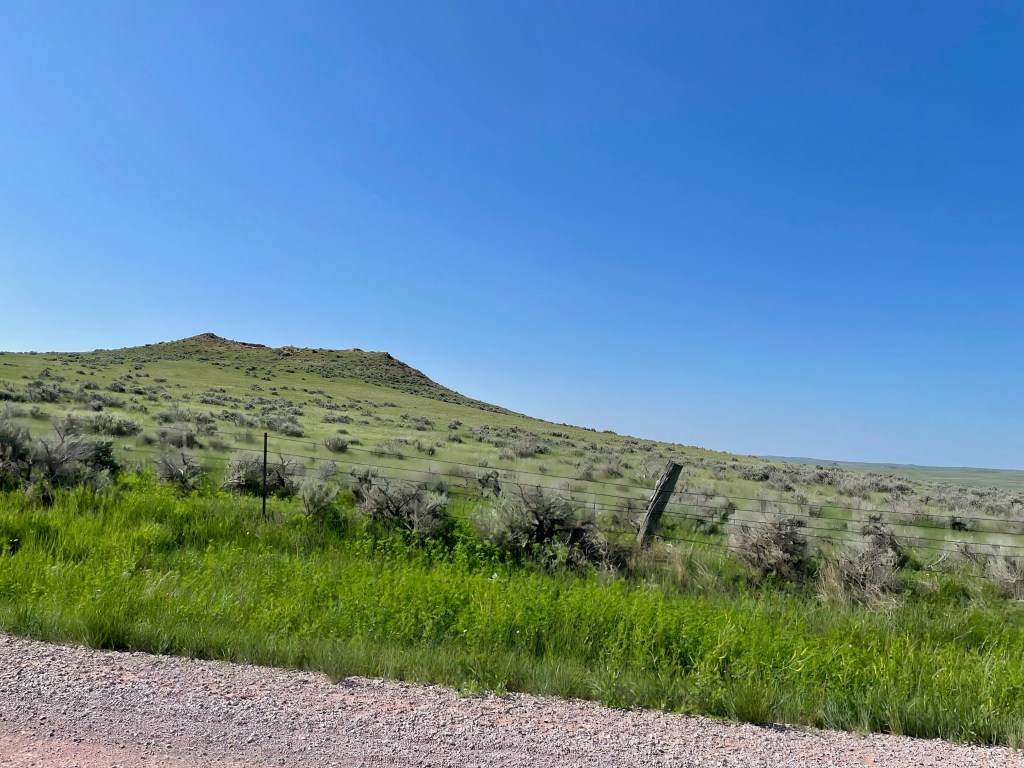
The first RASDak ride was on Sunday from Spearfish to Newcastle, Wyoming. I headed straight to Thunder Basin. This national grassland is in the the transition zone between the Great Plains to the east and the sagebrush steppe to the west and I love that landscape.
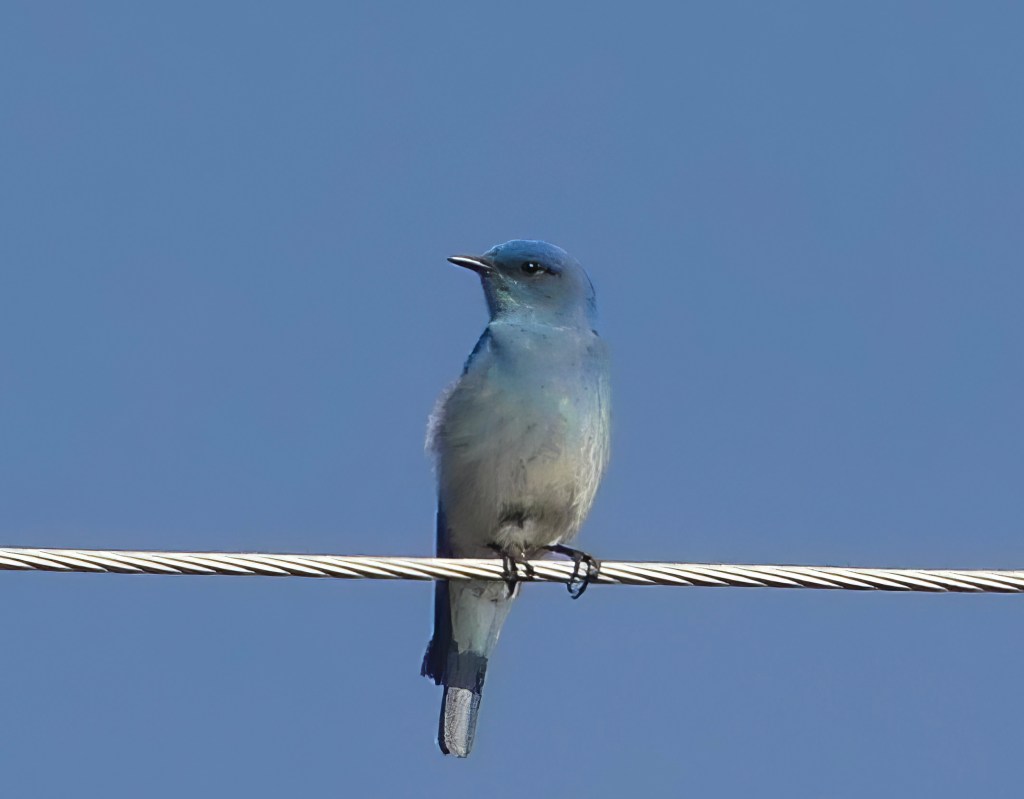
After David’s ride, we drove around Newcastle and saw a few birds including the brilliant Mountain Bluebird below.
The next morning David left for Hot Springs and I went to Thunder Basin once again. I saw several birds like the one in the photo below that proved to be my biggest ID challenge. I took dozens of photos and submitted some to Merlin, a bird ID app, right there on the side of the road. My heart fluttered with excitement when Merlin suggested that it was a Sprague’s Pipit, a much-wanted life bird, but somehow I knew it couldn’t be. Actually, it was a juvenile Horned Lark and I had a good learning experience.

Fall River, fed by thermal warm springs, runs directly through the little town of Hot Springs. Later that afternoon, we enjoyed a pleasant walk on the Freedom Trail which runs alongside the river. There were large numbers of Cliff Swallows nesting under a bridge and other birds in the large trees.

The next day it was on to Custer, David’s shortest ride. I didn’t have time for morning birding as David finished so early, but that gave us time for a trip to Mount Rushmore. I liked it more than I expected as the surrounding area is classic Black Hills with beautiful ponderosa pine covering the mountainside.

I was a bit disappointed that we missed the mountain goats at Mt. Rushmore, but in addition to the scenery, I enjoyed the White-winged Juncos, another Least Chipmunk, and a Melissa Blue butterfly (top left below). The other butterflies were also seen in the Black Hills.

On Wednesday, David rode his bicycle to Rapid City and I drove the wildlife loop at Custer State Park. Below, the lush landscape of the Black Hills is so different from the landscape to the east or the west, although it has prairie dog towns which we also saw in the badlands and at Devils Tower. It’s no wonder that we saw so many prairie dogs; about half of the U.S. population lives in South Dakota, Wyoming, and Montana.

Custer State Park also hosts large numbers of bison and David had quite an experience sharing the road with them while he was on a bicycle. I will share a link once he writes his story.

I don’t know how we crammed so many activities into Thursday. David rode to Sturgis and I went to Canyon Lake Park in Rapid City. The park did not have anything unusual, but I liked the pretty Red-winged Blackbirds, one of David’s favorite birds.

Our first afternoon activity together was a quick trip to Bear Butte Lake. You will be shocked at what I did next, but when you are traveling with a friend, you try to make them happy. So, there was no way we could miss the Sturgis Motorcycle Museum. It actually turned out to be more interesting that I had expected and you can see how much fun David had in the photo below.

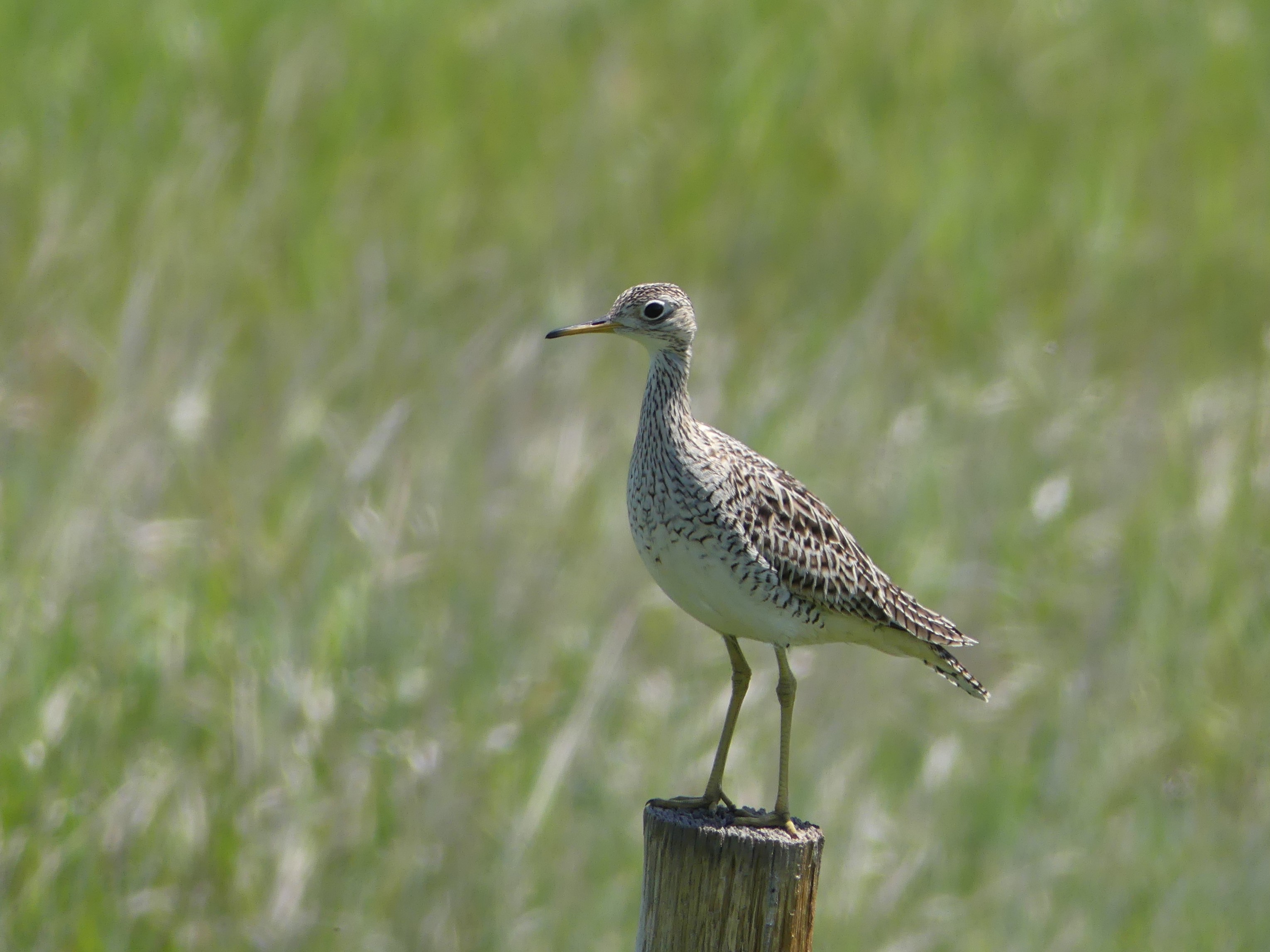
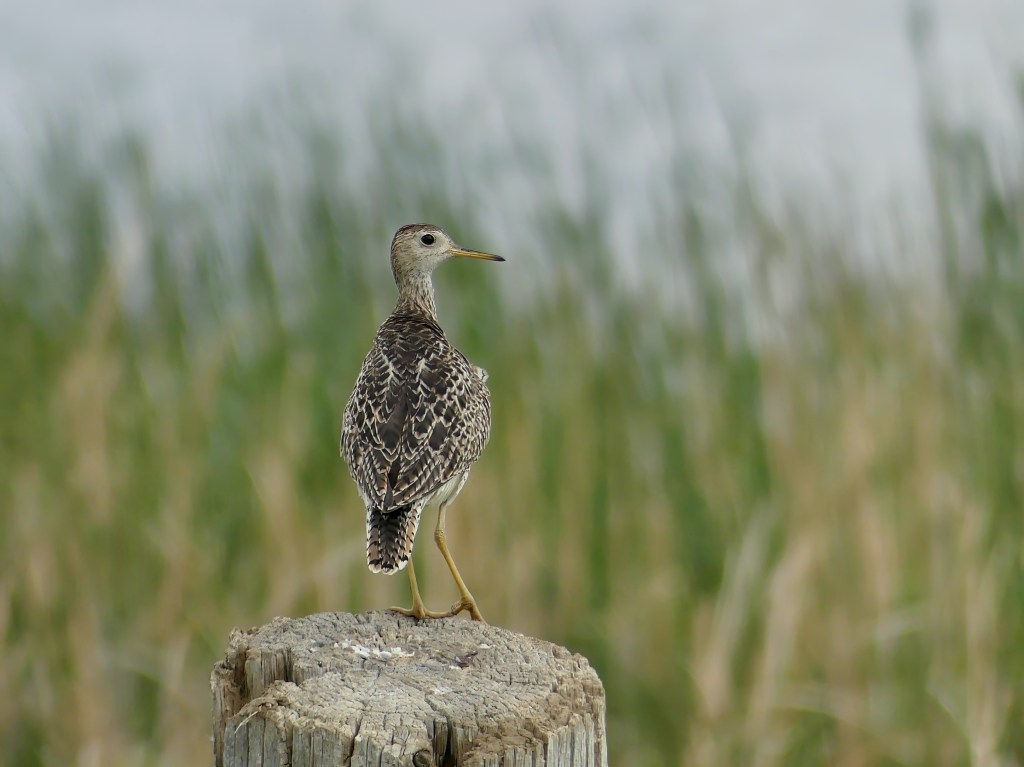
We attended the RASDak closing dinner next and still had time for a second trip to Bear Butte Lake. We saw quite a few birds at the lake; my favorite was this accommodating Upland Sandpiper.
The last day of RASDak was back to Spearfish to complete the loop. I spent the early morning in Spearfish Canyon looking for Cordilleran Flycatcher. OK, birding friends, you can laugh. I know that this fall it will be lumped with Pacific Slope Flycatcher, which I have already seen. I am usually very good with avian taxonomy, but I suppose the desire for a lifer prevailed over knowledge. I easily found the bird singing, but only had one quick view of its belly. I finally gave up and went to the D.C. Booth Historic National Fish Hatchery to wait for David where I photographed the Wood Duck below.

We went back to Spearfish Canyon together to continue the search for Cordilleran Flycatcher and David got a quick look at one. We finally figured out that there was a nest in the tree we were watching, but the bird zipped in and out on the back side where it was impossible to see. Our luck with the dippers was much better. We enjoyed watching one fly up and down the river and David got to see it duck under water. He climbed down the creek bank to get the photo below.

On June 10, David joined a couple hundred other cyclists for the Big Mick, a one-day 109-mile bicycle ride on the George S. Mickelson Trail from Deadwood to Edgemont. This successful rail trail conversion is one of the most scenic in the U.S. and David loved it. However, his final day of riding was wet and one of his coldest ever. After riding 450 miles in seven days, David was feeling good and still smiling.

While David was cycling through the heart of the Black Hills, I drove the western route through Wyoming to get from Deadwood to Edgemont. I had 41 Wyoming birds and my goal was 50 species. I birded the LAK Reservoir near Newcastle again and saw a few new birds. I also met Scott Rager, a top Wyoming birder. Scott was very friendly and offered a few tips before I had to move on. (Spoiler alert: Scott will appear again in part 4.)

After picking up David in Edgemont, we drove to Wall, SD and spent the next day at Badlands NP. David flew home the following morning and I took the car for a wash before having a few more adventures. Stay tuned for the finale to the trip.

Continue to part 4, the last story about this trip Road Trip 2023: Days 19-25 – Wyoming and Nebraska (Part 4 of 4)

Read Full Post »

On Sunday morning, I headed back to Bear Canyon Road to look for Sagebrush Sparrow again.  Remember, I was looking for these birds instead of Black Rosy-Finches because I was scared to drive the Beartooth Highway.  I got to the road several hours earlier than the previous day, but I found even fewer species and did not find my target bird.

After two hours of serious searching along the two-mile stretch of road, I set my GPS for Tellico Plains and started driving.  I was soon in Wyoming and enjoying the beautiful landscape, even prettier than Montana if possible.  The distant mountains were gorgeous and before I knew it, I was driving up into those mountains.  The road became narrow and steep with sharp drop-offs and hairpin turns.  A sign at a scenic overlook told me that I was in Bighorn National Forest.  Another sign a short time later stated that the elevation was 9430 feet.

I talked with a guy who had ridden his motorcycle up and he told me that the Beartooth was “a piece of cake” compared to what I had just driven.  I’m not sure that’s true, but I did drive one of Wyoming’s scenic mountain roads that had not even opened for traffic until May 20.  I had been somewhat uncomfortable driving WY 14A, but not terrified.  There was no time to anticipate the road ahead and I had no choice but to keep driving.

After discovering that I can drive mountain roads, my only regret of the trip is not driving the Beartooth Highway to look for Black Rosy-Finches and, of course, enjoy the views on one of the most beautiful roads in America.  Next time …

After I finally got out of the mountains, I drove to Devils Tower.  I was stunned that a piece of rock could be so captivating.  The entire park around the landmark is absolutely gorgeous and easily worth a full or half day to hike the trails.  I walked a short way on one trail and saw this young guy.

And, the park had a prairie dog town! Who doesn’t love prairie dogs?  This time I heard them “talking.”

Update: The prairie dogs at Devils Tower are the same species that I saw at Grasslands National Park, Black-tailed prairie dogs.

Update: The prairie dogs at Devils Tower are the same species that I saw at Grasslands National Park, Black-tailed prairie dogs.

Yesterday, I started the day by crossing the state line just into South Dakota to look for Virginia’s Warbler in Roby Canyon.  It’s an isolated location where you don’t expect to run into anyone else, but I met two other birders.  Together, we searched for a couple of hours without seeing our target bird.  I was disappointed, but at least I could blame the miss on luck rather than lack of birding skill when two top local birders could not find it either.  They described the Virginia’s as one of the warblers that just does not want to be seen.

Here is a pretty female Mountain Bluebird that I did see on the way to Roby Canyon.

Mountain Bluebird

Mountain Bluebird

I spent most of the afternoon driving through Wyoming and crossed into Nebraska just before I stopped for the night.  Before I left home, I had read about half of “The Oregon Trail” by Rinker Buck, a modern-day adventure with lots of history.  As a child, I was fascinated with the story of pioneers who moved west and now I am seeing the country through which they traveled.

I’ll leave you with a Lark Sparrow that I saw yesterday when I detoured down a random dirt road.  And, now I’m back on the trail, slowly heading home.

Lark Sparrow

Lark Sparrow

Read Full Post »

Well, friends, I knew it would happen some time.  I just accidentally hit an unknown shortcut key and published a post with only one sentence.  I apologize for any confusion.  So, back to my story…  I left The Crossing at Grasslands in Val Marie late in the morning on Thursday, May 24.  It could have been a short 2-1/2 hour drive to Cypress Hills, but I detoured to Eastend to look for Prairie Falcon, which would be a sure thing at Jones Peak (yeah, right).  It was another of those long dirt and gravel roads, but it did lead up and up to a spectacular view of the valley below.  I believe that Prairie Falcons do breed there, but I should have known by the zero photos in eBird for that location that not many people get a really good look.  It was so windy that I could barely keep myself upright.  I did not set up the scope because I knew it would blow over.  So, I did not add Prairie Falcon to my life list, but I did see some pretty Tree Swallows and Mountain Bluebirds.

Mountain Bluebird

I arrived at The Resort at Cypress Hills that afternoon and walked around the lake before settling in for the night.  The park is beautiful and the trees are a lovely change from the prairie.  However, I headed out to the prairie again the next morning.  On Friday, I drove over 1-1/2 hours towards Wild Horse, Alberta, to look for McCown’s Longspur again.  I loved the first 11 miles of the gravel road and did not encounter another vehicle.  Nor did I encounter any McCown’s Longspurs.  I did, however, see a few American Avocets in breeding plumage, the color of dreamsicles, a friend used to say.

American Avocet

The next 10 miles were pretty good, too, and I met another birder coming from the opposite direction.  He greeted me with “What do you need?”  I replied, “McCown’s Longspur.”  “I just pushed three of them your way.  Just wait here five minutes and they will be here.”  Well, we talked 10 or 15 minutes and another truck came by.  Birds don’t always keep hopping straight down the road, either, so I missed them.  I continued on down the road and was at the border station before I realized that my target road had ended.  It was good fortune, though, because they have rest rooms at the border station (travel tip).  Plus, I found the most cooperative Upland Sandpiper just before the end of the road.  I think this bird would have let me look at him all day.

Upland Sandpiper

I could have made a loop back to Cypress Hills, but I liked the first 11 miles of the road I was on so much that I decided to return the same way.  I don’t know what changed, other than my luck, but I found EIGHT adult male McCown’s Longspurs on the way back!  My mediocre photos make me happy, proof that I finally found these little beauties.

McCown’s Longspur

Yesterday’s mammal of the day is Richardson’s ground squirrel.

Richardson’s ground squirrel

Today’s highlight happened when I went out to get in my car.  Yesterday, I had discovered a woodpecker nest on the edge of the parking lot and got a photo of a nestling poking his head out of the hole.  I suspected it was a Three-toed Woodpecker, but I wasn’t sure.

American Three-toed Woodpecker

Today, I saw Papa Three-toe leave the nest and fly to a close tree, where he preened for five minutes.  It was such a privilege to watch these birds, a species that I have not seen often.

American Three-toed Woodpecker (adult male)

I drove to the West Block of the park, over the roughest gravel roads yet.  I did not see a lot of birds there, but did enjoy the scenery and had a nice walk.  I finally saw the first significant prairie flowers of the trip.

Update:  One of the two Shooting Stars native to Saskatchewan, genus Dodecatheon, but I did not measure the leaves or petals, so cannot determine which species.

Update: One of the two Shooting Stars native to Saskatchewan, genus Dodecatheon, but I did not measure the leaves or petals, so cannot determine which species.

On the way back, I stopped on the side of the road to watch a Golden Eagle.  Another raptor was attacking it, so I started taking photos.  When I looked at them, I realized that the eagle had stolen the Swainson’s Hawk’s lunch.  There is nothing like a little raptor drama to liven up the day.

Golden Eagle and Swainson’s Hawk

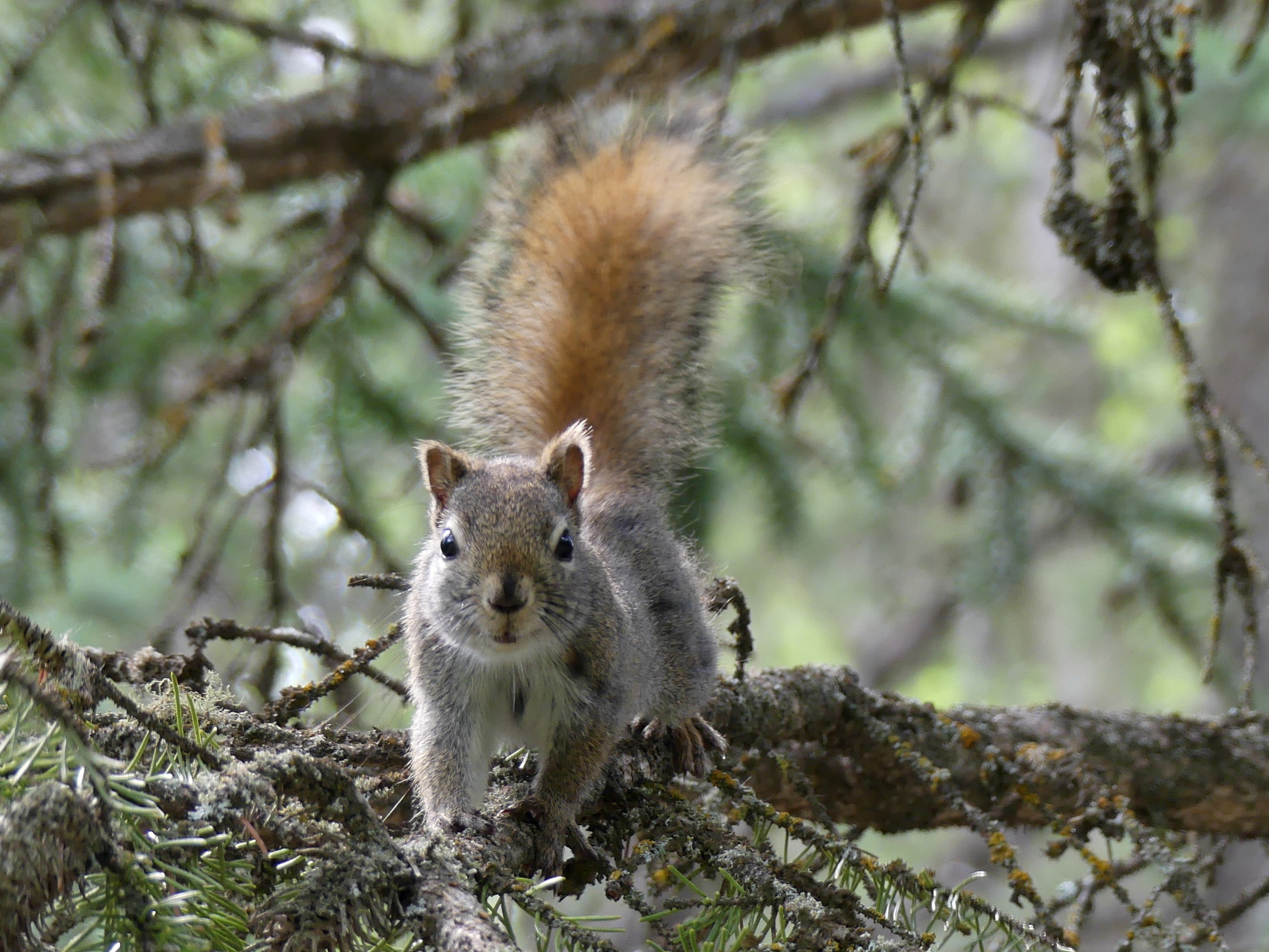
Today’s mammal was this red squirrel who did not want me to take his picture. He didn’t even want me in his woods.

Red Squirrel

Tomorrow, I’m on the road again, heading to Waterton Lake National Park.

Read Full Post »