Feeds:
Posts
Comments

Posts Tagged ‘Snowy Egret’

Last summer, my time in New York ended with 93 species on my state list and I wanted to get that number to 100.  Derek and I decided to go for it when I discovered that you can get to Staten Island without driving through Manhattan.  Our destination on Tuesday, July 14, was Wolfe’s Pond Park, less than three hours away, which had a species list in eBird making it appear that I could get seven new birds without even trying.  We should have known that nothing would be easy in the hot July weather, but we did accomplish our goal.  I now have 102 species of birds for my New York list, including the birds in the two photos below.

Mute Swan at Staten Island's Wolfe's Pond Park

Mute Swan at Staten Island’s Wolfe’s Pond Park

I’ve never liked Mute Swans.  They are non-native and aggressive towards our native waterfowl.  This particular swan, though, appeared to have become gentle and tame due to handouts from picnickers at the park.  This Snowy Egret had more self-respect and flew every time we got near, making me work to get a decent photo.

Snowy Egret at Wolfe's Pond Park

Snowy Egret at Wolfe’s Pond Park

We alternated big days and easier days, so it was off to nearby District of Columbia on Wednesday.  Derek has assured me that birders who care about lists consider it the same as a state and he wanted to see me get to 50 species.  We saw several birds at Kenilworth Park & Aquatic Gardens that were still on their wintering grounds when we visited the park on my visit in April 2019.  My favorite was this Green Heron, a species that I’ve seen many times.  However, I’ve never been closer and I couldn’t take my eyes off this bird as he stalked his prey and didn’t seem to care at all about our presence.
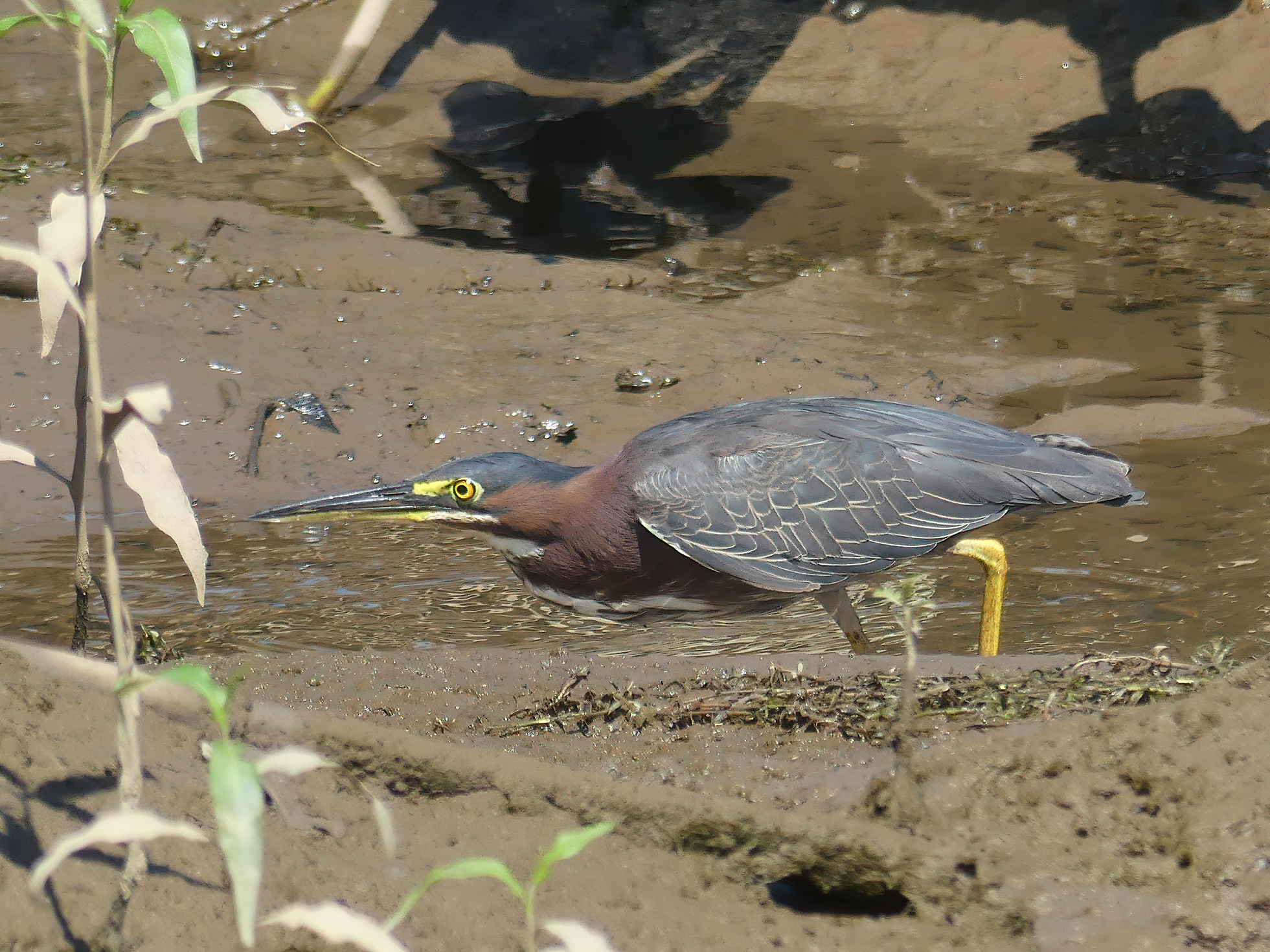
Green Heron at Kenilworth Park & Aquatic Gardens

Green Heron at Kenilworth Park & Aquatic Gardens

The gardens at Kenilworth are very pretty.  There were more visitors here than most of the places that we visited, but we felt safe.  We were impressed by the consideration and social-distancing displayed by park visitors.  Everywhere in DC people seemed to take appropriate actions to stay safe from the spread of coronavirus.  Many wore masks outside and we even saw young children wearing masks.
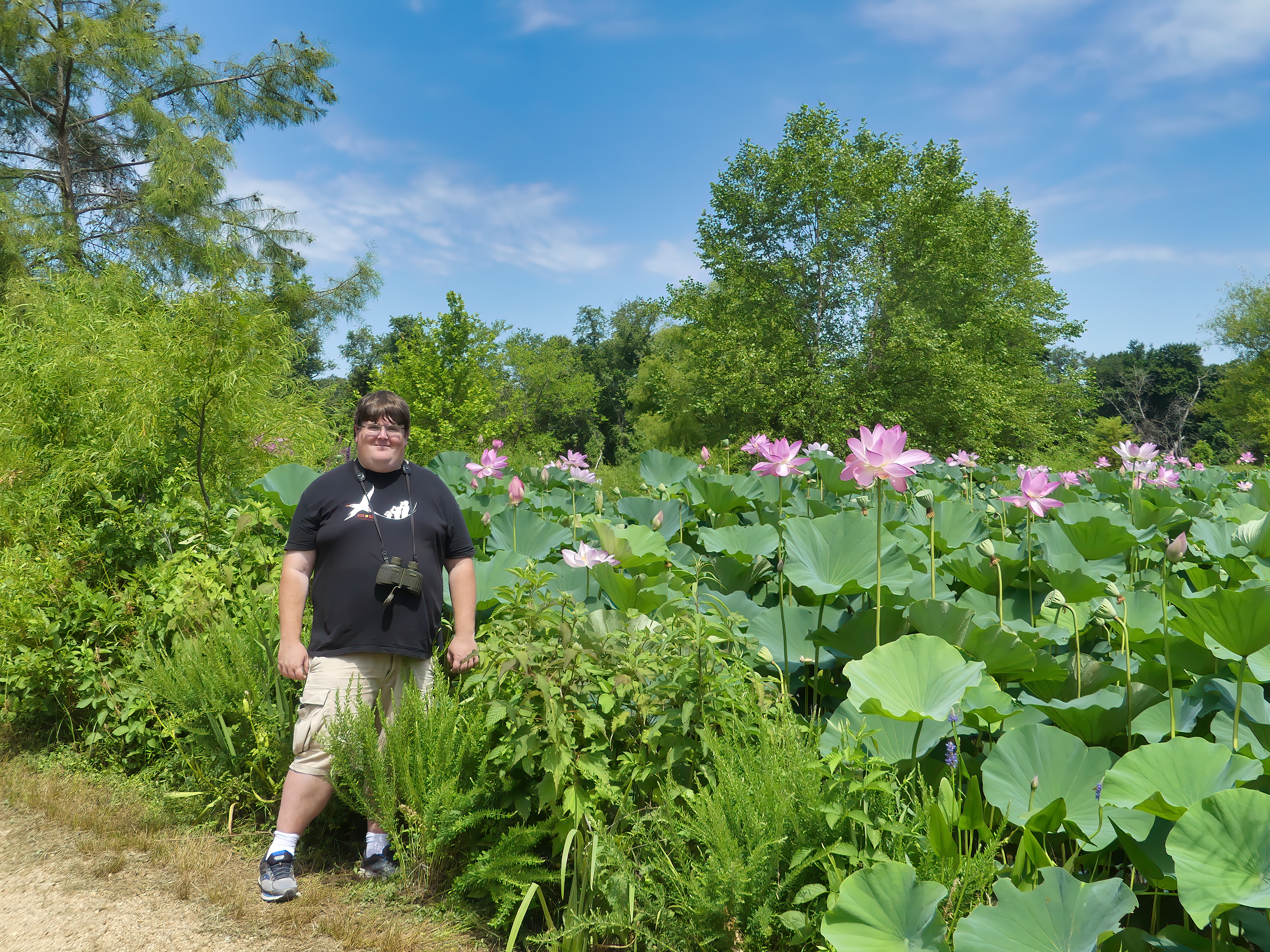
Derek at Kenilworth Park & Aquatic Gardens

Derek at Kenilworth Park & Aquatic Gardens

Edwin B. Forsythe NWR in New Jersey had a lot of birds that I wanted to see – Gull-billed Tern, Willet, Seaside and Saltmarsh Sparrows – and I was excited about our visit there, but we had been putting it off waiting for the right day.  We were rewarded for our patience.  The daily temps had been hitting the high 80’s, but a high of 77 was forecast for Thursday, so we took advantage of the break from the heat and spent several hours at Forsythe NWR.  Flies bit us again, as at Bombay Hook, but otherwise the day was perfect.

One of two beautiful American Avocets at Forsythe NWR, flagged by eBird as rare

One of two beautiful American Avocets at Forsythe NWR, flagged by eBird as rare

I have seen hundreds of Willets, but this species has both a western and an eastern subspecies.  It’s expected that they will be split into two separate species sometime in the next few years.  Western Willets winter in Florida and on the East Coast and can arrive as early as June, so I did not have a single sighting that I could be absolutely certain was an Eastern Willet.  My quest was finally accomplished at Forsythe NWR where Eastern Willets breed in the saltmarsh.
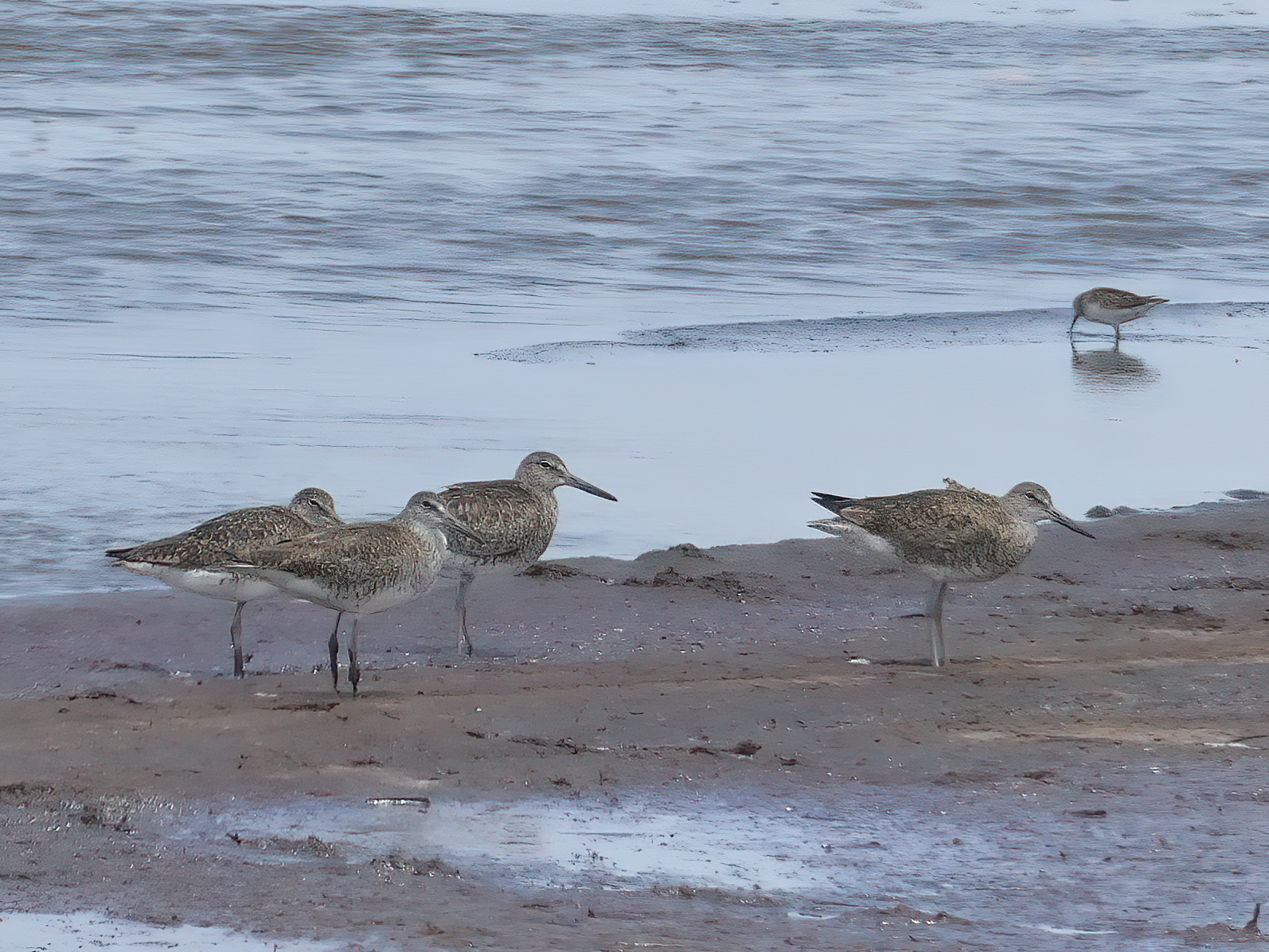
Eastern Willets

Eastern Willets

We saw several species of terns – Gull-billed, Least, Caspian, Common, and Forster’s.

Common Tern

Common Tern

Black Skimmers are in the same family as gulls and terns, but their feeding style is distinct.  These graceful birds fly low over the water and literally skim the surface with their long lower mandible.  When it strikes a small fish, the upper mandible snaps shut, capturing the fish.

Black Skimmer, one of the world's three skimmer species

Black Skimmer, one of the world’s three skimmer species

Marsh Wrens were difficult to see, but there were probably dozens of them in the saltmarsh.
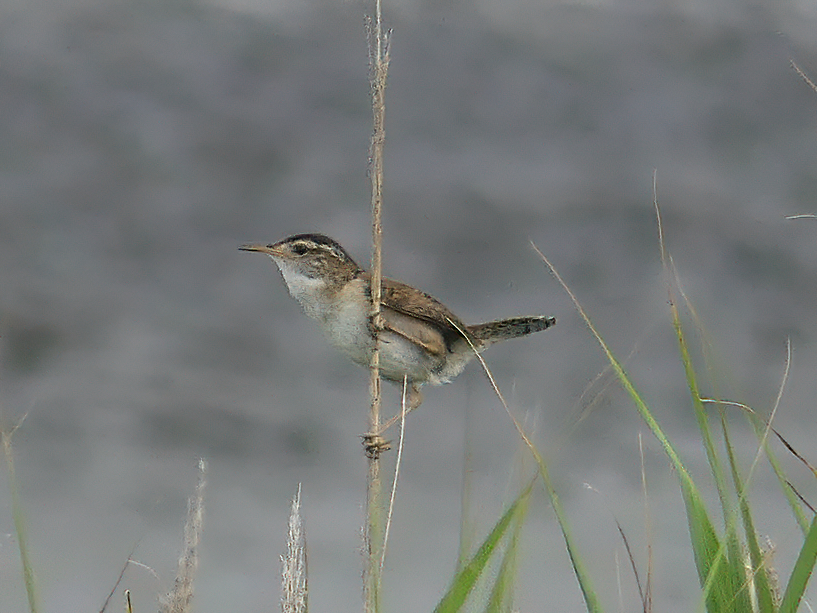
Marsh Wren

Marsh Wren

We saw many Osprey during my trip.  They appear to be as common along the Atlantic coast as they are in Florida.

Osprey nest in the marsh

Osprey nest in the marsh

We spent a few minutes walking Jen’s Trail (in a wooded part of the NWR) after the wildlife drive and added a gnatcatcher and a phoebe to my New Jersey list, but I still had only 99 species when we left Forsythe NWR.  Number 100 ended up being Rock Pigeon on a highway overpass just before dark.
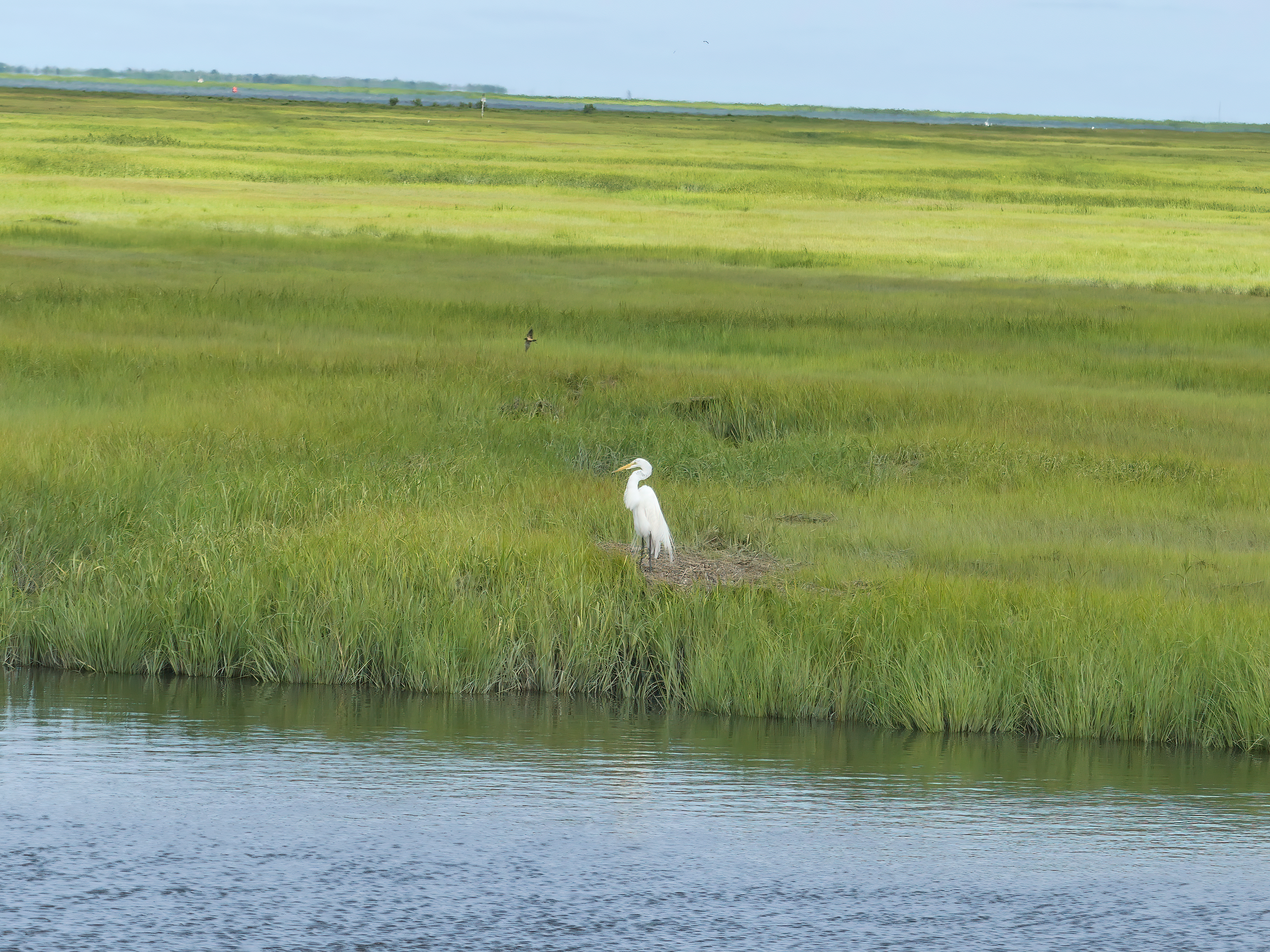
A Great Egret stands out due to its size and color, but the saltmarsh is teeming with unseen wildlife.

A Great Egret stands out due to its size and color, but the saltmarsh is teeming with unseen wildlife.

After our day at Forsythe NWR, it got really hot with daily highs hitting the mid-90s and limiting our birding to morning and late afternoon.  With our other goals accomplished, Derek was on a mission to help me get my Maryland list to 100.  He promised (threatened?) that I could get an injured Snow Goose, but I declined the opportunity to list a bird that would have been farther north on breeding grounds were it not for an injury leaving it unable to fly.

Center for Maryland Agriculture and Farm Park

Center for Maryland Agriculture and Farm Park

On Friday, we found a Yellow Warbler and a Willow Flycatcher at a retention pond.  We looked for Horned Larks at a known location and were successful on our second try.  Derek is participating in the Maryland breeding bird atlas surveys so we were thrilled to find recently fledged juveniles, proof of breeding.  Later, we looked for Grasshopper Sparrows at the Center for Maryland Agriculture and Farm Park.  It was a confusing place and by the time we figured out where the sparrows had probably been seen by others, it was nearly dark.  Singing Eastern Meadowlarks were a nice consolation prize.

A Ring-billed Gull flies overhead at Ferry Point Park

A Ring-billed Gull flies overhead at Ferry Point Park

Saturday was my last day in Maryland and I still needed nine new birds if I were to reach 100 species.  We decided that the Eastern Shore of Maryland would provide our best opportunity.  At the Chesapeake Bay Environmental Center, I added Red-headed Woodpecker and Brown-headed Nuthatch to my growing list along with Great and Snowy Egrets.  Now we needed gulls.  We joked that neither of us had ever had to work to find gulls before, especially common species like Laughing and Ring-billed Gull.  On to Jackson Creek Landing where we picked up Laughing Gull.  Next to Ferry Point Park where it took more effort than expected, but we finally found Ring-billed, Herring, and Great Black-backed Gulls.  My Maryland list was then at 99, but it was hot and we needed a break.

A Grasshopper Sparrow singing atop a post in the goat pen

A Grasshopper Sparrow singing atop a post in the goat pen

Late that afternoon, we tried for Grasshopper Sparrows for the third time. The first time, a few days earlier, mowers were cutting the sparrow field as we arrived.  Our second try had been at a different location, Center for Maryland Agriculture and Farm Park, the previous evening.  We headed there again and walked directly to the field where we thought the sparrows were breeding.  There is a nice path around the field, but you can’t even see it from the parking area.  Derek’s hearing is much better than mine and it wasn’t long before he heard the sparrows.  We saw one on a post in the goat pen adjacent to the field that the sparrows must have used for their nesting territory.  What a nice bird for my Maryland #100 and a lovely end to my visit.
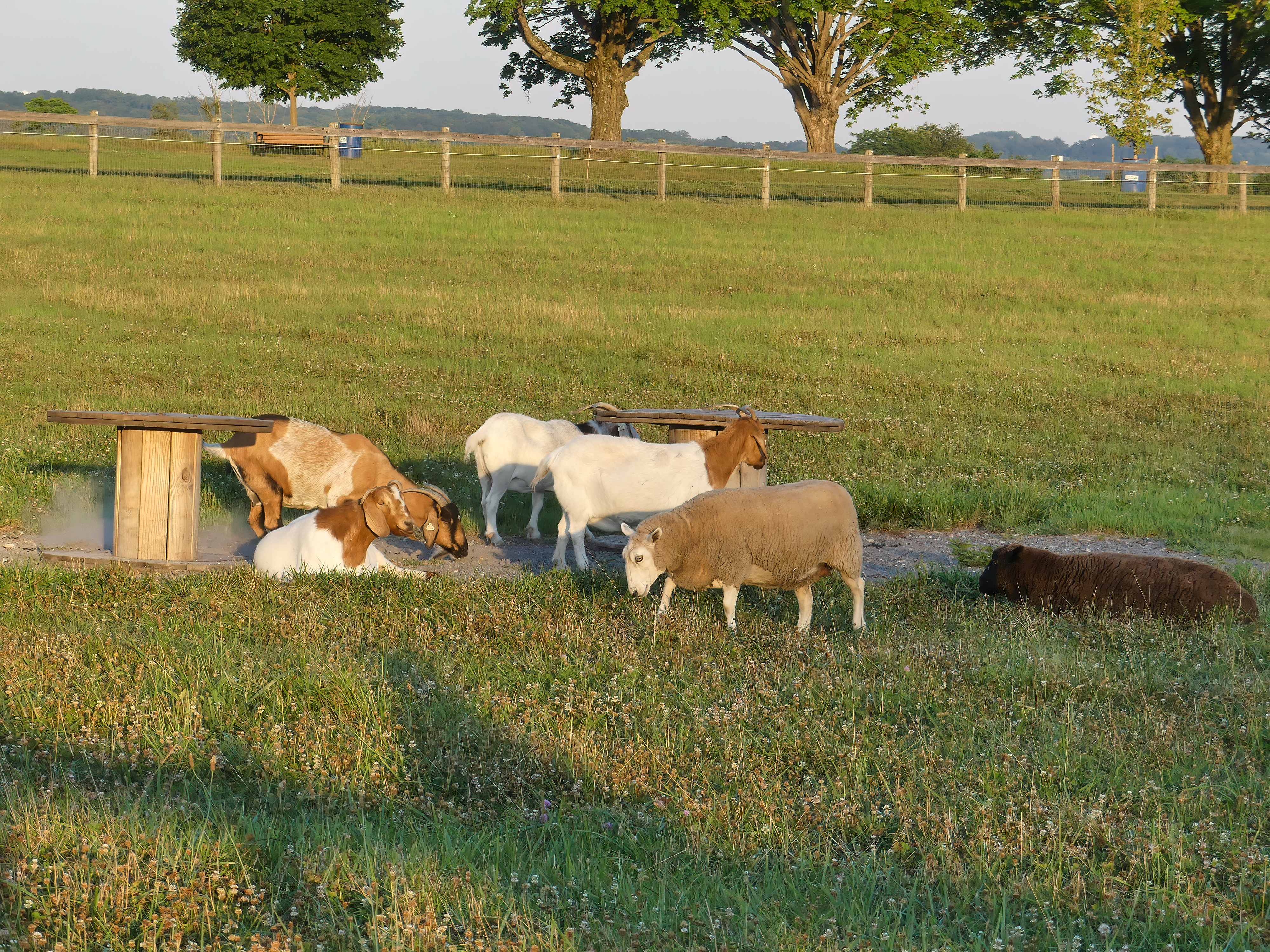
Goats at Center for Maryland Agriculture and Farm Park

Goats at Center for Maryland Agriculture and Farm Park

I was very happy that Derek got new birds for his lists, too, 21 state birds and 132 county ticks (birds seen for the first time in a county) including county birds in all eight states we visited.  The focus on our state and county lists gave us direction and enabled us to see new wildlife and landscape.  While it’s currently not safe to travel many places for birding, I am very grateful for this experience.


Read Full Post »

David has dreamed of riding his bicycle to Key West for several years.  He explored several organized rides, but none of them felt right to him, so he asked me if I would SAG for him if he did a solo trip.  David is one of my best friends, so, of course, I said yes.  Plus, I might even get a life bird if I was lucky.  I hadn’t had a life bird in Florida since 2015, but typically a few rarities show up every winter in the southern part of the state, so I was hopeful.  In cycling terms, SAG means support and gear; I would drive David’s car along his bike route carrying food, water, tools and parts for minor bike repairs, extra clothing, etc.  We decided to start the cycling adventure in Naples Beach, travel east across US 41, and then drive/cycle down US 1 through the Keys.  To save money and give us a little flexibility, we would spend five nights in Florida City.

When I left home on February 10, there were three possible life birds that I could get, plus anything new that might show up.  I got a late start and spent the first night in southern Georgia.  The next morning, I headed towards Merritt Island NWR where a Great White Pelican had been regularly seen for a couple of weeks, including the previous day.  After I got on the road, I learned that Black Point Wildlife Drive, the spot where the pelican was most often seen, was closed for a controlled burn.  I arrived around noon and checked a few other locations where it was speculated that the bird could have gone.  I found a group of American White Pelicans at Haulover Creek, but not my target bird.

At the Merritt Island NWR Visitor Center that afternoon, I was consoled by several beautiful Painted Buntings. It’s hard to be sad while watching these gorgeous birds. Below, the colorful male is on the left and the pretty yellow-green female on the right.

After the Visitor Center closed, I was looking at birds in the trees in the parking lot when I heard what I thought was a woodpecker, but I couldn’t find it. Finally, I discovered the source of the pecking sound – a male Northern Cardinal challenging his own reflection in the rear view window of my car! This behavior isn’t unusual, but I rarely see it.

The next morning, I went back to the Visitor Center to find out when the wildlife drive would open. “Noon,” they said, too late for me as I wanted to head to Dunedin to stay with David and Val that evening. Again, I birded in the parts of the refuge that were open and actually enjoyed it more than the previous day. I had given up on the pelican and just enjoyed what I did see.

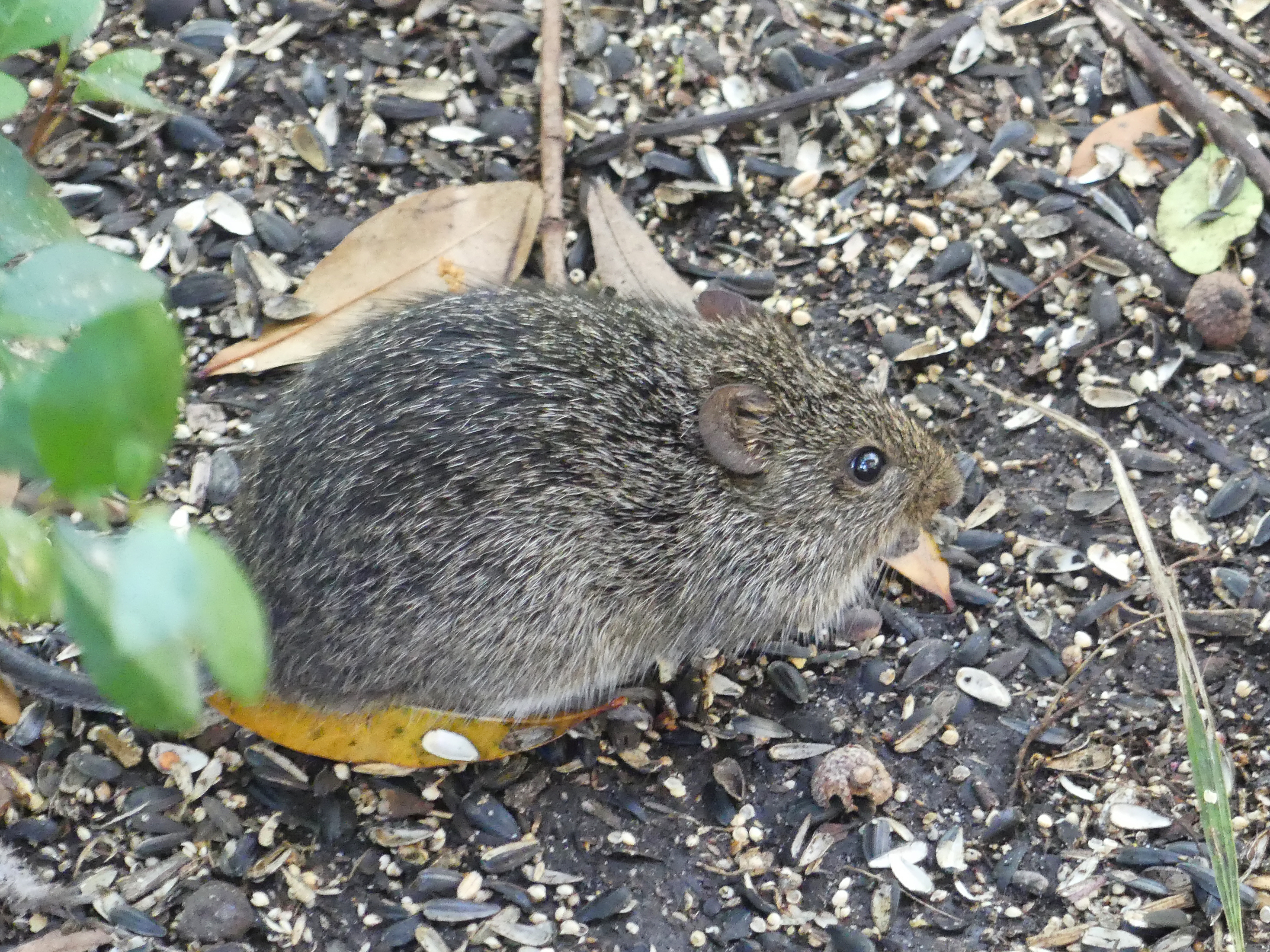
Birds winter in this area in large numbers and I saw 50 species with my modest efforts on two short days – herons, egrets, ibises, shorebirds, ducks, and more. My favorite animal wasn’t a bird, though, but this adorable Hispid Cotton Rat under the Merritt Island NWR Visitor Center feeders.  I was disappointed that I hadn’t found the pelican, but genuinely happy to see the rat, a life mammal.

I grew up in Pinellas County and I’ve visited so often the last few years that it feels like home. My favorite birding locations are Dunedin Causeway and Honeymoon Island State Park, so that’s where I headed on Thursday after arriving the previous afternoon. I had a great time at Honeymoon Island, but I couldn’t concentrate on birding because people were so friendly! Everyone wanted to talk, but I enjoyed the conversations, especially with a young couple who thanked me for being their “tour guide” after we watched a Gopher Tortoise together. It was a special treat to see this creature, a threatened species in Florida. Gopher Tortoises are important because they dig burrows deep in the sand that are used by over 350 other species including Burrowing Owl. Many of those species could not survive without the Gopher Tortoise. This particular tortoise is one of the largest that I’ve seen; note it’s smooth shell from years of burrowing in the sand.

In late winter, it’s always thrilling to observe the many Osprey at the height of courtship. Everywhere you look, Osprey are fishing, eating, calling, sitting near their mates (or intended), and soaring overhead. This male Osprey is enjoying lunch. Who can identify the fish by its distinctively shaped red tail? Please leave a comment if you know what it is.

I had one more day to go birding before David and I headed south, so I went to Dunedin Hammock City Park to look for the Short-tailed Hawks that had been reported there. I ran into a local birder who told me that the hawks had nested in the park since 2017. We went our separate ways and then ran into each other twice more. Just before we both needed to leave, he caught a glimpse through the trees of a hawk flying. We waited and it soared overhead for a minute, confirming its identify and allowing me to get a bad photo, but good enough for the local eBird reviewer to confirm my report.

This Snowy Egret at Dunedin Hammock was lovely in breeding plumage and much more cooperative than the Short-tailed Hawk.

I had enough time left that afternoon to find a Purple Gallinule (rare for Pinellas County) and then it was time to meet David after work and get ready for his big cycling adventure.

All we had to do on Saturday was drive to Naples to be in place for David’s start on Sunday morning, so we were able to do a little birding on our way down the Gulf Coast. Our first stop was at a place near Sarasota called “Celery Fields” by Florida birders. We had no idea what to expect and were surprised by the wonderful feeder area where we spent most of our time. We had great close looks at Common Ground Doves, a species that we have seen often, but never so well. A Brown-headed Cowbird is in the shadows behind the dove in the photo below.

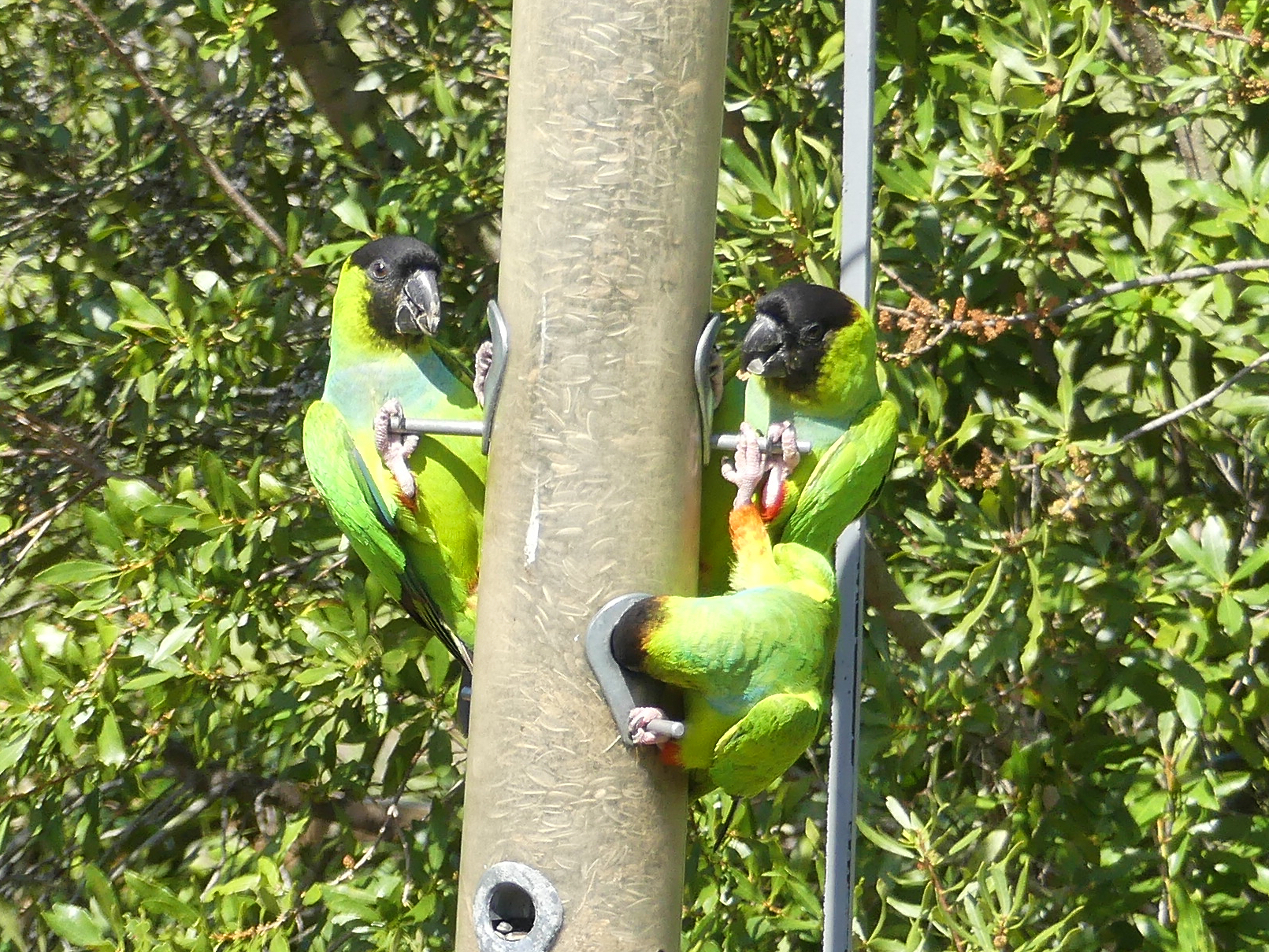
Most fun, though, were the Nanday Parakeets, who swooped down into the feeder area and took all our attention. This is another species that we had seen before, but not this close. We found it interesting that the middle bird below was hanging by one foot with its head in the feeder port.

Below, a single Nanday Parakeet poses for a portrait photo.

We made another stop at Corkscrew Swamp, a favorite place of mine since I lived in Miami in the early 1980’s. Wood Storks were much less common then (they were assigned endangered status from 1984 to 2014). To see these birds, we had to drive across the state to Corkscrew which was the breeding ground for about half of the Southern Florida population then. Fortunately, they have had a good recovery and are now easy to see in many areas of Florida.

I had planned to look for the White-cheeked Pintail in Naples, which had been seen for weeks before I left North Carolina. But, by the time we got there, the duck had been missing for eight days, so we didn’t spend time looking. Yep, another lost opportunity for a life bird.

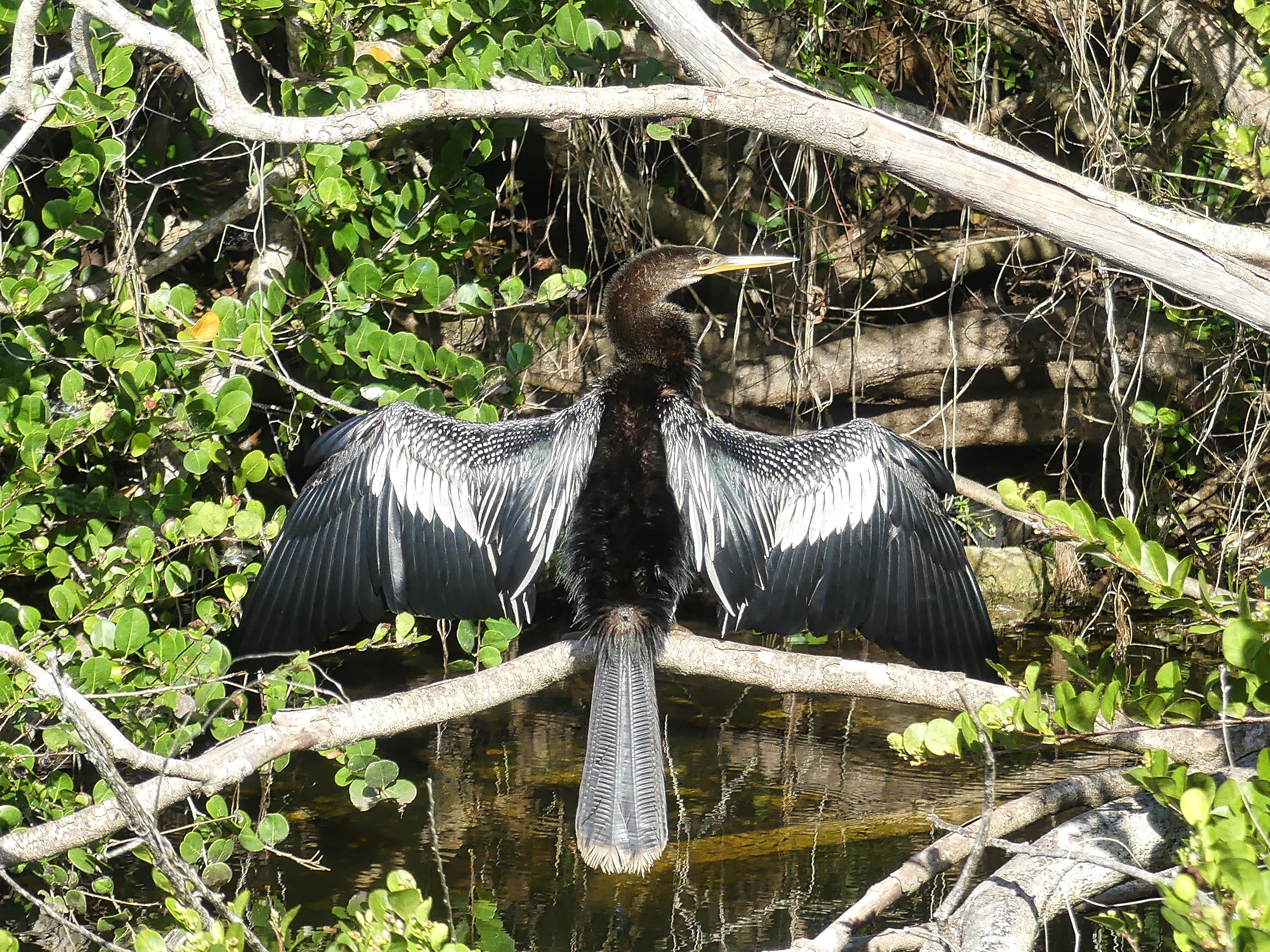
David started his ride from Naples Beach on Sunday morning. Our first two days across US 41 were rather tedious and I didn’t see many birds. But, I did enjoy birding the Shark Valley entrance road for an hour on Monday morning where I saw this Anhinga in the ditch drying its wings.

The trip would soon got more interesting for both of us. Watch for part 2. Read David’s story about this part of the trip in his blog post, Bicycling Naples to Key West – Part 1.

Read Full Post »