Feeds:
Posts
Comments

Posts Tagged ‘Spotted Dove’

If you follow my blog and read posts as they are published, you may be confused. Didn’t I just get back from Turkey and Mongolia? Yes, I did. However, I want to finish the story of my month-long trip to India last fall to visit my friend Linda before I share my latest adventures.

Linda is an American currently living in India because her husband is working there. During our month together, we made trips to Coorg and the Andaman Islands.

We also spent time at Linda’s home south of Bangalore. In many ways, that was the best part of the trip. It is a priviledge to stay with someone living in another country instead of visiting as a typical tourist. I loved walking in Linda’s neighborhood, meeting her friends (of all nationalities), and eating at her favorite restaurants.

We returned from the Andaman Islands on Wednesday evening, December 20. With only a few days to go, we wanted to visit all of the local lakes one more time. First was Huskur Kere on Thursday afternoon. It was interesting to see the differences in the bird life in the three weeks since my first visit there. Rosy Starling had been a life bird for me on November 27, just a single bird in Linda’s housing community. Now we estimated a hundred of them at Huskur Lake. There were also more Common Mynas than I had ever seen at one time, about fifty individuals.

We didn’t see anything unusual that afternoon, but I enjoyed the common birds. A quick check of eBird indicates that I’ve reported Spotted Dove 54 times, but I’m still not tired of them. I love the sweet face of the dove in the photo below.

Indians are very friendly and everyone wants to talk to Linda. These boys were interested in what we were doing and appeared to be fascinated by the photos of birds that Linda showed them.

I was pleased that I was finally able to get a photo of a Three-striped Palm Squirrel that afternoon. I had seen quite a few since my arrival in India, but they are quick and don’t usually hold still.

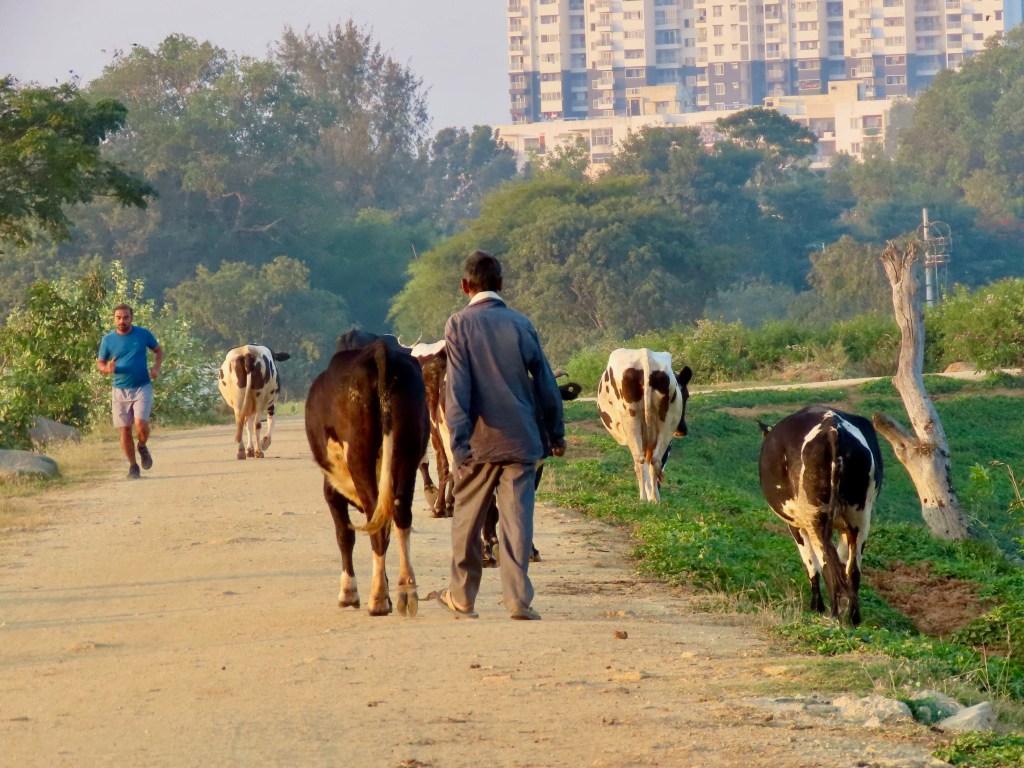
The path around Huskur Lake was multi-purpose – birding, running, walking your cows.
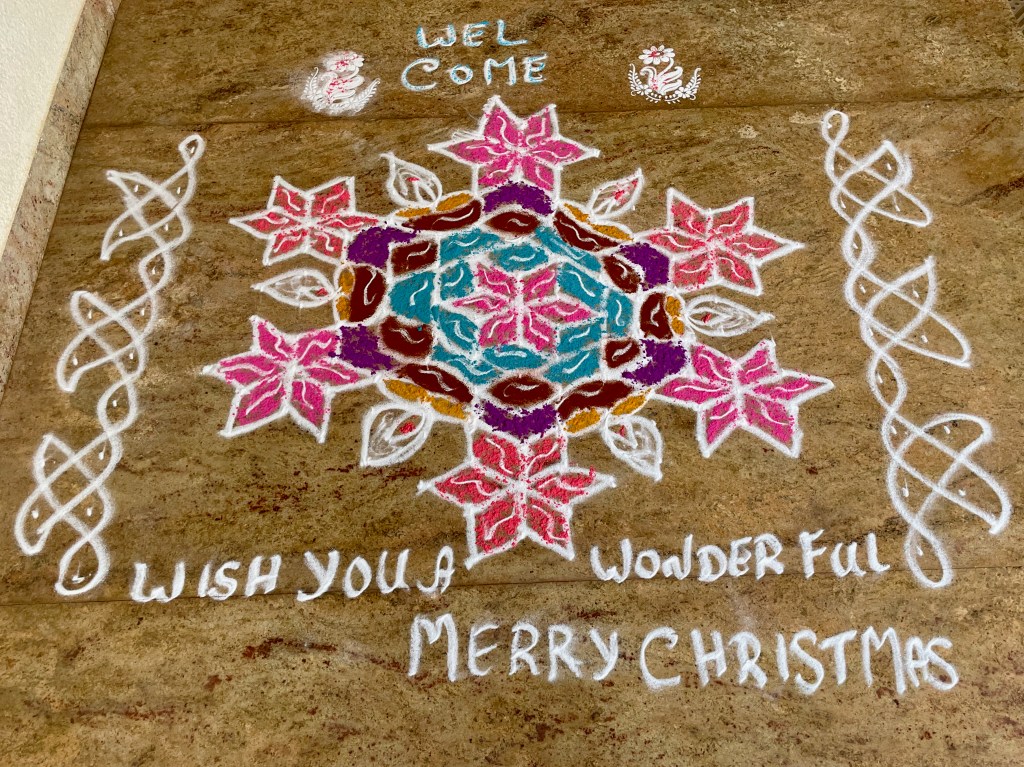
Mary, Linda’s maid, made a beaufiful rangoli for Christmas that greeted us outside Linda’s door each time we returned from an outing that week.
Linda and I had found 16 birds during the first week of my trip that were life birds for me, but it was getting difficult to find new species by the last week. I found my last life bird, a Booted Warbler, on Friday morning at Muthanallur Kere.

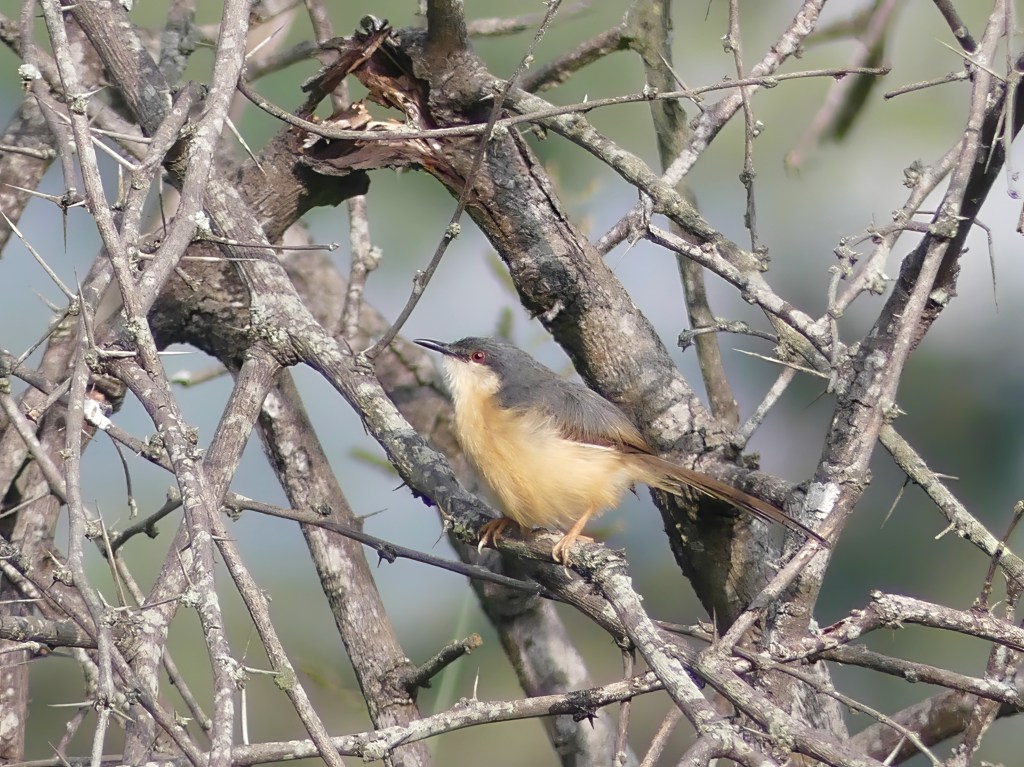
On Saturday morning we made our last visit to Saul Kere, perhaps the best birding location in the area south of Bangalore. Another previously skulky bird finally coorperated for a photo, an Ashy Prinia.
The most common wagtail in Linda’s area is White-browed Wagtail; we had close views of them at Saul Kere. I think they are sharp-looking birds even if they do hang out with trash (making me closely crop the photo below).

A highight that morning was watching kites, two Brahminy Kites, several Black Kites, and this gorgeous Black-winged Kite. It looks very similar to the White-tailed Kite of the Americas and for a few years they were considered to be one species.

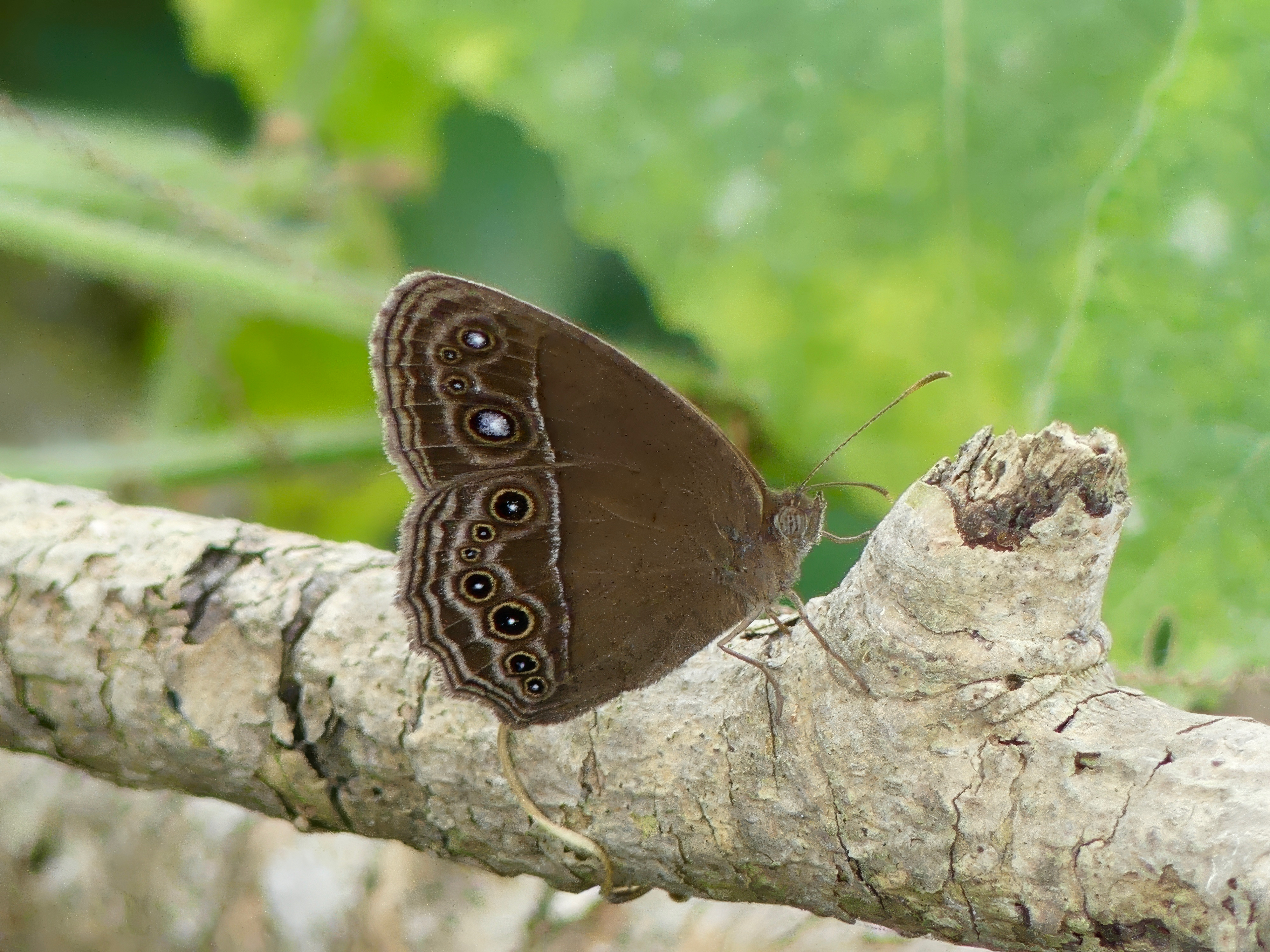
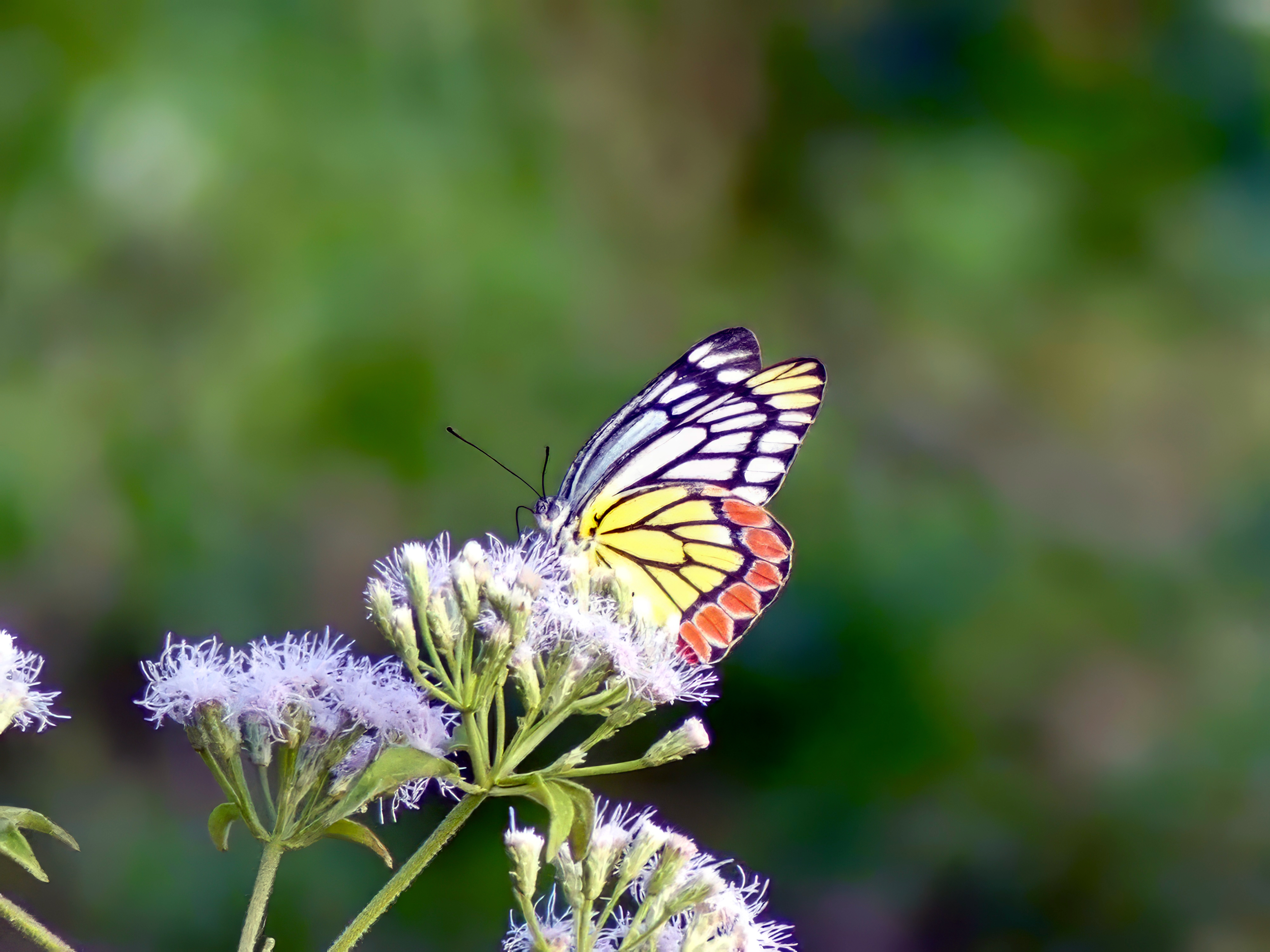
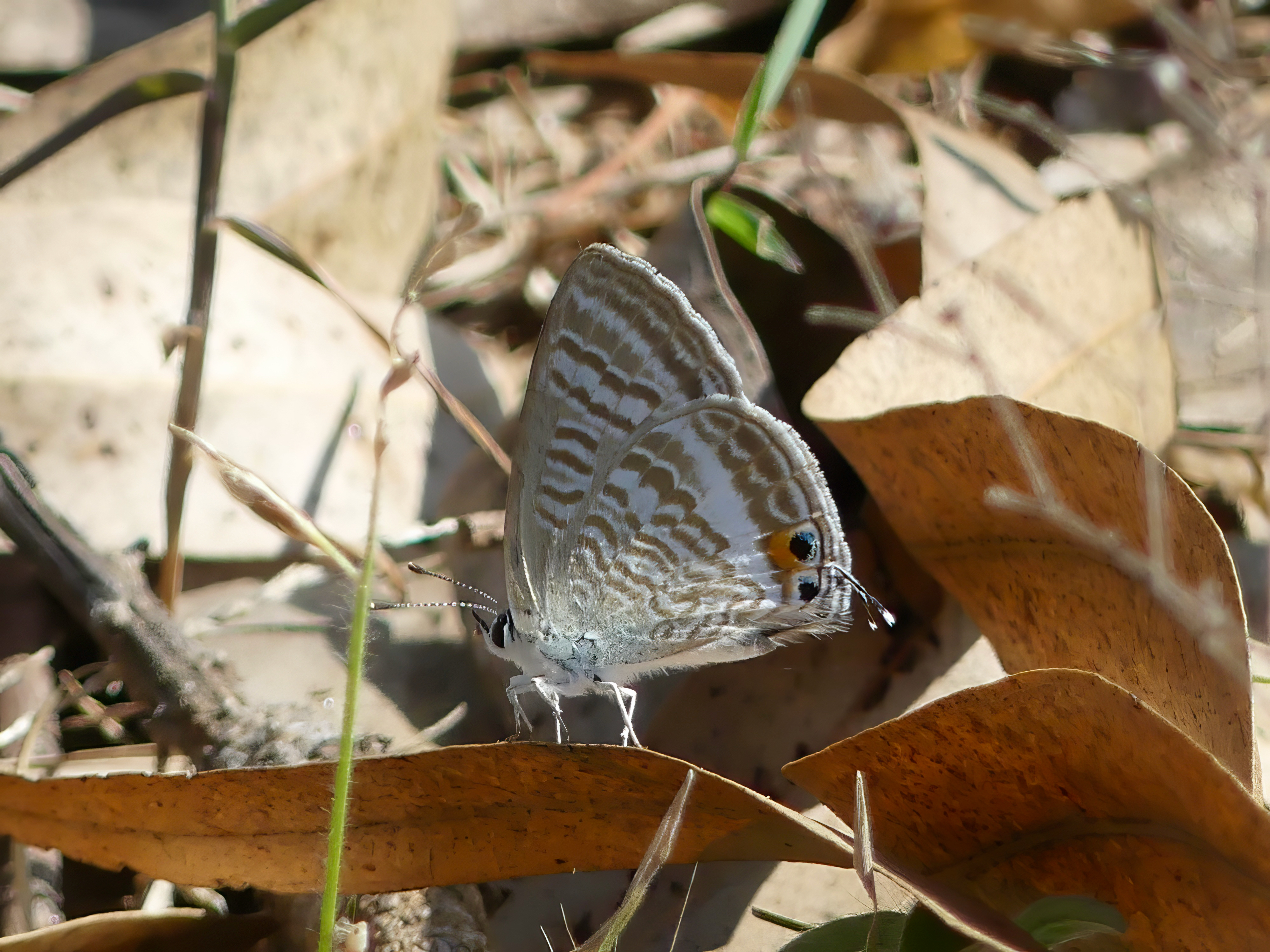
Linda and I both enjoy all living creatures and we had fun photographing butterflies. After living in India for two years, they were all familiar to Linda, but most were new to me. One of my new favorites was the colorful black, white, orange, and yellow Common Jezebel. I also thought the Pea Blue and Dingy Bushbrown were beautiful in a more subtle way. Click on any of the photos in the gallery below for a larger view.
We enjoyed the lakes, but Linda had great birds right in her housing community, Nambiar Bellezea, where I took this portrait of a lovely female Pied Bushchat.

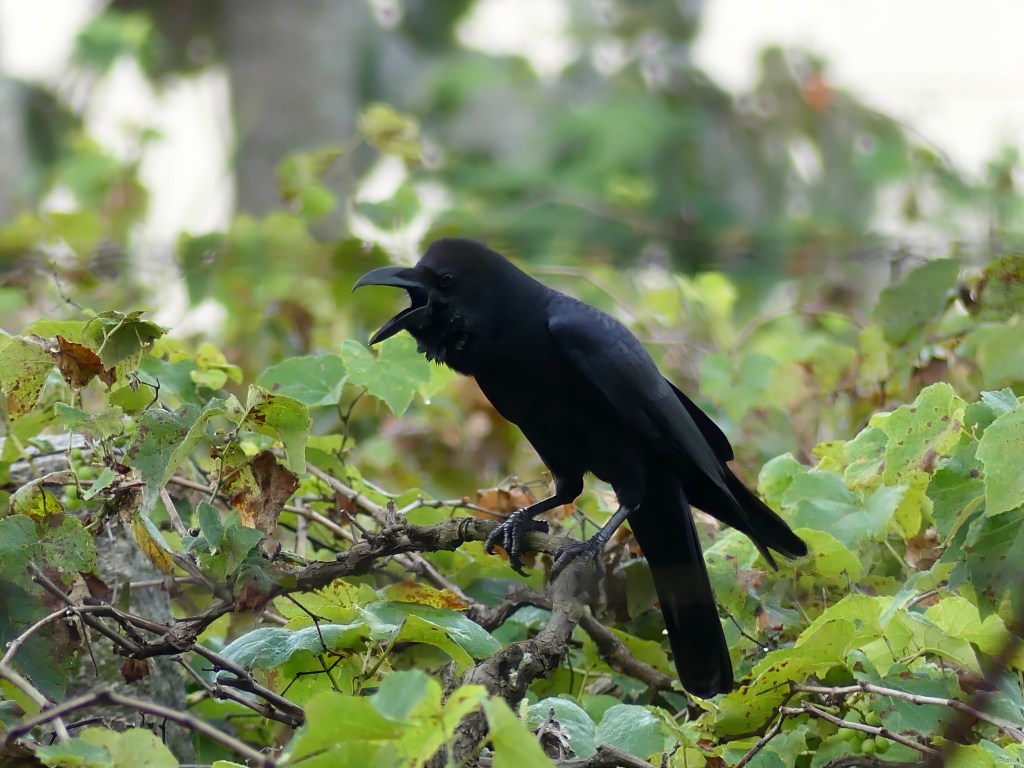
Below, a Large-billed Crow showing off in the neighborhood.
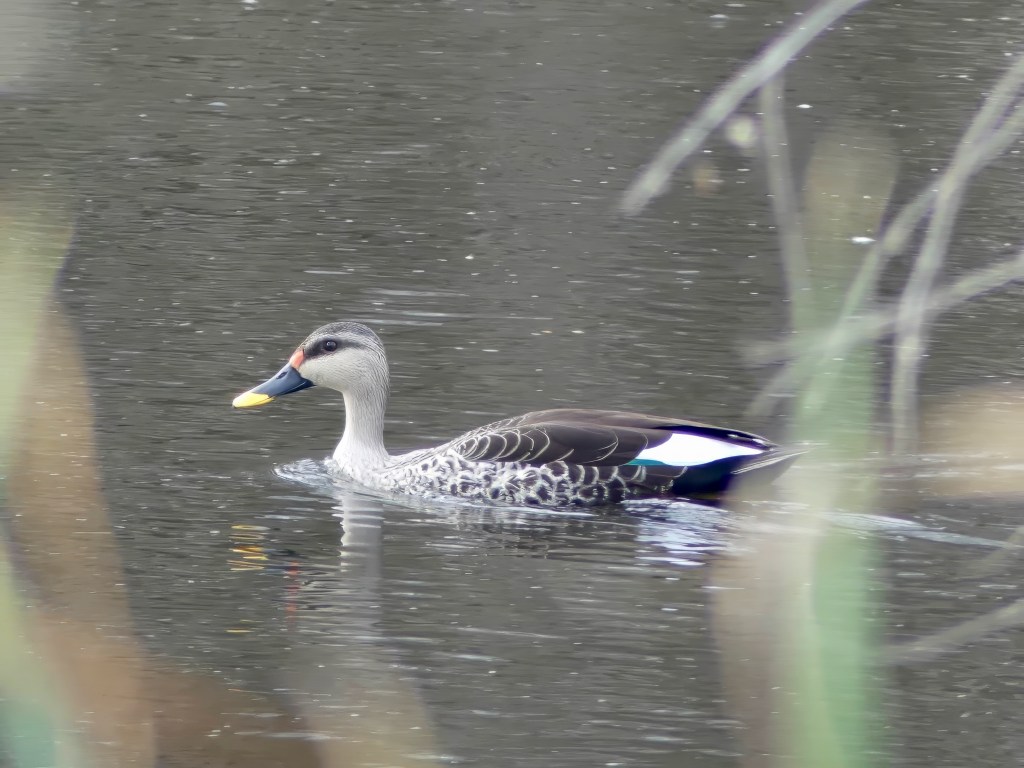
December 24 was my last day with Linda and we enjoyed one last visit to the lake behind her housing community. The Indian Spot-billed Ducks swam close to us that afternoon as if allowing me to say goodbye.
My trip was book-ended by Thanksgiving and Christmas. I had much to be grateful for as Christmas approached just as I had at Thanksgiving. It’s can’t be easy having a house guest for over a month, yet Linda had been a gracious and generous host. I am also grateful to Linda for going on her first real birding trips to Coorg and the Andaman Islands with me. I can’t imagine better gifts than those I had just received – friendship, travel, adventure, beautiful birds and wildlife.

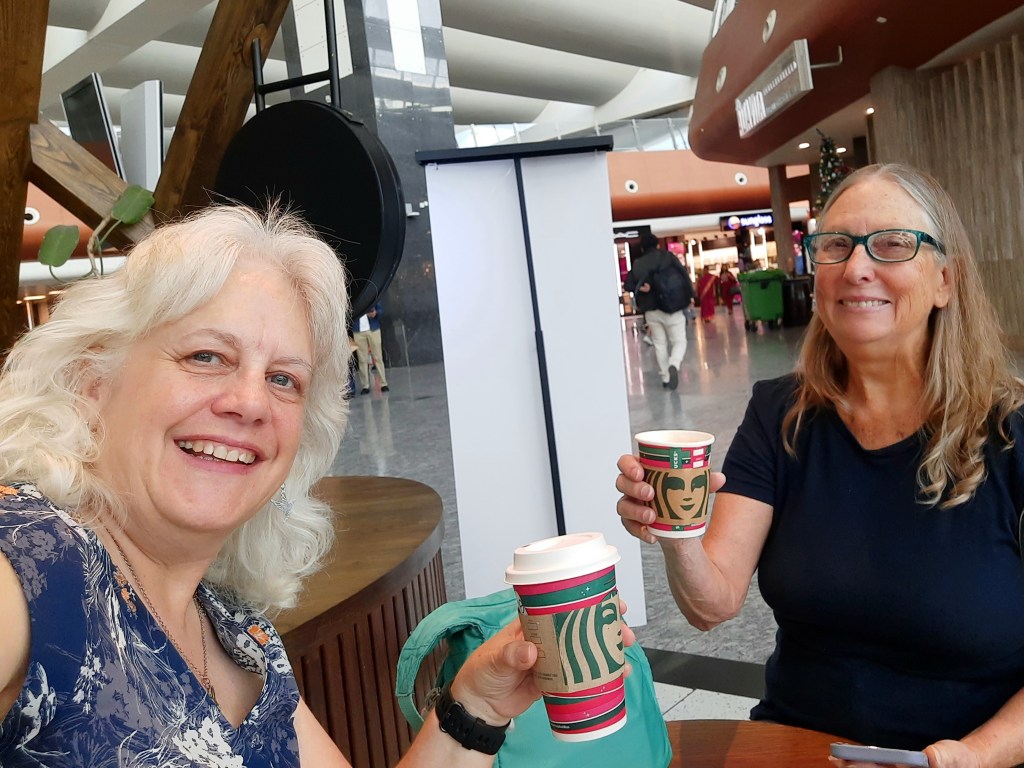
Merry Christmas from the Benguluru airport Starbucks.
Read Full Post »

Indian Peafowl (male)

Indian Peafowl (male)

My birding guide for the day, Lokesh Kumar, met me at 10:00 AM after my arrival at the New Delhi hotel just four and a half hours earlier. I had arrived a day early for the birding tour organized by Partnership for International Birding which would start on October 30 and this was my day to “rest.”

That first day we birded at Sultanpur National Park and the surrounding area, where I was introduced to the Red-wattled Lapwing, a bird we would see everywhere during the next two weeks.

Red-wattled Lapwing

Red-wattled Lapwing

We also saw the first of many owls of the trip, adorable Spotted Owlets.

Spotted Owlet

Spotted Owlet

And, I couldn’t let the cute Five-striped Palm Squirrels get away without a photo for my granddaughter, Melody, who loves rodents.

Five-stripped Palm Squirrel

Five-stripped Palm Squirrel

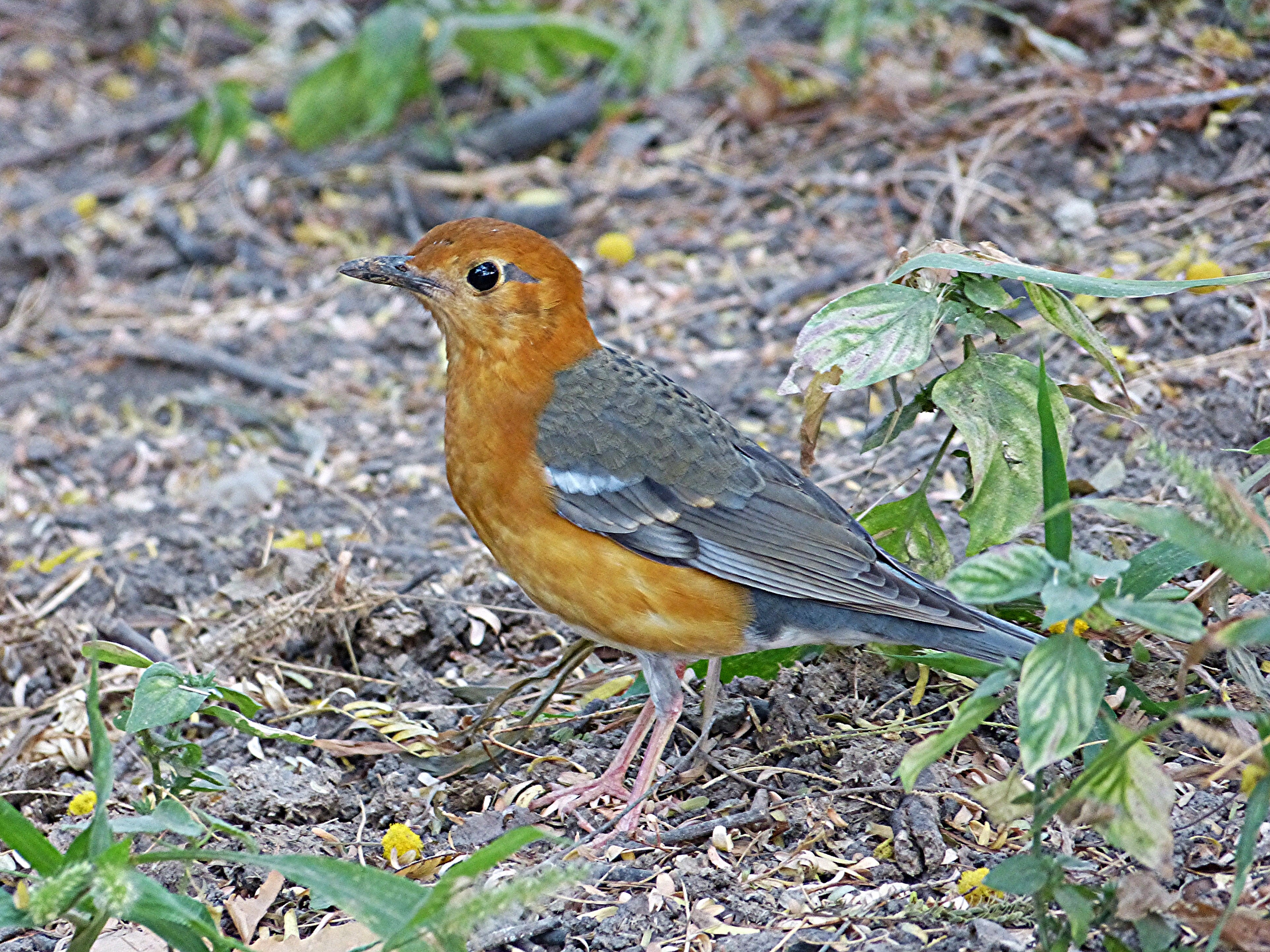
The day ended with this lovely Orange-headed Thrush, one of my favorites and the only species seen that day that we did not observe again on the main trip.

Orange-headed Thrush

Orange-headed Thrush

The next morning brought the start of the birding tour led by Leio De Souza, owner of India Nature Tours. Our group of seven birders would be lucky to have both Leio and Lokesh as our guides for the next two weeks.

We headed towards Agra and the Taj Mahal. The palace was breathtakingly beautiful, but the experience of seeing it was quite unpleasant. Our tour coincided with major Indian holidays resulting in crowds everywhere. The Taj Mahal was packed so tightly that day that our group had no chance of staying together as other visitors pushed in between us.  The palace guards constantly said “Keep moving.” Regardless, I wouldn’t have wanted to miss seeing this incredible wonder of the world.

Taj Mahal

Taj Mahal

We continued our drive to Jarar Village and Chambal Safari Lodge, where we spent the night after a little late afternoon birding near the lodge.

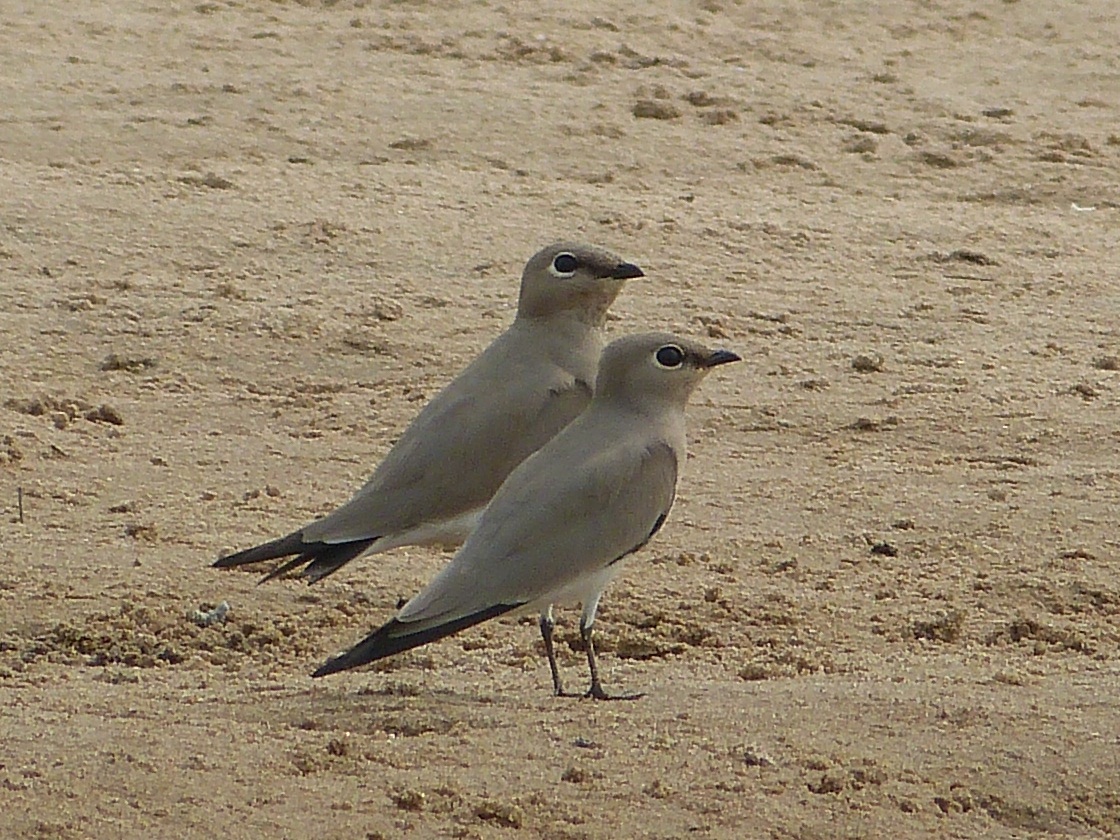
The focus of our second day was the Chambal River, where we hoped to find Indian Skimmer. Sadly, we missed the skimmers, one of the few big misses of the trip. However, we had great looks at two of India’s crocodilian species, the widespread Mugger and the rarest Indian crocodile, Gharial. We also saw wonderful birds including River Lapwing and Small Pratincole.

River Lapwing

River Lapwing

Small Pratincole

Small Pratincole

A drive to Keoladeo National Park, formerly known as the Bharatpur Bird Sanctuary, completed our day. We spent the night near the park entrance at Hotel Sunbird. The entire next day was spent in the park where we had a wonderful time exploring on foot and in the park’s unique cycle-rickshaws. Here we saw one of the most beautiful raptors of the trip, Oriental Honey-buzzard.

Oriental Honey-Buzzard

Oriental Honey-Buzzard

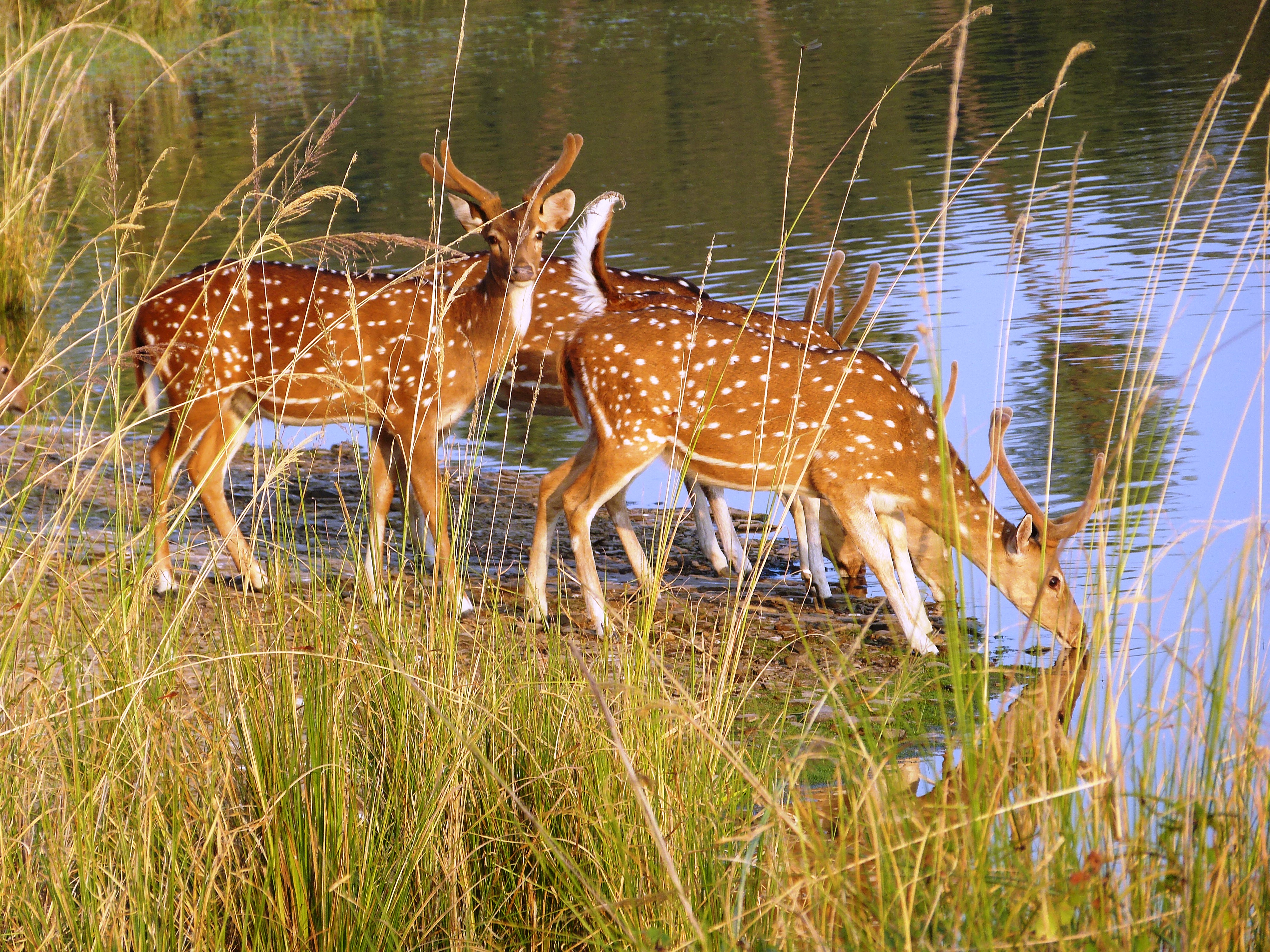
Our mammal list continued to grow with Sambar Deer, Spotted Deer, Rhesus Macaque, Golden Jackal, Wild Boar, and Nilgai.

Sambar Deer

Sambar Deer

Butterflies at Bharatpur included the gorgeous Common Rose.

Common Rose

Common Rose

After a little birding near the hotel the next morning, we drove to Ranthambhore. We made a stop along the way to look for Greater Painted-snipe, a species that fascinated me when I saw them in Hong Kong in 2009. The typical sexual roles are reversed in this species with the larger and more brightly colored females courting the males.  After mating and laying her eggs, the female leaves the male to incubate the eggs and raise the young.  She then repeats this process, sometimes mating with as many as four males in a season.  In India, I had even better looks than I’d had previously and was able to get a photo of this good-looking female.

Greater Painted-Snipe

Greater Painted-Snipe

Diwali or “Festival of Lights,” the most important Hindu holiday of the year, had been celebrated shortly before the start of our tour. Celebrations during the five-day festival include gift giving, prayer offerings to Lakshmi, the goddess of wealth, and fireworks displays. Homes are cleaned, painted, and decorated and even livestock and farm equipment are decorated. We enjoyed seeing cows still sporting garlands and bells from the holiday and tractors all jazzed up like this one.

Tractor decorated for Diwali.  Photo by Tom Walker.

Tractor decorated for Diwali. Photo by Tom Walker.

We went to Ranthambhore National Park to look for birds, but it’s also the easiest location in India to observe Bengal Tigers. We started the morning looking at birds, but as soon as the park guides detected tigers close by, we were off on a wild chase in our open lorry-bus over the very bumpy roads. There were no walkie-talkies, but the guides seemed to have a sixth sense of where the tigers were and they communicated directions to the other groups in the same zone of the park.

Mama tiger and three cubs were first observed playing in a shallow lake, but they were out of the water by the time I saw them. I didn’t need to worry about getting a good view, though, as they slowly same closer to our vehicle and walked 30-40 feet from us as they crossed the road. There was nothing preventing the tigers from jumping into our open vehicle and having a couple of birders for breakfast except the generous supply of spotted deer and other easier prey in the park. I felt no fear, only awe at being so close to these magnificent animals. These tigers really were wild animals, but it was obvious that they were habituated to humans.

One of the three 7-month-old tiger cubs seen with their mother.

One of the three 7-month-old tiger cubs seen with their mother.

Back home, I learned that tigers really are “king of the jungle” with no natural predators. The human activities of poaching and habitat destruction are the major factors that have pushed them to an endangered conservation status. According to Wikipedia, “Over the past 100 years, they have lost 93% of their historic range, and have been extirpated from southwest and central Asia, from the islands of Java and Bali, and from large areas of Southeast and Eastern Asia.” In an attempt to halt the slide to extinction, the Indian government created Project Tiger in 1973 to preserve its national animal. Due to these efforts, tiger numbers have increased in recent years with a total of 1706 individuals in India estimated for 2010. India’s wild tigers represent over half of the global population, estimated at 3200, down from 100,000 a century ago. Our park guide told us that there were sixty tigers in Ranthambhore.

Male tiger observed on second day in Ranthambhore.

Male tiger observed on second day in Ranthambhore.

As promised, we saw wonderful birds in the park, too. White-throated Kingfishers were common throughout the trip, and we were surprised to see them in many areas that were not near water. They do not require fish, but also eat a wide range of food items such as grasshoppers, lizards, and insects. For the story of a nesting cycle of one pair with phenomenal photographs, see “White-throated Kingfishers nesting behavior.”

White-throated Kingfisher

White-throated Kingfisher

This gorgeous Indian Scops Owl was one of several owl species seen on the trip.

Indian Scops Owl

Indian Scops Owl

A less spectacular, but interesting, sighting was this Spotted Dove. I have seen this species many times in China, as well as in California. This bird in India surprised me by having numerous distinct spots on the wings; the others I’ve seen were much plainer. A little research revealed that there are three main subspecies groups of Spotted Dove and considerable plumage variations across populations within its wide range. The Spotted Doves that we saw in India were a different subspecies, suratensis, than the nominate subspecies, chinensis, that I had seen in China. The photos below show the differences in plumage of these two subspecies.

Spotted Dove (India)

Spotted Dove (India) Streptopelia chinensis suratensis

Spotted Dove (China)

Spotted Dove (China) Streptopelia chinensis chinensis


My favorite bird at Ranthambhore might have been Rufous Treepie. On our first day there, a treepie sat on the edge of our vehicle and Lokesh told me that I would see the bird eat from his hand. The next day a treepie did eat from his hand as promised and from mine as well.

Rufous Treepie on my hand.

Rufous Treepie on my hand.

During our two days at Ranthambhore, we saw quite a few mammals in addition to tigers, including many lovely Spotted Deer.

Spotted Deer

Spotted Deer

Our first week in India went by quickly and it was now time to take the train back to Delhi where we would spend the night before driving north towards the Himalayan foothills for the second part of our trip.  Stay tuned for more!

Read Full Post »