On the morning of May 25, we got our two main targets, Asian Desert Warbler and Saxaul Sparrow, before breakfast. Afterward, we left the second ger camp of the trip and headed towards Baga Bogd and six continuous nights of camping in tents or “basic” cabins without showers or other amenities. At one stop, we had a great look at this pretty Gray-necked Bunting, one of my favorite new birds.

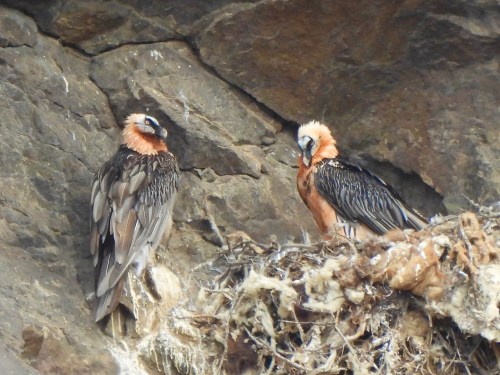
At the same stop, we were amazed to see a pair of Bearded Vultures, also known as Lammergeier, on their nest. Watching those magnificent birds was another wow moment of the trip.
Later that afternoon, we stopped at the site below as we headed into the valley. The road in this area was extremely rocky and the bird life here was a bit different. We saw our only Long-eared Owl of the trip and had our first of only two sightings of Eurasian Wryneck.
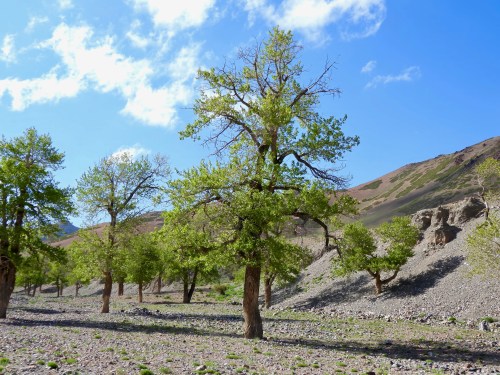
We reached Baga Bogd and set up camp in the valley. I liked this spot. Like so many others, it looks stark in my photos, but a little exploring easily revealed interesting plants, little mammals, and other critters—in addition to birds, of course.

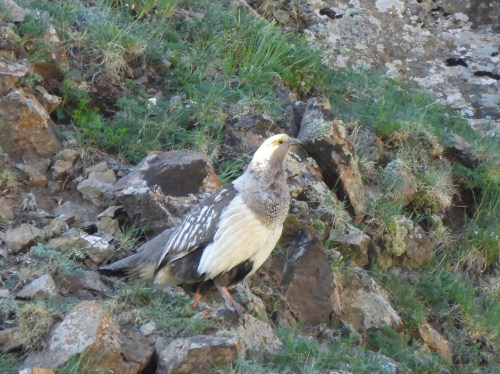
The nice thing about camping is that it’s easy to be birding at 5:00 AM. Our day started with an amazing experience with Altai Snowcock, a definite highlight of the trip. Several males called from the surrounding mountains, and one flew so low over our heads that we felt as if we could have reached up and touched it. After the disappointing view of Caspian Snowcock earlier on our Türkiye trip, this was especially sweet.
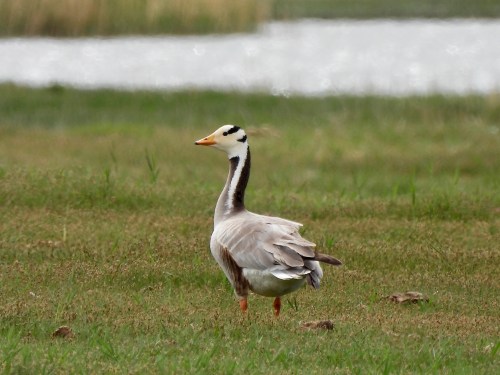
After breakfast and more birding, we set off for our next campsite at Kholboolj Lake, arriving later that afternoon. I got three life birds there: White-headed Duck, Palla’s Gull, and Yellow-breasted Bunting. I was also happy to get great looks at an old favorite, Bar-headed Goose. I fell in love with this species on my first trip to China in 2009 and it remains my favorite goose.
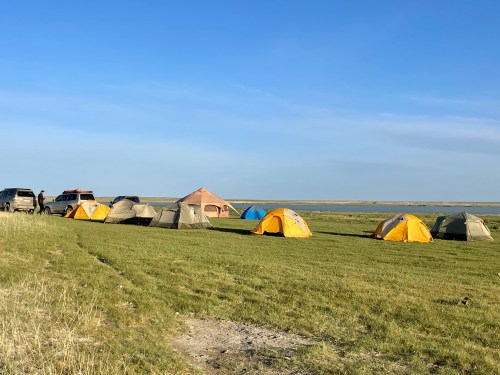
Our camp was on the shore of Kholboolj Lake.
We birded again at Kholboolj Lake in the morning. The British birders loved the lakes, but I’m spoiled by birding at home in Florida, where I can see shorebirds as close as ten feet. In Mongolia, nearly all the shorebirds and ducks were far out on the vast expanse of water or distant shore. I also noted “lots of invisible biting bugs” in my journal. A few birds were closer, though, and I was pleased to have a nice view of this sharp Kentish Plover on the grassy lake edge.

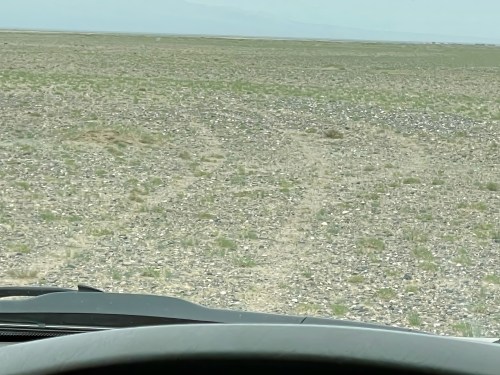
I took the photo below later that day on our drive from Kholboolj Lake to Böön Tsagaan Nuur, but it could have been taken on nearly any day of the trip. This is why you don’t go to Mongolia on your own and try to do a self-guided trip. We spent very little time on actual paved roads; we spent many miles almost every day on “roads” like this. I couldn’t recall any road signs, but someone said they had seen two signs in the past week.
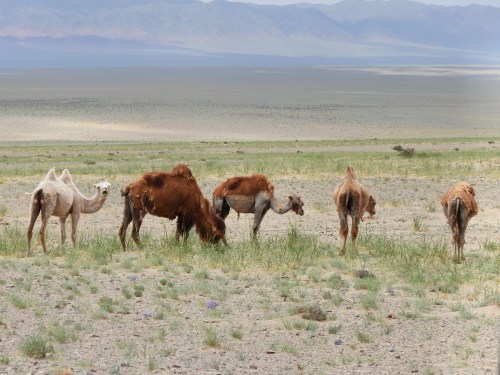
We passed small groups of Bactrian camels several times during the trip. There are no fences in Mongolia, yet somehow the owners manage to keep track of their free-roaming animals. These were domesticated camels—also known as two-humped camels or simply Mongolian camels—although a small number of wild Bactrian camels still survive in remote areas.
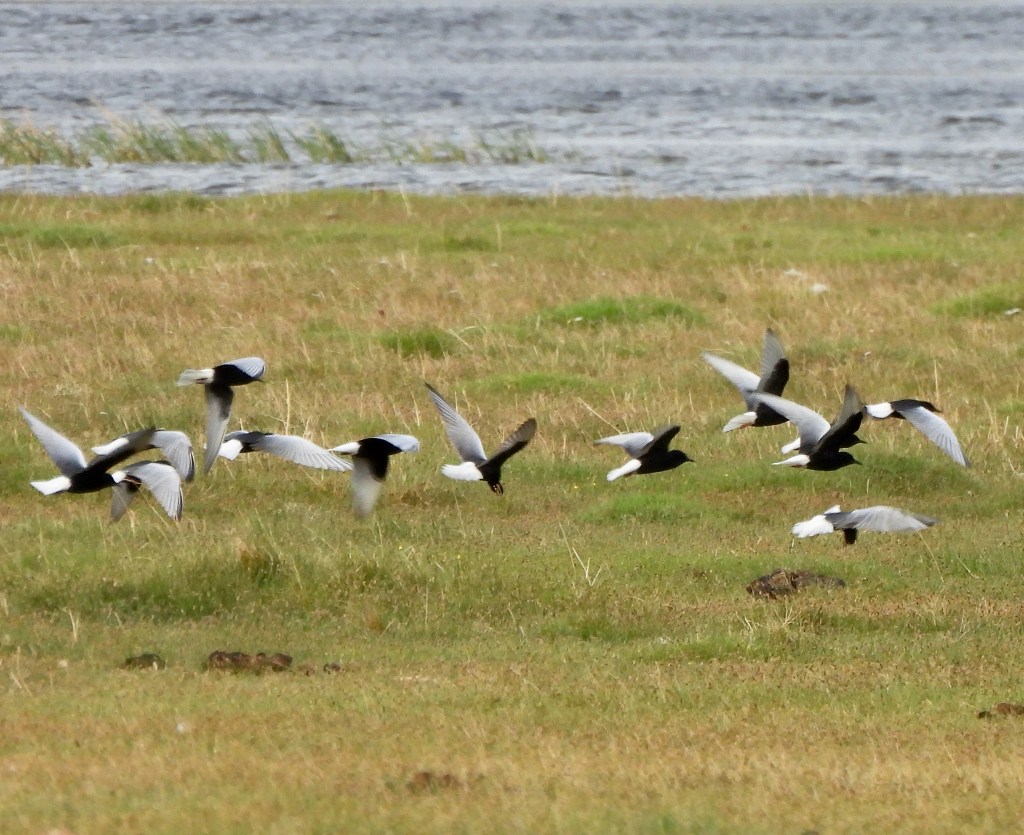
We arrived at Böön Tsagaan Nuur, a vast Ramsar wetland, late in the afternoon and had about two hours for birding. In that short time, we saw over 50 species—mostly ducks, shorebirds, gulls, and hundreds of White-winged Terns. I was mesmerized by the lovely, graceful terns. The photo below shows just a small part of the flock as they flew together over the marshy edges of the lake.
We stayed in a “basic” camp that night (and the next) due to expected wind and rain. We slept in little log cabins with hard wooden beds and our sleeping bags on top of the beds. Other than cabins replacing tents, it was essentially camping: our own toilet tent, no electricity, and minimal comfort. I did not sleep well on the hard bed; early in the night, I thought that I felt something furry run across my arm, and then I heard noises until morning.
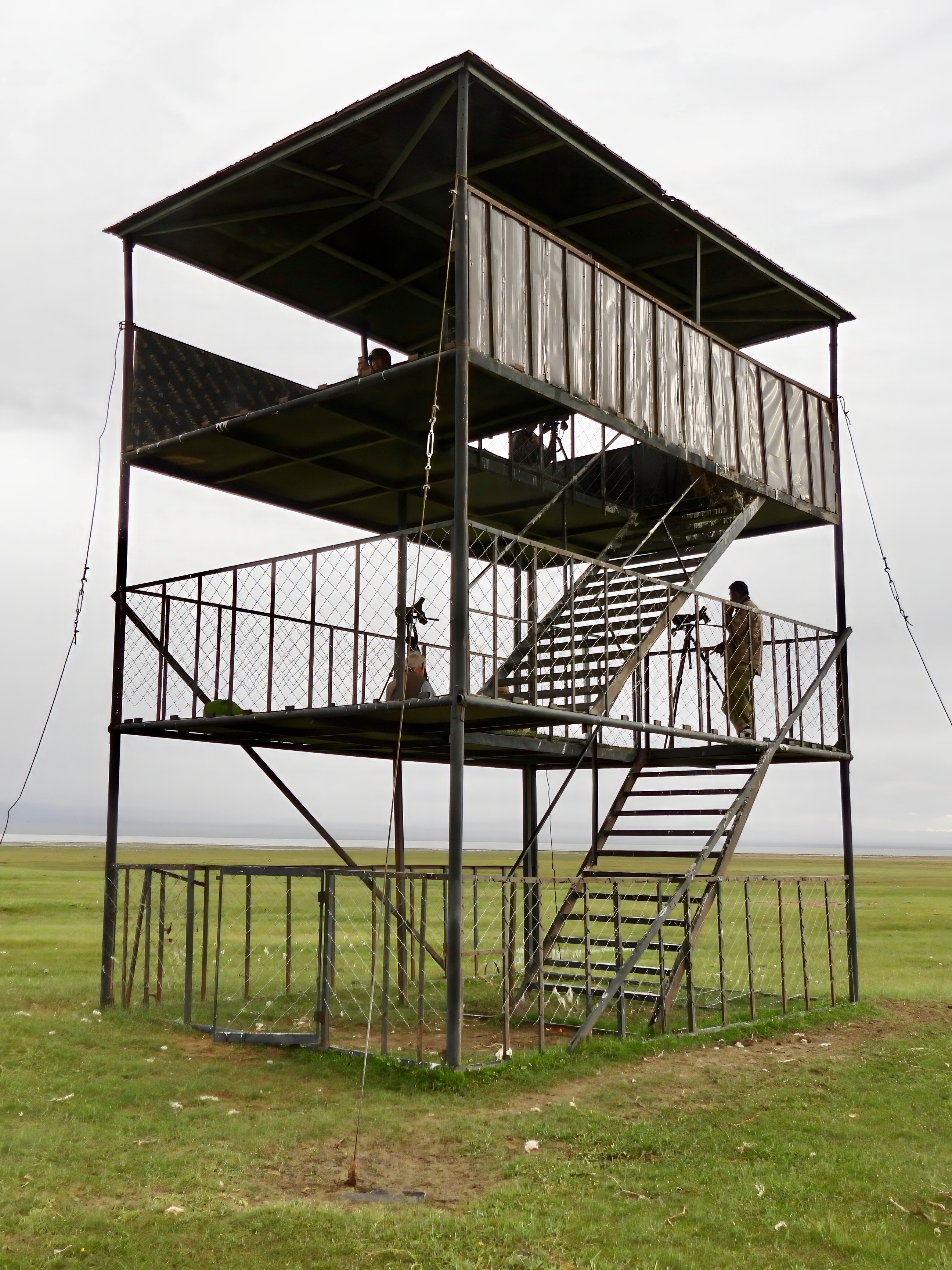
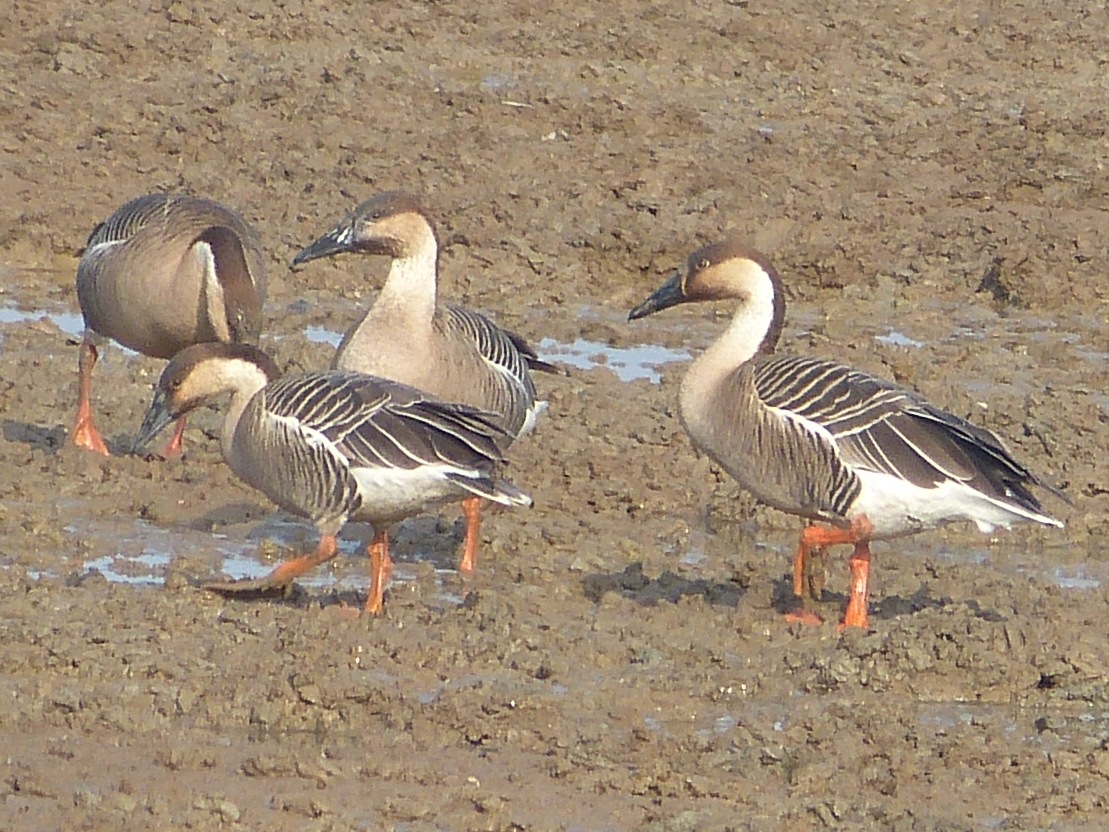
We spent all day at Böön Tsagaan Nuur, seeing many of the same species as the previous afternoon. The best find was a rare drake Baer’s Pochard, but it was sooo far out on the lake. While the lakes host large numbers of birds, they are not ideal for photography. Below, the viewing platform and a couple of the birds that we saw up closer, a Swan Goose and a Pacific Golden-Plover.


Our time at the lake ended with this spectacular sunset.

We stayed another night at the same “basic” camp, making this the fourth consecutive night without showers. Amazingly, I hadn’t noticed any offensive body odor when we were together in the vehicles. I used copious amounts of hand wipes to clean up and assumed that others did the same. Nick, however, claimed to have stripped down and poured a bucket of water over his head behind his cabin. I did not witness said event, so I can’t vouch for it.
May 29 was mostly a travel day with a long drive to Khangai Mountain. We enjoyed more beautiful scenery and blue skies. Mongolia has earned its nickname, “Land of Eternal Blue Sky,” with over 250 sunny days a year like this.

Camping that evening at Khangai Mountain would be the coldest night of the trip, but I was glad to leave behind the invisible (and some not-so-invisible) biting insects from the lakes. What will we find the following day? Watch for part 3 to find out!




 Birding for Life