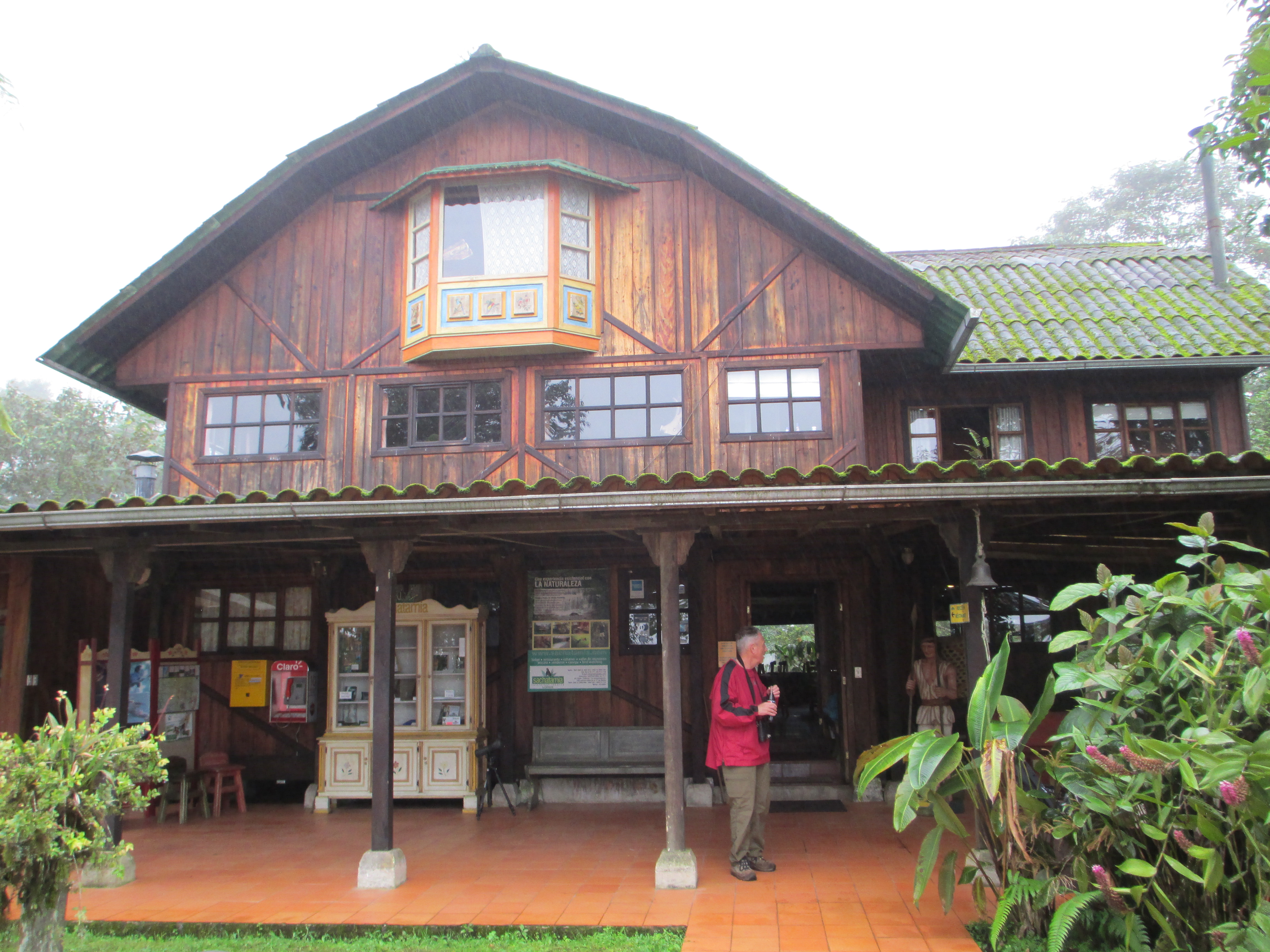
We arrived at Eco Lodge Itororó late in the afternoon of August 26 with just enough time for Derek to get five life birds before dinner with a Brazilian Ruby hummingbird as #1,200. It was much colder and foggier here than it had been at REGUA due to the higher elevation. This part of Brazil is south of the equator so it was the middle of winter. We piled wool blankets on our beds and tucked in the hot water bottles provided by the lodge for extra warmth. Below, the main lodge building where we had our meals.

Cirilo, our guide for the next few days, joined us for breakfast and then we set off on the wonderful Three-toed Jacamar excursion. Our first stop was a little spot on the side of the road by a wetland. Cirilo had promised us Blackish Rail and he delivered. A dependable rail? I was amazed!

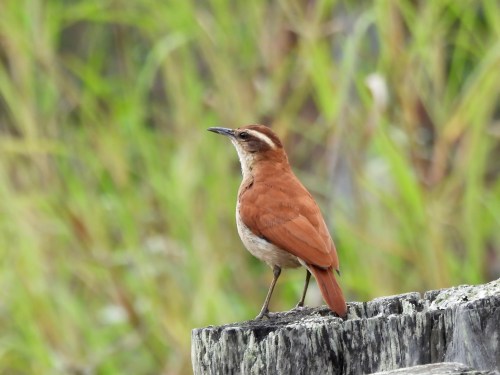
This stop also gave us a few other birds – Toco Toucan, Swallow-tailed Hummingbird, and Wing-banded Hornero being the highlights. I thought this hornero was sharper looking than the others I’d seen in Brazil.
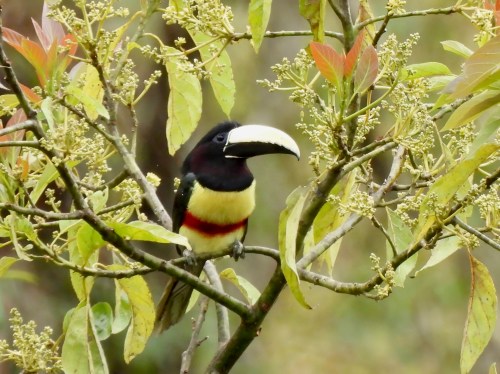
More wonderful birds awaited us at our next stop, including this Black-necked Aracari.
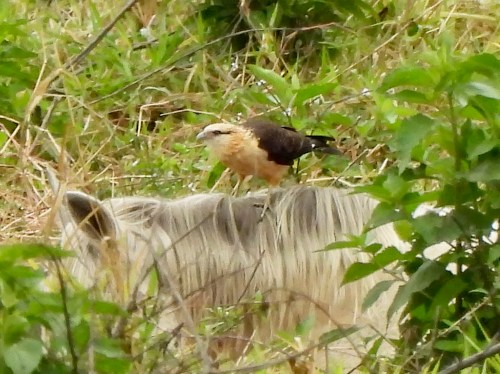
At our third stop, we watched a Yellow-headed Caracara standing on a horse picking off ticks. The caracara also “picks flesh from open wounds on backs of cattle, which often seem oddly indifferent to the process” according to Birds of the World. But, that is “cheating” according to the cleaning symbiosis contract. Yes, “cheating” is the word that I found in scientific publications. Black Vultures occasionally clean capybaras, but several species of caracaras are the only raptors that clean large mammals.
We saw spectacular Stramer-tailed Tyrants in another horse field.

Down the road a bit farther, Derek got his much-wanted lifer Red-legged Seriema. And, we both got our lifer Crested Black-Tyrant. First, we had a distant look, but good enough to count the bird. It came closer for a better look. And, finally, the bird was right in front of us!

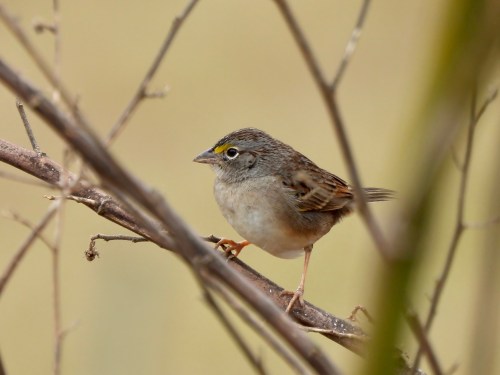
Cirilo could not have made it more fun if he’d had the magic ability to choreograph the bird’s movements. At the same stop, I was very happy to get a good look at a Grassland Sparrow. I’d missed the bird earlier in the trip with Sherry’s group, so it was especially satisfying to see it well.
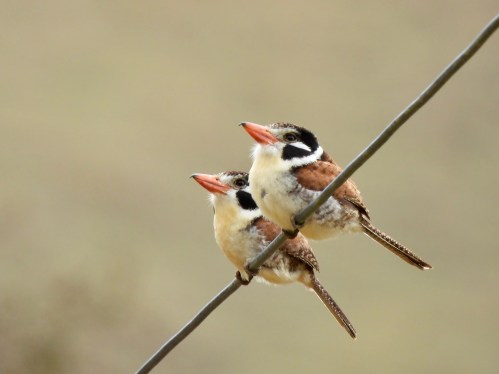
White-eared Puffbirds were the highlight for me at our next stop. What could be more adorable?
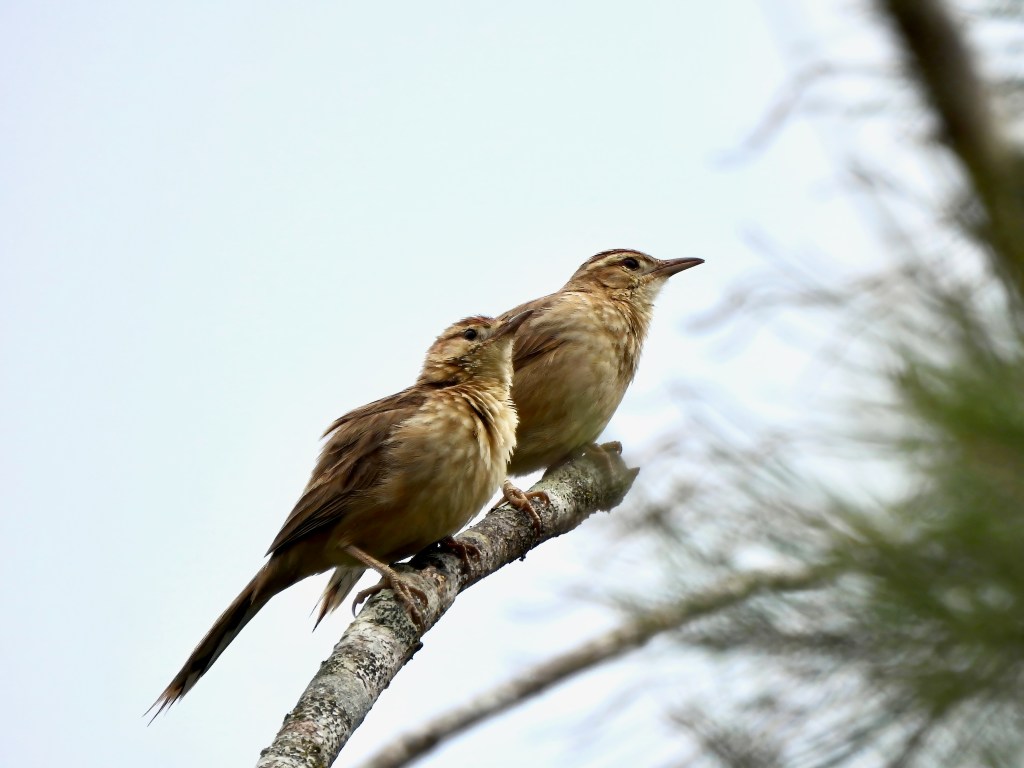
It was a great stop with several life birds for both of us. One of the most interesting was Firewood-gatherer. First, what a cool name. And, see why with these photos of the birds and their nest.

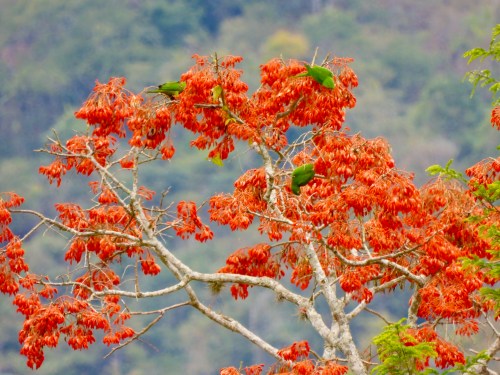
This was one of my favorite days of birding ever. In addition to the wonderful birds, the landscape was very appealing. I loved this coral tree topped with White-eyed Parakeets.
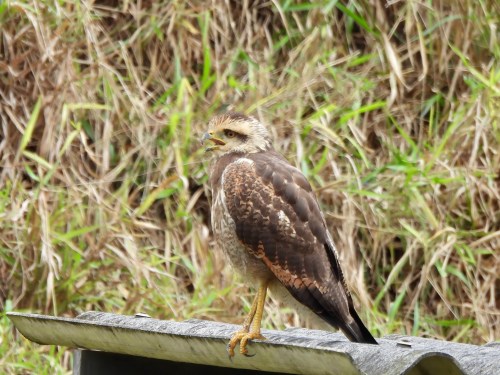
At another horse pen, we had an intriguing bird that we couldn’t immediately identify, this beautiful immature Savanna Hawk.
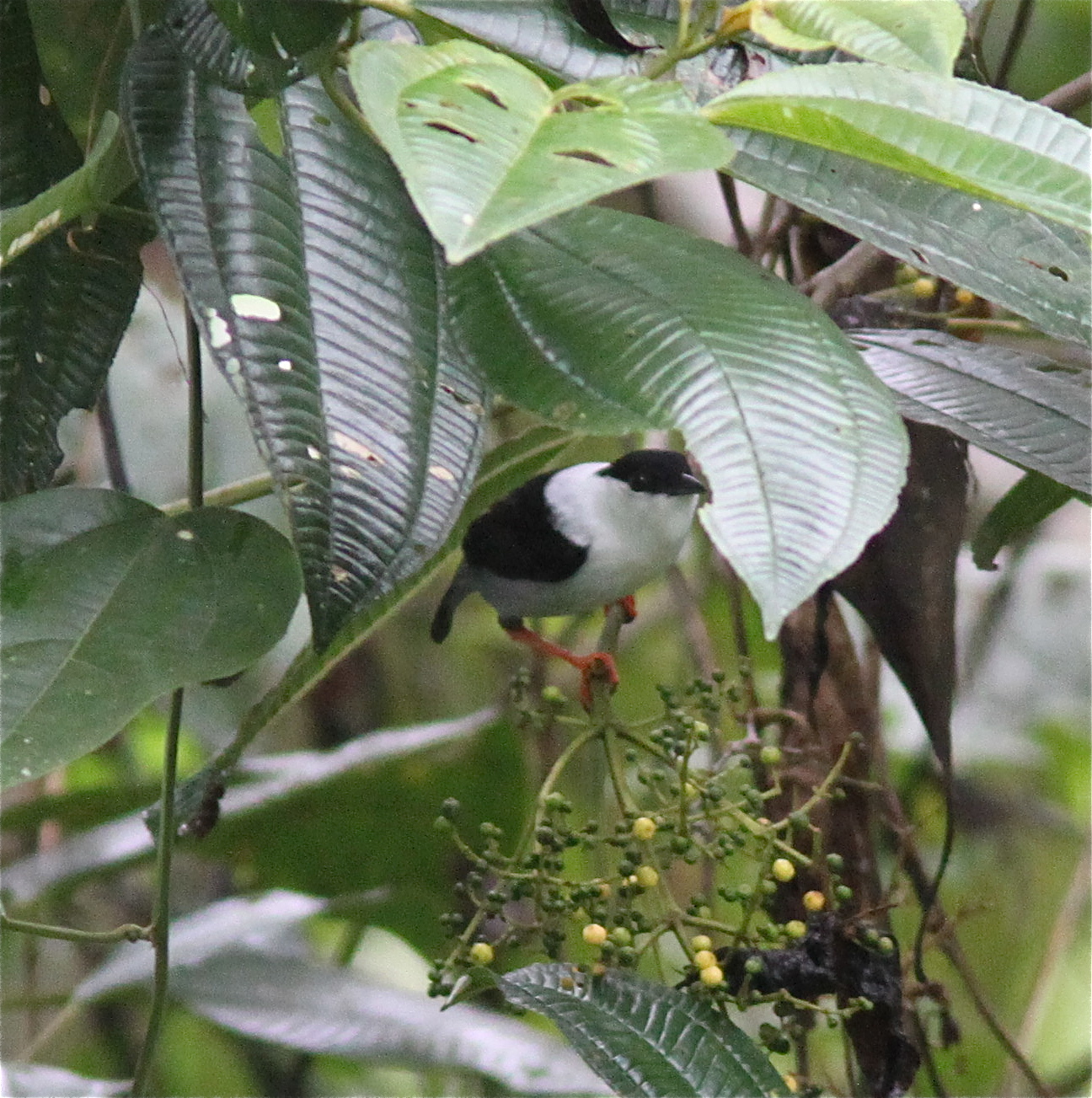
We finally stopped for lunch and ate our sandwiches while we continued to look at birds, including Derek’s lifer Black-capped Donacobius. Soon we were back on the road headed towards the last birding stop of the day and the signature species on this route, Three-toed Jacamar, a Brazilian endemic that only occurs in a limited area north of Rio de Janeiro. We saw the jacamar, but the light was bad, so my photos are not very good. This White-bearded Manakin chose a spot on the other side of the road with better lighting for his photo.

Cirilo guided us on the trails around the lodge on the morning of our second full day at Eco Lodge Itororó. He found 47 species of birds for us, although I found it much harder to see birds in the dense Atlantic Forest than the open countryside of the previous day. I missed quite a few birds, but it was an enjoyable morning and only having Cirilo for half a day resulted in incredibly good luck. When we returned to the lodge for lunch, we found the photography group happily clicking away at a gorgeous Saffron Toucanet right at the feeders. This is the species that everyone wants to see and this was its only appearance during our five days there.

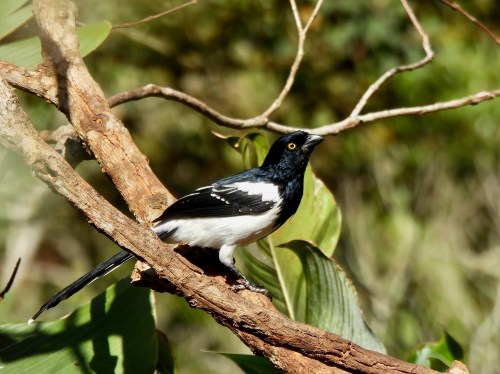
We spent the afternoon mostly watching the feeders, one of my favorite activities. The Magpie Tanagers were huge compared to the little Brassy-breasted Tanagers and I loved them. The Magpie Tanagers favored the feeder offering avocados.
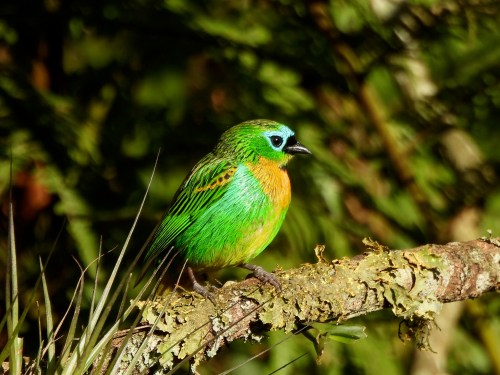
Below, a cute little Brassy-breasted Tanager.
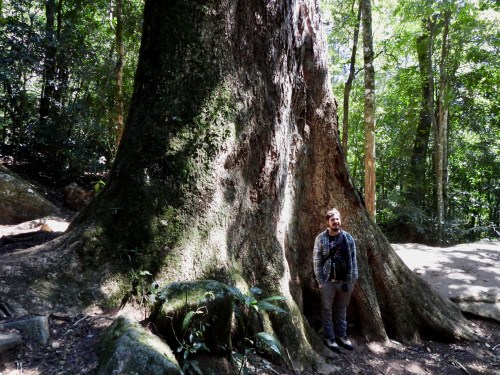
On August 29, we birded in Tres Picos State Park. Our walks included a short trek to see a locally famous Jequitibá tree. Scenes in the 2024 version of the Brazilian telenovela, Renascer, were filmed here as the tree plays a central role in the story. It replaces the 3,000 year old tree used in the 1993 version of the TV show which was struck by lightenng and died. As you can see from this photo of Cirilo in front of the tree, it is huge.
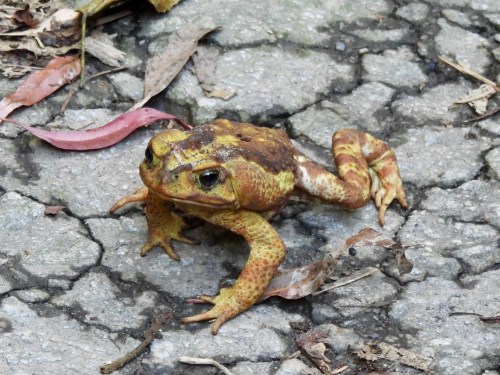
We also found this cute little toad on one of our paths through the forest, a Yellow Cururu Toad.
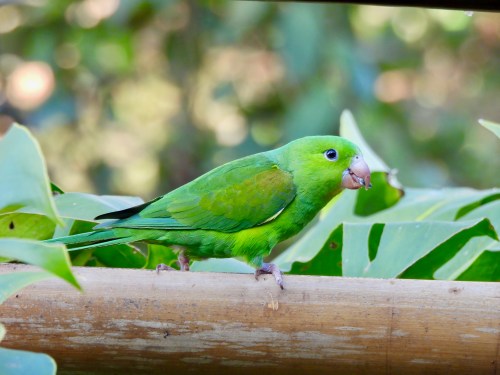
We stopped at the banana stand on our way back to the lodge. They feed leftover bananas to the birds making it a great place for a coffee and chlorophonias, tanagers, euphonias, parakeets, and other birds. Here’s a poorly named Plain Parakeet we watched there.
Derek and I had originally planned to bird on our own on the following day, but finding birds in the forest was more challenging than we had expected. Fortunately, Cirilo was available to guide us for one more day. But, where to go? We had already done all the easy trails. At dinner, Cirilo had an idea. Birders usually walk up a steep hill for the high-elevation excursion to Pico da Caledônia. Since there were only two of us, however, he was able to arrange a 4-wheel drive vehicle that could drive us almost to the top and we could walk down. Perfect!
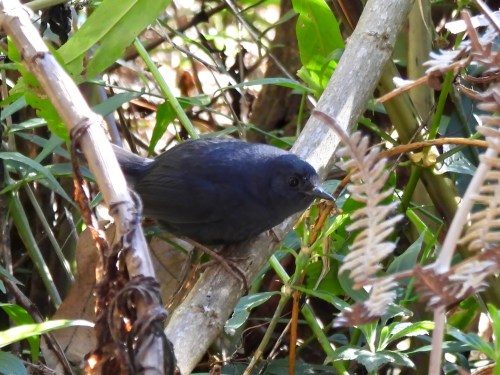
The day got off to a wonderful start when Cirilo heard a Mouse-colored Tapaculo on the side of the road. We stopped the car and he pointed to a log in a little opening in the vegetation where he expected it to cross. I pointed my camera at the log and quickly clicked as the little bird stopped for a fraction of a second.
Again, most of the forest birding was challenging, but the only important bird that we missed was the very localized Gray-winged Cotinga which occurs only in a small area northeast of Rio de Janeiro. With only 374 observations in eBird (some of which are certainly heard-only birds), many others must also miss the cotinga.
We walked about halfway up the 650-step staircase to the summit of Pico da Caledônia.

Later that afternoon, we saw the most unexpected bird of the day, a Zone-tailed Hawk. Cirilo was excited because this was a new state bird for him. Most American birders know this bird from the Southwest US, but the southern edge of its range extends to Paragray and this part of Brazil, although it is uncommon there in winter.
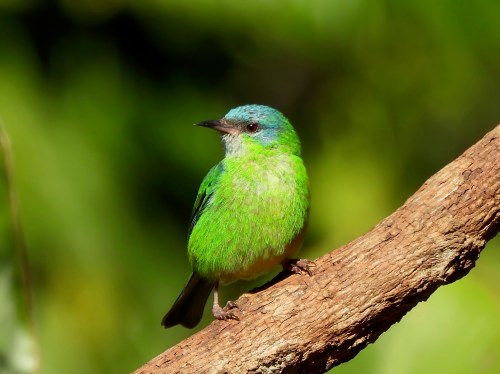
My “bonus week” with Derek in the Atlantic forest went quickly. All that remained was one more morning with a few hours to leisurely watch the feeders. Blue Dacnis is common throughout much of Central and South America. The male is blue, but the beautiful female is a lovely shade of green.
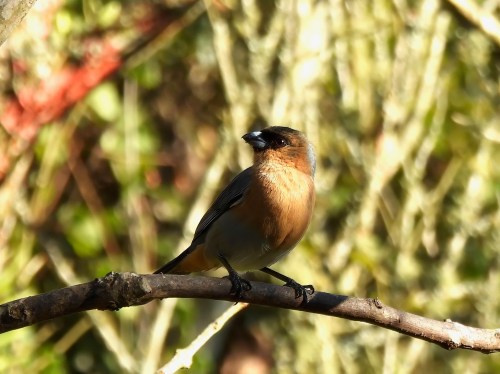
Cinnamon Tanager was a species that I saw only at Eco Lodge Itororó. When I was going through my photos, I realized that I did not know how to differentiate the males and females, so I looked it up in Birds of the World where I found this fascinating information. “The sexes are similar in appearance. The species is dichromatic, however, …. Thus, these tanagers visually can distinguish between males and females, but humans are unable to see these differences.”
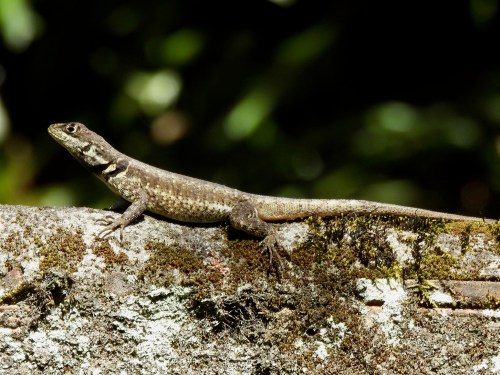
We enjoyed seeing the Amazon Lava Lizards that were often around the lodge.
And, what bird feeder would be complete without a squirrel? Although they were much more shy and less of a nuisance than our gray squirrels at home. This one is an appropriately named Brazilian Squirrel.

Below, Derek enjoying the feeders during our last hours at Itororó.

Andy Foster of Serra dos Tucanos Birding Tours did a wonderful job making all the arrangements for the week including transportation and our stays at REGUA and Eco Lodge Itororó. We could not have asked for a better guide than Cirilo. Bettina fed us well and treated us like family at Itororó. I would love to go back any time!
Our eBird trip report Brazil – Atlantic Rain Forest (REGUA & Ecolodge Itororo) August 2024 has all of our checklists and photos. Also see Shelley’s iNaturalist observations for the trip and Derek’s iNat observations.






 Birding for Life