Feeds:
Posts
Comments

Posts Tagged ‘White-nosed Coati’

My trip to Panama last month started on a whim, as so many of my trips have. A couple of years ago, I made a birding trip bucket list; this trip wasn’t on it. I think that I’ll blame – or maybe credit – my friend, Sandra, for this one. She is a much better birder than I am and also more motivated, and some of that ambition may be rubbing off on me. Her goal is to see half of the world’s birds, now somewhere over 5,500. My more modest goal is 2,500. Sandra and I have a big trip to South America starting in November, and I really want to celebrate reaching my goal on that trip. Fearing that I wouldn’t make it, I looked for a quick and easy trip to pad my list a bit. Panama’s Canopy Camp fit the bill perfectly. I had been to the other two Canopy lodges in 2017 and had a great time. The guides are excellent, and there wouldn’t be any planning required. When I told Sandra about my plan, she decided to come with me.
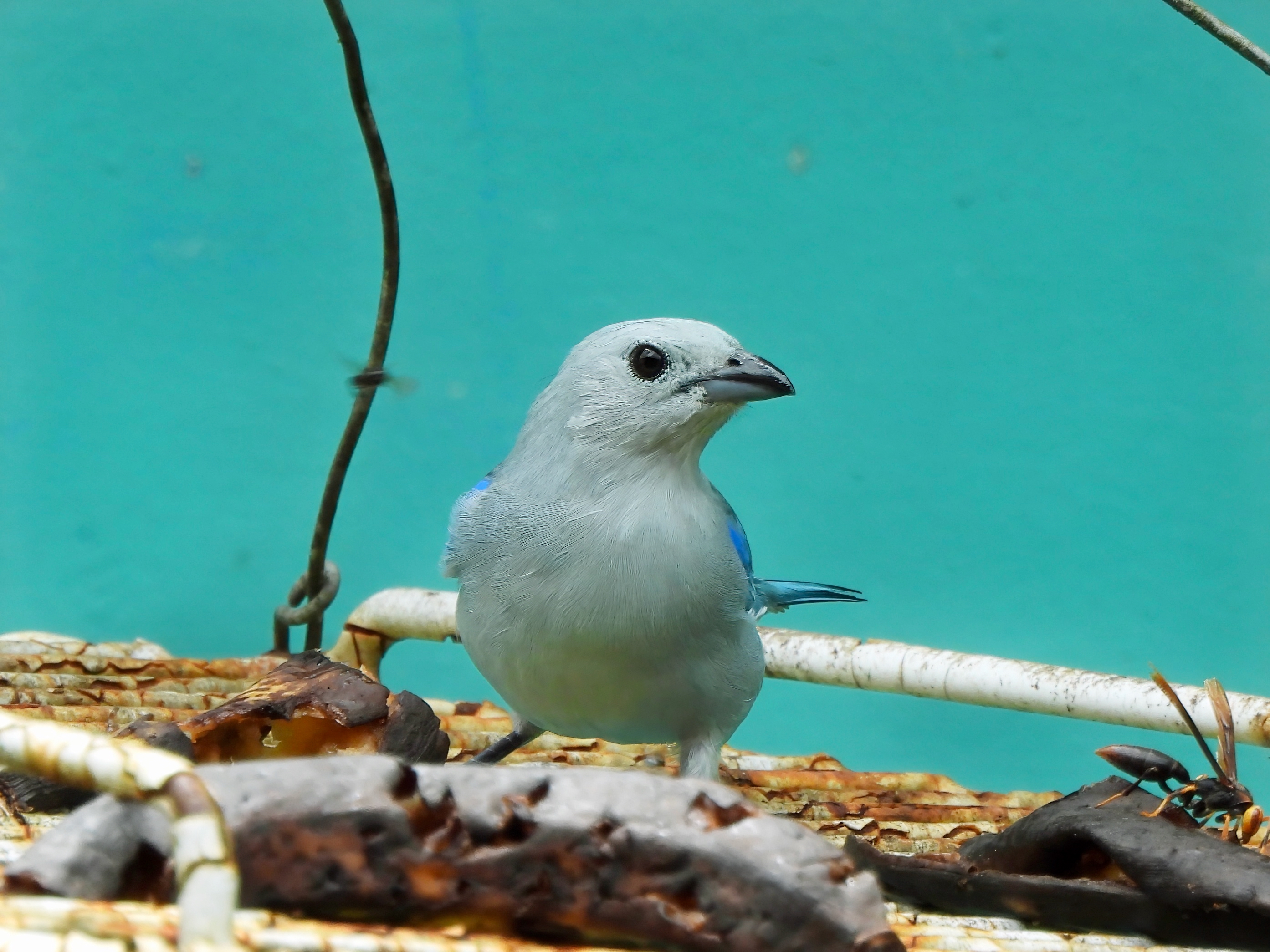
We flew to Panama City on September 15 and met our guide, Oscar Fría, and the seven other participants the following morning. We all marveled at the migrating Mississippi Kites right over our heads in the hotel parking lot—an estimated 200 birds! And then we started the three-hour drive south toward the Darién Province. The day went quickly, with a couple of stops for birding and a nice outdoor lunch where we could watch birds while we ate. Below are the Snowy-bellied and Rufous-tailed Hummingbirds, a Blue-gray Tanager, and my favorite plumaged Blue Dacnis, an immature male, that entertained us during our meal.

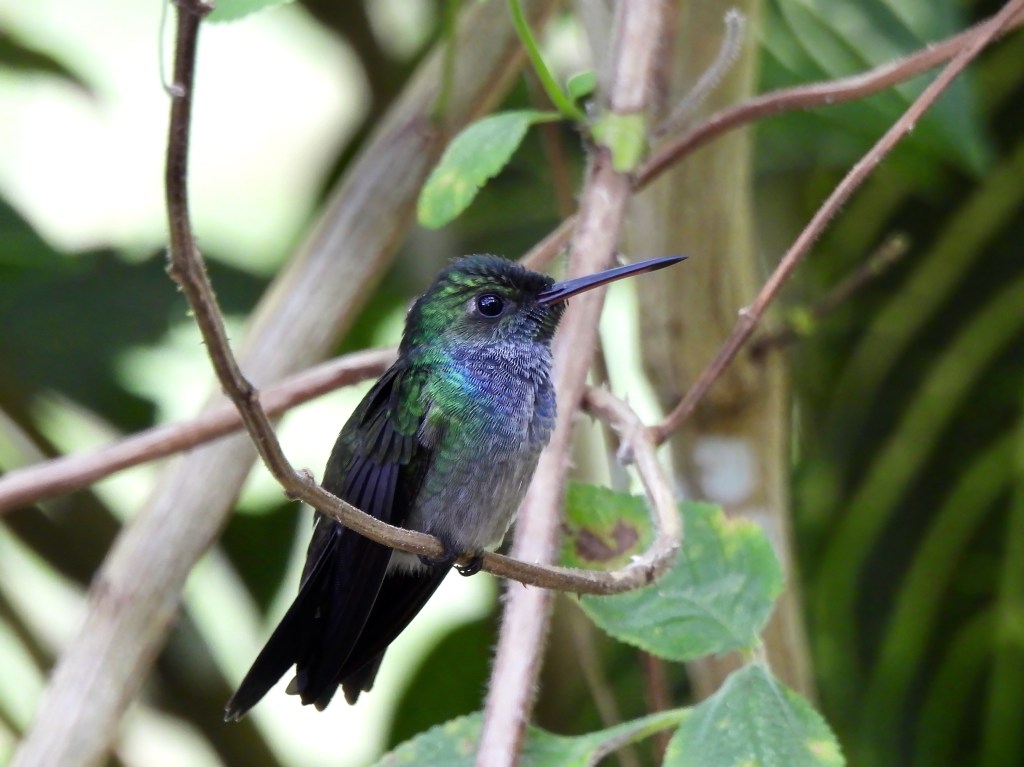
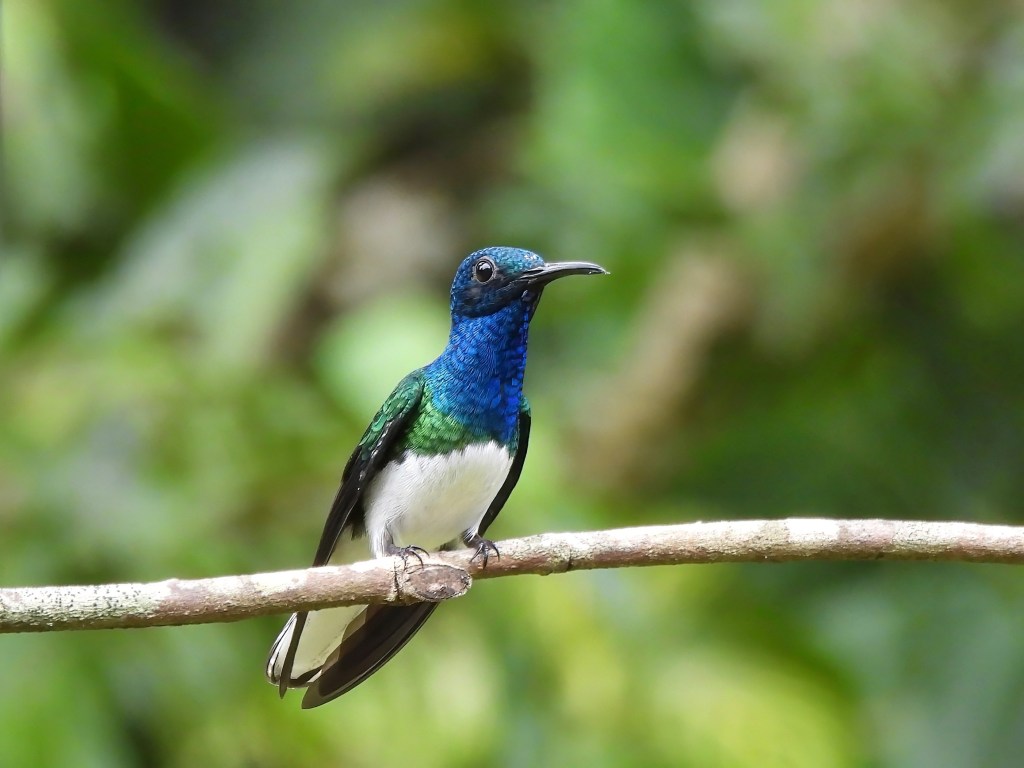
We arrived at the camp mid-afternoon, giving us just the right amount of time to get settled in our comfortable safari-style tents and explore a little. I was happy to get two life birds that first day, a Sapphire-throated Hummingbird and a Pale-bellied Hermit. In the gallery below are those birds (top row), along with a Blue-chested Hummingbird and a White-necked Jacobin that frequented the area near the deck where we ate our meals.

It was exciting to be in the Darién, described by Raúl Arias, owner of the Canopy Family lodges, as the largest and least inhabited province of Panama, the one with the biggest tracts of primary forests, the longest and widest rivers, the tallest trees, the least accessible province, the least known. Here, in this hotbed of biological diversity, the camp itself sits atop a small plateau in lowland rainforest.

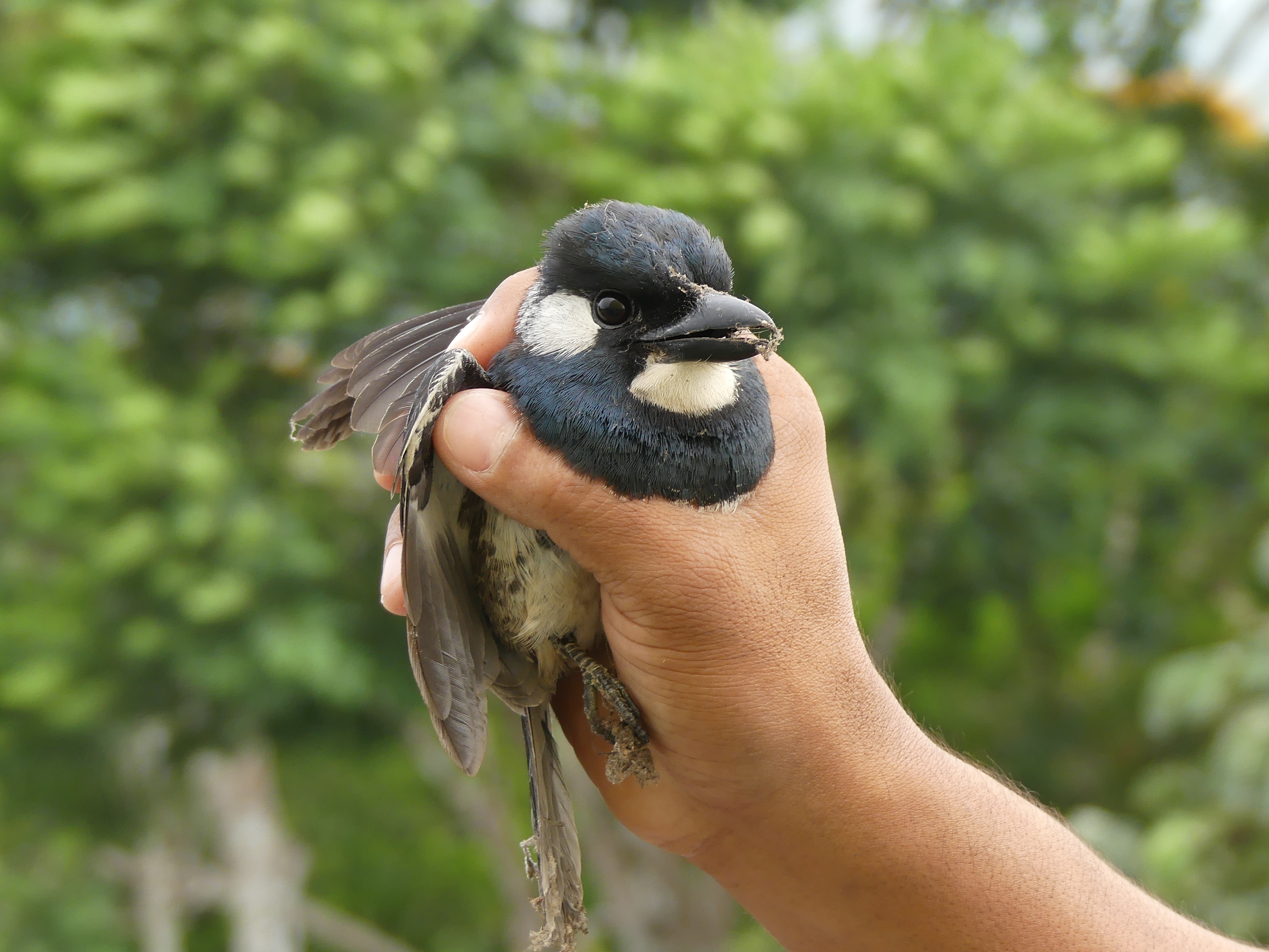
We birded around camp the next morning, and I got several more life birds. One of my favorites was the lovely Gray-cheeked Nunlet that Oscar digiscoped for me.

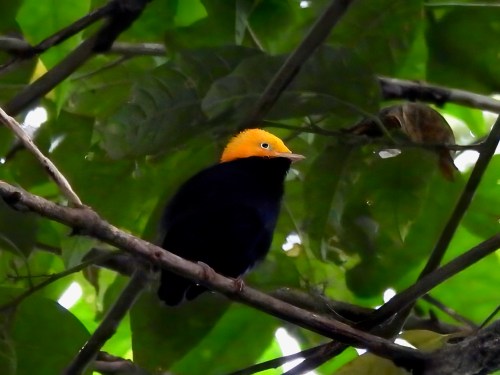
Another highlight was this Golden-headed Manakin. I missed it the first time the group saw it because I had gone back to our tent for something. Later, Sandra spotted it right from our deck!
Chestnut-headed Oropendolas were a constant presence around the camp.

I also loved this gorgeous female Black-crowned Tityra, a photo lifer.

On the 18th, we birded an area not far from the camp where more life birds awaited. I really like woodpeckers, so I was delighted to add this Golden-green Woodpecker to my life list.

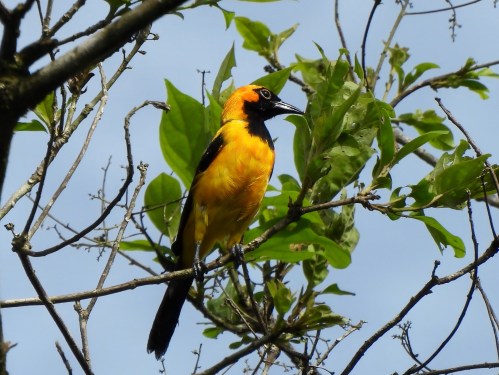
This Orange-crowned Oriole was another wonderful bird and also a “lifer.”
A female Blue Cotinga was not a life bird, but what a beauty! I couldn’t have been happier if she had been a lifer. It was my best view ever of this species and my first look at a female.

Friday was a big day–the quest for Harpy Eagle. I saw my life Harpy in Ecuador a few years ago. Read about that experience and learn more about the eagle in Ecuador 2021: Limoncocha (Part 4 of 6). But I don’t think that any birder would pass up an opportunity to see this special bird, so I was happy to have another experience with it.

While assembled at the edge of the field before we started our trek, these Black Oropendolas bounced around a bare treetop on the opposite side of the field. The oropendolas were life birds, and I was very happy to have even a distant view.

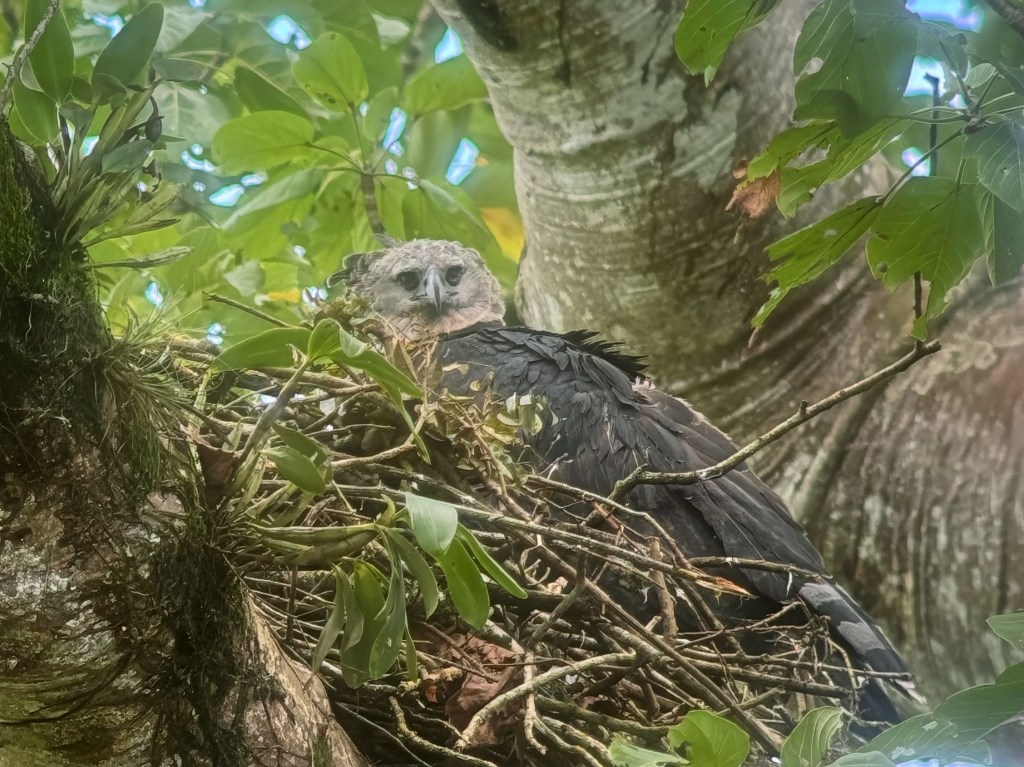
We were lucky to have a relatively easy trek to the Harpy Eagle nest, about two-thirds of a mile each way on a shaded trail through the forest. In contrast, many birders have walked for hours in the sun or ridden horses to get to a Harpy Eagle nest. The trail was not exactly easy, though, with lots of mud and exposed tree roots. I couldn’t help thinking that these birds must intentionally choose nest sites in inaccessible areas. Here is the majestic female Harpy Eagle on her nest!
Our good luck continued the next day with an outing to Yaviza Forest and nearby areas. During the trip, no one talked of our proximity to the Darién Gap, but a little research at home revealed Yaviza as the terminus of the Pan-American Highway. There were smaller roads going south, and our eBird trip report map shows that we ventured south of Yaviza for a few birding stops, including our Harpy Eagle outing. The economy of Darién seems complicated, but we were told that cattle ranching is important, and there was evidence of it everywhere. The pretty pastoral scene below with the mountains in the distance is typical of many areas we visited.

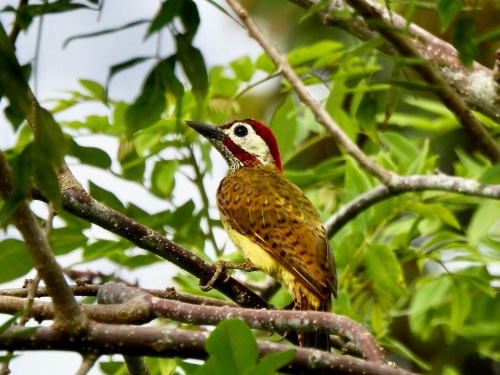
We saw some special birds this day, with the Spot-breasted Woodpecker an instant favorite. Oscar told us that it is his favorite woodpecker, and it’s easy to see why.
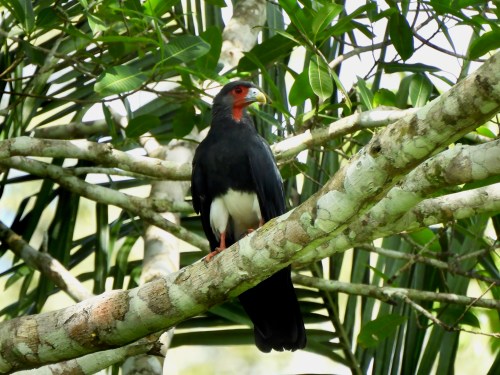
This Red-throated Caracara was another standout species that day.
One more great bird was White-headed Wren. Not only does it look quite unlike most other wrens, it’s also much larger.

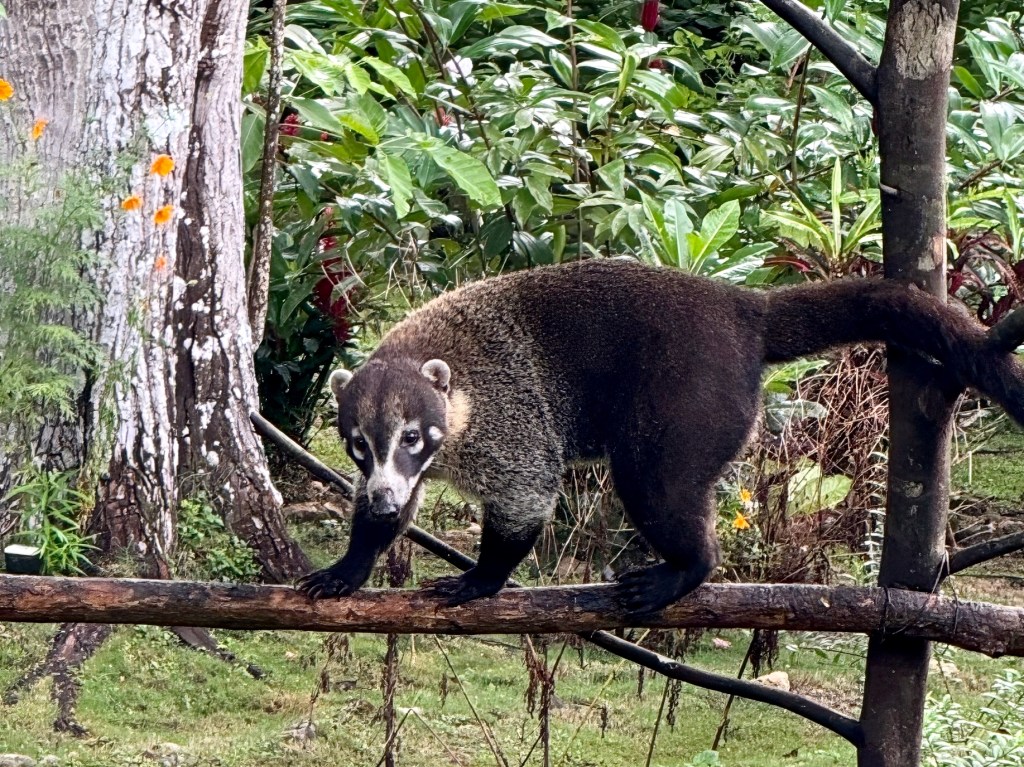
We saw a few mammals at the camp, but not many species. Oscar told us that they are scarce due to hunting for food by the local people. However, we did see White-nosed Coatis and Geoffroy’s Tamarins nearly every day.
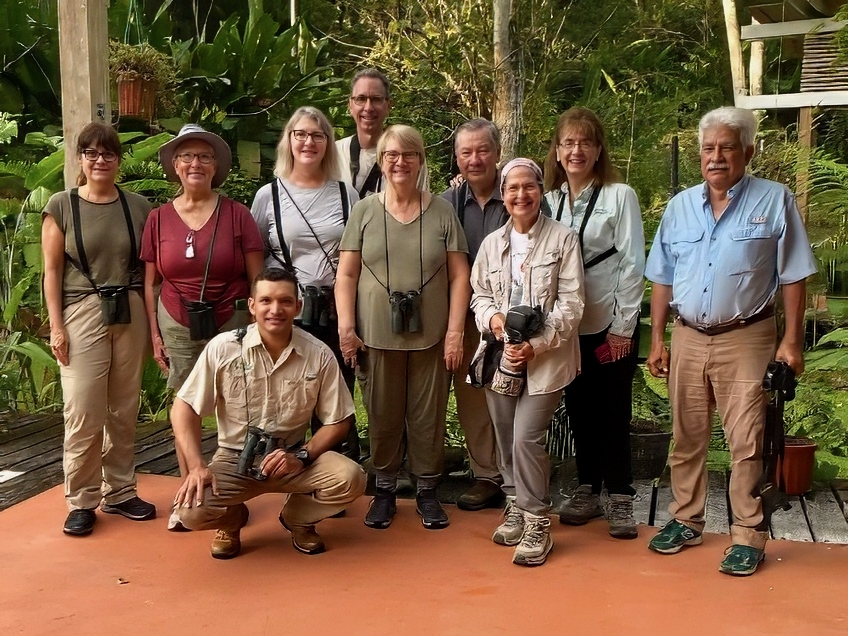
There’s still a lot of the trip remaining. Watch for part 2. It was a fun group with some of the nicest people that I’ve ever met on a birding trip; every single person was kind and helpful. Sandra, John & April, Rob & Lynn, Gloria, Pablo, Amarilys, it was a delight sharing this adventure with you. Oscar was a great guide, and the Canopy staff was outstanding. Birding trips are about more than just birds, and these wonderful people made this one of my favorite trips.
Read Full Post »

Blue-headed Parrots feasted on fruits in the trees right outside our hotel room window.  Diane and I had arrived in Panama City late the previous night, April 19, and we were excited to have such a wonderful start to our two weeks in Panama.

Blue-headed parrot on the grounds of Country Inn & Suites, Panama Canal

Blue-headed parrot on the grounds of Country Inn & Suites, Panama Canal

We had just enough time for a scrumptious breakfast and a little more bird watching at the County Inn & Suites, Panama Canal, before a driver from Canopy Tower picked us up and whisked us off to the world-famous remodeled military radar station that we had been dreaming about for months.  Tatiana, Manager of the Tower, greeted us warmly and showed us around.  Next, it was time for lunch in the lovely dining room on the top floor of the tower with open windows all around the circular room.

Gartered Trogon

Gartered Trogon

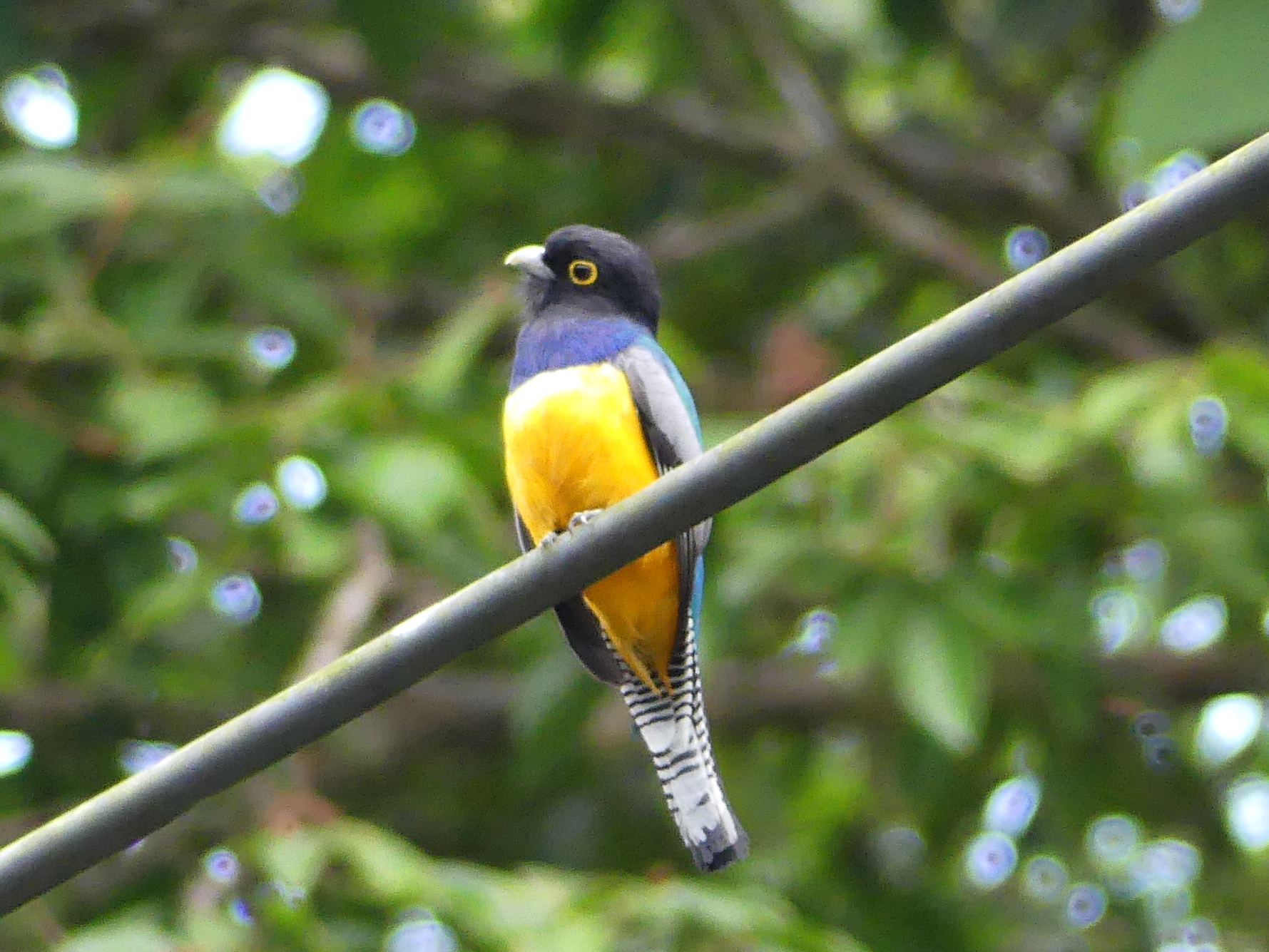
After lunch, we were off on our first birding trip – to Summit Ponds.  It was a wonderful mix of seeing “old friends,” birds I had previously seen in Belize or Ecuador like the Gartered Trogon above, and nine life birds including Chestnut-headed Oropendolas working on their nests.

There was one more life bird for us after dinner, a surprise Black-breasted Puffbird that had come in through the open windows.  We could see the bird roosting in the top part of the tower above our heads while we ate dinner.  Alex, one of the bird guides, rescued the bird and gave us up-close looks the next morning before he released it.  The puffbird sat on the deck for a couple of minutes to recover, and then flew off, none the worse for its adventure.  Alex said that this was the first time a bird had flown into the tower.

Black-breasted Puffbird after its rescue from the top of the Tower.

Black-breasted Puffbird after its rescue from the top of the Tower.

On our first morning at the Tower, we awakened before 5:00 AM to the screams of about 40 Howler Monkeys, who sounded like they were all right outside our windows.  The tower is all metal causing sound to reverberate throughout the building and making the monkeys sound even louder.  We were thrilled to feel so close to nature in the jungle.  We expected to hear monkeys “talking” with that intensity every day, but subsequent mornings they were much more subdued.  A little later, we watched this adult and baby feeding in the trees.

Mantled Howler Monkeys

Mantled Howler Monkeys

Blue Cotinga

Blue Cotinga

Mornings at the Tower start with coffee on the observation deck at 6:30 AM.  The deck is on the roof of the tower and gives nature lovers a 360 degree view of the surrounding canopy and landscape beyond.  On our first morning, we saw a Blue Cotinga in the distant trees, one of the signature birds of the Tower and one we especially wanted to see since Diane and I were staying in the Blue Cotinga room.  A Keel-billed Toucan was another beauty seen from the observation deck.

Keel-billed Toucan seen from the Canopy Tower observation deck

Keel-billed Toucan seen from the Canopy Tower observation deck

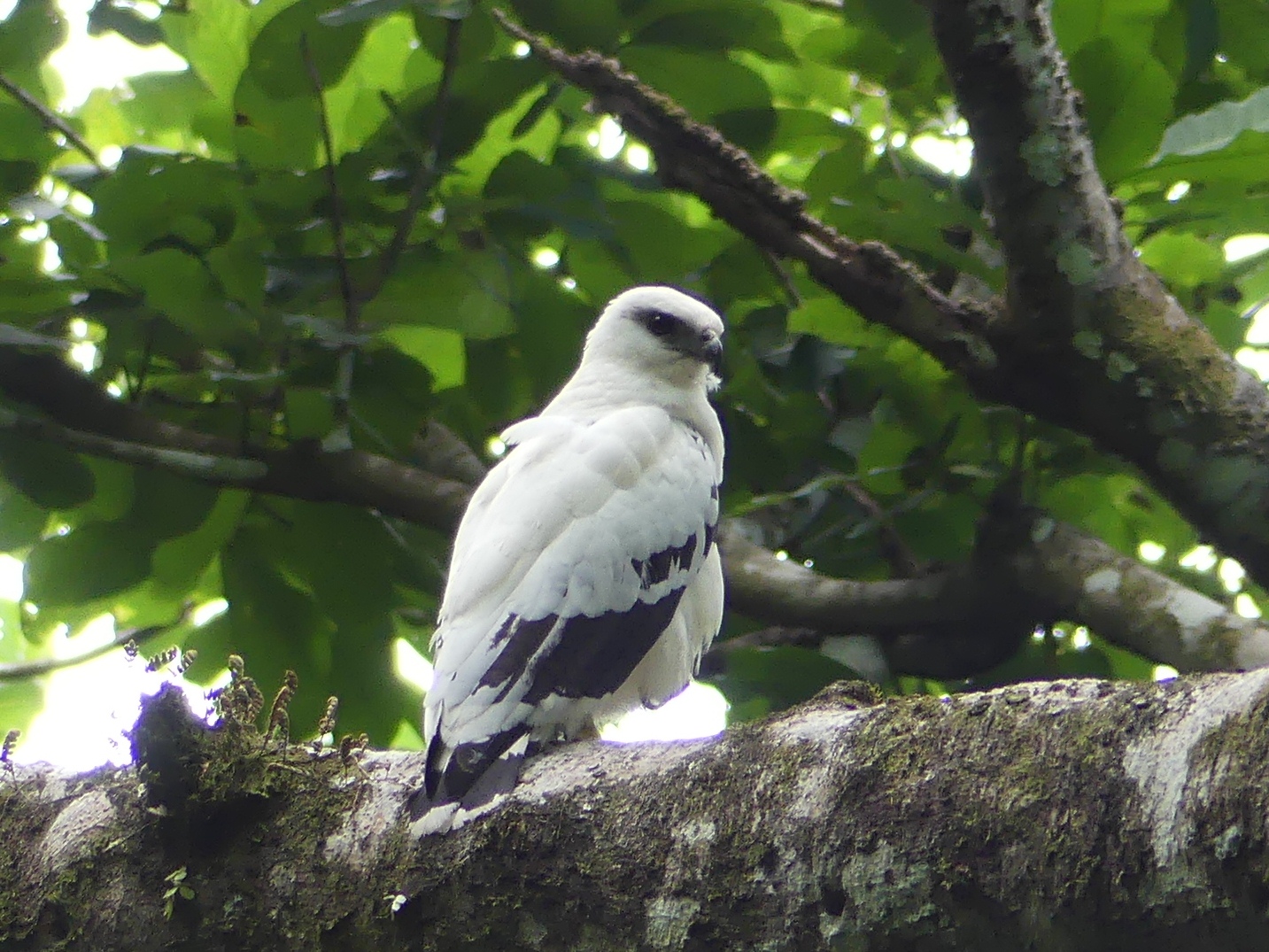
Our first full day at the Tower was fabulous.  One of everyone’s favorites was this gorgeous White Hawk observed on Plantation Road.

White Hawk

White Hawk

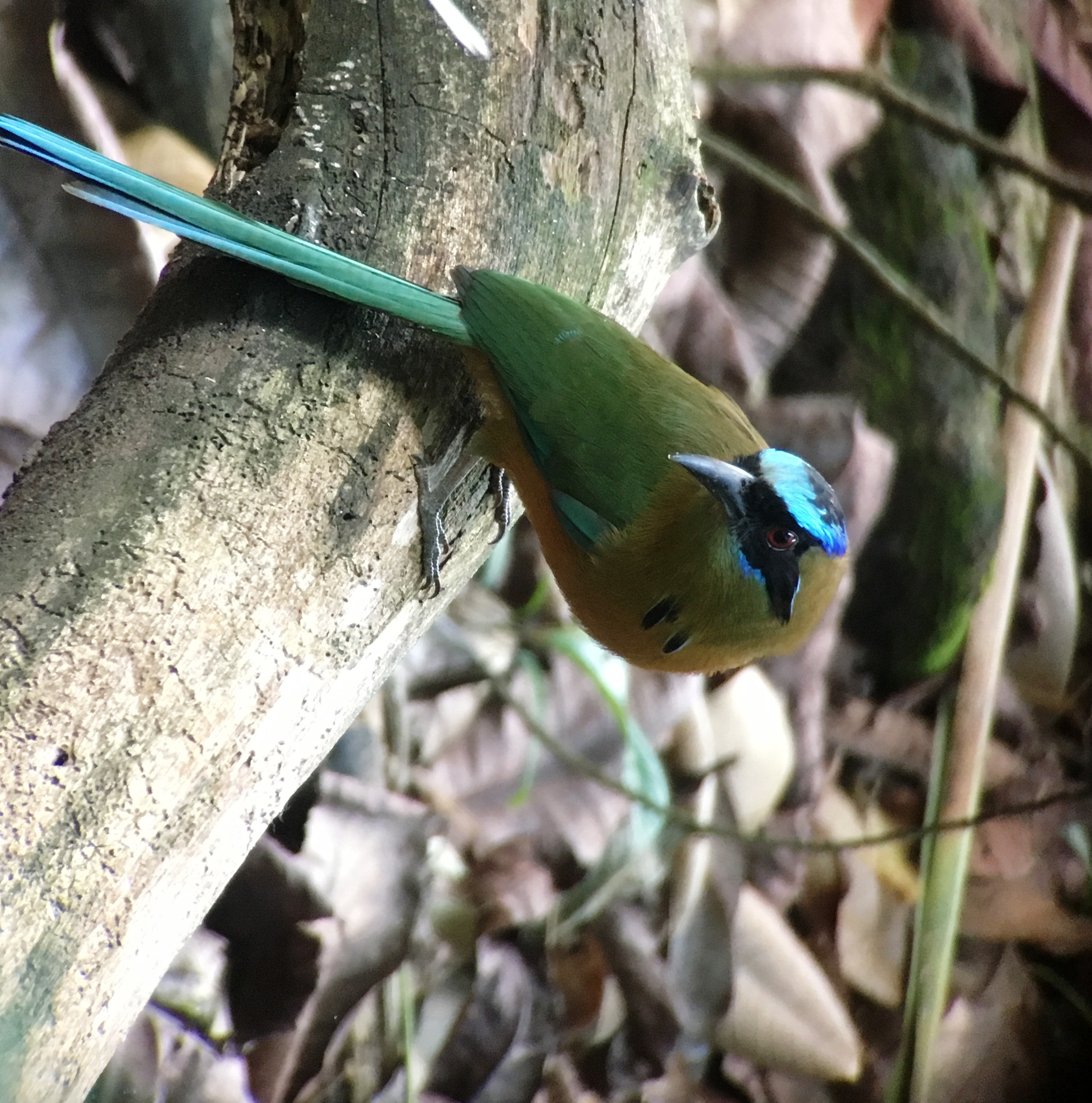
I was happy to get the photo of the Broad-billed Motmot below.  When I was studying for the trip, I wondered how easy to would be to see the green chin on the Broad-billed Motmot which helps distinguish it from the larger, but similar, Rufous Motmot.

Broad-billed Motmot

Broad-billed Motmot

We quickly learned that the Canopy Tower guides have excellent digiscoping skills and they were very happy to take photos through the scopes with our iPhones for us.  Danilo Jr. digiscoped this beautiful pair of White-whiskered Puffbirds below with Diane’s phone.

White-whiskered Puffbird pair

White-whiskered Puffbird pair

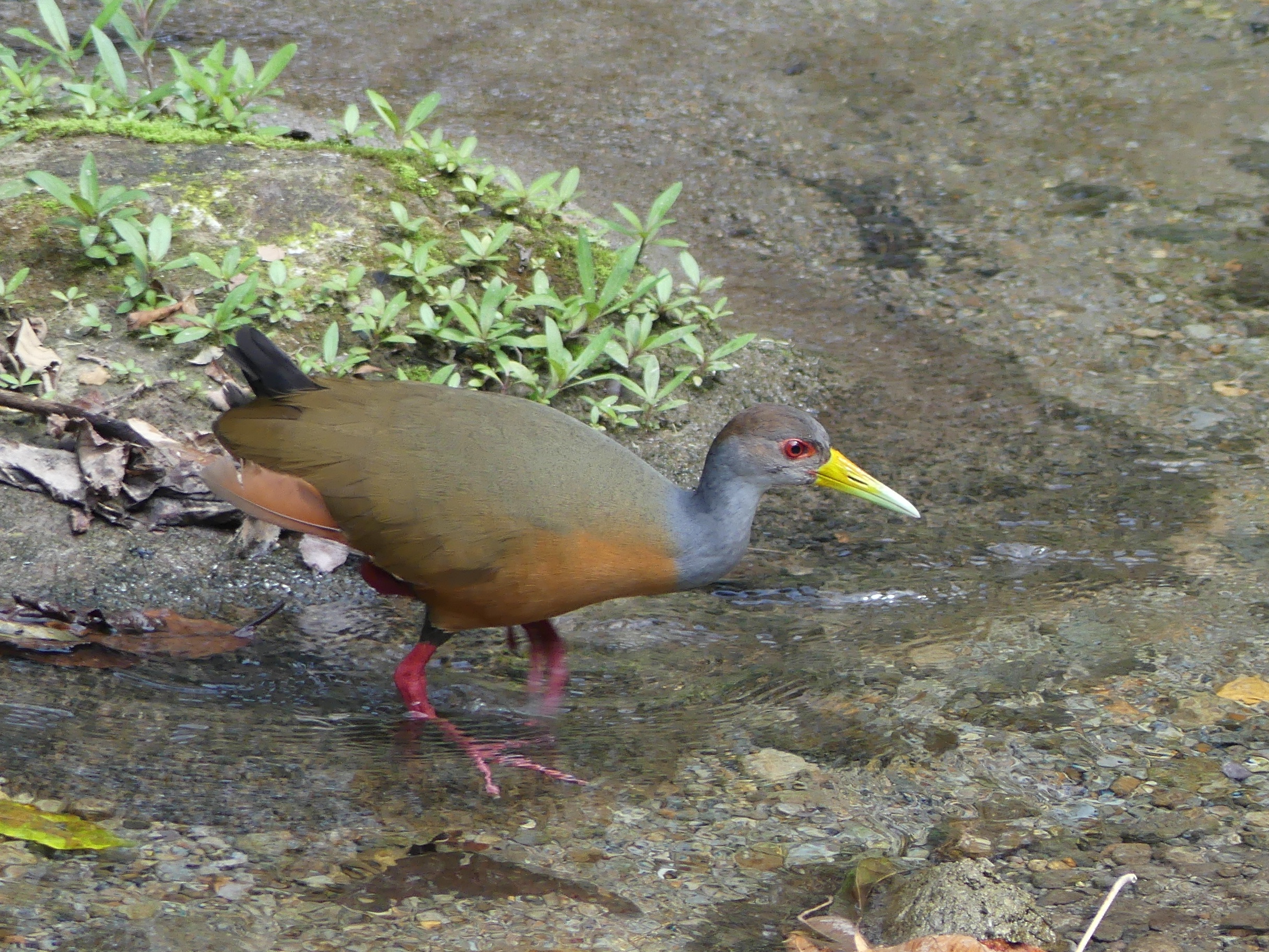
Later that afternoon, we birded along the road to the Gamboa Rainforest Resort marina where I saw many familiar birds – Black-bellied Whistling-Ducks, herons and egrets, and Common Gallinules.  But, there were new birds, too, including an American Pygmy Kingfisher who declined the photo op.  The Gray-cowled Wood-Rail was a life bird for me, too, and it did cooperate for a photo.  It was pretty bad, though, since it was on the other side of a lake and the light was failing.  Still, I was thrilled, not knowing that a few days later we would see them just a few feet away under the bird feeders at the Canopy Lodge.

A Gray-cowled Wood-Rail crosses the creek by Canopy Lodge on its way to eat bananas under the feeders.

A Gray-cowled Wood-Rail crosses the creek by Canopy Lodge on its way to eat bananas under the feeders.

That afternoon we also saw a Green-and-Black Poison-dart Frog, the only one of the trip.  My trip to Central America would not have felt complete without a poison frog.

Green-and-Black Poison-dart Frog

Green-and-Black Poison-dart Frog

On Saturday morning we birded the famous Pipeline Road.  During World War II, a pipeline through the Isthmus of Panama was built to transport fuel from one ocean to the other in the event that the canal was attacked.  Fortunately, the pipeline was never used.  Today, the road runs for 17.5 km through Soberanía National Park and provides access to undisturbed rainforest.  It is one of the premier birding destinations in Central America.

One highlight was quality time with a Great Tinamou shuffling around on the forest floor.  It sounded like the usual way of seeing a tinamou is for the guide to play the call and birders to catch a quick glimpse of the bird as it runs across the road.  We were pleased to leisurely observe this bird without disturbing it.

Great Tinamou

Great Tinamou

In that same spot, we also found this gorgeous Whooping Motmot on the forest floor.  Below is another fabulous digiscope by Danilo Jr.

Whooping Motmot

Whooping Motmot

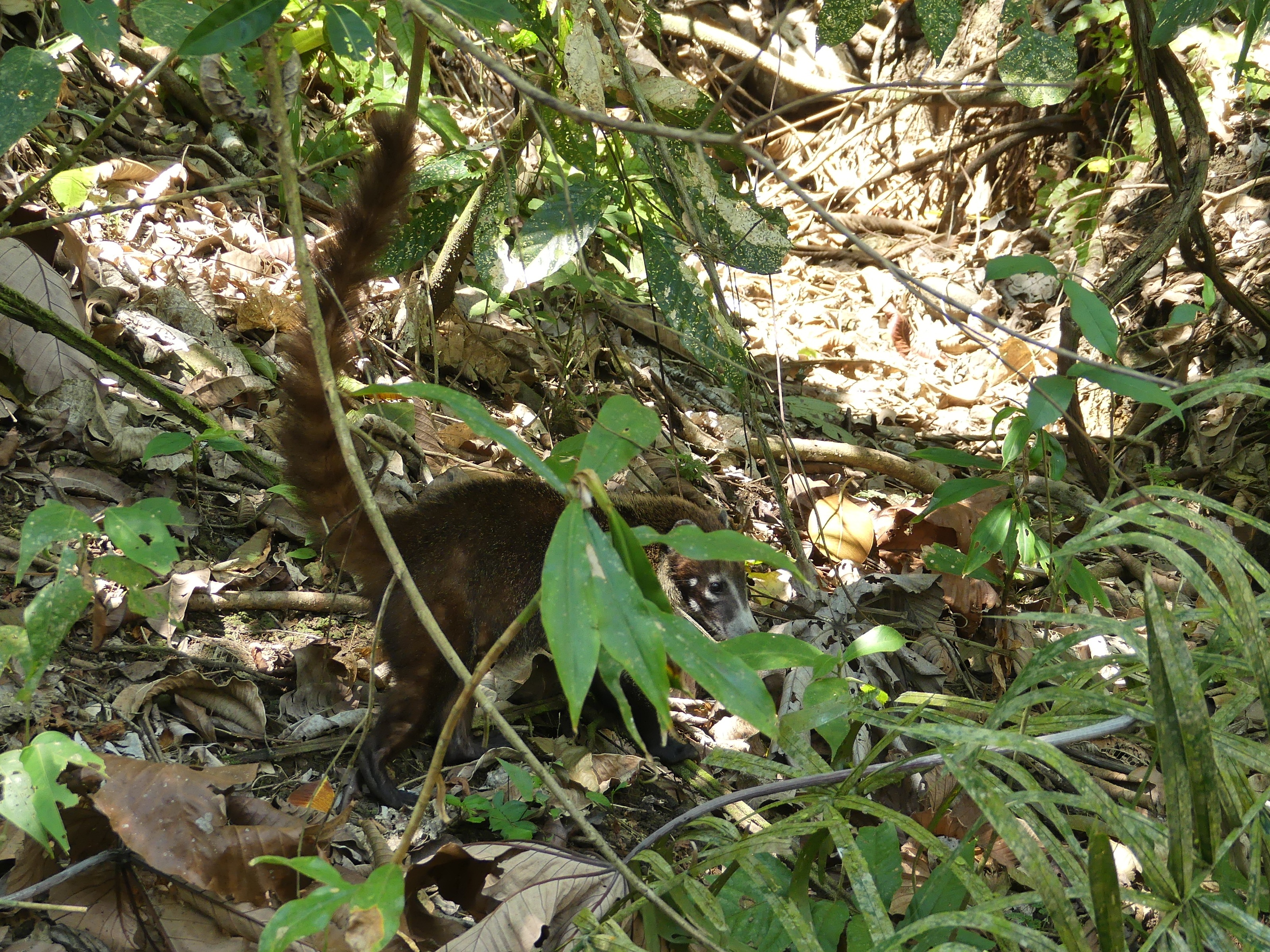
We also saw a White-nosed Coati, first brief looks through the jungle vegetation on the side of the road, and then a clear view as it walked right out into the open!

White-nosed Coati

White-nosed Coati

White-nosed Coati

The sweetest sight that morning may have been a baby Great Potoo snuggled up close to one of its parents at the top of a tall snag.  Potoos are odd birds.  They have large eyes and huge mouths to facilitate night-time hunting of aerial insects such as beetles and locusts.  They swoop out from the top of a tree stump and return to the same stump after capturing their prey.  Their cryptic plumage provides the perfect camouflage which allows them to roost on tree stumps during the day, too, and not even be noticed.  Great Potoo is a big bird at 19-24 inches long and the largest potoo species.

Great Potoo

Great Potoo

This was just the beginning of our Panama adventure.  Stay tuned for part 2.

Read Full Post »