Feeds:
Posts
Comments

Posts Tagged ‘Zoothera Birding’

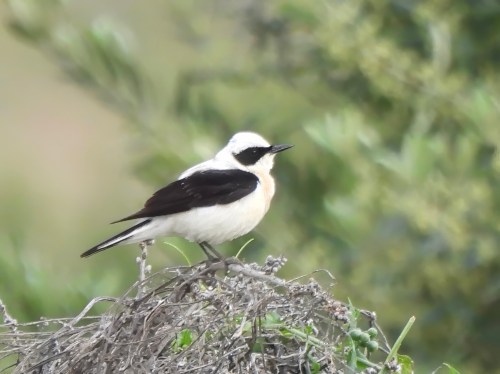
White-throated Bushchat breeds only in Mongolia—a fact I did not know on the cold morning of May 30, as we tracked down several of these gorgeous birds at the base of the Khangai mountains, not far from our campsite near Khukh Lake. All I knew in that moment was that it was a beautiful bird and I was thrilled to get such good looks.
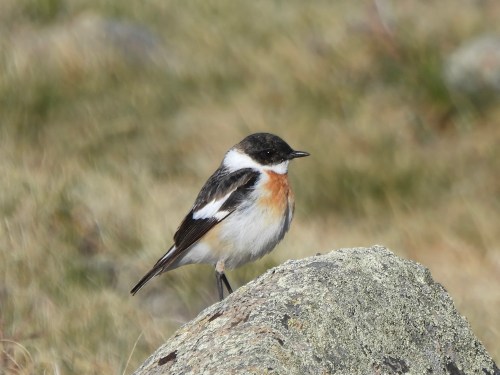
eBird’s description of the species’ breeding habitat fits many of the areas that we birded in Mongolia: “high altitudes in open areas with rocky outcrops and clusters of vegetation.” Below, members of our group scanning for the bushchat. We were just under 3,000 meters (9,800 feet), and for me, the greatest challenge wasn’t the altitude, but the trek uphill on the spongy, almost tundra-like, uneven terrain with ruts, rocks, and clumps of grass.

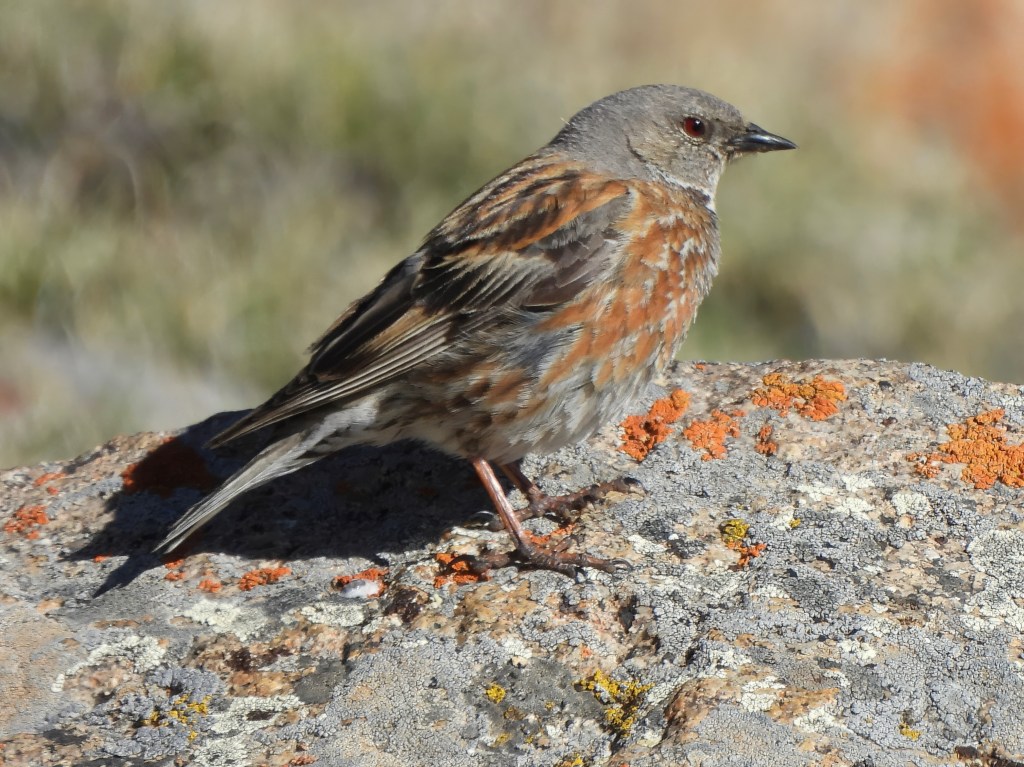
Our efforts were rewarded with the bushchat and an Altai Accentor. The accentor was not a life bird for me as I had seen one ten years earlier in India, but I don’t remember that first sighting, so this felt like a life bird.
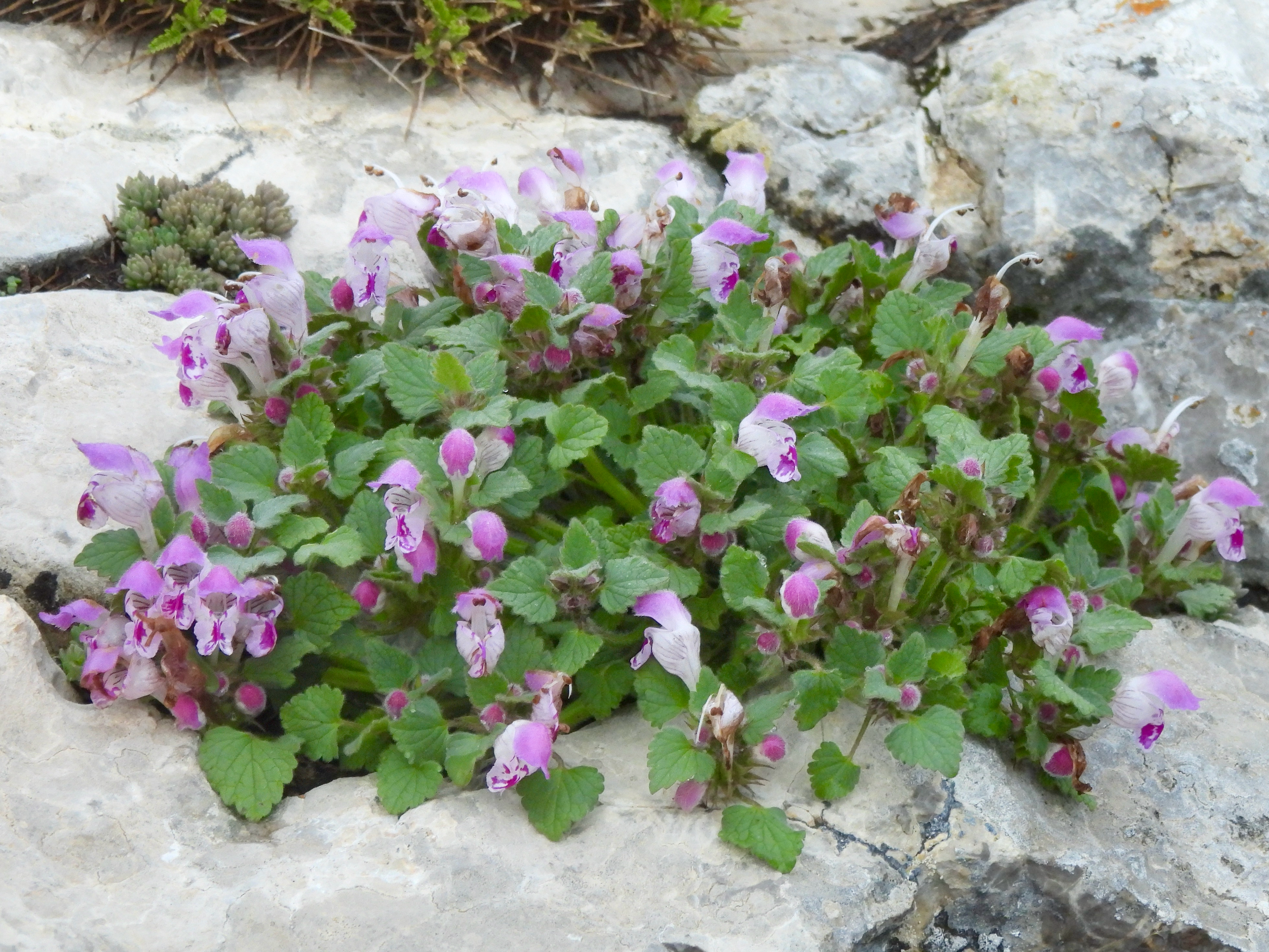
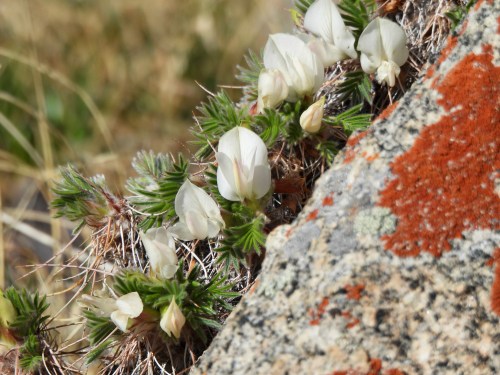
As in so many places across Mongolia, there was beauty everywhere. On the mountain, I found pretty flowers tucked into crevices in the rocks.
We headed to warmer lowlands to camp for the night, with a stop on the way at a random little lake. It held nothing new for the trip list, but it was nice to watch a few shorebirds and a group of Pied Avocets while we ate our lunches.

The next day was mostly a long travel day, with a detour to see Oriental Plovers again in a different spot than earlier in the trip. Even the most serious world birders don’t say, “I’ve already seen that bird. I don’t need to see it again.” This time, we saw a lovely female in addition to two males.

Nick reports that we stayed at “a really great, modern hotel for the night at Arvaikheer.” I don’t remember that hotel at all, absolutely nothing about it, but our nights camping are still vivid in my memory. My advice for anyone going to Mongolia: Don’t look for a fancy trip that promises minimal camping. You want to camp. It’s the best way to experience the beauty of dark night skies and awake to the sound of birds singing, to feel the calm and peace that only exists in remote areas far from civilization.

June 1 was another travel day as we made our way toward Hustai National Park. I don’t remember much about that day other than beautiful landscapes like that below.

But I do remember camping by Bayan Lake that night. My journal entry from that evening reads: “Campsite tonight is full of mosquitoes. They tried to find a better site or hotel, but nothing was available. It’s miserably hot and we had soup (mutton, I think) for dinner. They are burning cow dung in the dining tent to keep away mosquitoes.”

Nick’s trip report notes that we relocated from the first campsite to a site farther from the lake, but it made no difference with the mosquitoes. A few of us were desperate to sleep anywhere else. Nick compared the mood to something out of Mutiny on the Bounty. Yet, we all survived, and miraculously, once zipped into our little tents, we were relatively mosquito free.

Just earlier, I said that the camping was magical, didn’t I? Well, not every night and I preferred camping at higher elevations. Still, it’s a worthwhile experience and one that I would not have wanted to miss.

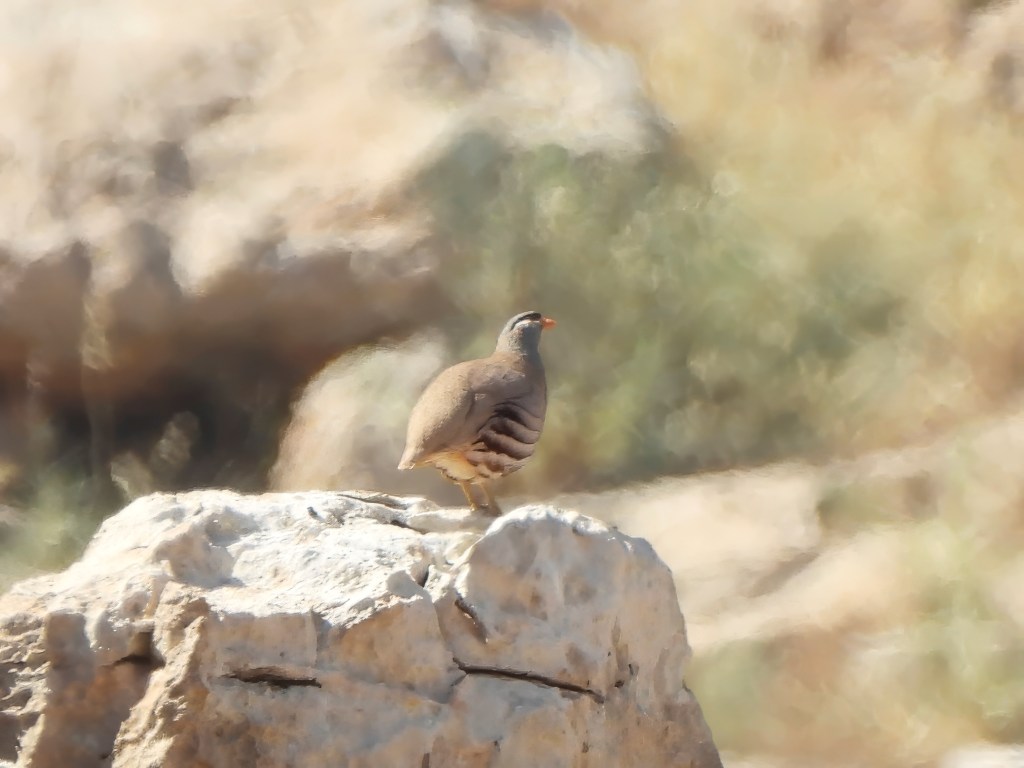
The next day, we arrived at Hustai National Park before lunch. I had been looking forward to this park and it lived up to my expectations. Somehow, Puje got us into a part of the park that is usually off-limits to tourists. After extensive scanning with the scope, he found a pair of Daurian Partridges, another range-restricted species, limited mostly to Mongolia, northern China, and Kyrgyzstan.

We also saw quite a few other birds in the park, but I was most excited to see a couple of Przewalski’s Horses. I had thought that they were the only wild horses in the world, but have since learned that they were once extinct in the wild and have been reintroduced at Hustai NP. Their evolutionary history and taxonomy are complicated and there is no scientific consensus. If you enjoy a good biological mystery, Wikipedia has an interesting write-up on Przewalski’s Horse.
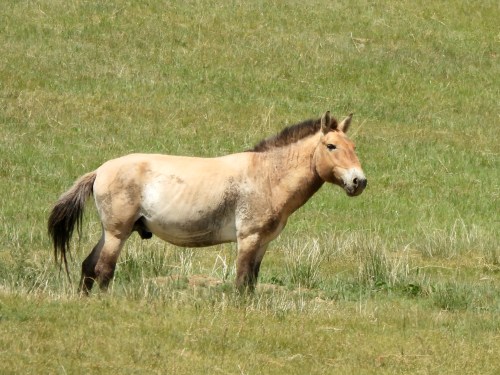
Beyond the birds and horses, I also found many wildflowers, bugs, and an adorable family of Tarbagan Marmots at Hustai NP to amuse myself.
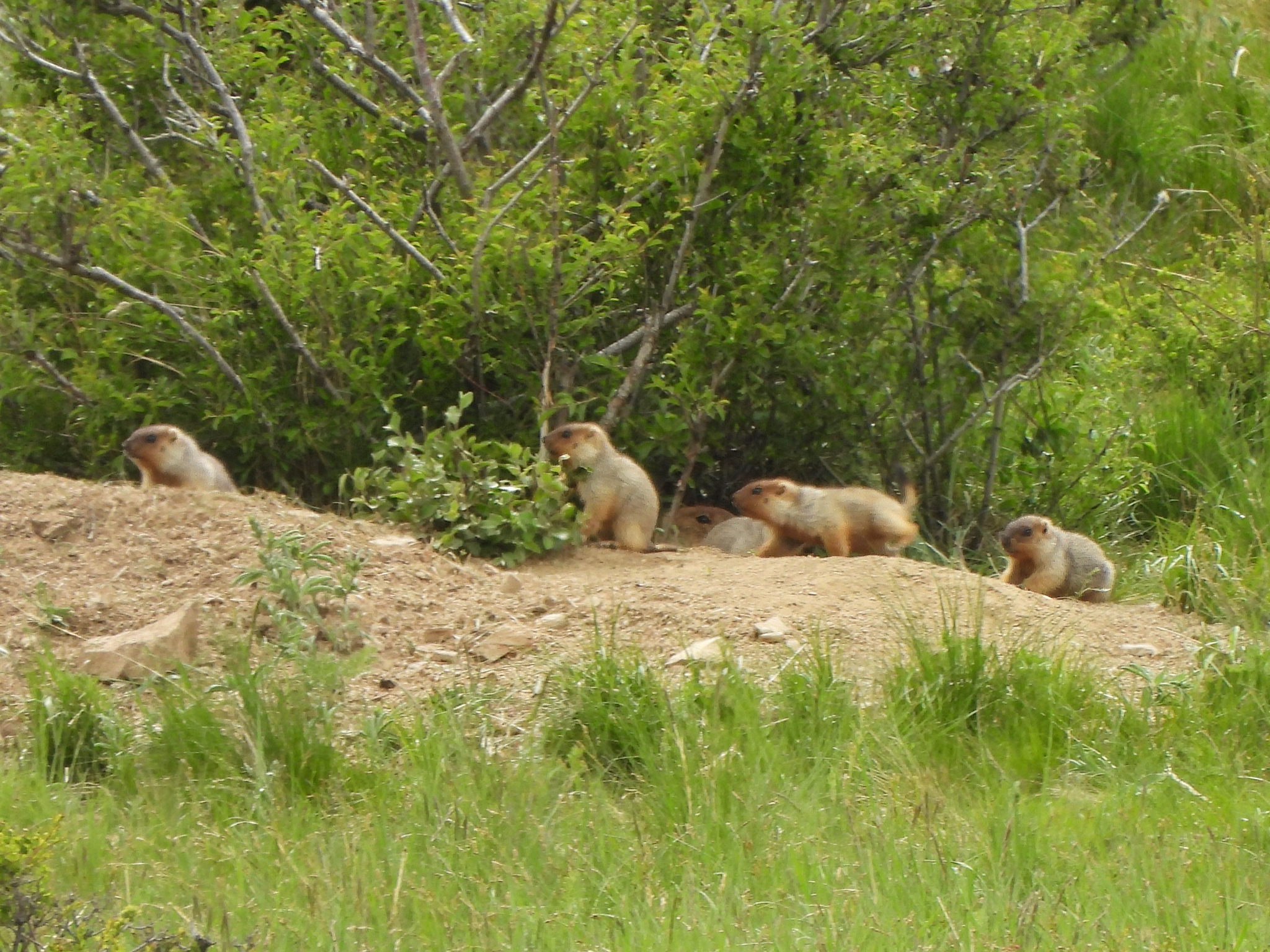
We stayed at the ger camp right outside the entrance to the national park that night. As much as I loved camping most of the time, I’m sure that we all appreciated the hot showers that evening.

The next morning, we began the drive to Terelj National Park, returning to a different part of the forest we had started in two weeks earlier. We stopped in Ulaanbataar at a spot by the Tuul River, where we quickly found a White-crowned Penduline Tit, and then continued on to Terelj NP.

It was a wonderful afternoon. The trek up the steep mountainside was slow going for me, but it was worth every step. We found our target: Gray-headed Chickadee, and everyone had incredibly close views of a pair that practically sat on Nick’s speaker.

Another highlight of the day occurred after we were all settled in our tents for the night. Nick’s shout of “Ural Owl” had us scrambling back outside. The owl flew overhead and then perched on top of a tree at the edge of our camp in clear view. Yet another reason for camping! 

June 4 was the last official day of the trip. We had a few more hours to bird at Terelj NP that morning. I was happy to see another singing Siberian Rubythroat, a gorgeous species that I had only seen once before this trip. Higher up in the dense forest, Nick found an Oriental Cuckoo. Luckily, I was able to get a good view of the bird through the thick trees.

In the photo below: our birding group of six with the five incredible people who supported us (our local guide, Puje, and his hardworking ground crew). Can you believe that they managed to fit eleven people, all our gear, and camping supplies into just three Toyota Land Cruisers? It felt like a magic trick. These folks took excellent care of us and made this adventure possible.

We returned to Ulaanbataaar through some of the worst traffic imaginable and ended the day with a lovely dinner at the Mongolica Hotel.

The trip was officially over, but most of us stayed one extra day. I am so happy that I opted for this bonus day, which gave me a second chance for two special birds that I had missed earlier.

We had a lot of rain, heavy at times, but we managed a couple of short outings. I was absolutely thrilled to see this Azure Tit. I can’t describe it better than eBird does, “Frosty, pale bundle of joy.”

My final life bird of the trip was another beauty, a Long-tailed Rosefinch. It was fitting to end this amazing trip with these two special birds. I couldn’t have been happier.

After a lazy afternoon resting and one more night at the Mongolica, we headed to the airport early on June 6 for our flights home. Our eBird trip report lists every species, and location, and displays all of our photos. Nick’s trip report is packed with details and entertaining descriptions of the birds, locations, and birding moments. I did my best to document Mongolia’s flora and fauna without missing birds. All of my iNaturalist observations in Mongolia can be seen here.

This was truly a trip of a lifetime and I’m deeply grateful to Nick Bray and Zoothera Birding for making it all possible.

Read Full Post »

On the morning of May 25, we got our two main targets, Asian Desert Warbler and Saxaul Sparrow, before breakfast. Afterward, we left the second ger camp of the trip and headed towards Baga Bogd and six continuous nights of camping in tents or “basic” cabins without showers or other amenities. At one stop, we had a great look at this pretty Gray-necked Bunting, one of my favorite new birds.

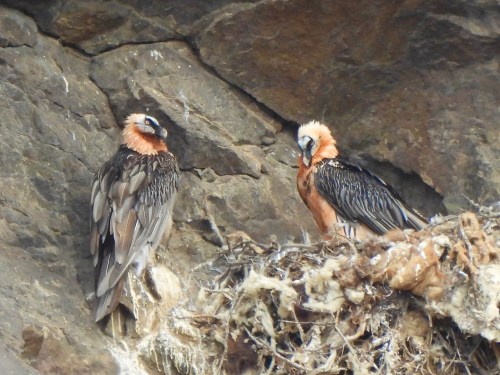
At the same stop, we were amazed to see a pair of Bearded Vultures, also known as Lammergeier, on their nest. Watching those magnificent birds was another wow moment of the trip.

Later that afternoon, we stopped at the site below as we headed into the valley. The road in this area was extremely rocky and the bird life here was a bit different. We saw our only Long-eared Owl of the trip and had our first of only two sightings of Eurasian Wryneck.

We reached Baga Bogd and set up camp in the valley. I liked this spot. Like so many others, it looks stark in my photos, but a little exploring easily revealed interesting plants, little mammals, and other critters—in addition to birds, of course.

The nice thing about camping is that it’s easy to be birding at 5:00 AM. Our day started with an amazing experience with Altai Snowcock, a definite highlight of the trip. Several males called from the surrounding mountains, and one flew so low over our heads that we felt as if we could have reached up and touched it. After the disappointing view of Caspian Snowcock earlier on our Türkiye trip, this was especially sweet.

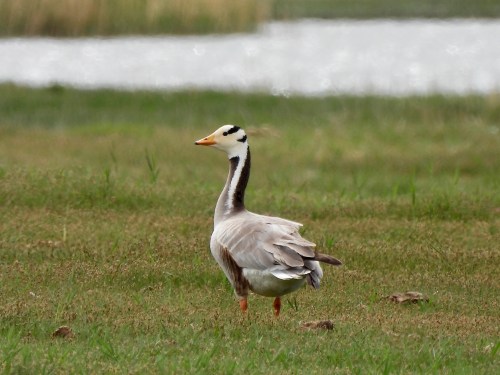
After breakfast and more birding, we set off for our next campsite at Kholboolj Lake, arriving later that afternoon. I got three life birds there: White-headed Duck, Palla’s Gull, and Yellow-breasted Bunting. I was also happy to get great looks at an old favorite, Bar-headed Goose. I fell in love with this species on my first trip to China in 2009 and it remains my favorite goose.

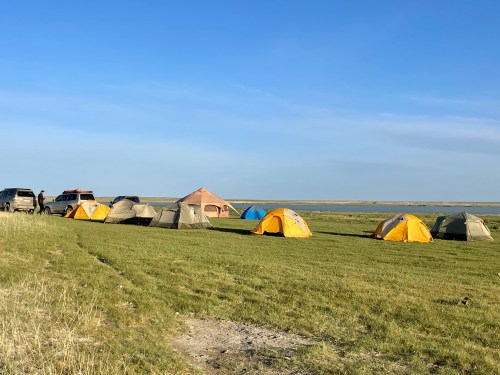
Our camp was on the shore of Kholboolj Lake.

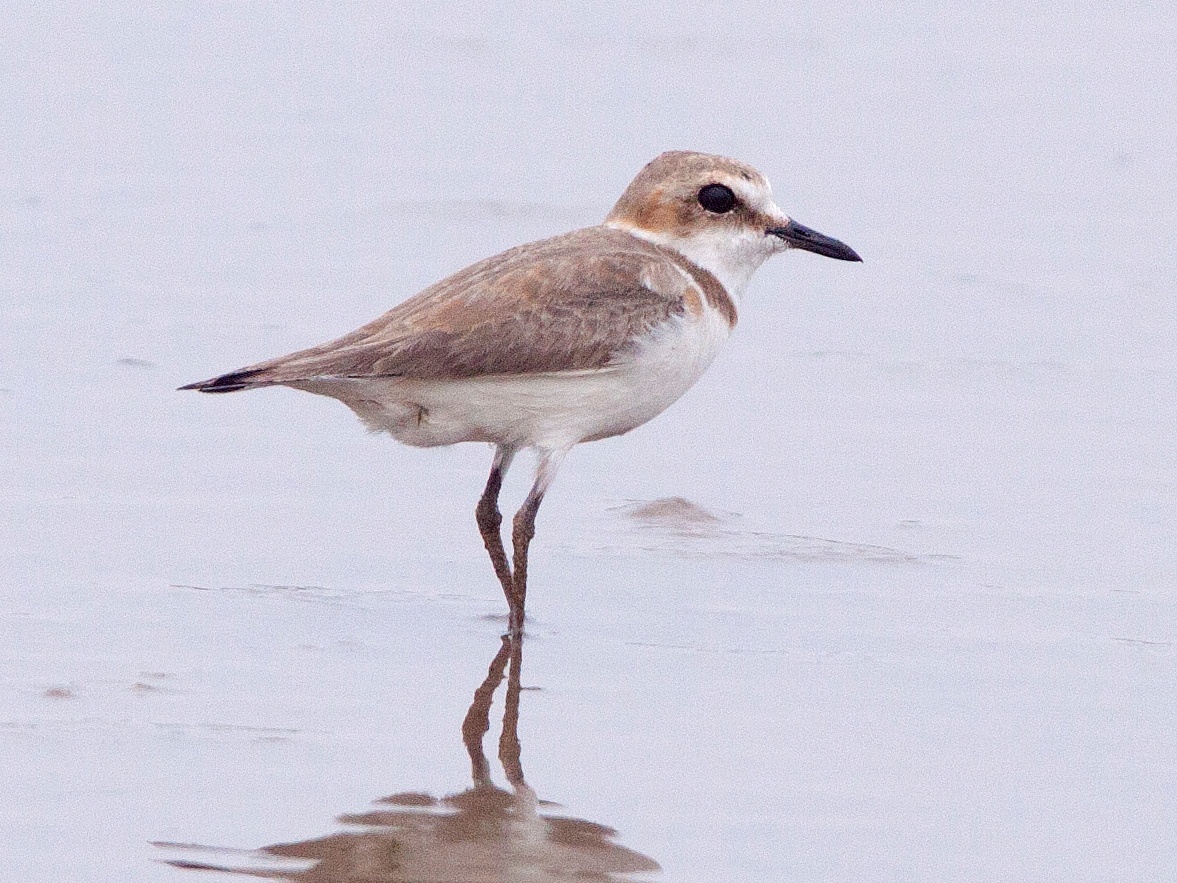
We birded again at Kholboolj Lake in the morning. The British birders loved the lakes, but I’m spoiled by birding at home in Florida, where I can see shorebirds as close as ten feet. In Mongolia, nearly all the shorebirds and ducks were far out on the vast expanse of water or distant shore. I also noted “lots of invisible biting bugs” in my journal. A few birds were closer, though, and I was pleased to have a nice view of this sharp Kentish Plover on the grassy lake edge.

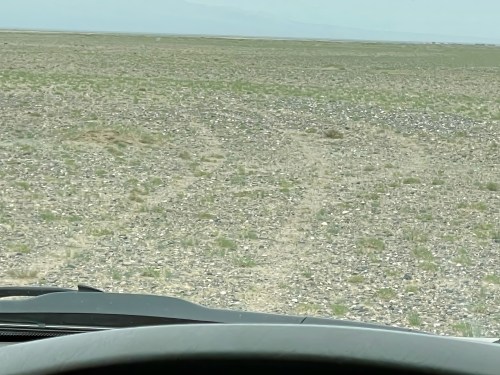
I took the photo below later that day on our drive from Kholboolj Lake to Böön Tsagaan Nuur, but it could have been taken on nearly any day of the trip. This is why you don’t go to Mongolia on your own and try to do a self-guided trip. We spent very little time on actual paved roads; we spent many miles almost every day on “roads” like this. I couldn’t recall any road signs, but someone said they had seen two signs in the past week.

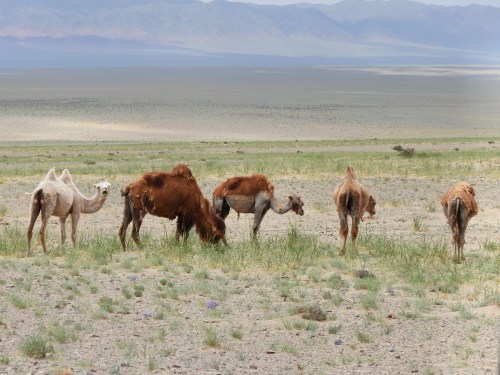
We passed small groups of Bactrian camels several times during the trip. There are no fences in Mongolia, yet somehow the owners manage to keep track of their free-roaming animals. These were domesticated camels—also known as two-humped camels or simply Mongolian camels—although a small number of wild Bactrian camels still survive in remote areas.

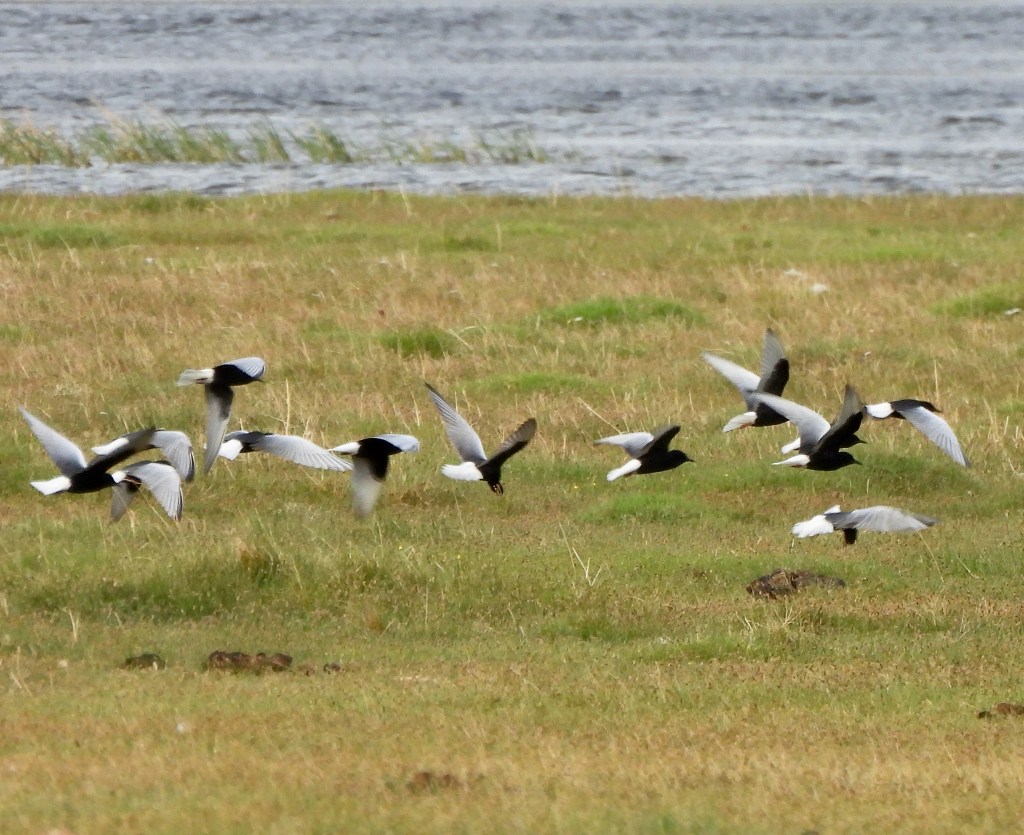
We arrived at Böön Tsagaan Nuur, a vast Ramsar wetland, late in the afternoon and had about two hours for birding. In that short time, we saw over 50 species—mostly ducks, shorebirds, gulls, and hundreds of White-winged Terns. I was mesmerized by the lovely, graceful terns. The photo below shows just a small part of the flock as they flew together over the marshy edges of the lake.

We stayed in a “basic” camp that night (and the next) due to expected wind and rain. We slept in little log cabins with hard wooden beds and our sleeping bags on top of the beds. Other than cabins replacing tents, it was essentially camping: our own toilet tent, no electricity, and minimal comfort. I did not sleep well on the hard bed; early in the night, I thought that I felt something furry run across my arm, and then I heard noises until morning.

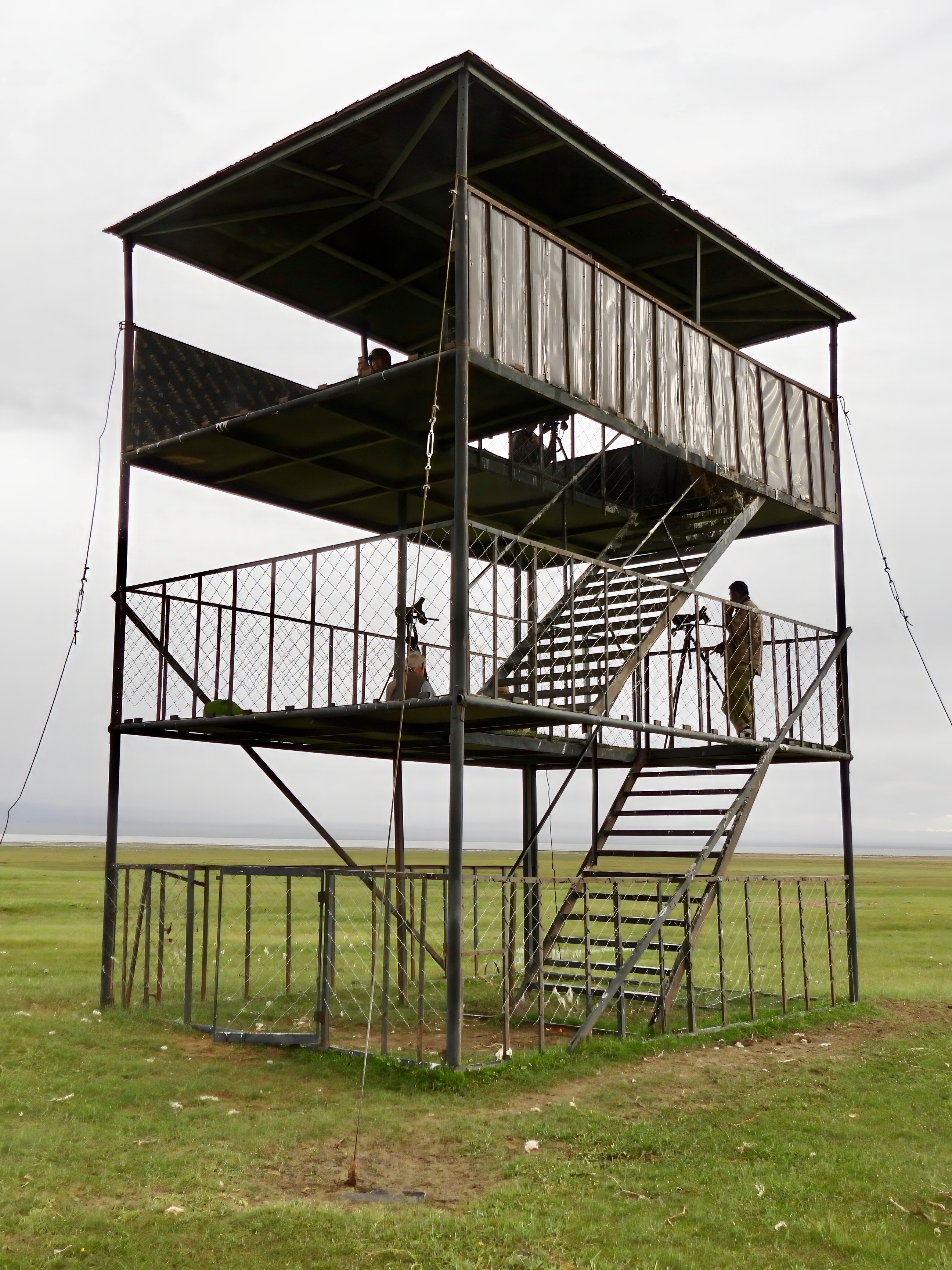
We spent all day at Böön Tsagaan Nuur, seeing many of the same species as the previous afternoon. The best find was a rare drake Baer’s Pochard, but it was sooo far out on the lake. While the lakes host large numbers of birds, they are not ideal for photography. Below, the viewing platform and a couple of the birds that we saw up closer, a Swan Goose and a Pacific Golden-Plover.

Our time at the lake ended with this spectacular sunset.

We stayed another night at the same “basic” camp, making this the fourth consecutive night without showers. Amazingly, I hadn’t noticed any offensive body odor when we were together in the vehicles. I used copious amounts of hand wipes to clean up and assumed that others did the same. Nick, however, claimed to have stripped down and poured a bucket of water over his head behind his cabin. I did not witness said event, so I can’t vouch for it.

May 29 was mostly a travel day with a long drive to Khangai Mountain. We enjoyed more beautiful scenery and blue skies. Mongolia has earned its nickname, “Land of Eternal Blue Sky,” with over 250 sunny days a year like this.

Camping that evening at Khangai Mountain would be the coldest night of the trip, but I was glad to leave behind the invisible (and some not-so-invisible) biting insects from the lakes. What will we find the following day? Watch for part 3 to find out!

Read Full Post »

Mongolia was the first country I put on my newly created Birding Bucket List in June 2023. Not long after, Nick Bray of Zoothera Birding announced that he was leading a trip to Mongolia in May 2024—I signed up right away.

As one of the least densely populated countries in the world, Mongolia offers a rare kind of solitude. At times, we went days without hearing any sounds of other people or signs of civilization. The result was an incredible sense of peace and a deep connection to nature, set against Mongolia’s stunningly diverse landscapes.

The friendly mural above greeted us at the Chinggis Khaan International Airport in the capital city of Ulaanbaatar when we arrived at 2:30 AM on May 20. Puje, our local guide, met us there. After coffee and snacks at the airport, we headed to Terelj National Park, a few hours outside the city.

On the way, we made a quick stop at the massive statue of Genghis Khan. He’s a fascinating figure—remembered for his ruthless quest for world domination that claimed millions of lives. As a child, he even killed his older half-brother. Yet, he’s also described as charismatic and generous to his followers. Wikipedia notes, “He was posthumously deified in Mongolia; modern Mongolians recognize him as the founding father of their nation.”

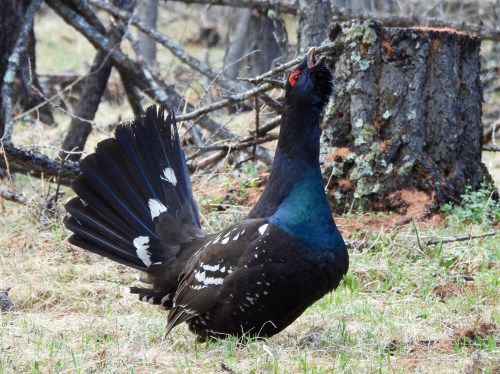
Before long, we were watching several Black-billed Capercaillie perform their incredible courtship displays among the Siberian larch trees in Terelj NP. Capercaillie was our top target, and seeing these magnificent birds was an experience I’ll never forget.

Here is a closer view of the beautiful larch forest.

Our camp was set up at the edge of the national park. In Mongolia, all that is required for camping is a bit of level ground. With our ground crew of five, we were completely self-sufficient. Each of us in the birding group had our own little tent, not high enough to stand up inside, but with sufficient space for a sleeping bag and our gear. Food was prepared and eaten in the larger tent. A hand-washing station was near the food tent and a toilet tent was set up just a little farther away.

Yes, I’m going to describe the toilet tent because you are curious, aren’t you? First, they dig a trench about 18 inches deep and pile the dirt nearby. A toilet seat on legs is placed over the hole and then a small tent with a zippered door goes over the whole setup. When you’re done using the facility, you toss a shovel of dirt in the hole to cover your tracks if necessary. You have privacy and an actual toilet seat. It seemed environmentally friendly and didn’t smell too bad either. When we broke camp, they simply filled in the hole with the remaining dirt. I thought it was a brilliant system!

The view from our camp on the forest’s edge was just spectacular.

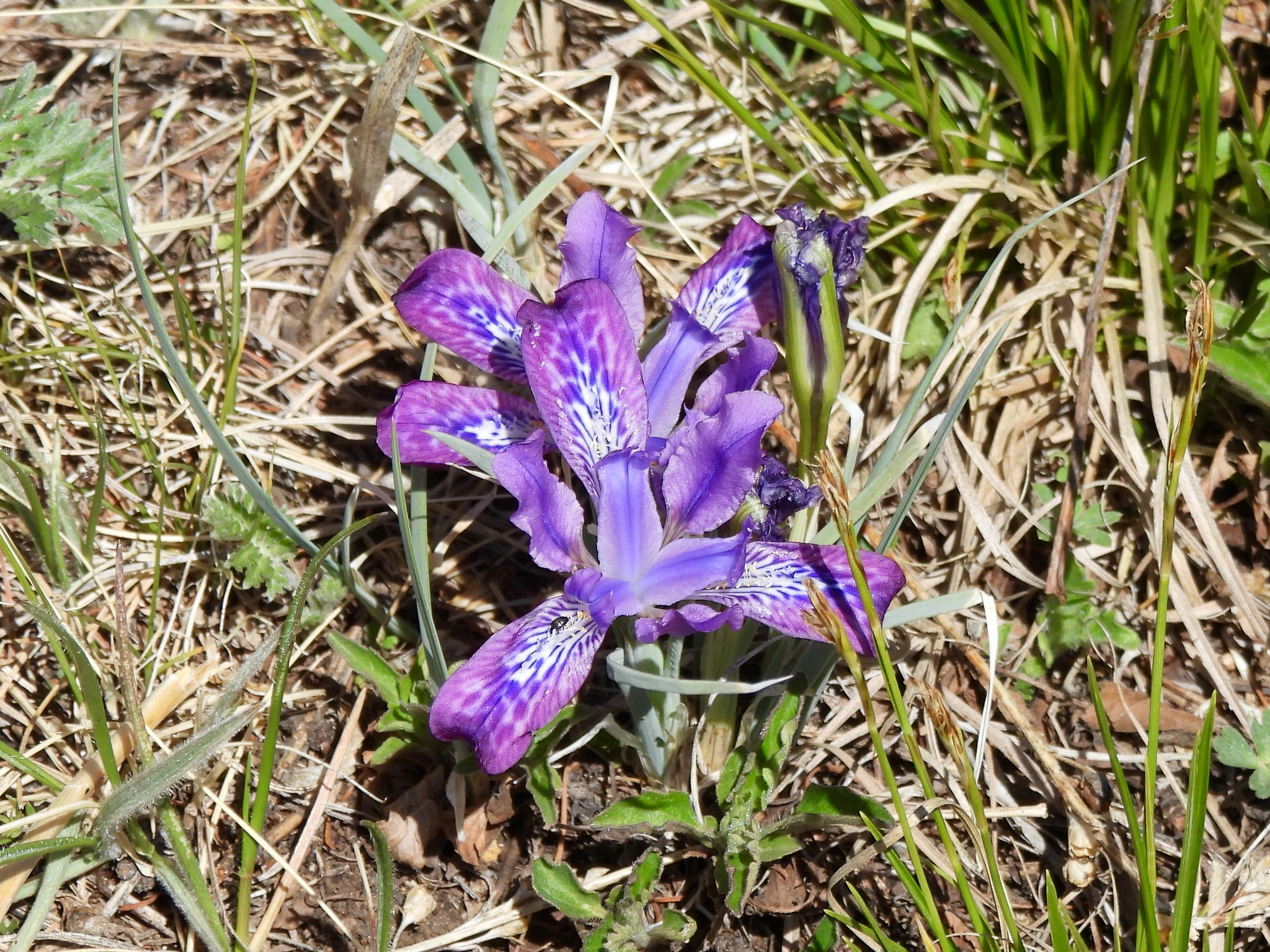
This lovely spot had many beautiful wildflowers around the forest edges.

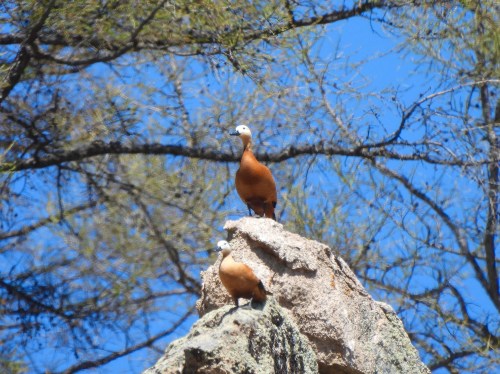
We spent the rest of the day exploring the area near our campsite and another nearby part of the park. A highlight for me was a nice Pine Bunting, but it was also fun to see some “old friends” like this proud Ruddy Shelduck and his mate sitting atop a large rock.

After a good night’s sleep in our snug little tents, we ventured into the forest and watched about half a dozen displaying male Capercaillies for two hours. Reportedly, males engage in fierce battles on leks during courtship season, but we didn’t witness any “fights.” Each male seemed to simply patrol his own loosely defined lek territory strutting around with neck stretched upwards and tail fanned while making an odd clicking call. Black-billed Capercaillie are massive birds with the males weighing up to ten pounds. Watching this ancient ritual was one of those times that I’ve lost myself among the birds; humbled and awed that I was allowed the privilege of being part of their world for a short time.

Next, we drove to Gun Galuut Nature Reserve, a series of lakes that were teeming with birds, especially ducks of numerous species. I was thrilled to add another crane to my list: the graceful Demoiselle Crane.

Our day ended with a little modern comfort at the Mongolia Hotel in Ulaanbataar.

Day three was a travel day with stops for birding along the way. The afternoon gifted us with a much-wanted trophy bird of Central Asia, Oriental Plover.

Our lodging that evening was the Khanbogd Tourist Camp near Dalanzadgad. The key word is “tourist,” which means upscale by Mongolian standards. I should have taken photos of the women’s restroom/shower building. It had Western-style toilets, hot showers, and a nice big vanity to set your stuff while brushing your teeth. Our gers were comfortable and had electricity.

We were able to sleep late for a 7:00 AM breakfast and then headed to the must-visit hotspot, Yolyn Am. This deep and narrow gorge is one of the most iconic and scenic locations in the Gobi Desert. I got several life birds this day including Mongolian Accentor and the more boldly plumaged Brown Accentor, Two-barred Warbler, and Twite (a little brown finch named for its distinctive call, a nasal, rising ‘twi-eet’).

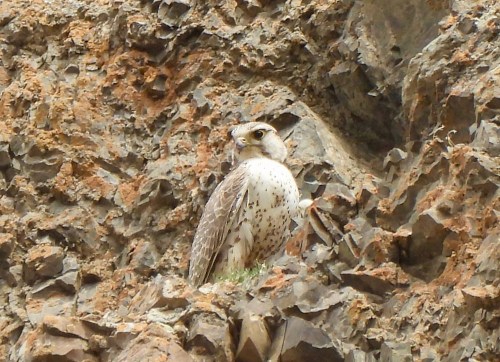
The highlight of the day for me occurred late that afternoon when we spotted a Saker Falcon on her nest!

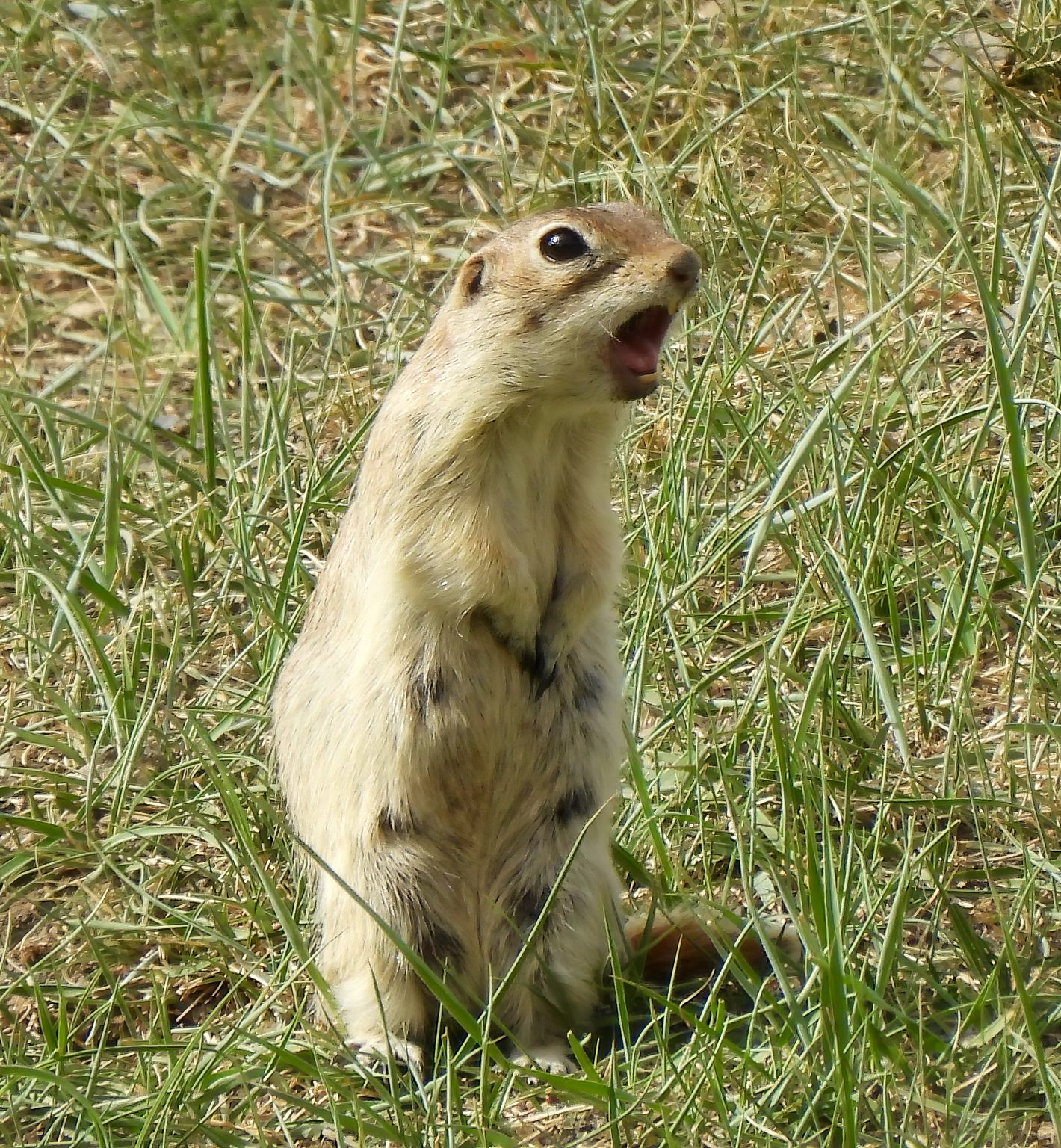
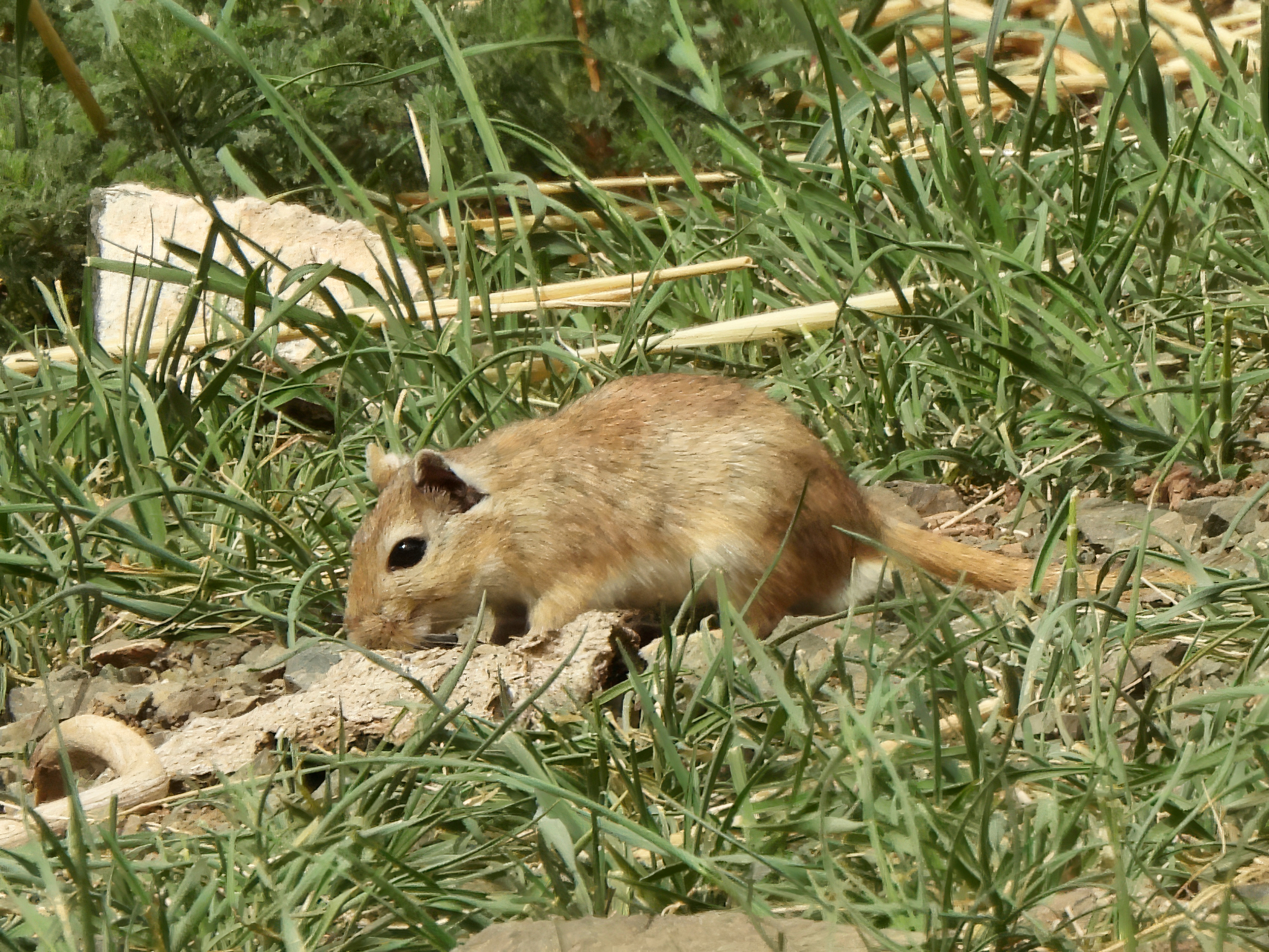
We also saw several small mammals that day including the Alashan Ground Squirrel, Palla’s Pika, and Mongolian Jird in the photos below.

After another night at the Khanbogd Tourist Camp, we set out for Khongor Els. Late that morning we found another range-restricted species, Mongolian Ground-Jay, which is found only in Mongolia and northwest China.

Our mid-day stop was by a little pool and stream where we found a few more birds while our ground crew prepared lunch. There were nearly always animals in the background—sheep with a few goats frequently in the mix, cows, horses, and occasionally camels.

That afternoon, we skirted the edge of the Gobi desert. One of the few things I would have liked to change about the trip was to venture into the desert and see it up close.

Our ger camp that night wasn’t traditional; we had private bathrooms inside our gers! The five men in our group shared gers with two or three in each one. Since I was the only woman birder, I always had a ger all to myself. The wind howled all that night, so it was nice to not have to step outside to get to the bathroom.

Our trip was just beginning and there are many more unforgettable moments to come. Stay tuned for part 2.

Read Full Post »

This trip began a year ago, on May 11, 2024. It’s never taken me so long to write about an adventure, but I’ve done more international travel in the last year and a half than ever before. Between that and my growing obsession with iNaturalist, I’ve fallen behind, but Türkiye deserves its story told.

“Embrace the layover.” That was the advice that I received in the Birding Travel group on Facebook. I was looking for help understanding the airfares to Ulaanbaatar, Mongolia, for my much-anticipated trip in May. Was it really going to cost over $2,000 just to get there? The short answer was yes; the cost of airline tickets has increased dramatically for most long-distance flights.

Nearly all the routes that made sense for me flew through Istanbul. When Zoothera Birding trip leader Nick Bray told me he would be leading a tour in Türkiye immediately before our trip to Mongolia, I jumped at the opportunity. It would allow me to see a new country and new birds without spending an extra penny on travel.

After arriving at the huge new airport in Istanbul on May 10, I met a couple of other birders in our group, and we headed to our hotel for the night. I could recycle the introduction from my first trip with Nick here. Once again, I was the only American, the only woman, and the least experienced birder in our group.

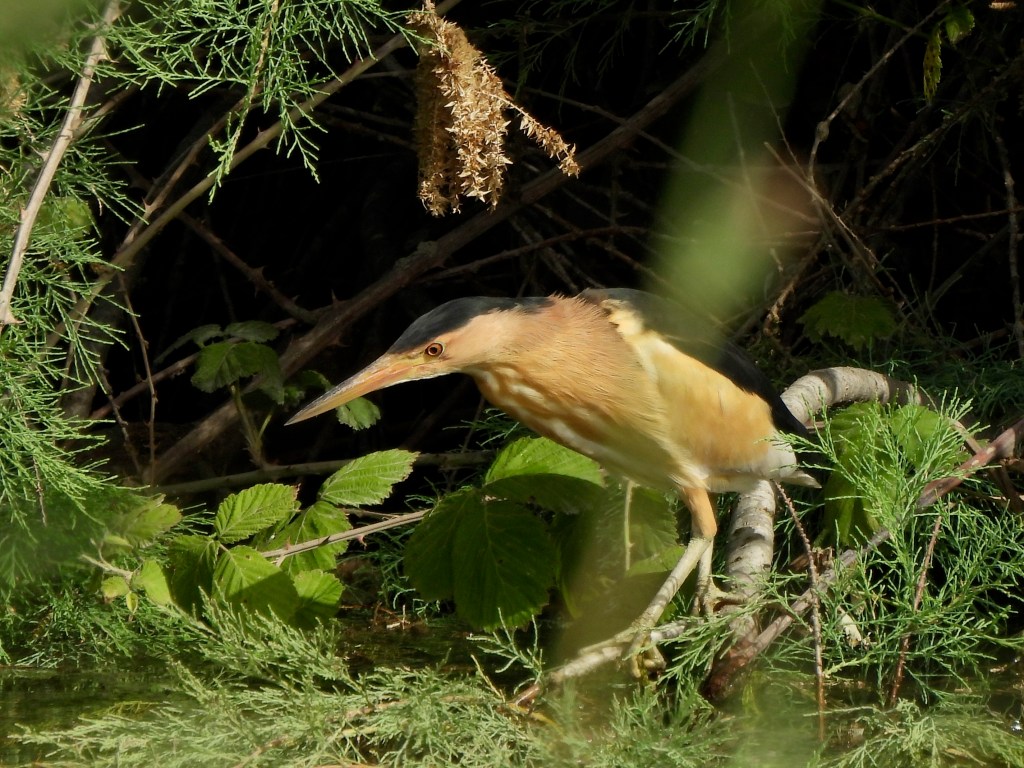
The following morning, we flew to Adana in southwest Türkiye, where we started birding the coastal lagoons and marshes along the Mediterranean coast within hours of landing. Fourteen life birds the first day included the Squacco Heron and the Little Bittern in the photos below.

This Little Bittern was amazingly cooperative for a usually shy bird. Do you think that it looks a lot like our American Least Bittern? The two species are so closely related that they form a superspecies (also including Yellow Bittern). For a fun little science lesson in evolution, Google “superspecies.”

The next day, we headed north and found a bird on every world birder’s target list, Kruper’s Nuthatch (Nick’s photo below).

We continued our trek north and arrived at our “pension” (a small family-run guest house) with enough time to bird the nearby and spectacular Demirkazik Gorge. The day ended with more good birds, including Finsch’s and Northern Wheatears. At times, I thought this could have been billed as the Wheatear and Lark Trip. Many of those birds are highly desired species for world birders, which I was too inexperienced to fully appreciate.

Day three began at 5:00 AM when we left for Aldaglar Mountain to search for Caspian Snowcock, one of our primary targets for the trip. Above, the tractor that transported us an hour each way to the base of the mountain. The weather was awful, very cold and very foggy all morning (except for a few minutes when I snapped the photo above). I wrote in my journal that I was shivering even with double thermals and a warm coat. The snowcock did not give us the views everyone wanted, but after an hour of scanning, Nick finally had a distant bird in the scope, a view that the others considered “tickable,” but I did not. Due to my pickiness about what I will count and my poor vision, I also missed several other good birds that morning, but I was able to add White-winged Snowfinch (below) and Ring Ouzel to my life list.

The mist became so thick that we could barely see, but the intrepid British birders stuck it out for nearly five hours before we returned to the pension for food and a little warmth.

We headed back out in the afternoon with much improved weather. My luck improved greatly with Spectacled Warbler and Crimson-winged Finch among the birds added to my life list. We also had a striking Black-headed Bunting (photo below), a species I had not seen since my 2009 trip to China and Hong Kong.

We saw sheep in Türkiye on most days. I enjoyed hearing their bleating and tinkling bells as we watched this herd pass.

The next morning began with a return to Demirkazik Gorge. We observed several species of breeding birds there, including this lovely pair of Ortolan Buntings, obviously with a family to feed.

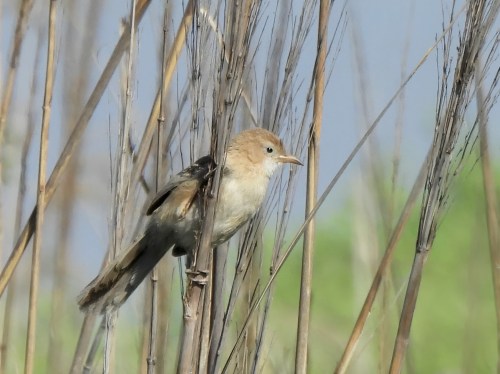
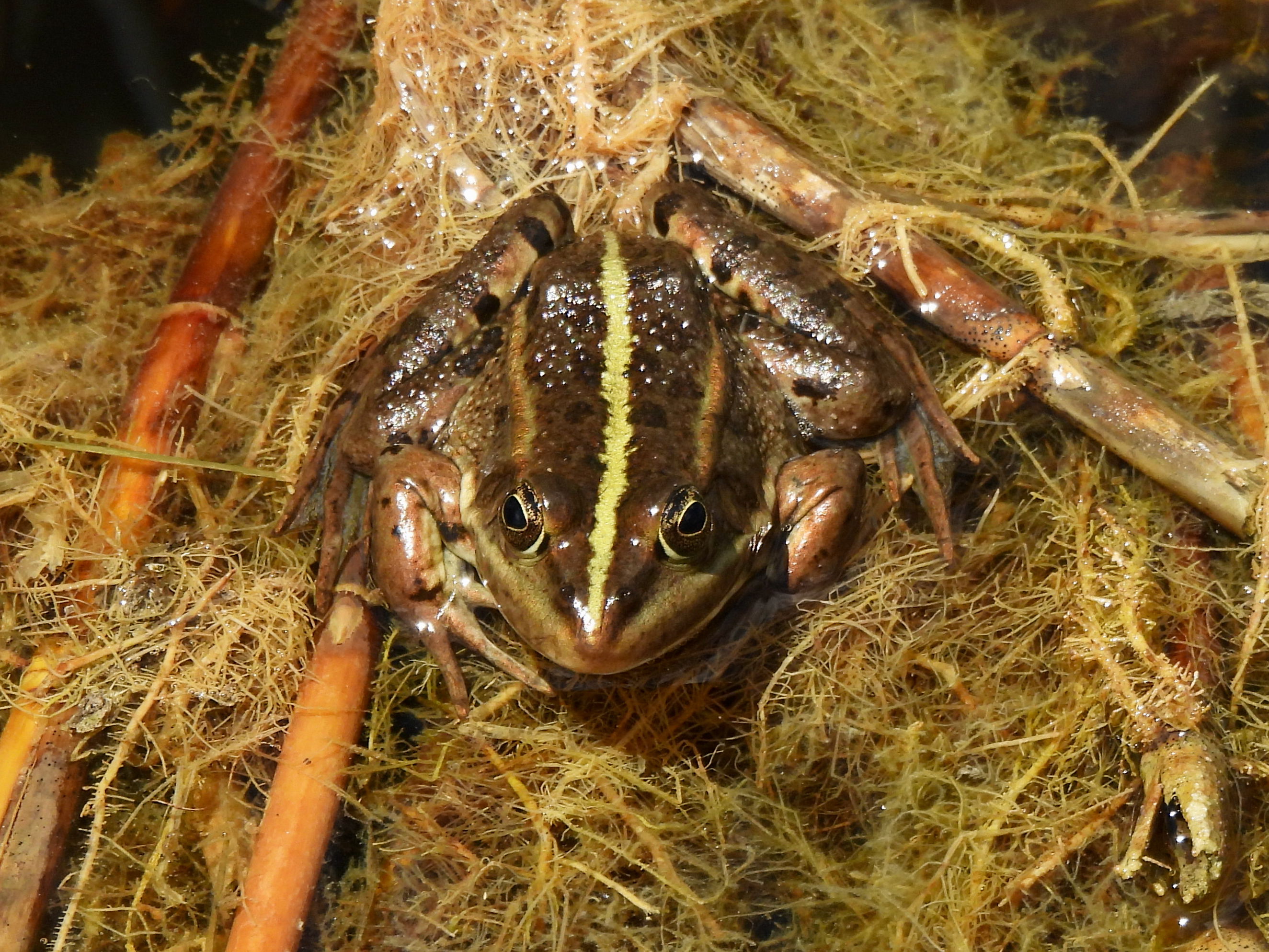
The drive to Sultan Sazligi Marshes took us through scenery ranging from gorgeous rolling hills to flat fields. I saw my life Bearded Reedling and Common Reed Warbler from the long boardwalk, and it was also fun to see several European Pond Turtles and a cute Marsh Frog.

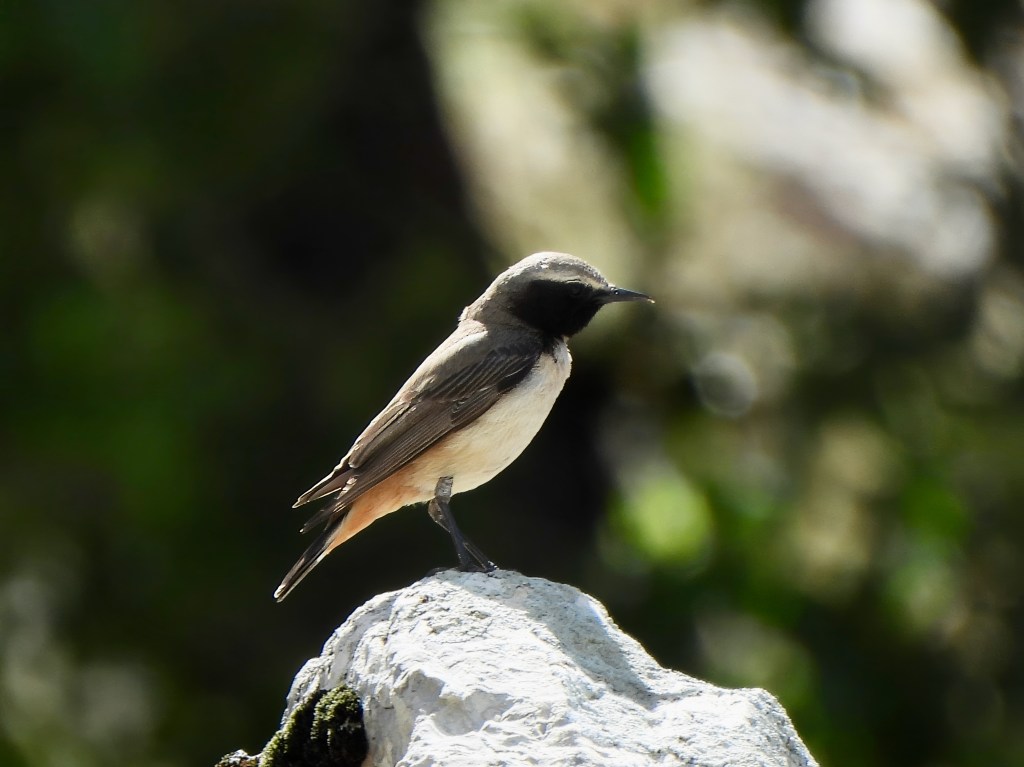
Next was a long drive to our hotel in Gaziantep, where we arrived at 9:30 PM. We were now positioned to search for an important bird of the trip, Kurdish Wheatear. There was no sign of the target wheatear at our first location the next morning, but a beautiful Eastern Black-eared Wheatear did pose nicely for us.

Our next stop (still before breakfast) also gave us some nice birds, like our first White-throated Robins of the trip.

We also saw our first Cinereous Buntings, one of my new favorite species.

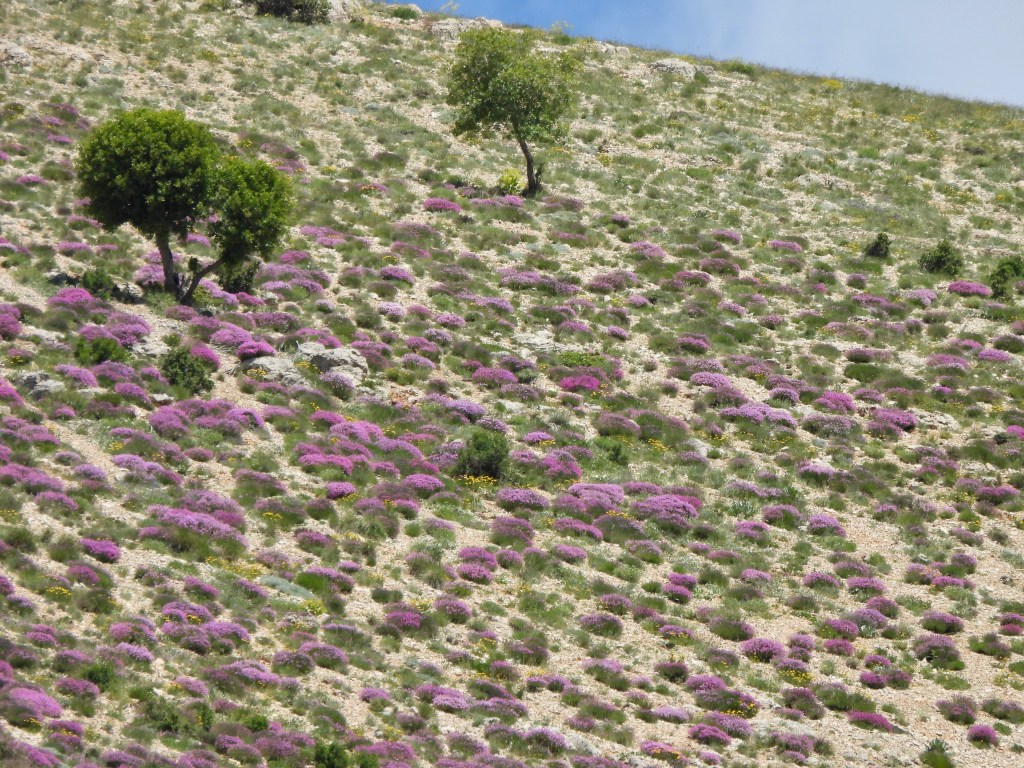
I also loved the landscape, a rocky hillside with wild roses and other flowers.

After a short drive, we reached Birecik. A highlight that afternoon was our first See-see Partridge. I spent way too much time getting horrible photos, not knowing that we would have much better views the following day. Still, seeing the bird, a top target for the trip, was exciting. The hotel wasn’t anything special, but it was across the street from the famous little tea park near the middle of town that is home to Pallid Scops-Owls. Finding one of the owls visiting its nest hole that evening after dark was a sweet end to the day.

We birded a couple of areas near Birecik the next morning, where we saw our only Black-bellied Sandgrouse of the trip.

Another highlight that morning was stellar views of several Iraq Babblers.

We drove north of Birecik that afternoon and passed through a military checkpoint. We were told that we could only be in the area for an hour, which put some pressure on us. The area was breathtaking with its rolling rocky hills. We saw a Little Owl, several species of larks, and a few other birds before our time was up.

While in the military area, Nick received a text from a friend with a hot tip about another location for Kurdish Wheatear, so we were off to look for this much-wanted bird – three hours away. Sadly, the tip turned out to be worthless; our second attempt to find Kurdish Wheatear was a bust. A better look at See-see Partridge than we’d had the previous day was a nice consolation.

May 17 was the next-to-last day of the tour and our last chance to look for Kurdish Wheatear. We started with the three-hour drive to Nemrut Dagi, the spot Nick had originally planned to find the bird. As they say, the third time is the charm, and we found our desired bird almost immediately.

After celebrating our success with the wheatear, we drove as high as possible on Nemrut Dagi, one of the highest peaks in the Eastern Taurus Mountains at 7,000 feet.

A UNESCO World Heritage Site sits at the summit, the hierotheseion (monumental tomb and sanctuary) built by the late Hellenistic King Antiochos I of Commagene (69-34 B.C.) as a monument to himself. It’s quite a hike to the very top and the archaeological site which contains giant statues of various gods, lions, and eagles. It was cold and windy, so we stayed near the parking area.

On another trip, with planning for it, I would love to explore this culturally significant site. It was just after noon when we left Nemrut Dagi for a leisurely drive to Gaziantep through gorgeous scenery with hills full of wildflowers and stops for birds along the way.

A magical moment that afternoon was a visit to a Blue-cheeked Bee-eater colony on the side of a little hill with an estimated 130 birds flying around attending to their nests. A few European Bee-eaters were mixed in the flock (in the lower left in the photo below). It was mesmerizing to watch those beautiful birds, and we found it hard to drag ourselves away from the amazing avian spectacle, but after an hour or so, we had to continue our drive to Gaziantep.

We had found all our targets for the trip, so our final day was relaxed. We added a few species to the trip list and returned to Adana for our flight back to Istanbul.

In addition to birding, I photographed as many other living things as I could for iNaturalist. Click on any image in the sample below for a larger view. You can see all of my iNat obs for this trip here.

Türkiye had not been on my bucket list of places to go birding, but I am grateful to have had this opportunity. It’s now one of my favorite countries, incredibly beautiful and home to many great birds. For a detailed accounting of the trip, see Nick’s official SE TURKEY TOUR REPORT 2024 on the Zoothera Birding website. Our eBird trip report, TURKEY 2024, shows our locations, complete bird list, and all my bird photos. As always, Nick led a fun and productive trip.

Read Full Post »

After our last session of birding the blinds at Baihualing and lunch, we drove for three hours to Tengchong.  The next morning, January 27, we birded Laifengshan National Forest Park.  The first birds we saw were two Bar-tailed Treecreepers, which I thought looked an awful lot like my Brown Creepers at home.

Bar-tailed Treecreeper

Bar-tailed Treecreeper

Laifengshan is a popular park and visitors that day included several Chinese bird photographers.   A young Chinese woman with a camera excitedly showed me a Slender-billed Oriole, one of our targets here.  When I had asked Nick about field marks for the oriole, he said that the black mask goes all the way around the nape.  Like so often happens, I didn’t realize how beautiful the bird is until I actually saw it.

Slender-billed Oriole.  Photo by John Hopkins.

Slender-billed Oriole. Photo by John Hopkins.

The park was very pretty and it was a gorgeous sunny day.  While walking up to the temple we saw some nice birds including Rufous-bellied and Darjeeling Woodpeckers.

The entrance at the paved path that leads to the temple

The entrance at the paved path that leads to the temple

We also saw this Davison’s Leaf Warbler.  Asian warblers are rather drab for the most part compared to our colorful North American jewels, however, I was still happy to get identifiable photos of several warbler species during our Yunnan trip.

Davison's Leaf Warbler

Davison’s Leaf Warbler

Shortly after noon, we left Tengchong for the drive to Nabang, where would spend the next 2-1/2 days.

One of my favorite experiences in the Nabang area was time spent at a recently established photo blind/feeding station.  We were walking along a forest trail when two young women on a motorcycle came by and said “Come see our blind.”  The first half hour seemed to be a total waste of time as we saw absolutely no birds at all.  Then, suddenly, birds began to arrive.

White-crowned Forktail

White-crowned Forktail

I was very, very happy to get wonderful close views of two gorgeous White-crowned Forktails that came in to the feeding area.  This Rufous-bellied Niltava was another of my favorites.

Rufous-bellied Niltava

Rufous-bellied Niltava

Velvet-fronted Nuthatch, Little Pied Flycatcher, and White-tailed Robin were among other species seen well at the blind.

Velvet-fronted Nuthatch

Velvet-fronted Nuthatch

One our way back to the hotel that evening, the Asian Emerald Dove below was in the road in front of the bus.  The others could not believe that this was a life bird for me.  They seriously thought that I must have seen it before as it seemed a very common Asian bird to them.  My bird was special, though, as it had extra white feathers.  This species normally has white only on the face and front of the shoulder.

Asian Emerald Dove, photographed through the bus window

Asian Emerald Dove, photographed through the bus window

We continued birding in the Nabang area for the next day and a half.  On our last morning, we enjoyed this displaying Crested Goshawk, with the distinctive white undertail coverts fluffed up across the rump.  In one of those quirks of birding, I have now seen this species three times, but I’m still looking for my life Northern Goshawk at home.

Crested Goshawk

Crested Goshawk

It was then on to Ruili, the last destination of our birding tour.  Early on our first morning there, we birded the trail to Moli Waterfalls, part of the Moli Scenic Area, one of the most beautiful locations we visited during the entire trip.  One of our main targets was Streaked Wren-Babbler, a sneaky little bird as one would expect with both “wren” and “babbler” in its name.  But, due to Nick’s patience and perseverance, I saw the little brown bird.

Streaked Wren-Babbler

Streaked Wren-Babbler

Nick loves those skulky little brown birds, but I prefer big colorful birds like this Red-headed Trogon.  Before this trip, I thought of Trogons as primarily Central American birds, but I learned that they are residents of tropical forests worldwide. The greatest diversity is in the Neotropics, where 24 species occur, but there are also three African species and 12 species of Trogon found in southeast Asia.

Red-headed Trogon.  Photo by John Hopkins.

Red-headed Trogon. Photo by John Hopkins.

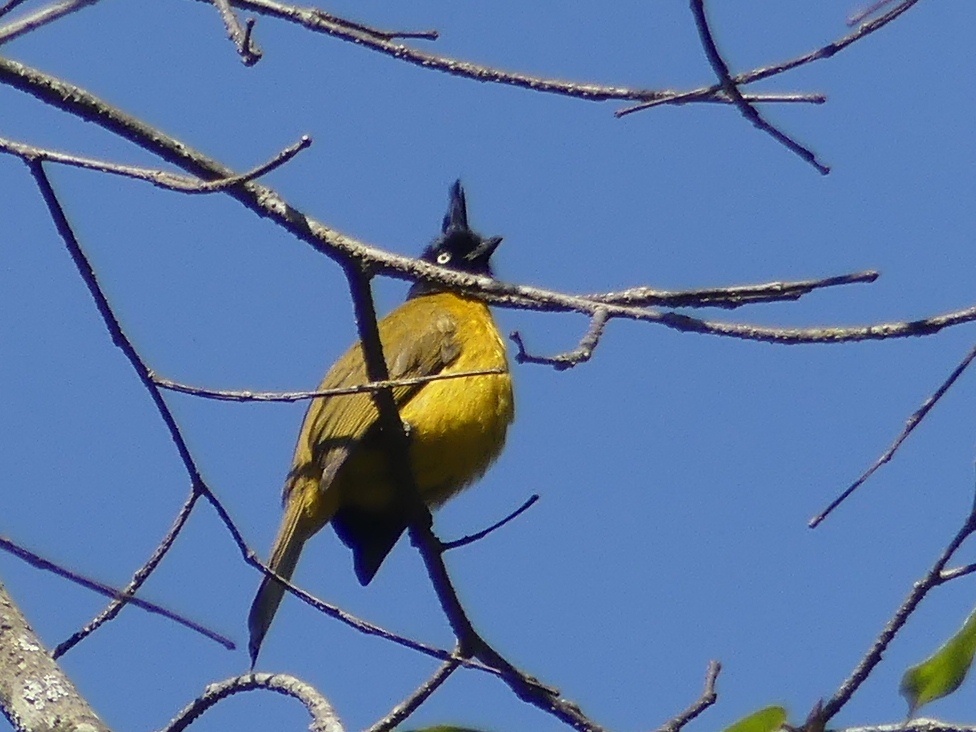
February first was the last day of birding for the tour.  We started at a ridge-top road just outside of Ruili.  I picked up a few more life birds, including Black-crested Bulbul.

Black-crested Bulbul

Black-crested Bulbul

But mostly, I just remember a lovely morning with pleasant companions, friendly farmers, and sunshine.  I also remember watching drongos that morning, common birds in Yunnan with five different species seen during our two weeks there.  I got 104 life birds on the trip, but I would have had more if I hadn’t missed so many birds due to my poor vision.  Sometimes, when the others were focused on some distant or skulky bird that I couldn’t find, I just watched drongos, gracefully sallying out for insects and then resettling in the treetops.  I was mesmerized by the graceful flights of these birds.  I thought that if you could cross a flycatcher with a swallow, you would get a drongo.

Bronzed Drongo

Bronzed Drongo

And, then the morning was over and we piled back into the bus to start towards the airport.  We stopped for lunch on the way at a lovely outside restaurant.  While waiting for our food, someone noticed Asian Palm-Swifts flying low over the palm trees at the edge of the parking lot.  This seemed like a bonus bird and very appropriate for my last China life bird.  After lunch, we drove to the airport for our flight to Kunming.  The next morning, the others would start their journeys home and I would fly to Shenzhen where I would visit my son, Dave, and his girlfriend, Rachel.

I love Barn Swallows with their white bellies in this part of the world.

I love Barn Swallows with their white bellies in this part of the world.

Parts of the trip were challenging, but I have no regrets.  I saw a beautiful part of the world and many gorgeous birds.  I enjoyed the company of birders far more accomplished than I will ever be.  The other birders and our Zoothera Birding guide, Nick Bray, were fun and wonderfully kind about helping me see as many birds as possible.  Near the end when I was getting tired, I thought that it would be my last trip to China, but now I don’t know if I can bear the thought of never again seeing the spectacular beauty of China’s birds.
 

Read Full Post »

If I’d died and gone to birding heaven, it couldn’t have been much better than Baihualing.  If you have been to South America and seen antpittas and other shy forest birds come to worms when called, imagine that.  Except that it lasts all day rather than five minutes.  The bird blinds/feeding stations at Baihualing are amazing.  Each blind (or “hide” as the Brits say) is owned by a local who created and manages it.  A good location is identified and then the blind owner creates a stage for the birds with water features, logs and stumps that can be filled with suet or worms, places to perch, etc.  On one side is the hide – a narrow rectangular tent-like structure with either a long window or portholes for binoculars and cameras and little plastic stools for sitting.

Everyone needs a drink, even shy species like these Mountain Bamboo-Partridges.

Everyone needs a drink, even shy species like these Mountain Bamboo-Partridges.

I envision the creation process is much like that of a male bowerbird who looks at his stage from various perspectives.  Will the birds find it appealing and come?  Will the birders and photographers in the blind have good views?  Ongoing management consists of chauffeuring birders back and forth between the hotel and the blind, feeding the birds throughout the day, and collecting the modest fees that birders and photographers pay for the privilege of wonderful close looks at birds that would otherwise be very difficult to find and see well.  It’s a winning situation for everyone, including the birds.

We arrived at this wonderful place late in the afternoon of January 23th and spent nearly two hours in Blind #8.  Here are some of the gorgeous birds we saw that first day.

Red-billed Leiothrix. I missed this beautiful little bird on previous trips to China, so I was thrilled to finally get such a wonderful close look this time.

Red-billed Leiothrix. I missed this beautiful little bird on previous trips to China, so I was thrilled to finally get such a wonderful close look this time.

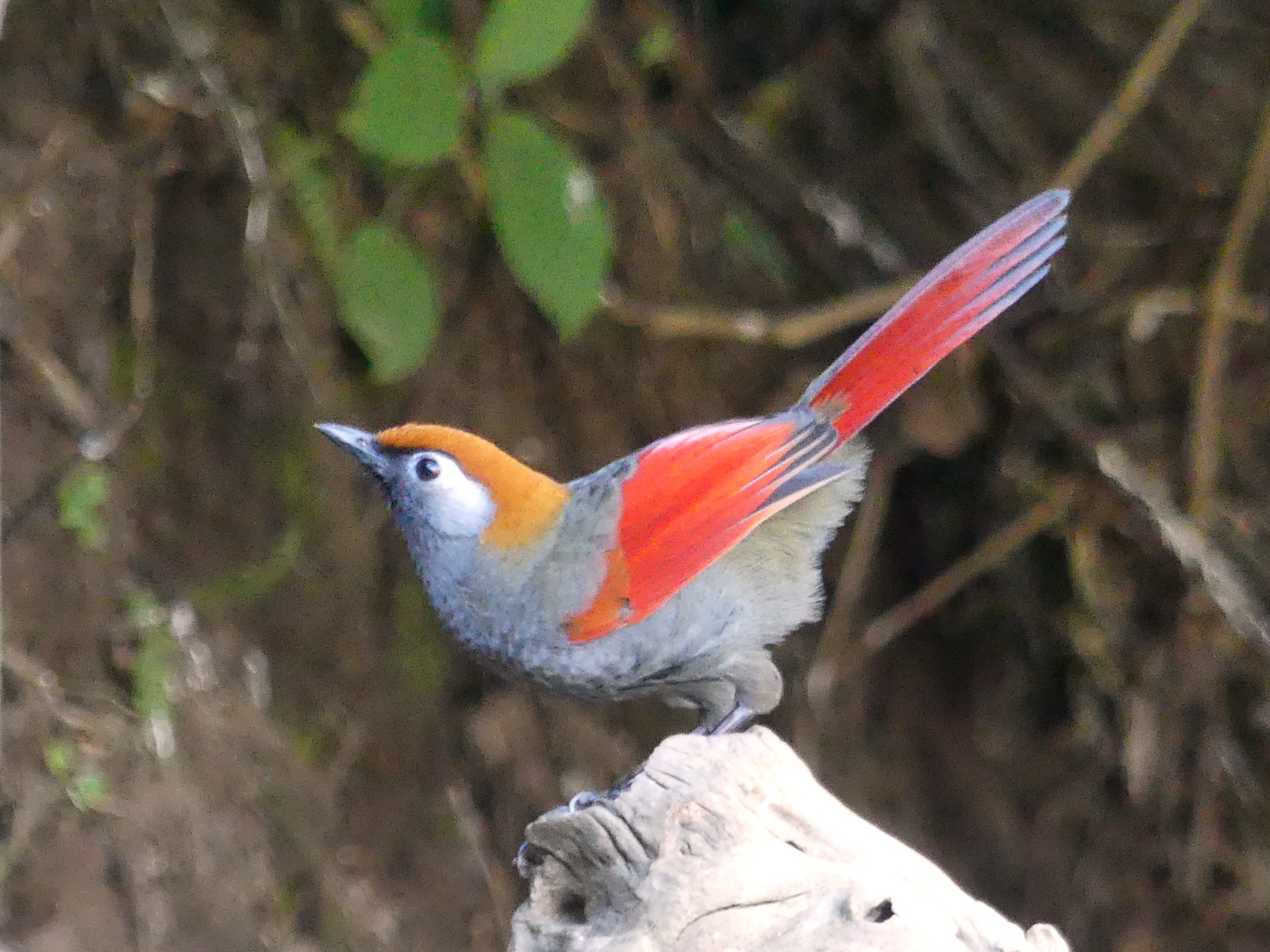
Red-tailed Laughingthrush. It's hard to believe, but these beauties were common at the blinds with half a dozen or so frequently in the feeding areas.

Red-tailed Laughingthrush. It’s hard to believe, but these beauties were common at the blinds with half a dozen or so frequently in the feeding areas.

Chestnut-headed Tesia. What a little charmer! This is a species that would have been difficult to see well "in the wild."

Chestnut-headed Tesia. What a little charmer! This is a species that would have been difficult to see well “in the wild.”

Rusty-capped Fulvettas. These little cuties were fun to watch.

Rusty-capped Fulvettas. These little cuties were fun to watch.

Space prohibits displaying all of my photos from that afternoon, so here is a link to my eBird checklist.

The next morning we walked a nearby trail for over six hours.  It was advertised as “flat,” but several of us thought it was a bit steep and I didn’t stay with the group the entire time.  I didn’t see many birds on the trail, but I did see a beautiful Black Giant Squirrel which was so big that I didn’t even realize it was a squirrel at first.

Black Giant Squirrel.  Photo by John Hopkins.

Black Giant Squirrel. Photo by John Hopkins.

Later that afternoon, I was happy to spend two hours in Blind #77.  In that short time, I got eight life birds!  Here are a few of my favorite photos from the afternoon.

Red-tailed Minla. Such a smart and sophisticated-looking bird. I can't help assigning human-like personalities to some of these exotic Asian birds.

Red-tailed Minla. Such a smart and sophisticated-looking bird. I can’t help assigning human-like personalities to some of these exotic Asian birds.

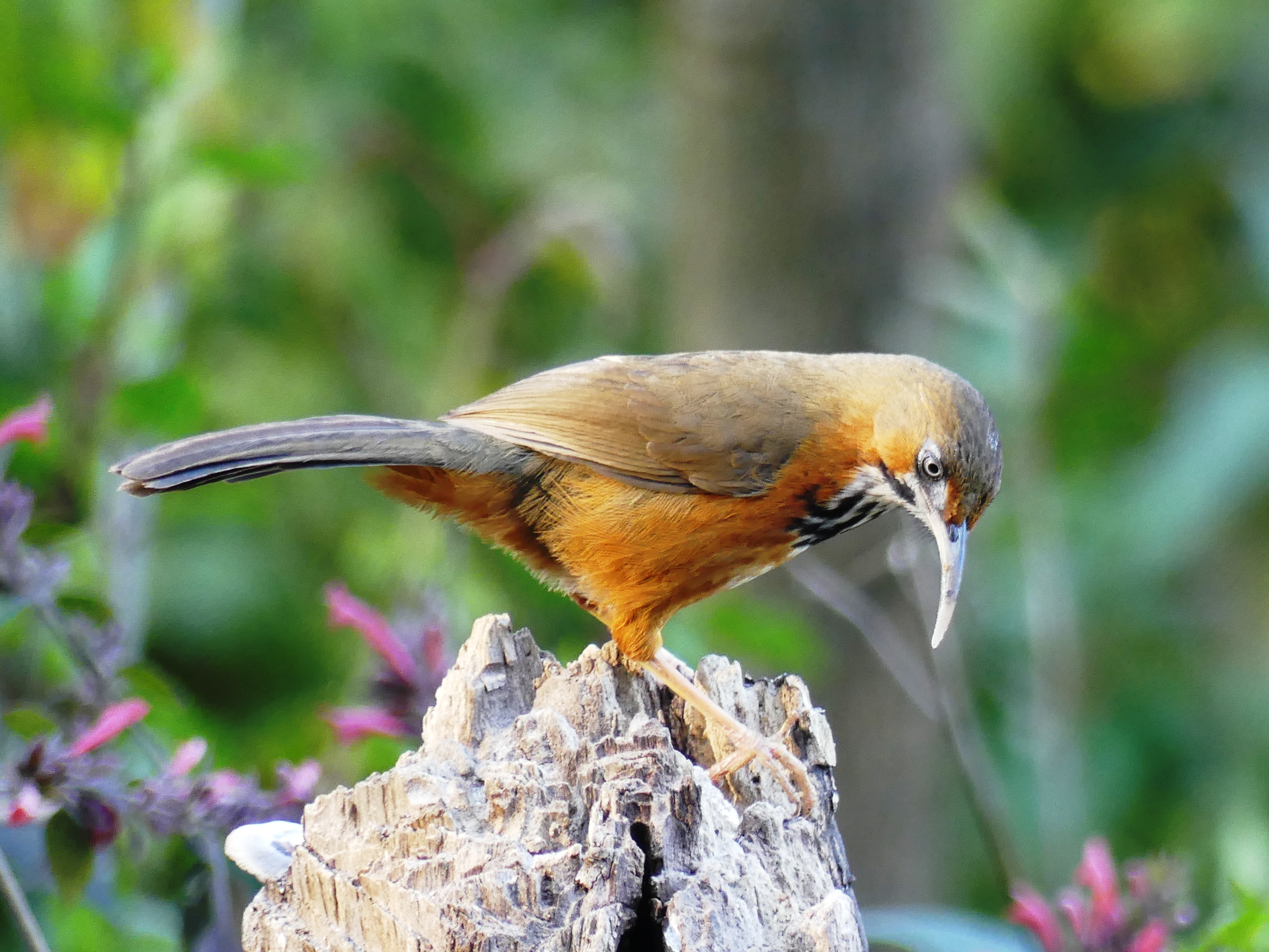
Black-streaked Scimitar-Babbler. I have been awed by scimitar-babblers ever since I first saw a Gray-sided Scimitar-Babbler in 2012. And, what a struggle it was to see that first one. Scimitar-Babblers are normally very shy birds.

Black-streaked Scimitar-Babbler. I have been awed by scimitar-babblers ever since I first saw a Gray-sided Scimitar-Babbler in 2012. And, what a struggle it was to see that first one. Scimitar-Babblers are normally very shy birds.

Yellow-cheeked Tit. Punk bird?

Yellow-cheeked Tit. Punk bird?

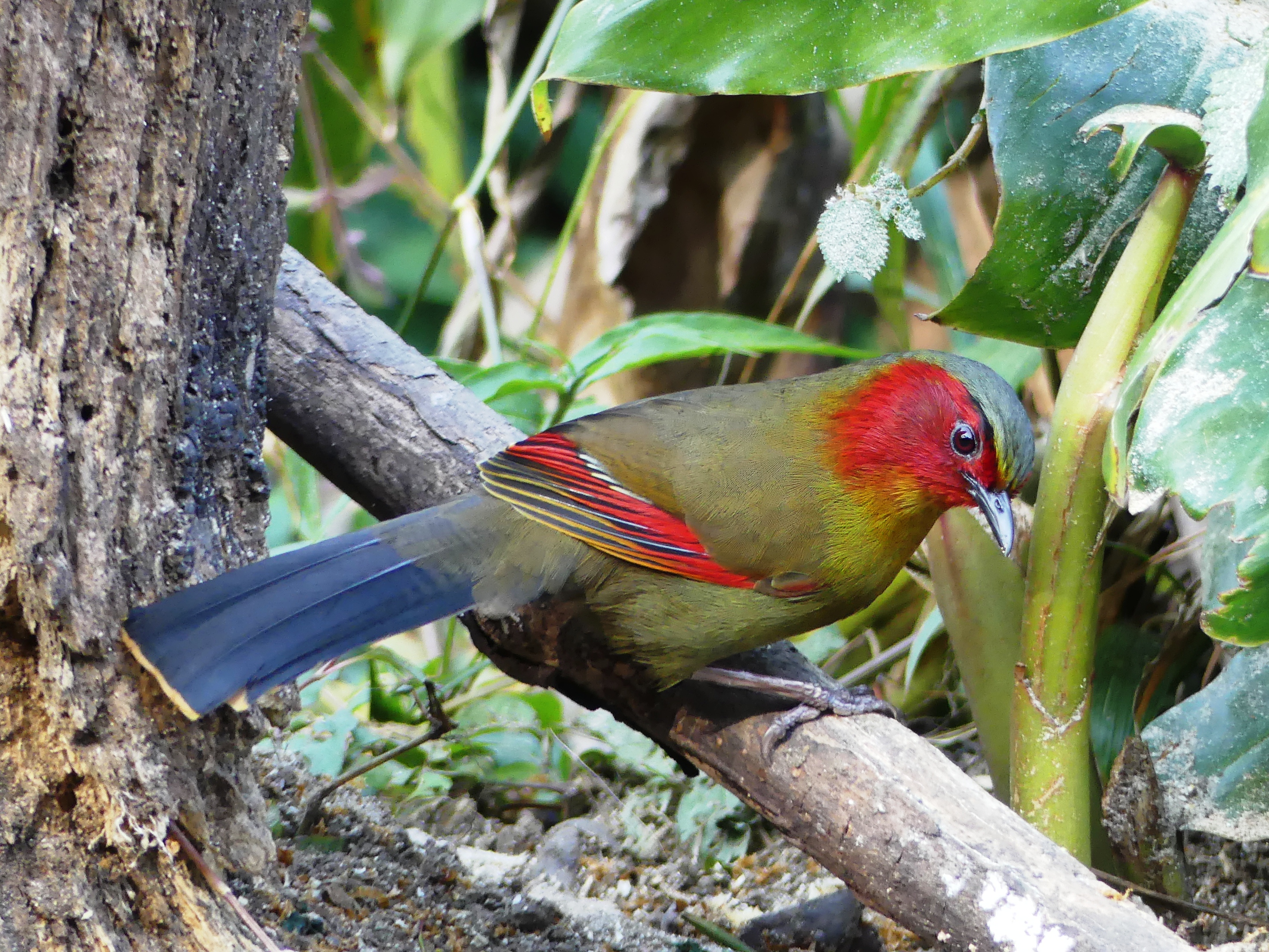
Scarlet-faced Liocichla. These gorgeous birds were fairly common and we frequently saw them with Red-tailed Laughingthrushes.

Scarlet-faced Liocichla. These gorgeous birds were fairly common and we frequently saw them with Red-tailed Laughingthrushes.

And, here is my eBird checklist from that session with more photos.

The next day, January 25, we spent the entire day in the blinds starting with #35 in the morning.  Some species seem to be constantly present at a blind and others come and go throughout the day.  Some of the shyer birds may only come once or twice a day – or skip a day entirely.  A few photos from that session:

Blue-winged Lauthingthrush. Gorgeous and a little scary looking. Very shy compared to Red-tailed Laughingthrushes.

Blue-winged Lauthingthrush. Gorgeous and a little scary looking. Very shy compared to Red-tailed Laughingthrushes.

Ashy Drongo. He came into the feeding area like he owned it, with grace and confidence, but no arrogance. Yep, I can't help those human comparisons. Drongos are common in China and the others didn't get excited over them, but I loved them, especially this species.

Ashy Drongo. He came into the feeding area like he owned it, with grace and confidence, but no arrogance. Yep, I can’t help those human comparisons. Drongos are common in China and the others didn’t get excited over them, but I loved them, especially this species.

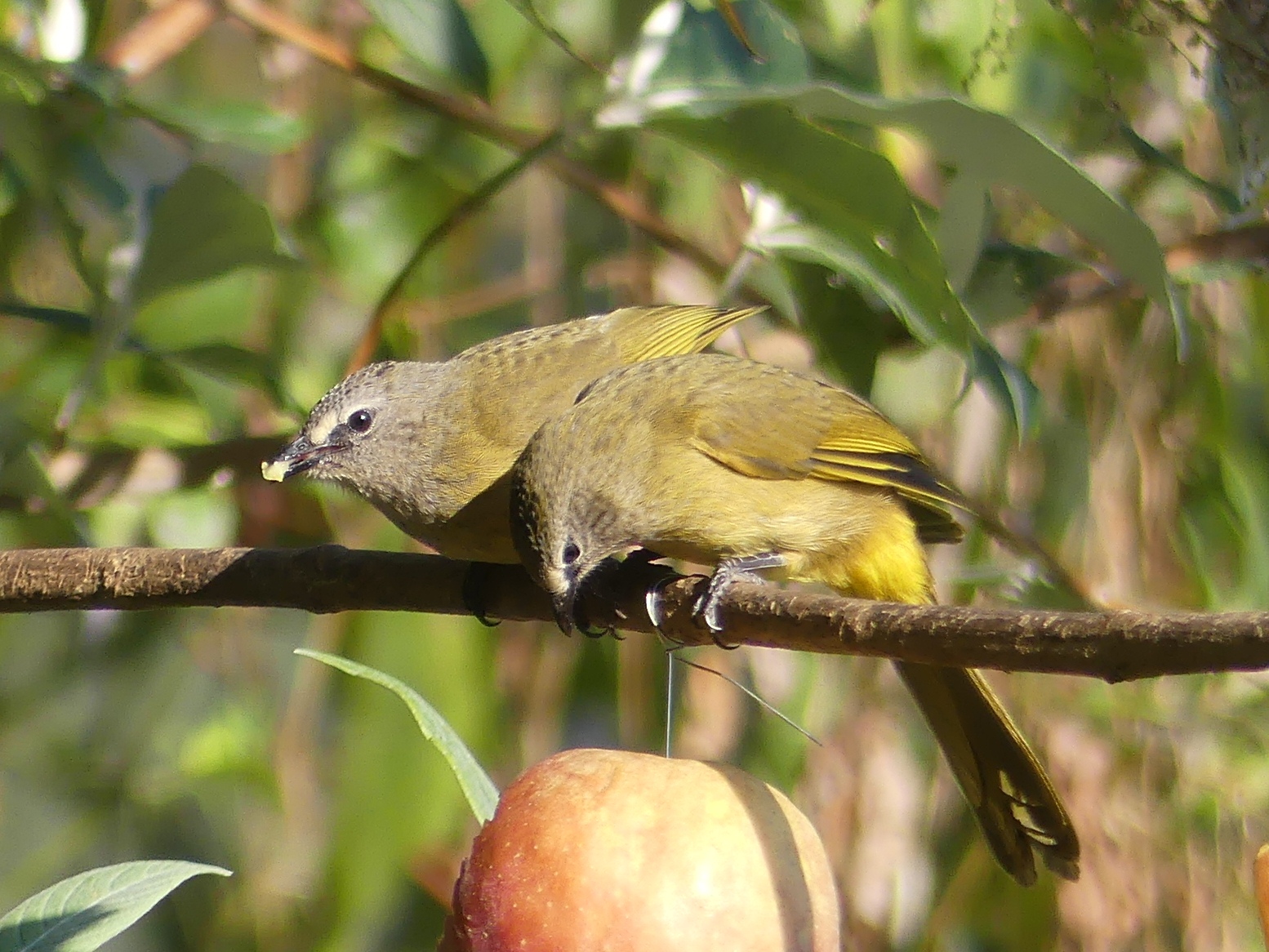
Flavescent Bulbuls enjoying an apple.

Flavescent Bulbuls enjoying an apple.

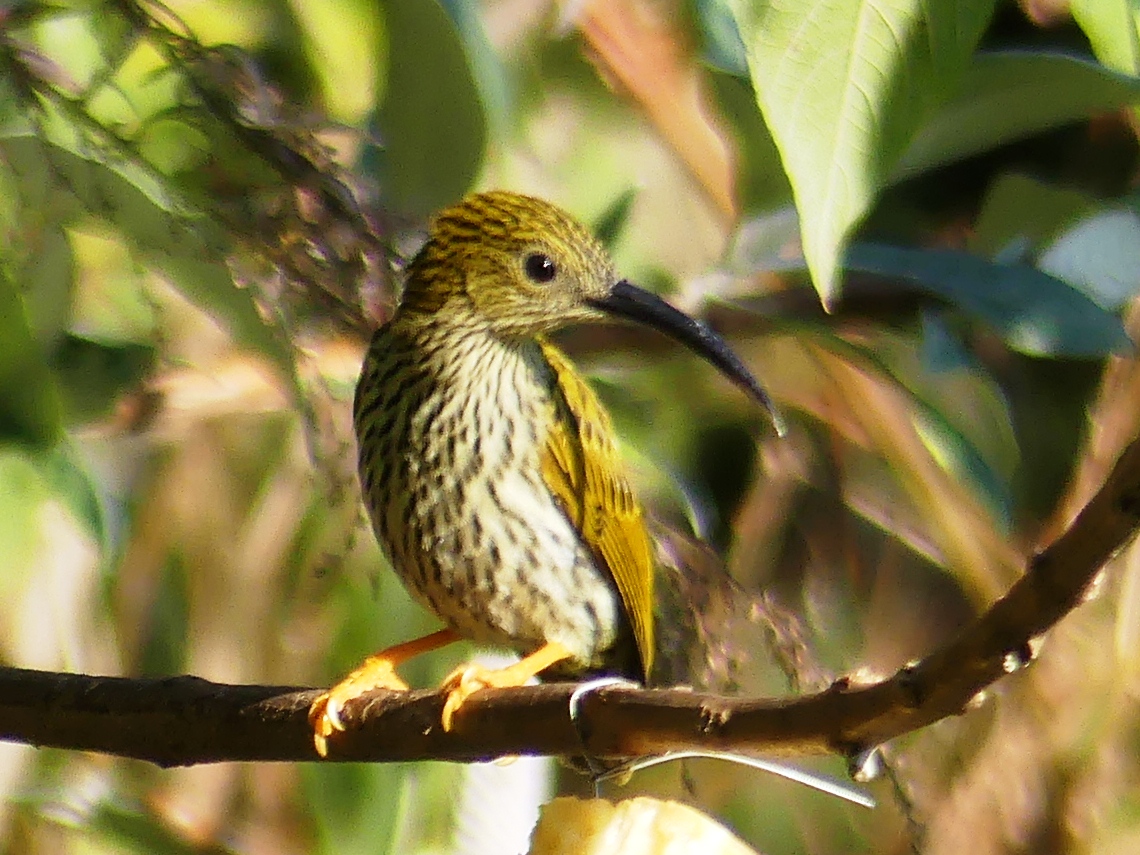
Streaked Spiderhunter is a species that we enjoyed seeing from the blinds, but this is one that we also saw well several times “in the wild.” Presumably, these birds do feed on spiders and insects, but that long curved bill is adapted for obtaining nectar. National Geographic even includes them in its list of Top 25 Birds with a Sugar Rush.
Streaked Spiderhunter

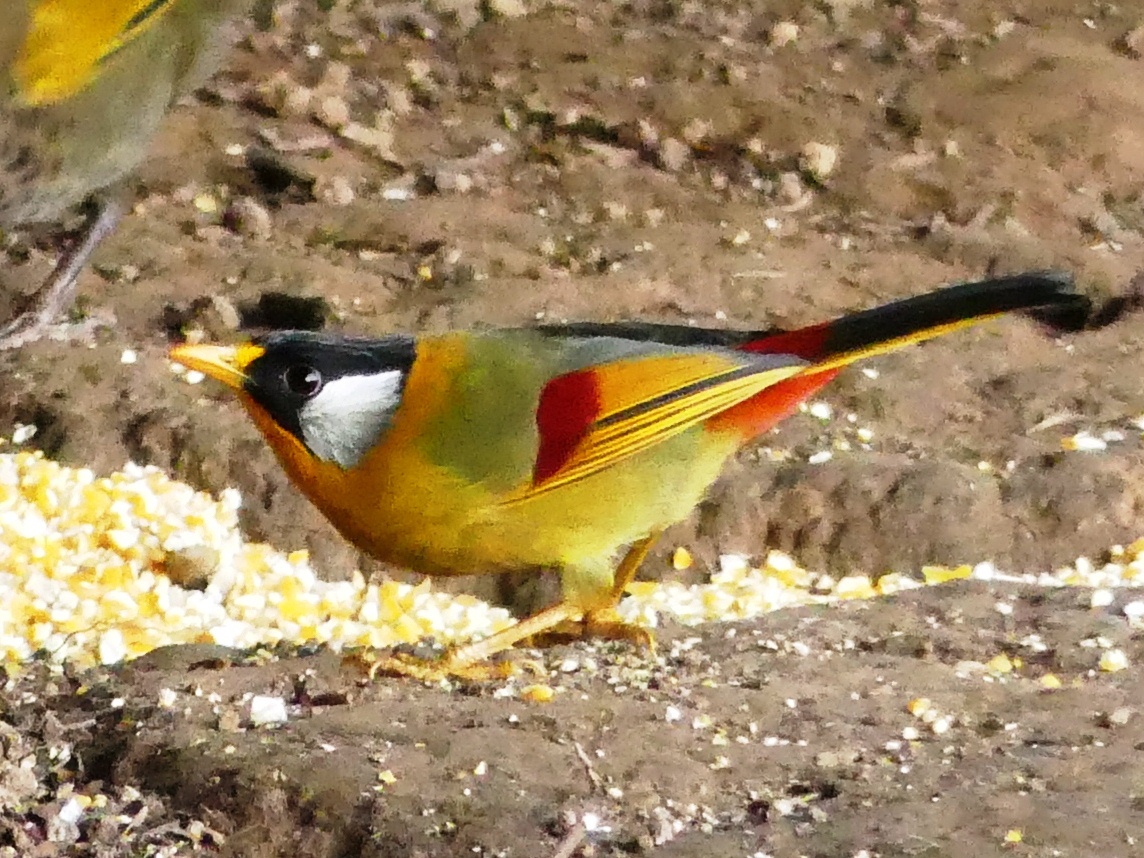
Silver-eared Mesia. These beautiful little birds are currently doing well in the wild, however, the population is under pressure from trapping for the caged bird trade.

Silver-eared Mesia. These beautiful little birds are currently doing well in the wild, however, the population is under pressure from trapping for the caged bird trade.

Long-tailed Sibia. One of the many species that enjoyed the apples at the feeding stations.

Long-tailed Sibia. One of the many species that enjoyed the apples at the feeding stations.

Large Niltava. This individual is a female. I think that she is just as gorgeous as her mate.

Large Niltava. This individual is a female. I think that she is just as gorgeous as her mate.

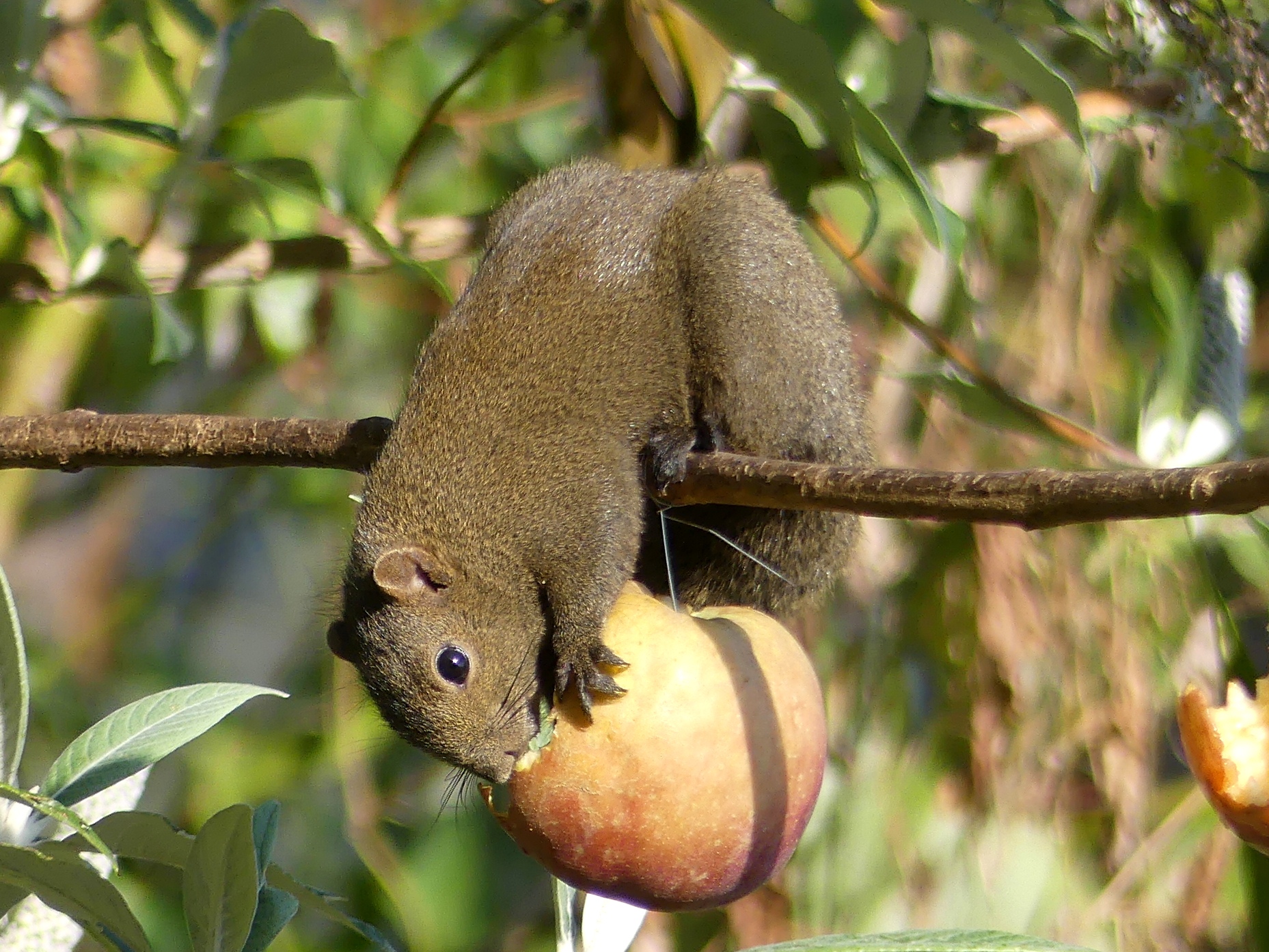
Pallas's Squirrel. These and Northern Tree Shrew were common visitors to the feeding stations.

Pallas’s Squirrel. These and Northern Tree Shrew were common visitors to the feeding stations.

Here is my eBird checklist from the morning.

We spent the afternoon in Blind #11, at a little higher elevation than the others we had visited, which produced a few new species.  Each blind has its specialties.  At this one, new birds were Hill Partridge and Gray-sided Laughingthrush.  This blind was the only location where we saw either of these species.

Hill Partridge

Hill Partridge

Gray-sided Laughingthrush

Gray-sided Laughingthrush

Himalayan Bluetail. Amazingly, we saw many of these beautiful birds. This one is a male.

Himalayan Bluetail. Amazingly, we saw many of these beautiful birds. This one is a male.

My eBird checklist from Blind #11 has more photos.

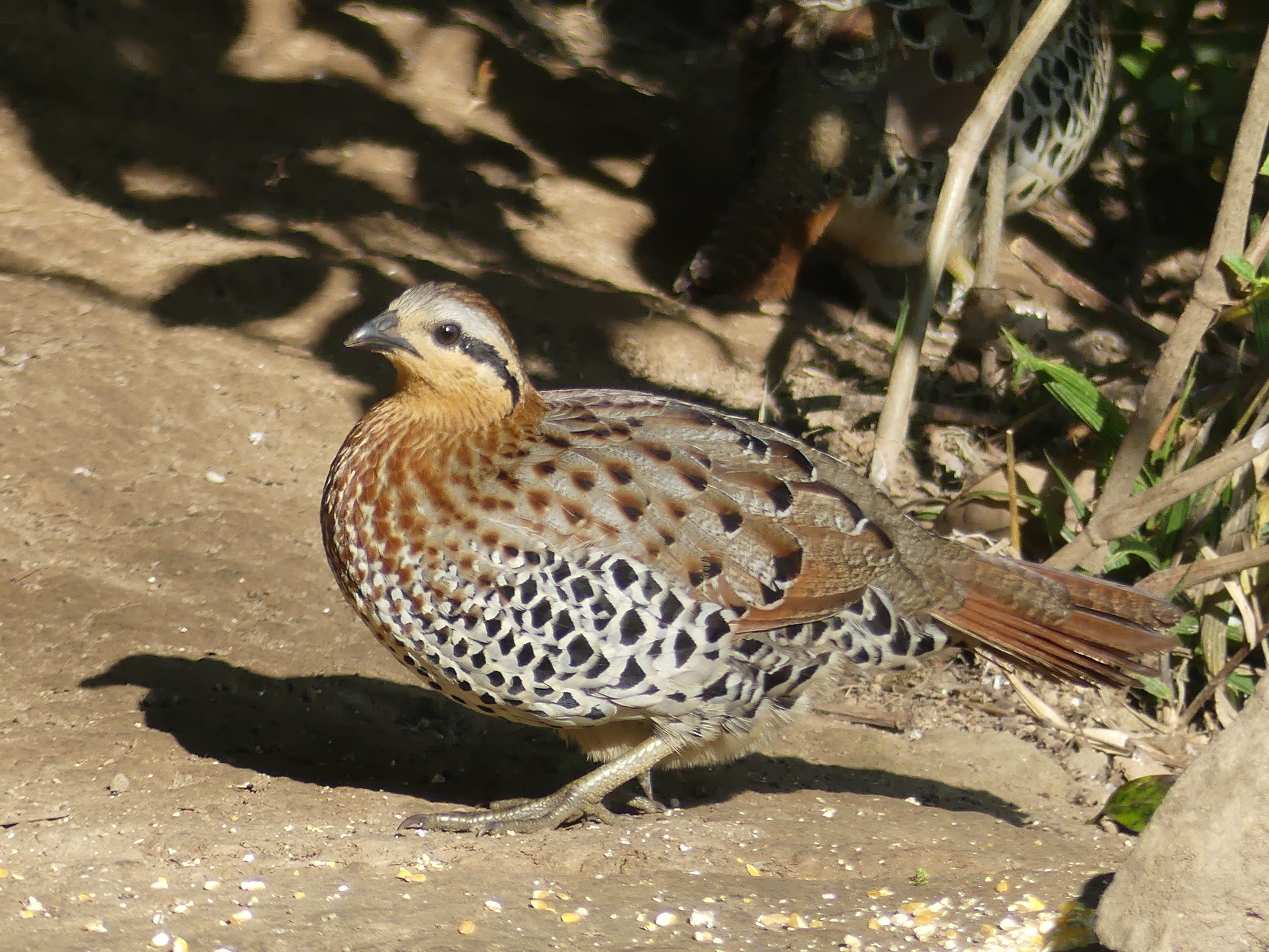
On our final morning at Baihualing, we all had a choice – walk the trails to search for species that don’t come to the blinds or have another session at a blind.  You can guess which option I choose.  It turned out to be a good decision as the others dipped again on their second try for Gould’s Shortwing, a difficult species to find.  Additionally, our little group in the blind had wonderful looks at eight Mountain Bamboo-Partridges, the only good sighting of this species during the trip.

Mountain Bamboo-Partridge (male)

Mountain Bamboo-Partridge (male)

That last morning, we also had excellent looks at many species seen during the previous few days.  A few of my favorites were the birds below.

Large Niltava (male)

Large Niltava (male)

Great Barbet

Great Barbet

Mr. Orange-bellied Leafbird. I had seen these gorgeous birds on previous trips, but I was thrilled to get much closer looks this time.

Mr. Orange-bellied Leafbird. I had seen these gorgeous birds on previous trips, but I was thrilled to get much closer looks this time.

Mrs. Orange-bellied Leafbird

Mrs. Orange-bellied Leafbird

Here is my last eBird checklist from Baihualing, but there are six more days in the Zoothera Birding trip and then a week in Shenzhen, so I’ll be back with more stories.

Read Full Post »

My son Dave visited Yunnan shortly after he moved to China in 2008.  For years, he has urged me to see this province of China that is often considered the most beautiful.  So, when Nick Bray, who led my birding trip in 2012, posted on Facebook that he was planning Zoothera Birding‘s first trip to Yunnan, I immediately signed up.

Common Kingfishers are widespread in Asia and I have seen them on every trip, this time in both Yunnan and later in Shenzhen.

Common Kingfishers are widespread in Asia and I have seen them on every trip, this time in both Yunnan and later in Shenzhen.

I arrived in Kunming in the wee hours of January 16th, a full day before the others so that I wouldn’t be starting the trip with jet lag.  I planned to sleep late and then do a little birding on my first day.  I thought that I was so smart when I was preparing for the trip and found a little park not far from the hotel.  I printed the map so that I could show it to a taxi driver as no taxi drivers in China speak any English.  The hotel called a taxi for me and, as planned, I showed my little map to the driver.  I assumed that he would take me to the park, but after a few minutes he showed me his phone with a translation app.  It said “That park is old and depressed.  Why do you want to go there?  Guandu Forest Park is new and beautiful and it’s free.”  I tried to ask how far the suggested park was, but the translation app turned “How far is the park?” into profanity.  I vigorously shook my head “no” and gave up.  So, of course, the driver took me to the suggested park, 45 minutes away and $15.00 rather than 10 minutes and the $3.00 fare that I expected.  I was frustrated, but I should have known better.  After four previous trips to China, I have learned that communication is difficult and misunderstandings are frequent, even when simply trying to get from Point A to Point B.

Yellow-billed Grosbeak

Yellow-billed Grosbeak

The park was a typical Chinese city park – full of people, even a band playing – beautiful, but not conducive to productive birding.  But, I quickly relaxed and enjoyed the lovely afternoon for a couple of hours.  Even with all the activity, I found a little flock of Yellow-billed Grosbeaks, a species that the Zoothera group would not see at all.

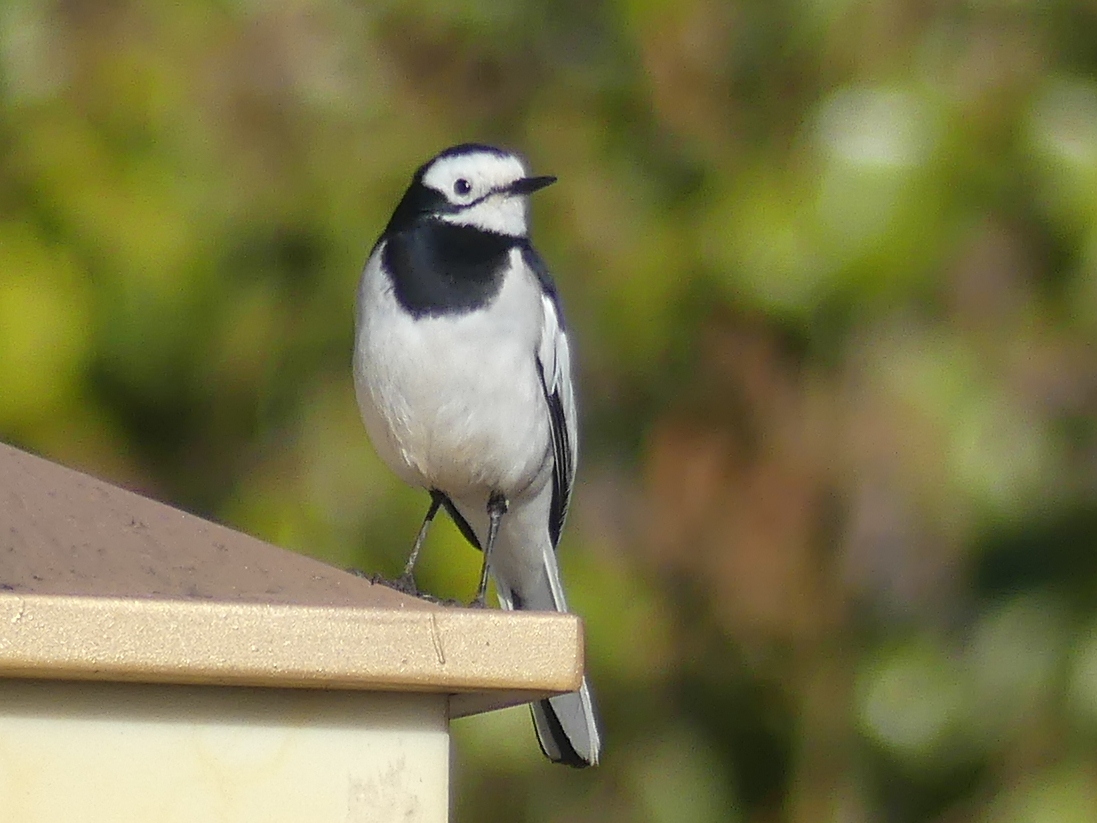
Back at the hotel, I found a few birds on the edge of the parking area, including several White Wagtails.  I find Wagtails very interesting and always try to photograph them.  This was the first time that I saw an alboides subspecies and I thought that he was a rather snazzy looking bird, even in winter plumage.

White Wagtail, Motacilla alba alboides

White Wagtail, Motacilla alba alboides

That evening I enjoyed dinner with John Hopkins, another birder who had arrived early.  The next day we met up with the rest of the group at the airport – ten participants and three guides.  There was one other woman in the group, from Germany, and one man from Sweden.  The rest of the group consisted of males from the UK except for our two Chinese guides.  After a quick lunch, we were off on our adventure.  Our first destination was Zixishan, a mountain park near Chuxiong, about three hours from Kunming.  We arrived in time for a little birding before checking into our hotel and we found our two target birds right away – the endemic Yunnan Nuthatch and Giant Nuthatch.  The Yunnan Nuthatch posed quite nicely for us at a close distance, not typical behavior we were told.

Yunnan Nuthatch

Yunnan Nuthatch

The following day, we started birding at Zixishan before sunrise.  It was a nice morning and we saw a good number of birds.  This Chinese Thrush sat on the side of the road and never moved, even as we moved closer and closer for photos.  It was still sitting there when we left to look for other species.

Chinese Thrush

Chinese Thrush

The afternoon brought a 6-hour drive to Lijiang where we hoped to see Biet’s Laughingthrush, my most wanted bird of the trip.  But, alas, our good fortune at Zixishan did not continue at Lijiang.  Despite several hours of intensive searching in the areas where the laughingthrush has historically been seen, we neither heard nor saw one.  We learned that this rare bird is becoming increasingly difficult to find, perhaps in part due to illegal poaching for the caged bird trade.

The best birds at Lijiang were a pair of Rufous-tailed Babblers bouncing around the top of a big trash pile, singing almost constantly.  Several of us just sat in the grass a few yards away with our cameras and click-click-clicked as these normally shy birds put on a fantastic close-up show for us.

Rufous-tailed Babbler

Rufous-tailed Babbler

The others in our group had started teasing me about ducks almost as soon as our trip started.  Apparently I was the only waterfowl enthusiast, or maybe ducks were just too easy for the more serious birders with life lists of over 6,000 species.  I got my wish to see ducks on the morning that we left Lijiang with a quick stop at Lijiang Wetland Park.  I loved it!  There were hundreds of birds on the lake.  I got much better looks at beautiful Ferruginous Ducks than I’d had previously.  And, I even got three life birds.  Surprisingly, I had never seen a real wild Graylag Goose before.  Red-crested Pochard and Smew were also new.

Ferruginous Ducks

Ferruginous Ducks

It seemed that everyone enjoyed our short time at the wetland despite their earlier claims that they didn’t care about ducks.  I think that we could have stayed for hours and everyone would have been happy.  But, we had a long drive ahead, so we couldn’t savor the ducks and wetland birds for long.  Back in the van, the more experienced birders gave me a good lesson in separating Black-headed and Brown-headed Gulls.  With their expert knowledge and my photos, I quickly learned that it really was easy to differentiate these two species.

Brown-headed and Black-headed Gulls with Graylag Geese. Even in this rather poor photo, you can easily note the larger size of the Brown-headed Gulls, the dark wingtips, and huge mirrors in the outermost primaries.

Brown-headed and Black-headed Gulls with Graylag Geese. Even in this rather poor photo, you can easily note the larger size of the Brown-headed Gulls, the dark wingtips, and huge mirrors in the outermost primaries.

After leaving the Lijiang wetland, we drove 8 hours to Lushui.  The next morning we continued through part of Gaoligongshan National Nature Reserve, over Pianma Pass (3,100 meters), and to the small town of Pianma near the Myanmar border where we would spend the next two nights.  The first morning in this area started with one of the most thrilling sightings of the entire trip – and it was not a bird.  It was a Red Panda sleeping in the sunshine in a bare tree!  This charismatic little mammal (about the size of a house cat) is fascinating.  It has thick fur on the soles of its feet.  It uses that fluffy 18-inch tail to wrap around itself for warmth.  The Smithsonian has more interesting facts about the Red Panda, a species classified as endangered with a population of less than 10,000 remaining in the wild.

The Red Panda as seen from the road.

The Red Panda as seen from the road.

A close-up of the adorable Red Panda. This is the view that we got through the scope. Photo by John Hopkins.

A close-up of the adorable Red Panda. This is the view that we got through the scope. Photo by John Hopkins.

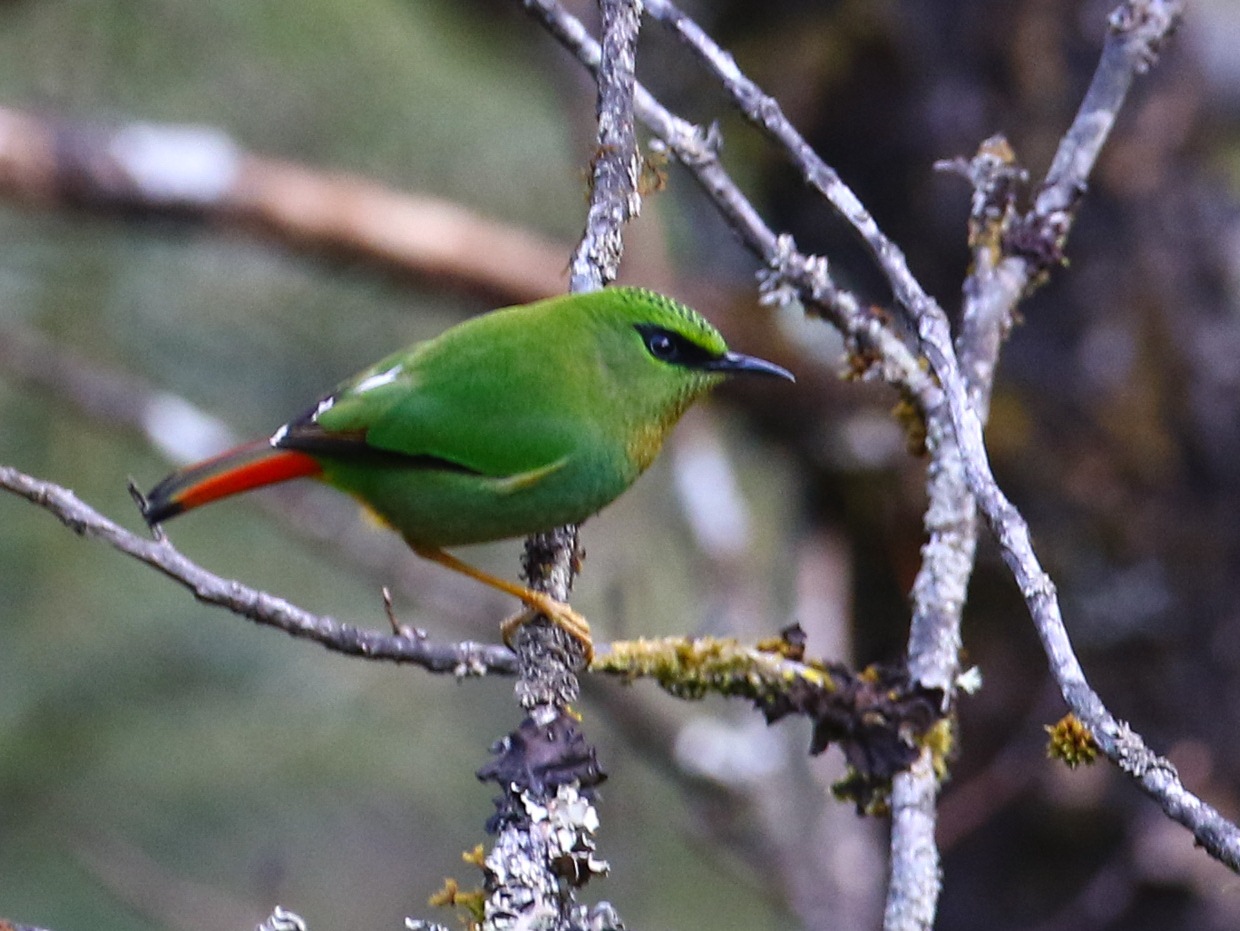
After the panda sighting, things were pretty slow.  Actually, they were very slow and this was my least favorite part of the trip.  The hotel was awful, it was cold, and we didn’t find our main target birds.  For two full days, we traveled back and forth over Pianma Pass and birded along the road, which was always covered in a thin layer of ice except in sunny spots.  On the second day, several of the others found some good birds by climbing up the side of the mountain on rough rather steep trails.  I stayed on the road not wanting to wear myself out or trigger an asthma attack by too much activity at 3,100 meters.  OK, I was a little lazy.  But, my vision is so bad that I don’t think that I would have seen the birds anyway, even if I had scrambled up the mountainside.  Just like on my 2012 trip with Nick, most of the others were in better physical shape and were much more experienced and skillful birders than me.  But I didn’t miss one of the best birds of the day when late that afternoon we found this spectacular little bird, a Fire-tailed Myzornis.

Fire-tailed Myzornis. Photo by John Hopkins.

Fire-tailed Myzornis. Photo by John Hopkins.

The following morning, we left for Baihualing and it’s many bird blinds, where I would be in birding heaven.  Stay tuned.

Read Full Post »

The Chinese Crested Tern, a close relative of the Sandwich Tern, was our goal for the final segment of the Zoothera Global Birding trip to China in May 2012.  This Critically Endangered tern with a total population of less than 50 birds is much rarer than the Giant Panda.  It is declining rapidly for various reasons, including egg collection (for food) and the aggressive development of China’s coast with its resulting habitat loss.

Little Tern.  Lovely, but not our target.

After a short early afternoon flight from Nanchang to Fuzhou, we started out towards the MinJiang Estuary.  The roads were so narrow that we had to switch to two smaller vehicles for this part of the trip.  After we drove as close as possible, a boatman took us a few kilometres along the channel to the edge of the estuary.  We then waded across a coastal tidal creek and were finally able to start searching for the tern.  We saw Great Crested Tern, Little Tern, and shorebirds, but the Chinese Crested Tern eluded us except for a fleeting fly-over observed by the others.  But I did not see them well enough to count.  The dense mist made viewing conditions awful and I missed many of the shorebirds, too.  We returned to the boat and were ferried to our vehicles in the fading light.

Kentish Plover

The next morning we left the hotel at 4:40 AM to try again for the tern.  The weather was even worse than the first day with rain in addition to the mist.  Luckily, the rain stopped by the time we reached the channel to the estuary.  Our boatman ferried us across, but the mist was still very dense and we could not see more than 50 yards.  We decided to wade across the channel to the other side of the estuary.  Walking out there was like plodding through four inches of mud the consistency of glue with several inches of water on top of it.  My wellingtons were a size too big and I couldn’t get my balance.  With each step, as I pulled one foot out of the muck, the other foot sunk deeper.  Finally, I lost my equilibrium and the mud won, sucking me down until my clothes and binoculars were covered with the thick gooey stuff.  Menxiu, our Chinese guide, saw what happened and came back to pull me out of the muck.  I laughed and trudged on.

Shelley at MinJiang Estuary.  Photo by Raymond Shewan.

The mist continued to present such a challenge that I asked if anyone was interested in splitting the group so that some of us could leave.  Two others were also ready to go, so we left with Menxiu, while Nick and the remaining two birders stayed to continue their search for the tern.

Chinese Crested Tern. My big miss for the trip.

I was so happy to be off of the mud flats that I didn’t care if I missed the tern.  Our little group immediately started seeing new birds as soon as we were back on solid ground.  I finally had a great look at a Eurasian Hoopoe, which I had missed earlier in the trip.  And we saw two Black-winged Cuckooshrikes mating!  The others soon caught up with us, their luck having changed shortly after we left.  They were elated with their views of the Chinese Crested Terns.  So, everyone was satisfied with their morning as we set off for lunch and then Fuzhou National Forest Park.

The park was just what its name implied – a park in a forest – and it was one of the most beautiful places that we visited.  We saw some nice birds that afternoon, including a Blue Magpie.

Blue Magpie (also called Red-billed Blue Magpie)

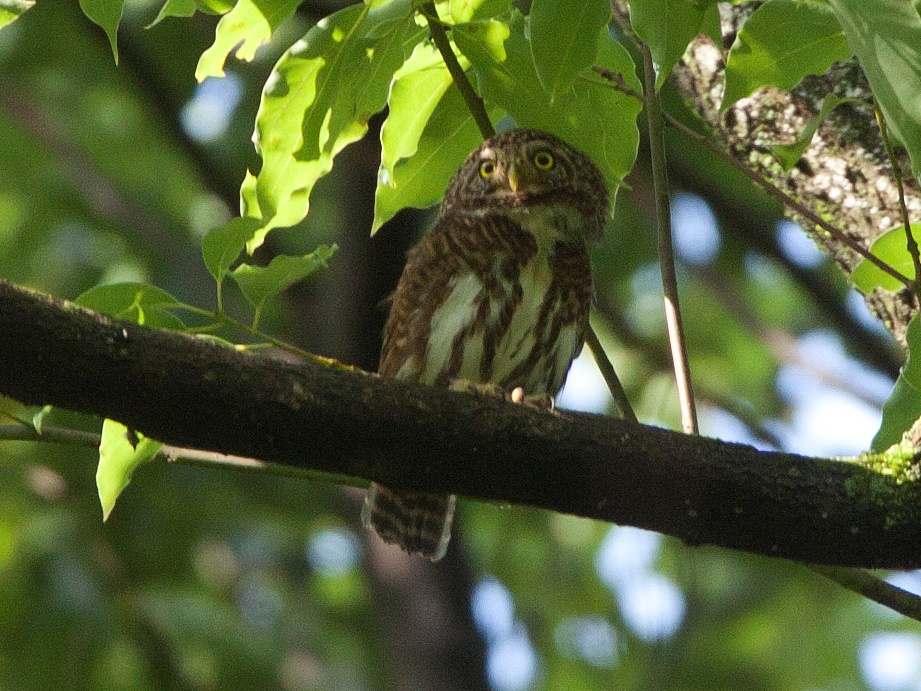
One of the group’s favorites was this Collared Owlet.

Collared Owlet

The next morning we went to Fuzhou National Forest Park again.  I loved the park, but I was getting tired by the last few days of the trip.  While I was tired with a general lack of energy, some of the others were tired of Chinese food.  We actually broke down and ate at KFC a couple of times.  The food was similar to any other KFC, but the drinks were different.  There were no diet drinks and no water; just Coke and fruit juice.  One frustration we had during the entire trip was the unavailability of cold water to drink.  Early on, we had given up asking for water and just started drinking beer with every lunch and dinner.  Beer was served refreshingly icy cold and it seemed to be cheaper than water.

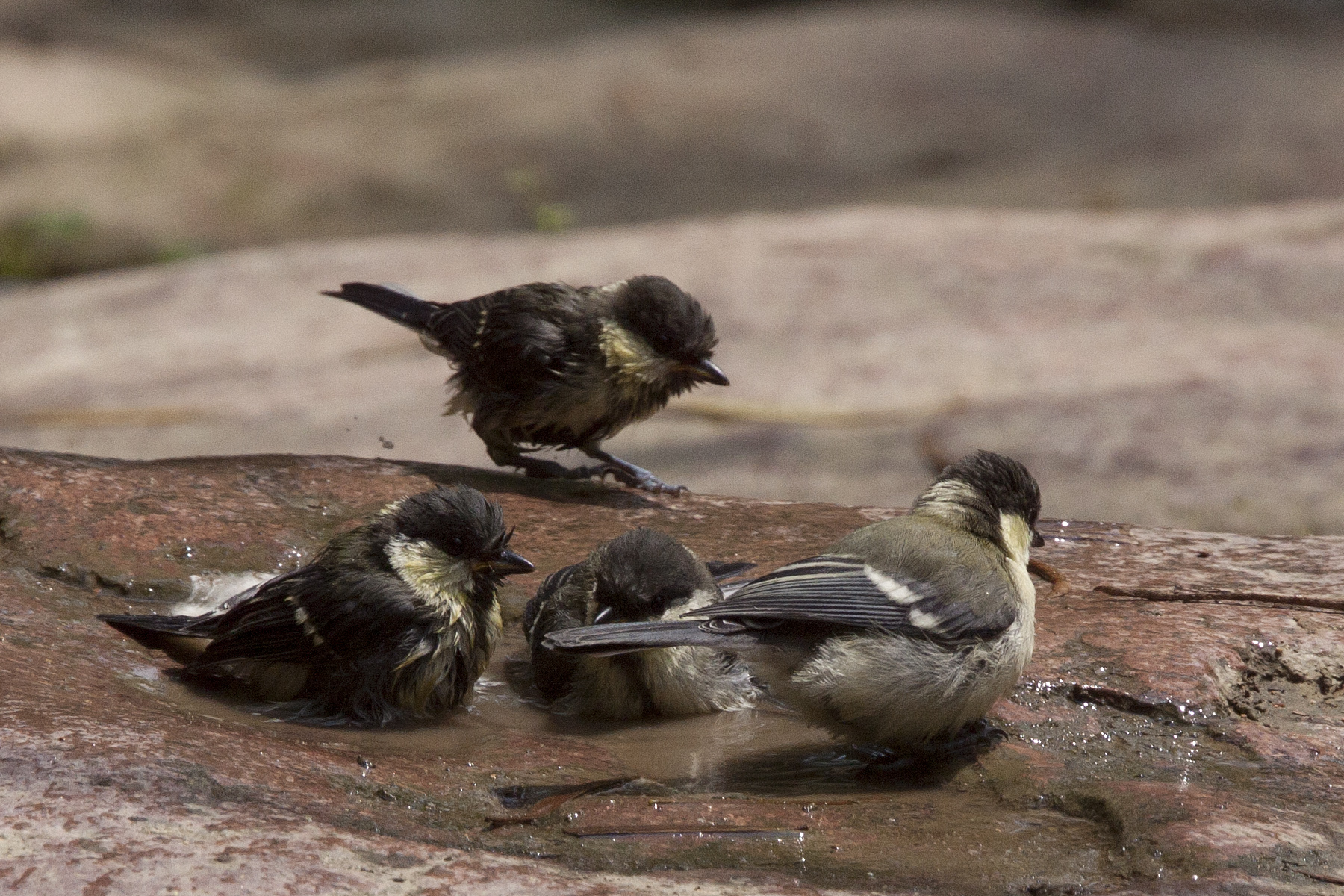
At Fuzhou National Forest Park, the paths were pretty much constant up and down.  After an hour or so, I announced that I wanted to go back to the car to wait for the group.  But, I learned that the trail that we were on was a loop and we were in the middle.  There was no easy way back to the car.  So, I continued on with the group and was glad that I stuck it out.  The last new bird of the trip was a stunning Slaty-backed Forktail, which I would have missed if I had gone back.  Another fun sighting was this family of Great Tits bathing.

Great Tit family bathing at Fuzhou National Forest Park.

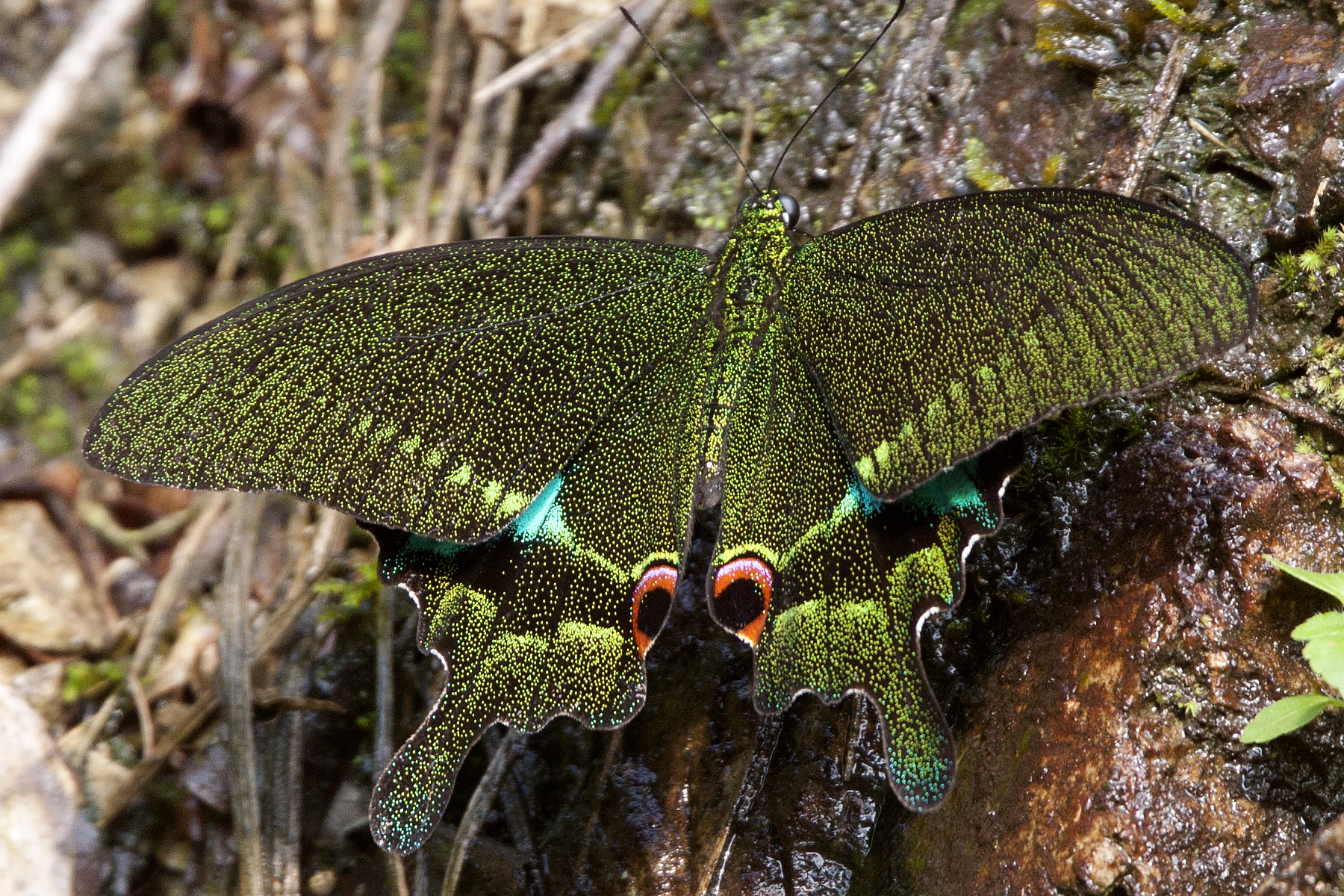
Fuzhou National Forest Park also had quite a few butterflies.  My favorite was this Papilio paris.  Those metallic greenish blue spots on the hindwing are rather large and shimmer when this gorgeous butterfly is in flight.

Papilio paris, my favorite butterfly of the trip.

After a lovely but tiring morning, we headed to the airport for our flight to Shanghai.  It was the end of the Zoothera birding trip.  I said “goodbye” to Nick and the other guys in our group.  They had all been kind, patient, and helpful and we had shared many laughs together in addition to seeing rare and wonderful birds.  I had not just survived; I had enjoyed the trip.  The next morning, I took a flight to Beijing to meet my son, Dave.

Thanks once more to Tony Mills for the use of his photos. For more of Tony’s work, see Photo Art by Tony Mills and Not Just Birds.  For Nick’s official trip report, see SE China 2012.  The dates for this part of the trip were May 13-15, 2012.

Crested Myna, a bird frequently seen on the trip.

Read Full Post »

The morning after our arrival in Nanchang, we made the long drive to Wuyishan National Key Nature Reserve.  But first we had to have breakfast.  In China, breakfast food is frequently the same as dinner, but noodle shops are also popular.  They all looked pretty much the same, so the photo below may or may not be where we ate breakfast on our first morning.  One of the regional specialties of this area is green dumplings, which were one of my favorite foods in China.  I have no idea what was in them, but they were delicious.  On some days, we started out for birding before the noodle shops opened at 6 AM, but when we did indulge in breakfast, it was usually a bowl of noodles with a fried egg and green dumplings.

Wuyishan National Key Nature Reserve is the largest and the most comprehensive surviving semi-subtropical forest in southeast China.  While we saw devastating habitat loss in much of China, especially along the coast, the Chinese seem to be continuing twelve centuries of tradition in protecting areas in the Wuyi Mountains.  The Wuyishan Reserve became a UNESCO Biosphere Reserve in 1987 and a UNESCO World Heritage  site in 1999 .  (Wuyishan Biosphere Reserve info and Wuyishan World Heritage info.)

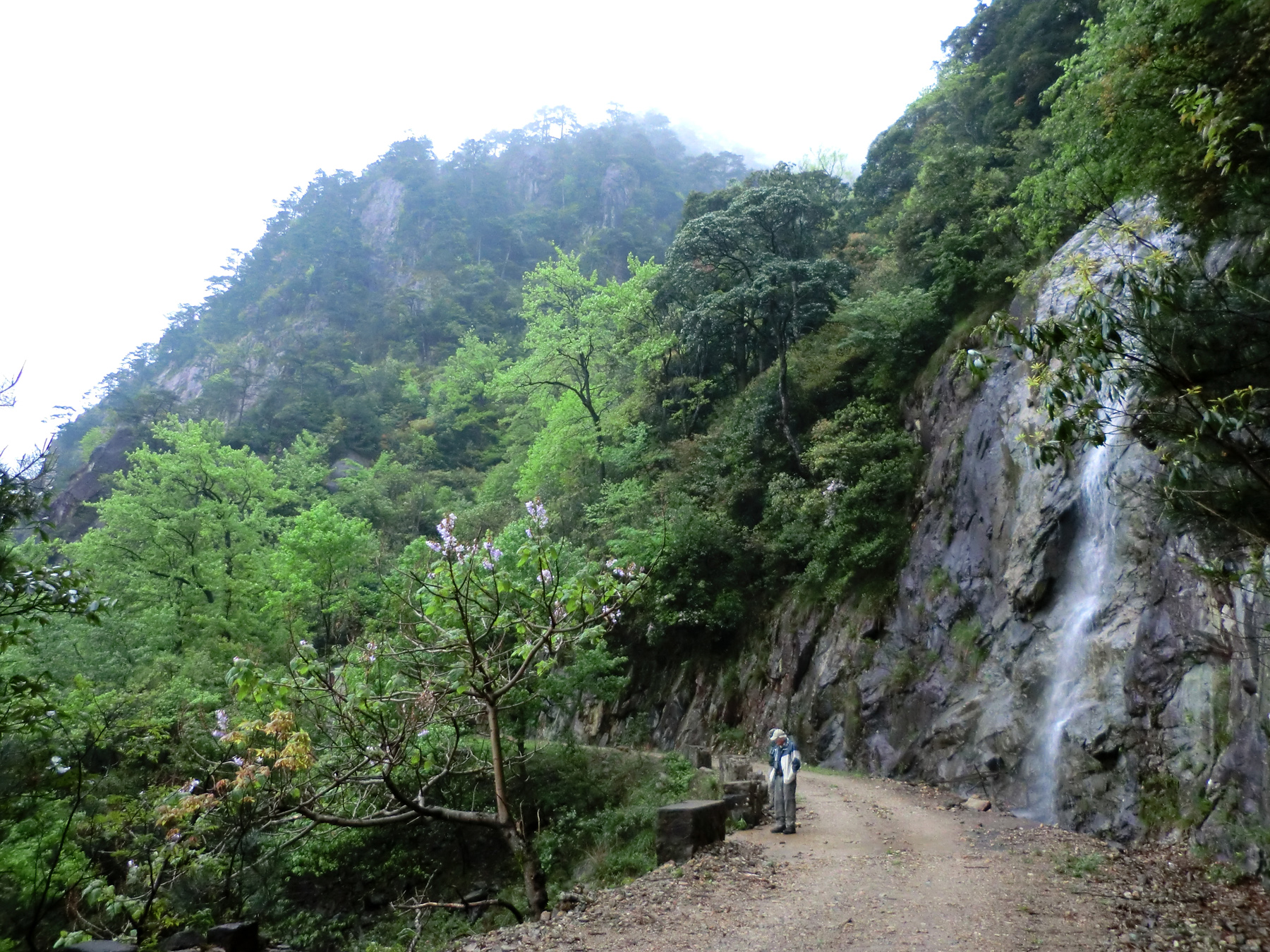
The reserve’s winding road to Huanggang Mountain, the highest peak in the Wuyi range at 7080 feet, provided spectacular views of the mountains, their gentle waterfalls, and changing vegetation as we ascended the mountain, progressing from tea and bamboo to evergreen broad-leaved forest to the treeless summit.  We were told that the number of visitors is limited and that the fees to enter the park are quite high.  These restrictions gave us our own private escort and we saw no other tourists during our two days in the park.  I finally found this news article which describes the restricted access to the reserve which began in 2009 to protect the environment.

Wuyishan

Wuyishan

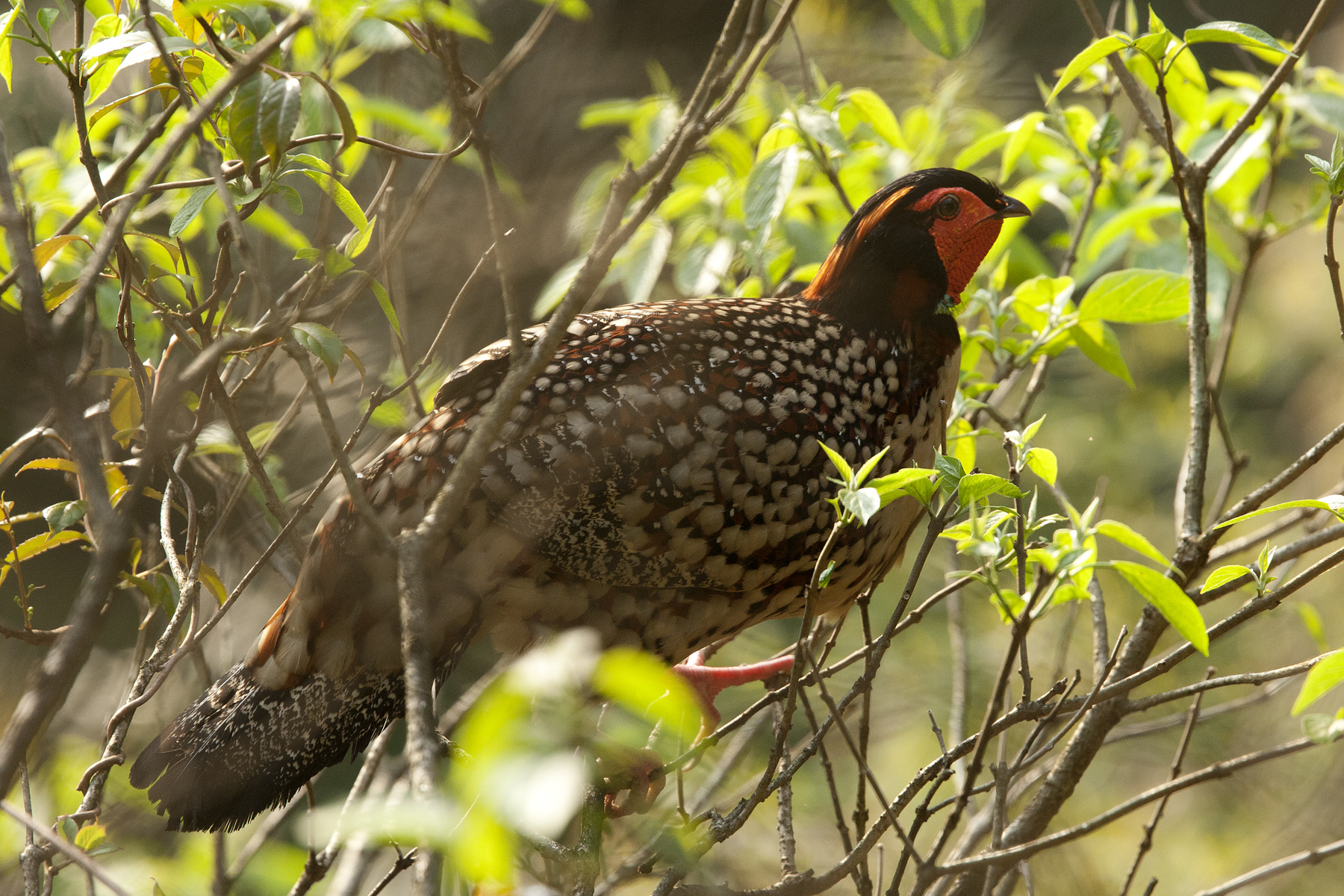
Wuyishan National Key Nature Reserve is reputedly the easiest place in the world to see Cabot’s Tragopan, a vulnerable species which is endemic to southeast China.  We were fortunate to find this splendid male on our first afternoon in the reserve.

Cabot's Tragopan

Cabot’s Tragopan

We observed him from our minibus for 20 minutes, only a few feet from the road feeding in small trees.  No words are adequate to describe that head, but the rest of the bird was equally fascinating.  The pattern on his back looked like it was created with intricate bead work which seemed to fade to lace on the ends of the wings and tail.  That tragopan was the most gorgeous bird I’ve ever seen.

Cabot's Tragopan

Cabot’s Tragopan

The next morning we headed for the summit at 4:30 AM, but dense mist and high wind made for poor visibility and not much fun.  We had rain in the afternoon which became heavier during the night.  In between the showers, though, we did see some nice birds including the following.

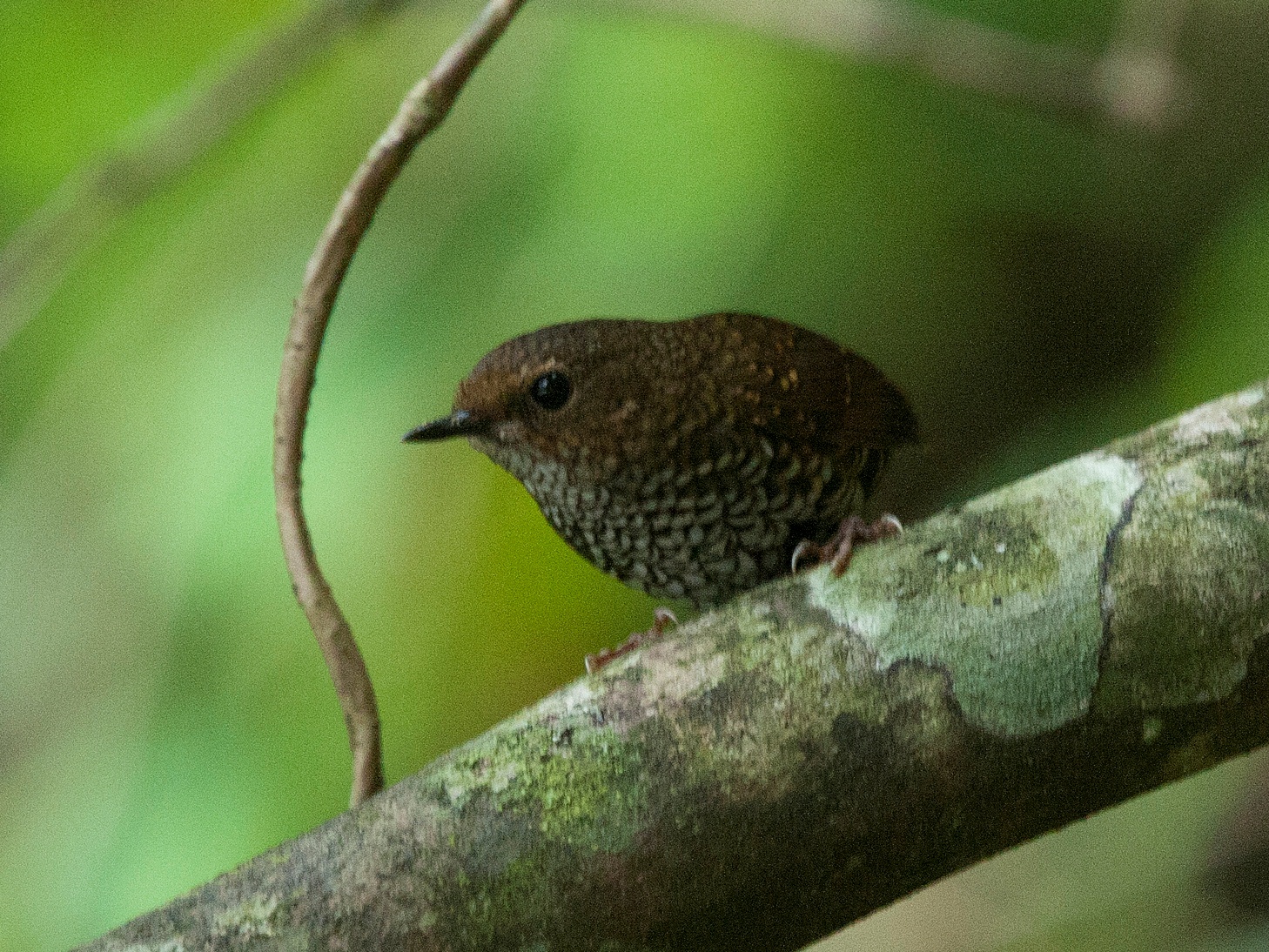
Pygmy Wren-babbler (Pnoepyga pusilla, now called Pygmy Cupwing)

Pygmy Wren-babbler (Pnoepyga pusilla, now called Pygmy Cupwing)

Fujian Fulvetta

Fujian Fulvetta

White-browed Shrike-babbler

White-browed Shrike-babbler

Hartert's Warbler

Hartert’s Warbler

On our last morning in the Wuyishan Reserve, we drove to the summit again and were much luckier with the weather than we had been the previous morning.

Wuyishan summit

Wuyishan summit

We missed the Upland Pipits that we’d hoped for, but all had nice views of Rosy Pipits and a few other birds including this Brown Bush Warbler.

Brown Bush Warbler

Brown Bush Warbler

A monument proudly proclaimed that we were at the highest peak of the Wuyi Mountains.

Wuyishan was my favorite part of the trip, so I was sad to leave, but we had more wonderful birds to see in other places, so it was back in our minibus for the long afternoon drive to Wuyuan.  Our target there was Courtois’s Laughingthrush, one of the world’s rarest birds with a wild population estimated at 200 – 250 individuals.  Much has been written about its rediscovery in 2000; previously it was known only from two museum specimens collected in 1919.  For a thorough accounting of the story see Little-known Oriental Bird: Courtois’s Laughingthrush.  Since that report, the Courtois’s Laughingthrush has been awarded full species status.

To say that I was not disappointed would be a huge understatement.  Here was a bird that was not only rare, but it was big, beautiful, colorful and gregarious.  Unlike most other Laughingthrushes, Courtois’s Laughingthrush nests in loose colonies.  We were fortunate to observe nest-building, mutual preening, and much interaction between the 50 or so birds in the area that we visited.

Courtois's Laughingthrush

Courtois’s Laughingthrush

The little island in the middle of a river running by a small rural village where we saw the Courtois’s Laughingthrush was quite interesting.  The large trees on the island where the birds nest have been protected by the villagers for centuries and are probably the reason that the birds still survive.  The island was shared with many other bird species, dozens of chickens running around, and a water buffalo grazing.  In addition to our group, there were about about a dozen Chinese photographers admiring the Laughingthrushes.

In the river surrounding the island with the Courtois’s Laughingthrushes, we saw these gorgeous drake Mandarin Ducks.

Mandarin Ducks

Mandarin Ducks

Other great birds in Wuyuan included White-browed Laughingthrushes.

White-browed Laughingthrushes

White-browed Laughingthrushes

Also found nearby was a Long-billed Plover.  This species is not rare or endangered, but it was a target bird for the trip as its range is limited to East Asia.

Long-billed Plover

Long-billed Plover

On our second morning at Wuyuan, we had a surprising view of two Chinese Bamboo-partridges fighting on the side of the road.  This is a species rarely seen in the open.

Chinese Bamboo-partridge

Chinese Bamboo-partridge

Chinese Pond Heron is a common bird in China and I enjoyed seeing them in their finest breeding plumage.  In non-breeding plumage, they are just plain brown birds.

Chinese Pond Heron

Chinese Pond Heron

After three full days in Wuyuan, it was time to head to the airport once again for our flight to Fuzhou and the last part of our birding trip.

Thanks again to Tony Mills for the generous use of his photos in this post. For more of Tony’s work, see Photo Art by Tony Mills and Not Just Birds.

Read Full Post »

I was the only woman, the only American, the least experienced birder, and the least physically fit participant in the Zoothera Global Birding trip to Southeast China in May. Fortunately for me, the leaders and other birders were very patient and helpful and we all had a good sense of humor. That help was needed as I had more difficulty that I expected keeping up and getting quality views of the birds. My birding at home was much better after my cataract surgery last year. And, I had just successfully climbed the Pinnacle Trail at Big Bend a couple of weeks earlier. But birding on mud flats and in bamboo forests in hot weather with inadequate sleep proved to be a challenge for me. The guys, however, considered this to be an “easy” trip.

The trip started at the Shanghai airport where I met Zoothera’s owner, Nick Bray, local China guide, Menxiu Tong, and the five other birders on the morning of May 4, 2012. One of the birders, Tony Mills, is a semi-professional photographer and he generously provided all of the photos in this post. For more of Tony’s work, see his website, Photo Art by Tony Mills.

We headed out right away towards the coast. A great little spot right by the road gave us close views of several species including several Sharp-tailed Sandpipers.

Sharp-tailed Sandpiper

We also saw a Swinhoe’s Snipe at the same spot. Everyone was very excited about the snipe as it is less common than Pintal Snipe, but it is very difficult to see the difference between the two species. Our leaders agreed on the identification after watching the bird for 15 minutes or so and examining multiple photos of the bird. Tony and both of our leaders were skillful photographers which facilitated “instant replay” and allowed detailed study of the snipe in flight moments after we had watched it.

Swinhoe's Snipe

Swinhoe’s Snipe

A small wooded area further on provided a change of pace and new birds including this gorgeous Narcissus Flycatcher. In China, it’s the warblers that are dull and flycatchers that are bright and colorful.

Narcissus Flycatcher

After this exciting start to the trip, we settled in for the 4-hour drive to Rudong where we would spend the night and the next day and a half.  The photo below is our hotel in Rudong; the other places that we stayed were similar. Our accommodations for the trip were typical Chinese hotels – clean enough, safe, and air-conditioned, but very basic. The beds were hard, the rooms were small, and the bathrooms were one big room with a drain in the middle of the floor and no separate shower enclosure. Another odd bathroom feature in most rooms was a full-length window between the shower and the bedroom. Our hotels usually had western style toilets, a luxury as restaurants and other public places normally had squat toilets.

Rudong, China

Rudong, China

We started our first morning in Rudong at the “Magic Forest”, a small wooded area that attracts migrants. The star of the forest that day was this spectacular male Japanese Paradise-Flycatcher.

Japanese Paradise-Flycatcher

Japanese Paradise Flycatcher

Japanese Paradise-Flycatcher

Our target in Rudong was Spoon-billed Sandpiper. This critically endangered sandpiper had captured my heart a couple of years ago and was the most important bird of the trip for me. I had expected to break down sobbing when I actually saw the bird, either from joy, or sadness that this charismatic little sandpiper is on the verge of extinction. Surprisingly, the actual sighting of the Spoon-billed Sandpiper was a non-emotional, somewhat disappointing event for me. First, we were not able to get close and had only distant scope views. Second, the sandpiper was difficult to identify. It looks unmistakable in the field guides, but the actual bird looks very much like a Red-necked Stint unless it holds it head just right so that you can see its spoon-shaped bill. Nonetheless, I was thrilled to add Spoon-billed Sandpiper to my life list. In Tony’s photo below, the Spoonie is in front, just right of the Dunlin.

Spoon-billed Sandpiper and other shorebirds

Spoon-billed Sandpiper and other shorebirds

Here is a sampling of other birds we saw along the coast on our first day there.

Gray-headed Lapwing

Gray-headed Lapwing

Black-winged Stilts

Black-winged Stilts

Saunder’s Gull

Our last stop for the day was the ‘new’ Magic Forest, a small area of isolated trees and scrub, where migrants had arrived during the afternoon. This Northern Boobook (Ninox japonica) appeared to be as excited as we were and flew around several times to escape us, but we all got great views of this gorgeous owl.

Northern Boobook (Ninox japonica)

Northern Boobook (Ninox japonica)

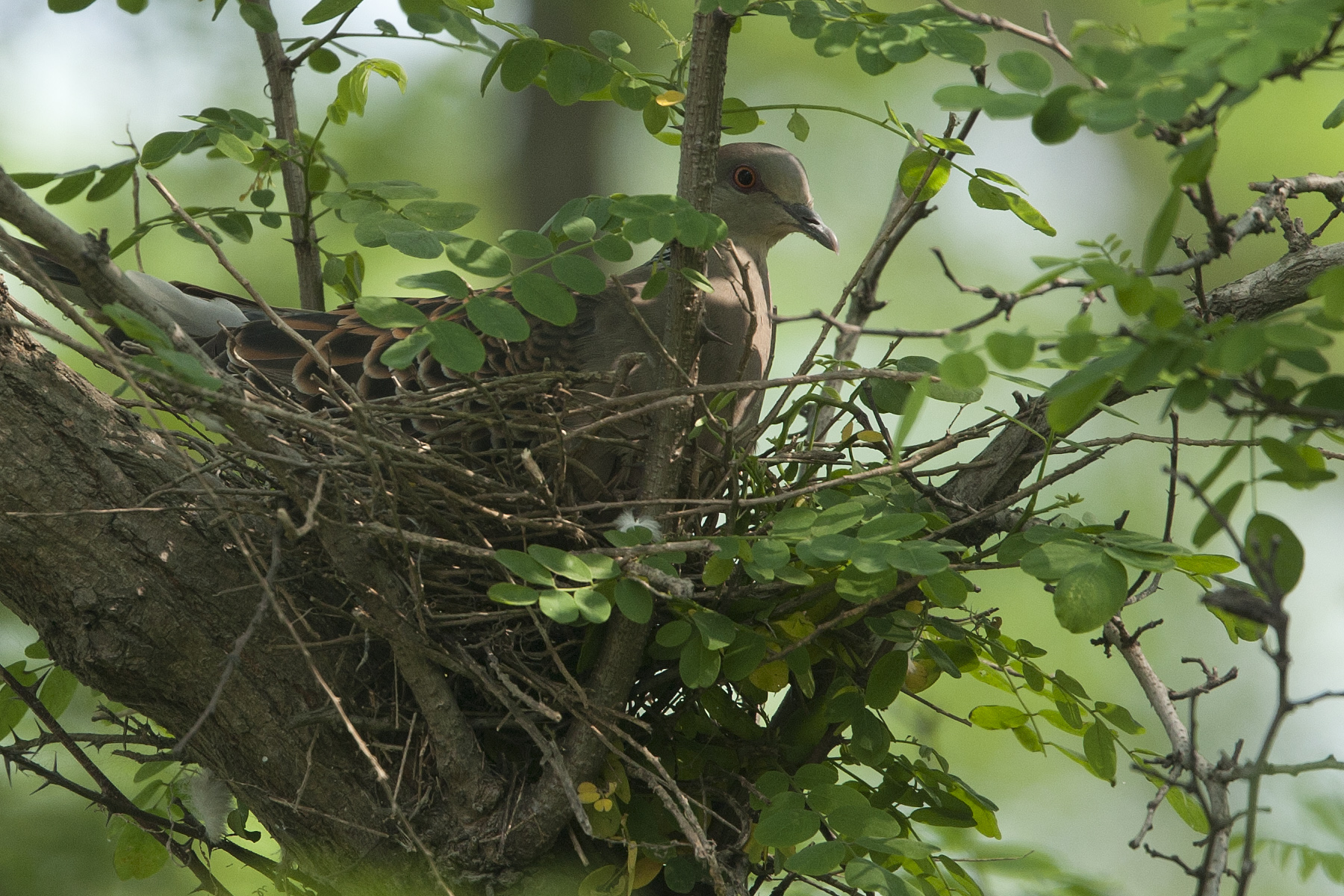
The next morning we were pleasantly surprised to see that the Boobook was in the same area along with many new migrants that had arrived overnight. One of the birds that I enjoyed seeing wasn’t rare at all, but this sweet Oriental Turtle Dove on her nest.

Oriental Turtle Dove

Oriental Turtle Dove

After enjoying the Magic Forest for a couple of hours, we hurried out to the tidal flats for shorebirds. In addition to the expected birds, we found a nice group of Black-faced Spoonbills. This is another endangered bird with a global population of less than 3,000. I had seen them in Hong Kong in 2009 and found it interesting to watch them feeding again.  Black-faced Spoonbills sweep their bills from side to side searching for small fish and shrimp.

Black-faced Spoonbills

Black-faced Spoonbills

Some of my favorite new shorebirds were the Sand-plovers. We saw Greater and Lesser Sand-plovers on both days.

Lesser Sand-plover

Lesser Sand-plover

The photo below is our group on the tidal flats at Rudong. I was as overwhelmed as it looks. There were birds everywhere, but not 20 feet away as I enjoyed in Florida, and most were new to me. But, of course, I was thrilled with this shorebird bonanza. After enjoying this spectacle, we returned to the hotel for lunch and headed to the airport for our flight to Nanchang and the next phase of our birding adventure in Southeast China.

On the beach at Rudong

On the beach at Rudong

Read Full Post »