Feeds:
Posts
Comments

A Bat Falcon perched atop a pole eating a bat symbolized an auspicious start to the day. We were on our way to Avistamiento de aves doña Dora, which The Birders Show calls “the best backyard birding on earth.” Lisa and I agreed after our visit later that day, but our guide, Gilberto Collazos Bolaños, had other plans for our morning.

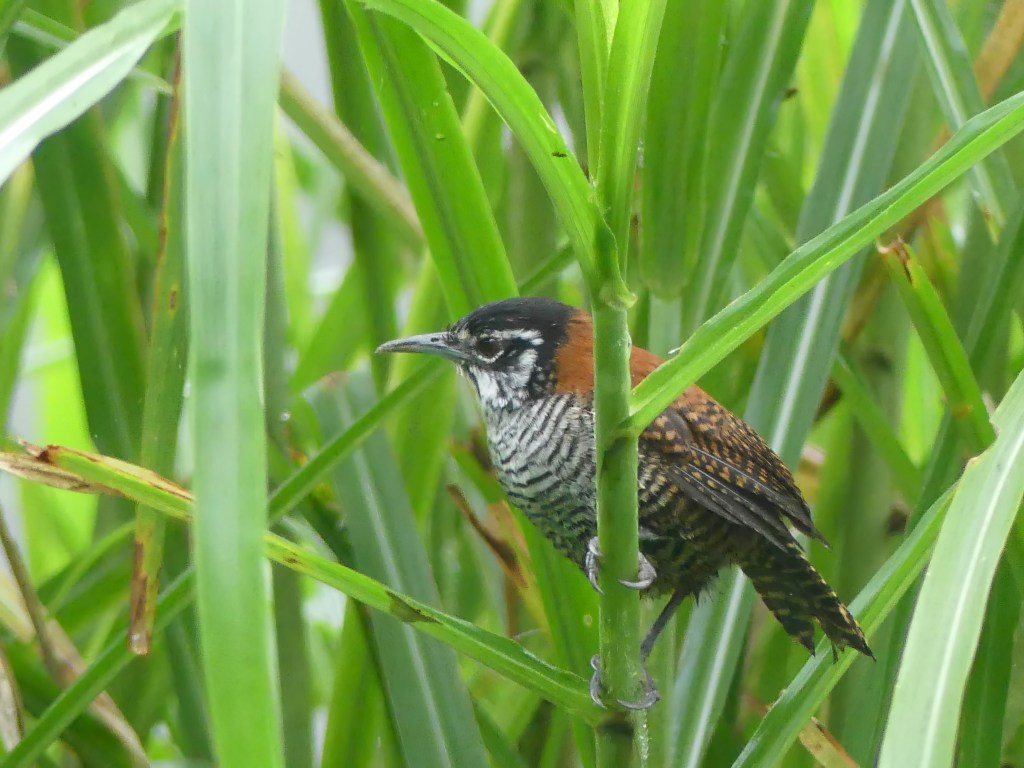
First was a stop at an amazing spot along the roadside. One of my favorites here was a cooperative Bay Wren. I have heard this bird and had quick glimpses of it on other trips, but I never managed to get a good look at it. This one hopped around in the grass showing off its pretty bay-colored back and striking face and underside. I was thrilled.
Our main target here was Crested Ant-Tanager and we had good looks at two of these birds that occur only in western Colombia. Do you think it looks a lot like our Northern Cardinal? Taxonomists originally placed this species in the tanager family, but later moved it to Cardinalidae, so you are right.

One of the cutest birds at this location was this Ornate Flycatcher.

It was hard to leave, but after our little group tallied about 30 species, we moved on for a quick stop to see the Lyre-tailed Nightjar on her nest by the roadside.

We arrived at Doña Dora just after 10:30 AM. There were so many birds that it’s hard to know where to start. As promised, it was amazing.

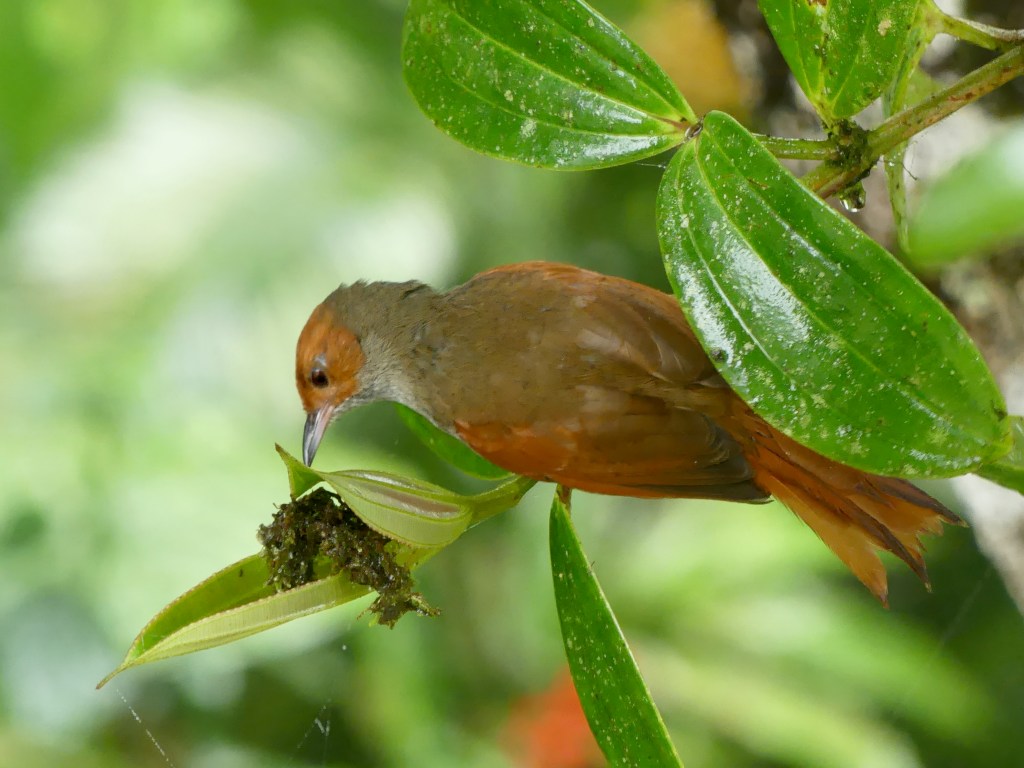
In addition to watching birds from the backyard at Doña Dora, you can go up on the roof for tree-top views. Several species were easier to see here including this Red-faced Spinetail. Spinetails have been skulky and challenging for me, so I was pleased that this bird was easy enough that I got both good looks and a photo.
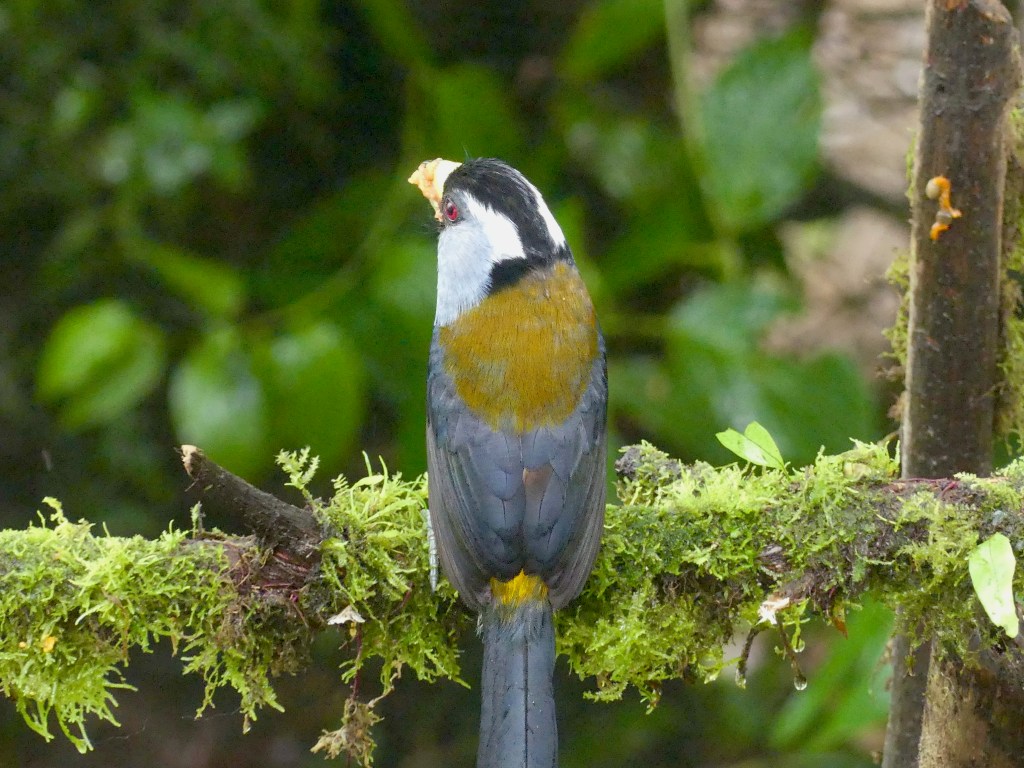
Doña Dora is located in the Chocó bioregion, an area between the Pacific Ocean and the Andes Mountains that runs from southern Panama through Colombia to northwest Ecuador. This is one of the most biodiverse areas on earth and it hosts over 50 endemic bird species, birds that occur nowhere else on the planet. One of these birds, the Toucan Barbet, is the star of Dona Dora. I was fortunate to see this beautiful bird in Ecuador on my 2021 trip with Xavier Muñoz of Neblina Forest. I wrote about this interesting species in Ecuador 2021: Sachatamia (Part 2 of 6). This time I was armed with more information and I was determined to distinguish the male from the female and get photos. The male, on the left, clearly has black tufts on the nape of his neck; the female (on right) does not have tufts.

Monday, November 13, was our last full day in Colombia and we spent most of our time at La Florida or nearby. I loved having time to do things around the lodge like checking the moth sheet early in the morning. I believe it is set up to attract birds, which come to feast on the moths for breakfast. I enjoyed seeing birds there, but I also liked the moths for themselves and not just as bird food.

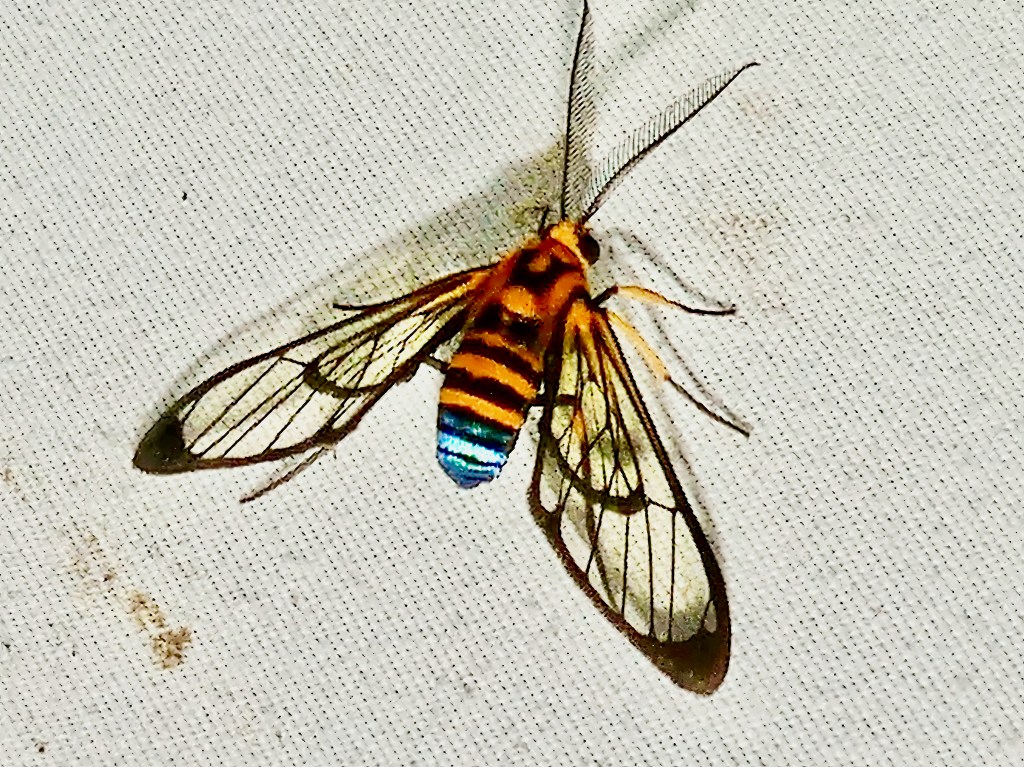
Below are some of the beautiful moths that I photographed on the sheet.

Lisa works for Manomet, a non-profit organization dedicated to bird conservation in the Western Hemisphere. Manomet accomplishes much of its work with local staff throughout the Americas. Lisa works with Jeisson and Vi who are located in Cali, but she had not met them in person. Happily for all of us, they came up to spend the morning birding with us.

We walked the road by the lodge and the others saw many birds. I had a bit of difficulty as usual, but when Jeisson and Vi learned that I was obsessed with all living things, they pointed out many interesting little critters on the roadsides. Below, my favorite grasshopper of the trip and one of the four tarantulas that we saw that day.

Lisa and I met Luis, the owner of Bosque de Niebla, when he brought clients to look for birds at La Florida. He offered to take us owling and we decided that would be a great way to spend our last evening. First we went to see Julio, the Black-and-White Owl that I had seen on my first night before Lisa arrived. Next we drove the roads that Luis knows so very well and he found a Tropical Screech-Owl for us. I had put this species on my life list when I heard it in Ecuador in 2021, but it was great to move it to the seen list.
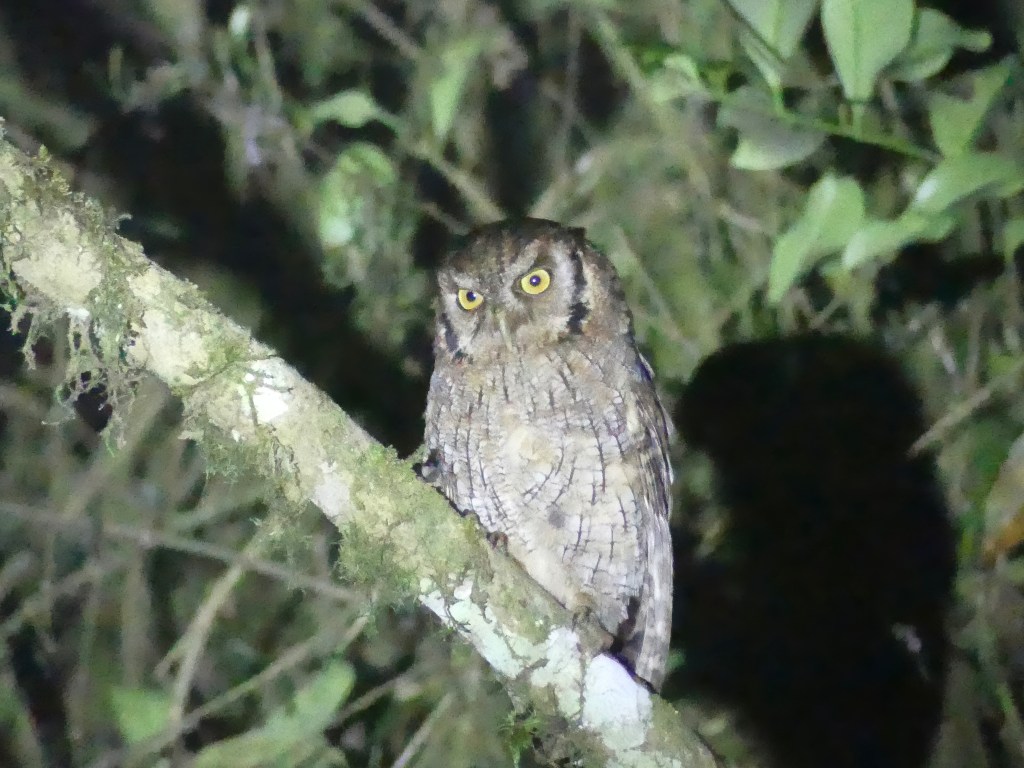
Our last owl for the evening was appropriately, Mottled Owl. We had been hearing one of these owls call every evening and it was wonderful to finally see one.

Lisa left for the airport early Tuesday morning. We both could have happily stayed in Colombia much longer, but we had packed a lot into a few days. My flight was a bit later, so I spent a pleasant, lazy morning soaking in the beauty of La Florida El Bosque de las Aves.

Javier spent some time with me and showed me around the lodge and the neighboring area. By now, he felt like an old friend and I was sad to leave his beautiful lodge, but finally I had to say goodbye.

Lisa has made me a fan of short trips when longer trips are not possible. For a complete list of the birds that we saw and heard, see our eBird trip report, Colombia – November 2023. My iNaturalist observations can be found here.

The day started with the seven Chestnut Wood-Quail coming for breakfast as usual. These birds are so trusting of Javier, La Florida’s owner, that they come right up to him. They even allowed me to stand beside him so close that I could have reached out and touched one.

I had a lovely breakfast at the outdoor table and then moved to the feeder area for a couple of hours where I watched beautiful birds like this Saffron-crowned Tanager.

Lisa arrived at 10:00 AM and I think that by lunchtime she saw all the birds that I had seen in the previous day and a half and more.

One of our favorites was this adorable female White-sided Flowerpiercer who bathed nearby while we ate lunch.

We watched the birds around the lodge a bit more and soon it was time for feeding the Little Tinamous. Tinamous are very shy forest dwellers who can sometimes be trained to come for worms as they do at La Florida.

Next, we went to Finca Alejandría to watch dizzying displays of dozens of hummingbirds. Even though I had been there the previous day, I was very happy to go back again with Lisa. Below, a pretty Andean Emerald.

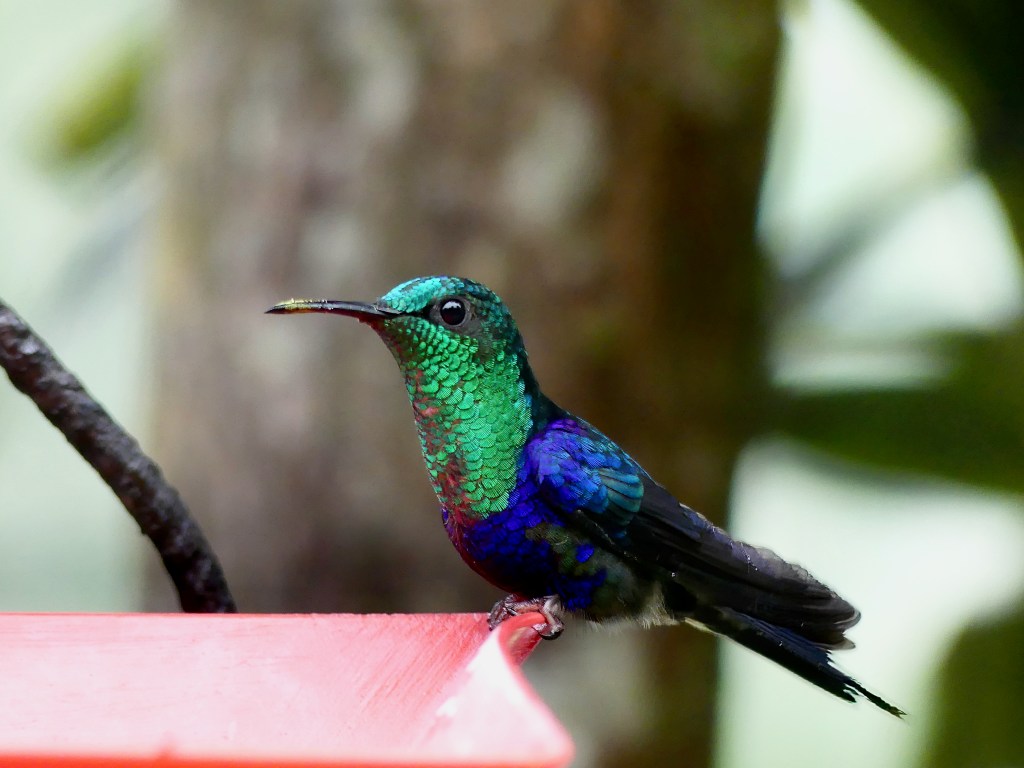
Another jewel was a Crowned Woodnymph.

Just as the day before, a Golden-headed Quetzal showed up just before we left. We returned to La Florida for dinner and listened to a Mottled Owl calling before falling into bed.

On Lisa’s second day in Colombia, we headed out for San Cipriano with our guide, Anderson Muñoz.

San Cipriano is a small village in the middle of the Pacific rainforest half an hour from the port city of Buenaventura. About 600 people live in the village but many more visit, some for birding and some for tubing on the river.

Most birders love San Cipriano, and with good reason; it has amazing birds. But, it was a hard day for me. We got up early for a 5:30 AM start from La Florida and it was uncomfortably hot and humid for most of the day. More significantly, though, it was the hardest type of birding for me with my vision challenges. It’s a lot of dark, dense forest with skulky birds that really don’t want to be seen. Nevertheless, it was an amazing experience and I wouldn’t have wanted to miss it.

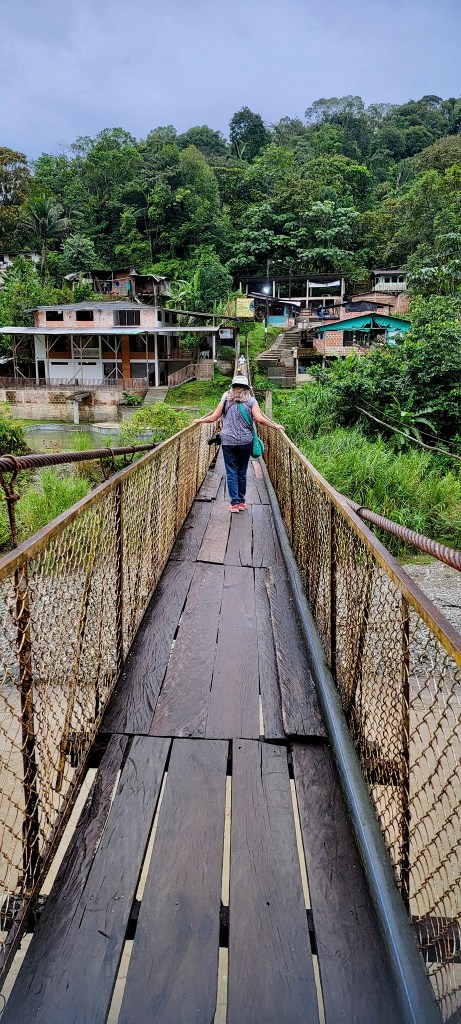
There are no roads to San Cipriano, so you drive to Córdoba and park there (that was a 1-3/4 hour drive for us). Then, you must cross the Rio Danubio on a shaky old suspension bridge.

The final step in traveling to San Cipriano is on a brujita, a motorcycle-powered cart that runs on railroad tracks. It’s the only way to get there. The photo below shows a bruita getting a little repair. Each one is slightly different, but they are all similar. The entire wooden platform goes on the tracks and passengers sit on the benches.

Anderson and I found it a fine mode of transportation. Thanks to Lisa for the photo.

It’s usually a smooth ride, but we had a little excitement and Lisa caught it all on video. It was a surprise to us, but not to the drivers. They just picked up the other brujita and took it off the tracks for us to pass. Then, they put their brujita back on the tracks and we were all on our way again.

A few minutes after 8:00 AM, we finally arrived in the little village of San Cipriano and met our local guide, the unparalleled Never Murillo. He was amazing at finding birds, and Never was also fun, friendly, and kind.

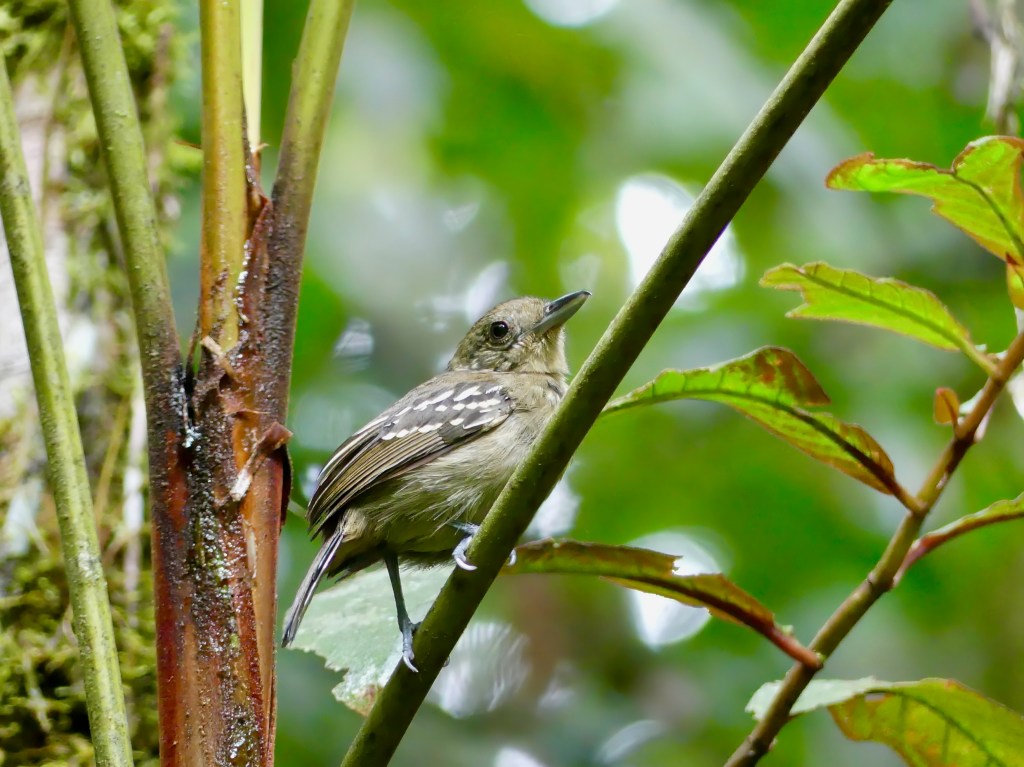
Lisa had a wonderful day and got 26 life birds. I got 10 lifers and didn’t get good photos of any of them. The female Black-crowned Antshrike below was a bit more cooperative.

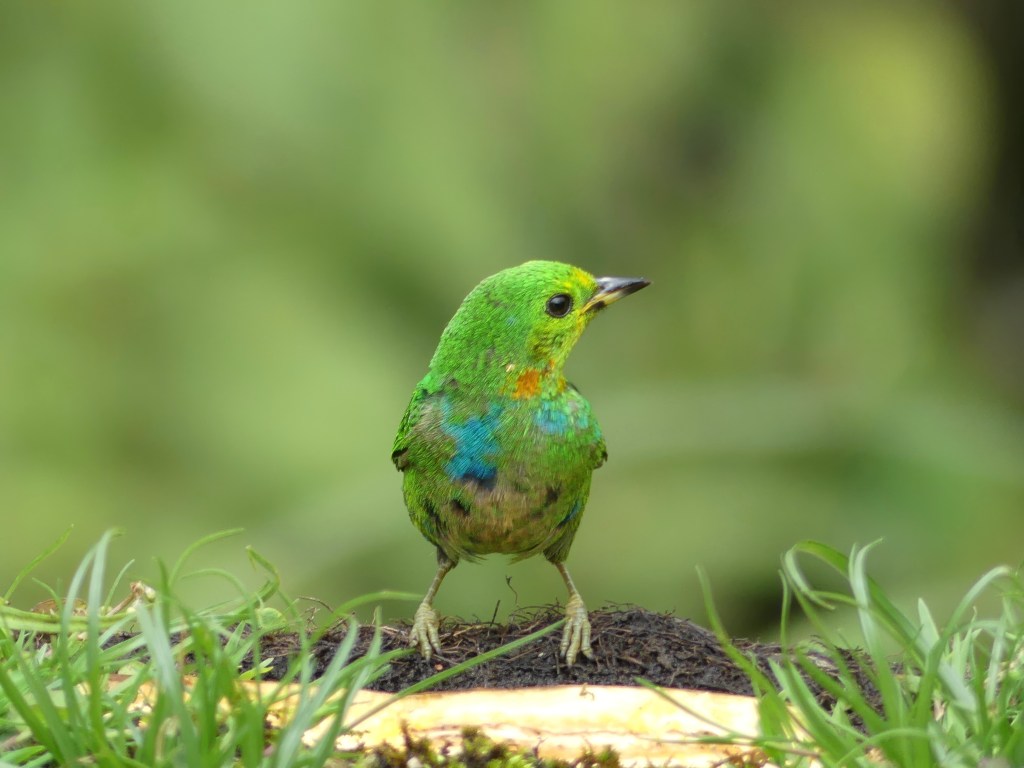
I thought that this Tawny-crested Tanager was a life bird, but when I checked eBird, I saw that I had seen it three times previously, in Panama and Costa Rica. It makes me understand people who don’t count a bird as a lifer until they get a photo. I present my photo lifer Tawny-crested Tanager at San Cipriano.

One of my favorites in the deep rainforest was another photo lifer, this beautiful Chestnut-backed Antbird.

I was trying very hard to get my eyes on the little forest birds and Anderson and Never did all they could to help me. One of the most spectacular birds in the rainforest is Ocellated Antbird and I really wanted to see it. Finally, after working for a long time as it flitted from one tree to another in the dark forest, I saw it. I’ve felt emotional before when seeing a desired bird, but this time my reaction was more intense. My entire body felt flushed with heat, I was shaking and a little dizzy, and I don’t think I was able to speak clearly for a couple of minutes. Of course, being greedy, I wanted a photo of this bird, but I could not get it, so Anderson took my camera and went off the trail and deeper into the forest. He apologized for only getting a shot of its face, but I was thrilled to have this photo to remember the experience.

San Cipriano is is known for its wide biodiversity of flora and fauna, not just birds. But, I learned that frogs and insects are not easy either and require special effort and searching in different places than where we were looking for birds. Never did find this wonderful frog for us, though. I have not been able to confirm its identification, but I think it is an Atrato Glass Frog.

We were all smiles at mid-afternoon when we left for the return trip “home.” Below: Anderson, Lisa, and Never. Our guides did an outstanding job of showing us birds and making the day fun.

We got back to La Florida in time for dinner and to hear the Mottled Owl call again this night before we fell asleep, tired and happy.

“No suggestions, but I want to go with you! Seriously.” I had quickly and impulsively replied to Lisa Schibley when she posted on Facebook that she wanted to go to Colombia for three days, one lodge, close to a major airport. Colombia hadn’t made the cut for my birding bucket list; too much overlap with Ecuador, where I’ve been twice, and the birding would be too hard for me with my crappy vision. But this would be an opportunity to visit a new country and sample the birding without committing to an expensive guided trip. I couldn’t resist.

The beauty of Colombia was calling Lisa, and me, too. Photo by Lisa Schibley.

Lisa and I did not know each other well. We had met a few years earlier through a mutual friend and shared a lifer La Sagra’s Flycatcher. But that was enough to feel comfortable and think that we’d have fun together. The next thing I knew, I had plane tickets to Cali for a trip sandwiched in between my visit to North Carolina in late October and my flight to India for a big trip starting on November 20.

I arrived on Wednesday afternoon, November 8, with just enough time to get settled in at La Florida – Bosque de Las Aves. The hummingbirds, tanagers, and Colombian Chachalaca were wonderful, but the highlight was this Andean Motmot. Another birder and I were quietly watching the feeders when he arrived just before dark and put on this fascinating show. Be sure to turn up the volume; he is vocalizing during most of the video.

Thursday morning started with one of La Florida’s special birds – Chestnut Wood-Quail. These normally shy birds are endemic to Colombia. Javier’s birds have learned to trust him and come for breakfast every morning making La Florida one of the most reliable places to see these beauties.

Gabriel Borrero is not guiding much lately because he is busy setting up Cantar del Bosque, a natural sanctuary that he bought for the protection of the Golden-headed Quetzal and its environment. Check out his instagram account: @zwexpeditions (Zen Wild Expeditions).

A Facebook contact put me in touch with Gabriel and, luckily for me, he agreed to spend some time with me. His perfect English (as well as Spanish) and warm and friendly personality made the day easy and fun. I instantly felt that I had a new friend. The photo below is Gabriel and me later in the day at Finca Alejandría.

After enjoying the Wood-Quail, Gabriel and I spent the rest of the morning at the nearby San Felipe birding lodge where we were guided by Felipe Espinoza. I took these photos that morning – male and female White-lined Tanager, Black-winged Saltator, and Blue-winged Mountain-Tanager.

Felipe was as excited as Gabriel and me to see a Bicolored Hawk, a species with a widespread distribution, but no other eBird reports at any of the Km18 lodges.

San Felipe also has frogs! Everyone accommodated my obsession with all living creatures and Felipe caught a Boettger’s Colombian Tree Frog for me to see up close and photograph. Isn’t he adorable? Our photo session was done quickly and froggy was gently returned to his pond.

My favorite birds of the morning were the Cali area’s signature species – Multicolored Tanager. This beautiful bird is endemic to the mountains of Colombia where it has a small range. It also has a small population and it is known from only a few sites giving it a conservation status of vulnerable. At San Felipe, we had the privilege of watching a whole family!

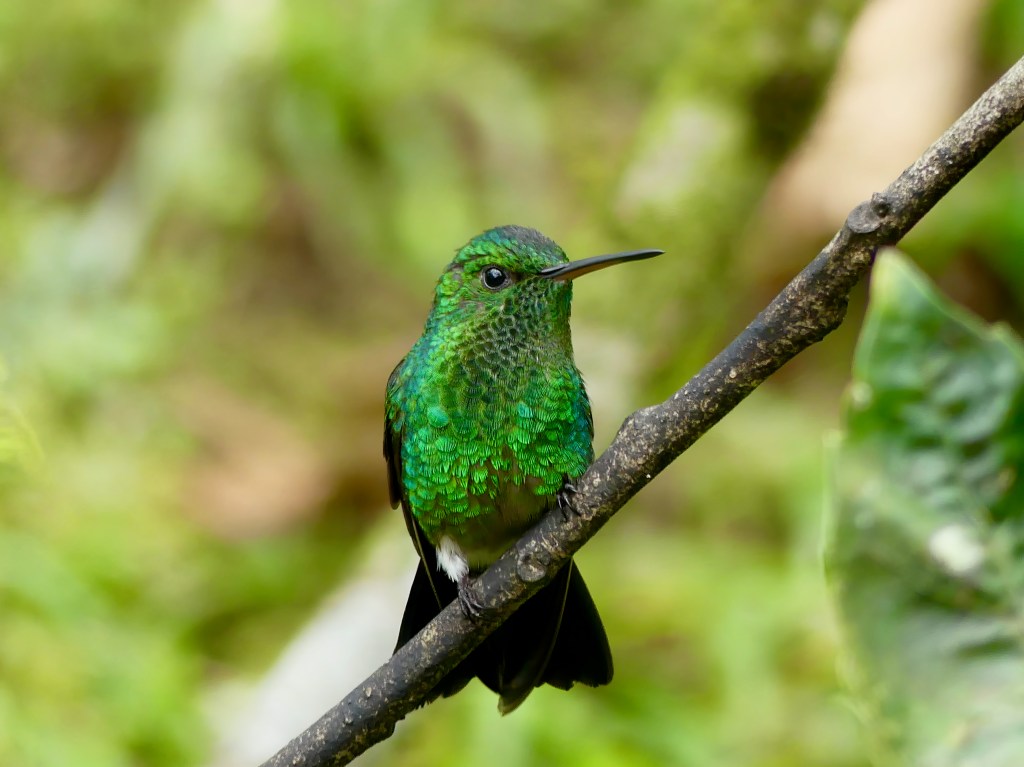
After a lovely lunch at San Felipe, we headed up the road to the famous Finca Alejandría “El Paraiso de Los Colibries.” We enjoyed several species of hummers including the Steely-vented Hummingbird below which had been a life bird earlier in the day at San Felipe.

The last bird we saw at Finca Alejandría was one close to Gabriel’s heart, a Golden-headed Quetzal.

We ended the day with a visit to the beloved “Julio,” a Black-and-White Owl, at Finca El Porvenir. This species was not seen in the Km18 area until about three years ago when Julio showed up. Suddenly a mate appeared and then soon a young one. Gabriel and others watched the adults teach their offspring how to hunt. They love the big moths that are attracted to the lights at El Porvenir but also hunt mice and small reptiles. The evening was dark, quiet and peaceful; sharing it with the gorgeous Julio was magical.

I fell asleep that night very happy and excited that Lisa would arrive the following morning.

I ran my third 5K two weeks ago and I was literally bouncing afterwards. I’ve always said that I don’t get a runner’s high, but I think that I have to retract that statement. I was feeling ecstatic and energetic after the race; I was definitely high. My friend David and I talked about the run last night. I looked at him and said, “It was because of the pain, wasn’t it?” and he nodded in agreement. Yes, there had been pain. I had struggled to breathe and my back and left foot had started hurting after the first mile. But, I’d seen that as a challenge. I kept going.

Below, David and me after the Best Damn Race, Safety Harbor 2024.

Dozens of serious athletic events have made David into a bit of an expert on pain. I’ve been there to support him for many of those events, but I’m just now starting to really understand. We also talked about the 109-mile Big Mick he cycled last summer (in one day). It had been cold and rained for most of the time that he was on the bike. I only saw him at the end with a huge smile. We talked about that, too, and again the explanation was the pain of grueling physical demands, that time in miserable weather. He didn’t love the ride in spite of the difficulty; he loved it because of the difficulty. You can’t feel the joy of accomplishment without surmounting the challenges.

As I read about healthy aging, I keep hearing that one must leave their comfort zone. I think this advice applies to all aspects of life – physical, mental, emotional. If we want to do more than build resilience, if we want to thrive, we must learn to be comfortable with the uncomfortable.

Travel is a guaranteed way to leave your comfort zone. Almost everything is different in a foreign country and it’s easy to let that be frustrating. Just simple communication about food or directions can seem nearly impossible at times. Throw in jet lag, digestive upset from a change in diet, and, for me, sitting on an airplane for a 16-hour flight and I’m in pain. On my recent trip to India I had all that plus difficulty dealing with the heat. I’m sure that I whined and complained. Fortunately, I had a role-model for thriving in a foreign environment in my friend Linda. She simply accepts difficulties and uses her energy for seeing new things, learning, exploring.

Linda was always smiling, always up for a new adventure, making friends everywhere.

By the end of my month in India, I found myself feeling grateful for the challenges because they gave me an opportunity to grow. Yes, I still want to grow. I used to think that by a certain age one should be all grown-up, a finished product. But, now I want to grow for my entire life. I want to reach the finish line a better person than I was the day before, more kind and tolerant, braver, talking about what I learned yesterday.

So, take me outside my comfort zone, bring on the challenges, let me feel the pain of doing things that are hard. May the adventures continue!

Photo below of a Hoatzin from my 2021 trip to Ecuador. My favorite kind of bird – weird and wonderful. I hope to see many more weird and wonderful creatures in my future travels.

“And they may well ask why climb the highest mountain . . . We choose to go to the moon … not because it is easy, but because it is hard, because that goal will serve to organize and measure the best of our energies and skills …” JFK, 1962.

David flew home on Monday morning, June 12. I was tired after all the adventures of last few weeks, so I took it easy the rest of the day and revisited Custer State Park. This time I stopped and walked around beautiful Sylvan Lake.

I enjoyed the walk even though I did not see a lot of wildlife other than a few families of Canada Geese on the lake with their adorable goslings.

Next, I drove the 18-mile wildlife loop road again. eBird lists 167 species for this hotspot, but I reported only 15 species that day. I believe that I would have seen more if I had started earlier in the day and been more familiar with all the trails and side roads. Regardless, I was happy to have another visit to Custer State Park. I saw a few birds, Common Ringlet butterflies, and some interesting plants, mostly on the Prairie Trail.

Do you remember Scott Rager from my last post? I had met Scott at the LAK Reservoir near Newcastle on the day that I drove from Deadwood to Edgemont. I find most birders to be friendly and generous, but Scott was exceptional. He offered to spend an entire day with me, so we met on Tuesday morning. We started at Ruby Canyon, where I had unsuccessfully searched for Virginia’s Warbler in 2018. Scott had seen Virginia’s there recently and he got a quick look again with me, but I wasn’t fast enough to see the bird. We spent a long time at the watering trough, but the much-wanted warbler did not show up. The Chipping Sparrows loved the water, though, as did a pair of Black-headed Grosbeaks.

Roby Canyon was the only location during the trip where I saw the gorgeous Weidemeyer’s Admiral, a new butterfly for me.

After a delicious lunch at a local Mexican restaurant, we birded a few areas near Newcastle. We added several common Western species to my list and a “rare” (flagged as such by eBird) Eastern Phoebe, normally a more Eastern species, that Scott had found earlier in the breeding season. I had started the day with 45 Wyoming birds and had 60 by the time we headed to Scott’s place as dusk approached. As we sat watching the feeders and chatting, it seemed that we were too late to see a Lewis’s Woodpecker. Then, just before dark, this stunning bird came in for a late dinner. Scott sometimes has half a dozen of these gorgeous birds in his yard, but I was thrilled with just this one. I’ve never had better looks and it was a wonderful end to a great day.

The next morning I got a little later start than I’d wanted and I had to go to the grocery store. The hotel I would be staying at that night had suggested that I bring food as there was none available there. Later in the day I would regret the delay, but by day 19 of a trip I am not my most efficient. So, I headed south and after a quick spin through Lusk Cemetery (Orchard Oriole, Wyoming #63), I was in Nebraska.

The drive to Henry Road was a bit longer than I had expected and I arrived at 11:12 AM. Henry Road is a dirt road on open range and I did not see another person the entire time I was there. I did not see a lot of birds either, but this location is popular among birders for the prized species that do occur. I saw Horned Larks on the fence wires and in the road, a common bird in the West and not my target.

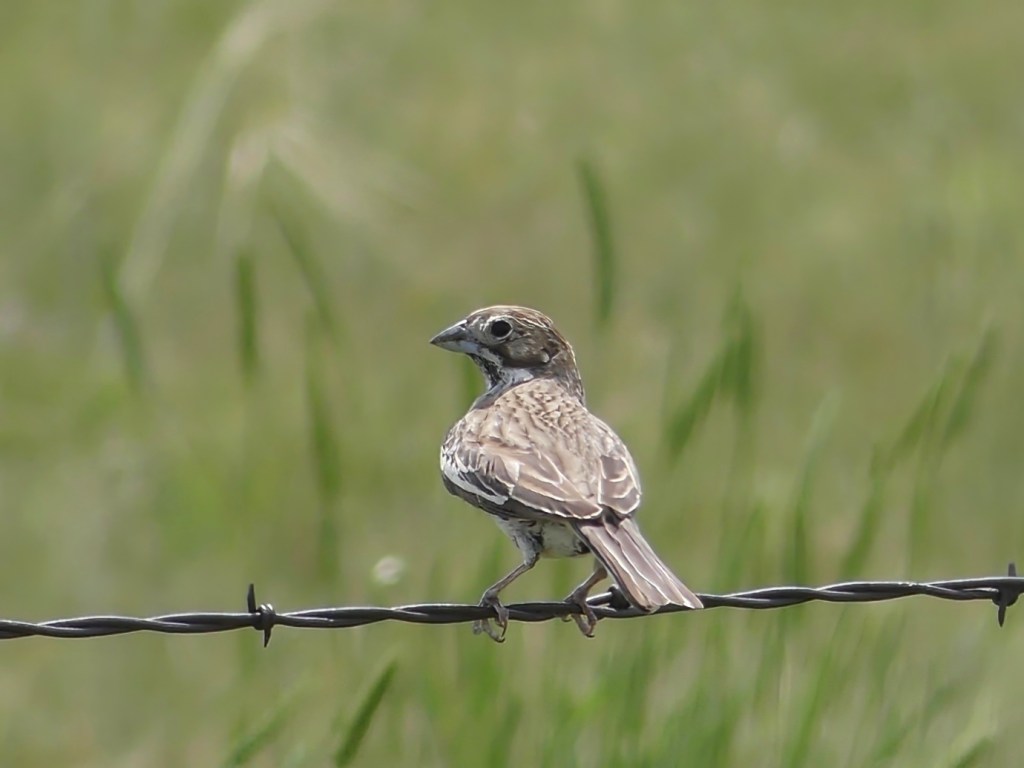
The avian stars of Henry Road are the longspurs – Chestnut-collared and Thick-billed.

I did not get great photos of either longspur as I’d hoped, but these are special birds, and it’s always a treat to see them. Sadly, their range is quickly shrinking. Just a few years ago, they were regularly found in Thunder Basin National Grasslands, where I had been a few days earlier, but none were reported in Weston County (Wyoming) this year.

I also saw quite a few Lark Buntings. Below, a female or immature bird, which looks so different from the adult male.

Another treat was a singing Brewer’s Sparrow.

I spent over 3 hours on Henry Road, much longer than I had intended, and my exit was delayed even more by these cows. There was a cattle guard between my car and the cows and fences on both the right and left sides of the road. The only way out was where those cows were standing. They were oblivious to my horn and just did not want to budge. Once again, I’m sure my friends worry about all the wrong things on my solo road trips. Who would have guessed that a herd of cows would hold me hostage? After much slow and tedious effort, I was able to get through an inch at a time. Literally, those cows would back up only one small step when I slowly crept forward.

Finally, I was back on the highway and drove towards the little town of Lakeside. From there, I turned south towards Crescent Lake NWR for 28 miles on a once-paved road now just crumbling asphalt, dirt, and rocks. I didn’t mind the road at all; my only regret was getting there so late that I could not spend hours and stop as often as I wanted to soak in the beauty. It was amazing and my words are inadequate to convey the awe I felt as Long-billed Curlews and Willets flew overhead calling.

American Avocets, the color of dreamsicles as a friend once described them, Wilson’s Phalaropes, and multiple species of ducks foraged in the little ponds.

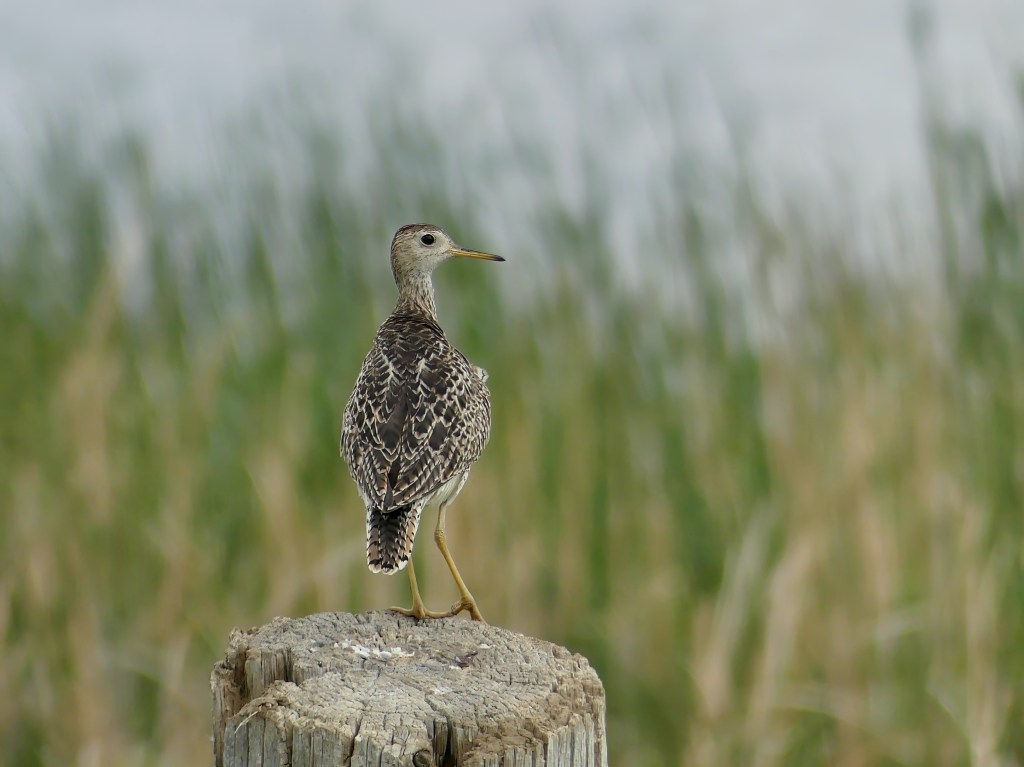
I saw several Upland Sandpipers. I am pretty sure that this one and another that was with it are “teenagers.”

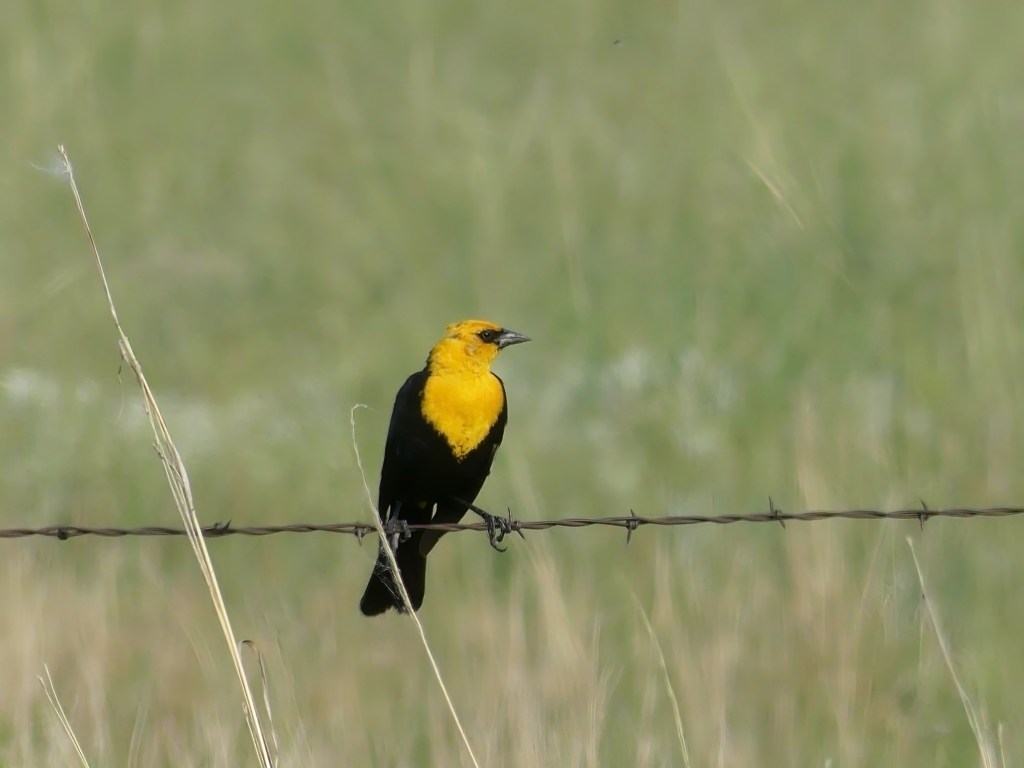
Yellow-headed Blackbirds are one of my favorites.

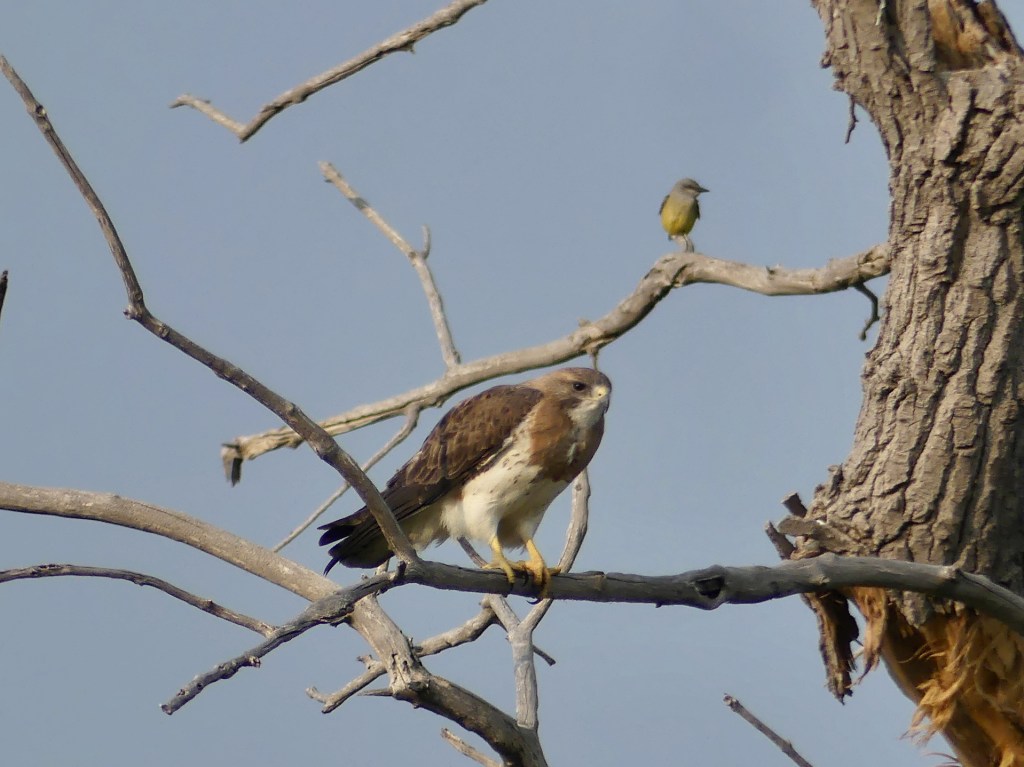
I can’t leave out a Swainson’s Hawk on any story about a trip west. This one came with a bonus Western Kingbird.

This pretty Ornate Box Turtle was also on the road to Crescent Lake NWR.

Because of my poor time management earlier in the day, I had only 2-1/2 hours on this incredible road. This is my favorite kind of birding and I’m now inspired to do a “dirt and gravel road” trip out west.

All that was left after this wonderful day was the long, tedious drive home. I didn’t have quite as much ambition for county birding and iNat as I had on the long drive at the start of the trip. I put in some effort, though, and was rewarded with a Giant Walkingstick at a McDonald’s drive-thru window in Oklahoma.

I accidentally reset my trip meter, but I’m pretty sure that I drove about 6,250 miles on this trip. It was a lot of time behind the wheel, but the rewards were worth it.

David and I spent June 2 in Spearfish Canyon. His flight to Rapid City had been on time and his bicycle survived the flight without needing any repairs, so we had two full days to explore the Black Hills area before he started the RASDak (Ride Across South Dakota) cycling event.

This is a beautiful area and our 14-mile drive on US Highway 14A (Spearfish Canyon Scenic Byway) to the Spearfish Canyon Natural Area was lovely. Above, Bridal Veil Falls, about the mid-point of the drive. We enjoyed our hike from the Visitor Center to Roughlock Falls (top photo in the first post in this series). David found both an American Robin on her nest and an American Redstart visiting its nest in a small bush by the side of the creek. Black-headed Grosbeaks also nest here, but I never got a great look. David, however, saw an adult male so close that he could even see the yellow on its lower belly while I was in the restroom. My best looks were of a pair eating trash in the picnic area.

My main birding goal here was American Dipper, a life bird for David. He got a quick look at one on our hike back to the car, but a little later we had better looks at two dippers a bit farther up the road under a bridge with a nest box. We also saw Least Chipmunks at both the Roughlock Falls picnic area and the area by the bridge.

On Saturday morning, David was very excited to head to Devils Tower. I had been there on my big road trip in 2018, but it was David’s first visit. I can’t say it better than I did then – it’s just a hunk of rock jutting up from the earth, but so very beautiful and inspiring. We walked the 1.5 mile trail closest to the tower and took time to talk with other visitors and take plenty of photos.

Even with our slow pace, we were done early enough to go to Thunder Basin National Grassland. We turned off the highway onto a gravel road and almost immediately four Long-billed Curlews flew across the road right in front of us. Two more stayed behind in the field and we got pretty good looks at them. For someone who refuses to call himself a birder, David was getting some very nice life birds!

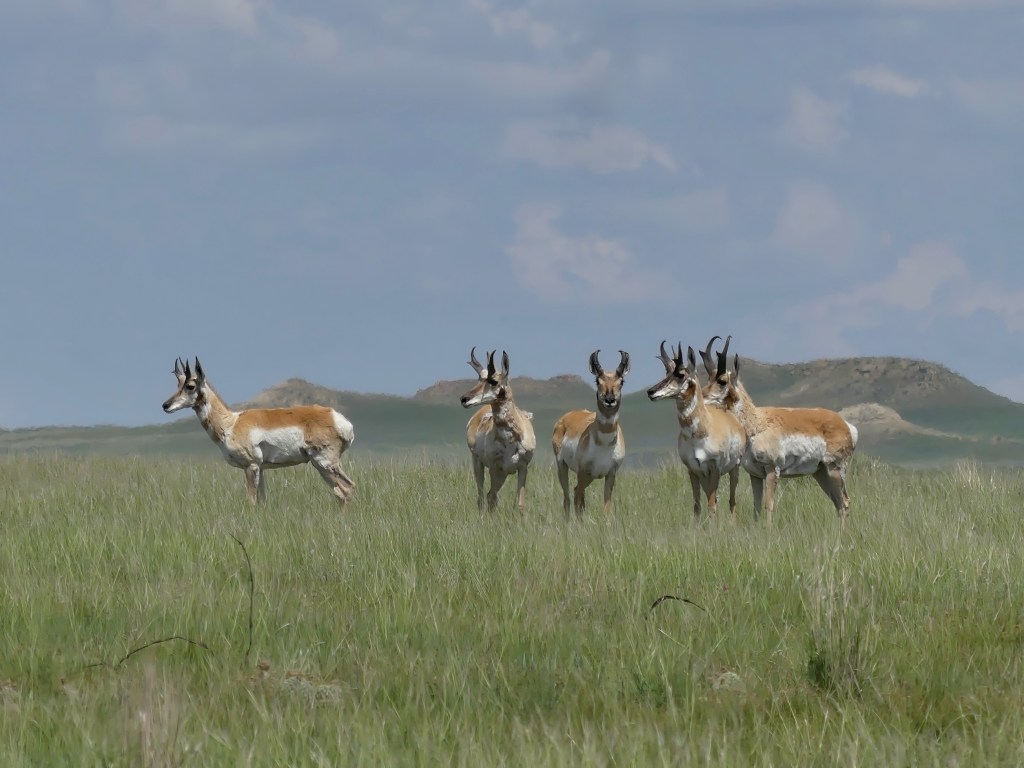
Pronghorn are the fastest land mammal in the Western Hemisphere and we saw many of these beautiful animals at Thunder Basin. They are often called antelope, but they are in a different family and have no close relatives. The San Diego Zoo website has a page on pronghorn with some fascinating facts.

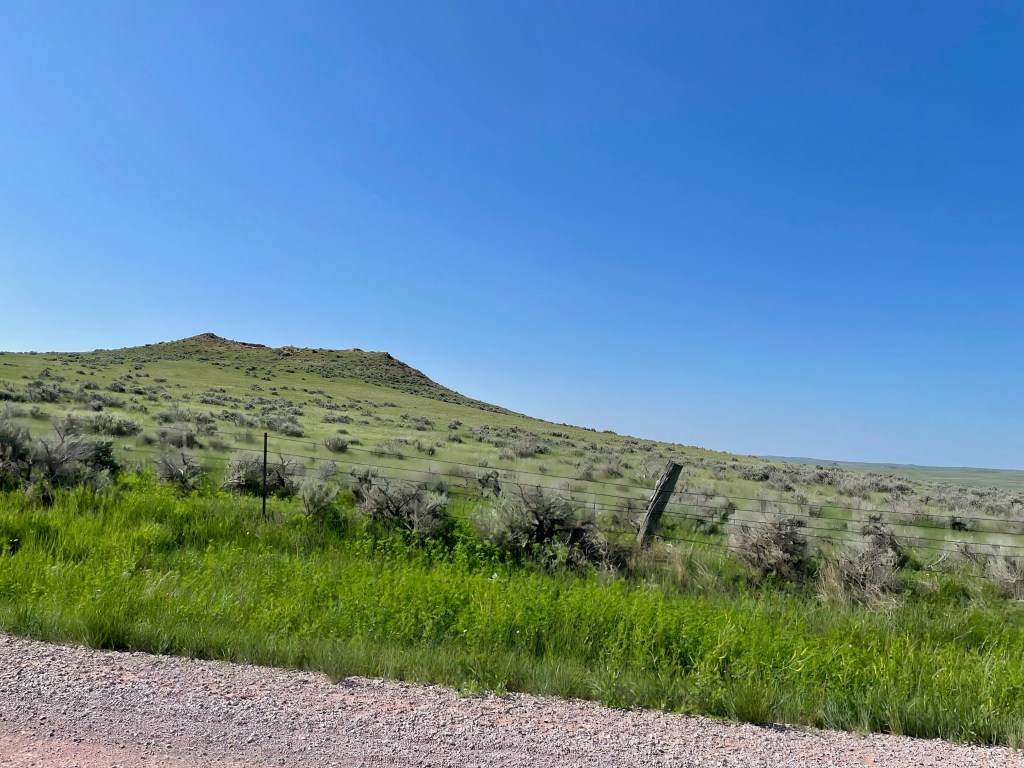
The first RASDak ride was on Sunday from Spearfish to Newcastle, Wyoming. I headed straight to Thunder Basin. This national grassland is in the the transition zone between the Great Plains to the east and the sagebrush steppe to the west and I love that landscape.

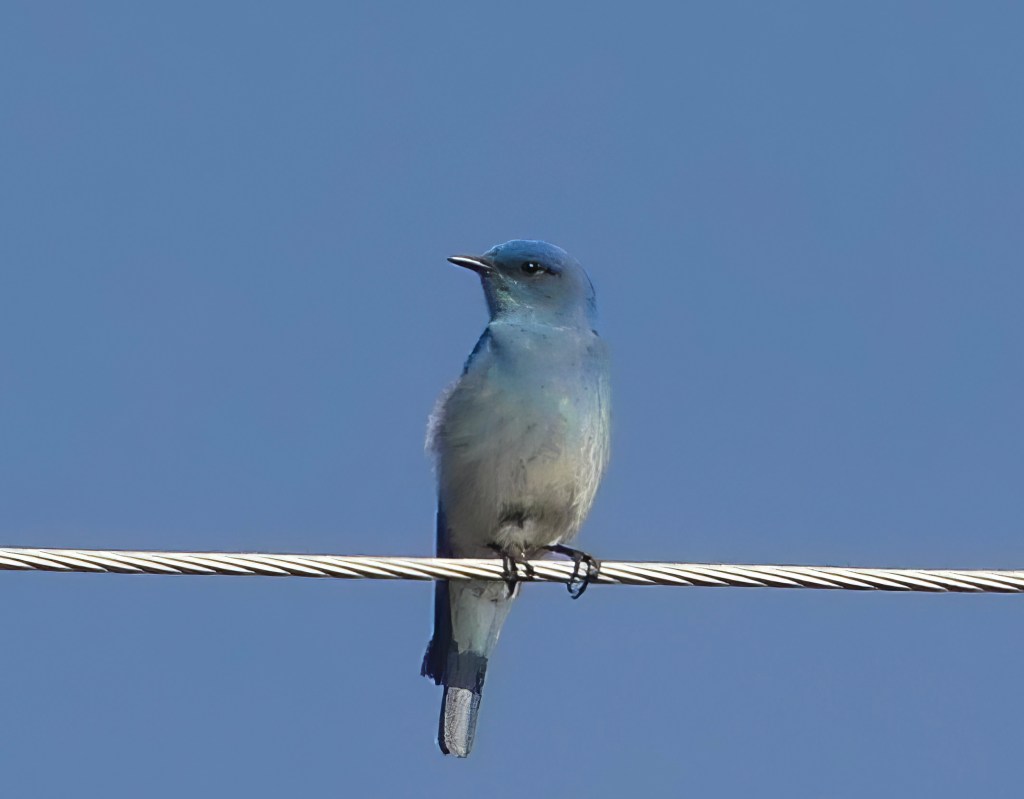
After David’s ride, we drove around Newcastle and saw a few birds including the brilliant Mountain Bluebird below.

The next morning David left for Hot Springs and I went to Thunder Basin once again. I saw several birds like the one in the photo below that proved to be my biggest ID challenge. I took dozens of photos and submitted some to Merlin, a bird ID app, right there on the side of the road. My heart fluttered with excitement when Merlin suggested that it was a Sprague’s Pipit, a much-wanted life bird, but somehow I knew it couldn’t be. Actually, it was a juvenile Horned Lark and I had a good learning experience.

Fall River, fed by thermal warm springs, runs directly through the little town of Hot Springs. Later that afternoon, we enjoyed a pleasant walk on the Freedom Trail which runs alongside the river. There were large numbers of Cliff Swallows nesting under a bridge and other birds in the large trees.

The next day it was on to Custer, David’s shortest ride. I didn’t have time for morning birding as David finished so early, but that gave us time for a trip to Mount Rushmore. I liked it more than I expected as the surrounding area is classic Black Hills with beautiful ponderosa pine covering the mountainside.

I was a bit disappointed that we missed the mountain goats at Mt. Rushmore, but in addition to the scenery, I enjoyed the White-winged Juncos, another Least Chipmunk, and a Melissa Blue butterfly (top left below). The other butterflies were also seen in the Black Hills.

On Wednesday, David rode his bicycle to Rapid City and I drove the wildlife loop at Custer State Park. Below, the lush landscape of the Black Hills is so different from the landscape to the east or the west, although it has prairie dog towns which we also saw in the badlands and at Devils Tower. It’s no wonder that we saw so many prairie dogs; about half of the U.S. population lives in South Dakota, Wyoming, and Montana.

Custer State Park also hosts large numbers of bison and David had quite an experience sharing the road with them while he was on a bicycle. I will share a link once he writes his story.

I don’t know how we crammed so many activities into Thursday. David rode to Sturgis and I went to Canyon Lake Park in Rapid City. The park did not have anything unusual, but I liked the pretty Red-winged Blackbirds, one of David’s favorite birds.

Our first afternoon activity together was a quick trip to Bear Butte Lake. You will be shocked at what I did next, but when you are traveling with a friend, you try to make them happy. So, there was no way we could miss the Sturgis Motorcycle Museum. It actually turned out to be more interesting that I had expected and you can see how much fun David had in the photo below.

We attended the RASDak closing dinner next and still had time for a second trip to Bear Butte Lake. We saw quite a few birds at the lake; my favorite was this accommodating Upland Sandpiper.

The last day of RASDak was back to Spearfish to complete the loop. I spent the early morning in Spearfish Canyon looking for Cordilleran Flycatcher. OK, birding friends, you can laugh. I know that this fall it will be lumped with Pacific Slope Flycatcher, which I have already seen. I am usually very good with avian taxonomy, but I suppose the desire for a lifer prevailed over knowledge. I easily found the bird singing, but only had one quick view of its belly. I finally gave up and went to the D.C. Booth Historic National Fish Hatchery to wait for David where I photographed the Wood Duck below.

We went back to Spearfish Canyon together to continue the search for Cordilleran Flycatcher and David got a quick look at one. We finally figured out that there was a nest in the tree we were watching, but the bird zipped in and out on the back side where it was impossible to see. Our luck with the dippers was much better. We enjoyed watching one fly up and down the river and David got to see it duck under water. He climbed down the creek bank to get the photo below.

On June 10, David joined a couple hundred other cyclists for the Big Mick, a one-day 109-mile bicycle ride on the George S. Mickelson Trail from Deadwood to Edgemont. This successful rail trail conversion is one of the most scenic in the U.S. and David loved it. However, his final day of riding was wet and one of his coldest ever. After riding 450 miles in seven days, David was feeling good and still smiling.

While David was cycling through the heart of the Black Hills, I drove the western route through Wyoming to get from Deadwood to Edgemont. I had 41 Wyoming birds and my goal was 50 species. I birded the LAK Reservoir near Newcastle again and saw a few new birds. I also met Scott Rager, a top Wyoming birder. Scott was very friendly and offered a few tips before I had to move on. (Spoiler alert: Scott will appear again in part 4.)

After picking up David in Edgemont, we drove to Wall, SD and spent the next day at Badlands NP. David flew home the following morning and I took the car for a wash before having a few more adventures. Stay tuned for the finale to the trip.

Continue to part 4, the last story about this trip Road Trip 2023: Days 19-25 – Wyoming and Nebraska (Part 4 of 4)

Diane and I left our hotel in Luverne, Minnesota, on Tuesday, May 30, and headed west across South Dakota. We met in SD in 2010 and both of us have birded quite a bit in the state, so we didn’t plan any stops other than at rest areas until we reached Badlands National Park.

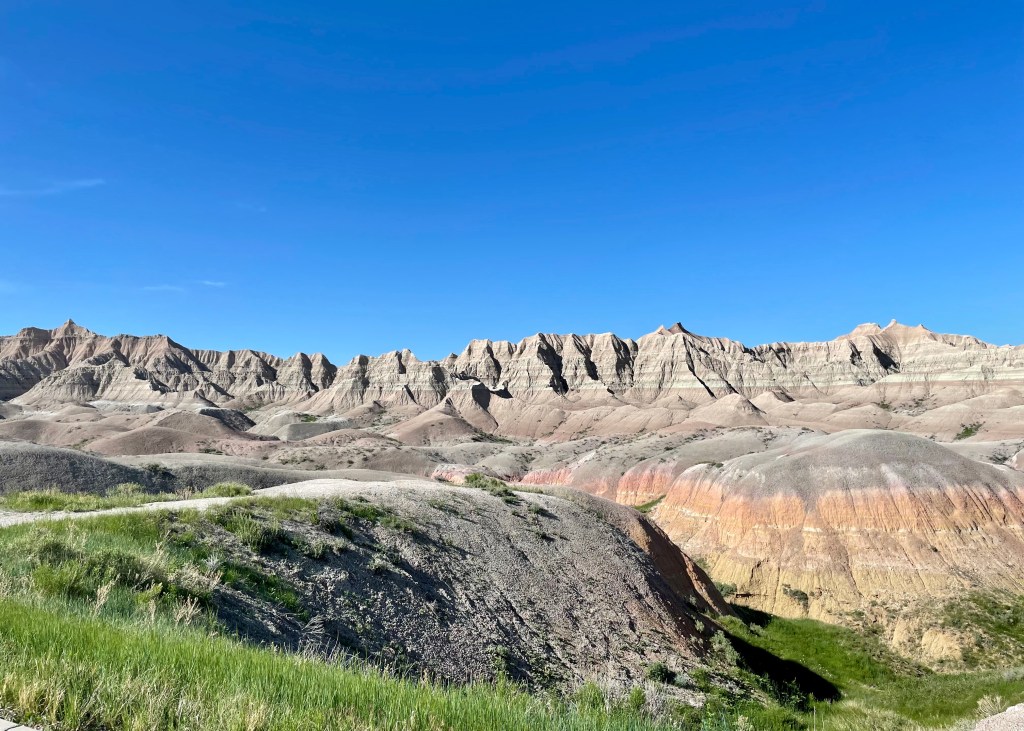
I had reviewed bird lists for the park to prepare for the trip, but I had not looked at any photos of the landscape. Thus, I was absolutely awestruck upon our arrival that afternoon. I was instantly, madly in love with this place. The only words that I can find – beautiful, dramatic, rugged – seem inadequate and my amateur photos do not do it justice. If you have been to South Dakota’s badlands, you know what I mean. If you have not been there, go! Put it on your bucket list.

The stark contrast between vast mixed-grass prairies where the buffalo still roam and extensive rock formations was very appealing to me. The section of the park depicted below reminded me of Canyonlands National Park in Utah.

Badlands National Park covers 244,000 acres. Its geologic foundation began 75 million years ago as deposits of rock built up in layers over the next 47 million years. About 500,000 years ago, erosion began as the Cheyenne and White Rivers carved their way through the landscape forming the dramatic peaks and canyons that we see today. In the photo below, the layers are especially noticeable.

Diane and I felt our attention constantly pulled between pull-overs on the side of the road to savor and photograph the landscape and the search for birds and other wildlife. We quickly learned that the secret was to get out at 5:30 or 6:00 AM and focus on wildlife first.

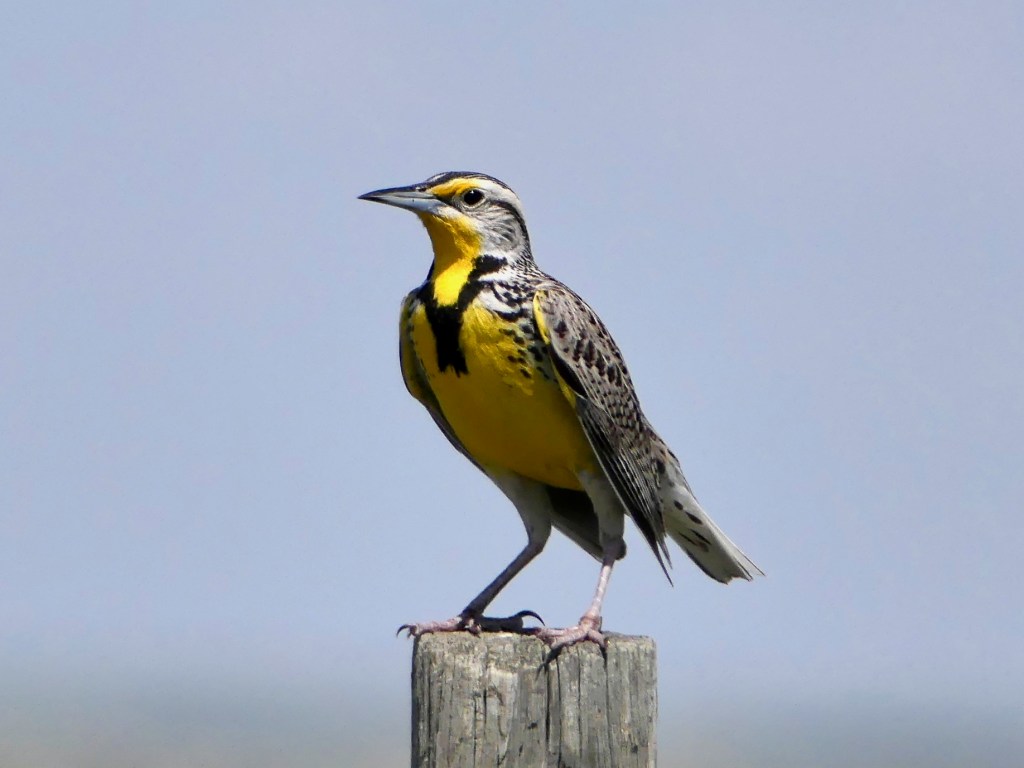
We saw many iconic species of the west with the most numerous being Western Meadowlark. Our host at the Badlands Inn called its song “the soundtrack of the badlands.” Somehow, I failed to get a photo of a meadowlark in the badlands, so here is one from an earlier trip west.

Another gorgeous western bird that we saw here (and I would see many more times during this trip) was the dapper Lark Bunting.

Birders and non-birders alike watch for other wildlife with the expected species being bison, pronghorn, bighorn sheep, mule deer, and black-tailed prairie dog.

Badlands National Park is in the heart of historic bison range. Before European settlers arrived, about 30 million bison inhabited North America, but by the late 1800’s they were nearly gone. A project to reintroduce bison to the badlands was started in the 1960’s. A major conservation achievement resulted with a healthy herd of nearly 1,200 individuals. Read more about this project and learn how bison improve the prairie ecosystem for all its inhabitants in Bringing Bison Back to the Badlands.

Like most Americans, we wanted to see our national mammal. We saw more than 100 bison with many in the distance and some right by the road.

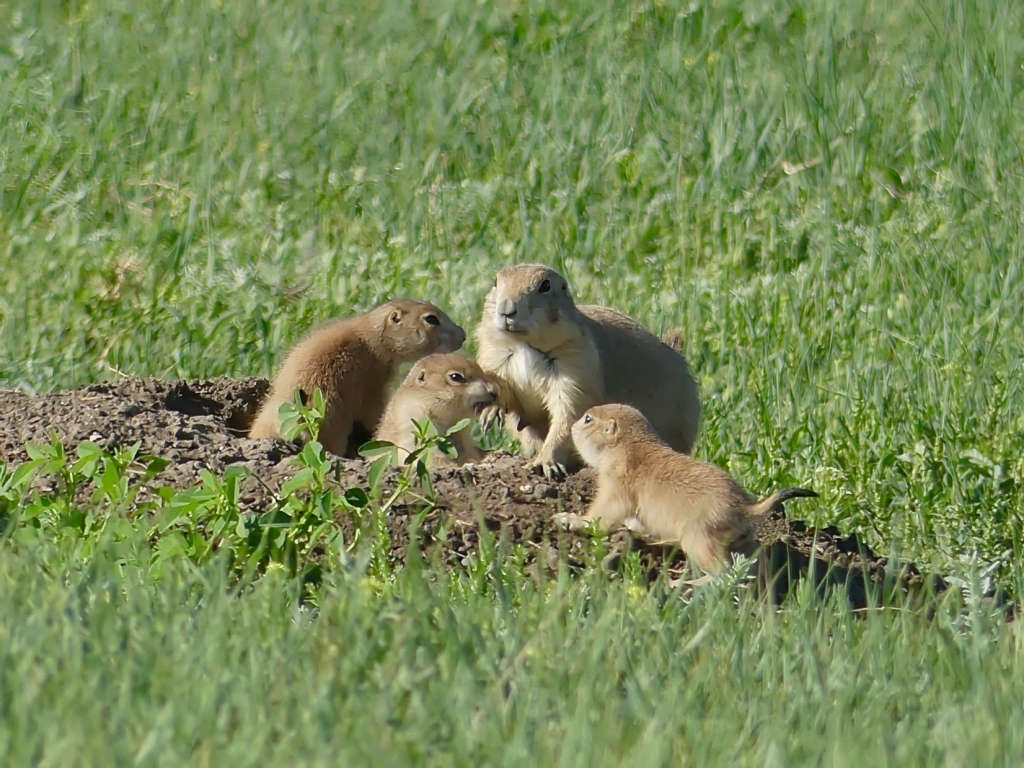
We also saw hundreds of prairie dogs. We especially enjoyed watching the families, some with as many as five babies. We called these adorable little creatures “puppies” and later learned that we weren’t far from the correct term “pups.”

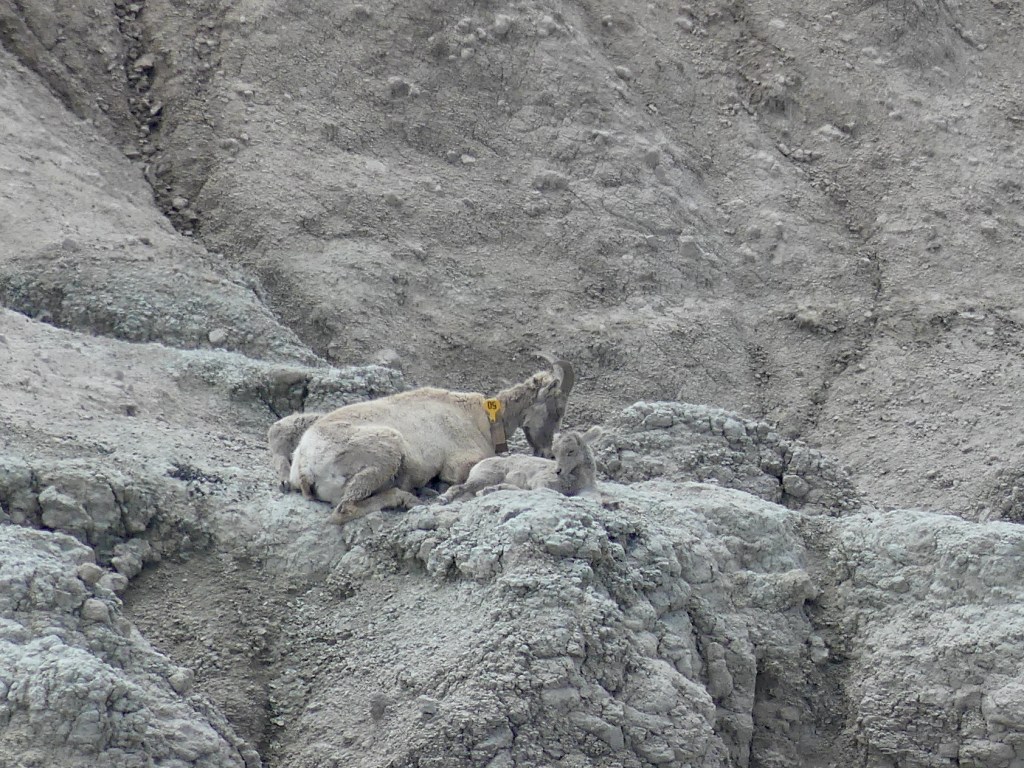
Bighorn sheep were not as numerous, but we found several at the Hay Butte Overlook.

A week and a half later I would return with David and we would see sheep again at the same overlook, but high up in the rock cliffs. That group appeared to be all females with their babies.

My biggest surprise (and disappointment) with wildlife was not seeing a single snake or lizard, despite signs everywhere warning of rattlesnakes. My only consolation was this cute Woodhouse’s Toad right outside our motel room.

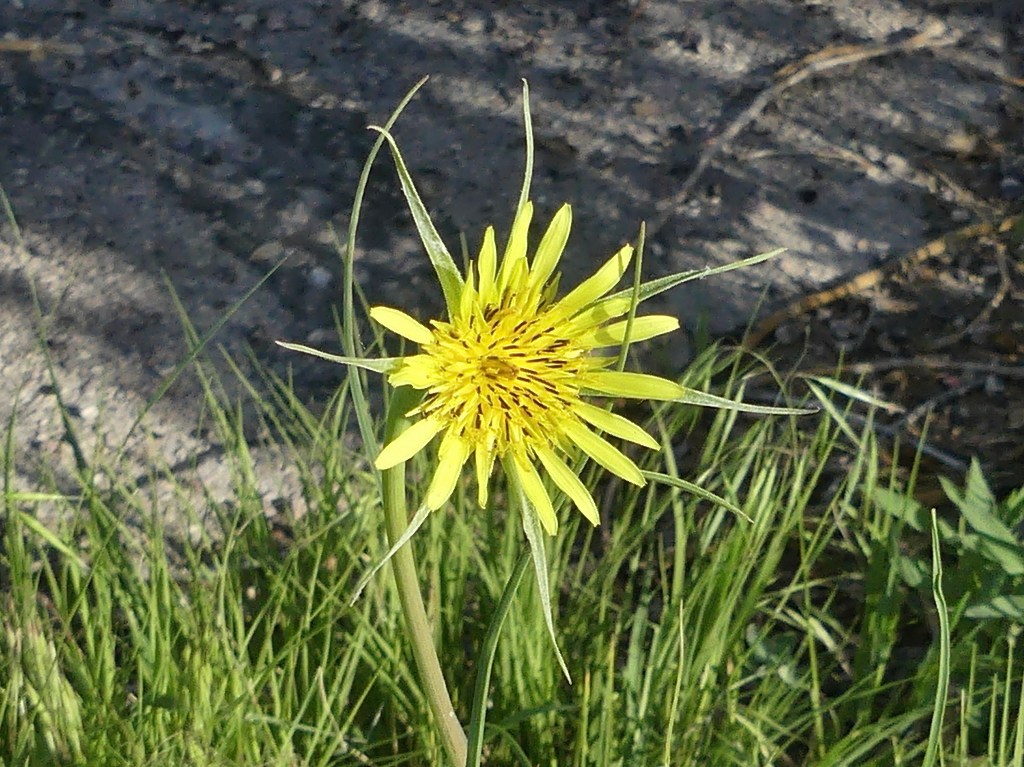
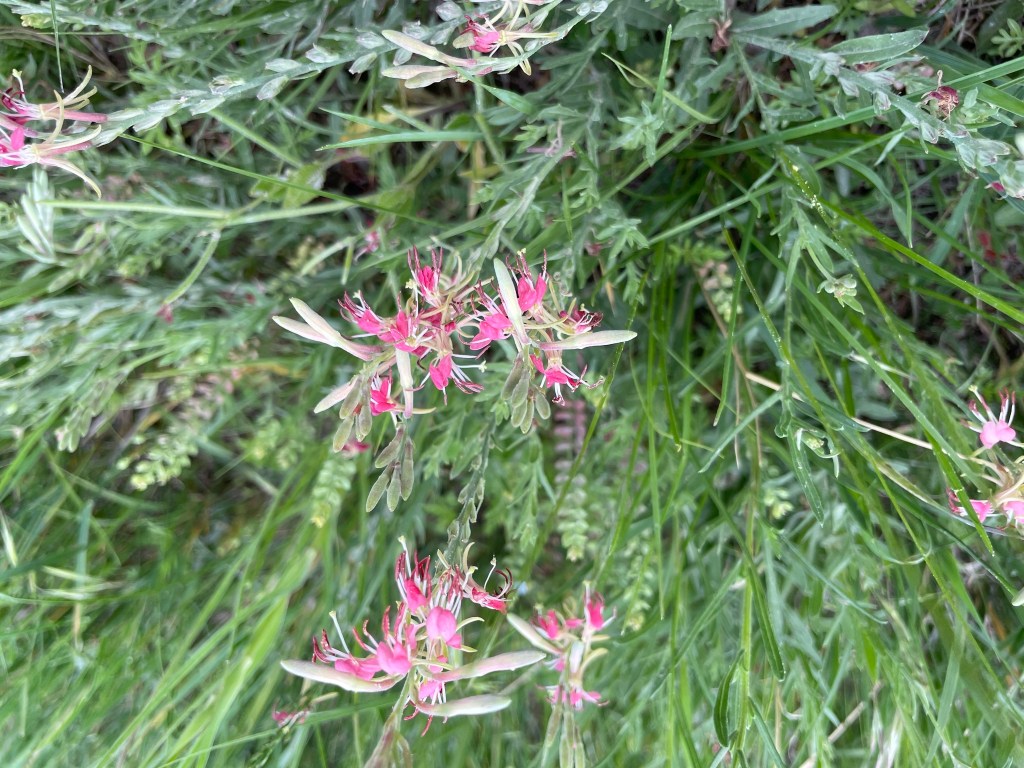
As in Minnesota, wildflower season was just beginning and we found some pretty flowers.

Some of the flowers above were photographed at Conata Picnic Area, one of the spots that Diane and I especially liked. David and I visited the same area twelve days later and I was sad to discover that all the wildflowers on the sides of the entrance road and picnic area had been mowed down.

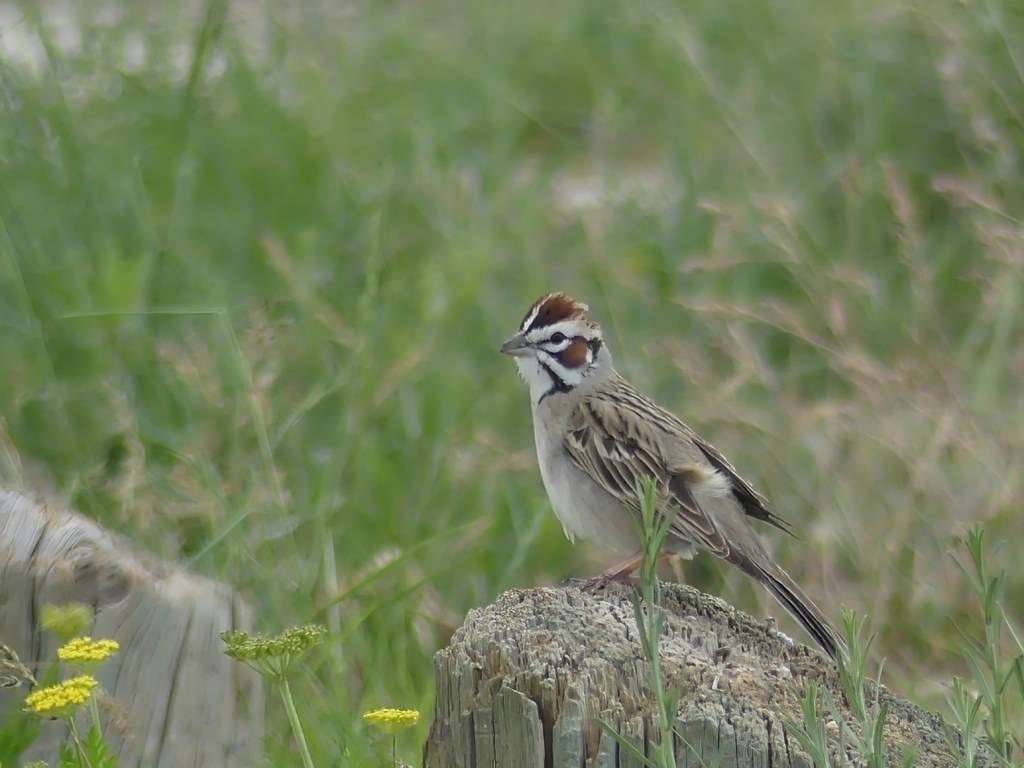
We saw birds there, too, like this pretty Lark Sparrow, a common species in the west.

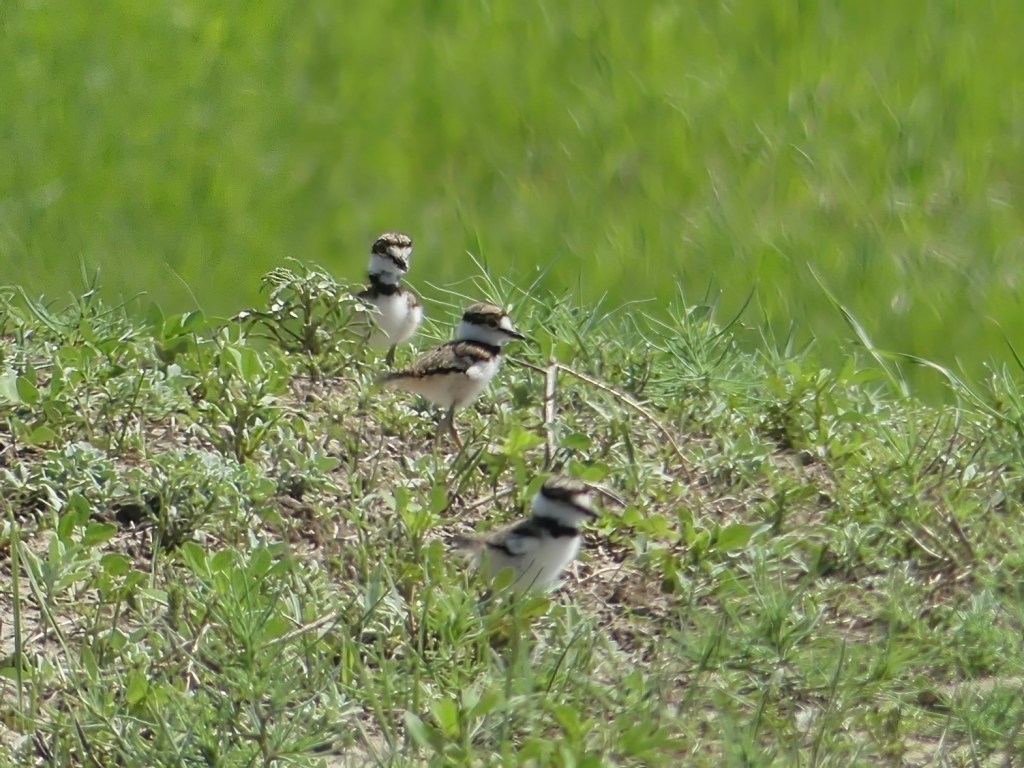
Perhaps this spot endeared itself to us because this is where we saw a Killdeer family with three chicks. Killdeer are common across the country, but we don’t see the babies often. And, babies of all species were a delightful recurring theme on this trip.

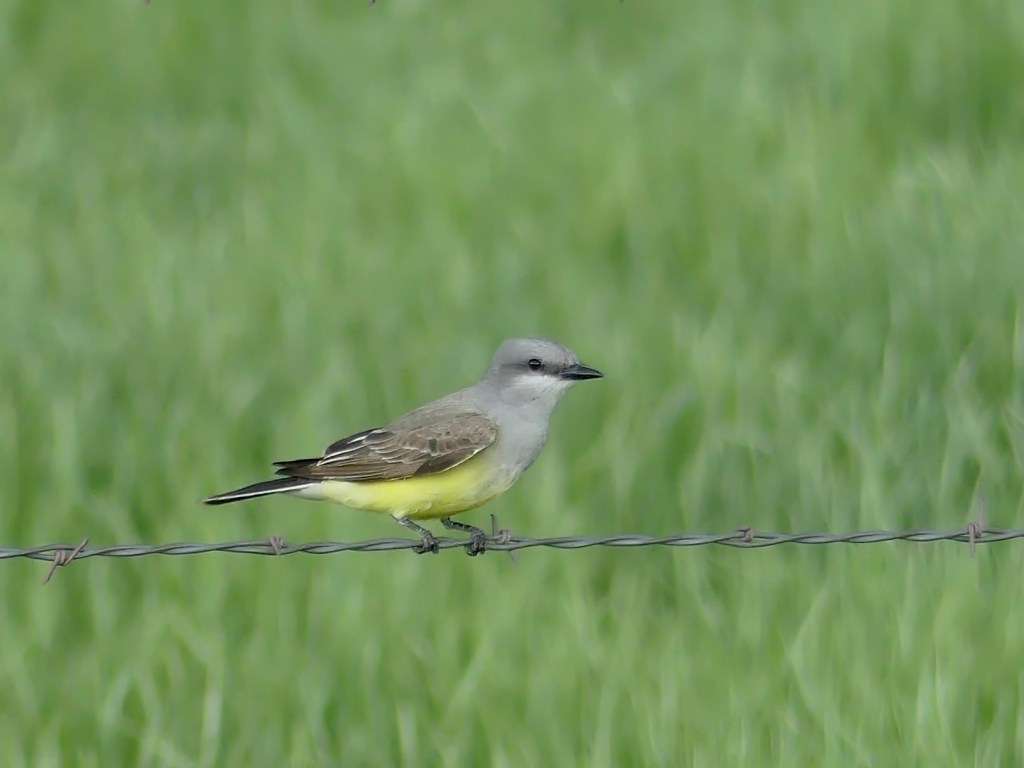
This Western Kingbird was also nearby. Birds that are common in the west are not common to us and we loved what felt like a visit to old friends that we do not see often enough.

We saw birds that are common in the east, too, including many Red-winged Blackbirds, Common Grackles, and Brown-headed Cowbirds. I tried to ignore the cowbirds, but how could I when one posed so nicely?

We never tired of stopping to photograph the ever-changing landscape. Sights like Yellow Mounds, a favorite spot of many park visitors, constantly awed us. Yellow Mounds (photo below) gets its mustardy color from the mineral goethite. The Yellow Mounds are ancient fossilized soils that geologists call paleosols.

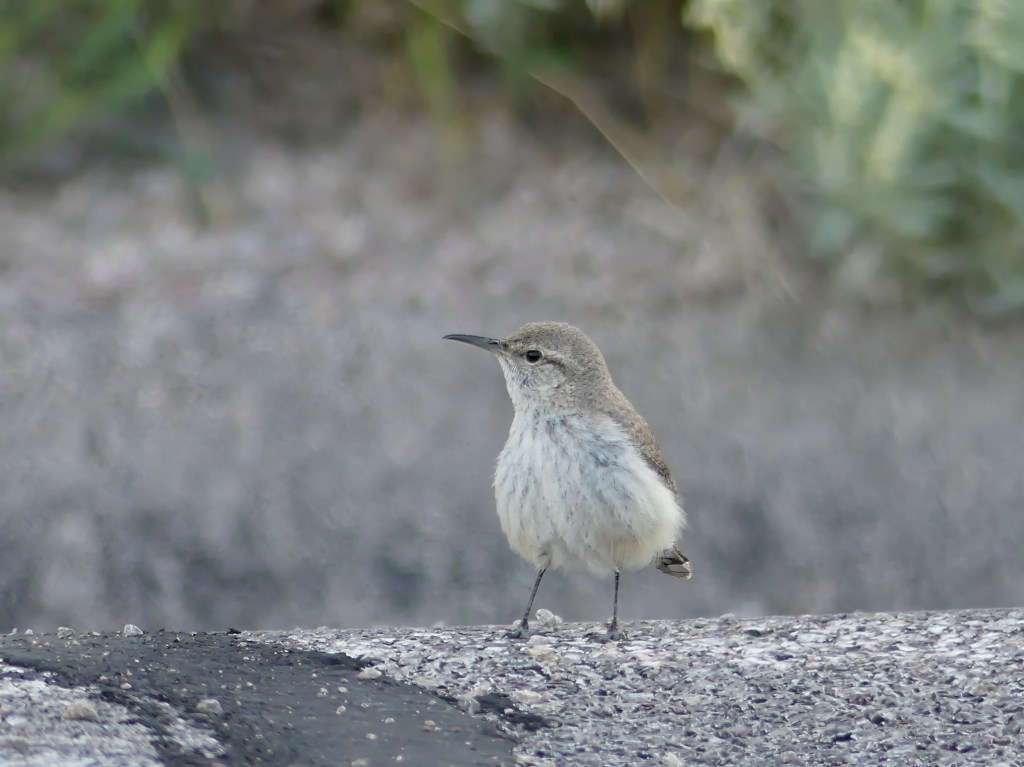
On our last morning, Diane and I got out really early and it paid off with our best views ever of a Rock Wren. It was fun to watch it move quickly along the rocky edge by the side of the road picking at insects.

Much too soon, our time in the park was gone and we had to leave for the Rapid City airport. Diane and I spent two full days in the park. Later I would return with David for one day. One day is sufficient to drive all the roads and see most of the iconic wildlife in the park. Two days is enough to also see some birds. However, I could easily spend three or four days in the badlands and not be bored.

There are two main areas to stay, Wall and Interior. David and I stayed in Wall, which has nicer (and more expensive) lodging, but I preferred Interior, where Diane and I spent two nights. Our motel was “basic,” but we were just a couple of minutes from the park loop road.

I would love to visit Badlands National Park again, but for this trip it was time for Diane to fly home and David to arrive. I would spend the next week exploring the Black Hills while David rode in RASDak, a 350-mile cycling event.

Continue to part 3, Road Trip 2023: Days 8-18 – Bikes and Birds (Part 3 of 4)

After last year’s “birdless” birding and biking trip, I was thrilled when my friend, David, suggested South Dakota in June. That is not a slam against Utah, which was amazing, but March was not the birdiest time of the year to be there. South Dakota would not give me many life birds, if any at all, but it would have abundant bird life in June. While I was birding, David would survey the beautiful scenery of the Black Hills from his bicycle during RASDak (Ride Across South Dakota). Below, a preview of the beauty awaiting us.

I left my home in Florida on May 26 and headed first to northwest Iowa. Each big road trip now begins and ends with three long days of driving. Those three days are tiring, but the monotony is relieved by birding at stops along the way. Two White-winged Doves calling at a rest stop in Madison County, Florida, were unusual enough to be flagged as rare by eBird. It was fun to find a singing White-eyed Vireo and an Orchard Oriole behind a Shell gas station in Tupelo, Mississippi. An Indigo Bunting at a roadside rest area in Arkansas was a new state bird (#57). Once I hit Iowa, every rest area hosted singing Warbling Vireos.

Iowa also had one of the prettiest rest areas that I have ever seen. This gorgeous mural at the entrance to the women’s restroom couldn’t help but relieve road weariness.

Finding interesting things for iNaturalist also helped. I liked this pretty Foxglove Beardtongue at a gas station in Missouri.

Finally, I arrived in Haywarden, Iowa, on the evening of May 28. Two Common Nighthawks flew around the hotel and surrounding fields as I unpacked my car. They stayed just a couple of feet from each other and I loved watching and hearing them off and on for nearly an hour.

My friend, Eric Harrold, met me at the hotel the next morning and we set off with the goal of getting my Iowa bird list to 50 species. Eric’s birding skills and local knowledge quickly got my Iowa list to 59 species and we headed north to Minnesota. We enjoyed chatting over lunch at JJ’s Tasty Drive In in Luverne where my friend, Diane, joined us. Her husband had driven her down from Mayer (a small town west of Minneapolis) and she would spend the next few days with me.

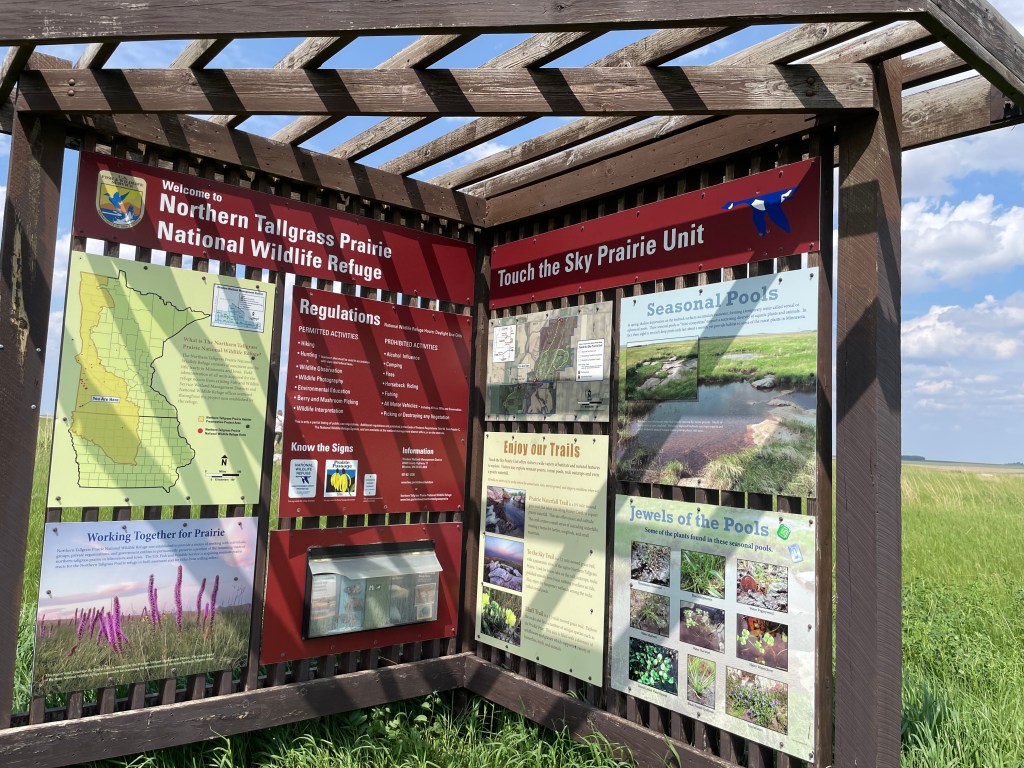
The first afternoon stop for the three of us was Blue Mounds State Park. It’s a nice park, but did not have anything notable on this particular day, so we checked out the nearby Touch The Sky Prairie unit of the Northern Tallgrass Prairie National Wildlife Refuge. We all immediately fell in love with this 1,000-acre segment of a rare native ecosystem. And, it’s the ecosystem itself – how the grasses, wildflowers, and birds are interconnected – that makes this place so peaceful and captivating. All of us want to visit this inspiring prairie again.

Diane and Eric (and Eric’s dogs) on the prairie trail.

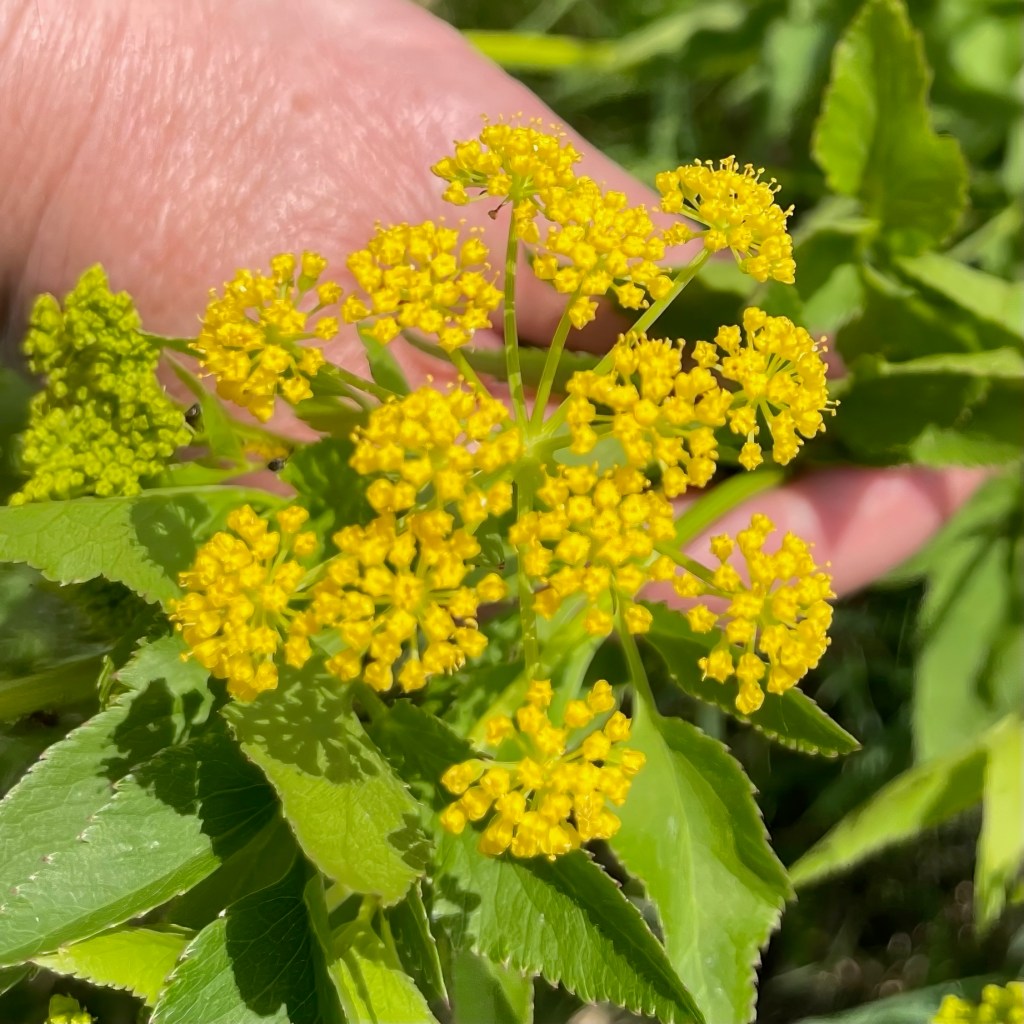
Wildflower season was just beginning. Below, a pretty Prairie Violet and Golden Alexanders.

The highlights of the day were the many singing Dickcissels and Bobolinks. I’ve never had better, closer views of these species and I love seeing birds thrive on their breeding grounds.

Finally, we had to say goodbye to Eric after a wonderful day together. Diane and I returned to a different part of Blue Mounds SP for another short visit. Soon, the prairie called us back and we visited Touch The Sky one more time late that afternoon to indulge our fascination with the cooperative Bobolinks and Dickcissels and take more photos.

Prairies covered nearly a third of North America before European settlers began plowing in the 1860’s. Today significantly less than half of the historical area remains intact. Tallgrass prairies have suffered the greatest losses due to their higher rainfall and rich soils which makes the land productive for growing wheat and corn. As a result, tallgrass prairie is now one of the most endangered ecosystems in the world.

Estimates for the remaining area of tallgrass prairie vary from less than 1% to 18% of its original range. Many threatened or endangered species depend upon these remaining patchy areas for their continued survival. Audubon’s 2019 North American Grasslands and Birds Report lists Henslow’s Sparrow, Bobolink, Greater Prairie-Chicken, Northern Bobwhite, Vesper Sparrow, and Eastern Meadowlark at risk in tallgrass prairie. These species have already suffered huge population losses in the last 50-60 years, from 37% for Vesper Sparrow to an astounding 97% for Greater Prairie-Chicken. Farther west in mixed grass prairie, Lesser Prairie-Chicken is on the verge of extinction.

To learn more about the complex and fascinating prairie ecosystem, see this brief overview of Kansas’s tallgrass prairie. More excellent info is on the Minnesota Prairie pages of the MN Department of Natural Resources.

Continue to part 2 about this trip, Road Trip 2023: Days 5-7 – The Badlands! (Part 2 of 4)

It is February 28, 2023, as I start this post. I took the photo below from my deck this morning. The banner photo for this blog was taken on New Year’s Day several years ago from this same spot.

I’ve been back in NC for 10 days and I am painfully aware that this will be my last spring in this house. I was not born in NC, nor did I grow up here, but I’ve fallen in love with my adopted state during the last 25 years. This is where I moved shortly after my husband died and where I healed from that grief. The dogwood trees and daffodils and my hands in the dirt comforted me. I didn’t plan to garden, but I couldn’t help it. Flowers bloomed in my new yard that first year and I wanted more. It was impossible to work outside and not feel the joy of new life that came with the spring.

For the first few years, I occupied myself with planting and weeding and quickly developed an interest in native plants. My first friends in NC other than neighbors were “plant people.” I was fortunate that some of my property was uncleared and still hosted wildflowers. I remember a friend literally leaping with joy when she discovered a Carolina lily, Lilium michauxii, the official state wildflower of North Carolina, growing by the edge of my lake. Solomon’s Plume is abundant in my backyard where it thrives alongside Christmas Fern, Jack-in-the-pulpit, bloodroot, and other native plants.

After several years in NC, wildlife gardening led to an interest in the wildlife for which I was creating this little one-acre haven of native plants, dead trees, brush piles, and fallen leaves.

I have many happy memories here of friends and family, flora and fauna, but I want to focus on now, my last month living here and the new memories that I am creating. I want to notice every little thing and burn the images into my brain. I studied a junco a few days ago – the male charcoal gray with a pure white belly, little pinkish bill and much darker pink legs to match. The field guides show all that, but I saw something else that I’d never noticed before – their backs are subtly streaked. It’s been a joy to indulge in such detailed views of half a dozen of these pretty little birds on my deck every day. They are a bit shy and flush when I walk outside; the photo below was shot through two panes of glass.

The creature that excited me most so far this spring isn’t a bird, but a mammal. We have always had opossums in the neighborhood, but I had not seen one in my yard. Since starting iNaturalist, I had really wanted to see and photograph a live opossum. When my son, Dave, was living with me last year, he saw them in the yard several times and got photos. He even got me out of bed a time or two, but they were always gone by the time that I got outside. Finally, when I pulled into the driveway after picking up my friend, Diane, at the airport on February 19, we saw an opossum sitting on the top of the fence illuminated in the headlights. I was thrilled and quickly took a few cell phone shots through the windshield. It stayed there, so I carefully stepped outside the car and took more photos with my iPhone. Again, it didn’t move, so I got my camera from the house. Amazingly, the opossum was still on the fence when I got back and slowly climbed a tree while I took the photos below. My little iNatting heart was so very full.

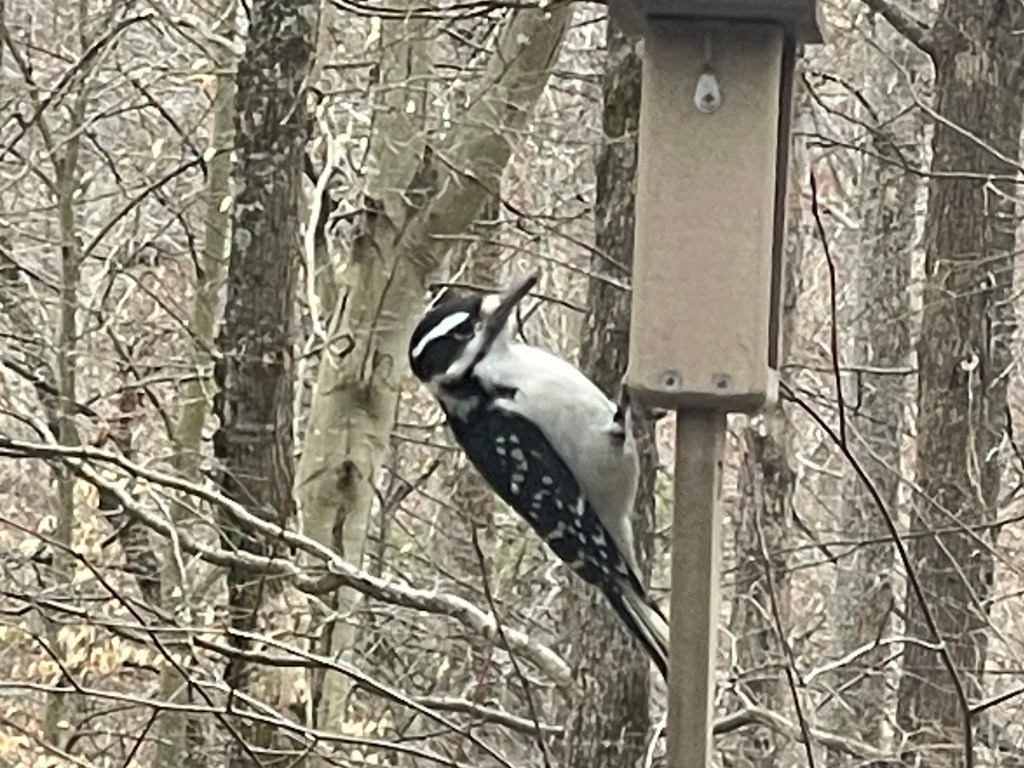
Another creature that brought me happiness was a visit from “my” Hairy Woodpecker. Diane lives where they are common, so she was a bit surprised by my outburst, “But you just don’t understand how much I love that girl!” I fed birds in this yard for many years before I ever saw a Hairy Woodpecker on the deck feeder. A few years ago, a female began visiting and I have suspected that it is the same individual who continues to visit. She is one of my favorite birds; not Hairy Woodpeckers in general, but that particular female Hairy has stolen my heart. I took the photo below with my cell phone on February 20.

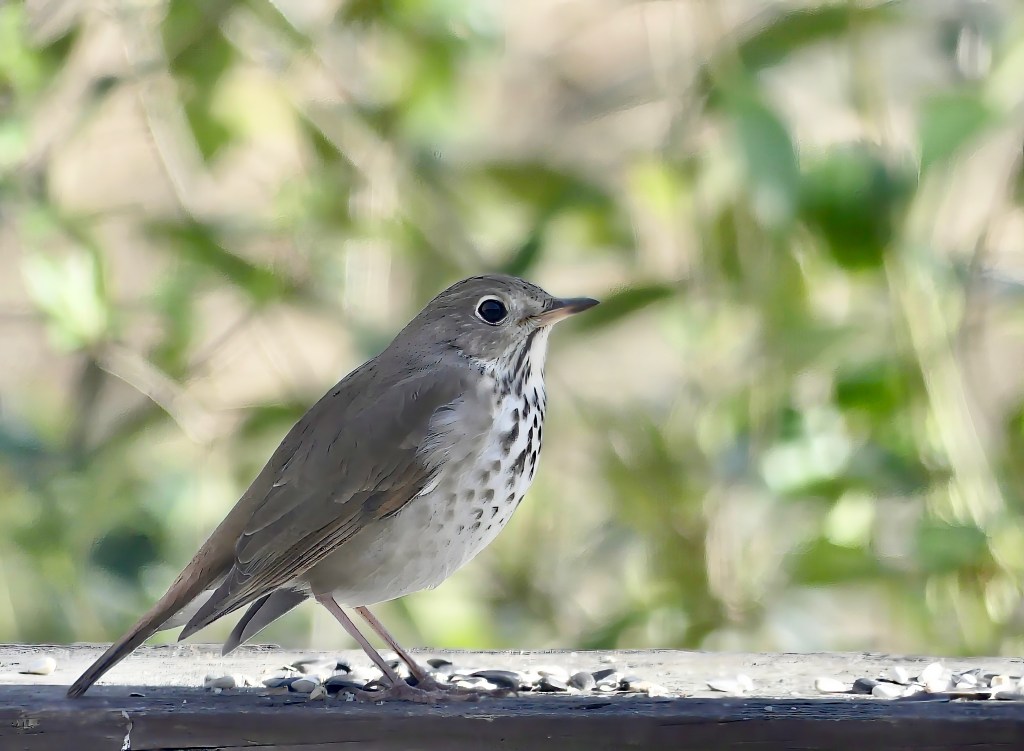
As much as I love the Hairy Woodpecker, the “winner” of most favorite bird of Spring 2023 has to be a Hermit Thrush. After many years of envying people who claimed them as feeder birds in the winter, last year (winter of 2021-2022) I finally got my own Hermit Thrush. I assume it’s the same individual who returned this past winter to partake of the suet that is always available on my deck. Except that it ran out when I left for Florida in November. I was absolutely thrilled when I returned in February and the thrush was still hanging around my deck. I immediately put out new suet and I’ve seen this beauty several times every day this past month.

I also did a little mothing in March, something that I will really miss. I expect that I will find moths in Florida, but it won’t be as easy as just stepping outside my kitchen door. I have always found peace in being outside at night feeling the cool evening air on my skin and listening to Spring Peepers. Later in the year, I loved Summer Nights with Barred Owls softly calling. Below is a favorite from a few days ago, a Common Oak Moth.

And, just like that an entire month has passed much too quickly. I am again in Florida and I have a contract for the sale of my NC house. In a few days, I will go back for one more week to finish moving and indulge in a few more days of intimacy with “my” NC birds.

I arrived back in NC on April 2 and so much has changed in just one week. The yard is bursting with signs of spring – fresh green growth on just about everything and many new flowers – the pure white Carolina Silverbell blooms, Red Buckeyes ready for hummingbirds, and blue woodland phlox spilling into the grass near the street are just a few. The birds, too, display evidence of the changing season. An Eastern Towhee sings “Drink your tea!” instead of its simple “tow-hee” call. Further proof of spring is the absence of my beloved Hermit Thrush, apparently headed north to its breeding grounds.

The days are flying by and I am becoming overwhelmed with the tasks of moving. I wanted to photograph all my beautiful wildflowers, but the only photo I got was the daffodils above.

I don’t have time to go birding, but I try to sneak a few minutes each day to watch the activity in my yard. After 25 years in this house, it’s all so familiar, so much the same as any other year, but yet each spring is different, too. Chipping Sparrows have not been common in my yard in the past, but this year they are in the driveway, on the deck, so visible everywhere. It’s like they are taunting me with the fact that I have not yet been able to find a Chippie in Pinellas County, Florida.

My thoughtful friend, Carol, arranged a last minute lunch with friends when I had to be out of the house for the inspection, my only break from the frantic activities consuming my last days in NC. I’ve said that I have no regrets about moving, but being with people who I’ve shared so much with, people who care about me, gave me some twinges about it all. I am so grateful that these people have been in my life. Isn’t there a saying that if you don’t feel sad about leaving, it’s even sadder because you had nothing to love? Goodbye North Carolina, I’ll be back to visit often and I will always love you.

I’m feeling philosophical as we start a new year. It’s more than a new year for me. With my move to Florida in 2022, it’s the start of a new chapter in the story of my life.

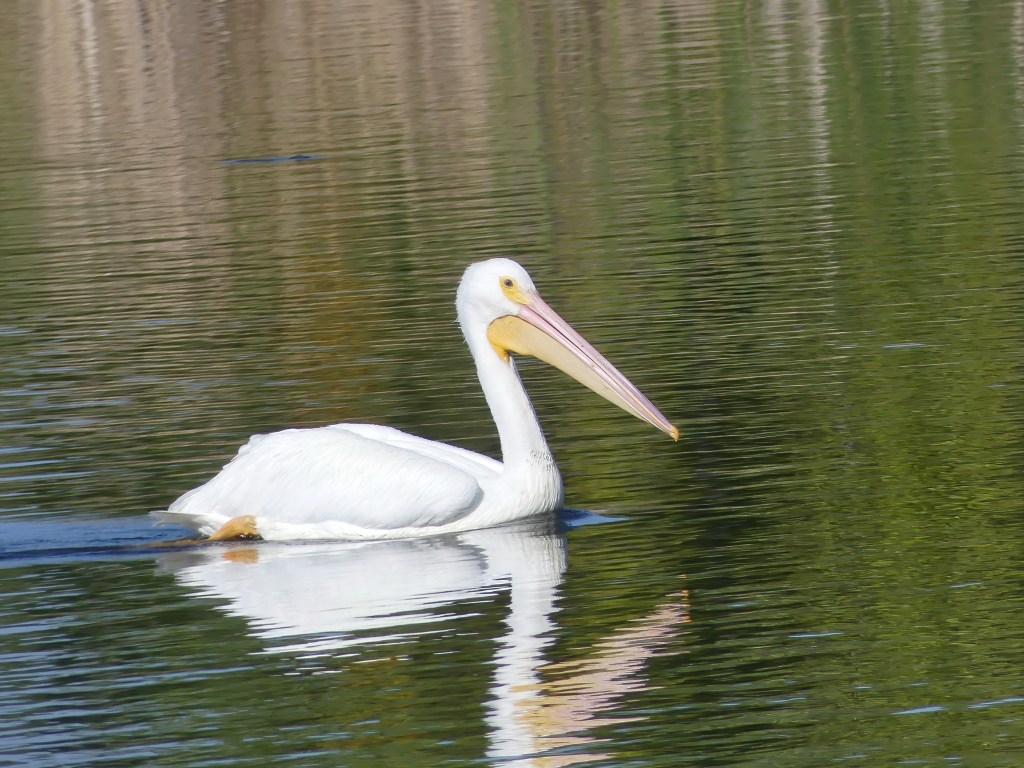
The American White Pelican below doesn’t have anything to do with this story, but you’re not going to keep reading without pretty pictures, are you? I photographed this lovely bird recently in Pinellas County, Florida.

I’ve been thinking a lot about how I want to spend my time. I commented to a friend recently that sometimes we do things just to say that we did them and sometimes we do things for the sheer joy of doing them. Initially, I characterized the first reason as competition, but I think it’s really more wanting to be accepted by a particular group of people. I was not able to run in this year’s Best Damn Race for health reasons and it hurt a bit to be there with my friend, David. I loved watching the participants and I could feel their exhilaration, excitement, and satisfaction in achieving a goal. I kept thinking “I want to be one of those people.” But to be one of them, I have to actually run. Certainly, many felt the joy of the doing, but I’ll bet that some just did it because that’s what runners do. It’s the same with any activity. I confess that there are days that I’ve gone birding when I didn’t really want to, but that’s what birders do and I want to be accepted as a birder.

I photographed the Rose-breasted Grosbeak below in my NC yard. I’ve yet to see one in Florida.

So, what triggered all this introspection? The move to Florida, of course. In particular, the differences between birding my home county in North Carolina and my new home county in Florida where there are more birds and more great birders. I still remember when I first started birding and wondered what one would do after finding all the easy life birds. And, then I learned that there are many games birders play. In Forsyth County, NC (and almost certainly most counties in the country), the game that most serious birders play is trying to see as many birds in the county as possible every year. I did it, too, for many years. Between 2007 to 2020, I came in at #4 five times on eBird’s “Top 100” and I was never lower than #8. I am #8 in eBird’s all-time ranking for Forsyth County. In Pinellas County, I was tied with four others for #60 in 2022, but my all-time ranking is even lower at #168. I’ve been trying to work on my Pinellas County list, but it’s hard to motivate myself when I will never be a top birder here. Plus, I’ve already seen most of the birds that I “need” here many times. Add my recent obsession with iNaturalist and desire to run, learn to ride a bike again, and such and it quickly becomes obvious that there is not enough time to do it all. Yet it’s hard to let go of that quest for home county birds. I almost feel guilty, like I’m not a real birder if I don’t spend every day seeking new county birds. However, I’m going to try to let it go a bit.

Or, maybe nothing that I just said makes sense. Maybe in real life the hits and misses (ticks and dips in birder lingo), joy and pain, competition and acceptance are all mixed up and inseparable. Life is complicated.

So, what am I going to do? I’m going to continue to have goals because they give me a direction. But, at least for 2023, I will try to curb some of my competitive instincts and do things that bring me joy.

For 2023, I will NOT obsess over my Pinellas County list.

I WILL obsess over spend time and effort on the following birding activities:

My life list. The primary goal for most birders. Today my list stands at 1,762. Can I reach 2,500? That would be almost one fourth of the world’s birds.

My most recent life bird was this Bahama Mockingbird, a rarity in Florida.

A daily eBird checklist. My current streak is 1,141 days and I don’t want to lose that without being absolutely certain that I don’t care about it. Today I still care. It makes me think about birds and do something every day. And it’s easy.

My 5-mile radius patch. I love this idea embraced by many birders with concern about the environmental impact of travel. And, it’s nice to spend time actually birding rather than driving.

County birding. Not the single-minded focus on just my home county, but trying to get new birds in every county where I travel. I will also try to bird every county in Florida as I did in North Carolina. County birding teaches the distribution, habitat, and seasonality of birds. I like to see new places and it’s fun.

Road trips. I loved the road trips that I’ve done and it’s time for more. Maybe I can see birds in all 49 continental states (only 5 to go). Goals like that only give me a direction. There is satisfaction in accomplishing the goal, but more importantly much joy in the journey. To read about my biggest road trip so far, start with Prairie Road Trip: Days 1-2 – The Adventure Begins. Stay tuned for a trip to South Dakota’s Black Hills this summer.

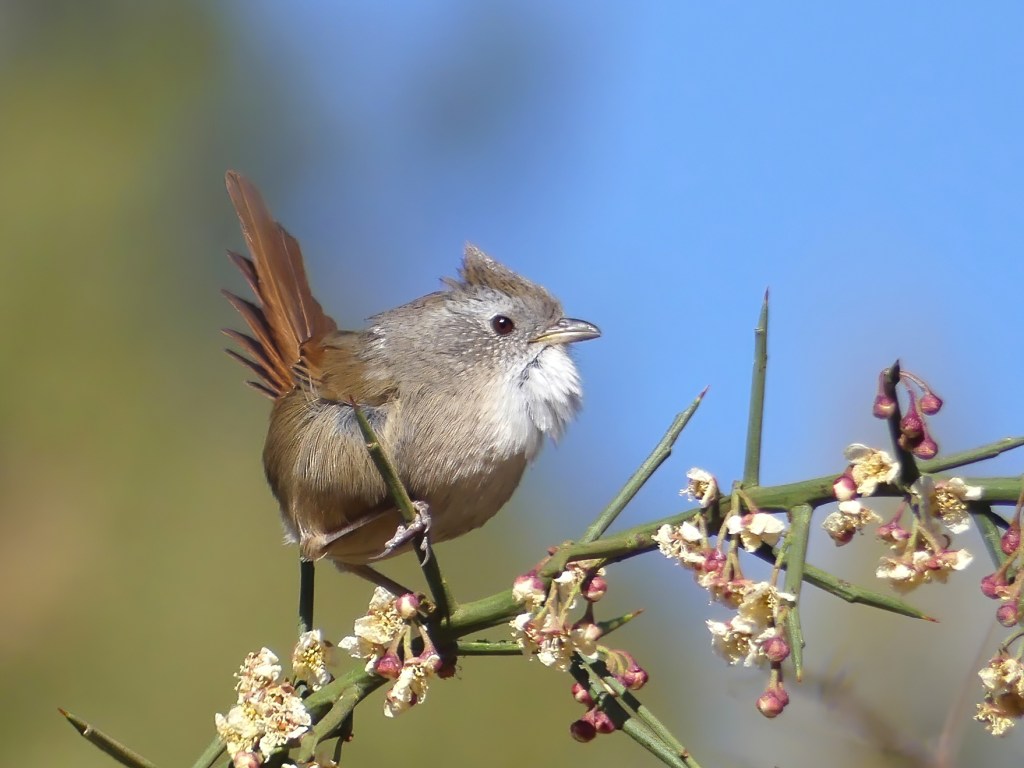
You don’t see birds like this in America. Rufous-tailed Babbler from my 2019 trip to Yunnan, China.

I’ve saved the best for last. International travel. I love international birding trips because you also get to see other wildlife and landscapes, meet people and learn about their culture, and eat local food. And, this is the best way to build one’s life list. I’m making a bucket list and I’m going to start on it as soon as I sell the North Carolina house. The list will be a work in progress for years, but here’s what’s on it now.

Southern India. My friend, Linda, currently lives near Bengaluru (Bangalore) and I want to visit while she is still there. I have been to Northern India, but not this part of the country. Linda is interested in birds and other wildlife and she is really good at exploring local cultures. I am so much hoping that all the stars align so that this trip happens.

The pantanal of Brazil. It’s time that my friend, Diane, and I shared another big trip. We’re both excited about Sherry Lane’s (LifeBird Tours) next tour here in 2024.

Australia. I solicited suggestions from my co-participants who had seen me struggle with my poor vision in the forests on the Yunnan trip in 2019. They unanimously recommended Australia where they are many big, easy birds. Now that my son-in-law has a place there, I’ve got one more reason to put this near the top of my bucket list.

After those trips, I have a list of wonderful suggestions from to my well-traveled Facebook and real-life birding friends. It has some very exciting possibilities including Botswana, Malaysia, Spain, Patagonia (Argentina), and Mongolia.

In addition to birding, I want to spend time with iNaturalist. I love all wildlife, and plants, too. A single observation at a time makes it easy to learn about the amazing diversity of life on this planet. I’m only competing with myself to find interesting new discoveries. This is another activity that’s easy and fun.

My latest iNaturalist observation, a pretty Ornate Bella Moth at Fort De Soto.

Thanks for going on this exploration of emotions and motivations with me. I suspect that a few others may relate to some of what I’ve shared here. If any of this resonates with you, please leave a comment below. And, whatever goals and activities you pursue, be sure to find some joy every day.