Our group arrived at Hotel do Ypê on a rainy afternoon, August 10, 2024. We did not leave the hotel area that day, yet most of the birds were new to me and I got 24 “lifers.” I had been to South America before, Colombia and Ecuador, but southeast Brazil is far from where I’d been on those trips and on the opposite coast. Brazil has over 1,800 species of birds including nearly 250 that are endemic to the country. It was a great start to Sherry Lane’s Lifebird Tours trip and one that I had been looking forward to for over a year.
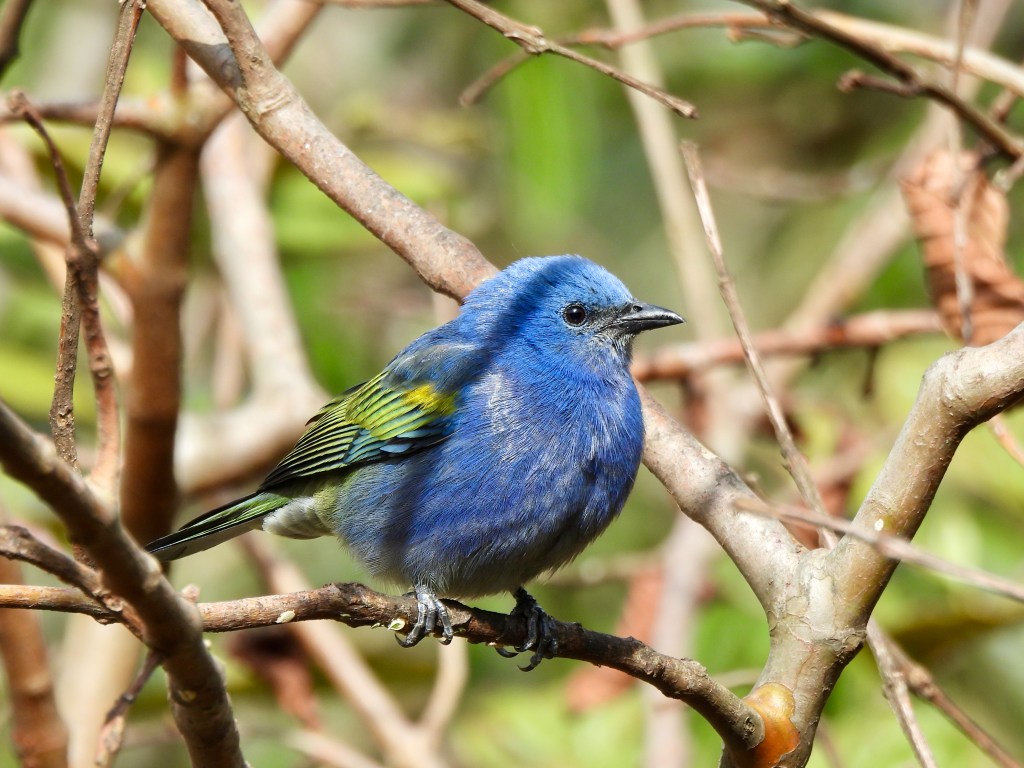
Green-headed Tanagers were small, colorful, and abundant around the hotel. This one was puffed up to stay warm in the cool afternoon.

Below, Mr. and Mrs. Ruby-crowned Tanager, another common species in this area. The male’s ruby crown is not always visible, but this guy shows it nicely.


Our first parrot of the trip was this lovely Blue-winged Macaw right on the hotel grounds.

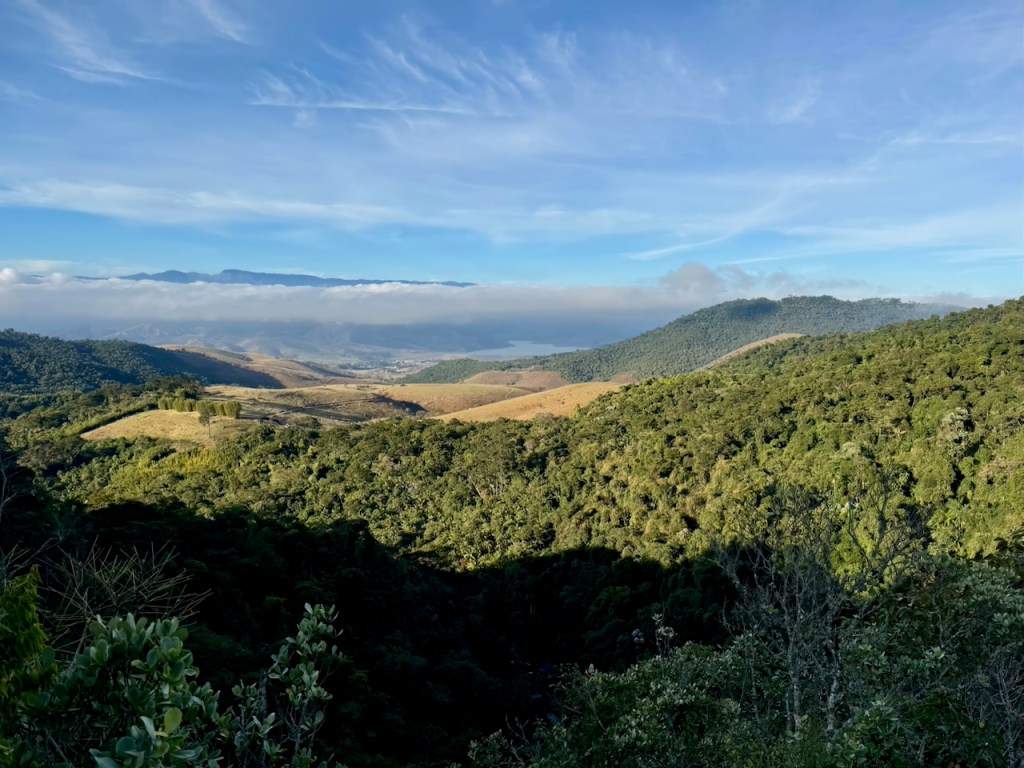
Hotel do Ypê is snuggled inside Parque Nacional de Itatiaia, Brazil’s oldest national park, which is 3-4 hours northeast of São Paulo. This large park is in the Mantiqueira mountain range where elevations range from under 2,000 feet to nearly 10,000 feet. The lower part of the park, where the hotel is located, protects an important area of Atlantic rainforest. Five hundred years ago, the Atlantic Forest of Brazil comprised an area twice the size of Texas. Today, it is estimated that only 7 to 15 percent of the original forest remains. These remnants of the Atlantic Forest are extremely valuable; they host hundreds of species of plants and animals that occur nowhere else on Earth. Below, a view from Hotel do Ypê.
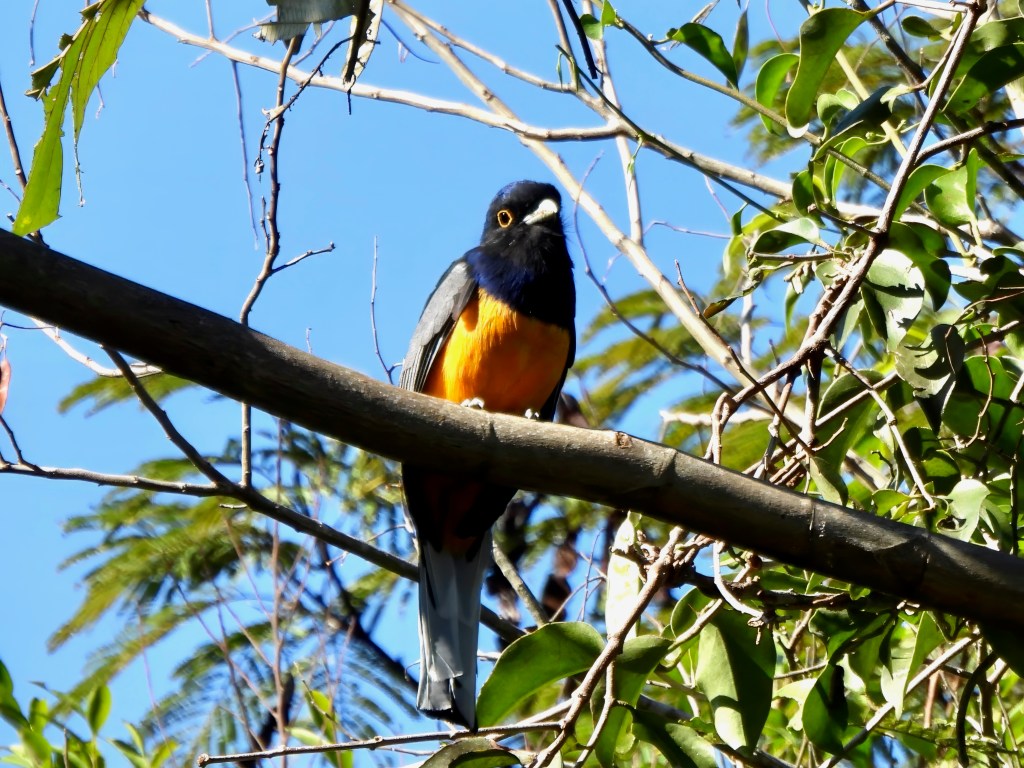
The next day we explored the lower part of the park where we saw beauties like this Surucua Trogon.
And, this Red-breasted Toucan.

In addition to the spectacular big birds like those above, we also saw many small birds. I even managed a photo of this tiny bird of forest undergrowth, a cute little White-throated Spadebill.

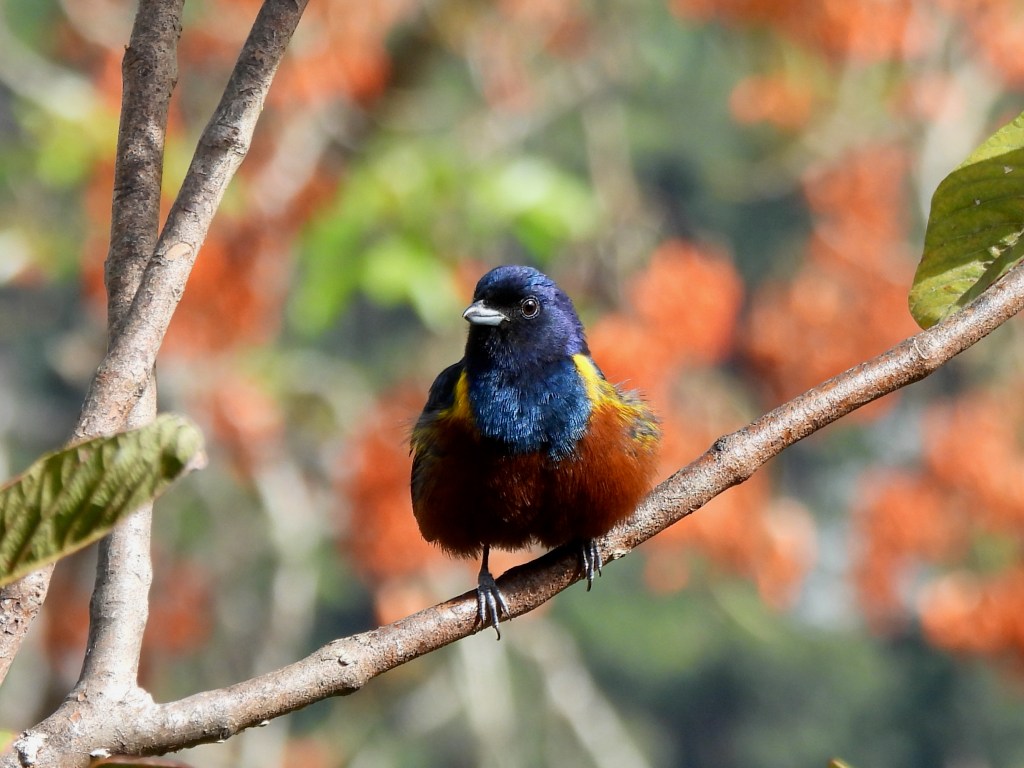
On our last day in the park, the group went to the upper part of the park to seek birds that only occur in the rocky high-altitude grasslands. It would be cold at the higher elevation and I had not brought enough cold weather gear. I was also worried about the cold triggering my asthma, so I stayed around the hotel and enjoyed my time there. Here are some of the birds I enjoyed photographing. Click any photo in the gallery for an enlarged view.


Early on Tuesday morning, August 13, we said goodbye to beautiful Itatiaia National Park and turned south towards Ubatuba on the coast. We arrived at our first stop later than planned and I struggled birding the dark forest along the road, but our next and last stop of the day at Sítio Folha Seca made up for it.
Some of the birds there were common like this Green Honeycreeper, but I don’t think that I’ll ever tire of seeing these gorgeous birds.

The real stars of Sítio Folha Seca are the hummingbirds. It is one of the best places in Ubatuba for these little winged jewels and our group saw ten species; six of those were life birds for me. All of the photos below were taken that afternoon.
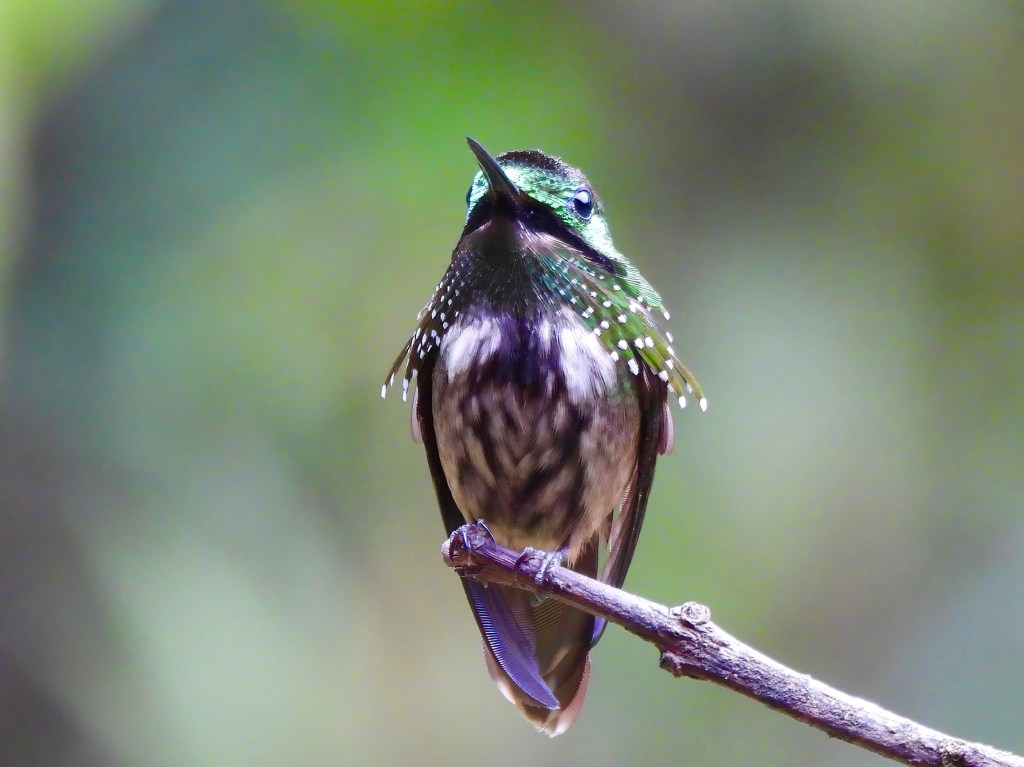


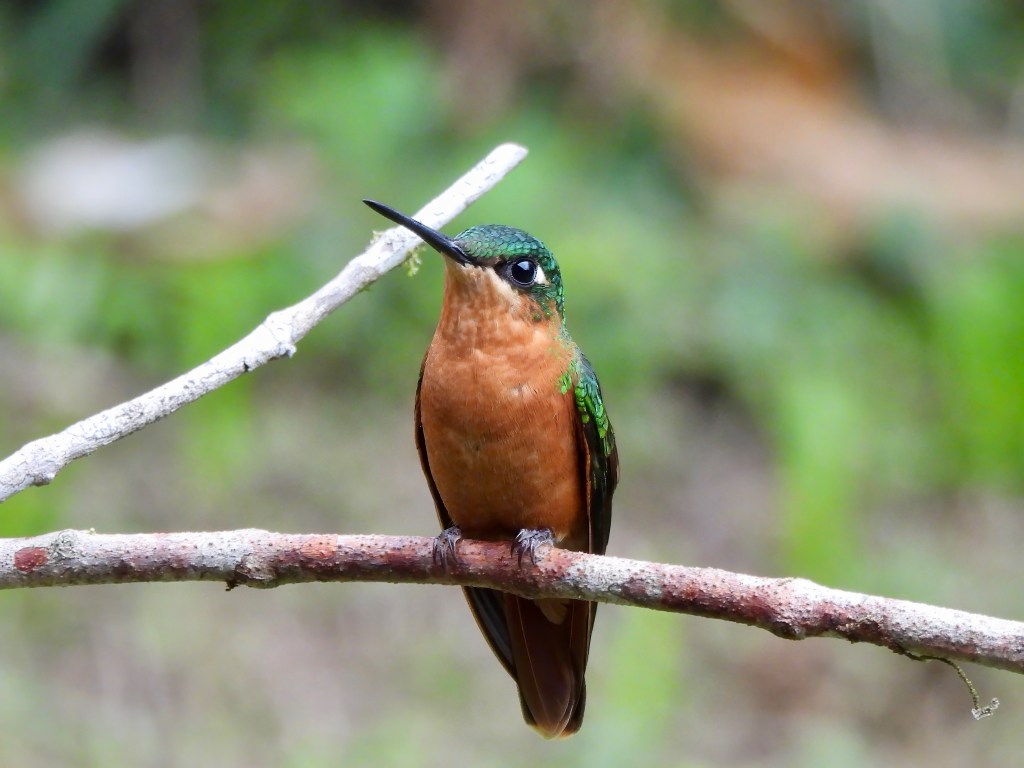
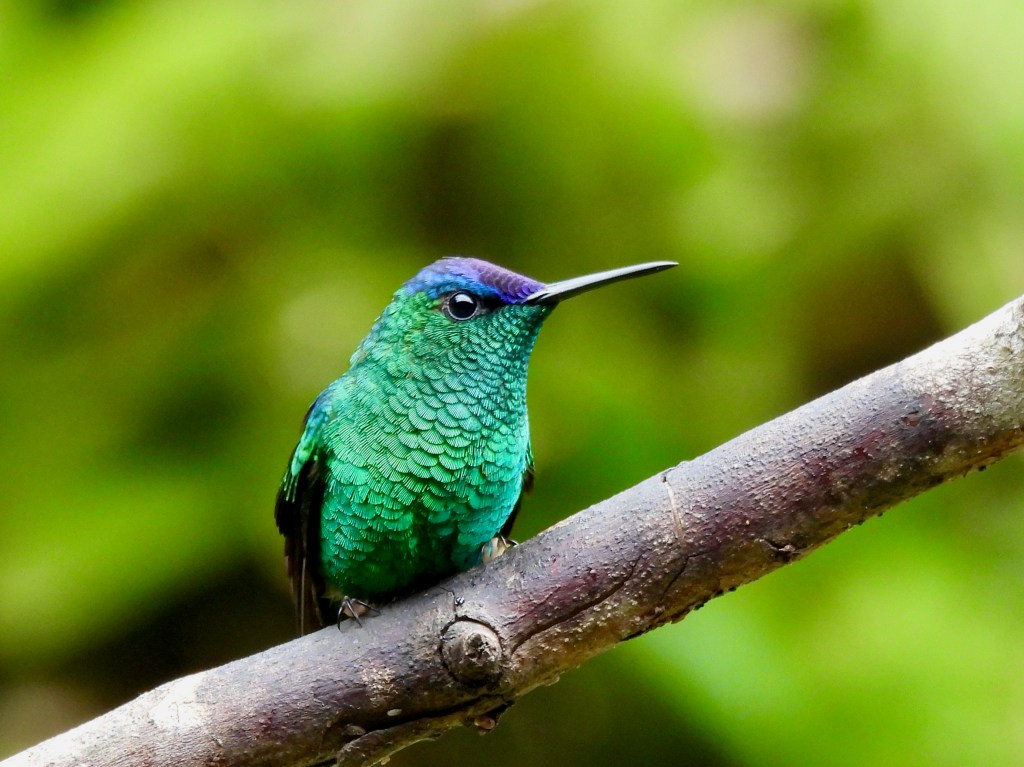

Sítio Folha Seca has much more than hummingbirds, though. Three of the tanagers that we saw there were also life birds for me. One was this Brazilian Tanager, a group favorite.

I also saw my first Red-necked Tanager, another stunner, at Sítio Folha Seca.

Ubatuba is very popular with birders and nearly all birding tours to southeast Brazil include time in the area.
On the 14th, we continued to bird around Ubatuba and I got 12 more life birds ranging from Swallow-tailed Hummingbird to Green-backed Trogon, Channel-billed Toucan, and Yellow-fronted Woodpecker.
That day I also got my life Blue-naped Chlorophonia, a bird that is a member of one of my favorite genera. I promise to share a photo in a later post about my trip to Brazil.
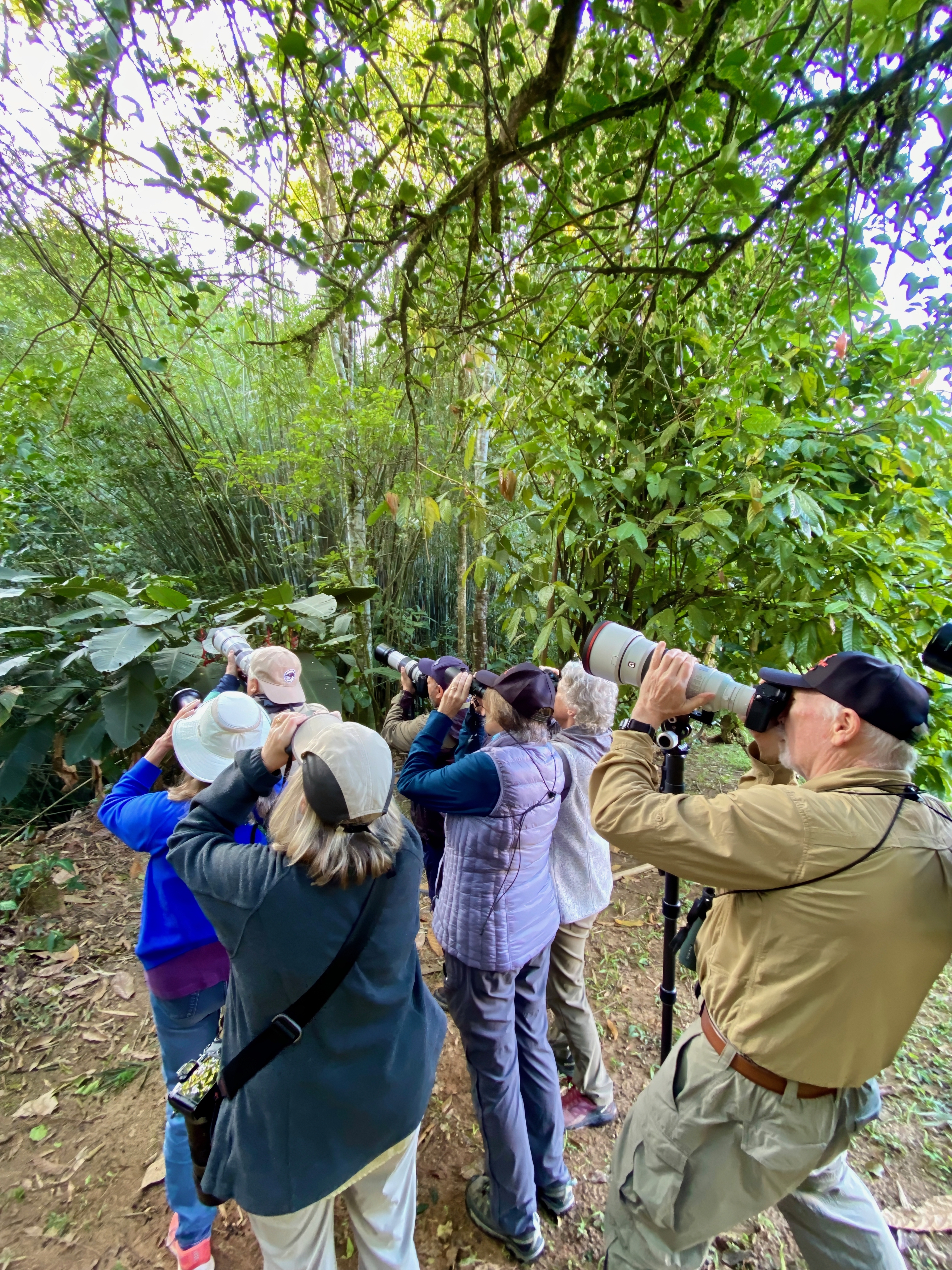
Left, our group birding in Ubatuba.
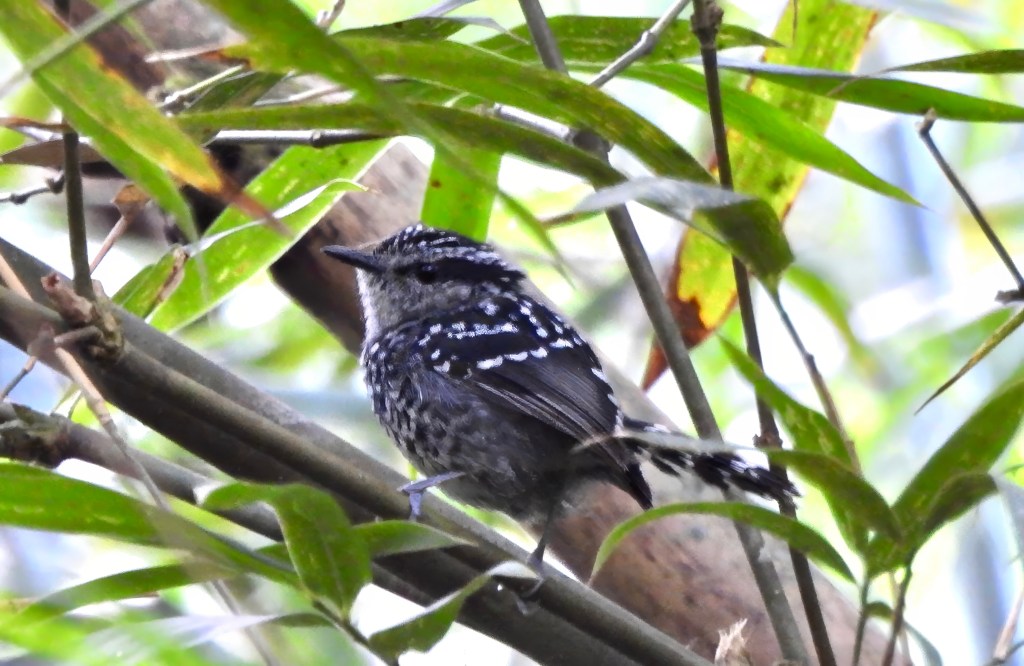
As expected in the forest, we also saw small, skulky birds. I was pleased that I actually got photos of a Scaled Antbird.

We spent the afternoon of August 14 at Ninho Da Cambacica, another wonderful little ecolodge with bird feeders and trails on the property. Below, our group with the owners of Ninho Da Cambacica. This was our last birding with Atlantic Forest bird guide, Lucas (kneeling in center below). Lucas had found some great birds for us and it had been fun to spend time with him. We would miss his smile and enthusiasm. Alyson Melo (on the left), our lead guide, would continue on the trip with us.

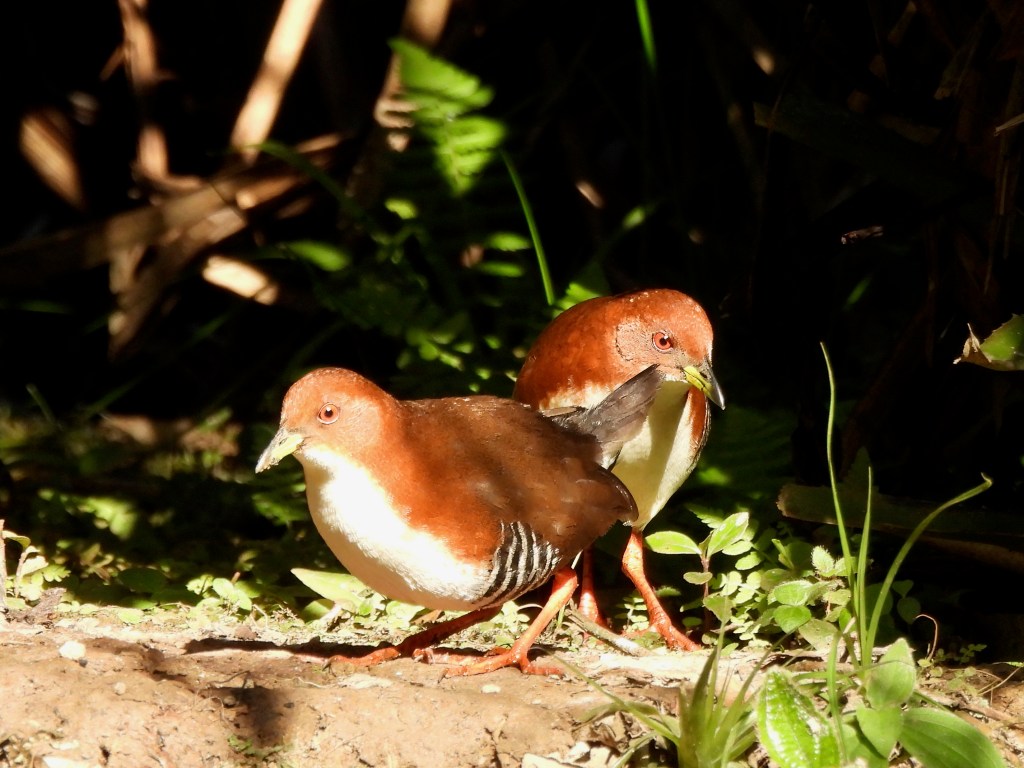
On August 15, our last day before heading to the Pantanal, we visited Sítio Macuquinho, my favorite place on this part of the trip. The feeders attracted several species of hummingbirds and tanagers, but my favorite birds may have been the Red-and-white Crakes we viewed from one of the trails on the property.
But, that wasn’t all. We had close-up views of a White-breasted Tapaculo eating worms on a log by the side of the road. These normally shy and difficult-to-see birds were found for us by the amazing Elvis Japão, bird guide and owner of Sítio Macuquinho. He also found two Marsh Antwrens for the group, but I just couldn’t find them in the thick marsh vegetation. I didn’t feel quite too bad about missing them after noting “usually very hard to see” in the description in eBird. Another wonderful bird that Elvis found for us was a singing Bare-throated Bellbird, a bird that our entire group was thrilled to see and hear.

All too soon, it was time to head to Sao Paulo for the night and our flight to Cuiabá the next morning. Amazing birds and exciting adventures awaited us in the Pantanal of Brazil.


 Birding for Life