Feeds:
Posts
Comments

Posts Tagged ‘Canada Goose’

David flew home on Monday morning, June 12. I was tired after all the adventures of last few weeks, so I took it easy the rest of the day and revisited Custer State Park. This time I stopped and walked around beautiful Sylvan Lake.

I enjoyed the walk even though I did not see a lot of wildlife other than a few families of Canada Geese on the lake with their adorable goslings.

Next, I drove the 18-mile wildlife loop road again. eBird lists 167 species for this hotspot, but I reported only 15 species that day. I believe that I would have seen more if I had started earlier in the day and been more familiar with all the trails and side roads. Regardless, I was happy to have another visit to Custer State Park. I saw a few birds, Common Ringlet butterflies, and some interesting plants, mostly on the Prairie Trail.

Do you remember Scott Rager from my last post? I had met Scott at the LAK Reservoir near Newcastle on the day that I drove from Deadwood to Edgemont. I find most birders to be friendly and generous, but Scott was exceptional. He offered to spend an entire day with me, so we met on Tuesday morning. We started at Ruby Canyon, where I had unsuccessfully searched for Virginia’s Warbler in 2018. Scott had seen Virginia’s there recently and he got a quick look again with me, but I wasn’t fast enough to see the bird. We spent a long time at the watering trough, but the much-wanted warbler did not show up. The Chipping Sparrows loved the water, though, as did a pair of Black-headed Grosbeaks.

Roby Canyon was the only location during the trip where I saw the gorgeous Weidemeyer’s Admiral, a new butterfly for me.

After a delicious lunch at a local Mexican restaurant, we birded a few areas near Newcastle. We added several common Western species to my list and a “rare” (flagged as such by eBird) Eastern Phoebe, normally a more Eastern species, that Scott had found earlier in the breeding season. I had started the day with 45 Wyoming birds and had 60 by the time we headed to Scott’s place as dusk approached. As we sat watching the feeders and chatting, it seemed that we were too late to see a Lewis’s Woodpecker. Then, just before dark, this stunning bird came in for a late dinner. Scott sometimes has half a dozen of these gorgeous birds in his yard, but I was thrilled with just this one. I’ve never had better looks and it was a wonderful end to a great day.

The next morning I got a little later start than I’d wanted and I had to go to the grocery store. The hotel I would be staying at that night had suggested that I bring food as there was none available there. Later in the day I would regret the delay, but by day 19 of a trip I am not my most efficient. So, I headed south and after a quick spin through Lusk Cemetery (Orchard Oriole, Wyoming #63), I was in Nebraska.

The drive to Henry Road was a bit longer than I had expected and I arrived at 11:12 AM. Henry Road is a dirt road on open range and I did not see another person the entire time I was there. I did not see a lot of birds either, but this location is popular among birders for the prized species that do occur. I saw Horned Larks on the fence wires and in the road, a common bird in the West and not my target.

The avian stars of Henry Road are the longspurs – Chestnut-collared and Thick-billed.

I did not get great photos of either longspur as I’d hoped, but these are special birds, and it’s always a treat to see them. Sadly, their range is quickly shrinking. Just a few years ago, they were regularly found in Thunder Basin National Grasslands, where I had been a few days earlier, but none were reported in Weston County (Wyoming) this year.

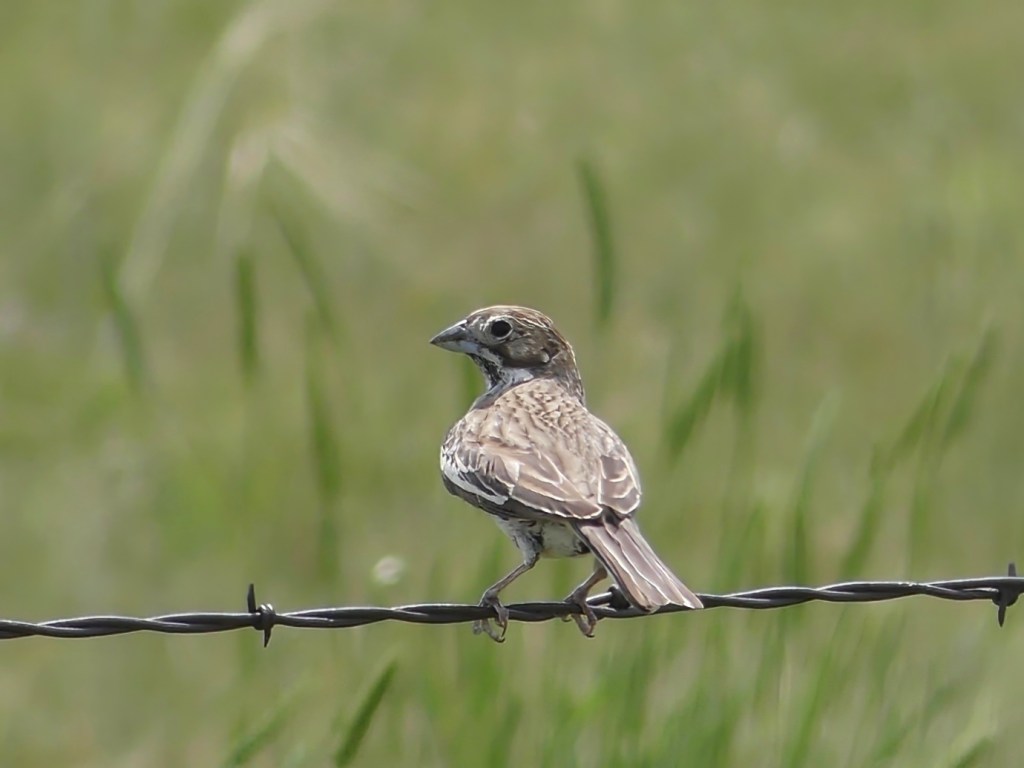
I also saw quite a few Lark Buntings. Below, a female or immature bird, which looks so different from the adult male.
Another treat was a singing Brewer’s Sparrow.

I spent over 3 hours on Henry Road, much longer than I had intended, and my exit was delayed even more by these cows. There was a cattle guard between my car and the cows and fences on both the right and left sides of the road. The only way out was where those cows were standing. They were oblivious to my horn and just did not want to budge. Once again, I’m sure my friends worry about all the wrong things on my solo road trips. Who would have guessed that a herd of cows would hold me hostage? After much slow and tedious effort, I was able to get through an inch at a time. Literally, those cows would back up only one small step when I slowly crept forward.

Finally, I was back on the highway and drove towards the little town of Lakeside. From there, I turned south towards Crescent Lake NWR for 28 miles on a once-paved road now just crumbling asphalt, dirt, and rocks. I didn’t mind the road at all; my only regret was getting there so late that I could not spend hours and stop as often as I wanted to soak in the beauty. It was amazing and my words are inadequate to convey the awe I felt as Long-billed Curlews and Willets flew overhead calling.

American Avocets, the color of dreamsicles as a friend once described them, Wilson’s Phalaropes, and multiple species of ducks foraged in the little ponds.

I saw several Upland Sandpipers. I am pretty sure that this one and another that was with it are “teenagers.”

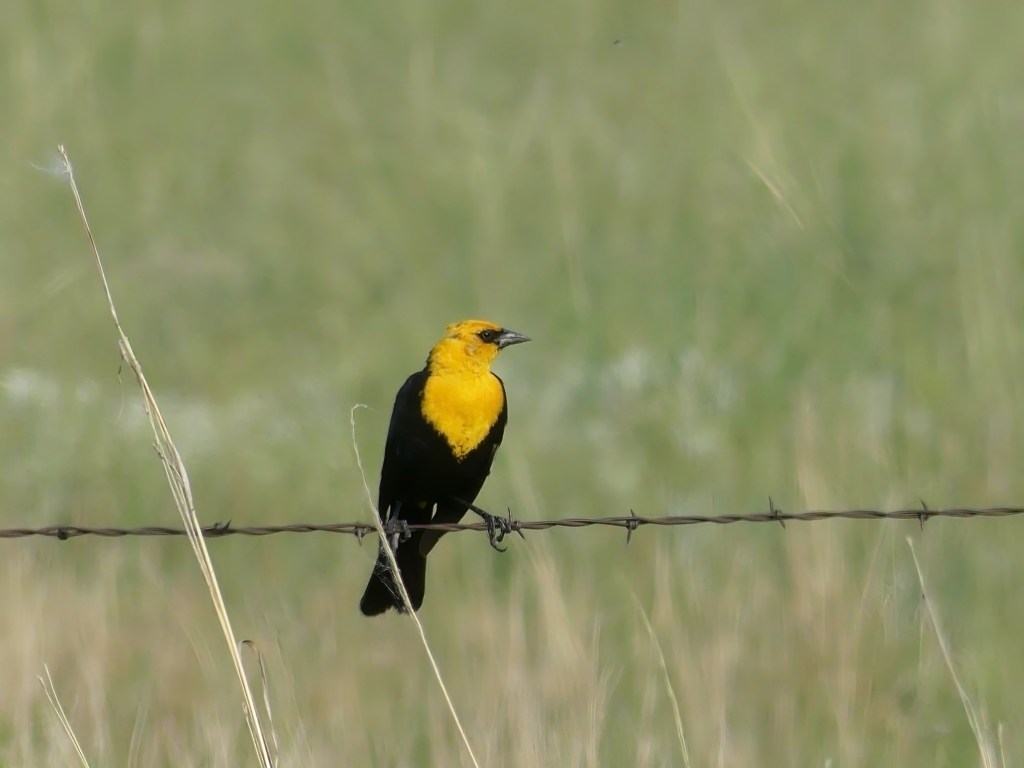
Yellow-headed Blackbirds are one of my favorites.
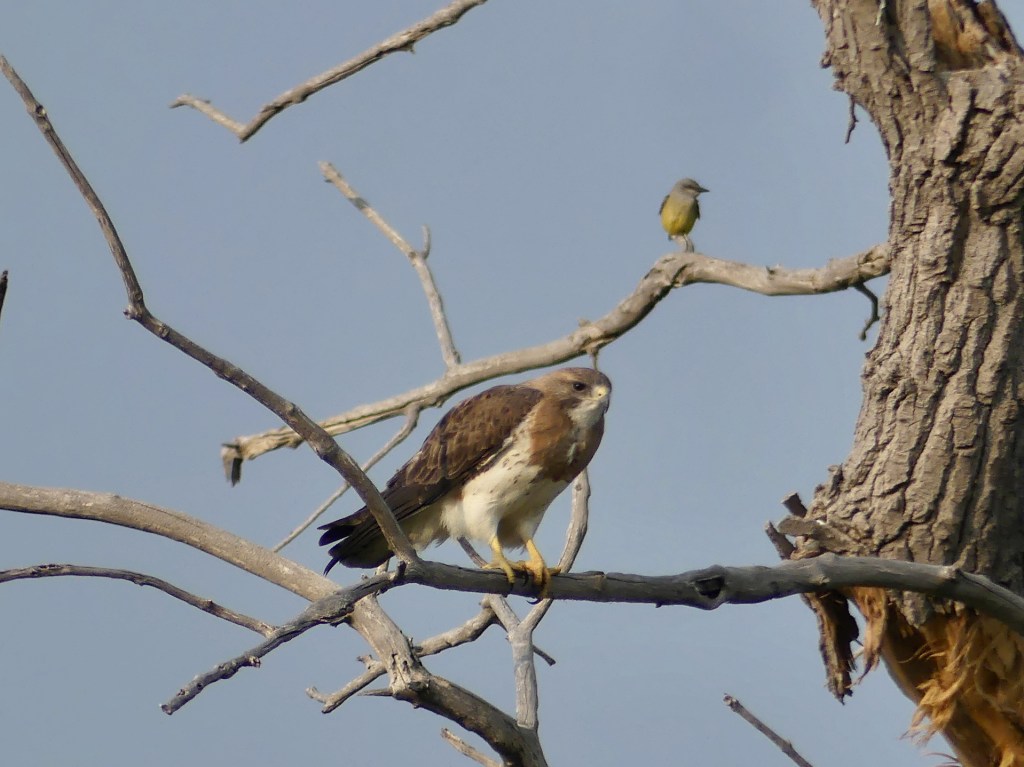
I can’t leave out a Swainson’s Hawk on any story about a trip west. This one came with a bonus Western Kingbird.
This pretty Ornate Box Turtle was also on the road to Crescent Lake NWR.

Because of my poor time management earlier in the day, I had only 2-1/2 hours on this incredible road. This is my favorite kind of birding and I’m now inspired to do a “dirt and gravel road” trip out west.

All that was left after this wonderful day was the long, tedious drive home. I didn’t have quite as much ambition for county birding and iNat as I had on the long drive at the start of the trip. I put in some effort, though, and was rewarded with a Giant Walkingstick at a McDonald’s drive-thru window in Oklahoma.

I accidentally reset my trip meter, but I’m pretty sure that I drove about 6,250 miles on this trip. It was a lot of time behind the wheel, but the rewards were worth it.

Read Full Post »

Life has kept me busy recently. It’s hard to believe that our Utah trip was three months ago. Finally, here is the rest of the story – my drive back to North Carolina. After dropping David at the Albuquerque airport, I wanted to stay close until his plane was airborne, so I chose an easy place to see lots of birds – Tingley Lagoon, part of ABQ BioPark. Well, there were lots of ducks, but I like ducks. There were also cormorants that breed on the little islands in the middle of the ponds – both Double-crested and Neotropic – but my photos all seem to show Neotropic Cormorants.

Here are a few other birds from this spot, a female Common Merganser, male Northern Pintail, American Coot, and Canada Goose.

After a pleasant hour at the Tingley Lagoons, it was time to head east. I got one more “life” New Mexico bird at the Pajarito rest area – a Chihuahuan Raven that I was able to identify only because I noticed its call sounded different from Common Raven and I recorded it.

At another rest area near Santa Rosa, I saw the Cholla on the right. Then I drove on into Texas where I spent the night.

The next morning, I found one more Texas life bird, Western Meadowlark, at the Donley County US 287 Safety Rest Area. I got photos of a meadowlark that was satisfactory for identification, but this Eurasian Collared-Dove was much more photogenic.

My major stops on the way back to NC were both in Oklahoma, first Wichita Mountains Wildlife Refuge. It is a major birding hotspot, but is more well-known for its other wildlife, notably the bison, longhorn, and elk that roam the park’s 59,000 acres.

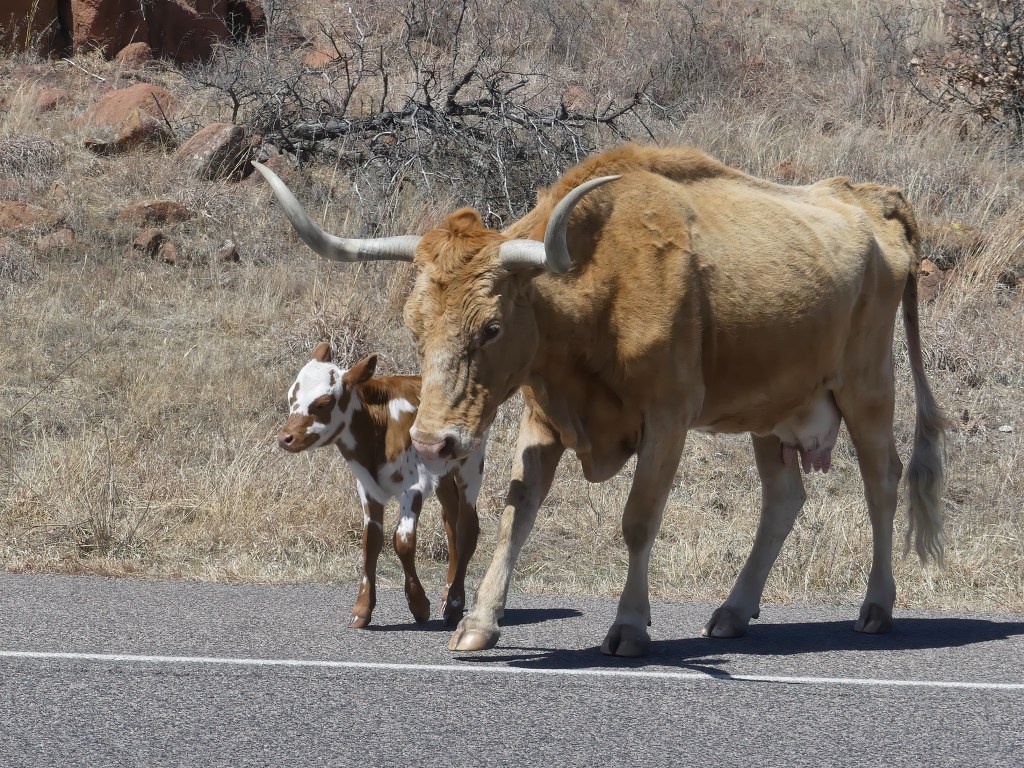
Nearly 100 years ago, a herd of Longhorn was established at Wichita Mountains Wildlife Refuge to save the breed from extinction. Here is a detailed accounting of the story. Apparently, there are current debates about whether or not cattle belong on a wildlife refuge, but they are beautiful and I’d guess the desire to see these creatures contributes to making this one of the most visited wildlife refuges in the county.

The refuge also has several prairie dog towns and I never tire of these cute rodents. Did you know that they are related to squirrels and chipmunks? Yes, they are all in the family Scuiridae. These were black-tailed prairie dogs, the only one that I think I’ve seen of the five prairie dog species in North America.

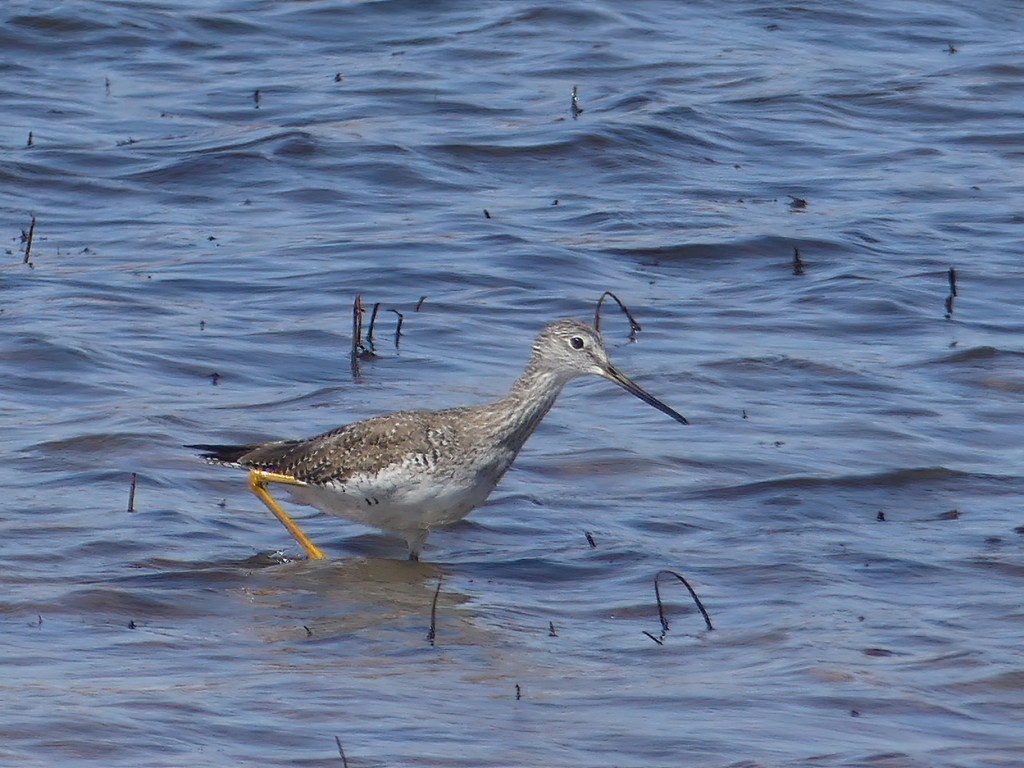
I did see a few birds, too, like the Greater Yellowlegs below, although I’m sure there would have been many more birds later in the year.

My favorite bird at Wichita Mountains was a single Ring-billed Gull proudly standing in the middle of a prairie dog town on the side of the road.

The next day I toured another wildlife refuge, Sequoyah NWR, near Oklahoma’s eastern border with Arkansas. I received a nice welcome from a flock of about 40 American White Pelicans that flew over as I drove into the park. This refuge had only a fraction of the visitors of Wichita Mountains on the day I visited. However, I met a couple of birders at the entrance kiosk and we birded a lovely path in the woods together. The rest of the refuge was mostly open and the next birds I saw were a large flock of Snow Geese.

It was interesting to see so many dark morph birds in the group. Snow Geese winter on the coast of North Carolina, but we rarely see a “Blue Goose” here.

In addition to birds, I saw a new and interesting turtle. Unfortunately, I focused my camera on the wrong one, the larger pond slider, a common and widespread species that I’ve seen many times. After submitting it to iNaturalist, I learned that the turtle on the right is an Ouachita Map Turtle. It is not rare either, but its range is the south-central part of the US and I’d never seen one before. And, what a cool name!

I saw about 35 species of birds at Sequoyah, mostly the same species that I can see in North Carolina. My last bird there was a Bald Eagle that flew over a pond filled with ducks and then landed in a tree by the road. I enjoyed the hours I spent at this refuge and would love to visit again.

After Sequoyah, all that was left was the uneventful drive to North Carolina. This was definitely my least birdy road trip ever, but I did manage to get both my Oklahoma and New Mexico lists to over 50 species. I also added several new counties even though you can drive for miles and miles in the West and see nothing. The map below shows every county in which I have observed birds. Good county birders have maps with clear, continuous lines representing travels. My maps look like an advanced version of connect-the-dots, but I try.

But more important than the birds was the amazing landscape that David and I saw in Utah and the fun we had exploring that part of our country. Visiting Arches and Canyonlands National Parks and Dead Horse Point State Park made this a trip of a lifetime.

Read Full Post »

The final stretch of the Yard Squad Challenge started the same way that the last stretch ended – with a little more cheating.  I birded outside my home patch once again to get another new county bird.  This time it was a bird that I’ve seen many times, a Black-crowned Night-Heron, but with birding games it’s all about location; this was only the fourth time this species had been seen in Forsyth County in the last 20 years.

Black-crowned Night-Heron

Black-crowned Night-Heron

A birder/photographer not known to local birders saw the heron in a wetland as he was driving by early in the morning of May 17.  He stopped, got an excellent photo, and luckily for local birders, submitted an eBird checklist.  A few people searched for the bird during the day, but were unsuccessful in finding it.  I didn’t think that it would leave during the day, so I went to look for it in the late afternoon.  Another birder joined me in the search, which mainly consisted of standing in one place and scanning for two hours.  Finally, just before total darkness set in, we finally saw the bird on the far side of the wetland.  I was able to get photos as we watched it for about three minutes and then it flew off into the night.  Don’t we birders know how to have fun?

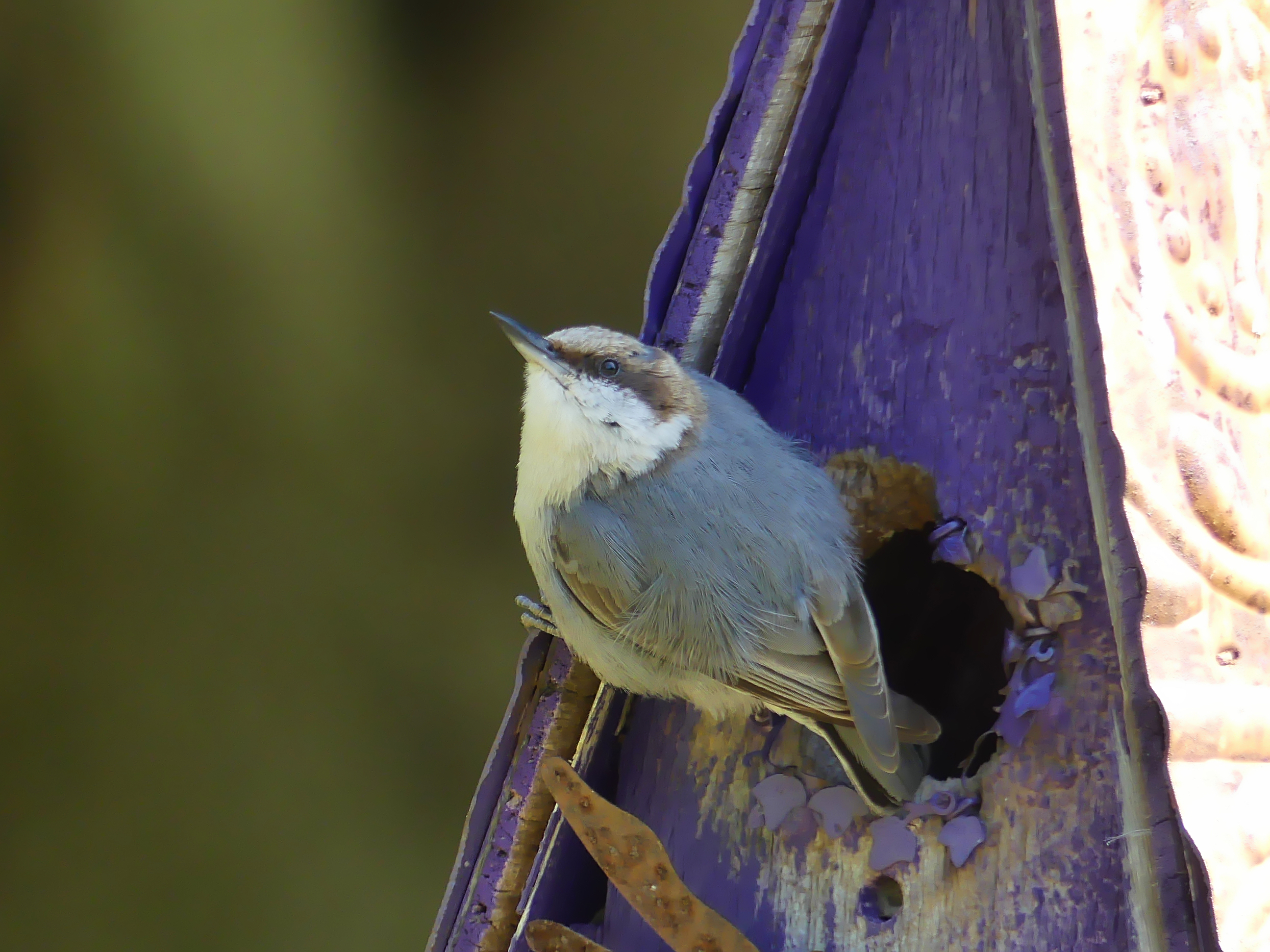
Back in my home patch, I continued to enjoy the neighborhood breeding birds.  One of my neighbors has a funky purple bird house that the Brown-headed Nuthatches seem to love.  They have used it for years and I was happy to see them in it again this year.

Purple nest box in a neighbor's yard

Purple nest box in a neighbor’s yard

These adorable little nuthatches are one of my favorite birds.

Brown-headed Nuthatch

Brown-headed Nuthatch

I’d like to say that was the start of a great week, but not much happened during the next few days except for rain nearly all day every day.  Finally, late on Friday afternoon, I was able to get out between showers, so I took my scope to scan the lake.  I didn’t see any birds at all with my naked eye, but when I scoped the far end, I found mama Wood Duck with six to eight ducklings swimming behind her!  I love Wood Ducks and I remember the thrill when I first found one on my lake.  One of my neighbors is a Wood Duck fan, too, and, several years ago he optimistically put up a nest box.  To my surprise, we did have a nesting pair use the box, but, sadly, raccoons got all the eggs.  I wasn’t optimistic at all.  I figured that if the eggs did hatch, the many large turtles on the lakes would get the babies.  But, here were Wood Duck ducklings on our lake!  This was unquestionably the most surprising and exciting find of the entire 8-week yard challenge for me.  I would have loved to get a photo, but the ducks were at the far end of the lake and it was raining again as I watched them swim away from me.

Canada Geese have better luck raising young on our three lakes.  We have at least one or two families that successfully reproduce every year.  Yes, they are just our resident geese who are too lazy to migrate, but the goslings are still adorable.

Canada Goose family

Canada Goose family

The first day of week two, Saturday, May 23, brought another surprise.  There is a vacant lot down the street from me with very thick scrubby habitat next to mature trees.  I had already seen Orchard Orioles there along with gnatcatchers, catbirds, and quite a few other birds.  That morning I heard a Yellow-breasted Chat.  I wasn’t shocked, but very pleasantly surprised.  This was a new bird for the Yardbirds and a bonus, too, as it was the first time I had ever observed one in the neighborhood.  I recorded the bird’s raucous call and then played the call hoping that it would react and I could see it, too.  It flew to less than ten feet from where I was standing!  He didn’t stay long enough for a photo, but what a great look – no binoculars needed!

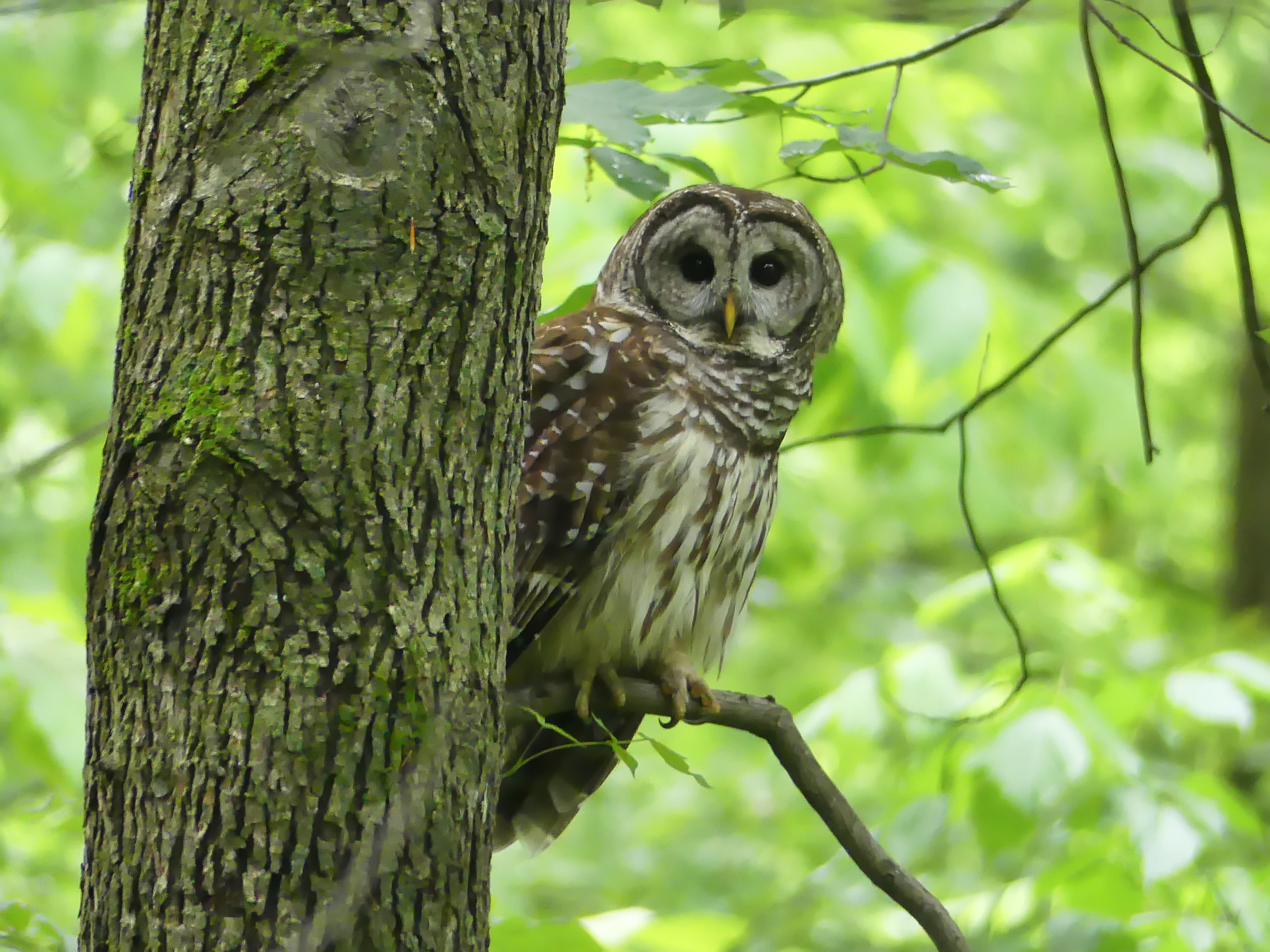
When I got home, this big beauty was waiting for me in my backyard and willing to pose for a photo.  I hear these owls calling nearly every day in summer, but it’s always nice to see them.

Barred Owl in my backyard

Barred Owl in my backyard

Again, I hoped that it was the start of a great week and that the Yard Squad Challenge would have an exciting finish, but the Chat was the last bird that I added to the Yardbirds list.  I birded every day for the rest of the week, but I was unable to find any new species.  My last birds on May 29 were a Wood Thrush sweetly singing in the woods at the end of the street just before dark and then a pair of Barred Owls calling to each other across the lake when I got to my house.

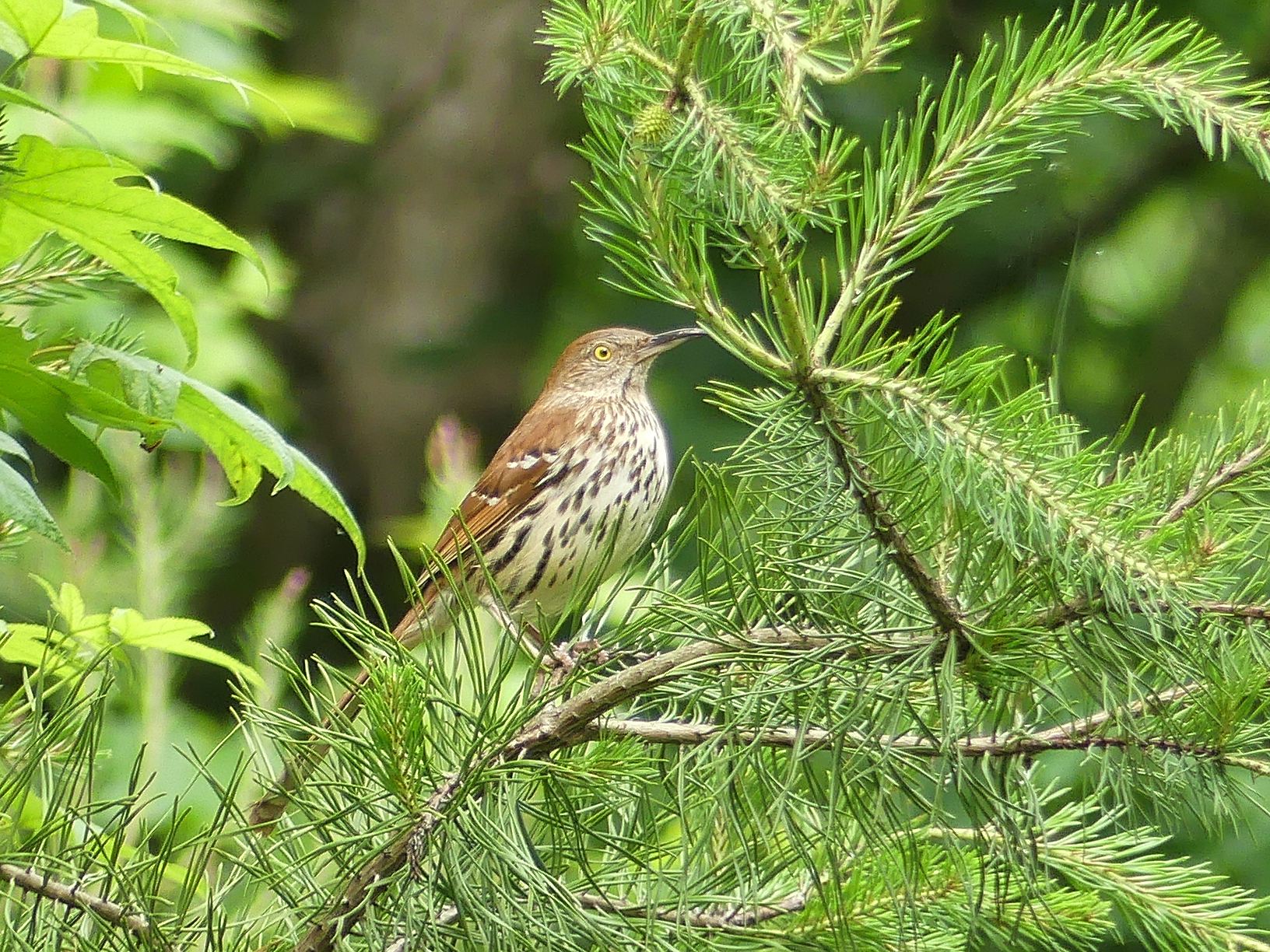
Brown Thrasher in the neighborhood, one of my favorite birds

Brown Thrasher in the neighborhood, one of my favorite birds

The Yardbirds came in third among the original seven teams with 350 species for the entire competition from April 4 and May 29.  That’s in just 8 weeks with ten birders, a very impressive result in my opinion.  Our team worked hard as evidenced by our 114 bonus birds, species observed for the first time in a birder’s home patch.  We had perseverance, too, and birded enthusiastically until the very last day which put us third among all ten teams for the fourth two-week stretch with 267 species.  In my little North Carolina neighborhood, I found 83 species of birds; five of them were new for the neighborhood.  It was wonderful to have an activity that was fun and focused on the positive during these difficult days.  Many thanks to Matt Smith for creating and hosting the Yard Squad Challenge and to Joost Brandsma for leading the Yardbirds.

This is the fourth and last post about the Yard Squad Challenge.  Here are links to the earlier stories:
Birding in the Time of COVID-19 (Part 1 of 4)
Birding in the Time of COVID-19 (Part 2 of 4)
Birding in the Time of COVID-19 (Part 3 of 4)

Read Full Post »