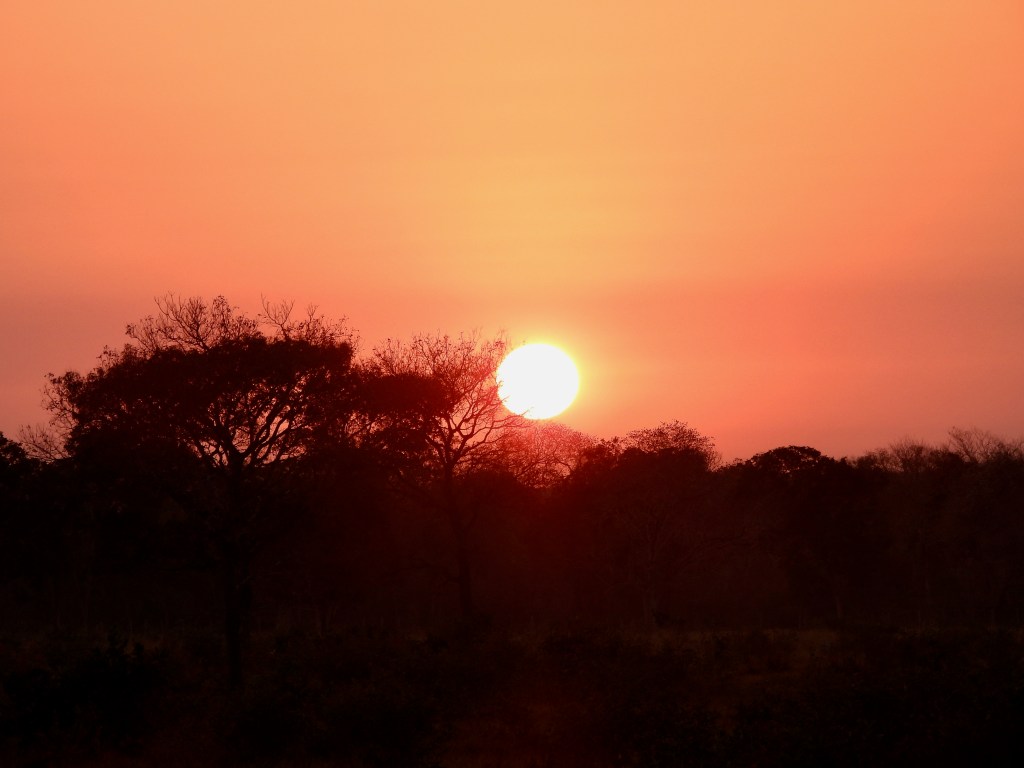
August 18 would be a big day, so we were up early for one last spin around the wonderful Pousada Piuval property. The sunrise promised a great day ahead.
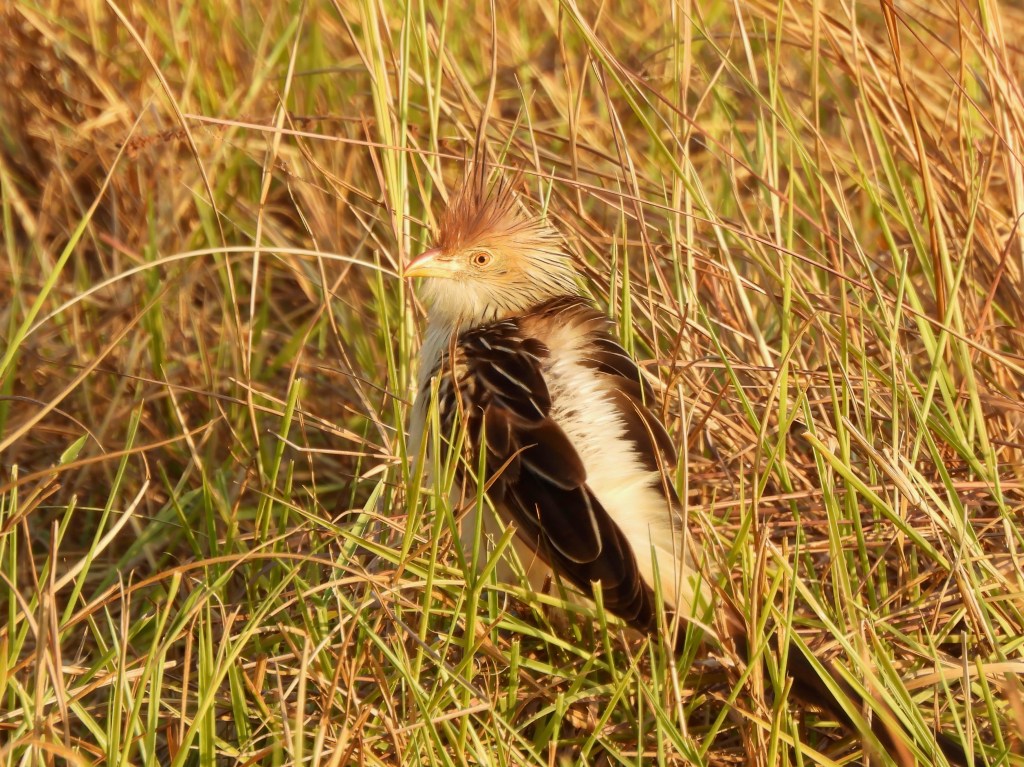
I had missed Guira Cuckoo when others in our group had seen them on the previous two days, so I was thrilled that we had wonderful looks at these bizarre-looking birds before we left Pousada Piuval. Guira Cuckoos are not only odd-looking birds, their nesting behavior is also unusual with multiple females in a social group all laying eggs in the same nest. They feed mainly on insects including flying termites and perch atop termite mounds to survey their surroundings when hunting.
Termite mounds are a conspicuous feature of the Pantanal savanna. They perform ecologically important functions such as improving soil health and providing food and nesting habitat for wildlife. One study reported that termites are a food source for 179 bird species and the mounds were mentioned as nest sites for 45 species of birds in Brazil. We saw termite mounds in many of the dry open areas like that below.

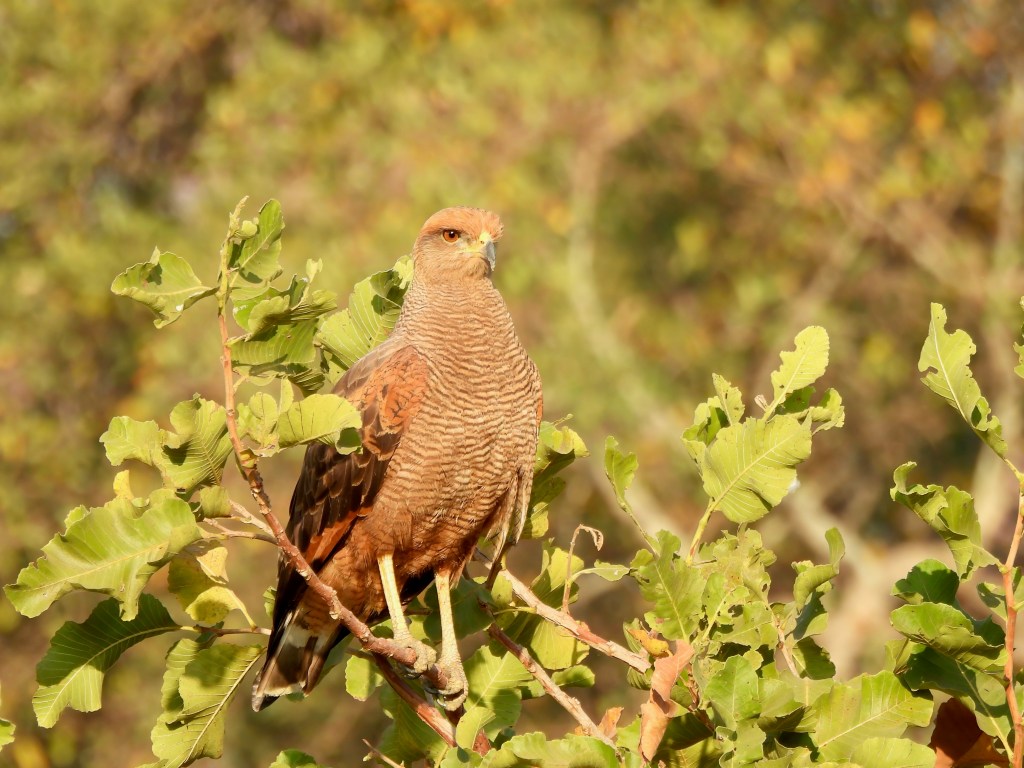
Savannah Hawks were frequently seen on this trip. It was a much-wanted bird that did not disappoint.
Turquoise-fronted Amazon (photo below) was one of the fourteen species of parrots and parakeets that we saw.

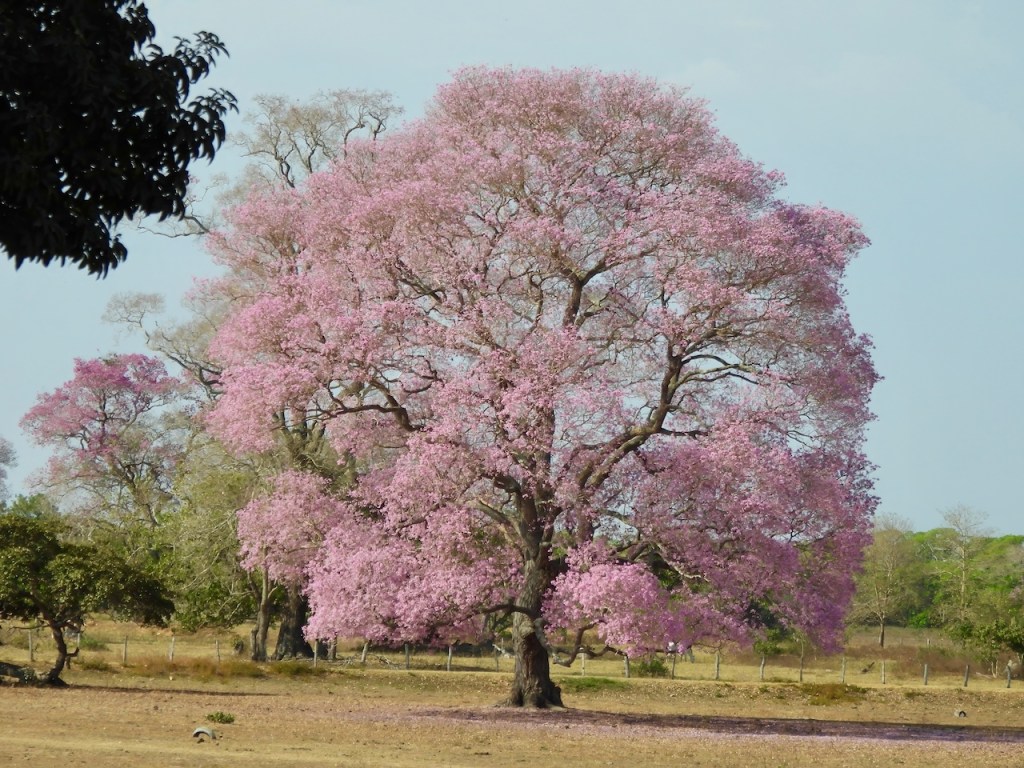
Pink trumpet trees were scattered over the open landscape. My photos are not good enough to identify the trees to species, but I believe that they are either Handroanthus heptaphyllus or Handroanthus impetiginosus. I do know that they were gorgeous! I hated to leave this beautiful place, but we had important things to see in other places.
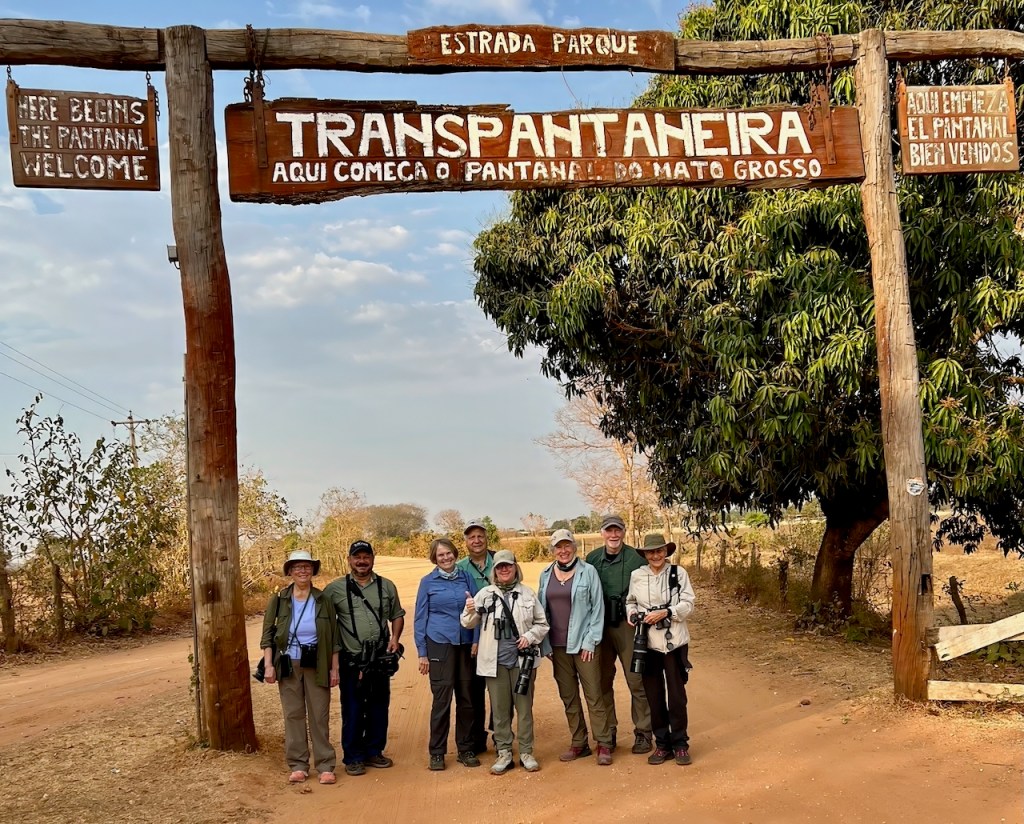
We drove the entire Transpantaneira highway south to Porto Jofre with several stops for birding along the way. We arrived mid-afternoon at the houseboat that would be home for the next three nights and headed out right away in a small boat to look for jaguars.
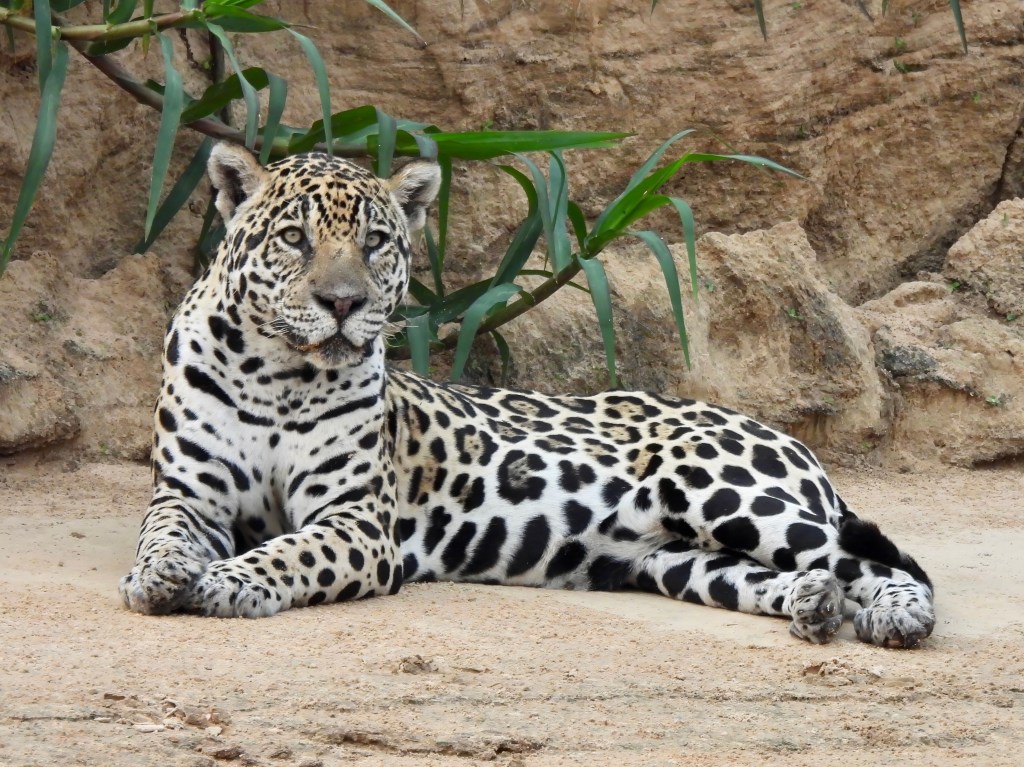
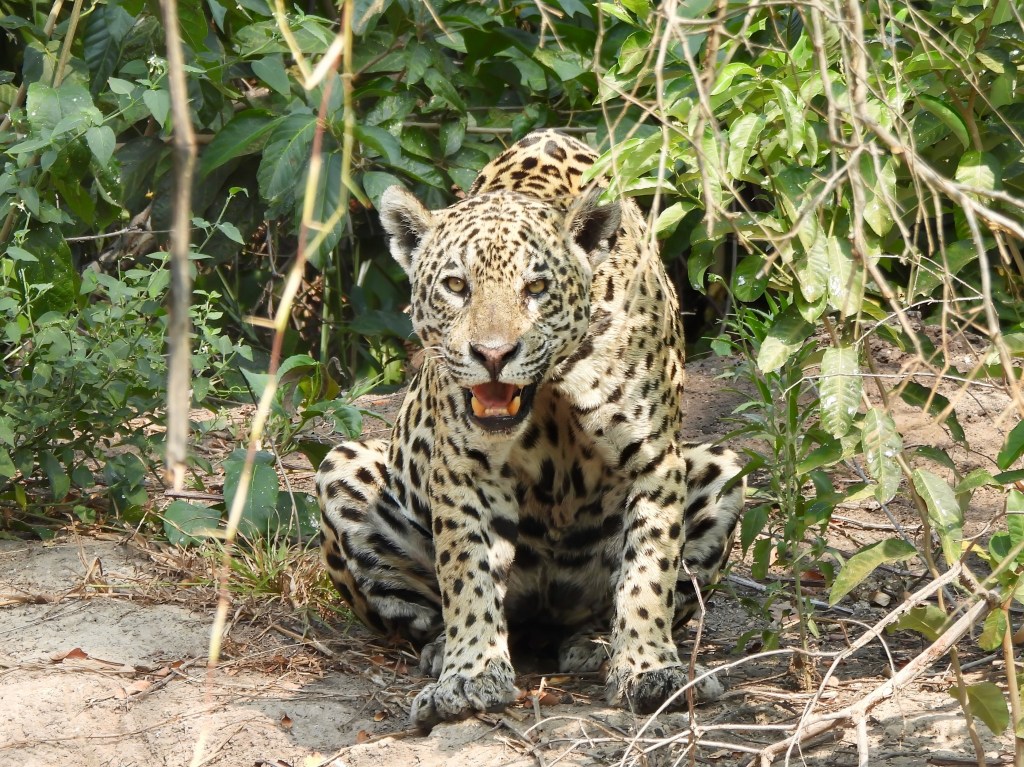
Before long, we found the beautiful Ti, a 9-year-old female, resting on the riverbank. Jaguars in the Porto Jofre area have been studied extensively and Alyson recognized all of them. The Jaguar Field Guide has a profile for each of the individuals observed most often. Jaguar spot patterns are unique like human fingerprints.
We also saw birds on the river. I loved the adorable little Pied Plovers.

Days on the river ended with spectacular sunsets.

The air on the river was a little smoky from the distant fires and the drive down the Transpantaneira had been dusty. As a result, I was coughing and feeling tired, so I decided to take the next day off and stay on the houseboat. I had not been expecting the fires. My vision of the Pantanal had been shaped mostly by John Grisham’s “The Testament” in which there was water everywhere. In hindsight, I suppose that a 25-year-old novel isn’t the best source of information. But, the Pantanal was wetter 25 years ago. Severe droughts in recent years along with deforestation and climate change have had a huge impact on the area. A few days later, The NY Times published a major article about the deadly toll on the wildlife of Brazil’s Pantanal from the fires, the worst on record since 1998. In 2024 alone, over 7,000 square miles of the Pantanal have burned.
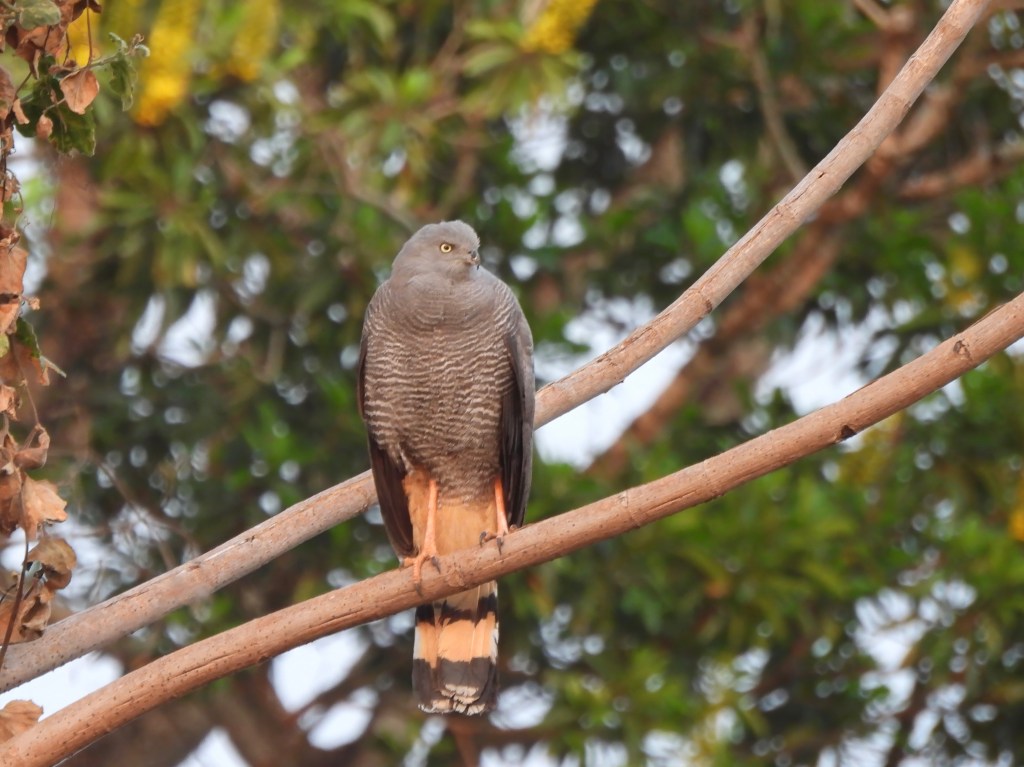
I joined the group again on August 20 to cruise the river in our small boat. It was a great way to see birds like this Crane Hawk, a species that had been high on my wish list.
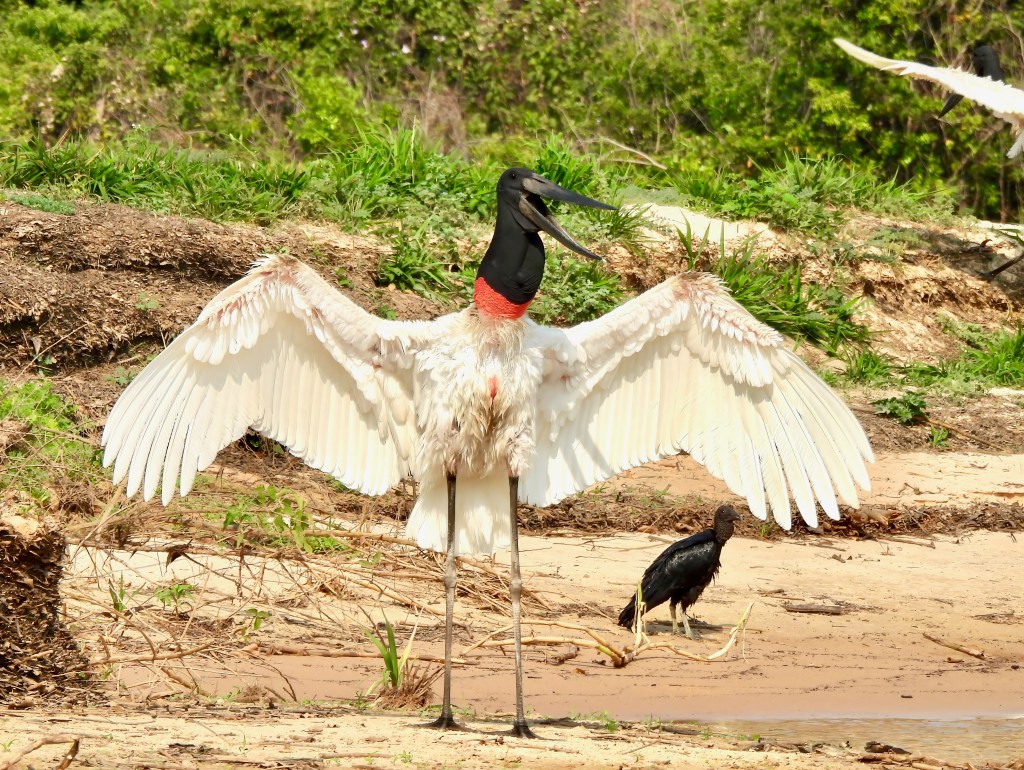
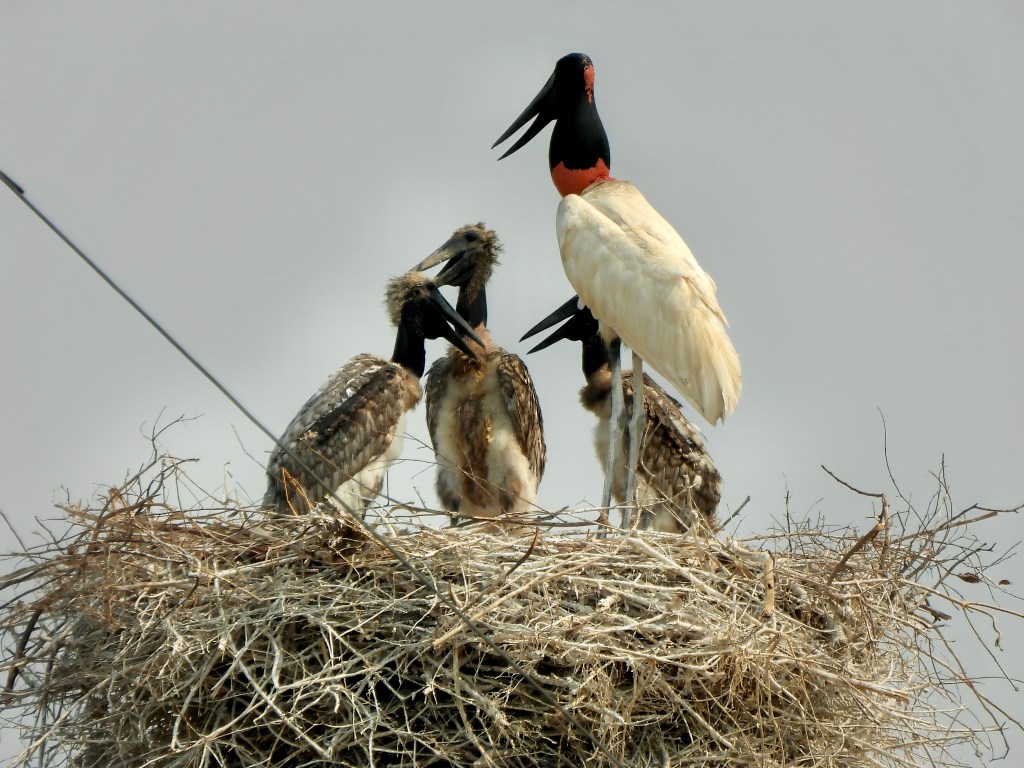
We also saw quite a few Jabirus along the riverbanks. In the photo below, note that the “small” black bird is a Black Vulture. These prehistoric-looking birds are nearly five feet tall and have an eight-foot wingspan.
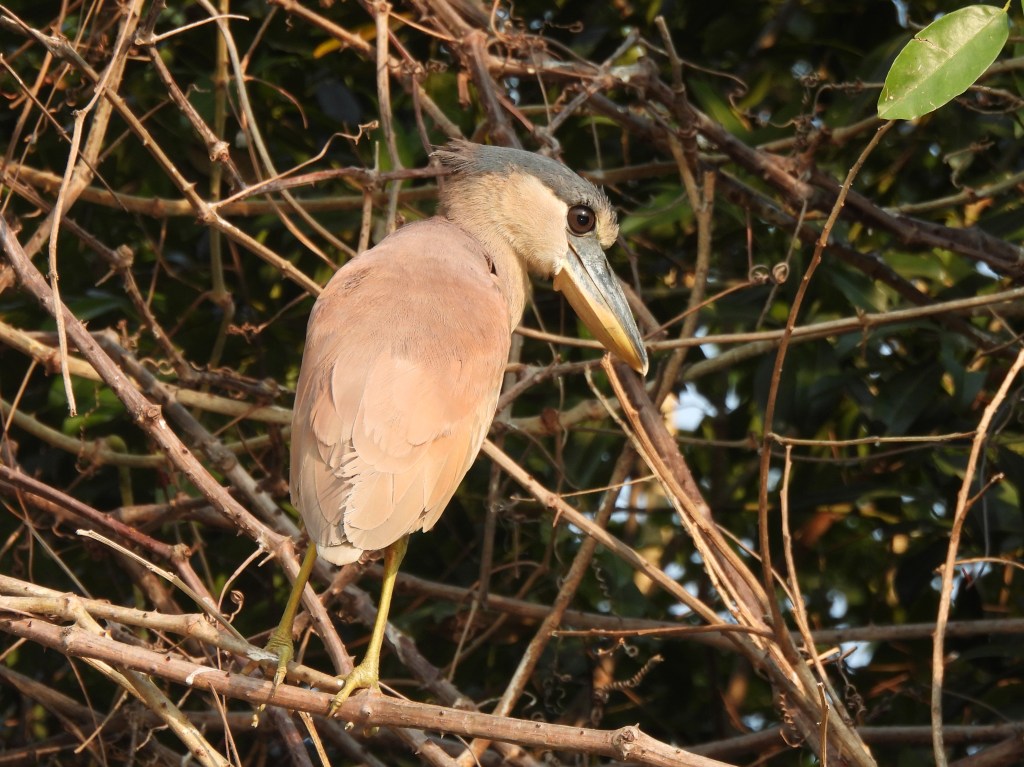
Another bizarre bird of the Pantanal is the unique Boat-billed Heron.
Giant Otters are an endangered species with a current population of only 1,000 to 5,000 individuals in the wild. I was fascinated when we watched an otter aggressively chase off a caiman who tried to steal the fish that the otters were eating. The Giant Otter Project has interesting info on the otters.

We also saw several jaguars again that day including a very unhappy Patricia. That evening we heard her story. A large male jaguar tried to steal a caiman that Patricia had just caught. She successfully defended her much-needed food, but during the fight, her young cub disappeared. Speculation was that the male had killed the cub. We were all distraught and tears were shed that night for Patricia and her cub. The next day, we heard an update to the story. A tourist had taken a photo of Patricia with her cub that morning! Amazingly, the little cub had swum across the big river by himself to flee from the fight between his mother and the big male jaguar. Somehow Patricia had managed to find her baby. Is there anything more tenacious than a fierce mama jaguar?
Our three days on the river had been all we hoped for. After one last breakfast on the houseboat, we drove back north on the Transpantaneira highway towards South Wild Pantanal Lodge, where we would spend the last two days of our trip.
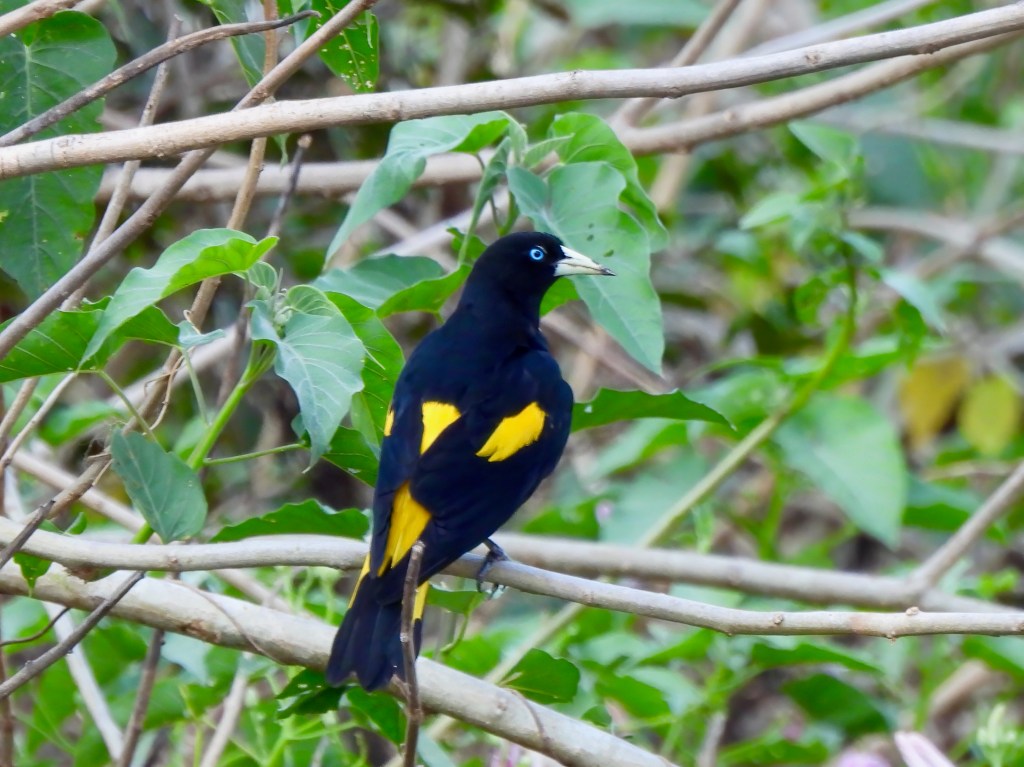
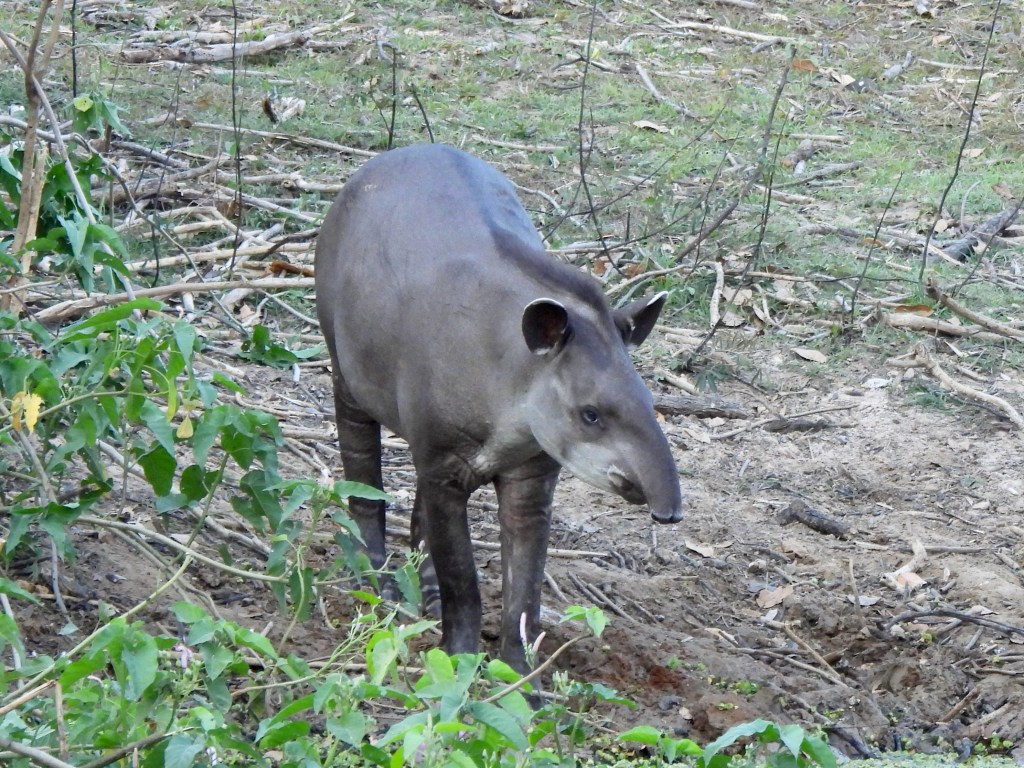
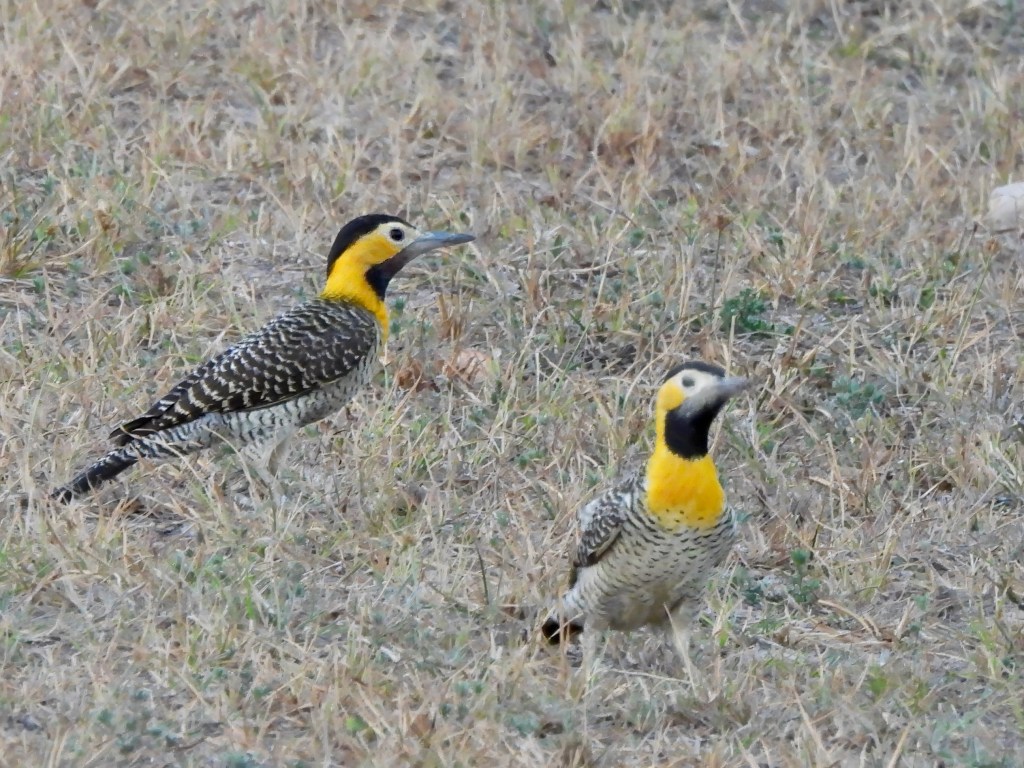
Many of the birds were the same species that we had seen earlier at Pousada Piuval, but some were new. In addition to the birds, I loved the other wildlife in the Pantanal including some of the smaller creatures. I was especially excited to see a Black Witch moth in the dining room at South Wild.


This little frog was in our bathroom. A sign explained that these are “toilet frogs” and they live there. It suggested calling a staff member to move a frog if you didn’t want to share your bathroom, but please don’t hurt them.
Jabirus were quite common; according to our eBird trip report, we saw 38 different individuals. This family built a nest atop a high tree right by the lodge.
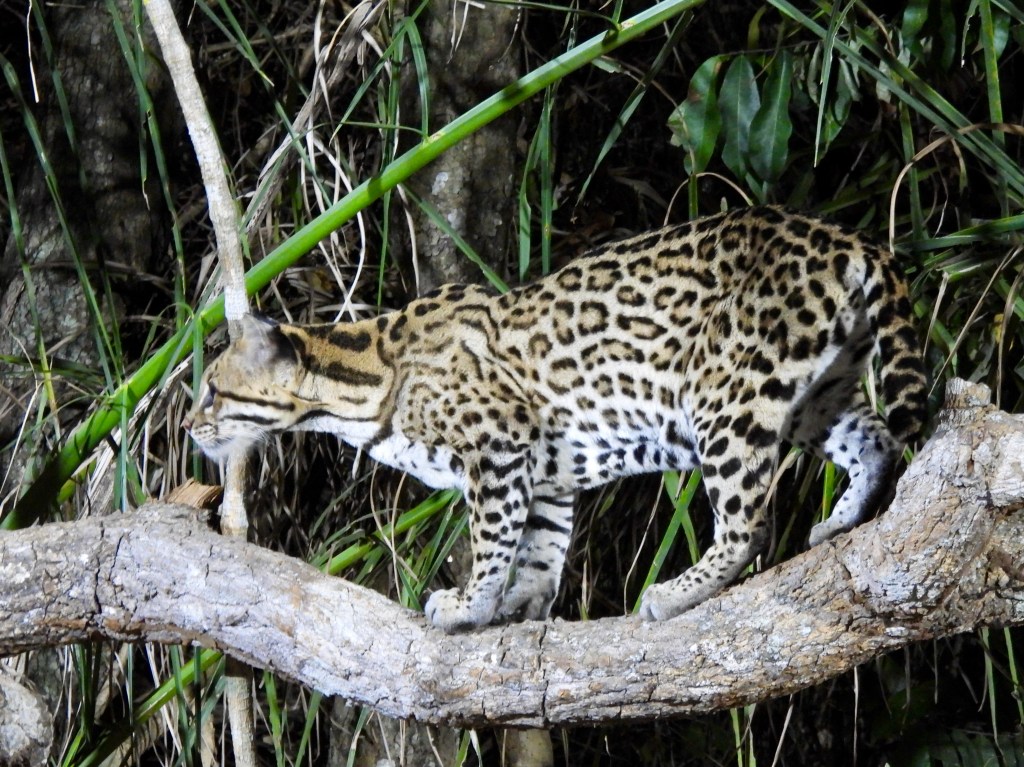
The star of South Wild Pantanal is another big cat, an Ocelot, which is seen so reliably that South Wild “guarantees” a sighting. As you might expect, this is the result of feeding the Ocelot. However, no other lodge has been able to accomplish this feat. It was magical to watch this gorgeous creature leisurely come for food, go to the edge of the woods to patiently wait for more, and then come back to eat again, repeated three times.
Our Lifebird Tours trip ended the following morning. We got up early to drive north on the Transpantaneira and then to Cuiabá where we went in separate directions. Sherry flew to the Amazon for a week there, the others flew back to Sao Paulo for flights home, and I flew to Rio de Janeiro where my friend, Derek, would meet me for another week in the Atlantic Rain Forest. Sherry organized a great trip and Alyson Melo brilliantly guided us on this wonderful adventure.
For a complete list of all bird species observed and photographed, see the eBird trip report. For photos of other wildlife that I photographed on this part of my trip to Brazil, see my iNaturalist observations.








 Birding for Life