I can’t remember when the Pantanal of Brazil first came to my attention, but I’ve wanted to visit since I first heard about it. I think it sounded a bit romantic with jaguars and exotic birds. The reality was that and more with fascinating wildlife in a beautiful remote landscape.
Sherry’s Lifebird Tours group landed in Cuiabá mid-morning on August 16. We drove straight to our first lodge, Pousada Piuval, near the little town of Poconé at the northern end of the Pantanal. We started birding right away and the group saw 34 species of birds before we even ate lunch. A Cattle Tyrant foraged right at our feet as we entered the lodge and Yellow-billed Cardinals were abundant on the lodge grounds.

A little pond attracted capybaras, herons and egrets.

We explored the lodge property on our first outing later that afternoon. I had been looking forward to seeing Greater Rhea, the largest bird in South America (up to 65 pounds and 5 feet tall). These odd flightless birds employ an unusual breeding strategy. The male alone builds a nest and mates with several females who all lay their eggs in his nest. The male does all the incubation and then cares for the chicks for four to six months.

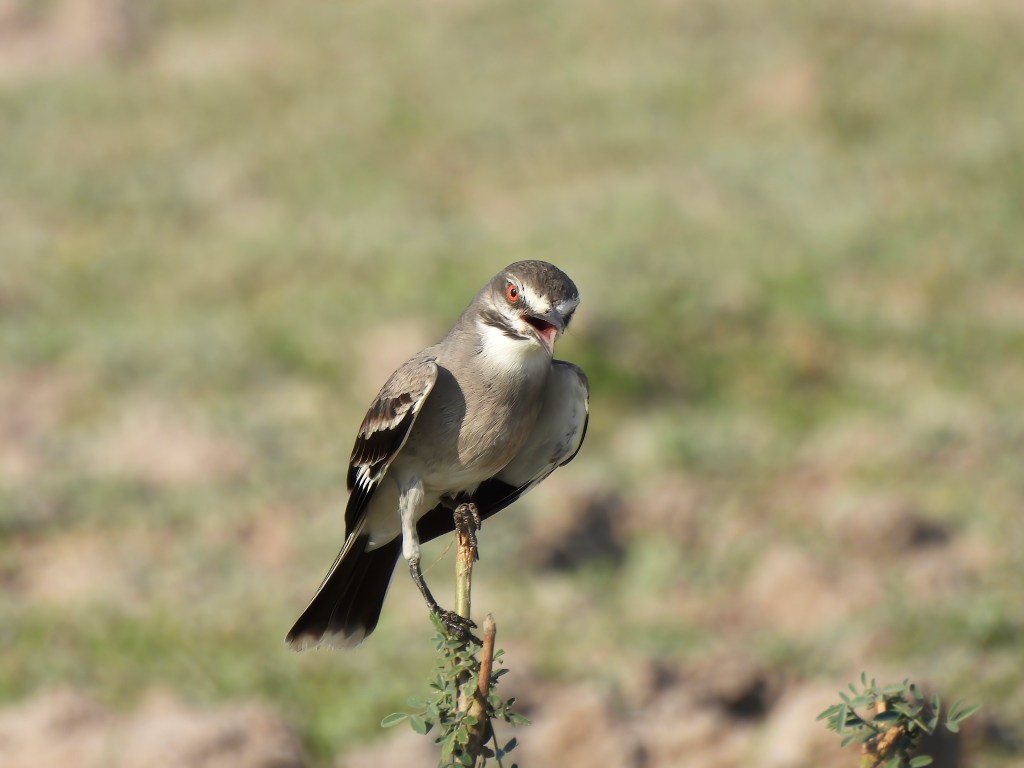
Another of my new favorite birds was Gray Monjita, a large attractive flycatcher.
Piping-Guans were big, odd-looking birds. We saw two species, White-throated Piping-Guan and Red-throated Piping-Guan. These birds confused me a bit. White-throated Piping-Guans can have either white or light blue skin on their necks. According to eBird, some individuals in the Pantanal have both blue and red and are most likely hybrids with Red-throated. However, I can’t find any photos in eBird of individuals identified as hybrids and I can find photos of both species with red and blue on their necks. After spending way too much time puzzling over this, I give up and I’m just going to enjoy the diversity of nature.

Our guide, Alyson Melo, is an expert on the Pantanal and he knows how to find birds and other wildlife. Just before 4:00 PM, he took us to a little pond where we spent about 20 minutes watching as birds came in for a drink. First was a Sunbittern followed by the beautiful Black-collared Hawk in the photo below. Other birds included a few Undulated Tinamous and Choco Chachalacas. An Azara’s Agouti came for a drink.

We drove around and saw a Black-fronted Nunbird and a Spot-backed Puffbird. Around 5:00 PM, we returned to the little pond for about half an hour. Rufescent Tiger-Heron, Gray-cowled Wood-Rail, Bare-faced Curassow, and a Black-tailed Marmoset showed this time.
I thought that the female curassows were prettier than the males. In the photo below, the black male is in front of two females with their barred black-and-white uppersides and buffy bellies.

It was an incredible start to our time in the Pantanal. We had not even been there a full day and we had seen many fascinating birds and other animals.
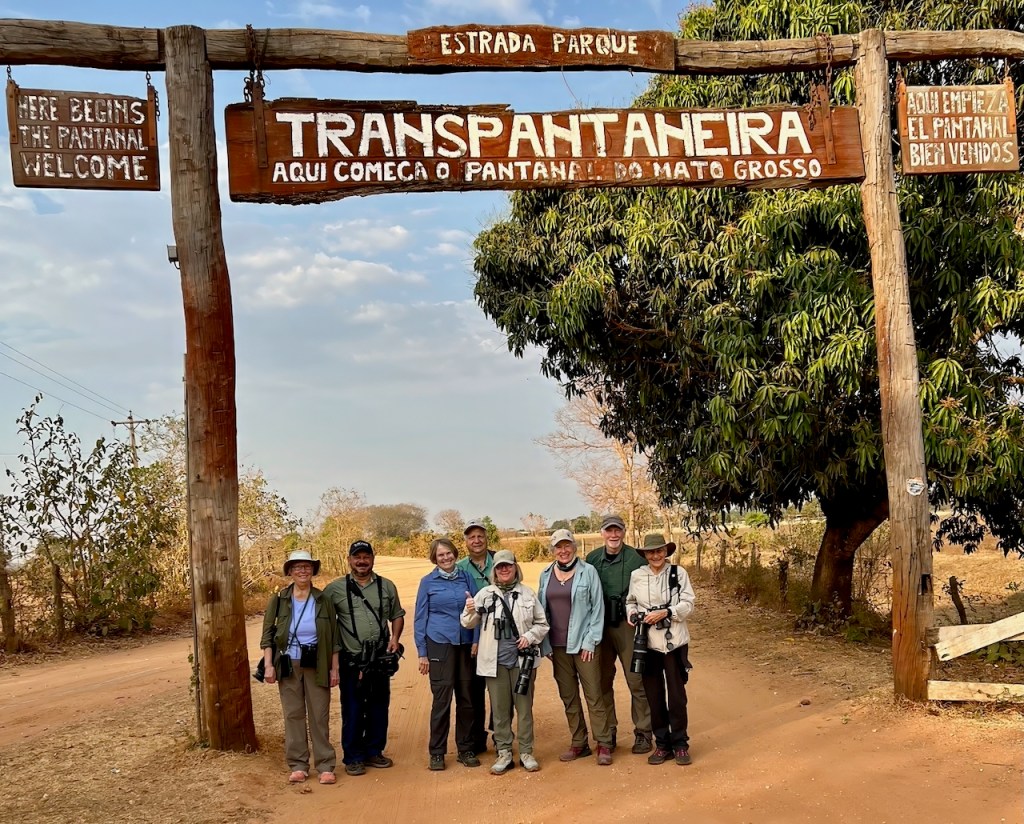
On Saturday morning, August 17, we headed down the famous Transpantaneira, a 91-mile dirt road, which runs from Poconé to Porto Jofre. The mosaic of dry areas, marshes, and shallow pools alongside the road contribute to unparalleled wildlife viewing. In the hour and 20 minutes before we turned back for breakfast, we saw 48 species of birds.
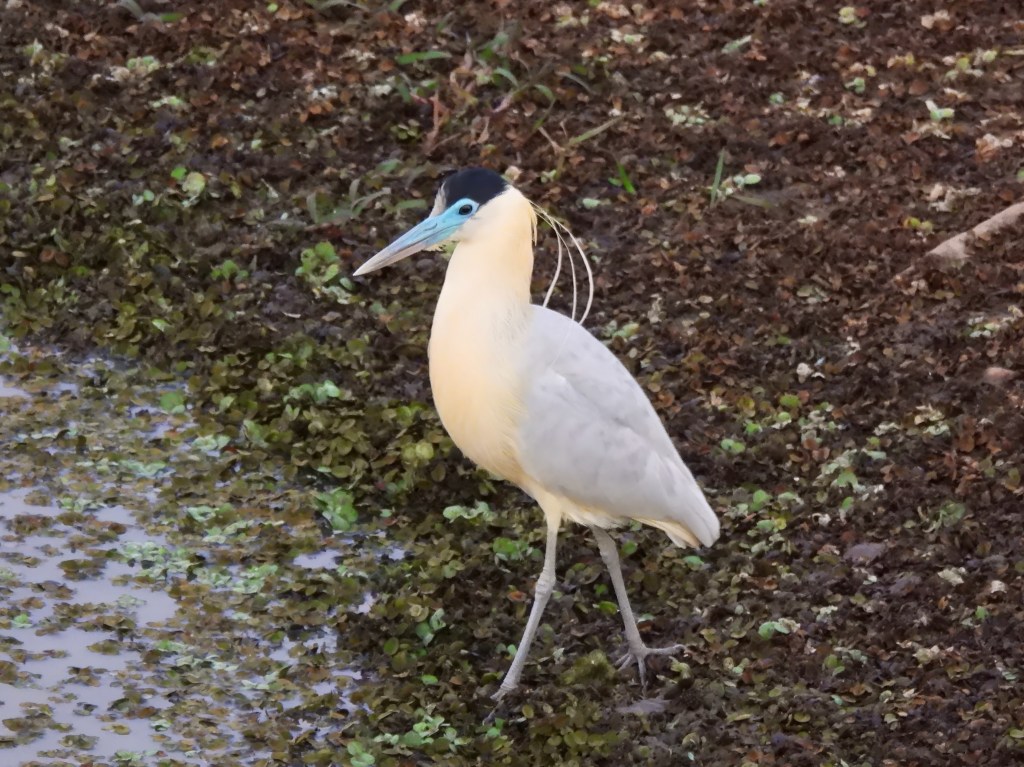
A group favorite was this lovely Capped Heron.
After breakfast, we spent the rest of the day birding the vast property of Pousada Piuval. Its diverse habitats include patches of forest, open dry areas, and watering holes where over 500 species of birds have been observed.
A delightful surprise was this Red-legged Seriema that hopped right up onto our vehicle. Note the second bird on the ground and listen as they call to each other.
The Pantanal has many interesting creatures in addition to birds. We saw quite a few other animals including several Argentine Black-and-white Tegus. These huge lizards can grow to be over four feet long. They don’t look very friendly to me, so I was surprised to learn they are sometimes kept as pets. According to Wikipedia, “They are notable for their unusually high intelligence and can also be housebroken.” These lizards have escaped or been released into the wild in the Southeast US where they are considered to be an invasive species and threaten native wildlife.

We saw many birds that day and had another magical experience late in the afternoon as we sat watching a little watering hole for an hour. Alyson told us that other birders usually quickly check the pond and leave. He knew it was worth staying for a while and our patience was rewarded.
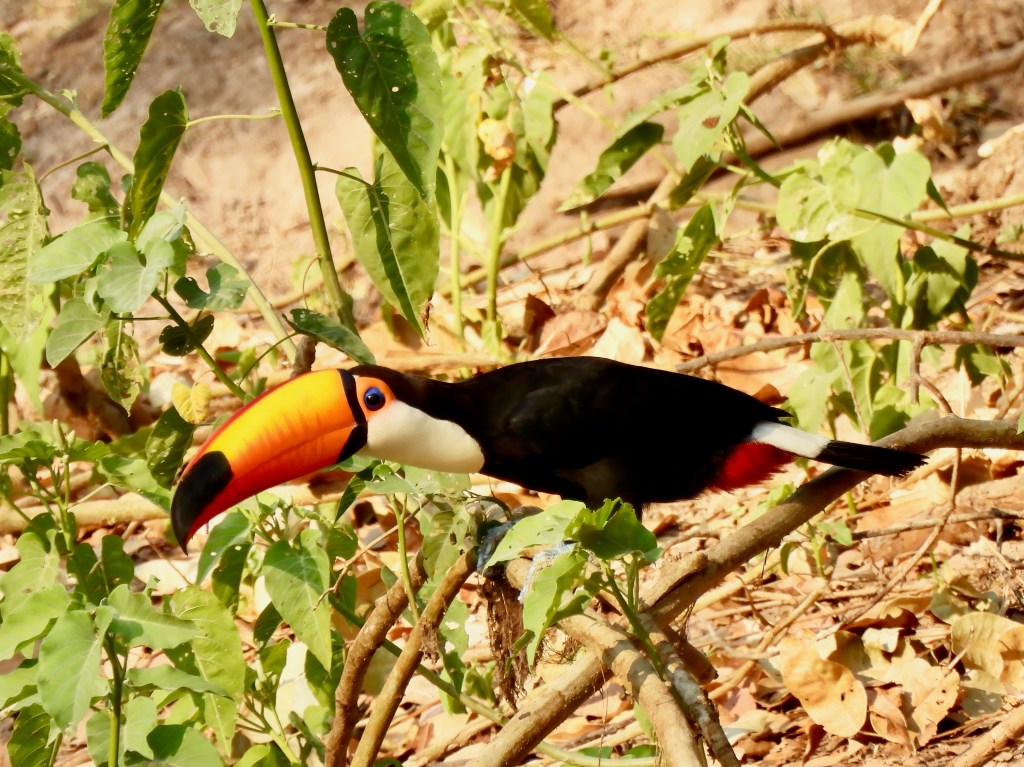
Who doesn’t love toucans? This big Toco Toucan was not only colorful, it seemed to have personality.
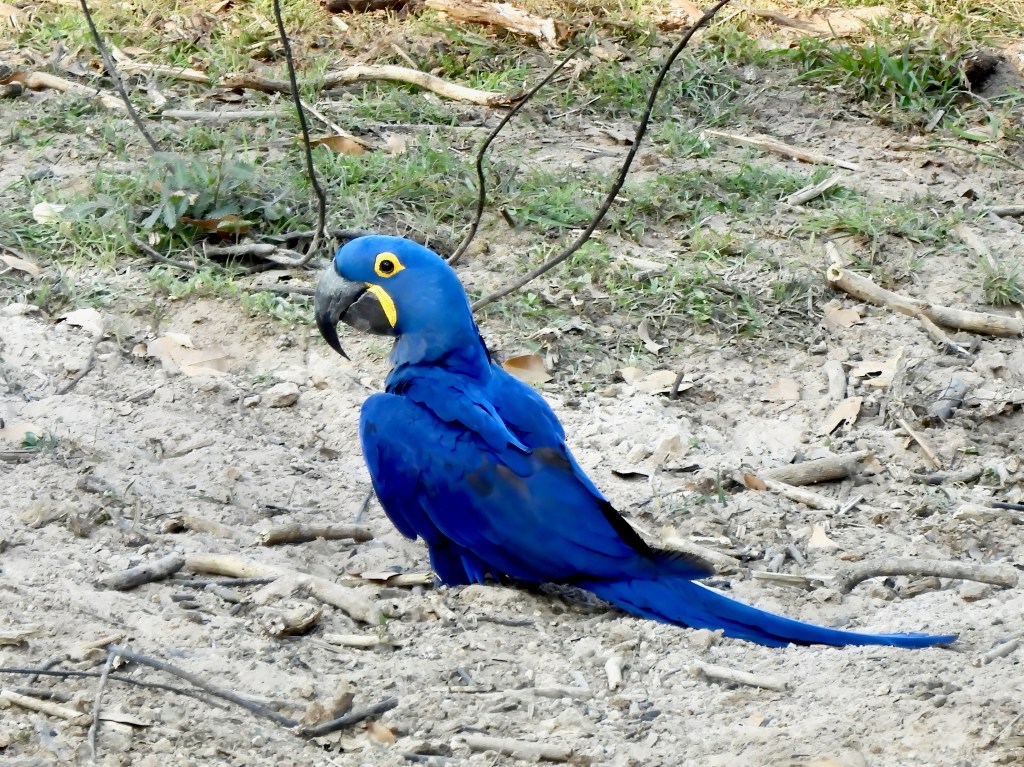
Next was the star of Pousada Piuval, Hyacinth Macaw, the world’s largest flying parrot. Its status was endangered for several years; in 2014 it was downlisted to vulnerable. That is still not a lot of birds; population estimates range from 3,000 to 7,000 individuals. The population decline in recent decades is mainly due to habitat loss and trapping for the pet trade. The sale of these spectacular parrots is no longer legal but previously fetched $10-15,000 for a single bird in the US.
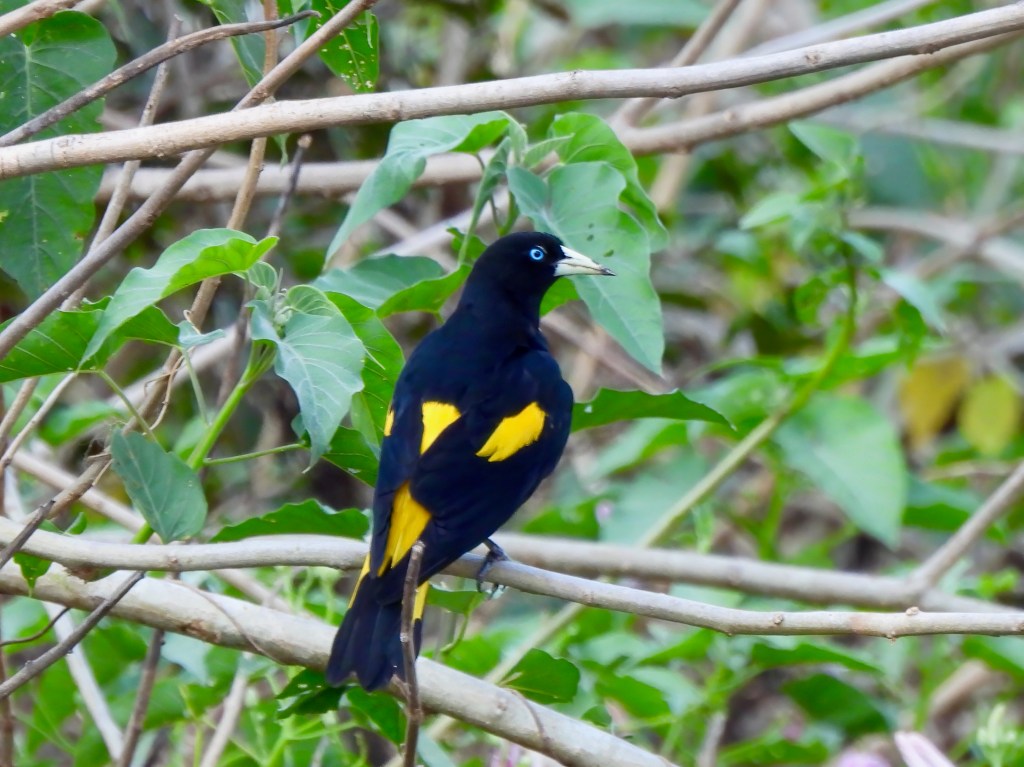
Yellow-rumped Cacique was another sharp-looking bird at the little pond.
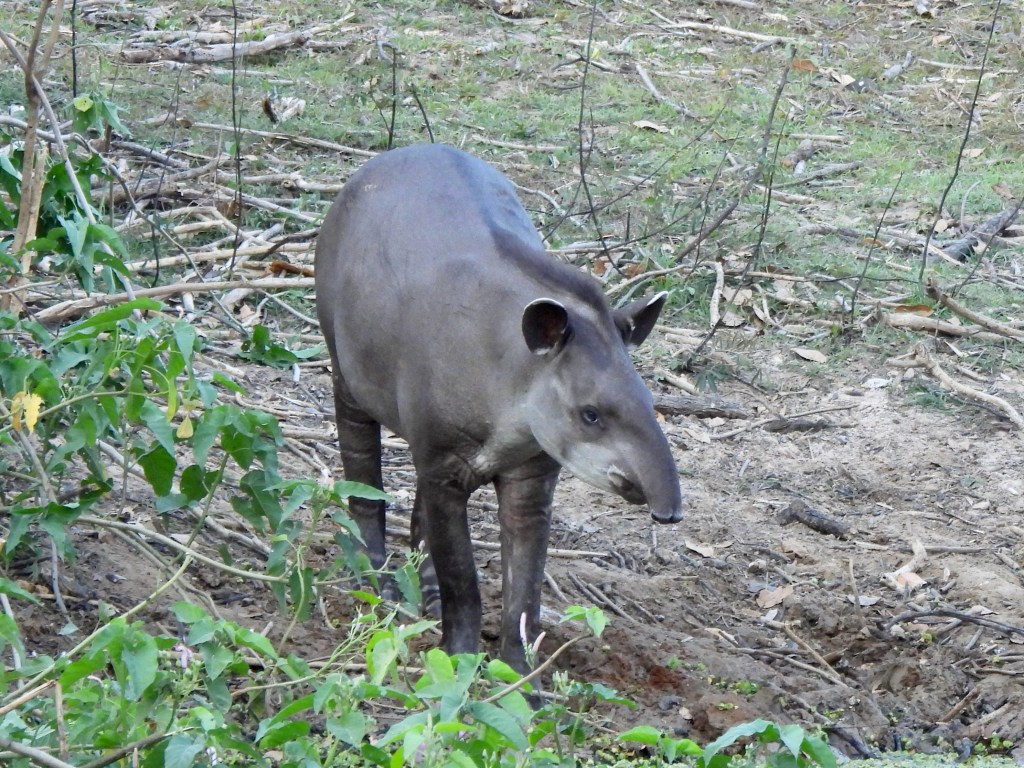
A little before 5:00 PM, we got really excited and quietly held our breath as a tapir came out of the woods. It took him a while to go for his first drink at the watering hole, but he stayed in our view for quite some time. We were thrilled with close views as several times he walked towards the woods and then came back for another drink.
We were still not done with birds at the little pond. An Orange-backed Troupial was another of my favorites. I love the bright orange color.

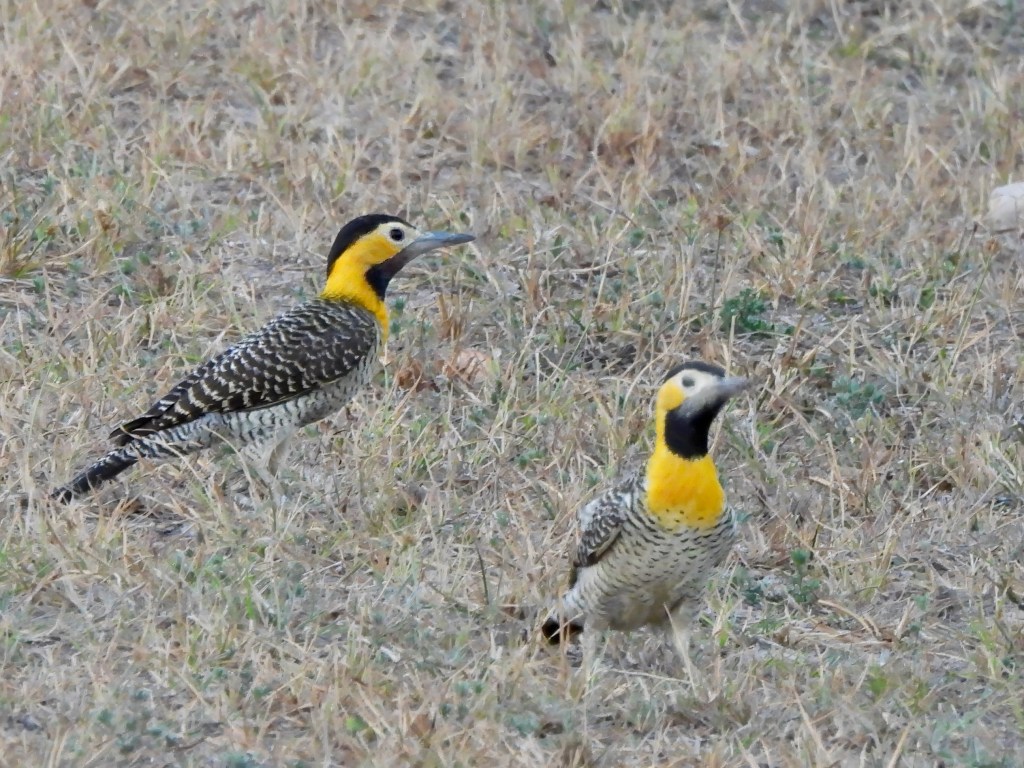
After leaving the magic pond, we had just enough light to see a few more birds. Another group favorite was these Campo Flickers.
It had been an amazing day! Appropriately, it ended with this beautiful Black-banded Owl.

There is just the beginning. Watch for more Pantanal adventures on this trip.


 Birding for Life