Birding trips are full of surprises, and Rodrigo’s first with us came when he picked us up at our hotel in Santiago and found me sitting in a wheelchair. Birding guides are used to handling the unexpected, but showing someone birds when they can’t walk – with zero advance notice – is asking a lot. Yet Rodrigo Tapia and our driver, Cristian Quezada, pulled it off. The wheelchair belonged to the hotel, so for the rest of the day I depended on the three other humans in our little group to help me every time I had to leave the car for even a few steps.
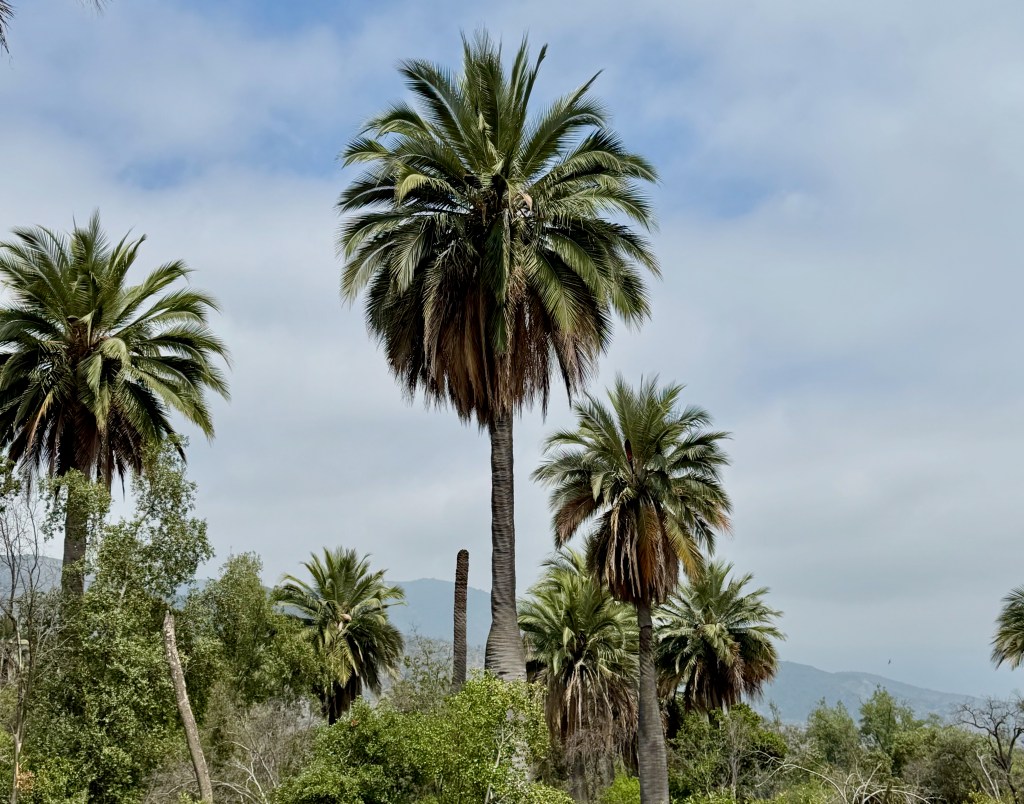
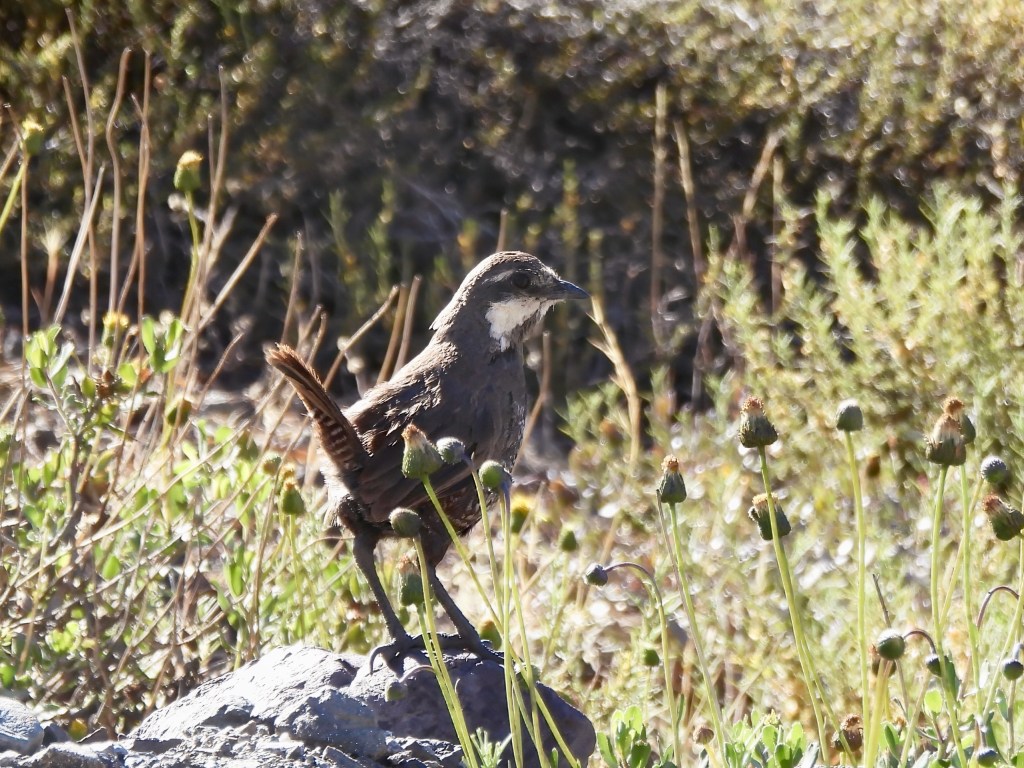
We headed to Parque Nacional La Campana, best known as home of the largest remaining natural population of the endangered Chilean wine palm, Jubaea chilensis. The park has good birds, too, and we birded from the car or standing just outside it. One of my favorites was a tapaculo with big personality, Moustached Turca. This denizen of rocky, scrubby hillsides is quite easy to see as it quickly darts from spot to spot, frequently pausing atop a rock, tail cocked high, to survey its surroundings.
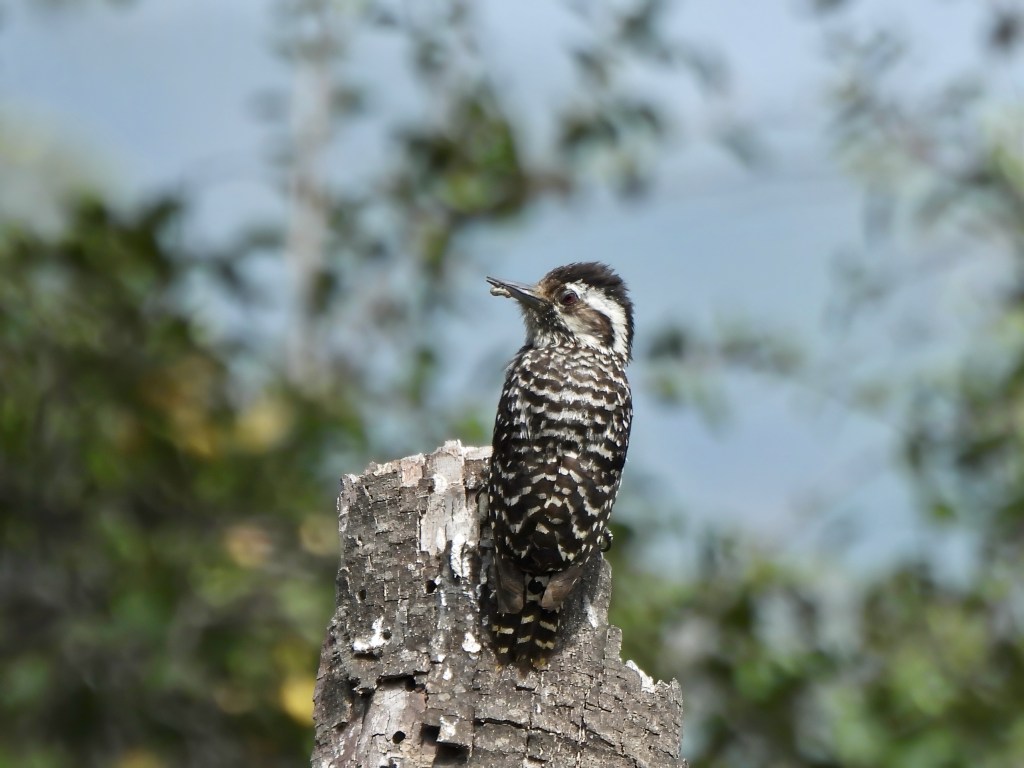
A more modest little bird was this pretty Striped Woodpecker.
The part of the park that we birded first was open to vehicles. Next was a section where cars were prohibited, but Rodrigo wanted to visit that area because it had different birds, so he talked to a park staff member. I have no idea what he said, but like magic, we were granted permission to drive there too.
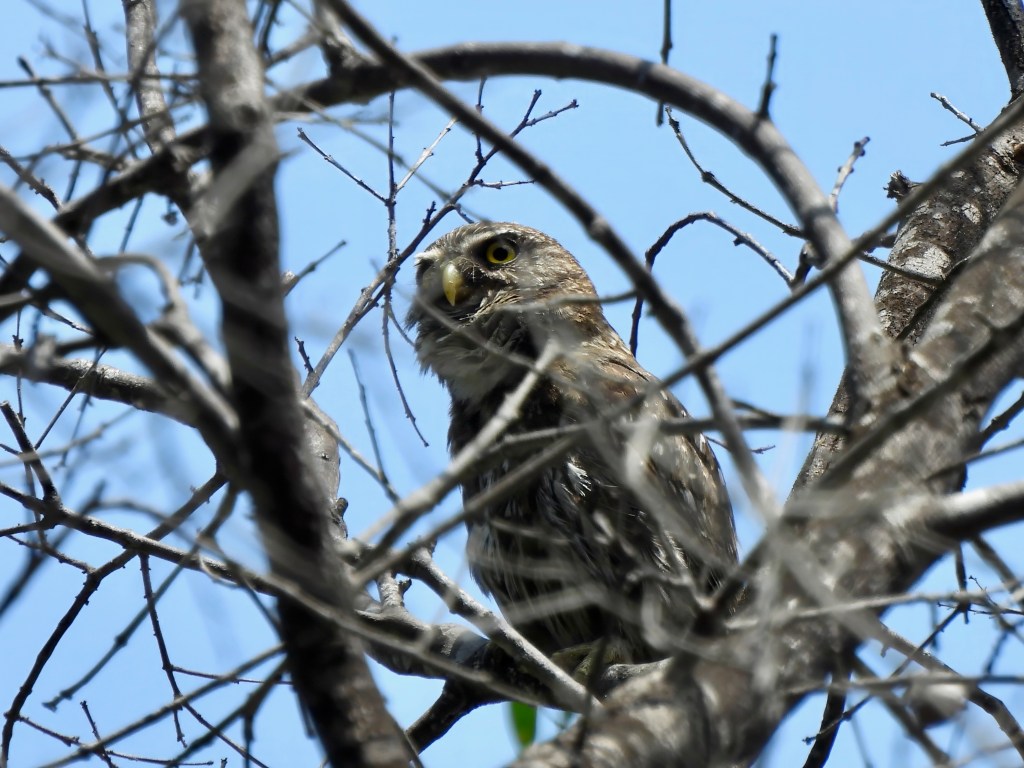
I happily added Austral Pygmy-Owl to my life list.
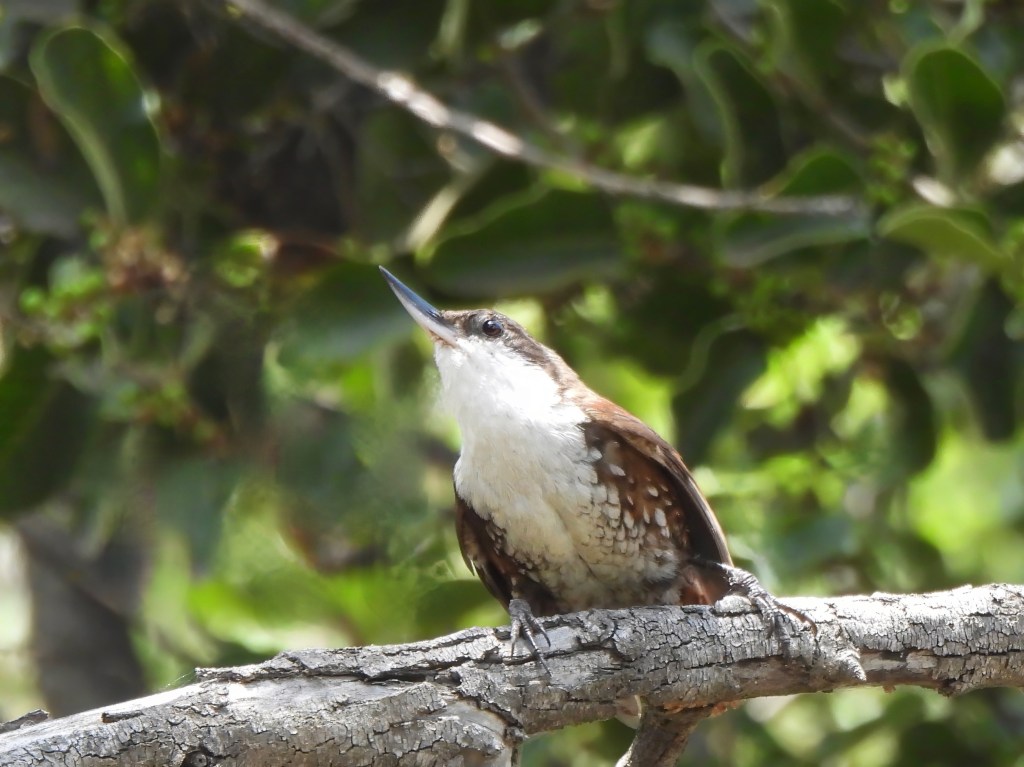
The owl was quickly followed by a White-throated Treerunner.
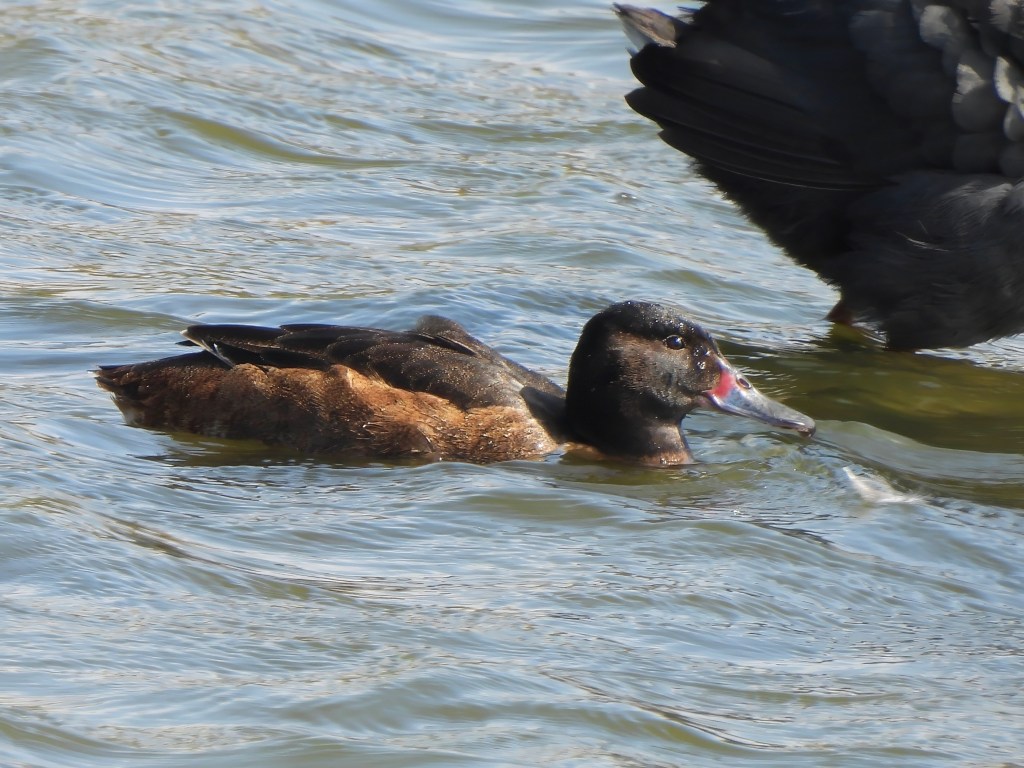
After a wonderful morning in the park, we headed toward the coast. At La Laguna de Zapallar, we saw most of the birds from the same spot. Our good luck continued – right in front of us was a pair of Black-headed Ducks. Sandra and I joked that we looked for that duck in four countries before finally finding it. But it was true. We had asked about the possibility of seeing it multiple times during the last month, and were always told that it was extremely unlikely. It made sense that we finally found it in Chile: we were in its breeding range, and December is summer breeding season there. These are fascinating birds, the only ducks in the world that are obligate nest parasites. Many species of ducks parasitize other nests occasionally, but the Black-headed Duck never builds its own nest at all – it’s entirely dependent on other waterfowl to incubate its eggs.
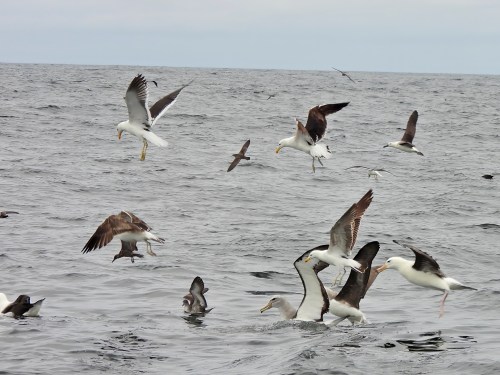
It was then off to our hotel so that we could get to bed early and be ready for a big day on December 13. Rodrigo and Cristian picked us up very early for the famous Valparaiso pelagic the next morning. Sandra had wanted to do this pelagic so much that we had planned the second half of our time in South America around being here on this day. I don’t love pelagic trips like Sandra does. I’ve been seasick on most of them, and I’ve often had trouble seeing the birds, too. This one turned out to be one of the best surprises of my birding life. The boat was much smaller than I’d expected, so it sat lower and closer to the water, and there were an amazing number of birds. The Valparaiso pelagic goes out into the cold, nutrient-rich Humboldt Current, which draws them in. I love this photo because it shows the amazing spectacle we witnessed.
There was only one species that I didn’t see well enough to add to my life list, and I was lucky to get photos of many that I did see. A sample is in the following gallery.
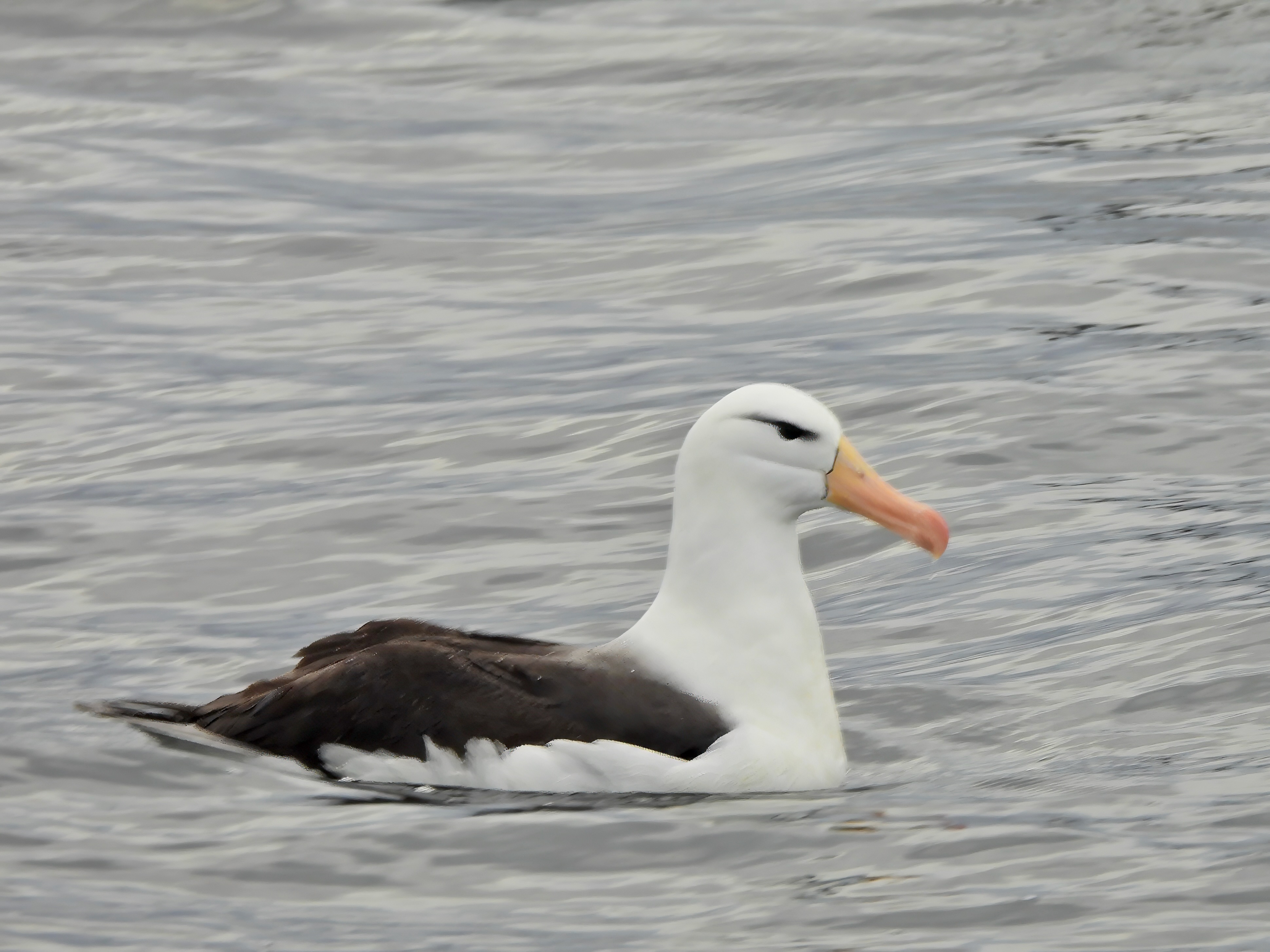
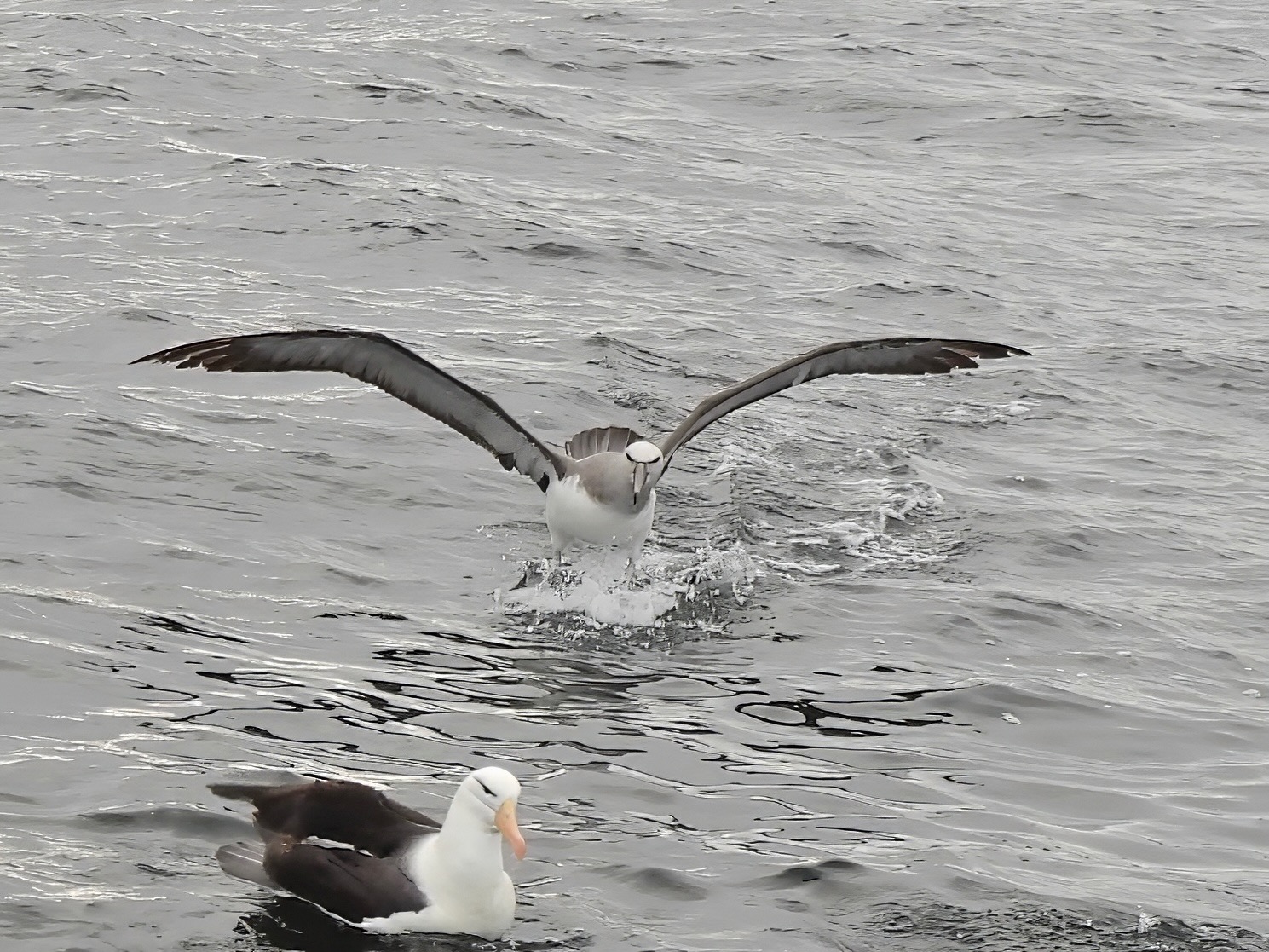
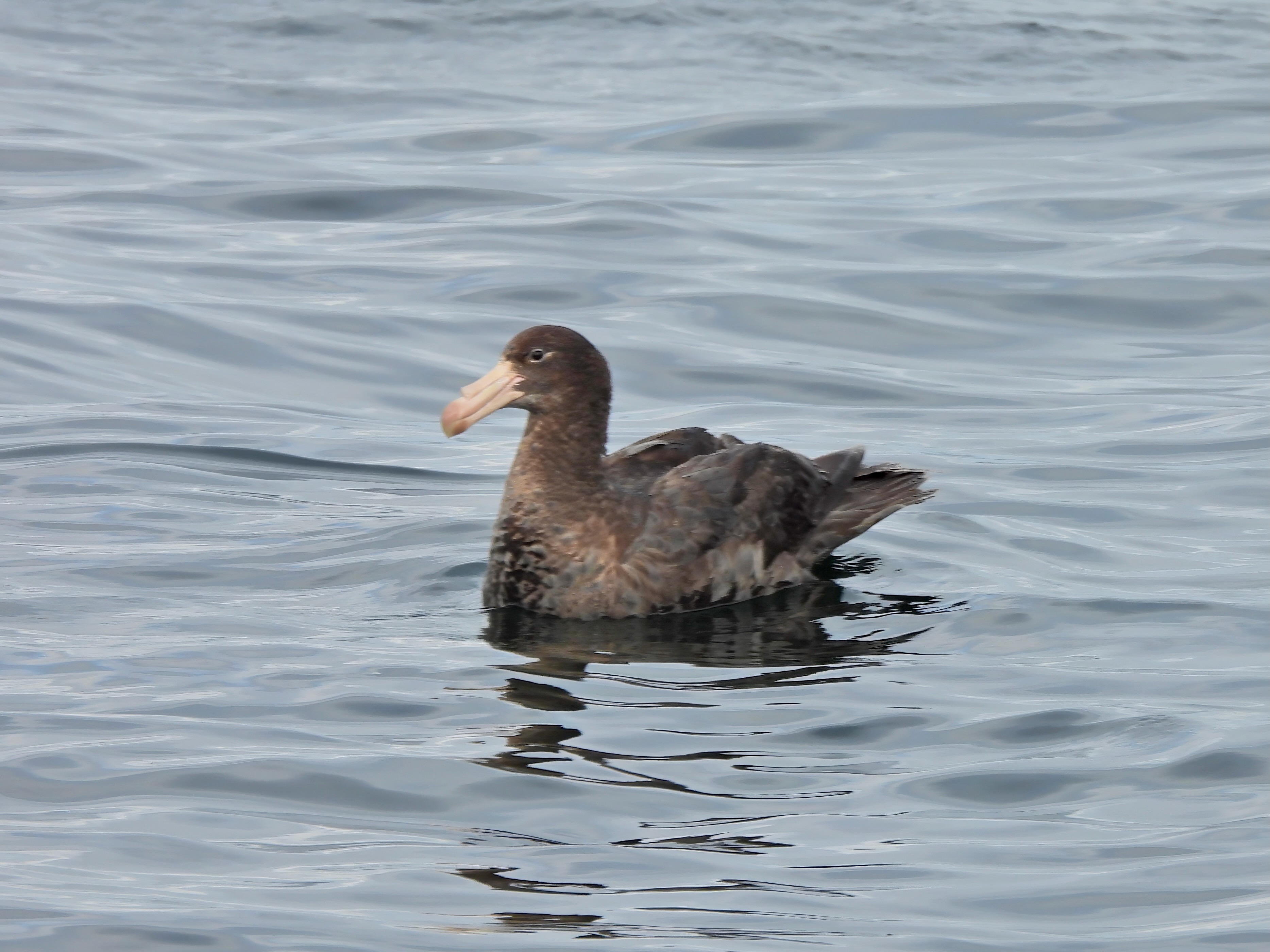
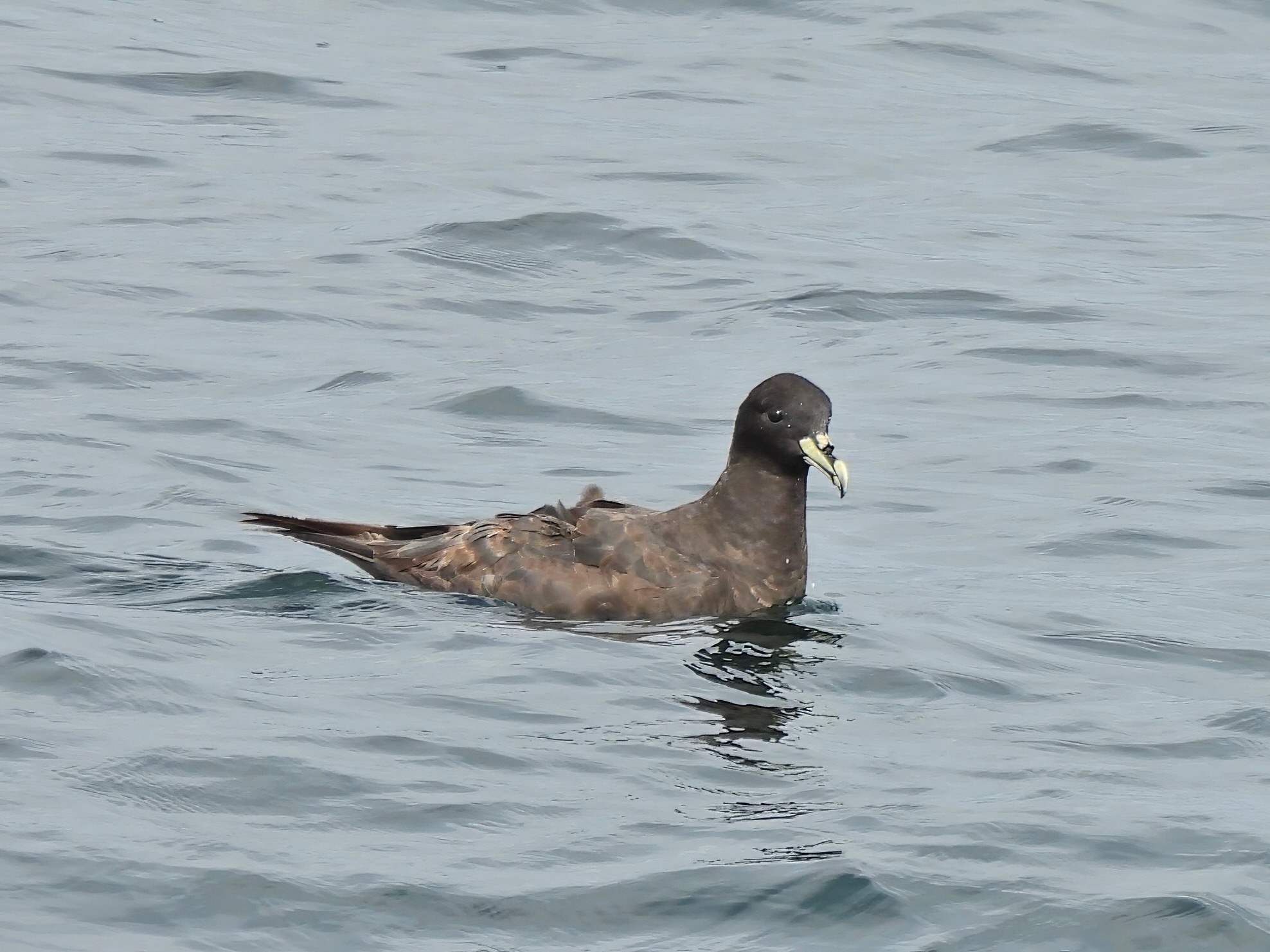
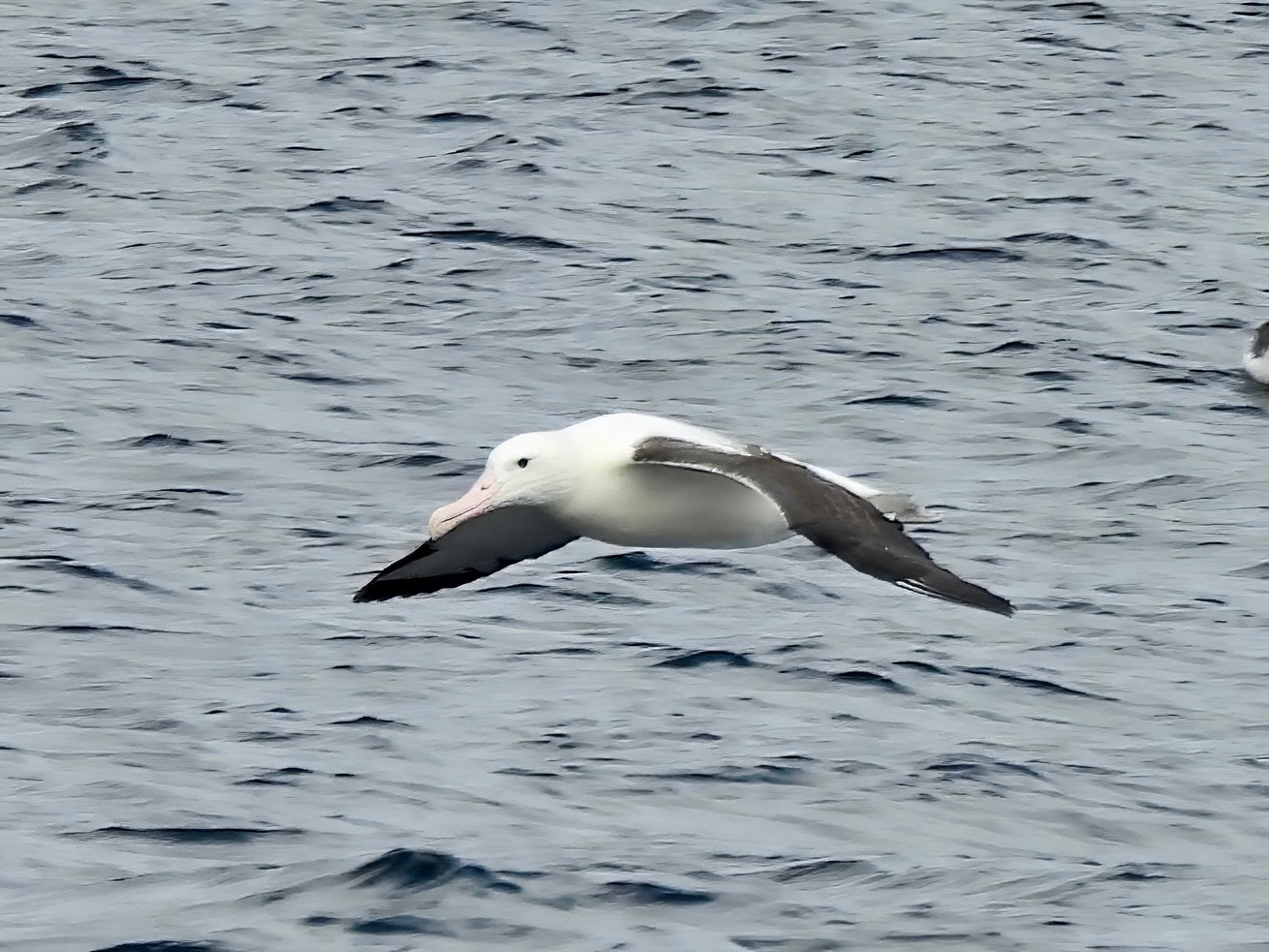
All this in only half a day! It was, without a doubt, the most fun I’ve ever had on a pelagic trip.
We had lunch at a little seaside restaurant, then spent a few hours in the area just a bit south of Quintero, where the pelagic actually departs from. My favorite spot may have been the public beach in Concón. I was thrilled to get close looks at the lovely Inca Terns, but I also enjoyed watching the mix of birders, children playing, and sunbathers all sharing a beautiful sunny afternoon at the beach.
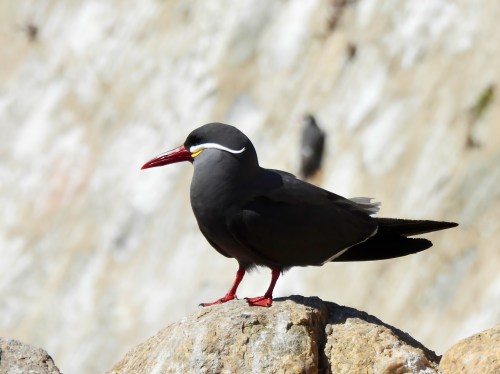
On our way back to our car, we ran into Alvaro Jaramillo’s group, and they alerted us to a rare bird for the area. Of course, we had to go back to see the Magellanic Penguin.
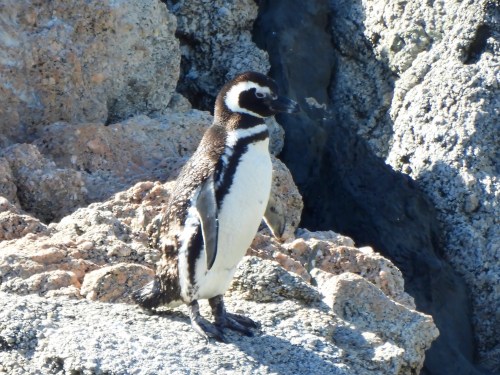
It was hard to pull ourselves away from the coast, but we had to head to our next destination on the other side of Santiago, a few hours’ drive away.
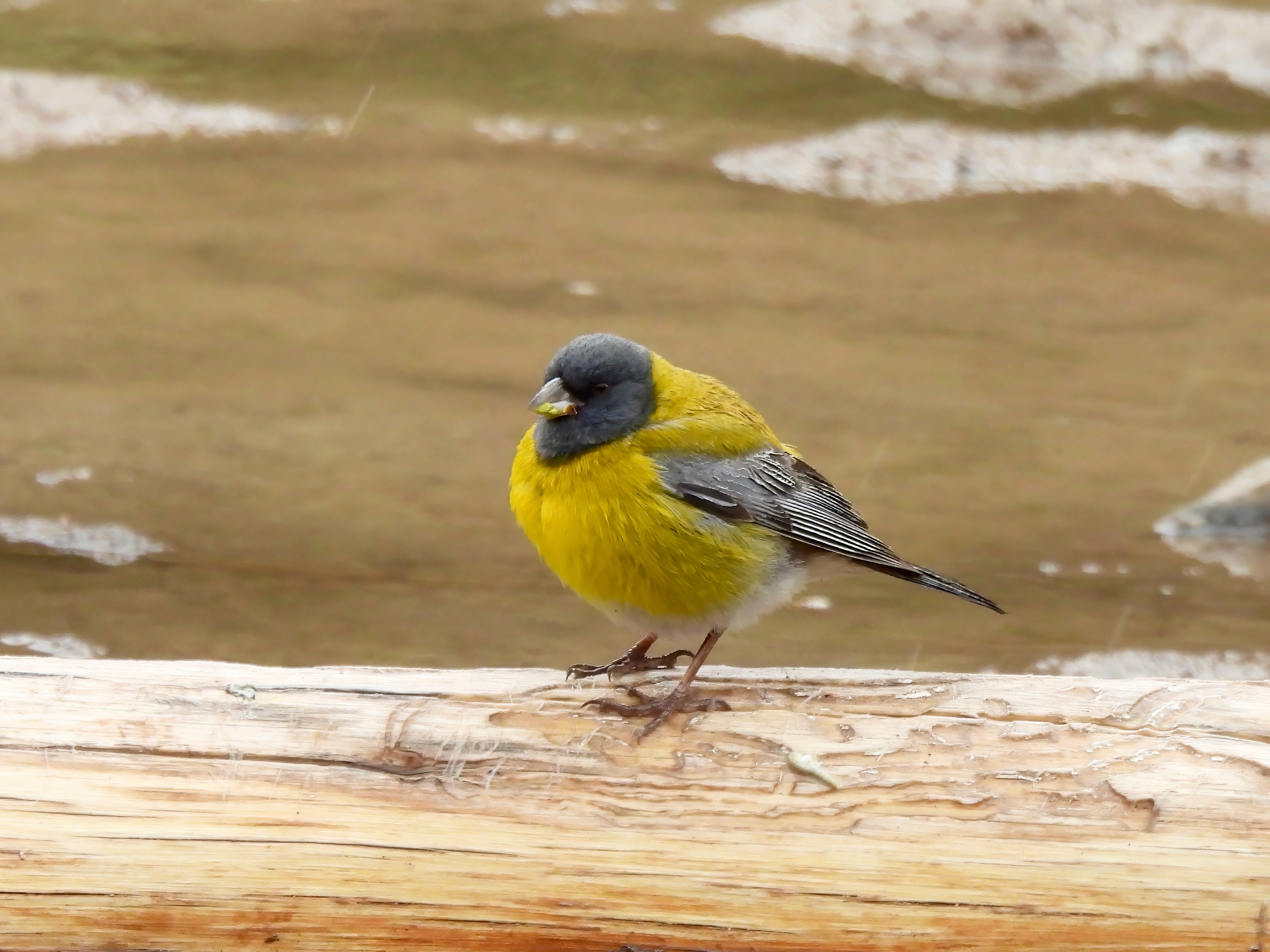
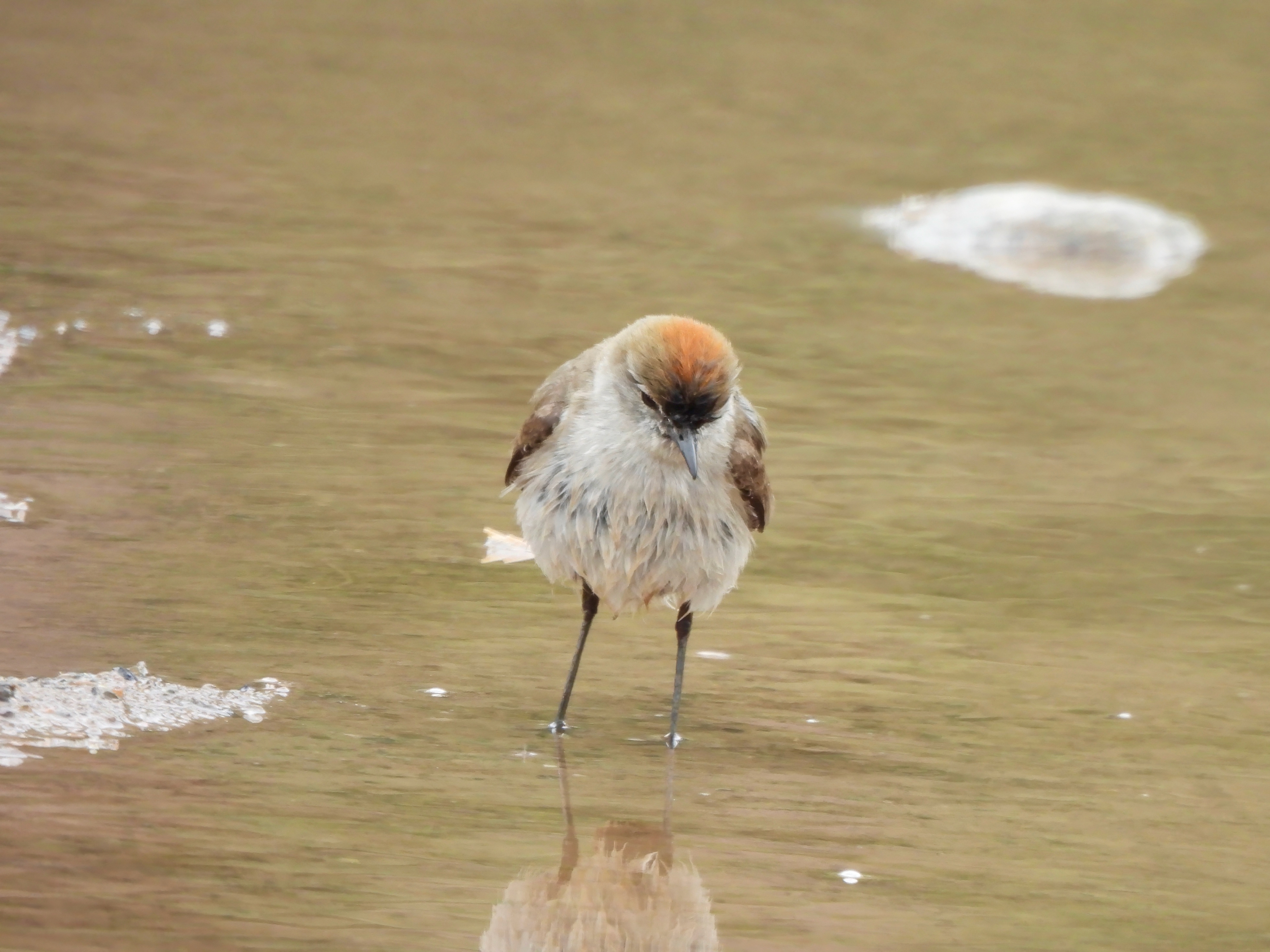
We had reserved our last full day in Chile to search for Diademed Sandpiper-Plover. We set out for Baños Colina in the upper Río Colina, high in a mountain valley at approximately 8,285 feet, where geothermal water emerges from the mountainside and descends through a series of terraced turquoise pools. The pools attract visitors who bathe in the hot water. Birders come here for the Diademed Sandpiper-Plover, which thrives in the habitat created by the outflow from these springs: boggy wetlands with shallow, marshy edges where the water spreads out and cools. Sadly, we did not find our target bird this day, but we saw dozens of other birds at the outflow of the hot springs – mostly ground-tyrants, miners, and finches – urgently feeding in the shallow water and muddy edges in the nearly freezing temperature.
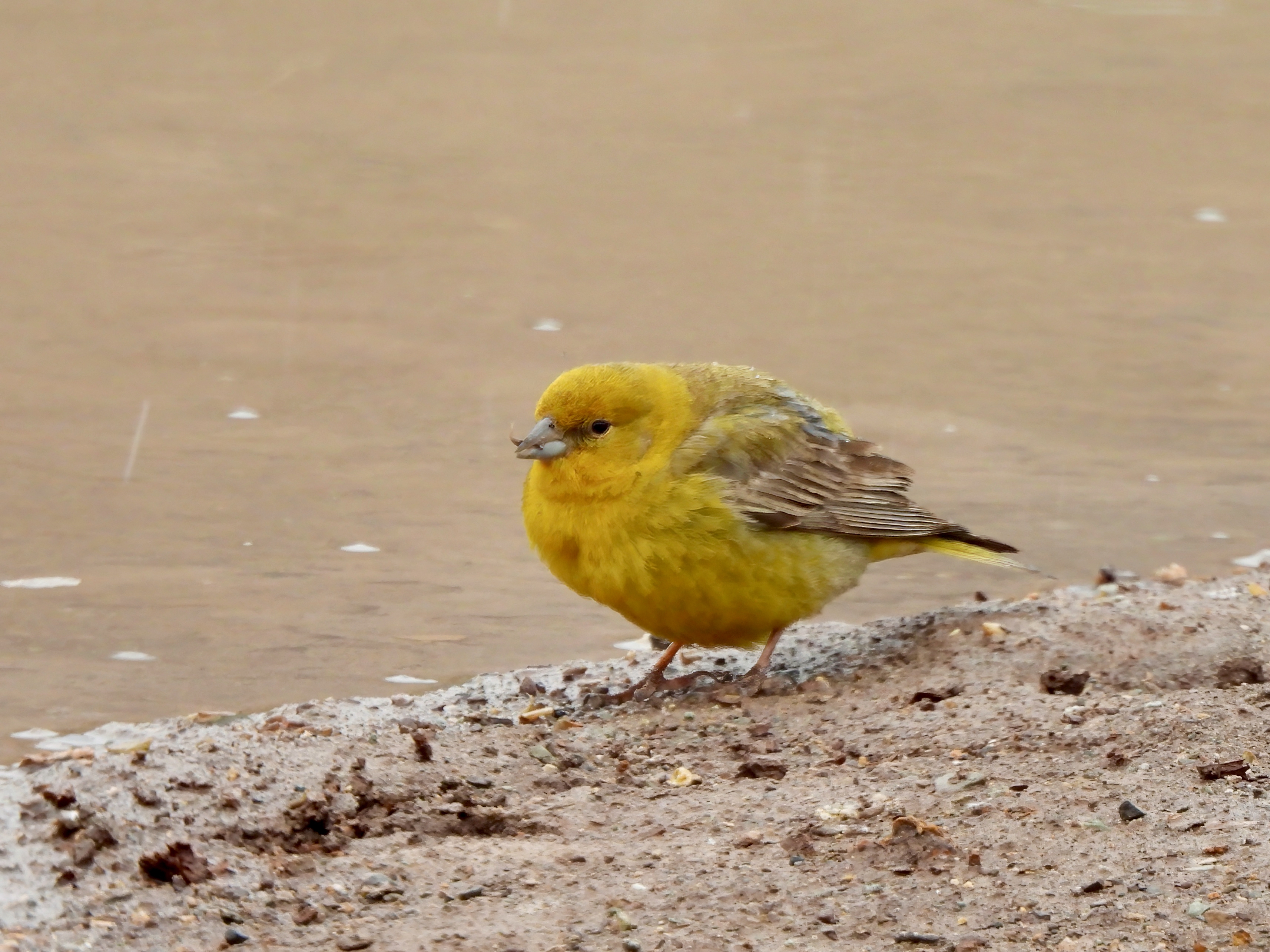
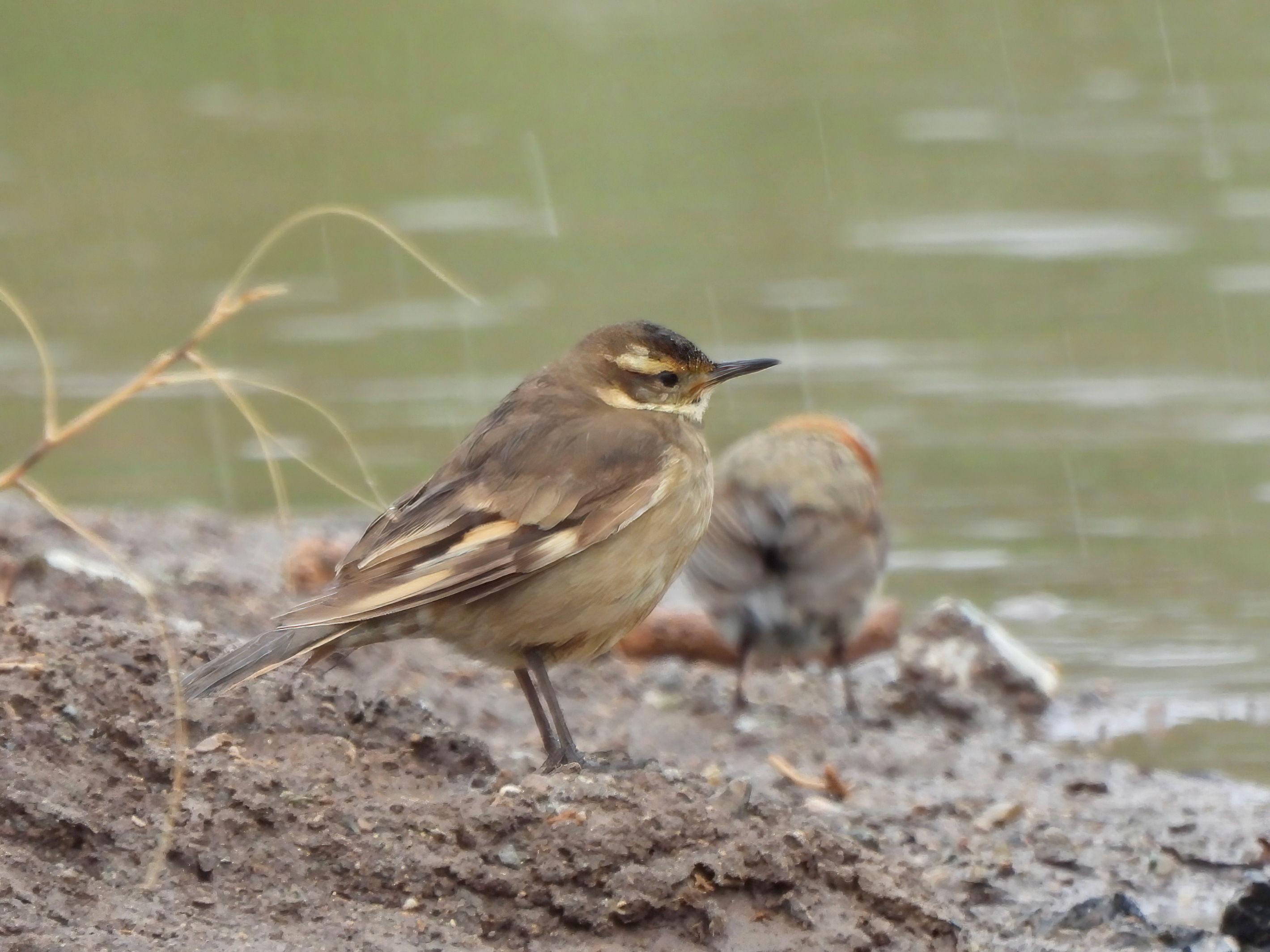
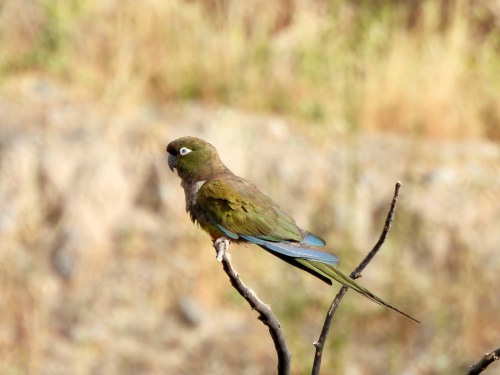
On our way back to the hotel, we looked for another target bird, Burrowing Parakeet, and had better luck, though it took some patience. We could hear several birds on the other side of the little river for a long time before one finally perched on our side where we had a view. This is an attractive bird, but its name is the best part – Burrowing Parakeets nest in burrows on banks or low bluffs.
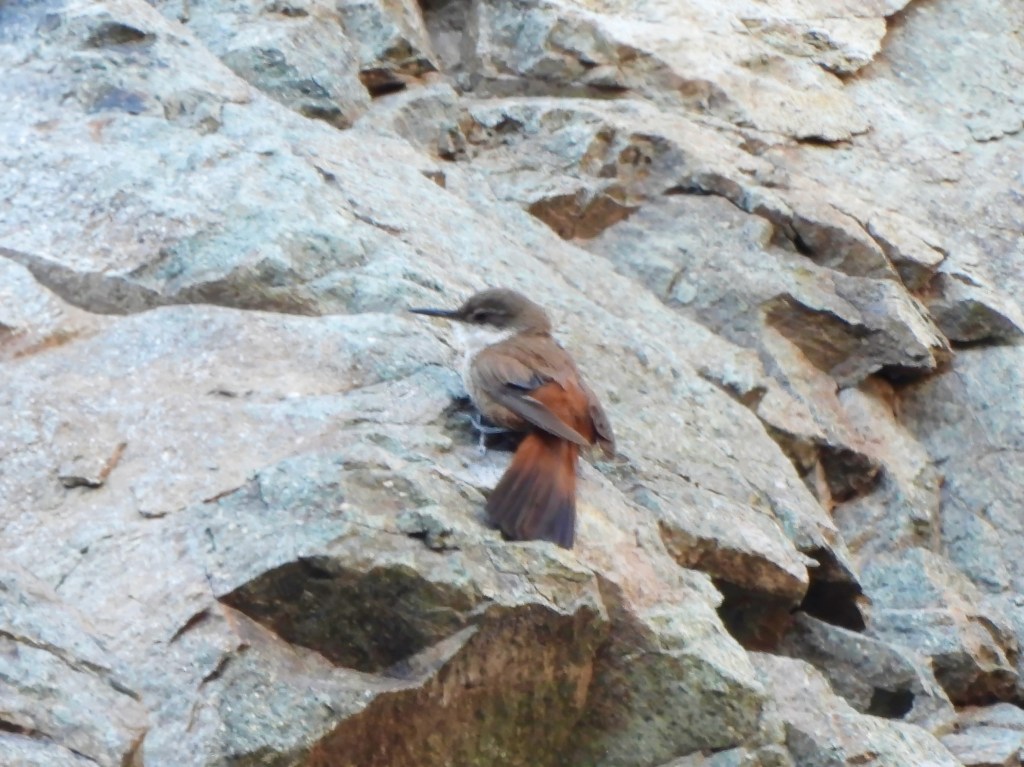
We woke to much better weather the next morning. Rodrigo planned to try a different hot spring, and he was optimistic that he could find a Diademed Sandpiper-Plover for us before we had to head to the airport. But first, we stopped for Crag Chilia, an endemic species of central Chile usually found in foothills with low cliffs or crags where it nests in crevices.
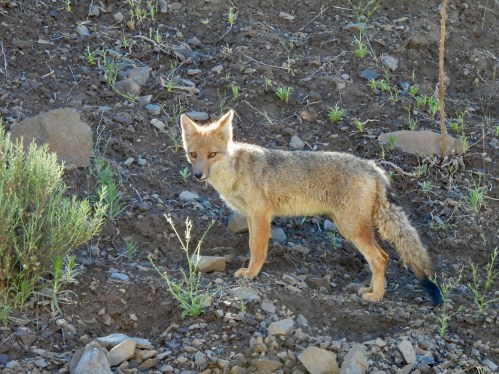
We also saw a Culpeo, and Cristian stopped so I could photograph this attractive animal. It’s sometimes called Andean Fox, but it’s more closely related to wolves.
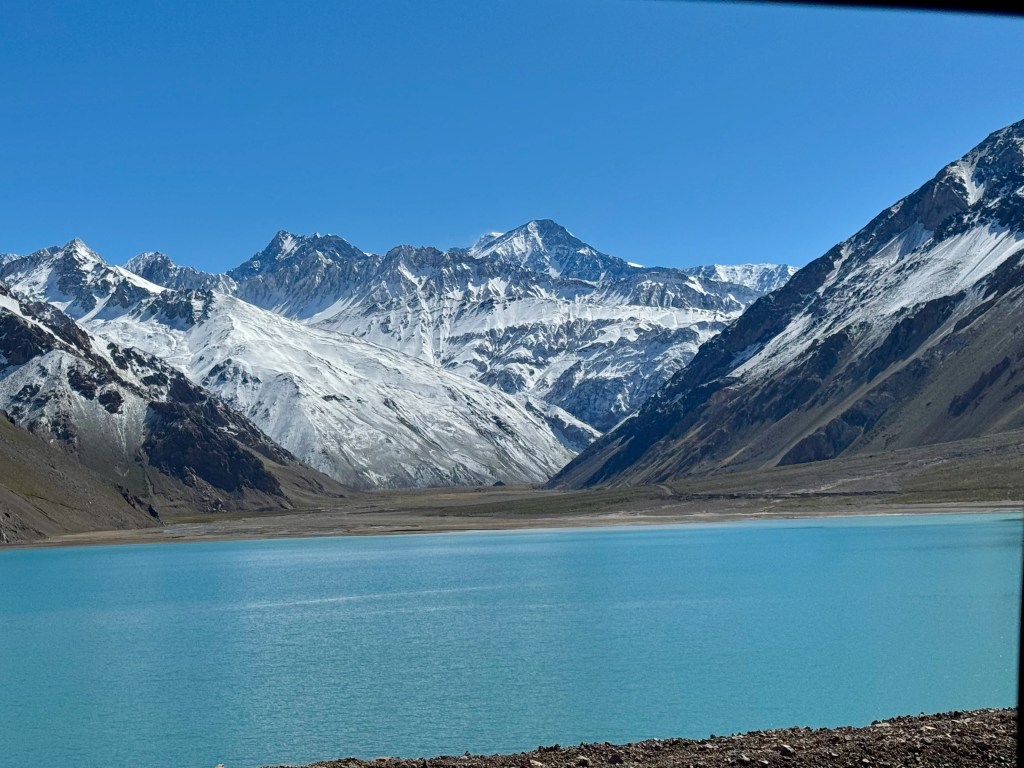
After we reached the higher elevation above 8,000 feet on our way to Termas del Plomo, we followed the shoreline of the huge and gorgeous Embalse El Yeso. Although it looks natural, it’s actually a man-made reservoir that provides drinking water for Santiago.
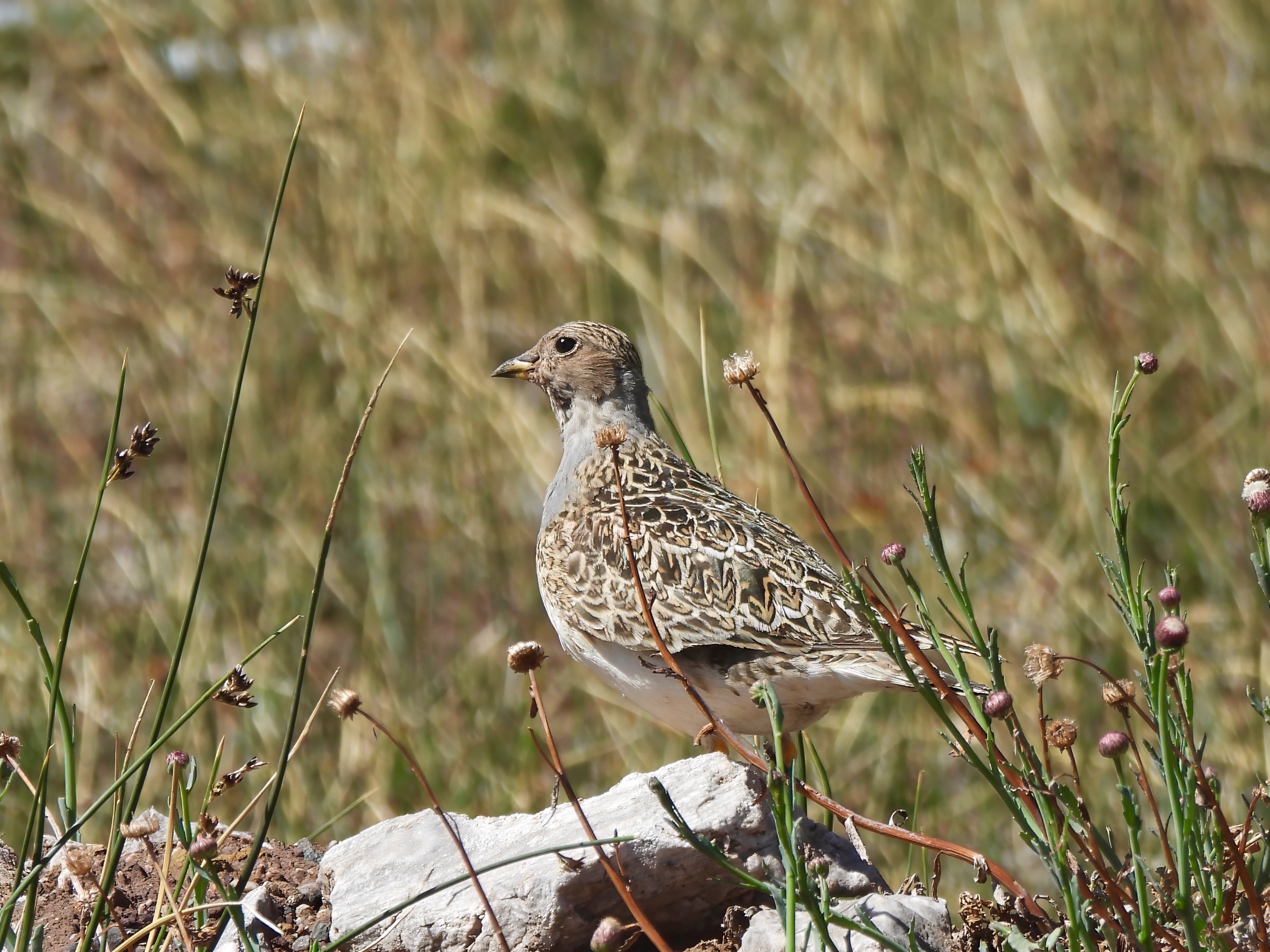
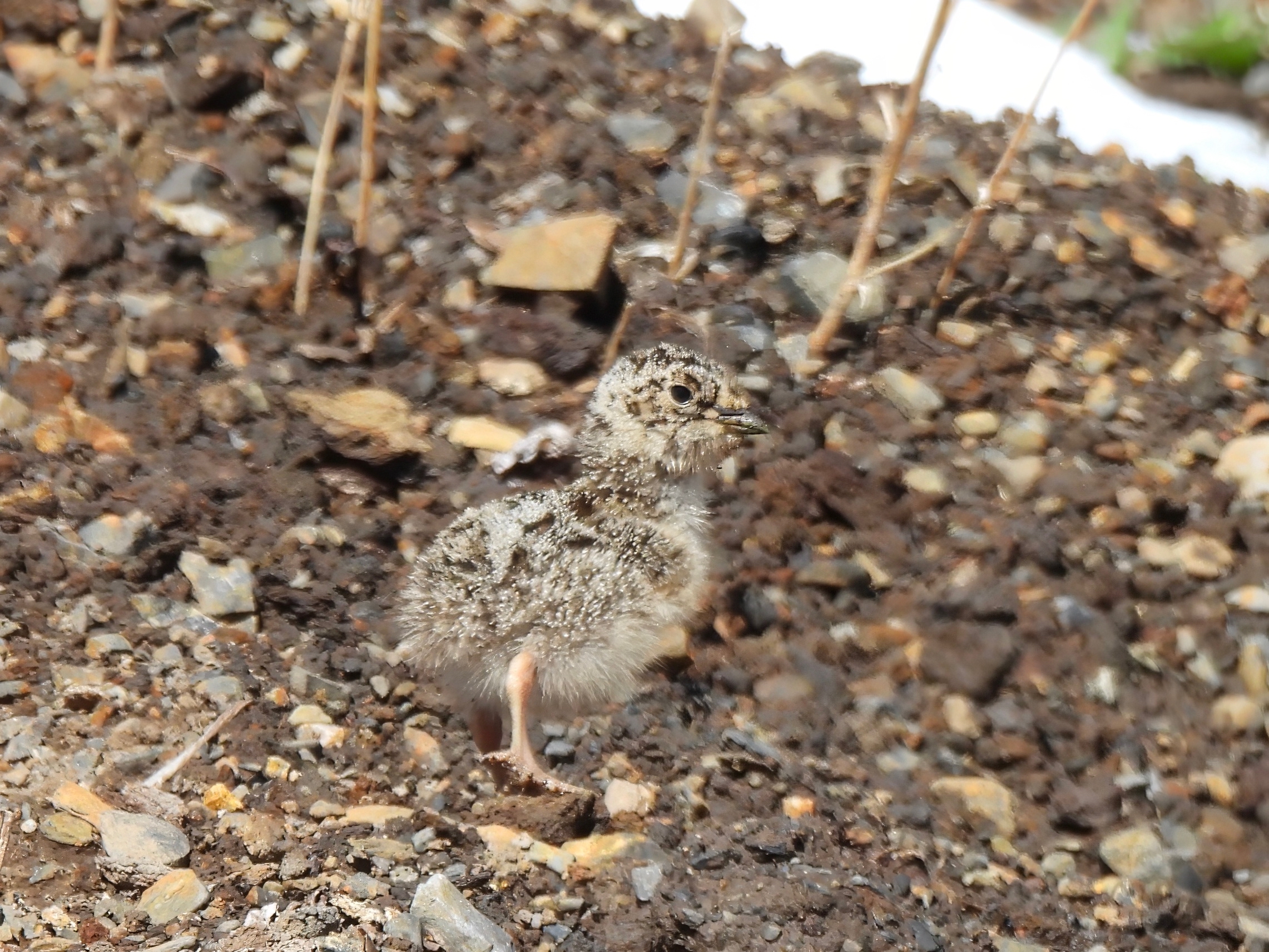
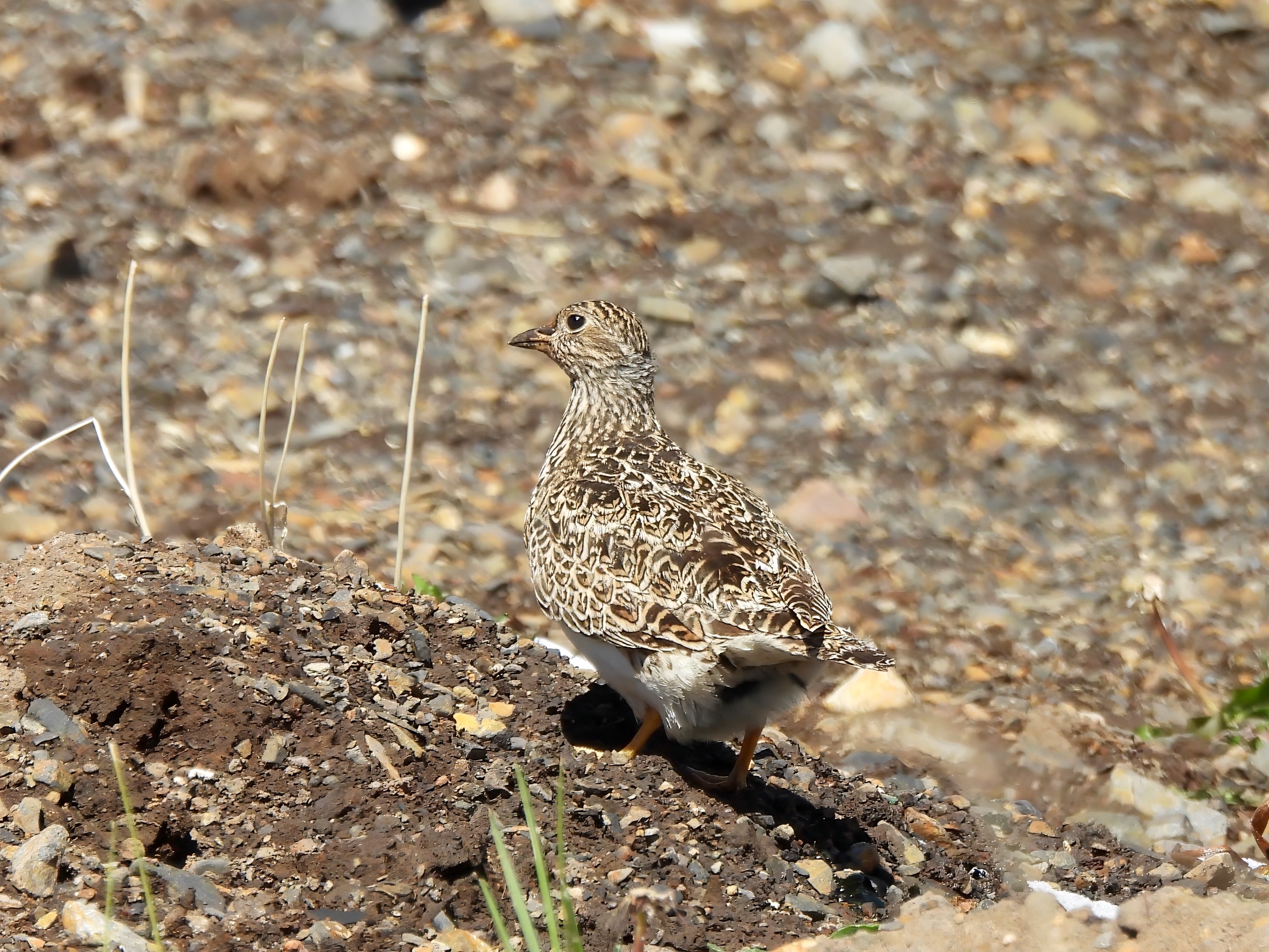
Before long, we were in Gray-breasted Seedsnipe territory, a bird found in the Andes from Peru nearly to the southern tip of the continent. I loved these birds, and we were fortunate to see a family group – dad, baby, mom. Note the remarkable camouflage of the female.
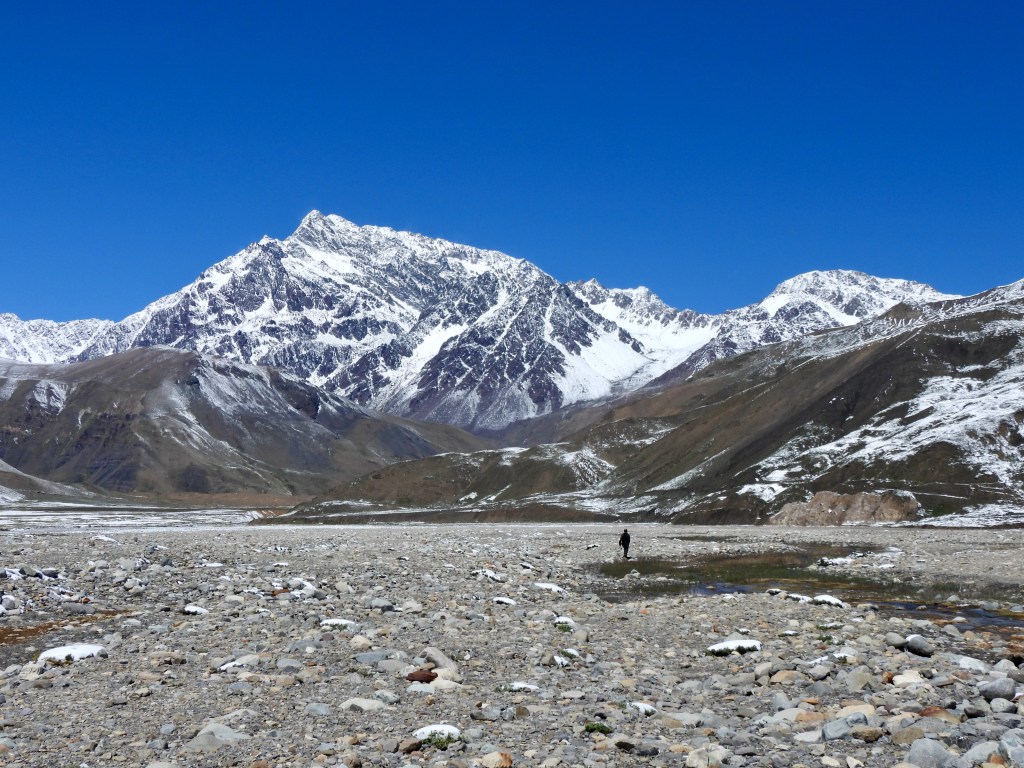
Shortly before noon, we reached the hot springs, and Rodrigo went ahead to look for a Diademed Sandpiper-Plover.
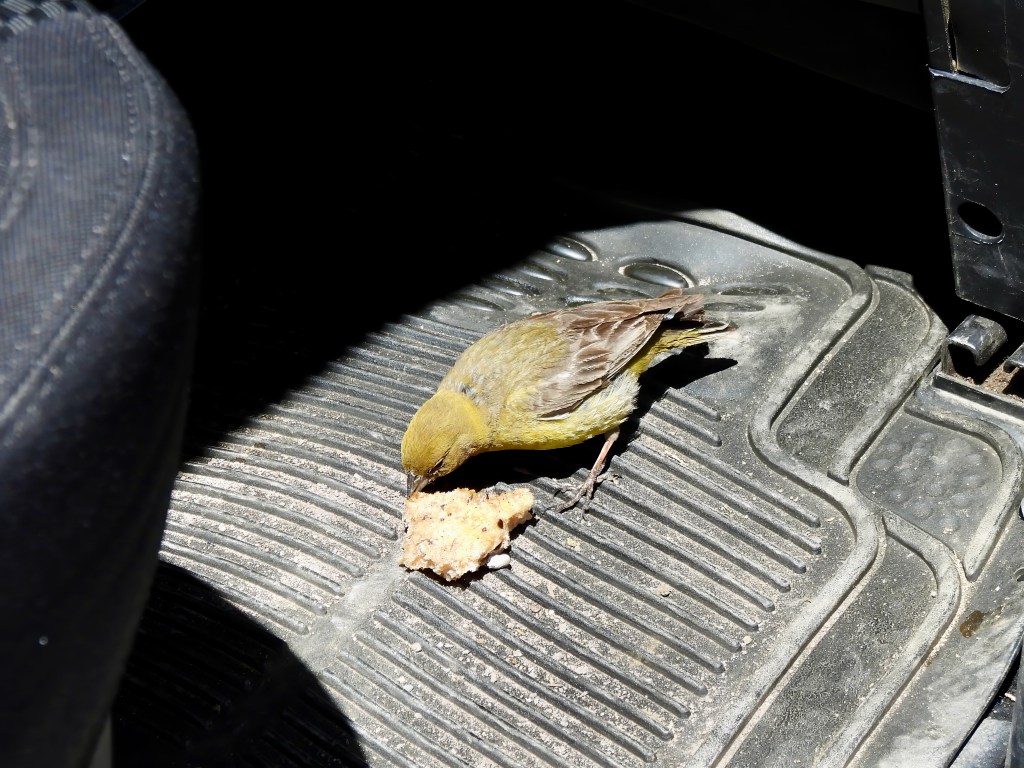
Sandra and I watched birds closer to the car, where we were joined by a sweet Greater Yellow-Finch who kept getting in the car!
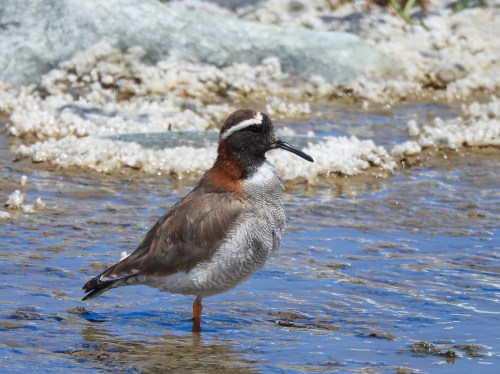
Before long, Rodrigo came back to get us for the walk out to where he’d found the Diademed Sandpiper-Plover. I was walking a little now, but still needed help making my way on the icy, rocky field. It was worth every step – Diademed Sandpiper-Plover is one of the most enigmatic and highly sought-after shorebirds in the world.
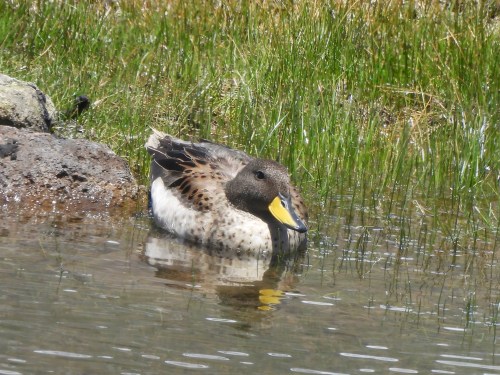
We saw a few more birds that day, but it was mostly anticlimatic for me after the Diademed Sandpiper-Plover. I was pleased to get such a good look at a Yellow-billed Teal, though.
After over a month in South America, it was finally time to catch our flights home from Santiago. What an adventure! Sandra and I had so much fun, and we saw wonderful birds that helped us both reach milestones – 5,000 species for Sandra and 2,500 for me. None of it would have been possible without our amazing local guides and drivers, whose expertise, kindness, and wonderful company added so much to the journey. It was one of my favorite trips, and I will always treasure the memories.
Epilog
That “sprained” ankle? Nope, it was broken. I’m honestly amazed that I walked through airports on my way home, but, of course, that wasn’t a good idea. A couple of days later, my ankle was swollen, and I was in real pain. After X-rays confirmed the break, I spent the next month doing as little as possible to let it heal. A cancer diagnosis quickly followed – multiple myeloma. I am doing well now, and I’m cleared to travel again, but I’ll probably be on treatment for the rest of my life. Why am I telling you this? Because I want this blog to reflect my real life, not just the wonderful trips and beautiful birds. The difficult parts have also reinforced some excellent advice a friend gave me: “Do as much as you can for as long as you can.” I’m flying to Oregon to visit Sandra in two weeks. After that, I have four trips already planned, and I’m working on others. Clearly, I’m taking that advice seriously.


Leave a Reply