Feeds:
Posts
Comments

The morning after our arrival in Nanchang, we made the long drive to Wuyishan National Key Nature Reserve.  But first we had to have breakfast.  In China, breakfast food is frequently the same as dinner, but noodle shops are also popular.  They all looked pretty much the same, so the photo below may or may not be where we ate breakfast on our first morning.  One of the regional specialties of this area is green dumplings, which were one of my favorite foods in China.  I have no idea what was in them, but they were delicious.  On some days, we started out for birding before the noodle shops opened at 6 AM, but when we did indulge in breakfast, it was usually a bowl of noodles with a fried egg and green dumplings.

Wuyishan National Key Nature Reserve is the largest and the most comprehensive surviving semi-subtropical forest in southeast China.  While we saw devastating habitat loss in much of China, especially along the coast, the Chinese seem to be continuing twelve centuries of tradition in protecting areas in the Wuyi Mountains.  The Wuyishan Reserve became a UNESCO Biosphere Reserve in 1987 and a UNESCO World Heritage  site in 1999 .  (Wuyishan Biosphere Reserve info and Wuyishan World Heritage info.)

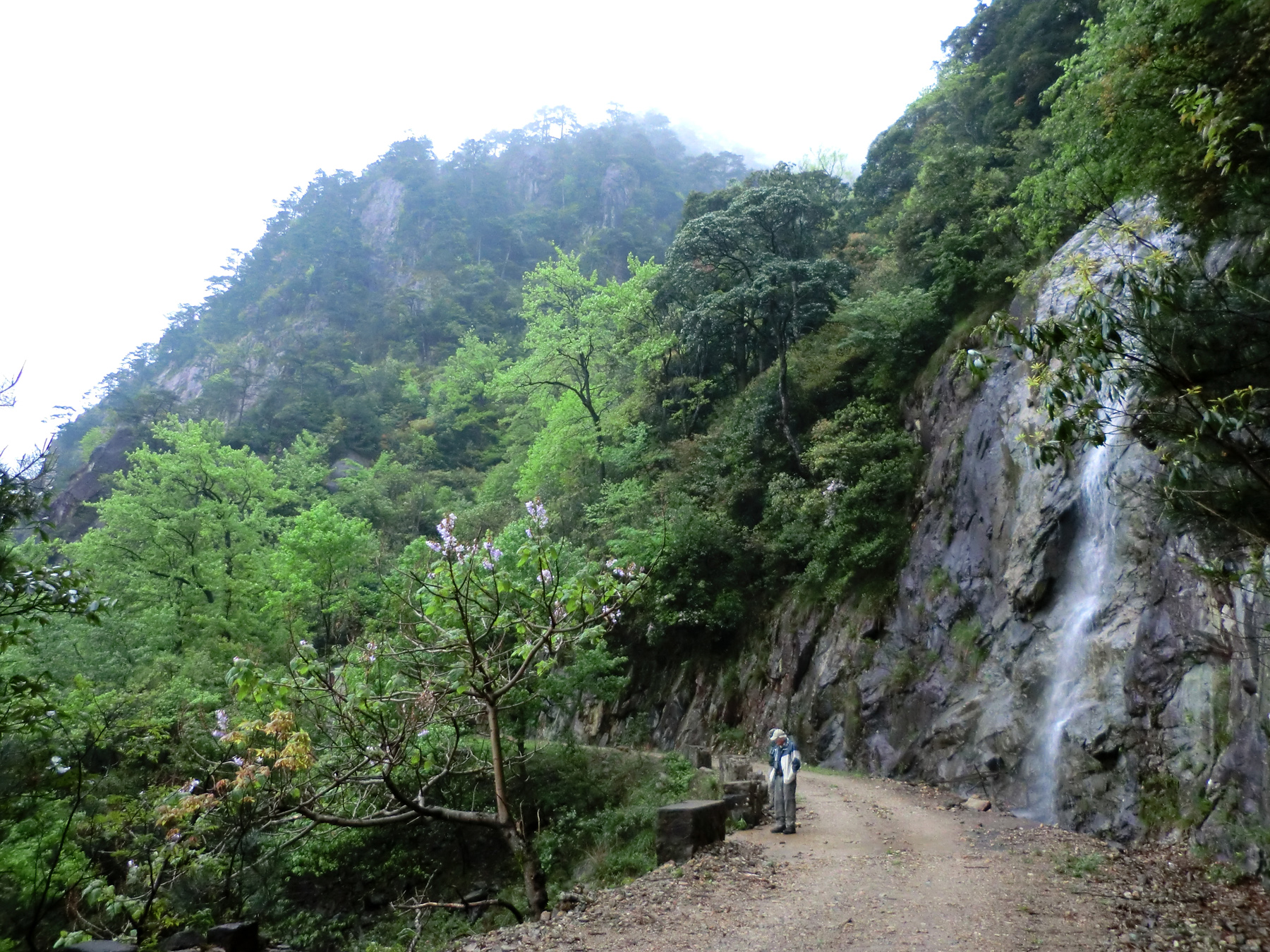
The reserve’s winding road to Huanggang Mountain, the highest peak in the Wuyi range at 7080 feet, provided spectacular views of the mountains, their gentle waterfalls, and changing vegetation as we ascended the mountain, progressing from tea and bamboo to evergreen broad-leaved forest to the treeless summit.  We were told that the number of visitors is limited and that the fees to enter the park are quite high.  These restrictions gave us our own private escort and we saw no other tourists during our two days in the park.  I finally found this news article which describes the restricted access to the reserve which began in 2009 to protect the environment.

Wuyishan

Wuyishan

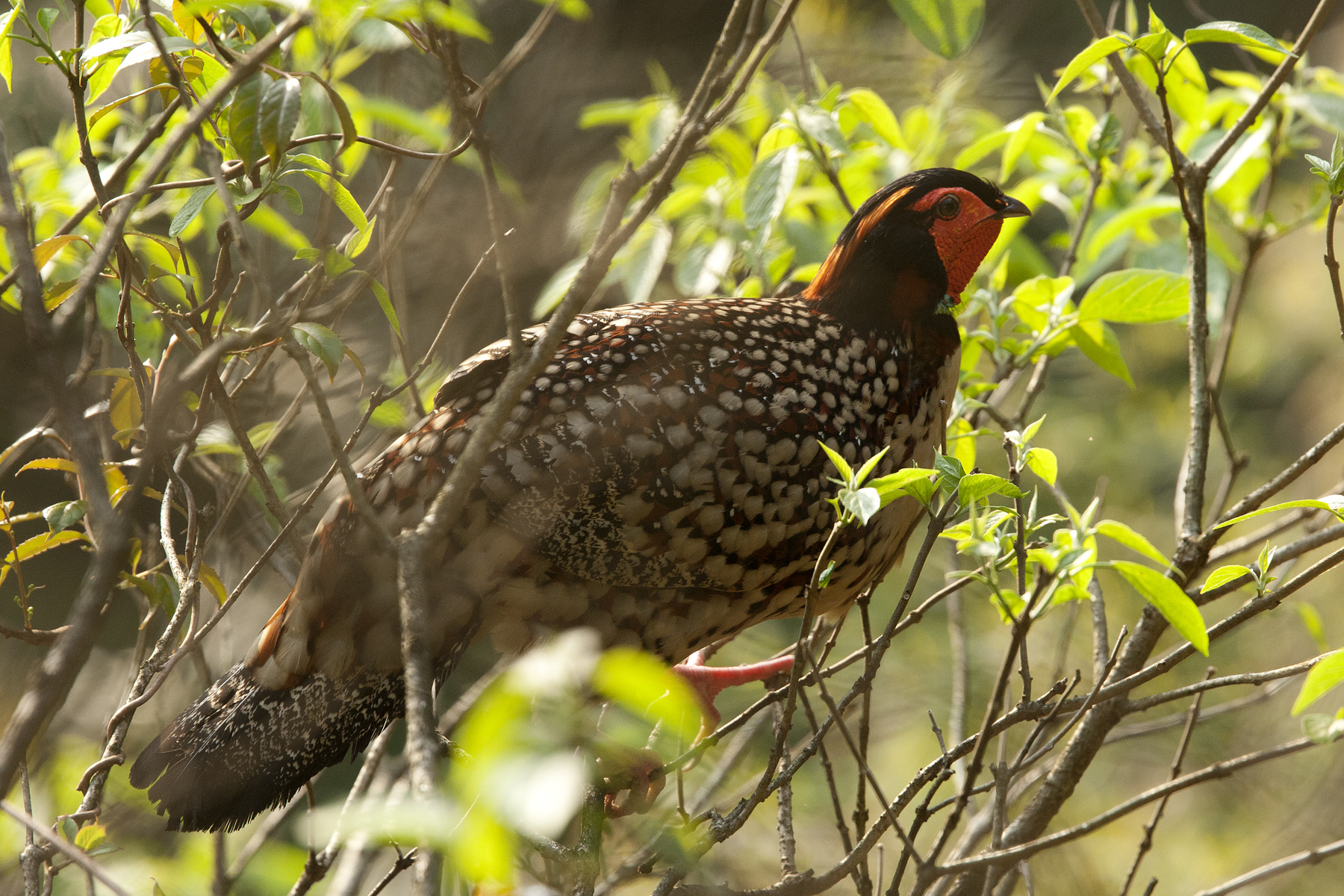
Wuyishan National Key Nature Reserve is reputedly the easiest place in the world to see Cabot’s Tragopan, a vulnerable species which is endemic to southeast China.  We were fortunate to find this splendid male on our first afternoon in the reserve.

Cabot's Tragopan

Cabot’s Tragopan

We observed him from our minibus for 20 minutes, only a few feet from the road feeding in small trees.  No words are adequate to describe that head, but the rest of the bird was equally fascinating.  The pattern on his back looked like it was created with intricate bead work which seemed to fade to lace on the ends of the wings and tail.  That tragopan was the most gorgeous bird I’ve ever seen.

Cabot's Tragopan

Cabot’s Tragopan

The next morning we headed for the summit at 4:30 AM, but dense mist and high wind made for poor visibility and not much fun.  We had rain in the afternoon which became heavier during the night.  In between the showers, though, we did see some nice birds including the following.

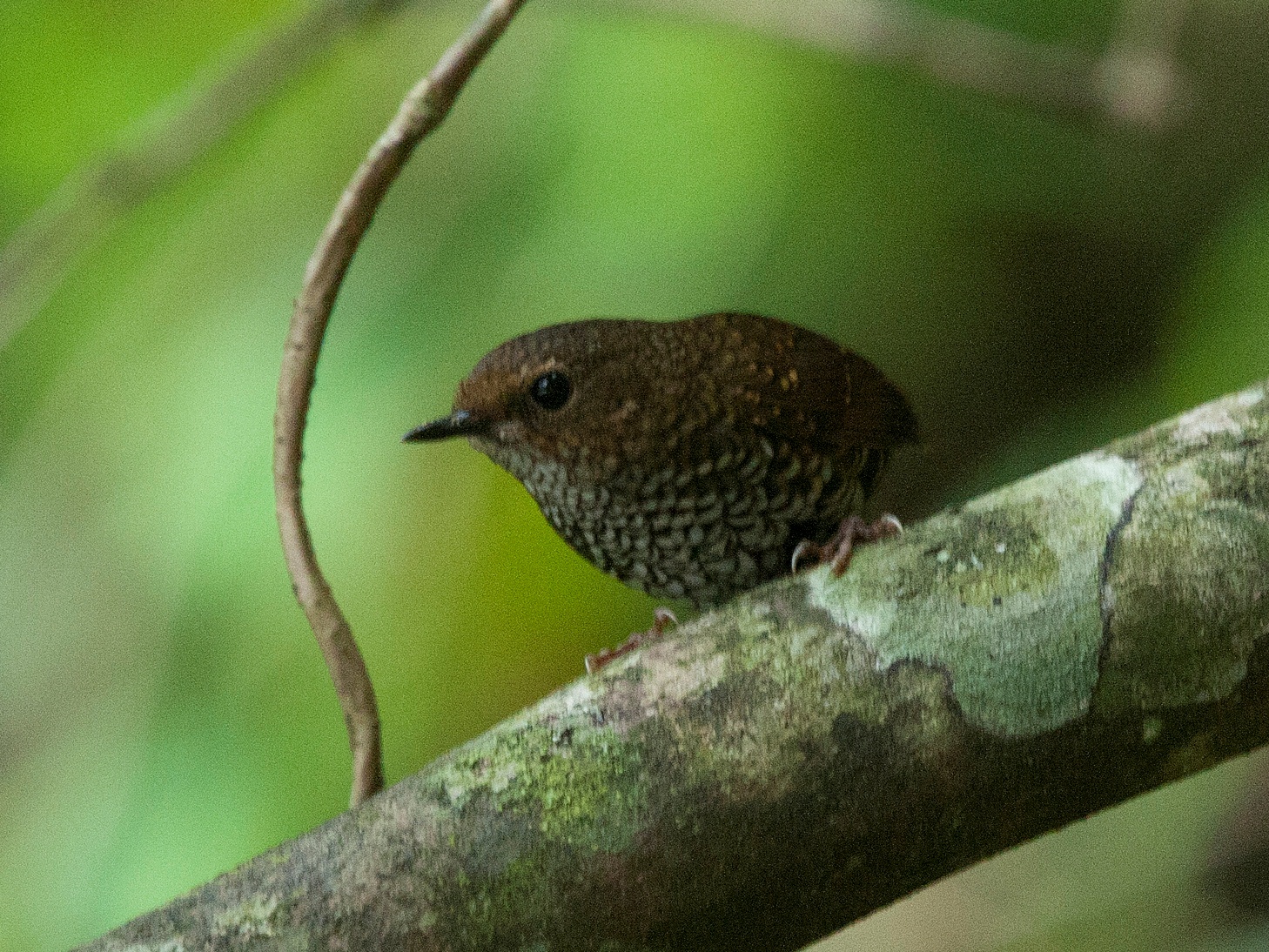
Pygmy Wren-babbler (Pnoepyga pusilla, now called Pygmy Cupwing)

Pygmy Wren-babbler (Pnoepyga pusilla, now called Pygmy Cupwing)

Fujian Fulvetta

Fujian Fulvetta

White-browed Shrike-babbler

White-browed Shrike-babbler

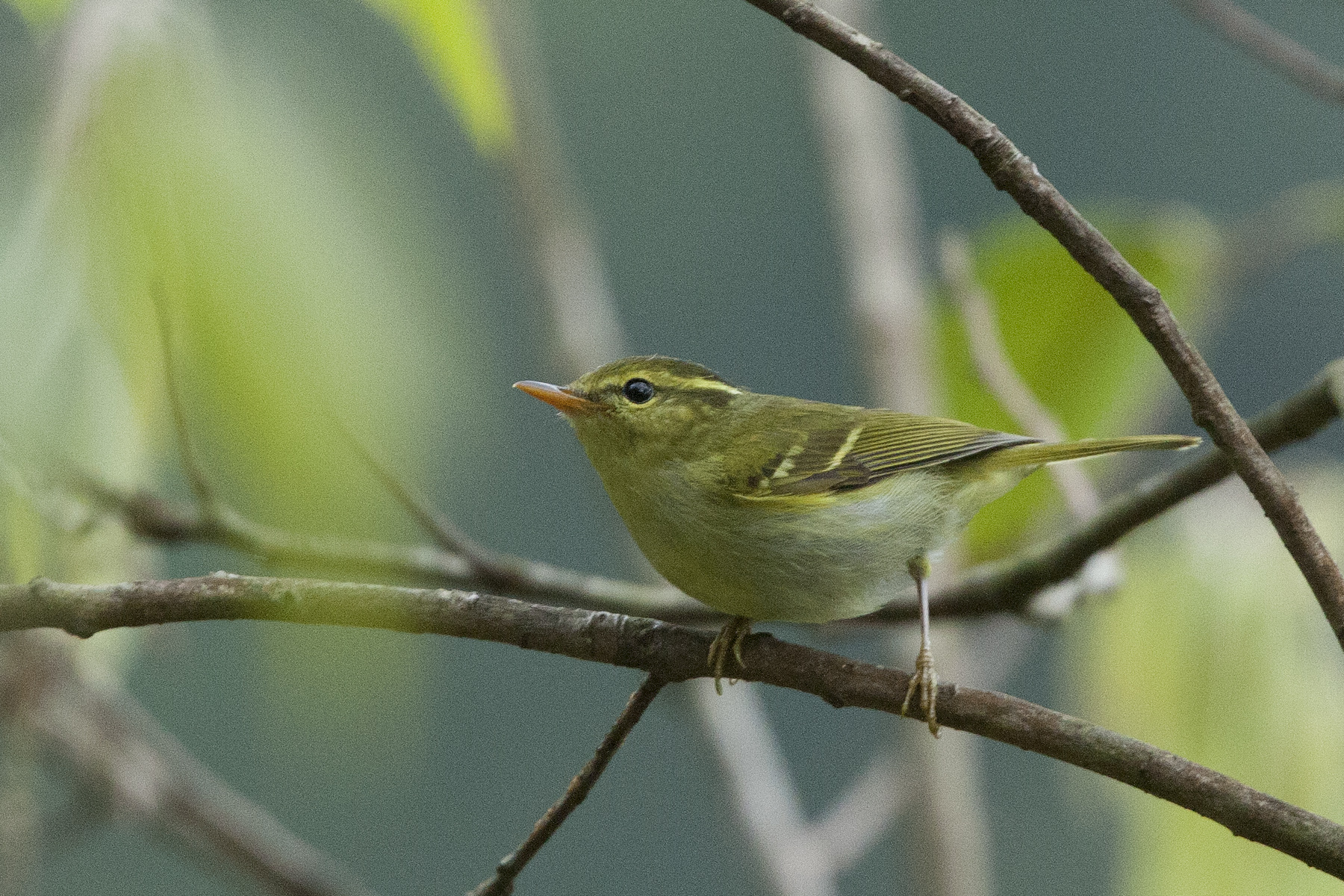
Hartert's Warbler

Hartert’s Warbler

On our last morning in the Wuyishan Reserve, we drove to the summit again and were much luckier with the weather than we had been the previous morning.

Wuyishan summit

Wuyishan summit

We missed the Upland Pipits that we’d hoped for, but all had nice views of Rosy Pipits and a few other birds including this Brown Bush Warbler.

Brown Bush Warbler

Brown Bush Warbler

A monument proudly proclaimed that we were at the highest peak of the Wuyi Mountains.

Wuyishan was my favorite part of the trip, so I was sad to leave, but we had more wonderful birds to see in other places, so it was back in our minibus for the long afternoon drive to Wuyuan.  Our target there was Courtois’s Laughingthrush, one of the world’s rarest birds with a wild population estimated at 200 – 250 individuals.  Much has been written about its rediscovery in 2000; previously it was known only from two museum specimens collected in 1919.  For a thorough accounting of the story see Little-known Oriental Bird: Courtois’s Laughingthrush.  Since that report, the Courtois’s Laughingthrush has been awarded full species status.

To say that I was not disappointed would be a huge understatement.  Here was a bird that was not only rare, but it was big, beautiful, colorful and gregarious.  Unlike most other Laughingthrushes, Courtois’s Laughingthrush nests in loose colonies.  We were fortunate to observe nest-building, mutual preening, and much interaction between the 50 or so birds in the area that we visited.

Courtois's Laughingthrush

Courtois’s Laughingthrush

The little island in the middle of a river running by a small rural village where we saw the Courtois’s Laughingthrush was quite interesting.  The large trees on the island where the birds nest have been protected by the villagers for centuries and are probably the reason that the birds still survive.  The island was shared with many other bird species, dozens of chickens running around, and a water buffalo grazing.  In addition to our group, there were about about a dozen Chinese photographers admiring the Laughingthrushes.

In the river surrounding the island with the Courtois’s Laughingthrushes, we saw these gorgeous drake Mandarin Ducks.

Mandarin Ducks

Mandarin Ducks

Other great birds in Wuyuan included White-browed Laughingthrushes.

White-browed Laughingthrushes

White-browed Laughingthrushes

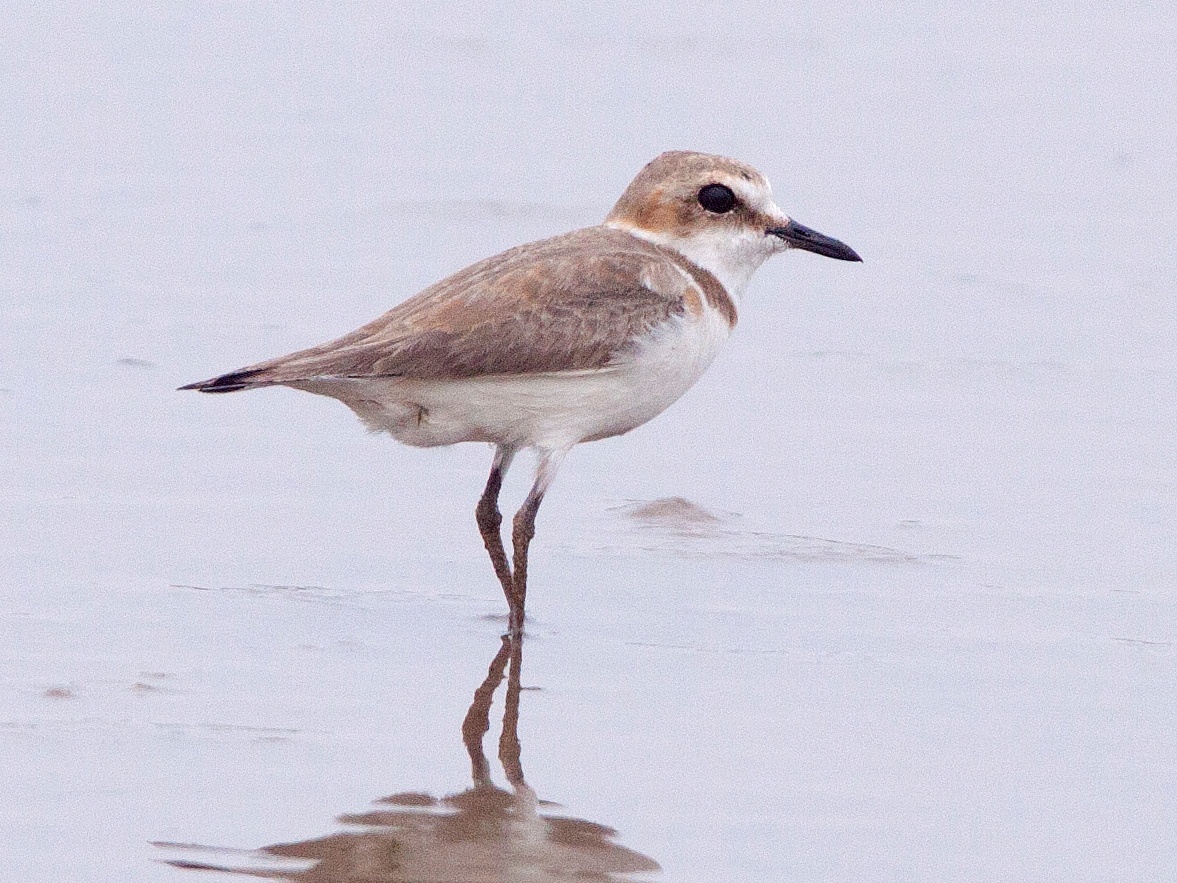
Also found nearby was a Long-billed Plover.  This species is not rare or endangered, but it was a target bird for the trip as its range is limited to East Asia.

Long-billed Plover

Long-billed Plover

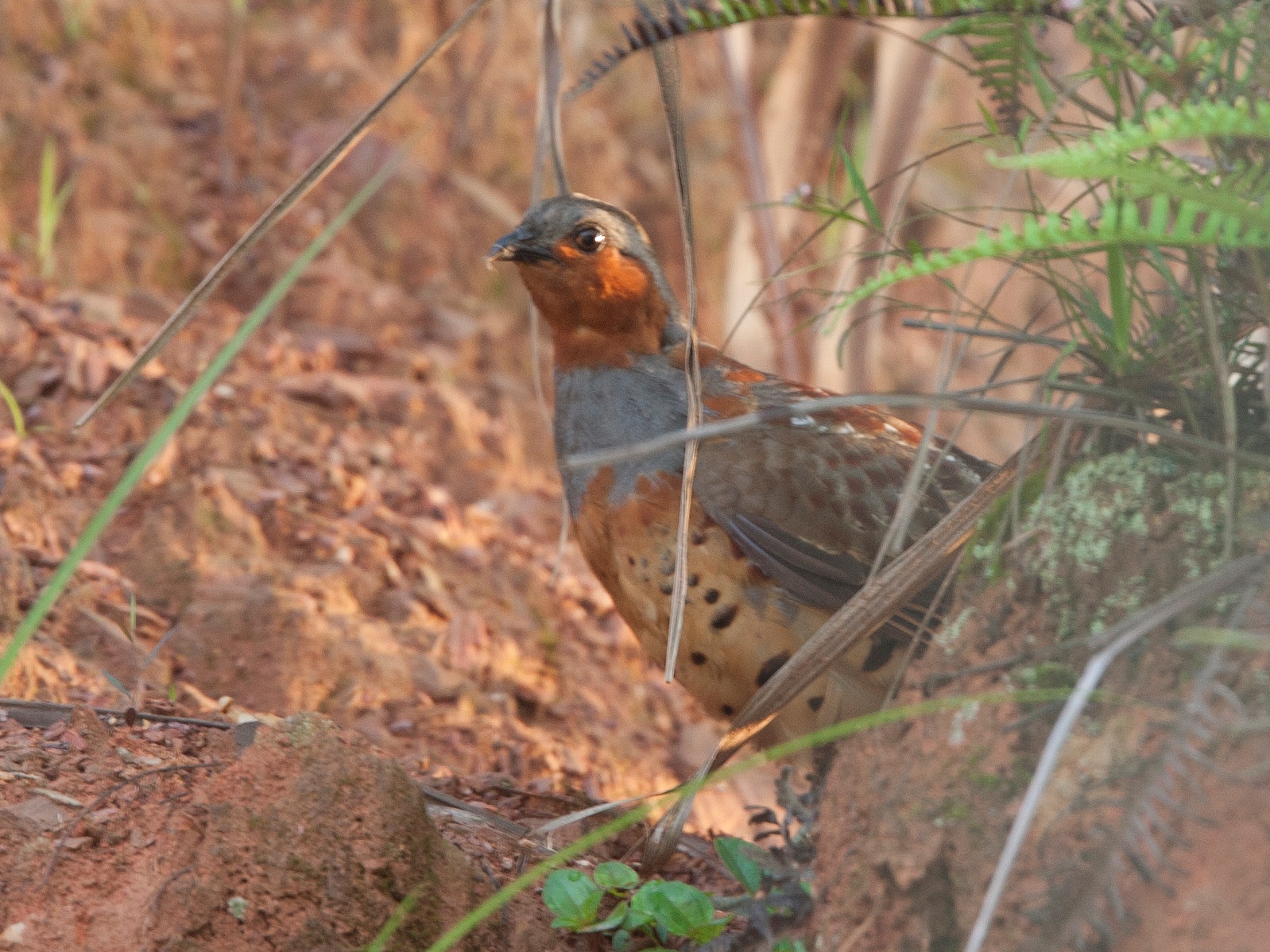
On our second morning at Wuyuan, we had a surprising view of two Chinese Bamboo-partridges fighting on the side of the road.  This is a species rarely seen in the open.

Chinese Bamboo-partridge

Chinese Bamboo-partridge

Chinese Pond Heron is a common bird in China and I enjoyed seeing them in their finest breeding plumage.  In non-breeding plumage, they are just plain brown birds.

Chinese Pond Heron

Chinese Pond Heron

After three full days in Wuyuan, it was time to head to the airport once again for our flight to Fuzhou and the last part of our birding trip.

Thanks again to Tony Mills for the generous use of his photos in this post. For more of Tony’s work, see Photo Art by Tony Mills and Not Just Birds.

I was the only woman, the only American, the least experienced birder, and the least physically fit participant in the Zoothera Global Birding trip to Southeast China in May. Fortunately for me, the leaders and other birders were very patient and helpful and we all had a good sense of humor. That help was needed as I had more difficulty that I expected keeping up and getting quality views of the birds. My birding at home was much better after my cataract surgery last year. And, I had just successfully climbed the Pinnacle Trail at Big Bend a couple of weeks earlier. But birding on mud flats and in bamboo forests in hot weather with inadequate sleep proved to be a challenge for me. The guys, however, considered this to be an “easy” trip.

The trip started at the Shanghai airport where I met Zoothera’s owner, Nick Bray, local China guide, Menxiu Tong, and the five other birders on the morning of May 4, 2012. One of the birders, Tony Mills, is a semi-professional photographer and he generously provided all of the photos in this post. For more of Tony’s work, see his website, Photo Art by Tony Mills.

We headed out right away towards the coast. A great little spot right by the road gave us close views of several species including several Sharp-tailed Sandpipers.

Sharp-tailed Sandpiper

We also saw a Swinhoe’s Snipe at the same spot. Everyone was very excited about the snipe as it is less common than Pintal Snipe, but it is very difficult to see the difference between the two species. Our leaders agreed on the identification after watching the bird for 15 minutes or so and examining multiple photos of the bird. Tony and both of our leaders were skillful photographers which facilitated “instant replay” and allowed detailed study of the snipe in flight moments after we had watched it.

Swinhoe's Snipe

Swinhoe’s Snipe

A small wooded area further on provided a change of pace and new birds including this gorgeous Narcissus Flycatcher. In China, it’s the warblers that are dull and flycatchers that are bright and colorful.

Narcissus Flycatcher

After this exciting start to the trip, we settled in for the 4-hour drive to Rudong where we would spend the night and the next day and a half.  The photo below is our hotel in Rudong; the other places that we stayed were similar. Our accommodations for the trip were typical Chinese hotels – clean enough, safe, and air-conditioned, but very basic. The beds were hard, the rooms were small, and the bathrooms were one big room with a drain in the middle of the floor and no separate shower enclosure. Another odd bathroom feature in most rooms was a full-length window between the shower and the bedroom. Our hotels usually had western style toilets, a luxury as restaurants and other public places normally had squat toilets.

Rudong, China

Rudong, China

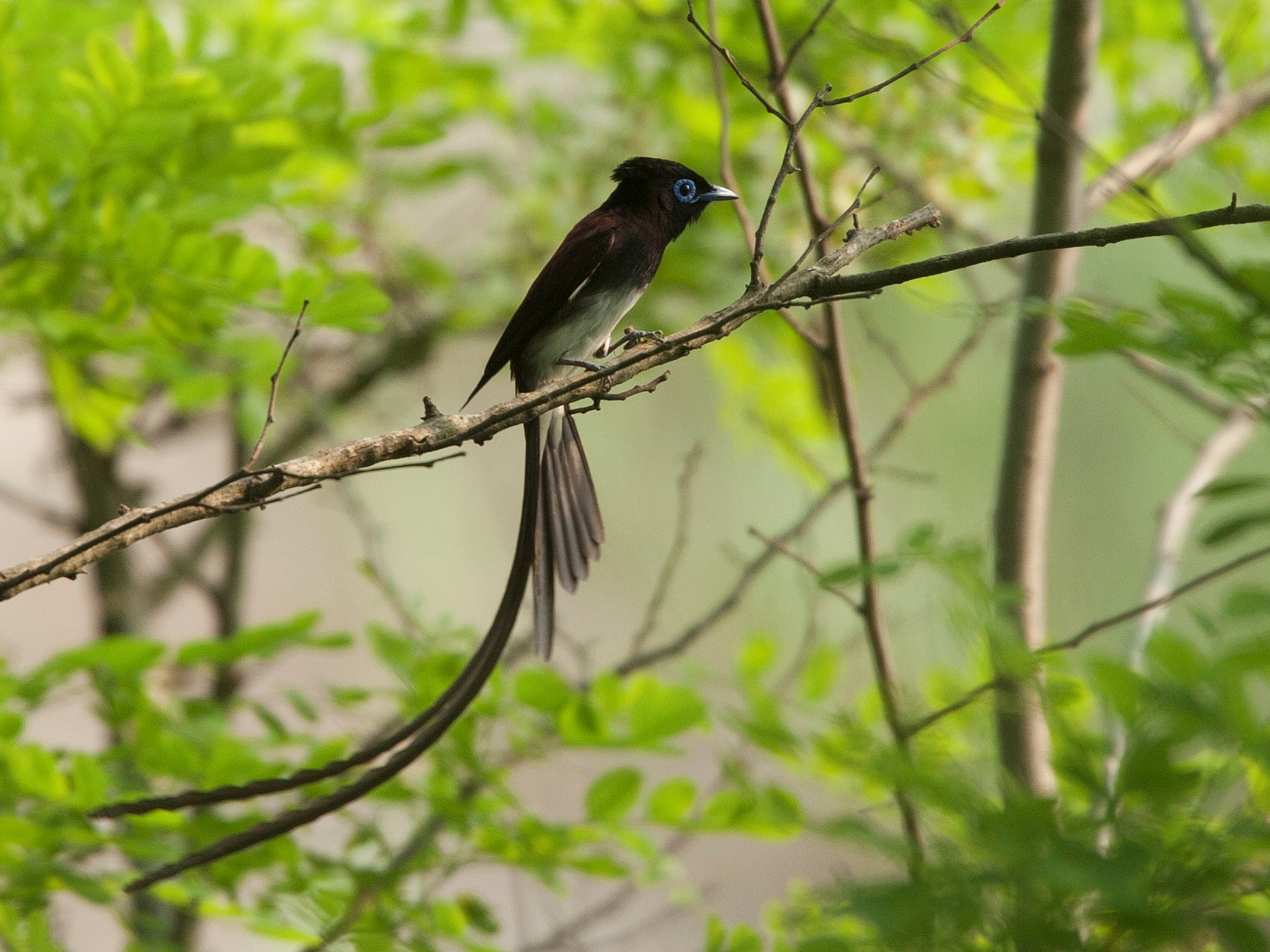
We started our first morning in Rudong at the “Magic Forest”, a small wooded area that attracts migrants. The star of the forest that day was this spectacular male Japanese Paradise-Flycatcher.

Japanese Paradise-Flycatcher

Japanese Paradise Flycatcher

Japanese Paradise-Flycatcher

Our target in Rudong was Spoon-billed Sandpiper. This critically endangered sandpiper had captured my heart a couple of years ago and was the most important bird of the trip for me. I had expected to break down sobbing when I actually saw the bird, either from joy, or sadness that this charismatic little sandpiper is on the verge of extinction. Surprisingly, the actual sighting of the Spoon-billed Sandpiper was a non-emotional, somewhat disappointing event for me. First, we were not able to get close and had only distant scope views. Second, the sandpiper was difficult to identify. It looks unmistakable in the field guides, but the actual bird looks very much like a Red-necked Stint unless it holds it head just right so that you can see its spoon-shaped bill. Nonetheless, I was thrilled to add Spoon-billed Sandpiper to my life list. In Tony’s photo below, the Spoonie is in front, just right of the Dunlin.

Spoon-billed Sandpiper and other shorebirds

Spoon-billed Sandpiper and other shorebirds

Here is a sampling of other birds we saw along the coast on our first day there.

Gray-headed Lapwing

Gray-headed Lapwing

Black-winged Stilts

Black-winged Stilts

Saunder’s Gull

Our last stop for the day was the ‘new’ Magic Forest, a small area of isolated trees and scrub, where migrants had arrived during the afternoon. This Northern Boobook (Ninox japonica) appeared to be as excited as we were and flew around several times to escape us, but we all got great views of this gorgeous owl.

Northern Boobook (Ninox japonica)

Northern Boobook (Ninox japonica)

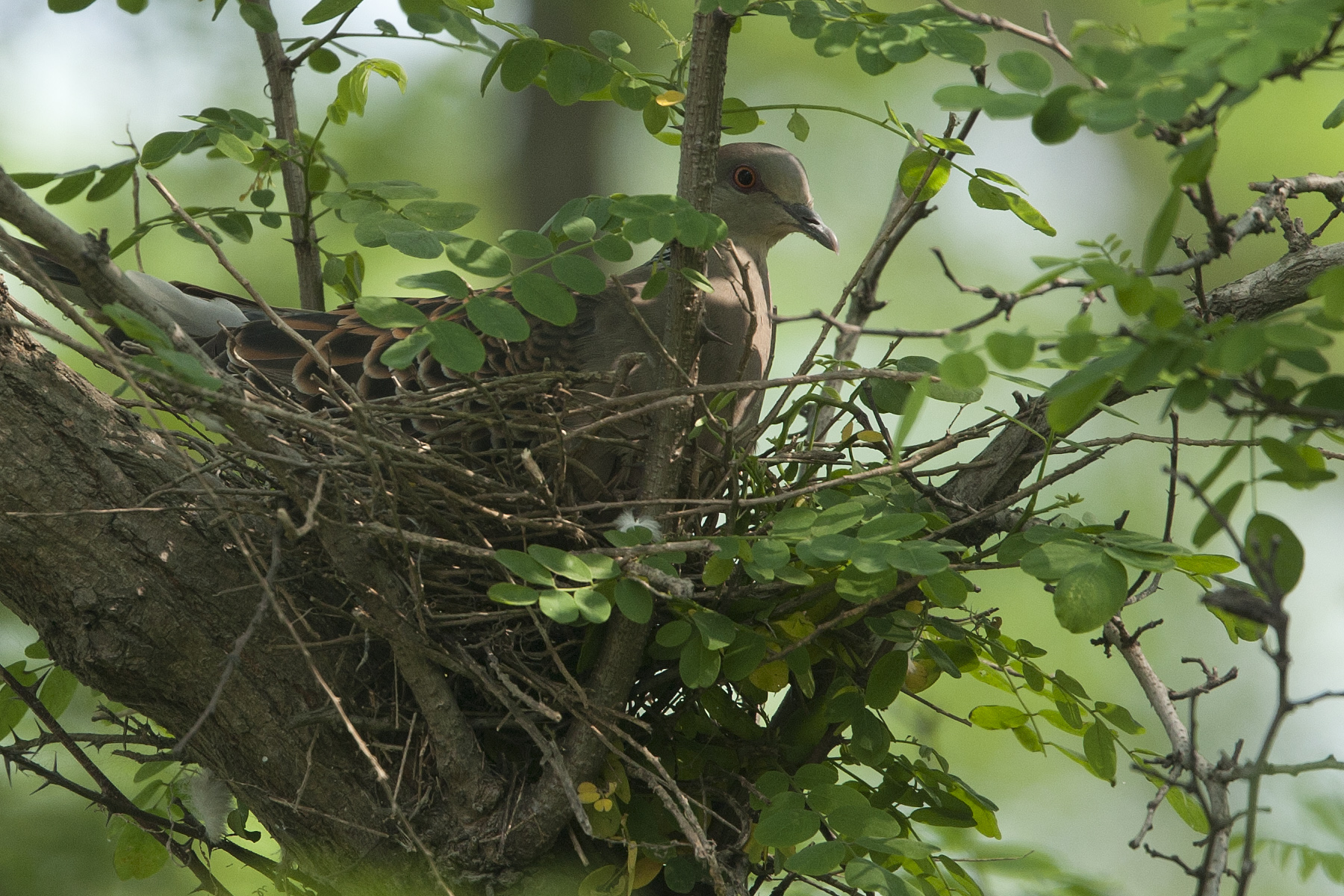
The next morning we were pleasantly surprised to see that the Boobook was in the same area along with many new migrants that had arrived overnight. One of the birds that I enjoyed seeing wasn’t rare at all, but this sweet Oriental Turtle Dove on her nest.

Oriental Turtle Dove

Oriental Turtle Dove

After enjoying the Magic Forest for a couple of hours, we hurried out to the tidal flats for shorebirds. In addition to the expected birds, we found a nice group of Black-faced Spoonbills. This is another endangered bird with a global population of less than 3,000. I had seen them in Hong Kong in 2009 and found it interesting to watch them feeding again.  Black-faced Spoonbills sweep their bills from side to side searching for small fish and shrimp.

Black-faced Spoonbills

Black-faced Spoonbills

Some of my favorite new shorebirds were the Sand-plovers. We saw Greater and Lesser Sand-plovers on both days.

Lesser Sand-plover

Lesser Sand-plover

The photo below is our group on the tidal flats at Rudong. I was as overwhelmed as it looks. There were birds everywhere, but not 20 feet away as I enjoyed in Florida, and most were new to me. But, of course, I was thrilled with this shorebird bonanza. After enjoying this spectacle, we returned to the hotel for lunch and headed to the airport for our flight to Nanchang and the next phase of our birding adventure in Southeast China.

On the beach at Rudong

On the beach at Rudong

My first pelagic trip was off Hatteras, North Carolina, in 2008.  I used a Scopolamine patch and expected that it would completely prevent seasickness.  I threw up off and on for most of the 12-hour trip.  It took a couple of years for that memory to fade enough that I was willing to try again.  My next opportunity was in 2010 as part of the Oregon Shorebird Festival.  I had decided that maybe I was allergic to Scopolamine I had also read that getting seasick is partly psychological.   The Oregon trip would only be 5 hours, so I signed up, confidently optimistic that I would not be sick.  That trip was worse than the first.  I threw up constantly for 4 of the 5 hours; I wanted to die.  After another 2 years to recover, I decided to try again in Florida.  This time the trip would be on a 100-foot boat in July, the calmest month of the year.  I consulted with my doctor and she prescribed the Scop patch, Meclizine, and Zofran.  I bought ginger capsules, ginger cookies and candied ginger.  So, once again I optimistically got on a boat to search for birds.  And this time I was fine for the entire 18-hour trip.  I got 5 life birds, but not getting sick was the real thrill of the trip.

My first stop on the drive to Florida was Savannah NWR.  This cooperative Purple Gallinule walked right up to my car.

Purple Gallinule

Purple Gallinule

My late husband, Burt, called Purple Gallinules “Lipstick birds.”  Seeing these birds, one of his favorites, brought back wonderful memories of birding with Burt in the Florida Everglades in the early 1980’s.  I enjoyed watching the birds, especially the family with several small chicks.

Purple Gallinule chicks

Purple Gallinule chicks

The highlight at Savannah, however, was two Common Nighthawks flying together shortly before dark.  I watched for over 10 minutes as the birds swooped and soared over a large field intermittently peenting.  They did not appear to be foraging; they appeared to be having fun.  They flew side by side, then one bird would get ahead and the other would hurry to catch up.  Occasionally they would fly a little circle around each other.  A choreographed dance could not have been more beautiful.  I have no idea if I was watching two males or a male and female.  I don’t know if this was common behavior or if I witnessed something very special.  I only know that I was mesmerized by the beauty of the nighthawks on a peaceful summer evening.

I saw Painted Buntings, Least Bitterns, and other great birds at Savannah, Harris Neck, and Merritt Island NWRs and Viera Wetlands.  The trip ended on a high note with more swooping and soaring over a pasture in Brantley County, Georgia, where I was privileged to witness foraging kites.  I had previously seen many Swallow-tailed Kites, but seeing a large group feeding at close range was a totally different and amazing experience.  The birders who were there when I arrived estimated that there had been 60 Swallow-tailed Kites earlier, but there still at least 20 kites when I got there.  I watched the kites for nearly an hour and then I drove the rest of the way home, tired but happy and satisfied with all the wonderful birds that I had seen during my 5-day trip.

Swallow-tailed Kites

Swallow-tailed Kites

If you start thinking that I’m crazy as you read this, I agree with you.  It started yesterday morning with a Carolinabirds post reporting that John Fussell had found a male Ruff in breeding plumage at Cedar Island.  I thought about it for a few minutes, posted a message to Forsythbirds asking if anyone wanted to go with me, and decided that I would go regardless of whether I could find a partner for this adventure.  My preparation consisted of making arrangements for my dog and collecting my binoculars, scope, camera, and toothbrush.  I forgot my books about birding the NC coast as well as food and water.  I was in my car at 12:20 PM for a drive that Google maps said was 5-1/2 hours.  But that’s not the crazy part; all that driving would only be tedious and boring.  The crazy part was having no plan whatsoever about where I would sleep.  I expected the closest accommodations would be in Beaufort, nearly 40 miles from Cedar Island, and had no idea if there would be any vacancies since it is summer season.  I was already on the road before I started to think about these practical matters.  Due to either maturity or denial, I decided that I’d worry about it later, after I’d seen the Ruff.  Bumper to bumper traffic slowed me down for half an hour, so it was nearly 7:00 PM when I arrived at the Cedar Island ferry terminal.  And what was right beside the terminal – a restaurant and motel!  Such experiences sometimes make me believe that there really is a birding god who keeps us safe on our crazy travels and occasionally blesses us with quality views of fabulous birds.  The motel had plenty of rooms available so I went off to find the Ruff.
It took me a few minutes to find the pond, but once that task was accomplished, I immediately saw the Ruff.  I may be biased because I really like shorebirds, but I thought that he was quite a beauty with his white head and neck and brown, black, and white mottled body. The Ruff was slightly larger, both taller and chunkier, than the nearby Lesser Yellowlegs.  He flushed when the Yellowlegs gave their alarm calls and took flight, but never went far enough that he was out of sight.  I enjoyed the Ruff and other shorebirds for nearly an hour, had a crab dinner, and went to bed feeling safe and comfortable and very grateful for my good fortune.

Ruff and Lesser Yellowlegs

Nate Swick has suggested that this Ruff is the same Ruff that was found at Jamaica Bay NWR in New York on July 1.  Andrew Baksh tells the story (with photos) of discovering that bird in Ruff stuff at Jamaica Bay Wildlife Refuge.  The timing works for a bird last seen in New York on July 5 to be found in North Carolina on July 8.  For good photos of the Cedar Island Ruff, see Harry Sell’s site.  The birds look identical.

There were also many other shorebirds at the pond, including at least 25 Spotted Sandpipers, the most that I’ve ever seen together.

Cedar Island Shorebirds

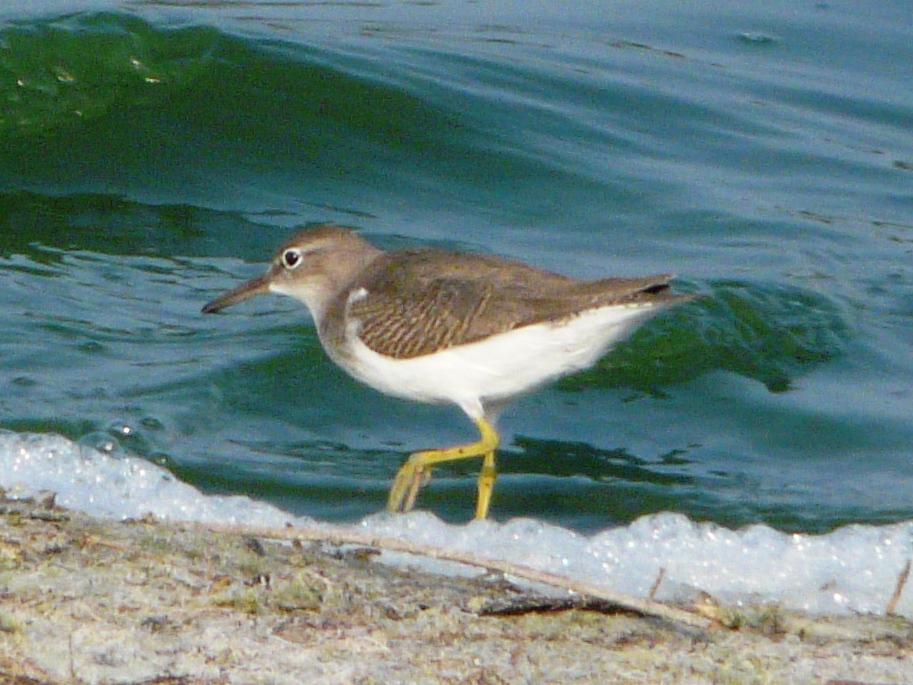
Most of the Spotted Sandpipers were in breeding plumage, but the one below is a juvenile.  Note the light-brown edging on the feathers of the wing.  Also note the distinct eye ring – something that’s not mentioned in most field guides, but is typical of juvenile Spotted Sandpipers.

Big Bend sunset.  Photo by Warren Jones.

Big Bend sunset. Photo by Warren Jones.

After our group met in Hondo, Texas, it was on to Neal’s Lodges in Concan in hopes of seeing Golden-cheeked Warblers and Black-capped Vireos.  We found the warbler quite cooperative and all had great views at Neal’s and again at Lost Maples SNA.  The vireo, however, did not want to be seen as much as we wanted to see it.  One flashed by a couple of times, but I did not get a look that I could count.  A lovely Tropical Parula was a bonus bird at Neal’s, though, which we all saw well.  Another treat at Neal’s were the plentiful and cooperative Bell’s Vireos.  Unlike their black-capped cousins, these birds perched in the open for us.

The most awe-inspiring experience in Concan for me, though, was our visit to the Frio Bat Cave where 10 to 12 million Mexican free-tailed Bats emerge from the cave and whirl into the sky just before dark.  We stood outside the cave entrance where we could hear the whoosh, feel the breeze created by their wings, and smell the odor of the bats (surprisingly not unpleasant) as they flew a few feet over our heads and ascended into the evening sky.  I found this amazingly peaceful.  An added bonus was a Canyon Wren who hopped around on the rocks outside the cave entrance while we were listening to the guide and waiting for the bats to exit the cave.  It was an unexpected treat to get close looks at a bird that is more often heard than seen.

At Big Bend, a Greater Roadrunner appeared in front of the lodge before we even got the cars unloaded, a sign of the good birding ahead.  The Colima Warbler, the reason that we were in Big Bend, rewarded those of us who climbed the Pinnacle Trail with wonderful views.  It was also great to have quality views of Common Black-Hawks and Gray Hawks.  Another interesting sighting was a Blue-winged Warbler at the Sam Nail Ranch.  We were puzzled when we saw the bird because it should not have been there.  It is a bird of the Eastern US.  But we could not make the bird into anything other than a Blue-winged Warbler.  Later we learned that the bird had been discovered the day before our sighting and was reported on the rare bird alerts.

Seeing a bird really well can be as exciting for me as seeing a life bird.  I suppose you could call it seeing life field marks.  Such was the case with the Vesper Sparrow that I watched in front of the camp store at Big Bend.  The little sparrow stretched its neck upward to reach the grass seeds and seemed to not care at all that I was watching from only 10-15 feet away.  It was exciting to be close enough to actually see the rufous shoulder patch.  Now I could understand why this bird was once called Bay-winged Bunting, and before that, Grass Finch.  The name Vesper Sparrow was first used by New England naturalist Wilson Flagg in 1858 because he thought that the bird sang most fervently during the sun’s decline until dusk.

Christmas Mountains Oasis provided a wonderful stop on our way from Big Bend to the Davis Mountains.  Carolyn Ohl-Johnson, CMO’s owner, was a delightful host who was interesting, energetic, and very welcoming.  I got my 500th ABA bird there – a male Varied Bunting.  Carolyn wrote about our visit on her blog and posted a photo of our group.

Montezuma Quail.  Photo by Warren Jones.

Montezuma Quail. Photo by Warren Jones.

We wrapped up our trip with two days in the Davis Mountains and we were rewarded with incredibly close long looks at the star of Davis Mountains State Park, Montezuma Quail.  On two separate visits, both a male and female came within 10 feet of us.  They also fed surprisingly close to javelinas on one of those visits.  These sightings occurred at the official quail viewing station where the feeders also drew in quite a few other birds.  My favorites were the Green-tailed Towhees who also allowed us wonderful close looks.

Back at the Hotel Limpia, a charming Say’s Phoebe graced the lobby entrance with her constant presence as she attended her nest on the porch.

Say's Phoebe.  Photo by Warren Jones.

Say’s Phoebe. Photo by Warren Jones.

Many thanks go to Warren Jones for permission to use his photos in this post.

The Rookery at Smith Oaks at High Island

The Rookery at Smith Oaks at High Island

“You should have been here yesterday.”  That’s how my trip in April started out.  Two friends and I drove from North Carolina to Dauphin Island, Alabama, and High Island, Texas, before meeting the rest of our group near San Antonio.  I learned that hot spots aren’t hot every day, even at the right time of the year.

Common Loon - a surprising find at Dauphin Island

Common Loon – a surprising find at Dauphin Island

I don’t have much to say about Dauphin Island except that it did provide my best view ever of a very beautiful Kentucky Warbler.  We also saw so many Prothonotary Warblers that they almost became trash birds.  And, take your own food!  Perhaps being there Easter weekend didn’t contribute to the availability of dining options, but it was so bad that the last night we voted for the hamburgers at the gas station as our best bet for dinner.

At High Island, the bird story was similar to Dauphin Island; we missed the big days before and after our visit.  But High Island did give me my first life bird of the trip, a very cooperative Swainson’s Warbler.  On our first morning at Boy Scout Woods, I asked about finding the warbler and headed in the direction where one had been seen the day before.  After searching a short time, I noticed two men intently peering into the thick underbrush.  I knew that they were looking at a Swainson’s Warbler.  I slowly walked over to the men; they warmly greeted me and then showed me where the warbler was turning over leaves on the ground.  Over the next 20 minutes, a crowd of 10 or so slowly gathered and our local expert did not leave until he was sure that every person there had seen the Swainson’s Warbler.

A rookery is an amazing place with hundreds of birds packed in so tightly that they almost step on each other.  I took the photo at the top of this post at The Rookery at Smith Oaks in High Island.  At the time of our visit, nesting birds were predominately Roseate Spoonbills and Neotropic Cormorants with a few Great and Snowy Egrets.  The Roseate Spoonbills were dazzling with their deep pink shoulders, orange tail, and tuft of pink feathers in the center of their breasts.

Do you remember Dreamsicles?  My friend Susan describes the color of American Avocets in breeding plumage as deamsicle.  The thousand plus Avocets we discovered at Bollivar Flats looked like a colorful sea of dreamsicle, black and white.  What an awesome moment it was to soak in all that beauty and see one of our favorite birds doing so well that they could congregate in groups of thousands.  I have since learned that the American Avocet does indeed have a NatureServe conservation status of G5 (secure) and an IUCN (International Union for Conservation of Nature) status of Least Concern.  The global population is estimated at 450,000 adults.

Attwater Prairie Chicken National Wildlife Refuge provided a wonderful break on our drive to meet the rest of our group.  We had only a couple of hours to spare, but could easily have spent an entire day there.  Everything was wonderful – the habitat, birds, butterflies, flowers, visitor’s center.  During our short visit, we were pleased to see the only White-tailed Hawk of the trip, a close-up Crested Caracara, Loggerhead Shrike and Scissor-tailed Flycatchers along with ducks, waders, and meadowlarks.  We all noted Attwater NWR as a place we would like to visit again as we headed west to continue our Texas adventure.

Jesse

Jesse

During the past 12 years, I’ve frequently said that I wanted to be like my dog and I really meant it.  I considered him my role model for life.  The dog is Fallsview Jesse Cleveland, whom I also called Angel Puppy, Sweetie Pie, and The Boy.  I had wanted another girl dog, but I still remember making the decision one morning in the shower, a few days after seeing photos of the litter, that a boy would be OK.  The pups were 4 weeks old when I visited and they were adorable, as are all Labrador Retriever puppies, especially yellow ones.  While the other pups climbed over each other in my lap vying for attention, Jesse was off playing in the woods.  He was the wild boy and the prettiest pup in the litter.  The breeder would donate one puppy to a service agency and expected them to choose Jesse; I would get one of the calmer boys.  But it was like being back in junior high school; I was secretly in love with the beautiful bad boy.

Three weeks later, I drove the 2 hours with my friend, Karen, and my standard poodle, Ruskie, to pick up my new puppy.  We were greeted with a surprise; the service agency tested “the slug” first and found him perfect!  They didn’t even test Jesse or the other male.  So, the breeder quickly re-assigned puppies and asked if I was willing to take Jesse!  One the way home, he whined on Karen’s lap, so I suggested putting him in the back seat with Ruskie.  He immediately snuggled up to her and fell promptly asleep.  Jesse only had his big “sister” for a year, but she helped him get a great start in life.  When she was lying down and he wanted to play, he would grab her “topknot” and pull upwards.  She usually obliged and played with him.  After we lost Ruskie to cancer, Annie, another yellow Labrador Retriever, came into our lives.  Annie was only a few months older than Jesse and they seemed like doggie soul mates right from the start.  Their play was so entertaining that some evenings I didn’t turn on the TV; I just watched the dogs.  One favorite game was for Annie to lie on her back on the floor while Jesse grabbed her by the throat and spun her in circles.  Yes, it sounds rough, but Annie seemed to enjoy the game as much as Jesse did.

So, what made Jesse so special that I’d want to be like him?  I present the following list that I wrote on December 1, 2002, just a few weeks before Jesse’s third birthday.  I envisioned a little book with a rule on each page and an appropriate photo.  While I don’t have a photo for each “rule”, they all bring back wonderful memories and images of Jesse, the sweetest dog I’ve ever known.

Rule #1:  Don’t admit you’re a dog.  You are just as good as anyone else.

Rule #2:  Keep the pack together.

Rule #3:  If someone tries to kill you for taking their pig ear, don’t do it again.  But assume that they still love you and keep on playing.

Rule #4:  Don’t play politics.  Just ignore those who want to be alpha.

Jesse demonstrating Rule #5

Jesse demonstrating Rule #5

Rule #5:  Humor those who love you.

Rule #6:  Treat guests like family.

Rule #7:  Be persistent in making friends.  If someone doesn’t want to play today, ask again tomorrow.

Rule #8:  Share.

Rule #9:  Be relentless in going after what you want.

Rule #10:  Be happy.  Wiggle your butt and thump your tail.

Rule #11:  Enjoy the simple things in life.

Rule #12:  Relax at the end of the day.

Jesse shows how to perform Rule #12

Jesse shows how to perform Rule #12

Losing Jesse

Jesse

Jesse

Recently, I made one of the most difficult decisions of my life.  I decided that I did not want to see my beloved dog, Jesse, struggle any longer.  Jesse seemed to be in perfect health until his diagnosis of diabetes nearly two years ago.  We managed the diabetes well, but something else happened at the same time causing Jesse to become very weak in the hindquarters.  The weakness progressed to stiffness, falling, apparent pain, and finally the inability to stand up at times.  Severe arthritis was a factor, but I always suspected that there was also something more.  We did everything reasonable – blood tests, x-rays, a test for Addison’s Disease – but couldn’t find anything to treat, so only administered insulin and pain medication.  It became harder and harder to see Jesse struggle.  I can’t begin to describe the difficulty of my decision.  Guilt played a big part in it; thinking about how I’d feel guilty if I ended his life too soon and guilty if I let him suffer too long.  And then I felt guilty for letting my guilt play such a big part in the decision.  I wanted my decision to be based upon what was best for Jesse, not what was easiest for me.  While I was in Texas in April, my dog-sitter found Jesse on the floor unable to get up without help on several occasions.  I thought that I could see an overall decline, too, in the two short weeks that I’d been gone.  But he still had good days; his tail still wagged; he still greeted visitors at the door with a toy in his mouth.  How I wished that the signs had been clearer and consistent.  Finally, I decided that I wasn’t willing to risk Jesse suffering a serious injury in a fall down the steps and I couldn’t bear the thought of his being “trapped” on the floor, unable to get up.  And there was the ever-present awareness that he was in pain.  So, I made the decision that no one ever wants to make; I decided to say goodbye.  Jesse lived a little over 12 years and gave me a lifetime of love and devotion.  I will write about Texas and I will write about China, but please indulge me with my next post about my dog.

American Oystercatcher

American Oystercatcher at the Dunedin Causeway

“Shelley, look, there’s your Oystershucker!” I fondly remembered finding my life American Oystercatcher with my friend, David, in St. Pete as I flew there on March 2. David and I had a day and a half to bird together before he would drive me to meet my son-in-law, Jeff. David is not a real birder and that’s why I love birding with him. We once watched a Great Blue Heron try to eat a fish for half an hour. If I had been with a “real birder”, I’d have been embarrassed to pay so much attention to a common bird. This time we watched three Mourning Doves for 15 minutes. While field guides don’t show differences between males and females, we were sure that the grayer bird was a male and the browner ones were females. The male showed a patch of glowing iridescence on the side of his neck as he puffed himself up and strutted towards the females. We thought that they would mate right in front of us and prove who was who, but picking for food in the grass won their interest. A little research after the trip revealed that there IS a difference between male and female Mourning Doves which Bill Hilton describes and illustrates with gorgeous photos MOURNING DOVE: EXTERNAL ATTRIBUTES OF A FAVORITE GAME BIRD.

Great Horned Owl

Great Horned Owl

Saturday we visited Kapok Park, where we saw both Great Horned owlets and mom. The owlets were big “branchers” now and out of the nest, fuzzy and adorable. Great Horned Owls have nested at Kapok for several years. The photo at left was taken by David in 2009.

Sunday dawned so windy that we had to change our plans for morning birding. Instead of looking for Marsh and Sedge Wrens, we decided to drive the Dunedin causeway to look at shorebirds (much to David’s relief, I suspect). We enjoyed quite a few birds including our favorite Oystercatcher, but I was most excited to realize that I could confidently identify winter-plumaged Red Knots. All the shorebird study was paying off!

On Monday, Jeff and I drove to Miami to look for White-crowned Pigeons and countable exotics. We headed to a location in the middle of Miami where two pigeons had been reported on utility wires. Sure enough, we surveyed the area for 15 minutes and a White-crowned Pigeon appeared right in front of us just as we here about to leave. Life bird #1 for the trip!

Jeff’s friend, Tom Trotta, joined us for a day in the Everglades on Tuesday. Tom is President of Friends of the Florida Panther Refuge and Jeff is a volunteer with this wonderful organization. Our target bird was Short-tailed Hawk, which we failed to find, but it was a pleasant day that started with a Scissor-tailed Flycatcher and produced another White-crowned Pigeon. It was much more satisfying to find a pigeon hidden in a clump of trees eating pigeon berries than to see one on a utility wire. The shy bird was well hidden, but we clearly saw was its face, white iris, and white crown. This was how birding should be.

Another highlight was finding Stilt Sandpipers. I immediately suspected that’s what we had when I saw two birds the size of Lesser Yellowlegs completely submerging their heads under water while feeding. Close scope views confirmed the field marks – a long black bill slightly drooped at the tip, the prominent white eyebrow. It was a life bird for Jeff and Tom and I was thrilled that I could make the ID. I could be the poster child for Doug and Bob’s Shorebird Workshop. “Shelley attended our workshop and now she can identify a winter-plumaged Stilt Sandpiper. You, too, can learn this birding feat!”

After another couple of pleasant days birding, it was time to head back to the St. Pete airport. We had time for one quick stop on my last day and we decided to try for the Short-tailed Hawk at St. Pete’s Sawgrass Lake Park, where they have bred in previous years. Before we reached the first observation area, a man called us over to see a Limpkin that has just eaten a snail. While watching the Limpkin, an Osprey plunged into the water 20 feet in front of us and flew off with the fish he caught. We looked up and saw a Short-tailed Hawk circling with nesting material. Life bird #2! It was a great week, but I have more birds to find in Florida. I remembered my late husband’s advice to “save something for next time.”

January 2012

Tricolored Heron at Merritt Island NWR

The moon has completed a full revolution around Earth since my last day of work and I haven’t even begun cleaning up my house.  But I have seen 149 species of birds, including 5 life birds.

January 3, the first workday of the year, was bitterly cold, but I felt an irresistible urge to get out of the house.  I drove around a bit and as I returned home, I saw dozens of both Black and Turkey Vultures patrolling my neighborhood and roosting in a backyard pine tree three houses down the street from my house.  I stopped my car in front of a neighbor’s house and stood in the street staring in amazement as the vultures flew low over the street.  My neighbor came out to ask what I was watching.  We talked a bit about the birds as we enjoyed the unusual sight.  Just as she walked back to her door, I screamed “Bald Eagle, Bald Eagle!” and she came running back.  I shared my binoculars and we watched an adult eagle fly over our heads.  This was the first time that I had met this neighbor, yet we jumped up and down and hugged like excited children.  She told me that she had seen the eagle perched in a tree in her backyard earlier that day, but did not know what it was.

My planned Florida trip was postponed at the last minute due to unexpected events, but my birthday was January 12 and I wanted to celebrate with birds.  On an impulse, I signed up for the Georgia Ornithological Society meeting in Tybee Beach, Georgia.  The trip got off to a wonderful start with a stop at Savannah NWR on the way to the meeting.  Three other birders were in the parking area when I arrived and we all birded the wildlife drive together.  Our sightings included a King Rail, who amazed us by walking around right out in the open.  We saw it from as close as 10-15 feet and heard it vocalize.  Life bird #1 for 2012!  The GOS meeting was great.  I continue to be impressed with both the skill and friendliness of Georgia birders.  I think that I enjoyed meeting new people as much as I enjoyed the birds.  And the meeting delivered life bird #2, a lovely, cooperative Snow Bunting on the beach with the Tybee Island shorebirds.

A few days at the Space Coast Birding & Wildlife Festival completed my birding for the month.  I met more friendly birders and got 3 more life birds, Black Rail, Glaucous Gull, and Pomarine Jaeger.  The rail was heard only, but that’s all I expected.  I had great views of the Glaucous Gull as well as the jaeger as it harassed gulls just off shore.  In my spare time, I birded Merritt Island NWR, which has now become one of my favorite “hot spots.”

So, what did I learn with all this birding?

Female ducks CAN be identified.  Except for easy ones like Bufflehead and Ruddy Duck, I previously used the “look for the closest male” method of identifying female ducks.  Now I’m motivated to at least try to identify the females.

Lesser Black-backed Gull

Gulls can be identified, too, even the sub-adults.  Now I’m also motivated to work on this group of birds.

Pay attention to Willets.  This is a beautiful underappreciated bird.  And, Eastern and Western Willet will be split, according to shorebird expert Kevin Karlson and other top birders.  Western Willets breed in the Great Plains and winter along all US coastlines and down into Mexico.  Eastern Willets breed all along the Atlantic and Gulf coasts and winter in South America.  They can be distinguished by physical characteristics and voice.