Feeds:
Posts
Comments
Blue-winged Mountain-Tanager

Blue-winged Mountain-Tanager

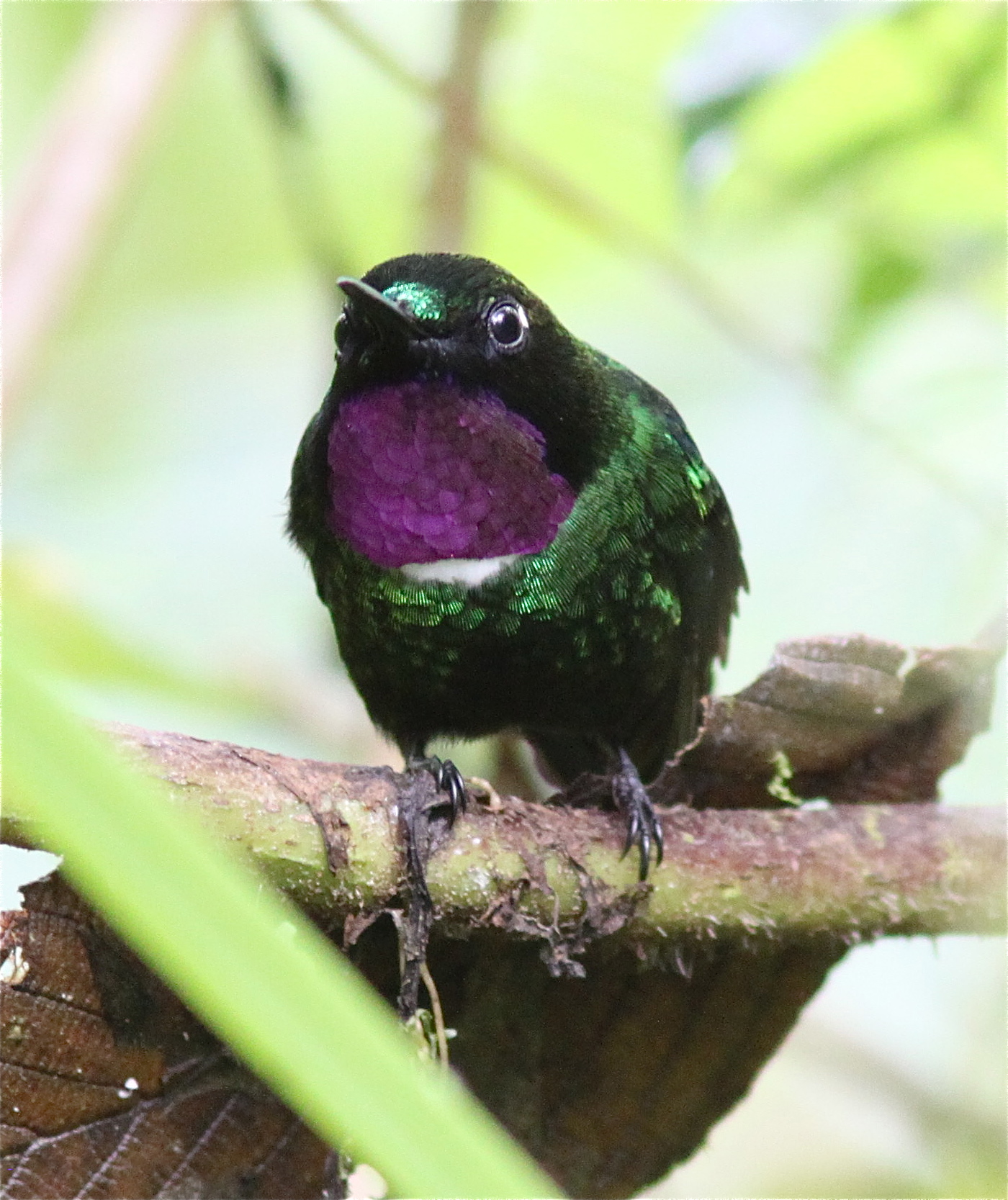
Tanagers and hummingbirds – those are the birds that everyone talked about when I announced that I would be going to Ecuador for my first trip to Central or South America. These birds were gorgeous and colorful as promised, but we saw many other wonderful birds, too, with some of the best in simple black and white. The Partnership for International Birding (PIB) trip to northwest Ecuador was February 22nd through 28th, 2013. Six adventurous birders, our PIB guide and experienced Ecuador birder, John Drummond, and top Ecuadorian guide, Lelis Navarrete, completed our group. The birds that we saw ranged from the awe-inspiring Andean Condor with its ten-foot wingspan to the Booted Racket-tail which immediately went on my personal list of the world’s cutest birds.

The first day we birded the Calacali area and the Tandayapa lower valley in the morning before lunch at Sachatamia Lodge in Mindo. In addition to a wonderful lunch, we enjoyed our first close-up views of tanagers at feeders.

Flame-faced Tanager.

Flame-faced Tanager. Photo by Jeannie Mitchell.

We also saw our first warbler of the trip, this Black-crested Warbler.

Black-crested Warbler

Black-crested Warbler. Photo by Jeannie Mitchell.

After lunch, it was on to San Jorge de Milpe where we would spend the night. This lodge hosted many gorgeous hummingbirds as well as three very cooperative Rufous-fronted Wood-Quail which came in to a feeding station near the outdoor dining room.

Ocellated Tapaculo

My poor but recognizable photo of Tomas, the Ocellated Tapaculo

Our second day of the trip started at 4:30 AM to allow time for the 20-minute walk from the lodge to the bus, the drive to Refugio Paz de las Aves, and then the walk down a steep, slippery path in the dark. We needed to be in place before dawn to watch Andean Cock-of-the-Rock display on the lek. Angel Paz opened his property to visitors and saved it from logging after discovering the Cock-of-the-Rock lek. While creating trails, he discovered antpittas coming to eat the earthworms that were uncovered by the work. Angel learned that birders would pay to see them, too. Amazingly, he was able to “train” antpittas to come to his call by rewarding them with earthworms. Today Angel and his brother, Rodrigo, provide birders on their refuge with close views of some of the most difficult skulking birds in Ecuador. The best known of these is the Giant Antpitta, Maria, who did not show for us (perhaps on the nest). However, we were thrilled to see an Ochre-breasted Antpitta from a few feet away as well as two Dark-backed Wood-quail. My favorite bird was Tomas, a gorgeous Ocellated Tapaculo, who also appeared when Angel called him. In between these amazingly cooperative birds, we watched a Crimson-rumped Toucanet, hummingbirds, tanagers, and other forest birds.
Crimson-rumped Toucanet

Crimson-rumped Toucanet. Photo by Jeannie Mitchell

At San Jorge de Milpe in the afternoon, we saw more amazing tropical birds including a Pale-mandibled Aracari.

Pale-mandibled Aracari

Pale-mandibled Aracari. Photo by Jeannie Mitchell.

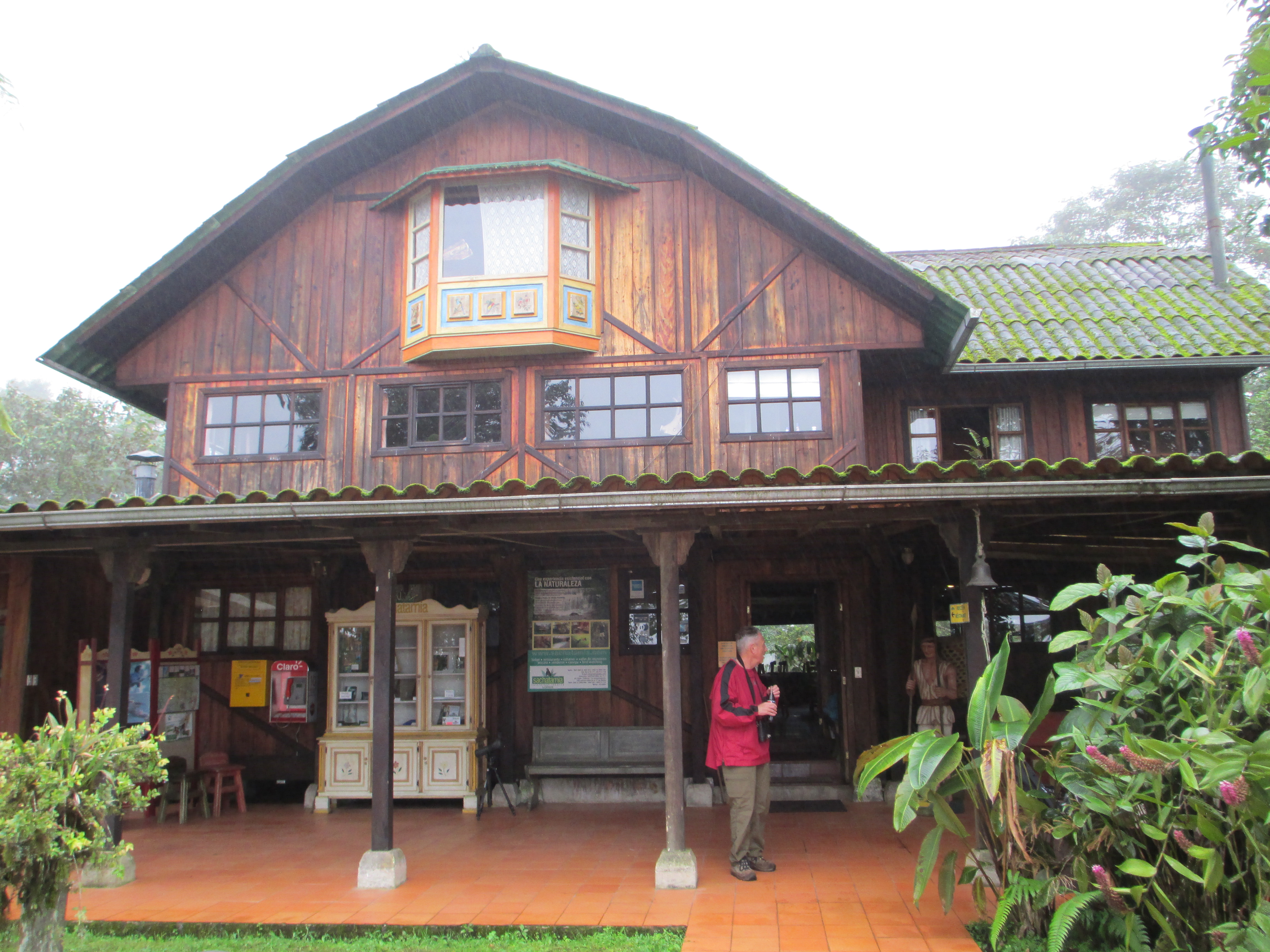
After a wonderful day of birding, we headed to Sachatamia Lodge for the night.

Sachatamia Lodge

Sachatamia Lodge in Mindo. Photo by Jeannie Mitchell.

We birded most of our third day in Rio Silanche Bird Sanctuary. Some of the stars on this day were black and white birds like this Dot-winged Antwren below.

Dot-winged Antwren

Dot-winged Antwren. Photo by Jeannie Mitchell.

The tower at Rio Silanche

The tower at Rio Silanche. Photo by Jeannie Mitchell.

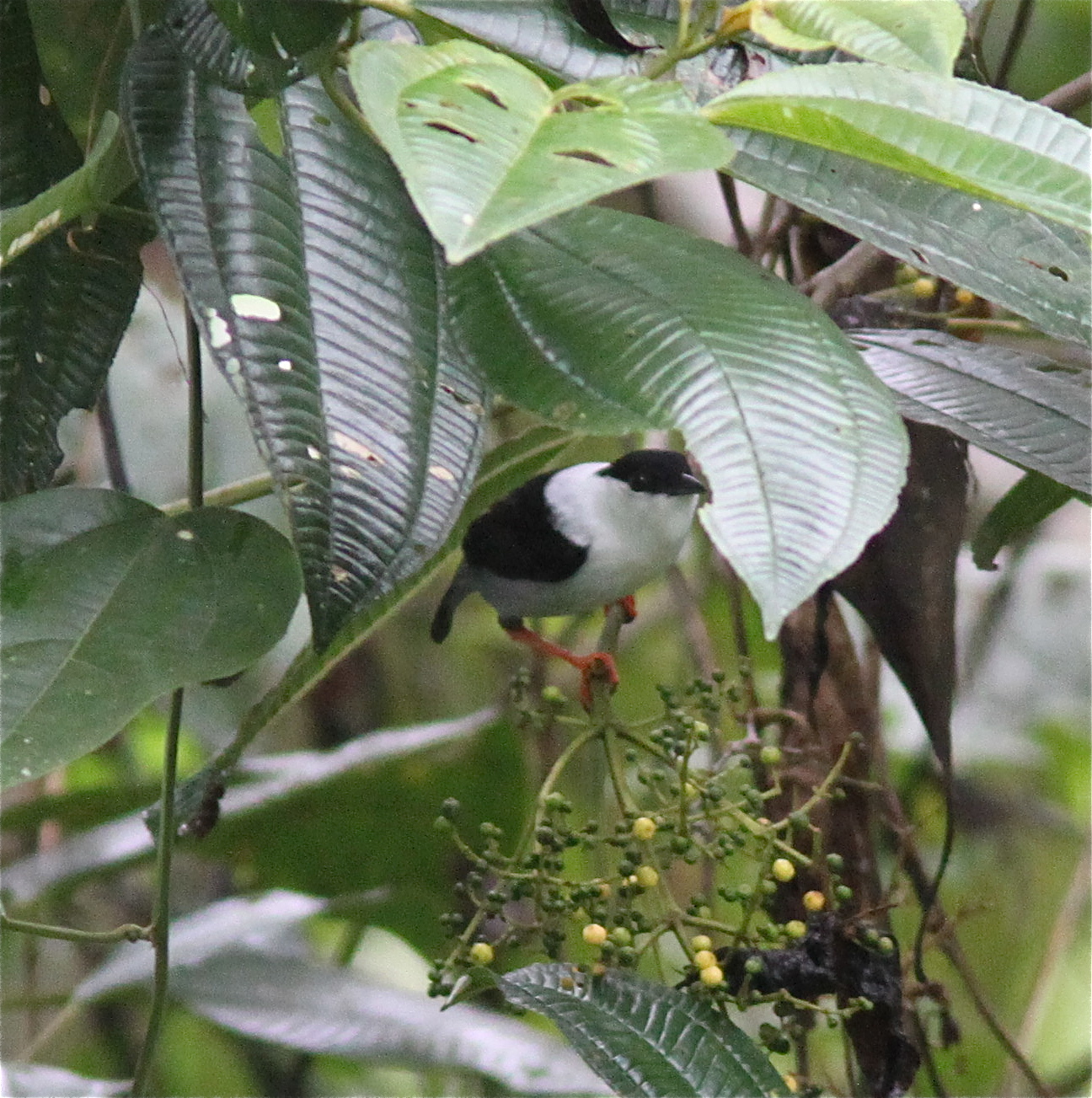
Another favorite was the White-bearded Manakin. Males begin courtship by jumping between small saplings in the lek at the forest edge. Each time it jumps, the tiny 4-inch bird snaps its wings, which makes a loud popping sound. There was a flurry of activity with the little Manakins constantly jumping as we tried to get a good look. Then we heard Ron quietly say “I’ve got one over here” and he pointed to a spot near the ground on the other side of the path. A charming little Manakin quietly sat there in the vegetation and allowed all us to get great looks.

White-bearded Manakin

White-bearded Manakin. Photo by Jeannie Mitchell.

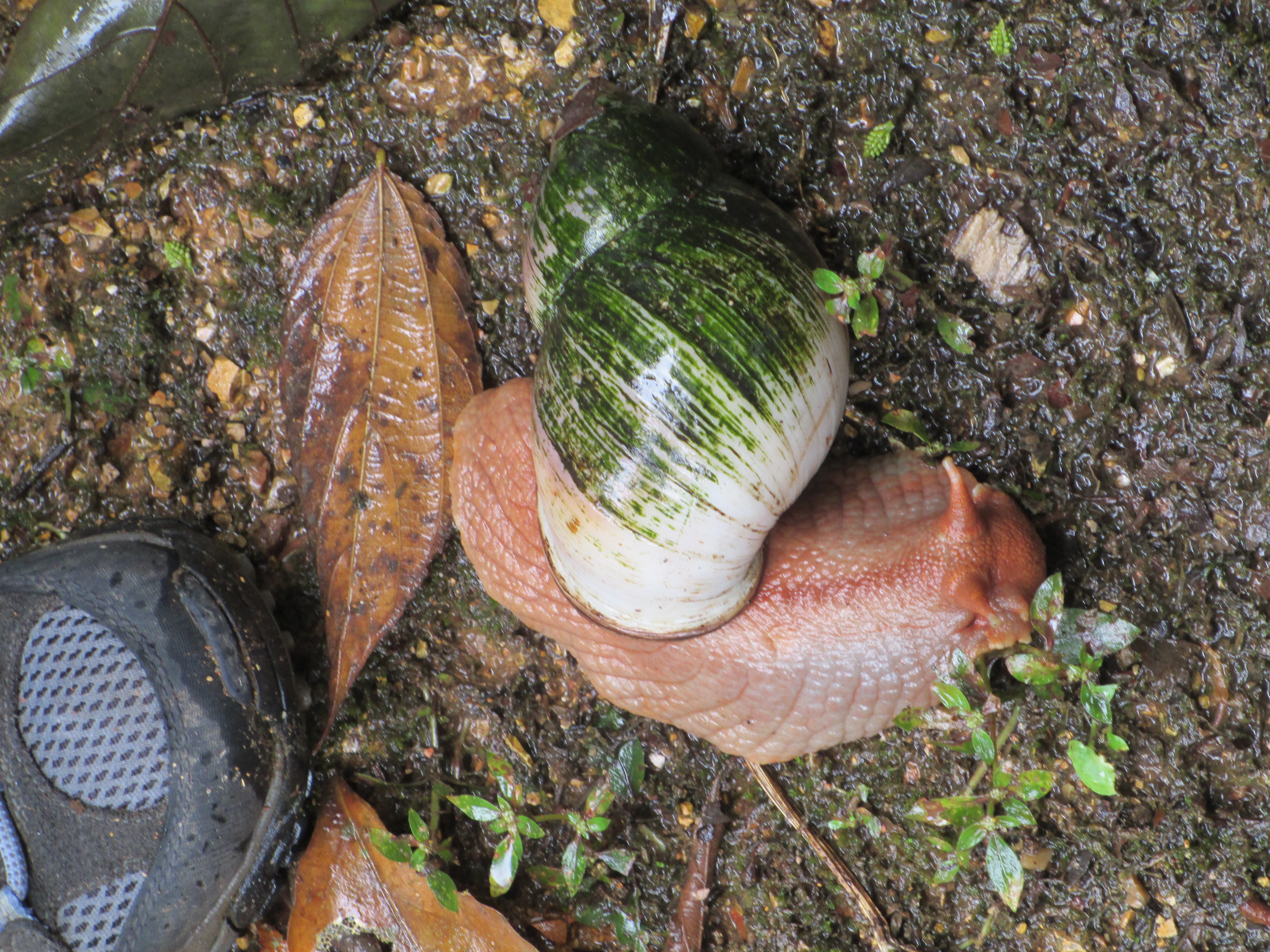
We saw very few animals of any kind other than birds, so the giant snail was a fun surprise. Note the tip of my shoe for a size comparison.

Giant snail at Rio Silanche Bird Sanctuary.

Giant snail at Rio Silanche Bird Sanctuary. Photo by Jeannie Mitchell.

After another great day of birding, we headed back to Sachatamia Lodge again for dinner and the night.

I really liked Sachatamia Lodge, but I think that dinner the second night made me sick. They tried to accommodate my request for low-carb meals by serving me asparagus in a rich cream sauce instead of the spaghetti main course. I had diarrhea that night which forced me to stay at the lodge the next morning while the others went to see the Long-wattled Umbrellabird.

Sachatamia Lodge

The bird feeding area at Sachatamia Lodge. Photo by Jeannie Mitchell.

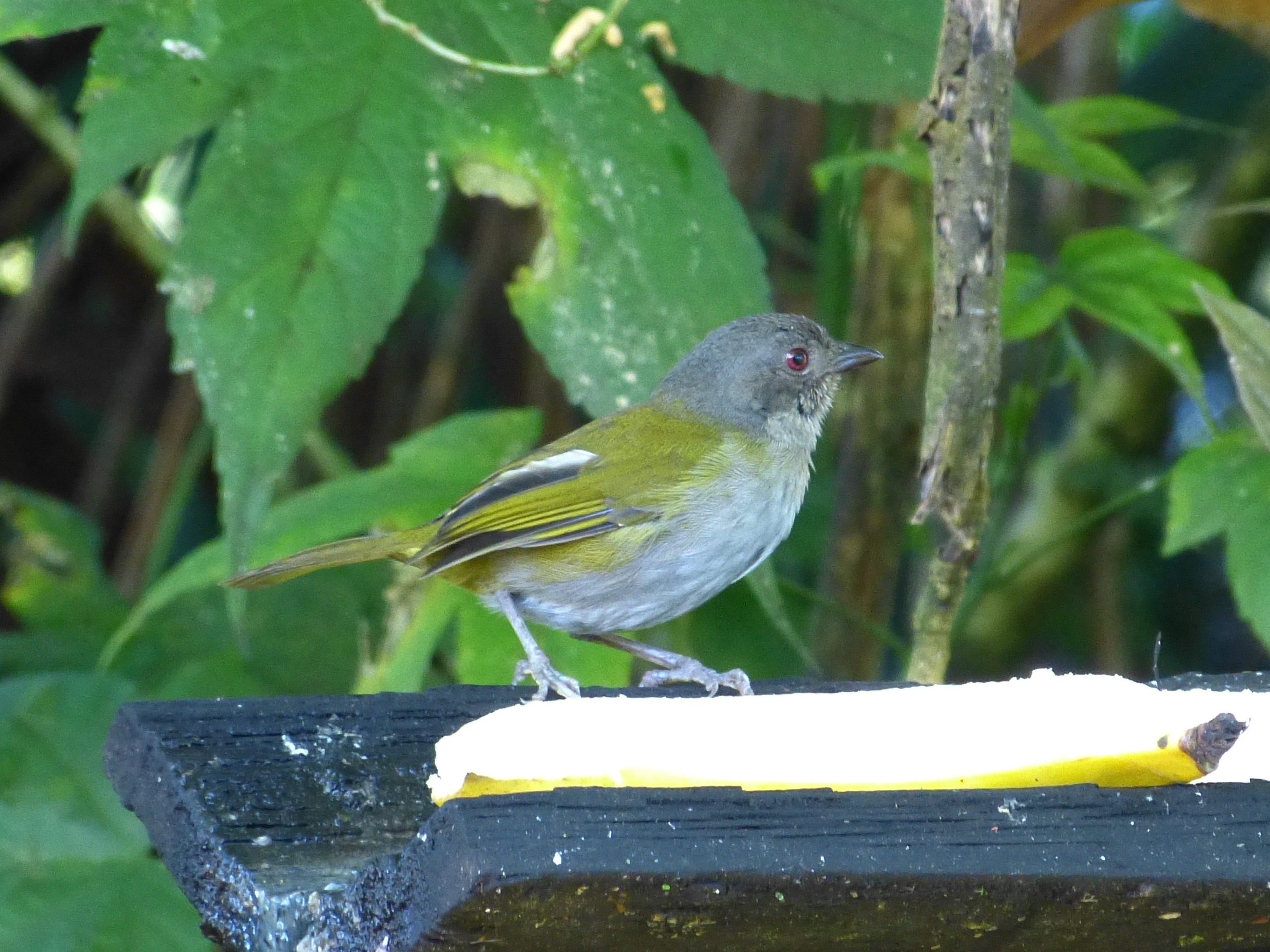
I had tea and crackers, got some extra sleep, and spent a couple of hours alone at the feeders. I loved the luxury of indulging in long lingering looks at the gorgeous tanagers. I also saw a just-fledged Buff-throated Saltator right in front of the entrance to the lodge.

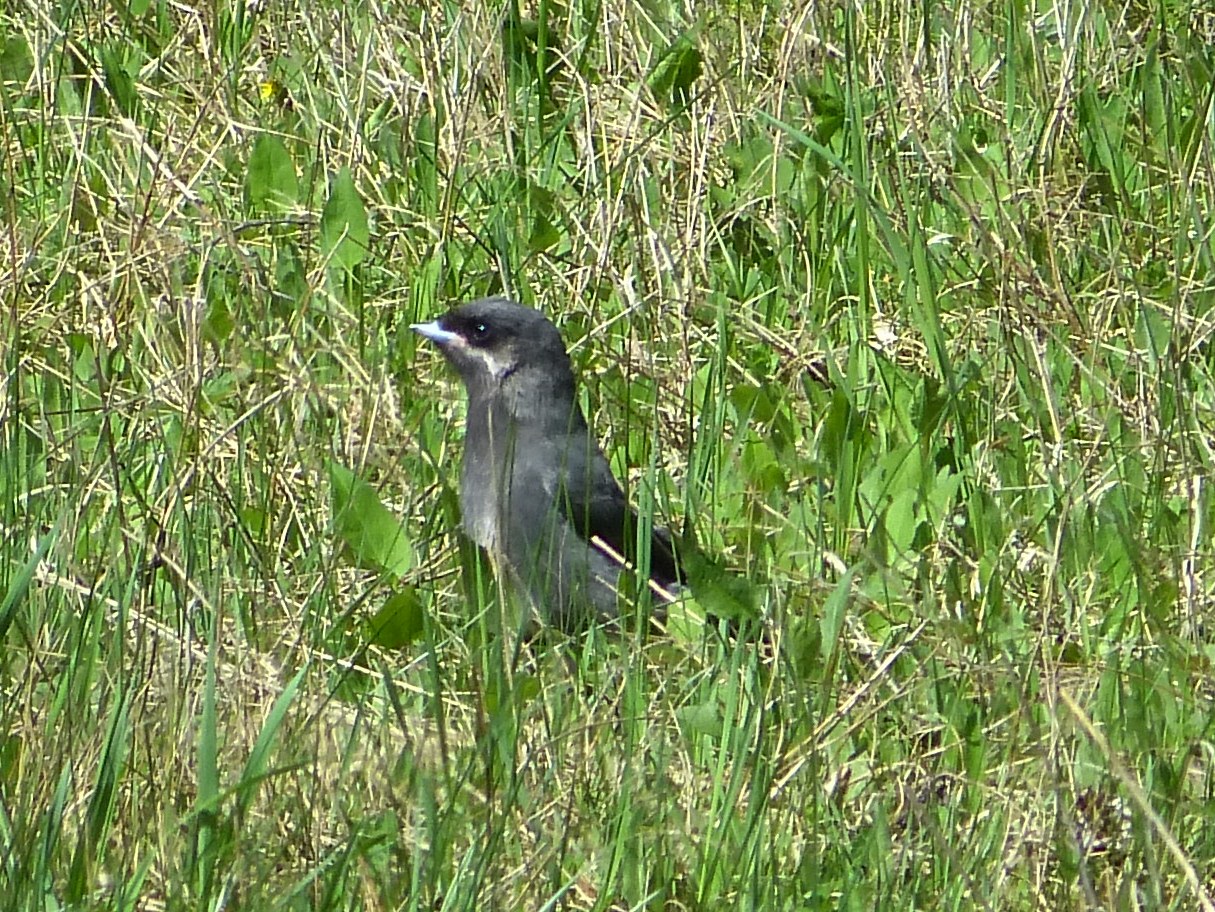
Buff-throated Saltator

Buff-throated Saltator fledgling

Buff-throated Saltator and

Buff-throated Saltator and Blue-gray Tanager

Blue-gray Tanager

Blue-gray Tanager

Golden Tanager

Golden Tanager

Dusky Bush-Tanager

Dusky Bush-Tanager

Strong-billed Woodcreeper

Strong-billed Woodcreeper

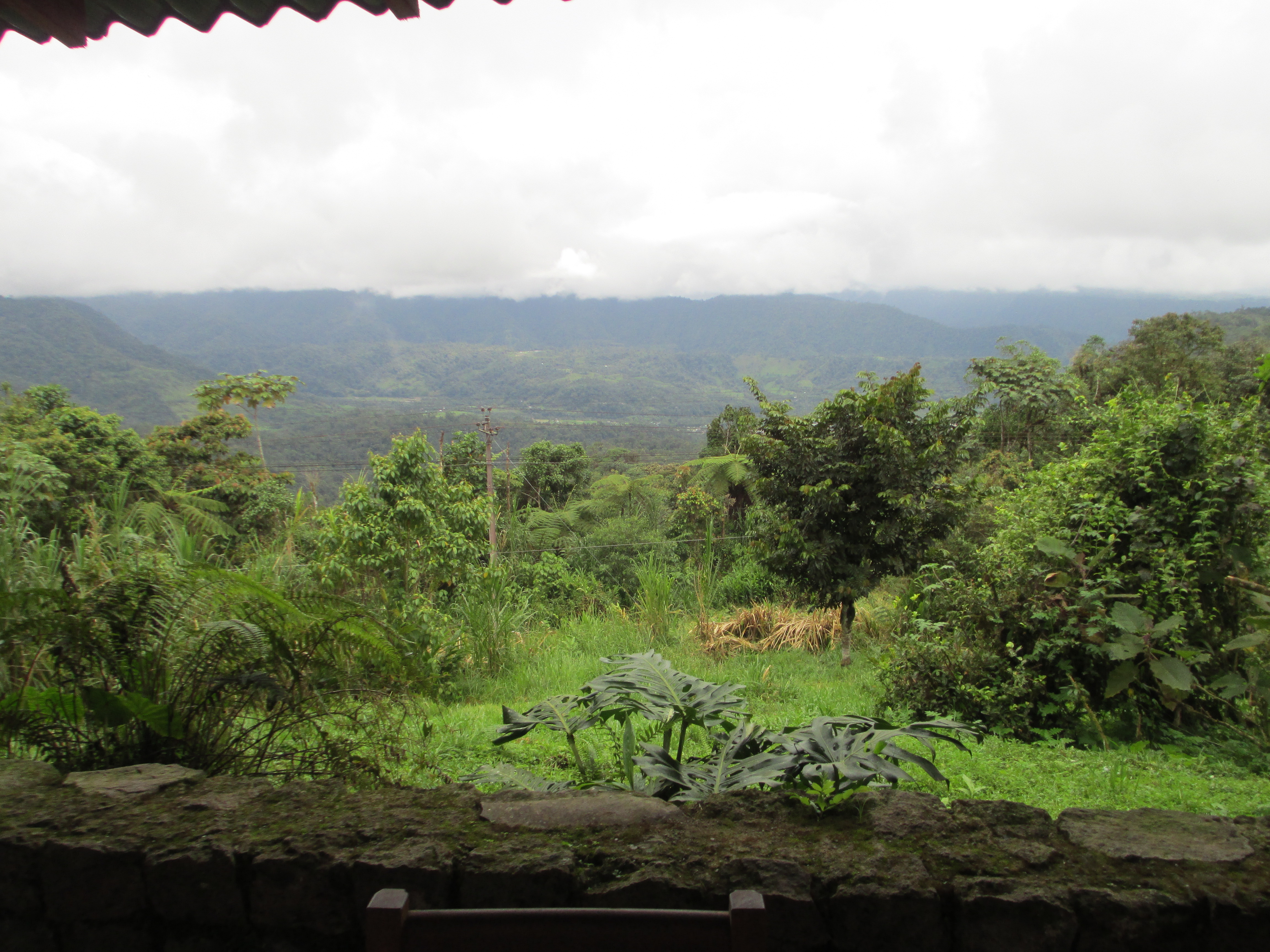
The rest of the group returned for lunch and Jeannie took this photo of the view from the lodge.

View from Sachatamia Lodge

The view from Sachatamia Lodge

Jeannie got photos of Golden-naped Tanagers and hummingbirds, too.

Golden-naped Tanagers

Golden-naped Tanagers. Photo by Jeannie Mitchell.

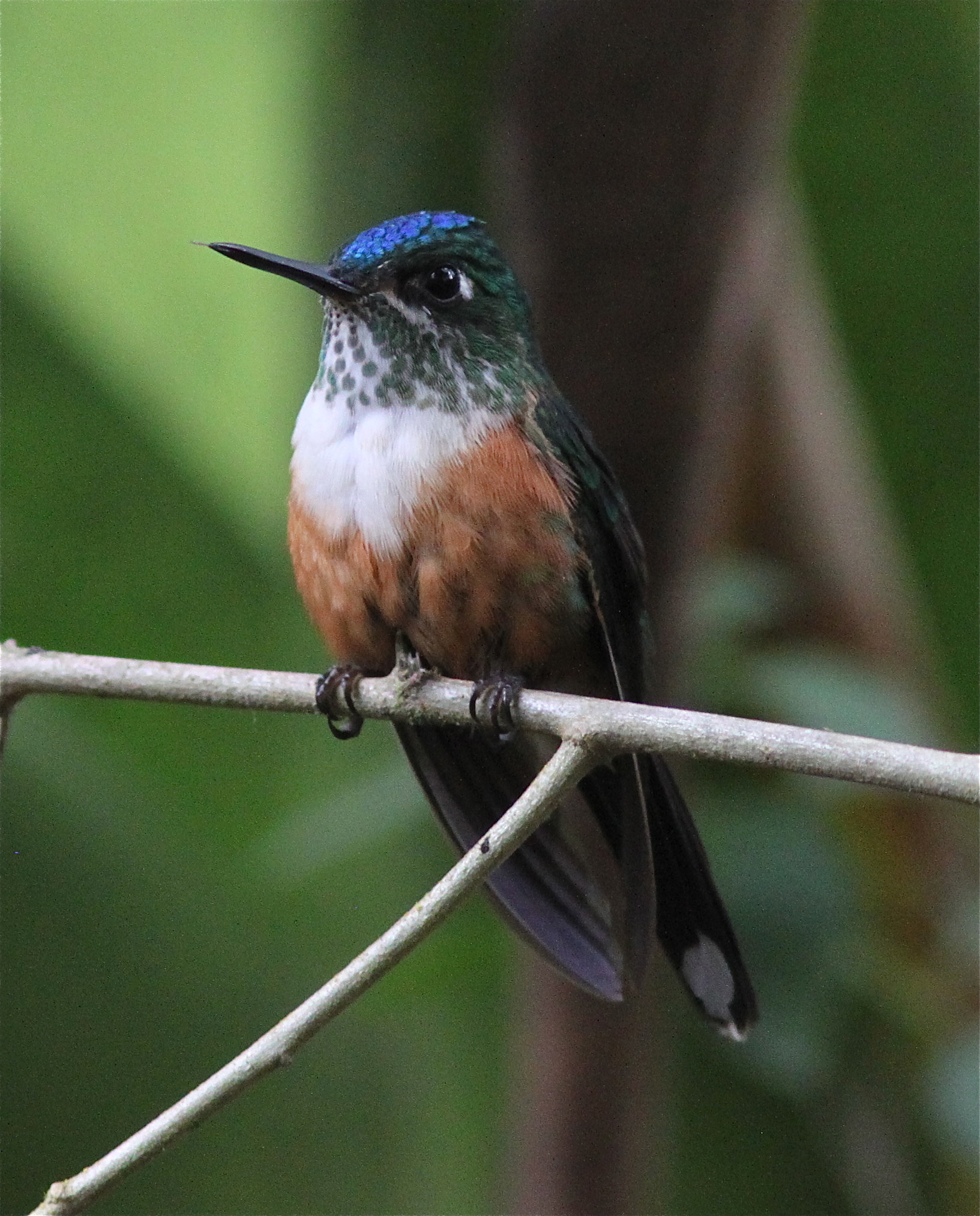
Violet-tailed Sylph (female)

Violet-tailed Sylph (female). Photo by Jeannie Mitchell.

Booted Racket-tail

Booted Racket-tail. My favorite hummer of the trip! Photo by Jeannie Mitchell.

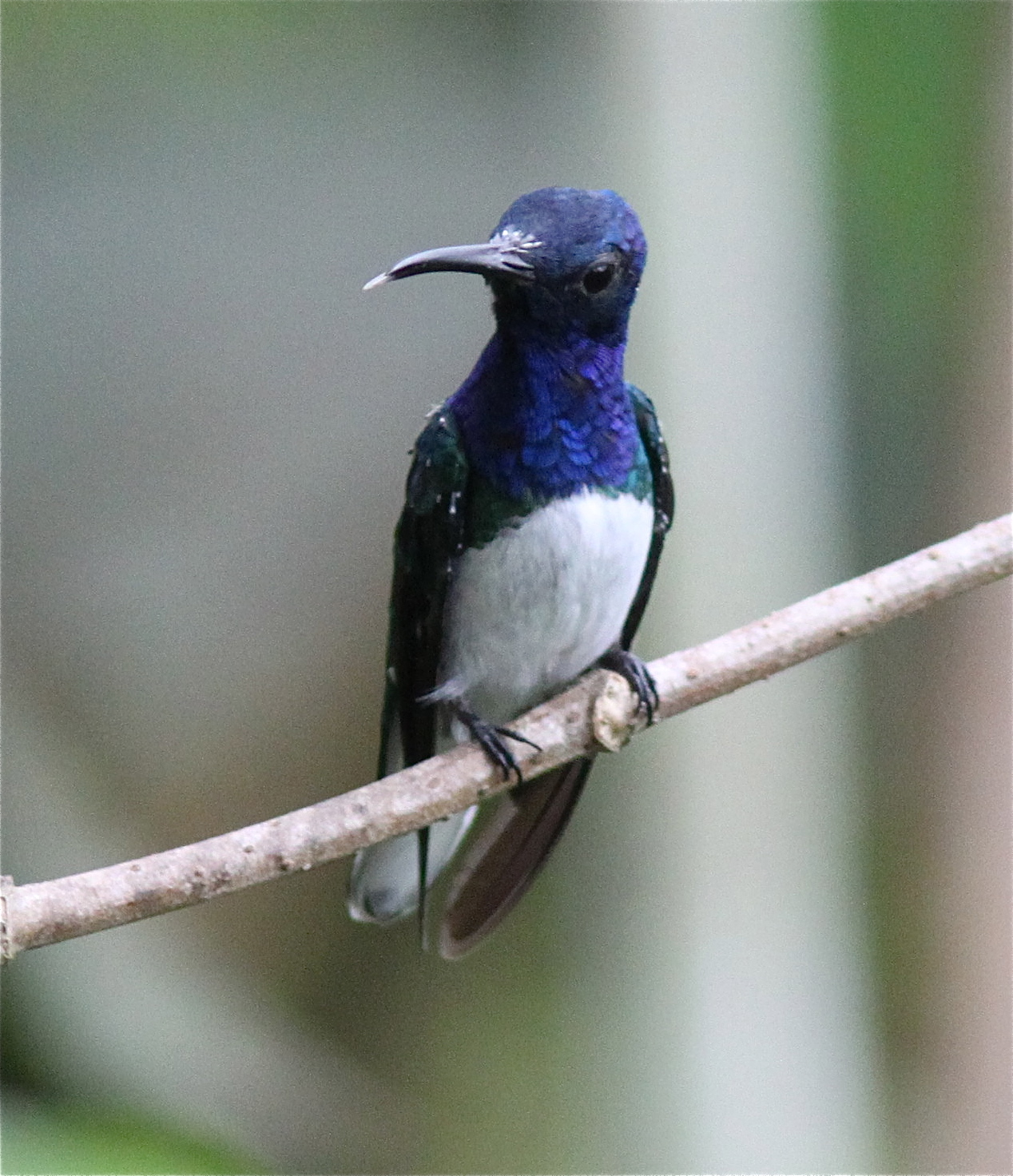
White-necked Jacobin

White-necked Jacobin. Photo by Jeannie Mitchell.

That afternoon we headed to San Jorge de Tandayapa Lodge where we spent the night after birding the area.

Birding in the Tandayapa Valley

Birding in the Tandayapa Valley. Photo by Jeannie Mitchell.

Dinner at San Jorge de Tandayapa Lodge

Dinner at San Jorge de Tandayapa Lodge. Photo by Jeannie Mitchell.

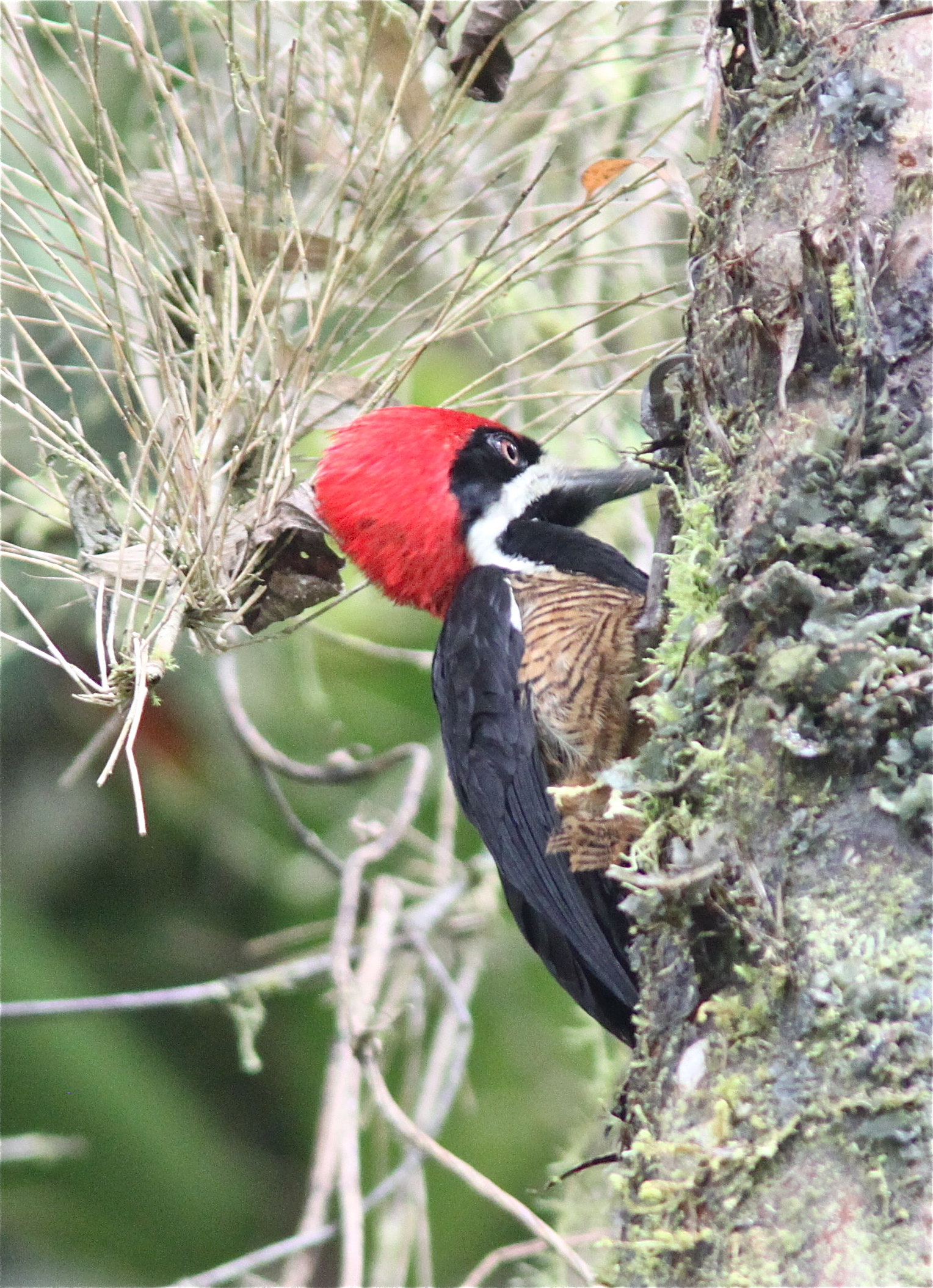
Day five brought more wonderful birds in the Tandayapa upper valley, including this Powerful Woodpecker and the hummingbirds below.

Powerful Woodpecker

Powerful Woodpecker. Photo by Jeannie Mitchell.

Collared Inca

Collared Inca. Photo by Jeannie Mitchell.

Gorgeted Sunangel

Gorgeted Sunangel. Photo by Jeannie Mitchell.

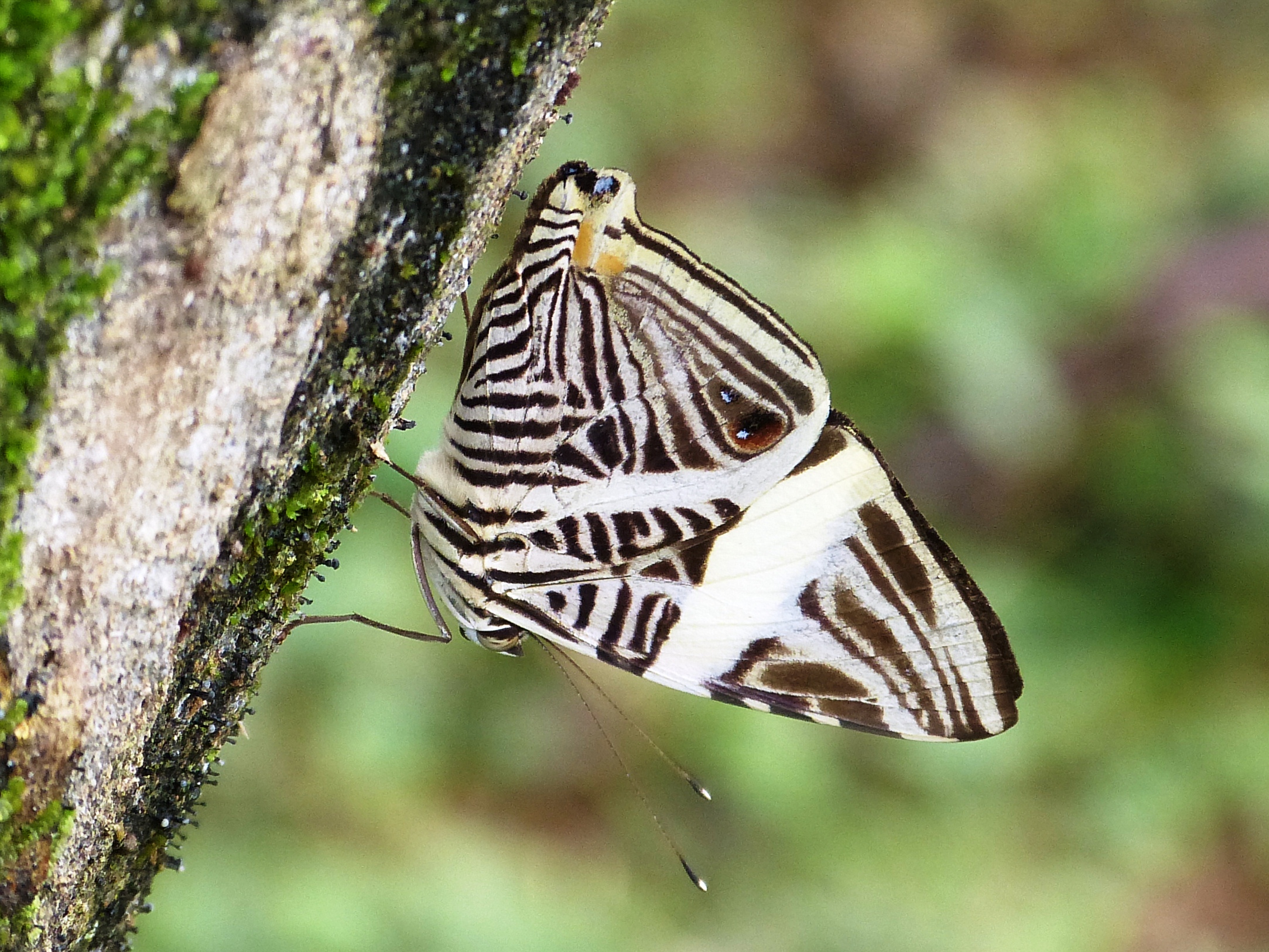
We did not see many butterflies during any part of the trip, but there were a few like this beauty.

Butterfly

Photo by Jeannie Mitchell

IMG_7125

Photo by Jeannie Mitchell

IMG_7126

Photo by Jeannie Mitchell

The drive back to Quito for the night was quite interesting. While searching for a Giant Hummingbird, we met these two girls in a small village. The oldest girl appeared to offer us (or just show?) a bird nest with an egg in it. Ted, fluent in Spanish, taught Jeannie how to say “no más nidos” (no more nests) which she sweetly said to the girls. Jeannie then gave them a small toy that she had just bought and the girls appeared to put the nest back where they found it.

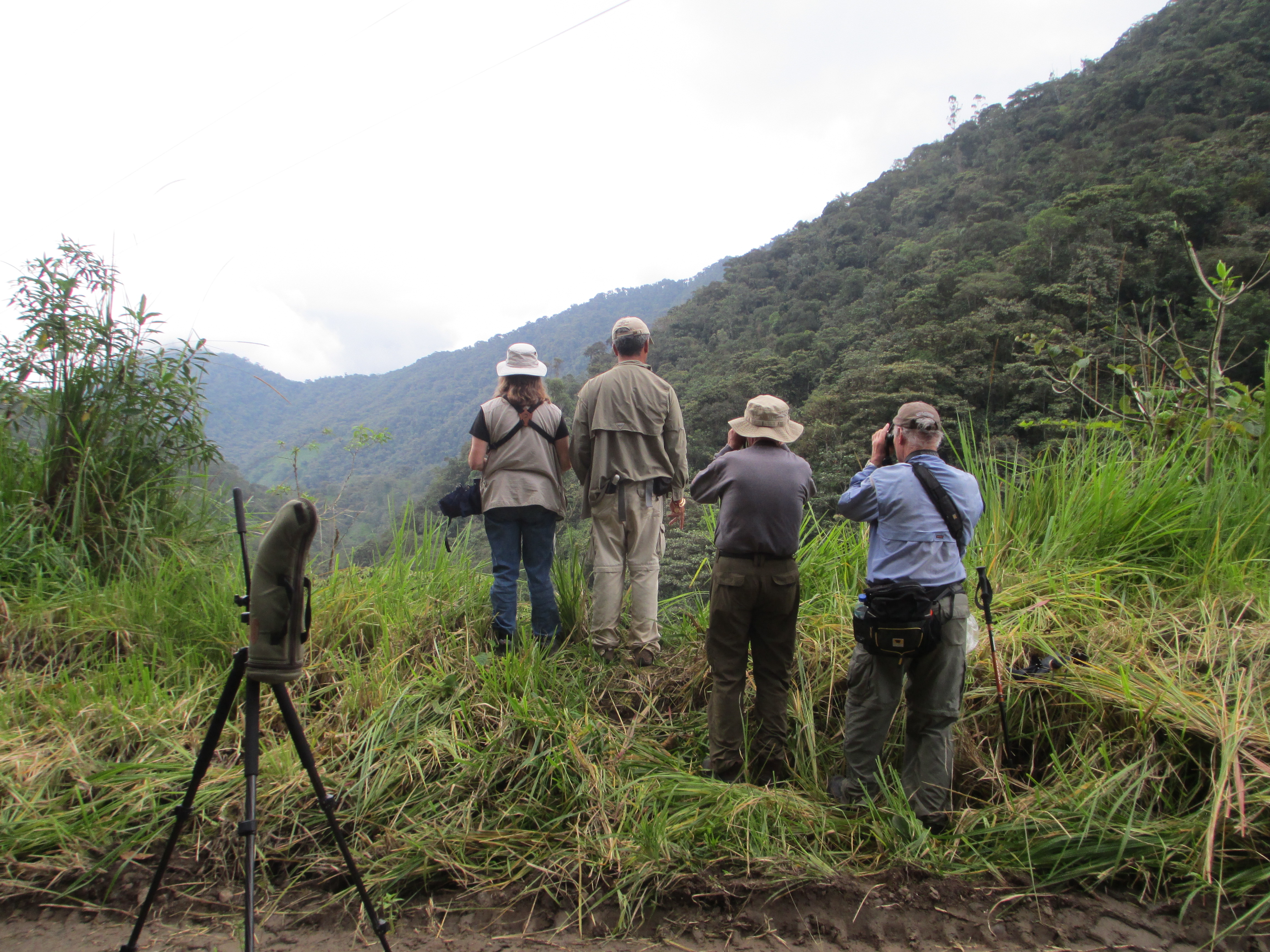
On the morning of February 27, the next to last day of the trip, we had a wonderful surprise. As we climbed towards Yanacocha Reserve on the western slope of the Andes, we saw a condor flying over the valley below. Lelis ordered us out of the bus. We stood on the side of the mountain as the Andean Condor circled for several minutes right in front of us. This huge and magnificent bird invoked a greater emotional response in me than any other bird on the trip. It was an awe-inspiring moment that I will never forget. Lelis informed us that the condor is critically endangered in Ecuador. He said that farmers have persecuted the Andean Condor because they believe that it kills their livestock, and that belief is somewhat true as condors do sometimes attack newborn animals if carrion is scarce. Some reports state that only 50 birds still survive in the wild in Ecuador. The San Diego Zoo website provides interesting facts and additional reasons for the decline of the Andean Condor.

Andean Condor

Andean Condor. Photo by Jeannie Mitchell.

The flowers in Ecuador were plentiful and gorgeous, including those below that Jeannie photographed from this part of the trip.

IMG_3876

IMG_4190

IMG_3927

IMG_5192

Reserva Yanacocha

Reserva Yanacocha.  Photo by Jeannie Mitchell.

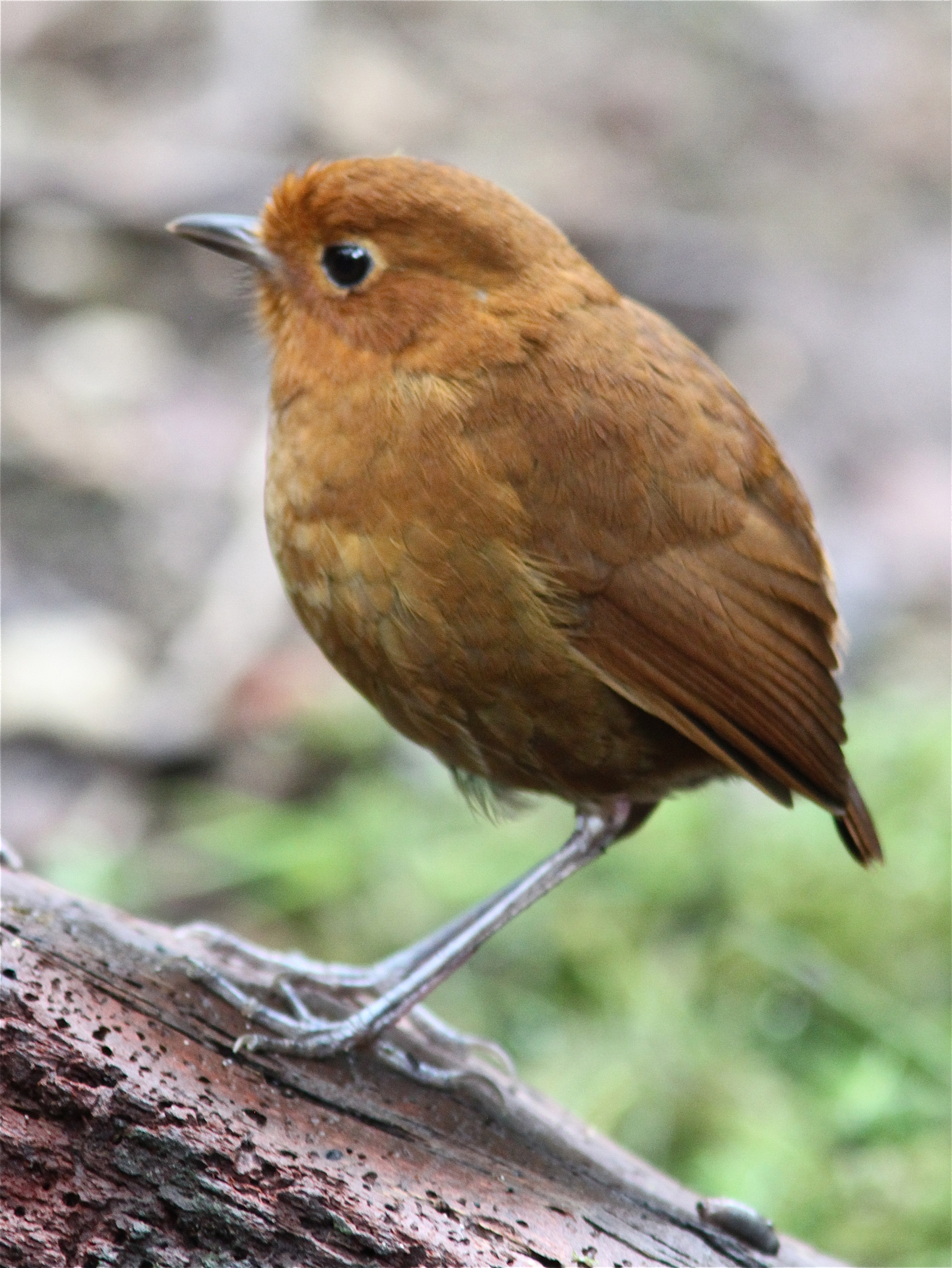
Rufous Antpitta

Rufous Antpitta. Photo by Jeannie Mitchell.

At Yanacocha Reserve we saw more wonderful birds including two more “tame” antpittas that came to the viewing station for the reward of worms, Rufous Antpitta and Tawny Antpitta.

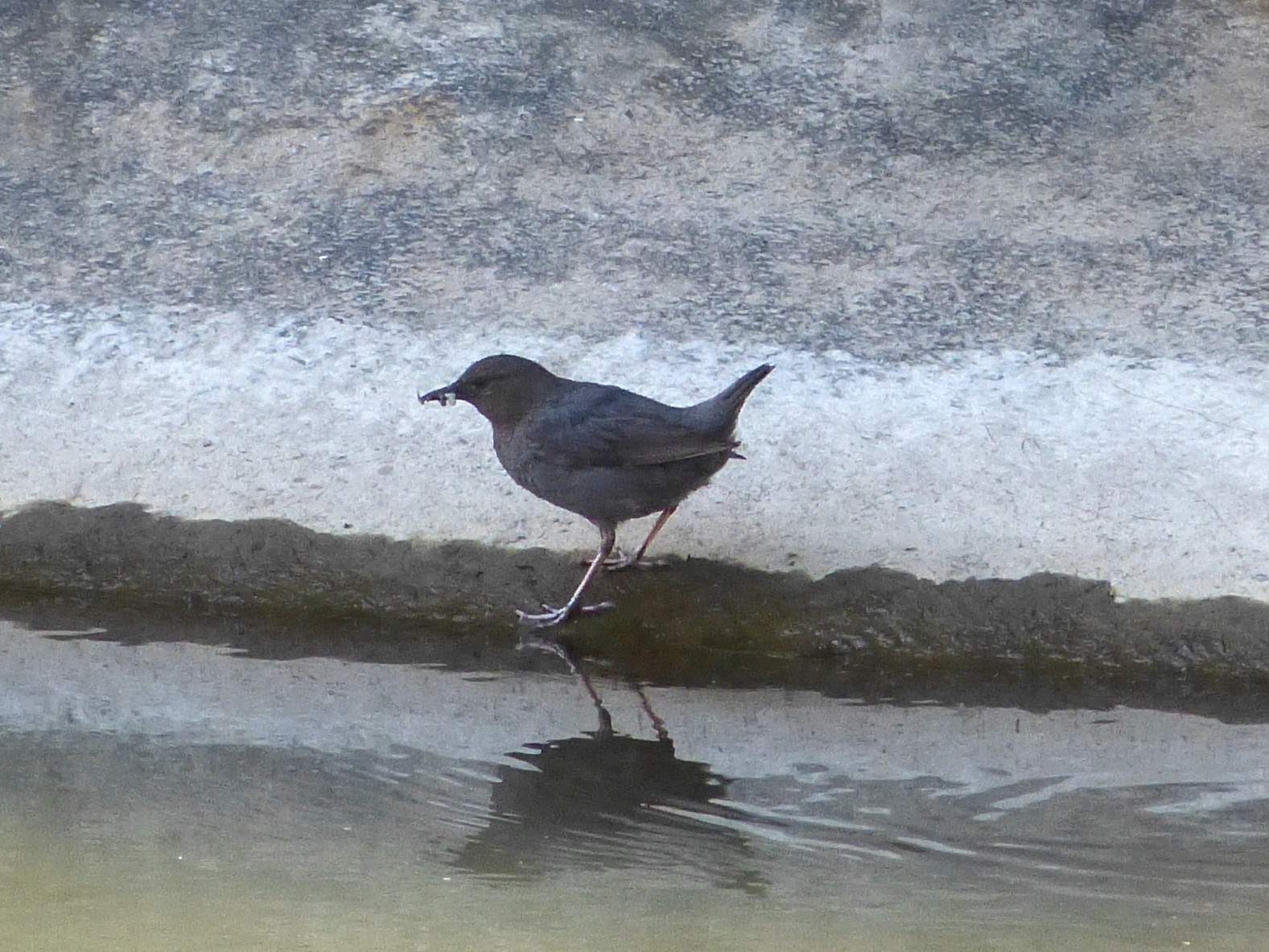
We spent the night at Guango Lodge where we had more great birding. Our last day of the trip, we started the morning in the area around Guango Lodge where we found a female Torrent Duck, a Torrent Tyrannulet, and a White-capped Dipper. There is something very appealing about these birds who manage to survive in the cold, fast-flowing rivers and streams of the high mountains.

White-capped Dipper

White-capped Dipper. Photo by Jeannie Mitchell.

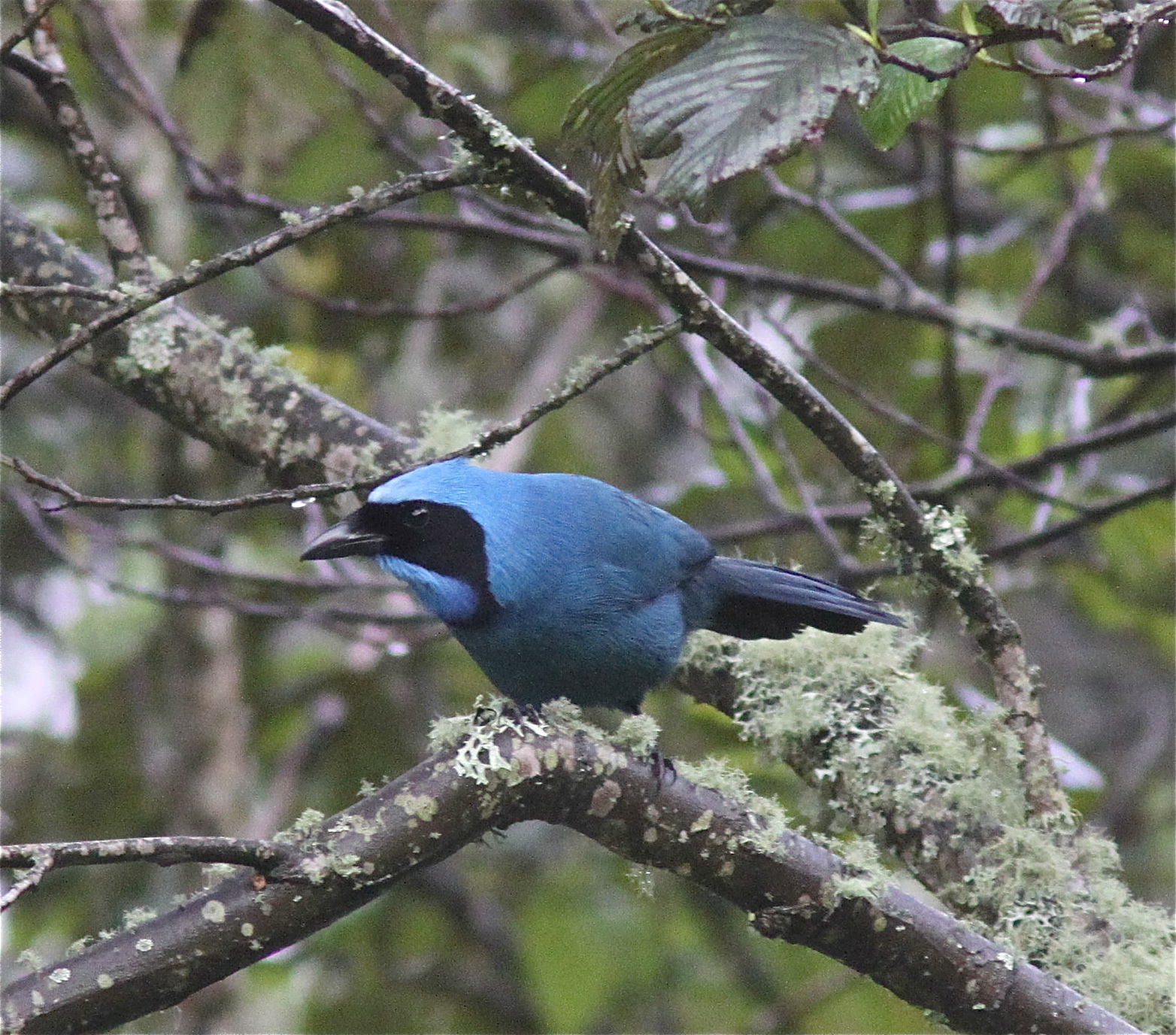
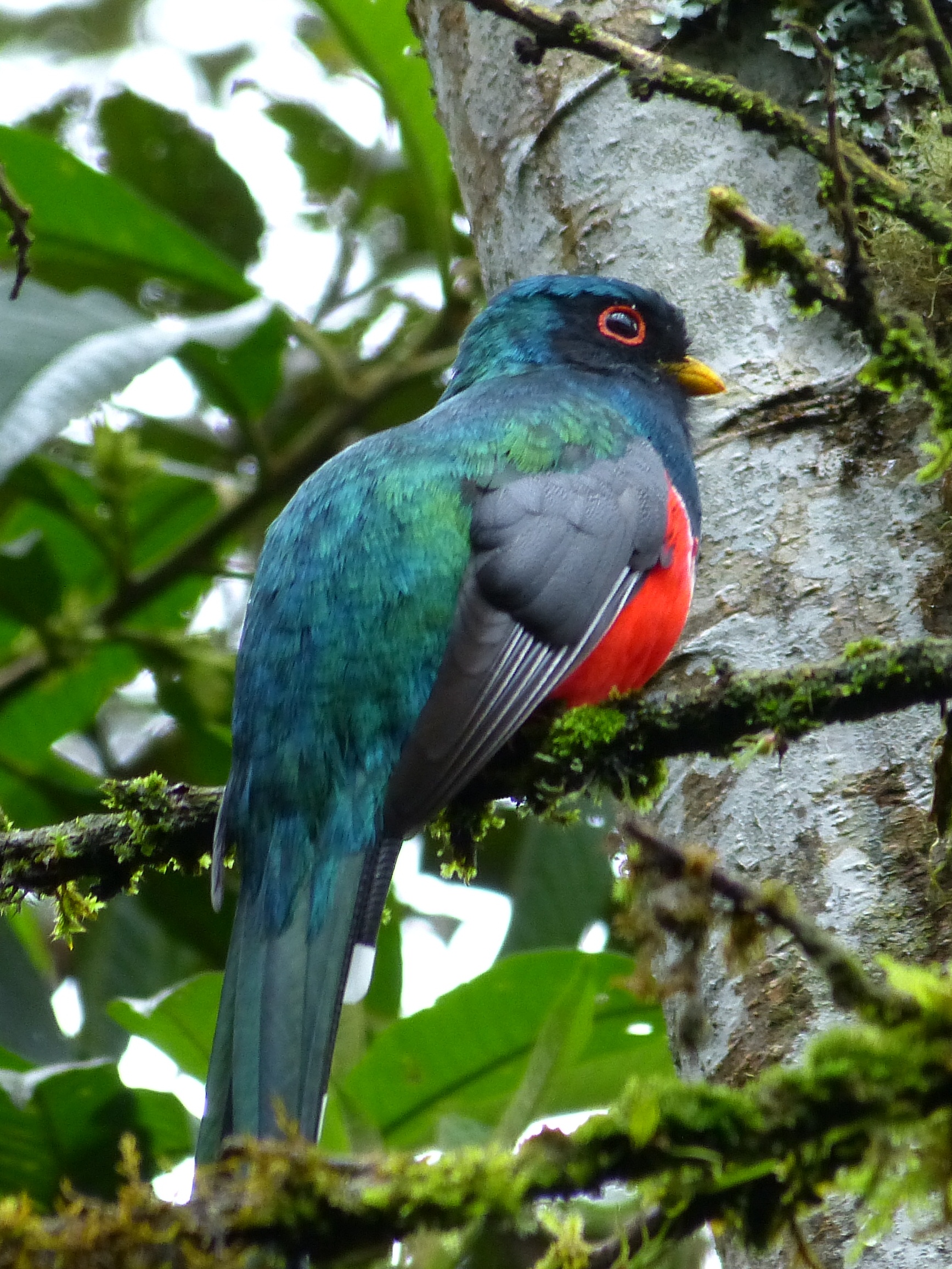
Beautiful birds at Guango Lodge included Turquoise Jay and Masked Trogon.

Turquoise Jay

Turquoise Jay. Photo by Jeannie Mitchell.

Masked Trogon

Masked Trogon

After lunch at Guango Lodge, it was time to head back over Papallacta Pass again and on to Quito.

Gas prices

Gas prices.  Photo by Jeannie Mitchell.

We were all amazed at the gas prices, which are subsidized by the government. Prices are in US Dollars, the official currency of Ecuador.

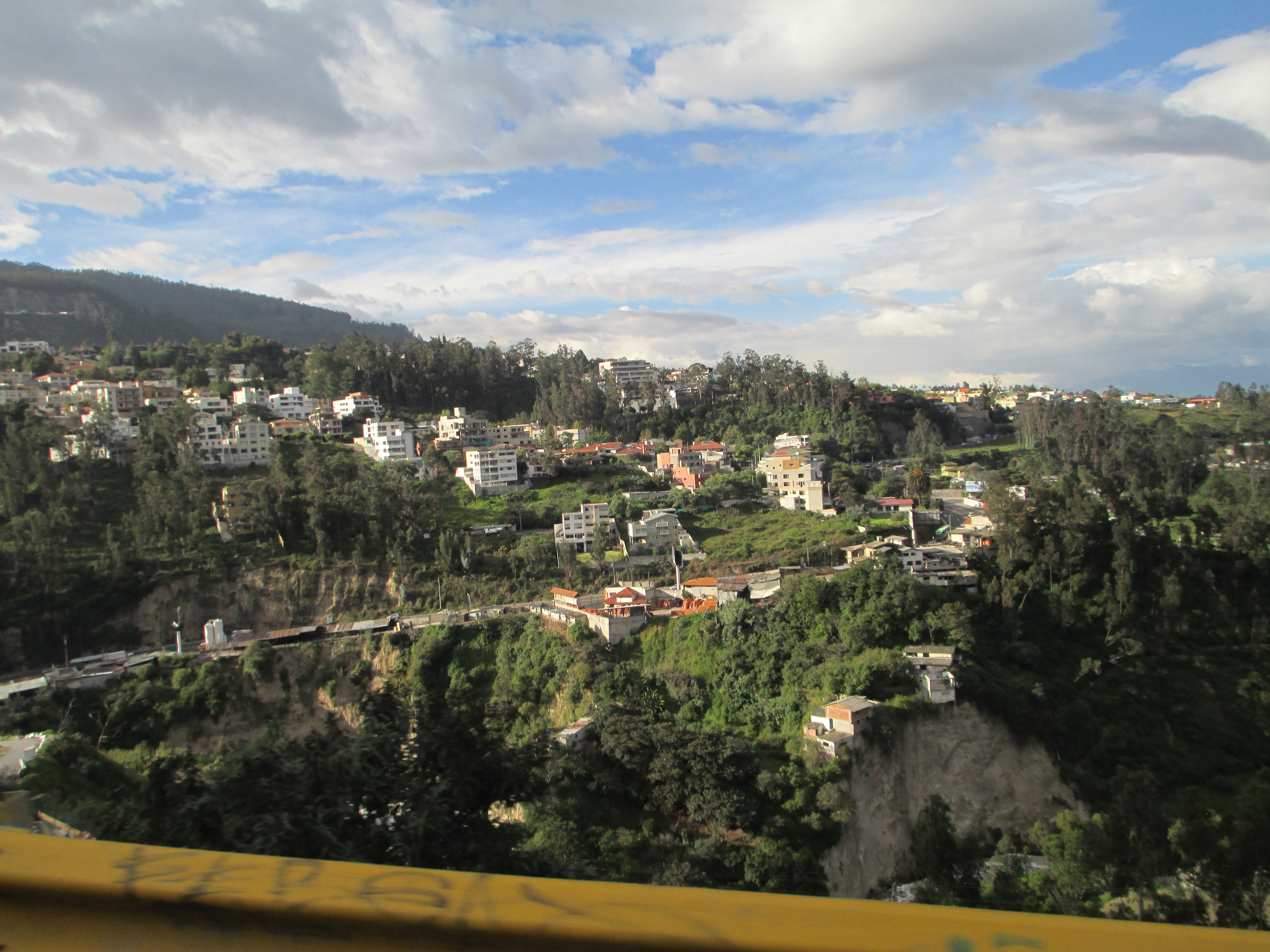
Below: the view of Quito as we approached the city.

Quito

Quito.  Photo by Jeannie Mitchell.

This wonderful trip had ended all too soon. We enjoyed getting to know the beautiful country of Ecuador, the gorgeous birds, and our new friends. Thanks to Lelis and John for leading us on this adventure and to Jeannie Mitchell for generously allowing me to use her beautiful photos in my posts about the trip. More of my photos are on Flickr and John’s photos for the trip can be viewed at http://www.pbase.com/jxdrummo/ecuador_birds_feb_2013.

Our group of birders

John Drummond, Lelis Navarrete, Mary Ellen Moore & John Balog, Ron & Jeannie Mitchell, Shelley Rutkin, Ted Vawter

It was wonderful to go birding in Minnesota again, a state that has now given me 17 life birds and some great adventures.  I shared the trip with Diane Hoese, who I met birding in South Dakota with Doug Buri and Bob Janssen in 2010.  Diane provided the inspiration for this blog; my first post was about attending Bob and Doug’s Shorebird Workshop with her.  We both love learning from Bob, so we planned this trip around his Boreal Birding Workshop at the North House Folk School in Grand Marais.

High Falls on the Pigeon River.  Grand Portage State Park.

High Falls on the Pigeon River.  Grand Portage State Park.

Bob’s workshop took us to Judge CR Magney and Grand Portage state parks, Oberg Mountain, and nearby areas where we had great close-up views of 14 species of warblers.

Olive-sided Flycatcher

Olive-sided Flycatcher.  Cook County, MN.

We drove up the nearby Gunflint Trail by ourselves and found a few more birds, including this Olive-sided Flycatcher.  This bird had huge white tufts on its lower back.  Back home, I searched extensively and could not find any reference to a connection between the size of the tufts and gender, breeding status, or time of year.

Diane, Bob Janssen, Shelley

Diane, Bob Janssen, Shelley.  Grand Marais, MN.

After birding with Bob for two days, Diane and I set off to Ely to bird on our own for a day.  The highlight there was breeding Cape May Warblers on territory.  We found at least three pairs on our own, without playing recorded songs to draw the birds in, and enjoyed the peace of the boreal forest.  The birds behaved as if we weren’t even there – males singing from the treetops, a lovely female working a spruce tree at nearly eye level.  For me, birding does not get any better.

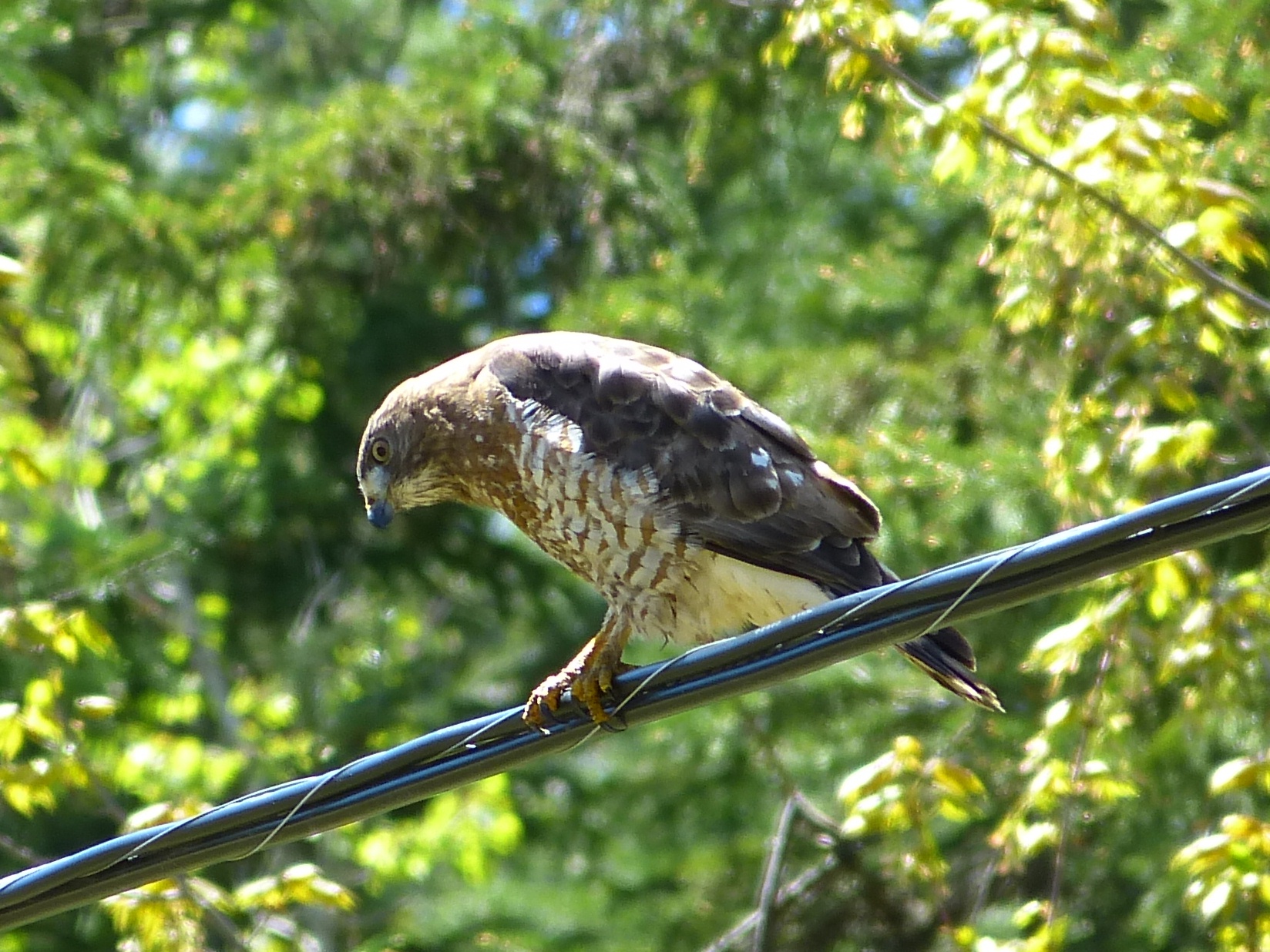
Broad-winged Hawk

Broad-winged Hawk. Echo Trail, Ely, MN.

We also watched this Broad-winged Hawk attempt to catch an afternoon snack, but he missed his prey. Earlier in the day, we had watched a different Broad-winged being harassed by Blue Jays.

Juvenile Gray Jay

Juvenile Gray Jay. Lake County Road 2, MN.

On our way south to Duluth the next day, we found a family of Gray Jays along Lake County Road 2, one adult and at least two adorable juveniles.

Next was birding with Erik Bruhnke in Sax Zim Bog.  I had hoped to see a Connecticut Warbler, but it wasn’t meant to be.  We did find a Yellow-bellied Flycatcher, though, which was one of my two life birds of the trip (the other was Alder Flycatcher).  It was a lovely day that started with great views of a LeConte’s Sparrow and this goofy looking Sharp-tailed Grouse.

Sharp-tailed Grouse. Sax Zim Bog, MN.

Sharp-tailed Grouse. Sax Zim Bog, MN.

American Kestrel.  Sax Zim Bog, MN.

American Kestrel (male). Sax Zim Bog, MN.

Erik showed me his beautiful photo of a male American Kestrel we had just watched together.  He pointed out the white outer tail feathers with black bars.  When I got home, I realized that I had also captured a clear shot of the bird’s tail showing this common trait that I’d never noticed before.

After a great dinner at Fitger’s in Duluth, we sadly sad goodbye to Erik and headed towards Diane’s home the next morning.

Shelley, Erik Bruhnke, Diane

Shelley, Erik Bruhnke, Diane. Duluth, MN.

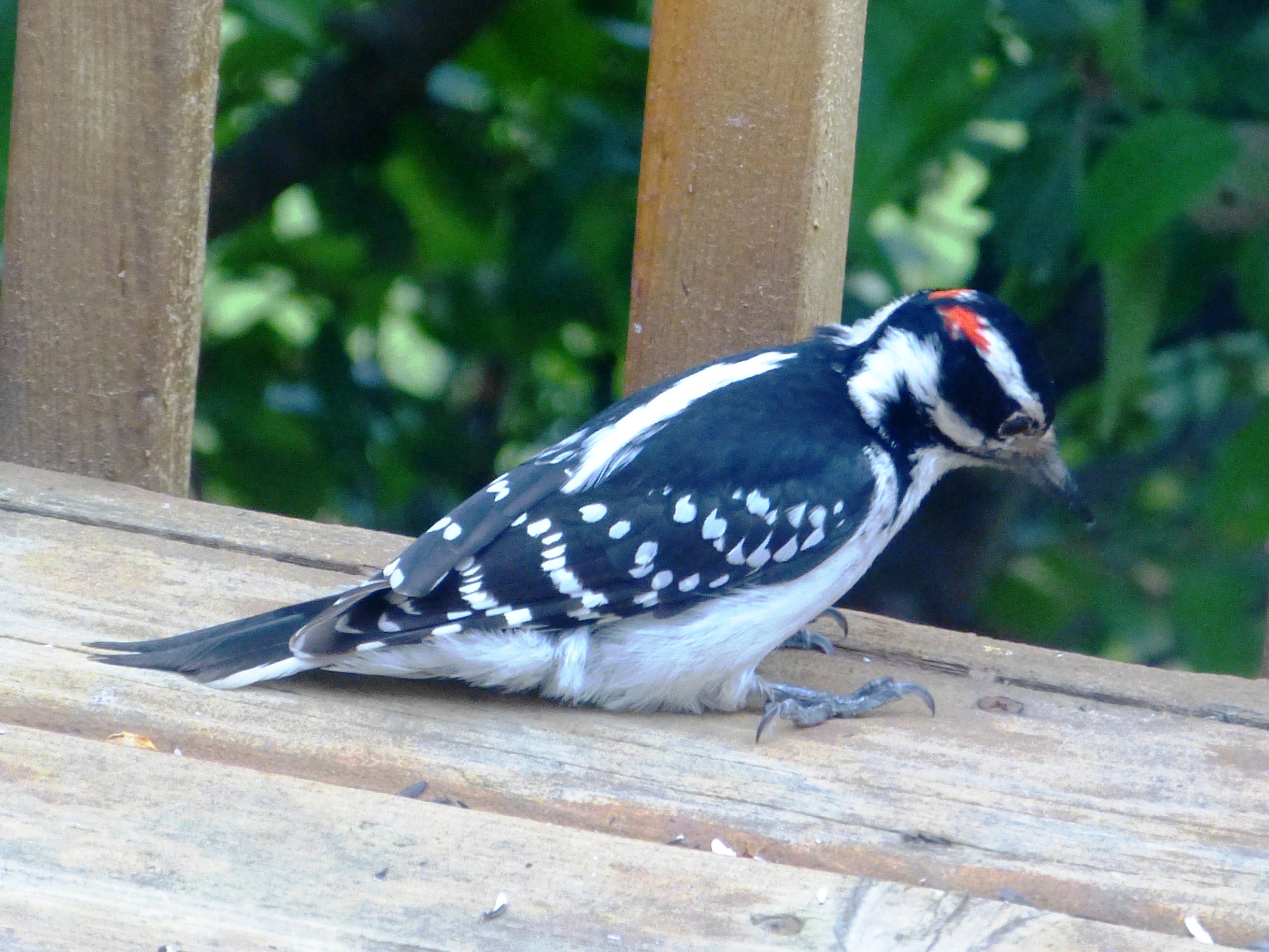
Hairy Woodpecker

Hairy Woodpecker. Carver County, MN.

It was late afternoon and lightly raining when we arrived, but the birds were still coming to the feeders on Diane’s deck.  I was happy to capture a shot of this male Hairy Woodpecker showing a characteristic that is usually not mentioned in field guides – the vertical black line through the red patch on the back of the head.  Downy Woodpeckers do not have a line through the red patch.

My last birds of the trip were Diane’s lovely Baltimore Orioles.

Baltimore Oriole (male).  Carver County, MN.

Baltimore Oriole (male). Carver County, MN.

Baltimore Oriole (female).  Carver County, MN.

Baltimore Oriole (female). Carver County, MN.

Once again I had unintentionally taken the advice of my late husband, Burt.  I’d saved something for next time.  Now I’ve got both Connecticut Warbler and Boreal Owl to search for again.  After a wonderful trip like this, the idea of going birding again in Minnesota sounds pretty good.

Sandy Beasley and I arrived at Shawnee State Forest late in the afternoon on May 17 after driving from Magee Marsh.  We had just enough time for a stop at the Shawnee State Park office to pick up a “birding map” created by the park naturalist.  The state park is nestled in the middle of the state forest and contains most of the recreational facilities.  Hundreds of athletes participating in the American Triple-T triathlon filled the area and we were happy to get away and drive a peaceful gravel road.  Immediately, we were struck by the spectacular beauty of the forest.  And, even late in the afternoon, we could hear birds singing everywhere.  While Magee hosted mostly tired, hungry migrants, Shawnee was home to breeding birds.  And an ideal home it was, providing 65,000 acres of high-quality habitat.  We had made reservations for one night, but after our 2-hour scouting trip, we decided to stay for two nights so that we would have an entire day to enjoy the forest.

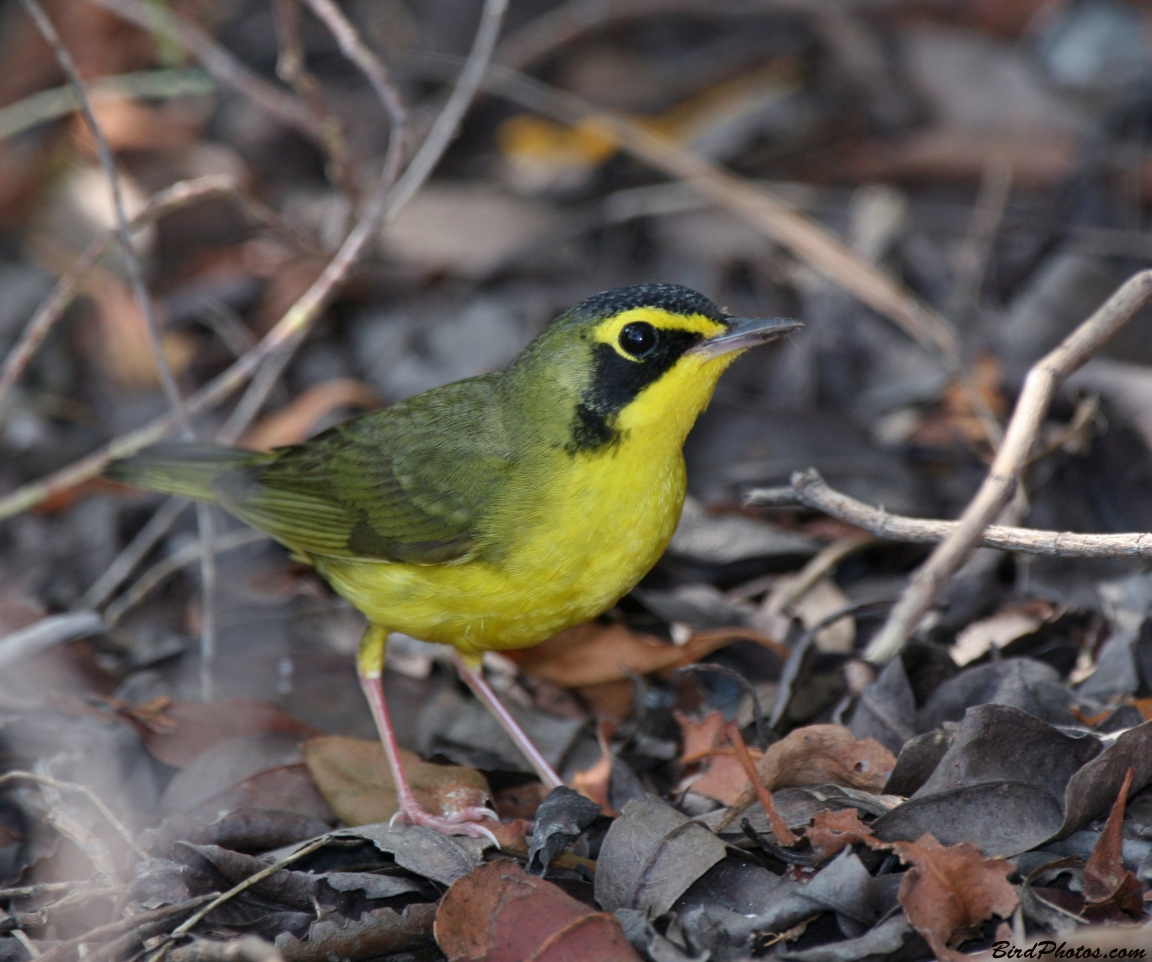
Kentucky Warbler

Kentucky Warbler. Photo © http://www.BirdPhotos.com.

On Saturday, we drove the Panoram Loop which was mostly gravel roads.  Wild geraniums and ferns carpeted the edges between the roads and woods.  We didn’t see as many birds as we had at Magee, but the ones that we did observe made the day a joy.  Cooperative birds that gave us great views included Hooded, Worm-eating, and Kentucky Warblers.  We heard Wood Thrushes singing their ethereal songs and Ruffed Grouse drumming.  The songs of Red-eyed Vireos and Ovenbirds filled the air.  Yellow-breasted Chats gave their raucous calls.  We observed several pairs of Scarlet Tanagers at eye-level.  We saw only a few cars or bikes on the road and met only one other birding party.

Worm-eating Warbler

Worm-eating Warbler. U.S. Fish and Wildlife Service photo.

Even with a map, we had a difficult time finding our way out of the forest.  After going the wrong direction twice, Sandy flagged down a truck.  The driver was Chris Glassmeyer, who didn’t just give directions, but led us back to the highway.  Chris was very familiar with the forest as he had worked there for the Ohio Division of Forestry a couple of years ago.  We talked about the management of the forest and learned that there is logging, but that the Ohio Division of Forestry received certification from the Forest Stewardship Council (FSC) and the Sustainable Forestry Initiative (SFI) in December 2010 for all 21 state forests.  Still, Chris had tired of seeing trees with dollar signs on them and recently went to work for The Ohio Nature Conservancy, where he is an Area Steward.  As supporters of TNC, Sandy and I share Chris’ values and we all seemed energized by the conversation about Shawnee and its birds and other wildlife.  We enjoyed meeting Chris as much as seeing Shawnee’s beautiful birds.

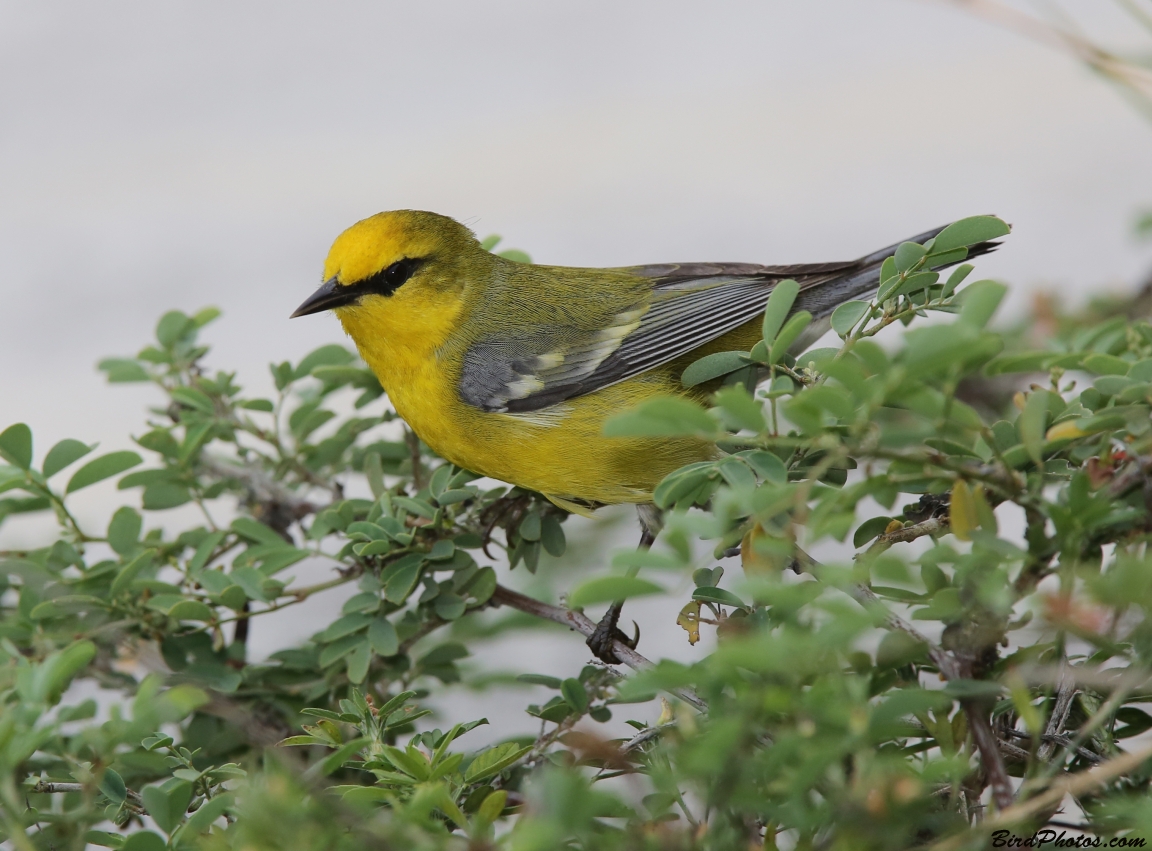
Blue-winged Warbler

Blue-winged Warbler. Photo © http://www.BirdPhotos.com.

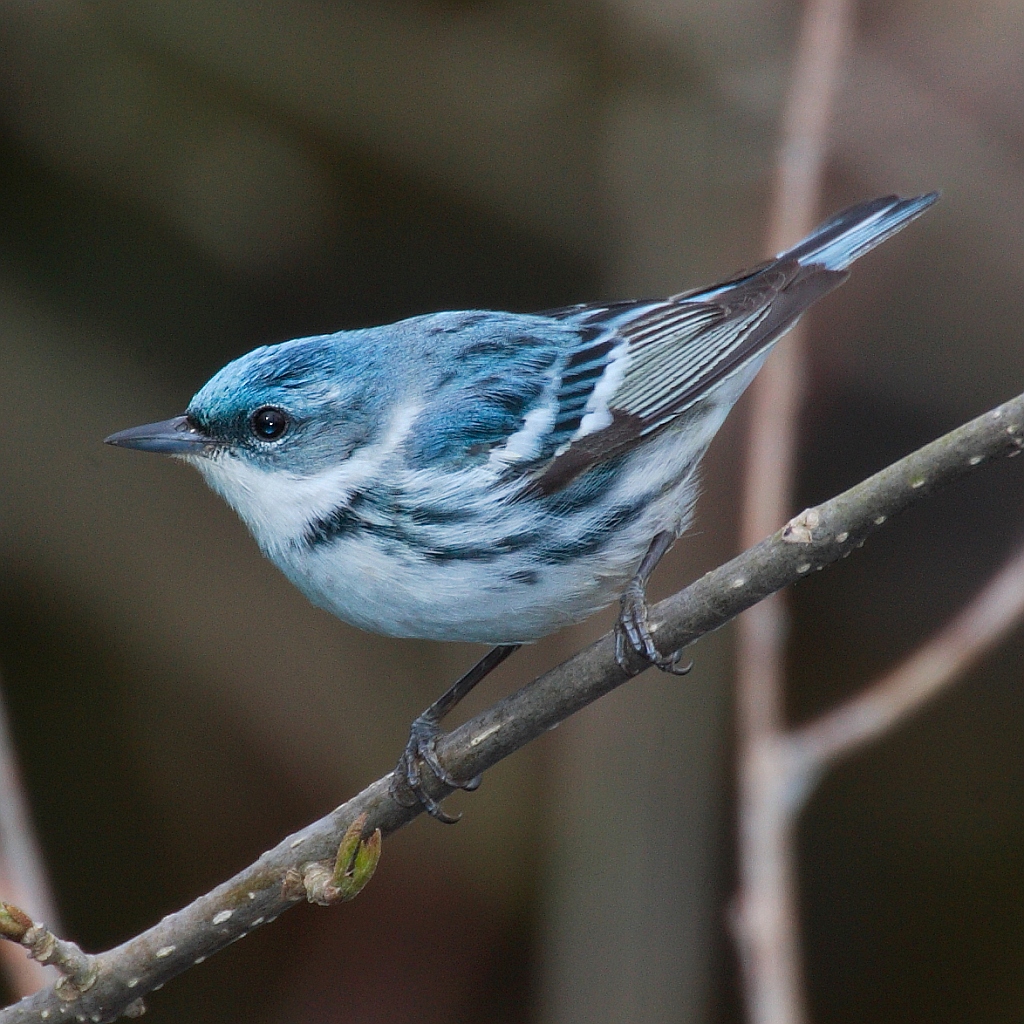
We had planned to leave for home on Sunday morning, but the forest called us back, so we spent another few hours in a different area that was recommended for birding.  As soon as we turned onto the forest service road and pulled over beside the little stream, we heard birds.  Carolina wrens, Gray Catbirds, and Common Yellowthroats called and then we heard a new song.  Yes, a male Cerulean Warbler right over our heads!  Thrilled that we had decided to spend more time in the forest, we continued on down the road.  We saw the first Blue-winged Warblers of the trip – right at eye level.  Other highlights included Kentucky and Hooded Warblers.  Acadian Flycatchers, Wood Thrushes, and Ovenbirds sang as we slowly drove down the country road.

Cerulean Warbler

Cerulean Warbler. Wikipedia photo.

Those last three hours in Shawnee State Forest were an absolutely perfect end to our Ohio birding adventure and the perfect complement to Magee Marsh.  We had a total of 116 species of birds for the trip, including 30 species of warblers.  Sandy and I look forward to returning to the forest as much as to Magee, but next time we will go earlier in the year when the trees are not fully leafed out.  I’ll also work harder to review warbler songs before the next trip.  I’ve already written about learning bird songs and I’ll be using Larkwire as I discussed in that post as well as listening to CDs of bird songs.

Magee Marsh boardwalk entrance

Magee Marsh boardwalk entrance

Disneyland for Birders – that is how I heard someone refer to Magee Marsh on the first day. It’s a perfect characterization of this world-famous birding hot spot. It not only provides spectacular eye-level views of birds, but it has that Disney feeling of wholesome, clean, friendly fun.

The Great Black Swamp once covered 1,500 square miles of northwestern Ohio extending from Port Clinton to Fort Wayne, Indiana.  The vast network of forests, wetlands, and grasslands provided vital stopover habitat where tired and hungry neotropical songbirds could rest and refuel before continuing their migration.  Today, most of the area has been drained for agriculture; only 10 percent of Ohio’s original wetlands are left.  Magee Marsh is one of the few remaining remnants of the Great Black Swamp.  Its wooded beach ridges between the marsh and the southern shore of Lake Erie are especially important as the last stop for migrating birds reluctant to cross the lake.  Magee Marsh State Wildlife Area, Ottawa National Wildlife Refuge, and other nearby areas protect a few thousand acres of habitat, but the birds are most numerous in the small 7-acre area around the Magee Marsh boardwalk.  The Ohio Division of Wildlife built the famous mile-long boardwalk in 1989.  It is wide, has guiderails, and is wheelchair accessible.  It provides birders with a wonderful vantage point for viewing the birds and it protects the habitat from trampling.  The birds seem to feel safe and come very close to the boardwalk, even perching on it occasionally.

Sandy Beasley, my birding buddy from Georgia, and I arrived on the evening of May 13.  I had heard about Magee Marsh for years, but hesitated to visit because of the crowds.  Those fears were not justified.  The State of Ohio did an outstanding job making the site accessible to visitors.  The parking lots are large and well laid-out, there are a sufficient number of porta-potties and they are extremely well maintained.  And the wide boardwalk itself comfortably accommodates a large number of people.  Most importantly, I was surprised to discover that the other birders actually enhanced my experience.  People were friendly and readily shared information.  The only “traffic jam” that I encountered was when a Black-billed Cuckoo was sighted.  Once I said “life bird”, someone pushed me to the front of the crowd and gave detailed directions for finding the bird.  Birders of all levels and from all over the country come to Magee to enjoy the spectacle of spring migration.  I frequently encountered groups of people intently looking in a particular direction.  When I asked what they were watching, the answers varied from “Mourning Warbler” to “there’s a Robin down there” to “I don’t know what the others see”.  As an intermediate level birder, I had the fun of both being helped (such as confirmation of my life Philadelphia Vireo) as well as helping others with finding birds and identification.

Black-throated Green Warbler

Black-throated Green Warbler

On our first amazing day at Magee, we enjoyed many close views of warblers.  One of my favorites was the Black-throated Green Warbler who flitted around just a few feet from me and even perched on the boardwalk rail for a moment.

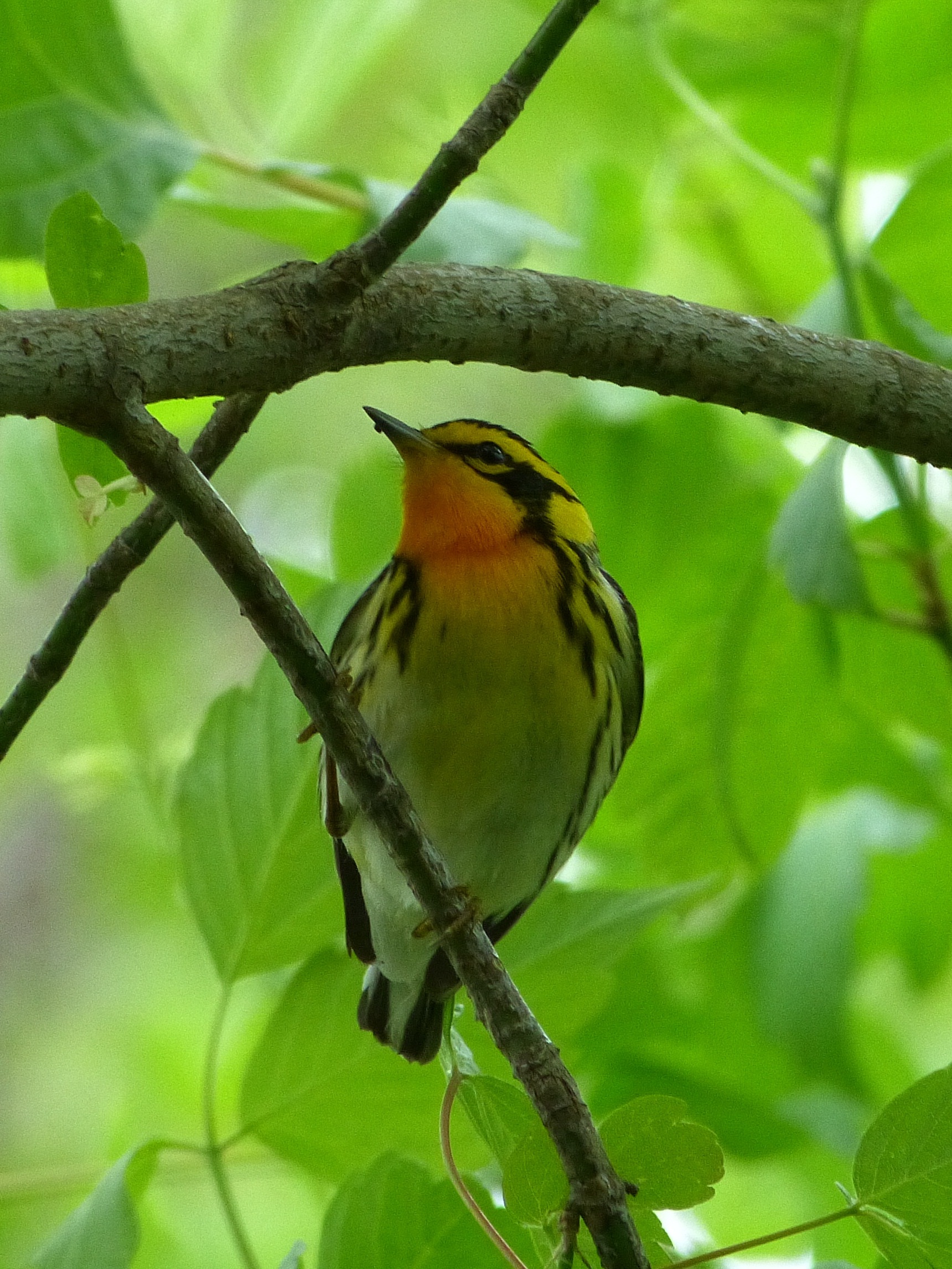
Another crowd pleaser was this cooperative Blackburnian Warbler who also showed off for everyone close by.

Blackburnian Warbler

Blackburnian Warbler

The highlight of the day for both Sandy and me was a female Kirtland’s Warbler on the beach.  Kirtland’s Warbler is rare at Magee and cannot be expected every year, so we were thrilled to see it, a life bird for both of us.

The day ended with an American Woodcock alternately sleeping, preening, and posing for photos right next to the east end of the boardwalk.

Woodcock

American Woodcock

Our second day was equally wonderful and again we saw many beautiful warblers and other birds.  Several Baltimore Orioles brightened the scene and were easy to photograph thanks to the oranges that had been strategically placed for them.  We were also treated to another Kirtland’s Warbler, a male this time, identified as a first year bird by experienced birders.

Baltimore Oriole

Baltimore Oriole

Mid-afternoon Sandy went back to the hotel with Barbara, a birder we met who had driven 11 hours from Boston.  I birded a little longer and saw a Sora near the boardwalk.  Then, I, too, returned to the hotel for dinner with Sandy and Barbara to end another perfect day.

Sora

Sora

The following morning, Sandy, Barbara, and I decided to bird another area so we headed to Maumee Bay State Park.  Maumee Bay has an even longer boardwalk than Magee – 2 miles!  It was quieter than Magee had been, but we enjoyed a pleasant day and the simple pleasures of a Blue-gray Gnatcatcher on the nest, a Great Crested Flycatcher calling over the wetlands, Common Yellowthroats everywhere.  And we added a few birds to our trip list.

Purple Martins

A Purple Martin pair on the “front porch” of their house outside the Nature Center at Maumee Bay State Park.

Deer in the woods at Maumee Bay State Park

Deer in the woods at Maumee Bay State Park

On day four of the trip, we went back to Magee Marsh and saw almost no warblers in an hour’s birding.  The weather must have favored their continued journey north and had not brought in replacements.  We quickly changed plans and drove south towards Shawnee State Forest.  Magee Marsh had exceeded our expectations in every way.  Sandy and I both plan to visit “Disneyland for Birders” again.

Sandy and Shelley at Magee Marsh

Sandy and Shelley at Magee Marsh

I used the website Birding Magee Marsh for trip planning.  I wish that I had seen the info on Tips for reporting bird sightings at Magee Marsh Wildlife Area to eBird before the trip so that I could have kept better lists.  There is no general hot spot for “Magee Marsh” because it spans two counties.  For a detailed and interesting article about Magee Marsh by Kenn Kaufman, see Magee – Anatomy of a Migrant Hotspot.

An Owl A Day

Great Gray Owl

Great Gray Owl hunting in the Superior National Forest. Photo by Erik Bruhnke.

The Great Gray Owl was actively hunting in a bog in the Superior National Forest as we watched it from the side of Minnesota Highway 2 north of Two Harbors.  It sat in the tops of trees surveying the ground below in the early morning light.  Every couple of minutes the owl  flew to a different tree, always alert, but not seeming to care that we were watching.  The fifteen minutes that we stood there in the serene beauty of the north woods was a wonderful start to the five-day trip.  This owl was not in a known location, but Erik had found it simply by knowing the habitat and carefully watching.  The Great Gray Owl is the tallest North American owl with a height of 24 to 33 inches.  It has the largest wingspan of five feet, but it is just a big ball of fluff.  It preys mostly on rodents with its small feet and talons.  Both Great Horned and Snowy owls weigh half again as much and have larger feet and talons allowing them to capture lager prey.

Our group of birders

Our group of birders – Gary Ludi, Shelley Rutkin, Myrna Harris

Myrna Harris and I had flown to Minnesota the day before where we met our guide, Erik Bruhnke, and Gary Ludi from Atlanta, for the Partnership for International Birding trip.  On the first day, we birded a little in Minneapolis and then headed north where we saw the first owls of the trip, two Snowies at the Superior airport in Wisconsin.  We learned that it was definitely not an irruption year, but that owls were actually rather scarce.  Still, we could not stop ourselves from teasing Erik that we expected an owl every day.

After our Great Gray Owl flew deeper into the woods and out of sight, we continued north.  There were long stretches without any birds at all, but the ones that we did find were the northern specialties that had motivated us to travel to northern Minnesota in January when sane people were heading south.

Myrna - warming up in Isabella

Myrna – warming up in Isabella. The temp outside was -9 degrees F.

In Grand Marais, we found a flock of Red Crossbills and Common Redpolls with one Hoary Redpoll and one White-winged Crossbill.  Four finch species in one binocular view!  An even more exciting find was a flock of about 30 Bohemian Waxwings.

Bohemian Waxwings

Bohemian Waxwings. Photo by Erik Bruhnke.

They were close enough to see well with our naked eyes, but with bins and scopes we could see every feather. These are BIG birds! Bohemian Waxwings are only one inch longer than Cedar Waxwings, but they weigh almost twice as much (56 grams vs. 32 grams). Their breasts and bellies are gray rather than the gorgeous bronze of Cedar Waxwings, but their classic waxwing head and face, intricate markings on the wings, and Rufous undertail coverts make them just as beautiful.

Bohemian Waxwings

Bohemian Waxwings eating snow. Photo by Erik Bruhnke.

Day three of the trip was spent entirely in Sax Zim Bog.

Sax Zim Bog

Sax Zim Bog

I recorded only 21 species that day, but three of them were lifers.  Our owl for the day was an extremely cooperative Northern Hawk Owl who allowed us excellent looks.

Northern Hawk Owl.  Photo by Erik Bruhnke.

Northern Hawk Owl. Photo by Erik Bruhnke.

A common bird in the bog, but exciting for me was Ruffed Grouse – seven of them!  This grouse was close to becoming a nemesis bird, but I can now claim it as a lifer.  Most of them were adeptly clambering around in the tops of shrubs or trees, foraging on buds.  We also had a wonderful view of a Sharp-tailed Grouse.

Sharp-tailed Grouse.  Photo by Erik Bruhnke.

Sharp-tailed Grouse. Photo by Erik Bruhnke.

One of my favorite new birds is Pine Grosbeak – big, lovely, easy to identify, and very cooperative.

PineGrosbeak

Male PineGrosbeak. Photo by Erik Bruhnke.

Boreal Chickadee

Boreal Chickadee – an adorable Minnesota specialty. Photo by Erik Bruhnke.

Next it was time to look for gulls.  But first we wanted one more look at a Snowy Owl, so we headed back to the Superior airport early on our fourth day.  This time we found a Snowy perched in the top of a tree.  This is not common behavior for a Snowy, but it allowed us to get the scope on it for a quality view.  Crows harassed the poor bird and we could see the Snowy hiss at them.

Snowy Owl.  Photo by Erik Bruhnke.

Snowy Owl being harassed by American Crows. Photo by Erik Bruhnke.

Satisfied, with our Owl encounter of the day, we headed to the Superior landfill and Wisconsin Point to look for gulls.  We found only Herring Gulls and fly-over Glaucous Gulls.  But back at Canal Park in Duluth, we walked to the water’s edge and discovered a beautiful Iceland Gull right in front of us.  This is the kind of gull that makes gull watching fun.  Erik also found a Thayer’s Gull, another lifer for Gary, Myrna, and me.

Iceland Gull.  Photo by Erik Bruhnke.

Iceland Gull. Photo by Erik Bruhnke.

We celebrated our life gulls with one last visit to Sax Zim Bog where we found Redpolls everywhere, including five Hoaries.  We also saw Pine Grosbeaks, two Northern Shrikes, and other bog birds including Bald Eagles, which we saw four of our five days in Minnesota.

Black-capped Chickadee and Hoary Redpoll

A Black-capped Chickadee checks out a Hoary Redpoll. Photo by Erik Bruhnke.

Common Redpolls

Common Redpolls were the most numerous feeder visitor. Photo by Erik Bruhnke.

Red Squirrel

Minnesota’s Red Squirrels were much cuter than our Gray Squirrels at home.

The last day of our trip came all too quickly, but we had seen most of the expected birds.  The Boreal Owl just wasn’t meant to be for this trip.  Ironically, they started showing up as soon as we returned home.  So, our main target for the drive back to Minneapolis was Rough-legged Hawk.  We finally found a distant dark morph Rough-legged Hawk at Crex Meadows in Wisconsin.  The distance was too great to see detailed field marks, but we could see the characteristic hovering behavior.  The Rough-legged Hawk is one of only two large raptors that hover regularly when hunting.  The other large raptor that hovers is the Osprey.  Although the bird was not close, it was exciting to see the special hunting behavior that makes it unique.  On that last day, our owl for the day was this beautiful Barred Owl.

Barred Owl.  Photo by Erik Bruhnke.

Barred Owl. Photo by Erik Bruhnke.

We boarded our plane for home with happy memories of winter in Minnesota and dreams of returning in the warmth of spring.  This trip was January 16-20, 2013.  Partnership for International Birding sponsored the trip and Erik Bruhnke of Naturally Avian was our guide.  Many thanks for Erik for a wonderful trip and for granting permission to use his beautiful photos in this post.

Erik and Shelley - trying to stay warm!

Erik and Shelley – trying to stay warm!

Looking for Lemmings

O

“Grandma, I like birds, but I’m not going to be a birder.”  My granddaughter, Melody, told me this before her fifth birthday.  So, on a lovely summer evening just after she turned five, we go for a walk through the woods and along the edges of fields.  We are not searching for birds, but for mice and lemmings because rodents are Melody’s favorite animals.  We especially hope to see one of Melody’s favorite lemmings, Brown Lemming or Southern Bog Lemming.  She knows exactly what the mice’s tunnels in the grass look like and we find one possible mouse home, but no mouse.  Of course, we don’t find any lemmings either.  The “problem” is not that Melody doesn’t understand species ranges.  She is smart and I think that she does know that each animal species lives only in certain areas.  Our search for lemmings is because her young heart is full of hope and optimism – if we just TRY, just LOOK, we could find anything.  Melody holds my hand and happily skips through the woods, the air filled with the magic of possibilities.

Osprey at Honeymoon Island

Osprey at Honeymoon Island

Thanksgiving week started early with Nate Dias’ Curlew / Marsh Sparrow boat trip in the Cape Romain NWR on November 18.  My goal was to get a good look at a Saltmarsh Sparrow, which would be a life bird for me.  I stopped at Huntington Beach State Park on my way down where I missed all three marsh sparrows which were seen before I arrived.  I was disappointed, but I had good looks at four individual Clapper Rails – swimming, walking, and bathing.

As we left the dock in McClellanville the next morning, duck hunters were returning saying that the weather was too bad for them!  It was very cold and windy and it rained most of the day.  Nate reported the most marsh sparrows in a couple of miles that he had ever seen, including “12-13 firmly identified Saltmarsh Sparrows.”  However, I did not get a good enough view of any to count as a lifer.  It was fun to put faces with familiar names from the Carolinabirds listserv, though, and it was a good trip in spite of the weather.

On Monday, I birded Altamaha WMA with Sandy Beasley, whom I had met in January at the Georgia Ornithological Society meeting.  I had birded Altamaha before, but did not know the area at all well.  Sandy showed me new areas on the west side of the road and we had a very nice day.  Now I know where to find birds as well as where to go for a great lunch!

Quinn

Quinn enjoying a beautiful Thanksgiving day in Jim & Debbie’s yard

Acacia and Casey

Granddaughter Acacia (Debbie’s oldest) holding Casey (Liz’ youngest)

Thanksgiving with my stepdaughters Debbie and Liz was wonderful.  Debbie’s significant other, Jim, and I birded together again this year.  He took me to Watermelon Pond, a place where he has fished for 20 years.  Jim had not been there lately, though, and was surprised to discover that the lake was dry and the area is now an official Wildlife and Environmental Area.  I was thrilled to discover this wonderful place that focuses on preserving several Florida Threatened species including Southeastern American Kestrel and Gopher Tortoise.  We saw Kestrels and I also had my best look ever at a gorgeous adult male Northern Harrier at Watermelon Pond.

The highlight of Thanksgiving was not birds, though, but seeing the wonderful progress that Liz’ autistic two-and-a-half-year-old daughter, Quinn, is making.  I visited in August, just before she started ABA therapy (Applied Behavioral Analysis).  The difference in her behavior and interactions with people in just three months is remarkable.  Her progress includes a little eye contact now, a huge step for an autistic child.

Limpkin

Limpkin at Kapok Park

American Oystercatcher

American Oystercatcher on Courtney Campbell Causeway

I headed to Dunedin the day after Thanksgiving to spend the weekend with good friends David and Val.  David and I birded our favorite spots on Friday afternoon and talked about Quinn in between birds.  Her therapists were using an iPad with her so I wanted to get a tablet that Liz could use with her, too.  We considered options and compared Android devices to the Apple iPad for a couple of hours before deciding upon an iPad.  David, ever smart and creative, devised a plan that would allow us to bird all the way to the Apple store.  We saw some of our favorite birds along the way – Limpkins at Kapok Park and American Oystercatchers on the Courtney Campbell Causeway.

John Hood, President of Clearwater Audubon, and I had met in August at the Hog Island Audubon camp in Maine.  On Saturday, David and I birded with John.  We learned where to park for the Tierra Verde “duck ponds” and finally got to see the hundreds of Redheads that winter there.

At Fort De Soto, John easily found the Long-billed Curlew that has been there for two years.  David and I had been unable to find it on my last visit.  We enjoyed John’s company and learned a lot about birding in Pinellas County due to his local expertise.

Least Sandpiper, Sanderling,a nd Dunlin at Fort De Soto

Least Sandpiper, Sanderling, and Dunlins at Fort De Soto

"My frog is still wiggling"

“My frog is still wiggling.”

"Maybe if I squeeze real hard"

“Maybe if I squeeze real hard.”

"Shaking is good, but I'm getting weeds on my frog"

“Shaking is good, but I’m getting weeds on my frog.”

"He's subdued now, but I still can't get it down"

“He’s subdued now, but I still can’t get it down.”

"I'll try scrunching it up into one big bite."

“I’ll try scrunching it up into one big bite.”

On Sunday, David and I headed to Honeymoon Island where we enjoyed the “usual suspects” including many Ospreys. We are fascinated with herons attempting to eat large prey and watched a juvenile Little Blue Heron struggle with a large frog.  Before we could see how this story would end, a biker came along and the heron flew off with his frog.  We hoped that the frog made a good lunch.

It was time to head home on Monday morning, but my adventures were not quite yet over.  My plan was to stay in Hardeeville and bird at Savannah NWR on Tuesday morning.  As I passed the turn-off for Tybee Island, I impulsively decided try for the Saltmarsh Sparrow at Ft. Pulaski.  I called Sandy Beasley that evening and she gave me very detailed directions to where she had seen the sparrows earlier in the month.  There would be a high tide at 6:41 AM, so I decided to go for it.

I arrived at 7:30 AM and was disappointed to find much vegetation visible in the marsh.  The birds could be anywhere and I was afraid that I had missed them.  With a little patience, though, I did find the birds and got a great look at one Saltmarsh Sparrow only a foot from the log that Sandy had described.  I was thrilled to get a life bird, but greedy for more birds, continued on to Savannah NWR.

Savannah NWR is one of my favorite places and I stayed from 9:30 AM until after 3:00 PM.  I “should” have left for home much earlier, but by staying so late my last bird of the trip was a really good one – a White-winged Scoter near the end of the Laurel Hill drive.  A check of eBird records when I got home revealed only one other sighting in Savannah NWR and it was over six years ago.


I arrived safely home, very tired but grateful for the wonderful birds that I had seen and especially thankful for my loving family and friends.

White-winged Scoter

White-winged Scoter – Savannah NWR Laurel Hill drive

The Chinese Crested Tern, a close relative of the Sandwich Tern, was our goal for the final segment of the Zoothera Global Birding trip to China in May 2012.  This Critically Endangered tern with a total population of less than 50 birds is much rarer than the Giant Panda.  It is declining rapidly for various reasons, including egg collection (for food) and the aggressive development of China’s coast with its resulting habitat loss.

Little Tern.  Lovely, but not our target.

After a short early afternoon flight from Nanchang to Fuzhou, we started out towards the MinJiang Estuary.  The roads were so narrow that we had to switch to two smaller vehicles for this part of the trip.  After we drove as close as possible, a boatman took us a few kilometres along the channel to the edge of the estuary.  We then waded across a coastal tidal creek and were finally able to start searching for the tern.  We saw Great Crested Tern, Little Tern, and shorebirds, but the Chinese Crested Tern eluded us except for a fleeting fly-over observed by the others.  But I did not see them well enough to count.  The dense mist made viewing conditions awful and I missed many of the shorebirds, too.  We returned to the boat and were ferried to our vehicles in the fading light.

Kentish Plover

The next morning we left the hotel at 4:40 AM to try again for the tern.  The weather was even worse than the first day with rain in addition to the mist.  Luckily, the rain stopped by the time we reached the channel to the estuary.  Our boatman ferried us across, but the mist was still very dense and we could not see more than 50 yards.  We decided to wade across the channel to the other side of the estuary.  Walking out there was like plodding through four inches of mud the consistency of glue with several inches of water on top of it.  My wellingtons were a size too big and I couldn’t get my balance.  With each step, as I pulled one foot out of the muck, the other foot sunk deeper.  Finally, I lost my equilibrium and the mud won, sucking me down until my clothes and binoculars were covered with the thick gooey stuff.  Menxiu, our Chinese guide, saw what happened and came back to pull me out of the muck.  I laughed and trudged on.

Shelley at MinJiang Estuary.  Photo by Raymond Shewan.

The mist continued to present such a challenge that I asked if anyone was interested in splitting the group so that some of us could leave.  Two others were also ready to go, so we left with Menxiu, while Nick and the remaining two birders stayed to continue their search for the tern.

Chinese Crested Tern. My big miss for the trip.

I was so happy to be off of the mud flats that I didn’t care if I missed the tern.  Our little group immediately started seeing new birds as soon as we were back on solid ground.  I finally had a great look at a Eurasian Hoopoe, which I had missed earlier in the trip.  And we saw two Black-winged Cuckooshrikes mating!  The others soon caught up with us, their luck having changed shortly after we left.  They were elated with their views of the Chinese Crested Terns.  So, everyone was satisfied with their morning as we set off for lunch and then Fuzhou National Forest Park.

The park was just what its name implied – a park in a forest – and it was one of the most beautiful places that we visited.  We saw some nice birds that afternoon, including a Blue Magpie.

Blue Magpie (also called Red-billed Blue Magpie)

One of the group’s favorites was this Collared Owlet.

Collared Owlet

The next morning we went to Fuzhou National Forest Park again.  I loved the park, but I was getting tired by the last few days of the trip.  While I was tired with a general lack of energy, some of the others were tired of Chinese food.  We actually broke down and ate at KFC a couple of times.  The food was similar to any other KFC, but the drinks were different.  There were no diet drinks and no water; just Coke and fruit juice.  One frustration we had during the entire trip was the unavailability of cold water to drink.  Early on, we had given up asking for water and just started drinking beer with every lunch and dinner.  Beer was served refreshingly icy cold and it seemed to be cheaper than water.

At Fuzhou National Forest Park, the paths were pretty much constant up and down.  After an hour or so, I announced that I wanted to go back to the car to wait for the group.  But, I learned that the trail that we were on was a loop and we were in the middle.  There was no easy way back to the car.  So, I continued on with the group and was glad that I stuck it out.  The last new bird of the trip was a stunning Slaty-backed Forktail, which I would have missed if I had gone back.  Another fun sighting was this family of Great Tits bathing.

Great Tit family bathing at Fuzhou National Forest Park.

Fuzhou National Forest Park also had quite a few butterflies.  My favorite was this Papilio paris.  Those metallic greenish blue spots on the hindwing are rather large and shimmer when this gorgeous butterfly is in flight.

Papilio paris, my favorite butterfly of the trip.

After a lovely but tiring morning, we headed to the airport for our flight to Shanghai.  It was the end of the Zoothera birding trip.  I said “goodbye” to Nick and the other guys in our group.  They had all been kind, patient, and helpful and we had shared many laughs together in addition to seeing rare and wonderful birds.  I had not just survived; I had enjoyed the trip.  The next morning, I took a flight to Beijing to meet my son, Dave.

Thanks once more to Tony Mills for the use of his photos. For more of Tony’s work, see Photo Art by Tony Mills and Not Just Birds.  For Nick’s official trip report, see SE China 2012.  The dates for this part of the trip were May 13-15, 2012.

Crested Myna, a bird frequently seen on the trip.