Feeds:
Posts
Comments

The morning of April 20 started by driving around a Grand Junction residential neighborhood in search of Gambel’s Quail.  While we were stopped in the road in front of a house, the owner came out and talked to one of the guides.  We could not hear the discussion, but the outcome was clear – we were invited into his backyard.  The yard was perfect with several well-placed feeders and I soon had another life bird – a Juniper Titmouse that came in for suet.
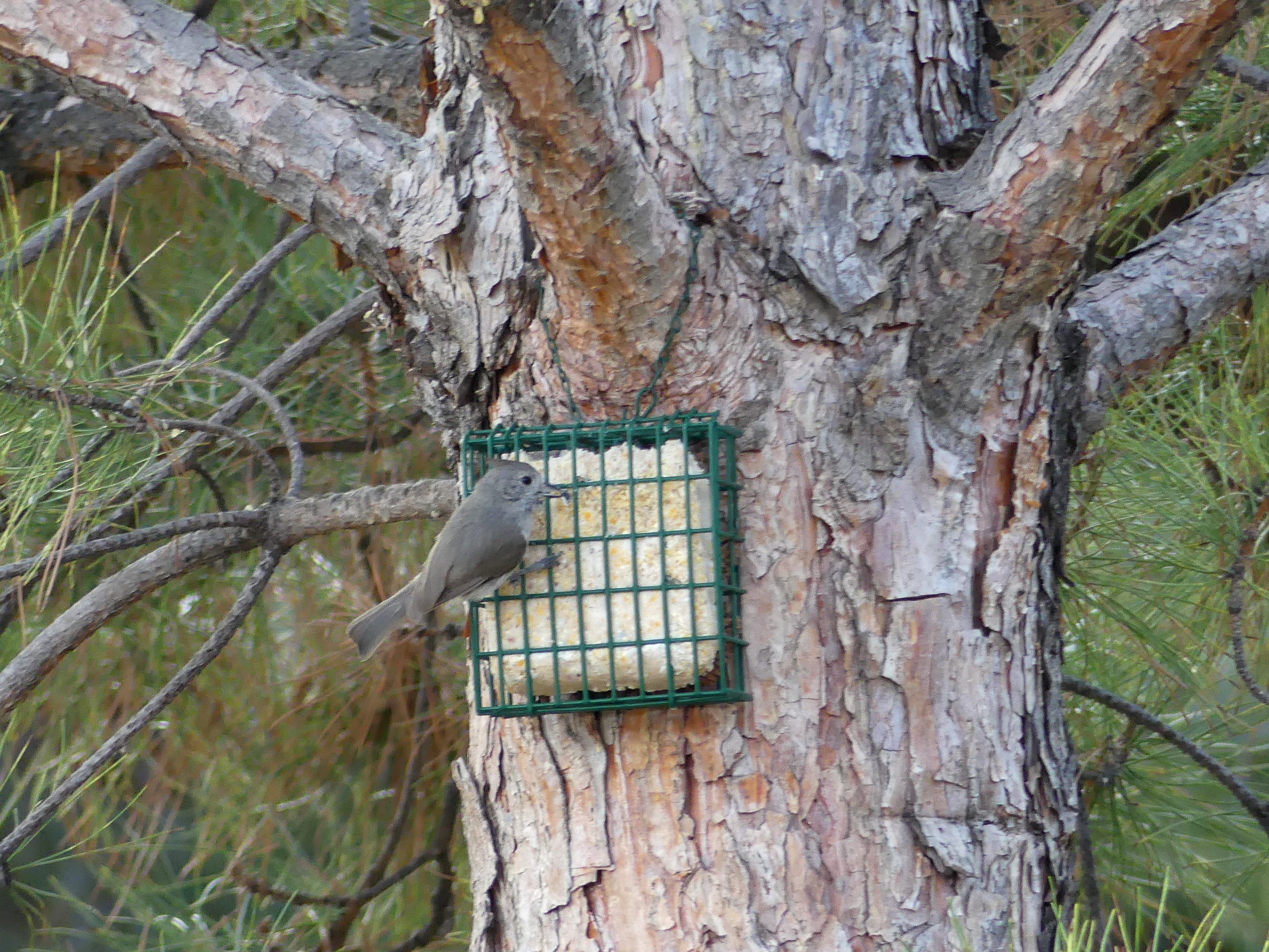
Juniper Titmouse, a pinyon-juniper habitat specialist found only in the West.

Juniper Titmouse, a pinyon-juniper habitat specialist found only in the West.

We had a pleasant conversation with the generous homeowner-birder and quickly discovered that the coincidence didn’t end with our vans randomly stopping in front of a birder’s house.  He shared stories about his parents’ international birding trips with us.  Together, we were able to figure out from what he remembered that his parents had traveled with Field Guides and its founders many years ago.  Shortly after saying goodbye to our new friend, we had a good look at several Gambel’s Quail.

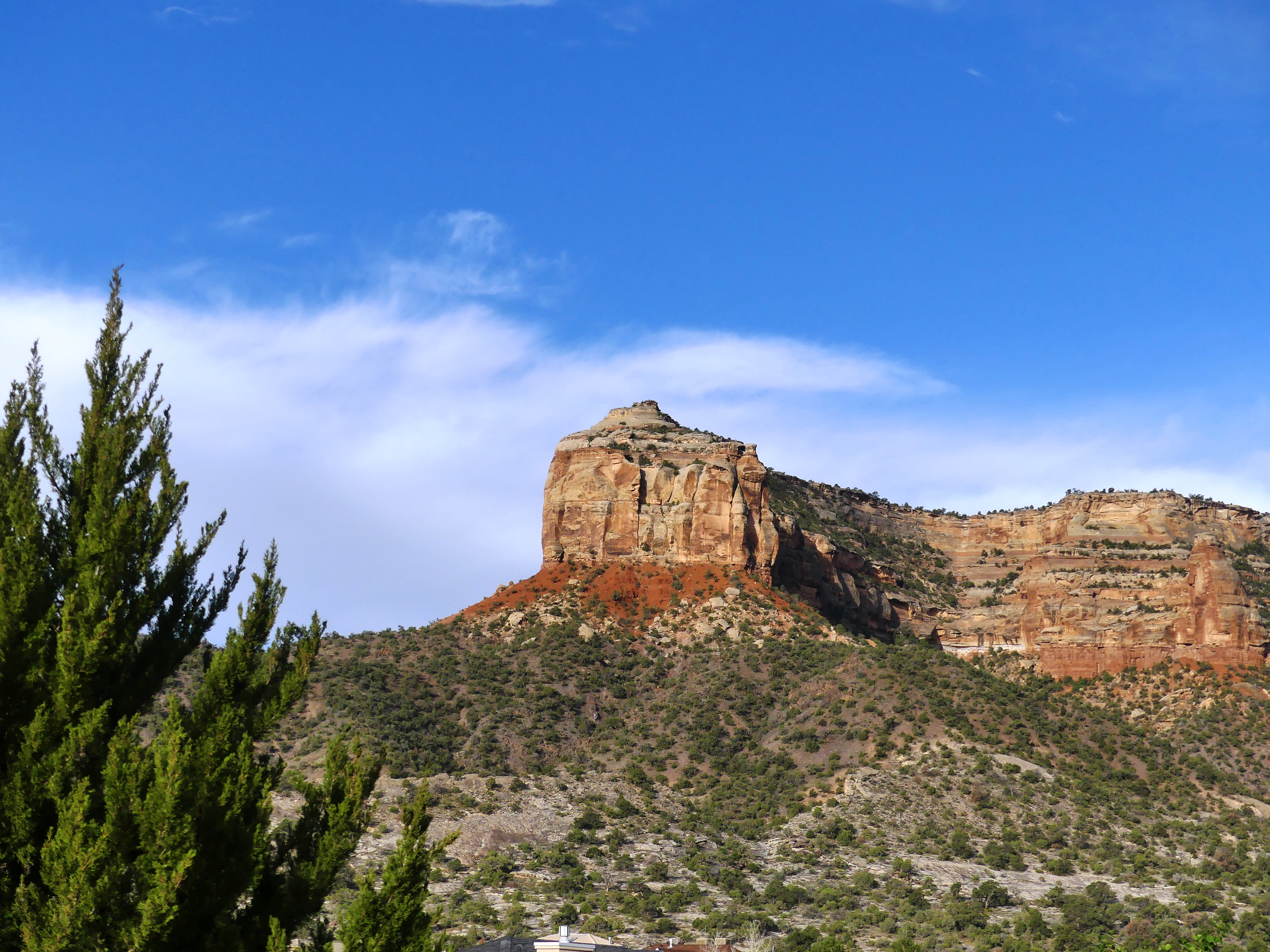
Next on the agenda was more incredible scenery at Colorado National Monument.

Each layer of rock was created at a different time as the relentless forces of water, ice, wind, thunderstorms, and heat formed the colorful spires and steep canyon walls. At the bottom is Precambrian rock which is over 1.7 billion years old.

Each layer of rock was created at a different time as the relentless forces of water, ice, wind, thunderstorms, and heat formed the colorful spires and steep canyon walls. At the bottom is Precambrian rock which is over 1.7 billion years old.

The birding at Colorado National Monument was pretty good, too.  We all had excellent looks at a perennial birder favorite, Black-throated Sparrow.

Black-throated Sparrow

Black-throated Sparrow

We also saw White-throated Swifts, Aeronautes saxatalis, one of the fastest flying birds in North America.  The generic name of this species, Aeronautes, which means “sky sailor,” is particularly apt for these birds that achieve breathtaking speeds and then quickly change direction with lightning-fast precision as they streak between steep canyon walls.  They were too fast for me, but Derek was able to get the photo below as a swift whizzed quickly by.
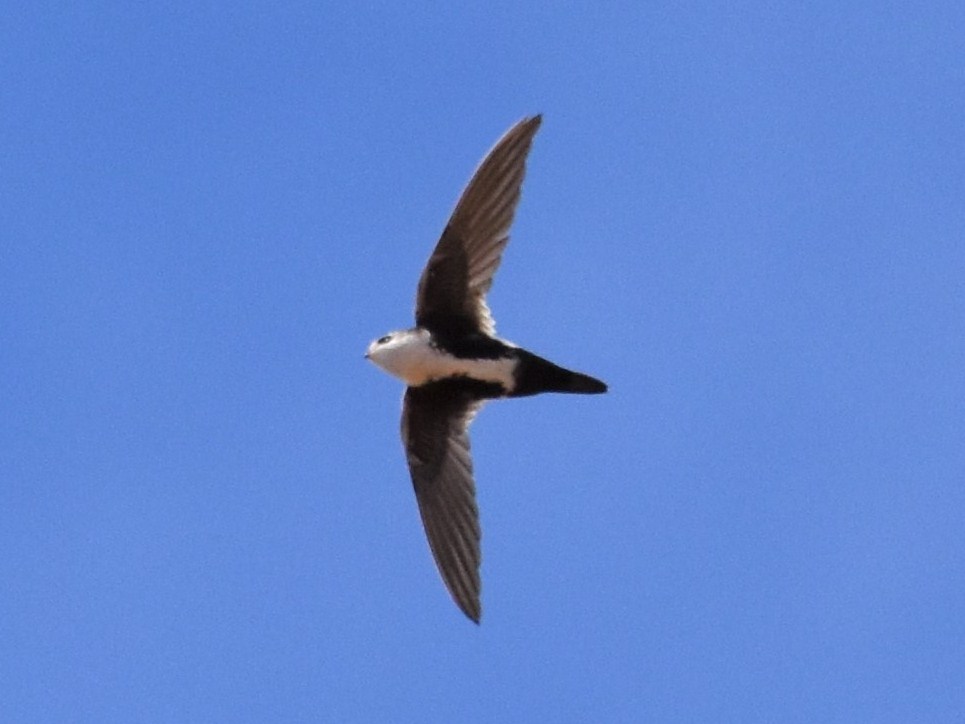
White-throated Swift. Photo by Derek Hudgins.

White-throated Swift. Photo by Derek Hudgins.

Perhaps most exciting was the very early (April 20) Gray Vireo that Cory found on the Devil’s Kitchen Trail.  We all saw the bird, one of the ten earliest sightings ever for Colorado.

Birding on the beautiful Devil's Kitchen Trail in Colorado National Monument.

Birding on the beautiful Devil’s Kitchen Trail in Colorado National Monument.

That afternoon we birded some reservoirs, but 20+ knot winds hampered our ability to see much.  The weather was so bad that I gave up and waited in the van part of the time.  However, we still had some good sightings, particularly when we were expertly guided precisely to a Prairie Falcon spot that also had Wyoming Ground Squirrels.
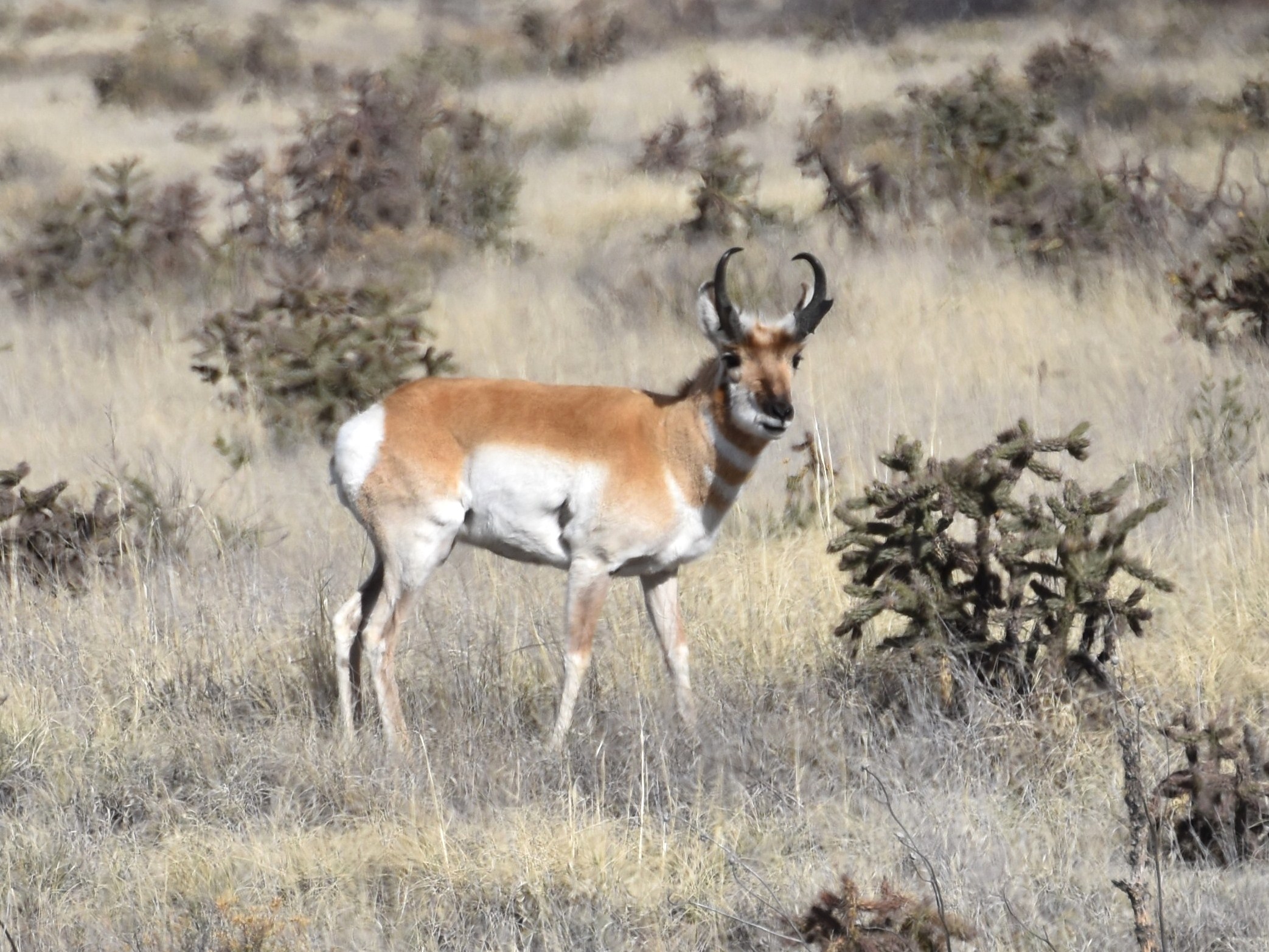
One of the many Pronghorn that we saw throughout the trip. Photo by Derek Hudgins.

One of the many Pronghorn that we saw throughout the trip. Photo by Derek Hudgins.

Our tour was nearing the end with only two days and two grouse species left.  Sharp-tailed Grouse also use the lek mating system, but it’s harder to find a reliable lek.  On the morning of April 21, we visited a roadside lek where the grouse had been observed just a week earlier by the first Field Guides Grouse Tour, but we did not have their luck.  We could hear the birds displaying on the other side of the ridgeline, but it took quite a while to find three distant birds.  While searching for the grouse, we were serenaded by a group of five Sandhill Cranes.  As we left the area, we finally had a good look at a Sharp-tailed Grouse on the side of the road.

Like all the other Sharp-tailed Grouse we saw, this one wasn’t displaying either.

Like all the other Sharp-tailed Grouse we saw, this one wasn’t displaying either.

Another side-of-the-road bird that pleased us all was a Rough-legged Hawk perched on top of a telephone pole as we neared Walden.  We checked into our hotel, had lunch, and then headed out for more birding.  Walden is smaller and has a more rugged feel than the upscale ski towns that we stayed in for much of the tour.  Its remote location draws visitors for camping, fishing, hunting and wildlife viewing.  The hotels and restaurants here were basic, but we enjoyed the quiet change of pace.  In this town that advertises itself as the “Moose Viewing Capital of Colorado,” we did see a moose just outside of town.  And, a Golden Eagle!

Rough-legged Hawk

Rough-legged Hawk

The afternoon brought rain, so we took cover at the Colorado State Forest Moose Visitor Center.  The birds were not deterred by the weather and we had a wonderful time watching them from the covered patio at the back of the Visitor Center.  I think that everyone’s favorite birds here were the Cassin’s Finches, present in good numbers and cooperative photographic subjects.
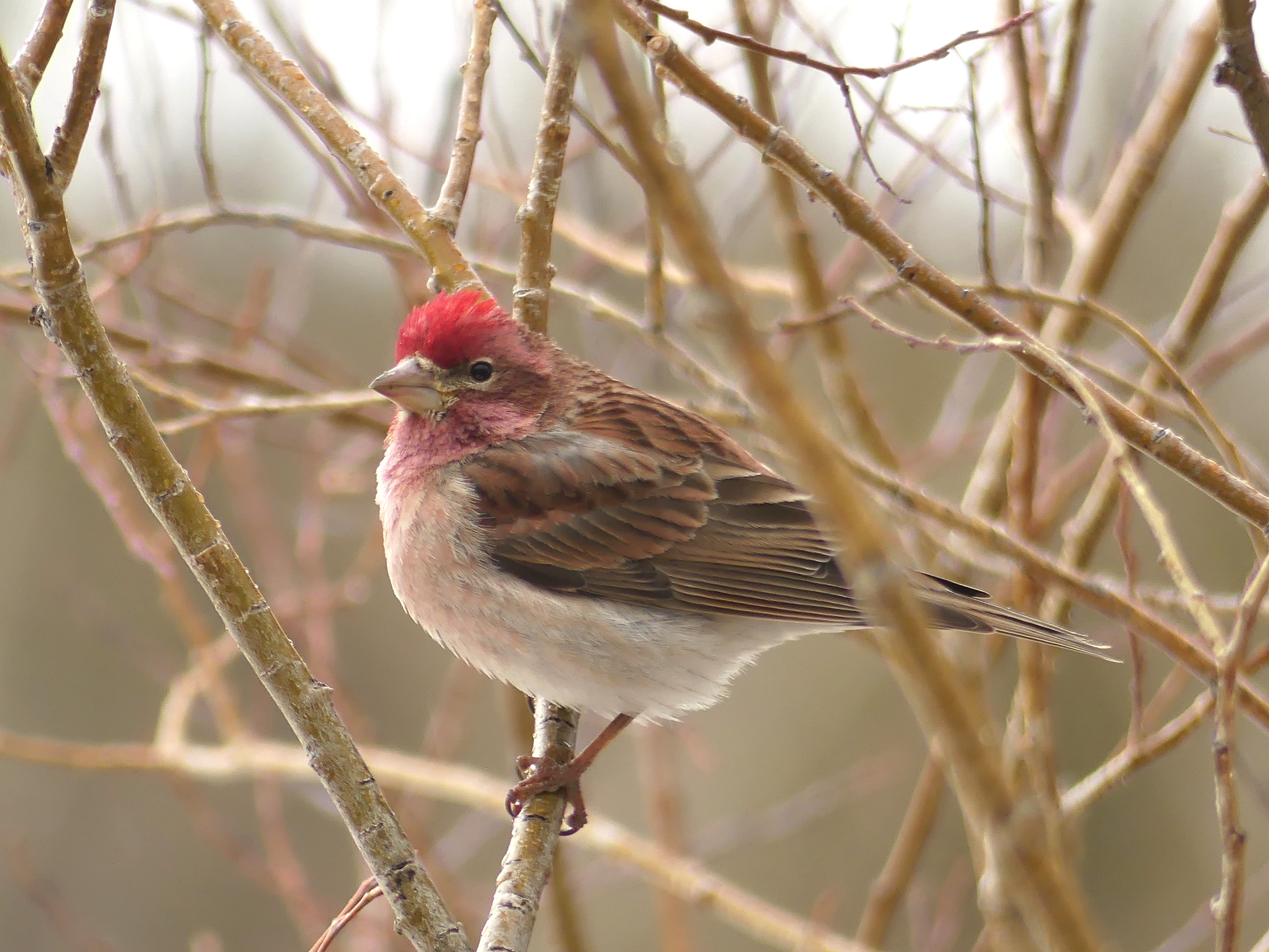
Male Cassin's Finch

Male Cassin’s Finch

Female Cassin's Finch

Female Cassin’s Finch

Our last day of birding, April 22, was one of the best.  We started early again to visit a spectacular Greater Sage-Grouse lek which was close to the road and gave us great views.  These birds were very different from the prairie-chickens, but just as impressive as we observed their ancient rituals.

Greater Sage-Grouse (male)

Greater Sage-Grouse (male)

Sadly, this is another species of conservation concern. I wrote about the plight of the Greater Sage-Grouse in my story last year, Prairie Road Trip: 7,114 Miles, 27 Days, 171 Avian Species. But, this day we just enjoyed the birds. Many words come to mind when watching the big males trying to impress the girls – majestic, comical, obscene.

Displaying male Greater Sage-Grouse

Displaying male Greater Sage-Grouse

Greater Sage-Grouse (male). Note less white barring on the tail than on Gunnison Sage-Grouse.

Greater Sage-Grouse (male). Note less white barring on the tail than on Gunnison Sage-Grouse.

The day would have been a success if we didn’t see another bird, but we were not done yet.  Stops at reservoirs and other spots on our drive gave us Barrow’s Goldeneye, Marbled Godwit, and Canada Jay as new trip birds.  We headed to Genesee Mountain Park near Denver.  Our target here was Williamson’s Sapsucker and again we had great luck with a gorgeous adult male flying in to land almost over our heads.  The fog and drizzle prevented good photos, but we had excellent looks at this wonderful and much-wanted woodpecker.

On the trail to see Williamson's Sapsucker. Photo by Derek Hudgins.

On the trail to see Williamson’s Sapsucker. Photo by Derek Hudgins.

Our last birding stop was Robert A. Easton Regional Park to see a continuing rarity, a Neotropic Cormorant. The area around the lake at the park gave us 46 species of birds including a surprise Mew Gull and five new trip birds.  It was a nice review of many of the duck species we had seen during the previous 10 days.

It was an amazing tour.  We observed a total of 186 species of birds and 26 mammal species.  For the complete list, see Cory’s trip report for Field Guides.  But, Derek and I were not ready to go home yet.  We enjoyed our last dinner at a nice Italian restaurant near our Denver hotel and said goodbye to our wonderful guides, Doug Gochfeld and Cory Gregory, and the other trip participants.  And then we turned in for an early night because we had more birds to see the following day.  Watch for a story about our “Denver Days” bonus birding next.
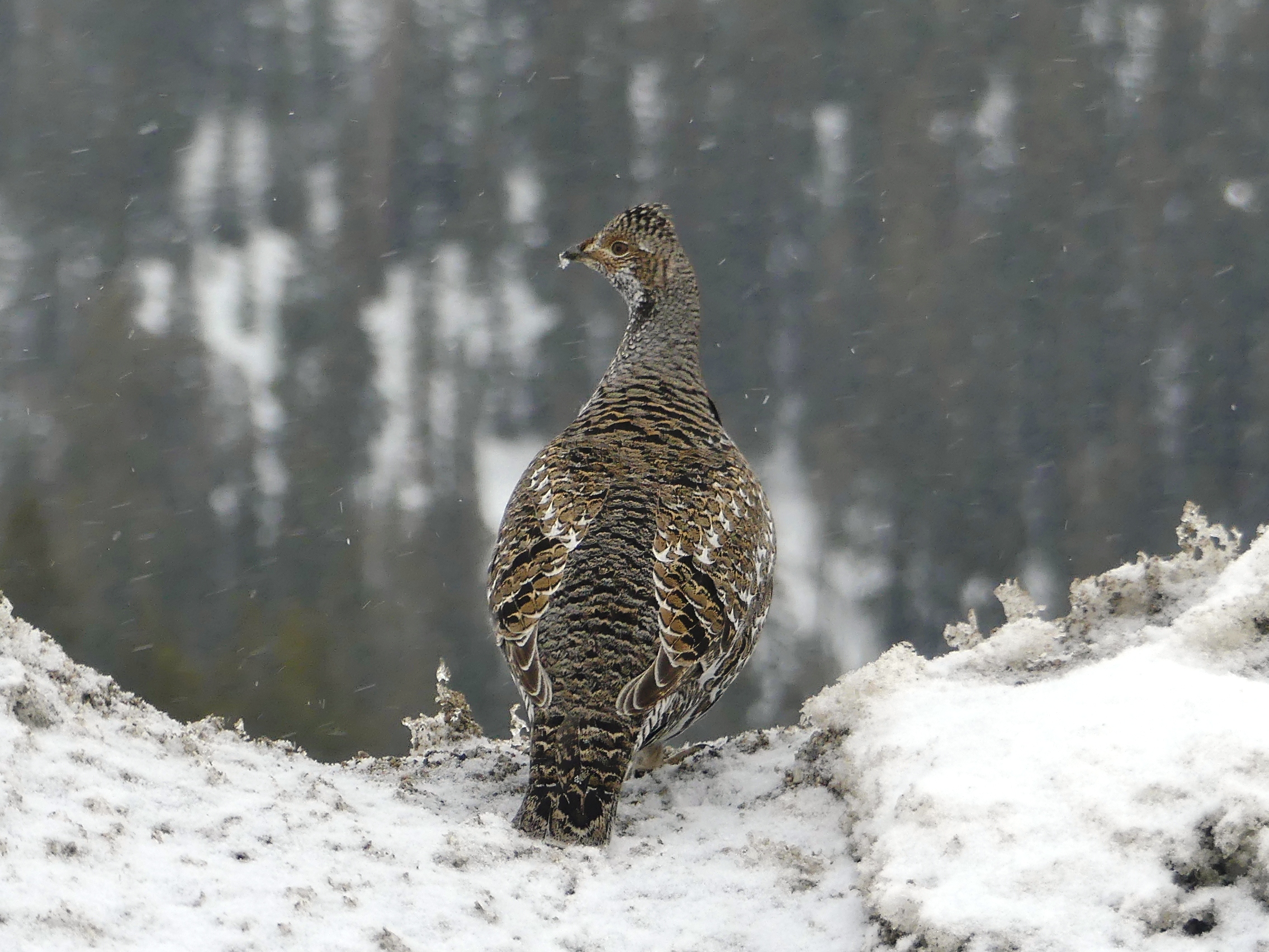
After wonderful experiences viewing both Greater and Lesser Prairie-Chickens on their leks, we turned our attention to finding Colorado’s other grouse species.  On our drive west from Wheat Ridge on April 17, we witnessed dramatic shifts in the landscape as our elevation increased from 5,400 feet to 12,000 and we climbed above the tree line.  We hoped to find the elusive White-tailed Ptarmigan, the smallest grouse in North America.  But first we had a totally unexpected surprise just before Loveland Pass. “What’s he doing here?” one of our guides exclaimed as we saw a Dusky Grouse on the side of the road.

Dusky Grouse on the side of the road as we approached the Continental Divide.

Dusky Grouse on the side of the road as we approached the Continental Divide.

The Dusky Grouse was my first life bird of the trip and I was thrilled.  Our good fortune that day continued.  In late April, it can be impossible to find birds at Loveland Pass due to high winds or blinding snow, but we were very lucky with clear weather.  We parked the vans in the little area at the pass and walked a short distance along the icy trail.  Snow covered the ground and I couldn’t imagine how we would ever find a small white bird.  After 45 minutes of rigorous searching, our guides using their scopes, Doug pulled two distant birds out of the snow-covered mountainside.  But I couldn’t make out the bird in the scope; all I saw was snow.  I was ready to give up, but Cory would not let me quit.  Finally, I saw the black dots of eyes and beak.  I would have liked the bird closer, but I was happy to see this difficult bird at all.

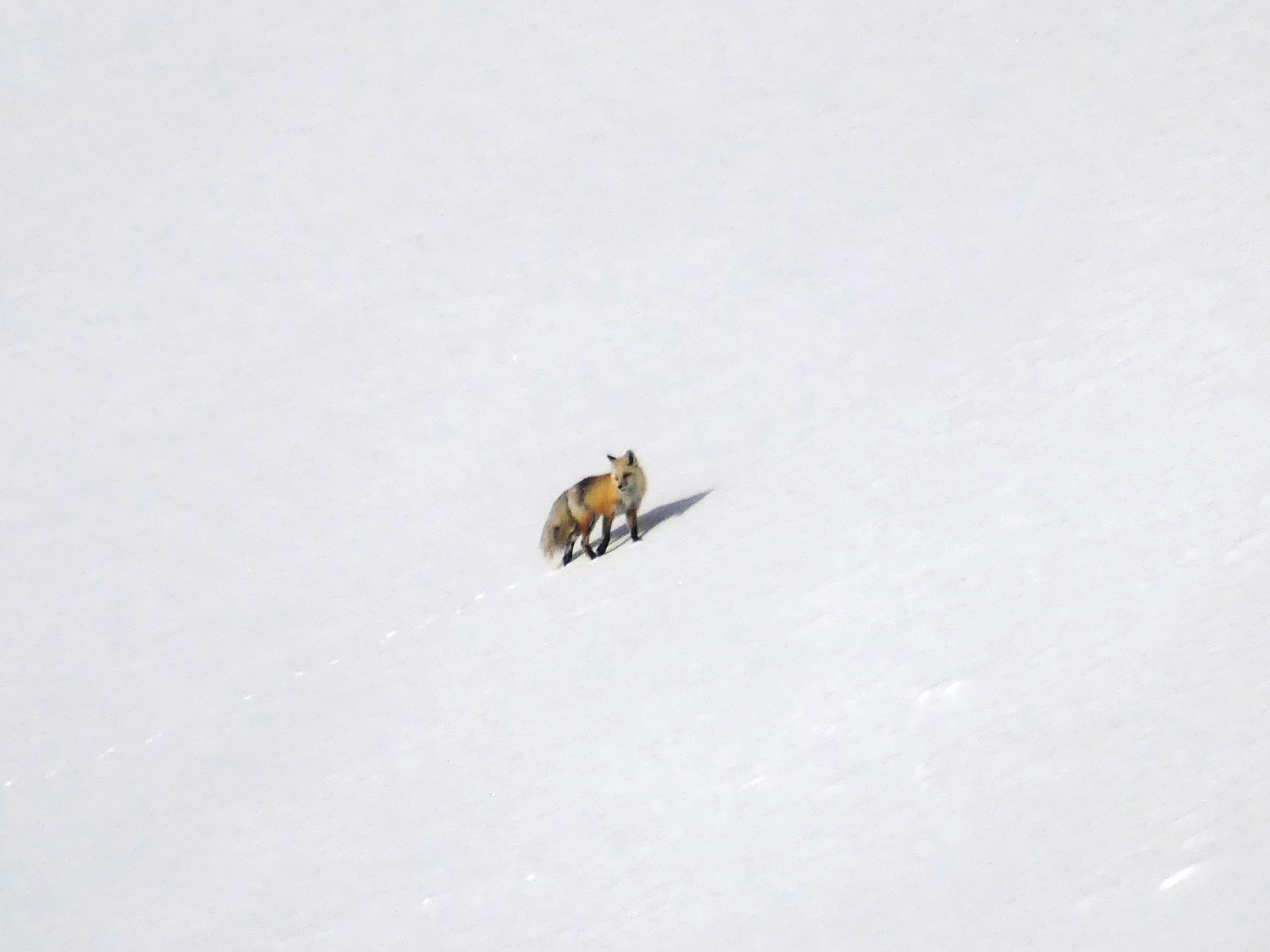
Another unexpected sight at the pass was this red fox that appeared to be playing in the snow. 

Another unexpected sight at the pass was this red fox that appeared to be playing in the snow.

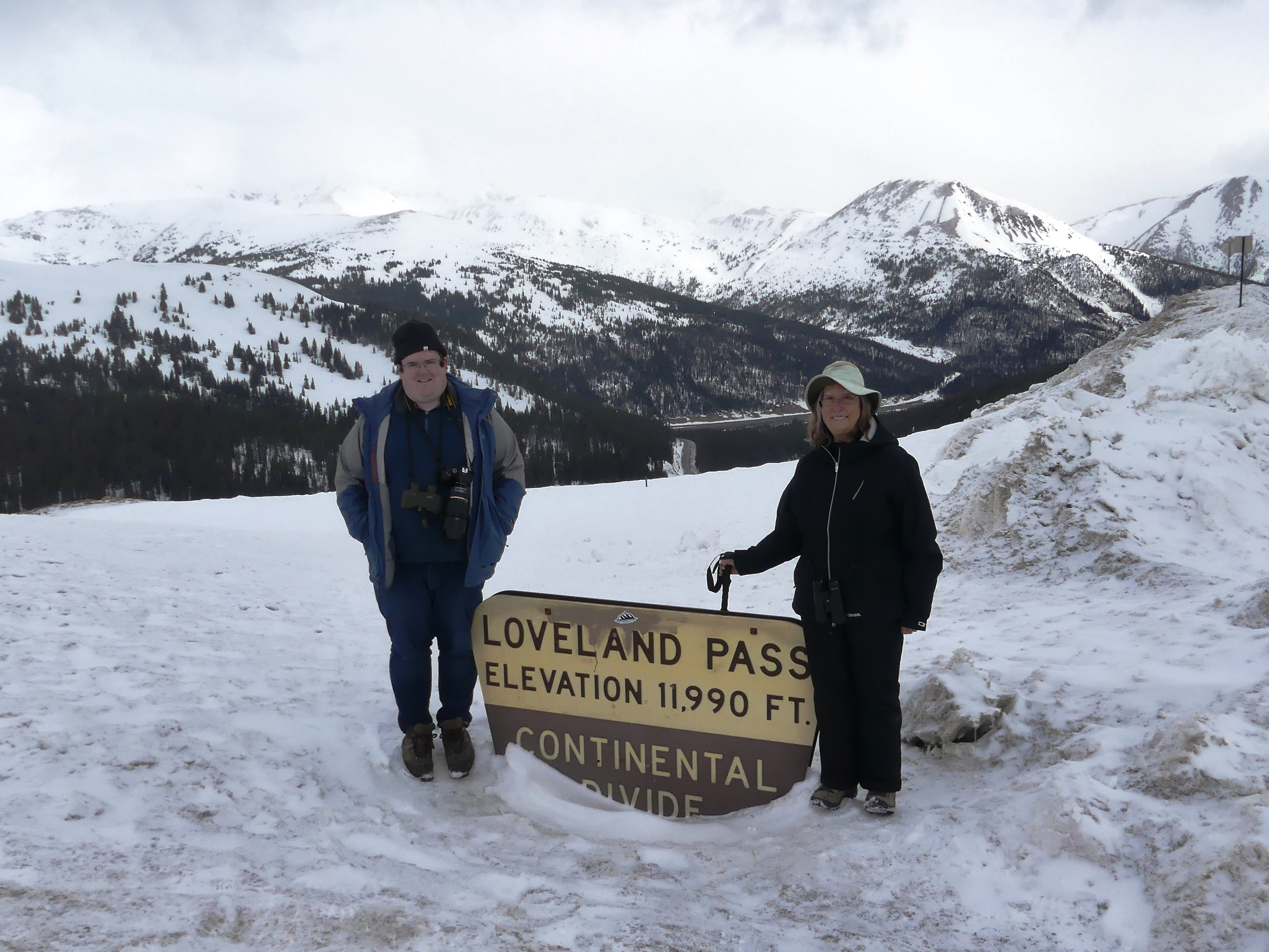
I didn't get a photo of the White-tailed Ptarmigan, so Derek and I posed to mark the occasion.

I didn’t get a photo of the White-tailed Ptarmigan, so Derek and I posed to mark the occasion.

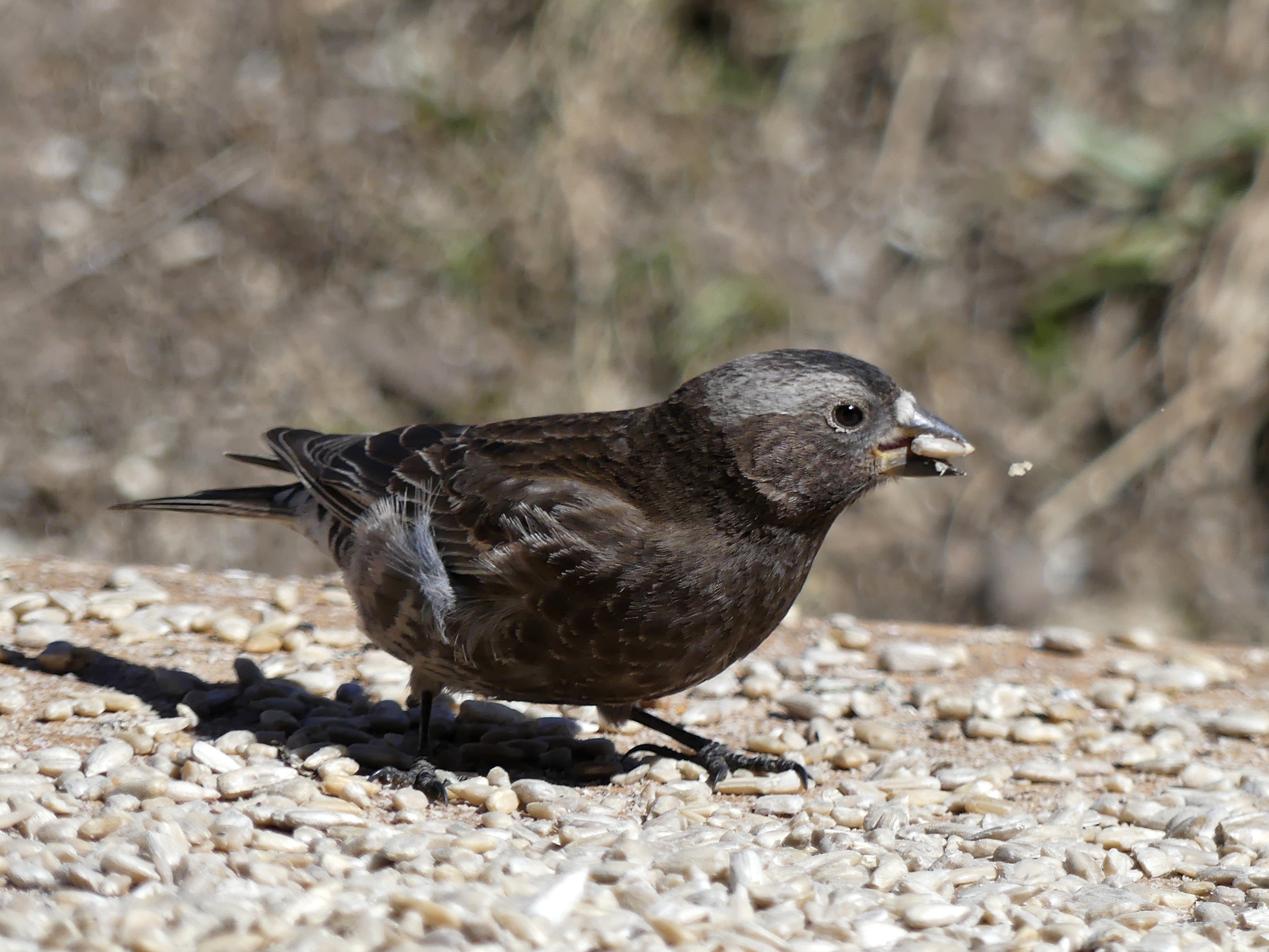
That afternoon we enjoyed more mountain birding as we drove south.  It wasn’t long until Derek and I had more life birds, Black and Brown-capped Rosy-Finches.  I have no photos from that sighting, but we would see them incredibly close the following day.

The ever-changing landscape turned to the utterly different dry forest of San Isabel National Forest just a few hours after we left Loveland Pass.  Pinyon Jays were the stars here with good looks at these nomadic birds that can be very challenging to find.

Lunch was at the delightful Eddyline Restaurant in Buena Vista.  As an appetizer, we shared a couple of Wild Game Sausage Samplers which included Jackelope (rabbit and antelope) sausage, one of our most distinct culinary ventures.

After lunch, we climbed back to higher elevations and heavy snow which led to my favorite “weather” photo of the trip, a Clark’s Nutcracker at Monarch Pass.

Clark's Nutcracker

Clark’s Nutcracker

This American Three-toed Woodpecker, also seen at Monarch Pass, was a life bird for some in our group and pleased us all by being exceptionally cooperative.

American Three-toed Woodpecker

American Three-toed Woodpecker

And, I was happy to get my first really good looks at Mountain Chickadee.

Mountain Chickadee

Mountain Chickadee

We continued our westward journey to look for Gunnison Sage-Grouse.  Scientists first noticed differences in the sage-grouse inhabiting the Gunnison Basin in southwest Colorado and eastern Utah in the late 1970’s.  One of the first clues was that the northern sage-grouse consistently pop their air sacs twice in each of the many brief strut displays they perform, but the Gunnison birds pop their air sacs nine times.  The Gunnison birds are smaller and have shorter tails with more distinct white barring.  The males have longer and thicker filoplumes on the neck and perform a different sort of strut.  In 1999, even more definitive evidence piled up when detailed studies of the two groups’ DNA showed that they were far too distantly related to be considered the same species.
Gunnison Sage-Grouse. Photo by Bob Gress.

Gunnison Sage-Grouse. Photo by Bob Gress.

Gunnison Sage-Grouse was officially recognized as a full species in 2000 and it was already in trouble.  Its population and range have never been large, but it is now reduced to about ten percent of its historical range: seven populations in southwest Colorado and southeast Utah with a total number of birds under 5,000, the majority in Colorado’s Gunnison Basin.  In November 2014, the Gunnison Sage-Grouse was listed as Threatened under the U.S. Endangered Species Act.  While there are efforts to save the species, there are also the usual political battles while the birds face threats from habitat loss, degradation, and fragmentation as well as the roads and power lines associated with development, improper grazing management, global warming, low levels of genetic diversity, and more.

We saw Gunnison Sage-Grouse well enough to distinguish them from the similar, but somewhat larger Greater Sage-Grouse, but the birds were distant.  We focused on movement and behavior rather than plumage and field marks.  When the males filled their air sacs and forcefully threw their bodies forward, some of us thought it looked like they were trying to hock a loogie.  Here is a video from the Cornell Laboratory of Ornithology.

Eric Hynes, a Field Guides trip leader who lives in Telluride, spent the afternoon with us, a great bonus and an experience that would have been impossible if we had been birding on our own.  Eric said that he would take us to his house where he promised Rosy-Finches “right at your feet.”  On our way to Eric’s house, we spotted these Bighorn Sheep on the red rocks by the side of the road.

Bighorn Sheep

Bighorn Sheep

The Rosy-Finches in Eric’s backyard did not disappoint us; they were so close we could almost touch them.

Black-Rosy-Finch, a life bird for Derek and me. I missed this species on my big trip West last summer, so it was especially sweet to have such incredible close views.

Black Rosy-Finch, a life bird for Derek and me. I missed this species on my big trip West last summer, so it was especially sweet to have such incredible close views.

Brown-capped Rosy-Finch, another life bird for me.

Brown-capped Rosy-Finch, another life bird for me and nearly endemic to Colorado.

Some of the Rosy-Finches were not easy to identify. This one is probably a Gray-crowned, but I wouldn't bet my life on it.

Some of the Rosy-Finches were not easy to identify. This one is probably a Gray-crowned, but I wouldn’t bet my life on it.

This gorgeous male Evening Grosbeak was another guest at the Casa Hynes feeding table.

This gorgeous male Evening Grosbeak was another guest at the Casa Hynes feeding table.

I could have stayed here all day and the guides did not rush us, but after nearly an hour in Eric’s backyard, it was time to look for other birds.  We walked along the lovely creek that runs through downtown Telluride.  Our target was American Dipper, which we watched perched on the rocks and repeatedly diving under the water to forage.

An American Dipper with a little fish in its bill. This was one of Derek's most wanted birds.

An American Dipper with a little fish in its bill. This was one of Derek’s most wanted birds.

We also saw a Savannah Sparrow by the stream (surprise!), both Mountain and Black-capped Chickadees, and Cinnamon Teal and an unexpected White-faced Ibis at a nearby pond.  We had another great lunch (I could write an entire post just about the fabulous food on this trip) and said goodbye to Eric.

It had been an outstanding day that Derek summed up like this: “This was one of my favorite days of birding ever.  I had two lifers in Gunnison Sage-Grouse and American Dipper, one of which is extremely difficult and endangered while the other represents a new, distinct family, coming within touching distance of rosy-finches plus the Evening Grosbeak, just the length of the Dipper sighting as it foraged, mating Peregrines, being one of two to spot a last-second Golden Eagle, stunning scenery, and two charismatic mammal lifers in the Bighorn Sheep and Yellow-bellied Marmot, plus maybe a lifer chipmunk.”

The next morning, April 19, we started with a visit to the spectacular Black Canyon of the Gunnison National Park.  The key feature of this park is the deep narrow canyon with walls that plunge an awe-inspiring 2,700 feet to the Gunnison River below.  Black Canyon gets its name because some parts of the gorge receive only 33 total minutes of sunlight per day.  This gem is one of the least visited national parks and worth a visit for its incredible scenery.

The Painted Wall, a popular feature of the NWR. Photo by Derek Hudgins.

The Painted Wall, a popular feature in the National Park. Photo by Derek Hudgins.

Our first target was Dusky Grouse, usually found in the campground area.  Dusky Grouse are not known to utilize leks for courtship displays.  Rather, a male will display to any female that he finds and probably mates with more than one female each season.  After mating, the female leaves the male’s territory to build a nest and raise a clutch of chicks by herself.  We saw a couple of birds near the campsites, and then when driving out of the area, we found a distant displaying male.

As we traveled through Colorado, we were delighted to see mammals of all sizes in addition to birds and the fantastic landscapes.  Here’s a cute little ground-squirrel who posed nicely for our cameras.

Golden-mantled Ground-Squirrel

Golden-mantled Ground-Squirrel

After leaving the National Park, we drove to the Utah state line in the afternoon to look for Sagebrush Sparrow.  I loved the solitude of the gravel BLM roads without much other traffic.  Doug and Cory listened for birds and stopped when they heard singing.  We were actually on a road that marked the state line, so we got to count birds on both sides of the road and I got a bonus of another new state.  We had excellent views of Sagebrush Sparrow, another life bird that I had missed last summer.

Sagebrush Sparrow, a much-desired life bird

Sagebrush Sparrow, a much-desired life bird

Other birds here were Sage Thrasher (which politely flew across the state line for the listers in our group), Common Raven, Brewer’s Sparrow, Golden Eagle, and even a distant Ferruginous Hawk spotted by one of the trip participants.  Shortly after we started heading to our hotel for the night, another sighting was a first for all of us – a Great Blue Heron rookery on a cell tower!

Goodbye Utah. Photo by Derek Hudgins.

Goodbye Utah. Photo by Derek Hudgins.

Stay tuned for more Colorado grouse adventures.


I woke up on March 21 to find a text message from my birding pal Derek.  Two spots were available on the Field Guides grouse tour in April; would I like to go?  Well, yes, of course, I would like to go!  I know several people who have done the “chicken run” on their own, but I had no desire to find the best locations, make the arrangements, and then drive 2,500 miles getting to all the leks.  I had not planned to take another birding trip so soon after China, but this was too good to pass up.  I responded “Yes!” to Derek and a couple of hours later we were both officially signed up for the trip.

I had never been to Colorado and I was looking forward to seeing rugged landscapes like this.

I had never been to Colorado and I was looking forward to seeing rugged landscapes like this.

The focus of the trip would be viewing Greater and Lesser Prairie-Chickens and three additional species of grouse on their leks.  You might be wondering “What’s a lek?”  While a dictionary defines a lek simply as a “communal area in which two or more males of a species perform courtship displays,” they are far more.  Leks are hotbeds of social activity excitingly described in the Audubon article, What the Heck Is a Lek? The Quirkiest Mating Party on Earth.  In between the leks, we would search for several other uncommon species of birds that are highly-sought by birders.  Additionally, this trip usually provides interesting sightings of mammals.

Here’s a preview of the Greater Prairie-Chickens that we would soon be watching on a lek at a cattle ranch in Colorado.

Derek and I wanted to stay a couple of extra days in Colorado after the tour to look for any species that we might have missed or just get in a little more birding.  We spent two hours on the phone searching for flights from Baltimore for Derek and compatible flights from Greensboro for me.  We couldn’t seem to make it work, so we decided that I would just drive up to Baltimore and we’d fly to Denver together from there.

A Bald Eagle, our national bird, in our nation's capital

A Bald Eagle, our national bird, in our nation’s capital

I arrived in Maryland a day early, supposedly to take it easy and rest for the big trip.  But, of course, our birding obsessions would not allow any downtime.  I’m currently trying to get birds in all of the lower 48 states.  Derek assured me that the District of Columbia counts as a state-level entity, so we spent our first day there.  We had fun despite the intermittent rain and I got 43 species, not bad considering that the expected waterfowl were absent.  Derek even got two new D.C. birds, Red-breasted Nuthatch and Vesper Sparrow.

The next morning, April 13, we caught an early flight to Denver and rented a car so that we could do a little birding before officially starting the tour later that afternoon.  We checked out nearby Rocky Mountain Arsenal NWR where we had a nice transition to Western birds.  It was fun seeing Black-billed Magpie, Say’s Phoebe, and Western Meadowlark alongside many birds that we also see in the East like American Avocets.  We were also excited to see the first of three prairie dog species that we would encounter during the trip.

I had a close view of a Red-tailed Hawk on our first afternoon in Colorado. They were very common and we would see too many to count during the coming days.

I had a close view of a Red-tailed Hawk on our first afternoon in Colorado. They were very common and we would see too many to count during the coming days.

At 2:30 PM, we met the other eleven participants and our trip leaders, Cory Gregory and Doug Gochfeld. We piled into the two fifteen-passenger vans that would be home for the next 10 days and after quick introductions we were on our way towards Kansas.  I was happy that Cory was one of the leaders as I had met him in Alaska (Alaska 2015: “The Pit Stop is Cancelled”) and knew that he was a great guy in addition to an expert birder.  On our way to Pueblo, Colorado, where we spent the first night, we stopped to look for Western Screech-Owl in a driving rain that eventually turned to snow.  We joked about the weather throughout the trip, saying that we experienced everything except a tornado.  Sadly, we did not have any luck with the Screech-Owl; this was one of the few misses of the trip.

Curve-billed Thrasher in the early morning fog. Photo by Derek Hudgins.

Curve-billed Thrasher in the early morning fog. Photo by Derek Hudgins.

On the first full day of the trip, we enjoyed many stops for birding as we continued to head east towards Kansas.  Our first stop was magical, almost spiritual, as we listened to a Curve-billed Thrasher singing in the early morning light.  No other vehicles were on our section of the gravel road and we heard no sounds of civilization; it was just us and the birds.

As the fog dissipated, we continued down the road, getting our first of many excellent views of Pronghorn, an iconic symbol of the West.  Suddenly Derek called out a bird that had been missed.  We backed up and saw a singing Scaled Quail on a cholla cactus on the side of the road.  In this awesome encounter, the bird stayed in that spot for a while, then hopped down, ran across the road, and perched up on a barbed-wire fence where he continued to sing.  We were all thrilled with close looks at this gorgeous bird, which was later voted one of the group favorites for the trip.

Scaled Quail. Can you see why he’s sometimes called “cotton top”?

Scaled Quail. Can you see why he’s sometimes called “cotton top”?

Later that day, we picked up more classic Western species like Yellow-headed Blackbird, Clark’s Grebe, and Lewis’s Woodpecker.  The best part of the afternoon was birding at Neenoshe Reservoir, where we met Colorado birding legend Tony Leukering and Derek got life bird #1,000 – Long-billed Curlew.

Derek's photo of his 1,000th life bird, Long-billed Curlew at Neenoshe Reservoir.

Derek’s photo of his 1,000th life bird, Long-billed Curlew at Neenoshe Reservoir.

The following day, April 15, we visited our first lek, on a Nature Conservancy property in Kansas, to observe Lesser Prairie-Chickens.  We followed the usual protocol for lek viewing and arrived at the blind well before dawn.  We settled into our places on the bench in the metal blind and sat as quietly as possible for the next few hours.  We heard the chickens in the darkness before we saw them.  With the rising sun, silhouettes became visible.  Finally, we saw the entire drama play out before our eyes as the prairie-chickens danced the same dances and observed the same mating rituals as they have for thousands of years.

Female Lesser Prairie-Chickens

Female Lesser Prairie-Chickens

Sadly, the Lesser Prairie-Chicken has suffered huge population declines since the 1800’s.  The IUCN (International Union for Conservation of Nature) lists the species as “vulnerable” due to its restricted and patchy range.  In 2014, it was listed as “threatened” under the Endangered Species Act, but that ruling was overturned the following year.  Legal battles to protect the Lesser Prairie-Chicken have continued since with a lawsuit to make a decision on listing the species as endangered or threatened likely to be filed soon.  Here is the most current information that I could find, which includes both a biological and legal history.  Regardless of legal status, the prairie-chickens are clearly losing ground due to habitat loss with global warming looming as another threat to their survival.  Cory mused that the Lesser Prairie-Chicken is the most likely bird in the lower 48 states to go extinct in our lifetimes.

Male Lesser Prairie-Chicken displaying on the lek. Photo by Derek Hudgins.

Male Lesser Prairie-Chicken displaying on the lek. Photo by Derek Hudgins.

After viewing the Lesser Prairie-Chickens, we turned back West and birded along the way to Wray, Colorado, with a quick stop in Nebraska, which gave one participant her last state to be visited.  After checking into our hotel, we headed over to the Bledsoe Cattle Ranch for a warm welcome from Bob Bledsoe, a partner in the family-run business.  The ranch has won many awards, but we were also impressed by the Bledsoe’s good stewardship of the land which hosts about 100 Greater Prairie-Chicken leks on its 75,000 acres according to Bob’s estimate. Bob was a good representative for the fascinating Bledsoe family; we enjoyed Bob’s stories and our Q&A session.

On April 16, we arose in the wee hours again, this time to see Greater Prairie-Chickens on the Bledsoe ranch.  The routine was similar, arriving before dawn, but this time we watched the birds from the vans and two pick-up trucks.  Derek and I were lucky to get one truck to ourselves, a great help in getting photos.  As with the Lesser Prairie-Chickens, the birds displayed mere feet from us as we quietly watched.

Male Greater Prairie-Chickens challenge each other on the lek.

Male Greater Prairie-Chickens challenge each other on the lek.

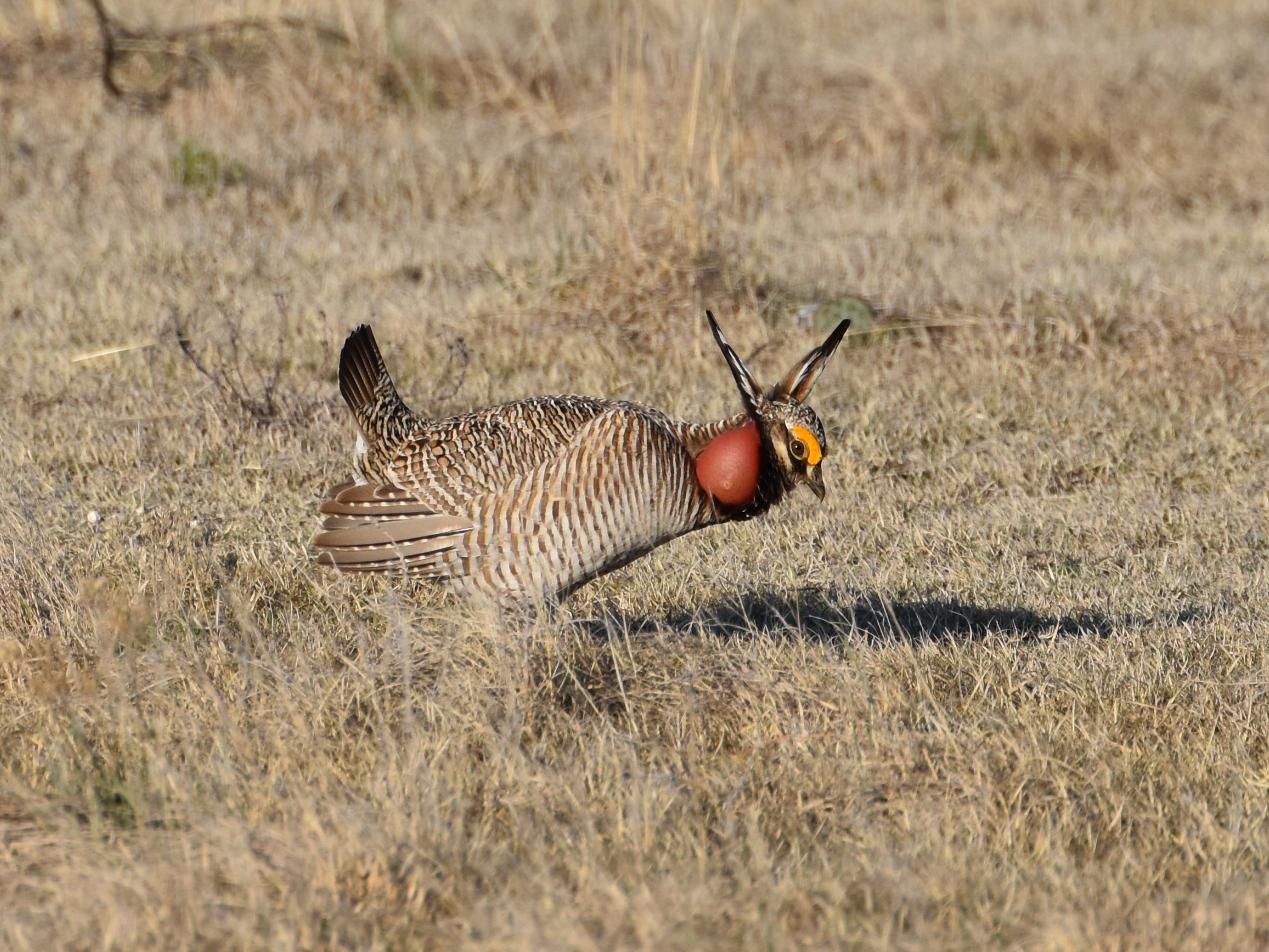
Greater Prairie-Chickens are very similar to Lesser Prairie-Chickens, but slightly larger.  The most noticeable difference is that the gular air sac on the side of the neck is orange to yellow during the breeding season while the air sac of the male Lesser Prairie-Chicken is red.  Although numbers of Greater Prairie-Chickens have declined, they have a wider range and larger, more secure population than Lesser Prairie-Chickens.

A male Greater Prairie-Chicken booming on the lek.

A male Greater Prairie-Chicken booming on the lek.

This charismatic species was my favorite member of the grouse family.  Not only were they beautiful and interesting birds, but the males put on the best vocal show with their booming, cackling, and whooping while dancing and strutting.  Greater Prairie-Chickens are so well-known for their booming sounds that their leks are often referred to as “booming grounds.”

Male Greater Prairie-Chickens step up their game as they fight for the best territories on the lek. Photo by Derek Hudgins.

Male Greater Prairie-Chickens step up their game as they fight for the best territories on the lek. Photo by Derek Hudgins.

I couldn’t help but wonder how the bizarre lek mating system evolved.  Darwin’s theory of natural selection, commonly referred to as survival of the fittest, explains much about evolution, but it can’t explain how non-adaptive characteristics arise.  Features such as the peacock’s long tail actually harm survival by making it difficult to flee from predators.  Darwin realized this and developed his second theory, sexual selection, to explain the emergence of traits which do not aid and may even hinder survival, but give one individual an advantage over other individuals of the same species in obtaining mates.  Darwin suggested two mechanisms of sexual selection: mate choice and competition for mates.  Competition for mates (especially among males) is obvious and generally accepted by scientists as a function of sexual selection.  But mate selection is more complicated.  In his popular book, The Evolution of Beauty, Richard Prum passionately argues that it’s the female’s innate sense of beauty that explains mate choice, but other scientists disagree.  Many questions remain and grouse are frequently studied in ongoing research on sexual selection.  During the ten days of the grouse tour, we would simply thrill in the displays of the males strutting their stuff and the discerning females making their choices.

Two female Lesser Prairie-Chickens evaluate their choices. Photo by Derek Hudgins.

Two female Lesser Prairie-Chickens evaluate their choices. Photo by Derek Hudgins.

We saw a few females at both prairie-chicken leks and several others in our group observed mating.  They reported that all the females choose the same male.  This is typical; the dominant couple of males in a given lek will likely mate with about 90% of the females.  The females then leave to build a nest, incubate their eggs, and raise the chicks on their own without any help from the male.

Great Horned Owl. Photo by Derek.

Great Horned Owl. Photo by Derek.

We continued to enjoy sightings of many other species as we drove back to Denver.  The group liked this Great Horned Owl on her nest that we stopped to observe on our way out of the Bledsoe ranch.  Highlights later that day were Mountain Plovers, Burrowing Owls, and a large flock of 150 McCown’s Longspurs at Pawnee National Grassland.  The longspurs were more distant than we would have liked, but, along with the Mountain Plovers, they were life birds for several in our group.

Next on this wonderful trip – grouse leks!  Stay tuned for more Colorado grouse tour adventures.


Driving through Pawnee National Grassland. Photo by Derek Hudgins.

Driving through Pawnee National Grassland. Photo by Derek Hudgins.


After our last session of birding the blinds at Baihualing and lunch, we drove for three hours to Tengchong.  The next morning, January 27, we birded Laifengshan National Forest Park.  The first birds we saw were two Bar-tailed Treecreepers, which I thought looked an awful lot like my Brown Creepers at home.

Bar-tailed Treecreeper

Bar-tailed Treecreeper

Laifengshan is a popular park and visitors that day included several Chinese bird photographers.   A young Chinese woman with a camera excitedly showed me a Slender-billed Oriole, one of our targets here.  When I had asked Nick about field marks for the oriole, he said that the black mask goes all the way around the nape.  Like so often happens, I didn’t realize how beautiful the bird is until I actually saw it.

Slender-billed Oriole.  Photo by John Hopkins.

Slender-billed Oriole. Photo by John Hopkins.

The park was very pretty and it was a gorgeous sunny day.  While walking up to the temple we saw some nice birds including Rufous-bellied and Darjeeling Woodpeckers.

The entrance at the paved path that leads to the temple

The entrance at the paved path that leads to the temple

We also saw this Davison’s Leaf Warbler.  Asian warblers are rather drab for the most part compared to our colorful North American jewels, however, I was still happy to get identifiable photos of several warbler species during our Yunnan trip.

Davison's Leaf Warbler

Davison’s Leaf Warbler

Shortly after noon, we left Tengchong for the drive to Nabang, where would spend the next 2-1/2 days.

One of my favorite experiences in the Nabang area was time spent at a recently established photo blind/feeding station.  We were walking along a forest trail when two young women on a motorcycle came by and said “Come see our blind.”  The first half hour seemed to be a total waste of time as we saw absolutely no birds at all.  Then, suddenly, birds began to arrive.

White-crowned Forktail

White-crowned Forktail

I was very, very happy to get wonderful close views of two gorgeous White-crowned Forktails that came in to the feeding area.  This Rufous-bellied Niltava was another of my favorites.

Rufous-bellied Niltava

Rufous-bellied Niltava

Velvet-fronted Nuthatch, Little Pied Flycatcher, and White-tailed Robin were among other species seen well at the blind.

Velvet-fronted Nuthatch

Velvet-fronted Nuthatch

One our way back to the hotel that evening, the Asian Emerald Dove below was in the road in front of the bus.  The others could not believe that this was a life bird for me.  They seriously thought that I must have seen it before as it seemed a very common Asian bird to them.  My bird was special, though, as it had extra white feathers.  This species normally has white only on the face and front of the shoulder.

Asian Emerald Dove, photographed through the bus window

Asian Emerald Dove, photographed through the bus window

We continued birding in the Nabang area for the next day and a half.  On our last morning, we enjoyed this displaying Crested Goshawk, with the distinctive white undertail coverts fluffed up across the rump.  In one of those quirks of birding, I have now seen this species three times, but I’m still looking for my life Northern Goshawk at home.

Crested Goshawk

Crested Goshawk

It was then on to Ruili, the last destination of our birding tour.  Early on our first morning there, we birded the trail to Moli Waterfalls, part of the Moli Scenic Area, one of the most beautiful locations we visited during the entire trip.  One of our main targets was Streaked Wren-Babbler, a sneaky little bird as one would expect with both “wren” and “babbler” in its name.  But, due to Nick’s patience and perseverance, I saw the little brown bird.

Streaked Wren-Babbler

Streaked Wren-Babbler

Nick loves those skulky little brown birds, but I prefer big colorful birds like this Red-headed Trogon.  Before this trip, I thought of Trogons as primarily Central American birds, but I learned that they are residents of tropical forests worldwide. The greatest diversity is in the Neotropics, where 24 species occur, but there are also three African species and 12 species of Trogon found in southeast Asia.

Red-headed Trogon.  Photo by John Hopkins.

Red-headed Trogon. Photo by John Hopkins.

February first was the last day of birding for the tour.  We started at a ridge-top road just outside of Ruili.  I picked up a few more life birds, including Black-crested Bulbul.

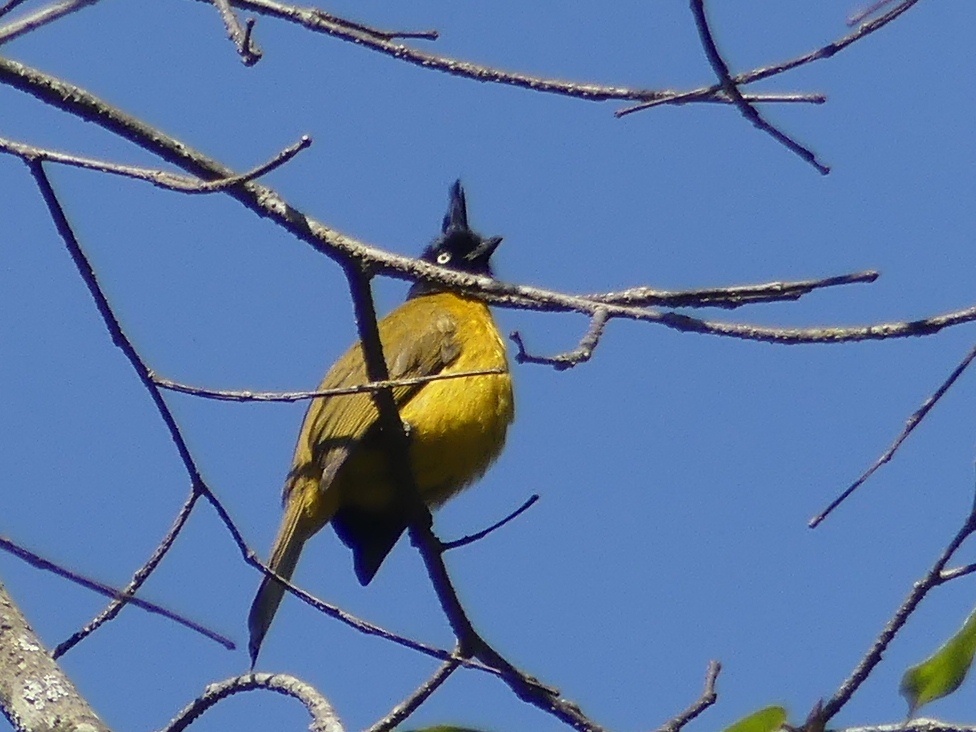
Black-crested Bulbul

Black-crested Bulbul

But mostly, I just remember a lovely morning with pleasant companions, friendly farmers, and sunshine.  I also remember watching drongos that morning, common birds in Yunnan with five different species seen during our two weeks there.  I got 104 life birds on the trip, but I would have had more if I hadn’t missed so many birds due to my poor vision.  Sometimes, when the others were focused on some distant or skulky bird that I couldn’t find, I just watched drongos, gracefully sallying out for insects and then resettling in the treetops.  I was mesmerized by the graceful flights of these birds.  I thought that if you could cross a flycatcher with a swallow, you would get a drongo.

Bronzed Drongo

Bronzed Drongo

And, then the morning was over and we piled back into the bus to start towards the airport.  We stopped for lunch on the way at a lovely outside restaurant.  While waiting for our food, someone noticed Asian Palm-Swifts flying low over the palm trees at the edge of the parking lot.  This seemed like a bonus bird and very appropriate for my last China life bird.  After lunch, we drove to the airport for our flight to Kunming.  The next morning, the others would start their journeys home and I would fly to Shenzhen where I would visit my son, Dave, and his girlfriend, Rachel.

I love Barn Swallows with their white bellies in this part of the world.

I love Barn Swallows with their white bellies in this part of the world.

Parts of the trip were challenging, but I have no regrets.  I saw a beautiful part of the world and many gorgeous birds.  I enjoyed the company of birders far more accomplished than I will ever be.  The other birders and our Zoothera Birding guide, Nick Bray, were fun and wonderfully kind about helping me see as many birds as possible.  Near the end when I was getting tired, I thought that it would be my last trip to China, but now I don’t know if I can bear the thought of never again seeing the spectacular beauty of China’s birds.


If I’d died and gone to birding heaven, it couldn’t have been much better than Baihualing.  If you have been to South America and seen antpittas and other shy forest birds come to worms when called, imagine that.  Except that it lasts all day rather than five minutes.  The bird blinds/feeding stations at Baihualing are amazing.  Each blind (or “hide” as the Brits say) is owned by a local who created and manages it.  A good location is identified and then the blind owner creates a stage for the birds with water features, logs and stumps that can be filled with suet or worms, places to perch, etc.  On one side is the hide – a narrow rectangular tent-like structure with either a long window or portholes for binoculars and cameras and little plastic stools for sitting.

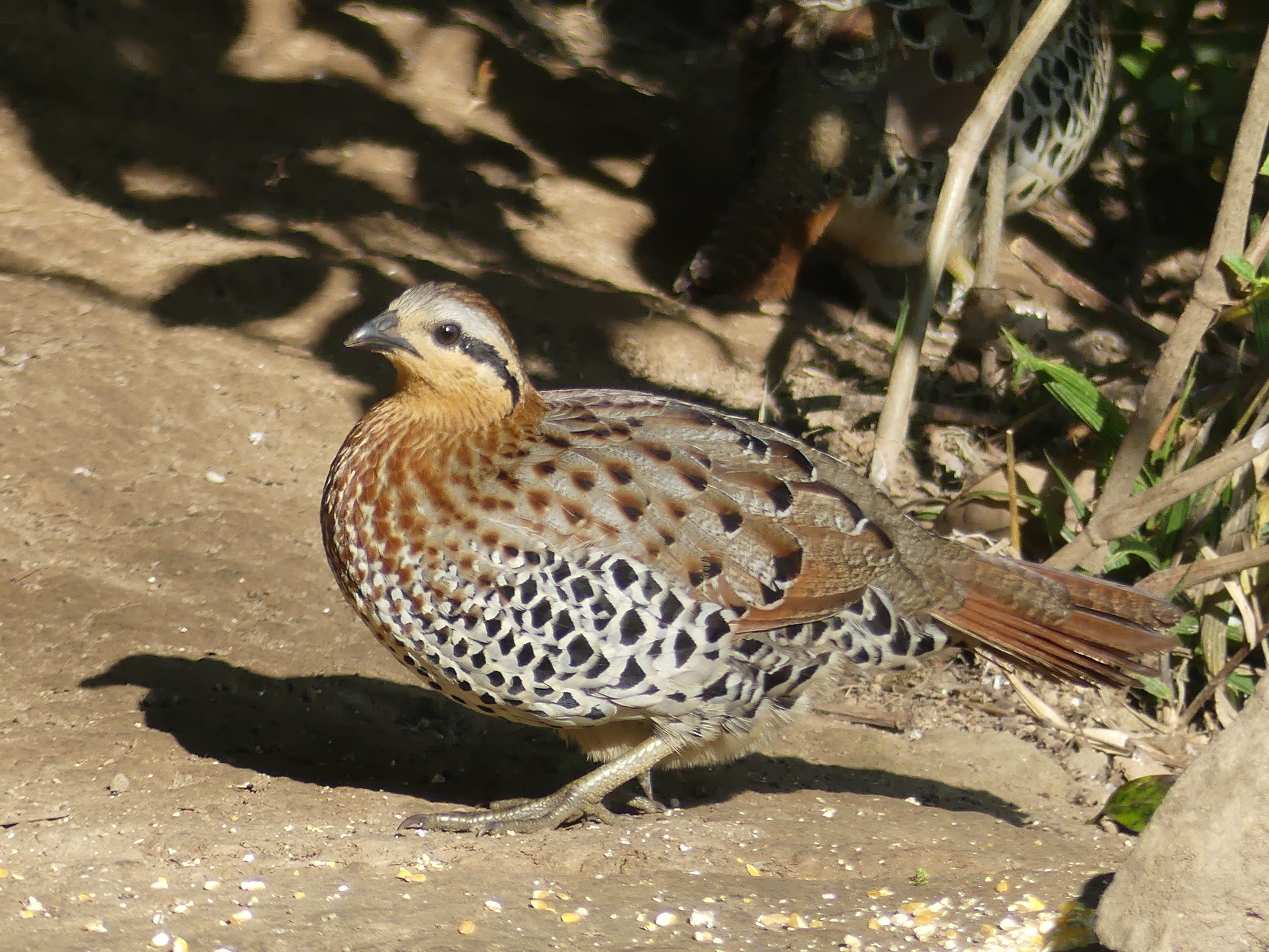
Everyone needs a drink, even shy species like these Mountain Bamboo-Partridges.

Everyone needs a drink, even shy species like these Mountain Bamboo-Partridges.

I envision the creation process is much like that of a male bowerbird who looks at his stage from various perspectives.  Will the birds find it appealing and come?  Will the birders and photographers in the blind have good views?  Ongoing management consists of chauffeuring birders back and forth between the hotel and the blind, feeding the birds throughout the day, and collecting the modest fees that birders and photographers pay for the privilege of wonderful close looks at birds that would otherwise be very difficult to find and see well.  It’s a winning situation for everyone, including the birds.

We arrived at this wonderful place late in the afternoon of January 23th and spent nearly two hours in Blind #8.  Here are some of the gorgeous birds we saw that first day.

Red-billed Leiothrix. I missed this beautiful little bird on previous trips to China, so I was thrilled to finally get such a wonderful close look this time.

Red-billed Leiothrix. I missed this beautiful little bird on previous trips to China, so I was thrilled to finally get such a wonderful close look this time.

Red-tailed Laughingthrush. It's hard to believe, but these beauties were common at the blinds with half a dozen or so frequently in the feeding areas.

Red-tailed Laughingthrush. It’s hard to believe, but these beauties were common at the blinds with half a dozen or so frequently in the feeding areas.

Chestnut-headed Tesia. What a little charmer! This is a species that would have been difficult to see well "in the wild."

Chestnut-headed Tesia. What a little charmer! This is a species that would have been difficult to see well “in the wild.”

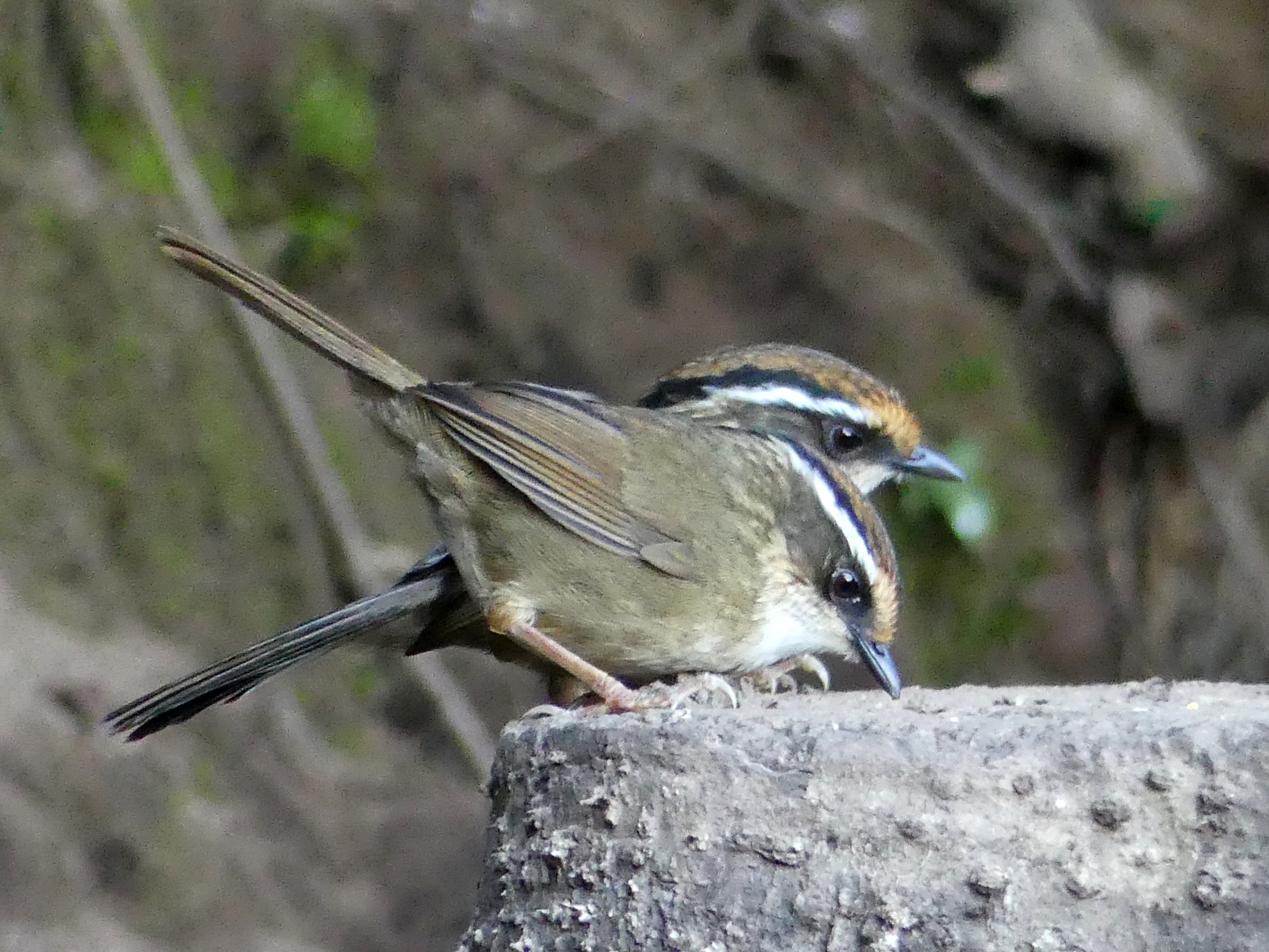
Rusty-capped Fulvettas. These little cuties were fun to watch.

Rusty-capped Fulvettas. These little cuties were fun to watch.

Space prohibits displaying all of my photos from that afternoon, so here is a link to my eBird checklist.

The next morning we walked a nearby trail for over six hours.  It was advertised as “flat,” but several of us thought it was a bit steep and I didn’t stay with the group the entire time.  I didn’t see many birds on the trail, but I did see a beautiful Black Giant Squirrel which was so big that I didn’t even realize it was a squirrel at first.

Black Giant Squirrel.  Photo by John Hopkins.

Black Giant Squirrel. Photo by John Hopkins.

Later that afternoon, I was happy to spend two hours in Blind #77.  In that short time, I got eight life birds!  Here are a few of my favorite photos from the afternoon.

Red-tailed Minla. Such a smart and sophisticated-looking bird. I can't help assigning human-like personalities to some of these exotic Asian birds.

Red-tailed Minla. Such a smart and sophisticated-looking bird. I can’t help assigning human-like personalities to some of these exotic Asian birds.

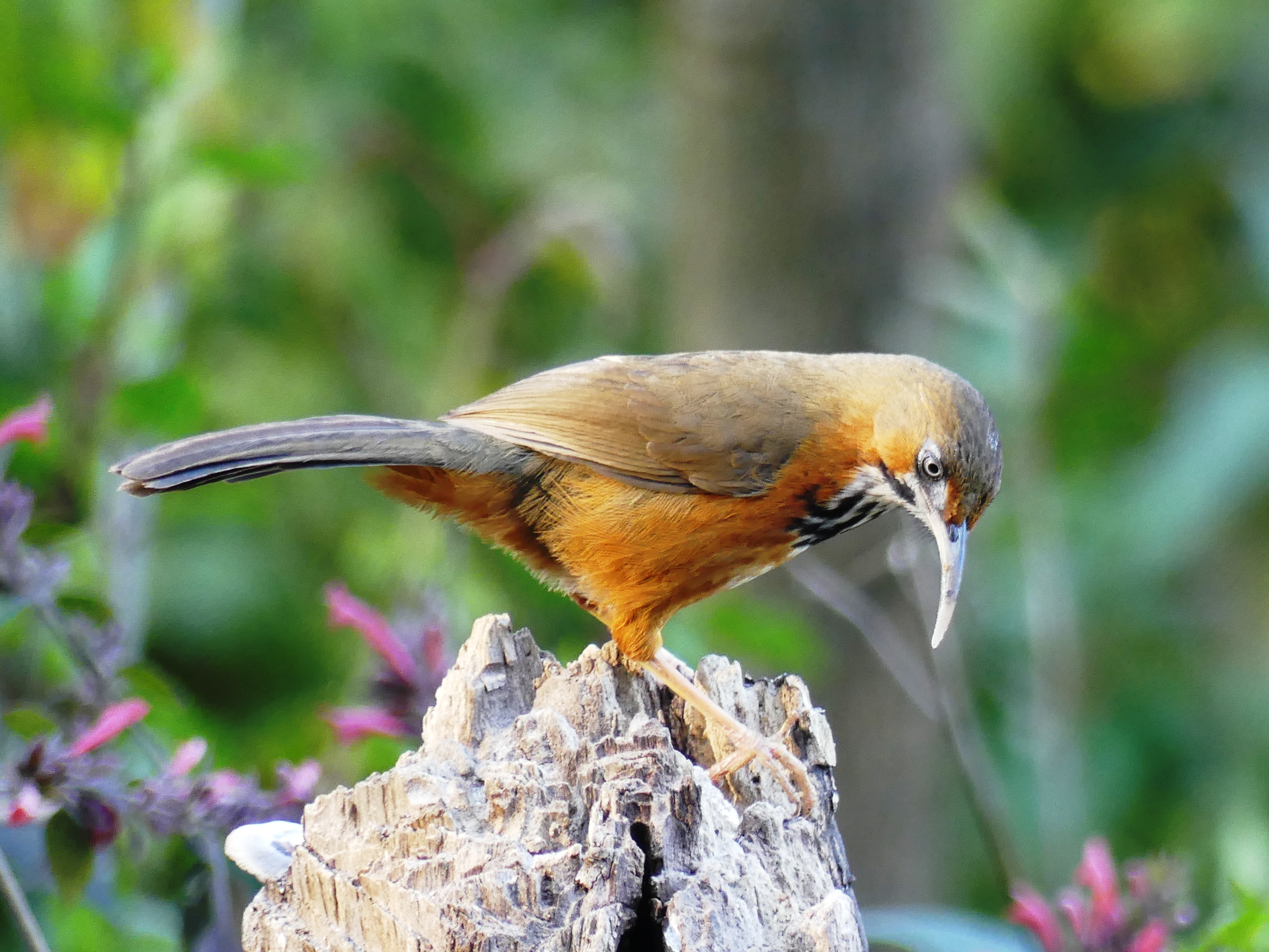
Black-streaked Scimitar-Babbler. I have been awed by scimitar-babblers ever since I first saw a Gray-sided Scimitar-Babbler in 2012. And, what a struggle it was to see that first one. Scimitar-Babblers are normally very shy birds.

Black-streaked Scimitar-Babbler. I have been awed by scimitar-babblers ever since I first saw a Gray-sided Scimitar-Babbler in 2012. And, what a struggle it was to see that first one. Scimitar-Babblers are normally very shy birds.

Yellow-cheeked Tit. Punk bird?

Yellow-cheeked Tit. Punk bird?

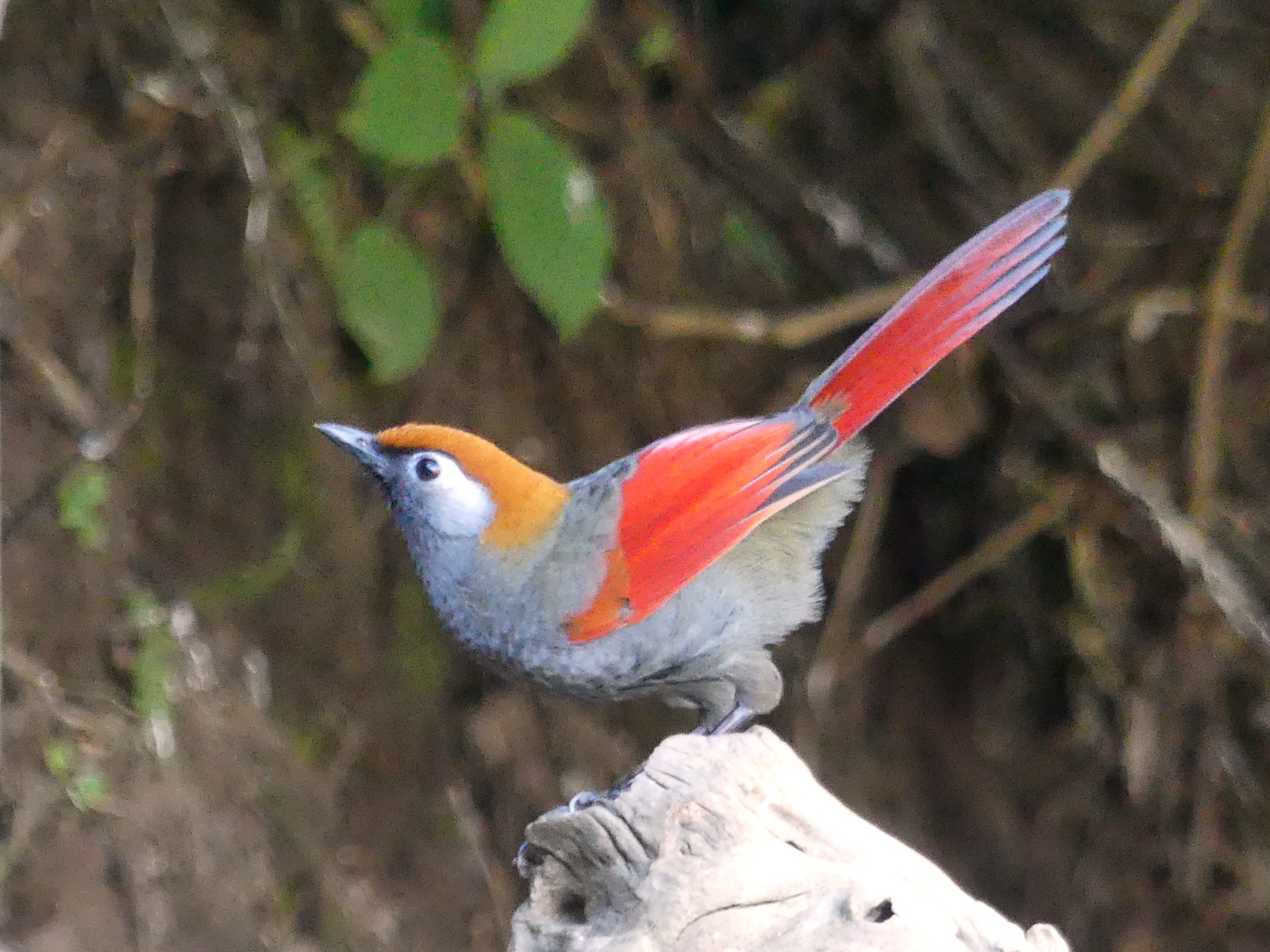
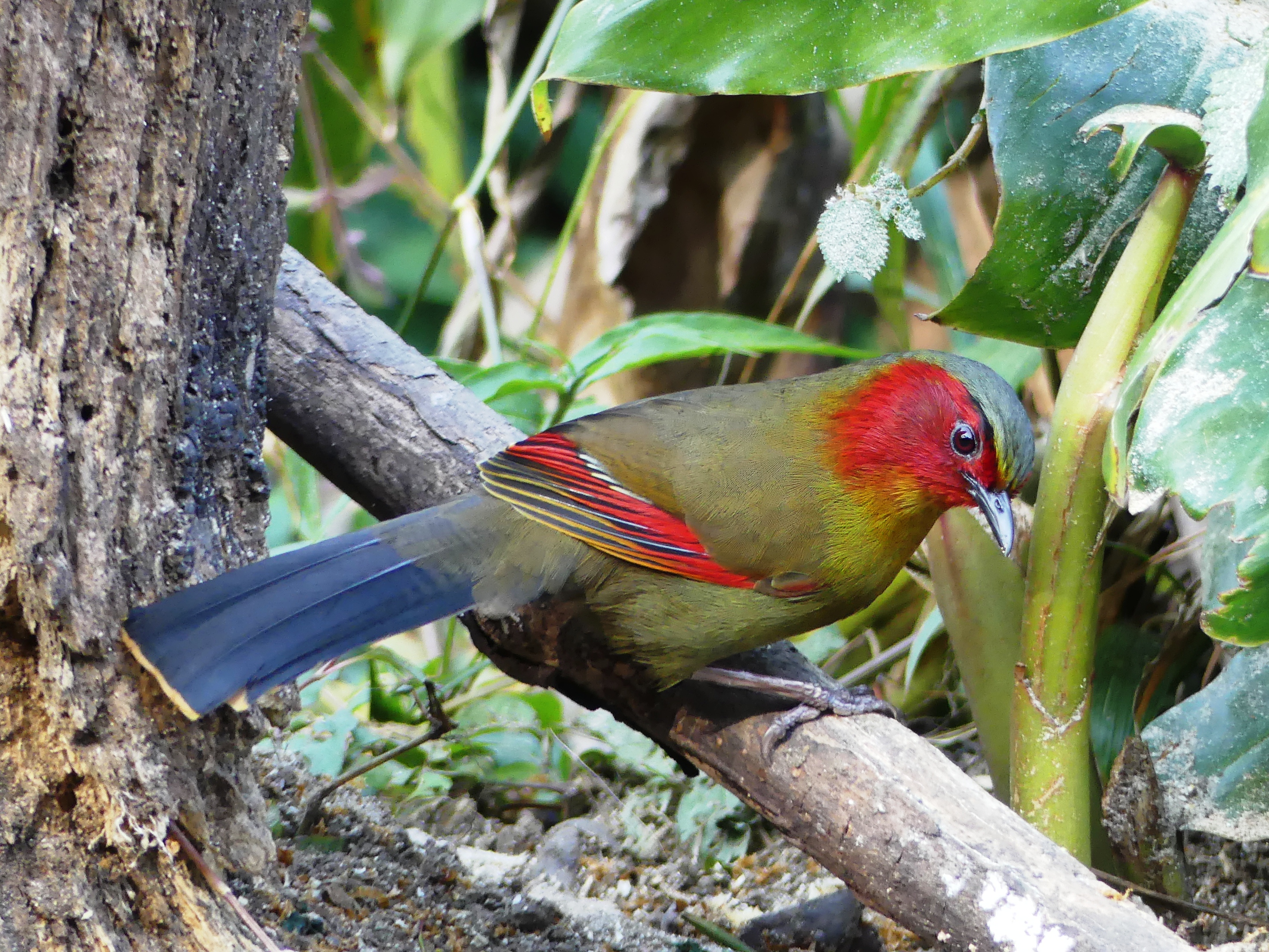
Scarlet-faced Liocichla. These gorgeous birds were fairly common and we frequently saw them with Red-tailed Laughingthrushes.

Scarlet-faced Liocichla. These gorgeous birds were fairly common and we frequently saw them with Red-tailed Laughingthrushes.

And, here is my eBird checklist from that session with more photos.

The next day, January 25, we spent the entire day in the blinds starting with #35 in the morning.  Some species seem to be constantly present at a blind and others come and go throughout the day.  Some of the shyer birds may only come once or twice a day – or skip a day entirely.  A few photos from that session:

Blue-winged Lauthingthrush. Gorgeous and a little scary looking. Very shy compared to Red-tailed Laughingthrushes.

Blue-winged Lauthingthrush. Gorgeous and a little scary looking. Very shy compared to Red-tailed Laughingthrushes.

Ashy Drongo. He came into the feeding area like he owned it, with grace and confidence, but no arrogance. Yep, I can't help those human comparisons. Drongos are common in China and the others didn't get excited over them, but I loved them, especially this species.

Ashy Drongo. He came into the feeding area like he owned it, with grace and confidence, but no arrogance. Yep, I can’t help those human comparisons. Drongos are common in China and the others didn’t get excited over them, but I loved them, especially this species.

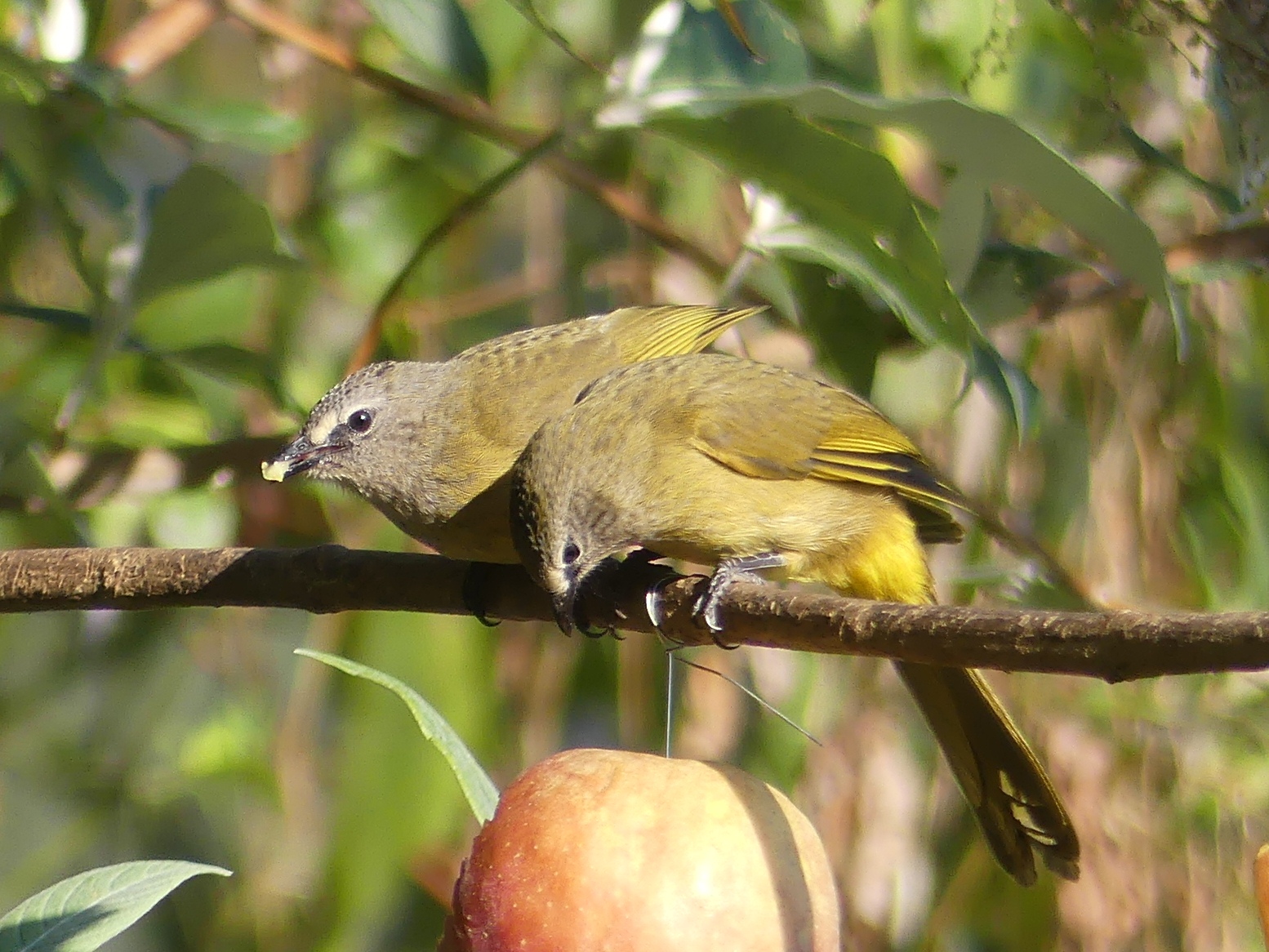
Flavescent Bulbuls enjoying an apple.

Flavescent Bulbuls enjoying an apple.

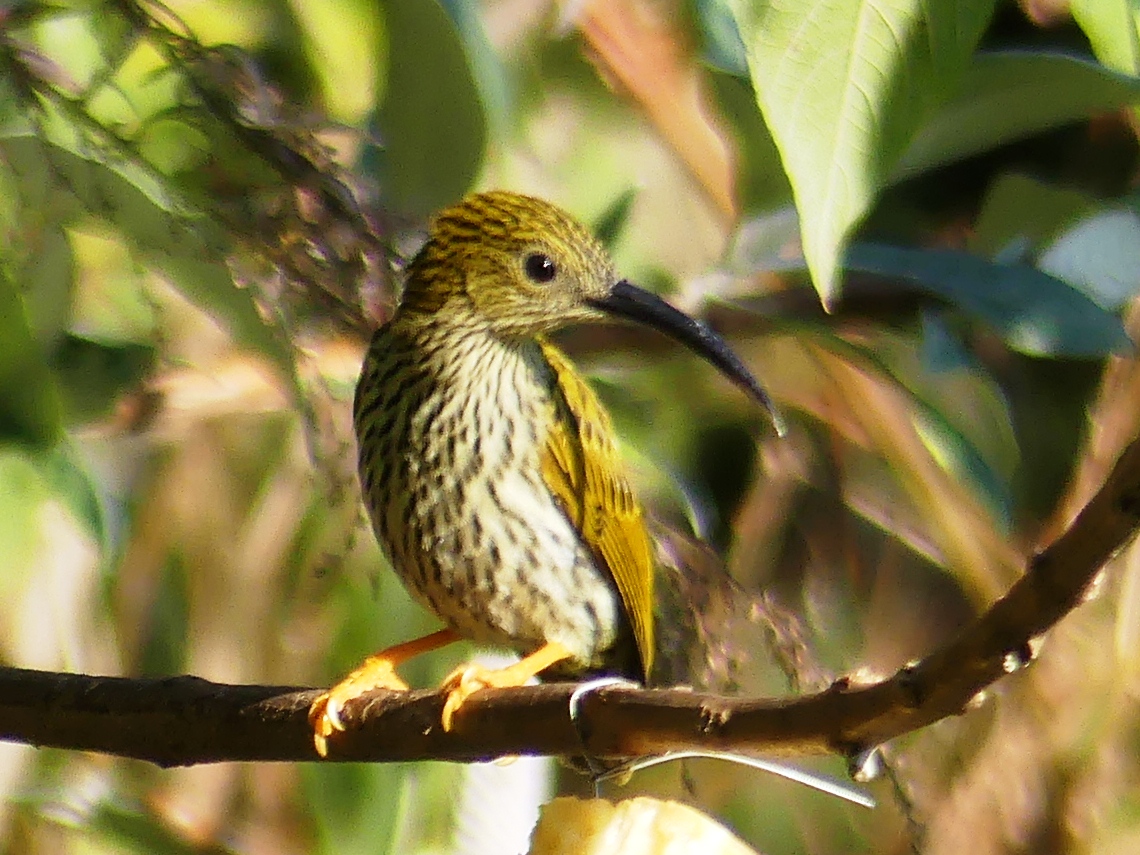
Streaked Spiderhunter is a species that we enjoyed seeing from the blinds, but this is one that we also saw well several times “in the wild.” Presumably, these birds do feed on spiders and insects, but that long curved bill is adapted for obtaining nectar. National Geographic even includes them in its list of Top 25 Birds with a Sugar Rush.

Streaked Spiderhunter

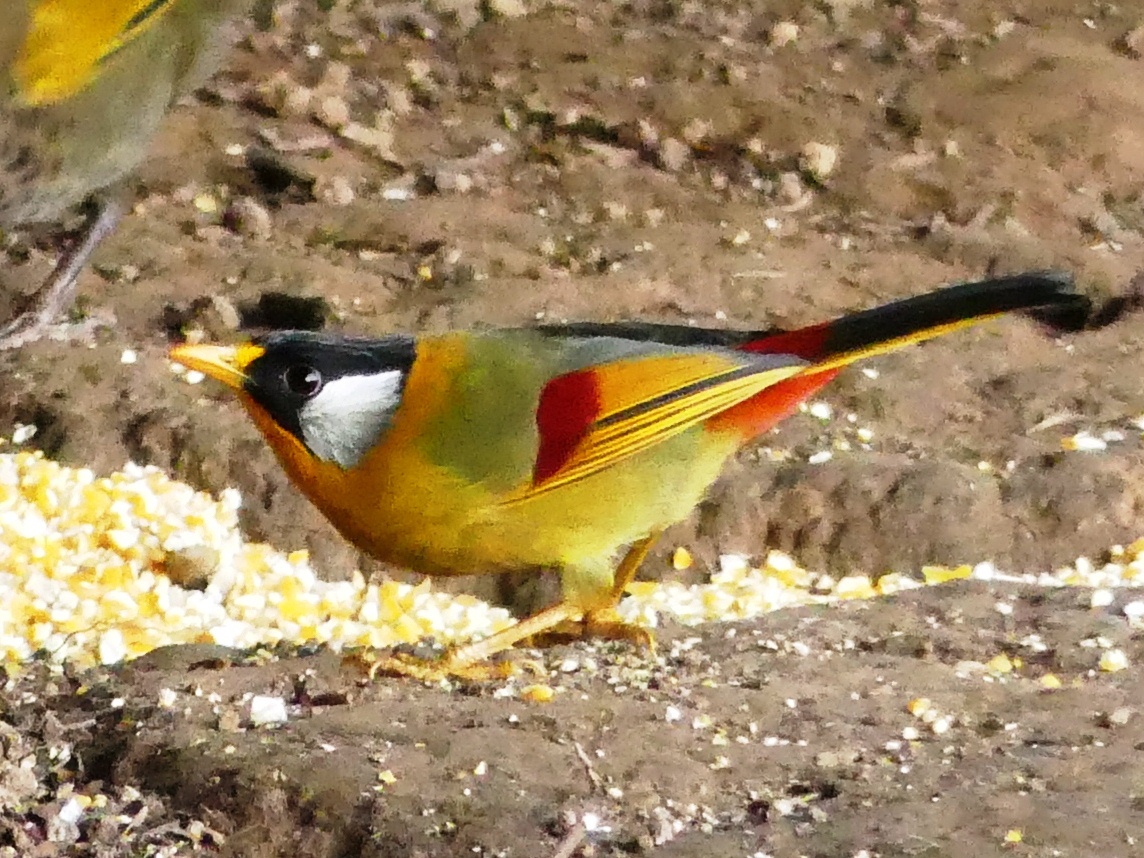
Silver-eared Mesia. These beautiful little birds are currently doing well in the wild, however, the population is under pressure from trapping for the caged bird trade.

Silver-eared Mesia. These beautiful little birds are currently doing well in the wild, however, the population is under pressure from trapping for the caged bird trade.

Long-tailed Sibia. One of the many species that enjoyed the apples at the feeding stations.

Long-tailed Sibia. One of the many species that enjoyed the apples at the feeding stations.

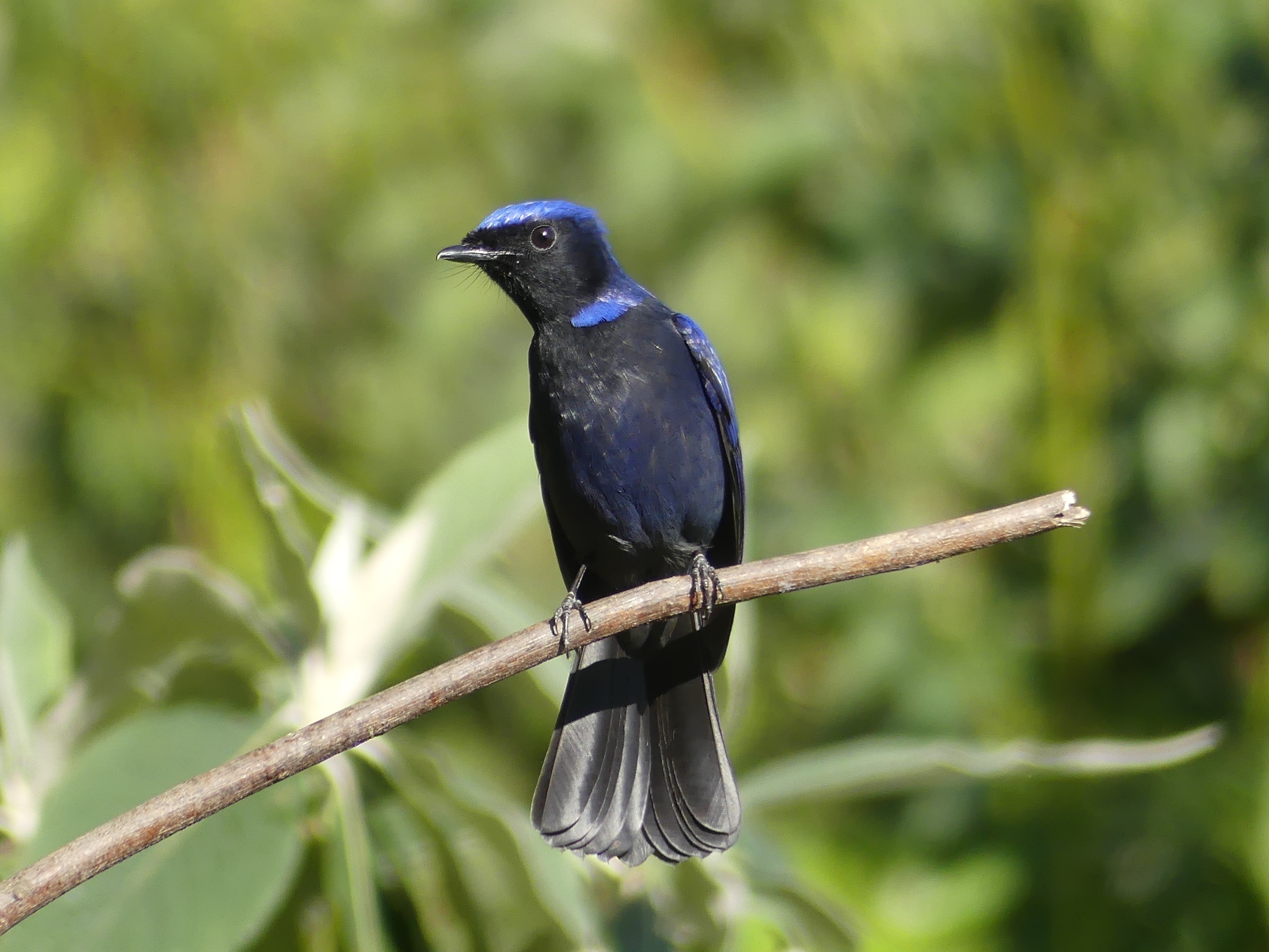
Large Niltava. This individual is a female. I think that she is just as gorgeous as her mate.

Large Niltava. This individual is a female. I think that she is just as gorgeous as her mate.

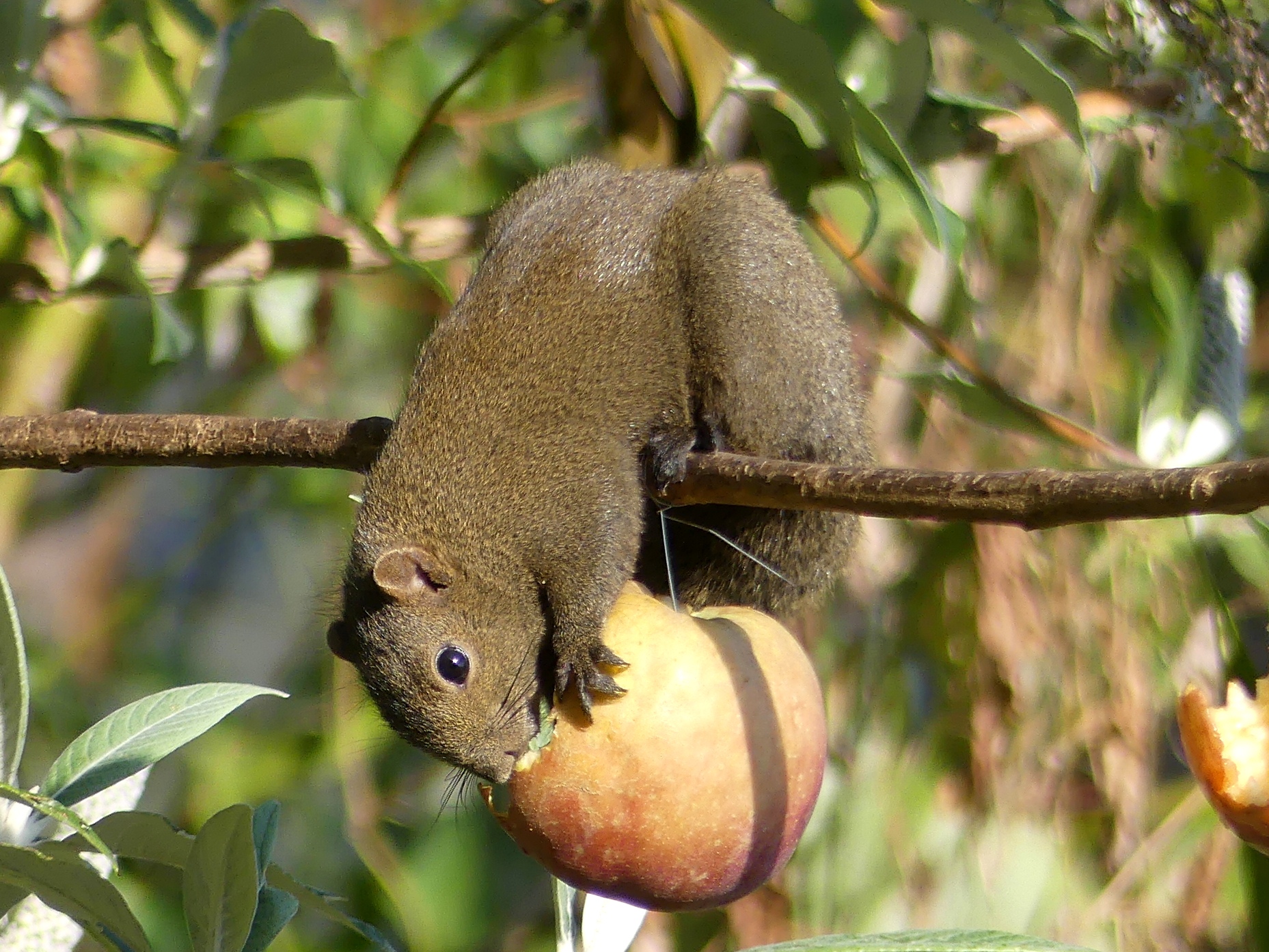
Pallas's Squirrel. These and Northern Tree Shrew were common visitors to the feeding stations.

Pallas’s Squirrel. These and Northern Tree Shrew were common visitors to the feeding stations.

Here is my eBird checklist from the morning.

We spent the afternoon in Blind #11, at a little higher elevation than the others we had visited, which produced a few new species.  Each blind has its specialties.  At this one, new birds were Hill Partridge and Gray-sided Laughingthrush.  This blind was the only location where we saw either of these species.

Hill Partridge

Hill Partridge

Gray-sided Laughingthrush

Gray-sided Laughingthrush

Himalayan Bluetail. Amazingly, we saw many of these beautiful birds. This one is a male.

Himalayan Bluetail. Amazingly, we saw many of these beautiful birds. This one is a male.

My eBird checklist from Blind #11 has more photos.

On our final morning at Baihualing, we all had a choice – walk the trails to search for species that don’t come to the blinds or have another session at a blind.  You can guess which option I choose.  It turned out to be a good decision as the others dipped again on their second try for Gould’s Shortwing, a difficult species to find.  Additionally, our little group in the blind had wonderful looks at eight Mountain Bamboo-Partridges, the only good sighting of this species during the trip.

Mountain Bamboo-Partridge (male)

Mountain Bamboo-Partridge (male)

That last morning, we also had excellent looks at many species seen during the previous few days.  A few of my favorites were the birds below.

Large Niltava (male)

Large Niltava (male)

Great Barbet

Great Barbet

Mr. Orange-bellied Leafbird. I had seen these gorgeous birds on previous trips, but I was thrilled to get much closer looks this time.

Mr. Orange-bellied Leafbird. I had seen these gorgeous birds on previous trips, but I was thrilled to get much closer looks this time.

Mrs. Orange-bellied Leafbird

Mrs. Orange-bellied Leafbird

Here is my last eBird checklist from Baihualing, but there are six more days in the Zoothera Birding trip and then a week in Shenzhen, so I’ll be back with more stories.

My son Dave visited Yunnan shortly after he moved to China in 2008.  For years, he has urged me to see this province of China that is often considered the most beautiful.  So, when Nick Bray, who led my birding trip in 2012, posted on Facebook that he was planning Zoothera Birding‘s first trip to Yunnan, I immediately signed up.

Common Kingfishers are widespread in Asia and I have seen them on every trip, this time in both Yunnan and later in Shenzhen.

Common Kingfishers are widespread in Asia and I have seen them on every trip, this time in both Yunnan and later in Shenzhen.

I arrived in Kunming in the wee hours of January 16th, a full day before the others so that I wouldn’t be starting the trip with jet lag.  I planned to sleep late and then do a little birding on my first day.  I thought that I was so smart when I was preparing for the trip and found a little park not far from the hotel.  I printed the map so that I could show it to a taxi driver as no taxi drivers in China speak any English.  The hotel called a taxi for me and, as planned, I showed my little map to the driver.  I assumed that he would take me to the park, but after a few minutes he showed me his phone with a translation app.  It said “That park is old and depressed.  Why do you want to go there?  Guandu Forest Park is new and beautiful and it’s free.”  I tried to ask how far the suggested park was, but the translation app turned “How far is the park?” into profanity.  I vigorously shook my head “no” and gave up.  So, of course, the driver took me to the suggested park, 45 minutes away and $15.00 rather than 10 minutes and the $3.00 fare that I expected.  I was frustrated, but I should have known better.  After four previous trips to China, I have learned that communication is difficult and misunderstandings are frequent, even when simply trying to get from Point A to Point B.

Yellow-billed Grosbeak

Yellow-billed Grosbeak

The park was a typical Chinese city park – full of people, even a band playing – beautiful, but not conducive to productive birding.  But, I quickly relaxed and enjoyed the lovely afternoon for a couple of hours.  Even with all the activity, I found a little flock of Yellow-billed Grosbeaks, a species that the Zoothera group would not see at all.

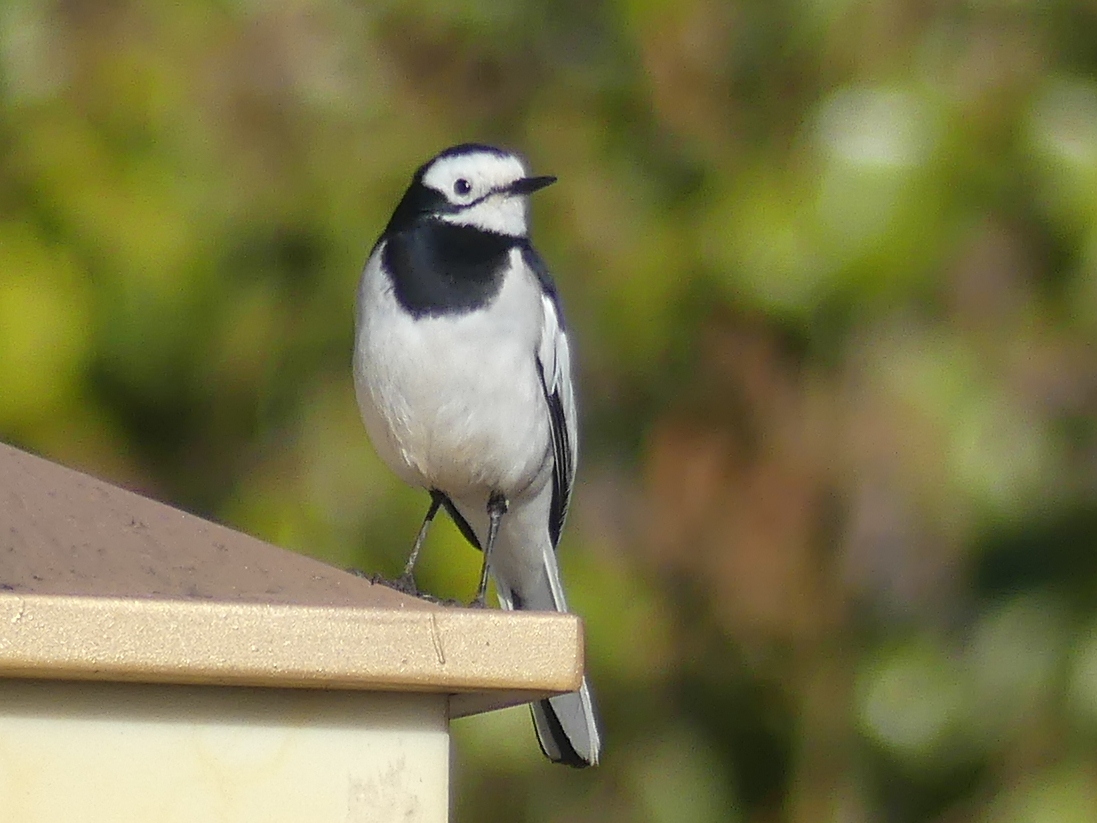
Back at the hotel, I found a few birds on the edge of the parking area, including several White Wagtails.  I find Wagtails very interesting and always try to photograph them.  This was the first time that I saw an alboides subspecies and I thought that he was a rather snazzy looking bird, even in winter plumage.

White Wagtail, Motacilla alba alboides

White Wagtail, Motacilla alba alboides

That evening I enjoyed dinner with John Hopkins, another birder who had arrived early.  The next day we met up with the rest of the group at the airport – ten participants and three guides.  There was one other woman in the group, from Germany, and one man from Sweden.  The rest of the group consisted of males from the UK except for our two Chinese guides.  After a quick lunch, we were off on our adventure.  Our first destination was Zixishan, a mountain park near Chuxiong, about three hours from Kunming.  We arrived in time for a little birding before checking into our hotel and we found our two target birds right away – the endemic Yunnan Nuthatch and Giant Nuthatch.  The Yunnan Nuthatch posed quite nicely for us at a close distance, not typical behavior we were told.

Yunnan Nuthatch

Yunnan Nuthatch

The following day, we started birding at Zixishan before sunrise.  It was a nice morning and we saw a good number of birds.  This Chinese Thrush sat on the side of the road and never moved, even as we moved closer and closer for photos.  It was still sitting there when we left to look for other species.

Chinese Thrush

Chinese Thrush

The afternoon brought a 6-hour drive to Lijiang where we hoped to see Biet’s Laughingthrush, my most wanted bird of the trip.  But, alas, our good fortune at Zixishan did not continue at Lijiang.  Despite several hours of intensive searching in the areas where the laughingthrush has historically been seen, we neither heard nor saw one.  We learned that this rare bird is becoming increasingly difficult to find, perhaps in part due to illegal poaching for the caged bird trade.

The best birds at Lijiang were a pair of Rufous-tailed Babblers bouncing around the top of a big trash pile, singing almost constantly.  Several of us just sat in the grass a few yards away with our cameras and click-click-clicked as these normally shy birds put on a fantastic close-up show for us.

Rufous-tailed Babbler

Rufous-tailed Babbler

The others in our group had started teasing me about ducks almost as soon as our trip started.  Apparently I was the only waterfowl enthusiast, or maybe ducks were just too easy for the more serious birders with life lists of over 6,000 species.  I got my wish to see ducks on the morning that we left Lijiang with a quick stop at Lijiang Wetland Park.  I loved it!  There were hundreds of birds on the lake.  I got much better looks at beautiful Ferruginous Ducks than I’d had previously.  And, I even got three life birds.  Surprisingly, I had never seen a real wild Graylag Goose before.  Red-crested Pochard and Smew were also new.

Ferruginous Ducks

Ferruginous Ducks

It seemed that everyone enjoyed our short time at the wetland despite their earlier claims that they didn’t care about ducks.  I think that we could have stayed for hours and everyone would have been happy.  But, we had a long drive ahead, so we couldn’t savor the ducks and wetland birds for long.  Back in the van, the more experienced birders gave me a good lesson in separating Black-headed and Brown-headed Gulls.  With their expert knowledge and my photos, I quickly learned that it really was easy to differentiate these two species.

Brown-headed and Black-headed Gulls with Graylag Geese. Even in this rather poor photo, you can easily note the larger size of the Brown-headed Gulls, the dark wingtips, and huge mirrors in the outermost primaries.

Brown-headed and Black-headed Gulls with Graylag Geese. Even in this rather poor photo, you can easily note the larger size of the Brown-headed Gulls, the dark wingtips, and huge mirrors in the outermost primaries.

After leaving the Lijiang wetland, we drove 8 hours to Lushui.  The next morning we continued through part of Gaoligongshan National Nature Reserve, over Pianma Pass (3,100 meters), and to the small town of Pianma near the Myanmar border where we would spend the next two nights.  The first morning in this area started with one of the most thrilling sightings of the entire trip – and it was not a bird.  It was a Red Panda sleeping in the sunshine in a bare tree!  This charismatic little mammal (about the size of a house cat) is fascinating.  It has thick fur on the soles of its feet.  It uses that fluffy 18-inch tail to wrap around itself for warmth.  The Smithsonian has more interesting facts about the Red Panda, a species classified as endangered with a population of less than 10,000 remaining in the wild.

The Red Panda as seen from the road.

The Red Panda as seen from the road.

A close-up of the adorable Red Panda. This is the view that we got through the scope. Photo by John Hopkins.

A close-up of the adorable Red Panda. This is the view that we got through the scope. Photo by John Hopkins.

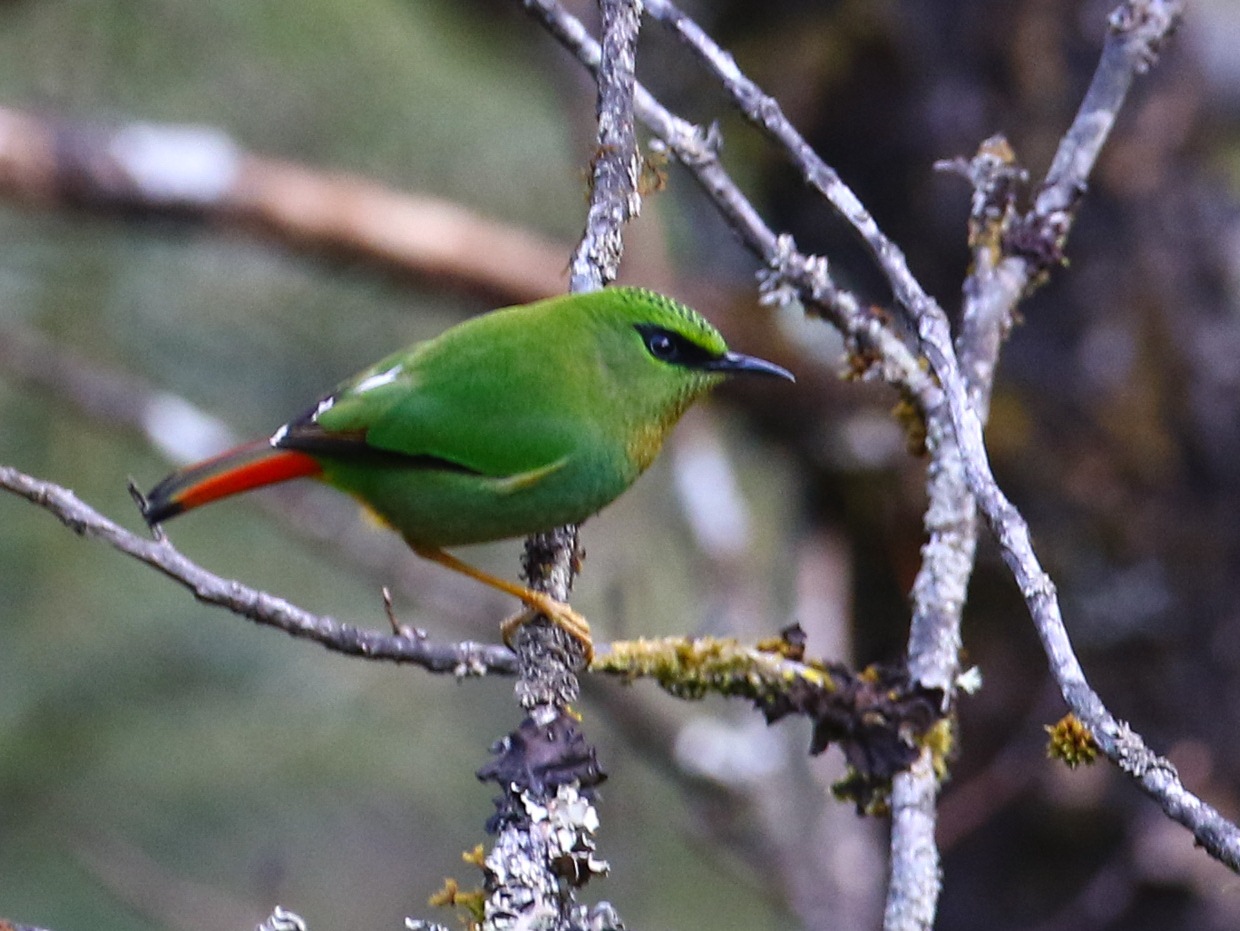
After the panda sighting, things were pretty slow.  Actually, they were very slow and this was my least favorite part of the trip.  The hotel was awful, it was cold, and we didn’t find our main target birds.  For two full days, we traveled back and forth over Pianma Pass and birded along the road, which was always covered in a thin layer of ice except in sunny spots.  On the second day, several of the others found some good birds by climbing up the side of the mountain on rough rather steep trails.  I stayed on the road not wanting to wear myself out or trigger an asthma attack by too much activity at 3,100 meters.  OK, I was a little lazy.  But, my vision is so bad that I don’t think that I would have seen the birds anyway, even if I had scrambled up the mountainside.  Just like on my 2012 trip with Nick, most of the others were in better physical shape and were much more experienced and skillful birders than me.  But I didn’t miss one of the best birds of the day when late that afternoon we found this spectacular little bird, a Fire-tailed Myzornis.

Fire-tailed Myzornis. Photo by John Hopkins.

Fire-tailed Myzornis. Photo by John Hopkins.

The following morning, we left for Baihualing and it’s many bird blinds, where I would be in birding heaven.  Stay tuned.

Arizona Birding

My second trip to Arizona was a few weeks ago.  I find that I can’t think about that trip without also recalling memories from my trip in April 2010.  The first trip was short – just four days – but I got 67 life birds!  My recent trip was a little longer – six days – but with more experience now, I was pleased to add just nine birds to my life list (plus one new ABA area bird).  Perhaps it’s the contrast that makes me acutely aware of the stages we go through as birders and the joys of it all.  In 2010, I remember my head spinning at Patton’s as I got three life birds in about three minutes.  “Oh, a Lincoln’s Sparrow.”  “Quick, over there – Lazuli Bunting!”  “Stop looking at those birds.  There’s a Violet-crowned Hummingbird at the feeder!”  My friend Susan and I birded from dawn to dusk with time for only one real meal.  It was wonderful fun, but sadly I have no photos at all from that trip.  The trip in November 2018 was with another friend, Diane.  Instead of mad dashes from one lifer to another, we had time to savor and study.  It was a different trip entirely, but just as enjoyable.

No Violet-crowned Hummingbirds on my recent trip, but Blue-throated Hummer was a lifer and one of my favorites.

No Violet-crowned Hummingbirds on my recent trip, but Blue-throated Hummer was a lifer and one of my favorites.

On our first day, Diane and I found life bird number one of the trip – adorable Rosy-faced Lovebirds.  We have no explanation for the “beads.”  Suggestions on Facebook included marking by a researcher or perhaps a pet escaped and joined the wild flock.  These colorful little parrots are popular cage birds.  Escaped pets became established in the wild and for over 30 years they have been breeding in residential neighborhoods in the Phoenix area.

Rosy-faced Lovebirds nest in the palm trees.

Rosy-faced Lovebirds nest in the palm trees.

Because I was such a new birder in 2010, life birds on that trip included quite a few common species.  I clearly remember being excited to see Brewer’s Blackbirds.  Susan could not understand my joy.  “Shelley, they aren’t classy birds.  They’re eating horse shit.”  But, she then conceded that every birder got their life Brewer’s Blackbird at some point.

This year, none of my desired lifers were widespread common birds.  Some of our targets would be challenging to find, so Diane and I hired local expert Melody Kehl for three days.  Melody delivered the first morning with Gilded Flicker, a bird that is found almost exclusively in Arizona.  I have now seen all 22 North American species in the woodpecker family.

My life Gilded Flicker

My life Gilded Flicker

Next, Melody found Rufous-winged Sparrows for us and then Black-capped Gnatcatchers, a primarily Mexican species that reaches its northernmost range in Southeast Arizona.  We had good looks, but the gnatcatchers did not cooperate for photos.

Diane had missed Elegant Trogon on her first trip to Arizona in 2010 and it was one of her most-wanted birds.  I told her to forget it, it was the wrong time of year and would be extremely unlikely.  But, guess what Melody found at the Madera Canyon picnic area?  Yep, an Elegant Trogon!  Madera lived up to its reputation for good birds that day with Olive Warblers, a Blue-throated Hummingbird, Hepatic Tanagers and many others.  One of my favorites was this Red-naped Sapsucker eating berries.  I had seen my lifer just a few months earlier in Montana, but this was my first good close look.

Red-naped Sapsucker

Red-naped Sapsucker

On our second day with Melody, we went to Santa Cruz flats to look for sparrows and raptors.  We struck out on Sagebrush Sparrow; apparently they had not arrived yet for the winter.  But, I was thrilled with the Prairie Falcon that we did find.  I had wanted this falcon as a life bird for a long time.  Now I was looking at a gorgeous cooperative bird.  I think that I can see hearts in the spots on its thighs.  Look at that face!  I am in love with this bird!

Prairie Falcon

Prairie Falcon

I have seen very few Barn Owls, any place, ever, so it was a thrill to also see these beautiful birds that day.  Doesn’t everyone, birder or not, love owls?  Barn Owls are one of the most widespread of all birds, found on every continent except Antarctica.  But widespread does not mean common and most owls are very sensitive to disturbance, so we just took a quick look, used no flash for photos, and did not disclose the exact location of these birds.

We were privileged to see these beautiful Barn Owls.

We were privileged to see these beautiful Barn Owls.

We got back early enough that afternoon that Diane and I had time to visit Reid Park, not far from our hotel.  We were amazed to see dozens of American Wigeons competing with Mallards for bread that kids were throwing.  Even an immature Black-crowned Nigh-Heron joined in the feeding frenzy!  While feeding bread to ducks is a common practice, it is not a good idea.  See this for 3 reasons you shouldn’t feed bread to ducks.

An immature Black-crowned Night-Heron joined the ducks snapping up bread thrown by the kids.

An immature Black-crowned Night-Heron joined the ducks snapping up bread thrown by the kids.

We headed to the Chiricahua Mountains on our third and last day with Melody.  Another much-wanted life bird, Crissal Thrasher, started the day.  We got a good look, but it was too quick for photos.  We then searched for Juniper Titmouse which Melody found and Diane saw well.  But, with my poor vision, I did not see the birds well enough to count them.  Next time.

An Acorn Woodpecker at the George Walker House in the Chiricahua Mountains. A common western species, but always fun to see.

An Acorn Woodpecker at the George Walker House in the Chiricahua Mountains. A common western species, but always fun to see.

After a morning of exploring the mountains and visiting several yards with feeders, we had a wonderful picnic lunch at Barfoot Park.  Just as we finished our meal, Melody heard Mexican Chickadees.  Mexican Chickadees, as their name implies, are primarily a Mexican species which occur in the US only in the Chihuahua and a small mountain range in New Mexico.  These birds were our main reason for the long drive from Tucson that day.  With some effort, we saw about a dozen birds and I even got so-so photos.  The timing could not have been better if Melody had trained those chickadees!

Mexican Chickadee

Mexican Chickadee

Diane and I then had two more days before we had to be back in Phoenix for our flights home.  We decided to spend our last night near Tucson at WOW Arizona so that we could bird there in the afternoon and again the following morning.  This wildlife sanctuary/B&B with numerous feeding stations was the perfect place for close-up study of many species we had seen during the previous days.  A bonus was watching a gorgeous Harris’s Hawk, a new species for the trip, come for its chicken leg supper.

Harris's Hawk waiting to come down for its supper.

Harris’s Hawk waiting to come down for its supper.

WOW Arizona was very relaxing.  We just walked around a bit and sat in front of the feeders watching beautiful birds.

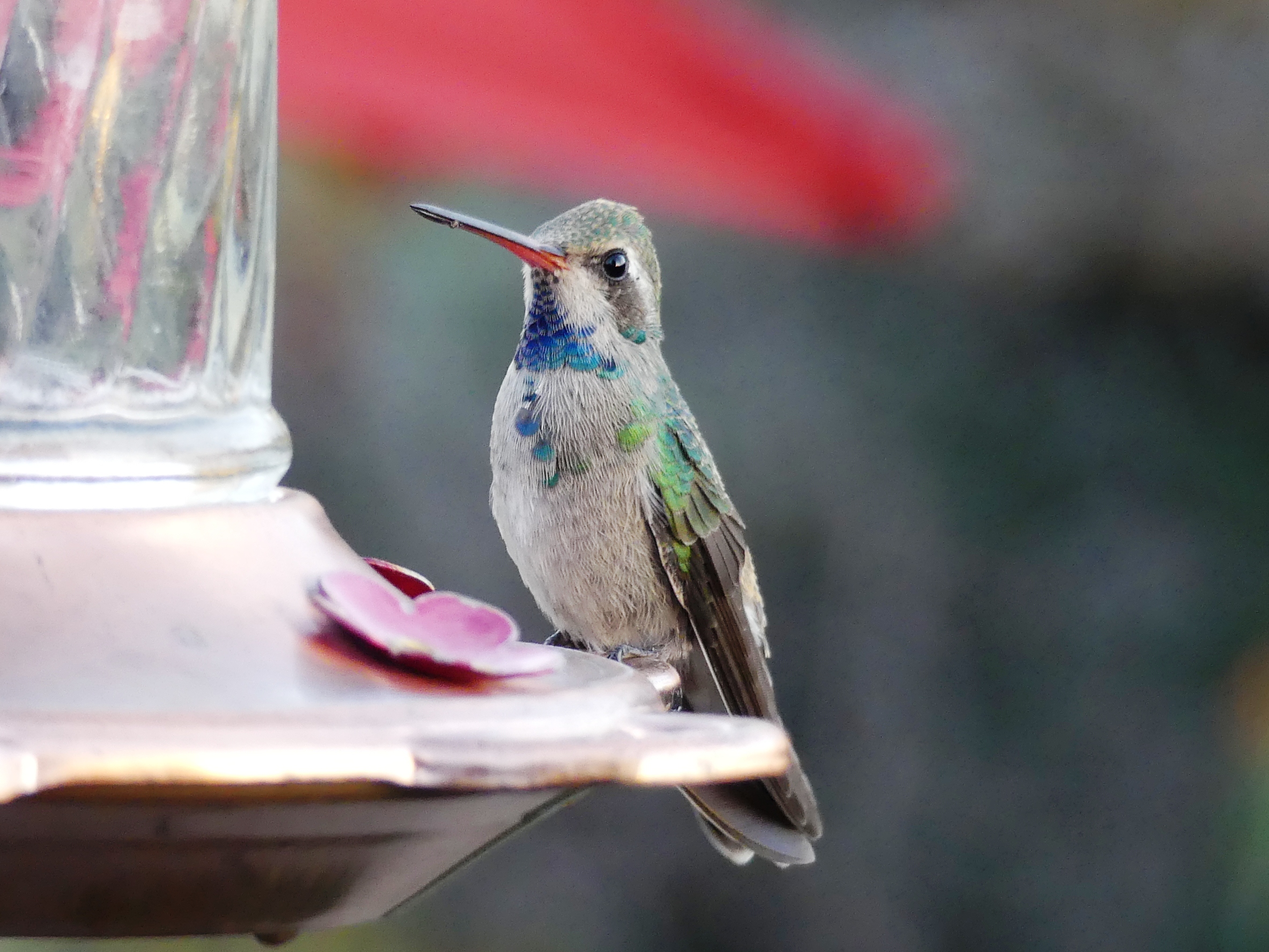
The many hummingbirds at WOW Arizona provided a good opportunity to study a few species up close. I especially liked this immature male Broad-billed Hummingbird.

The many hummingbirds at WOW Arizona provided a good opportunity to study a few species up close. I especially liked this immature male Broad-billed Hummingbird.

CJ, co-owner of WOW Arizona, helped me get good looks at Black-tailed Gnatcatchers.

CJ, co-owner of WOW Arizona, helped me get good looks at Black-tailed Gnatcatchers.

I loved watching this Cactus Wren in a cactus in front of the house!

I loved watching this Cactus Wren in a cactus in front of the house!

This adult male Costa's Hummingbird gave me my best looks ever for this species.

This adult male Costa’s Hummingbird gave me my best looks ever for this species.

Diane and I had a great week in southeastern Arizona, but, as always, it was over too quickly. There were quite a few places that we wanted to go, but our limited time did not allow. I think that I see another trip to Arizona in our future!

The view from one of the trails at WOW Arizona. The tree in the foreground is overflowing with Mourning Doves.

The view from one of the trails at WOW Arizona. The tree in the foreground is overflowing with Mourning Doves.

On August 5, 2018, I went birding at Lake Waccamaw State Park.  The birds were more scarce than I’d expected, but I finally found Blue Jays and a few other common birds near the Visitor Center.  Why is this even worthy of mention?  Because the park is in Columbus County, the last of North Carolina’s 100 counties in which I have observed birds.  Yep, I’ve now seen birds in every county in my home state.  If you are not a birder, you may still think that this is not worthy of mention and you should stop reading now.

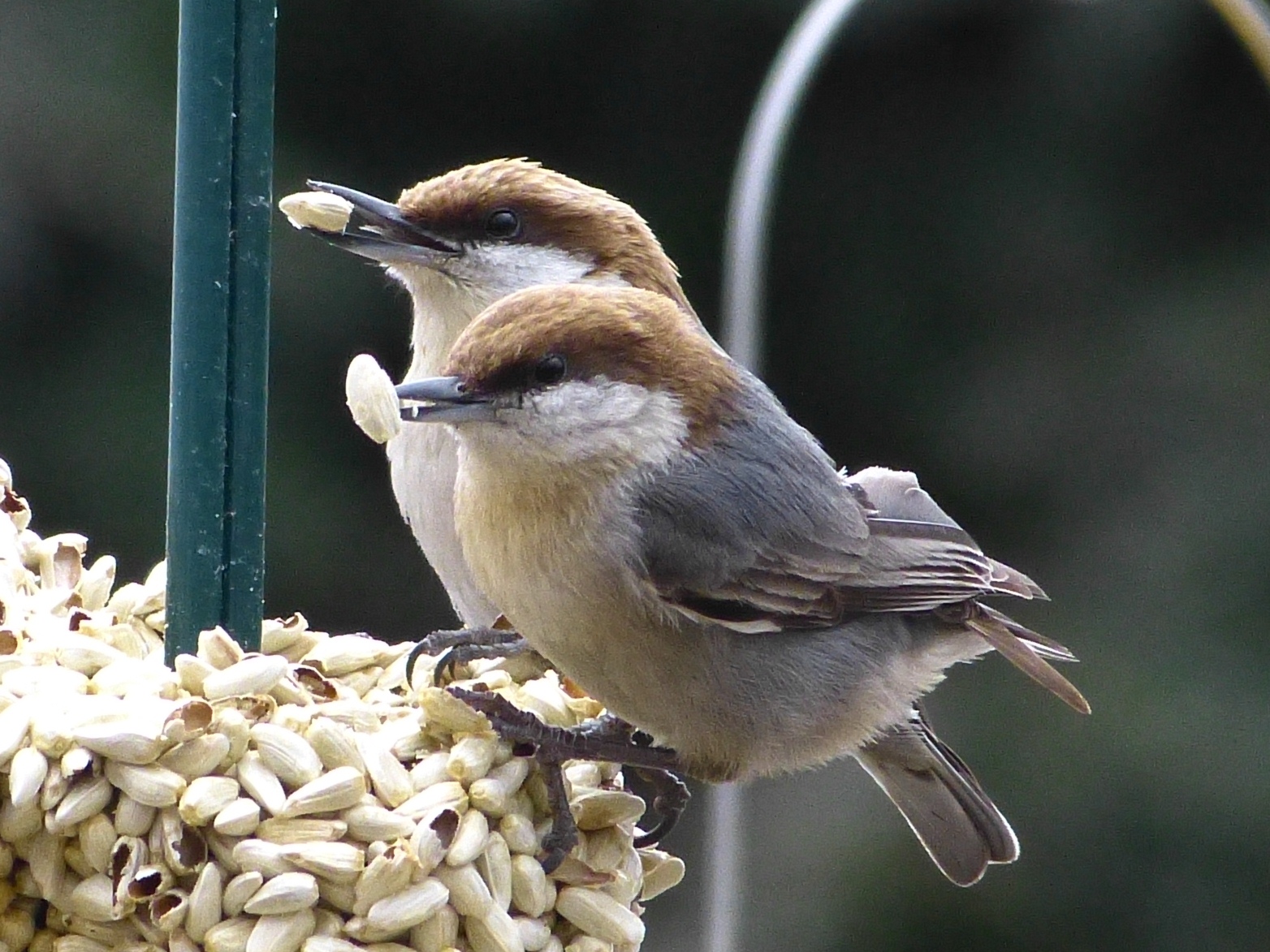
No, these particular birds were not my life Forsyth County Brown-headed Nuthatches, but you weren't going to keep reading without some cute photos, were you?

No, these particular birds were not my life Forsyth County Brown-headed Nuthatches, but you weren’t going to keep reading without some cute photos, were you?

County birding is my favorite of games birders play, but it took a while before I got serious.  In December 2009, eBird introduced county birding to “inspire people to go birding in places that don’t typically get much coverage.”  I am a huge fan of eBird, so I wanted to help with this effort.  I started birding the counties adjacent to Forsyth that didn’t have many checklists.  Sometimes I went alone, but frequently I enlisted friends Carol or Brent to go with me.  We had great fun on our outings and it wasn’t long until Carol and I found a county record Horned Grebe for Stokes County.  It was the first time that anyone had reported the species in that county.

In the County Birding "game," an American Robin counts just as much as a rare bird.

In the County Birding “game,” an American Robin counts just as much as a rare bird.

At some point I became aware that county birding was more than an eBird effort; it was almost a competitive sport.  I discovered that birders in Texas, Florida, California, and a few other states were obsessed with focused on county birding.  And then I met Derek, right here in Forsyth County, who had seen birds in all of North Carolina’s counties.  I started joining him occasionally for a day of birding as he upped his county ticks.  County ticks are simply the sum of one’s life lists for each county in an area (usually a state).  So, if I had seen 200 birds in Forsyth County and 100 birds in Guilford County, I would have 300 county ticks for NC.  It didn’t take many days of birding with Derek until I decided that I, too, wanted to see birds in all of North Carolina’s counties.

Cynthia and I spent a day with this Golden-winged Warbler in Watauga County

Cynthia and I spent a day with this Golden-winged Warbler in Watauga County

I also birded with other friends whenever I had a chance.  One of my favorite county birds was the gorgeous Golden-winged Warbler in the photo above.  My good friend, Cynthia, wrote a guest post on this blog, Golden-winged Wonders, about our experiences with “Andy.”

I am especially grateful for my friend, David, and my son-in-law, Jeff.  David is not a birder, but he understood my craziness and helped me in the western part of the state.  It can be hard to find birds in those small mountainous counties and I was happy to have the company and the help.  Jeff is only a casual birder, but he spent several days with me in the northeast corner of the state searching for birds.

A pretty Hermit Thrush that Jeff and I found in Chowan County.

A pretty Hermit Thrush that Jeff and I found in Chowan County.

I wish that I’d kept notes on every outing, every new milestone, but I did not.  Instead, I have only delightful random memories, like a stream of consciousness.  Please indulge me as I share a few of those memories.

Derek is an excellent birder with the energy that comes from being young.  And, he was willing to go birding with me – a woman with bad eyesight and old enough to be his grandmother.  The love of birds and birding that transcends all other differences is one of the things that I love about the birding community.  But, I digress.

A lovely Cedar Waxwing found on the Bakersville Creek Walk in Mitchell County

A lovely Cedar Waxwing found on the Bakersville Creek Walk in Mitchell County

A typical day of birding with Derek started with meeting around 7:00 AM and driving two to three hours to get to the counties we needed.  Derek is a great planner and he continued to watch bird alerts while I drove.  We birded until dark and then Derek drove on the way home.  Sometimes it was 11:00 PM when I pulled into my driveway.  But, we always had fun and we always got new county birds.

In January 2017, Derek introduced me to the idea of combining county birding and state birding, seeking birds not just new to a particular county, but new for the state.  A rare (for North Carolina) Anna’s Hummingbird had turned up on the coast, inspiring us to make a two-day trip to see this beauty.  We added several new birds for Dare County, including a surprise Brown Thrasher while waiting in line at the Nags Head KFC drive-thru.

The Anna's Hummingbird that Derek and I drove to the NC coast to see

The Anna’s Hummingbird that Derek and I drove to the NC coast to see

Later that year in May, we couldn’t miss an opportunity to see this cooperative Mourning Warbler in Avery County, another state bird for both Derek and me.  This led to stops in Wilkes County, an Alder Flycatcher at a blink-and-you-would-have-missed-it bog on the Blue Ridge Parkway in Burke, and then multiple stops at under-birded hotspots in Mitchell, Yancey, and McDowell counties.  Our favorite location that we discovered that day was the lovely Bakersville Creek Walk in Mitchell County, which I made into an eBird hotspot.

Our lovely Mourning Warbler on the Blue Ridge Parkway in Avery County

Our lovely Mourning Warbler on the Blue Ridge Parkway in Avery County

In addition to finding notable birds, I enjoyed the quirkiness and little surprises of county birding.  Derek and I called it the “wavy road.”  It was as much in the middle of nowhere as any place in NC.  I think we were on a mission to find a Clay-colored Sparrow.  The road was completely level on the middle line, but the edges rose and fell like waves.  Driving the road felt like a ride at an amusement park.  We marveled at the oddity of the road and were happy that it didn’t last too long.  And, yes, we got our bird.

On a day of birding with Hop in Cleveland County, he pished up this Golden-crowned Kinglet.

On a day of birding with Hop in Cleveland County, he pished up this Golden-crowned Kinglet.

Plenty of mistakes were made in my search for new birds, mostly when I was birding alone.  I currently have only one bird for Halifax County even though I spent the night there.  I got confused about the county line and did not even realize where I was!  A more serious mistake occurred when I was birding alone in the Croatan National Forest and became totally lost.  Fortunately, I was able to use the eBird track on my phone to navigate back to my car.  Once on a trip with Derek to the Sandhills area in the middle of summer, I failed to take water on our walk.  When we were almost back to the car, I began to feel sick – very hot and nauseous – so I just laid down on the sand and sent Derek back to the ranger station.  I knew the ranger would come for me in his truck, which he did, and I learned a very valuable lesson.

This young Brown-headed Cowbird appeared to be hot, too, on that sweltering day in Cumberland County.

This young Brown-headed Cowbird appeared to be hot, too, on that sweltering day in Cumberland County.

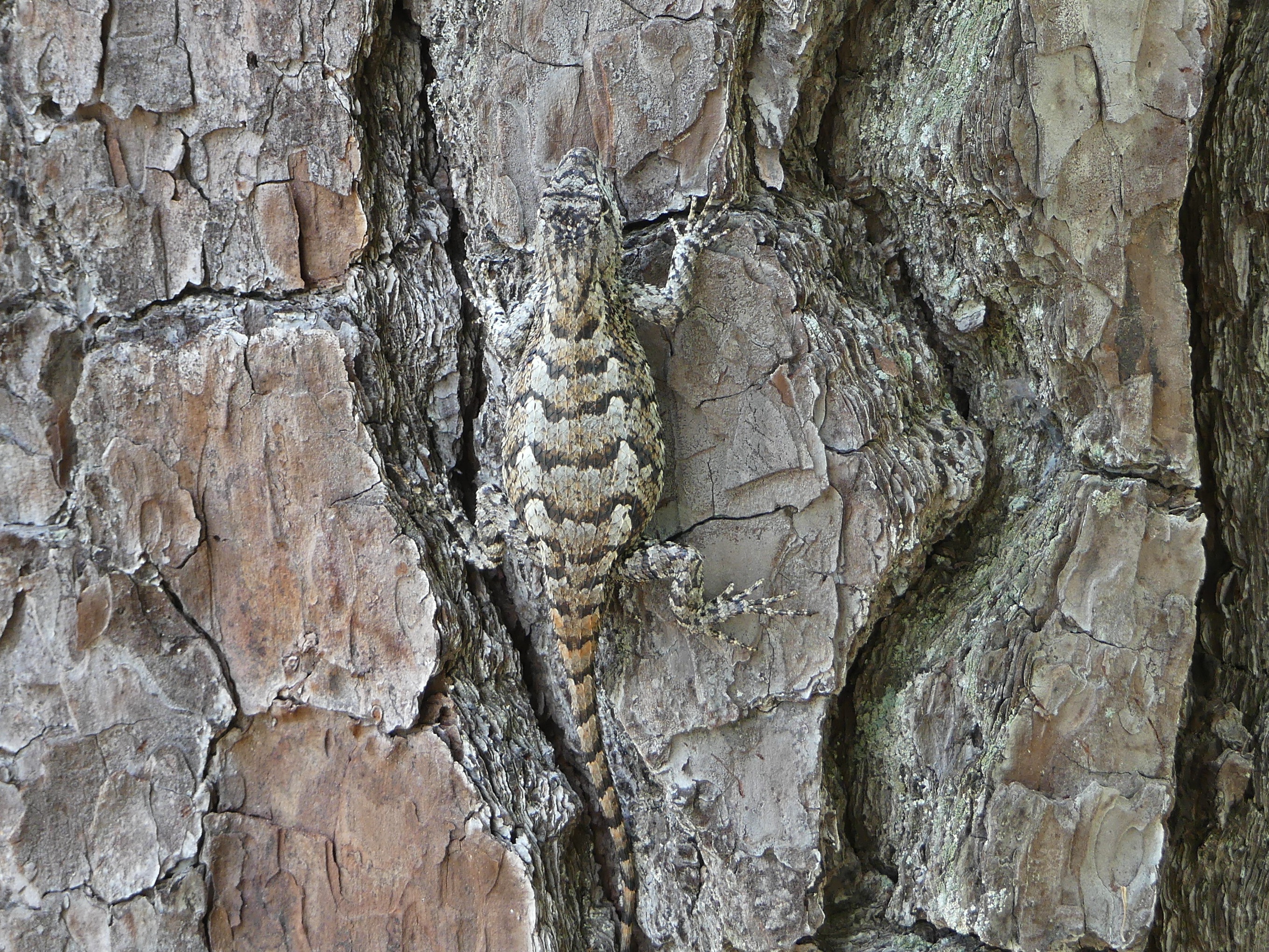
But, the heat might have been responsible for the wonderful lizards we also found on that hot July day.  Derek and I considered all wildlife sightings a big bonus of county birding.

Eastern Fence Lizard at Carvers Creek State Park, a lifer lizard for me!

Eastern Fence Lizard at Carvers Creek State Park, a lifer lizard for me!

I made even more mistakes finding birds, again usually when I went out on my own.  Many these errors were my poor decisions about which birding hotspots to visit.  A State Recreation Area on a large lake was “Closed for the Season” when I got there in the middle of winter.  Some hotspots no longer had access and some were just about impossible to find.  One location with many great eBird reports appeared to be a road that no one would walk except hunters or crazy young male birders.  I’m pretty brave, but I was not going to park my car on the side of the road and walk alone into the wilderness in a remote, isolated part of the state.

A Great Spangled Fritillary that Derek and I found near Boone in June 2016. We frequently encountered beautiful butterflies while searching for birds.

A Great Spangled Fritillary that Derek and I found near Boone in June 2016. We frequently encountered beautiful butterflies while searching for birds.

As I have written this, more memories keep flooding back.  Looking for Swallow-tailed Kites with Nathan and Sarah.  The Person County Northern Lapwing with David S.  The Brown Booby with Jay.  The Allen’s Hummingbird with Phil and Carol C.  Transylvania County.  Forsyth Audubon and Piedmont Bird Club trips.  I can’t name them all, but I treasure every one of my birding adventures and I am grateful to have shared so many with friends.

My most recently photographed county tick is this Tricolored Heron, right here in Forsyth County, only the second of this species to be observed in our county.  But, I now have an even newer county bird, a Royal Tern that David Disher found at Salem Lake during Hurricane Florence.

My Forsyth County Tricolored Heron

My Forsyth County Tricolored Heron

My eBird map for NC is below.  As you can see, I don’t have many birds in most counties, so I’ll be able to continue the county birding game for quite a while as I add new birds.  I hope to keep birding in North Carolina for a very long time.

If you rode shotgun with me on my big trip, thank you!  It was great to have your company and your comments encouraged me along the way.  My longest road trip yet began on May 16 and ended on June 11, 2018.  That was 27 days away from home and 7,114 miles driven in my wilderness green Subaru Outback.  Montana and Nebraska were brand new states for me that I had never visited before.  I had not been in Wyoming since a 1971 trip to Yellowstone National Park.

My approximate route for the trip. I continued on home from Tellico Plains, TN.

My approximate route for the trip. I continued on home from Tellico Plains, TN.

Birds provided the structure for the trip and I observed 171 avian species, including a few in the North Carolina mountains during the Cherohala Challenge part of the trip.  The life birds that I hoped to find were all challenging; I got eleven of my 20 targets.  Birds that I was thrilled to find by myself were Mountain Plover, Greater Sage-Grouse, Baird’s Sparrow, McCown’s Longspur, and Gray Flycatcher.  All of those are prairie birds and I found that I enjoyed birding in that habitat best.

I would have liked to see more mammals, but I did enjoy the Pronghorn, Richardson’s Ground Squirrels, Prairie Dogs, and especially an adorable little Thirteen-lined Ground Squirrel.  Snakes and lizards would have been interesting, too, but I saw none.

A Thirteen-lined Ground Squirrel at a rest stop in Wisconsin.

A Thirteen-lined Ground Squirrel at a rest stop in Wisconsin.

Other life birds found with a little help were Gray Partridge, Williamson’s and Red-naped Sapsuckers, Flammulated Owl, Northern Pygmy-Owl, and Sage Thrasher.  I can’t pick a favorite bird of those, but my favorite moment was standing all alone on the prairie in Grasslands National Park watching my life Baird’s Sparrow and listening to him sing.  The moment probably lasted close to an hour and I tried to just soak in the beauty of the time and place and take a few photos.

My life Baird's Sparrow at Grasslands National Park

My life Baird’s Sparrow at Grasslands National Park

I missed other birds for various reasons.  My poor vision and hearing are most likely what cost me Sprague’s Pipit.  I even stood next to someone one day who said that she was hearing them in the distance.  When I arrived at Waterton Park and learned that many of the trails and roads were closed due to last year’s fires, I knew that I was unlikely to find Spruce Grouse as that was the only location in my itinerary where there was any chance for it.  It was also the best location for Dusky Grouse, so I missed it, too.  I’m not totally certain why I could not find a Prairie Falcon.  Before the trip, several folks had said that they expected I would find one, but perhaps it was a little too late in the season as the birds were nesting.  Once in Montana, people said that it would have been easier earlier in the year.  Northern Goshawk is always a difficult bird to find, so it’s no surprise that I missed it.

With a little more time, I probably could have found Cordilleran Flycatcher, especially if I’d had another day in Helena with Stephen’s help.  He and Bob had seen them earlier in the day that I arrived.  But, we spent our time focusing on the woodpeckers and owls, birds that are more fun and we had wonderful success with those.  I lost half my chances to look for Sagebrush Sparrow when I got rained out on Bannack Bench Road in Montana.  I tried to find it on Bear Canyon Road, but had no luck there.  Black Rosy-Finch was missed because I wimped out on driving the steepest part of the Beartooth Highway.  Next time!  And, lastly, Virginia’s Warbler just did not want to be seen in Roby Canyon in South Dakota.  Even the top local birders had no luck the day that I was there.  My late husband used to say “Always leave something for next time” and I certainly did just that.

A Yellow Warbler peeks around the tree to watch me. One of my favorite photos!

A Yellow Warbler peeks around the tree to watch me. One of my favorite photos!

Photographing birds can be challenging due to poor light, the birds being too far away, and various other difficulties, but I did my best.  I posted 155 photos to my eBird lists, some only good enough for identification and some that make me very happy.  Sometimes it was the simple shots of common species that made me smile.

All that driving turned out to be relatively easy, especially since I planned my route to miss major cities.  Getting over 400 miles on a tank of gas helped, so most of my stops on big travel days were at rest areas.  I took food from home for lunch and dinner and replenished perishables at grocery stores a couple of times.  I started each day with two canteens full of fresh cold water, so I had everything that I needed in my car.  These strategies enabled me to drive 1,300 miles in the first two days, to Grand Rapids, Minnesota, northwest of Duluth.  From there, I had no more especially long days until heading back home at the end of the trip.

A nice rest stop bird, a male Blackpoll Warbler. They were so much easier to see in Minnesota than at home!

A nice rest stop bird, a male Blackpoll Warbler. They were so much easier to see in Minnesota than at home!

There is little traffic on many of the western roads and what you have heard about high speed limits is true.  I drove many two-lane roads with speed limits of 70 MPH.  Most of those roads had a feature to facilitate safety – rumble strips on the center line.  A lot of the roads in Canada were gravel and relatively wide, which made it easy to stop for birds.

In parts of Saskatchewan there were only Card Lock fueling stations rather than typical gas stations.  Their purpose is mainly to serve commercial vehicles and some only have diesel fuel, but the ones that I encountered also had regular gasoline.  They are always unattended and always open.  You go into the little house, insert your credit card and specify a dollar amount greater than what you will use.  After approval, you go out and pump your gas.  And, then you go back into the little house and insert your credit card again to get a receipt.  And, don’t forget to shut the door behind yourself (the sign reminds you).

The Card Lock station in Val Marie, Saskatchewan

The Card Lock station in Val Marie, Saskatchewan

My trip took me through much of the current Greater Sage-Grouse range.  Historically, Sage-Grouse occurred in at least 16 states within the western U.S. and three provinces in Canada.  Experts estimate that the population was as high as 16 million before European settlement; today there are only a few hundred thousand.  The decline has continued relentlessly, by 60% in just the last five decades.  Sage-Grouse are now extirpated from British Columbia and five U.S. states.  In 2015, a fierce political battle about listing under the Endangered Species Act (ESA) resulted in the decision to not list the grouse.  They face many threats, the most serious being habitat loss.  But even without ESA listing, serious efforts are underway to protect the species.

A Greater Sage-Grouse that I found in Montana

A Greater Sage-Grouse that I found in Montana

As a casual observer driving through Montana, none of this was obvious to me.  It looks like immense areas of sagebrush remain almost pristine, but that was an illusion.  The recovery efforts are addressing various threats to the grouse.  The one that I heard about from a local rancher is fence line flagging – clipping small reflective markers along the top row of barbed wire fences every three to four feet.  The markers help the low-flying grouse see the wires and avoid collisions which result in injury or death.  He told me about his conversations with a biologist studying the birds and said that he readily agreed to have the fence on his land flagged.

In Canada, the total population of Sage-Grouse declined by 98% between 1988 and 2012.  A total of only 93 to 138 adult birds were estimated for Alberta and Saskatchewan combined in 2012.  The species has been listed as Endangered in Canada since 1998.  Nature Canada has a nice summary of the species status and recovery efforts.

See the Cornell All About Birds site for more basic information on the fascinating Greater Sage-Grouse.

One of my favorite experiences on the trip was finding an American Three-toed Woodpecker nest at Cypress Hills.

Nestling American Three-toed Woodpecker

Nestling American Three-toed Woodpecker

Papa Three-toed flew to a nearby tree to preen after leaving the nest cavity.

Papa Three-toed flew to a nearby tree to preen after leaving the nest cavity.

Did I get lonely on the road traveling alone for so many days?  No, not at all.  Actually, I met some wonderful people and feel like I made a few new friends.  First, was Allison Henderson.  Allison and her family were packing their car after camping at Two Trees in Grasslands National Park just as I arrived.  In an amazing coincidence, I was looking for Baird’s Sparrow and McCown’s Longspur and Allison is a wildlife biologist who studied grassland songbirds for her PhD.  She gave me a few tips and we stayed in touch with phone calls and text messages.  Thanks for the alert on the Long-billed Curlew, Allison!

Next was PJ Chudleigh at Cypress Hills Interprovincial Park.  PJ is in charge of maintenance at The Resort at Cypress Hills (where I stayed) and is passionate about the natural habitat.  PJ and a buddy saw me birdwatching when they were riding their bikes.  I always feel dorky when I’ve got my binoculars and am out looking for birds when “normal” people are doing other things.  But, they thought it was cool that someone was paying attention to the wildlife.  We felt an instant connection and could have talked for hours.

And, then there was the rancher I met on Bannack Bench Road, the nice couple walking by the lake at Waterton National Park, and many others.  Some conversations were short, but when I told someone what I was doing, I always got “Good for you!” in response.

I was impressed with the beauty of Devils Tower in Wyoming - 867 feet from its base to its 1-1/2 acre summit.

I was impressed with the beauty of Devils Tower in Wyoming – 867 feet from its base to its 1-1/2 acre summit.

In addition to these surprise encounters, I enjoyed spending some time with the birders whom I had contacted before the trip, Stephen Turner (and his wife, Patty) in Helena and Ron Farmer in Bozeman.

I loved meeting new people, seeing new parts of the country, and finding my own way through it all.  My goals to see a few new birds and new landscapes were accomplished.  But, more than that, I gained confidence in myself and I feel stronger than ever.  I might not be ready to backpack through Europe alone yet, but I’m ready for another road trip!

More photos can be seen in my Flickr album for this trip, Prairie Road Trip 2018.  As of June, it’s not complete, but I will add more photos and label them all correctly soon.

Driving through Nebraska was monotonous compared to the more western states.  The view from the highways was nothing but agricultural fields for mile after mile.  I did not even see birds from the road as I had in other areas.  However, beautiful rest areas along the Platte River were like little oases in this hot and dry land.  They had lovely trees, birds, and each one came with a history lesson about the Oregon Trail.  Here are a couple of photos taken at O’Fallon’s Bluff rest area on Interstate 80.

Crossing The Overland Trail

Crossing The Overland Trail

The Great Platte River Road

The Great Platte River Road

Late in the afternoon, I also made an unplanned stop at the Audubon Center at Rowe Sanctuary in Buffalo.  The center is most well-known for Sandhill Crane viewing on the Platte River in the spring.  It is a lovely spot along the river and even on a hot June afternoon, I easily found birds.

It was fun to see Dickcissels where they are common. These guys seem to sing all day!

It was fun to see Dickcissels where they are common. These guys seem to sing all day!

An Eastern Kingbird enjoys its perch over the Platte River.

An Eastern Kingbird enjoys its perch over the Platte River.

On Wednesday, it was on to the next state – Missouri. Again, it took most of a day to drive through one state. But, I did start the morning at Loess Bluffs NWR, which I suspect may be one of the best wildlife refuges in the country.  I was pleased with the 32 species that I found in two hours without getting out of the car.  But when I checked eBird, I saw that the previous day two guys had recorded 97 species!  Loess Bluffs is definitely on my list of places to go again.

An adult Bald Eagle at Loess Bluffs NWR in Missouri.

An adult Bald Eagle at Loess Bluffs NWR in Missouri.

My third and last big travel day towards home was mostly through Tennessee.  It was one of the few days that I did not do any birding at all.  I needed to be in Tellico Plains on Thursday night to help my friend, David, with his adventure – The Cherohala Challenge, a road bike event.  David successfully completed the 62-mile ride last year.  This year he would be participating in the longest ride, 115 miles up the Cherohala Skyway, through The Tail of The Dragon, an 11-mile stretch of US-129 with 318 curves, and then back to Tellico Plains.

David stopping to pose with the dragon during the ride on Saturday.

David stopping to pose with the dragon during the ride on Saturday.

On Friday, we drove the route in the car and I marked every stop in my GPS.  We had a very nice time and finished with a few hours to spare, so we went in search of Tennessee birds for my list obsession.  I randomly choose an eBird hotspot not too far away.  At first it appeared to be a dead-end road with a path to the river at the end.  We walked the path and were lucky to see both White-eyed and Red-eyed Vireos as well as an Orchard Oriole.  Those birds helped me reach one of my goals – over 50 species for Tennessee.  The path led to Chota Memorial,  a full scale representation of the townhouse, or council house, originally erected by the Eastern Band of the Cherokee Indians, a completely unexpected and interesting surprise.

Chota Memorial lies along Little Tellico River.

Chota Memorial lies along Little Tellico River.

We were up at 5:00 AM on Saturday, the day of the big ride.  I dropped David off at the starting line and headed to the first rest stop to wait.  The volunteer was just setting up and gratefully accepted my offer to help.  I made peanut butter and jelly sandwiches, cut up fruit, and put out other goodies for the riders for an hour.  Then, it was off to the next stop to wait for David.  For over 10 hours, he rode and I did what I could to help my friend and others with food, water, and encouragement.

Coming into a rest stop on the Cherohala Skyway.

Coming into a rest stop on the Cherohala Skyway.

At the toughest part of the ride – 8 miles at a very steep grade to the highest point – I even gave one guy a ride because he was cramping too badly to ride that stretch of road.  Fortunately, David’s hard work training paid off and he got to the top under his own power.  After another 31 miles, he reached the finish line – tired, but extremely happy.

David was happy and smiling after riding 115 miles!

David was happy and smiling after riding 115 miles!

Sunday was a recovery day, so we did a little birding in the NC mountains. We were able to add a few birds to my county lists and see more beautiful scenery. After all my traveling this past month, I still love North Carolina.  I drove home yesterday, June 11, and that’s the end of the trail. Stay tuned for a few numbers (miles driven, species observed, etc.) and reflections on the adventure in a few days.